The following is a video from my YouTube channel, Jack’s World. It’s a new entry into my ongoing Thought Experiments playlist and it explores the limits of human competence over capability. I hope it sparks larger thoughts and more discussions. Enjoy!
Tag Archives: politics
Thought Experiment: What Is The Limit Of Human Competence?
Filed under Jack's World, philosophy, prostitution, Thought Experiment, YouTube
It’s Election Day 2021 America: Go Vote!

Halloween is over.
We had a good time. We ate a lot of candy. We watched way too many horror movies and CreepyPastas. It was fun for many. I hope everyone enjoyed it.
Now, we need to get serious again. For my fellow Americans, today is one of the most serious days we’ll experience.
It’s Election Day.
It may not be a Presidential Election like last year, which tend to get glossed over if voter turnout is any indication. That doesn’t make it any less important. If anything, years like this are becoming more important because the assholes who tend to stay in power do so because the people don’t care enough to vote them out. The only way to keep these assholes from undermining America is to vote them out or keep them from getting in.
Unfortunately, doing so means keeping up with local politics. I know that tends to be a test in pain tolerance these days. Talking about politics is akin to throwing undercooked steak at a hungry grizzly. It’s bound to get messy and dangerous. We already saw just how dangerous it could get earlier this year with the Capitol Riot.
We cannot and should not let that danger dissuade us from doing our American duty and voting.
So, I implore all my fellow Americans to do whatever they have to do today in order to vote. Check with your local government. Look up sites like this one. Find out where you have to go, what you have to do, and who’s on the ballot. Then, get out there and vote!
It’s not just a right.
It’s a responsibility.
Happy Election Day, America. Let’s make democracy work.
Filed under Current Events, politics
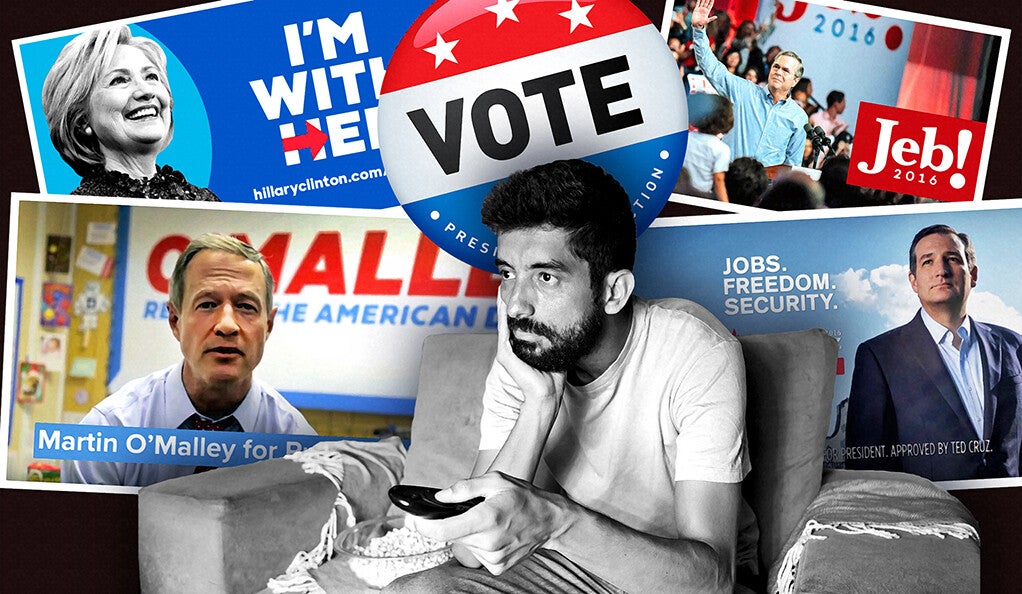
Honest Question: Do Political Ads Convince Anyone Of Anything?

It’s that time of year again for my fellow Americans. It’s election season. Now granted, it’s not a Presidential election, which have a tendency to get messy, ugly, heated, and hostile. The last two Presidential elections have sadly demonstrated that. However, democracy is still an important part of the American tradition. That means we have elections every year.
Years like this are what we call “off-year elections.” We don’t elect a President, but we do elect senators, representatives, governors, and various other officials. It may not be as glamorous or high-stakes as a Presidential election, but it’s something I encourage every American to take seriously.
Even if you hate politics and politicians, you should still vote.
If you’re not sure how, depending on where you live, check out this website and follow the steps. It’s not just a civic duty. It’s the lifeblood of democracy.
That being said, I do have one major bone to pick with election season. It has to do with the political ads that seem to run every five minutes on every channel I watch, as well as every video I stream online. Chances are, my fellow Americans are seeing plenty of those ads too. I have a feeling they’re as sick of them as I am.
With that in mind, I have a simple question to those who make these ads, as well as those who can’t avoid seeing them.
Do these ads actually convince anyone of anything?
I promise I’m not being facetious. I’m asking an honest, sincere question.
Has anyone actually been swayed by these ads? Have they ever affected your voting habits in any meaningful way?
I know people tend to be exceedingly partisan about everything these days. There are people who will vote for alleged sexual predators over someone of the opposing party. I know people who are registered republicans or democrats. Their candidate could run over puppies in the street and they would still vote for them.
It’s sad, frustrating, and antithetical to core American principles, but that’s the current situation we live in. It also makes these political ads all the more irrelevant. Seriously, if people are this partisan and dogmatic about their political affiliations, is an ad going to change that? If not, why spend money on them in the first place?
It’s not an insignificant sum of money, either. Running ads on TV and online make up a sizable chunk of campaign costs for aspiring politicians and that cost is only increasing. If they don’t work, then why spend all that money in the first place? What’s the point if it doesn’t change a single voter’s mind?
I suspect that’s not entirely the point of these ads. It might just be the case that these ads are just reminders for people who planned to vote a certain way to get out there and vote. After all, voter turnout has been historically low in the Untied States. While I agree that’s an issue, are these ads really the best way to address it?
Again, it’s an honest question. I’m not trying to come off as jaded or cynical, although I don’t blame anyone for feeling this way after the past five years of American politics. If these ads aren’t helping, though, then I think these questions are still worth asking.
Jaded or not, I still fully intend to vote and I already know who I’m voting for. I encourage every registered voter in America to do the same. Try not to vote blindly, either. Look into each candidate. Get a feel for who they are and decide for yourself whether you want them representing you. It can be tedious, I know, but that’s how you do democracy. That’s how you preserve the core values that make the Untied State of America what it is. Put in that effort, even if you find these ads insufferably annoying.
Filed under Current Events, politics
Why Do Preachers Need/Deserve Private Jets? (A Sincere Question)

Whenever I talk about religion on this site, I try to be as respectful and tactful as possible. I don’t seek to offend or insult anyone who identifies as religious. I also don’t seek to denigrate certain religious practices, although I do believe a few warrant extra scrutiny. I’m sure I’ve overstepped those bounds in the past and for that, I do apologize.
All that being said, I have a serious question I’d like to present to those who are genuine and sincere with their faith.
Why do preachers need, let alone deserve, private jets?
I promise I’m not being facetious. I’m also not trying to make a larger point about certain religions. I would genuinely like someone who identifies as religious to explain this to me. Don’t just throw bible quotes at me. Explain it to me like I’m a child.
I know preachers having private jets isn’t new. However, recent events have made preachers and their spending habits a lot more noteworthy. Some make elaborate excuses as to why they have private jets. I still don’t get it.
These are not CEOs who run multi-billion dollar companies.
These are not heads of state who have to be able to travel the world at a moment’s notice.
These aren’t even celebrities who have achieved a level of success that affords them the option of some added luxury.
These are preachers who, for the most part, make their living giving sermons to adherents. I’m not saying that isn’t a noble profession. I went to church as a child. I remember the preachers and priests who led the sermons. They were genuinely nice people and they didn’t have private jets. One of them didn’t even own a car.
Now, I know these kinds of religious leaders are in a different hemisphere compared to the charismatic televangelists who have their own megachurches. I also know that more than a few adherents who utterly despise these people. One of them once told me, “That jet won’t help them escape where they’re going.”
Regardless of whether or not you believe that, I would still like someone to explain this practice to me. I get that charismatic people will attract crowds, money, and power. I get that those same people will abuse that power in one way or another. That’s just human nature.
What I don’t understand is how the adherents who believe, support, and send money to these people can accept this sort of thing and not have it clash with their faith somehow. Nearly every major religion has strict condemnations of greed and excess. How can this be justified?
Again, this is a sincere question. I hope to get a sincere answer because the absence of an answer is every bit as revealing.
Filed under Current Events, politics, rants, religion
Thought Experiment: How Much SHOULD Society Seek To Control People?
The older I get, the more I realize how complicated the world can be. By the world, I don’t just mean complex socio-political or cultural trends that manifest over extended periods of time. I’ve found that most people, in general, are complicated.
Every individual has their own story to tell.
Every person has their own goals, wants, needs, morals, and methods for doing things.
Every community and culture has their own approach to molding a functioning society.
There’s no one perfect way to go about it. If anything, there are too many approaches that are good, bad, or some messy combination of both. Many of us like to think there’s a single way to maximize the happiness and potential of all individuals. Many even believe they know it when they’re young and idealistic.
Then, we get older and we realize that’s not just impossible. It’s untenable.
I say this as someone who went through his share of ideological shifts, especially in college. I won’t bore everyone with the details. I’ll just say that my perspectives on politics, religion, and culture when I was 20 were vastly different from what they were when I turned 30.
In developing those perspectives, there weren’t many common threads, especially when religion and politics were involved. I know I’ve touched on both many times before and while I try to be fair, I don’t deny I have certain leanings that I don’t hide.
I am generally mistrustful of organized religion, as well as the agendas of those who are overly extreme in their beliefs. I am just as mistrustful as those who take extreme positions on certain political ideologies, be they conservative or liberal.
I am deeply critical of conservative religious types who basically seek to impose a theocracy.
I am also deeply critical of extreme left-wing liberals who seek to impose a politically correct autocracy.
People on both sides will likely claim they’re not seeking anything bad or negative. They genuinely believe that their way will be for the greater good. They believe people will be happier and more prosperous of everything they believe is imposed and integrated into a larger order.
Sincere or not, I still say those beliefs are misguided. I also suspect those same people don’t understand the complexities and nuances of individuals or humanity, as a whole. At the same time, I do think they raise an important question, which also warrants a larger thought experiment.
How much SHOULD society seek to control people?
It’s a question both sides of the political/ideological/cultural/religious spectrum grapple with, even if they don’t say it out loud. It often comes back to this. Whether it involves determine morals, crafting laws, or developing a larger culture, this is one of the most common issues.
It’s not an unreasonable concern, either. To some extent, society needs to exact some control over peoples’ behavior. Even in small, tribal settings, individual behavior can have a profound impact on others. If people just did anything they want without any regard for others, we couldn’t function. We couldn’t cooperate, coordinate, or collectively thrive.
Humans evolved to be a social species. One individual, on their own, can only do so much to function and survive. A group of individuals can achieve so much more. With a large enough group, we can create a civilization that can literally reshape the face of the planet.
That kind of coordination requires some level of control over the individual. Whether it’s by punishing or shaming certain behaviors or strongly encouraging others, we need some mechanism for maintaining social cohesion. It’s just a matter of extent.
Some ideologies go to incredible extremes. Religious conservatives can be particularly draconian in enforcing control. They don’t just seek to punish certain behaviors while censoring certain messages. They actively seek to police peoples’ thoughts and feelings, often in a way that’s damaging to many individuals.
Extreme liberals can be just as bad. There are those who seek to not just punish those who do so much as tell an offensive joke or depict video game characters in a way that’s too sexual. They seek to punish individuals in the present for the actions of those in the past. Like their religious counterparts, they also attempt to police others’ thoughts.
Then, you’ve got the extreme libertarians who try to minimize social control to the greatest extend possible. I would argue that too is not practical, if only because it ignores the nuances and complexities necessary for a functioning society at large.
For most people and societies, the extent of the control they impose varies. In some places, free speech is protected while in others, it’s tempered in the name of ensuring social harmony. The same goes for things like encouraging or discouraging certain behaviors, like drinking, gambling, or promiscuous sex. Some involve laws while others involve shaming. The goal is still the same.
It all comes back to control. To complicate things even more, some individuals require less control than others. There are those who are perfectly responsible and don’t need the law or shaming to be decent, upstanding members of society. There are also those who are just pathologically incapable of following the rules and getting along with other people. What does society do about them?
I understand I’m using “society” in a broad, generalized term. That’s because the question, and any thought experiment surrounding it, needs to focus on the bigger picture. I know that’s not easy for any one individual. Like I said, we all have our biases, prejudices, and predispositions. We also tend to believe we’re right and are generally resistant to change.
I maintain that’s exactly why we should ask questions like this. It’s also why we should dare to think about how much or how little we control one another on a societal level. Civilization and society, for all the wonders they achieve, is an ongoing process. That means there are always opportunities for refinement. We can and should take every opportunity to do so.
If you have any insights on this thought experiment, please share them in the comments. Also, if you have any thought experiments you’d like me to discuss, please share those as well.
Filed under philosophy, politics, Thought Experiment
A Question (And A Challenge) For Those Who Once Opposed Same-Sex Marriage (But No Longer Do)

People change.
Societies change.
General attitudes towards certain subjects, ideas, or behaviors change.
None of that should be news to anyone. Change is the only true constant in this crazy, complicated world. I’ve certainly seen plenty over the course of my life. It really wasn’t that long ago that the idea of marijuana being legalized in one state, let alone a dozen, seemed unthinkable.
It also wasn’t that long ago that the idea of same-sex marriage being legalized nationwide seemed equally unthinkable. In terms of major social and/or political issues, that issue resonates with me because it became a hot button topic while I was a teenager. In essence, it grew as I grew.
I still remember all the headlines from 2004 when Massachusetts became the first state to legalize same-sex marriage. I also remembered all the heated discussions that came from it. I even participated in a few. I felt like I understood the arguments made by the proponents. I had little issue seeing the logic behind their points.
Two individuals love each other and want to get married.
The state currently prevents them from doing so, thereby denying them the many benefits associated with marriage.
That denial is simply not reasonable in a free society that permits people to marry whomever they choose.
However, it was the arguments made by the opponents that I often struggled to understand. Honestly, their arguments from tradition, morality, or the idea of “defending marriage” just didn’t make sense to me. Even as I got older and saw arguments against it from major pundits and thinkers, often from those who identified as conservative, I still didn’t get it.
How does two gay people getting married affect anyone?
How does it tangibly and measurably undermine marriage between heterosexual couples?
I never got a straight answer. Most of the time, I just got hit with a bunch of bible verses from the Old Testament or some variation of “marriage has always been this way.” I never found any of those arguments convincing.
Fast forward two decades and suddenly, the lack of substance in those arguments really show. More and more, people are started to realize that too, including those who identify as conservative and likely opposed same-sex marriage at one point.
Just recently, Gallup released a poll indicating that support of same-sex marriage was at a record high. On top of that, even those who vote republican and identify as conservative have since come to support it. It’s still not quite on the same level as that of liberal democrats, but it’s still a majority and that’s a big deal.
Gallup: Record-High 70% in U.S. Support Same-Sex Marriage
U.S. support for legal same-sex marriage continues to trend upward, now at 70% — a new high in Gallup’s trend since 1996. This latest figure marks an increase of 10 percentage points since 2015, when the U.S. Supreme Court ruled that all states must recognize same-sex marriages.
…
Republicans, who have consistently been the party group least in favor of same-sex marriage, show majority support in 2021 for the first time (55%). The latest increase in support among all Americans is driven largely by changes in Republicans’ views.
Now, I welcome this news. I think it’s an objectively good thing that more and more people support same-sex marriage. The opposition to it never came off as anything more than varying degrees of bigotry.
I also think homosexuality and LGBTQ issues have gotten to a point where they’re no longer so unfamiliar or radical. We see them on TV, in movies, and in major positions of power. At the same time, the brand of reactionary religious zealotry that condemns homosexuality has fallen out of favor.
Again, this is good news. Accepting same-sex marriage and affording same-sex couples the same rights and protections isn’t just fair and just. It’s the right thing to do. Even if you despise homosexuality, you can’t justify having your personal preferences imposed and enforced by law. That’s just un-American.
Beyond that news, though, I have a question and a challenge for those who once opposed same-sex marriage, but no longer do. I’ll even extend it to those who still oppose same-sex marriage. Now that same-sex marriage has been legal for over five years, I think this question is worth asking.
How much or how little has your life changed since same-sex marriage was legalized?
It’s an honest, sincere question. I’d really like to know. There was a lot of fearmongering on the part of opponents to same-sex marriage. I won’t get into the specifics, but there were real concerns by opponents that legalizing same-sex marriage would have dire consequences.
Have any of those consequences even played out? If so, what data indicates as such?
Again, that’s an honest inquiry. I’d really like to know.
In addition, I also have a challenge to those who once opposed same-sex marriage. It’s a bit broader in scope, but is just as relevant.
What other issues besides same-sex marriage have you come around on?
Like I said earlier, change is the only true constant. What’s considered normal and acceptable today might be considered atrocious tomorrow. The same goes for what we consider immoral or deviant. A couple decades ago, it was same-sex marriage. A century ago, things like divorce and interracial marriage were just as taboo.
It’s hard to understand the attitudes of generations that have long since passed on. However, the vast shift in attitudes do offer some perspective. I believe they challenge us all to contemplate our current attitudes and how differently they’ll be seen in future generations.
We can’t know for sure which position will change drastically between now and twenty years into the future. We should still make a concerted effort in refining our perspective. Same-sex marriage showed just how much attitudes towards one single issue can change within a couple decades. Which issue will undergo a similar change two decades from now? Only time will tell.
Contemplating The Lies, Sincerity, And Dishonesty Of Public Figures
When you lie down in bed at night, alone in the dark with your thoughts, I believe that’s when you’re most honest with yourself. Whether you sleep alone or with a lover, this is one of those few times when we can allow our minds to wander freely. Sometimes, we find ourselves thinking things that make us uncomfortable. While it may be distressing, I would argue that’s healthy.
I freely admit that I find myself contemplating a lot of strange things when I lay down to go to sleep at night. I doubt I’m alone. I would question the honesty of anyone who claims their private thoughts perfectly match those they contemplate in public.
With this in mind, I’d like to pose a relevant question. I wouldn’t go so far as to call it a thought experiment because this is one of those questions that may have a definitive answer. Granted, it’s an answer we’ll probably never know for sure. However, I still feel it’s worth asking for the sake of the bigger picture.
It has to do with public figures. By that, I don’t just mean major celebrities like movie stars, musicians, and what not. I’m also referring to well-known politicians, political commentators, and even popular social media figures on sites like YouTube and Tik-Tok. To all of them, I pose this question.
When these people lie in bed at night, do they genuinely believe the things they do, espouse, or support?
I think the answer to that question, even if we cannot know it, is incredibly revealing.
Let’s face it. These are all people who have a very public persona. Most people who know who they are know them only through that persona. Whether they’re a politician known for saying dumb things, a celebrity with a nasty reputation, or religious preachers with controversial views on certain subjects, they have a public face and a public personality.
It’s also incredibly common for people to not be honest with themselves. Most of us have done that at some point in our lives to varying degrees. We carry ourselves as someone we’re not. We convey feelings, ideas, and emotions that are not entirely in line with our true selves. Why we do this varies, but it can be incredibly damaging if taken too far.
For certain public figures, though, there are many additional layers of complications. For some people, especially politicians, shock jocks, and social media personalities, they have to present a certain version of themselves to the public. That version is almost always carefully crafted and refined. It rarely reflects a completely honest version of that person.
On top of that, this version of themselves is presented as a means to obtain money, power, influence, attention, and everything that comes with that. They say and do whatever reaffirms or builds upon that persona. If it gets any level of attention, be it positive or negative, it gets reinforced.
It can quickly become a cycle, but one that’s reinforced with money, power, and influence. At that point, a public figure doesn’t just have an incentive to keep up this persona. They have incentives to double down and take it to new levels. Even if it makes them infamous and hated, they still get enough out of it to justify the effort, no matter how dishonest it might be.
With those incentives in mind, I often find myself wondering how much or how little certain public figures are aware of them. Perhaps when they lay in bed at night and are alone with their thoughts, they acknowledge that hard truth to themselves, but wouldn’t dare acknowledge it to anyone else.
Think about someone like Bernie Madoff. Before he got caught in his infamous Ponzi scheme, he knew what he was doing. He knew he was a fraud. How much or how little did he realize that when he was in bed at night before he got caught?
Think about some of the most radical, right-wing or left-wing politicians you know. Think about some of the craziest beliefs they espouse. When they lay down at night, do they realize how crazy they are? Do they even truly believe what they say? Do they just say what they need to in order to keep their persona going?
Think about some of the radical religious preachers who bilk money from the faithful. Do they truly believe the terrible things they espouse? Do they really believe that they are somehow more holy than everyone else? When they lay in bed at night, do they realize that what they’re doing is antithetical to their religion? Is it possible that some don’t even believe and are simply doing what they do because it earns them money and influence?
We’ll probably never know the answer. Regardless of how you feel about these public figures, especially the ones most decent people find deplorable, the question is still relevant. It should also inform our perspective about certain public figures. If someone has a powerful incentive to keep being who they are in public, then expect them to keep doing what they’re doing. The only time they may acknowledge it is when they lay in bed at night.
The (Bleak) Future OnlyFans And The (Ever Evolving) Porn Industry

Imagine, for a moment, that you’re a wildly successful coffee company. You grew from a small start-up to a multi-million dollar enterprise by providing a willing public with quality coffee, which was made by a sizable network of willing workers who gladly supplied you with your product in exchange for a share of the profits. By nearly every measure, your company is a success.
Then, one day, you decide to stop selling coffee because of pressure by a vocal minority of anti-coffee advocates. As a result, you’re leaving all those people who helped make your company a success to an uncertain future while putting their livelihoods in jeopardy.
Now, what I just described isn’t a perfect analogy for what’s happening with OnlyFans, a site once synonymous with personalized porn production. It still helps get my point across. This site that owes much of its success to porn and the people who make it is ditching anything that’s too obscene for an R-rated movie on cable.
First, let me just take a moment to roll my eyes and share a collective groan with all who heard this announcement.
Second, let me extend a sense of sympathy and sorrow to those whose livelihoods will be negatively impacted by this move. Many content creators are rightly concerned about how this will affect them. These are people who were already in a vulnerable position in the first place. This will just make it worse.
It doesn’t matter what your opinion about porn is or those who make it. This action will negatively affect a lot of people in ways that go beyond what they do in the bedroom or on screen. If you ignore that, then you’re just being an asshole. There’s no way around it.
As someone who writes sexy stories and follows sexy news, I feel compelled to comment on this development. In case you need the full story about what’s happening with OnlyFans and why it’s happening, here’s the story below from NPR.
NPR: OnlyFans Says It Will Ban Sexually Explicit Content
OnlyFans, a site where fans pay creators for their photos and videos, is planning to ban “sexually explicit” content.
The ban will start Oct. 1 and is the result of requests from banking partners and companies that handle financial transactions, a spokesperson said.
Still, nudity is OK if it’s “consistent” with the company’s policy. It’s not clear what that policy is, and the company did not reply to questions. OnlyFans will be sharing more information in “coming days.”
Before I get to the bigger picture, I’d like to offer OnlyFans’ side of the story. They’re not doing this because of some sort of moral epiphany about the evils of pornography. Like most things in the modern world, there’s a financial reason behind this.
OnlyFans is a company and every company needs investors. Traditionally, most investment firms shy away from anything that’s too sexy or pornographic. It offends too many people who are otherwise uncomfortable with sexuality. Those same people may not be able to legally ban the content, but they can keep it from getting money.
That’s how they attacked PornHub in late 2020. In addition to making them purge a good chunk of their content, these moral crusaders convinced credit card processing companies to not do business with them. These same crusaders were even bolder with OnlyFans. They basically lobbied the same credit card companies to force OnlyFans’ hand. If they want to keep accepting payments, they can’t host full-fledged porn.
Who are these crusaders? Well, one of them is the National Center on Sexual Exploitation. That may sound noble, but read the fine print and you learn they’re an extreme right-wing organization with ties to the religious right. They’re not really concerned about ending sexual exploitation as much as they are ridding the world of anything sexual. If you don’t believe me, then please note these same people pushed Wal-Mart to stop selling issues of Cosmo.
They’re basically the Christian Taliban, minus the guns. Yes, I know that’s going to push the buttons of some people. No, I’m not apologizing for it.
If the only way your only solution to sexual exploitation is to create a theocratic state that censors, micromanages, and punishes peoples’ sex lives, then you lack imagination. You’re also an asshole.
There’s a lot more I could say about the people who pushed for this and/or support it, but I think that’s a waste of time. If fact, I actually take comfort in the knowledge that all this time and energy they put into stopping a single website from hosting sexy content will likely amount to nothing in the grand scheme of things.
Why am I so certain of this? That’s because we’ve seen this movie before.
It happened back in 2018 with Tumblr, a site that had also built much of its userbase from hosting pornographic content. At one point, it was purchased for $1.1 billion. By 2019, a year after the ban, it was worth around $3 million. Even if you’re bad at math, you can surmise that is not a trivial decline.
This is likely the future for OnlyFans. When so much of their growth and userbase was built around adult content, it’s bound to lose most of its value. It can try all it wants to be as safe for work as any mainstream site. It’s going to fail because, like it or not, the demand for sexy content vastly exceeds the demand for workout videos, cooking videos, and anything of the sort.
People aren’t going to stop being horny because OnlyFans removes porn.
Moreover, the content creators who made their living on OnlyFans aren’t going to just give up on such a lucrative job. They’re just going to search for another medium.
That’s because the porn industry has been attacked for decades by every side of the political spectrum. In every instance, it has found a way to adapt and grow. Today, despite all the regulations and moral crusading, it’s still a multi-billion dollar industry.
As long as there are horny people in this world, the porn industry will find a way to get them what they want. Despite the efforts of moral crusaders, PornHub is still very active. It may not be able to accept credit cards anymore, but that was only a temporary inconvenience. Now, it and other porn companies have started accepting cryptocurrencies.
That actually might help them make even more money because, unlike credit card companies, cryptocurrencies are global, decentralized, and more private. On top of, they have the potential to go up in value. In the long run, getting the sex industry to embrace crypto might just make things easier in the long run.
It’s because of moral crusading and prudish investors that the adult industry has to innovate. OnlyFans may or may not go the way of Tumblr, but it’ll still go down in internet history as the company that screwed over the people who helped make it a success. It’ll also make whoever creates the next outlet for all things sexy very rich.
Filed under Cryptocurrency, prostitution, sex in media, sex in society, technology
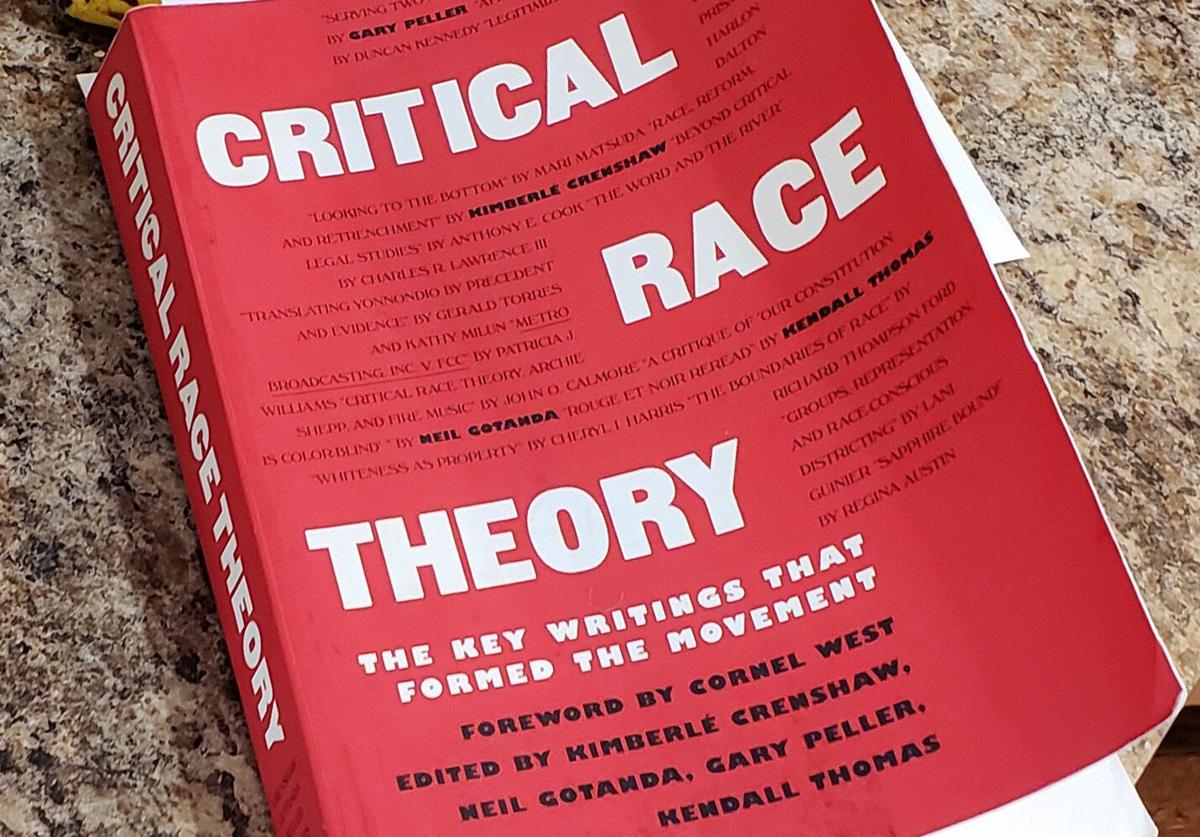
A (Sincere) Question To Critics Of Critical Race Theory

In general, I try not to wade into a hot button political topic until the rhetoric has become less heated. I think it’s rarely productive to throw your voice into the fray when everyone is still shouting their talking points at the top of their lungs. I know I’ve weighed in on political issues in the past, but I’ve tried to do so from a broader, bigger picture perspective.
Sometimes, though, it’s too hard to wait for everyone to stop shouting. In certain instances, the extent of that shouting is symptomatic of a larger mentality. It’s not just about the topic that’s relevant. It’s the general sentiment, passions, and feelings surrounding it.
Not too long ago, it was social justice and feminism.
Before that, it was same-sex marriage.
Before that, it was civil rights and sex discrimination.
Go back far enough and you’ll see similar discourse. When an issue is very relevant, it brings out both heated rhetoric and the prevailing attitudes of the time.
Today, I get the sense that Critical Race Theory has become that issue. Whenever people talk about it, their political tribalism rears its head and it’s neither subtle nor pretty. While I don’t doubt this issue will eventually pass to make way for the next one, it’s something worth touching on.
At its core, the particulars of Critical Race Theory aren’t that radical. If you look it up on Wikipedia, it doesn’t sounds wholly unreasonable. It’s simply a study to evaluate how social, culture, and legal traditions have impacted larger institutions and social systems.
As a social science, it’s hardly revolutionary. These are concepts that social scientists have been studying for decades. The main difference with Critical Race Theory is its emphasis on race, especially those pertaining to the African American community. After what happened with the murder of George Floyd in 2020, it only grew in relevance.
Now, I’ve stated before that we, as Americans, should not avoid the less flattering parts of our history. Acknowledging past mistakes doesn’t make you any less patriotic. It just offers a larger perspective towards certain American ideals.
However, that’s a point that those protesting Critical Race Theory don’t seem to harbor. Ever since the George Floyd protests erupted last year, this theory has been attacked and protested on multiple levels. In general, I try to sympathize and empathize with the passions of these people. They are my fellow Americans, after all. I believe they have a right to voice those passions.
At the same time, I cannot help but groan and cringe. I also genuinely wonder if they understand the full implication of what they’re arguing.
It’s true that Critical Race Theory has some distressing implications. Beyond acknowledging America’s racist past, it further complicates efforts to create a more just society. Addressing the transgressions of the past is not as simple as passing a few pieces of landmark legislation.
The system, as it functions now, is still very flawed. Fixing it may require greater effort, as well as a larger cost. Many people, who likely believe in themselves to not be racist, are bound to have a problem with that. They see it as an agenda, one that will label them and their children as a racist by default.
Whether or not that’s a reasonable concern is beside the point. I won’t claim to know what those protesting Critical Race Theory are truly thinking. I’m not psychic. However, in reviewing all this heated discourse, I’d like to offer a simple question to these people. It’s a sincere question and one I ask you consider seriously.
Why do you oppose teaching or discuss one particular idea over the other?
With that in mind, take a step back and look at this without Critical Race Theory being the main subject. Now, take a moment to appreciate what you’re asking of society, at large. You’re saying this idea that you think is wrong or flawed should not be discussed.
Even if you think it shouldn’t be discussed outside certain fields, you’re still making a statement. This is a dangerous idea and it shouldn’t be discussed, especially with children. Even in a country like America, which espouses the value of free speech, you’re arguing for an idea to be censored or suppressed.
Now, I don’t doubt there are some horrible ideas out there. Some are legitimate precursors to violence. That’s why organizations like the Ku Klux Klan are rightly vilified and prosecuted. Except, Critical Race Theory is nothing like that. So why, in that context, does it warrant so much outrage? Again, it’s a sincere question and I’d like to get a sincere answer. Please explain your reasoning in whatever way you see fit.
Filed under Current Events, history, human nature, outrage culture, political correctness, politics
A Perfect Cartoon To Highlight The Frustrating Absurdity Of Anti-Vaxxers
I know I’ve been giving those who refuse to get the COVID-19 vaccine a hard time in recent months. I won’t apologize for that because I don’t regret that in the slightest.
I’ll say it again. These people are being assholes. They’re the reason why this pandemic is still raging. They’re also the reason there’s a new variant that’s causing cases to spike in various parts of the country. I’m sorry, but I can only be so understanding when people are being assholes to a point that gets other people killed.
However, rather than bemoan these people for their dumb decisions and dumber politics, I thought I’d share something I found on Reddit that perfectly illustrates why the anti-vaxx crowd are so infuriating. It’s funny and it’s dumb, but it’s also painfully relevant.
Again, get vaccinated people. Quit being assholes.
Filed under Current Events, health