Tag Archives: depression

Why I Live Alone, But Don’t Feel Lonely

Loneliness is an awful, solemn feeling. Nobody denies that.

We’ve all probably had points in our lives when we’ve felt utterly alone, literally and figuratively. I know I have. There have been times when I’ve just laid in bed at night, staring up at the ceiling, and feeling like I’m in this dark prison cell that I can never escape. I don’t care who you are or how tough you think you are. That feeling hurts on a fundamental level.

Human beings are social creatures. That’s not an opinion. That’s a tangible, fundamental aspect of our species. No matter how much of a rugged individualist you think you are, we still need some level of social interaction to maintain our mental well-being. It doesn’t have to be overly elaborate. It just has to be there.

I make this point because there has been increasing talk of a loneliness epidemic. And it’s something that the COVID-19 pandemic did plenty to intensify. I know I felt it at times. I’m sure others felt it far worse than me. And even though the worst of the pandemic is behind us, those lingering feelings of loneliness are still there.

Now, I don’t claim to be an expert. I also won’t try to offer some contrived bullshit solution that a life coach might charge someone for. That’s not my style. All I can do is share my own experience and how I’ve dealt with loneliness in the past.

Because years ago, especially when I was out of college and starting off on my own, I felt pretty damn lonely. In college, I was surrounded by people my age. And even though I had awful social skills, poor self-image, and lingering personal problems that started in high school, I took some comfort in knowing I was surrounded by others like me. Even if I didn’t interact with them as much as I wish I had, I felt like we were all sharing the same struggles that came with going to class, studying for exams, and budgeting our limited money.

Then, I graduated and got out into the real world. Suddenly, I was in an environment where I was expected to fend for myself. Even though I had a wonderful family who supported me every step of the way, it was overwhelming. I felt isolated and lonely, wondering if I was strong enough to handle all of this.

Keep in mind, I still lived with others at the time. Even after I moved out of my parents’ house, I went through a period in which I lived in shared houses and apartments with other people. Most were around my age. And for the most part, I got along with these people. At one point, I lived in this large suburban house with five other people who all met on Craigslist. It’s not quite as chaotic as it sounds, but I was rarely ever completely alone in that place.

But I still felt lonely. I still felt isolated, even though my parents were just a 20-minute drive away. Those were difficult times.

However, I did get through it. Things did get better.

Now, as I write this, I live alone. I have my own place and I have no roommates. I’m also single, at the moment. I was single throughout the COVID-19 pandemic, as well.

And yet, I don’t feel nearly as lonely as I did during those years when I lived in a shared home. I don’t even feel as lonely as I did in college, despite being on a large campus surrounded by people in a similar situation.

I know that sounds like a paradox, but it’s the truth. I can only do so much to explain why I feel this way. I’ll only say that loneliness is an easy feeling to fall into without much effort. And it takes a lot more effort to actually escape it.

By that, I don’t mean pushing yourself to go out, meet people, and make new friends just to feel less lonely. That’s a mistake I see a lot of people making, especially socially awkward people like I was for much of my early life. If your reason for making friends is to just be less lonely, then you’re not making friends for the right reasons. And if you’re trying to talk to people just to feel less lonely, that’s just as bad a reason. That essentially turns your social interactions into something selfish.

It’s not about actually wanting to meet peole and be their friends. It’s about you and making yourself feel better.

That’s not a healthy mentality. And I freely admit I had that mentality for a good chunk of my early 20s. Growing out of it took time, as well as a concerted effort. It also required efforts that went beyond just improving my inherently poor social skills.

I’ve noted before how hard it was for me to get into shape after having many unhealthy habits throughout my life. I didn’t start working out regularly until I was almost 30 and when I started, it took a while for me to really feel the benefits. And while it might not have been my primary goal, working on myself and trying to be healthier really helped me feel less lonely.

Beyond just improving my mental well-being and self-image, it made me much more comfortable in my own skin. I feel like it sent a message to myself that I care enough about myself to put in the effort to be better, even when it requires spending an hour at the gym or running through freezing weather in the middle of January. Once that message sank in, I felt more confident to connect with others for the right reasons.

At the same time, my general social skills and communication skills had improved to a point where I really felt the benefits. It showed in how I interacted with family and friends. It showed in how I interacted with total strangers, both in real life and online. And during the COVID-19 pandemic, I leaned on those new skills to help me feel connected with others.

Those connections didn’t have to be big or elaborate. One thing that really helped was scheduling regular Zoom calls with my siblings and parents. That ended up helping me make entirely new connections because I met a lot of my siblings’ friends that I usually don’t get to interact with. Later on, once the pandemic faded, I met up with them in real life and it was a great experience. It felt like a true mark of progress that I didn’t realize I was achieving.

And if I can achieve that kind of progress, then I’m confident everyone reading this can as well. Yes, there are still times when I feel lonely. But it’s a feeling that doesn’t hit nearly as hard as it once did. Even though I live alone at the moment, I never feel the same crippling isolation I used to feel years ago.

For that, I’m grateful to the friends I’ve made in that time.

And I’m even more grateful to my parents and family, who were there for me during those times.

I realize I’m very lucky in some regards. Not everyone can enjoy the opportunities I’ve had. But we’re all capable of confronting loneliness in our own unique way. And I sincerely hope that by sharing my experience, others can draw strength from it.

Leave a comment

Filed under human nature, Jack Fisher's Insights, psychology, real stories

Why Seeing Back To School Sales Still Upsets Me

When I was a kid, summer was a wonderful time by almost every measure.

School was out, the weather was warm, and I actually got to sleep in every morning. Even during the years when I had a summer job, it was great. I loved it and it was generally a happy time for me.

But then, at a certain point during the summer, I would tag along with my parents and siblings to the store. And eventually, we’d enter a store that had these displays advertising a “back to school” sale. Sometimes, it was as early as mid-July. There would still be a full month of summer vacation to look forward to.

But to me, it was still deeply distressing, especially when I was in middle school and high school. That was usually the point in my summer when I started looking at the calendar with dread with increasing dread. I knew that with each passing day, I was that much closer to another year of school. And for someone who hated school as much as I did, that was very upsetting.

I know it sounds melodramatic.

I know it comes off as the overblown whining of a kid who just didn’t like going to school.

Even today, kids lamenting going back to school are likely to be met with dismissive eye-rolls. We hear them complaining about going back to school and we just think they’re being weak.

They think school is so hard. They have no idea how hard the real world is. School was supposed to prepare them for that and if they struggled to deal with it, then they were in for a rude awakening when they made it to the adult world.

I get that sentiment on some levels. I’m guilty of feeling it myself whenever I hear a kid complaining about a new school year. But whenever I experience that feeling, I find myself remembering back to what it was like for me when I experienced such dread. Even now, as a full-fledged adult who has been out of school for over a decade, it still upsets me on some levels. And I really wish it didn’t.

I’m sharing this because very recently, I came across one of those big back to school sales in a store. Those displays did go away to some extent during the COVID-19 pandemic. But this year, they’re back in full force.

There are entire sections of a store dedicated to school supplies, clothes, and any accessory a kid or teenager might need. There are also these images of happy and excited kids, getting ready to go back to school. I know for a fact most kids don’t feel that way about going back to school, especially in the middle of summer vacation. I also know that for some kids, those reminders are downright triggering.

Now, I know I’ve bemoaned how much I hated high school before. I’ve also made abundantly clear that I was a uniquely miserable teenager, largely because of crap I did to myself. It may come off as melodramatic. And I don’t deny that, with the benefit of hindsight, it probably wasn’t as awful as I made it out to be.

That still doesn’t change the fact that dreading going back to school was a deeply distressing experience for me. There were times when I would just lay in bed, anxiously watch my clock radio, and endlessly lament going back to school.

I knew it was going to be miserable.

I knew I was going to needlessly stress myself out over every little thing, from getting my homework done to making new friends to dealing with how ugly I felt due to poor self-image.

My parents and siblings, to their credit, did everything they possibly could to help me. None of what I experienced is their fault in the slightest. I just had this incredibly toxic mentality about school.

On the last day of school, I was elated to just let it go and celebrate having made it through another year. But when those first back to school sales showed up, I could feel that mentality returning like a wound being re-opened. And when that first day of school finally came, I was often the most insufferably miserable person to be around.

But as bad an attitude I had, I did eventually get through it. I made it through middle school, high school, and college without that toxic mentality completely consuming me. I won’t say doing so made me stronger. If anything, it set me back for years and I still haven’t fully recovered from it. It kept me from making new friends, improving my social skills, and developing new passions.

The fact that I still experience it today, even if it’s just in bad memories, further shows how much it affected me. It may not be as bad as it was when I was younger, but just recounting how upset I got when I saw back to school sales in the middle of summer still affects me. I really wish it didn’t.

Maybe at some point in my life, I’ll be able to walk by a back to school sale display and experience those feelings. But for now, it’s something I have to deal with.

And to all those who experience similar dread whenever they’re reminded that a new school year is coming, I can only offer my empathy and understanding. But I can also offer my perspective and hope. Because if I can navigate these feelings and all the bad memories associated with them, then you can too.

Be strong.

Be resliant.

Better times will come.

But for now, just take a deep breath and enjoy the rest of your summer vacation.

Leave a comment

Filed under Current Events, Jack Fisher's Insights, psychology, rants

Why Do We Root For Characters Like Bojack Horseman?

This is another video from my YouTube channel, Jack’s World. This video is about unlikable characters and why we root for them. There have been no shortage of such characters over the years. But few have really resonated as much as Bojack Horseman. There are so many things unlikable about this character and over the course of his show, he does many objectively awful things. And yet, he’s still someone I found myself rooting for. Why is that? Why do we feel this way about certain characters? I don’t claim to know the answer, but I make an effort in this video. Enjoy!

Leave a comment

Filed under Bojack Horseman, television, writing, YouTube

Lessons From Bojack Horseman: The Toxic Effect Of Celebrity

The following is a video from my YouTube channel, Jack’s World. This video is my first deep dive into Bojack Horseman, one of my favorite shows of all time. This Netflix series was so groundbreaking in how it told the story of a washed-up sitcom star from the 90s, who just happened to be a talking horseman. It was funny, but dark at times.

Okay, it was dark most of the time. But that’s beside the point.

There this show offered so many profound themes and insights on everything from mental illness to toxic cycles. But in this video, I focus on how this show depicted the world of celebrity and celebrity culture. Because Bojack’s story can’t be told without also telling the story of a celebrity with a great many personal issue. And while his story is powerful, I also think it sheds a light on the dark side of being a celebrity and how it affects people.

Leave a comment

Filed under Bojack Horseman, Jack's World, Uncategorized, YouTube

When (And Why) NOT To Be An Optimist

In general, I’m a pretty optimistic person. I have an overall positive outlook on life and the future. I’d even go so far as to say I’m excited about what the future will bring. My posts about sex robots should be proof enough of that.

However, I wasn’t always optimistic. In fact, anyone who knew me in high school or middle school probably saw me as the antithesis of optimism. I was always so dire and bleak with my outlook. I rarely had anything good or positive to say. I put myself down all the time and tried to bring the rest of the world with it.

It was not a healthy mindset, to say the least. I’m very glad I got out of it.

At the same time, it has given me some perspective. Having been on both extremes, I know what fuels that kind of thinking. I know and understand, to some extent, what leads someone to have that mindset.

Overall, I feel like having a positive outlook is more beneficial. That’s to be expected. When you’re more hopeful and optimistic, it tends to bleed into other aspects of your life. Optimism tends to attract optimistic people and those people are generally good for you. I certainly wouldn’t have the friends I have now if I’d remained so negative.

At the same time, there is a limit to optimism. There does come a point where being optimistic can be damaging, in the long run. I’m not talking about the kind of optimism that’s outright delusional, either. I’m more referring to the kind of mindset that makes someone too oblivious to the world.

I think that’s something people do struggle with. That might be a hard thing to say in wake of a global pandemic, but even before that dampened everyone’s spirits, it was easy to get caught up in that mindset. It often goes like this.

If everything seems to be going well, then why bother changing anything?

If things stop going well, then you try to get back to that particular mentality.

If what you do doesn’t work, then you double down and try even harder.

What made you happy and hopeful worked before. Why wouldn’t it work again?

This is a mindset I can attest to. When I was in college, my overall outlook improved. I got a lot less negative about the world. I got better at making friends. I even dared to be hopeful about the future.

Then, I faced some challenges. It was often small or minor. A girl I liked didn’t like me back. A class I took didn’t go well. My favorite team starts losing or I get into a fight with my roommate. It was very stressful, but I thought just maintaining a positive outlook would help work things out.

It didn’t. I won’t say it didn’t help at all. It just didn’t help as much as I’d hoped.

The same thing happened when I got anxious about my health and body image. As I’ve noted before, I did not have good health habits in my youth. I didn’t start regularly going to the gym until I was almost 30. Before then, I thought I just needed to rebuild my confidence and remain hopeful. I now know that was incredibly short-sighted.

Just having the right mindset is barely the first step. At some point, I had to make a more concerted effort. I had to work, grind, and struggle to get to where I wanted to go. If I had just stayed entirely within this positive mindset, I probably wouldn’t have gotten to where I am now, health wise. In that sense, being too positive worked against me.

This is the trap of overly positive thinking. Sometimes, if you’re too positive, you’re less inclined to put in the extra effort and make a meaningful change. Whether it’s about your health, your social life, or your politics, too much positive thinking can become an excuse to not change or do anything different.

That’s rarely healthy. That’s also why a little regular introspection can be a good thing. It’s something that’s encouraged by professionals who are far smarter than me on matters of psychology. If you need further details, check out this piece I found from Psychology Today.

Psychology Today: Positive Thinking Isn’t Always the Best Way to Go

When we suffer pain, rejection, disappointment, loss, disease, or another catastrophe, happy talk, whistling in the dark, or putting on a happy face do not work. Every cloud does not have a silver lining nor is there a pot of gold at the end of every rainbow.

Because the world is filled with all sorts of unhappy events, from not getting that dream job to losing a best friend to cancer, thinking only positive thoughts is delusional. Trying to maintain a happy face while tragedy engulfs us is unnatural, akin to trying to laugh when our hearts are breaking. Like Pagliacci, the clown who was intent upon making others laugh while tears streamed down his cheeks, we shortchange ourselves when we fail to deal with negative events and emotions.

I’ll sum this up by offering one last bit of insight.

Life isn’t easy, but it’s worth the effort. Things do generally get better and assuming the worst tends to be a self-fulfilling prophecy. However, just being positive is never enough. At some point, you have to make the effort. It’s often strenuous and frustrating, but it’s wroth doing.

Leave a comment

Filed under health, human nature, Jack Fisher's Insights, psychology

The Life Ryan O’Callaghan: A Sad (But Uplifting) Story About A Former NFL Player Coming Out

Ryan O'Callaghan #75 of the Kansas City Chiefs in action against the Denver Broncos at Invesco Field at Mile High on November 14, 2010 in Denver Colorado.

For a brief moment, picture a typical gay man. Depending on when you grew up, where you came from, and what sort of media you consumed, you probably have a certain image in your head. I suspect that image looks nothing like Ryan O’Callaghan.

Unless you’re a world class NFL football nerd, chances are you haven’t heard that name before. However, after learning about his story, I hope he’s someone who has changed your perception of what it means to be LGBTQ. That’s because Ryan O’Callaghan’s story is a sad, downright heartbreaking story on many levels, but one that has a happy, uplifting ending.

We need more stories like that, especially during Pride Month. We need them now more than ever.

To appreciate what Ryan O’Callaghan went through, it’s necessary to appreciate how hard it can be to live life as a closeted gay man. It’s also worth noting that this isn’t a story from decades ago. Ryan O’Callaghan was born in 1983. He’s pretty much the same age as I am. He was born at a time when things were steadily improving for the LGBTQ community.

However, that wasn’t much solace for him. He grew up in a very conservative part of California. After realizing he was gay, he had no idea how he was going to live that life in such an environment. That led him to hide his sexuality. At one point, he even made plans to kill himself.

It’s hard to imagine how agonizing it must be, having to hide a part of who you are from everyone around you. Forget, for a moment, how you feel about homosexuality in general. Imagine trying to hide a big part of who you are from everyone and being terrified of the truth coming out. Could we really manage keeping a secret like that?

I know I couldn’t. I question the honesty of anyone who claims they can. For Ryan O’Callaghan, it was too much. He really didn’t believe he could live a full life as an openly gay man. The best he could do was hide his secret as long as he could. That was where football came in.

This goes back to that picture I conjured earlier. Ryan O’Callaghan is 6 foot 7 inches tall. During his playing days through college and the NFL, he weight in between 250 and 330 pounds. He was an offensive lineman. He looked and played the part. In essence, he was the last person anyone expected to be gay and that’s how he liked it.

Through high school, college, and the NFL, he let football be his mask. It’s supposed to be the manliest sport in the world. Even after Michael Sam became the first openly gay player to play in the NFL in 2014, there’s still this perception that the men who play football fit a certain ideal and that ideal doesn’t involve being gay.

That’s not to say there haven’t been gay players in the NFL. In fact, there have been quite a few. One of the best tight ends in NFL history, Jerry Smith, played his entire 13 year career in the NFL as a closeted gay man. There’s a good chance there are active players in the NFL right now who are gay, but in the closet.

Be that as it may, it offered no comfort to Ryan O’Callaghan. Football was still his mask, but he loved playing it enough to keep going. It also helped that he was very good at it. He was so good that he managed to get a college scholarship with the California Golden Bears. He went onto play well enough to get drafted by the New England Patriots in 2006.

That’s a level of success very few football players ever reach, regardless of position. The fact that Ryan was able to go that far is a testament to both his skill and his talent for the game. Doing it all while in the closet just makes it all the more harrowing.

However, that success didn’t change his plans. Ryan still believed he could not live life as an openly gay man. Once his playing days were over, he still planned to take his own life. At one point, he even wrote a suicide letter, bought guns, and built a cabin. That’s how close he came to ending it all.

Thankfully, this story has a happy ending.

Before he took that fatal step, he got help from a clinical psychologist. She helped him out of that dark place. Eventually, he was able to come out, revealing his secret to the general manager who had drafted him. It’s hard to overstate how big that moment must have been for him.

I certainly can’t do it justice. I’ve only touched on some of the details surrounding Ryan O’Callaghan’s story. For a more a more complete picture, check out his book, My Life On The Line. Also, I highly recommend that everyone read this story done by Outsports. It covers Ryan’s struggles in far greater depth.

I should offer a bit of a trigger warning, though. Some of the details are difficult to take in, but it’s worth noting that this story has a happy ending. Here’s a brief snippet.

Outsports: Former Patriots and Chiefs tackle Ryan O’Callaghan comes out as gay

Very early on in the process he felt it was mandatory to share his truth with Pioli, the man who had brought him from New England and helped keep his career — and his life — moving forward.

Just after the 2011 season, O’Callaghan visited Pioli in his office.

The day before he had called his general manager, who had become a good friend, to ask him for a meeting. Pioli had known about O’Callaghan’s drug abuse, and the gravity in his player’s voice over the phone told him that something dire was on his mind.

“He had built this up like he was coming in to tell me that maybe he had done something truly terrible,” Pioli remembered.

O’Callaghan trudged into Pioli’s office the next day. After a hug and some small talk, O’Callaghan turned serious. He told Pioli he had been visiting with Wilson and had gotten “clean.” It was good news to Pioli.

“I’ve got something else I’ve got to tell you,” O’Callaghan said. At this point he was fighting back tears. Pioli’s mind raced, wondering if his player had harmed or killed someone.

“I’m gay,” O’Callaghan said.

His private announcement was met with immediate support from the GM. Then:

“So what’s the problem you wanted to talk me about?” Pioli asked.

O’Callaghan looked at him, bewildered, 27 years of fear, anxiety and self-loathing meeting Pioli’s stare.

“Scott,” O’Callaghan said, “I’m… gay.”

Pioli acknowledged that and asked again if O’Callaghan had done something wrong.

“People like me are supposed to react a certain way, I guess,” Pioli told Outsports. “I wasn’t minimizing what he was telling me, but I’m waiting for the other shoe to drop. He built this up and built this up to the point where he said he was nearly suicidal. What Ryan didn’t know is how many gay people I’ve had in my life.”

O’Callaghan also didn’t know that, according to Pioli, he wasn’t the first gay NFL player whom his GM had counseled.

The two men talked more and Pioli assured O’Callaghan that their conversation changed nothing, he was still there to support him, and they were still friends. O’Callaghan was shocked by the reaction. Pioli handled it pitch-perfectly, as though he had known all along. So O’Callaghan asked if his boss had, in fact, known.

“Ryan, how would I have known?” Pioli responded.

“Do you really think I like coffee that much?” O’Callaghan asked.

Pioli had no idea what his player was talking about.

O’Callaghan had, since his time in New England, headed to the training room after every practice to consume copious amounts of coffee, a convenient excuse to avoid being in the showers with the rest of his teammates.

Pioli got emotional at the thought of one of his players having to go to those lengths to keep some distance from his teammates. The mental toll this had all taken on O’Callaghan had come into focus.

As they rose to say goodbye, Pioli came around from behind his desk and opened his arms to embrace O’Callaghan. They had hugged countless times before, after games, after the offseason, even just moments ago when O’Callaghan walked into his office.

This time O’Callaghan stuck out his hand to shake.

“What’s with the handshake?” Pioli asked.

“I just told you I’m gay,” O’Callaghan replied sheepishly.

Pioli was having none of it and grabbed O’Callaghan.

“Dude, it’s OK,” Pioli said. Then, in his signature sense of humor, “Just don’t grab my butt.”

That broke the tension and O’Callaghan burst into laughter. The humor was a sign to him that Pioli wasn’t going to change. They could get along just as they always had.

“Don’t worry,” O’Callaghan replied, “You’re not my type.”

I sincerely hope this story resonates with others for all the right reasons. Whether you’re openly LGBTQ, in the closet, or just know people who are struggling with their sexuality, I hope the story of Ryan O’Callaghan offers insight and perspective.

Yes, we’ve made progress as a society. Life for the LGBTQ community is better now than it has been in the past. We still have room for improvement, as Ryan’s story perfectly illustrates. If you or anyone you know is struggling, I hope this story helps you in some way.

Also, if you need help or are at all feeling suicidal, please check out the resources of the Trevor Project. Thank you an have a Happy Pride Month.

2 Comments

Filed under football, LGBTQ, NFL, psychology, real stories, sports

Suicides (Surprisingly) Went Down During 2020: Possible Reasons And Insights

Every now and then, I go out of my way to highlight good or uplifting news. From brave priests who do defy the Vatican to wholesome comic strips involving Mr. Rogers, I try to use these stories to lift everyone’s spirits during difficult times.

Let’s face it. We’ve had a lot of that lately. Last year gave us plenty of difficulties, to say the least. It certainly doesn’t help that good stories rarely make the news, mostly because it doesn’t garner ratings or shock value. I tried to do my part, but I admit it wasn’t easy.

I managed to find some silver linings, by they hardly made up for all the soul-crushing hardship that year wrought. My spirit is still not fully intact after being so broken by last year.

Even so, I still want to make that effort to highlight good news, especially when it’s unexpected or surprising. One such story involves the less-than-uplifting topic of suicide, something that is both emotionally charged and incredibly devastating for a great many people and their families.

If ever there was a year during which people could be forgiven for thinking such morbid thoughts, it’s 2020. If a story came out that indicated suicides went up during 2020 as the pandemic raged, then I doubt anyone would be surprised. It probably wouldn’t even be news.

However, according to a story from CBS, that’s not what happened. In fact, the opposite occurred. Against all dire assumptions and understandable cynicism, the number of suicides in the US declined significantly during 2020. I’ll give everyone a minute to wrap their heads around that.

CBS News: U.S. suicides dropped last year, defying pandemic expectations

The number of U.S. suicides fell nearly 6% last year amid the coronavirus pandemic — the largest annual decline in at least four decades, according to preliminary government data.

Death certificates are still coming in and the count could rise. But officials expect a substantial decline will endure, despite worries that COVID-19 could lead to more suicides.

It is hard to say exactly why suicide deaths dropped so much, but one factor may be a phenomenon seen in the early stages of wars and national disasters, some experts suggested.

“There’s a heroism phase in every disaster period, where we’re banding together and expressing lots of messages of support that we’re in this together,” said Dr. Christine Moutier, chief medical officer of the American Foundation for Suicide Prevention. “You saw that, at least in the early months of the pandemic.”

An increase in the availability of telehealth services and other efforts to turn around the nation’s suicide problem may have also contributed, she said.

I want to make one thing clear again before proceeding. Suicide is a serious issue that affects a lot of people. If at all you’re struggling with suicidal thoughts, please consider calling a help line or reaching out to someone. There are people out there who will listen.

Having said that, I also want to note that this news genuinely surprised me. Even as someone who tries to have more faith in humanity than most, this is pretty much the opposite of what I would’ve assumed and in the best possible way.

During a crisis, people tend to panic. We all saw that last year. Anyone who fought someone for access to toilet paper remembers that. When people panic, they get stressed out. When they get stressed, they tend to get depressed. How else are you supposed to feel when you see the death toll climbing every day?

Despite all that, fewer people fell beyond that darkest of dark points. More chose to endure. That bold part is something I highlighted because that is a real effect. Whenever a disaster strikes, people tend to come together. Things like political divisions, racial strife, and what not tend to fall to the wayside when we’re all at the mercy of something we can’t control.

It’s one of humanity’s greatest strengths. Our tribalism may divide us a lot during times of peace, but when the going gets tough, we come together for the sake of survival. That’s powerful sentiment and one that can bring out the best in people. During a global pandemic, we all have to come together to some extent to make it through.

In addition, some cite the rise of telemedicine and the ability to treat people with mental illness remotely as a contributing factor. I certainly think that played a part, but I suspect that the shared struggle and solidarity that often comes during a disaster was a larger factor.

That same shared sense of community and commonality directly counter some of the most powerful risk factors for suicide. Those who make that dire choice often feel alone and isolated. They feel they lack that core sense of community that’s so critical to any social species.

The fact it was strong enough to reduce suicide during a once-in-a-century pandemic is both revealing and encouraging. It shows that this shared sense of community has tangible benefits to large swaths of people. It also hints that the world we had prior to the pandemic wasn’t given enough people this sense of connection.

You can blame that on any number of things, from smartphones to outrage culture to politics. I certainly have my theories, but I’m not smart enough or informed enough to make them credible. I highlight this story because I think it offers and important perspective.

When things get really bad, people will come together. It’s only when they get bad enough that we realize how much more we can do as a community than we can as individuals. We shouldn’t forget that. Even after this pandemic is over and things revert to some semblance of normalcy, we can’t forget that we’re a social species.

We need each other.

We need friends, family, and neighbors. It doesn’t just make us all stronger during a crisis. It’s an integral part of being human.

Leave a comment

Filed under Current Events, health, human nature, politics, psychology

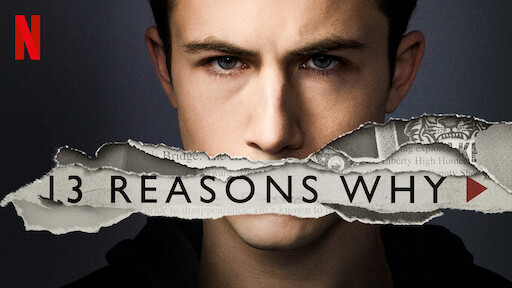
How “13 Reasons Why” Handled Male Sexual Assault in The Least Sensitive Way

The following is an article submitted by my good friend, DC-MarvelGirl 1997. We’d both been working on pieces about “13 Reasons Why” and she was generous enough to submit this. She tackles an issue that I was very hesitant to write about and for that, I thank you. She does great work on her website, which I encourage everyone to visit.


We live in a world filled with double standards. It’s by far one of the biggest diseases we have in society. I’m not putting this to the same standards of COVID 19, which is by far the deadliest pandemic we’ve ever faced in worldwide. Double standards are a different kind of disease, meaning they breed this false sense of contentment. And no, I’m not just referring to the Theon Greyjoy memes, which are truly sad and pathetic. I’ll admit it. When I look up those memes, I at first chuckle. But then I remember why they were made, and it is to point out that Theon no longer has his penis. Suddenly, those memes are no longer funny.

Theon

As much as I wish this article is about those Theon Greyjoy memes, it’s not. That’s what’s painful for me. This article is about the frankly piss-poor representations of male sexual assault in entertainment. And no, I am not referring to Burt Reynolds’ “Deliverance,” which was one of the first movies to put rape of a man into a scene. At least with that movie, it was done well. Even made for TV films like “The Rape of Richard Beck” did it better, because with “The Rape of Richard Beck,” now known as “Deadly Justice,” they blacked it out before the rape happened.

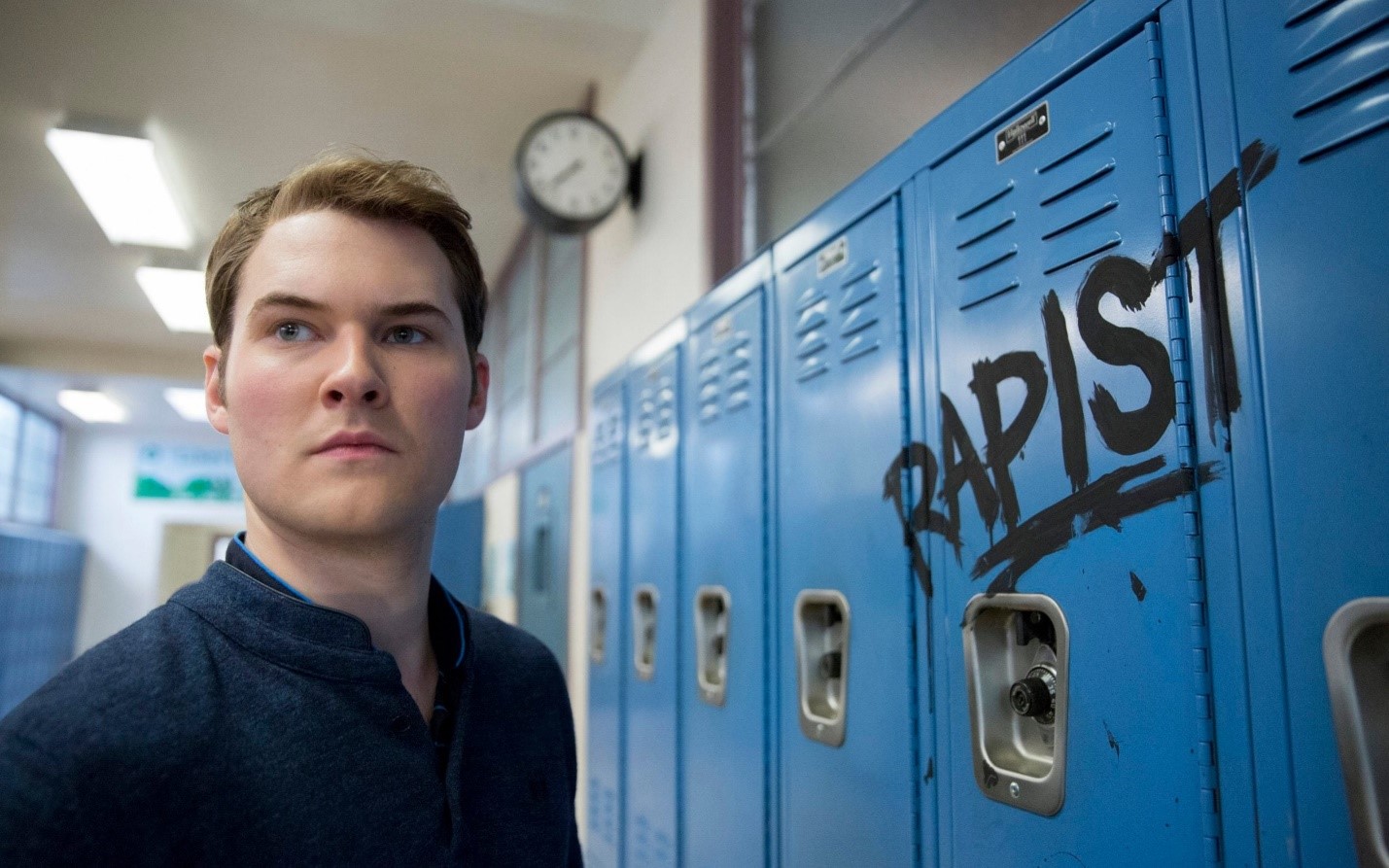
What I’m referring to is the rape scene from the season 2 finale of “13 Reasons Why.” It was the scene that made many people throw up watching it. For those of you who watched it, you know what I am talking about.

scene1

Now, I’ll admit it. I never watched “13 Reasons Why,” because it was banned from my household by my mother. And after hearing about how the show got progressively worse, I’m glad I didn’t watch any other episodes beyond the pilot. It’s a show that psychiatrists cautioned teenagers from watching, because it could be triggering to those thinking about suicide. Not only does it send the contrived message that you can use suicide to get revenge, but it handled male sexual assault in one of the worst ways possible. Because I’ve never watched the show for myself, I had to do a little bit of research on the “13 Reasons Why” wiki pages, and look up articles critiquing it. The male rape scene centers around the character of Tyler, who gets sodomized with a mop handle by a character named Montgomery. Not only was the scene unnecessarily graphic, triggering, and disturbing leaving many either crying, getting sick, or feeling disgusted, but the aftermath of it all is what I’m most critical of.

I understand that “13 Reasons Why” wanted to show that men can be raped as well. But their delivery was terrible. Like I said, the scene was downright disgusting and stomach-churning. But they didn’t bother showing Tyler doing something effective to get the bullying to stop. It doesn’t help that the teachers in the show are portrayed as incompetent of seeing what’s right in front of them, giving this sense that you cannot even trust your teachers to keep you safe. But the show didn’t bother giving us scenes of Tyler handling the aftermath with maturity. They just cut to him wanting to shoot up a school dance, mirroring the Columbine massacre which is one of the most devastating tragedies in US history.

Let’s just say, I would have handled this rape scene and aftereffects a lot differently.

scene2

If I were to write out that rape scene between Tyler and Montgomery, I would have shown the graphic violence of Tyler being drowned in the toilet and having his head slammed against the mirror. Then, I would have an extreme close-up of Montgomery’s hand reaching for the mop handle as the camera shakily backs away to display him leaning over Tyler’s back. Then, the scene would fade to black, signifying what’s to come. After that, I would have it fade into Tyler sitting on the bathroom floor with his pants down. That to me is more than enough to let the viewer know what happened, without giving you every, horrible detail of what happens. Then, there would be other scenes I’d add in.

How about having Tyler go to a hospital to be examined by a doctor? All the signs could be there, showing he’d been raped, but the doctor neglects to acknowledge this and that’s one of the things that pushes him.

How about showing Tyler being interviewed by police, but an officer telling him he was asking for it? That would also give him a reason to want revenge.

The reason why I put those two suggestions above, is because male rape isn’t given the same consideration as female rape. When a female is raped, it becomes a world-wide news story. When a man is raped, it’s not treated the same way. I tried to research cases of male rape in the recent years, and you wouldn’t know if there was, because the news doesn’t talk about it. Look at cases such as Corey Feldman and Brent Jeffs. Brent Jeffs I’m just mentioning, because his story is downright heartbreaking. He was raped by his own uncle, Warren Jeffs, the head of the FLDS. Jeffs’ story is one that many do not consider at all. Of course, people have the knowledge that Warren Jeffs raped and molested boys and girls alike, but they often forget to acknowledge that boys in that “church” were raped. They’re blinded by how horrifically the women and girls in that “church” are treated, that they forget about the boys. That to me is the saddest thing.

scene3

If “13 Reasons Why” bothered displaying how the criminal justice system fails to acknowledge male rape victims, then that would have been a much more powerful impact than Tyler trying to shoot up a school.

Overall, “13 Reasons Why” failed in a major way to display consequences of male sexual assault. They neglected important details with the character of Tyler, and didn’t even bother showing Tyler going to the authorities until season 3. And the fact that Montgomery was just arrested on the spot for raping Tyler, when there’s no rape kit having been done? I don’t buy that for one second.

However, keep in mind, they did the same thing with Hannah Baker in season 1. She didn’t go to the police reporting teachers’ negligence. She didn’t go to a hospital to be examined by a doctor. She just blamed everyone for her suicide with tape recordings, claiming it to be all their fault when she didn’t bother going to higher authority for help. And the fact that they display her mother blaming everyone as well? To me, that’s even more pathetic. I understand that you are hurting because your daughter took her own life and that she was raped. But she also failed to get help beyond going to a guidance counselor, who clearly wasn’t doing his job.

Therefore, do yourself a huge favor, and do not watch “13 Reasons Why.”

DC-MarvelGirl 1997

Leave a comment

Filed under health, human nature, media issues, philosophy, psychology, rants, television

The (Many) Reasons Why “13 Reasons Why” Fails At Confronting Serious Issues

There’s a place for mindless, shallow, escapist entertainment in this world. I would argue that place is even greater now as we cope with a global pandemic. Sometimes, you just want to turn your brain off, watch your favorite superhero movie or Michael Bay explosion-fest, and enjoy yourself. There’s nothing wrong with that.

There’s also a place for entertainment that attempts to have a meaningful, serious conversation about a real-world issue. I’d also argue that kind of entertainment is more important now than it was last year. I know this kind of entertainment is risky, especially when it tackles taboo subject or social politics. Sometimes, that effort evokes distress, disgust, or outright hate. It’s still worth doing.

However, that kind of media can be counterproductive when it gets an issue wrong, flawed, or ass-backwards. When the conversation it attempts to have is misguided or contrived, then its effects can be outright damaging.

This is how I feel about “13 Reasons Why.” It’s one of Netflix’s most serious shows in that it attempts to confront serious, painful issues. From teen suicide to bullying to sexual assault to mental illness, this show attempts to portray these issues in a way that helps us talk about them. I respect that goal. I think the show’s creators, actors, and producers had good intentions.

I also think they failed in too many critical ways.

I don’t just say that as someone taking the time to critically analyze a show. As someone who was a miserable teenager, I really wanted this show to start this conversation. I wanted it to send a good, meaningful message through its morbid themes. After the first season, I was very disappointed and a little depressed.

The premise of the show has the right ingredients. It revolves around the suicide of Hannah Baker, a teenage girl who took her own life and left pre-recorded tapes behind for her fellow students, namely Clay Jensen, to follow. The story attempts to explore what led Hannah to this grim decision that left her family, friends, and community devastated. Unfortunately, in doing so, it starts the wrong conversation.

That’s not just my opinion. Organizations like the National Association of School Psychologists and the United States Society of Clinical Child and Adolescent Psychology have criticized the show for how it depicts suicide. It has also been linked to an uptick in suicides and suicidal ideation among teenagers. Now, that might just be an unlinked correlation, but it’s still a distressing sign.

Then, there’s the plot of the show itself. This is where I felt the show really lost sight of its mission because, as a show, there’s a need for drama. Unfortunately, incorporating that drama undermines the conversation and, in some cases, turns it against itself.

Beyond the graphic depictions of Hannah’s suicide, which was received so negatively that was subsequently cut out, the whole show is built around a world of teenage caricatures that don’t exist in the real world. It portrays a world that relies heavily on stereotypes, gives little depth to characters no named Hannah or Clay, and makes every issue seem overly simplistic.

That’s good for dramatic moments and concise plots, but not for having real conversations about complicated issues. The people in Hannah’s life, from her parents to her friends, barely function as background characters. The authority figures, namely those in the school or in the police, are even worse. They’re essentially portrayed as never caring in the slightest, only seeing teenagers like Hannah as a nuisance.

For a show that wants to have a real conversation about teen issues, this is a terrible message. Teenagers already have an incomplete view of the world. Many of them already think nobody cares about them. The sequence of events in “13 Reasons Why” only confirms that. How is that supposed to help any teenager who might be contemplating suicide?

That’s still not the worst part, in my opinion. If “13 Reasons Why” has one glaring flaw, it’s how Hannah’s suicide essentially affirmed her motivations. To some extent, Hannah got exactly what she wanted when she killed herself and made those tapes. She punished the people she held responsible. Her story became the story that everyone talked about.

This isn’t just a terrible message with a depressing premise. It effectively misses the entire goddamn point in the conversation about suicide and teenage issues. In effect, Hannah doesn’t commit suicide because she’s clinically depressed or mentally ill. She does it as a very graphic “Fuck you!” to a world that didn’t listen to her.

It doesn’t just hurt her family. It doesn’t just cause more pain to her friends, some of which genuinely tried to help her. It gives the impression that suicide will make someone relevant. It’ll make everyone who didn’t care suddenly care. It ignores the pain caused by someone’s suicide and focuses on how it punishes those who wronged her.

Hannah was wronged. There’s no doubt about that. She was outright raped. She was a legitimate victim. If the show had decided to focus only on sexual assault and avoid suicide altogether, it might have sparked a more meaningful conversation.

However, the show grossly simplifies her issues, as though one egregious act is all it takes to send her overboard. People, even teenagers, tend to be more complex than that. On top of that, Hannah is shown to make bad choices and take little responsibility for her actions. We, the audience, are supposed to sympathize with her, but she makes that more difficult than it should be.

I wanted to like “13 Reasons Why.” I really did. I wanted it to further an issue that I think should be addressed. I was genuinely disappointed with how it panned out. The fact the show got multiple seasons only made it worse, rendering every serious issue as little more than a catalyst for drama. I don’t recommend this show to anyone if they want to confront issues like suicide and depression.

Ironically, if not tragically, Netflix already has a show that addresses these issues in a much more meaningful way. It even manages to do this with cartoon characters that depict humanoid horses. Yes, I’m referring to “Bojack Horseman.”

I understand it’s a cartoon. I also understand it’s a comedy that’s meant to make you laugh at times. However, the fact it still manages to depict the real struggles of depression and mental illness in a relevant only makes “13 Reasons Why” more tragic in the grand scheme of things.

These are serious issues that deserve serious conversations. If you can’t start that conversation better than a cartoon horse man, then you’re doing something very wrong.

Leave a comment

Filed under health, human nature, media issues, philosophy, psychology, rants, television

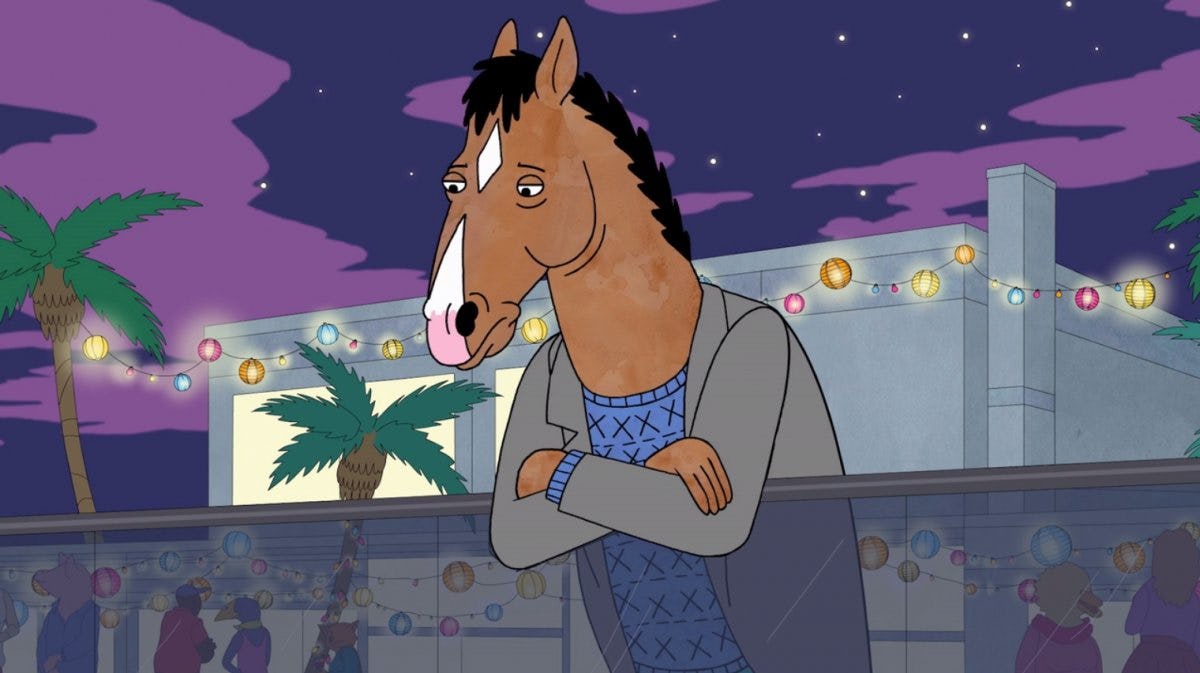
Bojack Horseman: A Real (And Honest) Face Of Depression

Whenever a TV show, movie, or other piece of media tries to do a realistic take on a serious issue, I tend to roll my eyes and brace myself. That’s because nine times out of ten, the writers and producers of these rarely sincere efforts get things half-assed or ass backwards. Sometimes, they’re not just wrong in their portrayal of an issue. It’s downright destructive. See the first season of “13 Reasons Why” for disturbing proof.

That makes any show that succeeds in portraying a serious issue all the more powerful. By that standard, “Bojack Horseman” is a diamond within a golden crown atop a pile of steaming cow shit. I apologize for the visual, but I feel like that’s the best way to get my point across.

I’ve found plenty of reasons to praise this show since it ended, but being stuck at home for weeks on end has given me more time to appreciate the many amazing things this show achieved. It’s hard enough to get emotionally worked up over a show about real people. To get worked up about a show of cartoon human/animal hybrids counts as a special achievement.

It’s not secret that Bojack Horseman tackles a lot of sensitive issues with varying degrees of sincerity, humor, and tact. The show always tries to entertain, but it also makes a concerted effort to approach these issues in a way that doesn’t feel shallow or half-hearted. Again, see 13 Reasons Why” for an example of how poorly this can go.

I’ve already highlighted how this show gives a well-developed take on the nature of addiction, an issue that is rarely more than plot catalyst for zany antics in most shows. There’s another issue that “Bojack Horseman” handles with just as much skill and it’s one that shows almost always get wrong when they try to tackle it. That issue is depression.

I’m not talking about the kind of depression we feel when a loved one dies, a spouse divorces us, or the show that made us a famous actor in the 1990s gets cancelled. I’m referring to real clinical depression, which is a real medical issue that plagues a lot of people in the real world, including people I know personally.

Now, I understand why depression is so difficult to confront in a half-hour/hour-long TV show. It’s not like the flu or some visible wound that you can treat directly and watch heal. Depression, at its core, is a one-two punch of chemical and mental that complement one another perfectly to make someone miserable to a crippling degree.

It’s chemical in that there are parts of the brain that just aren’t operating properly. The systems that usually make someone happy and content just aren’t working right. They often require medication or extensive cognitive therapy to get that system going again.

The mental part plays off those deficiencies in that they foster this mindset that keeps people in a constant state of doom, gloom, and misery. That mindset often acts as a catalyst for various destructive behaviors, from substance abuse to violent outbursts to self-harm. The effects vary wildly from person to person, but the mentality remains the same.

Where TV shows and movies often fail with depression is two-fold. First, it fails to depict the extent of someone’s depression. Second, it fails to show how it’s properly treated. Just showing someone in a saddened state isn’t the same as showing someone who’s clinically depressed. It only gets worse when that same show or movie tries to treat it as though it has a singular cause.

Sometimes, it’s because a character was abused.

Sometimes, it’s because a character lost a loved one.

Sometimes, it’s because a character didn’t make one single choice that haunts them.

Those are all decent catalysts for character development, but that’s not how depression works. It doesn’t just come from one action or inaction, nor can it be treated by confronting it. You can’t just go on a quest, save the day, and suddenly be a glowing ball of happiness. Depression is more complex than that.

That’s why it was so refreshing to “Bojack Horseman” take a very different approach. Throughout the show, Bojack is shown to have many issues. Depression is just one of them. He’s a substance abuser, a narcissist, and insanely self-destructive. If he went to a therapist, they’d need overtime to treat all his issues.

However, most therapists would agree that Bojack meets the criteria for clinical depression. He’s in a constant state of misery throughout the show and goes to great lengths to alleviate that misery, but often ends up making himself more miserable due to bad behavior and terrible judgement. In essence, his other personal issues often compound his depression.

Unlike other shows, though, the source of his depression is never framed as one particular thing. While he is shown to have abusive parents, substance abuse problems, and crippling guilt from his many bad decisions, there’s never a point where one issue becomes the source.

That, in and of itself, is an important distinction in portraying depression in a realistic way. However, of all the moments that highlight the extent of Bojack’s depression, one episode stands out over all the others. That episode is aptly called Stupid Piece of Sh*t.”

In this episode, Bojack is trying to deal with his previously estranged daughter (who turns out to be his half-sister) and his abusive mother, who is declining mentally in her old age. Like the many other challenges he faces throughout the show, his depression makes this difficult. What makes this episode stand out, though, is how it’s rendered through Bojack’s thoughts.

Through the colorful animation and the haunting voice talent of Will Arnett, these internal monologues give a voice to a depressed mentality the likes of which few shows have captured. It still utilizes a semi-humorous tone, but never stops being real or serious. It’s a powerful insight into what Bojack goes through every day. It doesn’t excuse his awful behavior, but it does provide an important context.

What makes this portrayal all the more powerful is when Hollyhock, his half-sister, asks him about it later in the episode. Like Bojack, she appears to be struggling with that same inner monologue and it’s not a pleasant feeling. She’s young hasn’t lived long enough to make Bojack’s mistakes, which makes her question at the end downright heartbreaking.

That voice in the back of my head that tells me I’m dumb and stupid that’s just stupid, it goes away it’s just a teenage girl thing right. Those voices… they go away, right?

That question, and the way Bojack answers it, cements this episode and this show as one of the best portrayals of real depression in any medium. At a time when we’re all isolated, I think it’s important to understand what real depression looks like. Even if it comes from a show about talking horsemen who sound like Will Arnett, it’s an important perspective that we can all appreciate.

2 Comments

Filed under Bojack Horseman, psychology, television