This is a video from my YouTube channel, Jack’s World.
In this video, I make the case that, of all the jobs artificial intelligence could replace, CEO should be at the top of that list. In recent years, CEOs in general have generated headlines for all the wrong reasons. With the ongoing advancements in AI, this is one job for which we should be actively trying to remove human flaws.
I believe people have the right to work, buy, sell, and do business as they see fit. There certainly need to be rules. No social, economic, or political system can function without rules that are fair and well-enforced. That’s not a political statement. That’s just cold, hard realism.
In that same mold, I am not in favor of unmitigated capitalism in the mold that most libertarians and conservatives envision. I do not believe corporations, businesses, and industries should be given excessive leeway when it comes to dealing with fraud, failure, or environmental destruction. There needs to be some level of regulation to curtail the excesses of the market.
In my youth, I used to be a lot more libertarian in my views on how much or how little capitalism should be regulated. But as I’ve gotten older, I’ve become more aware of just how dangerous unfettered capitalism can be. You need only deal with Comcast’s customer service for any length of time to be convinced of that.
Now, I’m at an age where I feel like I’ve reached a new crossroads with respect to my view of capitalism. I won’t say I’ve completely lost faith in it or the idea. But I’ve seen way too many instances of big corporations doing objectively evil things to not be critical. And when they get in bed with political institutions, that evil only compounds.
Seriously, there are companies and state governments colluding to roll back child labor laws. This is not a joke. These companies want to make children work for them because it’ll result in greater profits.
This brings me to billionaires. They are the most celebrated figures in all of capitalism. They’re regularly ranked and whenever someone else becomes the world’s richest person, it generally makes the news. Like many others, I often celebrated their achievements too. I used to think that making a billion dollars, let alone over $100 billion, took a special kind of drive.
I admit I was wrong about that.
Now, I don’t think that billionaires, as a class, should even exist.
That may sound like a radical position. It’s often a talking point that comes up among those on the extreme left of the political spectrum. And those who espouse anything close to it are often ridiculed as being anti-business, anti-American, or outright communists.
Those criticisms are bullshit, by the way. They’re also just a distraction to avoid the distressing implication about billionaries.
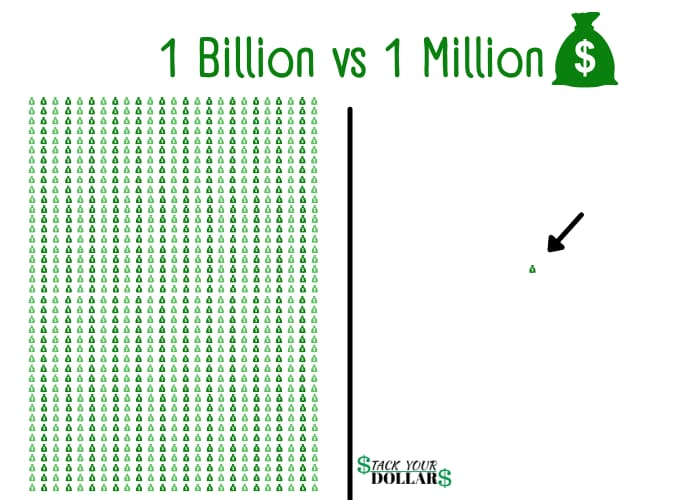
To understand, just take a moment to appreciate how much more a billion dollars is than a million dollars. I know those three extra zeros might not mean much to most people. But in simple mathematical terms, the gap is vast. In case you need something visual, here’s a quick image to help illustrate the concept.
Again, it’s not a trivial difference.
But if you need another way to conceptualize just how big a billion dollars is, consider the following.
One million seconds is about 11 days. Most of us can grasp that length of time.
One billion seconds is 31.5 years. That’s a third of an average person’s lifetime.
I hope that helps belabor the point because with that now in mind, ask yourself one critical question.
Is it humanly possible for anyone to work hard or long enough to justify having a billion dollars?
In the past, I might have considered that a dumb question. But now, I would answer that question with an emphatic no. I don’t care how smart, skilled, capable, or dedicated anyone is. The idea that someone even could work hard enough to earn a billion dollars just doesn’t work.
Again, look at the visuals above. The difference between a million and a billion is extreme.
It also helps to think back to the hardest, most laborious job you ever worked. Whether it was working in fast food, construction, or retail, just think about how hard that job was and how much it paid you. Now, consider how hard your boss worked and how much they got paid. Did the extent of their work actually reflect their salary?
In some cases, it might. But in most, I doubt it. Apply that to how much more billionaires make compared to even senior managers at a company and the disparity becomes even more absurd. If that doesn’t convince you, then maybe this video highlighting a speech by Jesse “The Body” Venture will.
Beyond just the work, take a moment to think about what it would take to spend that kind of money. How many houses could you buy that you could reasonably live in? How many yachts or ships could you buy and actually use in any meaningful extent? How much fancy jewelry could you buy and actually wear?
I’m sure there are those who think they could spend a billion dollars with ease. I doubt those same people truly understand how much more a billion dollars is compared to a million. And even if they could, it would take real, considerable effort to spend that kind of money in a single lifetime.
There’s also the argument that billionaires donate a lot of money to charity and that effort is worth their massive wealth. I used to think there was value in that too. But I’ve also come to see that endeavor as little more than virtue signaling laced with tax avoidance.
And finally, there’s the idea that billionaires are somehow special and they have a unique set of skills that somehow warrants them having that kind of wealth. That’s partially true, but not in a good way. If you just look at how most billionaires made their money, you’d notice that a lot of them either involve inheriting wealth that they didn’t do a damn thing to earn or being exceedingly ruthless in exploiting the labor of others and/or avoiding taxes.
On top of that, those with that level of wealth can literally afford to manipulate the system, legally and illegally, to ensure that their wealth and status is preserved. Whether it’s through tax loopholes or lobbying for laws that benefit them (and only them), billionaires can basically shape the world as they see fit, even if it hurts people, the environment, and everything in between.
Even if you’re in favor of capitalism, it’s hard to deny the corrupting factors that just a few billionaires could have. No system can work when it’s so top-heavy that just three people have more wealth than the bottom half combined. You can still have a functional, vibrant capitalist system that encourages entrepreneurs and wealth creation. You can also have a system that allows for billionaires. But you cannot have both.
As an alternative, I propose this.
Once you make a dollar over $999,999,999, that money gets taxed at 100 percent. And every year, the government sends you a nice trophy that says “Congratulations! You won Capitalism!”
If that much money and the trophy is still not enough for you, then you’re not just greedy. You’re an asshole and you can’t be trusted with millions of dollars, let alone a billion dollars.
A while back, a close relative of mine retired after a long, fruitful career that spanned nearly 40 years. They probably could’ve retired much sooner, but they were among the fortunate few who actually enjoyed their job for the most part. It had its ups, downs, and everything in between. But overall, it was a good career that most would be lucky to enjoy.
Over the course of that lengthy career, they worked under multiple CEOs. This was a fairly well-regarded organization, too. So, the CEOs were not part of some succession plan or a proud family business. This was the kind of company that followed a fairly traditional corporate structure and kept things impersonal as much as possible when it came to executive decisions.
However, in talking about how much the job had changed over the years and how much the industry had evolved in that time, this same person revealed something I found both striking, yet unsurprising.
Every single CEO they worked under qualified, by their definition, as a narcissist.
Now, for most people who have worked similar jobs, this probably isn’t surprising. There’s this prevailing sentiment that anyone who becomes CEO has to be a narcissist to some extent in order to get to that level. It even makes a perverse bit of sense. By their own nature, a narcissist seeks control, status, power, and aggrandizement. And the position of CEO offers all of that in spades.
But even if it makes sense for narcissists to become CEOs and we consider it normal, for the most part, that still warrants concern. There are times when our concept of normal has some major problems and we shouldn’t be afraid to confront it. This is definitely one of those situations.
For the relative who told me this, they had quite a few interesting stories to tell regarding the narcissism of CEOs. But they did make one important distinction. Even though these individuals were overtly narcissistic, they were not outright psychopaths. While most psychopaths are narcissistic, not every narcissist is a psychopath.
Narcissists can and do have some sense of moral responsibility.
Narcissist can and do experience empathy on some levels.
Narcissists can even be good CEOs, for the most part.
However, we shouldn’t let that override the legitimate concerns we should have when dealing with narcissists. There’s a reason why so many super-villains in pop culture tend to be inherently narcissistic.
Among the key traits of narcissists is a sense of arrogance, self-entitlement, vanity, and a greater capacity to exploit others for selfish means. These are traits we rarely want in people we deal with on a day-to-day basis. But in the role of CEO, they can give someone an advantage.
It means they won’t hesitate to make decisions that cause harm, distress, or ruin to others. It also means they’ll cross lines most people won’t in order to increase profits, further an organization, or undermine the competition. They can and will do things that’ll seriously hurt those working for them, yet still sleep comfortably in their fancy beds without a shred of guilt.
Maybe these sorts of tactics do help certain companies and organizations thrive. Many of the most successful companies in the world were founded or run effectively by narcissists who did things that, in hindsight, were deplorable by most measures. But we give them a pass because that made them and their company a great success.
It’s a not-so-hidden blind spot that we, the public, tend to overlook. And as I’ve gotten older and had my own experiences with narcissists, I feel like that sort of mentality is detrimental in the grand scheme of things.
One story that did stand out from my relative was how one particularly narcissistic CEO lamented how they might not have enough money to retire. Granted, this CEO was making well above six figures and he was complaining directly to someone who made a fraction of this. The idea that their bloated salary was not enough to retire on just seemed outrageous for someone just trying their best to pay their rent or mortgage on time.
It perfectly reflects how narcissists lack empathy and aren’t the least bit concerned with how people less fortunate or affluent get by. It would be one thing if this were just someone who had been born rich. But remember, this is a CEO. Unlike those rich from inheritance, their decisions impact entire organizations. Those organizations are full of hard-working people who may or may not be in a position to retire, no matter how hard they work.
That kind of disconnect between those making executive decisions and those actually doing the work isn’t just illogical. It’s damaging to the long-term health of any organization and society. Because if the CEOs of the organizations we rely on to keep our economy growing are too narcissistic, then what incentive do they have to do right by the society at large?
If the choices is between making the right choice for the most amount of people or more money and power for them personally, a narcissist won’t make the right choice.
If the choice is between sacrificing for the good of others or exploiting others for their own personal benefit, a narcissist will choose to benefit themselves 99 times out of 100.
Unlike most people with a more balanced perspective, narcissists need to be coaxed into doing the right thing. And even when they do, they’ll often do it begrudgingly. Those who are smart on top of being narcissists might be able to come to that conclusion if the long-term benefits are there. But for the most part, you can usually expect a narcissist to made decisions that benefit them over everyone else.
Having to work for a narcissist CEO is always challenging, but it can be done. Most people who have worked a steady job can attest to that. But it’s still worth asking ourselves if this situation is tenable in the long run. Because if we continue rewarding narcissists with lucrative jobs like CEO, then we’re just creating a world that’ll enable more narcissists.
Throughout high school and college, I took multiple history classes. Those classes included world history, American history, and even a few courses in ancient history. I won’t say history was ever my best class, but I’ve always had a certain affinity for it. I often find it enlightening and profound to see how our world came to be and how we got to where we are now.
Over the course of those studies, I often found hope and solace in knowing that certain issues within some societies had been resolved for the most part. History is often messy with mishaps and setbacks, but there’s a general trend towards progress and I found that encouraging.
Now, having followed the news for these past few years, I’m not nearly as encouraged anymore. Because lately, it seems like there’s a growing trend towards undoing some of the progress we made, even if it means making vulnerable, desperate people suffer. It’s bad enough that countries like America have taken a step backwards with respect to abortion rights, but now the same country that I love is taking it even further.
This time, it has to do with child labor laws. And believe me, I wish I was joking. I wish this were an elaborate story from The Onion. But sadly, it’s all too real.
In multiple states, mostly in the mid-west and south, lawmakers have effectively rolled back decades-old child labor laws to make it easier for companies to hire workers as young as 14-years-old. And in some industries, namely those involving farm work, kids as young as 12-years-old can legally work.
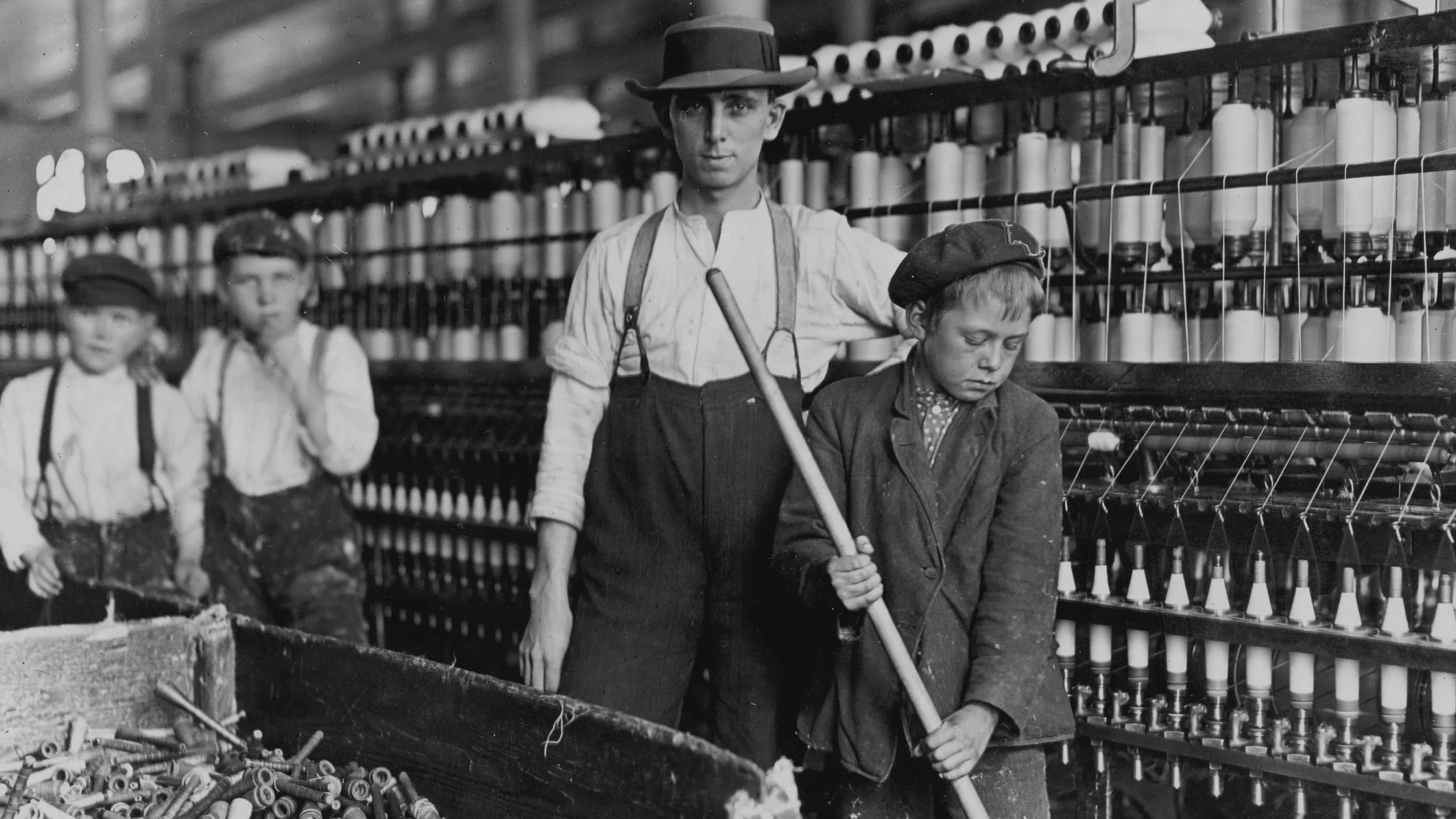
Now, if you have even a shred of compassion, empathy, and perspective, take a step back and think about this. Decades ago, we collectively decided that making children work in mines and factories was generally a bad thing. You don’t have to look far to find old, grainy photos of sad, broken children working in coal mines.
You don’t have to make bold assumptions about how these kids ended up having to work in such terrible conditions or why a company or business would employ them. They were desperate. They needed to do something to feed themselves or the rest of their families.
It wasn’t enough for kids to just help out around the house. They actually had to go out into dirty, dangerous mines or factories to earn what was likely piss-poor wages. And since they were kids, they weren’t as inclined to strike or organize. The only ones who benefitted from this were the employers, who were never going to pass up an opportunity to exploit cheap labor.
That’s why laws were necessary in the first place. History, as well as a basic understanding of power dynamics, has proven time and again that no organization gives up a profitable endeavor willingly. It took a serious movement of people who were appalled and disgusted by such practices to make these companies stop. And even when the laws were passed, some still tried to employ children illegally. Many still do, some of which include well-known American brands.
But now we’ve somehow found ourselves at a point where rolling back those laws is somehow viable? And those elected into public office are willingly going through with it?
Again, just take a moment to imagine this from the perspective of a kid. I remember being 12. I wasn’t even allowed to rent R-rated movies. And the most laborious task I could imagine involved doing yardwork with my parents over the course of a single afternoon. The idea of actually having to go to work while still going to school sounds like a goddamn nightmare.
Even when I was 15, it sounds downright soul-crushing. I was already navigating the rigors of high school. I was also going through the psychological and bodily horror that was puberty. The idea of having to work a job at the same time sounds downright cruel.
I understand that my childhood and circumstances are different than most. I imagine that kids from desperately poor families with limited opportunities might find such work unavoidable. But that’s exactly what makes these efforts by lawmakers so disturbing.
They’re essentially sending the message to employers, and society as a whole, that it’s perfectly fine to exploit desperate people and their children. It doesn’t matter if it means robbing a child of an opportunity to be a child and not get seriously hurt in a typical work environment. Their labor means more profits for the company and that’s all the justification we needed?
I’m no radical anti-capitalist, but even I call bullshit. If a company or business can only be profitable by exploiting the labor of children and desperate workers, then their business model sucks. And at the very least, our laws should not go out of their way to accommodate such models.
If all this weren’t bad enough (and it’s still very bad on so many levels), what makes it even worse is that those in favor of passing these laws are often conservative republicans. Remember, these are the same people who go all Helen Lovejoy and demand that we think of the children every time a drag queen dares to read them story. They’re also the same political wing who thinks a 10-year-old should be forced to give birth to a child that resulted from rape.
Again, I wish I was making this up. These policies, and the hypocrisy surrounding them, read like plots by supervillains. The only difference is that there are no costumed superheroes in this world who will stand to oppose them.
These despicable ghouls wearing human flesh have to know on some levels that what they’re doing will result in kids suffering, toiling, and being exploited by organizations whose only interest involves raising profits. They simply don’t care, mostly because they know their kids will likely never have to work jobs like that.
There’s a lot more I can say about the people pushing for and advocating these laws. But there’s only so much profanity and vulgarity I’m comfortable including in this rant. Maybe in a different time and under different circumstances, this wouldn’t bother me as much. I may not have kids of my own yet, but I have multiple nieces and nephews now. The idea of them growing up in a world where they could be employed and exploited at a young age makes me sick to my stomach.
Going back to my points about history, I’ll just remind everyone that we’ve been down this road before. We decided over 100 years ago that child labor is generally a bad thing for kids, families, and civilized society. We fought that battle for years and eventually won. Let’s not fight it again. Kids already have it hard enough. Let’s not make it worse for them.
Given the current state of the world, it’s literally the least we can do for them.
When an underdog succeeds, it’s worth celebrating. It’s a big reason why sports movies and superhero movies have so much appeal. Most audiences just love it when an underdog triumphs over daunting odds. And they love cheering with them when they ultimately succeed.
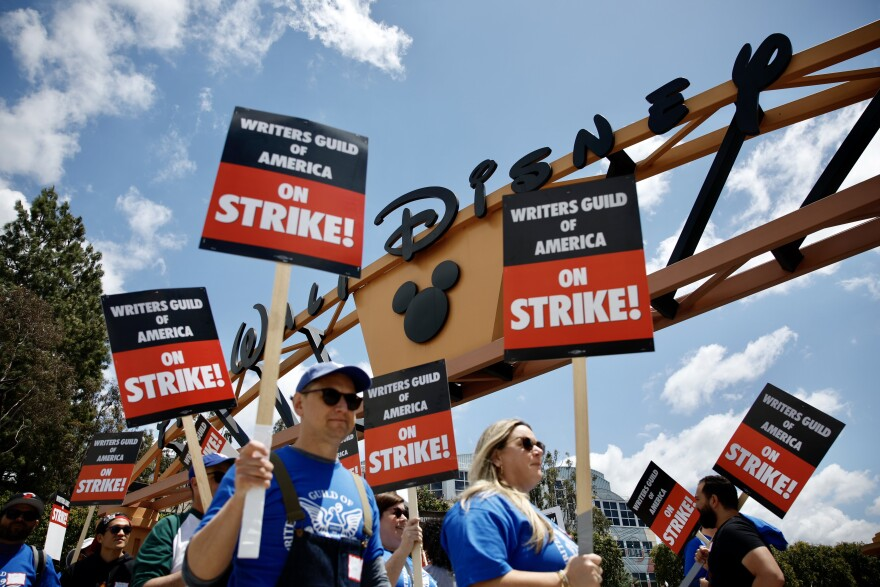
In that spirit, we should cheer the recent news surrounding the WGA strike that has been going on since mid-July 2023. According to the Associated Press, a tentative deal between the WGA and the major studios has been reached. While that doesn’t mean the strike is completely over, it marks a critical step in getting people back to work in an industry that was already reeling from the aftermath of the COVID-19 Pandemic.
As someone who loves movies, TV, and mindless entertainment as much as the next consumer, this is great news. This strike was bound to do more and more damage the longer it went on. We probably won’t know the full extent of that damage until a few years from now when we can look back at the impacts with the benefit of hindsight.
There’s also a personal element to this strike. I have multiple family members who work in the entertainment industry, mostly in the film and production side of things. They, more than most, felt the impact of this strike. Early on, a few even told me that this strike had the potential to last a long time. One even said they didn’t expect a resolution until late November. There was even a possibility it could continue well into 2024.
Thankfully, that no longer appears to be the case. This tentative deal, assuming it gets ratified, will provide some overdue benefits to the writers who play a big part in making the shows and movies we love so much. They deserve a deal that allows them to reap the fruits of their creative labor. You don’t have to look hard to find out just how much they were getting screwed over by a changing entertainment industry that studio executives and CEOs were exploiting to the utmost.
And therein lies an important lesson that’s worth highlighting, even as the strike comes to an end. This whole issue happened because the entertainment industry was changing. The old system that relied on residual income from broadcast TV and DVD sales just wasn’t going to cut it in an era of streaming media. The writers and actors behind some of these successful shows just weren’t getting the same share of the profits. And the studios were very much aware of this.
They could’ve adapted to ensure that those involved in the production could continue to be compensated fairly, even as consumers switched from traditional outlets to streaming.
They could’ve been open, honest, and transparent with the new economics of producing successful TV shows and movies in the post-COVID world.
They could’ve even explained why it was considerably difficult to pay generous residuals in a world of streaming media wherein profit margins were just too thin, if there even were profits to begin with.
But they didn’t. The executives, the CEOs, and those with the real power within these entertainment companies chose not to be proactive. Instead, they prioritized the price of their company stock and the investors who owned that stock. This is to be expected, as that tends to be the default reflex of publicly traded companies.
Call it callous in that it blatantly disregards the real work and toil of those producing the content.
Call it greed in the shallowest possible sense.
But at the moment, that’s simply how the incentives align in the entertainment industry, if not most industries in the global economy. There’s just too much money to be made by the rich and well-connected to do anything else. They are not going to do right by their workers unless they’re forced to, if not by law than by organized labor.
That may come off as cynical, but it’s also an important insight and one that every worker in every industry would be wise to remember. Because over the course of this strike, it quickly became clear how out of touch and callous these billionaire CEOs and executives were. They kept demanding that writers be reasonable with their requests. But at the same time, they were making hundreds of millions of dollars in salary and millions more in stock options.
These are not people capable of identifying with the life and struggles of working people.
These are people who might as well live on a different planet with respect to wealth, privlidge, and access.
Men Like David Zazlav and Bob Iger will never have to worry about paying a mortgage on time, falling behind on their bills, or ending up homeless because they cannot afford the outrageous rents in cities like Los Angeles and New York. So, how can we possibly expect them to empathize, let alone understand, the struggles of the writers and workers who help make their companies successful.
Most of these executives never set foot on a production stage, nor do they write or edit a single script. They just sit in offices, make demands/decisions, allocate money, and deal directly with investors whose primary focus is seeing a return on their investment.
And even if the company were to fail completely, these people would still end up with millions upon millions of dollars in their bank accounts. If they wanted to, they could never work a day for the rest of their lives. But those who actually work for them would be completely screwed.
It’s an unequal, unfair situation full of misaligned incentives. The executive and CEO class holds the power, the cards, and the money. They will not do the right things as a first recourse. They will only ever do what investors and their own self-interests incentive, by default. No matter how much money they have, they’ll keep trying to make more. And if that means screwing over their workers in any possible way, they’ll do it.
Remember that the next time labor issues come up. This doesn’t just apply to the entertainment industry, either. Any industry with a similar incentive structure will have the same issues. If there are rich, well-connected CEOs with shareholders to please, don’t expect them to prioritize workers beyond what they can legally and logistically get away with.
The only true counter to this uneven dynamic is that, despite all the power and money executives weird, they still need workers. They still need consumers. They still need to be credible in the eyes of the public to some extent. That kind of leverage is critical to maintain and appreciate.
Because the world will continue to change.
Every industry, from entertainment to making widgets, will continue to change with society and technology.
Those doing the work need to change with it because those with the money and power sure as hell won’t do right by anyone but themselves, unless they have to. And only those doing the work can make that happen.
This is another video from my YouTube channel, Jack’s World. This video is a thought experiment about capitalism. Specifically, it challenges us to contemplate alternatives that we could actually implement in the real world. Given the current trends in politics, which either glorify or villainize capitalism, I think this sort of idea is increasingly relevant. And it’s something we should contemplate seriously as technology, society, and the world continues to change. Enjoy!
This is another video from my YouTube channel, Jack’s World. This video essay is an exploration of what makes something truly Orwellian. It’s a term that gets thrown around a lot in political circles these days. But those who use it have likely not read any of Orwell’s work and don’t fully understand the larger message of 1984. I attempt to break down that message and apply it to the larger idea of what makes something truly Orwellian. Enjoy!
The world is always changing. That’s the only constant.
Sometimes, it changes more rapidly and chaotically than usual. That tends to happen a lot when major events transpire, such as a once-in-a-generation pandemic that infected millions and shut down entire countries. I hope I don’t have to belabor that to anyone with a news feed for the past year.
At the same time, these kinds of rapid upheavals can get us thinking harder about things we tend not to question. I’m not just talking about how much we take our health, our infrastructure, and our essential workers for granted. I’m referring to bigger concepts about how we approach life, society, and how we structure our lives.
One area that seems to be getting more scrutiny lately is how we approach jobs, work, and careers. I’ve certainly given it more thought, mostly in terms of the impacts of telework and how I used my stimulus check. I suspect many others have contemplated these topics in new ways in wake of recent events.
Now, as the pandemic nears its end, some of those concepts are already manifesting in the real world. One effect, in particular, has been especially jarring in America, mostly for reasons that other industrialized countries may find laughable. It has to do with people not wanting to work for a lousy, unlivable wage.
I know that shouldn’t be such a radical concept, but it is and as a proud American, I find it infuriating. There’s no getting around it. The ages for the average, non-CEO American have been stagnant for decades. It’s an issue that has been festering since long before the pandemic and even before I was born.
Before the pandemic swept in, there was an ongoing debate on whether the minimum wage should be increased to $15 nationally. I won’t get too heavily into the politics and talking points behind it, mostly because it ultimately descends into cycle of speculation and fallacies. I’ll just say that the pandemic has complicated that debate in unexpected ways.
During the height of the pandemic, the economy was basically shut down. Suddenly, millions were out of work and businesses had to shut down. Many still haven’t fully recovered. A big reason why many didn’t starve to death or end up on the streets was because of government relief packages, which included extended unemployment benefits.
While America’s relief package wasn’t nearly as generous as other countries, it was certainly better than nothing. I know plenty of people who genuinely needed that relief to stay afloat in terms of paying bills and feeding their families. It’s also not unreasonable to say that this was a critical measure in terms of preventing the pandemic from getting even worse.
However, this effort revealed something remarkable. According to a study done last year, the unemployment benefits that many workers received was actually better than their previous wages. It wasn’t an insignificant chunk of the work force, either. The benefits were greater for approximately 68 percent of American workers.
What does that say about the wages we’re paying our workers?
Moreover, what does that say about the system in general that workers can make more by not working than they would if they were?
Something about that doesn’t add up, literally and conceptually. I get that this was an unprecedented situation. At the same time, it reveal something about how we see work and workers. It’s something businesses are starting to realize too.
As the country and the world opens up, new job opportunities are arising. That’s good news for those who have been out of work. Unfortunately, those same businesses are having a hard time filling those positions.
The jobs are there.
The workers are there.
They just aren’t gravitating towards one another.
Here’s a brief rundown of the situation, courtesy of NPR. If you haven’t been working or are lucky enough to have kept your job during the pandemic, it should offer some insight and perspective.
At a time when millions of Americans are unemployed, businessman Bill Martin has a head-scratching problem: He’s got plenty of jobs but few people willing to take them.
“I keep hearing about all the unemployed people,” Martin says. “I certainly can’t find any of those folks.”
Martin helps run M.A. Industries, a plastics manufacturing company in Peachtree City, Ga. The company makes products used in the medical industry — specifically, in things like coronavirus tests and vaccine manufacturing and development.
But as he struggles to keep up with demand, Martin is finding it almost impossible to find new workers.
As someone who has worked his share of lousy, low-paying jobs, I can’t say I’m surprised by this. Don’t get me wrong. I still feel for the business owners who need workers to keep things going. I just can’t forget how arduous it was, working hard at a job that paid so little and left me so exhausted at the end of the day.
If the alternative is staying home and collecting unemployment, which ultimately pays more, then the choice is easy. That’s especially true for those who have kids or relatives they need to take care of. It’s not that they’re lazy, as some overpaid pundits love pointing out. It’s just that the nature of these jobs aren’t that appealing, especially when the pay is so low.
If anything, this situation has inspired us all to take a step back and look at how we approach work, jobs, careers, and business. When you think about it, it’s a little distressing that we build so much of our lives around work. It’s not just something we do out of obligation and responsibility. Many literally have to work in order to survive.
Is that right?
Is that just?
Is that healthy for society as a whole?
I say this as someone who has been lucky enough to have jobs that I’ve both loved and hated. I know what it’s like to work for a business that you hate. I also know what it’s like to have a job you find genuinely fulfilling. Not everyone is that lucky. In fact, I suspect the vast majority of the population, even in America, never experience that luck.
I get that there are economic reasons why some businesses can’t pay their employees high wages. I’ve worked in fast food restaurants. I know the profit margins aren’t exactly large. I also know that, even when I could make more than minimum wage, it was rarely enough to live on. That’s not even factoring the physical toll some of this work takes.
Despite that toll, there was still an undeniable stigma to those who didn’t work or those who simply avoided low paying jobs. In America, it’s a direct extension of that old protestant work ethic that equates moral worth with a willingness to do backbreaking labor for minimal pay. I’m not saying that work ethic is wrong, but I do think it needs to be re-evaluated.
The pandemic suddenly gave people an option on whether or not they wanted to do these kinds of low-paying jobs. Many understandably opt to just collect unemployment. They may not live luxuriously, but they will live. In some cases, they’re even better off.
It may be a sign of things to come. I already speculated on how the pandemic relief bills could be a precursor to a universal basic income. Now that people have experienced life in which their survival isn’t directly tied to having a low-paying job, I think it’ll be difficult to back.
I also think that’s a good thing. Regardless of how you feel about minimum wages, work ethic, or running a business, I think it’s generally a positive trend that we’re starting to decouple work with the right to survive. I think it’s a trend that has to happen, especially as automation does more and more of the low-skilled labor traditionally done by human workers.
It’s true. Some people are lazy and don’t like to work. Some people are just so driven and incapable of not working. Both still deserve to live without needed a job to keep them from starving to death or losing their home. As bad as this pandemic has been, I sincerely hopes it inspires us to rethink how we structure our society. There is a better way of doing things. We should always strive to do things better. Sometimes, that means rethinking everything we’ve come to believe about work, business, and life in general.
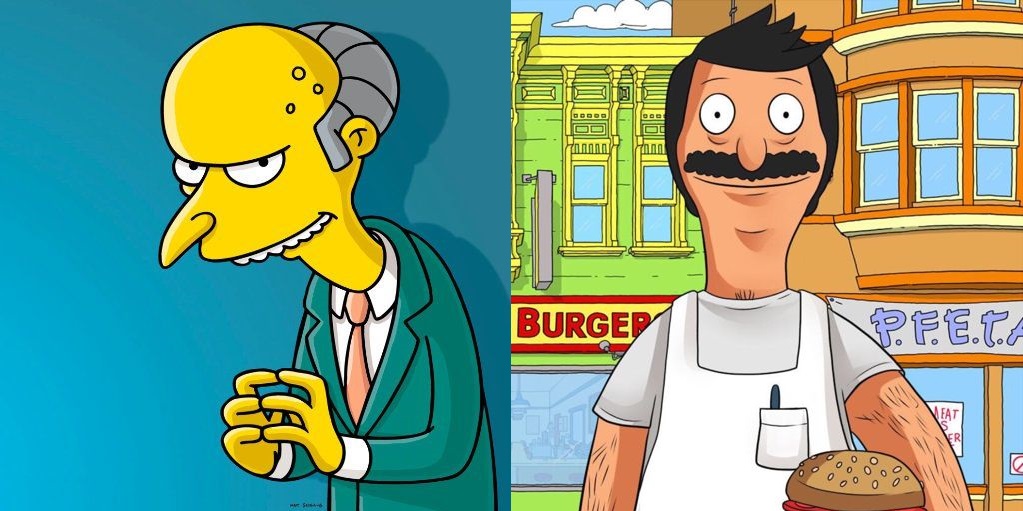
The following is a video for my YouTube channel, Jack’s World. It’s a bit of a shift from my previous videos. In this, I try to dissect certain TV tropes from some of my favorite shows. For this video, I’m breaking down how capitalism manifests in two distinct characters, namely Montgomery Burns from “The Simpsons” and Bob Belcher from “Bob’s Burgers.”
I’m very curious to see what kind of response I get here. If you like what you see with this video and want to see more like it, please let me know. Thanks and enjoy!
How much agency do we actually have in our day-to-day lives?
How much freedom do we actually enjoy on a pragmatic basis?
I ask these questions as part of another thought experiment, albeit one that requires more introspection than the othersI’ve posed. I think it’s relevant at a time when we’re dealing with a global pandemic that has severely restricted everyone’s agency to significant degrees. It’s also relevant because it’s something we rarely scrutinize.
There’s another reason I’m discussing matters of agency. It has less to do with current events and more to do with frequent criticisms of certain stories. As an aspiring writer and an avid consumer, especially of superhero media, the agency of certain characters is an integral part of that process. You can’t tell a meaningful story without characters exercising some level of agency.
What has become a major issue in recent years is the source, degree, and structure surrounding that agency. I’ve noticed critics and consumers alike scrutinizing who makes the major choices in a story, as well as what role they play, how they look, and why they’re doing what they do. While these are relevant details, that scrutiny can be misguided.
I see it whenever a female character is perceived as having no agency or having too much.
I see it whenever a male character is perceived as being the only source of agency for every major detail.
I see it whenever a character of a different race, ethnicity, or sexual orientation play a role that isn’t just restricted to tokenism.
It has derailed many meaningful conversations about some genuinely great stories. It has also established this standard for some people that if any character with agency happens to be of a certain gender or ethnicity, they roll their eyes and discount the story as pushing some sort of agenda. I find that to be incredibly shallow and short-sighted.
That’s why I think it helps to analyze how much agency we think we have in the real world. It’s easy to quantify that agency within the rigid structure of a story, but the real world is larger, more complicated, and a lot less predictable. How can we determine how much agency we actually have in the grand scheme of things?
How much agency did you have in being born into a particular time, place, or socioeconomic level?
How much agency did you have in falling in love with the person you married?
How much agency did you have in getting the job you have or the career you pursued?
How much agency did you have in finding the friends and social circles you’re part of?
On the surface, it may seem like you’re exercising your ability to choose in these circumstance. I ask that you take a step back and think a bit harder about it.
When it comes to our lot in life, did we really have much say in the economic and social system that we’re part of? Sure, we can choose to not participate, but in doing so, we either starve to death because we don’t have money for food or we become completely isolated from the world and any semblance of social support.
We think we have choices when we go to the supermarket or a restaurant, but how many of those choices are already chosen for us? We don’t always by the cheapest brand of cereal because we want to. We buy it because we have to. In that same sense, we don’t always buy the car we want. We buy what we can afford.
To a large extent, our agency is incredibly limited by our economic resources. It’s limited even more by our social structure, as well. We can’t always do what we want, no matter how depraved. We can’t just walk outside naked, rub our genitals against the nearest person, and yell racial slurs at the top of our lungs. We’d get arrested, imprisoned, or ostracized, at the very least.
Even if what we do isn’t illegal, we still limit our choices because of peer pressure and social stigma. It’s not illegal to watch porn on a public bus, but it will get you odd looks and plenty of scorn. To some extent, we sacrifice some of our agency to maintain an orderly, functioning society. It’s just a question of how much we sacrifice and how much we’re willing cling to.
With all that in mind, see if you can take stock in the amount of agency you exercise in your day-to-day life. You may be surprised by how little or how much you actually have. It may not be the most interesting thought experiment you can do for yourself, but the implications it offers are profound.





 Jack Fisher's Official Publishing Blog