How To Craft A Love Triangle That DOESN’T Suck

I’ve spent most of this week complaining about how much I despise love triangles and why they’re the worst invention since the concept of sparkling vampires. I’ve explained why they suck and singled out one that sucks the most. Well, now I’m done complaining.

My parents raised me to understand that complaints that aren’t followed up with solutions is nothing more than glorified bitching and moaning. I will not permit bitching and moaning on this blog. Instead, I’m going talk about solutions instead of problems. It’s a step 95 percent of complaints on the internet never bother to make. I’m taking that step here.

As much as I hate love triangles, I know they’re not going away. So long as people keep telling love stories, with or without vampires, love triangles are going to manifest in some form or another. Enews even did an article a while back ranking the “hottest” love triangles on TV. I contest their characterization of these love triangles, but I don’t deny their appeal.

It’s inevitable that plenty of these love triangles will be god-awful for the same reasons I described in previous posts. With that in mind, let me just say that this post isn’t about those. I’m directing this post to those yet-to-be-told stories that have some sliver of hope of being decent.

So how do we go about it? How do we utilize love triangles in a way that doesn’t destroy the story? It requires a little more work and effort on the part of the writer. Those who make porn parodies and fan fiction may not be inclined to do that extra work, but it’s definitely worth doing. There are enough bad love triangles as it stands. Do we really need another reminder?

The primary problem with love triangles, as a concept, is that it narrows the characters. It reduces them to serving singular, shallow roles that limits their development. If a character’s sole purpose is to serve as a source of tension for a particular romance, then that character has as much depth and appeal as a speed-bump. Since we want to inspire love and not road rage, it’s important to have a focused approach.

With this in mind, here are Jack Fisher’s four key tips for making a good love triangle.

1. Make sure the emotions between all parties involved are balanced.

Let’s face it. Lopsided victories are boring. Would a Rocky movie be entertaining if Rocky Balboa got his ass kicked in every fight? Even if you’re going to have a Biff Tanner somewhere in this story, make sure there’s some meaningful depth to the emotions involved here.

This applies to romances involving two men and one woman, two women and one man, or multiple men and multiple women of various sexual orientations. It’s vital, regardless of which body parts are involved. The emotions with everyone involved should be sincere. The people in the love triangle can’t just be attracted to one another. They have to have real, genuine passion for one another. If it’s not genuine, then it’s just creepy and misguided. Look at Wolverine in the X-men movies for proof of how bad this can get.

2. As a plot, a love triangle must be a secondary plot at most.

This isn’t as easy as it seems. I’ve noticed this in reading other romance stories and trying to craft my own. Whenever a love triangle enters the picture, it often comes to dominate the underlying plot of the story, so much so that it derails whatever major plot came before it.

I’ve seen this happen in fan fiction, comic books, animes, and erotic thrillers. The tension within a love triangle tends to consume the story, becoming one big distraction that keeps the audience from getting too engaged. That’s why a love triangle must always be, except in the rarest of cases, be a secondary plot.

This is challenging, but it is possible. Books like The Hunger Games and TV shows like True Blood (at least the first few seasons) are able to do this in a meaningful way. If done right, it can make stars out of Jennifer Lawrence and Anna Paquin superstars.

3. Don’t force the emotions. Let them manifest naturally.

This is actually easier than it sounds, but it can be tedious. I know this because I found myself taking a lot of extra steps when writing my book, Holiday Heat. That entire story is structured around a pseudo-love triangle of sorts, but no vampires are involved and there’s nobody resembling Biff Tanner. As such, I needed to add a few extra steps to develop the characters so that their emotions made sense.

This is critical because if a romance feels forced, then you’ll make the same mistake that Chris Claremont and the X-men movies made with Wolverine, essentially forcing emotions into a character for all the wrong reasons. If any character is going to have any genuine passion for another, it can’t just be for the hell of it.

4. The end result of a love triangle must be satisfying to all sides

This may sound hypocritical coming from an erotica writer, but try to make sure nobody gets screwed over too badly. This is what happened to X-men. This is what happened to Twilight. This is what happens with almost every bad love triangle. One character gets horribly screwed over and unless that character is a Biff Tanner type, it’s not going to be satisfying to the audience.

Most human beings who don’t have personality disorders tend to have an innate sense of justice. When we see injustice play out in the fictional world, it tends to upset us, just as it does when it occurs in the real world. So if there’s a character in a love triangle who doesn’t win the heart of his or her lover and gets unceremoniously cast off, then that’s not going to be satisfying. That’s going to be the literary equivalent of a dick move.

Again, this requires a bit of extra work. It means crafting a more complex plot wherein all parties involved achieve some kind of satisfying resolution to the emotional upheavals. It doesn’t always have to mean finding another love or forcing some other character to fill the void. Sometimes, it requires some extra layers to a plot, but it’s worth the effort if we, the audience, feel that everyone ends up satisfied on some level. It’s kind of sexy when you think about it.

So there you have it. Those our my four tips for making love triangles that don’t suck. I hope to employ them to some degree as I write more romance and erotica. I hope others can make use of them as well. This world has enough terrible love triangles. Let’s not create more. After Twilight, I think our civilization has had enough.

2 Comments

Filed under Jack Fisher's Insights

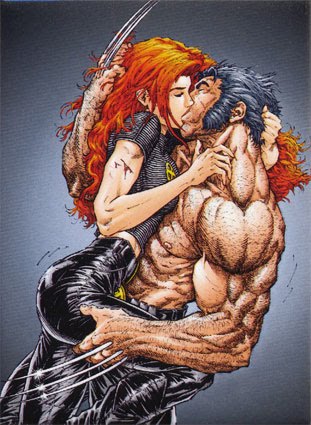
Cyclops, Jean Grey, and Wolverine in the X-men: The Worst Love Triangle of All Time

I’m not a successful writer yet. I’m not certain that I’m an overly skilled writer either. However, as someone who has been writing almost every day since he was 15-years-old, I like to think I know something about this topic. As such, I’m of the opinion that any overly bizarre or frustratingly inane plot can work if written well. With enough skill, a writer can make a story about snake handler hooking up with an alien compelling.

Then, there are certain plots that are so poorly structured, so inherently weak, and so intrinsically flawed that the combined efforts of Shakespeare, Tolken, and Faulkner can’t save it. For me, that plot is that of the love triangle. I even dedicated an entire post about why I think it’s one of the most overused, poorly written plot devices in all of romance.

I avoided getting into specifics in that post because I wanted to focus on the bigger picture as to why love triangles as a concept suck in general. For this post, I’m going to reach deep into the steaming pile of shit that countless stories featuring bad love triangles have excreted over the years and discuss the worst of the worst.

So which love triangle is the worst among the vast mountain of shit that occupies such a prominent position in popular culture? In this case, the worst comes from the world of X-men and involves the characters Cyclops, Jean Grey, and Wolverine.

For the sake of this blog, it’s very convenient that the absolute bottom of the pit that is terrible love triangles takes place in the world of superhero comics. This is, after all, a topic that’s near and dear to my heart. I’ve made my love of superhero comics known on this blog before. I will likely cite superhero comics again in future posts as I discuss similar issues. In this case, however, it really is an issue of pragmatism because I really could not find a worse example of a bad love triangle than this one.

What makes it so mind-numbingly terrible? Well, to answer that, here’s a quick rundown of the structure of this worst-of-the-worst brand of romantic drama. Cyclops and Jean Grey are founding members of the X-men. They were among the original X-men that were first introduced in 1963 by the ultimate creative dynamic duo, Stan Lee and Jack Kirby. They’re also, by far, one of the most iconic couples in the history of X-men, if not all of superhero comics.

Wolverine didn’t enter the picture until later. He doesn’t join the X-men until 1975, which is a while after he makes his first appearance as a supporting character in The Incredible Hulk. As the X-men’s resident bad boy, he’s basically the opposite of Cyclops. He’s brutish, crude, ill-mannered, quick-tempered, and bad-ass to an insane degree. So naturally, he pulls in a lot of ass. There’s actually a chart documenting Wolverine’s many romantic entanglements and it’s even more confusing/impressive than it looks.

So the very idea of Jean Grey falling in love with him while being in love with Cyclops is akin to a man being in love with both a nun and a crack whore. However, that discrepancy alone isn’t what makes this love triangle so horrendously bad. It’s all the circumstances surrounding it that make it the poster child for everything that sucks about love triangles.

First and foremost, the entire reason why Jean Grey developed an attraction to Wolverine in the first place is ridiculously contrived. X-men writer, Chris Claremont (also known as the most prolific X-men writer ever), indicated in numerous interviews that the attraction between them was extremely shallow.

“He sees Jean, Jean sees him, hormones kick in, the rational brain checks into the Happy Hour hotel, and everyone else runs for cover.”

There’s nothing wrong with basic attraction. That’s the sort of thing men feel whenever they see an attractive stripper or the sort of thing women feel when they see Channing Tatum without his shirt on. It’s a good setup for a one night stand. It’s not a good foundation for a meaningful romance, which is the only thing that makes a love triangle functional to some degree.

That never happens in X-men and for a very bad reason. Due to editorial decisions within the X-men comics that are too convoluted for a single blog post, Claremont soured on Cyclops as a character and openly despised his relationship with Jean Grey, despite having done more than any other X-men writer to solidify their status as the premier romance of the X-men. So what does he do? He tries everything he can to break them up and had editors not thwarted him in 1991, he would’ve succeeded.

That’s the entire reason that this love triangle exists. A writer grew to despise a certain character and decided to punish them by making his girlfriend fall for someone who is the exact opposite of him. Think about that long and hard for more than 15 seconds. Seriously, think about it as rationally as any human mind can manage on topics involving fictional characters.

Are you done? Then, I hope you can now see just how flawed that reasoning is. The writer hates one character and uses that as the sole justification for an entirely separate relationship between two characters who have next to nothing in common. That’s akin to loving soccer just because you hate American football. It’s a bad reason to love a sport and a worse reason for a love triangle.

In my post about why love triangles suck, I pointed out that they tend to devalue characters. It turns them into prizes to be won. It tends to override other meaningful traits a character may have. For Wolverine, it turns him from this bad-ass loner into an obsessive, petty asshat. That’s the trait of an insecure teenager, not a bad-ass loner.

The effect is just as bad on Jean Grey, who effectively becomes the ultimate prize of sorts for Cyclops and Wolverine. This is pretty insulting to her character because Jean Grey does so much to set herself apart as a strong female character from an era where the concept hadn’t been refined yet. She is the center of the Dark Phoenix Saga, also known as the greatest X-men story ever written. Reducing her to a prize for two men undermines a character with so much more to offer.

The comics do a terrible job setting up this love triangle, which the writer himself admits was created for petty reasons. However, it’s the way it plays out in the X-men movies that make this love triangle truly the worst of the worst.

How can the movies actually make this worse? Well, somehow they found a way. To this day, I have a hard time believing that the writers at Fox didn’t actively try to make this love triangle worse than it already was. What they came up with still confounds me, both as a writer and an X-men fan.

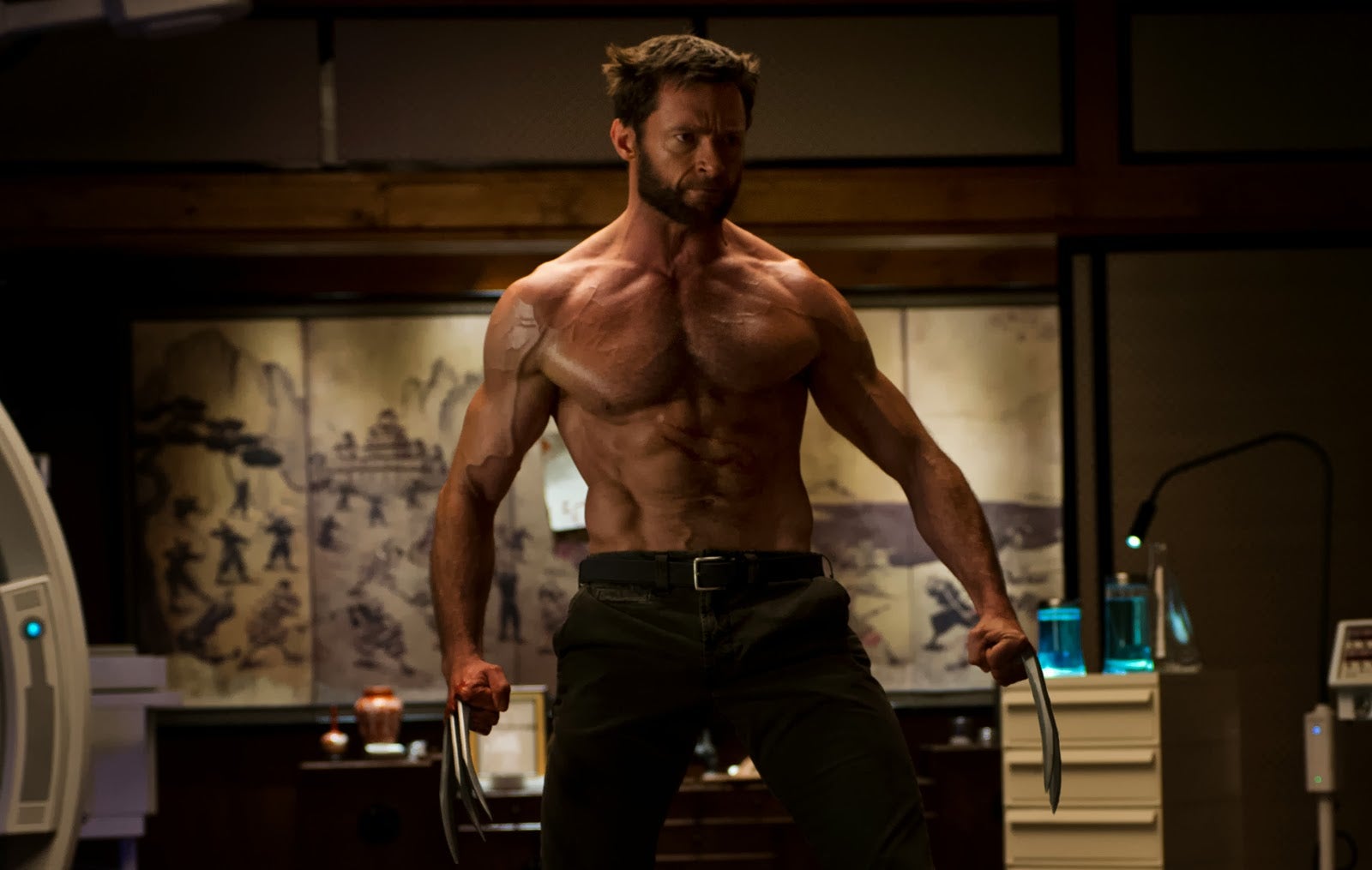
Anyone who has seen any of the X-men movies knows that most of them are structured around Wolverine. That’s entirely fair. He’s the most popular X-men character of all time and he’s played by Hugh Jackman. In case you’ve forgotten, Hugh Jackman looks like this.

I’m not gay, but even I think he’s sexy. Naturally, he’s going to have a love interest. A man this sexy has to have one. The problem is, the writers of this movie don’t realize how terrible the love triangle is with him, Cyclops, and Jean Grey in the comics. That, or they see it and think they have a way to make it worse.

First and foremost, they gave no reason for Jean Grey and Wolverine to be attracted to one another. Hell, he tries to stab her when he first wakes up at the Xavier Institute in the first X-men movie. That alone should ensure her panties stay dry around him for the entire trilogy. Instead, the chemistry between them is outright forced.

It has to be because these two never really have a meaningful conversation. They never really get to know each other. They’re just physically attracted to one another and the only reason they don’t bone is because Jean Grey is engaged to Cyclops. As a result, Cyclops is reduced to the role of being an obstacle to Wolverine. That’s pretty much his only role in the first three X-men movies, being a hindrance to Wolverine getting into Jean Grey’s panties.

There isn’t even an effort to balance things out. Cyclops is portrayed as someone who’s not nearly as badass as Wolverine, but he’s still respectable and likable to an excessive degree. He helps save Wolverine the first time they meet. He offers to shake his hand, which Wolverine flat out refuses. He never gets overly upset with Jean about her being attracted to another man. He’s bland, but likable.

If anything, Wolverine does everything he can to make himself the asshole you don’t want Jean to end up with. He steals Cyclops’ motorcycle. He steals Cyclops’ car. When he dies in the third X-men movie, he doesn’t give a second thought to making out with his girlfriend. He does this after he tells Cyclops earlier that she chose him at the end of the previous movie. He couldn’t come off as more of an asshole without pissing on Cyclops’ grave and stealing Jean Grey’s panties.

As bad as this is, it actually gets worse. At least in the comics, Wolverine actually knows Jean Grey as a person to some extent. He’s worked with her. He’s been on the same team as her. He’s lived under the same roof as her. Chances are he knows how she takes her coffee, what she watches on TV, and what her favorite brand of cereal is. In the movies, he knows none of this.

I’ve seen all these movies and based on the sequence of events and the time that passes between them, it’s clear that Wolverine didn’t know Jean Grey for more than a few days at most. He leaves at the end of the first movie. Jean Grey dies shortly after he returns in the second movie. There’s never any indication that they remained in contact. There’s no hint of tortured love letters, long phone calls, or dick pics being exchanged. They literally have no time to get to know one another.

That’s what makes the events of the third X-men movie all the more infuriating. Towards the end of the movie, Wolverine professes his love for Jean Grey before he kills her, at her request. Never mind the fact that this is the exact opposite of what happens in the comics. He proclaims her to be the love of his life despite the fact he doesn’t even know her. He doesn’t know her hopes, her dreams, or even her middle name. So how are we, the audience, supposed to believe that this love is genuine?

It ruins Jean Grey, as a character. It makes her nothing more than a prop for Wolverine. She’s not just the prize he pursues. She’s the only reason he has any emotional development. The fact that he barely knows her makes his affection for her all the more shallow. On top of that, it reduces Wolverine to this mopey pretty-boy instead of the bad-ass loner he’s supposed to be. He’s supposed to be Wolverine and not this guy.

The combined efforts of the movies and the comics ensure that the Cyclops/Jean Grey/Wolverine love triangle is the alpha and omega of terrible love triangles. It’s a horrendous plot that still plagues the characters to this day.

The biggest tragedy is that the Cyclops/Jean relationship has been shown to function well as a meaningful romance. Just this past month, there was an entire issue dedicated to showing how these two are a romance of equals who can make each other better, just like a good romance is supposed to. Good love stories don’t need a love triangle to develop, grow, and thrive. They just need some actual effort and a basic understanding of what makes a relationship work.

As an aspiring writer who hopes to encourage other aspiring writers, I would only cite the Cyclops/Jean Grey/Wolverine love triangle as a case study in what not to do. There are few ways in which a love triangle can actually work in a romance story. None of those ways are used in this case. In fact, some of those ways are turned upside down, inside out, and gutted.

Quality romance and quality characters, be they superheroes or ordinary people, deserve better. In the same way it’s almost impossible to make a quality meal with bad ingredients, it’s almost impossible to craft a quality love story around a love triangle. The convoluted, misguided clusterfuck that is Cyclops/Jean Grey/Wolverine is just a tragic testament to how bad it can get.

33 Comments

Filed under Jack Fisher's Insights

Love Triangles and Why 95 Percent of them Suck

He loves her. She loves somebody else. That somebody else doesn’t love her back. Somebody’s heart gets broken. Somebody kisses somebody in some exceedingly overdue moment. We’re then left with an ending that satisfies some, outrages others, and confounds many.

I just described the most basic formula for a love triangle, also known as one of the oldest, most predictable tactics in all romantic narratives. It’s right up there with the classic will-they-or-won’t-they narrative that Ross and Rachel drew out for way too long over multiple seasons of Friends. As an aspiring writer who specializes in romance and erotica, I can’t ignore its presence so let’s talk about it.

First off, let me acknowledge that love triangles have their place in popular culture. I understand that they’re part of a tried and true formula in romance that goes back to a time when our ancestors were washing their hand in cow piss and calling it hygienic. They tap into a powerful set of emotions in all of us. Unless you’re born rich or have the body of Ryan Gosling, you know what it feels like to see someone you love choose someone else. That said, they can tap into more annoying emotions and that’s what I’m going to focus on.

As anyone who hasn’t slept through English class knows, love triangles have been part of some of the most iconic stories in history. The most famous is probably the one that plays out in the legends of King Arthur. That affair involved King Arthur, his wife Guenivere, and the perpetually friend-zoned Sir Lancelot. That love triangle is a small, but important component of that whole mythos and it did not take away from it in any way.

Flash forward 800 years, throw in reality TV and vampires, and the whole concept of the love triangle has been overdone, over-used, and twisted to a point where it’s more of an annoyance than a plot device. At its worst, it derails the larger story that’s supposed to be unfolding. We all know the kinds of stories I’m talking about here. Do I really need to remind anybody of this?

I’ll try to limit my references to vampires in this post, but they symbolize just how bad love triangles can get. From a writer’s perspective (and I am trying to be a writer, mind you), it often narrows the narrative considerably. It immediately ascribes roles to certain characters that limits their development. When a character’s sole purpose is defined by who they want to bone and who is standing in their way, that effectively overrides every other trait of that character.

It plays out in way too many ways in every kind of media. Characters like Spike in Buffy the Vampire Slayer dedicated 90 percent of their energy towards winning someone else’s heart. The same thing plays out in books like The Hunger Games, movies like Tron, and even video games like Final Fantasy. Think of any form of media, new or old. At some point in the past or at some point in the future, a love triangle will infect it and its characters.

This doesn’t even begin to touch on the extent to which love triangles permeate comic books. As some of you already know, I love comic books and I’ve crafted entire posts about them. If there’s one non-vampire medium that abuses love triangles more than most, it’s definitely comic books. I’d love to get into specifics, but rather than risk derailing this entire post into a personalized rant from a message board, I’ll save that for another discussion.

Why do these stories persist? Well, as I said earlier, they do tap into some very basic emotions that are fairly universal across cultures. With this appeal in mind, maybe we should ask another question. Why do these stories about love triangles have to be so god-awful?

The biggest problem, in my opinion, stems from another problem that seems to be ingrained in our culture to some extent. When we tell love stories, we have this ideal in mind. One person finds their absolute soul mate. That soul mate is 100 percent in love with them and returns 100 percent of their affections. That’s all well and good in terms of romance. I certainly have a soft spot for those kinds of fluffy romances. I think those of us without personality disorders all have some affinity for those kinds of stories.

It’s that same affinity, though, that makes love triangles so untenable. A love triangle is often used as an obstacle. It’s a wedge designed to prevent two lovers from coming together. It can make for a good story, but it also comes at the expense of another character along the way.

Sometimes that works because the character in question is a total asshole. There’s no effort to make Biff Tanner in Back to the Future on equal footing with George McFly. He’s supposed to be an asshole. The problem comes when we want that character to develop dimensions other than being an asshole and that can be a problem.

The way a love triangle works essentially makes it so there’s always one character that gets screwed over and not in a good way. Someone is going to have their heart broken. Someone is going to come off as the loser and the bad guy. In some cases, as we see in Back to the Future, it works out in a way that’s satisfying. In others, especially in vampire-themed stories, it turns the character in to a sacrificial lamb of sorts. It means they never get a chance to stand on their own and show that they have worth.

I find that kind of approach troubling because it throws away opportunities to create quality characters. It also ensures that the character that loses is going to be flat, boring, and dull. If it’s a male character, he’s some sort of bad boy, Dirty Harry wannabe who just needs the right nudge to being a full-blown asshole. If it’s a female character, she’s some sort of Mean Girls uber-bitch who generates as much sympathy as a hungry shark.

That makes the outcome of the love triangle fairly predictable. Before it even has a chance to get sexy, we already have a pretty good idea of how it’s going to play out. The nice guy/nice girl is going to win. That’s all well and good in that it plays into our innate sense of justice, but it doesn’t make for very good stories.

It’s for this reason that I’ve generally tried to avoid using love triangles in my books. The closest I ever came was “Skin Deep” and even in that, I made a concerted effort to give each side sufficient depth. I’ll let those who take the time to read the book to decide whether I did a good enough job, but I think love triangles in general need to be either retired or overhauled.

How do we go about that? Well, I have a few ideas. I’m not going to share them just yet because I want to turn them into books first. I believe this is an idea that can sell if done right. If I can’t sell it, then I hope others figure out a way as well. A bad love triangle is the easiest way to turn quality characters into trophies/obstacles. It turns women into prizes to be won, men into powerless tools of their passions, and everyone else into overly emotional vampires. I think we can do better.

15 Comments

Filed under Jack Fisher's Insights, Uncategorized

An Honest Question: How Open Should We Be About Sex?

How much is too much? Isn’t that an existential question that can apply to so many issues? How much government is too much? How much sugar is too much? How much violence is too much in a PG-13 movie? We ask this question about so many things. Naturally, it comes up a lot during issues about sex.

That’s to be expected. Human beings are sexual creatures. We’re programmed to do two things: survive and reproduce. Thanks to the advent of AK-47, fighter gets, and everything associated with Chuck Norris, we got the survival part down. We used to fear tigers, snakes, and wolves. Now they’re either endangered or they’re our pets. We won the survival game.

With reproduction, however, it’s a different story. Sure, as a species, we’re pretty good at sex. There are over 7 billion humans on this planet. Clearly, we’re doing something right. The problem is that our attitudes about sex are more eccentric than Andy Dick on a double dose of LSD.

We need to reproduce. It’s part of our biology. At the same time, however, we’ve created all these weird cultural attitudes that make us anxious and uncomfortable about sex. It manifests in religion, media, and cultural practices. I’ve talked about it before on this blog, but now I’d like to open the discussion up a bit.

Just how open should we be about sex? It’s an important question to ask. I know I’m asking it from an odd angle because I live in America. This is a country founded by Puritans. As the late Robin Williams once said, these are, “people so uptight, the English kicked them out.” So even though we call ourselves a free country, we have exceedingly prude attitudes towards sex. In fact, it wasn’t until 1965 that the last few obscenity laws that prohibited the distribution of materials on birth control were struck down.

It’s fairly clear that, as a society, we need to be more open to talking about sex. It can’t just be with our kids either. That thought alone is enough to make parents want to vomit violently. Even consenting, mature adults have problems talking about it.

In many cases, there are all these unspoken rules about sex. We’re not supposed to talk about our ex-lovers. We’re not supposed to talk about the really good sex we’ve had with partners who aren’t our spouses. We’re not supposed to talk about the sex we had when we were young. So what the hell are we supposed to talk about?

Again, this is an honest question. I talk a lot about sexual issues on this blog. Some, like various types of orgasms, are just fun little tidbits about our biology. Others are a bit more serious, relating to religion and sociopolitical issues like feminism. So what are the limits? What can and can’t we talk about?

I’ve confessed to sleeping naked. That’s pretty tame by internet standards. Seeing as how I write erotic stories, I feel it’s pretty important to know where that line is how far I should take it. So I’ll open this question up for others to discuss. How much is too much? How open is too open? We humans know a lot about being sexually repressed. How much do we know about being sexually open?

As we contemplate this topic, here’s another video discussing this topic from the fine folks at ThinkTank on this subject. I sincerely hope this generates some meaningful, yet sexy discussions.

1 Comment

Filed under Jack Fisher's Insights

Starfire: Profile of a Sex-Positive Superhero

I intended to move onto another topic to start this week. I thought I said enough about jealousy and rejection last week, at least for now. Well, I may have been premature and as a man, I do not use that term lightly. Before I get going on another topic, there’s one last item I want to discuss regarding jealousy and rejection. That item involves superheroes.

I know that sounds like a non-sequiter, but hear me out. If you’ve been following this blog, you know that I am a big comic book fan. I tend to refer to comic books and superheroes when discussing issues on this blog, including the sexy kind. I’ve actually referenced the Deadpool movie as an example of progress in our culture’s attitudes towards sex. I promise it’s not as crazy as it sounds. I’ve also highlighted a recent issue of an X-men comic as an example of a balanced modern romance.

It’s not my fault that superheros help make my points so well and this issue is no exception. As I wrote about issues surrounding jealousy, rejection, and our cultural attitudes towards sex, I made some connections to a lesser-known superhero, but one who fits into this discussion in an important way. It’s not Superman. It’s not Batman. It’s not Wonder Woman. It’s not Captain America, Iron Man, or Wolverine. No, I’m talking about Starfire.

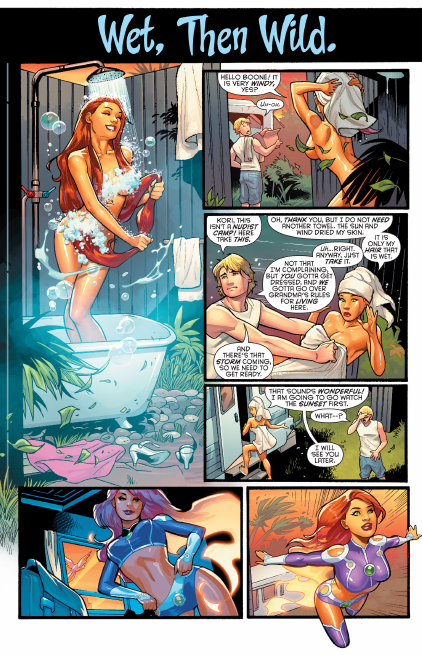
Who is Starfire, you may ask? Well, she’s an alien princess named Koriand’r. She can fly, has super strength, is super durable, and can shoot green energy bolts called starbolts. By all accounts, she’s very similar to Supergirl. She’s not as well-known as some of the other mainstream heroes. She still has quite a history and has done a lot to set herself apart from a crowded superheroes market. Oh, and she looks like this.

I think that tells a good chunk of her story right then and there. However, what makes Starfire special isn’t just her ability to look good in skin-tight outfits. A lot of female superheroes can make that same claim. Looking good in an obscenely revealing and/or extremely impractical costume is par for the course for female heroes and even male heroes to some extent. Anyone who remembers Michelle Pfeiffer’s memorable take on Catwoman in the old Batman movies knows this.

So what sets Starfire apart? Why am I singling her out from the countless other super-powered heroines who wear overly revealing costumes, have an awesome rack, and give pre-teen boys all sorts of strange new feelings? Well, it’s because Starfire embodies a special trait that sets her apart from every other superhero, male or female. She is, by far, the most sex-positive superhero in comics right now.

What do I mean by that? Well, superheroes having sex isn’t new. Superheroes having strange, deviant sex isn’t new either. Starfire exists in a universe where Superman and another female hero named Big Barda made a sex tape. It’s also a universe where Batman and Batgirl have sex on a rooftop. So clearly, comics and comic creators aren’t afraid to get kinky.

What sets Starfire apart is that she isn’t just comfortable with sex. She conveys it in an overtly positive way. She doesn’t treat it as an act of deviance. She doesn’t treat it as something callous or meaningless either. She treats sexuality as part of her overly loving, overly emphatic personality. She always frames it in a good, positive context. In the superhero world, that’s not just rare. That’s an aberration.

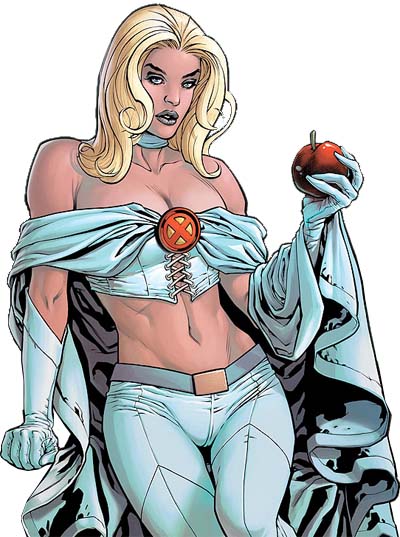
Traditionally, when a female character becomes more sexual, it makes them come off as more deviant. Overly sexual female characters take on a stereotypical vixen, one who flaunts her sexuality and exploits it to the utmost. I already mentioned Catwoman as one example, but Catwoman is a lightweight compared to Emma Frost of the X-men. I won’t get into all the way she’s conveyed her sexuality, but just assume she exploits it in ways even an erotica writer can’t imagine.

It’s an unfortunate theme that has played out in superhero stories in various ways over the years. Like slasher movies and teen movies, it reinforces this puritanical subtext that the more sexual a woman is, the more deviant she is.

Men aren’t immune from this subtext either. While they can get away with having more sex than female superheros, there’s still this unspoken impact attached to it. If a male hero is going to be more sexual, then he’s going to be more of an asshole. Like the jocks in 80s teen movies, they don’t come off as positive or upstanding like Superman or Captain America. The best example of this would be Namor, a character who has actually slept with Emma Frost. This is what he looks like and this is how he usually dresses.

I think that effectively conveys the traditional dynamic of sexual superheroes. It’s also why Starfire is so unique in her persona. She dares to defy this tradition. She dares to be a compassionate, loving hero while being openly sexual. She does not carry herself like some superhero vixen, flaunting and flouting her sexual traits. In fact, flaunting sexuality is downright alien to her.

For Starfire, sexuality is just a simple, natural part of life. It’s just one of the ways she shows love and affection to those around her. She doesn’t do it with an agenda. She doesn’t do it to exploit. She does it for all the right reasons. She’s also very comfortable with her body. It doesn’t just show in her skin-tight superhero outfit either. She’s also very comfortable being naked. Having written extensively about the joys of nudity on this blog, it’s something I can definitely appreciate.

There’s one other trait to Starfire that sets her apart. It has to do with jealousy, the less joyous topic I’ve brought up on this blog. In being so sex-positive, Starfire doesn’t experience jealousy the same way we see in other characters. Throughout the history of superhero comics, there have been all sorts of crazy love triangles and convoluted love stories. Wolverine’s love life alone is a testament to this. With Starfire though, these sorts of convoluted emotional entanglements are a moot point.

The best example of this manifested in a solo series she starred in earlier this year. In that series, she deals with multiple male characters with which she shows a romantic interest. Dick Grayson, the first Robin, is just one of them.

However, it’s her reaction to another relationship with a character named Sol that really sets her apart. While she’s off fighting monsters and exploring subterranean civilizations (it’s a long story, but one that’s totally worth reading), he finds love with a co-worker. What’s Starfire’s reaction to this? Does she get angry, upset, or sad? No. She doesn’t. She’s happy for him.

Does that sound strange? Does it sound downright alien? Well, think about it for a moment. Someone Starfire really cares about finds happiness. Being a loving, empathetic person, she’s happy that he’s happy. Besides, if you love someone and they find a new source of happiness, shouldn’t you be happy as well?

It’s one of those strange thought experiments that makes too much sense for our culture. As I’ve said in other blog posts, our culture does a lot to create unhealthy attitudes towards sex and intimacy. The idea of being happy that a lover finds happiness with someone else feels alien because our culture creates this strange nation that we’re supposed to own the love and happiness of another.

Think about that for a moment. We’re supposed to own the intimate affections of someone else and should be upset when they find it with others. The idea of owning the thoughts and feelings of others doesn’t sit well with me. I imagine it doesn’t sit well with a lot of people on some levels. However, this is what our culture commands us to some extent.

It’s for this reason that Starfire is such a remarkable character. She embodies a different brand of sexuality. She embodies an attitude towards sex that sets her apart. Given that she’s an alien, these attitudes certainly feel alien. However, they’re attitudes that we can and should learn from.

46 Comments

Filed under Uncategorized

One More Bit About Rejection And Dealing With It

Well, it’s been a day since I made a post that is sure to upset feminists, non-feminists, and clown porn enthusiasts alike with my insight into the mind of a misogynistic man. I haven’t gotten any threats. I haven’t been sued. I haven’t even gotten any hate mail. That shows just how relevant I am in the grand scheme of things right now. If I ever become a famous author, I have a feeling that post will come back to haunt me in some ways. For now though, my obscurity and lack of success protects me.

Perhaps posts like yesterday’s and my discussions about jealousy and rejection were tempting fate. I don’t believe in fate, but I do believe that things you don’t believe in can still screw you over. Maybe that happened this week because I got another rejection letter for “The Big Game.” This one wasn’t as detailed or friendly as the last one. It was basically, “We read it. We don’t want it. Fuck off.” Since this is erotica we’re talking about, I’m guessing that last one was meant in a good way.

Maybe I was hoping for too much with “The Big Game.” It’s not meant to be some epic “Lord of the Rings” scale erotica masterpiece. If I’m going to write something that big, I’d like to know I have an audience first. I don’t have that. I have a handful of people who think I don’t suck. I’m happy to accept that for now, but I’d like to grow that audience. Rejection certainly doesn’t help so I may have to figure something else out.

Earlier this year, I thought about joining The Writer’s Market online service. My only concern is that some of the services involved will be reluctant to push the kind of BDSM I have in books like “The Big Game.” I want to believe that there’s a market for every genre. Go to Amazon and look up Dinosaur Erotica for proof of that. I hope I can tap into that market.

Until then, I have to keep refining my ability to deal with rejection. I expect to deal with plenty more as I aspire to become a published author. I’ve found that humor of the sexy kind is a good way to cheer myself up. So in the interest of sharing these valuable skills with others, here’s a complication of sexy Vines I found on YouTube. It cheered me up. I hope it can do the same for you.

1 Comment

Filed under Books, Pubilishing, erotica, Las Vegas, erotic fiction, romance, Crimson Frost Books, Jack Fisher's Insights

Inside The Mind Of A Misogynistic Man

This is probably going to be the most ambitious, contentious, and volatile post I’ve written to date on this blog. If any post is going to incur hate mail and outrage, it’s going to be this. I’m bracing myself for whatever backlash I’ll incur because I know I’m going to offend someone here. I apologize in advance, but offensive things can contain harsh truths.

To date, I’ve tried to keep things fun, enlightening, and non-controversial. Granted, you’re bound to be a little controversial when you say orgasms have health benefits, religion is undermining our sex lives, and being naked is good for your health. This time, however, I’m going to touch on something that is already controversial. It’s gotten people fired. It’s generated death threats online and in real life. It’s been the butt of jokes and a talking point for presidential candidates.

That’s right. I’m going to be talking about feminism. Yes, I mean that kind of feminism. It’s the kind that deals with sexual assault, patriarchy, male privileged, and rape culture. It’s the kind that generates hashtags rather than aids poor girls in third-world countries working in sweatshops. If you’re a regular reader of this blog and don’t care for this issue, this is your chance to close this tab and wait for my next post. I promise I’ll get back to the fun, sexy, entertaining topics soon enough, but this is something I think needs to be said.

Still with me? Okay, then let’s do this. Let’s talk about this strange new brand of feminism that is sweeping the internet, undermining the video game industry, and getting people fired in some cases. If you’re not in your safe space now, you probably should be.

Now let me make one thing clear. I do not like talking about this. I’m a man. I can’t win these arguments because the deck is stacked against me. In my experience, discussions about women’s issues are best handled by women. It’s a crazy concept, I know. As a man, I can only bring so much to the table because I only know the perspective of a man. So how the hell am I supposed to understand the complex, sociopolitical struggles of contemporary women?

Well, being a man does give me some level of insight. I’ve noticed that discussions about this brand of feminism says a lot about how women think and feel about issues such as male privileged, patriarchy, and rape culture. The thoughts and feelings of men are a lot less scrutinized.

As a result, there are a lot of assumptions about what men think and how they justify their male tendencies. The way some feminists talk, they give the impression that men conspire in Illuminati-like meetings to conjure ways to subjugate women. First off, let me say that this does not happen. If a lot of men are going to meet in secret, it’s to tailgate at a football game or watch a My Little Pony marathon. So to all you feminists out there, you can stop worrying about that.

This still begs a very important, very relevant question. Why do men get so upset about feminism? Why do men get so hostile over women who criticize their masculine traits? Why do men cling to these unequal power structures between genders? Well, I can’t speak for all men, but since I am a man, I can provide some insight.

So here’s what I’m going to do. Again, if this is something that makes you want to punch your computer screen and start a hashtag, here’s your chance to leave. I really don’t want to offend anybody who is going to get that upset, but I’m willing to take that chance to say what I feel needs to be said.

What I’m going to do is tap into the mind of the misogynistic, patriarchal male that so many feminists despise and offer an explanation as to why men feel the way they do. Please note that this is just a thought exercise. These do not reflect my personal views. I strongly believe in equality, understanding, and empathy between all people, regardless of gender.

For the rest of this post, however, I’m going to take on the mentality of a pure, undiluted misogynist. Once you read this text, I hope feminists and non-feminists alike have a greater appreciation for why men feel the way they do. So here goes. Here is a letter from a misogynistic man to the feminists of this world.

Dear Ladies,

There’s no easy way to put this so grab your tissues, get a box of chocolate, and sit down. What I’m about to say is going to piss you off and that’s good because it pisses me off too, way more than you’ll ever know. So here it is. Here is the cold, callous, testosterone-laden truth. We HATE you.

I’m sorry, but it’s true. On some deep, primal level, we can’t help but HATE you. I’m not talking about the hate you have for bullies or poor wi-fi connections. I’m talking about a hate that is so deep, so unspoken, and so reserved that we couldn’t express it fully if we tried. It’s a hate that consumes every man, be they gay, straight, white, black, old, young, and everything in between. We don’t like this hate, but we can’t escape it.

Why is this hate so strong you ask? Well, that’s hard to explain. This isn’t the kind of hatred that we show. In fact, most men go through their whole lives never showing it. They just know it’s there. It plays out in all sorts of ways, but for the sake of clarity, here’ s a quick scenario that should give you some idea.

Remember that beautiful, sexy, popular girl that every guy wanted and every woman wanted to be? Remember that stereotypical cheerleader type that was in every bad teen movie ever made? If you do, you probably remember how we men loved to say mean, dirty things about her. We talk about all the nasty, pornographic shit we’d do to her. Then, we’d call her names like whore, slut, and bitch. We’d shame and scold her the first chance we got. Why would we do that? Why would we do that to anyone we barely know?

The simple truth is that these girls are not having sex with US. I’m not talking about US, as in men in general. I’m talking about US, specifically. It’s inherently selfish, which is why we tend to do it in groups, but it’s true. We resent pretty girls who don’t have sex with US and only US. We see it as either some other man taking something that’s ours or some girl denying us something we want.

Imagine yourself in a cafeteria. There’s all this food, but there’s only some that you really like. You find this food. You go up to the counter. You ask for it as politely as possible, but the cashier just flat out says no. You’re not getting this food. You’ll NEVER get to eat this food. Only a very select few that the cashier chooses by entirely arbitrary standards will get this food. You’d be pissed, wouldn’t you? Well, that’s how men see it when you women refuse to have sex with us.

I know. Comparing sex to food is a poor analogy, unless you’re into a specific kind of fetish porn. We don’t like it either, but this is what evolution does to us. It wires our brains a certain way. That wiring still assumes we’re cavemen roaming the savanna, hunting elephants and escaping hungry tigers. It gives us two primary drives: survival and reproduction. It’s not rational, but it’s how we survive as a species.

The problem is that when you tie survival and reproduction together as such strong imperatives, some wires are going to get crossed. We’re going to equate the act of acquiring food to acquiring sex to a ridiculously illogical degree. We kind of have to because logic doesn’t fill your stomach or propagate a species. If we had another choice, we’d take it, but this is what we’re stuck with.

It’s because of this hate we feel when you deny us sex that we feel the urge to control you. Think of a man fighting off a tiger that doesn’t want to become dinner. We fight with every bit of primal rage we can to survive and secure our next meal. As a result, we try to do the same to you.

Take a look at history. Look at how so many societies went to absurd lengths to control female sexuality, manage gender roles, and structure the dynamics of sex. There’s a reason why most of it is overtly patriarchal and no, it isn’t because of some shady conspiracy. It isn’t even done out of the inherent hate we feel towards women. It’s all about economics.

I’m sorry. I know that’s not a very satisfying explanation. That’s like the IT guy telling you that your computer is slow because pigs in Wyoming are farting too much. It’s true though. Economics, including those involving sex, drive a lot of this patriarchy shit you complain about. I’m sorry, but we kind of owe our entire civilization to that shit.

After we stopped hunting and gathering, we formed farms. We needed to protect those farms so we formed tribes and kingdoms. We also needed a lot of people to work on those farms so we needed to do a lot of boning to produce a lot of kids. That means subjugating women on a farm and doing everything we can to make them focus on producing those kids, knowing some of them will probably die in childbirth.

On top of that, we had to account for a good portion of those kids dying before their second birthday so we needed to control the lives of the women pumping them out. I know it sucks, but there’s no way around it. We can’t make these kids on our own. If we could, we’d have no reason to hate or subjugate you. We still need you though. Our survival depends on it. Remember, our brains are wired for survival, not reason.

While we’re on the subject of those kids, there’s something else to consider. We kind of need to make sure that they’re ours. We need that because again, we need to protect all this land and property. We need to make sure it stays within the family. That means we can’t have you women fucking around with other men. That means we need you to be virgins on your wedding night. We also need you to fuck us and only us to make sure that the kids you make are our kids.

Because there’s a lot of money and wealth at stake, we come up with all sorts of crazy ways to make sure you fuck only us. We create these crazy religions, myths, and cultural practices that say you should not have sex, you should not enjoy it too much, and you should focus on making babies for the tribe. Some of these excuses are pretty fucked up, but remember there’s a lot of money and wealth at stake. We’ll justify them any way we can if it helps us survive and reproduce.

So we create this whole system around men working the fields while women pump out the babies that grow up into more workers or baby-makers. Along the way, other men in other tribes do the same. They aren’t always good at it for reasons that aren’t always their fault so they form armies to invade their neighbors. That means we need to have an army too. That means even more boning to make more babies so they can become soldiers. You see the pattern here?

This is where we get into the whole rape culture/sexual assault thing. I know this is a big sticking point for women. I know you get so outraged when you see stories about blaming victims and men claiming that women are tempting them. Well, if you’re with me so far on the economics at work here, you should be able to figure out why this is a thing in the first place.

Keep in mind, we didn’t stop living as agrarian tribes until very recently. For most of our civilized history, we needed a steady supply of men to farm the fields and fight the wars. So when a man rapes or assaults a woman, we tend to make more excuses than we care to admit.

We need that man producing food and fighting wars. The woman he rapes may be hurt or traumatized, but she’s not going to protect the tribe or make the food. She’s going to produce babies and is likely to die in the process. So overall, the man will do more for the tribe so we’ll come up with any excuse we can to avoid punishing him too much. On top of that, the woman may have a disease or be carrying a child that isn’t her husband’s so that’s kind of a big problem. It’s just easier and more economical to blame her.

I get that we’re not living in a Game of Thrones society anymore. I get that we don’t need women pumping out babies to work on farms and fight wars as much as we used to. The problem is, our biological wiring is still the same. On top of that, there are still economic incentives to control women and in case you haven’t realized it yet, we’ll come up with any excuse to justify the economics of a situation, no matter how fucked up it might be.

We can’t escape the economics any more than we can escape our biological wiring. That’s why we hate you. That’s why we continue to hate you, shame you, and scold you for trying to achieve some level of equality or authority over us. The way we see it, you already have too much power over us as it is.

Think back to that pretty popular girl I mentioned earlier. Did she just fuck anyone who politely asked? Of course not! The men who wanted to have sex with her had to jump through all sorts of crazy hoops. They had to be rich, play sports, or be charming on some level to win her attention and access to her sex.

At the end of the day, she couldn’t pick everyone. There were bound to be more rejections than acceptances. That means all these men worked so hard and got nothing in return. We thought we did the work. We thought we earned the privilege of having sex with a beautiful girl, but she chose otherwise and that pisses us off.

On top of that, we can’t be honest about our masculine inclinations. We can’t be overt about them. The culture we live in now basically shames every masculine trait. To be a man is to be a bully or a tyrant. To be a woman is to be a princess and a saint. Men cause and fight all the wars. Men are the victims and perpetrators of most crime. We are disposable, dirty, pathetic excuses for flesh in the eyes of this culture and you expect us to NOT be resentful on some levels?

We men spend so much of our lives trying to secure and impress you, the beautiful women our biological programming wants us to have sex with. We can’t control the sheer intensity of this desire. We hate that it consumes us so completely. Some of that hatred is projected onto you as well. We can’t escape it and neither can you.

That’s why we hate you. That’s why we can’t help but hate you. That’s why we do what we do. If you don’t understand it, or don’t even TRY to understand it, you’ll just make it worse.

Sincerely,
Men

Full Disclaimer: What I just wrote was a thought experiment and nothing more. It does not represent the sentiments or values of me, Jack Fisher. This is just something I wrote to explore a sensitive topic. I apologize for any offense I may have incurred on readers, but I hope it offers some perspective on these issues.

21 Comments

Filed under Jack Fisher's Insights, Uncategorized

How Our Culture Is Ruining Our Sex Lives And Driving Men And Women Apart

We don’t agree on much in this twisted culture of ours, but we have reached a consensus on a couple issues. One, jealousy is toxic to every relationship, real or potential. Two, rejection is the worst feeling short of injecting molten steel into our veins. Third, there’s nothing that ketchup can’t make taste better.

Other than the last one, we don’t really question the end results of these assumptions, but we don’t question the circumstances either. I’d like to give those circumstances some additional scrutiny because I think it reveals a lot about just how unbalanced our culture is towards sex, love, and intimacy.

Earlier this week, I wrote about how jealousy may or may not be an entirely natural feeling. I pointed out that our feelings of jealousy towards those who reject our sexual or romantic interests create this unhealthy mentality that we own someone or are owed by them. In the 21st century, we really shouldn’t need to remind ourselves why owning someone else in any capacity is a bad thing.

The problem is that certain elements of our culture were built on foundations of owning land, passing it down through bloodlines, and protecting it against those who would steal it. While there’s nothing inherently wrong with protecting your property, we as a society just take it one step too far when we see our lovers and prospective partners as property. We don’t understand that our brains didn’t evolve to be so rational and understanding. Our brains evolved to keep us alive and because of that, the wiring gets a little faulty at times.

Irrational wiring in our brains inevitably leads to irrational understandings of our world. Irrational understandings, in turn, leads to irrational behavior. It’s the same force behind every misguided social movement and stock market crash in history. Some are just harder to sniff out or overcome than others. So how has this undermined our ability to love, make love, and share intimacy with one another?

Well, in order to illustrate that, let me lay out a common scenario. For the sake of simplicity, I’ll use a man and a woman, but the same circumstances can apply to same-sex partners as well. So keep that in mind.

Man: Hey there, ma’am. You look really nice today.

Woman: Thanks! You look really nice too.

Man: I appreciate that. Since we both find each other attractive, would you like to have sex?

Woman: What? You pig! You’re disgusting!

I know this scenario is a bit simplistic, but it’s supposed to be for illustrative purposes. Read over this dialog for a moment. How does the man sound? Does he sound polite or generous when he asks the woman for sex? Or does he sound like every crude jock from every 80s teen movie ever made?

I ask because our culture creates in us certain expectations of how certain social interactions play out. This is just one. A man is expected to be interested in only sex. A woman is expected to reject him. Subsequently, the man who dares to ask a woman for sex is shamed. In a follow-up scenario, we may get moments like this among other men and women.

Woman: You see that guy? He asked me for sex! What a pig.

Man: That’s just wrong. What kind of man does that?

Woman: I hate him. I hope every woman rejects him. Those that don’t are horrible!

Take a moment to think about the less obvious implications of this interaction. A man who simply wants sex and asks politely for it is shamed, shunned, and castigated by everyone. He’s seen as a pig, a misogynist, and a creep.

Here’s a crazy question though. Is it possible that he’s just looking for the most basic forms of intimacy and wants to share it with someone? Perish the thought! Our culture doesn’t allow that. If he really wanted that woman, he would have jumped all the elaborate hoops this culture has set up for men to get sex. If, after all that, she still rejects him, then that’s too bad.

Is this overly simplified breakdown of these events fair? No, it isn’t. Our culture doesn’t let men simply walk up to a woman and ask for sex. We make him go through all these elaborate rituals and even if he succeeds, there’s still no guarantee that he’ll get what he wants. For men, it often means that those who aren’t adept at those rituals (and most men aren’t) will end up isolated, distant, and sexually frustrated. As history and current affairs have shown, this tends to be unhealthy for society.

Now, in the interest of gender fairness, let me paint another scenario that shows what our culture does to women who are interested in sex. In our culture, we have all these irrational expectations about female sexuality. The diverse varieties of lesbian porn alone are a testament to just how irrational these expectations are. As a result of these expectations, we create situations like this.

Woman: Hello. You’re really handsome.

Man: Why thank you. You look really nice yourself.

Woman: Thanks! Would you like to have sex?

Man: Wow! Already? Um…is there something wrong with you?

See the difference? Well, there are gender differences. There are double standards. No, they’re not fair or rational. That’s just the nature of gender dynamics in our culture. Despite these differences, the same irrational expectations manifest in this interaction.

When you read the woman’s words, what do you imagine? Does she sound sweet, caring, and affectionate? Or does she sound sloppy, ugly, or disheveled? Our culture demands that something be wrong with this woman. How can any normal woman simply ask someone for sex? She can’t just be looking for that toe-curling joy we feel when we have sex and the intimacy it inspires. That would just be wrong. That last sentence was sarcasm by the way.

Just as we had with the first scenario, there’s often a follow-up scenario surrounding these interactions. They play out among those who see this interaction and interpret it in the context of our cultural expectations. This is how it manifests.

Woman: Did you see that? That girl just walked up to that man and politely asked for sex!

Man: Wow. She must be a real slut. We need to shame her for offering more sex than she’s allowed to give.

Read over that overly simplistic logic again. Is that fair? Is that moral? Is that even natural in the context of a species that’s so social and passionate? No, it isn’t. That’s why the wiring of our brains needs to be warped a certain way. Culture, often with help from religion and government, does this fairly effectively.

As a result, our society creates this horrible imbalance among those seeking intimacy with one another. Men want sex from women, but shame them when they offer it too eagerly. Women want sex from men, but shame them when they ask for it too eagerly. It creates all these mixed messages that our brains struggle to process. Remember, our brains aren’t wired for rationality. They’re wired for survival.

At birth, our brains are already wired for sex and intimacy. Our brains drive us to seek sexual and intimate gratification the same way it drives us to seek food and water. Denying it these needs creates distress. Excessive distress in any system, be it a brain or cell phone, causes problems. We may bemoan these problems, but on some levels, we have nobody to blame but ourselves.

17 Comments

Filed under Jack Fisher's Insights

There Are 5 Different Kinds of Orgasms. Wait What?!

I did have an idea for another post today. I’m not done talking about jealousy and rejection. I still intend to discuss a few more issues surrounding those topics over the next few days. However, I came across another video that I just had to share.

It’s a video about orgasms. Do I have your attention now? I hope so. I’ve written about the intricacies of orgasms before. Their joys and benefits are pretty much beyond dispute. I certainly enjoy exploring those benefits in my books and I have every intention of continuing that exploration in a way that I hope is both entertaining an sexy.

So imagine my surprise when I saw a video from Think Tank claiming there are five different types of orgasms. This surprised and intrigued me. Orgasms are one of those things that doesn’t really need variety. They tend to be great no matter what form they take. However, it turns out there may be more variety than we thought. I’m not sure what this means for erotica writers like me, but it definitely opens the door to new concepts.

14 Comments

Filed under Jack Fisher's Insights, Uncategorized

Jealousy vs. Rejection

This post is a follow-up to both yesterday’s post on jealousy and another earlier post where I asked the readers for ideas. That request for other topics of discussion wasn’t rhetorical. I really do want to hear what readers want to talk about on this blog. It’s a good way for me to gauge the audience and adapt my work accordingly. Knowing the audience is among the first steps to becoming successful in any media, be it erotic fiction or clown porn.

One reader in particular, InsidousTemptation, read my post about jealousy and how natural/unnatural it may be and brought up an equally relevant topic. I’d like to talk about that topic because it’s closely related to jealousy. In fact, it’s the uglier side of jealousy, as if jealousy itself weren’t ugly enough. That’s right. I’m talking about rejection.

For this concept, there’s far less context to consider. Rejection feels awful in pretty much every form. Other than being rejected by a crippling disease, it’s one of those few things that every society and every culture can agree is universally bad. I’ve certainly dealt with it before. Recently, I announced that my manuscript for “The Big Game” had been rejected by a publisher. For this post though, I want talk about a more specific rejection.

Have you ever loved someone and learned they don’t feel the same way? Have you ever put time and effort into showing sexual or romantic interest in someone, only to be shot down? It doesn’t matter if it’s thoughtful, callous, or cruel. It still sucks. It feels like a gut punch, a slap in the face, and a pin to the heart all at once. It can even be worse in some cases. Just ask this guy who had his marriage proposal rejected in a very public way.

As an awkward teenager, I certainly had my share of rejections. I was not charismatic. I was not attractive. I was not confident. I had very little to offer the opposite sex. For me, every girl I showed interest in felt like a looming gut punch because they all had boyfriends. Every girl I liked was either dating someone, not interested in dating anyone, or didn’t know I existed. Being a teenager was hard enough. Adding rejection to it was like breaking a few extra bones along the way.

So what makes rejection so much worse than jealousy? What does it have to do with the concepts I discussed yesterday? Well, the difference isn’t only in degree. The difference involves sentiment and style. Jealousy mostly involves thoughts and feelings. Rejection is more active. Rejection is a tangible behavior with tangible effects that are fairly universal for the most part. It’s hard for rejection to be misconstrued or mixed. With jealousy, it is possible to feel and think things for the wrong reasons.

That said, there’s a case to be made that our culture and our approaches to romance and sexuality don’t just evoke unnatural sentiments of jealousy. They make rejection even worse. Why do I say this? Well, let’s go back to that primal mindset I call “caveman logic.”

I said in my article about jealousy that from a caveman’s perspective, jealousy makes no sense. We evolved to be a social, communal species that can work together, love together, and share intimacy together. Being jealous or upset about the romantic and erotic affections of others may make sense in some situations, but is overly arbitrary in most. It wasn’t until society developed concepts of property ownership and passing down assets through family lines that jealousy really took hold.

So how does this make rejection worse? Well, the fuel to the fire comes with turning sexuality and romance into a commodity of sorts. Keep in mind that for most eras in human civilization, marriages were arranged. They were loveless business arrangements whose sole purpose was to ensure that land and assets remained within a family. That’s why so many epic love stories involve forbidden romance because most individuals didn’t get a choice in their partner.

This callous commodification treats love and intimacy as something to be bought and sold. That’s bad enough, but popular culture in the 20th century somehow found a way to make it worse. How did it do this? Well, the media we love and consume sold entire generations on all these false promises. Think about every romantic movie. The hero is a nice, honorable, upstanding guy or girl (but mostly a guy). They fight and they struggle to win the love of a stereotypical beautiful partner and they succeed by being themselves.

Spoiler alert. That doesn’t happen in real life. There’s one scene in one movie that accurately encapsulates real modern life. It comes courtesy of Alec Baldwin and its this:

Is it harsh? Yes. Is it cold? Definitely. Is it accurate? Sadly, it is. This speech reveals something sad, but relevant. We, as a free and modern society, care about results and what others can do for us. If we’re not “closing,” then why should we be accepted? We aren’t entitled to all the love, sex, and satisfaction we want. We have to earn it.

This is why rejection feels so awful within our culture. When someone rejects us, we feel like we’re being denied something we’re owed. We want sex. We want love. We want it from this specific person. How dare they reject us! Say that out loud to a mirror and see if it sounds right. It shouldn’t.

So what’s the solution? I don’t like to just complain about things on this blog. I do like to leave some slivers of hope in the mix. In this case, I do hold out some hope that changes in technology will help us overcome a culture that makes rejection worse.

We’re entering a world where we can interact and inform one another more effectively than ever. Social media, online dating, and smartphones give us an ability to find others who share our passions. It gives us a chance to circumvent the worst rejection in some cases.

That said, technology can only do so much. For us to really minimize the pain of rejection, certain parts of our culture and our sexual practices need to be reassessed. What parts am I talking about? Well, that’s a discussion for another post.

Thanks again to InsidiousTemptation for suggesting this topic. I appreciate it. If anyone else has ideas on topics of discussion, feel free to let me know in the comments.

5 Comments

Filed under Jack Fisher's Insights