
The following is a video from my YouTube channel, Jack’s World. I’ve been working on this for a while now. I’m aware of the various criticisms that superhero media has received in recent years, from political pundits to former writers like Alan Moore. I’ve been wanting to respond to that criticism in some comprehensive way. This video is my way of addressing it, as well as reaffirming why I love superheroes and why they mean so much to so many people. Enjoy!
Category Archives: DC Comics
My “Wonder Woman 1984” Review: An (Imperfect) Emotionally Charged Wonder
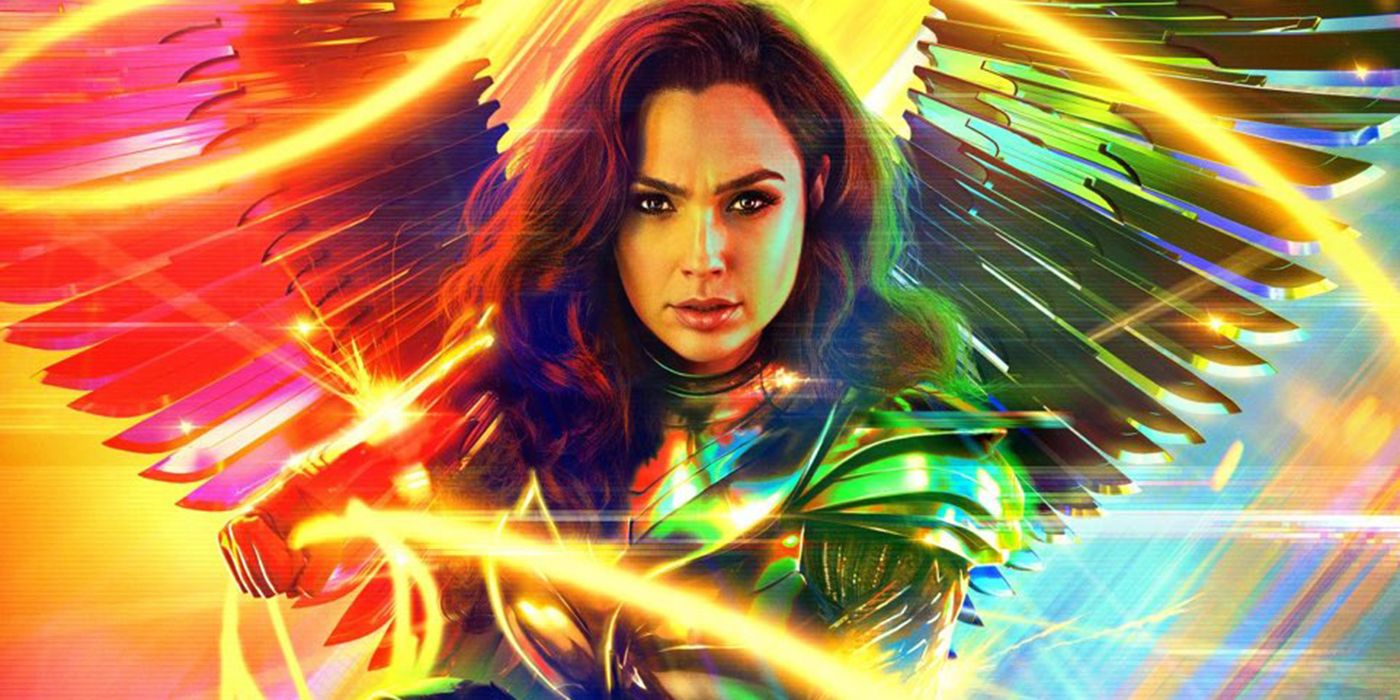
We’re at a point with superhero movies where the bar has been raised to such a degree that we can’t just call them a passing fad anymore. Love them or hate them, superhero movies have evolved. They’ve developed a complexity and nuance that few genres ever gain, regardless of medium.
Plus, they make billions at the box office. Let’s not forget that. It’s why the Bill Mahers of the world won’t stop whining about superhero movies anytime soon.
Forgetting the whiners and petty nit-pickers of the genre, superhero movies have a higher threshold to achieve to be considered successful. It’s not enough anymore than to just put a famous actor or actress in an iconic costume and replay famous scenes from comics. The story, characters, and themes have to be refined and compelling.
That’s a challenge for any movie, but one that felt far more daunting for “Wonder Woman 1984.” After the success of the first “Wonder Woman” movie, which did a masterful job of establishing Diana’s origin and building her superhero persona, this sequel is tasked with building on that foundation.
As someone who loved the first movie and made it a point to watch “Wonder Woman 1984” on HBO Max with my mom on Christmas day, I had high hopes for this movie. I wasn’t expecting “The Dark Knight” level of quality, but I was hoping for a worthy follow-up.
Without giving away too many spoilers, I’ll say without hesitation that it succeeded. This movie was a beautiful, emotionally driven cinematic experience and a worthy successor to the first “Wonder Woman.”
I say that knowing that some reviews were quite scathing in their assessment of the film. As is my general rule, I never read reviews before I see a movie. As I saw with “New Mutants,” that can wrongly color your perspective. As was also the case with that movie, I was genuinely surprised by the criticisms levied against “Wonder Woman 1984.”
However, I’m not going to waste my time responding to those criticisms. I’m just going to offer my take on why I thought this movie was a worthy follow-up to the first. Like any sequel, its primary goal was building on what the first movie established. In that sense, this movie did succeed.
The setup for the movie is a dazzling spectacle. Like the first, we get a brief glimpse of Diana’s youth on Themysicra. We see her living and growing amongst her Amazon sisters, showing the kind of power and potential that lies within her. It’s a true sight to behold and one director Patty Jenkins fleshes out meticulously.
Within that setup, though, is an important theme. It highlights the importance of truth and doing things the right way for the right reasons. You cannot and should not take shortcuts to achieve your goal. Doing so will always come at a price and incur consequences. It’s a simple, but necessary lesson that kids and adults alike often learn the hard way.
That leads us directly to the main antagonist of the movie, Maxwell Lord. Played by Pedro Pascal, he comes off as the very antithesis of this lesson. He’s a con-man and a huckster, always looking for a shortcut to get what he wants. That includes tampering with the forces of the gods, which puts him in direct conflict with Diana.
At the same time, this conflict ties closely to another unfolding with Diana’s new friend, Barbara Minerva. Played by Kristen Wiig, she comes off at first as the very antithesis of Diana. She’s a nobody. She has none of Diana’s power, grace, or skill. She’s basically invisible, only ever getting attention from people she doesn’t like.
This is very much in line with the characterization of Barbara Minerva in the comics. She’s Wonder Woman’s chief rival, but she started out as a friend. She’s even sympathetic to some extent. She’s not looking to become a villain, like Maxwell Lord. She just wants a taste of the power and prestige that she sees in Wonder Woman.
She ultimately gets her chance, as does Maxwell Lord. When Barbara stumbles upon the Dreamstone, a relic imbued with the power from Dolos, the god of lies, that can grant wishes to those who wield it. However, like a typical monkey’s paw narrative, every wish comes at a price.
It closely mirrors the lesson young Diana learned in her youth, as depicted in the movie’s opening scenes. Taking any shortcut to get what you desire will come at a price. You can try to avoid the consequences all you want, but it eventually compounds. The more you try, the worse it’ll get.
Maxwell Lord thinks he has a way to avoid this. He thinks he can get everything he wants by simply making the right kind of wish. That ultimately causes a great deal of destruction. I’d go into detail, but I’d rather not reveal too much. All you need to know is that it’s not the kind of destruction Wonder Woman can stop with her fists and her sword.
What happens with Barbara Minerva is even more impactful. Like Maxwell Lord, she’s unwilling to give up any power she gains. Unlike Lord, however, she’s willing to pay any price to keep it. That’s what sends her down a dark path. It’s also what turns her from one of Diana’s friends into a truly tenacious foe.
These conflicts become very personal to Diana because she too is unable to resist the temptation. She may give so much of herself to others, but she also has desires and wishes of her own. That’s where Steve Trevor, played again by Chris Pine, enters the picture.
His death and heroic sacrifice in the first “Wonder Woman” movie was so powerful. That whole movie really sold the love that blossomed between him and Diana. Even as the years go by, his death still burdens Diana. She cannot let go of that love. She wants nothing more than to have it back.
It’s sad, but understandable. If ever someone deserved a consequence-free wish from all her heroic acts, it’s Diana. Unfortunately, there’s no getting around it. She still tries. She gets her chance to be with the love of her life again. As with everything else, though, it comes at a price.
That’s the biggest theme of this movie. Getting what you want by breaking the rules or cheating will always come at a price. Even if you’re willing to pay that price, it does cause damage to yourself and others. It’s a painful lesson and one that gives “Wonder Woman 1984” so many emotional overtones.
It’s because of those overtones that this movie works so well. Wonder Woman, by her nature, is a very emotionally driven character. Her love, compassion, and heart are among her greatest traits. They’re as strong as her fighting spirit. The first movie revealed this and “Wonder Woman 1984” builds on that.
Her greatest struggles always have an emotional weight to them. It’s not just a matter of her beating up the bad guy to save the day. One of those foes was once her friend. Another is someone she can’t defeat simply by beating him up. She has to use that uncanny compassion and heart to win the day. That’s what makes her Wonder Woman.
I would argue that’s the most important aspect of her character and this movie captured it perfectly. I really did feel for Diana as she went through these emotional upheavals throughout the story. It brought out her greatest strengths, as well as her greatest weaknesses.
Now, speaking of weaknesses, this is where I also have to levy some criticisms of my own against “Wonder Woman 1984.” I promise they’re not nearly as petty or overblown as some of the other reviews to this movie. Some have complained about the length and tone of the movie. I honestly think that sort of criticism is misguided.
I’ll still say outright that this movie was not as good as the first “Wonder Woman.” This movie was not as concise and polished, in terms of story. There were a number of “and then this happened” moments that made the story seem a bit jumbled at times. In some cases, it relied too heavily on contrivances and suspension of disbelief to move things along.
I get the sense this was done to keep things moving forward from a plot standpoint. I also think there were some difficulties in revealing the ins and outs of godly magic, which is considerably harder to do in a movie when compared to a comic.
None of these shortcomings kept the movie from working overall. Gal Gadot once again carried her role as Wonder Woman with grace and grit. She, Steve Trevor, and Cheetah all had well-developed characters that played their roles well throughout the story. In terms of the most important elements to a good Wonder Woman movie, “Wonder Woman 1984” got them right.
If I had to score this movie, I’d give it a 4 out of 5. It has some noticeable flaws, more so than its predecessor. However, Gal Gadot is still an amazing Wonder Woman, Patty Jenkins is still a great director, and this world they explored together was full of dazzling wonder.
For a year that has been so bleak and dire, it’s just what we needed. For that, I thank “Wonder Woman 1984” and all those who helped make it happen.
Filed under DC Comics, Movie Reviews, superhero comics, superhero movies, Wonder Woman
Upheavals At DC Comic: My Concerns And Hopes

Let’s face it. Pretty much every industry not associated with health care, masks, streaming media, and Zoom calls has been hit hard this year. That’s especially true for certain segments of the entertainment industry. Basically, if you’re a movie studio, a movie theater, a comic shop, or a mall, this year has been like 100 punches to the gut, jaw, and genitals by a crack-fueled Ivan Drago.
That’s how bad global pandemics are. They pull no punches and will hit anything that attempts to prosper, both directly and indirectly.
Those blows extended to the comics industry, as well. As a lifelong comic book fan, I certainly felt it. I haven’t forgotten the weeks on end of having no new comics to enjoy for the first time in over a decade. It was not a pleasant experience. As elated as I was to see New Comic Book Day return, I didn’t doubt for a second that there would be some lasting scars.
Well, now it seems some of those scars are starting to fester and the first one to feel the pain is DC Comics. According to The Hollywood Reporter, the entire DC Comics operation has been hit with major layoffs and restructuring. It’s still intact, but make no mistake. This is the single biggest purging of personnel from a major comics publisher since the mid-1990s.
THR: DC Comics, DC Universe Hit By Major Layoffs
Monday’s WarnerMedia layoffs have affected a significant number of high-level figures at comic book powerhouse DC, multiple sources tell The Hollywood Reporter.
Among those said to be losing their positions are editor-in-chief Bob Harris, senior VP of publishing strategy and support services Hank Kanalz, VP of marketing and creative services Jonah Weiland, VP global publishing initiatives and digital strategy Bobbie Chase, senior story editor Brian Cunningham, and executive editor Mark Doyle, who oversaw the rollout of the Black Label graphic novels. Jim Lee remains the CCO.
Roughly one third of DC’s editorial ranks are being laid off, according to sources.
Insiders also say the majority of the staff of the streaming service DC Universe has been laid off, a move that had been widely expected as WarnerMedia shifts its focus to new streaming service HBO Max.
I can’t understate how big a deal this is to the larger world of comics, but I don’t want to overstate it, either. This situation is objectively bad. There’s no way around it. It’s also not the definitive end of DC Comics. That’s a narrative I don’t want to fuel.
That hasn’t stopped some of the whiniest, dumbest segments of the comics crowd from claiming otherwise. I won’t name names, but they are affiliated with a certain movement in comics that has only become less credible and more insufferable with time. The box office return of the “Captain Marvel” movie is proof enough of that.
Don’t be fooled by what some asshole voices on social media claim. This restructuring is not because DC Comics had too much diversity. It’s more a byproduct of DC Comics having lost its sense of vision, scale, and identity. This is something that happens from time to time in comics. After a while, the whole line loses its sense of self and needs some revitalization.
I can say, as a longtime comic fan, that DC has become somewhat stale in recent years. Even before the pandemic, I felt as though it had lost momentum outside its mainstays. It has primarily been relying on the strength of Batman, Wonder Woman, Superman, Green Lantern, and Flash. As iconic as those characters are, they just can’t sustain the entire line.
There are many reasons for that. I think DC Comics, as a whole, hasn’t had a consistent vision since the days of DC Rebirth. It just got bogged down too much with competing visions, like DCeased and Injustice: Gods Among Us. It also endured way too many delays with its last big crossover event, Doomsday Clock.
The onset of the pandemic just exacerbated a problem that was starting to grow. As bad as things are now, there’s also an opportunity to set things on a better path. That’s my greatest hope for whatever restructuring DC pursues next. It still has plenty to build on. The success of the Harley Quinn show is proof enough of that. It’s just a matter of what form that will take.
That said, I do have major concerns. Comic lines have gone through upheavals before, but never during a global pandemic. This is uncharted territory for the comics industry, as a whole. This is not the era of newsstands and comic shops where top books could easily sell hundreds of thousands of copies. Paperbacks alone are not going to make this industry succeed.
Comics, in the current system, work best as a garden from which new characters, stories, and ideas can blossom. The fruits of that system can later become the basis for TV shows, movies, merchandise, and so much more. DC Comics already has a major media partner in its owner, AT&T. The structure is there. They just have to carve their niche into it.
I understand that’s easier said than done. Right now, a lot of factors are working against DC and the comics industry, as a whole. When all is said and done, comic shops may become much more diminished and trade paperback sales may dwindle to just a handful of titles. I’m not looking forward to that kind of status quo.
The ultimate setup may one day involve DC Comics just abandoning its publishing system, as a whole, and shift to licensing its characters to other companies, such as IDW. That’s very much a last resort, but one that may be more likely if DC can’t get its comics in order.
I want to be hopeful, but I’m also going to brace for the worst. If 2020 has taught me anything, it’s that things can always get worse and the things we love are always capable of succumbing to forces beyond our control. It’s a sad, nihilistic mindset, but one that a global pandemic tends to affirm. Only time will tell and I’ll be waiting with baited breath.
Filed under DC Comics, media issues, superhero comics

“Justice League: The Snyder Cut” Is (Actually) Being Released: My Thoughts, My Hopes, And The Implications

It’s happening.
It’s really happening.
After years of hashtags, billboards, and incessant curiosity, it’s really happening. The fabled “Snyder Cut” of 2017’s “Justice League” is going to be released. Near as I can tell, this is not a joke. It’s not some wild rumor that some renegade trolls concocted. This is real. According to major entertainment news outlets, including The Hollywood Reporter, this is going to happen.
Zack Snyder’s original vision for “Justice League” is coming out in 2021 exclusively on HBO Max, the latest entry to the streaming wars, courtesy of Warner Brothers. I doubt those outside devoted fans of comic books and superhero movies understand why this is such a big deal, but as someone within that circle, I can assure you that this is big.
Rather than explain the whole story, I’ll just cite The Hollywood Reporter, which does a commendable job of summing up the issues. If you need more information on the story of this mythical cut of an otherwise forgettable movie, Forbes also did a decent rundown of the timeline.
THR: Zack Snyder’s $20M-Plus ‘Justice League’ Cut Plans Revealed
In the time since its release, something unusual happened: A growing movement of fans, rallied by the hashtag #ReleasetheSnyderCut, had called, agitated, petitioned — even bought a Times Square billboard and chartered a plane to fly a banner over Comic-Con — for Snyder’s version to be released. And on the film’s second anniversary, the hashtag had its biggest day ever — with even the movie’s stars Gal Gadot and Ben Affleck adding their voices on Twitter.
So here, the morning after, was their agent saying that Toby Emmerich, chairman of Warner Bros. Pictures, was acknowledging the movement, and more importantly, was willing to accede. “This is real. People out there want it. Would you guys ever consider doing something?” was what Emmerich was asking, Zack Snyder recalls.
The answer to Emmerich’s question, a whispered-about secret for months, was revealed Wednesday when Zack Snyder confirmed, at the end of an online screening of his 2013 movie, Man of Steel, that his version of Justice League was indeed real. And that it will be coming to HBO Max, the WarnerMedia digital streaming service launching May 27, and is expected to debut in 2021.
Now, I have my share of opinions about “Justice League” and Zack Snyder. I actually saw the theatrical version of “Justice League” when it came out. While I gave it a respectable review, I don’t deny that the movie has its flaws. I’m not an overall movie buff, but even I could tell that the movie was heavily edited. There was definitely a vision and plenty of potential, but a lot of it got lost on the cutting room floor.
In its current form, “Justice League” is one of those movies that gets less compelling with age. You can see it once, have an enjoyable experience, and completely forget that experience within weeks. It’s not a movie that you can re-watch and feel engaged. It’s just too bland and sanitized.
Snyder’s cut of the movie promised to be different. He had a much different vision, but couldn’t realize that vision due to a family tragedy that tore him away from the project. Now, we’ll get to see the essence of that vision.
Personally, I’m curious. I’m not curious enough to shell out money for yet another streaming service, but I’m certainly interested in what Snyder had planned for this movie. A big part of that curiosity stems from Snyder’s history as a filmmaker whose vision tends to get lost on the cutting room floor.
This has happened to him multiple times before and for other superhero movies. There were a lot of heavy criticisms levied against “Batman v. Superman: Dawn of Justice” and some of those criticisms were valid. However, the longer and more complete Ultimate Edition of the movie directly addressed some of those flaws. I honestly think the movie would’ve done better if that edition had come out.
A far more notable example, in my opinion, involves Snyder’s take on “Watchmen.” That movie is somewhat polarizing among fans, although I personally liked it. However, this movie has multiple extended cuts, including a director’s cut that Snyder himself says is most consistent with his vision for the film.
That’s actually the version I own on blu-ray. I think it’s an underrated gem among superhero movies. It’s more complete, concise, and compelling. It better encapsulates the essence of “Watchmen” and the story it tries to tell.
It’s because of these instances that I believe will help Snyder’s cut of “Justice League.” History shows that he can tell a great story, so long as the critical details aren’t cut out in the final edit. Granted, editing is a core aspect of finalizing a movie. It’s necessary to get a movie to within a reasonable time-frame for a movie-watching experience. Not everyone wants to sit in a theater for four hours unless it’s something J. R. R. Tolkein wrote.
Snyder’s desire to tell a larger story seems to get away from him. In that sense, it might be a good thing that this isn’t coming out in theaters. Instead, it’s coming out on a streaming platform that people can consume at their own pace. People already consume hours on end of old shows. Consuming a four-hour movie isn’t quite as daunting. Just look at “The Irishman.”
This is where I feel the larger implications of this announcement may come into play. A non-insignificant reason why Snyder’s movies keep getting chopped up into something that doesn’t do well with critics or fans is because they’re so long. His efforts to tell a bold story just don’t fit within that reasonable two to three hour time-frame for a movie. Movies like “Watchmen” reveal that those stories can be compelling.
Beyond the story, the impact of the Snyder Cut could extend beyond “Justice League,” superhero movies, and the movie-making process as a whole. This is where I believe there could be larger implications that will likely impact future movies, including those that don’t involve superheroes.
For decades, there has been this idea that movies have to operate within certain restrictions. For the most part, there’s merit to those restrictions. Movies beyond three-and-a-half hours just aren’t feasible for a general audience or their bladder. A trilogy like “Lord of the Rings” was a rare exception, but could never become the norm.
Thanks to streaming platforms like Netflix and HBO Max, this may no longer be the case. Now, there’s a new method for releasing these movies. The current global pandemic, as well as the recent success with direct-to-streaming releases, will further raise the importance of those platforms.
With these new tools and emerging trends, why should movies be confined to the limits imposed by movie theaters? Why can’t there be a four-hour “Justice League” movie? Why can’t there be a five-hour Avengers movie? Why does any movie have to be chopped up and edited to such an extent that it loses important aspects of its plot?
The Snyder Cut could make the case that those restrictions need not hinder a bolder vision. There’s still a place for the kinds of popcorn movies we see in theaters, but why not also invest in a place where a movie like Snyder’s cut of “Justice League” can also exist?
The world of movies, media, and story-telling is changing. Regardless of how the Snyder Cut ends up being in the eyes of fans, its impact could be far greater. Hopefully, it leads to bigger, bolder, and better stories. It may not always warrant the cost of another streaming service, but it opens the door to so many possibilities.
Time will tell. Hopefully, we’ll see if the wait was worth it in 2021.
Filed under DC Comics, movies, superhero comics, superhero movies, Wonder Woman
How To Save The Comic Industry (In Four Easy Steps)

The comic book industry is in a state of crisis. I know you can say that about a lot of industries amidst a global pandemic, but the comics industry has been extremely hard hit. Shipments of new comics have ceased. Comic shops are likely to go out of business without that influx of new product. The industry that I’ve loved since I was a kid has never been this vulnerable.
It’s very depressing. I certainly have felt that after multiple weeks of no new comics. A handful of people, namely the whiny agenda-pushing loser types, have been talking doom and gloom about the comics industry for years. However, this hit has nothing to do with some overly political T-shirt that Mockingbird wore.
Even after the pandemic ends, this industry that I love will never be the same. It can’t go back to the way it used to be. This crisis has shown, among other things, that the current model that the comic industry utilizes just isn’t sustainable. It needs an overhaul of some kind.
I’m certainly not smart enough to know what that overhaul entails. I doubt few people are. However, as a long-time fan and follower of the industry, I have a few ideas. To keep it simple, here are four steps to saving the comic book industry in a post-pandemic world.
Step 1: Emphasize Quality Over Quantity

This is a simple metric. There are just too many books coming out all at once. However, this is a problem that predates the current crisis. It’s a problem that has lingered since the industry almost crashed completely in the early 1990s. It came down to simple economics. Publishers made too many books that not enough people bought. Even if they were only a dollar apiece, there’s only so much consumers can consume.
This is not a sustainable business model. Companies like Marvel and DC Comics grew the most when they were just publishing a dozen or so titles a month, with a few mini-series on the side. You could, conceivably, follow every major event in the Marvel or DC universe for less than $40, adjusted for inflation. That kind of easy access is what helped create the massive fandom that these franchises enjoy today.
That said, this isn’t the mid-1960s. The world is changed. Markets and consumer habits have changed. However, there’s still a place for comics in the publishing world. It’s just a matter of making those products more valuable. Books like DC’s Earth One series are basically single-issue graphic novels that tell a rich, complex story at a higher price and it’s worth every penny.
At a time when people are strapped for cash and looking for value, the comics industry is in a perfect position to tap into it. Make every comic count. Make every dollar feel like it was well-spent. It won’t just keep new fans happy. It’ll help create an entirely new generation of fans who are less inclined to go to crowded movie theaters.
Step 2: Embrace Digital (In A Novel Way)

This step plays directly off the first in that it embraces new technology. Decades ago, comics were easy to access because you could buy them at news stands and grocery stores. As a kid, I got most of my comics from the grocery store at first. They were easy and, much to my parents’ delight, cheap ways of putting a smile on my face.
These days, you can’t find comics in grocery stories. However, digital comics have grown a great deal and are more accessible than ever, thanks to companies like Comixology. Most comics are already released digitally on the same day they come out in shops. That’s great, but it’s basically just an extra convenience for those who don’t live near comic shops. That can’t be the extent of how digital comics impact the industry.
At the moment, digital comics are only a small part of overall comic sales, but they’re growing rapidly. In conjunction with that growth, the industry needs to embrace the other opportunities that digital offers. Services like Marvel Unlimited are nice, but they’re just giving us products that were already released. Why not give us something we can’t get anywhere else?
I’m not sure what that something is, be it a motion comic or something that sets itself apart from a traditional paperback. I’m not smart enough to figure it out, but digital offers so many rich opportunities. The first company to figure it out will make millions and entice a new generation of fans.
Step 3: Make Comic Shops More Than Comic Shops

I love comic shops. Some of my fondest memories have occurred in comic shops. I don’t want them to go away. However, embracing digital comics doesn’t mean the same as ditching these important brick-and-mortar structures. It just means changing their role in the overall comics infrastructure.
When I was a kid, there were two types of stores. One were the stores you could hang out in and the other were the stores in which the owners kicked you out if you lingered for more than 10 minutes. The future of the industry needs to embrace the former rather than the latter.
Comic shops can’t just be about selling comics and merchandise. Too much of that is online and relying on that model is doomed to failure. Instead, comic shops need to be part comic shop and part coffee shop. Make it a place where you don’t just browse the racks for new material. Make it a place where you can sit down with friends, get some coffee, get a snack, and enjoy comics in a communal manner.
Once comic shops are an experience again, people will visit them and not just because there are new comics to buy. If comics can become a popular hang-out once more, then they’ll have a place in a new market.
Step 4: Empower Creators (Instead Of Screwing Them Over)

As much as I love comics, I don’t doubt that it has engaged in some shady business practices. There are many stories about comic creators getting screwed over by major publishers. While every industry has shady practices, the comics industry relies too heavily on brilliant creators to screw them over.
While Marvel and DC have their Disney/WB overlords to please, they can’t just rely on being farms for intellectual property. There has to be a new and better way for compensating creators. Alan Moore may be a cankerous blow-hard, but he really did get screwed over when DC flat out broke their promise to him.
Broken promises always cost more in the long run, especially with respect to comics. It’s not enough for the publishers to just acknowledge the contributions of creators. They need to have a way to profit. It’s not impossible. Apple does it with their app store, creating a means for creative developers to profit from their creations while still making Apple billions.
When both benefit, everyone benefits. It’s really that simple.
I know the comics industry is undergoing rapid change. I don’t doubt I’ll be upset with some of those changes. However, I also understand that the industry needs to change in this increasingly chaotic world. These are just some ideas on how to go about it.
Whatever happens, I hope this industry that I love continues to thrive. I don’t know how, but I do know that a lot of people love it and they’ll find a way to make it work.
Filed under DC Comics, Marvel, superhero comics
Wonder Woman, Relationships, And Misguided Standards For Female Heroes
I love superhero comics. I love romance. Naturally, I love it when they’re combined into a perfect package of super-romantic sentiment. I’ve singled out a few favorites of mine in the past, as well as a few not-so-favorites that act as cautionary tales. Chances are I’ll find plenty more excuses to write about superhero romance in the future.
That said, I’d like to take a step back from the specifics of superhero romance and assess the forest from the trees, so to speak. Instead, I thought I’d highlight something that I’ve been noticing within the pages of some of my favorite comics. It’s not necessarily an egregious flaw, but it is a distressing trend for lovers of romance like myself.
It has to do with how superheroes are portrayed when they’re in romantic relationships. Almost every popular superhero is caught up in a romantic sub-plot. Superman has his ever-iconic love story with Lois Lane. Cyclops and Jean Grey have decades of romance and drama. Spider-Man gets around so much that he has multiple iconic romances.
Not every superhero is defined by their romantic sub-plot, although some are more effected by it than others. It’s hard to tell the story of Sue “Invisible Woman” Richards without involving her husband and children. However, certain characters are held to different standards when it comes to romance.
That’s to be expected, given the diverse circumstances of each hero. Not every hero is going to be affected by their romantic sub-plot in the same way. That effect also changes through different eras. Even the iconic relationship between Superman and Lois Lane has changed a great deal over the years, although not necessarily for the better.
However, this particular era has really twisted the standards for female superheroes in romantic relationships and not in a good way. I won’t go so far as to call it a double standard like the others I’ve cited, but the differences are stark. It goes like this.
A male superhero gets caught up in a romantic sub-plot. The plot progresses, he enters a relationship with his romantic interest, and continues being the same hero he’s always been. The relationship supplements his story.
A female superhero gets caught up in a romantic sub-plot. The plot progresses and she enters a relationship with her romantic interest, but the relationship conflicts with her ability to be a superhero. It gets to a point where the act of her being a hero is detrimental to the relationship. She can have one or the other, but not both.
These scenarios are somewhat generic, but they convey a similar message. Male superheroes can be in romantic relationships without it undermining their heroic persona, but female superheroes can’t have those relationships without it becoming an obstacle.
This strange, unbalanced dynamic played out recently in the pages of “Wonder Woman #754.” I’d even go so far as to argue that Wonder Woman suffers the most from this dynamic, despite being one of the most iconic female superheroes of all time. Given that she’s the ideal that other female superheroes are compared to, I think that’s telling.
The main plot of the issue isn’t important. The side-plot is where this dynamic showed up. There were frequent flashbacks that highlighted Diana’s recent “drama” with her long-time romantic interest, Steve Trevor. I put drama in quotes because it feels less like drama and more like forced excuses.
It’s been an issue for Wonder Woman for decades. Despite being her most iconic love interest, going back to the 1940s, Steve Trevor has never been that official with Diana. Even though they’ve professed their love for one another in many forms and in many timelines, they’re rarely ever shown as being in a functional, mature relationship.
It’s not just with Steve Trevor, either. Even in the classic “Justice League” cartoon in which she was romantically linked to Batman, nothing ever became official. There’s was never a point where Wonder Woman went from being single to being in a real, functioning relationship.
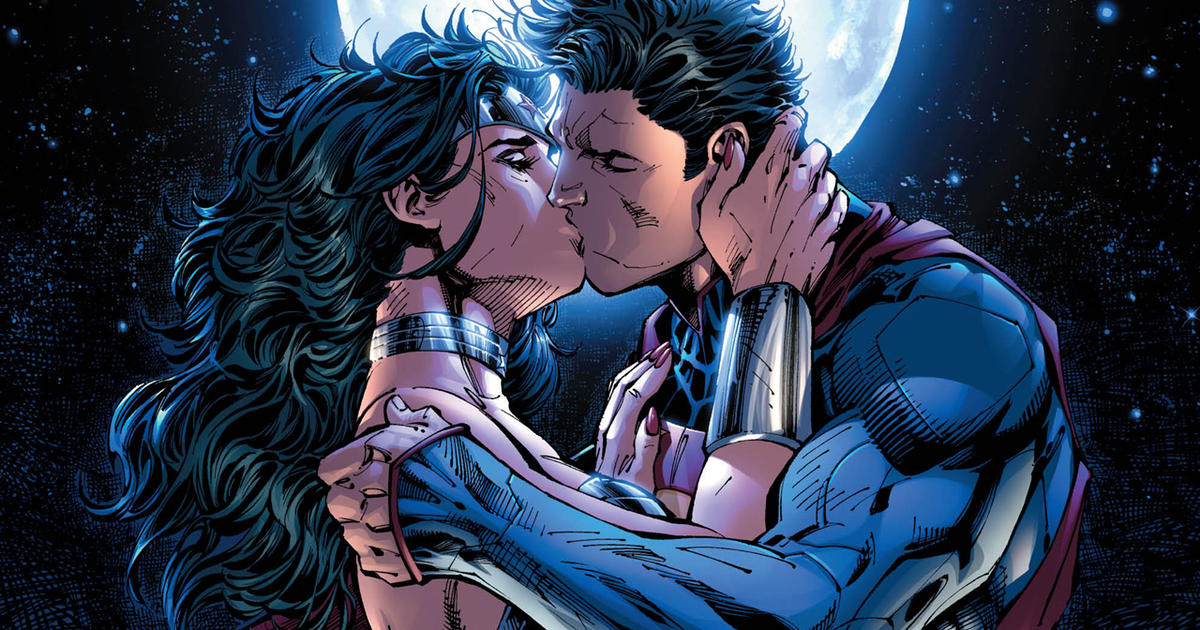
In fact, the only time Wonder Woman was ever in a functional romantic relationship was when she dated Superman during DC’s short-lived New 52 era in the comics. During that time, Wonder Woman and Superman had their own comics and their own stories. Sometimes, those stories became entwined. Sometimes, they didn’t. It never undermined their relationship or vice versa.
I know comic fans have strong opinions about the New 52 as a whole, but I find it telling that this was really the only time Wonder Woman was allowed to be in a relationship while still being Wonder Woman. For her to be someone’s girlfriend and still be the hero she’s always been, her significant other had to be Superman.
Take a moment to think about the scope of that standard. Wonder Woman, the standard-bearer for female superheroes for decades, can be in a functional relationship, but only with someone as capable as Superman. She and Steve Trevor can be in love, but they can’t have a relationship. He’s just an ordinary man. He’d just undermine Wonder Woman’s ability to be the ideal female hero we know and love.
Meanwhile, male heroes like Batman and Spider-Man can become romantically involved with far less capable individuals, many of which don’t have superpowers and can’t fly across the planet to be on time for date night. They’re still allowed to be in those relationships, but Wonder Woman can’t even make the effort with one of her most iconic romances with Steve Trevor.
As a fan of superhero comic, romance, and Wonder Woman, I find this both flawed and frustrating. While the “Wonder Woman” movie did an solid job establishing genuine romance between her and Steve Trevor, they still never got a chance to actually be in a relationship. It’s as though a female hero can’t be in a relationship without losing something. At the same time, a male hero can’t have a complete story without one.
It’s a strange disconnect and I think it’s getting worse. In recent years, superhero comics have made a concerted effort to develop female characters and I applaud that effort. It has led to some major successes. The problem is that, like Wonder Woman, these female characters aren’t really allowed to become anyone’s girlfriend. Being in a relationship is seen as an obstacle to being strong, independent, compelling characters.
Respectfully, I call bullshit.
Being in a relationship isn’t detrimental to any character, male or female, if the relationship is well-written. In addition, female characters don’t have to be completely, 100-percent independent to be great. In fact, making them that emotional single-minded is a good way to make them unlikable and unrelatable because, in the real world, people have relationships. They form bonds, rely on others, and are effected by those close ties.
Now, I don’t deny that writing great female characters is challenging, especially in recent years. It feels like you can’t write female characters without having an agenda anymore, even when it’s not printed on a shirt. Again, I call bullshit. Female characters, like all characters, are deeply affected by the loving bonds they form. They deserve the same development and exploration as their male counterparts.
Why can’t Wonder Woman be in an official relationship with Steve Trevor?
Does being Steve Trevor’s girlfriend make Wonder Woman any less a superhero?
Does any female superhero lose something when they become someone’s girlfriend?
These are relevant questions that are worth asking. If someone as iconic as Wonder Woman can’t be in a relationship with someone without undermining what makes her Wonder Woman, then that’s not a problem with her as a character. That’s a problem with the standards and assumptions we have about superhero romance.
I’m sorry if this rant feels dragged out, but this has been bothering me for a while. I’d be happy to discuss it more. Please share your thoughts in the comments.
New Comic Book Day January 22, 2020: My Pull List And Pick Of The Week
Life is hard. Some days are harder than others. Unless you’re rich, beautiful, or a combination of both, it’s a never-ending challenge to navigate those hardships. You got to take the good with the bad and make the most of the good. For me, and other life-long comic book fans like me, New Comic Book Day can take something good and make it awesome.
A new glut of fresh comics is like fresh-brewed coffee, a box of donuts, and a massage on a Wednesday morning. For a comic book fan, it’s difficult to make any day much better without getting street drugs involved. No matter how hard life has been for me, a Wednesday built around new comics helps make the past, present, and future better.
Some weeks are more active than others, but when you’ve got tastes as broad as mind, it’s easy to find something to enjoy. This week has an impressive list of new comics, some of which I’ve been looking forward to for quite some time. In the interest of enjoying this day with my fellow comic fans, here’s my pull list and my overall pick of the week. Enjoy!
My Pull List
Mighty Morphin Power Rangers #47
My Pick of the Week
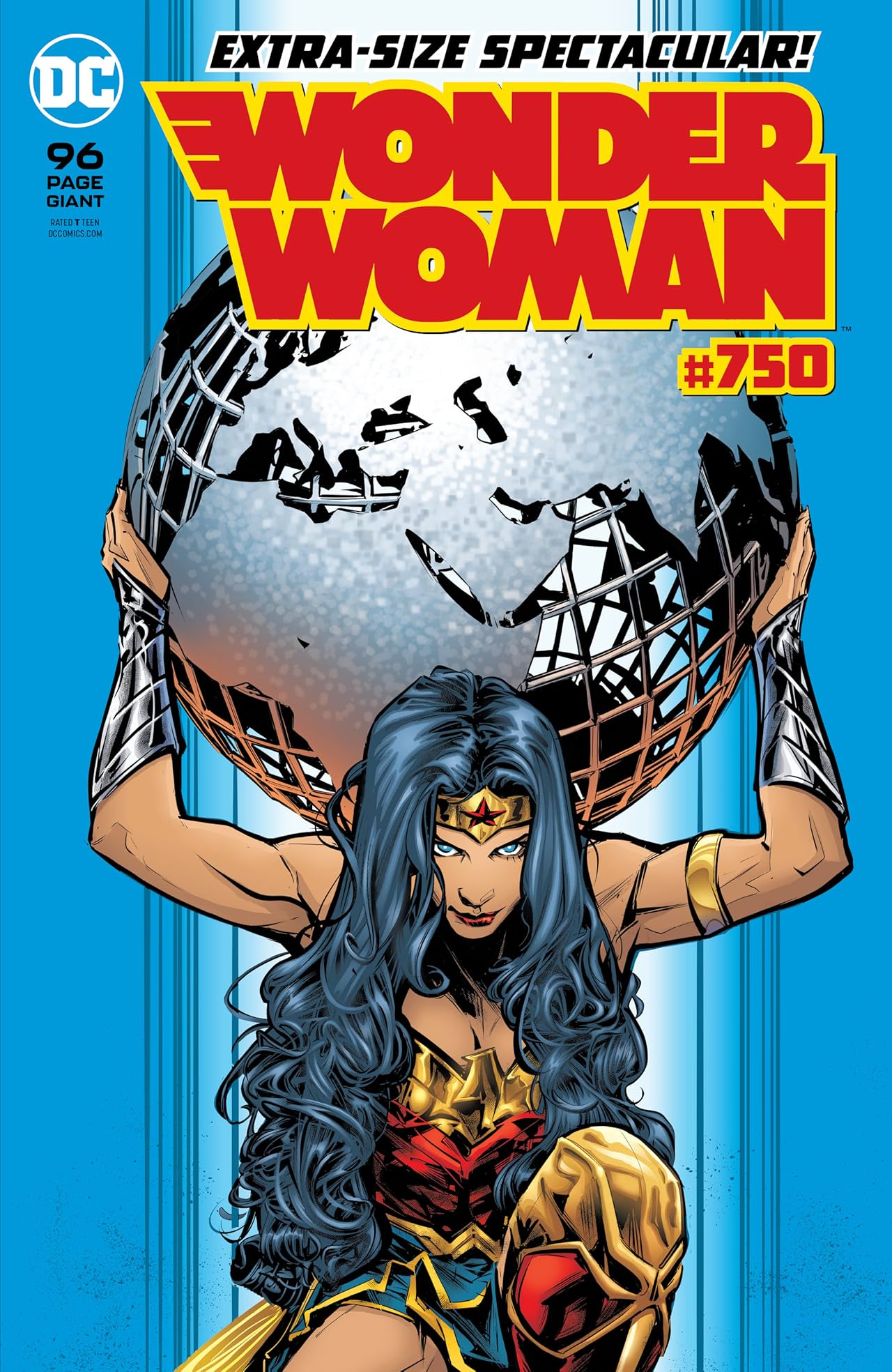
Is there such a thing as too much Wonder Woman? As someone who saw the “Wonder Woman” movie at least 20 times, I can safely say that’s a trick question. Those who say you can’t have too much of a good thing have obvious never been fans of Wonder Woman and milestone comics like “Wonder Woman #750” perfectly demonstrate why she’s great in any quantity.
These days, any comic that makes it past 50 issues is considered a milestone. The era of comics that go on for dozens of issues at a time is long gone. The many relaunches and retcons, which DC Comics has contributed to in the past, have changed the comic book market to such an extent that it’s just not possible for most titles to sustain that longevity.
However, Wonder Woman is not most titles.
She’s Wonder Woman. She’s the standard by which all female superheroes are measured. She’s one of the most iconic superheroes of all time, regardless of gender. She’s in a special pantheon of iconic characters. Her legacy, which spans back to the dark days of World War II, is one worthy of celebration and admiration.
That’s exactly what “Wonder Woman #750” does. It’s a giant-sized issue that costs a few extra bucks, but rest assured. It’s worth every penny. If you’ve been following the Wonder Woman comics, this book helps cap off a story that brings Diana head-to-head once more with Cheetah while Hera shows up to offer divine complications. However, that’s not all this book offers.
In addition to completing a long-running story, this giant-sized dose of all things Wonder Woman adds in some extra side-stories. They range from events spinning out of the recent comics to cute little stories involving kids, families, and monster hunting. Wonder Woman never misses a chance to kick ass, but she also never misses a chance to offer love, compassion, and hugs.
It’s a testament to her strength, her spirit, and her heart. With multiple writers and multiple artists, many of which are among the comic world’s top talent, there’s something for everyone here. If you want to see Wonder Woman fight gods and monsters, you’ll get plenty of that. If you want to see Wonder Woman offer love and compassion to those who need it, you’ll get that too.
At its core, “Wonder Woman #750” is a perfect reminder of why Wonder Woman is such an iconic character. It’s not just that she can fight villains, gods, and monsters. It’s not just that she can give compassion that few can match. It’s not just that she looks beautiful while doing it, either.
Wonder Woman embodies an ideal and spirit that resonates with everyone. Whether you’re a man, a woman, a god, or an alien, you see her doing all these wonderful things and can’t help but admire her. She’s a special character and one whose strength has resonated for decades and promises to keep resonating for decades more.
If you only pick up one Wonder Woman comic all year, make it “Wonder Woman #750.” It’s a true wonder to behold and one worthy of such an iconic character.
Filed under DC Comics, Jack's Quick Pick Comic, Marvel
New Comic Book Day January 15, 2020: My Pull List And Pick Of The Week
In the times before the internet, comic fans like myself built their entire Wednesdays around when and how they could get to a comic book store. As horrifying as a time before the internet might be to most people under the age of 25, some of us remember it. We also remember the challenges, but we don’t miss them.
For me, it was a tough challenge to get around. There would be days in which I couldn’t get to a shop to get my stack of comics and the mail service almost never delivered subscription titles on time. For that reason, and many others, Wednesdays were stressful. Now, thanks to online shops like Comixology, those dark times are distant memories.
It’s because of companies like Comixology, and their Amazon overlord, that Wednesdays are far less arduous. We wake up, log in, and have our entire pull list for the week at our fingertips. Throw in a cup of hot coffee with a pinch of whiskey and you’ve got a perfect storm of morning heaven.
Today is another trip to that heaven. With it, I have a digital pull list tailor made to make my Wednesday as special as it deserves to be. What follows is my pull list for the week and my top pick from that special lot.
Also, I wasn’t joking about the whiskey in my coffee.
My Pull List
Saban’s Go Go Power Rangers #27
My Pick of the Week
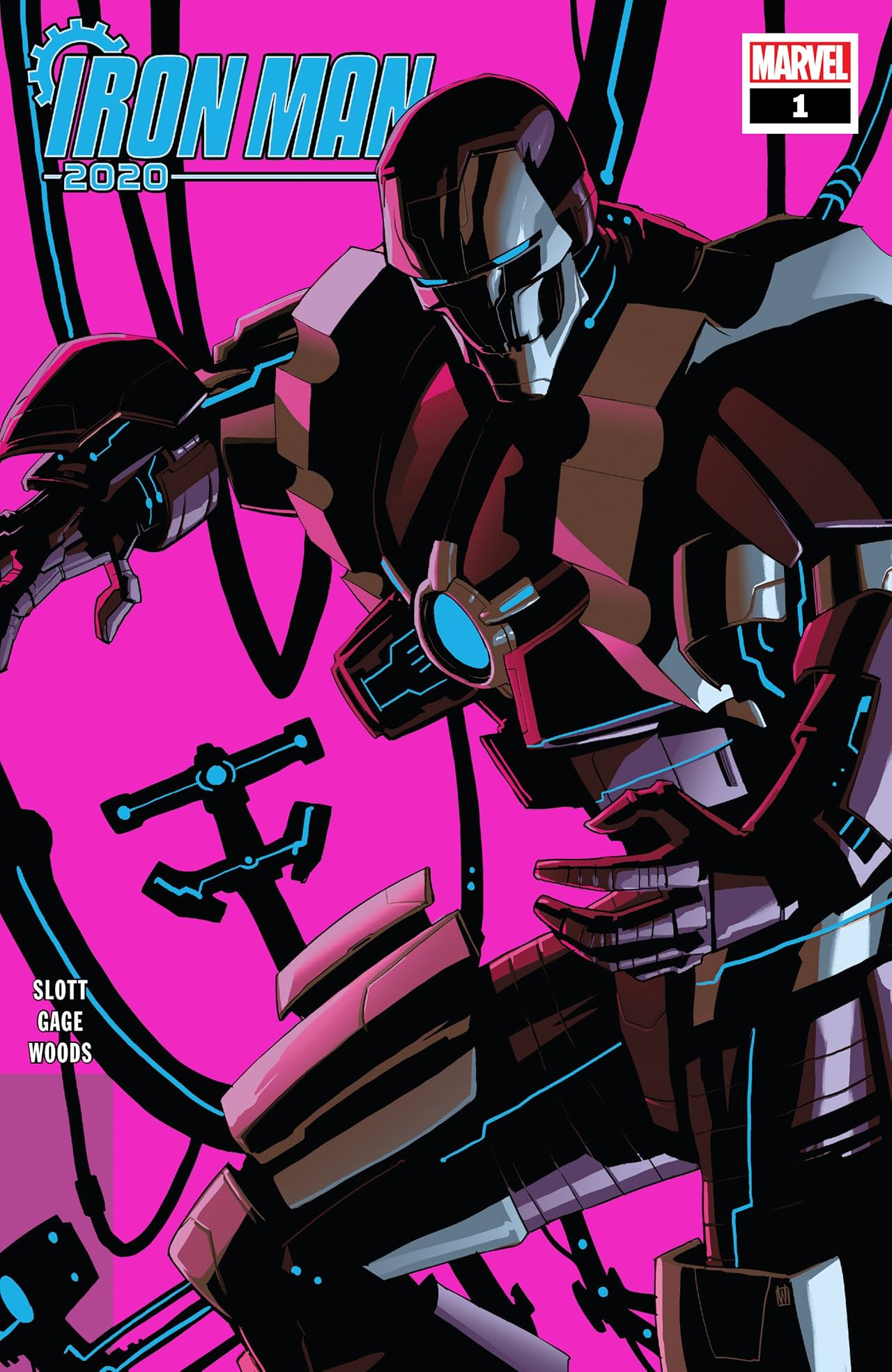
Back in the mid 1980s, Marvel published a mini-series called Machine Man by Tom DeFalco, Herb Trimpe, and Barry Windsor-Smith. This underrated gem envisioned a cyberpunk future in which an emerging class of artificial intelligent beings clashed with humanity. On the front lines of that clash was Iron Man 2020.
At the time, it just seemed like a cool concept and a valid excuse to build a world around epic robot battles. Now, it is 2020. While we don’t have the same robot battles envisioned in that book, there are increasingly serious concerns about the emergence of artificial intelligence and what that could mean for the human race.
“Iron Man 2020 #1” doesn’t just take this concept and run with it. It channels the spirit of Jack Kirby in pursuing bold ideas and the bolder implications behind them. Writers Dan Slott and Christos Gage embrace the aesthetics and themes of that old story. The Iron Man that emerges is a different kind if Iron Man.
If you haven’t been following the recent Iron Man comics, that’s not too great an obstacle. All you need to know is that Tony Stark lost control of his company and his Iron Man armor. It’s not because he’s “dead.” I put that in quotes because that’s somewhat of a relative term in this book, as well as many other Marvel books.
The Tony that had been running around as Iron Man was declared not to be the “real” Tony. He was just an artificial intelligence in a fresh body. Legally speaking, that means Tony is dead and everything he once owned now belongs to his brother, Arno Stark. If you don’t know his story, you’d be wise to look it up. For “Iron Man 2020 #1,” it’s not entirely necessary. You just need to know that he’s a new kind if Iron Man.
Tony’s presence still looms large, as do the ideas surrounding artificial intelligence, identity, and how it fits into a society still run by flawed, fleshy humans. There are a lot of new plots on top of ones that have been unfolding for years in the pages of Iron Man. “Iron Man 2020 #1” just sets the stage for what should be a very special year for all things Iron Man.
Filed under DC Comics, Jack's Quick Pick Comic, Marvel, superhero comics


