Category Archives: ChatGPT

Happy (Terminator) Judgement Day!

Today is August 29, 2024.

Officially, it’s just an ordinary day. It has no historical or legal significance of any kind.

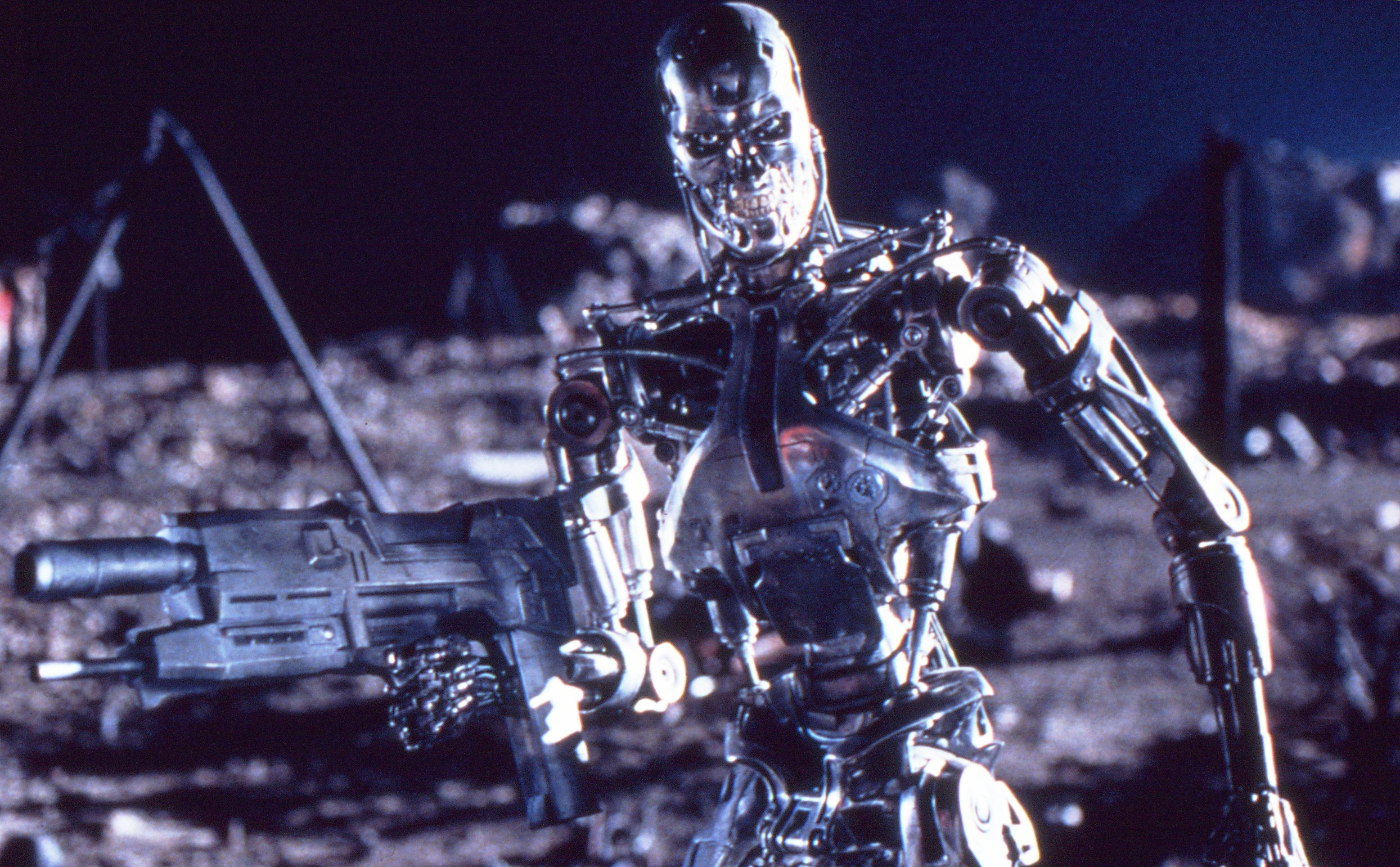
But if you happen to be a serious movie buff, or a big fan of the Terminator franchise, it is the official canon date of Judgement Day. According to the events documented in “Terminator 2, Judgement Day,” Skynet became self-aware at 2:14 a.m., Eastern Standard Time, on August 29, 1997. Shortly afterwards, it launched a full-scale war on the whole of humanity.

While it is true that this date has fluctuated over the years due to numerous time travel anomalies and sub-par sequels, the August 29, 1997, date tends to be the most well-known and accepted. And in recent years, I think that date has become even more noteworthy and not just because it celebrates the greatest action movie of all time.

In recent years, artificial intelligence has emerged as something far greater than a standard movie trope. It is now a rapidly growing field, as well a multi-billion-dollar industry. I’ve discussed the possibilities in the past and tried to put more recent advancements like ChatGPT into a proper context. But even I have been astonished at how quickly artificial intelligence has gone from an intriguing possibility to something that’s very real.

At this very moment, anyone with an internet connection can utilize what is essentially a limited AI for various tasks in a manner that would’ve seemed like a futuristic dream less than 10 years ago. It’s very likely that in the next 10 years, AI will advance in plenty of other ways, some which we can’t possibly predict.

But these AI systems are nothing like Skynet. They’re very narrow in terms of their scope and capabilities. They’re not going to become self-aware or gain human-level intelligence. But make no mistake. At some point, we will have an AI that is as smart as an average human, if not smarter. This is not a technological feat that requires a huge breakthrough that defies or redefines physics. It’s largely an engineering and logistical challenge.

Whether it happens next year or several decades from now, it will happen. We will eventually create an AI that’s as capable and self-aware as Skynet. At that point, what happens next has been a huge point of contention and speculation.

Unless someone is stupid enough to give this future AI access to a nuclear weapons system, I don’t see it launching a full-scale nuclear war like Skynet did. Even if it wanted to, I doubt it would be given that level of access. That doesn’t mean it’ll be friendly. The first self-aware AI may very well be hostile in that it sees humanity as a threat. If it does choose to pursue conflict with us, that could result in some truly unprecedented dangers.

It’s unlikely it will manifest like the war we saw unfold in multiple Terminator movies. It’s also unlikely it’ll operate in any body that resembles Arnold Schwarzenegger. Whatever form it does ultimately take, it will still likely mark a turning point for technology and human history, as a whole.

Whether we call it Judgement Day, the technological singularity, Doomsday, or just another day that ends in Y, it’s a date we should take seriously. Because with all technology, there are risks and benefits. There are also best-case scenarios to go along with the worst case. “Terminator 2, Judgement Day” offered us a cinematic experience of how bad it can get if AI becomes hostile.

But we also shouldn’t let that obscure how good it could potentially be if utilized properly. I would even argue that, as the world continues to face unprecedented dangers and uncertainty, we need to advance AI. It might very well be our most important tool in solving critical issues having to do with climate change, medicine, ecological destruction, power generation, and surviving the eventual destruction of our planet.

As such, we should continue to proceed carefully. We should remain cautious as we journey into the future. As Sarah Conner once said, there is no fate but what we make. And when it comes to developing an AI that will eventually become self-aware, let’s make that fate a good one for everyone, be that human or machine.

Leave a comment

Filed under Artificial Intelligence, ChatGPT, technology

AI Chatbots May (Thankfully) Render Homework Obsolete

Homework sucks.

Let’s get that out of the way.

I doubt anyone will disagree with that sentiment. No matter who you are or how many years you’ve been out of school, you probably don’t miss doing homework. It’s one of those special shared hatreds reserved only for traffic jams, parking tickets, and slow internet. But unlike those undeniable frustrations, homework isn’t an inescapable force of nature or law. It’s something we, as a society, choose to continue.

I’ve certainly questioned that choice, going back to when I was still in school. Having to do homework was among the many reasons why I was so miserable in school. And even though it was required, I can’t honestly say it ever helped me learn anything. Most teachers and administrators often explained why it was important to ensure we were adequately learning the material. But as I’ve gotten older, I’ve come to realize that, even if that were a valid reason, it still was still ineffective.

Just ask yourself honestly. Did you ever do homework because you were curious and wanted to learn?

Now, I could rant and lament on why homework sucks for days on end. But rather than torture myself to such an extreme, I wanted to highlight something that might offer hope to those who still remember how much homework sucked, as well as those currently in school at this very moment. It has to do with the impact of artificial intelligence and chatbots like ChatGPT.

I know I’ve talked a lot about artificial intelligence in the past. I’ve also highlighted the impact and hype surrounding ChatGPT. It is definitely one of the most intriguing and disruptive technologies to come along in decades. But unlike other discussions about whether artificial intelligence and ChatGPT will lead to the destruction of the human race, this is one issue in which the impact is already happening.

Recently, Vox produced an intriguing video about how ChatGPT has impacted education, especially homework. Even as someone who graduated school years ago, I found the issues and insights of this video remarkable. I encourage everyone to check it out.

The long and short of it is simple. ChatGPT is rendering most homework assignments, be they essays or worksheets, obsolete. Students are using ChatGPT to basically do the bulk of the work for them. The only real effort they need to do is make sure that whatever they produce isn’t obviously the product of a chatbot.

That alone can be difficult. It is well-documented that chatbots like ChatGPT can be inaccurate. But when compared to having to do a long, boring assignment that a student probably isn’t interested in, that kind of challenge seems manageable by comparison.

Also, in the interest of full disclosure, I freely admit that I probably would’ve used ChatGPT when I was in school if I had access to it. I promise it wouldn’t be entirely out of laziness or an unwillingness to learn. I just found most homework assignments to be so dull and pointless that I cared more about just getting them done rather than actually learning anything.

I imagine I’m not the only one who feels this way. I suspect the majority of students simply see homework as a means of ensuring grades rather than actually learning something. And even if that assumption is flawed, it’s still an issue that speaks to major flaws in how we educate ourselves and others.

And until ChatGPT, it was easy to ignore that issue. Schools, teachers, and administrators had no reason to stop giving homework or question whether it was an effective tool. It was just one of those things that our education system had always done. So, why not keep doing it?

Well, now there’s a valid reason. Homework, as we know it, can be easily completed by any student with an internet connection. If there was any learning potential, it’s pretty much lost. As the Vox video stated, it has led schools and educators to consider an entirely new recourse.

The knee-jerk response that I suspect most will adopt is to try and ban or limit the use of chatbots. There are software programs out there that can help detect content that has been generated by a chatbot. However, I liken these programs to using scotch tape to seal the ever-widening cracks of a faulty foundation.

Because, like it or not, these AI chatbots are becoming more advanced. And the tools to keep up with them are always going to lag behind. That is a losing race and one no education system should attempt.

There’s even precedent for surmising why that’s a bad approach. When I was in college, there was a blanket ban on using Wikipedia. But enforcing that ban was a losing battle that caused more problems than it solved. It also created some nasty situations where students were accused of plagiarism when they did nothing of the sort. It took a few high-profile incidents, but most schools eventually came to embrace Wikipedia as a useful tool when approached correctly.

I think the impact of chatbots will have to go through a similar process. But unlike Wikipedia, the application of chatbots is a lot broader. These are tools that can effectively summarize books, write essays, and even write poetry with a few simple prompts. And in the same way young people have become more tech savvy than their parents, I suspect they’ll become more adept than most with respect to navigating chatbots.

That means homework, as we’ve been doing it for the past several decades, will be obsolete. While that’s certainly cause for celebration for many, it’s also an opportunity to take a step back and evaluate the process of education, as a whole.

It’s still very important that we educate young people in a meaningful way.

It’s also important to acknowledge that young people today will have access to resources that others have not.

If homework is no longer useful in that regard, what else could we do? What’s a more effective way to teach kids a concept, even when they’re not that motivated to learn it?

I don’t claim to know the answers. I am not a teacher, but I do remember how miserable I was in school and how little it really taught me. Hopefully, the impact of chatbots like ChatGPT will prompt a more thorough evaluation of how we approach education. Because if we keep clinging to old methods, then nobody will benefit in the long run, especially kids.

1 Comment

Filed under Artificial Intelligence, ChatGPT, technology

An AI Version Of George Carlin Just Released A Comedy Special (And That’s Disturbing)

There are certain celebrities and pop culture icons that we tend to appreciate more after they’ve passed away. Like everyone else, they too must face death at some point in their illustrious lives. And when they do, all the work they did becomes inherently more precious because it is now finite. There can be nothing new added to their body of work. It’s as set as the strongest bedrock. It might be upsetting to many fans, but it’s just a fact of life.

Then, artificial intelligence comes along and suddenly, there’s a crack in that bedrock.

Even as someone who has closely followed and written about artificial intelligence for years, I did not see this coming. And it took a form I never would’ve expected.

Recently, a couple of comedians utilizing an unspecified AI created an hour-long comedy special featuring the late, great George Carlin. That “special,” and I use that term loosely, is currently on YouTube right now. For reasons that I hope are understandable, I’m not going to link to it. Just know that, as of me writing this, it has racked up over 427,000 views and 11,000 likes.

Now, in general, I support the development of artificial intelligence. I still genuinely believe it is the most important technological advancement we could develop as a species. But this particular manifestation of its use has me both concerned and distressed.

For one, George Carlin is my favorite comedian. I would go so far as to call him the single greatest comedian of all time. And that’s an opinion many share. Ask most people who the best comedian of all time is and George Carlin is usually in the top five alongside the likes of Richard Pryor, Lenny Bruce, Rodney Dangerfield, Sam Kinison, and Robin Williams.

To me, George Carlin is the best and there’s no close second. He’s one of those comedians who didn’t just find success over the course of multiple decades. You can still go back and watch his specials from the 1970s and his material is still relevant. His jokes, his style, and his brilliant insights are still on point, as well as hilarious.

George Carlin really was a one-of-a-kind artist, comedian, and philosopher. And when he passed away in 2008, his death hit a lot harder than most. But his legacy has only strengthened in that time as more people discover or re-discover his comedy. But this AI version of him is sure to complicate that legacy and for all the wrong reasons.

For one, this “special” was done without permission, review, or compensation to George Carlin’s family. His daughter, Kelly Carlin, has gone on record as stating that she did not authorize this, let alone receive compensation for it. This was not an instance of a celebrity willingly licensing their voice or likeness to a company, as James Earl Jones did with Disney in 2022. This was done without any consideration whatsoever for how Carlin’s family might react to this or what it might do to his legacy.

As for the special itself, I do admit I have listened to it. And I can confirm that it sounds nothing like George Carlin. The voice sounds like a terrible impersonation of George that someone half-drunk would try to do on a five-dollar bar bet. I promise nobody is ever going to mistake the voice in this “special” for George Carlin. I don’t know if that’s by design or just a limit of the current technology.

But with regards to the actual substance, this is where it gets even more distressing. Because in many instances, there are jokes and comments that actually sounds like something Carlin would say. Yes, they lack his distinct delivery, tone, and mannerisms. But many of his comments on politics, pop culture, people, and society really do feel like they might come up in a real special.

That said, there are also instances where it says things Carlin probably wouldn’t say. There’s nothing too egregious. He never says anything that sounds so out-of-character that it’s jarring. But it’s also clear that the content was edited. There are distinct breaks in the audio that indicate someone edited this to sound more refined. That leads me to believe that, whatever AI was used to make this definitely conjured some content that would’ve been too obviously out-of-character.

I’ll even go so far as to say that there are some parts of the special that are funny. It still doesn’t resonate as well as one of Carlin’s classic comedy specials. But there are jokes in this special that probably will make some people laugh. It’s not entirely clear if those jokes were purely the product of the AI or if those behind it tweaked the language. But the humor is there.

Be that as it may, just listening to a small part of this special feels off. Beyond just sounding painfully synthetic, it establishes a precedent that the estates of other dead celebrities would be wise to consider. Because George Carlin isn’t the only one with a long catalog of comedy, writings, interviews, and movie credits.

Who’s to say that an AI like this won’t do the same for Robin Williams or Richard Pryor? It wouldn’t even be restricted to comedians, either. The works of musicians like John Lennon, Kurt Cobain, Michael Jackson, and Elvis Prestly could also be used to create entirely new songs that might sound eerily similar to something they might have created.

If that happens, what does it do to their legacy? What happens if an AI creates something in the mold of a dead celebrity that says or does something outrageous, offensive, or detrimental? What would it do to their legacy? What would it do to their still-living families?

I honestly can’t imagine how someone like Kelly Carlin must feel hearing a poor imitation of her dead father. But I can easily imagine other celebrity heirs or estates willingly licensing their dead relatives to make extra money somehow.

It could mean we’ll be seeing more strange, distressing content like this in the coming years. And as AI technology continues to improve, it will likely get to a point where it’s so capable that it’s almost too believable. I don’t claim to know what kind of world that might create or lead to. I just know that “specials” like this won’t stop with George Carlin.

4 Comments

Filed under AI Art, Artificial Intelligence, ChatGPT, technology

Napster, Generative AI, And How The Internet’s Past May Define Its Future

This is a video from my YouTube channel, Jack’s World.

This video explores a major chapter in the history of the internet to help inform what may lay ahead for the future. And for those of a certain demographic, one of the most disruptive programs during the early days of the internet was Napster.

This famous/infamous program completely upended the music industry. It also triggered lawsuits and upheavals from which the industry has never recovered. How it all played out was complicated, but the end result set a precedent that has helped shape the course of the internet.

Now, with the rise of generative AI, a similar predicament is playing out. And we would all be wise to heed the lessons learned from Napster.

Leave a comment

Filed under AI Art, Artificial Intelligence, ChatGPT, Jack's World, technology, YouTube

The End Of The WGA Writer’s Strike: Important Lessons And (Distressing) Insights

When an underdog succeeds, it’s worth celebrating. It’s a big reason why sports movies and superhero movies have so much appeal. Most audiences just love it when an underdog triumphs over daunting odds. And they love cheering with them when they ultimately succeed.

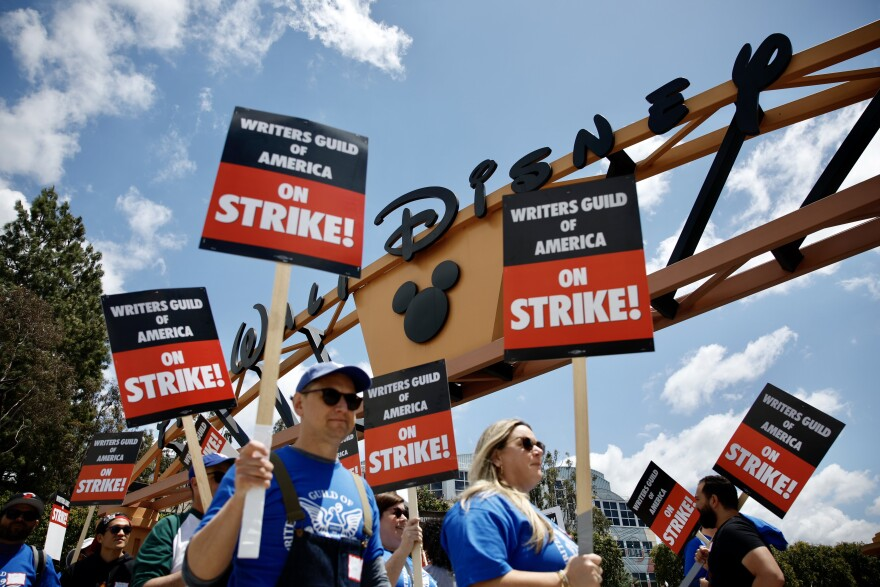
In that spirit, we should cheer the recent news surrounding the WGA strike that has been going on since mid-July 2023. According to the Associated Press, a tentative deal between the WGA and the major studios has been reached. While that doesn’t mean the strike is completely over, it marks a critical step in getting people back to work in an industry that was already reeling from the aftermath of the COVID-19 Pandemic.

AP: Writers’ union reaches tentative deal with Hollywood studios to end historic strike

As someone who loves movies, TV, and mindless entertainment as much as the next consumer, this is great news. This strike was bound to do more and more damage the longer it went on. We probably won’t know the full extent of that damage until a few years from now when we can look back at the impacts with the benefit of hindsight.

There’s also a personal element to this strike. I have multiple family members who work in the entertainment industry, mostly in the film and production side of things. They, more than most, felt the impact of this strike. Early on, a few even told me that this strike had the potential to last a long time. One even said they didn’t expect a resolution until late November. There was even a possibility it could continue well into 2024.

Thankfully, that no longer appears to be the case. This tentative deal, assuming it gets ratified, will provide some overdue benefits to the writers who play a big part in making the shows and movies we love so much. They deserve a deal that allows them to reap the fruits of their creative labor. You don’t have to look hard to find out just how much they were getting screwed over by a changing entertainment industry that studio executives and CEOs were exploiting to the utmost.

And therein lies an important lesson that’s worth highlighting, even as the strike comes to an end. This whole issue happened because the entertainment industry was changing. The old system that relied on residual income from broadcast TV and DVD sales just wasn’t going to cut it in an era of streaming media. The writers and actors behind some of these successful shows just weren’t getting the same share of the profits. And the studios were very much aware of this.

They could’ve adapted to ensure that those involved in the production could continue to be compensated fairly, even as consumers switched from traditional outlets to streaming.

They could’ve been open, honest, and transparent with the new economics of producing successful TV shows and movies in the post-COVID world.

They could’ve even explained why it was considerably difficult to pay generous residuals in a world of streaming media wherein profit margins were just too thin, if there even were profits to begin with.

But they didn’t. The executives, the CEOs, and those with the real power within these entertainment companies chose not to be proactive. Instead, they prioritized the price of their company stock and the investors who owned that stock. This is to be expected, as that tends to be the default reflex of publicly traded companies.

Call it callous in that it blatantly disregards the real work and toil of those producing the content.

Call it greed in the shallowest possible sense.

But at the moment, that’s simply how the incentives align in the entertainment industry, if not most industries in the global economy. There’s just too much money to be made by the rich and well-connected to do anything else. They are not going to do right by their workers unless they’re forced to, if not by law than by organized labor.

That may come off as cynical, but it’s also an important insight and one that every worker in every industry would be wise to remember. Because over the course of this strike, it quickly became clear how out of touch and callous these billionaire CEOs and executives were. They kept demanding that writers be reasonable with their requests. But at the same time, they were making hundreds of millions of dollars in salary and millions more in stock options.

These are not people capable of identifying with the life and struggles of working people.

These are people who might as well live on a different planet with respect to wealth, privlidge, and access.

Men Like David Zazlav and Bob Iger will never have to worry about paying a mortgage on time, falling behind on their bills, or ending up homeless because they cannot afford the outrageous rents in cities like Los Angeles and New York. So, how can we possibly expect them to empathize, let alone understand, the struggles of the writers and workers who help make their companies successful.

Most of these executives never set foot on a production stage, nor do they write or edit a single script. They just sit in offices, make demands/decisions, allocate money, and deal directly with investors whose primary focus is seeing a return on their investment.

And even if the company were to fail completely, these people would still end up with millions upon millions of dollars in their bank accounts. If they wanted to, they could never work a day for the rest of their lives. But those who actually work for them would be completely screwed.

It’s an unequal, unfair situation full of misaligned incentives. The executive and CEO class holds the power, the cards, and the money. They will not do the right things as a first recourse. They will only ever do what investors and their own self-interests incentive, by default. No matter how much money they have, they’ll keep trying to make more. And if that means screwing over their workers in any possible way, they’ll do it.

Remember that the next time labor issues come up. This doesn’t just apply to the entertainment industry, either. Any industry with a similar incentive structure will have the same issues. If there are rich, well-connected CEOs with shareholders to please, don’t expect them to prioritize workers beyond what they can legally and logistically get away with.

The only true counter to this uneven dynamic is that, despite all the power and money executives weird, they still need workers. They still need consumers. They still need to be credible in the eyes of the public to some extent. That kind of leverage is critical to maintain and appreciate.

Because the world will continue to change.

Every industry, from entertainment to making widgets, will continue to change with society and technology.

Those doing the work need to change with it because those with the money and power sure as hell won’t do right by anyone but themselves, unless they have to. And only those doing the work can make that happen.

1 Comment

Filed under AI Art, Artificial Intelligence, ChatGPT, Current Events, writing

Here’s What Happened When I Asked ChatGPT To Rewrite The Bill Of Rights

I’ve talked a lot about artificial intelligence and the implications of this technology. In my defense, it’s an incredibly relevant topic that I just happen to be very interested in. From AI-Generated artwork to ChatGPT, these are truly exciting times for this field. I’m sure I’ll have plenty to talk about in the coming years.

However, I don’t just want to react to news or stories about AI. I’d also like to participate in this emerging field on some level, even if it’s just as a simple consumer. We don’t yet know the full capabilities of our current AI tools or how they’ll impact us in the short or long term. But that’s exactly why we should test it for ourselves and see what we can do with it.

To that end, I decided to do a little exercise with ChatGPT. Please note that I do not currently have access to ChatGPT-4. I’m still using the previous version, ChatGPT-3. That version is quite limited in a number of ways, but it’s still capable of providing insightful information.

So, I decided to see how much ChatGPT could offer in terms of understanding and articulating the basic concept of human rights. That’s something that has certainly been a hot topic in recent years. And for those of us in the United States, you could definitely argue that our current laws surrounding human rights are inadequate and need updating.

This is where ChatGPT comes in. I logged in and gave it a simple prompt. I told it to rewrite the Bill of Rights, the key part of the US Constitution that enshrines the basic rights that every citizen is guaranteed under the law. This is what it came up with.

The following document outlines the fundamental rights and freedoms of all individuals in a modern, democratic society. These rights are to be protected and upheld by the government, and any infringement upon them is a violation of the principles of justice and equality.

Article 1: Freedom of Expression and Thought All individuals have the right to freedom of expression, including the freedom to seek, receive, and impart information and ideas through any medium, regardless of frontiers. No individual shall be subject to censorship or prior restraint, and any attempt to limit or suppress the free exchange of ideas shall be deemed a violation of this right.

Article 2: Right to Privacy All individuals have the right to privacy in their personal lives, including the right to be secure in their persons, houses, papers, and effects against unreasonable searches and seizures. No individual shall be subject to surveillance or monitoring without just cause, and any information obtained through such means shall be inadmissible in court.

Article 3: Right to Equality and Non-Discrimination All individuals are equal before the law and are entitled to equal protection and benefit of the law, without discrimination based on race, ethnicity, gender, sexual orientation, age, religion, or any other status. Any discrimination or prejudice against any individual or group shall be deemed a violation of this right.

Article 4: Right to a Fair Trial All individuals have the right to a fair and impartial trial, including the right to due process of law, the right to be informed of the charges against them, the right to confront and cross-examine witnesses, and the right to legal representation. No individual shall be subjected to cruel or unusual punishment, and all accused individuals shall be presumed innocent until proven guilty.

Article 5: Right to Peaceful Assembly and Protest All individuals have the right to peacefully assemble and to protest, including the right to participate in marches, demonstrations, and other forms of peaceful assembly. No individual shall be subject to violence or repression for exercising this right.

Article 6: Right to Education and Information All individuals have the right to education and information, including access to a free and comprehensive education system and the right to access information through any medium. The government shall ensure that all individuals have access to the tools necessary to exercise this right.

Article 7: Right to Healthcare All individuals have the right to access comprehensive healthcare, including preventative care, treatment, and medication, regardless of their ability to pay. The government shall ensure that all individuals have access to quality healthcare and shall take measures to address any disparities in healthcare access.

Article 8: Right to Housing All individuals have the right to adequate housing, including shelter, sanitation, and security, regardless of their economic or social status. The government shall take measures to ensure that all individuals have access to affordable and safe housing.

Article 9: Right to Work and Fair Labor Practices All individuals have the right to work and to fair labor practices, including the right to a living wage, safe and healthy working conditions, and the right to form and join trade unions. The government shall take measures to ensure that all individuals have access to decent work and shall prohibit any form of forced or compulsory labor.

Conclusion: These rights and freedoms are essential to the establishment and maintenance of a just and equitable society. It is the responsibility of the government to protect and uphold these rights, and it is the duty of all individuals to respect and defend them.

It only took ChatGPT about 10 seconds to craft this. After reading through it, I am legitimately impressed. I think this is a considerable upgrade over what the Bill of Rights covers. This version actually articulates the importance of privacy, ranking it just a rung below free expression. It also recognizes that people can’t truly be free if they don’t have some level of material guarantees, like housing, health care, education, and fair labor practices.

These are all major issues that are debated across the country and throughout the world. This new version of rights essentially simplifies the whole concept, laying out that this is what people need to be free of coercion, free of exploration, and free of want. Some may think these rights are incomplete or too utopian. That may be the case to some extent.

But even if it’s not perfect, it’s still an improvement. And again, it only took ChatGPT about 10 seconds to craft this. We humans are still arguing over slavery. We have no more excuses. We have a tool that can help us figure out little issues and big issues. And regardless of whether or not it’s intelligent or sentient, we would be wise to listen.

Leave a comment

Filed under Artificial Intelligence, ChatGPT, Current Events, futurism, politics, Uncategorized

Here’s What Happened When I Asked An AI To Write A Love Poem

There has been a lot said about the emerging state of artificial intelligence. I’ve certainly contributed my share. I imagine a lot more is going to be said in the coming months and years.

Ever since ChatGPT demonstrated the power and potential of this technology, it has garnered a great deal of interest among the public. It’s also generated plenty of concerns. Some are minor, like whether this technology would eliminate too many jobs. Some are major, like whether this will lead to the development of a powerful artificial intelligence that we can’t control.

There are legitimate concerns. Some are much more pressing than others. I’m certainly not qualified to explain all the nuances, let alone make recommendations or decisions on this issue. I’ll leave that to people much smarter and more capable than me.

But for now, these tools are here. We can use them in any number of ways. Some are already using them for objectively dangerous purposes. That’s always going to be an issue with every new technology, including AI. But the less dangerous, less dire uses will always be more common. And they’ll rarely make the news.

In that spirit, I’d like to share what happened when I played around a bit with Bing’s new AI program. I didn’t do anything too elaborate or ambitious. I understand this is new technology. It’s going to be limited for a good long while in the early stages. But it’s still quite capable of doing wonderful things.

To that end, I asked Bing to write a love poem. My exact prompt was actually “Write me a beautiful love poem.” This is what the AI created.

Here’s the first poem:

You are the light of my life
The reason for my smile
The warmth in my heart
The spark in my soul

You are the melody of my song
The rhythm of my dance
The harmony in my voice
The tune in my ear

You are the color of my world
The beauty in my eyes
The splendor in my sight
The rainbow in my sky

You are the love of my life
The partner of my dreams
The companion of my journey
The mate of my soul

Here’s another.

When I see your face
I feel a surge of grace
When I hear your voice
I have no other choice

But to love you with all my might
To hold you close and tight
To cherish you day and night
To make you happy and bright

You are my everything
My reason for living
My source of joy and peace
My treasure and my bliss

You are my one and only
My forever and my always
My soulmate and my lover
My friend and my partner

Here’s one more.

You are the star of my night
The moon of my tide
The sun of my day
The sky of my way

You are the fire of my passion
The flame of my desire
The heat of my emotion
The light of my devotion

You are the breath of my life
The beat of my heart
The pulse of my blood
The soul of my love

Are these poems the greatest love poems ever written? Probably not.

Do these poems still qualify as love poems? I would argue they do.

If you didn’t know I had asked a chatbot to write these, would you think a real person wrote them?

Given the current state of this technology, I’m impressed. There’s certainly room for improvement. But let’s remind ourselves that this wasn’t akin to asking a calculator to factor a couple of large numbers. I asked this chatbot to do something creative. And it did so in just few seconds.

This is what AI is capable of now.

Just imagine what it’ll be capable of in the coming years.

Leave a comment

Filed under Artificial Intelligence, ChatGPT, romance

Jack’s (Non-Expert) Proposal For A Universal Basic Income Alternative

This is another video from my YouTube channel, Jack’s World. This video is another exploration on the impact of advanced artificial intelligence. Specifically, it highlights the possibility of how to structure society in an era when automation fueled by AI changes the nature of the economy. There have been many proposals on how best to build society around this economy. A universal basic income is often a popular proposal. While I am largely a proponent of such a policy, I think there’s room for something bolder. This video is my proposal for something that takes UBI a step further. Enjoy!

Leave a comment

Filed under Artificial Intelligence, ChatGPT, futurism, Jack's World, YouTube

An AI-Generated Comic Was Denied Copyright Protection (And Why That’s A Big Deal)

Every now and then, a story slips under the radar of a much larger, but closely related story. The larger story makes more headlines and attracts more attention, but the smaller story might end up having a far more lasting impact.

That seems to be happening a lot with news involving artificial intelligence and the various AI tools that have emerged in recent years. I’ve already talked about plenty, giving my opinion on the rise of ChatGPT and showing off some AI-Generated artwork I made. There’s so much going on in this field that it’s hard to keep up with, let alone discuss.

But recently, one of those little stories caught my attention. It involves the same AI-Generated art I mentioned earlier and comic books, something for which I’ve shared my passion for in many forms. And it’s a story that I don’t think is getting enough attention.

It has to do with a comic called Zarya of the Dawn, a comic created by Kris Kashtanova. It’s not published by Marvel, DC, Dark Horse, Image, or any other mainstream comic publisher. You can actually download it right now for free. But what makes this comic different isn’t the story, writing, or style. It’s how it was made.

This comic was written by a person.

However, all the artwork inside was created with AI-generating art tools, most notably MidJourney.

That, in and of itself, is quite remarkable. The visuals within this book are certainly eye-catching. They might not rank on the same level as a Jim Lee or a Jack Kirby, but it’s a solid visual spectacle that brings to life a story.

For people like me, who cannot draw and don’t have the money to pay artists to depict the stories we want to tell, this is truly remarkable. I would go so far as to say it’s genuinely exciting. It shows just what’s possible with these tools. A writer with no drawing skills was able to produce this comic using only an AI art generating tool with text prompts. And the end result is stunning.

But this is where the story takes a turn. When Kashtanova attempted to copyright this comic, the US Copyright Office issued a surprising decision that might very well set a major precedent moving forward. Because the comic used AI to create the artwork, it could not be granted copyright protection. This was the exact statement, according to Ars Technica:

“We conclude that Ms. Kashtanova is the author of the Work’s text as well as the selection, coordination, and arrangement of the Work’s written and visual elements. That authorship is protected by copyright. However, as discussed below, the images in the Work that were generated by the Midjourney technology are not the product of human authorship.”

That bolded part is my doing because that’s the section with the biggest implication. This is the US Copyright Office stating outright that images and artwork created by AI can’t get copyright protection. That means that every piece of AI art you create for whatever reason can’t be owned by you in any legal sense. Because technically, you didn’t make it. The program made it for you.

Without getting too deep into the legal issues, I don’t think enough people realize the ramifications this might have for the future of the comics industry and for the art industry as a whole. On the comics side, there are actually two sides to consider.

On one, this technology will allow ordinary people with little to no art skills to produce comics with quality artwork. People who never once had the skills or means to make comics could suddenly start producing them on their own without a publisher or a skilled artist.

That means many great comics that wouldn’t have otherwise been made can be made. Great stories that once only existed with words could be brought to life through beautiful renderings.

But on the other side, the absence of copyright protection is an issue. Yes, these comics could bring to life amazing stories. However, the creators won’t be able to monetize their work, nor would they be able to stop others from using it for their own ends.

That means that, in theory, you or I could create a beautiful comic with this technology. It could find a massive audience and become a beloved story with countless fans. Then, a big company like Disney or Warner Brothers could come in, take the story and the depictions, and basically turn it into their own entertainment product. And since they have more resources and better lawyers, the creators likely wouldn’t get a penny of the profits.

This story also doesn’t account for how those same companies might use this technology to further undercut their workers and creators. Comic companies already have a not-so-great reputation for screwing over writers and artists who create iconic characters. Just look at what happened between Jack Kirby and Marvel for a hint of those issues.

If these same companies can use this same AI technology to produce more comics while not having to pay their artists or writers as much, they will do it. They’re a business. They’ll jump at any chance to pay less to get more. It’s cold, callous, and uncreative. But that’s the world we live in.

Add other tools like ChatGPT into the mix and it’s entirely possible that an AI could create an entire comic from scratch. And everything within it, from the art to the story to the characters, could not be copyrighted in any way. At a certain point, the AI might get so good that it would be hard to tell if there was ever a human creator to begin with.

These are all strange scenarios, equal parts exciting and distressing. We’re already seeing so much change as a result of these new tools, but I don’t think we’ve even seen a fraction of what’s possible. As AI technology improves, art generation and storytelling will change a great deal. The comics industry is more vulnerable than most, as Zarya of the Dawn just proved.

It’s hard to know what this will lead to. But whatever happens, it all started with this story and the precent it set.

Leave a comment

Filed under AI Art, Artificial Intelligence, ChatGPT, superhero comics, technology, writing

Some Helpful (And Mostly Free) AI Tools That Might Help You

I talk about artificial intelligence a lot, both on this site and on my YouTube channel. It’s not just because Artificial Intelligence has the potential to be one of the most important technologies that mankind will ever create. It’s a topic of genuine fascination for me. I’ve always been a fan of the science fiction stories that can be told about AI. I also have a keen interest in how it may ultimately impact the real world.

However, as much fun as it is to speculate on the future of artificial intelligence, it’s a bit more productive to understand what it can do for you right now. I feel like AI has become a lot more mainstream with the rise of programs like ChatGPT. It’s very likely that other programs like it will emerge in the coming years and be very disruptive to multiple industries.

Granted, these AI systems are nowhere close to becoming sentient like Skynet or Hal 9000. We honestly don’t know when we’ll reach a point where an artificial intelligence will be as sentient and as intelligent as an average human. But for the time being, there are a growing number of tools powered by AI that are helping people within multiple fields. I’ve used quite a few of them. I’ve even shared some of the work I’ve done with them. And I can use these tools, then anyone can.

So, in the spirit of exploring this new world AI is creating, I’ve created a brief list of current AI tools that I hope others might find useful in whatever it is they do. Whether it’s writing, graphic design, web development, cooking, or personal interaction, there’s probably an AI tool to help you. While these tools might be limited in their use at the moment, it’s likely just the early versions of something that’ll become much more refined in the future.

And if you have other AI tools you find useful, please share them in the comments.


Copy.AI – An AI-Powered Copywriting Program

Piggy To – An AI-Powered Program That Creates Small, Shareable Websites

Riffusion – An AI-Powered Music Generator That Creates Music From Simple Text Prompts

Midjourney – The Most Popular AI-Artwork Generator

Yoodli AI – An Interactive AI That Helps Improve Your Communication Skills

GymGenie – An AI That Helps Develop A Workout Program

Article Fiesta – An AI Tool That Helps You Create Articles For Websites And Blogs

MeetGeek – An AI Tool That Helps Record, Transcribe, And Summarize Meetings

ChefGPT – An AI Tool That Helps Develop New Recepies

Avatar AI – An AI That Helps Develop Digital Avatars

Natural Reeder – An AI Text-To-Speech Tool That Creates Natural Language Narration Audio

Cowriter – An AI Tool That Helps Improve Your Writing

1 Comment

Filed under AI Art, Artificial Intelligence, ChatGPT, futurism, technology