Tag Archives: tech

Personal Robots Are Now (Sort Of) Available

It’s a common futuristic trope. At some point, humanity develops robots that are capable of performing everyday household tasks. From Rosie in “The Jetsons” to the units in “I Robot,” they offer an enticing premise. They’re essentially a maid who doesn’t get tired, doesn’t have a bad attitude, and doesn’t inspire any guilt that may come from relegating certain people to service roles.

There’s a lot more to be said about why this trope exists. Some of it has implications that I’d rather not dwell on. But let’s not lie to ourselves. The idea of having a personal robot maid is appealing to many. That appeal extends beyond the possibility of sex robots, which are also a notable trope.

While the current state of sex robots is a different conversation, the concept of a personal robot is very relevant. The rise of artificial intelligence has already impacted robotics. It’s not enough to just create robots with the dexterity and nimbleness of a human. Companies like Boston Dynamics have been doing that for years.

But those robots are mostly just autonomous puppets. Their movements are either pre-programmed or controlled by a human. It’s still a critical component in the development of personal robots. But it’s not enough to make them viable.

Now, we may be at a point where such robots can be a real product. Earlier this year, a company called 1X introduced the first commercial personal robot.

They call it Neo. And it’s currently available for pre-order and the cost is steep at $20,000. Whether or not those orders are fulfilled remains to be seen. It’s possible this could be another Elon Musk style vaporware grift. However, it’s still relevant in that it marks another step.

This robot is certainly no Rosie. It’s also not the kind of robot you might see working in an Amazon warehouse. It feels like a first effort in creating a viable personal robot. Like the first cell phones of the 1980s, it’s a clunky novelty with limited function. This robot doesn’t have an AI that allows it to act independently. It’s actually teleoperated.

That means if or when you get one, it will have to connect remotely to a human operator to help it learn tasks. In a sense, Neo is like an entry level employee that requires extensive training. But it does have a measure of programming that allows it to learn, like your typical narrow AI. And once it learns well enough, it can perform tasks independently.

Those tasks can’t be overly complex. Things like doing the dishes, folding laundry, and cleaning a home is not all that complicated. With some learning, it can probably carry out those tasks about as well as a young teenager. But Neo also has some additional functionality. It can engage in conversations like a typical chatbot.

Couple this with its small stature and non-threatening look and this robot can be a companion, as well as a helper. Again, it’s not a sex robot. Expecting it to be that intimate is like expecting one of those bulky 80s cell phones to take dick pics. I still don’t doubt that will enter the equation at some point in this market. But this added element of connection is another step in the process.

Assuming these robots do actually get sold, it’ll open the doors to a new market. And whichever company gains that initial foothold will be primed to make billions. Say what you will about the current state of the AI industry and there is a lot to say. But it’s an industry full of potential profits for any company that’s capable of realizing them. Doing so will require a great deal of time, money, and investment.

But the incentives are in place. The technology is developing and improving. Fully capable personal robots won’t arrive all at once. Like any other technology, it has to go through a maturation process. But with Neo, that process might have officially begun.

Leave a comment

Filed under Artificial Intelligence, robots, Uncategorized

How AI Slop Will Evolve For Better AND For Worse

This is a video from my YouTube channel, Jack’s World.

The development of artificial intelligence has incurred many consequences. But the most visible to date has been the emergence of “AI Slop.” It has flooded social media, including YouTube. And as generative AI continues to improve, the nature of this slop will evolve.

There are plenty of strong opinions about AI Slop, most of which are negative. I do share some of those opinions, but I also try to approach it with a balanced perspective in this video. Enjoy!

Leave a comment

Filed under AI Art, Artificial Intelligence, Jack's World, YouTube

Google Just Created An AI That Makes Videos And The World Will Never Be The Same

In recent years, it has become routine for tech companies to overhype up their latest artificial intelligence technology. Ever since the rise of ChatGPT, the market for this technology has expanded faster than anything I’ve ever seen in my lifetime. It’s not unreasonable to surmise that AI will be a multi-trillion-dollar industry in the coming decades.

But I’m also old enough to remember the dot-com bubble. I haven’t forgotten what happens when hype exceeds capabilities. And, as remarkable as these emerging AI systems are, their capabilities are still limited. Whether it’s large language models or image generators, these AI systems are a long way from becoming Skynet. They’re certainly part of the ongoing development to create Artificial General Intelligence, but that leap is not imminent. That would be like jumping from rotary phones to iPhones.

However, AI is different from the dot-com bubble or any other overhyped product for that matter. I’ve said before that AI has the potential to change the world in ways we literally cannot imagine. That potential is far from being realized, but there’s a good chance people my age will live long enough to see it play out.

Well, recently a bit more of that potential was realized. Google, a company that is very active in the development of AI, released a new generative AI tool called Veo3. Like other generative AI tools, this particular tool specializes in creating full videos from text prompts. It’s not the first tool of its kind. However, based on some of the videos that have come out from Veo3, it’s definitely a step forward in terms of quality. If you need proof, check these videos out.

Remember, the content in this video is entirely AI. It never happened.

I’m not gonna lie. I did not expect these videos to look this realistic. With other AI video generators, you can usually tell it’s not real. Between the glitchy movements and the uncanny valley effect, not many people would mistake those videos as real.

But Veo3 has taken it to another level. If I didn’t know ahead of time that this content was fake, I might have just shrugged and accepted it. And that’s a major threshold that we cannot uncross with this technology. Because when it suddenly becomes possible to create videos that look as real as anything taken in real life, how can we trust any video?

Make no mistake. This won’t just be used to flood the internet with advertisements and mindless entertainment. Someone is going to use this technology maliciously. There’s a good chance someone is already doing so as we speak.

At this very moment, you can use Veo3. It is expensive, as many advanced AI tools tend to be. But if you’re determined to make a certain video for a certain purpose, be it malicious or altruistic, is $250 really that high a price? I know people who have spent more on skins in Fortnite.

And Veo3 is not the apex of generative AI. It’s going to keep improving. The incentives are too strong. Google might have the best video generator now, but other multi-billion-dollar companies who want a piece of that AI market will fight to take that title.

Maybe OpenAI will upgrade Sora.

Maybe Microsoft will upgrade its Copilot AI.

Maybe a company like Apple will make a big leap, just like they did with smartphones years ago.

But no matter which company makes the next best AI video generator, the technology will improve. It’s going to become increasingly difficult to tell when something is real or fake. There are likely going to be laws and policies that attempt to regulate this kind of AI. But governments have been historically slow at keeping up with technology. And the advancement of AI is likely to accelerate.

I certainly don’t claim to know what kind of impact Veo3 will have in the short-term. I already make YouTube videos on my own. Will my kind of content become obsolete or unable to compete? Will video sites everywhere become overwhelmed or bloated because of content generated by Veo3?

Then, there’s the long-term impact. What happens to major studios once this technology allows them to make movies and shows faster, cheaper, and without paying actual people? That’s an issue I once thought was decades away. Now, it might be relevant within a few years.

Only time will tell what sort of changes this technology will incur. But if what Veo3 has demonstrated is any indication, these changes are coming a lot sooner than expected.

1 Comment

Filed under AI Art, Artificial Intelligence, YouTube

Why AI SHOULD Replace Most CEOs

This is a video from my YouTube channel, Jack’s World.

In this video, I make the case that, of all the jobs artificial intelligence could replace, CEO should be at the top of that list. In recent years, CEOs in general have generated headlines for all the wrong reasons. With the ongoing advancements in AI, this is one job for which we should be actively trying to remove human flaws.

Leave a comment

Filed under Artificial Intelligence, Jack's World, television, YouTube

Why You Should NOT Trust Elon Musk (Or Any Promises He Makes)

As we get older, we often learn the hard way that the people we admire and those we’ve placed our trust in are painfully human. With very few exceptions, people are complicated. They have their flaws, failures, warts, and regrets. It doesn’t matter how high their profile or how long their list of accomplishments. They’re just as human as us. And sometimes, that same high profile can exacerbate their worst tendencies.

That’s what I’ve come to learn about Elon Musk, someone who I used to reference in admiration on this site. Like many others, there was a time when I respected and admired Musk for his efforts to forge a better future through technology and investment. Whenever he spoke on these issues, I listened closely and took his words seriously. I still believe the work he did making electric cars more mainstream and pursuing brain/computer interfaces are a net positive for the world.

However, recent years have caused me to re-evaluate many of my opinions on this man. It’s not just that I’ve become more jaded and cynical over the years. I’ve watched, along with many others, as Elon Musk has proven himself to be out of touch, egotistical, petty, ruthless, and increasingly unhinged with respect to his political leanings.

He’s also a billionaire who, like many others before him, has shown no qualms about ruthlessly exploiting his workers, even during a global pandemic. Let’s not forget about that.

Now, I freely admit my attitude towards billionaires has soured a great deal in recent years. I’m now of the opinion that billionaires really shouldn’t exist in a civilized society. I also believe it’s impossible to become a billionaire without being ruthlessly exploitative. But that’s beside the point.

Even if Musk wasn’t a billionaire, he still wouldn’t be someone worthy of his reputation among supporters. The past four years have shown that he is not the future tech visionary he pretends to be. He is also not a self-made billionaire in any sense, considering how much of his wealth was inherited.

At his core, Elon Musk is a sales pitch man, plain and simple. He’s about as honest as a used car salesman trying to sell cars that he knows aren’t what he claims them to be. This is not just my opinion of the man. You need only look up the long list of predictions/promises he’s made over the past 15 years.

He claimed he could get humans to Mars by 2024. He hasn’t even made it back to the Moon.

He claimed fully autonomous self-driving cars would be ready by 2018. He was wrong about that too.

He claimed COVID-19 would go away by April 2020. He was distressingly wrong in that prediction.

It’s an age-old tactic of many sales pitchmen. Make big, bold promises that you can’t possibly deliver, but deliver just barely enough to keep people from calling you a total fraud. And on the things Musk has delivered, there’s still a lot to be desired on that front.

Then, there are Musk’s politics, which he just loves sharing on social media to a disturbing degree. Some have claimed that the COVID-19 pandemic radicalized him. It was around 2020 when his politics became much more reactionary, so much so that it got him in trouble. And once he bought Twitter outright, he essentially emboldened everyone who shares in his reactionary outlook, including a few who have done serious harm.

There’s a lot more I can say about his political leanings, but that’s a rabbit hole nobody can dive into without losing too much of their soul. I’ll just say that people far smarter than me have been much more thorough in debunking the myths surrounding Musk’s persona. I’ll even concede that Musk is still capable of worthwhile efforts, even if he’s not a likable person in general.

But, as someone who used to buy into the hype on which this man built his fortune, I want to make one thing clear. Elon Musk is not someone you should trust.

If he makes a bold promise, don’t assume for a second he’ll deliver until he actually does.

If he makes a confident statement about politics, don’t assume it’s anything other than self-serving aggrandizement.

If he makes a bold prediction, don’t take it seriously until you remind yourself how many other predictions he’s gotten wrong.

And, most important, don’t forget for a second that Elon Musk is not normal in the sense that he’s a billionaire. You just can’t be normal and become a billionaire through wholly ethical means.

It still remains to be seen what Elon Musk’s legacy will be in the grand scheme of things. It’s very likely that, whatever it ends up being, it’ll be skewed by both his supporters and detractors. But while it’s being built, it’s worth being cautious, skeptical, and even a little extra cynical when it comes to this man.

1 Comment

Filed under futurism, Neuralink, rants, technology

Mass Effect: The Danger And Soul Of Artificial Intelligence

This is a video from my YouTube channel, Jack’s World.

This video explores the inherent dangers and genuine hopes of artificial intelligence through one of my favorite video game franchises of all time, Mass Effect.

Artificial Intelligence is a big part of this galaxy-spanning saga. The main antagonists, the Reapers, represent a worst-case scenario. The synthetic race, the Geth, are also a recurring danger. However, in exploring the vast history and lore of Mass Effect, we gain some remarkable insights into what the future might hold for how we navigate AI. Enjoy!

Leave a comment

Filed under Aliens, Artificial Intelligence, comic book reviews, Mass Effect, YouTube

How Much Are You Willing To Spend/Risk On Emerging Longevity/Anti-Aging Treatments?

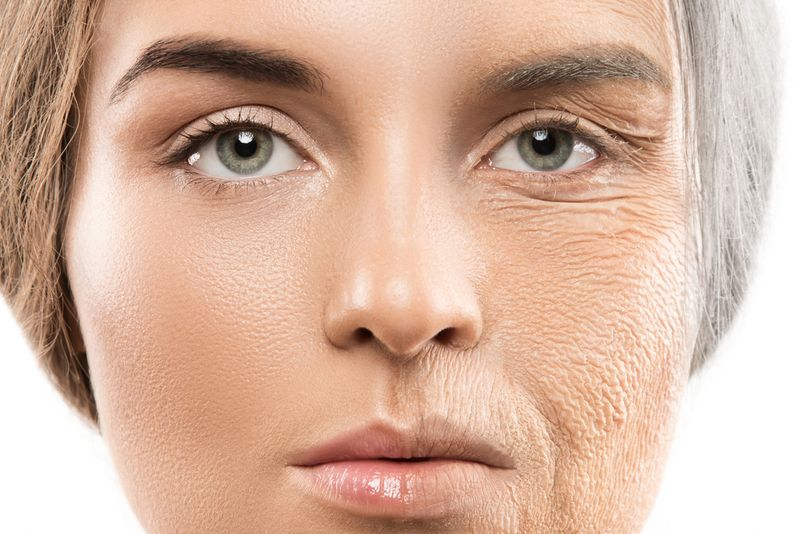
We’re all born with youthful energy. As kids and young adults, this energy helps fuel us as with build lives for ourselves and our families, be they our close relatives or any children we might have. But over time, that energy fades. Our health, our looks, and our overall energy for living fades. It is an inescapable fact of life.

One of my old health teachers once summed it up with this endearing quote that I remember to this day.

“Once your body is done growing, it starts dying. The only part you can control is how rapidly that process unfolds.”

This has become more and more relevant for me, personally. I am no longer young by most measures. My teenage years and my early 20s feel like a lifetime ago. Who I was then is very different from who I am now. And while I have gotten much better at taking care of myself since I turned 30, I know that’s just slowing the aging process. It doesn’t stop it.

At some point, my body and mind will start to break down.

At some point, I’ll start succumbing to the many ailments often associated with age.

I am not looking forward to that. I prefer to delay that as much as possible. I’ve always been somewhat self-conscious about my looks and my health. I don’t deny that the prospect of aging is scary to me. That’s one of the reasons I often keep a close eye on advancements in biotechnology. And with each passing year, I also find myself paying more attention to advances in the fields of longevity.

I know there are many conflicting perspectives when it comes to body image, beauty standards, and the idea of aging gracefully. For everyone in human history, you didn’t really have a choice. You just had to accept that you were going to get older. Your looks, your energy, and your body was going to fade. But if this technology is able to mature, there might be other options in the future.

Whether or not I’ll live long enough to take advantage of those opportunities, it’s hard to say. It may already be too late for someone my age. Even if new treatments emerge, there’s a good chance they’ll be reserved for the rich and well-connected. Unless I win the lottery, I doubt I’ll be in a position to utilize them.

But that might not be the case for my nieces and nephews, who are still young children at the moment. It might not even be the case for those just graduating college at the moment. In the same way artificial intelligence has had a sudden surge of advancement, longevity might experience a similar surge, thanks in no small part to AI.

As I write this, science has uncovered so much about the mechanics of aging. We know considerably more today than we did 20 years ago. We’re sure to uncover more in the coming years. At some point, we may even develop effective treatments that don’t just slow aging. We might find a way to actually reverse it.

This sort of technology isn’t some far-off sci-fi fantasy on par with a warp drive. Reversing aging doesn’t break the laws of physics. It doesn’t even break the laws of biology, given how some animals never seem to age. It’s just a matter of developing the right tools, the right treatments, and the right approach. I have no idea what form that will take. I doubt it will be something as simple as a pill, an injection, or something you could buy at a pharmacy.

But if such a treatment were available, it’s worth asking how much you’d be willing to risk in order to take advantage of it. Because, like any emerging medicine, there is risk early on. When something is unproven in the long-term, you will be putting your mind and body at risk by embracing it so quickly. Even if it’s tested to a point where very major health organization gives it the thumbs-up, there’s always a chance something could go wrong. That’s just how medicine and biology works.

Some people might not be willing to take that risk.

For me personally, I totally would. Even if my health and appearance is generally good, I would definitely take a chance at a treatment that would help preserve both for a longer period. I would certainly expect side-effects. But if it delivers good results, I’ll endure those.

But there’s also the cost to consider. Even if a treatment is shown to be effective at keeping you feeling young, beautiful, and energetic, it doesn’t do you much good if it costs you every penny you have and then some. Sure, you’d have your youth and your looks, but you’d be broke and in debt. Is that worth it?

Personally, I wouldn’t be willing to spend everything or go that deep into debt, just to look young and remain healthy. Few good things ever come from indebting yourself to that extent.

But others might feel differently. Some might not want that kind of longevity, even if it were available. That’s perfectly fine. We should certainly respect anyone who makes such a choice. But we should also put real thought and effort into attacking aging the same way we attack any disease. Regardless of how we age or how we choose to approach it, we’re subject to the chaotic ravages of time.

Emerging technology will give us more options than we’ve ever had at any point in our existence as a species. How we choose to exercise those options remains to be seen. I might not get that choice. But I sincerely hope that some reading this do.

Leave a comment

Filed under biotechnology, CRISPR, technology

My Thoughts, Opinions, And (Mixed) Feelings About AI Art

This is a video from my YouTube channel, Jack’s World.

This video explores my thoughts, feelings, and overall sentiments surrounding AI art. You might have noticed that some of my more recent videos have been incorporating more AI art lately. I do so with the understanding there is a fair amount of controversy and concern surrounding this technology. I do my best to address that while offering what I hope is a balanced perspective on AI art and the use of generative AI. Enjoy!

Leave a comment

Filed under AI Art, Artificial Intelligence, Jack's World, technology, YouTube

Neuralink Has Implanted Its First Brain Chip (But Don’t Get Excited)

I know it’s been a while since I talked about Neuralink. A few years ago, I followed news about this endeavor closely because I genuinely believed that brain/computer interfaces was an important technology to develop. These days, I still believe that. I think it has only become more vital as the progress in artificial intelligence has accelerated.

However, there’s a reason why I haven’t talked much about Neuralink in quite a while. I admit some of that is because some pretty significant world events got in the way of following technology trends. However, a much bigger part of my disinterest came from the one behind Neuralink, Elon Musk.

The long and short of it is this. I once respected and admired Elon Musk for his efforts to develop new and emerging technology. But then, once I started scrutinizing him, his background, his business practices, and his tendency to make ridiculous promises that he can never keep, I came to the conclusion that Elon Musk isn’t just an unscrupulous businessman. He’s an asshole.

Believe me, there’s a lot I could say about him, but I prefer not to. Insulting someone with billions of dollars and access to high-priced lawyers is risky these days. I’ll just say that the combination of COVID-19 and buying Twitter didn’t really break Musk. It just exposed the kind of person he really is and that person is not one worthy of respect.

Now, with respect to Neuralink, there is still some real value behind the company, the efforts, and the technology. Integrating the human brain with technology isn’t just a promising field. It might very well be necessary if humans are to adequately adapt to a future in which there will likely be machines much smarter and more capable than any person who has ever lived. Even if AI never becomes as intelligent as an average human, having humans that can interact with it on a more intimate level could fundamentally change our species and our society for the better.

And to that end, Neuralink has officially taken a critical first step. According to NPR, the company has successfully implanted its first brain chip into a human participant. We don’t know many details, nor do we know the identity of the person who received the chip. We only know what was conveyed in the announcement, which is rarely something you can take at face value with Elon Musk.

But even if you don’t trust Musk, and you shouldn’t, this feat has been in the works for a while. Neuralink has been actively recruiting volunteers for implants for over a year now. And this effort was authorized by the United States Food and Drug Administration. The primary participants, at least for now, are those who have suffered brain or spinal chord injuries. So, it’s not like Neuralink is accepting applications from those who just want a brain chip for no reason.

That approach is to be expected. Even Musk has said that the initial efforts with Neuralink will focus on helping paraplegics or those suffering from conditions like ALS. If and when the technology matures, then it’ll expand access to other users, but still for therapeutic purposes. Eventually, it would get to a point where brain implants aren’t just treatments. They would be like smartphones that people willingly purchase and have implanted.

And it’s that last part where I believe proponents of this technology should temper their hopes. Until we know more about the patients, the nature of the brain implants, and the impact on the participants, nobody should be eager to get one themselves. These brain implants are not about to become the next iPhone. This is a technology that needs much more investment, refinement, and development.

And if history is any guide, you really shouldn’t trust someone like Elon Musk to deliver that level of advancement. Despite the persona he tries to convey, he is not Tony Stark. He is not a brilliant scientist or inventor. He just hires those kinds of people and has a nasty habit of screwing them over.

He is, and always has been, a salesman first. He may very well be a genuine futurist trying to make a better future, but his tendency to get into petty feuds on social media and say objectively dumb things should give everyone pause. But at the end of the day, he’s an obscenely wealthy, incredibly out-of-touch businessman.

That means he likely sees Neuralink as just another business that he hopes will make him even richer than he already is. Even if he believes in the inherent value of the technology, he will exploit it for billions if it ever becomes a viable commercial product. That’s just how billionaires operate. And given the distressing tendency for billionaires to be psychopaths, it would be unwise to give Elon Musk or anyone like him access to your brain.

Now, I’ll say it again. This technology is important and what Neuralink achieved is a vital first step. The successful operation of one brain implant means it’s no longer on paper. This technology is officially real. Like the first person who drove a car or the first person to fly a plane, this is a major leap in our ongoing efforts to develop better and bolder technology.

We don’t know where this feat will lead or whether it’ll pan out in any meaningful way, but it’s worth being hesitant and a little extra cautious. It’s not wrong to trust in the sincere efforts of others who want to improve the lives of others. But it’s always wise to be skeptical of the intentions of unscrupulous billionaires with inflated egos.

Leave a comment

Filed under Artificial Intelligence, Neuralink, technology

An AI-Generated Comic Was Denied Copyright Protection (And Why That’s A Big Deal)

Every now and then, a story slips under the radar of a much larger, but closely related story. The larger story makes more headlines and attracts more attention, but the smaller story might end up having a far more lasting impact.

That seems to be happening a lot with news involving artificial intelligence and the various AI tools that have emerged in recent years. I’ve already talked about plenty, giving my opinion on the rise of ChatGPT and showing off some AI-Generated artwork I made. There’s so much going on in this field that it’s hard to keep up with, let alone discuss.

But recently, one of those little stories caught my attention. It involves the same AI-Generated art I mentioned earlier and comic books, something for which I’ve shared my passion for in many forms. And it’s a story that I don’t think is getting enough attention.

It has to do with a comic called Zarya of the Dawn, a comic created by Kris Kashtanova. It’s not published by Marvel, DC, Dark Horse, Image, or any other mainstream comic publisher. You can actually download it right now for free. But what makes this comic different isn’t the story, writing, or style. It’s how it was made.

This comic was written by a person.

However, all the artwork inside was created with AI-generating art tools, most notably MidJourney.

That, in and of itself, is quite remarkable. The visuals within this book are certainly eye-catching. They might not rank on the same level as a Jim Lee or a Jack Kirby, but it’s a solid visual spectacle that brings to life a story.

For people like me, who cannot draw and don’t have the money to pay artists to depict the stories we want to tell, this is truly remarkable. I would go so far as to say it’s genuinely exciting. It shows just what’s possible with these tools. A writer with no drawing skills was able to produce this comic using only an AI art generating tool with text prompts. And the end result is stunning.

But this is where the story takes a turn. When Kashtanova attempted to copyright this comic, the US Copyright Office issued a surprising decision that might very well set a major precedent moving forward. Because the comic used AI to create the artwork, it could not be granted copyright protection. This was the exact statement, according to Ars Technica:

“We conclude that Ms. Kashtanova is the author of the Work’s text as well as the selection, coordination, and arrangement of the Work’s written and visual elements. That authorship is protected by copyright. However, as discussed below, the images in the Work that were generated by the Midjourney technology are not the product of human authorship.”

That bolded part is my doing because that’s the section with the biggest implication. This is the US Copyright Office stating outright that images and artwork created by AI can’t get copyright protection. That means that every piece of AI art you create for whatever reason can’t be owned by you in any legal sense. Because technically, you didn’t make it. The program made it for you.

Without getting too deep into the legal issues, I don’t think enough people realize the ramifications this might have for the future of the comics industry and for the art industry as a whole. On the comics side, there are actually two sides to consider.

On one, this technology will allow ordinary people with little to no art skills to produce comics with quality artwork. People who never once had the skills or means to make comics could suddenly start producing them on their own without a publisher or a skilled artist.

That means many great comics that wouldn’t have otherwise been made can be made. Great stories that once only existed with words could be brought to life through beautiful renderings.

But on the other side, the absence of copyright protection is an issue. Yes, these comics could bring to life amazing stories. However, the creators won’t be able to monetize their work, nor would they be able to stop others from using it for their own ends.

That means that, in theory, you or I could create a beautiful comic with this technology. It could find a massive audience and become a beloved story with countless fans. Then, a big company like Disney or Warner Brothers could come in, take the story and the depictions, and basically turn it into their own entertainment product. And since they have more resources and better lawyers, the creators likely wouldn’t get a penny of the profits.

This story also doesn’t account for how those same companies might use this technology to further undercut their workers and creators. Comic companies already have a not-so-great reputation for screwing over writers and artists who create iconic characters. Just look at what happened between Jack Kirby and Marvel for a hint of those issues.

If these same companies can use this same AI technology to produce more comics while not having to pay their artists or writers as much, they will do it. They’re a business. They’ll jump at any chance to pay less to get more. It’s cold, callous, and uncreative. But that’s the world we live in.

Add other tools like ChatGPT into the mix and it’s entirely possible that an AI could create an entire comic from scratch. And everything within it, from the art to the story to the characters, could not be copyrighted in any way. At a certain point, the AI might get so good that it would be hard to tell if there was ever a human creator to begin with.

These are all strange scenarios, equal parts exciting and distressing. We’re already seeing so much change as a result of these new tools, but I don’t think we’ve even seen a fraction of what’s possible. As AI technology improves, art generation and storytelling will change a great deal. The comics industry is more vulnerable than most, as Zarya of the Dawn just proved.

It’s hard to know what this will lead to. But whatever happens, it all started with this story and the precent it set.

Leave a comment

Filed under AI Art, Artificial Intelligence, ChatGPT, superhero comics, technology, writing