Tag Archives: Nightcrawler

Jack Fisher’s Weekly Quick Pick Comic: Age Of X-Man: The Amazing Nightcrawler #1

Every Wednesday brings comic book fans a set of new, colorful adventures in a gloriously literal way. Whether you’re a fan of superheroes, fairy tales, zombie apocalypses, or beautiful warrior women in chain mail bikinis, there’s something for everyone. Within that diverse collection of awesome, some books stand out more than others.

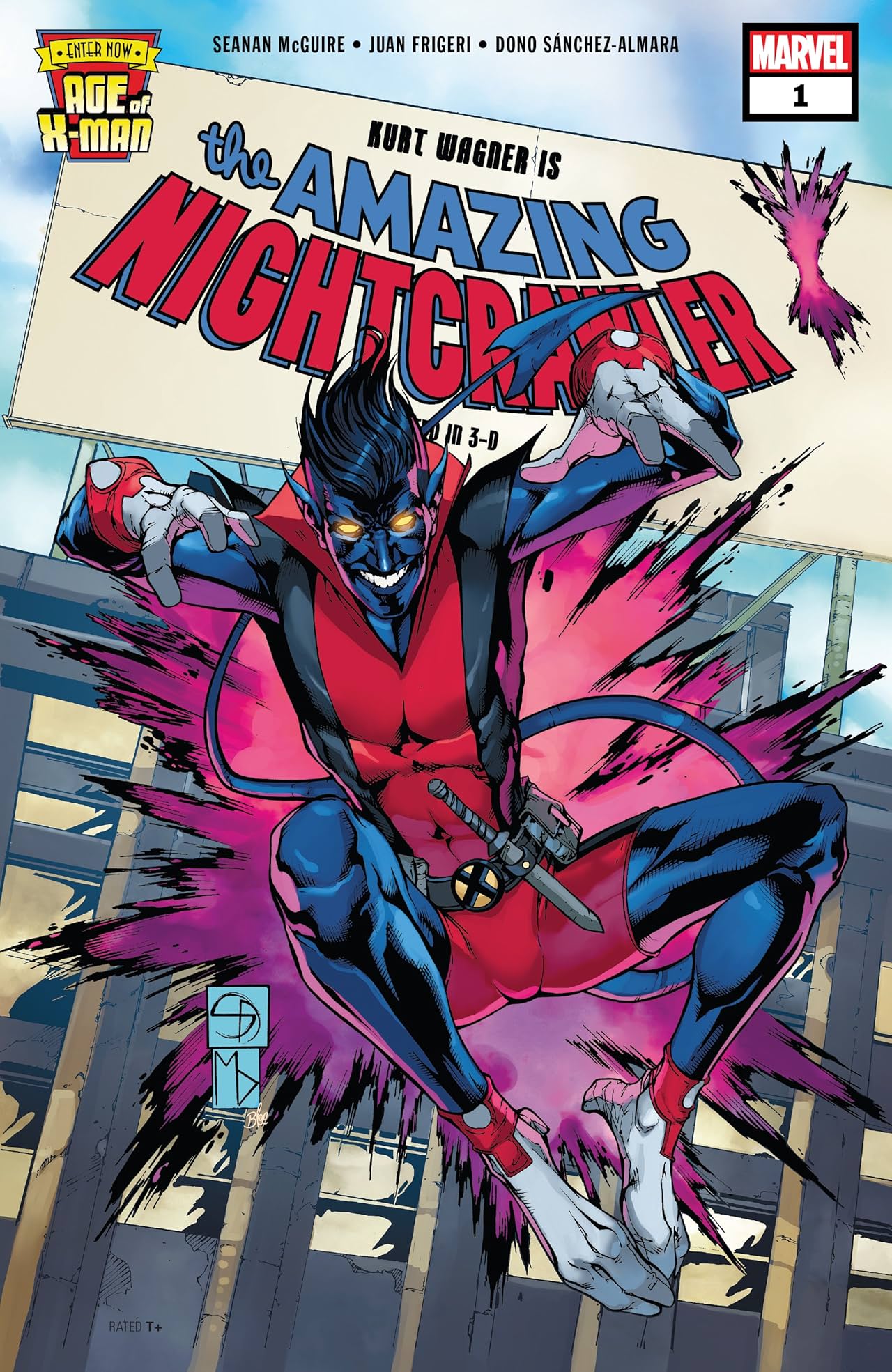
This week, it was genuinely difficult to single one comic out for my weekly quick pick. Every comic tries to stand out these days in some form or another. However, in that noble effort, the one comic I feel succeeded most was “Age of X-Man: Amazing Nightcrawler #1.”

It’s somewhat tricky picking a book that’s just a mini-series that’s meant to tie into a larger ongoing event, namely “Age of X-Man.” Anyone who follows comics, especially superhero comics that seem to have major event books every other month, knows that tie-in comics are often hit-or-miss. Most are misses, but “Age of X-Man: Amazing Nightcrawler #1” is definitely one of those rare hits.
You don’t have to know everything about what’s going on with “Age of X-Man” and why the mutants of the Marvel universe are living in a world where giant robots aren’t trying to kill them. All you need to know is that the X-men now live in an alternate universe where mutants are celebrated, idolized, and respected. Thanks to the reality-warping power of Nate Grey, Charles Xavier’s dream isn’t necessary anymore.

Within that Utopian world, don’t just live in peace. They’ll full-fledged celebrities. Among the celebrities of that world, Kurt “Nightcrawler” Wagner is at the top. He’s basically this world’s Leonardo DiCaprio, Chris Pratt, and Hugh Jackman, all rolled into one. Considering how often his story revolves around people being afraid of his appearance, it’s a huge shift.

This isn’t a Nightcrawler who constantly runs from angry protesters who think he’s a demon in need of an exorcist. He’s an A-list celebrity, complete with managers, directors, fans, and a slight detachment from reality. I say slight because the story that transpires in “Age of X-Man: Amazing Nightcrawler #1” feels like something only a celebrity can experience.
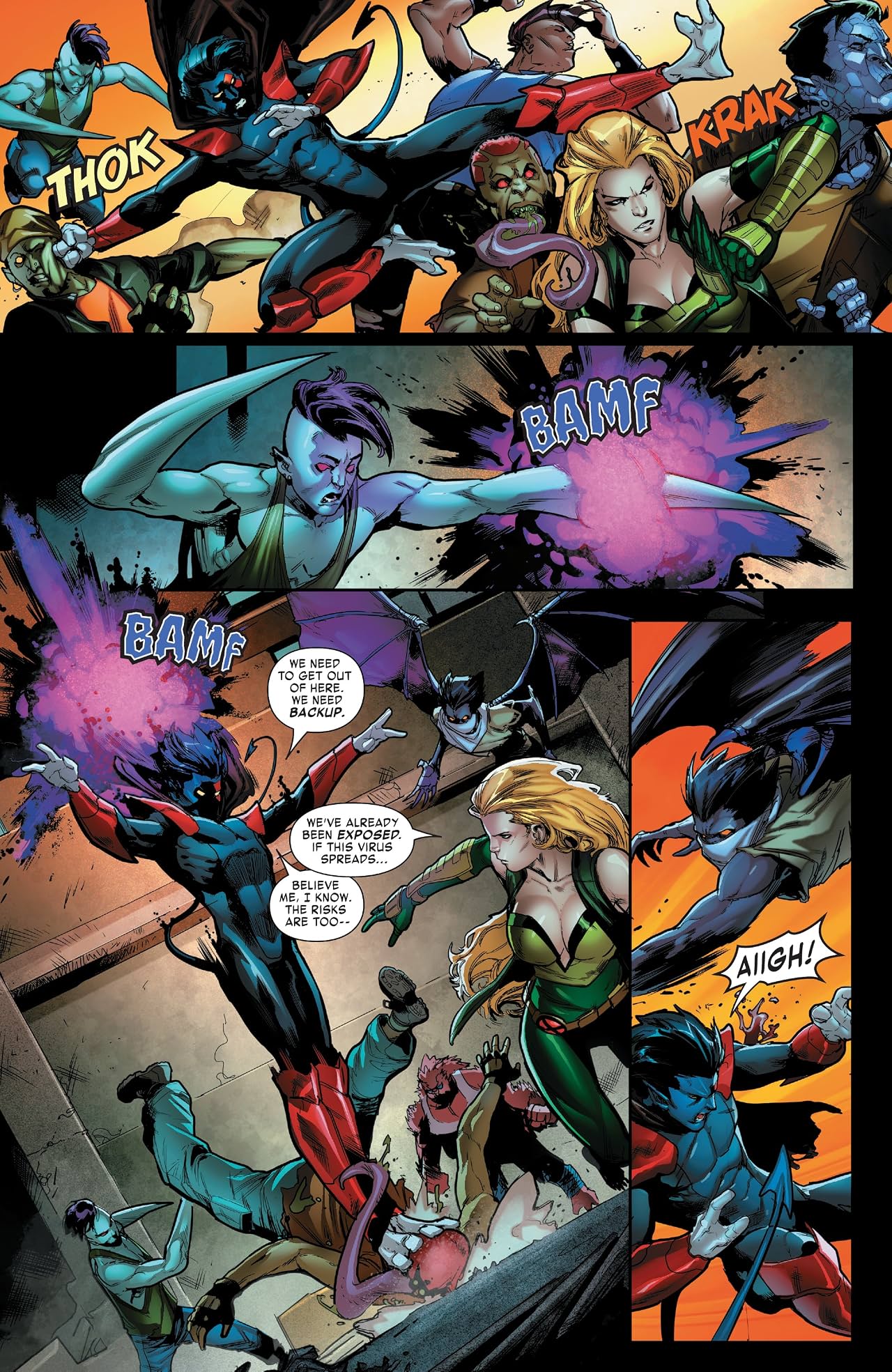
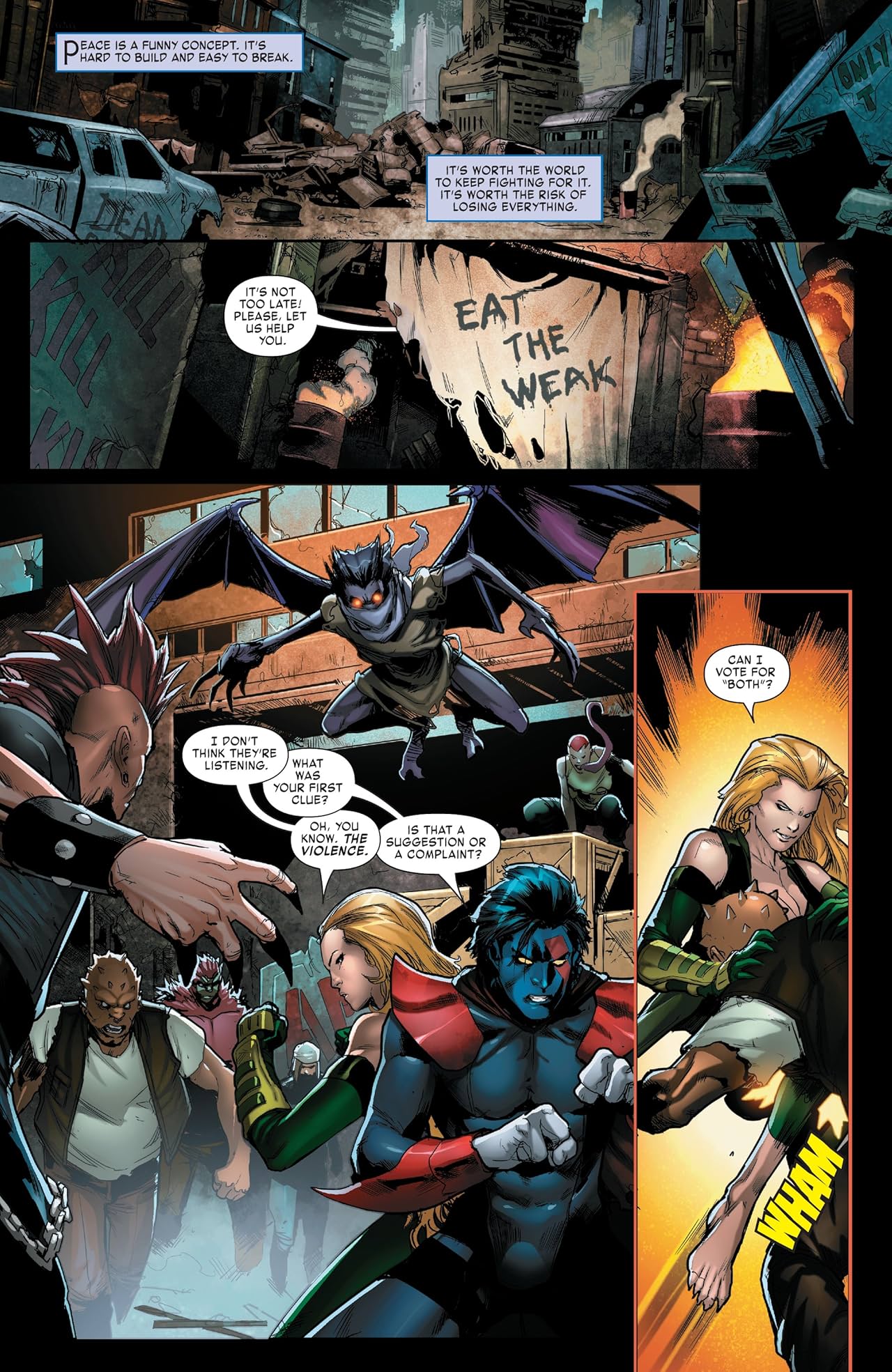
Writer, Seanan McGuire, is both coy and cunning in how she explores Nightcrawler’s life in this world. She even borrows from some of the dystopian imagery of the famous Age of Apocalypse story-line that was so iconic for the 90s era X-men. In this world, those dystopian fears aren’t an ever-present concern for the X-men. They’re just fodder for a movie.

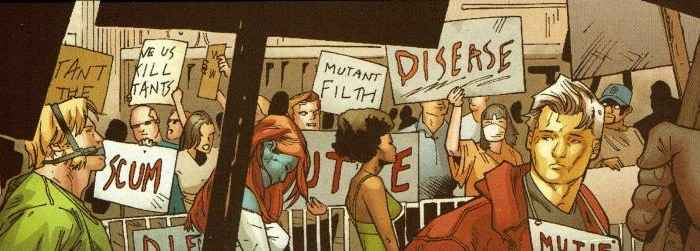
In that world, Nightcrawler isn’t overly concerned about mutants being hunted and oppressed. For him, it’s a huge change of pace because in many of the X-men’s struggles, he finds himself on the front line of those conflicts. Look no further than stories like God Loves, Man Kills to see why he’s often the face of those conflicts.

In a sense, Nightcrawler is one of those mutants who has nothing to lose by fighting alongside the X-men. Even if mutants were outlawed and hunted, some of the more normal-looking mutants could escape easily and hide their status. He can’t do that because of his appearance. While that hasn’t stopped plenty of women from finding him sexy, it does define a big part of his character.

In “Age of X-Man: Amazing Nightcrawler #1,” the script is completely flipped. Now, Nightcrawler has everything to lose. He’s a beloved celebrity. Throughout the story, we see that he handles celebrity better than most. He’s not quite on the same level as Tom Hanks, but he’s close.
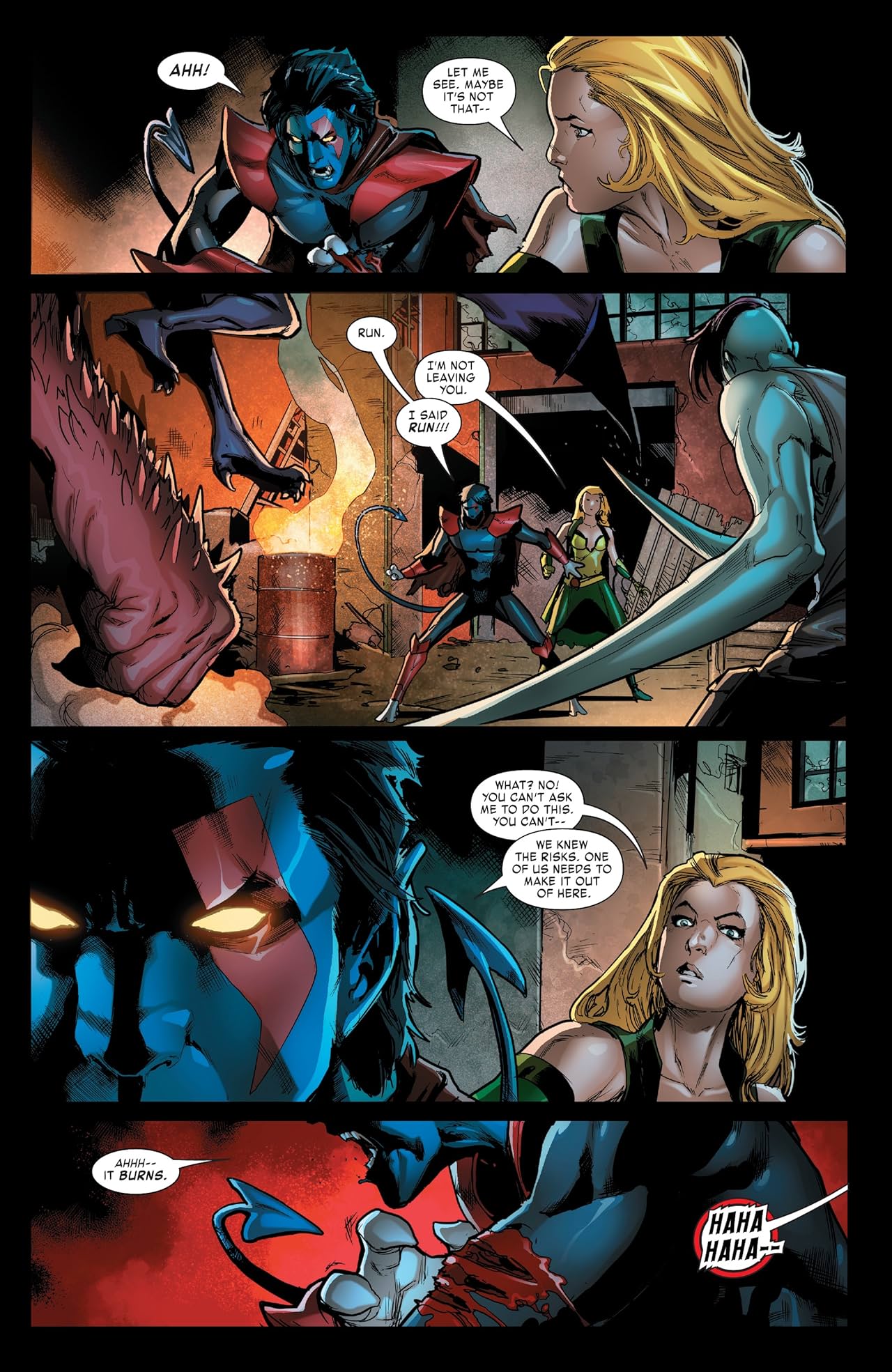
By every measure, Nightcrawler has everything going for him in this world. However, McGuire drops plenty of subtle hints that there’s something missing from his charmed life. Both his actions and his inner monologues send the distinct message that there’s something missing from his life and it can’t be filled with a prescription.

It’s the kind of struggle that many celebrities deal with. They can have everything, but still feel empty inside. It’s part of what leads them to engage in self-destructive behavior. While Nightcrwaler is no Bojack Horseman, what he ends up doing could cost him dearly. Those who read “Age of X-Man” understand those stakes.

This is one of those rare books that portray an iconic character in a new way. Nightcrawler has always been one of the most likable, endearing characters in the X-men, if not all of Marvel comics. In a world where characters kill their own children, marry clones of their dead girlfriend, and inadvertently kill 5 billion aliens, Nightcrawler is a breath of fresh air.

For once, he’s in a position where he can make mistakes and lose more than just his place on a superhero team. He’s one of those characters who, through a mix of charisma and faith, always seems to do the right thing on instinct. Now, here he is, in a position to make big mistakes that cost him dearly.

It’s an intriguing story that puts a beloved character in an unfamiliar situation. If you’re a Nightcrawler fan, a casual X-men fan, or just think blue fur is sexy, “Age of X-Man: Amazing Nightcrawler #1” checks all the right boxes. Even if you’re just curious about what happens to superheroes in a non-dystopian world, this comic has a lot going for it.

While it’s unlikely that this utopian world will last indefinitely, it’s still interesting to see how certain characters handle themselves in such a world. So much of what defines them is a result of them always having to struggle. By living in a world where all is good, we find out who they really are. Nightcrawler is still lovable, but in the world of Age of X-Man, he’s got way more to lose than most.

3 Comments

Filed under Jack's Quick Pick Comic

The following is a review I wrote for PopMatters for X-Men Red #11.

Jean Grey Exercises the Power of Emotional Intelligence in ‘X-men Red #11’


Leave a comment

December 17, 2018 · 8:47 pm

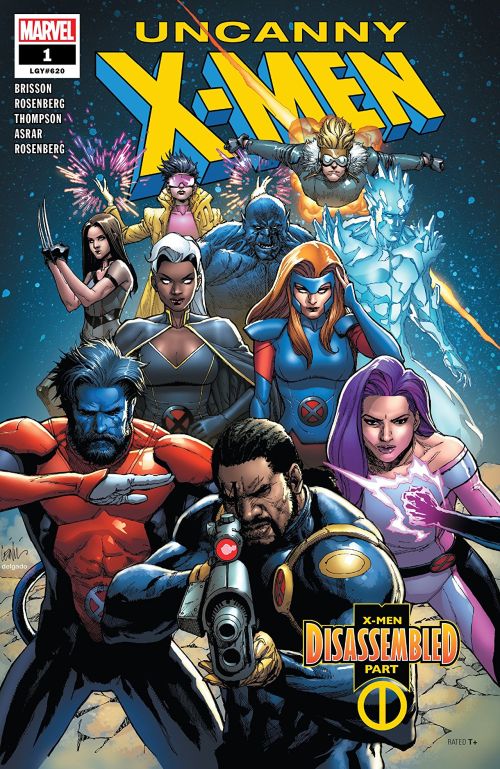
The Distressing (But Relevant) Questions Raised In Uncanny X-men #1

711931-_sx1280_ql80_ttd_

The most relevant stories are often the ones that ask the most difficult questions. The nature of those questions vary among places, people, cultures, and whatever happens to be pissing off a significant chunk of the population. Regardless of the circumstances, those questions are important and sometimes they come from unexpected places.

I wasn’t expecting such questions when I picked up “Uncanny X-men #1,” the latest relaunch in the most iconic X-men brand of all time. I was just glad to see Uncanny X-men return to prominence after an extended absence dating back to 2016. This first issue was over-sized and priced at $7.99, which is a lot for a single comic. I still feel like I got my money’s worth.

In addition to telling a great story that brought many prominent X-men characters to the forefront, “Uncanny X-men #1” did something unique in terms of how it established a conflict. For once, it didn’t involve killer robots, preventing a genocide, mutant terrorist, or alien space gods. Instead, it asked one profound question.

What if there was a way to preventing people from becoming mutants in the first place?

That may sound like a question that has come up in other X-men stories, but that’s only partially correct. This isn’t about curing mutants, a story that Joss Whedon brilliantly told during his run on Astonishing X-men and that “ X-men: The Last Stand” botched horribly. This is about inoculating children the same way we do for polio.

Specifically, a lab develops a vaccine that prevents the X-gene from expressing. Technically, they would still be mutants in that they would still have this gene. It just wouldn’t express itself. It would be akin to turning off the gene responsible for cystic fibrosis or sickle-cell anemia. It essentially treats mutation the same way we would treat any other genetic-based disease.

Naturally, the X-men and many other mutants don’t like this idea and not just because it’s akin to treating homosexuality as a mental illness. It reeks too much of genocide, something they’ve faced on more than one occasion. It would’ve been easy for “Uncanny X-men #1” to present it in that way, but that’s not how it plays out.

The all-star creative team of Ed Brisson, Kelly Thompson, Matthew Rosenberg, and Mahmud Asrar frame the issue in a very different way. Instead of some anti-mutant racist like Graydon Creed or William Stryker calling for mutant extermination, we get Senator Ashton Allen. He’s as generic a politician as can be in a superhero comic, but what he says and how he says is revealing.

Amidst a crowd of humans, mutants, and X-men, he talks about this mutant vaccine as a tool to alleviate suffering. He doesn’t rant about the dangers of evil mutants like Magneto or Apocalypse. He talks only about mutant children developing powers that could be dangerous to themselves or others. In that context, a vaccine might actually help them.

When you consider the mutant powers of characters like Rogue and Cyclops, who have mutant abilities that do real damage when uncontrolled, it seems entirely reasonable to make this vaccine available. Senator Allen never says anything about forcing it on kids or on mutants that already exist. He only ever emphasizes making it an option for concerned parents.

That’s distressing for the X-men because they don’t need to be omega-level psychics to imagine the implications. They can easily envision a concerned parent who doesn’t want their child to deal with the possibility that they may shoot lasers out of their eye one day. Any parent who cares for their child will want to mitigate the chances of them enduring such hardships.

In a world populated by mutant-hunting robots, parents already have plenty of incentive to use this vaccine. Given the damage that mutant-led conflicts often incur, the government has just as much incentive to make that vaccine available to everyone, free of charge and tax deductible. Governments less concerned with things like human rights could force it on children and that has some real-world parallels.

For mutants and the X-men, though, that means a permanent loss of their identity. Considering how mutants act as a metaphor for other oppressed minorities, this has implications for the real world, as well. I would even argue that the question will become increasingly relevant in the coming decades.

To appreciate just how relevant it could be, you need only look up the heartbreaking stories of parents who have disowned their children because they’re gay or transgender. In tragic some cases, people are driven to suicide. Even for those who aren’t parents, anything that might avert this kind of hardship is worth considering.

Given the complex causes of homosexuality, as well as the many factors behind transsexuality, it’s unlikely that there could ever be a vaccine to prevent it. The same can be said for conditions like Dwarfism. It’s not just genes, hormones, or radioactive spider bites that shape an individual’s persona. It’s a complex confluence of many things.

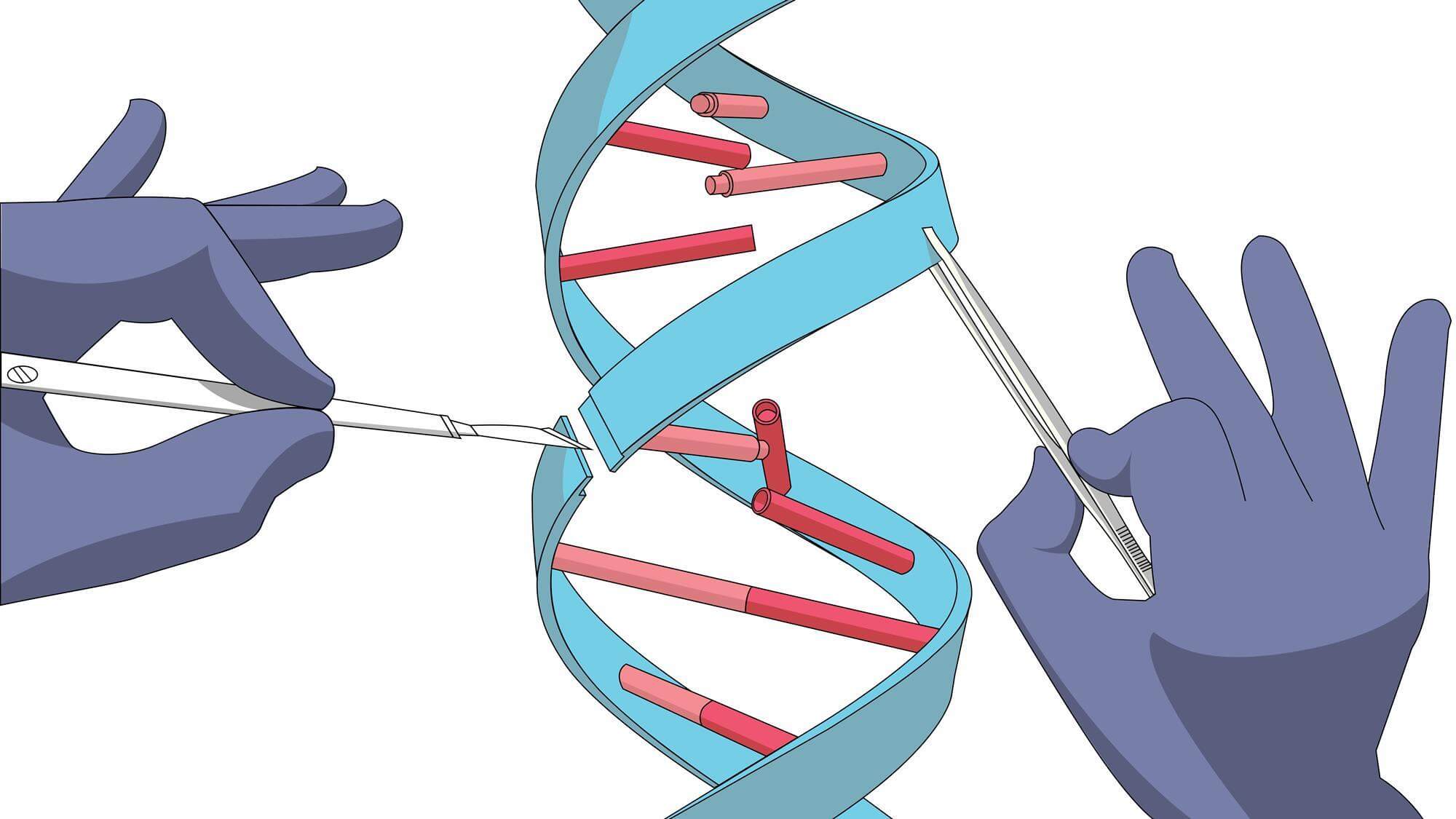
However, we are getting very close to a point where it’s possible to design children at the genetic level. Thanks to tools like CRISPR, it might even be possible one day to cut out entire traits from the human genome. That could, in theory, eradicate both cystic fibrosis and Dwarfism. More than a few people have expressed concern about that possibility.

Homosexuality and transsexuality are a bit different since there is no one gene or hormone that causes it, but most contemporary research suggests that genetics do play at least some role. Using similar technology, it might be possible for parents in the future to minimize or eliminate the chances of their children being homosexual or transsexual.

I imagine many in the LGBT community feel the same way about those efforts that the X-men felt about Senator Allen’s efforts in “Uncanny X-men #1.” Even if it only extends to giving parents this option for children and provides strict protections for those already born with these traits, it still treats who and what they are as a disease.

It’s dehumanizing and demeaning. More than one X-men in “Uncanny X-men #1” makes that abundantly clear. They don’t see being a mutant as a disease any more than homosexuality, transsexuality, or dwarfism. The fact that there’s now a way to prevent this makes for an existential crisis with some pretty heavy implications for the real and fictional world.

In the world of Marvel comics, a world without mutants has its own set of issues, the least of which would be the loss of a top-selling comic series. In the real world, though, the stakes are even higher. What would we, as a society, do if we suddenly had the tools to prevent homosexuality, transsexuality, and dwarfism in children before they’re even born?

I’ll even ask a more controversial question that’s sure to draw plenty of ire. What if those same tools could be used to modify the skin color, facial features, and overall appearance of our children? We already understand how genetics affects our appearance to some extent. What happens when we’re able to determine that for someone before they’re ever born?

These are objectively distressing questions. I’m glad “Uncanny X-men #1” dared to ask them. I doubt they’ll get debated or resolved completely in the proceeding issues, mostly because such resolutions are impossible in superhero comics. It still presents the X-men with a unique issue to confront and one that we will likely have to confront in the real world.

As is often the case with difficult questions, the answers are likely to anger some and distress many. Most people genuinely and sincerely want what’s best for their children. In the world of Marvel Comics, that could mean preventing them from gaining the kind of superpowers that makes them targets for Sentinels. In the real world, that could mean removing an entire class of people from the gene pool.

In issues like this, there are no heroes or villains. There are just difficult choices that we must make before someone else makes them for us.

Leave a comment

Filed under comic book reviews, futurism, gender issues, human nature, sexuality, superhero comics, Thought Experiment, X-men

The following is a review for “X-men Red #9” that I wrote for PopMatters. Enjoy!

Marvel’s ‘X-men Red #9’ Gets into Psychic Wargames and Battling Ideas

Leave a comment

October 26, 2018 · 11:46 pm

How “Mr. And Mrs. X” Provides Hope (And A Template) For Married Superheroes

672890-_sx1280_ql80_ttd_

If you were to go back 40 years and ask someone to tell a story about epic space battles, death stars, and wookies, chances are you’d get a lot off odd looks and insipid excuses. Some might even laugh in your face, saying such a story could never be told, let alone make over $7.7 billion at the box office. George Lucas is probably laughing at them on top of a bed made of money.

Great stories like “Star Wars” didn’t just prove there were millions to be made from elaborate space operas and quality sci-fi. It helped establish a template for others to follow in telling similar stories. Some have followed it better than others, but the most important thing “Star Wars” was demonstrate that it can be done.

The current state of married superheroes is in a similar situation to what the sci-fi genre was before “Star Wars” came along. Both Marvel and DC Comics have done a lot over the past couple decades to undermine married superheroes, some of which have left major scars for fans and characters alike. Just look up a story called One More Day for proof.

The excuses Marvel and DC have made aren’t very convincing, but they’re not entirely wrong either. Telling stories about married superheroes is challenging. There are only a handful of married superheroes that have stood the test of time. However, even the most iconic superhero couples have been prone to the complications of marriage.

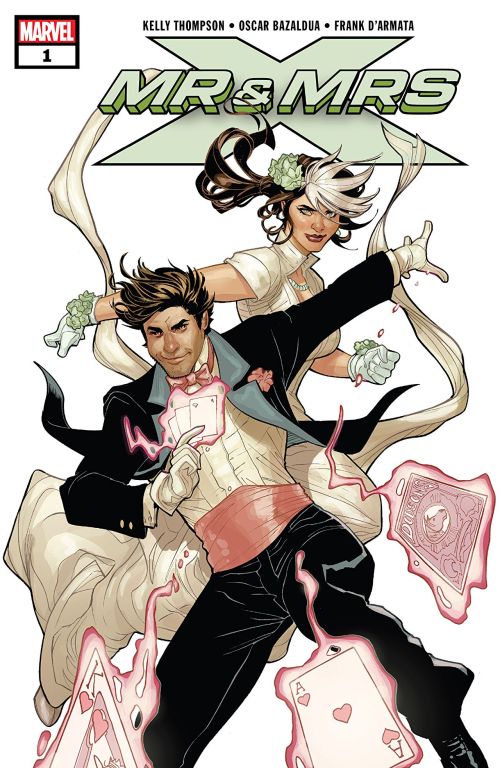
That’s why a series like “Mr. and Mrs. X” is coming along at the best possible time. This series, which spins directly out of the denigrating heartbreak that unfolded in “X-men Gold #30,” may very well provide both the hope and the template for married superheroes moving forward.

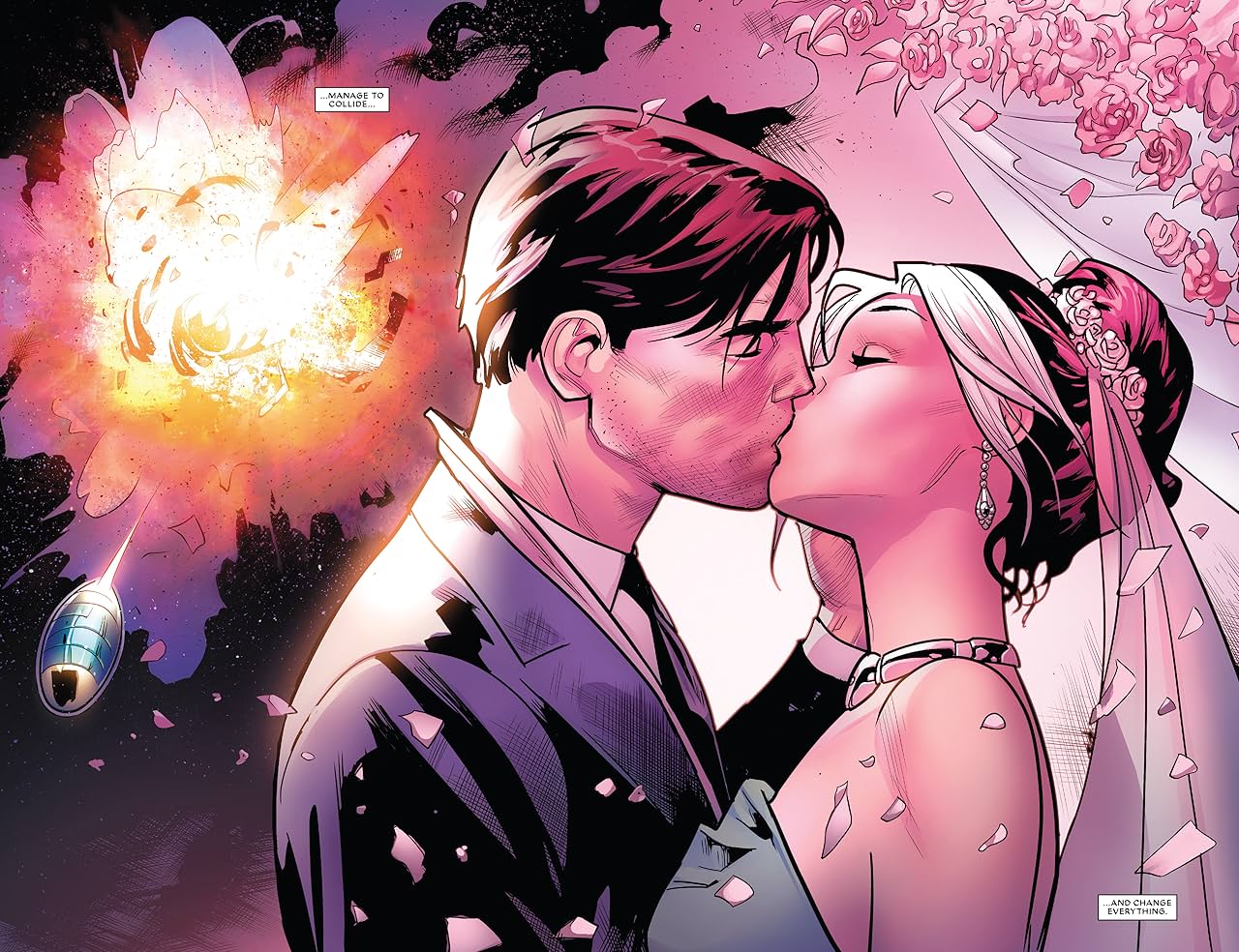
The first thing I need to say about “Mr. and Mrs. X #1” is that it’s part of a larger story that began unfolding before the events of “X-men Gold #30.” Kelly Thompson, who wrote “Mr. and Mrs. X,” also wrote a mini-series called “Rogue and Gambit,” which I highly recommend. That story did something important for both fans of superhero romance and of superhero cartoons from 1990s.

In the world of iconic superhero couples, Rogue and Gambit occupy a gray area of sorts. They’re one of those couples that rarely tops any list of notable superhero romances, but they’ve always been closely linked to one another. This is due largely to the chemistry they showed in the “X-men Animated Series” cartoon that defined so many childhoods back in 1990s. I know because I was one of them.

While Rogue and Gambit have always had romantic potential, it was never fully utilized. Neither the cartoon nor the comics ever took it beyond a certain point and not just because Rogue’s life-draining powers hindered their capacity for intimacy. There was just no real effort to evolve their romance beyond flirting and card puns.

Ms. Thompson changed that with “Rogue and Gambit.” This under-developed romance grew more in the span of five issues than it had in over 15 years of comics, cartoons, and failed efforts to get a Gambit movie off the ground. With “Mr. and Mrs. X #1,” Ms. Thompson dares to skip several steps and let this couple take the plunge into superhero marriage.

Considering how even a much more iconic couple in Batman and Catwoman failed to get that far, that’s quite an achievement. However, the way in which “Mr. and Mrs. X #1” portrays the sexy, romantic details of married superheroes is a far greater accomplishment. I would go so far as to say that it sets a new standard for just how appealing married superheroes can be.

One of the most important things “Mr. and Mrs. X #1” does is expand on the events of “X-men Gold #30.” This isn’t just critical for the sake of Rogue and Gambit’s relationship. It helps fix the greatest flaw in that issue. When the marriage of Kitty Pryde and Colossus fell through in a heartbreaking moment, Rogue and Gambit basically stepped in to keep the ending from being a complete tragedy.

The way their impromptu marriage presented in “X-men Gold #30” is both shallow and crude. It’s basically just forced in there, a marriage for the sake of saving a botched wedding. It never even gave the impression that Rogue and Gambit were serious about marrying one another. They just did it on a whim, their wedding having the depth of a drive-through chapel in Las Vegas.

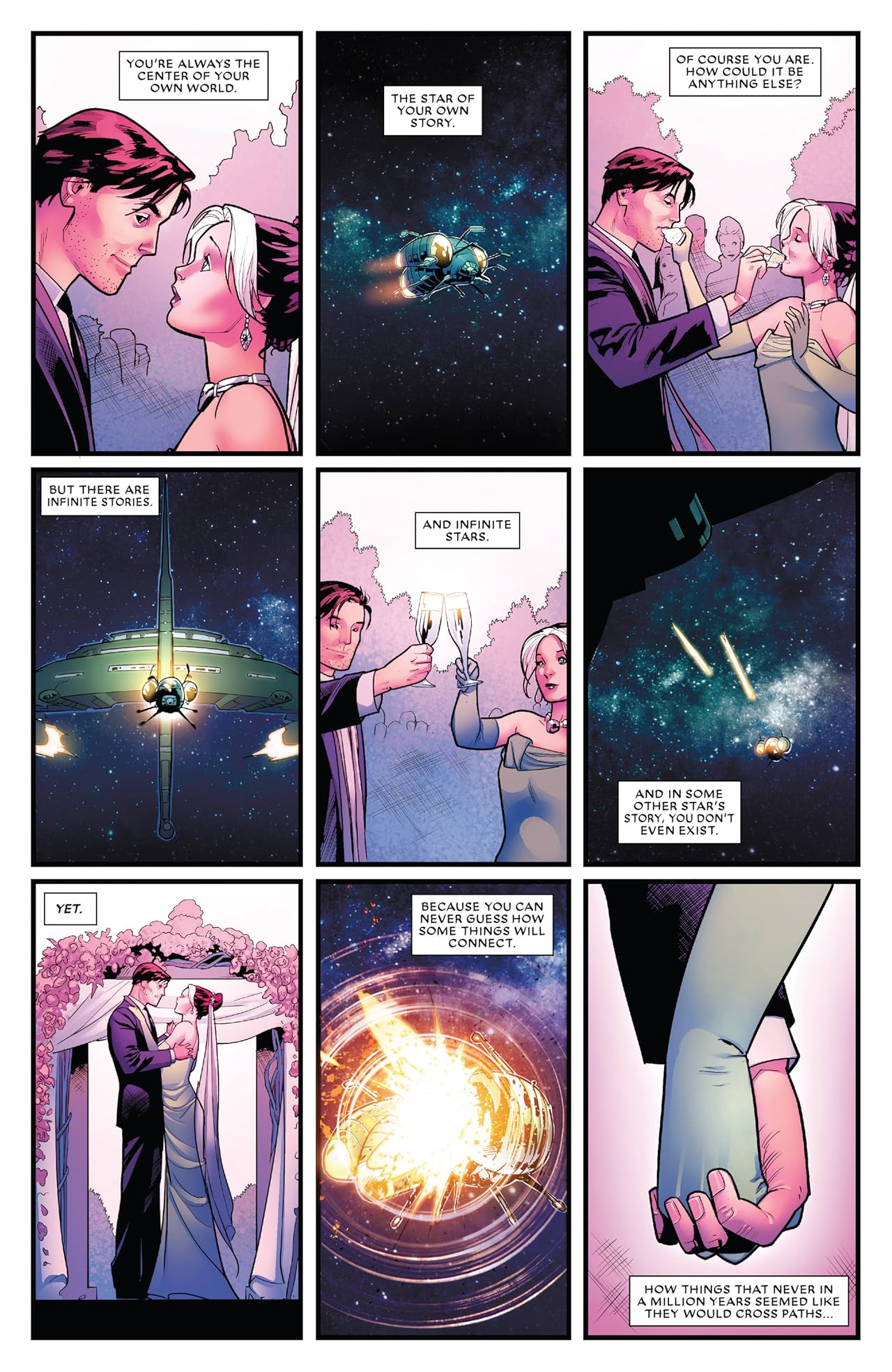
Mr. and Mrs. X #1” fundamentally changes that. It dedicates over half the issue to providing more details of that ceremony, making clear that Rogue and Gambit gave this more thought than the brand of cereal they ate that morning. There was preparation, planning, and even a surprise visit from Mystique, Rogue’s adopted mother.

This goes a long way towards showing that Rogue and Gambit are serious about getting married. Even if you didn’t read Ms. Thompson’s “Rogue and Gambit” series, the first eight pages do enough to show that there’s genuine love between these two. Moreover, they want take that love to the next level.

Even for a romance not built on Disney-style fairy tales, that’s a pretty important detail. There’s a major difference between characters actually wanting their relationship to evolve and just doing it because it makes for a nice event. It’s the same difference between wanting to eat to McDonald’s and having to eat at McDonald’s. It affects the experience.

That shared desire between Rogue and Gambit shows in both the ceremony and the honeymoon. That’s another key component that “Mr. and Mrs. X #1” adds to the template. It doesn’t just stop at the heartfelt wedding ceremony they share with friends and family. It acknowledges and even shows off the sexy tidbits of married life.

Rogue and Gambit don’t just love each other enough to want to get married. They also want to express that love like any other horny couple. It doesn’t have to be a dirty secret or some trivial side-note. It can be part of the story and thanks to the wonderful artwork of Oscar Bazaldua, it’s a spectacle to behold.

We get to see these two in expensive wedding attire and their birthday suit. There are moments of genuine affection. There are moments of playfulness. There are also moments where they address more serious issues, such as Rogue not being able to touch without the aid of a device that inhibits her powers. All of that is fit into a single issue.

On top of all that, “Mr. and Mrs. X #1” still finds time to squeeze in some heroics at the end. It’s not all heart-warming ceremonies and sexy honeymoons. Rogue and Gambit are still X-men. That means they still answer the call to adventure when it comes. That’s just what heroes do. Being married doesn’t have to change that.

That shouldn’t be such a novel concept, but that is a common criticism of married superheroes. Once they get married, their ability to be superheroes is somehow diminished. That’s like saying being a rock star diminishes someone’s ability to enjoy random songs on the radio. It’s a false flaw that Ms. Thompson and Mr. Bazaldua go out of their way to subvert.

The nature of the conflict that interrupts Rogue and Gambit’s sexy time is somewhat underdeveloped. It involves aliens and space battles, which is basically a typical Tuesday for the X-men. There’s not much in terms of refinement, but that’s less a flaw and more a logistical limitation.

Mr. and Mrs. X #1” is the first issue of a series, which means there will be other opportunities to expand that story. Rogue and Gambit’s life as married superheroes isn’t ending. It’s just beginning. They’re still going to be heroes. They’re still going to fight aliens in between hot romps between the sheets. Married life doesn’t have to be boring. What a concept, right?

I’m not being coy. That’s the ultimate takeaway from this comic. Two well-known, well-developed characters can get married, share some loving moments, get sexy, and still be superheroes. Being married doesn’t have to supercede their heroics. It can complement it as well.

It’s a lesson that other superhero couples, be they iconic or based on a random hook-up, would be wise to learn. Even powerful heroes like Superman are only as compelling as the relationships and interpersonal dynamics that highlight who they are. In the same way teamwork makes the Avengers and the Justice League strong, marriage can make a superhero couple strong.

That really shouldn’t be such a radical notion, but Ms. Thompson and Mr. Bazaldua do plenty to remind us why it shouldn’t be. “Mr. and Mrs. X #1” sets a bold tone for Rogue and Gambit. It doesn’t stop at a beautiful wedding or a sexy honeymoon. The heroics continue. It just takes a different tone.

The ending of the issue, which I won’t spoil, even sets up some new drama between the happy newlyweds. It’s not the kind that’ll instigate another frustrating love triangle, but it does hint at a conflict that wouldn’t be much of a conflict if Rogue and Gambit weren’t married. Rather than limit their story, it expands it.

Mr. and Mrs. X #1” does so much in the span of a single issue that it would take me all day to list them all. It’s not a perfect issue. If I had to score it, I would give it a 9 out of 10, just because it had piggy-back on the heartbreak in “X-men Gold #30.” The most important achievement, though, is the precedent it sets. Married superheroes can be sweet, sexy, and fun and this is how you do it.

Like a marriage in a real world, relationships evolve. Getting married is not an endpoint. It’s another step in the dramatic, yet sexy narrative that is romance. Superheroes are fully capable of taking that step without turning into a bad sitcom. “Mr. and Mrs. X #1” shows that this step is worth taking. Hopefully, other couples follow and build on this sexy new template.

7 Comments

Filed under comic book reviews, Comic Books, Jack Fisher, Superheroes, sex in media, X-men