

The following is a review I wrote for PopMatters for “What If? Punisher #1.” Enjoy!
‘What If? Punisher #1’ Toys With Spider-Man’s Concept Of Power And Responsibility
The following is a review I wrote for PopMatters for “What If? Punisher #1.” Enjoy!
‘What If? Punisher #1’ Toys With Spider-Man’s Concept Of Power And Responsibility
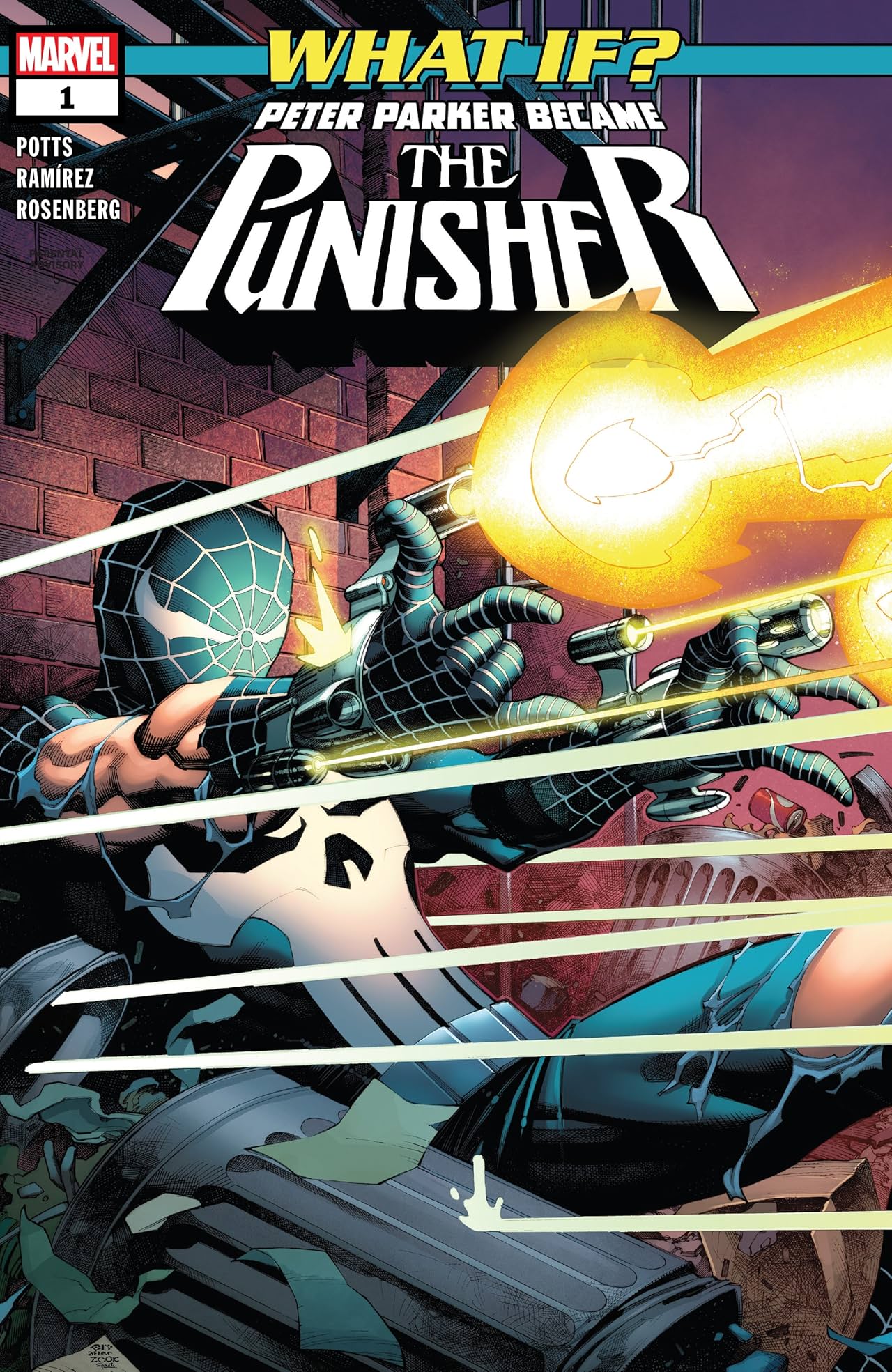
Every Wednesday, a new batch of comics comes out and for comic fans like me, it’s the biggest highlight of the week that doesn’t involve ice cream and whiskey. Within that batch of comics, it’s hard find the gems that really stand out. That’s why every week, I pick out a comic that I feel warrants extra praise.
This week, my quick pick is “What If? Punisher #1.” Now, this may seem like an odd selection. In fact, this comic is very much an anomaly. There was once a time where Marvel had an ongoing “What If?” series that basically offered alternate history takes on iconic characters and stories.
Personally, I have mixed feelings about how these stories are handled. For the most part, they’re hit or miss. They’re either really good or really bad. Rarely, if ever, are they fleshed out stories.
“What If? Punisher #1” finds a way to stand out because it does more than speculate on what would happen to Spider-Man if he chose a slightly different path. It actually explores the entire premise that with great power comes great responsibility. It even makes the case that the mainline Spider-Man in the long-running “Amazing Spider-Man” series is wholly irresponsible in his methods.
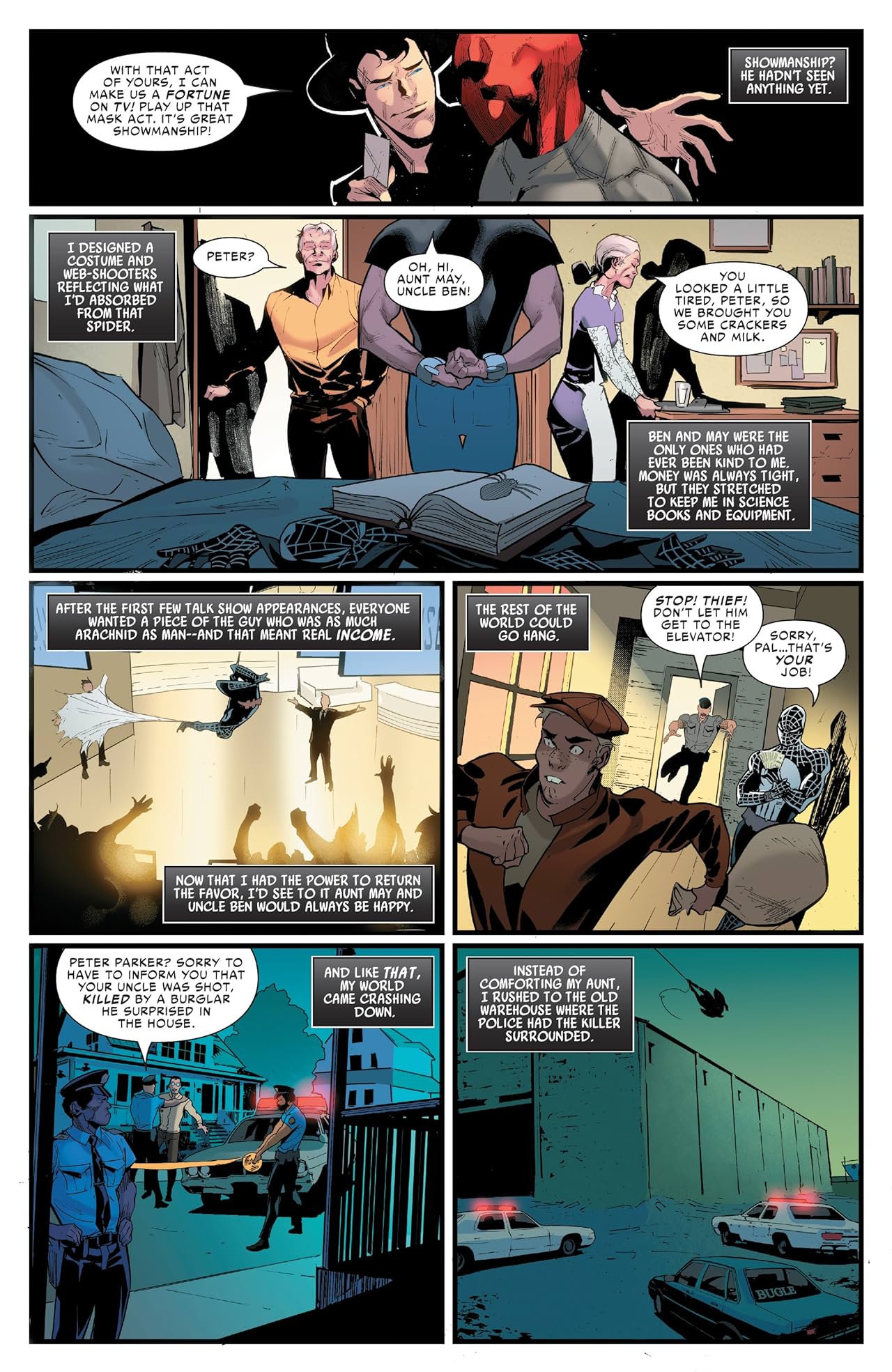
This is an idea that I’ve actually explored before. I once made the argument that Spider-Man is the most inept hero of all time. I got a lot of hate for that piece, mostly by long-time Spider-Man fans. I don’t blame them for a second. However, this comic actually takes some of the concepts I discussed and puts them into a cohesive story.
It doesn’t radically reinvent Peter Parker or Spider-Man. It also doesn’t radically alter his origin. He still fails to stop a burglar that goes onto murder his Uncle Ben. From that tragedy, he learns that critical lesson about power and responsibility. The only difference in this timeline is that great responsibility means killing his enemies, just like the Punisher.
It’s a line that the Friendly Neighborhood Spider-Man doesn’t dare cross most of the time. In nearly every famous iteration of Spider-Man, Peter makes clear that he does not kill. However, “What If? Punisher #1” makes the case that not only is this irresponsible. It actually played a part in hurting his loved ones.
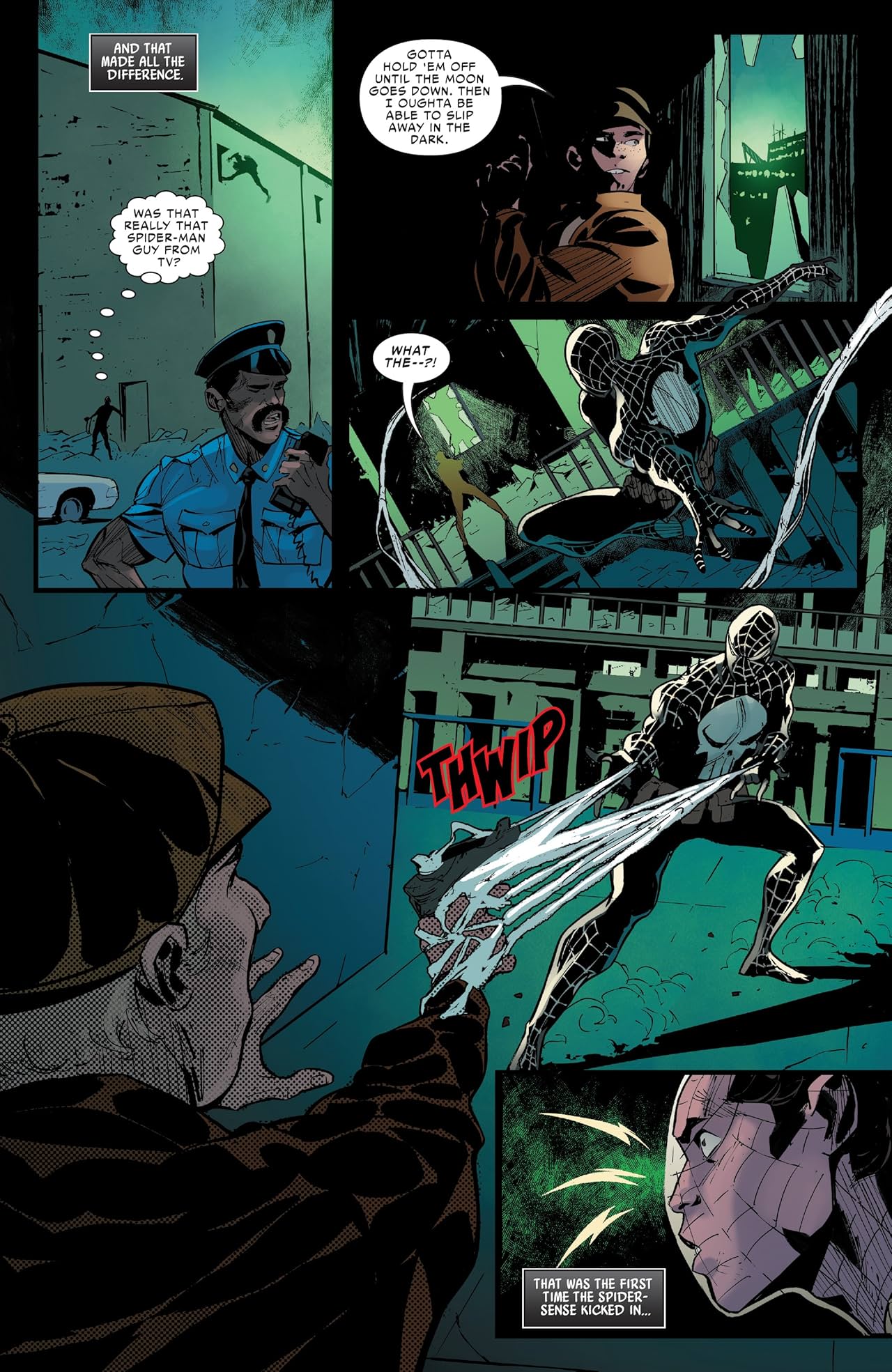
How that happens and how it makes this case is something I won’t spoil. Since this is a “What If?” comic, though, there’s not room to dig deeper. There are more than a few gaps and oversights, but most of that is due to logistics rather than merit. At the very least, this comic asks some pretty damning questions about how Spider-Man approaches power and responsibility.
Even though most “What If?” comics are quickly forgotten and have no impact on the actual canon, this issue is worthy of my pick because the concept is so intriguing. It’s too brief and very much incomplete, but the ideas it presents are pretty remarkable. Not all Spider-Man fans will like it, but it’ll definitely get them thinking.
Filed under Jack's Quick Pick Comic

The following is a review I wrote for “Return of Wolverine #1” for PopMatters. Enjoy!
Healing and Nuance Amidst the Violence in ‘Return of Wolverine #1’

The following is a review I wrote for PopMatters for “Scarlet #1.” Enjoy!
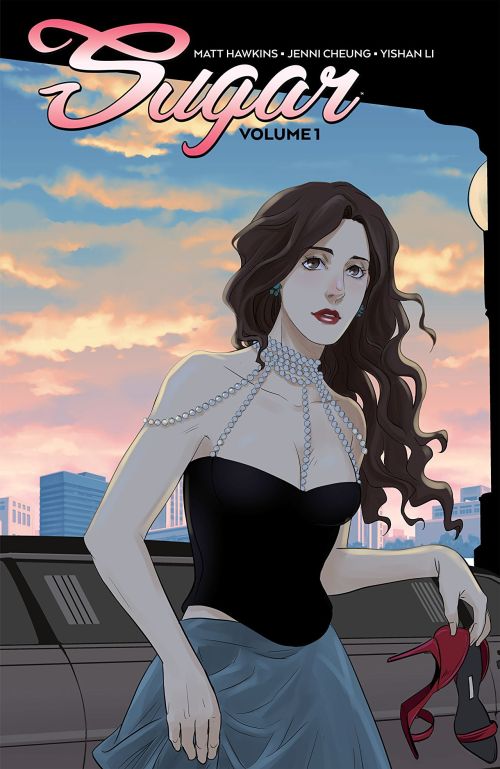
Not every love story begins with a daring rescue followed by a witty exchange, culminating in an act of passionate lovemaking. Fairy tales and romantic comedies tend to present an obscenely skewed picture of how love actually manifests. In the same way porn gives fanciful depictions of sex, most love stories present an idealized, but flawed understanding of romance.
To be fair, though, love in the real world tends to lack that magical nuance. That’s why those fanciful depictions have so much appeal in the first place. It’s also why “Sugar,” the latest slice-of-life graphic novel from Matt Hawkins and Jenni Cheung, brings something interesting to the world of romance.
It doesn’t involve superheroes. It doesn’t involve elaborate emotional entanglements, either. It’s just a unique, engaging, and distinctly sexy story that resonates in the current year. This being the same creative team behind “Swing,” another novel love story that I lauded earlier this year, the bar is higher than most.
While I’ll won’t say “Sugar” is better than “Swing,” it has plenty to offer for those looking for a different kind of love story. This is not one of those boy-meets-girl or girl-crushes-on-cute-guy narratives that follows a familiar script. It doesn’t try to reinvent the genre, either. Instead, it takes two characters who find themselves in frustrating, but believable predicaments and has them find each other in a unique way.
Julia Capello and John Markham aren’t eccentric personalities with extreme quirks. Julia is a 23-year-old college student working multiple jobs, constantly worrying about tuition and her financially struggling mother. It’s not a ground-breaking basis for a young woman, but it never comes off as overly-tragic. Hers is a story that many young people today can relate to.
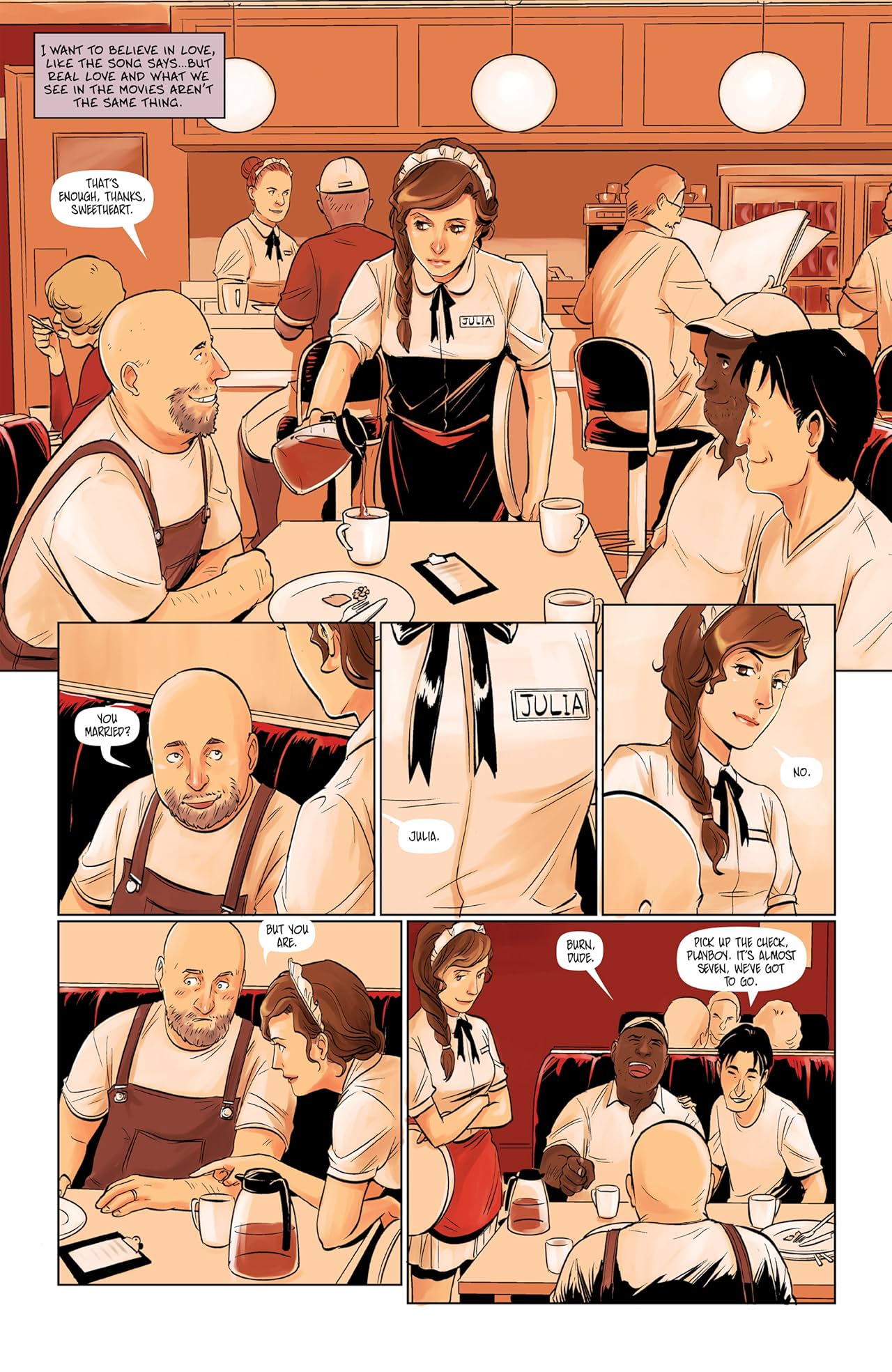
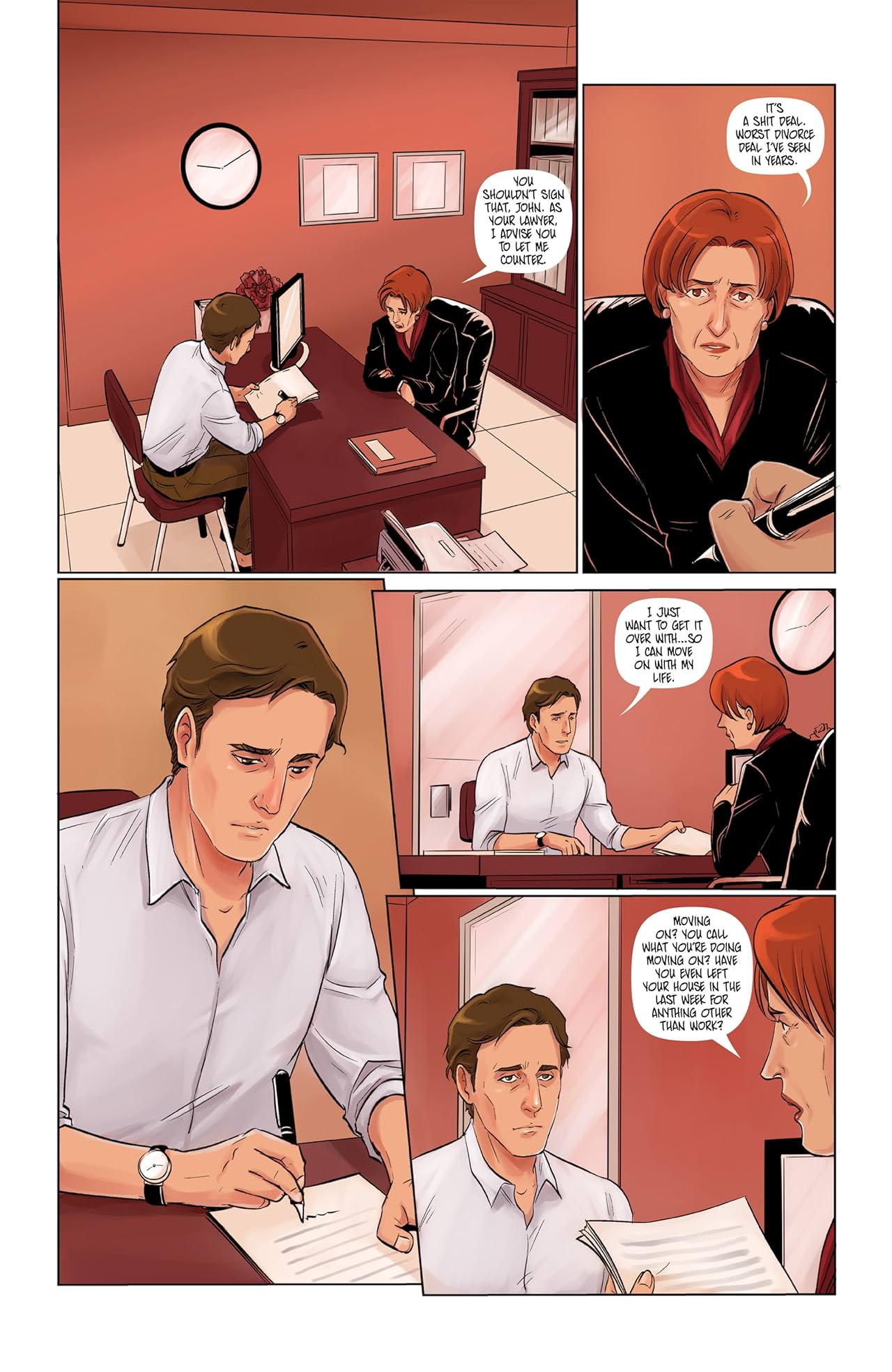
The same goes for John, a middle-aged businessman who thought he did everything right. He married his high-school love, created a thriving business, and played by the rules that men believe they’re supposed to follow. Then, out of nowhere, he finds out his wife is cheating on him and she serves him with divorce papers. In an instant, everything he thinks he knows about love is shattered.
These are two people with significant emotional deficits. Julia makes it clear that being alone doesn’t sit well with her. Her love of romance movies and her reactions to her roommates kinky antics with her boyfriend make that apparent. John is broken and lonely, needing a new connection to fill the void that his ex-wife left in his heart.
How they come together isn’t that romantic, in terms of logistics. Their first interaction is an otherwise forgettable joke in diner. However, their paths eventually cross again, this time with much sexier interactions. Instead of turning into a traditional relationship, though, these two follow a different path.

This is where “Sugar” twists the standard romantic narrative. Instead of two people coming together in moments that go onto inspire Taylor Swift songs, they end up following a much messier path. John, who is still very hung up on his wife, doesn’t jump into another relationship. Instead, he seeks an “arrangement,” of sorts.
Instead of an actual girlfriend, he asks Julia to be her sugar baby. That’s a term that exists in the real world and often gets conflated with prostitution. In fact, that’s a common refrain throughout “Sugar.” Julia goes out of her way to belabor the fact that she’s not just exchanging sex for money. It’s worth belaboring too because that’s not the crux of their arrangement.
Yes, the arrangement does involve sex.
Yes, the arrangement does involve activities associated with dating and relationship.
No, the arrangement does not involve the promise of marriage, kids, and a white picket fence.
No, the arrangement does not involve contracts, dungeons, and bondage in the mold of “50 Shades of Grey.”
In practice, it doesn’t necessarily convey the traits of an epic love story. It doesn’t depict that of a kinky porno, either. The arrangement between Julia and John serves a defined purpose that benefits them both.
John is someone who has spent most of his life in a relationship. Being alone for him is untenable. Julia is someone who clearly wants intimacy, but struggles to fit it into her hectic life. The arrangement they pursue together fulfills them both in a particular way. John gets companionship. Julia gets intimacy and some badly-needed financial support.
If that were the only result of the arrangement, though, there wouldn’t be much of a story. It doesn’t take long before Julia and John encounter various complications to their arrangement. Emotional entanglements do enter the picture. Some of them are a bit predictable, but others are less obvious.

There’s an underlying sense that neither character really understands what they feel for one another. John often finds himself pulled in multiple directions by his emotions whereas Julia tends to make more assumptions than she should. It makes for an eventful emotional journey, which leads to some interesting choices in the end.
When all is said and done, “Sugar” comes off as a real love story, but in an indirect sort of way. It take a strange, meandering path to get to that point, but it still gets there. While a second volume of the story is teased at the end, the story feels complete. There’s a sense that both Julia and John take a step forward in their lives, both together and as individuals.
There are a number of flaws with how “Sugar” goes about guiding Julia and John through the story, though. Neither character has much of a supporting cast. Both Julia and John are surrounded by archetypes with the personality depth of meathead jocks from 80s teen movies.
John’s business partner, Richard, is basically a well-dressed frat boy whose only role is to present the idea of an “arrangement.” His ex-wife, Karen, is even less developed. She is the personification of everything that rabid anti-feminists dread, a callous bitch who preys on the emotions of rich men while indulging her hedonistic proclivities on the side.
Julia’s supporting cast isn’t much better. Aside from a roommate who constantly encourages her to get laid and bosses that see her as nothing more than a cog with a pretty face, there’s nobody that really complements her. The people around her are just extra and bring little to the table.
On top of that, there are times when Julia and John rely too heavily on tired tropes. John has a few moments where he tries to be a White Knight and Julia has a few moments where she tries to be overly independent to the point of being an asshole about it. While these parts of the story can be eye-rolling at times, they don’t take away from the overall story.
At its core, “Sugar” is still a love story. It’s just a very different kind of love story. It takes two people in need of love and brings them together, albeit in an unorthodox way. It still works, though. It still evokes just the right emotion without resorting to princesses and dragon-slaying.
If I had to score “Sugar,” I would give it a 7 out of 10. It’s a solid, above-average story that applies just the right amount of romance and sex appeal. It has a novel concept that has plenty of potential, sexy and otherwise. It lacks the various support structures necessary to make it feel complete. Compared to “Swing,” it doesn’t quite measure up in terms of refinement.
Unlike “Swing,” this is a love story that feels more definitive. It’s concise, streamlined, and genuine in ways that few love stories dare to be in an era where one or more love interests has to be a superhero. Hawkins and Cheung once again achieve something special and sexy with “Sugar.” It may never be an epic love story that inspires a James Cameron movie, but it doesn’t have to in order to be sweet.
Filed under comic book reviews, romance, sex in society, sexuality

The following is a review I wrote for PopMatters for Ms. Marvel #31. Enjoy!
Milestones, Achievements, and Slumber Parties: Ms. Marvel #31

The following is a review I wrote for PopMatters for Deadpool Assassin #1. Enjoy!
The Maturation of (Regenerating) Degenerates In Deadpool Assassin #1

The following is a review I wrote for PopMatters for Justice League #1. Enjoy!
Who doesn’t enjoy a good revenge story? That’s not a rhetorical question. I’m dead serious. Is there anyone out there who isn’t enamored with a story about sweet, bloody revenge? I know the success of movies like “John Wick” and the iconic status of Batman do plenty to answer that question.
The question is still worth asking because the answer says just as much about the appeal of stories about forgiveness. To some extent, it shows that forgiveness isn’t as sexy as revenge. A revenge story can be bloody, action-packed, exciting, and cathartic. Almost every moment in “John Wick” and every issue of the Punisher is like that. It’s not hard to see why that is the basis of so many movies, TV shows, comics, and video games.
That’s not to say that a story about forgiveness can’t have appeal as well. It most certainly can. Forgiveness may not offer the same spectacle as revenge, but it can incur a uniquely powerful emotional impact. There’s a reason why forgiveness has been shown to have therapeutic effects and was the basis of a major religion.

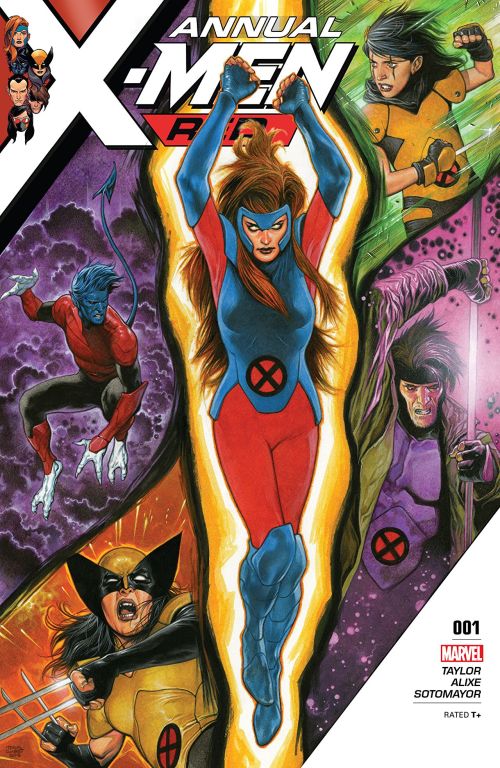
This brings me to a very special comic book entitled “X-men Red Annual #1.” Yes, I am going to tie this powerful human experience to a comic book. No, I’m not going to apologize for it. If you’ve had a chance to read this comic, you’ll understand why.
It’s been a while since I singled out a specific comic that I believe conveys a much larger message, but sometimes a comic comes along at just the right time and strikes just the right emotional chords. This one does all that and so much more, especially for a die-hard X-men fan like me. However, it’s the forgiveness themes I want to focus on here.
Without spoiling too much about the comic itself, which I encourage everyone to go out and buy, it’s important to establish the circumstances that make those themes work here. Those circumstances revolve around Jean Grey, a character who is no stranger to death, resurrection, love triangles, and clones. Even by superhero standards, she deals with a lot of emotional baggage.

Until recently, though, she didn’t have to deal with any, largely because she was dead. From 2004 until earlier this year, Jean was among the numerous superheroes who were “officially dead.” I put that in quotes because “dead” in the world of comics tends to have a pretty loose meaning, well past the point of absurdity. The fact that Jean Grey stayed dead for that long is, in and of itself, pretty remarkable.
However, it was never a matter of if she would return from the dead or even whether Marvel would resort to time travel to replace her. It was only ever a matter of when. Her return was bound to have a huge impact on the X-men and the entire world of Marvel comics. “X-men Red Annual #1” simply built a story around it and it’s a damn good one.
It unfolds mere moments after Jean officially comes back to life again on the final page of “Phoenix Resurrection #5.” That moment, in and of itself, is full of emotions that writer, Tom Taylor, captures beautifully. It provides insights into Jean’s thoughts, feelings, and emotions at that moment. It’s a lot to take in, but in addition to the joy, there’s also a heavy bit of sorrow thrown in.
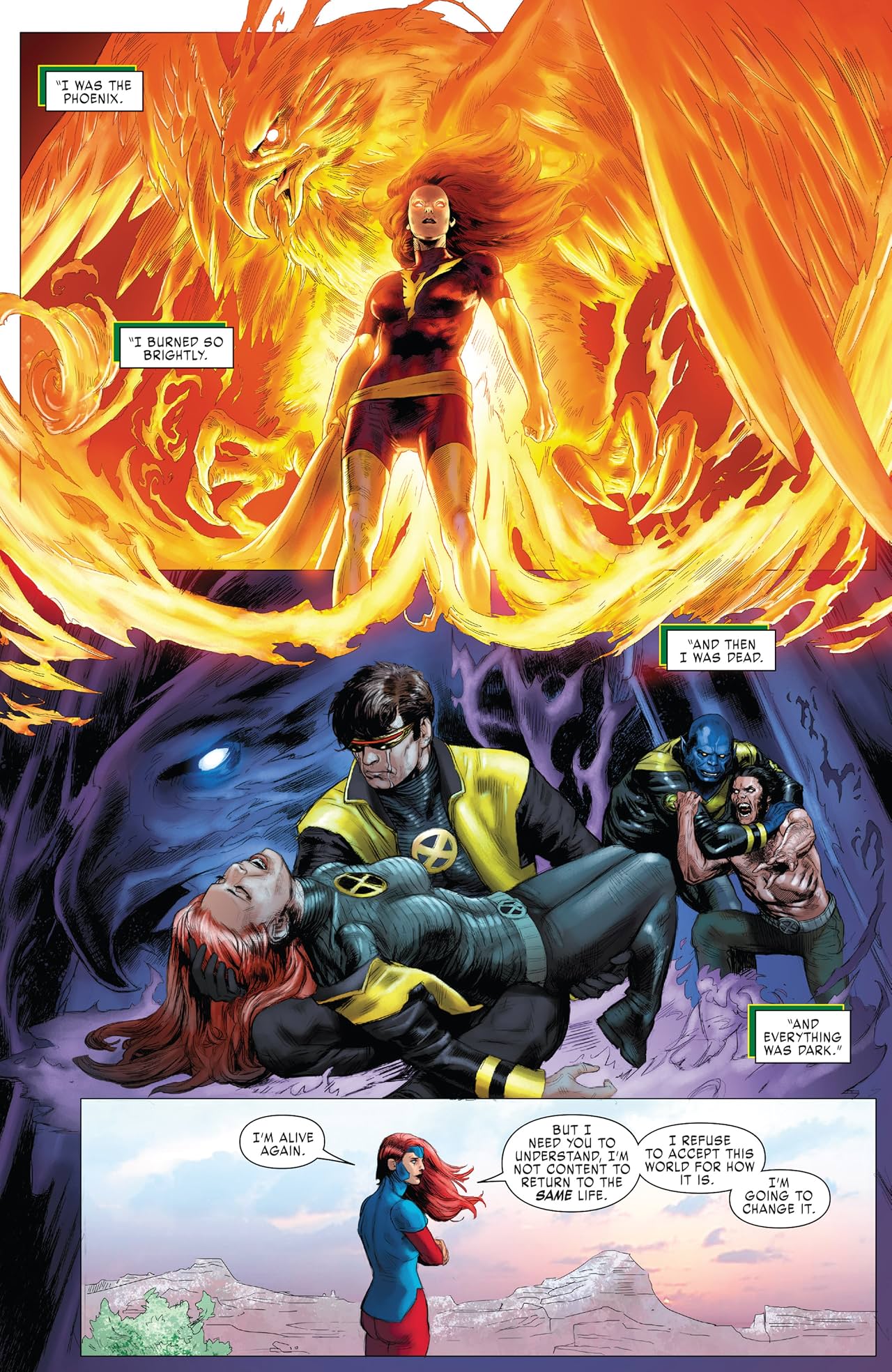
In a sense, Jean Grey picked a lousy time to come back to life. She’s coming into a world where her mentor, Charles Xavier, is dead. Her best friend and occasional love interest, Wolverine, is also dead, although that’s already changing. Most painful, though, is that her husband, Cyclops, is dead due to the events that unfolded in a series aptly named Death of X.
These are people near and dear to Jean Grey. She’s not the kind of character who just brushes off that kind of loss, hardens her heart, and moves forward. She’s someone who wears her emotions on her sleeve and does it with pride. It’s part of what makes her such a lovable, endearing character. Sure, those passions attract destructive cosmic forces every now and then, but she makes it one of her strengths.
As she reconnects with those who’ve sorely missed her, she has an opportunity to confront the one most responsible for her husband’s death, namely Black Bolt of the Inhuman royal family. While Cyclops’ death was largely an accident, he’s still the one whose decisions ended up killing him and many other innocent mutants. For that, Jean has many reasons to hunt Black Bolt down and make him pay.
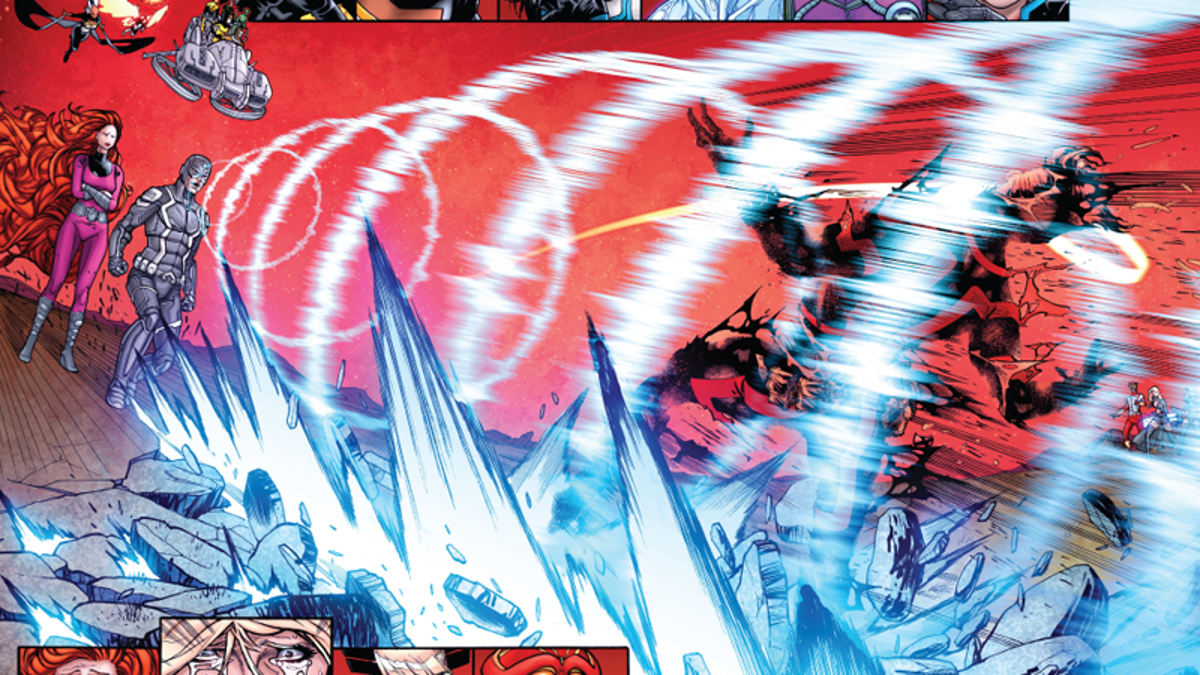
Had she gone that route, I don’t think anyone would’ve blamed her. Hell, some within the X-men would’ve gladly fought by her side, including a few who hate her guts. Accident or not, Black Bolt killed her husband by doing what he did. There’s no way around that. She has every possible excuse to channel her inner John Wick.
However, that’s not what happens. Yes, she still assembles a team of X-men to confront Black Bolt and the Inhumans. Yes, she has a very tense exchange with Black Bolt. What she doesn’t do, though, is seek vengeance for her husband’s death. Instead, she seeks forgiveness and that ends up being far more powerful.

Think about the mentality it takes to forgive someone like that. Imagine you knew there was someone responsible for the death of a loved one. Even if it was an accident or unintentional, chances are your first inclination wouldn’t be to forgive them. More than likely, you would rather see them suffer and pay for their crime.
Even if that person ends up going to jail or is held legally liable for your loved one’s death, you’re still going to resent them. They took the life of someone you loved and, assuming you’re not in a world where people regularly come back from the dead, you can never get back what you’ve lost.
That feeling would be even more intense if the person responsible never faces consequences for what they did. In the case of Black Blot, he didn’t face any repercussions for killing Cyclops. He wasn’t charged with murder or even for involuntary manslaughter. In fact, Cyclops becomes vilified for a while.
If anyone would be motivated to pursue retributive justice, it’s Jean Grey. She even has the perfect opportunity to do so when she fights her way towards Black Blot. At one point, she uses her telepathy to show him just how much she loved Cyclops and how much losing him hurt. She even admits she could make him feel some of that pain, if only to let him know why he deserves punishment.
She doesn’t do that, though. She doesn’t attempt to impart her pain onto him. What she ends up doing is much more heartfelt and meaningful. She gives Black Bolt a chance to offer genuine, sincere remorse for his role in Cyclops’ death. He ends up taking that chance. He apologizes for what he did and, more importantly, Jean accepts it.
For a woman confronting a man responsible for her husband’s death, even if she is a comic book character, it’s a pretty powerful moment. It’s one that carries a unique emotional weight that you wouldn’t otherwise get if Jean had just shot him in the head with a 44 magnum. It very much reflects the power of forgiveness.
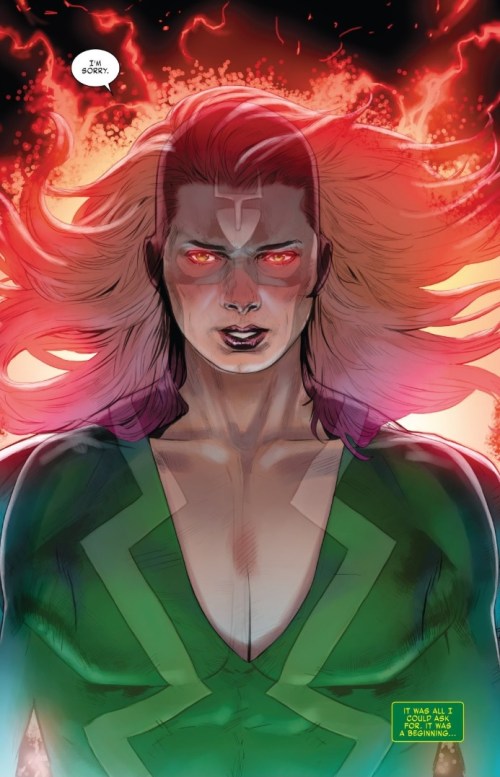
It’s the kind of heart that is exceedingly rare outside of Superman comics. At a time when we expect our superheroes to be edgy and tough, Jean Grey offers a very different approach in “X-men Red Annual #1.” It’s one that Tom Taylor uses to full effect, reaffirming Jean’s incredible capacity for love and compassion. It’s an approach that feels refreshing in an era of superhero civil wars.
It also reminds us that while vengeance may still be more appealing to our most basic instincts, it’s also incomplete at times. No matter how many criminals the Punisher kills or how many villains that Batman beats up, their loved ones are still dead. The pain continues and so too does the struggle. Forgiveness, on the other hand, offers a way forward.

Jean Grey feels the pain of loss like anyone else. She also has the choice to seek retribution or forgiveness. Forgiveness is, by far, a much harder recourse because it means accepting painful circumstances and even a certain level of injustice. Given how most of us are wired with an innate sense of justice, such acceptance seems untenable.
That’s what makes forgiveness so hard, but that’s also what makes it more impactful. Rather than focus on making Black Bolt pay for her husband’s death, Jean chooses to channel that pain into something positive. The very end of “X-men Red Annual #1” has her acknowledging how much it hurts losing her husband, but it also shows how this pain has inspired her.

Jean Grey is, essentially, doing the most heroic thing a superhero can do and it doesn’t even involve her powers. She decides to forgive the transgression that killed her husband and chooses to use that pain as motivation to make the world around her better. It’s still not as big a spectacle as watching John Wick kill 77 people over a dog, but it’s more dramatic for all the right reasons.
Filed under Comic Books, Jack Fisher, Superheroes, human nature, philosophy, X-men

The following is a review I wrote for PopMatters for X-men: Red Annual #1. Enjoy!
Overdue Resurrections and Heartfelt Reflections: ‘X-men Red Annual #1’


 Jack Fisher's Official Publishing Blog