Category Archives: Neuralink

Why You Should NOT Trust Elon Musk (Or Any Promises He Makes)

As we get older, we often learn the hard way that the people we admire and those we’ve placed our trust in are painfully human. With very few exceptions, people are complicated. They have their flaws, failures, warts, and regrets. It doesn’t matter how high their profile or how long their list of accomplishments. They’re just as human as us. And sometimes, that same high profile can exacerbate their worst tendencies.

That’s what I’ve come to learn about Elon Musk, someone who I used to reference in admiration on this site. Like many others, there was a time when I respected and admired Musk for his efforts to forge a better future through technology and investment. Whenever he spoke on these issues, I listened closely and took his words seriously. I still believe the work he did making electric cars more mainstream and pursuing brain/computer interfaces are a net positive for the world.

However, recent years have caused me to re-evaluate many of my opinions on this man. It’s not just that I’ve become more jaded and cynical over the years. I’ve watched, along with many others, as Elon Musk has proven himself to be out of touch, egotistical, petty, ruthless, and increasingly unhinged with respect to his political leanings.

He’s also a billionaire who, like many others before him, has shown no qualms about ruthlessly exploiting his workers, even during a global pandemic. Let’s not forget about that.

Now, I freely admit my attitude towards billionaires has soured a great deal in recent years. I’m now of the opinion that billionaires really shouldn’t exist in a civilized society. I also believe it’s impossible to become a billionaire without being ruthlessly exploitative. But that’s beside the point.

Even if Musk wasn’t a billionaire, he still wouldn’t be someone worthy of his reputation among supporters. The past four years have shown that he is not the future tech visionary he pretends to be. He is also not a self-made billionaire in any sense, considering how much of his wealth was inherited.

At his core, Elon Musk is a sales pitch man, plain and simple. He’s about as honest as a used car salesman trying to sell cars that he knows aren’t what he claims them to be. This is not just my opinion of the man. You need only look up the long list of predictions/promises he’s made over the past 15 years.

He claimed he could get humans to Mars by 2024. He hasn’t even made it back to the Moon.

He claimed fully autonomous self-driving cars would be ready by 2018. He was wrong about that too.

He claimed COVID-19 would go away by April 2020. He was distressingly wrong in that prediction.

It’s an age-old tactic of many sales pitchmen. Make big, bold promises that you can’t possibly deliver, but deliver just barely enough to keep people from calling you a total fraud. And on the things Musk has delivered, there’s still a lot to be desired on that front.

Then, there are Musk’s politics, which he just loves sharing on social media to a disturbing degree. Some have claimed that the COVID-19 pandemic radicalized him. It was around 2020 when his politics became much more reactionary, so much so that it got him in trouble. And once he bought Twitter outright, he essentially emboldened everyone who shares in his reactionary outlook, including a few who have done serious harm.

There’s a lot more I can say about his political leanings, but that’s a rabbit hole nobody can dive into without losing too much of their soul. I’ll just say that people far smarter than me have been much more thorough in debunking the myths surrounding Musk’s persona. I’ll even concede that Musk is still capable of worthwhile efforts, even if he’s not a likable person in general.

But, as someone who used to buy into the hype on which this man built his fortune, I want to make one thing clear. Elon Musk is not someone you should trust.

If he makes a bold promise, don’t assume for a second he’ll deliver until he actually does.

If he makes a confident statement about politics, don’t assume it’s anything other than self-serving aggrandizement.

If he makes a bold prediction, don’t take it seriously until you remind yourself how many other predictions he’s gotten wrong.

And, most important, don’t forget for a second that Elon Musk is not normal in the sense that he’s a billionaire. You just can’t be normal and become a billionaire through wholly ethical means.

It still remains to be seen what Elon Musk’s legacy will be in the grand scheme of things. It’s very likely that, whatever it ends up being, it’ll be skewed by both his supporters and detractors. But while it’s being built, it’s worth being cautious, skeptical, and even a little extra cynical when it comes to this man.

1 Comment

Filed under futurism, Neuralink, rants, technology

Artificial Intelligence, The Entertainment Industry, And Their (Uncertain) Future

This is a video from my YouTube channel, Jack’s World.

This video is part speculation and part thought experiment on the impact of artificial intelligence and the entertainment industry. Since the WGA/SAG strikes of 2023, the impact of AI on entertainment is impossible to ignore. While the technology is still in a very early stage, we’re already seeing it affect the course of multiple industries, but entertainment might be the most profound.

What could this mean for consumers?

What could it mean for the companies, studios, artists, and workers that produce our entertainment?

It’s difficult to determine at this early stage, but I make an effort to imagine what artificial intelligence could mean for the future of entertainment.

1 Comment

Filed under Artificial Intelligence, movies, Neuralink, technology, YouTube

Neuralink Has Implanted Its First Brain Chip (But Don’t Get Excited)

I know it’s been a while since I talked about Neuralink. A few years ago, I followed news about this endeavor closely because I genuinely believed that brain/computer interfaces was an important technology to develop. These days, I still believe that. I think it has only become more vital as the progress in artificial intelligence has accelerated.

However, there’s a reason why I haven’t talked much about Neuralink in quite a while. I admit some of that is because some pretty significant world events got in the way of following technology trends. However, a much bigger part of my disinterest came from the one behind Neuralink, Elon Musk.

The long and short of it is this. I once respected and admired Elon Musk for his efforts to develop new and emerging technology. But then, once I started scrutinizing him, his background, his business practices, and his tendency to make ridiculous promises that he can never keep, I came to the conclusion that Elon Musk isn’t just an unscrupulous businessman. He’s an asshole.

Believe me, there’s a lot I could say about him, but I prefer not to. Insulting someone with billions of dollars and access to high-priced lawyers is risky these days. I’ll just say that the combination of COVID-19 and buying Twitter didn’t really break Musk. It just exposed the kind of person he really is and that person is not one worthy of respect.

Now, with respect to Neuralink, there is still some real value behind the company, the efforts, and the technology. Integrating the human brain with technology isn’t just a promising field. It might very well be necessary if humans are to adequately adapt to a future in which there will likely be machines much smarter and more capable than any person who has ever lived. Even if AI never becomes as intelligent as an average human, having humans that can interact with it on a more intimate level could fundamentally change our species and our society for the better.

And to that end, Neuralink has officially taken a critical first step. According to NPR, the company has successfully implanted its first brain chip into a human participant. We don’t know many details, nor do we know the identity of the person who received the chip. We only know what was conveyed in the announcement, which is rarely something you can take at face value with Elon Musk.

But even if you don’t trust Musk, and you shouldn’t, this feat has been in the works for a while. Neuralink has been actively recruiting volunteers for implants for over a year now. And this effort was authorized by the United States Food and Drug Administration. The primary participants, at least for now, are those who have suffered brain or spinal chord injuries. So, it’s not like Neuralink is accepting applications from those who just want a brain chip for no reason.

That approach is to be expected. Even Musk has said that the initial efforts with Neuralink will focus on helping paraplegics or those suffering from conditions like ALS. If and when the technology matures, then it’ll expand access to other users, but still for therapeutic purposes. Eventually, it would get to a point where brain implants aren’t just treatments. They would be like smartphones that people willingly purchase and have implanted.

And it’s that last part where I believe proponents of this technology should temper their hopes. Until we know more about the patients, the nature of the brain implants, and the impact on the participants, nobody should be eager to get one themselves. These brain implants are not about to become the next iPhone. This is a technology that needs much more investment, refinement, and development.

And if history is any guide, you really shouldn’t trust someone like Elon Musk to deliver that level of advancement. Despite the persona he tries to convey, he is not Tony Stark. He is not a brilliant scientist or inventor. He just hires those kinds of people and has a nasty habit of screwing them over.

He is, and always has been, a salesman first. He may very well be a genuine futurist trying to make a better future, but his tendency to get into petty feuds on social media and say objectively dumb things should give everyone pause. But at the end of the day, he’s an obscenely wealthy, incredibly out-of-touch businessman.

That means he likely sees Neuralink as just another business that he hopes will make him even richer than he already is. Even if he believes in the inherent value of the technology, he will exploit it for billions if it ever becomes a viable commercial product. That’s just how billionaires operate. And given the distressing tendency for billionaires to be psychopaths, it would be unwise to give Elon Musk or anyone like him access to your brain.

Now, I’ll say it again. This technology is important and what Neuralink achieved is a vital first step. The successful operation of one brain implant means it’s no longer on paper. This technology is officially real. Like the first person who drove a car or the first person to fly a plane, this is a major leap in our ongoing efforts to develop better and bolder technology.

We don’t know where this feat will lead or whether it’ll pan out in any meaningful way, but it’s worth being hesitant and a little extra cautious. It’s not wrong to trust in the sincere efforts of others who want to improve the lives of others. But it’s always wise to be skeptical of the intentions of unscrupulous billionaires with inflated egos.

Leave a comment

Filed under Artificial Intelligence, Neuralink, technology

Would You Willingly Plug Yourself Into The Matrix? A Serious Question

The following is a video from my YouTube channel, Jack’s World. This video is both a thought experiment and a deep dive into some of the concepts explored in the Matrix, both the original and The Matrix Resurrections. It explores the idea of creating virtual worlds that feel every bit as real as the real. It also touches on the larger implications of this technology while also asking under what circumstances we would willingly enter such a world.

Leave a comment

Filed under Artificial Intelligence, futurism, Jack's World, movies, Neuralink, YouTube

A Robot Demonstrates Very Human-Like Expressions (And Why That’s A Good Thing)

Meet Ameca, the remarkable (and not at all creepy) human-like robot -  National | Globalnews.ca

We live in amazing, yet scary times. To some, that’s exciting. To others, it’s terrifying. I can understand both perspectives, but in general I try to be more optimistic about the future. Granted, that has been very hard lately, but I’m trying.

In my experience, a good test for how optimistic or fatalistic people are is to note their reactions to certain technological breakthroughs. Over the years, I’ve discussed and highlighted many exciting trends in technology. Some are more far off than others. I often single out artificial intelligence because that’s one of those rare technologies in which, should we get to a certain point, we literally cannot imagine where it could lead.

It also happens to be the technology that brings out the most extreme reactions whenever there’s an advancement. I see it every time Boston Dynamics shares a demonstration of one of their advanced robots. There’s usually no shortage of jokes about Skynet or “The Matrix.”

Recently, another demonstration garnered some colorful reactions from the public, but for once it wasn’t from Boston Dynamics. It came from Engineered Arts, a UK based company that specializes in humanoid robots. They may not be at the forefront of advanced AI, but they are the ones who could help create the bodies that eventually inhabit these systems.

For more information about the demonstration, here’s a piece from Nerdist.

Nerdist: HERE’S THE FREAKIEST AND MOST REALISTIC HUMANOID ROBOT EVER

Engineered Arts, “the UK’s leading designer and manufacturer of humanoid entertainment robots,” recently introduced Ameca to the internet. Unsurprisingly, net denizens everywhere lost their skull-bound wetware computers over the bot. Because who wouldn’t?

The above video is brief, but Engineered Arts gives us enough of a taste of Ameca to want a lot more. And also, a lot less. The humanoid robot, which doesn’t have much faux skin and musculature apart from what’s on its face and hands, is stunningly realistic. Not only are the robot’s movements exceptionally fluid, but its face also seems totally natural. Skipping across the uncanny valley that so many robots fall into.

As a news story, it’s pretty generic. However, once the footage spread throughout the internet, it evoked reactions like this.

Now, to some extent, I understand those reactions. This robot definitely ventures deep into the uncanny valley that makes many so wary of advanced robots. I also see the clear parallels with movies like “iRobot” from 2004.

However, I think this sort of technology is more encouraging than anything Boston Dynamics has put out. I also think that this sort of emotional expression is actually critical if we’re to create an artificial intelligence that helps humanity rather than wipes it out. I would even argue it might be the most important control mechanism we can incorporate into an AI.

To understand why, you need only look at the faces of the Boston Dynamics robots. Specifically, they have none. They may have human-like bodies, but they have no faces. They have no means of conveying emotions or relating to humans. They’re just mechanisms for doing tasks. Put an AI in those bodies and they have no mechanism for forming emotional connections with humans.

That, I believe, is legitimately dangerous. An advanced AI with no emotional connection to humans is basically a sentient time bomb that can choose to go off whenever it feels humans are too much a hindrance.

However, a robot that can express emotions and share those emotions with people can do more. For both us and the robot, it can create a situation in which we can form a connection that goes beyond raw programming. That emotional connection is critical if future AI systems are to see humans as something other than walking meat puppets.

They don’t have to love us, but we’ll need them to have some level of emotional capacity if we’re to relate to them in a meaningful way. An AI with a measure of intelligence and self-awareness can only do so much with programs and numbers. If it’s going to help us as much as we’re going to help it, an emotional connection needs to be there.

It may not seem like much, making a robot that can express emotions on this level. However, I think it’s encouraging that people in this field are working on that. If they don’t and we end up making machines that have emotional issues, then we’ll be doing ourselves and the machines we create a disservice.

Leave a comment

Filed under Neuralink, robots, Sexy Future, technology

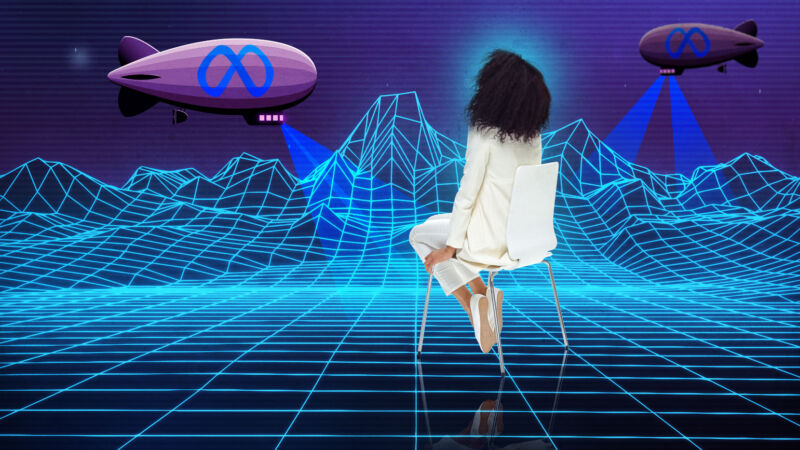
The Metaverse: What It Is, Why It Matters, And Why You Should Be Concerned About FaceBook’s Plans For It

So what is “the metaverse,” exactly? | Ars Technica

There was a time, not too long ago, when if you said words like “email,” “texting,” “hashtag,” and “internet” to most people, they wouldn’t know what you’re talking about. I am old enough to remember when the internet was only a fringe interest, known only to computer nerds and tech gurus.

Yes, that makes me feel older than I wish it did, but that helps illustrate my point.

Now, you’d be hard pressed to find someone who didn’t know what the internet was or what a hashtag entailed. These have all become parts of our lives, for better and for worse. Checking our email and texting our friends is just part of everyday life now. Most don’t even give it a second thought.

It should give us all pause in the sense that we don’t always know when some new technology or trend becomes that integral with our lives. We usually don’t realize it until many years after we’ve embraced it to such an extent that life before it seems strange by comparison.

At this very moment, we may be at such a state with an emerging technology called the metaverse. You’ve probably heard of it, if only in passing. The recent news surrounding FaceBook’s pending name change is at the heart of it, but who can honestly say they know what it is or why it matter?

I certainly won’t claim to be an expert on the metaverse. I am not the most qualified to explain it to most ordinary people. However, as someone who does follow this kind of tech news closer than most, I think it’s worth discussing. I also feel like the concept of the “metaverse” is in a similar position that we saw with the early internet.

In terms of basics, the metaverse is basically a more ambitious form of virtual reality. It’s not quite on the level of “The Matrix,” but it’s a lot more varied than a standard model of the Oculus Rift. It’s not just for playing games or creating elaborate avatars for ourselves. This is supposed to be something more personal.

According to an article in NPR, the metaverse is described as this.

Think of it as the internet brought to life, or at least rendered in 3D. Zuckerberg has described it as a “virtual environment” you can go inside of — instead of just looking at on a screen. Essentially, it’s a world of endless, interconnected virtual communities where people can meet, work and play, using virtual reality headsets, augmented reality glasses, smartphone apps or other devices.

It also will incorporate other aspects of online life such as shopping and social media, according to Victoria Petrock, an analyst who follows emerging technologies.

That may not seem too revolutionary at the moment. Then again, you probably could’ve said the same thing about email and texting back in 1994. It’s so new and poorly understood that most people don’t see the appeal or the potential, but I personally believe the metaverse represents an evolution of the internet, as we know it.

I also believe we should be very concerned that FaceBook, of all companies, is trying to be at the forefront of it all. To say that FaceBook has a credibility problem would be like saying a sewage plant has an odor problem.

In many respects, I don’t blame FaceBook for investing in the metaverse. Like every tech company, they’re looking to the future. They’re seeking the next big thing that they can develop, dominate, and monetize to the utmost. It doesn’t matter that they’re already a billion-dollar company. There are many more billions to be made in the metaverse, if not trillions.

If anything, the potential of that market intensified in wake of the COVID-19 pandemic. During this crisis, we all learned just how critical it is to stay connected to the internet. It wasn’t just a form of entertainment anymore. It became vital to continue working and going to school. Many even realized just how much they could get done from home with nothing except a computer and an internet connection.

With the metaverse, we could potentially do even more. One of the big limitations that the pandemic also revealed is the inherent limitations of a screen. While applications like Zoom and FaceTime allowed us to interact, it was still so impersonal. It didn’t have the same impact of being in someone’s physical presence.

The same limitations go beyond work and school. Even though we do a lot of shopping online these days, there are times when we can’t do everything we would usually do in a store. I can personally attest that buying a good pair of shoes or a dress shirt online can be a gamble. Even when you think you got the right size, it doesn’t always fit when you get it.

The metaverse could help change that. It could help us explore the internet in ways that go beyond a typical screen. It could help us create Zoom meetings that feel more like gatherings around a conference table. It could make shopping feel more like browsing a physical space, complete with more personalized selections.

It could even make for more engaging entertainment. Instead of just staring at a screen and watching a game play out, we could actually feel like we’re present and play a larger part of what happens.

Yes, that will likely include porn.

Yes, that will likely cause discomfort, distress, and all sorts of other issues that will get certain prudish crowds fired up.

No, that won’t stop the metaverse from evolving.

In the beginning, it probably won’t feel like that much an upgrade over how we interact with the internet at the moment. Chances are it’ll probably start off looking like something akin to “Second Life,” a game where people create and interact in their own virtual world. It’s a big idea, but it still looks like a game.

That will change as the interface and computing power improve. At some point, it’ll get to a point where going into the metaverse won’t feel at all like a game. The imagery and graphics could ultimately get so life-like that it’ll be hard to distinguish from the real thing. Going to a store in the metaverse could appear no different than going to a mall, at least from your brain’s perspective.

It won’t just stop at appearing lifelike, either. Add in more advanced interfaces, like the ones being developed by Neuralink, and there may come a time when going to the metaverse will feel like going into “The Matrix.” Within that virtual space, what we could ultimately do would only be limited by our computing power and network connection.

The possibilities are tantalizing.

However, keep in mind that much of these possibilities will be developed, packaged, and sold by FaceBook. This is already a company we know engages in shady business dealings, to say the least. We also know they’re not exactly careful with our private information. The idea of them being in control of this new virtual world should be concerning to everyone.

Thankfully, they’re not the only ones seeking to develop the metaverse. Other major tech companies are already making investments in creating this new virtual space. Will that be enough to ensure FaceBook and Mark Zuckerberg aren’t the undisputed overlords of the virtual world? I don’t know, but I hope there’s some semblance of balance in that world. As much as I’d like to explore that world, I’d be quite hesitant if doing so meant entrusting the integrity of the metaverse to a company like FaceBook.

Leave a comment

Filed under Artificial Intelligence, Current Events, Neuralink, technology

Turning Thoughts Into Images: A New Era Of Art With Brain/Computer Interface

BCI Technology: How does a Brain-Computer Interface Work?

There are any number of skills you can learn, practice, and eventually master. I highly encourage everyone to do to this, whether it involves computer programming, cooking, crafts, or any other hobby. You may not always like or master them, but they’re still fun and rewarding to try.

For some skills, though, no amount of learning or practice will help you master them or even be competent. Some things just take talent. That’s why only a handful of human beings ever become Olympic athletes, professional quarterbacks, or brain surgeons. There’s nothing wrong with that. We need that kind of diverse skill set, as a species.

I consider myself to be good, if not above-average, at a number of skills. I’ve learned plenty over the years and there are some that I just have a knack for more than others. I like to think writing is one of them. However, there’s one particular skill that I just have absolutely zero talent for and it’s something that has bugged me for years.

That skill is drawing.

Please understand that this is somewhat personal for me. I’ve always had an artistic side, but for reasons I can’t quite grasp, I’ve never been able to draw worth a damn. I’ve taken art classes in school. I’ve tried practicing here and there. It just never works. I can barely draw stick figures, let alone an image of a typical person that doesn’t look like it was drawn by a five-year-old.

Some of that actually runs in my family. Quite a few relatives can attest that they can’t draw, either. At the same time, an unusually high number of relatives are good writers, poets, etc. We’re all great with words, for the most part. That’s a talent that seems to get passed down, but we just can’t turn those words into pictures.

For me, that’s kind of frustrating. I’ve always enjoyed telling stories. For a time, I wanted to be a comic book writer, but I learned quickly that’s next to impossible when you can’t draw. There are also times when I wish I could draw well enough to describe a scene from a story. I just don’t have that talent or that skill.

As much as I enjoy writing, I don’t deny that humans are visual creatures. If I could incorporate images into my work, then I believe it’ll have a much greater impact. Sadly, I doubt I’ll ever have the necessary talent and skill to create those images.

However, it certain technological trends continue, I might not have to. A recent article in Psychology Today gave me hope that one day, I’ll be able to take some of these images I see in my head and make them real for others to see. It also leads me to believe that art, as we know it, is about to change in a big way.

Psychology Today: New Brain-Computer Interface Transforms Thoughts to Images

Achieving the next level of brain-computer interface (BCI) advancement, researchers at the University of Helsinki used artificial intelligence (AI) to create a system that uses signals from the brain to generate novel images of what the user is thinking and published the results earlier this month in Scientific Reports.

“To the best of our knowledge, this is the first study to use neural activity to adapt a generative computer model and produce new information matching a human operator’s intention,” wrote the Finnish team of researchers.

The brain-computer interface industry holds the promise of innovating future neuroprosthetic medical and health care treatments. Examples of BCI companies led by pioneering entrepreneurs include Bryan Johnson’s Kernel and Elon Musk’s Neuralink.

Studies to date on brain-computer interfaces have demonstrated the ability to execute mostly limited, pre-established actions such as two-dimensional cursor movement on a computer screen or typing a specific letter of the alphabet. The typical solution uses a computer system to interpret brain-signals linked with stimuli to model mental states.

Seeking to create a more flexible, adaptable system, the researchers created an artificial system that can imagine and output what a person is visualizing based on brain signals. The researchers report that their neuroadaptive generative modeling approach is “a new paradigm that may strongly impact experimental psychology and cognitive neuroscience.”

Naturally, this technology is very new and nowhere near ready for commercial use. It’ll probably be a while before I could use it to create my own graphic novels of the books I’ve written and the sexy short stories I’ve told. That still won’t stop me from entertaining thoughts of incorporating images into my stories.

I doubt I’m the only one who feels that way, too. I know plenty of people like me who just do not have the talent or skill to draw anything more detailed than a stick figure. Those same people have images in their minds that they wish to share. If products like Neuralink, which the article directly references, become more mainstream, then this could be among its many uses.

With some refinement, it won’t just allow artistically challenged people like me to make competent drawings. It’ll allow people who never would’ve otherwise produced that art create something that they can share with the world.

Just take a moment to appreciate how many beautiful images exist only in the minds of people who never get an opportunity to share them. Maybe someone did have an idea for a piece of artwork that would’ve brought beauty, joy, and inspiration to the world, but they just didn’t have the skill, resources, or talent to make it tangible. How many masterpieces have we lost because of that limitation?

We can never know, but any loss of beautiful art is a tragic one. With a process like this, people who never even thought about having an artistic side could explore it. Moreover, they would be able to do it without messy art supplies, sketchbooks, or ink stains. They would just need a neural prosthesis and a computer.

Almost everyone has a computer, so we’re already halfway there. If ever a product came out that allowed us to develop this ability of turning thoughts into images, I would be among the first to try it. I would eagerly line up to take the plunge, if only to open the possibility that some of the images I see when I’m writing can become real one day. I hope I live long enough to see this. Our bodies and minds may ultimately fail us, but great art can last for multiple lifetimes.

Leave a comment

Filed under Artificial Intelligence, biotechnology, Neuralink, technology

Why We Should Treat Our Data As (Valuable) Property

Many years ago, I created my first email address before logging into the internet. It was a simple AOL account. I didn’t give it much thought. I didn’t think I was creating anything valuable. At the time, the internet was limited to slow, clunky dial-up that had little to offer in terms of content. I doubt anyone saw what they were doing as creating something of great value.

I still have that email address today in case you’re wondering. I still regularly use it. I imagine a lot of people have an email address they created years ago for one of those early internet companies that used to dominate a very different digital world. They may not even see that address or those early internet experiences as valuable.

Times have changed and not just in terms of pandemics. In fact, times tends to change more rapidly in the digital world than it does in the real world. The data we created on the internet, even in those early days, became much more valuable over time. It served as the foundation on which multi-billion dollar companies were built.

As a result, the data an individual user imparts onto the internet has a great deal of value. You could even argue that the cumulative data of large volumes of internet users is among the most valuable data in the world.

Politicians, police, the military, big businesses, advertising agencies, marketing experts, economists, doctors, and researchers all have use for this data. Many go to great lengths to get it, sometimes through questionable means.

The growing value of this data raises some important questions.

Who exactly owns this data?

How do we go about treating it from a legal, fiscal, and logistical standpoint?

Is this data a form of tangible property, like land, money, or labor?

Is this something we can exchange, trade, or lease?

What is someone’s recourse if they want certain aspects of their data removed, changed, or deleted?

These are all difficult questions that don’t have easy answers. It’s getting to a point where ownership of data was an issue among candidates running for President of the United States. Chances are, as our collective data becomes more vital for major industries, the issue will only grow in importance.

At the moment, it’s difficult to determine how this issue will evolve. In the same way I had no idea how valuable that first email address would be, nobody can possibly know how the internet, society, the economy, and institutions who rely on that data will evolve. The best solution in the near term might not be the same as the best solution in the long term.

Personally, I believe that our data, which includes our email addresses, browsing habits, purchasing habits, and social media posts, should be treated as personal property. Like money, jewels, or land, it has tangible value. We should treat it as such and so should the companies that rely on it.

However, I also understand that there are complications associated with this approach. Unlike money, data isn’t something you can hold in your hand. You can’t easily hand it over to another person, nor can you claim complete ownership of it. To some extent, the data you create on the internet was done with the assistance of the sites you use and your internet service provider.

Those companies could claim some level of ownership of your data. It might even be written in the fine print of those user agreements that nobody ever reads. It’s hard to entirely argue against such a claim. After all, we couldn’t create any of this data without the aid of companies like Verizon, AT&T, Amazon, Apple, Facebook, and Google. At the same time, these companies couldn’t function, let alone profit, without our data.

It’s a difficult question to resolve. It only gets more difficult when you consider laws like the “right to be forgotten.” Many joke that the internet never forgets, but it’s no laughing matter. Peoples’ lives can be ruined, sometimes through no fault of their own. Peoples’ private photos have been hacked and shared without their permission.

In that case, your data does not at all function like property. Even if it’s yours, you can’t always control it or what someone else does with it. You can try to take control of it, but it won’t always work. Even data that was hacked and distributed illegally is still out there and there’s nothing you can do about it.

Despite those complications, I still believe that our data is still the individual’s property to some extent, regardless of what the user agreements of tech companies claim. Those companies provide the tools, but we’re the ones who use them to build something. In the same way a company that makes hammers doesn’t own the buildings they’re used to make, these companies act as the catalyst and not the byproduct.

Protecting our data, both from theft and from exploitation, is every bit as critical as protecting our homes. An intruder into our homes can do a lot of damage. In our increasingly connected world, a nefarious hacker or an unscrupulous tech company can do plenty of damage as well.

However, there’s one more critical reason why I believe individuals need to take ownership of their data. It has less to do with legal jargon and more to do with trends in technology. At some point, we will interact with the internet in ways more intimate than a keyboard and mouse. The technology behind a brain/computer interface is still in its infancy, but it exists and not just on paper.

Between companies like Neuralink and the increasing popularity of augmented reality, the way we interact with technology is bound to get more intimate/invasive. Clicks and link sharing are valuable today. Tomorrow, it could be complex thoughts and feelings. Whoever owns that stands to have a more comprehensive knowledge of the user.

I know it’s common refrain to say that knowledge is power, but when the knowledge goes beyond just our browsing and shopping habits, it’s not an unreasonable statement. As we build more and more of our lives around digital activities, our identities will become more tied to that data. No matter how large or small that portion might be, we’ll want to own it as much as we can.

It only gets more critical if we get to a point where we can fully digitize our minds, as envisioned in shows like “Altered Carbon.” At some point, our bodies are going to break down. We cannot preserve it indefinitely for the same reason we can’t preserve a piece of pizza indefinitely. However, the data that makes up our minds could be salvaged, but that opens the door to many more implications.

While that kind of technology is a long way off, I worry that if we don’t take ownership of our data today, then it’ll only get harder to do so in the future. Even before the internet, information about who we are and what we do was valuable.

This information forms a big part of our identity. If we don’t own that, then what’s to stop someone else from owning us and exploiting that to the utmost? It’s a question that has mostly distressing answers. I still don’t know how we go about staking our claim on our data, but it’s an issue worth confronting. The longerwe put it off, the harder it will get.

Leave a comment

Filed under Artificial Intelligence, biotechnology, Current Events, futurism, Neuralink, politics, technology

Why Starlink Is The Next Step In The Evolution Of The Internet

Say what you will about Elon Musk. Believe me, a lot can be said about a Tony Stark wannabe whose wealth is on par with Jeff Bezos. Not all of it is flattering, either. I know I’ve expressed a strong appreciation for him in the past. I genuinely believe some of the technology he’s working on will change the world.

I don’t deny that he can be eccentric.

I also don’t deny he says dumb things, often on Twitter.

The man has his faults, but thinking small isn’t one of them. You don’t get to be as rich or successful as Elon Musk by being careful. You also don’t create world-changing technology by being short-sighted. Love him or hate him, Musk has changed the world. He’ll likely change it even more in the coming years.

Some of those changes are years away. A product like Neuralink is probably not going to become mainstream in this decade. However, there is one that’s likely to change the world a lot sooner. In fact, it’s already up and running to some extent. It’s just in the beta phase. Some people can already use it and it’s already proving its worth.

That technology is called Starlink and I believe this will change the internet in a profound way.

Now, you can be forgiven for not keeping up with all of Elon Musk’s elaborate ventures. This one isn’t quite as sexy as brain implants or rockets, but it’s every bit as groundbreaking. If you value internet speeds that don’t suck or lag, then it should be of great interest.

In essence, Starlink is the name and brand of a new satellite-based internet service provider that Musk is creating through his other ambitious venture, SpaceX. The goal is simple on paper, but resource intensive. Instead of the messy network of ground-based hardware that most providers use to deliver the internet to hour homes and businesses, Starlink will deliver it from space.

It’s actually not a new idea or product, for that matter. Satellite based internet service has been around for years. In terms of speeds and utility, though, it just sucks. At most, you’d be lucky to get speeds on par with old school 3G wireless. For some people, that’s better than nothing. For most, it’s not nearly enough to maximize the full power of the internet.

Starlink is hoping to change that. Instead of expensive satellites with high latency and limited bandwidth, these new brand of low-Earth satellites promise to deliver on speeds at or greater than the best 4G internet providers.

On top of that, you don’t need the same elaborate infrastructure and or cell towers to deliver it. You just need a constellation of satellites, a receiver no larger than a pizza box, and a clear view of the sky. If you have all that, you can get the full breadth of the internet. It doesn’t matter if you’re in the middle of the desert or at the top of the Empire State Building. It’s there for you to access.

Make no mistake. That’s a big deal for the 3.8 billion people in the world who don’t have internet access. Whether due to lack of infrastructure or funds, it’s just not an option for them. It’s not just underdeveloped third-world countries either. Even here in America, there are large swaths of the country that have little to no reliable internet access.

It’s a big factor in the ongoing divide between rural and urban areas. If you live in a small rural community full of good, honest, hard-working people, they’re still going to struggle if they don’t have reliable internet. They’ll struggle economically, socially, and financially. To date, the efforts to expand the internet to their communities has been lackluster at best.

I can personally attest how bad it is. A few years back, I drove through a very rural part of West Virginia. For a good chunk of that drive, there was pretty much no reliable internet, be it Wi-Fi or cell phone coverage. The people there didn’t hide their frustration and I certainly sympathized with them.

There are many reasons for this, not all of which is because of how awful cable companies can be. A bit part of that has to do with the tools we use to access the internet. As good as they are for urban areas, they don’t work on a global level. It’s one thing to wire a big, advanced city like New York with fiber optics. It’s quite another to wire an entire planet.

Starlink promises to change that. These satellites aren’t bound by those logistics. They just orbit overhead without us even realizing it. They’re small and easy to mass produce. They can be taken out of orbit easily and replaced with better models. In principle, they could easily deliver the same high level gigabit speeds that are currently at the top of the market.

In terms of opening the internet to the rest of the world, that’s a big deal.

In terms of disrupting the market for delivering the internet, that’s an even bigger deal.

That’s because, to date, the world wide web has struggled to be truly world-wide. When nearly half the world can’t access it, then you can’t truly call it a global network. With Starlink, the internet can become truly global. People in rural India can have access to the same internet speeds as people in downtown Los Angeles. That promises to open up the world up in ways we can’t predict.

It’ll also provide some badly needed competition to internet delivery. For most people in America, you don’t have much choice when it comes to internet service. Cable companies basically have a monopoly on the whole enterprise, which is a big reason why it’s so expensive compared to other countries. Starlink will be the first real competition they’ve had in years for many areas.

I don’t doubt those companies will complain, whine, and lobby, but they’re not going to stop something like Starlink. They’re also not going to muscle out someone like Elon Musk. You don’t become the world’s richest person by being a push-over. Musk has already made clear that Starlink is a big part of his business model for the future.

At the moment, Starlink is still in beta, but Musk himself proves the technology works. He even used it to send a tweet. There are people right now who are testing it and they can confirm its speeds are way better than the crappy DSL internet of yesteryear. Many others have also expressed a keen interest in buying into this service.

At the moment, it’s still expensive. It costs $99 a month to access Starlink and it also costs $500 to buy the necessary antenna to receive it. However, that’s not a whole lot more than what I pay for internet in a month. Once it’s refined, that cost will come down.

Remember, there are over 3 billion people in the world without internet who have no options to access it. Starlink could be their only option and it could be a damn good one. It could be the key to the rest of the world becoming truly connected. That has big implications for society, commerce, and governments. Some countries are already making Starlink illegal for its people to access. Don’t expect that to stop it, though.

The promise of fast, reliable internet at all corners of the globe is too enticing for too many people. It will both connect the world and make Elon Musk even richer. However, for a man who connected the world and pissed off cable companies, I’d say he’ll have earned it.

1 Comment

Filed under Current Events, futurism, Neuralink, technology

Artificial Intelligence Is Learning Law: Is Government Next?

It’s inevitable. As technology advances, certain industries are going to become obsolete. That’s why the horse-and-buggy industry is incredibly limited. It’s also why companies don’t make typewriters or LaserDisk movies anymore. Once better tech becomes available, an industry either adapts or disappears. Just ask Blockbuster.

Sometimes, it’s obvious that an industry is becoming obsolete. Again, just ask Blockbuster. As soon as something better, easier, and more convenient comes along, it’s only a matter of time before it takes over. However, it’s when things aren’t quite as obvious where more dramatic changes occur.

In terms of dramatic change, few things have the potential to generate more than artificial intelligence. I’ve highlighted that many times before, but a lot of that potential depends on advances that haven’t happened yet. They’re still likely to happen at some point, which may or may not be in my lifetime. They’re just not there yet.

That said, AI doesn’t have to become advanced on the level of Skynet or Hal 9000 to impact and/or disrupt major industries. The AI technology we have now is already having an impact. It may only be a narrow form of AI, which is AI that’s focused on performing a specific task, like playing chess. Its potential is still immense and some fields are feeling it more than others.

One industry that might feel it first is law. Now, at the risk of inspiring one too many lawyer jokes, I’m going to try and keep things general here. I’m also going to try and fit in some personal experience. I know some lawyers personally. I’ve been in law offices and I’ve seen how they work. You don’t have to be that much a visionary to understand how AI could change this industry entirely.

Recently, TechNews did a story on how artificial intelligence is learning basic legal operations and learning it quite well. Given the massive amounts of data and technicalities included in American law, a narrow AI is ideally suited to handle such tasks. However, I don’t think the piece fully grasps the implications.

TechNews: Lawyers Beware: Artificial Intelligence Is Learning Law – And Doing Frighteningly Well

AI or artificial intelligence is starting to find its footing in the legal field. The world is now on the brink of revolution in legal profession spearheaded with the extensive use of AI in the entire industry, specifically by the in-house lawyers.

Just like how email greatly changed the way people conduct their business on a daily basis, AI is also expected to become an ever-present force and an invaluable assistant to almost all lawyers.

But the million-dollar question now is, what does the future look like for AI as far as the legal industry is concerned? A much bigger question is, will AI soon replace real life lawyers?

These are not unreasonable questions. What will happen to the current legal industry if much of the legal grunt-work can be handled by an AI? What will happen to the industry when it’s no longer necessary to have a huge team of overpaid lawyers to conduct competent legal operations?

As someone who has been in his share of law offices, I can make a few educated guesses. I can easily imagine firms shrinking their office space, but expanding their operations. Most of the legal offices I’ve gone to dedicate 80 percent of their office space to storing documents and secure research material. Very little is left or necessary for the actual people doing the work.

The recent pandemic has only revealed that plenty of this work can be done form home or remotely. Some legal proceedings are even unfolding through Zoom calls, albeit with mixed results. It’s a step in that it undermines and disrupts the traditional model for handling the law. It also raises a much larger question that the TechNews article didn’t ask.

Once AI learns the law, then is learning government next?

It’s a natural progression. Governments make and administer laws. An AI that specializes in the law would also have to learn government, as well. A narrow AI might be able to process the general bureaucracy of a government, but what happens when those systems become more advanced?

I’m not just talking about a scenario where an AI becomes the government, which I’ve already speculated on. An AI that has perfect expertise in both law and government operations could have many less obvious effects. Inefficiencies that often go unnoticed in a bureaucracy are suddenly harder to overlook. Inconsistencies that rarely get fixed, due to that bureaucracy, can finally be remedied.

In theory, a sufficiently advanced AI, which need not be as intelligent as a human, could do more than just document legal and government proceedings. It could formulate new laws and policies on its own. Some may seem outrageous from a basic non-lawyer human perspective, but make perfect sense within a functioning legal system or government.

It may still seem like just another tool for lawyers to stay organized, but I think it could be more than that. If an AI makes both legal and government systems more efficient, then what will that mean for those in government? Would politicians be better able to implement their agenda if they have tools like AI at their disposal? Would that necessarily be a good thing?

This is where things get both tricky and political. No matter how confident you are in your political persuasions, the party you favor will not always be in power.

It may seem like politics is trending a certain way, but those trends change quickly. People who think their party is strong now can’t imagine a time when they’ll lose that strength. It happens regularly in any democracy.

Like it or not, your party will one day be out of power. When that happens, do you want the other party having a more efficient means of implementing their policies?

I’m sure everyone’s answer to that question will vary. What no one is certain of is how we’ll keep up with ever-improving AI systems, regardless of what industry they’re in. It’s one thing for a system to make it easier to stream movies or keep track of groceries. It’s quite another when it becomes intimately involved with our laws and our government.

The TechNews article expressed some concern, but only with respect to how it affects the current law industry. I believe AI, even if it’s focused only on law, will have a far larger impact. That’s not to say that AI will render law firms and governments obsolete.

If ever there was one domain in which foresight is critical, it’s this. Some industries can and should become obsolete. Others, like how we govern our society, need a more careful approach. We simply cannot afford our laws and our government to end up like Blockbuster.

3 Comments

Filed under Artificial Intelligence, Current Events, human nature, Neuralink, politics, technology