Tag Archives: wealth

Wondering If (Not When) I’ll Be Able To Retire

When I was a kid, my parents worked hard. Even at a young age, I could tell. My dad would wake up extra early, often before the sun rose, to prepare for work. My mother would do the same, often leaving just as my school bus arrived. They didn’t always work late, but they worked long enough days that required me to go to daycare or an afterschool program for many years. And even when I was old enough to be home alone after school, I was expected to help out and do a few chores before they got home.

It wasn’t until after high school that I came to appreciate how hard they worked to provide for their family. So, a few years back when they finally got a chance to retire, I gladly celebrated with them. They had more than earned the opportunity to stop working, enjoy their golden years, and dedicate their time to someone other than their employer.

Since then, I can’t deny they’ve made retirement look very enticing. My father, who once woke up at the crack of dawn every morning, now regularly sleeps in past 8:00 a.m. My mother, who spent decades working in an office and navigating rush-hour traffic, now spends her mornings in a bath robe drinking tea and reading the paper.

They don’t worry about what their clients, supervisors, colleagues, or customers will throw at them next.

They don’t worry about driving through rush-hour traffic, agonizing over deadlines, or dreading their next performance review.

Retired life is just life, as they see fit. And I’m glad they have a chance to enjoy it because not everyone gets that chance. And after a spike during the COVID-19 pandemic, fewer people are retiring. Their reasons for doing so vary, but each passing year seems to bring more challenges to retirement. There are even some influential voices who scoff at the very idea of retirement altogether.

In many ways, I consider myself lucky. Unlike many of my peers, I don’t have any student loan debt. I managed to pay that off by living at home during a good chunk of my 20s and basically dedicating over half my paychecks for my first job towards paying it down. That, alone, puts me in a very small percentile of people in my age range.

But even without my student loan debt, I’m not at all certain my current retirement plans will allow me to retire the same way my parents did. And even if I did, I’m not sure how long that plan would last for me when accounting for inflation, economic trends, and the never-ending political battle over social security.

If I were to retire at 67, which is the age in which Americans my age qualify for full social security benefits, I would probably be fine for a few years. The money I’ve saved, the lifestyle I enjoy, and the monthly costs in my general area would be manageable.

However, if there’s a major economic downturn, as there often in any given decade, or a significant bump in inflation, which happens regularly on a global scale, then my current retirement plan would not be sustainable after a number of years. I would either have to get more benefits from the government, spend more of my savings, or find another way to earn money.

None of those options are more than temporary solutions, nor are they as appealing as my parents’ retired life. At the moment, I don’t know and can’t know how viable my retirement plan is in the long run. I also have to assume that I’m not going to strike it rich at any point in the future. Short of winning the lottery, becoming a best-selling author, or seeing my YouTube channel explode in popularity, I just don’t think such wealth is in the cards for me.

I still have many productive years ahead of me. And I don’t doubt for a second the world will be a very different place by the time I’m nearing retirement age. For all I know, artificial intelligence will have completely reshaped the economy in ways I cannot begin to imagine.

Advances in biotechnology might ensure people like me don’t have to worry about the ravages of old age. Something like that is sure to further complicate any plans for retirement. I’m sure there are many wealthy, well-connected people who would love nothing more than to have workforce that stays young, healthy, and able to work for decades if not centuries on end. If that somehow becomes the norm by the time I reach retirement age, then something will have gone horribly wrong with the world and retirement would be the last thing on my mind.

But for now, I’m not going to work under the assumption that advanced AI or biotechnology will create a wholly utopian world where nobody has to work, no matter their age. And even if that technology does exist in some form, I’m not going to assume I’ll be in a position to take advantage of it before the rich and well-connected.

Again, I don’t know what the next 30 years has in store for the world. I don’t even know what things will be like 5 years from now. But I honestly would like to retire at some point. I would like to enjoy my golden years as much as my parents, not having to build a good chunk of my week around work. I’m currently planning and saving as best I can to give me that chance.

Will those plans ultimately pan out as I hope? Only time will tell.

I’m certainly hoping for the best and I’m working just as hard for it. But I’m also bracing for the worst. I just hope it doesn’t take the form of me working until my dying breath.

Leave a comment

Filed under Jack Fisher's Insights, politics

A Superyacht Caused A Devastating Forest Fire To Further Prove Billionaires Are Assholes

When it comes to being rich, there are only two types.

The first type is more traditional and common, relatively speaking. That type of rich largely covers people who can afford to live in nice houses within nice neighborhoods in well-maintained communities while not drowning in debt, be it from credit cards and student loans. These aren’t the kind of rich people who live in mansions and have butlers. These are just people who have comfortable, affluent lifestyles.

I don’t have a problem with rich people like this. I even know some of them. They’re generally decent people. And while some did inherit part of their wealth, they still had to work to some extent in order to maintain it. If they didn’t, then they wouldn’t remain rich for very long.

Then, there’s the second type of rich people. These people are rich in ways that most of us, including the first type of rich people I just mentioned, cannot begin to fathom. These are people with access to billions of dollars of wealth. I know people love to throw terms like millions and billions around interchangeably, but I don’t think those people realize just how much more a billion is than a million.

To illustrate, consider the following anecdote.

If you made approximately $50,000 a year, it would take you about 18 years in order to make $1 million. That’s a timeframe we can wrap our heads around. Most people work longer than 18 years in their adult lives.

But working at that same rate, it would take over 18,000 years to make $1 billion. That’s nearly three times longer than the history of human civilization. That is not a trivial difference.

And that difference is worth highlighting because only the second type of rich people can afford obscene displays of wealth like yachts. I also think it’s entirely appropriate to label these types of displays as obscene. Because yachts are not just boats.

They might as well be floating private islands that rich people use as extensions of their gawdy lifestyle. It’s not enough they can afford armies of butlers, nurses, nannys, personal chefs, and servants. They have to take that shit with them across the ocean. Just imagine feeling like you need that kind of pampering and luxury to begin with, let alone take it with you on an oversized boat.

It’s just one of the many reasons why I’ve come to believe that there’s no such thing as a “good” billionaire. But if you’re a billionaire who happens to own a yacht, then I’m just going to assume you’re an insufferable asshole until proven otherwise. Thus far, I haven’t been able to find reliable proof in that regard.

But all too often, I come across proof in the opposite direction that further affirms that these types of rich people really are assholes. The latest bit of proof comes courtesy of a misguided fireworks display organized by the crew of a superyacht that had been chartered by a group of rich people who don’t mind dropping $320,000 a week.

What’s the difference between a yacht and a superyacht? I don’t claim to know, but it’s safe to assume you have to be a special kind of greedy, self-centered asshole to think a regular yacht isn’t obscene enough.

But according to the Daily Beast, this particular superyacht tried to do a firework show off the Greek island of Hydra. While it might have looked pretty initially, it didn’t end well because it caused a massive forest fire on the island. Thankfully, no one was hurt in this fire, as far as we know. Even so, this is the kind of display that only the obscenely wealthy can pull off.

It’s not enough for people like this to live on a floating resort where they’re treated like royalty. They need a personal fireworks show to be entertained, even if it puts part of the natural world at risk. Even if you grand them the benefit of the doubt that this was entirely an accident and the people involved feel bad about it, remember this one detail.

These people won’t be the least bit inconvenienced.

It doesn’t matter that the mayor of the island is seeking compensation. Chances are he’ll run into an army overpaid lawyers who will either pay for this incident to go away or just plain intimidate the people on this island into submission. For most of the people paying these lawyers, the most they’ll have to do is make a phone call, sign some papers, and maybe even wire some money.

If anyone else mistakenly caused a forest fire that devastated an entire island, there would be consequences. This wouldn’t be something we could just ignore or bully our way out of. Then again, this isn’t something most of us are in a position to even do. We don’t own or use any yachts, let alone a superyacht.

We don’t know the names of the people who were on this superyacht when the fire erupted. Chances are we’ll never know, thanks to those aforementioned lawyers. But whoever they are, they’re still prime examples of why billionaires in general are assholes.

Leave a comment

Filed under Current Events, human nature, politics, rants, real stories

An Important Message To The Winner Of The $1 Billion Powerball Jackpot (Or Any Lottery Winner)

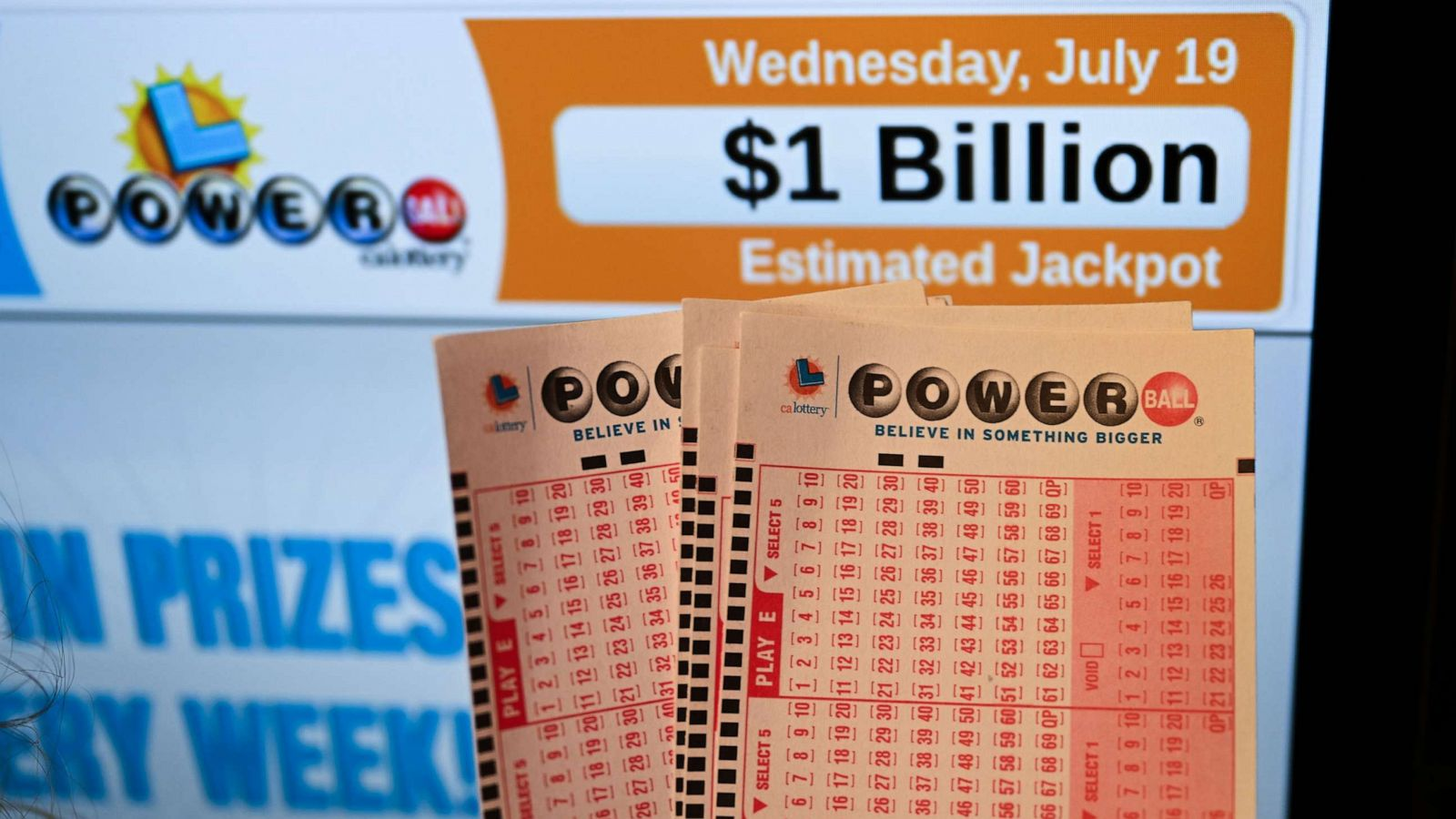
On Wednesday, July 20, 2023, a very lucky individual in California found out they won the $1 billion jackpot. It is one of the largest lottery jackpot wins in US history. And whoever is the purchaser of that ticket, their life is about to change immensely. I know a lot of people dream about winning the lottery and what they would do if it ever happened. But for this individual, it’s no longer a fantasy.

Now, setting aside for a moment the collective envy we all feel for lottery winners, I do want to convey an important message to this and all future lottery winners. Please note that this message isn’t from me. It comes courtesy of a famous post on Reddit that is frequently re-visited every time the lottery jackpot gets very bit.

What it says and what it reveals isn’t just important for lottery winners and non-winners alike. It adds a critical perspective that supersedes any fanciful dreams about wealth and money. Enjoy.


Congratulations! You just won millions of dollars in the lottery! That’s great.

Now you’re fucked.

No really.

You are.

You’re fucked.

If you just want to skip the biographical tales of woe of some of the math-tax protagonists, skip on down to the next comment. To see what to do in the event you win the lottery.

You see, it’s something of an open secret that winners of obnoxiously large jackpots tend to end up badly with alarming regularity. Not the $1 million dollar winners. But anyone in the nine-figure range is at high risk. Eight-figures? Pretty likely to be screwed. Seven-figures? Yep. Painful. Perhaps this is a consequence of the sample. The demographics of lottery players might be exactly the wrong people to win large sums of money. Or perhaps money is the root of all evil. Either way, you are going to have to be careful. Don’t believe me? Consider this:

Large jackpot winners face double digit multiples of probability versus the general population to be the victim of:

  1. Homicide (something like 20x more likely)
  2. Drug overdose
  3. Bankruptcy (how’s that for irony?)
  4. Kidnapping

And triple digit multiples of probability versus the general population rate to be:

  1. Convicted of drunk driving
  2. The victim of Homicide (at the hands of a family member) 120x more likely in this case, ain’t love grand?
  3. A defendant in a civil lawsuit
  4. A defendant in felony criminal proceedings

Believe it or not, your biggest enemy if you suddenly become possessed of large sums of money is… you. At least you will have the consolation of meeting your fate by your own hand. But if you can’t manage it on your own, don’t worry. There are any number of willing participants ready to help you start your vicious downward spiral for you. Mind you, many of these will be “friends,” “friendly neighbors,” or “family.” Often, they won’t even have evil intentions. But, as I’m sure you know, that makes little difference in the end. Most aren’t evil. Most aren’t malicious. Some are. None are good for you.

Jack Whittaker, a Johnny Cash attired, West Virginia native, is the poster boy for the dangers of a lump sum award. In 2002 Mr. Whittaker (55 years old at the time) won what was, also at the time, the largest single award jackpot in U.S. history. $315 million. At the time, he planned to live as if nothing had changed, or so he said. He was remarkably modest and decent before the jackpot, and his ship sure came in, right? Wrong.

Mr. Whittaker became the subject of a number of personal challenges, escalating into personal tragedies, complicated by a number of legal troubles.

Whittaker wasn’t a typical lottery winner either. His net worth at the time of his winnings was in excess of $15 million, owing to his ownership of a successful contracting firm in West Virginia. His claim to want to live “as if nothing had changed” actually seemed plausible. He should have been well equipped for wealth. He was already quite wealthy, after all. By all accounts he was somewhat modest, low profile, generous and good natured. He should have coasted off into the sunset. Yeah. Not exactly.

Whittaker took the all-cash option, $170 million, instead of the annuity option, and took possession of $114 million in cash after $56 million in taxes. After that, things went south.

Whittaker quickly became the subject of a number of financial stalkers, who would lurk at his regular breakfast hideout and accost him with suggestions for how to spend his money. They were unemployed. No, an interview tomorrow morning wasn’t good enough. They needed cash NOW. Perhaps they had a sure-fire business plan. Their daughter had cancer. A niece needed dialysis. Needless to say, Whittaker stopped going to his breakfast haunt. Eventually, they began ringing his doorbell. Sometimes in the early morning. Before long he was paying off-duty deputies to protect his family. He was accused of being heartless. Cold. Stingy.

Letters poured in. Children with cancer. Diabetes. MS. You name it. He hired three people to sort the mail. A detective to filter out the false claims and the con men (and women) was retained.

Brenda, the clerk who had sold Whittaker the ticket, was a victim of collateral damage. Whittaker had written her a check for $44,000 and bought her house, but she was by no means a millionaire. Rumors that the state routinely paid the clerk who had sold the ticket 10% of the jackpot winnings hounded her. She was followed home from work. Threatened. Assaulted.

Whittaker’s car was twice broken into, by trusted acquaintances who watched him leave large amounts of cash in it. $500,000 and $200,000 were stolen in two separate instances. The thieves spiked Whittaker’s drink with prescription drugs in the first instance. The second incident was the handiwork of his granddaughter’s friends, who had been probing the girl for details on Whittaker’s cash for weeks.

Even Whittaker’s good-faith generosity was questioned. When he offered $10,000 to improve the city’s water park so that it was more handicap accessible, locals complained that he spent more money at the strip club. (Amusingly this was true).

Whittaker invested quite a bit in his own businesses, tripled the number of people his businesses employed (making him one of the larger employers in the area) and eventually had given away $14 million to charity through a foundation he set up for the purpose. This is, of course, what you are “supposed” to do. Set up a foundation. Be careful about your charity giving. It made no difference in the end.

To top it all off, Whittaker had been accused of ruining a number of marriages. His money made other men look inferior, they said, wherever he went in the small West Virginia town he called home. Resentment grew quickly. And festered. Whittaker paid four settlements related to this sort of claim. Yes, you read that right. Four.

His family and their immediate circle were quickly the victims of odds-defying numbers of overdoses, emergency room visits and even fatalities. His granddaughter, the eighteen year old “Brandi” (who Whittaker had been giving a $2100.00 per week allowance) was found dead after having been missing for several weeks. Her death was, apparently, from a drug overdose, but Whittaker suspected foul play. Her body had been wrapped in a tarp and hidden behind a rusted-out van. Her seventeen-year-old boyfriend had expired three months earlier in Whittaker’s vacation house, also from an overdose. Some of his friends had robbed the house after his overdose, stepping over his body to make their escape and then returning for more before stepping over his body again to leave. His parents sued for wrongful death claiming that Whittaker’s loose purse strings contributed to their son’s death. Amazingly, juries are prone to award damages in cases such as these. Whittaker settled. Again.

Even before the deaths, the local and state police had taken a special interest in Whittaker after his new-found fame. He was arrested for minor and less minor offenses many times after his winnings, despite having had a nearly spotless record before the award. Whittaker’s high profile couldn’t have helped him much in this regard.

In 18 months Whittaker had been cited for over 250 violations ranging from broken tail lights on every one of his five new cars, to improper display of renewal stickers. A lawsuit charging various police organizations with harassment went nowhere and Whittaker was hit with court costs instead.

Whittaker’s wife filed for divorce, and in the process froze a number of his assets and the accounts of his operating companies. Caesars in Atlantic City sued him for $1.5 million to cover bounced checks, caused by the asset freeze.

Today Whittaker is badly in debt, and bankruptcy looms large in his future.

But, hey, that’s just one example, right?

Wrong.

Nearly one third of multi-million-dollar jackpot winners eventually declare bankruptcy. Some end up worse. To give you just a taste of the possibilities, consider the fates of:

  • Billie Bob Harrell, Jr.: $31 million. Texas, 1997. As of 1999: Committed suicide in the wake of incessant requests for money from friends and family. “Winning the lottery is the worst thing that ever happened to me.
  • William âBud❠Post: $16.2 million. Pennsylvania. 1988. In 1989: Brother hires a contract murderer to kill him and his sixth wife. Landlady sued for portion of the jackpot. Convicted of assault for firing a gun at a debt collector. Declared bankruptcy. Dead in 2006.
  • Evelyn Adams: $5.4 million (won TWICE 1985, 1986). As of 2001: Poor and living in a trailer gave away and gambled most of her fortune.
  • Suzanne Mullins: $4.2 million. Virginia. 1993. As of 2004: No assets left.
  • Shefik Tallmadge: $6.7 million. Arizona. 1988. As of 2005: Declared bankruptcy.
  • Thomas Strong: $3 million. Texas. 1993. As of 2006: Died in a shoot-out with police.
  • Victoria Zell: $11 million. 2001. Minnesota. As of 2006: Broke. Serving seven year sentence for vehicular manslaughter.
  • Karen Cohen: $1 million. Illinois. 1984. As of 2000: Filed for bankruptcy. As of 2006: Sentenced to 22 months for lying to federal bankruptcy court.
  • Jeffrey Dampier: $20 million. Illinois. 1996. As of 2006: Kidnapped and murdered by own sister-in-law.
  • Ed Gildein: $8.8 million. Texas. 1993. As of 2003: Dead. Wife saddled with his debts. As of 2005: Wife sued by her own daughter who claimed that she was taking money from a trust fund and squandering cash in Las Vegas.
  • Willie Hurt: $3.1 million. Michigan. 1989. As of 1991: Addicted to cocaine. Divorced. Broke. Indicted for murder.
  • Michael Klingebiel: $2 million. As of 1998 sued by own mother claiming he failed to share the jackpot with her.
  • Janite Lee: $18 million. 1993. Missouri. As of 2001: Filed for bankruptcy with $700 in assets.

So, what the hell DO you do if you are unlucky enough to win the lottery?

This is the absolutely most important thing you can do right away: NOTHING.

Yes. Nothing.

DO NOT DECLARE YOURSELF THE WINNER yet.

Do NOT tell anyone. The urge is going to be nearly irresistible. Resist it. Trust me.

1. IMMEDIATELY retain an attorney.

Get a partner from a larger, NATIONAL firm. Don’t let them pawn off junior partners or associates on you. They might try, all law firms might, but insist instead that your lead be a partner who has been with the firm for a while. Do NOT use your local attorney. Yes, I mean your long-standing family attorney who did your mother’s will. Do not use the guy who fought your dry-cleaner bill. Do not use the guy you have trusted your entire life because of his long and faithful service to your family. In fact, do not use any firm that has any connection to family or friends or community. TRUST me. This is bad. You want someone who has never heard of you, any of your friends, or any member of your family. Go to the closest big city and walk into one of the national firms asking for one of the “Trust and Estates” partners you have previously looked up on http://www.martindale.com from one of the largest 50 firms in the United States which has an office near you. You can look up attorneys by practice area and firm on Martindale.

2. Decide to take the lump sum.

Most lotteries pay a really pathetic rate for the annuity. It usually hovers around 4.5% annual return or less, depending. It doesn’t take much to do better than this, and if you have the money already in cash, rather than leaving it in the hands of the state, you can pull from the capital whenever you like. If you take the annuity you won’t have access to that cash. That could be good. It could be bad. It’s probably bad unless you have a very addictive personality. If you need an allowance managed by the state, it is because you didn’t listen to point #1 above.

Why not let the state just handle it for you and give you your allowance?

Many state lotteries pay you your “allowance” (the annuity option) by buying U.S. treasury instruments and running the interest payments through their bureaucracy before sending it to you along with a hunk of the principal every month. You will not be beating inflation by much, if at all. There is no reason you couldn’t do this yourself, if a low single-digit return is acceptable to you.

You aren’t going to get even remotely the amount of the actual jackpot. Take our old friend Mr. Whittaker. Using Whittaker is a good model both because of the reminder of his ignominious decline, and the fact that his winning ticket was one of the larger ones on record. If his situation looks less than stellar to you, you might have a better perspective on how “large” your winnings aren’t. Whittaker’s “jackpot” was $315 million. He selected the lump-sum cash up-front option, which knocked off $145 million (or 46% of the total) leaving him with $170 million. That was then subject to withholding for taxes of $56 million (33%) leaving him with $114 million.

In general, you should expect to get about half of the original jackpot if you elect a lump sum (maybe better, it depends). After that, you should expect to lose around 33% of your already pruned figure to state and federal taxes. (Your mileage may vary, particularly if you live in a state with aggressive taxation schemes).

3. Decide right now, how much you plan to give to family and friends.

This really shouldn’t be more than 20% or so. Figure it out right now. Pick your number. Tell your lawyer. That’s it. Don’t change it. 20% of $114 million is $22.8 million. That leaves you with $91.2 million. DO NOT CONSULT WITH FAMILY when deciding how much to give to family. You are going to get advice that is badly tainted by conflict of interest, and if other family members find out that Aunt Flo was consulted and they weren’t you will never hear the end of it. Neither will Aunt Flo. This might later form the basis for an allegation that Aunt Flo unduly influenced you and a lawsuit might magically appear on this basis. No, I’m not kidding. I know of one circumstance (related to a business windfall, not a lottery) where the plaintiffs WON this case.

Do NOT give anyone cash. Ever. Period. Just don’t. Do not buy them houses. Do not buy them cars. Tell your attorney that you want to provide for your family, and that you want to set up a series of trusts for them that will total 20% of your after-tax winnings. Tell him you want the trust empowered to fund higher education, some help (not a total) purchase of their first home, some provision for weddings and the like, whatever. Do NOT put yourself in the position of handing out cash. Once you do, if you stop, you will be accused of being a heartless bastard (or bitch). Trust me. It won’t go well.

It will be easy to lose perspective. It is now the duty of your friends, family, relatives, hangers-on and their inner circle to skew your perspective, and they take this job quite seriously. Setting up a trust, a managed fund for your family that is in the double-digit millions is AMAZINGLY generous. You need never have trouble sleeping because you didn’t lend Uncle Jerry $20,000 in small denomination unmarked bills to start his chain of deep-fried peanut butter pancake restaurants. (“Deep’n ‘nutter Restaurants”) Your attorney will have a number of good ideas how to parse this wealth out without turning your siblings/spouse/children/grandchildren/cousins/waitresses into the latest Paris Hilton.

4. You will be encouraged to hire an investment manager. Considerable pressure will be applied. Don’t.

Investment managers charge fees, usually a percentage of assets. Consider this: If they charge 1% (which is low, I doubt you could find this deal, actually) they have to beat the market by 1% every year just to break even with a general market index fund. It is not worth it, and you don’t need the extra return or the extra risk. Go for the index fund instead if you must invest in stocks. This is a hard rule to follow. They will come recommended by friends. They will come recommended by family. They will be your second cousin on your mother’s side. Investment managers will sound smart. They will have lots of cool acronyms. They will have nice PowerPoint presentations. They might (MIGHT) pay for your shrimp cocktail lunch at TGI Friday’s while reminding you how poor their side of the family is. They live for this stuff.

You should smile, thank them for their time, and then tell them you will get back to them next week. Don’t sign ANYTHING. Don’t write it on a cocktail napkin (lottery lawsuit cases have been won and lost over drunkenly scrawled cocktail napkin addition and subtraction figures with lots of zeros on them). Never call them back. Trust me. You will thank me later. This tactic, smiling, thanking people for their time, and promising to get back to people, is going to have to become familiar. You will have to learn to say no gently, without saying the word “no.” It sounds underhanded. Sneaky. It is. And its part of your new survival strategy. I mean the word “survival” quite literally.

Get all this figured out BEFORE you claim your winnings. They aren’t going anywhere. Just relax.

5. If you elect to be more global about your paranoia, use between 20.00% and 33.00% of what you have not decided to commit to a family fund IMMEDIATELY to purchase a combination of longer-term U.S. treasuries (5 or 10 year are a good idea) and perhaps even another G7 treasury instrument. This is your safety net. You will be protected… from yourself.

You are going to be really tempted to start being a big investor. You are going to be convinced that you can double your money in Vegas with your awesome Roulette system/by funding your friend’s amazing idea to sell Lemming dung/buying land for oil drilling/by shorting the North Pole Ice market (global warming, you know). This all sounds tempting because “Even if I lose it all I still have $XX million left! Anyone could live on that comfortably for the rest of their life.” Yeah, except for 33% of everyone who won the lottery.

You’re not going to double your money, so cool it. Let me say that again. You’re not going to double your money, so cool it. Right now, you’ll get around 3.5% on the 10-year U.S. treasury. With $18.2 million (20% of $91.2 mil after your absurdly generous family gift) invested in those you will pull down $638,400 per year. If everything else blows up, you still have that, and you will be in the top 1% of income in the United States. So how about you not fuck with it. Eh? And that’s income that is damn safe. If we get to the point where the United States defaults on those instruments, we are in far worse shape than worrying about money.

If you are really paranoid, you might consider picking another G7 or otherwise mainstream country other than the U.S. according to where you want to live if the United States dissolves into anarchy or Britney Spears is elected to the United States Senate. Put some fraction in something like Swiss Government Bonds at 3%. If the Swiss stop paying on their government debt, well, then you know money really means nothing anywhere on the globe anymore. I’d study small field sustainable agriculture if you think this is a possibility. You might have to start feeding yourself.

6. That leaves, say, 80% of $91.2 million or $72.9 million.

Here is where things start to get less clear. Personally, I think you should dump half of this, or $36.4 million, into a boring S&P 500 index fund. Find something with low fees. You are going to be constantly tempted to retain “sophisticated” advisers who charge “nominal fees.” Don’t. Period. Even if you lose every other dime, you have $638,400 per year you didn’t have before that will keep coming in until the United States falls into chaos. Fuck advisers and their fees. Instead, drop your $36.4 million in the market in a low fee vehicle. Unless we have an unprecedented downturn the likes of which the United States has never seen, should return around 7.00% or so over the next 10 years. You should expect to touch not even a dime of this money for 10 or 15 or even 20 years. In 20 years $36.4 million could easily become $115 million.

7. So you have put a safety net in place.

You have provided for your family beyond your wildest dreams. And you still have $36.4 million in “cash.” You know you will be getting $638,400 per year unless the capital building is burning, you don’t ever need to give anyone you care about cash, since they are provided for generously and responsibly (and can’t blow it in Vegas) and you have a HUGE nest egg that is growing at market rates. (Given the recent dip, you’ll be buying in at great prices for the market). What now? Whatever you want. Go ahead and burn through $36.4 million in hookers and blow if you want. You’ve got more security than 99% of the country. A lot of it is in trusts so even if you are sued your family will live well, and progress across generations. If your lawyer is worth his salt (I bet he is) then you will be insulated from most lawsuits anyhow. Buy a nice house or two, make sure they aren’t stupid investments though. Go ahead and be an angel investor and fund some startups, but REFUSE to do it for anyone you know. (Friends and money, oil and water – Michael Corleone) Play. Have fun. You earned it by putting together the shoe sizes of your whole family on one ticket and winning the jackpot.


Leave a comment

Filed under Current Events, psychology, real stories

Why Do Preachers Need/Deserve Private Jets? (A Sincere Question)

Televangelist Kenneth Copeland Defends His Private Jets: 'I'm A Very  Wealthy Man' - Flipboard

Whenever I talk about religion on this site, I try to be as respectful and tactful as possible. I don’t seek to offend or insult anyone who identifies as religious. I also don’t seek to denigrate certain religious practices, although I do believe a few warrant extra scrutiny. I’m sure I’ve overstepped those bounds in the past and for that, I do apologize.

All that being said, I have a serious question I’d like to present to those who are genuine and sincere with their faith.

Why do preachers need, let alone deserve, private jets?

I promise I’m not being facetious. I’m also not trying to make a larger point about certain religions. I would genuinely like someone who identifies as religious to explain this to me. Don’t just throw bible quotes at me. Explain it to me like I’m a child.

I know preachers having private jets isn’t new. However, recent events have made preachers and their spending habits a lot more noteworthy. Some make elaborate excuses as to why they have private jets. I still don’t get it.

These are not CEOs who run multi-billion dollar companies.

These are not heads of state who have to be able to travel the world at a moment’s notice.

These aren’t even celebrities who have achieved a level of success that affords them the option of some added luxury.

These are preachers who, for the most part, make their living giving sermons to adherents. I’m not saying that isn’t a noble profession. I went to church as a child. I remember the preachers and priests who led the sermons. They were genuinely nice people and they didn’t have private jets. One of them didn’t even own a car.

Now, I know these kinds of religious leaders are in a different hemisphere compared to the charismatic televangelists who have their own megachurches. I also know that more than a few adherents who utterly despise these people. One of them once told me, “That jet won’t help them escape where they’re going.”

Regardless of whether or not you believe that, I would still like someone to explain this practice to me. I get that charismatic people will attract crowds, money, and power. I get that those same people will abuse that power in one way or another. That’s just human nature.

What I don’t understand is how the adherents who believe, support, and send money to these people can accept this sort of thing and not have it clash with their faith somehow. Nearly every major religion has strict condemnations of greed and excess. How can this be justified?

Again, this is a sincere question. I hope to get a sincere answer because the absence of an answer is every bit as revealing.

Leave a comment

Filed under Current Events, politics, rants, religion

Dear Rich People: Pay Your Damn Taxes

The richest people in the world: billionaires across the globe - CBS News

I’m a proud American. I love my country and I celebrate its ideals while not ignoring its shortcomings. That’s what you do for a country you love.

I also hate taxes as much as the next American. It’s one of the few things that we can agree on these days. Taxes suck. It costs us money, the process is a real a hassle, and it’s not always spent on something you approve of. I understand that. I empathize with it, even. It’s like a prostate exam or a colonoscopy. It’s uncomfortable, but when done properly, it spares you plenty of pain and illness later on.

As much as I hate taxes, I’m not among those hardcore libertarian types who call taxation outright thievery. I’ve learned over the course of my adult life that taxes are just part of life. It’s what we collectively pay to operate a functional civil society. It may not be efficient or ideal, but it’s better than the alternative.

That’s why I make it a point to pay my taxes early and in full every year. I’m not rich. I also don’t have a complex array of assets and what not. However, my finances do require that I put a little extra effort every year to make sure I pay what I need. Thanks to the internet and free tax software, it usually takes up half an afternoon at most.

I’m not particularly smart when it comes to taxes and finances. I just know how to keep track of my budget, monitor my money, and spend within my means. That doesn’t take any special education or talent. It’s just common sense and basic math.

This brings me to the purpose behind this post. Very recently, a report came out from ProPublica. It basically confirms through a trove if IRS files what most of us already knew. The richest individuals in this country, and the world for that matter, have been avoiding taxes for decades. Read the report for yourself. If it doesn’t make you upset as a taxpayer, then check your pulse.

ProPublica: The Secret IRS Files: Trove of Never-Before-Seen Records Reveal How the Wealthiest Avoid Income Tax

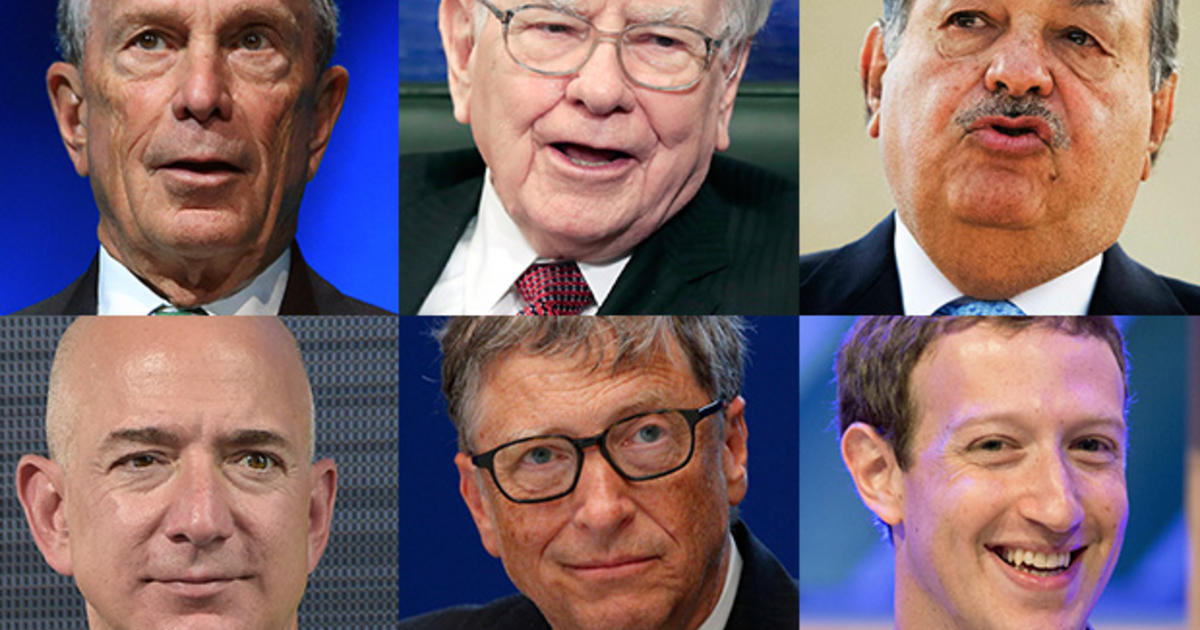
ProPublica has obtained a vast trove of Internal Revenue Service data on the tax returns of thousands of the nation’s wealthiest people, covering more than 15 years. The data provides an unprecedented look inside the financial lives of America’s titans, including Warren Buffett, Bill Gates, Rupert Murdoch and Mark Zuckerberg. It shows not just their income and taxes, but also their investments, stock trades, gambling winnings and even the results of audits.

Taken together, it demolishes the cornerstone myth of the American tax system: that everyone pays their fair share and the richest Americans pay the most. The IRS records show that the wealthiest can — perfectly legally — pay income taxes that are only a tiny fraction of the hundreds of millions, if not billions, their fortunes grow each year.

Now, I understand that I’m not rich. Most of us will never know what it’s like to live in the world of a billionaire. Their day-to-day life, as well as their perspective of the world, is just so completely different from most people that it might as well be alien. We can barely grasp the idea of having a million dollars, let alone billions.

However, I can still do basic math.

At the moment, the highest federal income bracket for a single person in the United States is 37 percent. Compared to the rest of the world, that’s pretty reasonable. If you made $10 million in one year, your federal tax liability would be approximately $3.7 million. Add in state and local taxes and it’s about $4.4 million.

Yes, that’s a considerable amount of money.

However, $5.6 million is also a considerable amount of money.

That’s enough money to buy a good sized home or several. That’s enough to buy a fleet of overpriced cars, crash them, and then laugh about it the next morning. If your lifestyle is such that you can’t live comfortably for a year on that, then something’s amiss here.

Again, I understand the world of the super rich is different. They have legitimate concerns that us non-rich people don’t. It’s not unusual for a rich person to spend a considerable amount on home and personal security. Then again, such elaborate security would be less necessary in a functioning civil society with quality public services, solid institutions, and well-funded infrastructure.

That’s not a utopian vision. Other countries are able to achieve this while still maintaining a commitment to free enterprise, individual liberty, and entrepreneurial endeavors. Doing so requires taxes. Moreover, it’s necessary that citizens actually pay those taxes.

This brings me back to the rich people who put so much effort into paying as little as possible every year for taxes. I know they’ll never read this. They’re too busy counting their money and/or deciding what to spend it on next. After reading this piece, I have just one simple request for you on behalf of all Americans, as well as anyone with a shred of decency.

Please pay your goddamn taxes.

It’s good for society.

It’s good for the economy.

It’s good for the public institutions that we all rely on to have a functioning, civil society.

It’s even good business for you, overall.

Just think about it. If rich people paid their taxes, then we could improve infrastructure, pay for quality education for more people, and just put more money in the pockets of people who need it. That is not a radical idea. It’s not socialism, communism, or some other anti-American ideology. In fact, preventing a system that has a class of aristocrats with immense power over the masses is as American as it gets.

On top of that, there’s a good chance that the poor and middle class people who get that money are going to spend it on something. They may even spend it on one of the businesses that rich people own and operate.

In a sense, you’ll get that money back eventually. You’ll just help improve the lives of ordinary people, who also happen to be your customers. It’s win/win at every level. There is literally no downside, other than the fact that obscenely rich people will not be nearly as obscenely rich.

Honestly, though, what’s the difference between having $15 billion and $1 billion? That’s still more money than most people could ever spend in a lifetime. When you die, you can’t take it with you and those who inherit it will not value it as much, since they did not earn it.

In essence, paying your taxes is probably the best thing you could do with that money in the grand scheme of things. Even once you pay your share, you’ll still have plenty for cars, yachts, and gold toilets. I love capitalism too, but greed and hoarding will destroy it in the long run. Taxes are the price we pay to keep that system as fair and honest as possible in an imperfect world.

Do your part.

Pay your taxes.

If we can do it, then obscenely rich people with immense resources have no excuses.

Leave a comment

Filed under Current Events, politics

Jack’s World Thoughts Experiment: How Much Money Do You Need?

The following is a video for my YouTube channel, Jack’s World. It explores another thought experiment, something I’ve done plenty of times before. This one just happens to involve money. Given the recent events with the stock market, I think the time is right to contemplate money and how it guides our lives. Enjoy!

1 Comment

Filed under Current Events, Jack's World, Thought Experiment, YouTube

How Much Money Do You Really Need?

Most people aren’t born into wealth. The vast majority of the population has no idea what it’s like to be a billionaire, a millionaire, or someone who just doesn’t live with the constant dread that they’re just one missed paycheck away from total ruin. There’s a reason why they’re called the one percent and it goes beyond basic math.

I admit I’ve often contemplated what it would be like if I suddenly became wealthy. I’ve even articulated some of those musings in detail. I suspect most people have day-dreamed at some point what they would do if they suddenly had a billion dollars at their disposal. For most people, it’s difficult to contemplate because, like it or not, money changes people and not always for the better.

When someone asks what you would do with a million dollars, it’s easy to come up with all sorts of answers. Some are inevitably going to be more absurd than others. The movie “Office Space” articulated that point perfectly. However, there’s another question that I feel is worth asking and I also feel it’s more revealing.

How much money do you really need?

I’m not talking about fantasy wealth here.

I’m not talking dream vacations, dream homes, or spending sprees.

How much money do you actually need to live a happy, comfortable life by whatever standards you define it?

That’s a harder question to answer because it varies for everyone. There are some people in the world who think a million dollars isn’t enough. Depending on where you live in the world, that’s not an unreasonable position. Even with those variations, it still doesn’t zero in on the answer. How much is enough?

I’ve seen how people act when the lottery gets above the $300 million mark. In my experience, once things get over $100 million, that’s when even a typical day dream isn’t enough to appreciate just how much money that is. I’ve tried to imagine it and in every case, I come to the same conclusion.

If I had that much money, I honestly wouldn’t know what to do with it.

It’s not that my needs are simple or cheap. I think my costs are fairly average for someone living in a suburban area. If I had $100 million, didn’t invest a penny in stocks or bonds, and stopped making money today, I still wouldn’t be able to spend it all before I turned 100.

I probably couldn’t even spend $50 million. When things get into the billion-dollar territory, it gets even more absurd. Even millionaires have a hard time fathoming how billionaires operate. Most people, even with decent math skills, don’t understand just how much money a billion dollars is.

At that point, you’re way beyond basic needs and wants. You’re in a domain in which you literally cannot spend all that money at once. You have to legitimately try to lose it all and while some people have done that, it often happens in the process of seeking even more billions to add to their fortune. It rarely occurs just by spending money on your day-to-day needs.

In that context, contemplating how much money you actually need says more about you and your situation than it does about your understanding of finance. If you need that much money to be comfortable, then that says something about your mindset and it’s not just about greed. Some want to change the world for the better with that money. Some want to impose their will on it. It depends on who you are and what drives you.

For me, personally, I don’t think I need anything above $10 million. I probably wouldn’t need more than $5 million just to maintain my current living costs, adjusting for inflation, and planning for my future. That might change if I ever get married and have kids, but for now, that’s my perspective.

I’m interesting in hearing how others would respond to this question. How much money is enough for you? How much would you need to be content, stable, and happy? Let me know in the comments. I’d be happy to revisit this issue again down the line.

Leave a comment

Filed under Current Events, human nature, philosophy, politics, psychology

Mia Kalifa, The Porn Industry, And Why Her (Lack Of) Earnings Matter

mia-khalifa

Imagine that you’re young, low on money, and in need of a quick buck. You do a few side-gigs, like drive a taxi or do some yard work. You make some money up front. You’re grateful for it. You wish you didn’t have to do it, but you still did and you’re ready to move forward with your life.

Now, imagine that same work you did ended up making someone else a boatload of money that continues to flow in, even though you’ve long since finished your part. Maybe while mowing the lawn, you discovered a priceless artifact under a tree stump. Maybe while driving a taxi, your car became the site of an infamous crime. Anyone with a white 1993 Ford Bronco SUV can attest to that.

With those ideas in mind, let’s talk about Mia Kalifa. If you don’t know who that is, just ask any straight man with an internet connection and a suspiciously large supply of tissue boxes. You might not get an honest answer, but rest assured, she’s a known public figure and not just because she has over 15 million followers on Instagram.

One of the reasons why she has so many.

She’s worth talking about, but not because she’s a former porn star who still garners a great deal of popularity, despite having not worked in the industry for years. Recently, she made the news after revealing that, even though she was one of the most popular porn stars in the world for a time, she made a total of $12,000 for her entire career.

For someone who was that successful in an industry that’s already exceedingly crowded by an abundance of content, that just doesn’t seem to add up. Most working people make more than $12,000 in a year, even if they’re paid minimum wage. They even get to keep their clothes on. What’s going on here?

There is a context to that story. By her own admission, she was in the industry for about three months. She only got paid a flat rate of about $1,000 for each scene she did and, given how few she ended up doing, it’s still more than minimum wage. She basically made $12,000 for approximately two weeks of work. Ignoring, for the moment, that the work involved making porn, it’s not a terrible rate.

However, what stands out most about her story is that she continues to generate money for the companies that initially paid her. To this day, those scenes she shot still generate traffic for popular sites like PornHub and that traffic still makes its parent company, MindGeek, some additional profit.

Most people don’t know, or want to know for that matter, that the most popular porn sites and studios are owned by MindGeek. Think of any site your significant other won’t admit to visiting. Chances are, they own it. They’re basically the Amazon of porn. They’re so big that there really isn’t a close second.

It’s because they’re so big that Ms. Kalifa’s story isn’t unique. Most people who enter the porn industry, be they male or female, have to go through MindGeek in some form or another. They’re basically a monopoly and because of that, they can get away with shady practices, such as underpaying workers or short-changing them with fine print.

Listed above are sites few will admit to knowing.

Most porn performers, including Ms. Kalifa, only get paid a flat rate per scene. They basically function as independent contractors, which means they’re not salaried employees who get benefits. They’re basically Uber drivers, but with sex. Unlike Uber drivers, though, the top performers can actually make a lot more, but they’re the exception and not the norm. Most performers are in Ms. Kalifa’s situation.

It’s not a situation unique to porn. Other elements of the entertainment industry have used similar practices for years. The music industry has plenty of examples of successful artists who sell millions of albums, but still go bankrupt because most of that money went to the companies they worked for rather than the artists themselves.

It even happens in the comic book industry. Few individuals have created and drawn more iconic character than Jack Kirby, but because he was a work-for-hire, he didn’t technically own his creations. The companies he worked for, both Marvel and DC Comics, owned them. As a result of this, there were some lengthy legal battles with Kirby’s estate. Not surprisingly, the companies won.

Think of any industry that involves performing or creating some kind of art. There’s a good chance that there are cases where someone creates something that becomes successful, but the creators themselves don’t profit from it. Only the companies profit.

Again, there’s a context to that. In industries like music, the top one percent of performers earn over three-quarters of the revenue. Most creative endeavors fail to turn a profit. As someone trying hard to break into the publishing industry, I can attest to how common failure and rejection are. These industries, as shady as their practices might be, need to make a profit and that often requires enduring many losses.

That’s exactly why Mia Kalifa’s story matters. It doesn’t just shed light on the less glamorous aspects of the porn industry. It highlights how the actual people behind popular media don’t reap as much of the benefits as we think. For porn stars, current and former, that’s made even harder by the stigma and taboos surrounding the industry. Ms. Kalifa endured those unpleasant elements more than most.

It’s a system that’s only getting worse. There was a time when porn stars could make considerably more money and even earn some residual income from the booming DVD market. Thanks to the advent of streaming media and excessive piracy, that’s no longer the case. It’s why many porn stars are turning to escorting or licensing products.

Given the dirty nature of the business, few politicians or advocates will loudly proclaim they want to help the people in the porn industry. The last few years have been very difficult for anyone in the sex industry. Laws are making sex work more restrictive and more dangerous to everyone involved. Performers will end up with the stigma, but the companies will get most of the profits.

To some extent, what happened to Mia Kalifa’s career is a microcosm of what’s happening to entertainment in general. We’re currently in an era where big companies are acquiring as much intellectual property as possible. Companies, be they major movie studios or porn producers, have a vested interest in controlling the content at the cost of the performers.

Since so few entertainment products turn a profit, these companies have too much incentive to short-change performers and creators. There’s no law that requires companies to give performers a small percentage of future earnings. There’s no law that stops them from exploiting the content created by performers, even if those same performers don’t want to be associated with the work anymore.

Given the money and influence of these companies, that’s not likely to change anytime soon. However, Mia Kalifa did us all a service by making people aware of this very flawed system. The fact that she did this while fully clothed and being brutally honest in a world that lives in alternative facts might be her best performance to date.

1 Comment

Filed under Celebrities and Celebrity Culture, human nature, media issues, outrage culture, political correctness, prostitution, sex in media, sex in society, women's issues

How Religion (Indirectly) Re-enforces Inequality

vatican-museums-st-peter-s-and-sistine-chapel-tickets-and-skip-the-line-private-tour_header-18646

I once knew a guy who worked a job he hated for an overpaid boss he’d once described as a cross between Patrick Bateman and Darth Vader. I can’t put into words how much he resented that man. To make matters worse, he was one of those bosses whose family had connections. He couldn’t get fired, let alone disciplined. Even if he did, he had a trust fund that ensured he’d never work a day in his life.

My friend shared all sorts of horror stories with me, but I often found myself asking why he stayed at that job for so long. I also asked why he didn’t try to do something about it. I’m no lawyer, but I’m fairly confident that he could’ve sued his boss and won. He never did and gave plenty of reasons, some more understandable than others.

However, one particular reason stood out to me. While I don’t remember his exact words, this is what he told me.

“I’m not concerned. I know that one day, that asshole will die and when he gets to the gates of Heaven, he won’t be able to hide anymore. He’ll go to Hell. I’ll go to Heaven. I believe God is just. No matter how bad things get in this life, the scales always balance in the next.”

Now, I wasn’t surprised by this sentiment. This particular friend of mine was very religious. He’d gone to church every Sunday. He and his pastor were on a first-name basis. He could quote bible verses the same way I could quote X-Men comics. He knew his theology and I don’t doubt it helped him endure that awful job that he somehow endured for several years.

While I respect my friend and his faith, I find the notion of taking comfort in someone’s afterlife punishment more than a little unsettling. It’s not just due to the schadenfreude inherent in that sentiment. What I find most troubling is how this common theological concept perpetuates imbalances, injustices, and inequalities, albeit indirectly.

The very notion of an afterlife, especially with respect to concepts of Hell, has plenty of troubling issues. From both a theological and non-theological standpoint, it frames everything that occurs in the current life we’re living as a prelude for the much grander life to come. Even if a view of the afterlife has no concept of Hell, it still devalues our current lives to some extent.

However, when divine justice enters the equation, as it often did for my friend, there’s a less obvious impact that has real consequences in the non-religious lives of many. I would even argue that those consequences influenced society on multiple levels at many points throughout history. The extent of those consequences are hard to gauge, but the implications are unavoidable.

To illustrate, think back to the terrible boss my friend described. Think of him as a placeholder for any rich, entitled, over-privileged class of people in history. He could be a king, a warlord, a cleric, an emperor, or just some powerful tribal leader. By any measure, this individual has more power and wealth than almost everyone else.

While that earns them many benefits, from having all the nice stuff to attracting all the best sexual partners, it also makes them a target. What exactly entitles them to have all that power and wealth? Did they earn it? Did they fight for it and win it? What do they have to do to maintain it?

The answers vary, depending on circumstance and context. Some are more responsible with wealth and power than others. However, if we’re going to grasp the bigger picture here, we have to acknowledge the general guidelines of human nature and, chief among them, is the inclination to take the path of least resistance.

Like it or not, human beings are wired to take the easiest possible path to resolve an issue. That’s especially true of difficult tasks, such as maintaining an objectively unequal status within a society. Seeing as how humans, and even other primates, have an innate sense of justice, this is an issue that the rich, wealthy, and powerful cannot avoid.

That’s where religion enters the picture. Logistically speaking, it offers some convenient justifications for an objectively unequal situation. It’s not just that the boss, cleric, king, warlord, or rich asshole inherited their status. It was divinely granted to them.

That helps solve several major problems for the rich and powerful off the back. It means those who consider themselves pious and devout can’t just rebel against those of greater wealth. Doing so would mean protesting the will of the divine. For anyone concerned about facing divine wrath, that’s a major incentive to accept the current situation. In some cases, they even celebrate it.

That kind of divine excuse has another benefit, as well. For people like my friend, who have to toil under wealthy, entitled bosses, it gives them comfort about their current lot in life. While they could go through the trouble of fighting back, that’s both laborious and risky. Historically, powerful people don’t react kindly to being challenged and they don’t always fight back with lawyers.

Religion provides them another, less exhaustive option. Instead of going through all that trouble and taking all those risks, they need only keep living their current lives. They need not worry about contesting people like my friend’s tyrannical boss. He’ll face justice after he dies. That’s not just comforting. It plays directly into our natural inclination to resist change.

The only change these people believe in.

On a larger scale, this has minor personal benefits to the devout, but major benefits to the wealthy and powerful. If the vast majority of people are convinced that oppressors will get theirs in the afterlife, they’re not going to be as inclined to protest the status quo or, in the worst-case scenario, demand change that requires a loss of wealth and power.

This is especially important for religious leaders who, unlike governments or business elites, have to keep justifying why people devote their time, labor, and money to the institution. That’s tough when religious organizations don’t pay taxes, enrich top officials, and wield significant authority on geopolitical level.

It’s considerably easy, though, if the theology in question convinces adherents that the wealth and power of the institution is divinely granted. As a result, the inequality between the average believer and the top official is justified. That’s how the deity wants it. Even if some are corrupt, and there have been many, they’ll eventually face justice in the afterlife.

It gets even easier when adherents and believers are uneducated and uninformed. My friend wasn’t stupid, but he didn’t get much of an education, which was why he got stuck in a lot of bad jobs. His story is not uncommon. In general, the less educated you are, the more religious you tend to be. On top of that, less education often means a higher chance of living and staying in poverty.

In that context, it makes sense for religion to discourage critical thinking and higher education that isn’t specifically sanctioned by their institutions. If people aren’t educated, then they’re not just ill-equipped to question authority. They’ll remain in poverty and so too will their children, who are more likely to adopt their parents’ piety.

It’s a self-reinforcing cycle. People are born into their current lot. They either appreciate or resent it. Religion helps provide justification for it, however good or bad it might be. It gives them an excuse to accept it and pass it onto the next generation. Any inequality or injustice within that system remains in place and can even widen under the right circumstances.

Now, this is the point where I try to temper my rhetoric because I know the mechanisms I just described seem cynical. It gives the impression that every religious figure throughout history was just some greedy schemer who knew they were lying to gullible people and taking advantage of their faith to benefit themselves. I want to make clear that this is not the message I’m trying to send.

Are there religious and non-religious people who are that corrupt? There most certainly are. Some are more egregious than others. Some are historically egregious. I believe that most people, even those at the top of the hierarchy, are sincere in their piety. They don’t see their religion as a mechanism for propagating inequality and injustice. That’s why I see this impact as indirect.

Even if all organized religion disappeared tomorrow, I don’t doubt for a second that the wealthy and the powerful would find some other way to protect their status. For now, and for a good chunk of history, religion has been a powerful tool to justify and maintain this immense disparity.

Relying on the afterlife is convenient, but it requires assumptions that no human being can know for certain. Nobody truly knows what happens, if anything, after we die. We only know that no matter how rich or wealthy you are in life, death still affects you all the same. It is, in many respects, the ultimate equalizer.

In many respects, that’s the most valuable asset that the religious and the wealthy have going for them. The fact that nobody truly knows means that nobody can prove them wrong when they say their power is divinely protected. It also means that people like my friend can’t be proven wrong when they take comfort in the idea of his boss getting divine justice at some point. The result is still the same.

People on both ends of the inequality spectrum have an excuse to not change the situation. While there are some circumstance that are unalterable due to forces beyond anyone’s control, there are certainly some that can and should be confronted. As long as people find excuses in divine forces that cannot be confirmed, the inequality will only continue.

9 Comments

Filed under Current Events, extremism, human nature, philosophy, psychology, religion

What Will The Currency Of The Future Be?

1000x667

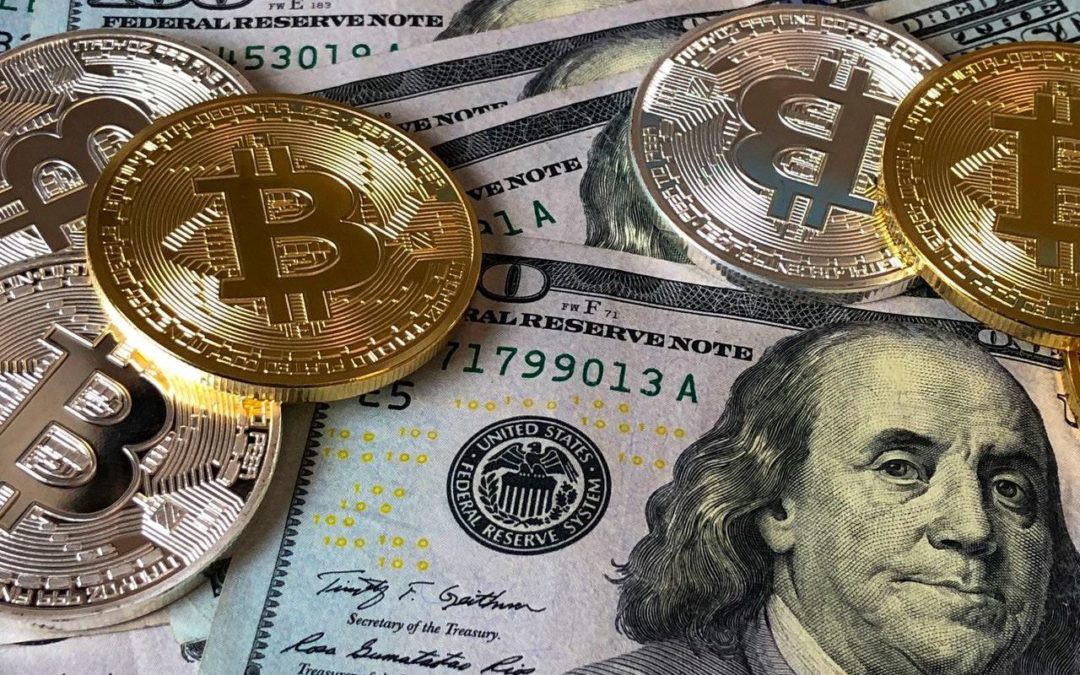
Most people don’t think about what gives their money value. There’s just a general understanding that it’s vital for basic economic activity. Whether it involves simple bartering or complex cryptocurrencies, the assumptions are the same. Money is a measure of value and exchanging it is how we ascribe value to basic goods and services.

There are all sorts of economic and financial complexities that determine how money works. Rather than bemoan the issue, knowing I am not the least bit qualified to do so, I’d like to focus on the nature of money in the future. Having already given plenty of thought to advanced artificial intelligence, human enhancement, and intimacy, I think it makes sense to contemplate how it all affects our ideas about money.

By that, I’m not referring to current trends in digital currency and older trends within modern banking systems. I’m talking about what money will be in a future where people, resources, and our entire understanding of economics has rendered the existing system obsolete. If you don’t think that’ll ever happen, then I only request that you give some added scrutiny to the concept of money.

I often find myself scrutinizing it whenever I watch a bit too much sci-fi. Some of my favorite sci-fi movies and TV shows of all time don’t give much thought to money. In “Back To The Future II,” a world of flying cars and cheap fusion power still had money. Things were just exceedingly expensive due to inflation. A Pepsi cost around $50.

While inflation is a real force that was certainly present in the non-movie version 2015, it’s somewhat strange that it would get that excessive in a world where fusion power plants could fit into cars made in the mid-1980s. In the real world, advanced technology tends to counter inflation. Logistically, better technology means more efficiency. More efficiency means cheaper goods. Cheaper goods mean lower prices.

We can certainly forgive movies like “Back To The Future II” for failing to understand the economics of money. In addition, the technology of that world wasn’t so advanced that it undercut the foundations of society. However, the money systems in galaxy-spanning space operas can’t make those excuses.

Star Wars” still used some form of currency. It was necessary for Han Solo to pay his debts and for Luke to enlist his services to Alderaan. Other space-faring epics like “Mass Effect” and “Guardians of the Galaxy” have a form of currency that allows characters to be greedy and ruthless. Whether they’re called credits or units, the principles are the same.

There’s this vague concept of money. Everyone agrees that it has value, but there’s little information about why it has value. That’s not entirely flawed. It’s just no different than traditional fiat money, which nearly every modern society utilizes to some extent in the real world. The money isn’t backed by anything. People just collectively agree it’s worth what it says its worth.

Now, I’m not one of those conspiracy theorists who claim this form of money is part of a global conspiracy theory run by lizard people who may or may not have murdered John F. Kennedy. I don’t know enough about economics or finance to make sense of our current monetary system. All I know is that we have a system of money that works within the constraints of our current society.

Whatever you think of that system, there’s still a larger question worth asking. What will money look like in the future when some of those constraints disappear? To some extent, our current system requires that people be frail, products be flawed, and resources be scarce. Through certain advances, some of which may occur in the next 50 years, those limits may disappear.

What happens to money when we perfect advanced energy generation that makes electricity cheap, abundant, and clean?

What happens to money when people begin upgrading their bodies with advanced biotechnology and cybernetic implants?

What happens to money when nanotechnology advances to a point where the production and assembly of every conceivable good is dirt cheap?

What happens to money when advanced artificial intelligence gets to a point where it gets so intelligent that it can solve every conceivable problem and manage every conceivable issue perfectly?

What happens to money when our civilization gets to a point where we can just upload our minds into a perfect simulation where all our wants and needs are met on a whim? Regardless of whether you think we’re already in a simulation, the question surrounding money and what form it takes remains.

While it’s impossible to predict the cumulative impact of technology, especially the kind that subverts modern economic forces, I believe there will be some sort of currency in the future. Even if we perfect nanotechnology, artificial intelligence, and teleportation, I think it’s reasonable to conclude that we’ll need some system for exchanging goods, services, and overall value.

I also don’t think it’s reasonable to assume that our current fiat money would work. Just putting images on paper and using it as a token may not be practical in a society of advanced AI and immortal humans. These days, most of our money exists only as code in a computer and not as piles of paper or gold. I think for any form of money to work in a society of such technology, it needs to be backed by something.

Some sci-fi stories explore that concept. The movie, “In Time,” wasn’t that good, but the idea was intriguing. In that world, everybody is immortal and never ages past 25, but the system is such that the currency is measured in time. In a sense, a dollar is backed by a year of life as a healthy 25-year-old. For most people, that has plenty of value.

The rest of the movie is awful and I don’t recommend it, but it presents a novel, albeit dystopian concept. For that economic system to work, there has to be some sort of tyrannical power structure that has the ability to snuff someone’s life out the second they can’t pay. Even corrupt insurance companies aren’t that bad.

Then, there’s the Netflix series, “Altered Carbon,” which I highly recommend. That world also has a problem with massive wealth disparity, but not in the sense that rich people horde money in giant vaults. In this world, technology has advanced to the point where people can transfer their consciousness to different bodies the same way most people transfer files between computers.

In that world, the most precious assets are the best bodies. Being able to live in the body of Brad Pitt is inherently more valuable than living in the body of Danny DeVito. Much of society, from prisoners to billionaires, is divided by who has access to those bodies. In the story, the super-rich Bancroft family have that access and that’s what makes them so rich.

That kind of wealth may not show up as numbers on a balance sheet, but the value is there. Being able to produce, inhabit, and live within strong, beautiful bodies provides a powerful basis for any currency. Talk to anyone who has dealt with the effects of aging, which is pretty much everyone over the age of 25. Most would gladly pay a premium to live in a stronger, fitter body.

While “Altered Carbon” doesn’t get into the specifics of that system, the principle holds true. In a future where people aren’t bound by the limitations of biology or the human body, the greatest asset they can possess is a medium with which to experience life. A better medium means better experiences. Some companies today are already seeking to provide those experiences. Technology will simply change the methods.

Whether we end up in a simulated utopia or not, the experiences a currency affords us is what will give it value. Even though worlds like that of “Star Trek” present a world where money doesn’t exist, there is still plenty of value ascribed to life experiences. You may not be able to print that on a piece of paper or send that in a wire transfer, but that is still recognized as valuable.

I could still be wrong. Remember, I’m not an expert in money, nor can I predict the trends that future advances in technology will incur. Whatever form it takes, though, I expect that the overall goal will still be the same. We use money to pursue better, more rewarding life experiences. However we go about pursuing is, and always has been to some extent, the only true universal currency.

Leave a comment

Filed under futurism, Sexy Future, technology