Tag Archives: Freakanomics

Excuse Banking: What It Is, How It Effects Us, And Why It Matters

https://i0.wp.com/www.dailyentertain.com/wp-content/uploads/2014/12/banker-laughing.jpg

If you thought I was done talking about reasons and excuses, I’m sad to report that you’re very wrong. If you thought there’s no other way to make funny, sexy, or relevant, then I’m not so sad to report that I’m eager to prove that wrong as well. Trust me. This is a huge topic, one with many implications for writing novels and so much more.

A big part of what inspired me to explore this topic is a new book I’m reading called “Think Like A Freak.” It’s a book by Stephen Levitt and Stephen Dubner, the two authors behind the best-selling “Freakanomics” books that I’ve enjoyed so much in the past.
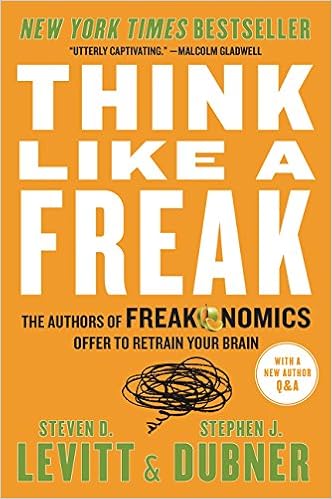
There’s a lot to digest in this book and I’m still not done reading it yet, but the primary takeaway is fairly simple. It teaches you to step back from a situation, look at all the complex incentives and motivations surrounding it, and think in new, unorthodox ways to further your understanding. These posts on reasons and excuses are an exercise, of sorts, in understanding things from a new perspective.

I’ve already explored the basics of reasons and excuses. Now, I’d like to expand on those basics and create a new concept of sorts, one not unlike the idea of “caveman logic,” which I’ve cited so often on this blog. Please don’t mistake this for a real scientific concept. I’m as much a scientist as I am an astronaut ninja. This is just me, an aspiring erotica/romance writer, creating a term to encompass a larger concept.

With that said, ladies, gentlemen, and those of unspecified gender, I introduce to you the concept of “Excuse Banking.” It’s not in a dictionary. You won’t find it in any textbooks or erotica/romance stories yet, but it’s an idea that has affected us all to some extent.

Again, this is a term I’m inventing right now with no expertise and nothing but a blog to explore it. I understand that’s like a hobo walking into MIT and trying to build a star ship, but I want use this term to explore the more intimate aspect of reasons and excuses. As anyone who has read my books knows, I’m all for more intimacy.

First off, here’s a quick and dirty definition of what excuse banking is:

  • A form of rationalizing one’s actions by using one or more justifications that have been remembered, accepted, and understood as something of personal value;
  • A series of actions meant to mitigate or eliminate the emotional or mental stress of a decision or action that may occur in the future; and
  • The process of shaping ideas, beliefs, and morals in a manner that facilitates difficult ethical decisions.

In reading over these definitions, it should be easy to recall situations where excuse banking applies to you or someone you know on some level. Have you ever loaned someone money? Have you ever helped them with a chore? Have you ever done a favor and asked for nothing in return?

Well, in doing so, you’re effectively making deposits into the excuse bank that you can use as currency, so to speak. Sometimes those deposits gain interest over time. Sometimes they depreciate. In either case, we use this currency to either garner favors through reciprocity or mitigate stressful, demanding situations we may have at a later time.

Much like caveman logic, the idea of excuse banking reflects the understanding that our brains are wired a certain way. That wiring, unfortunately, is akin to an operating system that never gets upgraded. As far as our brain wiring is concerned, we’re still cavemen living in hunter/gatherer tribes in the African savanna.

That wiring, regardless of whether you believe it’s a product of nature or supernatural deities, is the guiding force behind everything from our social behavior to our sexual fantasies. For this particular topic, I’ll focus on the social behavior and save the sexual fantasies for my novels.

Like every other cognitive function, our social behavior does have a basis in neurobiology. That behavior helps guide what we do and why we do it. The behavior, and the wiring behind it, have two primary imperatives that take priority over pretty much everything else. Those priorities are, once again, survival and reproduction.

Nature may be blunt, imperfect, and messy at times, but you can never accuse it of misplacing priorities. When it comes to helping a species thrive, survival and reproduction have to be major priorities. Whether it involves surviving a bear attack or successfully making love to one hundred beautiful cavewomen, those priorities guide a significant part of our thoughts and actions.

It’s for that reason, as I stated in a previous post, that our process for making decisions is so different compared to what we believe. We like to think we’re rational creatures, assessing a situation logically like Spock or Dr. House, and then acting in accord with the utmost reason and morality. That’s the ideal and the basis of multiple superheroes, TV doctors, and scientists.

However, due to that pesky biological wiring that hasn’t been upgraded since the stone age, we do it ass-backwards. We first make a decision, often based on emotion and instinct, and then look for ways to justify it. It’s a good way to ensure we survive bear attacks long enough to get laid. It’s not a good way to promote rational decisions, much to the chagrin of Dr. House.

This is the domain in which excuse banking manifests. Regardless of whether or not we believe that this is how we make our decisions, excuse banking ensures we have a way to justify our actions and decisions, especially if they cause us physical or emotional distress.

We do this because there’s a 100-percent chance that at some point in our lives, we’re going to face a difficult decision. Maybe we have to decide whether to lie to a girl to get her attention. Maybe we have to decide whether or not we should trust the guy who claims to be a Nigerian prince wanting to help us collect an unclaimed lottery place. At some point, we will confront these decisions. It’s an inevitable fact of life.

Excuse banking is a way of hedging our bets, so to speak. It encompasses the actions, beliefs, and social connections we make prior to these decisions. We may have different reasons for seeking these connections, but they have the same secondary function. They help deposit excuses that we might be able to use in future situations.

The process of banking excuses is almost always secondary, in that sense. Nobody goes out of their way to do or believe something because they want an excuse to justify their actions. Nobody overtly think, “I’m going to work at this soup kitchen and provide medicine to sick orphans so I don’t feel as guilty when I strangle puppies with my bare hands.” Those that do are probably sociopaths or reality TV hosts.

Like real banking, sometimes the excuses we bank generate interest. This is especially true when actions involve forming a strong social network of people who support you, even when you screw up. They act as a safety net and over time, that net can become reinforced.

Also, like real banking, banked excuses require fees of sorts. You have to pay a price in order to bank a certain excuse. It can be the time and energy we put into crafting social networks. It can be the resources we expend to join a group, mold an identity, or sell our skills. Some fees are small. Some are much larger, but tend to be more flexible.

That’s where excuse banking starts to diverge from actual banking. Unlike hard currency, excuses can be malleable to a certain extent. You can turn past favors, past charity work, and all that money you gave to PETA into excuses you can use in multiple situations.

This is especially true of excuses built around beliefs. Since beliefs are intangible, unmeasurable, and unverifiable, they are extremely malleable. Take circumcision, a topic I’ve covered before, sometimes to an exceedingly personal degree. Absent a tangible medical condition, there’s no logical reason as to why we would cut off part of an infant’s penis.

However, if you inject a sincerely held belief that your particular religion has a tradition regarding circumcision, then that requires a hefty withdraw from the excuse bank. That excuse better be malleable and low cost as well. When it comes to beliefs, though, the cost is usually close to zero and it’s hard to beat that.

Now that’s not to disparage anyone’s sincerely held religious beliefs. I’m not saying that all religions exist as systematic forms of excuse banking. Human beings just aren’t that simple. If they were, then erotica/romance writers like me would have little to work with. Excuse banking is just one of those understated, unseen processes that emerges from our faulty brain wiring.

When put into a proper context, excuse banking can help make sense of an inherently irrational world populated by very crazy people, some of which have their own radio shows. At a time like this, when the concept of “alternative facts” is a thing, we need every tool we can get.

This is just one from an aspiring erotica/romance writer. I don’t know how useful it will be or if it’ll make anyone horny, but we can only hope.

29 Comments

Filed under Reasons and Excuses

Reasons Vs. Excuses: Why The Difference Matters

https://i0.wp.com/www.realmenrealstyle.com/wp-content/uploads/Blame.jpg

Has anyone ever asked you to do something you really don’t want to do? Actually, let me rephrase that. How many times does someone ask you to do something you don’t want to do in the past 24 hours? Let’s face it. Unless you’re a king, a dictator, or Taylor Swift, it’s happened at least once.

Whatever was asked of you, how did you try to get out of it? I know some people will just grit their teeth and do it. Those people deserve ten times the respect they get. Every now and then, if not most of the time, we try to do something to get out of doing what we don’t want to do. Whether you’re in New York City or the Gobi desert, you can’t escape these situations. They’re just part of life.

Whenever we’re in these situations, we usually try any number of things to get out of it. Whether it’s chores, homework, or ballet recitals, we all have our own set of tactics. Some are more elaborate than others.

I knew a kid in school who could throw up on demand. He didn’t even have to put his finger in his mouth. He could just concentrate, cough, and then spew the kind of chunky bile that would dissuade any teacher from giving him an exam. I lost count of how many times that skill got him out of trouble.

Most of us don’t have that talent though. We all still look for ways to get out of things we don’t want to do. I sure have. I don’t deny that. I’m not saying that’s a bad thing either. It’s a good skill to have, knowing how to avoid situations that make you miserable. However, it does reveal an important concept that I find myself noticing more and more as I get older, although sometimes I wish I didn’t.

It has to do with two simple words: reasons and excuses. They both have similar definitions. Most of the time, outside of a scientific context, we use these words interchangeably. For the most part, we understand the meaning behind them.

However, for the purpose of this discussion, as well as future discussions since this is a big topic, I’d like to focus on a particular context. Specifically, I’d like to focus on the situations and justifications we individually use to do or avoid doing something. Make no mistake. There is a difference between a reason and an excuse.

A reason is logical, narrow, and concise. It can be understood by anyone with a functioning brain and verified with simple tools. That’s not to say a reason has to be cold and callous like a Vulcan. It just has to be valid and clear.

I’ll offer a simple example. Growing up, there were a certain set of chores for which me and my siblings were responsible. If we didn’t do these chores, we didn’t get an allowance. It was that simple. The one chore I did most often was mowing the lawn. I didn’t enjoy doing it, but I still did it.

Then, one day, I got sick. I’m not talking about a headache either. I mean I got really sick, so much so that I ran a 102-degree fever. I know because my mother took my temperature twice. I was then bed-ridden for the next two days. Somebody else mowed the lawn, but I still got my allowance because I had a valid reason. My parents understood that. I understood that. There was no need for debate.

Using this same example in lawn care, I’ll highlight why an excuse is so different. If I wanted to use an excuse to get out of mowing the lawn, I sure as hell wouldn’t have chosen something that could be verified. Sure, I could’ve claimed to be sick, but that would’ve been pushing it because they could check. They could take your temperature and see if you’re running a fever.

On top of that, your parents may be really good at knowing when you’re lying. Mine certainly were. It might as well have been their mutant power. They knew when I was lying and if I ever tried, I’d just make an ass of myself.

Plus, lying to your parents isn’t just a dick move. It’s a bad long-term investment. If you lose your parents trust, especially over something as trivial as mowing the lawn, then you’ll give them way too many valid reasons not to trust you in the future, even when you have a good reason of your own.

So in order to make a more valid excuse, you need to come up with something more believable. It doesn’t have to be a lie. It doesn’t have to be completely true either. You could claim you’re depressed that your lover broke up with you. You could say there’s a movie you’d rather watch instead. You could say you just don’t feel like it. These aren’t lies. However, they are still excuses.

The primary trait of an excuse is that it doesn’t physically prevent you from doing whatever is asked of you. It defends and/or justifies your particular decisions, preferences, and what not. Being on vacation in Fiji ensures I can’t physically mow the lawn. That’s a reason. Being in a lousy mood and just wanting to sleep in does nothing to prevent me from operating the lawnmower. That’s an excuse.

With that in mind, let’s take the concept of reasons and excuses to a larger stage. Let’s assess how this applies to the overall process we use in rendering the various decisions and actions of our lives. What we do and why we do it is at the core of what it means to be a conscious human being.

For practical purposes, we like to think that we’re reasonable people. We like to think that we have valid reasons for what we do and why we do it. We break up with a lover because they’re not right for us. We buy organic food because it’s better for our health. We smoke pot because it makes us more fun to be around. Some of that may be true, but we still think of them as reasons and not excuses.

The problem with this is basically everything about it. Once again, caveman logic enters the picture and spits all over that rosy picture we have of ourselves and others. Based on our growing understanding of cognitive science and neurobiology, we have a better idea of how we make decisions and how we justify them.

When it comes to reasons and excuses, the two main factors are choice-supportive bias and cognitive dissonance. I know those sound like terms that Sheldon Cooper would use in a skit on “The Big Bang Theory” that somehow makes him sound like more of an asshole, but unlike 98 percent of what Sheldon says, these concepts are useful.

Choice-supportive bias is our tendency to ascribe positive attributes to the choices we make. It’s also a byproduct of cognitive dissonance, which is just a fancy way of saying our brain feels stressful and uncertain.

In essence, our brain is wired to avoid wrong decisions and for good reasons. Back in the caveman days, if we made a wrong decision, it usually meant we ended up as dinner for a hungry grizzly bear or ate poison berries that made us shit out our lower intestines. We’re alive because of this wiring so let’s not discount its use.

Unfortunately, nature is still a blunt instrument and our brains don’t know we only encounter bears in zoos that charge ten bucks for a soda. That aversion to making wrong decisions is still there, even when we decide something as simple as which breakfast cereal to buy.

With that in mind, we’ll do anything and everything to avoid wrong decisions and the brain stress they cause. Unfortunately, that often means making excuses to reduce the stress and justify our choice, even if it ends up being wrong.

If that weren’t bad enough, our brains don’t run our decisions through a logic filters first. Don’t worry though. That filter is still there in our brains. It’s just not at the front of the line like we all wish it were. If it were, then half the videos on YouTube wouldn’t exist.

Instead, according to current neuroscience, we make most of our decisions on snap judgments and emotions. Then, we’ll use reasons and excuses to justify those decisions after the fact. Unfortunately, since reasons are so rigid and stubborn, we’re more inclined to make excuses. Even if those excuses are mostly true, they’re still excuses.

There are so many other dynamics behind reasons and excuses. There’s no way I’ll be able to cover even half of them in a single blog post. However, there is a reason why I’m discussing this topic and it’s a good reason. It’s applies to both my novels, as well as other topics with very sexy implications.

That reason will become clearer in later posts. For now, consider this a trailer of sorts, minus the cheesy one-liners and explosions. If possible, take a moment to analyze how many excuses you make for your decisions compared to reasons. You may be shocked/appalled/disgusted by what you uncover. I promise you, though, it gets much crazier.

15 Comments

Filed under Reasons and Excuses

How To Be An Effective Superhero

This is a direct follow-up to my previous post about why modern superheroes are inherently incompetent and designed to stay that way. I felt I needed to scrutinize the cracks in the foundation, so to speak, before I get around to discussing the stuff build on top of it. That will help make the discussion in this post more relevant and concise.

Even without the context of my previous post, it’s not hard to understand or even acknowledge that so many superheroes are inept, irresponsible, and incompetent at their jobs. Their villains always escape. Their friends/lovers/parents always die/suffer. The world they want to better never changes. It’s a flaw in the system as much as it is an exercise in futility.

Now, I’d like to take a step back, acknowledge the forest from the trees, and offer a solution of sorts. As I’ve done with other issues, I don’t just like to point out flaws. I like to offer viable solutions. Those solutions may not be practical or possible at the moment, but I try to make sure that the concept is sound.

https://i0.wp.com/www.chapter3blog.com/wp-content/uploads/2015/05/super-hero-500x300.jpg

I’d like to apply that method to superheroes now. By that, I mean I’d like to create a guide of sorts that helps establish the tactics, strategies, and ethics of being a competent, effective superhero. I say this knowing that it could never work in any comic book or major movie. This is mostly just an exercise in the actual pragmatics of superheroes.

First off, let’s establish some guidelines for a prototypical hero that would utilize these tactics. In order for them to work, they have to meet a certain criteria. Here’s a quick list of what that may include:

  • The goal of the hero is to reduce crime, confront injustice, and undermine corruption

  • The hero has a concerted interest in protecting as many innocent people as possible

  • The strategy in question cannot rely on the use of certain superpowers, although the use of superpowers can help supplement the strategy

  • The strategy is equally usable by male, female, and alien characters

  • The hero in question is willing to operate in a manner outside the framework of traditional law enforcement

  • The hero in question is willing to cross a certain set of moral lines, but only to an extent

I’m sure there are other ways to refine and supplement this list, but for now, this is what I’ll use in devising my strategy. In order to ensure that its applicable, heroes like Batman, Spider-Man, and Daredevil must be equally capable of implementing it.

Keep in mind, though, that some heroes have goals that go beyond just administering justice. Characters like Superman and the X-men have other goals, some of which goes beyond justice. I’ll save those goals for another post. For now, I intend to focus on the traditional superhero goal of justice and countering evil.

https://leadershipspirit.files.wordpress.com/2013/09/hero-leaders.jpg

In order to formulate this strategy, it’s also important to acknowledge a few unpleasant truths that would make Superman and Captain America cry. By that, I mean that the strategy cannot, for practical means, rely heavily on ideals. This is supposed to apply to the real world and, unfortunately, the real world is extremely unforgiving when it comes to ideals. Just ask Bernie Sanders.

So if we’re going to create a strategy that operates in the real world, we must make sure it accounts for the eccentricities of human psychology. It must utilize caveman logic and pass the Simpson filter. It can’t be too concerned with the nuts and bolts of people and why they do the crazy things they do. It must focus exclusively on results.

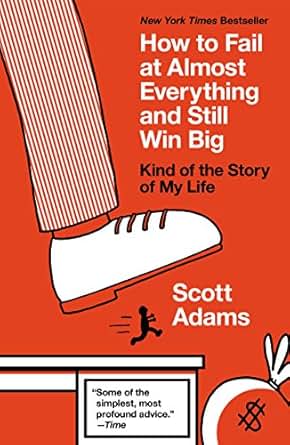
Does your brain hurt yet? Are you wondering if I’m asking you to contemplate dry water, a one-handed clap, or a decent Fantastic Four movie? Bear with me because there is a strategy that checks all these boxes. It’s a strategy I came up with thanks to two books, “Freakanomics” and “How To Fail At Everything And Still Win Big.”

https://i0.wp.com/freakonomics.com/wp-content/uploads/2016/01/Freakonomics-Paperback-298x450.jpg

I’ve read both these books over the past few years and I’m a big fan of their style. They dig deep into the hidden intricacies of how the world works and challenges readers to think about how doing things in new and novel ways. Seeing as how I have the kind of imagination that links robots with a dominatrix, they fit my unique mentality perfectly.

For the purposes of this discussion, I want to cite an article that the authors of “Freakanamics” wrote a number of years ago on terrorism. Basically, with a gross negligence to the high emotions that come with terrorism, the authors used their understanding of economics and human behavior to come up with the most cost-effective way to conduct terrorism. What they came up with was pretty damn terrifying.

My general view of the world is that simpler is better. My guess is that this thinking applies to terrorism as well. In that spirit, the best terrorist plan I have heard is one that my father thought up after the D.C. snipers created havoc in 2002. The basic idea is to arm 20 terrorists with rifles and cars, and arrange to have them begin shooting randomly at pre-set times all across the country. Big cities, little cities, suburbs, etc. Have them move around a lot. No one will know when and where the next attack will be. The chaos would be unbelievable, especially considering how few resources it would require of the terrorists. It would also be extremely hard to catch these guys. The damage wouldn’t be as extreme as detonating a nuclear bomb in New York City, of course; but it sure would be a lot easier to obtain a handful of guns than a nuclear weapon.

Think about that for a moment. If terrorists used a tactic like this, how much fear and dread would it inflict on our daily lives? If those terrorists were even marginally competent, then it would be even scarier. No matter what we did, we would dread that we would be a victim and it wouldn’t be entirely misguided.

This is where “How To Fail At Everything And Still Win Big” comes in. That book talks heavily about how stress and uncertainty affect people. It also teaches on how you can use that to your advantage. It makes painfully clear that the human brain is an irrational device with faulty wiring that hasn’t been updated in 200,000 years. If you’re going to influence it, then you might as well exploit those quirks.

https://images-na.ssl-images-amazon.com/images/I/51sqVXNWHhL._SY445_QL70_.jpg

With these two principles in mind, we can formulate a strategy for our prospective superhero. If utilized, then the criminals, villains, and future threats they face will either be defeated, deterred, or nullified.


  • The hero operates in complete secrecy, working at night or under a different identity. If the hero uses a uniform, then that uniform must not be identifiable or have some sort of stealth feature

This first part of the strategy is simple and not entirely new. Characters like Batman and the Teenage Mutant Ninja Turtles utilize some form of stealth. They operate in the shadows and generally avoid being seen.

Some heroes are even more well-equipped than others. Characters like Solid Snake from the “Metal Gear Solid” video games utilize a stealth suit that utilizes camouflage. Characters like Mystique can shape-shift into looking like someone else. This makes it easier for them to utilize this tactic, but someone as resourceful as Batman could use it just as well.

However, there’s room for improvement.


  • The hero must not have an identifiable name or make themselves known to the media in any way or coordinate with the media. They must, at all costs, avoid creating an identifiable persona

This is where Batman, Spider-Man, and pretty much any hero with a publicly-known name fails. The issue isn’t the name itself. The issue is that by having a name and having some kind of media exposure, they create a tangible, identifiable target.

From a practical perspective, that’s a big problem. That means enemies, be they a mugger or Lex Luthor, have someone they can target and identify. Entire teams of enemies, like the Legion of Doom or the Sinister Six, can rally around a common enemy. That makes enemies stronger and no strategy can succeed with that.


  • The hero must conduct detailed surveillance on villains and criminals, know their crimes and how they connect with others, and focus on those who are high in rank and influence

This is another tactic that most heroes already use to some extent. Batman is probably the most well-known. He uses his detective skills to determine who is a threat, how big a threat they are, and how to go after them. Other heroes, like the Avengers or the Justice League, generally have some type of monitoring system to determine pending threats.

This strategy requires the kind of extensive intelligence and understanding that someone like Batman could appreciate. When Batman determines that someone is a big threat, he’s almost always right. Any hero using this strategy must have similar certainty. Knowing the threat is the first step towards actually defeating it. That’s just a basic rule of war.


  • The hero must defeat their villains/enemies/criminals by making them disappear without a trace, either by killing them and destroying the body or by sending them into a domain from which they can never escape

This is where the strategy conflicts with nearly every major hero, especially the Batmans and Supermans of the comic book world. For the most part, the heroes avoid killing. It’s seen as an ideal. Taking a life is seen as morally abhorrent and for good reason.

However, that moral absolution ends when those same villains, such as the Jokers and Green Goblins of the world, live on to torment again. Despite defeating these villains multiple times, the heroes never do anything to end them. They try and try to lock them away in a prison cell, but they just keep escaping. From a moral standpoint, the suffering those villains inflict is on the heroes’ shoulders.

For most heroes, this means killing is unavoidable. It’s the only sure-fire way to ensure that a villain is never a threat again. For more resourceful/powerful heroes, there are other options like shrinking them to the size of atoms like Ant Man or sending them into the far-distant future, as Superman did with Doomsday.

However, it’s not enough to just kill a villain or enemy in this instance. Superheroes have killed before. Some, like the Punisher, kill a lot, but it still backfires in the long run. Why is that? Well, that’s where the next part strategy comes in.


  • The hero must make sure that nobody knows the villains they kill or disappear are dead, must never take credit for their disappearance, and must do everything possible to disconnect themselves from the villain

This is where even the brutal tactics of the Punisher fail. It’s also where the Freakanomic strategy comes in. The problem with the Punisher’s harsh methods isn’t that they’re harsh or that they result in a lot of killing. The problem is that they give the villains another rallying cry.

The Punisher’s enemies knows he kills. The Punisher usually likes to make clear that he’s the one who killed their associates. While this may shock and horrify some of them, it also has the effect of rallying them against a common enemy. Whether someone is a criminal or a hero, giving your enemies a common threat to rally behind is always a bad idea.

This is why the Punisher’s methods often fail in the long run. Criminals may fear him, but they know he’s responsible. The threat they’re up against has a face. There is a target for them to direct their fear and anger. This means that the criminals and enemies of the hero know who to fight against and in the long run, that never works out for the hero.


  • The hero must make sure that the villains, their allies, and their enemies don’t know why others are disappearing and must never make themselves known. Most importantly, they must make sure the villains are free to make wrong, misguided decisions

Here is where the methods of Scott Adams intersect with “Freakanomics.” In “How To Fail At Everything And Still Win Big,” Adams constantly talks about how people are at the mercy of their caveman brains. When they’re uncertain or anxious about something, they’re prone to making bad decisions for bad reasons. Make too many of those decisions and you tend to doom yourself to failure.

With this method, the hero must make sure that the villain is free and able to keep making those decisions that will ensure they defeat themselves. This is why it’s so important to make sure that the villain never knows that the hero is even fighting against them. They can’t have a mask, a costume, or a symbol to rally against. If it’s one big unknown, then their irrational caveman brains will do the rest.

The Norman Osborns and Lex Luthors of the world will start making up their own targets, irrationally lashing out at what they think is the source of the threat. The hero, for the most part, just needs to sit back and watch it unfold. Let them attack their rivals, make new enemies, and falter under the pressure. So long as they don’t know who or what they’re fighting against, their paranoia will eventually work against them.

In the long run, the villains will lose. They’ll end up dead. They’ll get caught. Most importantly, from the hero’s perspective, they’ll never know who to blame or why. That’s a scary thought, even for a hardened criminal. Nothing scares people more than the unknown.


  • The hero must never seek any kind of recognition, adulation, or compensation for their deeds

This is the final part of the strategy and, arguably, the most important. The problem with characters like Batman and Superman are that they want to be symbols. They want to be recognized for their efforts. Practically speaking, that’s a mistake.

By being symbols, they give their enemies a clear target and something to rally around. No matter how good the hero is at their job, they still make themselves a target. No matter how many villains they defeat, more will emerge and more will know who to fight.

Remove that symbolism. Remove the recognition. Remove the masks, costumes, and iconography of a hero and suddenly, the world of villains is very scary. They don’t know who to fight. They just know that by doing what they do, they could disappear without a trace and never be heard from again.

That’s more terrifying than any torture or punishment because their caveman brains will fill in the blanks with the worst they can conjure.


This caps off my official perfect superhero strategy. To date, no hero in a comic book uses these tactics and for good reason. If it were a comic book, it wouldn’t be very interesting because the outcome would be too final. The hero would be too competent and that’s just not very interesting.

Remove the need for sales, lunch boxes, and porn parodies and imagine how this strategy could work. Say there’s a superhero that wants to take down organized crime. Say that hero has the power of Superman or the Flash. Using their abilities, they quickly locate the top level bosses and associates of these criminals and just make them disappear.

There’s no body. There’s no trace. There’s no police report. There’s no trial. They just disappear. Not knowing who to fight, the criminals start attacking others they think are responsible. When they don’t know who, they just pick random people they think are enemies.

https://spiceaddictionsupport.org/wp-content/uploads/2015/05/paranoid-delusions.jpeg

This makes them more enemies, both from other criminals and law enforcement. No matter what they do, anyone who becomes a boss just disappears and they don’t know why. As a result, nobody even wants to be a crime boss anymore. The organizations just collapse on their own. Criminals still disappear, ensuring even low-level criminals have an incentive to stop. In the long run, the hero accomplishes what they set out to do.

It works with criminals. It works with those who are corrupt. It exploits the quirks of human nature, but also relies on the traits that make us function as a species. Again, it’s a tactic that I doubt any major heroes with movie rights could ever use. However, if they really do care about results, then this is the best way to go. Spider-Man should take notes.

6 Comments

Filed under Comic Books, Jack Fisher, Superheroes

Why Most Superheroes Are Woefully Incompetent (By Design)

Image result for incompetent superhero

I’ve been meaning to do a post like this for a while now. It’s a topic I’ve actually tried to discuss on comic book message boards. Unfortunately, most comic book message boards too readily devolve into debates about who can lift Thor’s hammer, who Wolverine is sleeping with, and whether or not She-Hulk shaves her pubic hair. Yes, it gets that bad.

Ignoring, for a moment, the immaturity of certain crowds on message boards, there are certain issues pertaining to comic books and superheroes that are too easy to overlook. I say this as someone who is plenty eager to overlook the flaws in a story if it means seeing Starfire, Wonder Woman, Emma Frost, and Storm of the X-men kick ass and look damn sexy while doing it.

One of those flaws, ironically enough, deals with the actual pragmatics that come with being a superhero. Granted, those practical details are usually an afterthought in most superhero comics. Why would anyone give much thought to that when they could instead focus on giant monsters, killer robots, and the Hulk’s penis?

Some of the problem has entirely to do with fans like me. I freely admit that, as a fan, I’m part of the problem. Superheroes, whether they’re in comic books, cartoons, or blockbuster movies, aren’t created with the intent of being really good at their jobs. They’re created as a product to sell. That means they have to be compelling, engaging, and part of a meaningful story.

That’s why we don’t care if Spider-Man fails miserably to stop a criminal or if Superman fails miserably to keep Lex Luthor locked in prison. So long as it’s part of a story, we keep buying in. We increase our emotional and financial investment. It keeps the narrative going and, by default, the money for the company producing the merchandise.

That’s also why there will never be a superhero who is too good at fighting crime, defeating enemies, and solving problems. After a while, they do too much good and the world they live in just doesn’t have enough flaws to be interesting anymore. Who wants to read about Spider-Man anymore after he’s effectively solved New York’s crime problem and spends his days taking photos of hobos pissing on trees in Central Park?

On some levels, comic book companies and movie studios of the world knows this. They’ll never admit it outright, but in the back of their mind, they have to know that they can never let a hero be too competent. Even Superman has to slip up every now and then. Make no mistake though. He definitely has throughout his 70-plus year history, sometimes in laughably disturbing ways.

There’s a very simple reason for this and unfortunately, it’s neither heroic nor sexy. I’ll give you a hint. It’s valuable, it’s green, and it fits perfectly in a stripper’s G-string. If you need more than one guess, you should probably see a doctor.

Yes, I’m talking about money. If anything, it’s kind of ironic, given the values that many superheroes hold and how broke many superheroes often are. They’re created to embody our greatest values, but they’re sole purpose, from an image standpoint, is to make money for the company that owns their rights.

Fortunately or unfortunately, depending on how you look at it, superheroes do succeed in that respect. According to The Hollywood Reporter, Spider-Man alone makes over a billion dollars a year in merchandising. That’s not a typo. I said billion. Batman is a very distant second with a little less than half-a-billion.

Superheroes are big business these days, both in terms of making money and spending it. According to rumors by Bleeding Cool, the next two Avengers movies could collectively cost a billion dollars. Again, that’s not a typo.

It’s because superheroes make so much money and generate so much money for the economy that they have to stay incompetent to some extent. Just look at the superheroes of old, from Greek mythology to the bible to the medieval legends of King Arthur. They all have one defining trait. They all had definitive endings.

Whether tragic or triumphant, the heroes of old were part of a finite narrative that had an ending. King Arthur dies. Hector dies. Jesus Christ triumphs over the Satan. If these were comics, they would never survive in the modern market because they’re too complete. Modern superhero stories can never truly end.

Even iconic comics like Watchmen, which was supposed to have a definitive end, but DC Comics nixed that by incorporating it into their mainline superhero comics. Granted, this thoroughly pissed off Watchmen’s creator, Alan Moore, but he’s been pissed off for any number of reasons for the past 30 years so that’s not saying much.

Instead of ending, modern superhero comics are prone to a tricky phenomenon that most comic book fans know all too well. It’s called retroactive continuity, also known as a “retcon.” This is basically the literary equivalent of a mulligan.

Has Spider-Man become too convoluted, mature, and dark? A retcon will make him a lovable loser again. See “Brand New Day.”

Has Batman become too campy and goofy? A retcon will make him dark and gritty again. See “Batman Begins.”

Have the Fantastic Four become too flat and boring? A retcon will make them a team of jaded young millennials. See 2015’s “Fantastic Four,” although pretty much every Fantastic Four fan would strongly advise against it.

Thanks to retcons, superheroes never age. They can always be reinvented, re-tooled, and adapted for a new audience. Granted, that won’t stop some audiences from whining about it, but it effectively ensures that the narrative never ends and the particulars of the story at every point in the timeline are subject to change.

This can be a good thing sometimes, such as when a retcon gives us a great character like the Winter Soldier in the Captain America comics. However, it can also splatter painfully disturbing details on an established narrative that didn’t need it. Just talk to Spider-Man fans about a story called “Sins Past” and watch them become visibly ill.

In the end, however, it often means that characters never really progress beyond a certain point and the problems they hope to solve never go away. The Joker always escapes. Lex Luthor always returns. Spider-Man’s girlfriend gets killed, injured, or impregnated by his worst enemy. It’s as frustrating as it sounds.

Most superheroes will gloss over this detail by taking a stand against killing. That’s perfectly understandable on some levels. The morality of killing someone is one of those few moral issues that don’t generate too much debate, unless it involves Nazis in video games. However, in some respects, the anti-killing is both an excuse and a sales tactic.

Batman is, by far, the best example in this respect. Despite being the alpha and omega of an ordinary man achieving extraordinary feats without superpowers, Batman still cannot and will not stomach killing any of his villains. No matter how many times they escape, kill, or torment others, he refuses to kill them.

Ignoring for a moment the debate on whether he’s responsible for the deaths those villains subsequently inflict, there’s one other issue that makes Batman’s anti-killing stance more a marketing gimmick than a morality stand. Batman’s villains are iconic characters in their own right.

Just look at the list of famous Batman villains. Then, remember how many of them are popular Halloween costumes. Also keep in mind one of them earned Heath Ledger an Oscar and another got Margot Robbie to put on hot pants. Creating characters this iconic isn’t easy. That’s why comic companies and movie studios are so reluctant to kill them.

This is the dilemma that all superheroes face in modern comics and movies. If Batman kills the Joker, then there are no more iconic battles between the two. If Superman kills Lex Luthor, then there’s no more epic struggle. That means there are fewer comics to sell, toys to make, and slutty costumes to create. That situation, from both a fan and business standpoint, is untenable.

As a result, every modern superhero is, by design, incompetent to some degree. On top of that, the villains are either insanely lucky or ridiculously resilient. That’s why we’ll never see a version of Batman, Superman, or Spider-Man who actually succeed at reducing crime. That’s why we’ll never see the X-men or the Justice League actually create a peaceful world.

It’s not that it’s impossible. It’s just that it ends the story and the ability for big companies to make a boatload of money off them. That ensures every modern superhero is a walking paradox. They can never truly achieve their goal, but they can never stop trying either. It’s not because it’s the right, moral thing to do either. It’s because movie studios and publishing companies still need to make money.

That’s not very heroic, to say the least, but that’s the world we live in. Until money and movie rights stop driving superhero narratives, we’ll never see a truly competent superhero.

5 Comments

Filed under Comic Books, Jack Fisher, Superheroes