Tag Archives: Dark Phoenix

What Jean Grey Of The X-men Can Teach Us About Life, Love, And Growing Up

These days, when most people read comics or watch movies, they do with an emphasis on escapism, spectacle, and an ability to talk/whine about it on message boards. Most people would rather not consume media with the idea that it has a bigger lesson to teach. We got plenty of those lessons in grade school and most of us got sick of that crap before we hit puberty.

However, there are occasions when a comic, movie, or TV show reveals something deeper about ourselves and our world that’s worth noting. I’m not talking about the kinds of crazy fan theories that claim Jack in “Titanic” never existed. It is possible for the media we consume to give us real, meaningful insights about ourselves.

That brings me back to comic books and X-men. Yes, this is going to be another one of those posts. After talking so much about the horrors of millennial life and the potential horrors of their children, I’m in need of a less serious topic. I think I’ve made clear that I love comics, I love X-men, and I’ll keep finding reasons to talk about them on this blog.

As it just so happens, a comic came out that conveys just such a lesson. It involves Jean Grey again. Other than Wonder Woman, she’s one of the most frequent topics of discussion on this blog. Considering she has a movie coming out next year, that’s likely to continue.

However, this comic has little to do with her movie and more to do with the themes of Jean Grey’s struggle. Some of them are relevant in the sense that they’re common to many major superheroes. Others are more subtle in that they have a bigger message to convey, one that applies to those who don’t have superpowers.

I doubt that the message that Marvel, a company owned by Disney, no less, intends to convey directly. Most of that message is indirect, but it can still function as a lesson, of sorts, that even aspiring erotica/romance writers like myself can appreciate.

The comic, in question, is Jean Grey #6. It’s the latest in a series that began earlier this year and focuses on the exploits of a teenage Jean Grey, who was plucked from the past several years ago in an event that has too many complications to go over without inducing migraines.

You don’t need to know too many of the particulars. You only need to know that she has a good reason for not liking her future. A lot of her adult life, as has played out in the X-men comics over the years, involves death, rebirth, and more dying at the hands of overwhelming power, often at the hands of the Phoenix Force.

Her teenage self is understandably frustrated with how that life played out. For the past several years, she’s gone to considerable lengths to change her fate, going so far as to ditch the X-men and try to be a normal teenage girl. As is often the case with superheroes, and teenagers in general, that doesn’t work. She still finds herself dragged back into the world of X-men and superheroes.

To her credit, she has handled herself fairly well. She’s managed to endure a space adventure with the Guardians of the Galaxy, go on trial for her future crimes that she’s yet to commit, and take part in a superhero civil war. It’s worth remembering, though, that she’s a teenager. She’s doing all this while also being one of the most powerful mutants in all of Marvel comics.

Her solo series, as written by a very talented writer named Dennis Hopeless, takes Jean Grey out of those roles with the X-men and sends her on a more personal journey. As I said before, her adult life is plagued by many complications that end up killing her. Chief among them, though, is the Phoenix Force. Pretty much all her frustrations begin and end with Phoenix Force.

She’s spent most of her time in the future just actively avoiding it or not thinking about it. In the very first issue of her solo series, though, she gets a message that makes clear she can’t ignore it anymore. Eventually, she has to prepare to confront the all-powerful Phoenix Force and all the problems/heartache it’ll cause her.

As part of that effort, she’s been seeking guidance from various sources throughout the Marvel universe. In a universe full of gods, aliens, and talking raccoons, there’s a lot to go around. Jean Grey #6 has her touch base with Dr. Strange. Those who saw Benedict Cumberbatch bring the charming sorcerer supreme to life last year shouldn’t be too surprised.

It actually starts off fairly similar to her previous efforts to seek guidance from more experienced Marvel heroes. Dr. Strange agrees to help her, which involves a little mystical mojo that should offend One Million Moms and amuse card-carrying Satanists. It’s here, though, where the journey and the lesson play out.

It’s a spirit quest, of sorts, one that takes the teenage Jean Grey through the life she seems doomed to live. It spans multiple eras of X-men comics, from the Stan Lee/Jack Kirby days of Uncanny X-men to her latest death in the early 2000s. What makes this journey a bit rockier, though, is that she’s not just a spectator.

These visions of her future self aren’t just there to remind her why her future sucks. They’re basically drills sergeants trying to hammer some hard lessons into her head that Jean, and teenagers in general, refuse to learn.
Jean4

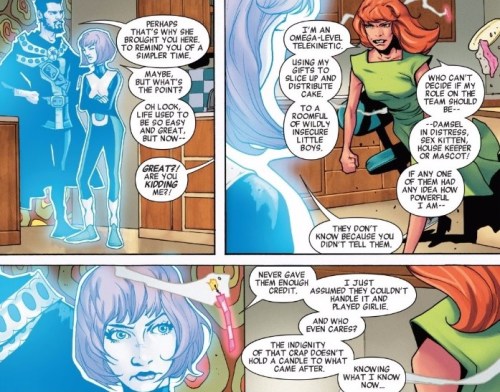
It’s here where Jean starts to get a harsh lecture on having one persona that you have for all those around you while also having a very different, much less pleasant persona just under the surface. Like celebrities that are assholes when the camera isn’t rolling, some people have to pretend to be something they’re not.

With Jean Grey, one of the most powerful mutants on the planet, it’s even more difficult. Jean’s vision basically tells her what she refuses to admit. She makes herself out to be this quiet, upstanding young woman on a team of teenage boys. However, under the surface, she knows she’s more powerful than everyone else on her team and most other teams.

Her maintaining that facade is like trying to play chess with a brain-damaged monkey and trying to give the monkey a fair chance. As is the nature with mutant powers, she can’t turn them off. She can’t ever not be so powerful and frustrated. It’s a lesson that is hard for a teenage girl to wrap her head around, but easy for most adults who can’t stop being adults.

By now, it should be somewhat easier to see the real-life parallels here. We’re talking about overwhelming feelings that we can’t turn off, which tend to affect us greatly later in life. As teenagers, we don’t know how to deal with them or even how to make sense of them. They still affect us, though. We can try to ignore them all we want, but that doesn’t make them go away.

I’ll give the less kinky readers a moment to fill in the blanks. In the meantime, the life lessons in Jean Grey #6 get a lot harsher. As Dr. Strange guides her towards other moments in her life, she encounters a later version of herself that fans of the 90s X-men cartoon should recognize.

This is a version of Jean Grey who has put in the time, effort, and passion to endear herself to a lot of people. This is the woman that many of the other X-men see, or want to see, when they look at teenage Jean Grey. There’s a reason why Jean ranks among the most popular X-men characters of all time. The woman she becomes, which also happens to be a woman teen Jean resents, is just that endearing.

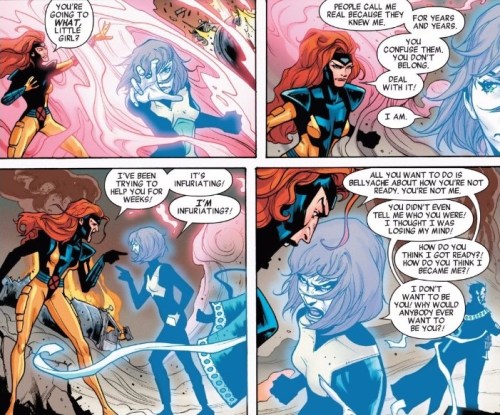
It’s a lot for anyone to live up to. Being a teenage girl, though, Jean isn’t going to just accept that this is the person she becomes. She knows that person still ends up dying. She knows that person still succumbs to the demons she can’t control, namely the Phoenix Force.
Jean3

It gets even harsher, though. As with every teenager, Jean Grey’s perspective is very limited. She hasn’t experienced enough of the world to understand what actually shapes someone into a functioning adult.

She, like many other teen heroes, have this idealized version of who they want to be and what life is like. It’s tragic, but inevitable that such idealism will eventually be shattered. That’s just the nature of life, in general. Ideals are for a perfect world and nobody, not even superheroes, live in a perfect world.

This is where the message becomes bigger than Jean Grey. It’s a message that can resonate with all teenagers. Her older self basically lays it out for her in a way so simple that even a teenage mind can process it. The life she thinks is doomed to tragedy and pain isn’t just a matter of rotten luck and crushing disappointment. It’s just life.
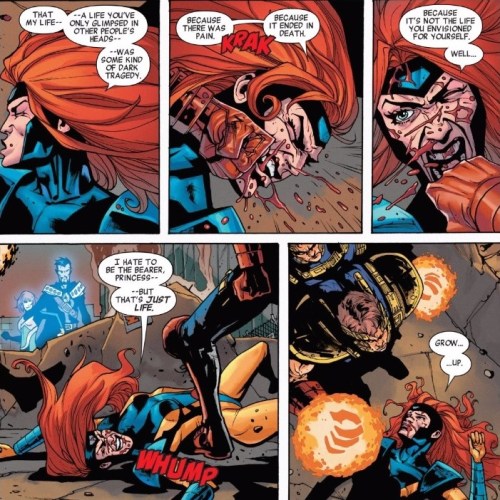
Jean5

It’s one of those messages that can apply to much more than superheroes and mutant powers. It can apply almost every teenager to some extent at some point in their lives. They’re just starting to learn what the world is like without the rose-colored glasses of childhood. They’re just starting to feel things that are strange, powerful, and make their pants feel tighter than they want. It’s not a tragedy. It’s just life.

It’s a lesson almost every teenager learns the hard way, regardless of whether or not they have mutant powers. I certainly did. I challenge anyone reading this comic, my novels, or this blog to say otherwise. The transition between childhood and adulthood is hard and it has to be hard because it’s such a harsh world.

On top of that, we have to enter that world with all these powerful feelings and emotions that kids just can’t process. This is where the Phoenix Force, the utter bane of Jean Grey’s life and many deaths, enters the picture.

In a sense, this cosmic space bird is a manifestation of the greatest extremes that we experience. In the comics, it’s a force that pushes Jean Grey’s powers over the edge and beyond. In life, it’s basically every overwhelming experience we’ve ever had, amplified to infinity.

When you’re a teenager, you’re full of all sorts of overwhelming feelings. As an adult, they’re still overwhelming, but you gain a sense of perspective. From our ability to love to our desire to make love, it’s a powerful force that shapes how we live and how we die. Being immature teenagers, and even immature adults, we often try to suppress it. Not only does that fail, but it can make everything worse.

Jean Grey, being a teenager, can’t wrap her head around those extremes, be they the Phoenix Force or just being a functional adult. Again, the visions of her older self basically have to belabor it, to the point of frustration.

In her vision, she starts to gain a better perspective of what these feelings are. She comes to see the Phoenix Force as more than just that big cosmic fire bird that ends up killing her twice. It’s not just a force for death. It’s also a force for life. Being a teenager, she can’t help but focus on the death. In doing so, she only ever obsesses over one extreme.

That’s understandable for a teenager who hasn’t lived enough of a life to make sense of it. It’s also the exact mentality that gets her killed. It’s why people who obsess over death tend to live in a state of near-constant distress. It affects them and those around them. By only focusing on one extreme, they basically doom themselves.

Jean Grey is in that exact position. She’s focused entirely on the end, but not on everything else around it. Teenagers, with their limited experiences, are like that and through no fault of their own. That’s why they’ll make such poor decisions, both in their adult lives and in their personal lives.
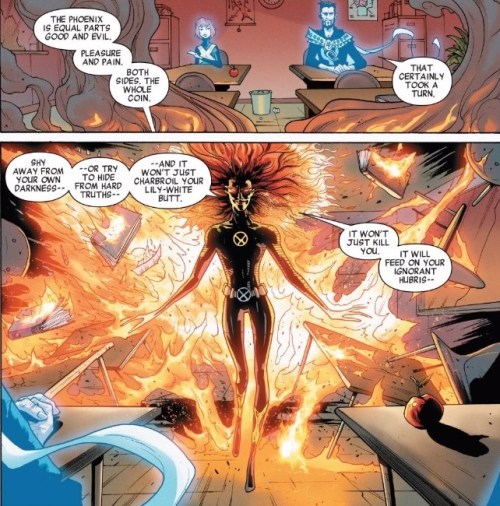
Jean2

This is where Jean Grey has her most defining moment of the comic, if not the past five years of X-men comics. Despite the benefit of foresight afforded to her by time travel and psychic abilities, she still refuses to confront the extremes of the Phoenix Force. She refuses to accept the person she becomes.

Finally, after all the belaboring and mystical-induced spirit quests, she does it. She finally takes a step back from the doom and gloom of her impending death. She finally looks at the bigger picture. She admits that who she is now and who she’s afraid of becoming are the same person. Those feelings that overwhelm her that she’s been trying to suppress are there and they’re not going away.

As an X-men fan and a fan of personal insight, it was one of the most satisfying moments I’ve reading an X-men comic that didn’t involve Emma Frost’s costume. It was one of those moments that felt much bigger than the character. It’s a powerful message that people without mutant powers can appreciate.
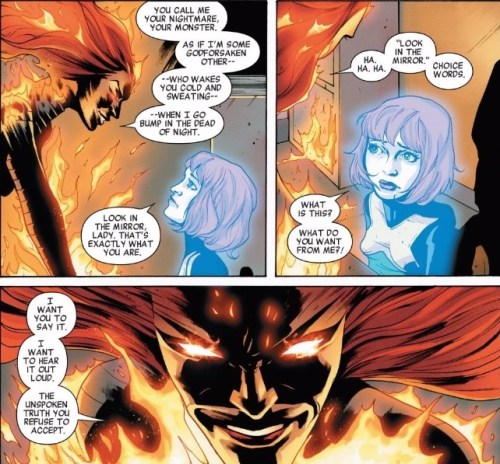
Jean1

Jean Grey’s struggles are very much akin to the struggles everyone faces when they have overwhelming experiences of any kind. Those experience don’t always have to have a sexual or personal connotation, but those are the ones that tend to stick out.

They’re also the experiences that teenagers, and even many adults, are likely to suppress. They’ll see certain experiences and desires as this powerful, dark force that will consume and destroy them, much like the Phoenix Force. However, it doesn’t have to be that way.

Just acknowledging that those feelings exist is an important step, especially for a teenager. There are people out there right now in societies and cultures that pressure them to repress desires that cannot be repressed. Like Jean and the Phoenix Force, those feelings eventually find us in the long run. If we refuse to confront them, then they can destroy us.

It’s a powerful lesson, especially for young people still making sense of their experiences. They may not have Jean Grey’s psychic abilities or the insight provided by time travel, but their future still seems every bit as daunting. It only becomes less daunting when you step back and realize that the overwhelming feelings we dread are just part of life, in general. We can’t always suppress them. Sometimes, we just have to embrace them.
12 Comments

Filed under Comic Books, Jack Fisher, Superheroes, Jack Fisher's Insights, Marriage and Relationships

How To NOT Screw Up X-men: Dark Phoenix

If you’ve been following this blog in any capacity, then you know I love comic books and superheroes. I try to work them into many topics, from effective superhero tactics to sexy female heroes who are uniquely sex positive. Assume, for the future, that if there’s sexy topic that can be related to comics, then I’ll find a way to discuss it.

In addition, those who follow this blog also know that I have a special affinity for the X-men. I tend to cite them more than most, whether it’s discussing a romance among equals, the future of female villains, or candidates for UN Ambassadorship. Again, I’ll use any possible excuse in any sexy topic to cite them again. I’m both a passionate erotica/romance writer and a passionate fan. I make no apologies for that.

So when some major news regarding superhero movies, particularly X-men movies, comes up, I’m going to discuss it. I may even belabor it. I know that may not be the reason some people visit the blog of an aspiring erotica/romance writer, but superhero movies, especially those involving the X-men, are important to me.

Keep in mind, the X-men also have characters like Emma Frost so that means there’s plenty of opportunities for sex appeal. This news, in particular, has its share of sexy and romantic connotations so it is relevant for erotica/romance fans. If you need proof, I have just two words for you: Sophie Turner.

I’ll give “Game of Thrones” fans a second to stop smiling. I’ll give X-men fans another because some of them, myself included, are still buzzing at her limited, but spectacular performance in “X-men: Apocalypse.” Other than Ryan Reynolds, the man who brought Deadpool to life, Ms. Turner may very well hold the key to the future of the X-men movies.

Whereas we only got one X-men movie this year with “Logan,” 2018 will bring us two. While “Deadpool 2” is sure to generate plenty of interest and dick jokes, it’s “X-men: Dark Phoenix” that will likely determine the fate and future of the X-men movies. Other than Sophie Turner’s sex appeal, there’s a lot of uncertainty about that effort.

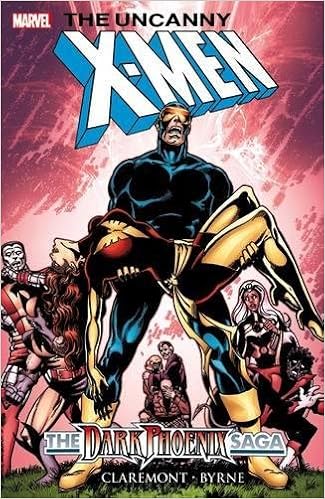
That’s because “X-men: Dark Phoenix” isn’t just attempting something bold. The Phoenix Saga it’s based on is, by far, the most iconic and acclaimed X-men story of all time. Talk to any X-men fan in any capacity and most of them will agree. The Phoenix Saga is the gold-encrusted adamantium standard by which all X-men stories are measured. It also happens to be the story that Fox woefully botched once before.

It’s true and it still gives X-men fans nightmares to this day. Back in 2006, Fox attempted to tell the story of the Phoenix in “X-men: The Last Stand.” The end results were so poorly received that they ended up erasing it completely from the timeline in 2014’s “X-men: Days of Future Past.” Yes, it really was that bad.

I could do multiple blog posts on why the movie was so terrible. In fact, I already did one that covered the nauseatingly awful love triangle involving Cyclops, Jean Grey, and Wolverine. However, that was just one in a long list of unforgivable crimes that “X-men: The Last Stand” committed.

Chief among those crimes, for X-men fans, was how it handled the Phoenix sub-plot. The mere fact that it was a sub-plot was a huge problem. As I said before, the Phoenix Saga is the most iconic, respected, and beloved X-men story of all time. To treat it as a goddamn sub-plot, while wasting the acting talent and sex appeal of Famke Janssen, is both tragic and infuriating.

Beyond just relegating it to a sub-plot, “X-men: The Last Stand” basically looked over all the major themes of the Phoenix Saga and basically threw them out like expired milk. The Phoenix Saga is a story built around love, humanity, untamed power, and sacrifice. “X-men: The Last Stand” had none of that. It only used the Phoenix as a way to make Wolverine get all whiny about a woman he barely knew. That’s it.

The handling of the Phoenix was so bad that longtime X-men producer, Simon Kinberg, admitted earlier this year that they screwed up. Think about that for a moment. A big-time Hollywood producer, someone with unlimited access to blowjobs and cocaine, admitted a mistake. He didn’t make an excuse, as so many people in power tend to do. He owned his mistake. For that, Mr. Kinberg earns my respect.

I also believe that Mr. Kinberg does not want to go down in history as the man who botched the most beloved X-men story of all time. That kind of reputation can permanently destroy his credibility among a vocal audience. Just ask Joel Shumacher how nasty it can get.

Moreover, Mr. Kinberg already has the resources he needs to make a Phoenix Saga work. He laid the groundwork with “X-men: Apocalypse” by having Sophie Turner shine more in one scene than Famke Jannsen ever could through three movies. He also has an immensely-talented actress in Ms. Turner to bring out the passion and drama that is so vital to the Phoenix Saga.

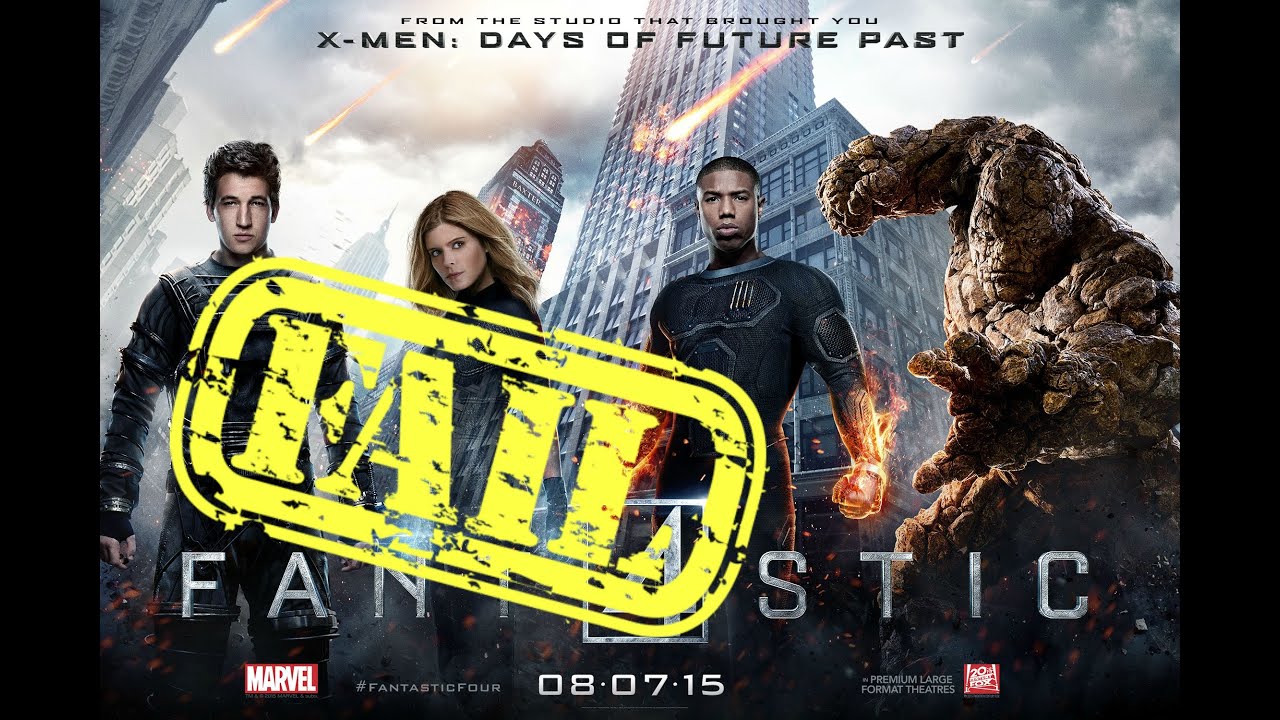
In other words, Mr. Kinberg and the powers that be at Fox have no excuses this time. They didn’t have any last time with “X-men: The Last Stand,” but the stakes were lower then. The market for superhero movies is going to be very crowded in 2018. Having already screwed up the Fantastic Four, they need to show they can learn from their mistakes.

Being the passionate comic book fan and X-men fan that I am, I want to help in whatever way I can. Given that I’m an aspiring erotica/romance writer with precisely zero influence on anything outside this blog, that’s not saying much. I don’t expect anyone from Fox to ever read this blog or know about me. The most I can do is just put the information out there so I can say I did what I could.

With that in mind, I’m not going to offer a wish list on what must occur in a “X-men: Dark Phoenix “movie. If you base the value of a movie or comic book on something specific, you’re just setting yourself up for disappointment.

Instead, it’s better to lay out what to avoid, thereby allowing some creative flexibility along the way. No matter how passionate a fan you are, it’s important to be somewhat flexible. Otherwise, you’ll just find yourself among fans whining about how Finn Jones is too white play Iron Fist.

So for X-men fans, comic fans, and superhero fans in general, here’s my list of tips on how to avoid botching the Phoenix Saga again. I write this hoping that the people at Fox understand that X-men fans are a forgiving bunch, but messing up the most iconic story in X-men history twice would be pushing it.


Tip #1: Embrace AND Unleash The Passion

This should be the most obvious, but it somehow slipped everyone’s mind in “X-men: The Last Stand” so it’s worth putting at the top of the list and belaboring to no end. At the core of the Phoenix Saga, which is also its greatest appeal, is the passion behind the story.

It is, in essence, a story about overwhelming power guided by overwhelming passions. Within the story, Jean Grey is possessed by a cosmic entity known as the Phoenix Force, which pushes her psychic powers to the limit, beyond, and into the depths of space. That’s not an exaggeration either. She actually goes into space with this power.

Now doing that in a movie would be tricky, but Jean doesn’t have to go into space to realize the theme here. She just has to get a chance to emote and lament about the sheer breadth of this power. Her passions are what drive it. They create the huge, emotional spectacle that helped make the Phoenix Saga so iconic.

Famke Jannsen never got a chance to do much in “X-men: The Last Stand.” In fact, all she really did was stand around, look deadpanned, and that’s about it. She never even flashed any Phoenix-like symbolism, which is pretty pathetic since Fox managed to squeeze it in with “X-men: Apocalypse.” A Phoenix Saga with flat emotions is like sandwich without bread. You just can’t have one without the other.


Tip #2: Make Any Sacrifice Feel Genuine

This is somewhat unique to the Phoenix Saga mythos in general. In addition to overwhelming passion and immense power, sacrifice is at the core of what makes a the Phoenix Saga so iconic among X-men fans. In the end, Jean Grey makes a heroic sacrifice for her friends, the world, and the man she loves. It’s one of the most emotional, dramatic moments in the history of comics.

Again, “X-men: The Last Stand” found a way to completely screw this up. In fact, saying they screwed up would be too polite because they didn’t just undermine this critical moment in X-men lore. They did the exact opposite.

Jean Grey does not make any sacrifice in “X-men: The Last Stand.” What she does is basically an act of pure cowardice. She doesn’t heroically sacrifice herself to save the ones she loves. She makes someone else kill her, specifically Wolverine. She doesn’t beg him. She makes him. There’s nothing heroic about that. Hell, that’s a dick move, even by Wolverine standards.

For any Phoenix Saga to work, there needs to be some sort of sacrifice along the way. That sacrifice also has to be genuine, dramatic, and heartfelt. That’s what makes it so endearing. Nobody ever felt any kind of endearment to a coward. Since the X-men are superheroes and all, there’s no room for that kind of cowardice.


Tip #3: Embrace And Expand The Cyclops/Jean Romance

I’ve talked about this romance on multiple occasions and for good reason. It is, by far, the most important, iconic romance in the history of X-men. The romance of Cyclops and Jean Grey goes all the way back to the earliest days of the X-men, as created by Stan Lee and Jack Kirby. It’s a romance that has resulted marriage, death, resurrection, and multiple children. You won’t find many romances with this kind of depth.

Unfortunately, nobody who saw the original X-men movies ever would’ve suspected as such. Those movies gave the impression that the romance only existed to cock-block Wolverine and Jean Grey only existed to be a piece of ass for him to achieve. The love triangle is toxic enough in the comics, but the movies took it to a level so egregious that both the X-men fan and erotica/romance fan in me wants to vomit violently.

There’s no real depth between Wolverine and Jean Grey, especially in the movies. There is, however, a powerful and important dynamic between Cyclops and Jean Grey. Theirs is a uniquely balanced romance, one where they both stand together in ways that isn’t typical of superhero movies or romance movies in general. They’re both heroes. They share in one another’s struggles and burdens.

Most importantly, though, they complement each other. They inspire one another to be better. That’s what we saw, at least in a limited capacity, in “X-men: Apocalypse.” That movie didn’t just thrust them together and proclaim that they’re star-crossed lovers. They actually laid a foundation for a deeper connection. By the end of that movie, it was easy to see a romance between them blossoming.

In the comics, the Cyclops/Jean romance was central to the Phoenix Saga. Their romance was a catalyst for so much of the drama that to remove it is to remove a critical element of what makes the story work.

X-men: The Last Stand” tried to work around it by thrusting Wolverine into the role of Jean’s love interest. That failed miserably though because again, there was never a single goddamn reason for anyone to believe that there was any meaningful chemistry with them.

It was the history and extent of Cyclops and Jean Grey’s romance that made the Phoenix Saga so meaningful in the comics. At one point in the story, they even talked about getting married. A deep, passionate romance is what helped make the Phoenix Saga so impactful on so many levels.

That kind of romance can’t be forced. “X-men: The Last Stand” tried and failed miserably. A Dark Phoenix movie cannot make that same mistake again. The foundation is already there thanks to “X-men: Apocalypse.” The Dark Phoenix movie just has to crank up the passion. Sophie Turner’s sex appeal will do the rest.


Tip #4: Make The Phoenix The Primary Plot

After what I said earlier about how “X-men: The Last Stand” treated the Phoenix Saga, this should be a no-brainer. Then again, the sheer stupidity of circumventing the Cyclops/Jean Grey relationship in the first three movies should’ve been a no-brainer too so I’m not going to assume too much here.

The Phoenix Saga is too dramatic, too iconic, and too emotional a story to relegate to a sub-plot. “X-men: The Last Stand” tried and failed so miserably that no one could really blame Jean Grey for wanting to die in the end. Fox and Mr. Kinberg cannot let that happen again. The X-men, Jean Grey, and the Phoenix Saga deserve better.

From the moment the opening credits begin to the moment the generic 90s grunge music plays at the end, Jean Grey and the Phoenix Force should be the central focus. There can certainly be plenty of sub-plots, as there always are in every superhero movie. However, the Phoenix Saga must take priority. If it doesn’t tie into that story in a meaningful way, then it should be tabled for another movie.

The Phoenix Saga is a big enough story to carry the whole movie. In the comics, it unfolded over the course of several years, diverting into plenty of sub-plots along the way. A movie doesn’t have that kind of flexibility, but it still has plenty of time to set up and execute the drama that makes the Phoenix Saga so endearing.

Movies are plenty capable of creating that level of drama. Movies like “Titanic” and “Terminator 2” are able to do it all within a cohesive narrative. More than anything else, the Phoenix Saga should feel complete by the end of the movie. Other sub-plots can linger for sequels, but the Phoenix Saga must get first dibs.


Tip #5: Introduce New Villains And Tie Them Into The Phoenix Story

This might actually be the easiest part of making X-men: Dark Phoenix awesome. Chances are that’s already part of the plan and not just because there’s no hint that Michael Fassbender wants to return to play Magneto again. Now I love Fassbender as much as the next straight X-men fan, but his role as Magneto has been done to death, going all the way back to the first X-men movie.

The X-men have a long and rich library of villains. Very few of those villains have had a chance to grow within the movies. Some, like Mojo, are woefully impractical. Others, such as a devious figure named Mr. Sinister, are ripe for development. Even Walter White himself, Bryan Cranston, has expressed an interest in playing Sinister. That alone should tell you everything you need to know about his potential.

On top of that, Mr. Sinister has close ties to Cyclops and Jean Grey. It really wouldn’t take much to involve him in the Phoenix Saga. While he did not participate in it directly in the comics, he did go onto influence a great deal of stories that expanded the Phoenix mythos in X-men. Putting him in the center of the conflict in a Dark Phoenix movie makes too much sense.

There are other lesser villains like the U-men and the Purifiers that could find their way into the mix. So there should be no concerns about not having enough villains. The key is tying these villains into the main Dark Phoenix story. If done well, especially with the aid of Bryan Cranston’s acting prowess, then the movie has everything it needs to succeed.


There’s a lot more to consider in making an X-men: Dark Phoenix movie. I’m just a passionate fan so I’m hardly qualified to evaluate every one of them. If I were, Fox probably would’ve hired me and underpaid me by now to make this movie work. Since they haven’t, I can only hope there are much smarter, much more passionate people working tirelessly to make this movie great.

As a fan, I want to see this movie succeed. I want to see Fox and Mr. Kinberg make up for their mistakes in “X-men: The Last Stand.” It would be both an accomplishment and a service for which fans would be forever grateful. Grateful fans are more willing to give money to those who please them. That is, after all, Fox’s ultimate goal.

The incentives are in place. The story is there. The iconic characters are there. The passion is there. The love, heart, and emotions are there. It’s only a matter of bringing them together into a single, cohesive story that will thrill audiences, evoke tears of joy, and soak panties.

It can be done. I pray to whatever cosmic forces are out there that Fox can pull this off. As an X-men fan, a comic book fan, and a fan of iconic love stories, X-men: Dark Phoenix deserves to be that awesome.

20 Comments

Filed under Comic Books, Jack Fisher, Superheroes