Tag Archives: Artificial Intelligence

The Metaverse: What It Is, Why It Matters, And Why You Should Be Concerned About FaceBook’s Plans For It

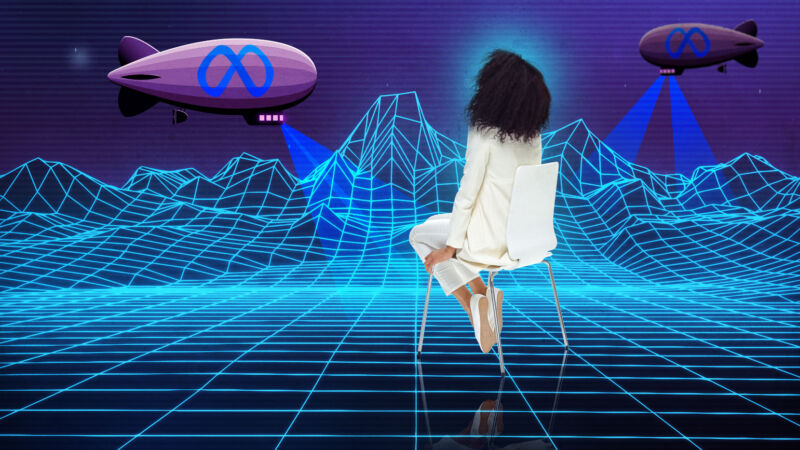
So what is “the metaverse,” exactly? | Ars Technica

There was a time, not too long ago, when if you said words like “email,” “texting,” “hashtag,” and “internet” to most people, they wouldn’t know what you’re talking about. I am old enough to remember when the internet was only a fringe interest, known only to computer nerds and tech gurus.

Yes, that makes me feel older than I wish it did, but that helps illustrate my point.

Now, you’d be hard pressed to find someone who didn’t know what the internet was or what a hashtag entailed. These have all become parts of our lives, for better and for worse. Checking our email and texting our friends is just part of everyday life now. Most don’t even give it a second thought.

It should give us all pause in the sense that we don’t always know when some new technology or trend becomes that integral with our lives. We usually don’t realize it until many years after we’ve embraced it to such an extent that life before it seems strange by comparison.

At this very moment, we may be at such a state with an emerging technology called the metaverse. You’ve probably heard of it, if only in passing. The recent news surrounding FaceBook’s pending name change is at the heart of it, but who can honestly say they know what it is or why it matter?

I certainly won’t claim to be an expert on the metaverse. I am not the most qualified to explain it to most ordinary people. However, as someone who does follow this kind of tech news closer than most, I think it’s worth discussing. I also feel like the concept of the “metaverse” is in a similar position that we saw with the early internet.

In terms of basics, the metaverse is basically a more ambitious form of virtual reality. It’s not quite on the level of “The Matrix,” but it’s a lot more varied than a standard model of the Oculus Rift. It’s not just for playing games or creating elaborate avatars for ourselves. This is supposed to be something more personal.

According to an article in NPR, the metaverse is described as this.

Think of it as the internet brought to life, or at least rendered in 3D. Zuckerberg has described it as a “virtual environment” you can go inside of — instead of just looking at on a screen. Essentially, it’s a world of endless, interconnected virtual communities where people can meet, work and play, using virtual reality headsets, augmented reality glasses, smartphone apps or other devices.

It also will incorporate other aspects of online life such as shopping and social media, according to Victoria Petrock, an analyst who follows emerging technologies.

That may not seem too revolutionary at the moment. Then again, you probably could’ve said the same thing about email and texting back in 1994. It’s so new and poorly understood that most people don’t see the appeal or the potential, but I personally believe the metaverse represents an evolution of the internet, as we know it.

I also believe we should be very concerned that FaceBook, of all companies, is trying to be at the forefront of it all. To say that FaceBook has a credibility problem would be like saying a sewage plant has an odor problem.

In many respects, I don’t blame FaceBook for investing in the metaverse. Like every tech company, they’re looking to the future. They’re seeking the next big thing that they can develop, dominate, and monetize to the utmost. It doesn’t matter that they’re already a billion-dollar company. There are many more billions to be made in the metaverse, if not trillions.

If anything, the potential of that market intensified in wake of the COVID-19 pandemic. During this crisis, we all learned just how critical it is to stay connected to the internet. It wasn’t just a form of entertainment anymore. It became vital to continue working and going to school. Many even realized just how much they could get done from home with nothing except a computer and an internet connection.

With the metaverse, we could potentially do even more. One of the big limitations that the pandemic also revealed is the inherent limitations of a screen. While applications like Zoom and FaceTime allowed us to interact, it was still so impersonal. It didn’t have the same impact of being in someone’s physical presence.

The same limitations go beyond work and school. Even though we do a lot of shopping online these days, there are times when we can’t do everything we would usually do in a store. I can personally attest that buying a good pair of shoes or a dress shirt online can be a gamble. Even when you think you got the right size, it doesn’t always fit when you get it.

The metaverse could help change that. It could help us explore the internet in ways that go beyond a typical screen. It could help us create Zoom meetings that feel more like gatherings around a conference table. It could make shopping feel more like browsing a physical space, complete with more personalized selections.

It could even make for more engaging entertainment. Instead of just staring at a screen and watching a game play out, we could actually feel like we’re present and play a larger part of what happens.

Yes, that will likely include porn.

Yes, that will likely cause discomfort, distress, and all sorts of other issues that will get certain prudish crowds fired up.

No, that won’t stop the metaverse from evolving.

In the beginning, it probably won’t feel like that much an upgrade over how we interact with the internet at the moment. Chances are it’ll probably start off looking like something akin to “Second Life,” a game where people create and interact in their own virtual world. It’s a big idea, but it still looks like a game.

That will change as the interface and computing power improve. At some point, it’ll get to a point where going into the metaverse won’t feel at all like a game. The imagery and graphics could ultimately get so life-like that it’ll be hard to distinguish from the real thing. Going to a store in the metaverse could appear no different than going to a mall, at least from your brain’s perspective.

It won’t just stop at appearing lifelike, either. Add in more advanced interfaces, like the ones being developed by Neuralink, and there may come a time when going to the metaverse will feel like going into “The Matrix.” Within that virtual space, what we could ultimately do would only be limited by our computing power and network connection.

The possibilities are tantalizing.

However, keep in mind that much of these possibilities will be developed, packaged, and sold by FaceBook. This is already a company we know engages in shady business dealings, to say the least. We also know they’re not exactly careful with our private information. The idea of them being in control of this new virtual world should be concerning to everyone.

Thankfully, they’re not the only ones seeking to develop the metaverse. Other major tech companies are already making investments in creating this new virtual space. Will that be enough to ensure FaceBook and Mark Zuckerberg aren’t the undisputed overlords of the virtual world? I don’t know, but I hope there’s some semblance of balance in that world. As much as I’d like to explore that world, I’d be quite hesitant if doing so meant entrusting the integrity of the metaverse to a company like FaceBook.

Leave a comment

Filed under Artificial Intelligence, Current Events, Neuralink, technology

My (Non-Expert) Proposal For Automation And Greater Human Prosperity

62% say robots can be more productive than human workers —V1 study

I’m not an expert on much. I don’t consider myself exceptionally smart on matters that don’t involve superhero comics, NFL football stats, and quality romance stories. I make that disclaimer because I don’t want to give the impression that I know more than I know.

That kind of perspective is important, especially if you’re going to talk about complicated issues with not-so-clear solutions. I’ve attempted to talk about some of those issues on this site, some being much more complicated than others. I don’t claim to have shed new light on a subject or changed a few minds, but I like to think I still contributed something.

To that end, I’d like to make another contribution to a subject I’ve also touched on before. In the past, I’ve highlighted both emerging and potential issues associated with the development of artificial intelligence, including the sexy kind. I’ve also highlighted the issues we may face in a future where so much traditional work has been automated.

Now, in wake of a global pandemic that revealed just how much we can get done at home, I suspect that trend will accelerate. I also expect that trend to bring many problems, not the least of which involve people struggling to find the kind of good-paying blue collar jobs that have helped people rise out of poverty.

Turning back the clock or just trying to ban automation at a certain point is not a viable solution. There’s just no way to enforce that in the long term and it’ll only get more difficult once artificial intelligence gets to a point where it can match the capabilities of an ordinary human. At some point, we’ll have to adapt and that includes changing how we live, work, and play.

The living and playing part have their own set of unique challenges, but I think the work aspect is more pressing. When most people express concerns about automation and AI, they revolve largely around the economic impact and understandably so.

Historically, people have had to work in order to earn money or resources to survive. Whether you’re on a farm in the 10th century or in a city in the 20th, this dynamic has remained fairly constant.

Automation, especially once supplemented by artificial intelligence, will likely upend that dynamic completely. It’s entirely possible that, at some point this century, we’ll develop machines that can do practically all the work humans have had to do in order to survive.

That work includes, but isn’t limited to, farming our food, mining raw materials, producing our goods, maintaining our streets, protecting our homes, and even governing our society. Since machines never tire and are prone to fewer errors, what other jobs will there be? I don’t doubt there will be jobs, but what form will they take? More importantly, will they pay enough to large swaths of people?

I don’t claim to know the answer, but I suspect they won’t. The dynamics of labor markets just can’t function when the machines are capable of doing so much more work than large swaths of people. Even if those people don’t work, they’re still going to need money and resources. How will they go about getting it?

Answering this question has often led to discussions about a universal basic income, which has actually become a more viable policy position in recent years. I’ve even touched on it a bit as well and while I think it’s a great idea, I think there’s also room for some supplementary policies.

For that reason, I’d like to submit one of those policies that could be implemented with or without universal basic income. I call it the Individual Automation Matching Dividend, or IMAD short. This policy would work like this.

  • All adult citizens within the borders of the country will have a piece of identifying information, such as a social security number, voter ID number, or driver’s license number, turned into a special digital token.
  • That token will be ascribed to a machine/robot/android that is currently active and conducting work that had been done by humans at some point in the past, be it manual labor, service roles, or something of that sort.
  • The productivity and wages of work done by these machines will be indexed to a minimum annual salary of approximately $78,000 in 2021, which will be adjusted for inflation on a yearly basis.
  • Any work done by these machines that exceed the value of that salary will be diverted to a national welfare fund to provide extra support for those who were sick, disabled, or otherwise in need of resources beyond that of a healthy adult.
  • No citizen will be ascribed more machines than any other and any machine ascribed to them that is lost, damaged, or obsolete will be replaced in kind by the state.

I apologize if some of what I just described is confusing. I tried to write this out like a lawyer or someone proposing a new policy to a future government. For those who don’t care for legalize, here’s IMAD in a nutshell.

Once you become an adult, you get your own perfect worker robot. That robot may take many forms, but for the sake of simplicity, let’s just say it’s an android in the mold of those we saw in the “I, Robot” movie. They can work without rest, do everything a healthy adult can do, and have roughly equal to greater intelligence.

You’re given this robot by the government to basically act as your work avatar. So, instead of you going out to work every day to earn a living, this robot does it for you. The work that robot does will be compensated, but the money will go to you. Basically, you get paid for the work your android does. It’s more a dividend than a wage.

Remember, since the robot doesn’t age or get tired, it can work 24/7/365. In principle, you won’t even have to meet it. It just works all day and all night on whatever job requires labor, be it construction, assembly, shipping, farming, cooking, etc. You just get all the money, up to about $78,000 a year.

Now, why did I choose $78,000? I didn’t pick that out of thin air. That’s a figure ripped straight from a real-world case study from a company that started paying all employees a minimum of $70,000 a year back in 2015. The idea was that previous studies had shown that when people make more money beyond a certain point, their happiness doesn’t increase. This company just took that idea and ran with it.

The results, by and large, were overwhelmingly positive. With that kind of money, people could create more comfortable lives. They could buy homes, start families, plan for retirement, and make investments. It makes sense. When people have this kind of money to work with, they have the resources they need to create prosperous lives.

The idea behind IMAD is to mirror that by leveraging the added productivity afforded by automation. It’s not some large blanket package of money like a universal basic income. It starts with an individual, acknowledges the work that they have historically provided for a society, and supplements that with technology.

I’m not saying it’s a perfect proposal. I’m not even saying it’s smart. For one, it assumes that one human-like android is enough and that we can control the artificial intelligence necessary for them to operate on a large scale. That’s still an ongoing issue. I’m sure there are plenty more problems I haven’t thought of, but that’s exactly why I’m sharing it.

Surviving a future with intelligent machines is going to be challenging enough. However, we can’t just stop at survival. We want to prosper. We want to live, love, and build better futures for ourselves and our loved ones. Technology like automation and AI can help us get there, but only if we use it wisely. It’s a big if, but one that’s worth working towards.

Leave a comment

Filed under Artificial Intelligence, futurism, technology

Survey On Artificial Intelligence: Approximately 42 percent Of People Would Have Sex With A Robot (And Why That Number Will Increase)

Sex with robots: Zuckerberg will make you do it |

Every now and then, science decides to study something that most people would deem unnecessary because it seems so intuitively obvious. There are multiples studies about how overeating can lead to weight gain. Most people know that. Some are living proof of it. There’s no need for exhaustive studies to confirm it.

However, we study it anyways because the details can be revealing. It can also reveal some subtleties and trends that are worth noting. They’re useful for business, researchers, policy makers, and anyone who’s simply curious about human nature.

I bring this up because recently, a company named Tidio, which specializes in chatbots, conducted a survey about peoples’ attitudes on artificial intelligence. It’s not the most scientifically rigorous survey, but that’s to be expected.

Artificial intelligence is a relatively recent trend and one that’s sure to become more relevant in the coming decades. Most people only have a cursory understanding of it and their perceptions are largely shaped by popular culture, going back to the days of “The Terminator.” Regardless of that limited understanding, people do have certain attitudes towards AI and that’s worth studying.

If you’re interested, here’s a link to the Tidio survey. I encourage everyone to check it out. It coves everything from how artificial intelligence could affect future jobs to whether people are comfortable letting an AI robot conduct surgery on them.

However, the one part of the survey I want to highlight is the one on sex robots. Given how often I’ve talked about them, as well as the sexy short stories I’ve written, that shouldn’t surprise anyone. I’ll also quote it here because, while it probably won’t surprise anyone either, I think I hints at a larger trend.

About 42% of our survey respondents would have sexual intercourse with a robot. Yet, only 39% believe they could have a romantic relationship with an AI. There is also a large discrepancy between men and women. Men are more open to both the idea of sleeping with a robot (48%) and falling in love with an AI (43% of male respondents).

I highlighted that bold part because I think that’s a critical number to keep in mind. Even if you’re not great with math or statistics, 42 percent is not a trivial figure. If you extrapolate that to the global population, that’s well over 3 billion people. That’s a lot of people.

Now, it’s worth reiterating that this survey was limited to only 1,225 participants and it’s hardly representative of the entire world. Those limits aside, it does at least hint that there’s a sizable part of the population who are open to having sex with a robot. What form it may take likely depends on the person, but the idea is already there.

I think that’s revealing because, even if people only know sex robots and artificial intelligence through popular culture, there’s still an appeal. Even though many sex robots in fiction end up being evil, that doesn’t dissuade some people from wanting to try it.

On top of that, a truly functional sex robot doesn’t really exist right now. There are a few working prototypes in existence, but nobody is going to mistake them for real people anytime soon. We’re still years away from sex robots that are as realistic as the ones we see in shows like “Westworld.”

Even so, the fact that 42 percent of people in this survey are already open to the idea demonstrates that there is a waiting market for sex robots. There’s also a sizable part of the population who is growing increasingly comfortable with artificial intelligence being part of their intimate lives.

Given how younger generations view technology, I suspect that 42 percent figure will only grow in the coming years. If anything, I think that number is low. I suspect that if this survey was done with a larger sample size, more people of varying genders would express a willingness to interact with AI, as well as use a sex robot.

I also suspect that, in the coming years, our overall comfort with the idea of sex robots will increase. There may still be a period in which they’re taboo. There’s also the whole uncanny valley issue that will likely impact how sex robots are designed, refined, and marketed. In the long run, though, I think attitudes towards sex robots will continue to evolve.

The fact they’re already at a point where 42 percent of people are willing to try one shows they’re already in the public consciousness. There is a kinky curiosity, of sorts, about what this technology has to offer. Make no mistake, the effects that will have on the future of sex, society, and technology are sure to be profound.

What do you think of this survey?

Do you agree with it?

Do you think it’s overstating or understating peoples’ willingness to embrace sex robots? Let me know in the comments. In the meantime, I’ll be contemplating how this could affect future sexy stories.

Leave a comment

Filed under sex in society, sex robots

Self-Driving Cars Are Already Saving Drunk Drivers: The Promise And The Implications

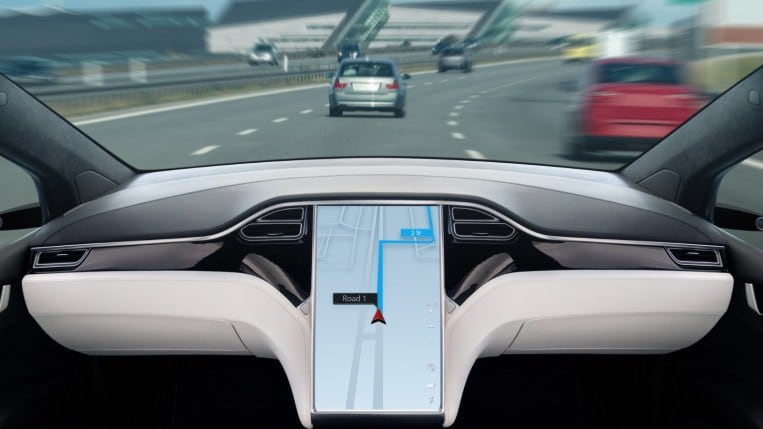
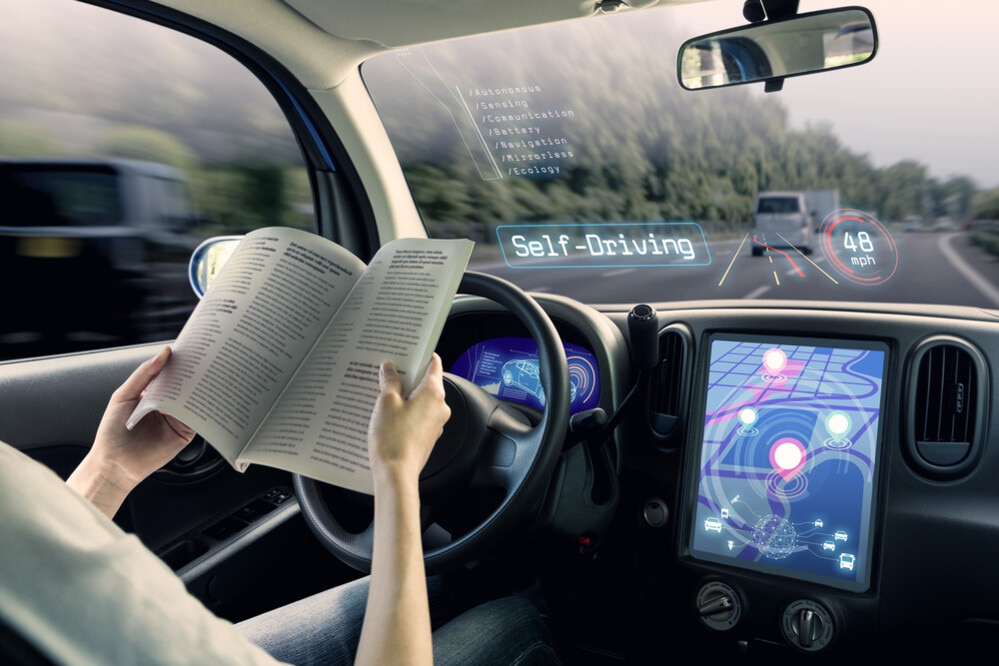
Self-Driving Cars: Everything You Need to Know | Kelley Blue Book

According to the Centers for Disease Control, 10,497 people died in traffic accidents caused by drunk driving in 2016 alone. That accounted for 28 percent of all traffic-related deaths in the United States. A non-insignificant chunk of those deaths were children. Even if you’re not good at math, you know that is not a trivial figure.

There’s also a good chance you know someone who has been hurt or worse because of a drunk driver. This sort of thing is personal for me because one of my cousins was killed by a drunk driver many years ago. He wasn’t even drinking. He was just unlucky enough to be in the back seat of the car at the time.

It’s an issue that has existed for as long as cars. It’s also an issue that policy makers and car manufacturers have tried to address through awareness programs and safety features. However, these measures can only do so much. So long as human beings are drinking and driving cars, this will be an issue.

That dynamic will likely change considerably when self-driving cars enter the picture. To some extent, they’re already making an impact. You can buy a car today that has some measure of self-driving features. They’re still not fully autonomous, but we’ve taken the first critical steps. From here on it, it’s just a matter of refinement.

Even though it might be years before self-driving cars are common, they’re already making an impact and it’s not just in terms of sheer novelty. Very recently, a Tesla Model S, which has an autopilot feature, did something cars of old could never do.

It saved a drunk driver who passed out behind the wheel, which likely saved or prevented serious injuries to others around him. Here are the details, according to the site, Telsarati.

Teslarati: Tesla Autopilot prevents drunk driver from making a fatal mistake

As explained by the Eastern Police District on its official Twitter account, a 24-year-old Tesla owner ended up passing out while driving his Model S. Fortunately for the driver, the vehicle’s Autopilot system was activated, which allowed the Model S to stay in its lane without causing trouble to other drivers.

Upon detecting that its driver was unresponsive, the vehicle eventually came to a stop and engaged its hazards. The man was later attended to by emergency services. No one was injured in the incident.

The police noted that the Tesla driver, who was found unconscious in the Model S, was evidently drunk, though he denied that he was driving. Video evidence showing the Tesla owner passed out in the driver’s seat have been shared online, however. The police stated that necessary tests have been taken, and that the Tesla owner’s driver’s license has been temporarily suspended. A case has also been filed against the driver.

Such an incident could have easily been a lot worse. It is very easy for drunk drivers to harm themselves, after all, but what’s even worse is that they could very easily harm other people just as easily. These scenarios would likely not be as prevalent if vehicles are capable of safely stopping on their own once their human drivers are incapacitated.

The bolded text represents the most relevant details. Without these features, this incident could’ve played out like so many other drunk driving tragedies. A drunk driver passing out behind the wheel would’ve, at the very least, led to the car going off-road and crashing, thus resulting in significant injury. At worst, the driver could’ve hit another car, thus compounding the tragedy.

However, thanks to these emerging systems, that didn’t happen. The safeguards in the car worked. The only real harm done involve a hangover and a DUI. Compared to the alternative, that’s far more preferable.

We should not understate the importance of this development. Think back to that 10,497 figure from 2016. Thanks to the autopilot system in that Tesla, the figure for 2021 will be at least one less. It doesn’t eliminate the tragedy of drunk driving all at once, but it’s a start and an important one, at that.

Driving is inherently dangerous, but a lot of that danger comes from the people behind the wheel and not the machines themselves. Anything operated by a human is prone to human error. An autonomous system, even if it isn’t a full-fledged artificial intelligence, can and will mitigate those errors.

That’s not to say those same autopilot systems aren’t prone to error. They certainly are, but remember that this technology is still very new. The first cell phones couldn’t send an email or reliably play streaming video. That took time, energy, and better hardware.

At this very moment, car companies and tech companies are putting in all that work. There is a lot of potential profit in refining this technology. However, I would point out that you can’t put a price on human life and, as it stands, thousands will continue to die every year because of traffic accidents, especially drunk driving. This one incident might not seem like much in the grand scheme of things, but it’s still one tragedy averted, one accident prevented, and at least one life saved. For anyone who knows the pain of losing a loved one to drunk driving, that’s worth celebrating.

Leave a comment

Filed under Artificial Intelligence, futurism, robots, technology, Uplifting Stories

Would You Shop At A Store Run Entirely By Robots?

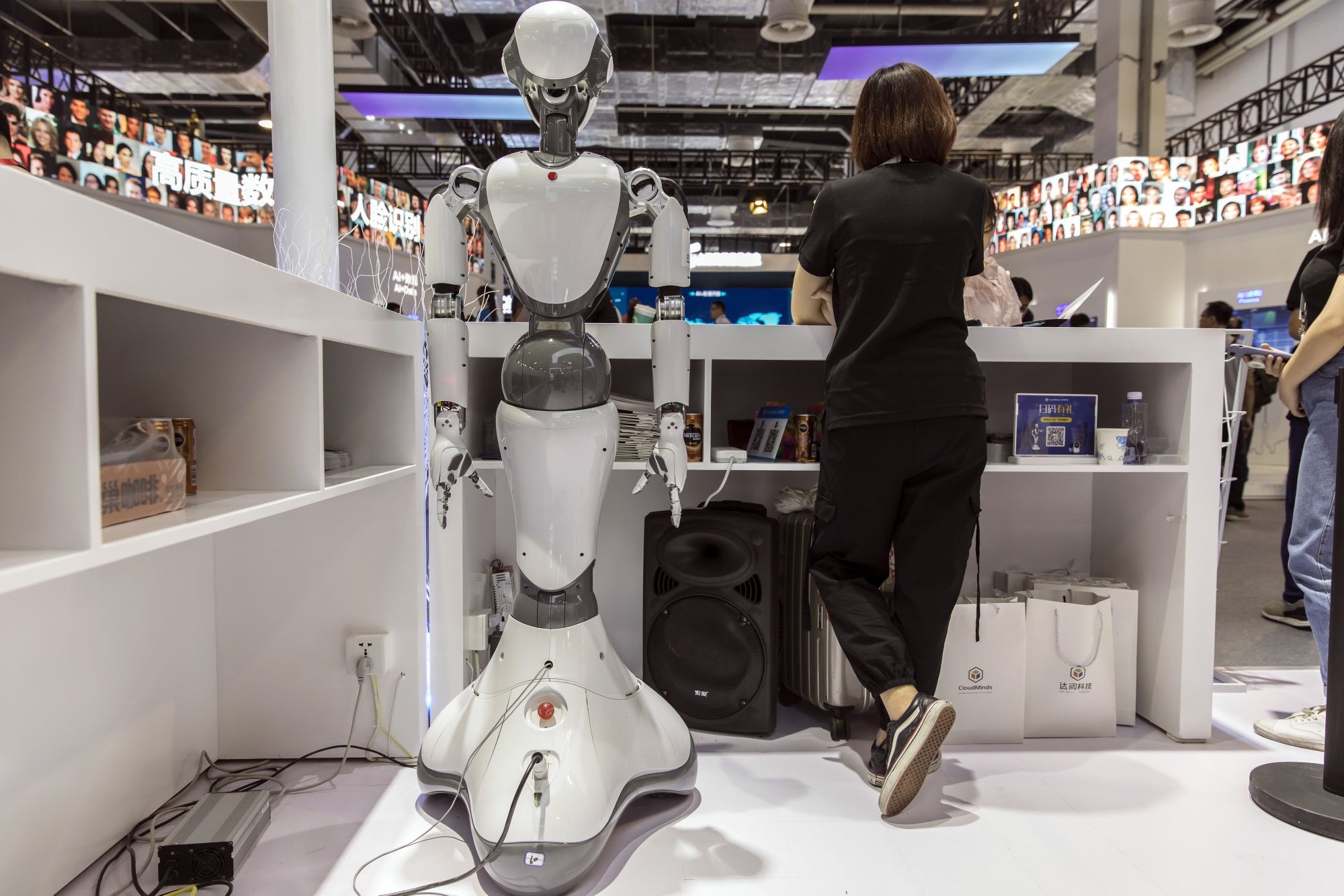
Will Smart Machines Kill Jobs or Create Better Ones? - The Washington Post

Recall the last time you went to the store. It doesn’t matter if it was your corner grocery store or some big box department store. All that matters is you went there to do some basic shopping, as we all end up having to do at some point. With that in mind, try and remember how many store clerks you saw.

Maybe some were working at cash registers.

Maybe some were stocking shelves.

Maybe some were sweeping floors or cleaning up messes.

The chances are you saw at least several. I remember seeing at least three the last time I went to a grocery store. That’s fairly typical. I know I used to see more before the days of self check-out lines, but I always saw people working at these stores, diligently doing the things necessary to keep it running.

For most of us, that’s a mundane sight. For every store we go to, we expect there to be human beings working there to keep it going. It’s part of the infrastructure that keeps these stores stocked. On top of that, seeing other human beings contributing gives us a sense of comfort in that this place is being run by real people with real faces.

Now, try and imagine a store that has no people working at it. You walk in the door and you never see another human being carrying out the various operations we expect of a functioning store. All that is now done by machines and robots. They’re the ones who stock the shelves, handle your money, and clean the messes.

Does that change the experience?

Does that make you more or less inclined to shop at that store?

These are relevant questions because, as I’ve noted before, robots and artificial intelligence are advancing rapidly. Automation is an ongoing trend that promises to have major economic ramifications. Some of those ramifications are already here. It’s one of the reason coal mining jobs will never be as prevalent as they once were.

Other ramifications haven’t arrived yet, but they will eventually come. The technology is there. The incentives are there. It’s just a matter of investing, refinement, and scale. Eventually, it will reach retail work, a sector that employs nearly 10 million people. That will have a major economic impact for large swaths of people.

Unlike other forms of automation, though, it’ll be a lot more visible.

Most of us never set foot in a factory where cars are made, much of which is done by robots. Most will never set foot in an Amazon or Walmart warehouse, which already use robots at a significant scale. The impact of just how much work is done by robots these days is not visible to most ordinary people.

That will not be the case with stores and retail work. Like I said, we all have to get out and shop every now and then. Even though online retail has become more prevalent, people still go to traditional brick and mortar stores. Even as online retail improves, that’s not likely to change.

However, how much will that experience change once robots start doing the jobs that humans have done for centuries?

How will that change the experience?

Will you, as a consumer, shop at a store that had no humans working there most of the time?

If you think this isn’t that far off, think again. Below is a video from an AI channel on YouTube that shows a robot using a bar code scanner for the first time. The process is a bit cumbersome, but the robot is able to handle it. It is able to receive instructions. Given the nature of how robots improve and refine their programming, it’s not unreasonable to assume that future robots will be able to carry out retail tasks more efficiently than any human worker.

It may not happen all at once. You probably won’t just walk into a store one day and notice that everyone was replaced by a robot. Like self check-out, it’ll likely happen gradually. Once it gets to a certain point, though, it’ll become mainstream very quickly. The incentives are just too strong.

You don’t need to be an economist to see those incentives. Robots don’t need to be paid. They don’t slack off on the job. They don’t get sick or tired. In theory, they could keep a store open 24/7 without ever paying overtime. For big box retailers like Walmart, the potential profits are just too large to ignore.

It won’t stop at stores, either. Restaurants will likely undergo a similar process. There are already working robots that can cook meals from scratch. Once they get refined and scaled, then it’s also likely you’ll one day eat at a restaurant entirely run by robots.

Would you be willing to eat at such a place?

Your answer will probably be similar to the one I asked earlier about whether you’d shop at a store run entirely by robots. Personally, I don’t think I’m ready to shop at a place that had no humans working in it, if only because robots sometimes break down. However, within my lifetime, it may get to a point where stores and restaurants run by humans become the exception rather than the norm.

Are we ready for that future?

I don’t know, but it’ll come whether we’re ready for it or not.

1 Comment

Filed under futurism, robots, technology

It’s Official: I Am Ready For Self-Driving (And Self-Parking) Cars

There are a lot of emerging technologies that I genuinely hope I live long enough to see and I’m not just referring to sex robots. I’ve written about how certain technologies could open the door to a bold new world for humanity, as well as a few that could be the end of humanity as we know it.

Some of these advances are farther off than others.

Some are probably so advanced that I won’t live long enough to see them, but hopefully my kids will, if I’m able to have them.

One technology, however, is a lot closer than most realize. That technology is self-driving cars. I’ve talked about them before. It’s fair to say this is not some advanced speculative tech on par with warp drives and light sabres.

There are already working prototypes and advanced testing going on. While it’s far from becoming mainstream and there are real challenges we’ve yet to overcome, this technology is coming. It doesn’t break the rules of physics. It’s just a matter of time, investment, and refinement.

Well, after returning from my vacation this past week, I’m ready to make a larger statement about this technology. I try not to give too many personal opinions when I talk about this sort of thing, but I’m going to make an exception.

I’m very ready to embrace self-driving cars sooner rather than later.

I’m also very ready to embrace cars that can park themselves or just find a decent parking spot to begin with.

Why am I suddenly so eager to support this technology? The reason is simple. My travels this past week have reminded me just how much I dislike long drives on roads with little to know features. It also reminded me what a pain in the ass parking can be whenever I visit a major city like New York.

Just getting to my destination, navigating traffic jams and delays along the way, can be a test in frustration. It can also cause pain in my back from being so focused for extended periods. It can also drain me mentally, so much so that it’s hard to enjoy myself once I get to my destination.

I would absolutely love it if I could just get into a car, enter my destination, lay back, and sleep for most of the way. If I have to be awake, I’d love to use that as an opportunity to write some more sexy short stories or catch up on some shows. That would make me a lot more eager to travel and a lot more willing to go to more distant destinations.

At the same time, parking can be just as big a pain. This past week, I swear I spent a good half-hour just looking for parking and a good long while getting to it. It wasn’t cheap, either. That only compounds the pain.

It didn’t completely ruin my vacation, but it did temper it at times. I feel like everyone would enjoy a life with freer frustrations and self-driving cars can go a long way towards that. Say what you will about the technology or the companies behind it. When it eventually arrives, I’ll be the first to try it. If nothing else, I’ll be happy to just be able to enjoy the open road once again.

1 Comment

Filed under futurism, Jack Fisher's Insights, technology

Turning Thoughts Into Images: A New Era Of Art With Brain/Computer Interface

BCI Technology: How does a Brain-Computer Interface Work?

There are any number of skills you can learn, practice, and eventually master. I highly encourage everyone to do to this, whether it involves computer programming, cooking, crafts, or any other hobby. You may not always like or master them, but they’re still fun and rewarding to try.

For some skills, though, no amount of learning or practice will help you master them or even be competent. Some things just take talent. That’s why only a handful of human beings ever become Olympic athletes, professional quarterbacks, or brain surgeons. There’s nothing wrong with that. We need that kind of diverse skill set, as a species.

I consider myself to be good, if not above-average, at a number of skills. I’ve learned plenty over the years and there are some that I just have a knack for more than others. I like to think writing is one of them. However, there’s one particular skill that I just have absolutely zero talent for and it’s something that has bugged me for years.

That skill is drawing.

Please understand that this is somewhat personal for me. I’ve always had an artistic side, but for reasons I can’t quite grasp, I’ve never been able to draw worth a damn. I’ve taken art classes in school. I’ve tried practicing here and there. It just never works. I can barely draw stick figures, let alone an image of a typical person that doesn’t look like it was drawn by a five-year-old.

Some of that actually runs in my family. Quite a few relatives can attest that they can’t draw, either. At the same time, an unusually high number of relatives are good writers, poets, etc. We’re all great with words, for the most part. That’s a talent that seems to get passed down, but we just can’t turn those words into pictures.

For me, that’s kind of frustrating. I’ve always enjoyed telling stories. For a time, I wanted to be a comic book writer, but I learned quickly that’s next to impossible when you can’t draw. There are also times when I wish I could draw well enough to describe a scene from a story. I just don’t have that talent or that skill.

As much as I enjoy writing, I don’t deny that humans are visual creatures. If I could incorporate images into my work, then I believe it’ll have a much greater impact. Sadly, I doubt I’ll ever have the necessary talent and skill to create those images.

However, it certain technological trends continue, I might not have to. A recent article in Psychology Today gave me hope that one day, I’ll be able to take some of these images I see in my head and make them real for others to see. It also leads me to believe that art, as we know it, is about to change in a big way.

Psychology Today: New Brain-Computer Interface Transforms Thoughts to Images

Achieving the next level of brain-computer interface (BCI) advancement, researchers at the University of Helsinki used artificial intelligence (AI) to create a system that uses signals from the brain to generate novel images of what the user is thinking and published the results earlier this month in Scientific Reports.

“To the best of our knowledge, this is the first study to use neural activity to adapt a generative computer model and produce new information matching a human operator’s intention,” wrote the Finnish team of researchers.

The brain-computer interface industry holds the promise of innovating future neuroprosthetic medical and health care treatments. Examples of BCI companies led by pioneering entrepreneurs include Bryan Johnson’s Kernel and Elon Musk’s Neuralink.

Studies to date on brain-computer interfaces have demonstrated the ability to execute mostly limited, pre-established actions such as two-dimensional cursor movement on a computer screen or typing a specific letter of the alphabet. The typical solution uses a computer system to interpret brain-signals linked with stimuli to model mental states.

Seeking to create a more flexible, adaptable system, the researchers created an artificial system that can imagine and output what a person is visualizing based on brain signals. The researchers report that their neuroadaptive generative modeling approach is “a new paradigm that may strongly impact experimental psychology and cognitive neuroscience.”

Naturally, this technology is very new and nowhere near ready for commercial use. It’ll probably be a while before I could use it to create my own graphic novels of the books I’ve written and the sexy short stories I’ve told. That still won’t stop me from entertaining thoughts of incorporating images into my stories.

I doubt I’m the only one who feels that way, too. I know plenty of people like me who just do not have the talent or skill to draw anything more detailed than a stick figure. Those same people have images in their minds that they wish to share. If products like Neuralink, which the article directly references, become more mainstream, then this could be among its many uses.

With some refinement, it won’t just allow artistically challenged people like me to make competent drawings. It’ll allow people who never would’ve otherwise produced that art create something that they can share with the world.

Just take a moment to appreciate how many beautiful images exist only in the minds of people who never get an opportunity to share them. Maybe someone did have an idea for a piece of artwork that would’ve brought beauty, joy, and inspiration to the world, but they just didn’t have the skill, resources, or talent to make it tangible. How many masterpieces have we lost because of that limitation?

We can never know, but any loss of beautiful art is a tragic one. With a process like this, people who never even thought about having an artistic side could explore it. Moreover, they would be able to do it without messy art supplies, sketchbooks, or ink stains. They would just need a neural prosthesis and a computer.

Almost everyone has a computer, so we’re already halfway there. If ever a product came out that allowed us to develop this ability of turning thoughts into images, I would be among the first to try it. I would eagerly line up to take the plunge, if only to open the possibility that some of the images I see when I’m writing can become real one day. I hope I live long enough to see this. Our bodies and minds may ultimately fail us, but great art can last for multiple lifetimes.

Leave a comment

Filed under Artificial Intelligence, biotechnology, Neuralink, technology

An Artificial Intelligence That Can Debate: The Promise And The Perils

Even in an era as divided and chaotic as this, there’s still a place for reasonable debate on important issues.

Yes, I understand it’s hard to say that with a straight face these days.

Yes, I’ve been to comments sections, Reddit, and 4chan.

Yes, I know how ugly the discourse is right now, but that’s exactly why I’m bringing this up.

In general, people are curious. Even though they cling to cherished beliefs and refuse to change their minds when confronted with evidence, we’re still curious about things that are different. It’s not always honest, but it’s a powerful feeling. Even if you despise those on the other side of the debate, a part of you will still wonder why they hold the opinions they have.

That’s why debate is such a powerful tool. Humans are such a social species by nature. We’re hard-wired to interact, connect, and discuss things with one another, even when we don’t agree. It may frustrate us to no end, as anyone who has debated a creationist can attest. However, the fact we keep doing it is proof, in my opinion, that there’s still value in the process.

Regardless of how you feel about the merit and value of debating, the whole process might become more complicated in the near future. That’s because IBM, the same company behind Watson, the Jeopardy playing computer, just created an artificial intelligence that can debate at the same level as a skilled human debater.

Here’s an excerpt from a piece in TechXplore on this new system. It’s not as scary as some of the things we’ve seen from Boston Dynamics lately, but it’s still intriguing.

TechXplore: IBM’s AI debating system able to compete with expert human debaters

IBM has developed an artificial intelligence-based system designed to engage in debates with humans. In their paper published in the journal Nature, the team members describe their system and how well it performed when pitted against human opponents. Chris Reed with the University of Dundee has published a News & Views piece in the same journal issue outlining the history and development of AI technology based around the types of logic used in human arguments and the new system developed by IBM.

As Reed notes, debating is a skill humans have been honing for thousands of years. It is generally considered to be a type of discussion in which one or more people attempt to persuade others that their opinion on a topic is right. In this new effort, the team at IBM has created an AI system designed to debate with humans in a live setting. It listens to moderators and opponents and responds in a female voice.

Now, before you get too nervous, it’s worth noting that this AI is far from the kind of advanced artificial intelligence systems I’ve mentioned before. This is not the kind of AI that will become Skynet or Hal 9000, no more so than Watson or AlphaGo. This is a system is very much a narrow AI, as in it’s made to excel at a specific task.

We have AI’s that can beat world class chess players and Jeopardy champions. This AI just happens to excel at debate. However, that has implications that go beyond simply outclassing the best human debaters in the world at the moment. In fact, this is one form of AI that might not need human-level intelligence to incur a major impact.

Take a moment to think about how erratic and inconsistent most debates are. No matter how intelligent or informed you are, it tends to get messy fast. That’s why so many comments sections and Reddit threads devolve into shouting matches and personal attacks. The end result is people becoming more angry and unreasonable, which can have major real-world consequences.

However, what would happen if every debate on any issue included someone who was better than the best debater on the planet? Even if the two people on each side of the debate were dumb and inept, such a presence would have a major impact on the discourse.

That’s because winning a debate has little to do with how well someone knows a particular subject. It also has little to do with how forcefully and clearly someone explains a topic. Again, people who debate creationists know this all too well. Winning a debate doesn’t mean proving your expertise. It means proving the merit of your argument.

An AI that can do that may not convince someone that they’re wrong about something. However, losing a debate tends to have a lasting impact. Just ask any aspiring politician. It can also lead people to question their beliefs, even if they still cling to them. That, alone, can be powerful.

For proof, look no further than the story of Megan Phelps-Roper, a former member of the infamously hateful and dogmatic Westboro Baptist Church. She was as locked into her beliefs as anyone could possibly be. She was raised by religious zealots and indoctrinated into strict religious dogma from the time she was a child. She’s not someone whose mind is prone to change.

Then, she got into a discussion with someone on Twitter of all places. That person began a conversation. It started as a nasty debate, but it evolved into something that led her to question her beliefs. Ultimately, she left that hateful and bigoted environment. She’s now an activist against the same religiously motivated hate that she once fostered.

It’s a powerful story, but one that couldn’t have happened without a debate. To date, people have only been able to have those debates with other people. Not everyone is equally skilled. In fact, I would argue most people are woefully unskilled at debating anything and I include myself in that category. I am not good at it, either. I freely admit that.

Now, there’s an AI system that can theoretically win any debate the same way other systems can defeat any chess player. That does hold promise if it can be used to temper the heated rhetoric that has caused real-life hostilities. At the same time, there are reasons for concern.

What side would this system be on?

Moreover, who decides what position these AI systems take?

If no one decides, then how does the AI determine which side on a debate it takes?

These are relevant questions because if you have an AI that can win any debate, then the side it takes really matters. That can be used for good when countering dangerous disinformation, like those from the antivaxx crowd or hate groups like the Westboro Baptist Church. Like any tool, though, it can be weaponized for ill.

I can easily imagine political organizations getting a hold of these systems and trying to use them to benefit their agenda. I can also see some trying to use it to spam message boards, social media, and Reddit threads to derail certain movements or arguments. That’s a powerful tool and we can’t be certain that those using it will use it responsibly. That’s the dilemma with all technology. It can be used for good and for evil. With technology like artificial intelligence, the stakes are a lot higher, as are the perils. This technology may not be as dangerous as a more advanced AI, but it could be a precursor to just how disruptive this technology can be.

1 Comment

Filed under Artificial Intelligence, futurism, technology

Artificial Intelligence Is Struggling With Racism (And The Larger Implications)

There’s no doubt that artificial intelligence will fundamentally change the world. Its potential is so vast that some even say it will be mankind’s last invention. Once it gets to a certain point, it won’t just be better at everything humans do. It may very well supplant humanity as the dominant life form on this planet. There are no shortage of movies that depict how dire that could be.

That said, it’s bound to go through some growing pains. Not all of those pains will involve a Skynet-level malfunction, but they will warrant concern.

At the moment, our artificial intelligence is still limited. It’s not dumb, but it’s very limited. It can do certain tasks very well, like play chess or win Jeopardy. It can’t apply that intelligence at a broader macro level like a human.

That still makes them useful and they’re still advancing rapidly. Artificial intelligence programs are used frequently for tasks like moderating comments sections and tracking sales data. The problem with these programs is that, since the AI is not generally intelligent, humans have to fill in the gaps. Since humans are flawed and bias, those traits sometimes find their way into the AI.

That’s what happened recently with YouTube’s comment moderation algorithms. As an aspiring YouTuber, I know how imperfect those algorithms can be. The intentions are noble. These AI programs are supposed to curtail hate speech. The internet needs that right now. Anyone who has ever visited 4chan knows that.

However, sometimes the AI systems are so narrow that they don’t ese the forest from the trees. That’s what happened recently when those systems mistook discussions about chess for racist language. Tech Xplore did an article on it and while it’s somewhat humorous on the surface, it’s also quite revealing.

Tech Xplore: AI May Mistake Chess Discussions as Racist Talk

“The Queen’s Gambit,” the recent TV mini-series about a chess master, may have stirred increased interest in chess, but a word to the wise: social media talk about game-piece colors could lead to misunderstandings, at least for hate-speech detection software.

That’s what a pair of Carnegie Mellon University researchers suspect happened to Antonio Radic, or “agadmator,” a Croatian chess player who hosts a popular YouTube channel. Last June, his account was blocked for “harmful and dangerous” content.

YouTube never provided an explanation and reinstated the channel within 24 hours, said Ashiqur R. KhudaBukhsh a project scientist in CMU’s Language Technologies Institute (LTI). It’s nevertheless possible that “black vs. white” talk during Radi?’s interview with Grandmaster Hikaru Nakamura triggered software that automatically detects racist language, he suggested.

Now, should we be concerned? Is it worrying that an AI with the backing of Google couldn’t surmise that simple terms like “black vs. white” were referring to chess and not race relations?

The short answer is not really.

The longer answer is not really, but we should learn important lessons from this.

The AI systems that moderate YouTube comments are nowhere near the kinds of systems we’d see in an artificial general intelligence. It’s like comparing a steam engine to a modern rocket. That said, we had to learn how to make a damn good steam engine before we could learn to make a decent rocket.

With something like advanced artificial intelligence, the margin for error is very small. You could even argue there is no margin for error. That’s why so many worry that such an AI could be an existential threat to humanity. If its too flawed to understand the difference between chess and racist rhetoric, then we could be in serious trouble.

The problem, in this case, isn’t with the nature of the AI. It’s with us, its creators. Since we humans are so flawed, racism being one of our worst flaws, it’s understandable that this sort of thing would find its way into our programming. It already has in a number of fields.

Again, those types of systems are limited and narrow. There’s a lot of room for human flaws to enter the system.

With advanced AI, those flaws could end up being extremely damaging. If too many of them find their way into a more advanced AI, we wouldn’t end up with a helpful, usable system. We’d end up with something like Skynet or Ultron. At that point, we’d be in serious trouble and we wouldn’t be able to rely on John Conner or the Avengers to save us.

We still have time. This latest issue with YouTube’s algorithms is minor, in the grand scheme of things, and fairly easy to correct. Once we get around to creating more advanced systems, though, we need to be aware of these flaws. We need to remember that any advanced AI we create will reflect our best and worst qualities. Let’s make sure our best win out in the long run.

1 Comment

Filed under Artificial Intelligence, technology, YouTube

Our Future Robot Overlords Will Now Be Able To Dance (Thanks To Boston Dynamics)

As bad as last year was for so many people, there were some things that 2020 just couldn’t stop. When it comes to technology, a global crisis has a way of hindering certain processes while accelerating others. For many, that meant more telework and reliance on streaming media to stave off boredom.

However, it may very well end up being the case that 2020 proved just how frail human beings and their societies are. It only takes a tiny microscopic virus to send our entire society to a screeching halt. It’s sobering, but it’s probably going to be a source of humor for our future robot overlords.

I tend to be optimistic about the future and technological trends. I’m also somewhat of a pragmatist. I realize that we human beings have a lot of limits. Emerging technology, especially in the field of artificial intelligence, promises to help us transcend those limits.

Right now, it’s still mostly fodder for science fiction writers, futurists, and Elon Musk wannabes. We’re not quite there yet in terms of making a machine that’s as smart as a human. However, we’re probably going to get there faster than skeptics, naysayers, and the general public realize.

It won’t happen overnight. It probably won’t even happen in the span of a single year. When it does happen, though, hindsight will make it painfully obvious that the signs were there. This was bound to happen. We had ample time to prepare for it. Being fallible humans, we could only do so much.

In that sense, I suspect that years from now, we’ll look back on what Boston Dynamics did to close out 2020. This company, who has a history of making robots that look way too advanced to exist outside a Terminator movie, decided to do something with their robots that would leave an indellible mark on the year.

They succeeded by teaching their robots how to dance.

I know it already went viral, but it’s worth posting again. Remember this video and this moment. Chances are it’ll be a major indicator years from now that this is when robots began catching up to humanity in terms of capabilities. At this point, it’ sonly a matter of time before they exceed us.

When that time comes, will we be ready? Will we embrace them while they embrace us?

If they don’t, just know that they will now be able to dance on our graves.

4 Comments

Filed under Artificial Intelligence, Current Events, futurism, technology