Tag Archives: Pandemic

What I Plan To Do With My Stimulus Check (And Suggestions For Others)

For anyone on social security or disability, getting regular money from the government is not a novel concept. It’s part of the social contract in many western style democracies. You work for much of your life. You contribute to society and the economy. Then, at a certain age, we make an effort to return the favor.

It’s noble and reasonable system, despite what some libertarians would have you believe. I have close family members who use it. I’m happy to pay into that system to help them.

However, the global pandemic that unfolded last year did a lot to shake up the system. I’ve covered some of those shake-ups before, but I’d like to highlight one byproduct in particular. As it just so happens, it’s one of the less dour results of this horrible crisis.

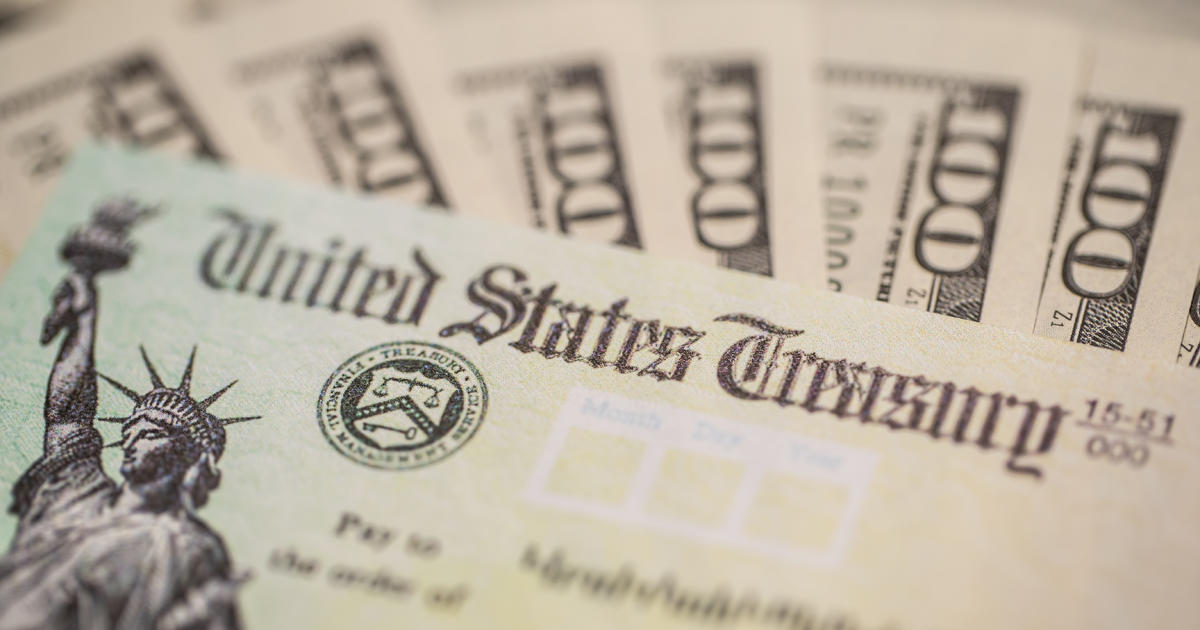
It has to do with money, specifically the money many people got in the form of stimulus checks last year. For many who aren’t retired or over 65, it was a big deal. The economic impact of the pandemic was nothing short of catastrophic. Even after nearly a year, many people still haven’t recovered. A few parts of the economy probably never will.

These stimulus checks weren’t meant to be a perfect solution. They were a band aid and some would argue they weren’t a good one. Personally, I disagree. I think it has opened people up to the idea that a government should take care of all its citizens, especially during a global crisis.

What a concept, right?

It is capable of sending everyone money. It’s just a matter of political will, which is always messy to say the least.

That will was enough to earn most of us two stimulus checks thus far. To date, I’ve received $1,800, with $1,200 coming from the first and $600 coming from the next. After the recent bill that made it through Congress, I received another $1,400.

Again, it’s a band aid. I doubt this will do much to fix the serious problems that many others are still dealing with, but it’s better than nothing. I certainly welcome this money. I even have an idea on how to spend it.

That’s noteworthy because, unlike the previous stimulus checks, I can actually spend this money on something non-essential. My first stimulus check went largely to paying down debts and a few overdue home repairs that I didn’t want to put off. The second went to some car repairs that I wanted to take care of before winter rolled in.

In hindsight, those were smart investments. The stimulus didn’t pay for all of it, but it did help ease the strain on my wallet.

This latest $1,400 promises to do more than just pay down my usual living expenses. As of now, assuming no unexpected costs come my way, I want to put this money towards something I know I’ll get plenty of use from.

To that end, I hope to put this money towards a new computer.

At the moment, I’m working on a computer that I bought back in 2015. Now, this computer has served me very well. I’ve made many videos and written many sexy short stories on it. However, for the past two years, it has shown its age.

It’s starting to slow down considerably. Just rebooting it takes way too long. It’s also struggling to handle the video editing software that I’ve come to rely on for my YouTube channel. If I want to keep making that kind of content, I need a better system that can handle better software.

It also doesn’t help that my previous PC wasn’t exactly top-of-the-line. It wasn’t cheap, either. I usually buy computer hardware that’s somewhere in the middle. This time, however, I want to buy something that’s a bit beyond that.

That doesn’t mean I’ll buy the most expensive system I can find. This stimulus money simply means I can buy more than usual. Hopefully, it’ll get me a system that’ll last a good long while. In addition, I hope it can handle some better video editing software, which I hope will show in future videos.

That’s my plan, for now. It’s always subject to change, a hard lesson we all had to learn in 2020. If you’re getting a stimulus check too, I hope you get to use it on something like this, as well. Maybe a new computer is a worthy investment. Maybe it’s something else.

Whatever it is, especially if you’re not retired, I hope it’s something useful. If you have other ideas on how to use this money, please share it in the comments. We’re almost through this mess. Some of us aren’t going to get a check like this from the government for years. I say let’s make the most of it.
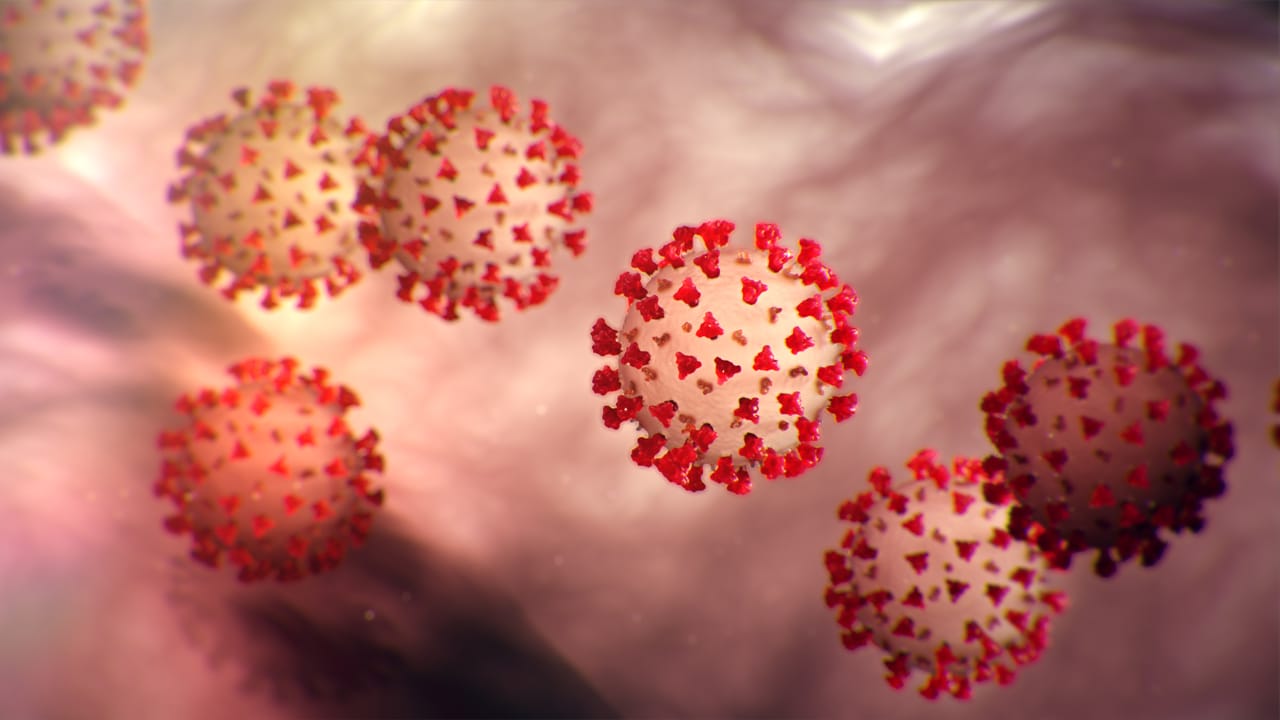
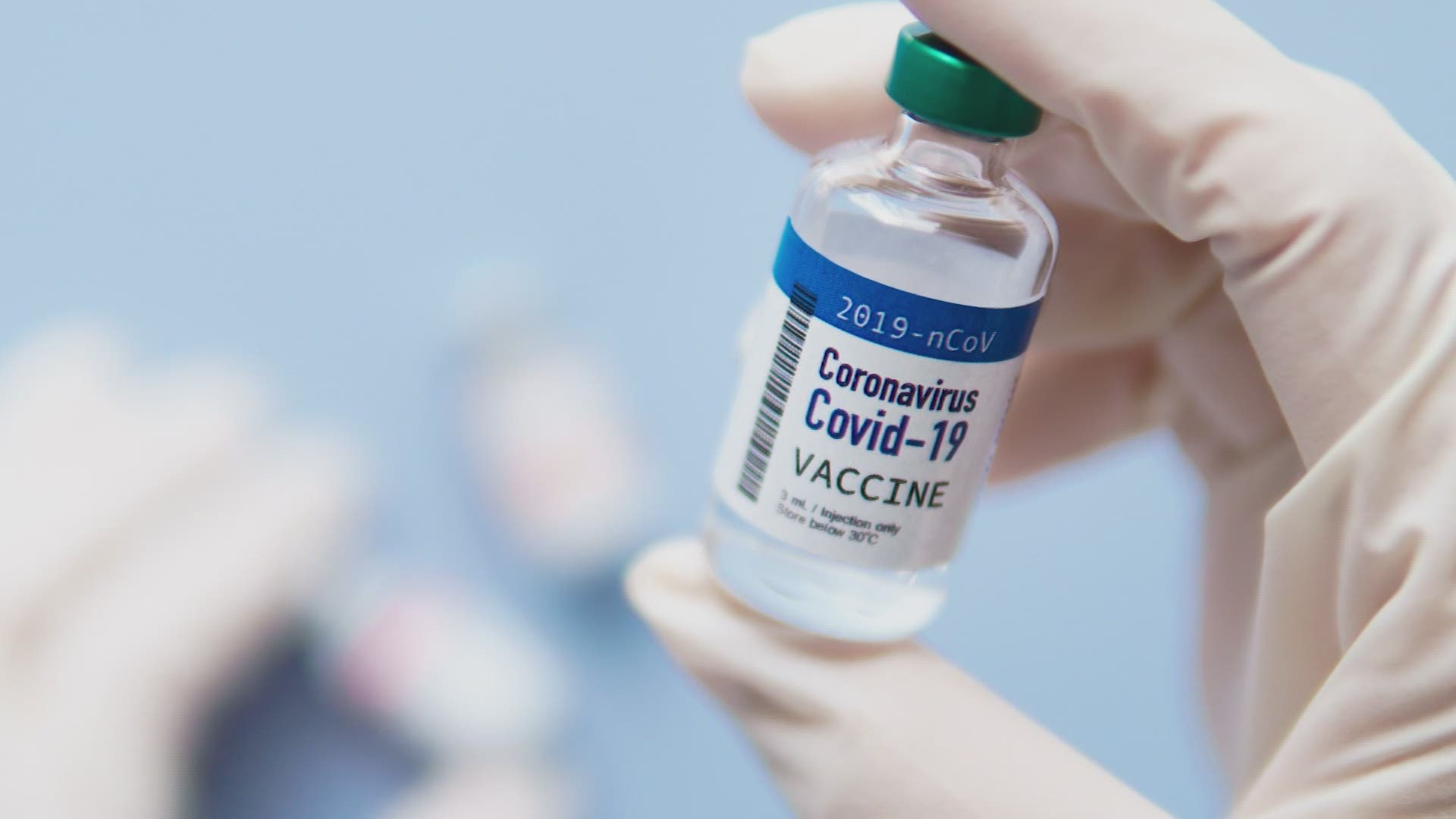
1 Comment

Filed under Jack Fisher's Insights, politics, real stories

One Year Ago: The NBA Cancelled A Game Moments Before Tip-Off (And The End Of Normal Began)

It’s amazing to think of where we were at this time last year. It feels so long ago. It might as well have been another century. The simple experience of going out, hanging out with friends, or attending a sporting event seemed so casual. Being in a crowded arena with cheering fans never felt unsafe. It was just loud and roucouse.

That all changed in March 2020. That’s when the world, as we knew it, started to fall apart as the COVID-19 pandemic took hold. I already recounted my own experience when I felt the impact like everyone else. I have a feeling everyone has their moment when they realized this was not going to just blow over easily.

However, if there was one moment in which everybody realized that this was serious, it was when major sports leagues started shutting down. Suddenly, this activity we turn to for an escape was no more. These were billion-dollar leagues who had plenty of incentive to keep playing, regardless of what the news said. The idea of any major league shutting down seemed unthinkable.

The unthinkable finally happened on March 11, 2020 when the Utah Jazz were scheduled to play the Oklahoma City Thunder in a major primetime match-up on ESPN. The arena was packed. People were cheering. Nobody was wearing masks or socially distancing. They were all just ready to escape the news and have a good time.

The game was still scheduled to play. The pre-game show happened without any indication that something was wrong. The players had warmed up and were ready to go. Then, there was a delay. A bunch of officials began discussing something. Nobody had any idea what it was about. Nobody would’ve suspected that the game, the NBA, and the entire sports world was about to shut down.

Looking back at that moment, it seems so ominous and eerie. It might have been the last glimpse of “normal” that we ever saw. Just watch the highlight posted by ESPN that same night. Watch as the world, as we knew it, changed before our eyes.

I’m not a huge basketball fan. I don’t follow the NBA as closely as I follow other sports, like baseball and football. However, seeing this gave me chills. It still does. Listening to these announcers talk about basketball, the season, and the importance of this game seems so surreal.

They have no idea what’s about to happen to the league and the world.

Nobody in that arena knew, from the players to the people serving drinks in the stands.

It really was unthinkable, a game being suspended this close to tip-off because of a pandemic. When it happened, it was the first domino to fall in the sports world. Everything after that just built on the nightmare that unfolded throughout 2020.

Even if you’re not a sports fan, you still understand on some levels how much they mean to people. The world may seem crazy, but we always had our sports and our movies to escape. We never thought things would get so bad that it would all just shut down. Then, it happened and even after an entire year, we having recovered.

That scene in this highlight of a packed arena with cheering fans and no masks seems almost unattainable now. I still believe we’ll see something like this again, hopefully later this year. Right now, though, it’s an eerie reminder of the day we all realized things were about to get much worse than we ever could’ve imagined.

1 Comment

Filed under Current Events, real stories, sports

The COVID-19 Pandemic: One Year Later

At this time last year, the world was a very different place. There’s a running joke that people now refer to this as “the before times,” but in retrospect, it’s no laughing matter. The world, as we knew it, before the COVID-19 pandemic might as well have been a different universe. Honestly, I look back at those times with mixed emotions now.

Back then, we could go to a crowded movie theater and not feel unsafe.

Back then, we could go to a restaurant without a mask and not feel at risk.

Back then, we could go to a concert or sporting event and enjoy being surrounded by thousands of cheering fans.

Back then, we could decide to travel on a whim, going wherever we pleased without concern about what was closed or cancelled.

I long for those times, as well. I miss them as much as everyone else. Even with all the encouraging news about vaccines and improved treatment, the world is a long way from returning to those fanciful times. Some wonder if we’ll ever go back. I hope we do, but I don’t want to dwell too much on that.

The reason I’m bringing this up is because, here in America, we’re nearing the one-year mark for one things really went south. The COVID-19 pandemic may have begun in late 2019, but the world didn’t really start feeling the effects until February 2020. That’s when the news started to get scary and dire. That’s also when things started shutting down, from major sports to major events.

However, it really didn’t sink in until March 2020. That’s when it became painfully clear. This was not going away quickly. This was not some storm that would pass. It was not going to go away after a few weeks, despite what some claimed. It was when the harsh reality sank in. The pandemic was here and our lives were never going to be the same.

I remember where I was at this time last year. I was having coffee with my mother on a Sunday morning. She too had been watching the news. We were both concerned, but didn’t know just how bad it was going to get. On that same day, I started getting notices from friends and family. The next day, the state made it official.

Everything was being locked down. Schools were closing. Movie theaters were closing. Everything that wasn’t essential was being locked down. People had to either start teleworking or lose their jobs completely. Nobody could travel outside their state. Some states even began stopping people with out-of-state plates from entering. It was that serious.

It happened so fast. In just a few days, the world as we knew it shut down. We didn’t know how long it would last. We didn’t know how bad it was going to get, but it got pretty damn bad.

To date, over 2.5 million people have died from this pandemic. Millions more have been sickened and left to suffer. Numbers like that are impossible to wrap your head around. This pandemic crossed borders, cultures, and classes of all kinds. It didn’t matter what you believed in or who you voted for. You were still vulnerable.

It’s hard to overstate how much this pandemic has changed our world in the past year, so I’m not going to try. I don’t doubt that it will have a major place in future history books. It will also be a traumatic moment in our collective memories.

Regardless of your age or background, you’ve felt the effects of this pandemic. This past year has seared itself in your memory for all the wrong reasons. We’re at a point where we can barely remember what the world was like before all this happened. It’s a painful reality, but one we cannot and should not ignore.

I’ll definitely remember this past year. No matter how long I live, I suspect I’ll feel the effects of this year until my dying days. I don’t claim to know what will happen in years to come or how much the world will change from here on out. I just know that, one year ago, the world as I knew it changed forever.

We all took it for granted. We can look back on it fondly, but let’s not dwell on it too much. We can’t change the past. We can only effect the present.

4 Comments

Filed under Current Events, health, Jack Fisher's Insights, real stories

Finding An Available COVID-19 Vaccine With A (Very) Useful Website

I’m not a doctor. I’m not the least bit qualified to give medical advice. Unless it involves superhero comics, football, or 90s sitcoms, I have little to no expertise in that field. I’m just a guy who writes sexy stories and makes YouTube videos.

With that disclaimer aside, I do feel comfortable giving one bit of advice. It’s simple and you’ve probably heard it from people who are much smarter than I’ll ever be.

Please, if you can, get the COVID-19 vaccine as soon as possible.

I know that’s easier said than done. Hopefully, with the recent approval of a third vaccine, it’ll be even easier in the coming weeks. Even with supplies being so limited, I encourage everyone to make the effort. To help, I’d like to share a very useful tool that I recently found, courtesy of NPR. It’s called Vaccine Finder.

Please, if you ever bookmark a website, make it this one. It may very well help end this horrible pandemic just a little bit sooner. If you need more information on it, here’s the same NPR story that I came across that explains what it is and how to use it.

NPR: CDC Launches Web Tool To Help Americans Find COVID-19 Vaccines

Now, the Centers for Disease Control and Prevention, in partnership with Boston Children’s Hospital and Castlight Health, is launching a new tool that allows Americans to search for COVID-19 vaccine providers with stock of vaccine where they live.

The tool, which builds on the existing VaccineFinder.org platform, will capture inventory data from vaccine providers around the country.

In most states, the initial launch is limited to certain providers — those getting the vaccine directly from the federal government. In Alaska, Indiana, Iowa and Tennessee, the tool shows all the vaccine providers, including hospitals, clinics and public health vaccination sites.

Residents of those four states can look up their cities or ZIP codes and find an interactive map of all the places administering COVID-19 vaccines and see which ones have vaccine doses in stock.

Again, I’m not expert, but this website will help you link to people who are. Check it daily. Make it part of your morning routine. Make your coffee and then use this site to try and locate a vaccine. Then, make the appointment and follow all the necessary steps. You’ll help yourself, your loved ones, and your entire community.

We’re almost through this horrific pandemic. We’ll get through it faster if we all make the effort. Hopefully, this website will help.

1 Comment

Filed under Current Events, health, Uplifting Stories

The First CRISPR Patients Are Living Better: Why That Matters After 2020

It’s been a while since I’ve talked about CRISPR, biotechnology, and the prospect of ordinary people enhancing their biology in ways straight out of a comic book. In my defense, this past year has created plenty of distractions. Some have been so bad that my usual optimism of the future has been seriously damaged.

While my spirit is wounded, I still have hope that science and technology will continue to progress. If anything, it’ll progress with more urgency after this year. A great many fields are bound to get more attention and investment after the damage done by a global pandemic.

We can’t agree on much, but we can at least agree on this. Pandemics are bad for business, bad for people, bad for politics, and just objectively awful for everyone all around, no matter what their station is in life.

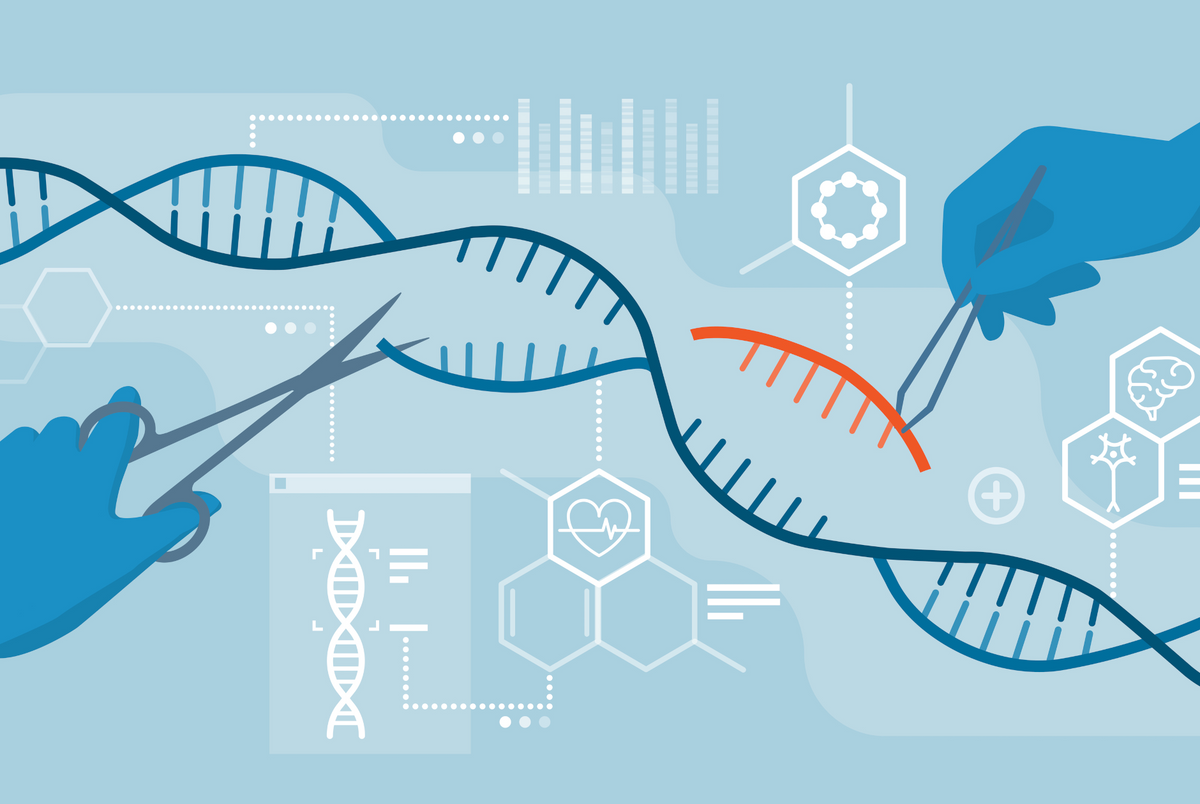
There’s a lot of incentive to ensure something like this never happens again is what I’m saying. While we’re still a long way from ending pandemics entirely, we already have tools that can help in that effort. One is CRISPR, a promising tool I’ve talked about in the past. While it wasn’t in a position to help us during this pandemic, research into refining it hasn’t stopped.

Despite all the awful health news of this past year, some new research has brought us some promising results on the CRISPR front. In terms of actually treading real people who have real conditions, those results are in and they give us reason to hope.

One such effort involved using CRISPR to help treat people with Sickle Cell Disease, a genetic condition that hinders the ability of red blood cells to carry oxygen. It affects over 4 million people worldwide and often leads to significant complications that can be fatal.

Since CRISPR is all about tweaking genetics, it’s a perfect mechanism with which to develop new therapies. Multiple patients have undergone experimental treatments that utilize this technology. In a report form NPR, the results are exceeding expectations for all the right reasons.

NPR: First Patients To Get CRISPR Gene-Editing Treatment Continue To Thrive

At a recent meeting of the American Society for Hematology, researchers reported the latest results from the first 10 patients treated via the technique in a research study, including Gray, two other sickle cell patients and seven patients with a related blood disorder, beta thalassemia. The patients now have been followed for between three and 18 months.

All the patients appear to have responded well. The only side effects have been from the intense chemotherapy they’ve had to undergo before getting the billions of edited cells infused into their bodies.

The New England Journal of Medicine published online this month the first peer-reviewed research paper from the study, focusing on Gray and the first beta thalassemia patient who was treated.

“I’m very excited to see these results,” says Jennifer Doudna of the University of California, Berkeley, who shared the Nobel Prize this year for her role in the development of CRISPR. “Patients appear to be cured of their disease, which is simply remarkable.”

Make no mistake. This is objectively good news and not just for people suffering from sickle cell disease.

Whenever new medical advances emerge, there’s often a wide gap between developing new treatments and actually implementing them in a way that makes them as commonplace as getting a prescription. The human body is complex. Every individual’s health is different. Taking a treatment from the lab to a patient is among the biggest challenge in medical research.

This news makes it official. CRISPR has made that leap. The possible treatments aren’t just possibilities anymore. There are real people walking this planet who have received this treatment and are benefiting because of it. Victoria Gray, as referenced in the article, is just one of them.

That’s another critical threshold in the development of new technology. When it goes beyond just managing a condition to helping people thrive, then it becomes more than just a breakthrough. It becomes an opportunity.

It sends a message to doctors, researchers, and biotech companies that this technology works. Some of those amazing possibilities that people like to envision aren’t just dreams anymore. They’re manifesting before our eyes. This is just one part of it. If it works for people with Sickle Cell Disease, what other conditions could it treat?

I doubt I’m the first to ask that question. As I write this, there are people far smarter and more qualified than me using CRISPR to develop a whole host of new treatments. After a year like 2020, everyone is more aware of their health. They’re also more aware of why science and medicine matter. It can do more than just save our lives. It can help us thrive.

We learned many hard lessons in 2020, especially when it comes to our health. Let’s not forget those lessons as we look to the future. This technology is just one of many that could help us prosper in ways not possible in previous years. We cheered those who developed the COVID-19 vaccine. Let’s start cheering those working on new treatments with CRISPR.

2 Comments

Filed under biotechnology, CRISPR, futurism, health, technology

Vaccine Update: Making Sense Of The (Critical) Data On The Johnson & Johnson Vaccine

Last year did a lot to crush my usually optimistic outlook on the future. I experienced a level of cynicism I haven’t felt since high school, a time when I only ever assumed things would get worse and rarely made an effort to change that. It was bad. Global pandemics have that effect on people.

I still made it a point to note when positive things actually happened, especially when it came to news of the vaccine. That marked the ultimate turning point. A vaccine was always going to be our best weapon in terms of ending the pandemic, regardless of what the anti-vaxx crowd says. The fact that we now have two vaccines at our disposal is genuinely encouraging.

Yes, I know the distribution of these vaccines has been a mess, to say the least.

I also don’t deny that the emergence of new mutant strains of the virus could hinder their effectiveness.

Those are legitimate concerns. We should all be worried about how this will impact our ability to finally end this awful pandemic that has caused so much damage. At the same time, we should also be hopeful. Believe me, I’m trying.

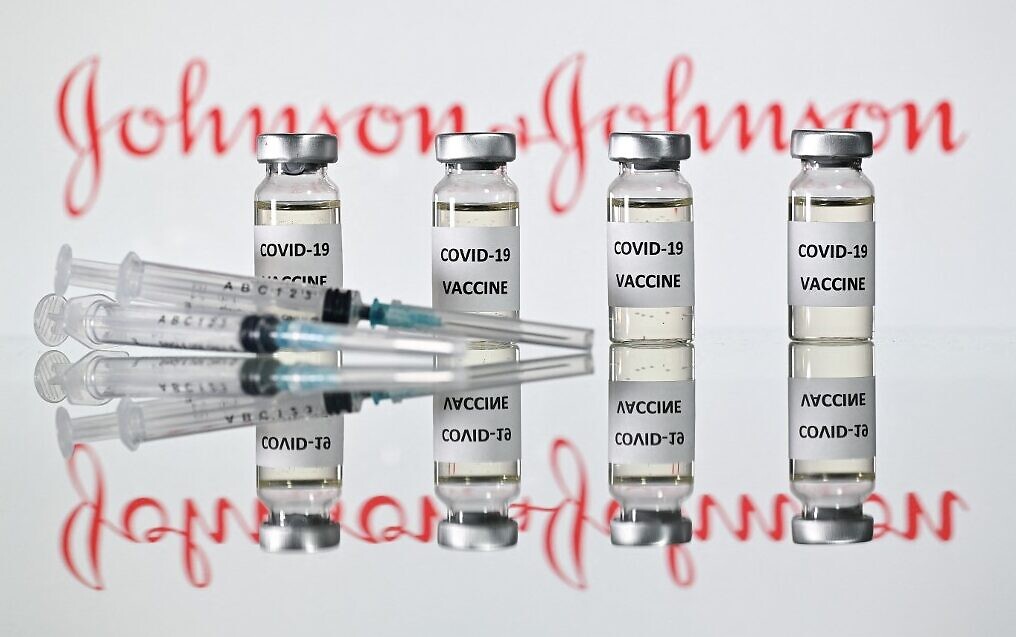
That hope got another boost recently when it was announced that a third vaccine developed by Johnson & Johnson had completed its final round of trials. Having a third weapon against this virus can only help. In addition, this one has the advantage of being a one-shot vaccine, as opposed to the two required by Moderna and Pfizer.

While that’s good news for those who hate needles, there is a trade-off. According to the research reported by the media, the vaccine is effective. However, the numbers aren’t quite as promising as what we got with the first two. This is what CNN reported.

CNN: Johnson & Johnson Covid-19 vaccine is 66% effective in global trial, but 85% effective against severe disease, company says

Johnson & Johnson’s Covid-19 single-shot vaccine was shown to be 66% effective in preventing moderate and severe disease in a global Phase 3 trial, but 85% effective against severe disease, the company announced Friday.

The vaccine was 72% effective against moderate and severe disease in the US, the company said.

It’s a striking difference from vaccines from Pfizer/BioNTech and Moderna, and it may give pause to people uncertain about which vaccine to get or when they can get one. The vaccines already on the market in the US are about 95% effective overall against symptomatic Covid-19, with perhaps even higher efficacy against severe cases.

But experts say the Johnson & Johnson vaccine will still be useful against the pandemic in the United States and around the world.

I know the numbers are the only thing that stands out in this piece. That seems to be the main sticking point for most reports about this virus.

Those numbers are still good. The 66% may not be as promising as the 90% promised by the other two, but that’s still more effective than a standard flu vaccine. On top of that, being a one-shot vaccine that can be easily stored in a typical refrigerator will help even more. It means more of this vaccine can get to people, especially in places with less-than-ideal health infrastructure.

This will definitely help in terms of ending or at least mitigating this pandemic. However, there’s one other critical point of data that’s worth highlighting with this vaccine. It’s in some of the reports, but it’s often difficult to discern, mostly because the media’s track record with reporting science is not that great.

For this vaccine, it’s boils down to certain degrees within the data. It’s true the Johnson & Johnson vaccine won’t give you the same protection you’d get from the other two. There’s a good chance that, even after getting this vaccine, you could still become very sick with COVID-19. However, and this is the key, it will help ensure that you don’t become severely ill and die.

That’s not just a sales pitch. According to the research, there were no hospitalizations or deaths among people in the vaccine arm. That may mean some did get sick. Some might have even spread it. However, they didn’t get so sick that they ended up in the hospital. They all survived.

To me, at least, that’s the most important result. Getting sick is one thing. Getting so sick that you die in a hospital bed is something else entirely. One is a bad flu. The other is debilitating illness. That alone makes this vaccine a critical tool in the effort to end this pandemic.

I admit that if I had a choice between the three, I would choose Moderna or Pfizer. I actually know someone who got the Pfizer vaccine and their experience gives me great assurance that it works as intended.

However, if those two were not available and all I could get was the Johnson & Johnson vaccine, I’d take it in a heartbeat. It could mean the difference between being sick and being deathly ill. In a pandemic, that’s the only difference that matters. To all the doctors, nurses, participants, and health care workers who were part of this effort, I sincerely thank you. A lot of lives will be saved because of this vaccine. That makes you true heroes in a world that badly needs them.

1 Comment

Filed under Current Events, health, technology

A Post-Pandemic Valentine’s Day Prediction (That I Hope Is Wrong)

I’m sick of this pandemic. I know that’s a poor choice of words, but there’s no better way to say it.

I hate this goddamn virus. It has done so much damage to this world, killing so many people and causing so much suffering. I want it gone as much as everyone else.

Thankfully, the end is in sight. We now have two effective vaccines with which to end this pandemic. A third one is likely be approved very soon. This, along with other treatments, will help get this monster virus under control. It may not happen as fast as we hope, but it will happen.

I eagerly await the day when I can go to a movie theater, hang out at a bar, and not panic every time I forget my mask when I leave my house. Like many others, I find myself watching the trendline of the virus every day. I watched with the same dread as everyone when it went up towards the end of 2020. That was genuinely distressing.

Now, it’s trending downward. As more and more people get the vaccine, that trend is likely to continue and accelerate. Again, it won’t happen as fast as we want, but the data is encouraging. I sincerely hope that the worst of this pandemic is behind us.

That being said, I do have a prediction/suspicion about that trend. I’m not the best when it comes to predicting the future and I freely admit that every time I try. However, if ever there was an instance where my prediction turned out dead wrong, it’s this one.

That’s because I predict we’re going to have one last surge of COVID-19 cases before we can say the pandemic is over.

It probably won’t be nearly as big as the one we saw in late 2020. The vaccines will make certain of that. I still think we’ll see one last spike. Moreover, I think that spike will come as a direct result of Valentine’s Day.

I know those who are single, lonely, and/or not a romance fan like I am already despise this holiday. I personally have mixed feelings about it, being both single and a romance fan. At the same time, I don’t deny that some people take it seriously. Others just use it as an excuse to get frisky. It can be a beautiful thing most of the time.

There’s nothing wrong with getting extra romantic on Valentine’s Day when there’s not a pandemic going on. Unfortunately, this is not one of the times. It’s for that reason I believe the weeks following Valentine’s Day will see a surge that will frustrating everyone hoping the current trend continued downward.

Let’s face it. Being romantic on Valentine’s Day doesn’t exactly accommodate social distancing. Unless your fetish involves washing hands, it’ll probably create a few extra opportunities for the virus to spread. The same thing happened with the holidays in 2020. All the gatherings and get-togethers basically gave the virus a free ride to infect.

Valentine’s Day may not inspire as much traveling and gathering as Thanksgiving or Christmas, but it’s still an excuse for getting cozy and frisky with that special someone. Let’s face it. When you’re in love and/or horny, you’re not going to think straight. You may forget to wash your hands and cover your face for a while. Many will get away with it, but a few won’t.

Again, I sincerely hope I’m wrong about this. In the coming weeks, as more and more vaccinations occur, the end of this pandemic will draw closer. We’ll continue seeing those numbers drop. It’ll happen gradually, but it will happen. I don’t know when we’ll be able to officially declare this pandemic over, but that day will come sooner rather than later. I just worry that the various activities associated with Valentine’s Day may push that day back.

Leave a comment

Filed under Current Events, health, romance

The Future Of Telework: A Trend That Transcends Pandemics

In early 2020, which might as well be another lifetime, I speculated on the lasting impact of increased telework and distance learning due to the pandemic that uprooted our entire society. At the time, I didn’t know just how bad this pandemic would get. In my defense, my hopes were still intact. Now, they’re charred ashes, but that’s beside the point.

In essence, I speculated that once people got used to teleworking, they would not be eager to go back, even after the pandemic had passed. That wasn’t exactly a bold speculation. You don’t have to be a world class psychic to surmise that people will come to enjoy working in their underwear, not having to commute, and enjoying the general flexibility that telework affords.

I’ve been stuck in enough traffic jams to appreciate that kind of flexibility. I know I’m not the only one who might become too fond of telework.

Well, that all-too-obvious insight is starting to take hold in many sectors. It’s not just related to typical office work in cubicles. Everyone from the United States Military to big tech companies to law firms are embracing this new normal for the workplace. Even though it’s more out of necessity than innovation or good will, it’s still happening and there may be no going back.

The pandemic has already forced a mentality shift among the workforce. According to research done by Pew, telework was mostly seen as an optional benefit reserved for an affluent few. That’s not surprising. That kind of flexibility just felt more like a luxury, one that someone had to earn by establishing trust and credibility from an organization.

Now, it’s not just a necessity. It’s unavoidable. The world we’re living in now just cannot accommodate the same professional environment we once knew. I’ve worked in many professional environments before. I can attest that some of them are not built with pandemics in mind.

At one point, I worked at a company in which my desk was crammed into a closet-sized space with three other people. If even one of us caught a cold, we’d all be sick by the end of the week. It was that bad.

I doubt that’s an isolated case. In some of the jobs I’ve had, I have been able to work from home, but it’s only as a last resort. The only times I actually had to do it involved an emergency that occurred on a Saturday morning and one instance where the office was being renovated. In both cases, I still got plenty of work done. I just did it in my underwear.

In that sense, I get why many organizations reserve telework as a luxury rather than a norm. There’s this underlying sentiment that people will abuse it. If they can work from home, they just won’t get as much done. They’ll be too tempted to just grab a bag of chips, lie down on the couch, and watch game shows.

While I don’t doubt there are people who do that, this pandemic has revealed that most people aren’t assholes on that level. In some cases, it’s increasing productivity. Apparently, when workers are comfortable and afforded flexibility, they can get more done. That shouldn’t be too surprising, but it’s still remarkable in its own way.

This has born itself out in subsequent studies and surveys. For some industries, telework is probably more productive in the grand scheme of things and that shouldn’t be surprising. Anyone who has ever had a lousy commute knows why. If a good chunk of your day is spent waking up, putting on itchy clothes, and spending hours in traffic, you’re not going to be in a very productive mood.

That won’t be the case for certain industries. If you’re a doctor, a police officer, a fire fighter, or a trucker, you just can’t telework. The nature of the work doesn’t allow it. That’s still going to be the case, at least until we have robots capable of doing those tasks, which we are working on. However, there’s also sizable chunk of work that could probably be done remotely.

I think the impacts of this emerging truth will extend far beyond the pandemic. I’ve already seen it with people I know. They enjoy teleworking. They don’t want to stop, even after the pandemic becomes a bleak footnote in history. Some are willing to still go into the office some of the time, but they would prefer to telework. I suspect that’s going to become the new normal.

Last year has proven that people can, for the most part, be responsible with the flexibility afforded by telework. As long as they’re getting the work done, who cares if they do it in their underwear while Netflix plays in the background? Considering how costly commutes can be and how expensive office space can be, it might just make more fiscal sense in the long run.

Like it or not, businesses and various organizations tend to err on the side of reducing operating costs. It may mean more employees waste time at home, but if the difference is made up by better productivity, then it’s a net gain overall.

That shift could have impacts that go far beyond business operations. If people have to commute less, then that makes living out beyond urban and suburban settings more feasible. Given how expensive it is to live in those areas, this could spread people out even more, which is an objectively good thing if you’re looking to prevent future pandemics.

It might even help those in depressed rural areas in need of human capital. I can easily imagine some people preferring the quiet, less crowded environment afforded by a rural setting. If they can live in that environment while still getting their work done via internet, assuming they have a reliable connection, then that’s another big benefit that goes beyond the business itself.

This is likely to be a trend. That’s not a fanciful prediction. We’re already seeing it happen. The pandemic just forced it to accelerate. There will likely be other impacts. It may very well change how cities, suburbs, and rural areas are planned from here on out.

I don’t claim to know the specifics, but we’ll likely see it continue in the coming years. I, for one, welcome this change. If I can reduce the amount of time spent in traffic and increase the amount of time I spend in my underwear, then my overall well-being improves considerably.

2 Comments

Filed under Current Events, futurism, human nature, technology

Small Silver Linings: The Pandemic Is Killing The Flu

Things are pretty awful right now. Let’s not underscore that.

A global pandemic is still raging and world is in turmoil because of it. Even with multiple vaccines available, we’ve still got a long way to go before we can honestly say it’s over.

As bad as that is, it’s still important to find some silver linings. You don’t want to undermine how bad things are, but you also want to embrace whatever positives you can. Even if they don’t warrant the suffering, they can help us process the overall impact.

To that end, I want to highlight something that’s easy to overlook in the midst of a raging pandemic. This disease we’re fighting is awful. It’s killing way too many people and our efforts to stop it have been mixed, at best. However, those efforts have brought other indirect benefits.

One of them has to do with the seasonal flu. Every year, it seems, some nasty bug seems to go around in certain areas. I’ve certainly experienced it. I’ve endured the flu before and most people agree. It’s not fun. It’s an experience we can all do without.

Now, due to the efforts to mitigate the spread of COVID-19, the flu has been effectively kneecapped this season. According to some recent data from the Center for Disease Control, this has been the mildest flu season in years.

CDC: Decreased Influenza Activity During the COVID-19 Pandemic

Following widespread adoption of community mitigation measures to reduce transmission of SARS-CoV-2, the virus that causes COVID-19, the percentage of U.S. respiratory specimens submitted for influenza testing that tested positive decreased from >20% to 2.3% and has remained at historically low interseasonal levels (0.2% versus 1–2%). Data from Southern Hemisphere countries also indicate little influenza activity.

Again, and it’s worth belaboring, this silver lining does not make up for all the terrible things the COVID-19 pandemic has incurred. An overall decline in flu cases hardly makes up for all the suffering we’ve endured in this pandemic.

At the very least, it shows that there’s real merit in embracing these public safety measures. There’s real benefit to regularly washing your hands, wearing a mask, and not congregating in cramped, unsanitary conditions.

It has certainly changed how I look at public health. In the past, I’ve actually been sick and gone to class or work. I tried to endure the illness, not understanding just how much it affected others around me. This pandemic has changed that.

Now, when I’m sick, I’m making damn sure I stay home. I’m also washing my hands a lot more regularly and thoroughly. I imagine I’m not alone in that sentiment. These are all hard lessons that we’ve all paid a terrible price to learn. At the same time, we have that much more reason to endure and overcome this awful pandemic. Beyond simply beating this dreaded disease, emerging in a world where the flu is lesson common is definitely a more appealing world overall.

1 Comment

Filed under Current Events, health, Uplifting Stories

Happy New Year 2021!

Happy New Year, everyone!

We did it. We made it through 2020. A new year is now upon us.

Usually, New Year is just a formality. However, this time is different. I’ve already highlighted why. I don’t want to belabor it again. Most of us with news feeds already know why 2020 sucked so much.

Instead of harping on how rough the previous year was, I just want to look ahead to 2021. It’s definitely going to be a year of rebuilding. We have a long road ahead of us, but we definitely have the tools to make 2021 much better than 2020. The bar for improvement is very low, but let’s not settle for less.

Today, let’s all just take a step back, take a deep breath, and take some satisfaction in that we made it this far. Quite a few poor souls weren’t as lucky. Let’s acknowledge and honor those who didn’t make it by making 2021 the best year it can possibly be.

Again, the bar is very low. Let’s still put in the extra work. If every there was a year to overcompensate, it’s this one.

Leave a comment

Filed under Current Events, Jack Fisher's Insights