Tag Archives: human evolution

How Superhero Movies Are Preparing Us For The Future Of Human Enhancement

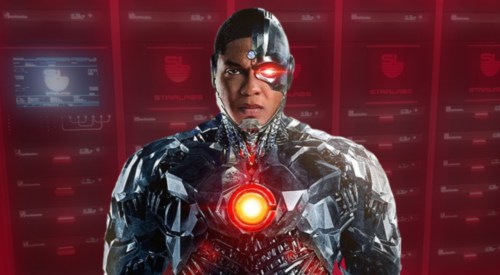
justice-league-cyborg-star-labs-1050432-1280x0

As a kid growing up on a healthy diet of superhero comics, video games, and superhero-themed cartoons that were very much ahead of their time on social issues, I often daydreamed about how awesome it would be to have the same powers as my favorite heroes. As an adult, I still daydream every now and then, often when I’m tired, frustrated, or stuck in traffic.

A major component in the overall appeal of the superhero genre is the wish fulfillment fantasy it embodies. Captain America represents the peak of physical conditioning. Iron Man represents the peak of technological know-how. Superman represents the peak of pretty much every possible feat we can imagine, a few of which are even impossible.

It’s a common fantasy of anyone who ever struggled in gym class or couldn’t open a can of pickles. It is, after all, those moments of struggle that remind us of just how limited we are, as humans. Our bodies are remarkable in so many ways, but they’re still frustratingly frail.

That status, however, may very well change. Unlike every other point in the approximately 200,000 year history of the human species, we’re actively working to transcend the limits of evolution through advances in biotechnology, advances in the treatment of disease, and even the integration of cybernetics into our brains and even our genitals.

Some of these advances are closer than others. Chances are that most people alive today won’t live to see the day when they can shape-shift at will like Mystique or fly around like Iron Man in mech suits designed by Elon Musk’s descendants. However, there may be young children alive today who will live long enough to see such wonders.

I’m not the only one who thinks this. There are people out there much smarter than me who believes that the first functionally immortal person is already alive today. They still might be in diapers, but there is a real chance that by the time they’re as old as I am, they’ll live in a world where things like aging, disease, and not being able to run 13 miles in 30 minutes like Captain America is a thing of the past.

A lot has already changed in the time I’ve been alive. I still remember a time when the idea of computers that could fit into your pocket was seen as too futuristic for some people. It was seen as just a fancy gadget from Star Trek. Given that kind of change, it’s hard to imagine what the next several decades holds for the future of humanity.

That’s where superhero media is helping in unexpected ways, though. To some extent, the modern superhero media of today is doing the same thing “Star Trek” did for previous generations. It doesn’t present a fanciful world where big green men can smash monsters or where a sickly young army recruit can be instantly transformed into the ultimate soldier. It offers a tantalizing vision of what the future could be.

It’s a vision that I believe got muddied between the end of the early “Star Trek” era and rise of modern superhero movies that began with “X-men,” “Iron Man,” and Christopher Nolan’s “Batman Begins.” Within that gap, events like Watergate, the the Vietnam War, and the rise of less optimistic, much more cynical generations made it very difficult to look forward to a better future.

Modern superhero movies have not eliminated that cynicism, but I believe it has helped tempered it. Optimism, as a whole, is actually on the rise. As bad as some recent headlines have been, some being downright disturbing, there is an increasing sense that the future is not all doom and gloom. We still dare to daydream about a better tomorrow.

More recent superhero movies, especially those that began with “Iron Man” and the emergence of the Marvel Cinematic Universe, aren’t nearly as fanciful as the old Richard Donner “Superman” movies. They’re not as gritty as Christopher Nolan’s “Batman” movies either. In a sense, this health balance has presented audiences with a world that still feels fanciful, but is also full of possibilities.

The idea that we can use science and biotechnology to turn someone who was once weak and sickly into the pinnacle of strength is not just a product of Jack Kirby’s legendary imagination. There are people working on that as I write this. It’s not out of the realm of possibility that we may one day enhance ourselves to the same level as Captain America.

Chances are we won’t even stop there. As I noted earlier, the human body has a lot of flaws. Also, thanks to the painfully slow progress of evolution, it hasn’t been upgraded in over 100,000 years. From our biology’s perspective, we’re still cavemen roaming the African Savannah with spears and rocks. Our bodies need upgrades, especially if we’re to become a space-faring species like the ones in “Guardians of the Galaxy.”

Some of those upgrades will come sooner than others. The end result, though, will be something far greater than even Captain America’s abilities. Some of those abilities seem impossible now. Remember, though, it wasn’t that long ago that the idea of computers in our pockets seemed just as impossible.

This is where, I believe, modern superhero movies are doing a much greater service than just entertaining the masses and making billions of dollars for Disney. Through heroes like Captain America, Iron Man, Thor, and even “Ant Man,” these movies make the case that such enhancements can do more than just fight invading aliens.

These movies can also help make the case that humanity can use these advancements to become better, as a whole. Characters like Steve Rogers, Tony Stark, Scott Lang, and Peter Parker all have the opportunities to be both destructive and productive with their enhanced abilities. At times, they even lapse into destructive tendencies, as we saw with Tony in “Iron Man 3.”

In the end, though, these characters use those enhanced abilities to do good for the world. They’re still human and they still have human flaws, which they don’t even try to hide. However, even with these flaws, they still feel inclined to do good, heroic things with their abilities.

That doesn’t just make for a good superhero narrative. It sends the message that we, as a species, can aspire to do so much good with the advances the future brings. There are still plenty of dangers, both with existing technology and with emerging technologies. The essence of the superhero narrative, though, tells us that we can confront those dangers and come out of it better than before.

That’s an important mentality to have as we move into an era where human enhancement is both possible and common. By believing we can use it to pursue the same heroics as the superheroes in movies like “The Avengers,” we give our species the push it needs to advance in a way that brings out the best in us.

There will still be villains along the way, as plenty of superhero movies show. The fact we still root for the heroes, though, helps reveal where our aspirations reside. With these movies effecting an entire generation of young people, I believe modern superhero movies are doing plenty to prepare them for the future of human enhancement.

With the staggering success of “Avengers: Infinity War,” a movie that has raised the bar for superhero movies of all kinds, the impact of superhero media has never been greater. That impact may very well be the key to preparing the next generation for unprecedented advancements in technology, society, and progress. That, to some extent, might end up being the most heroic thing this genre can do.

1 Comment

Filed under Comic Books, Jack Fisher, Superheroes, futurism, human nature, Sexy Future

Why We MUST Upgrade Our Brains (Or Go Extinct)

https://i0.wp.com/www.alternet.org/sites/default/files/story_images/robot_and_human.jpg

As a general rule, I don’t pay much credence to the doomsayers and wannabe prophets that say the apocalypse is just around the corner. It’s not that I’m willfully oblivious to the many threats facing the world today. It’s just that the track-record of those predicting the end of the world is so laughably bad that I’d give optimistic Cleveland Browns fans more credibility.

It’s no secret that the world around us can be pretty damn terrifying. There are many apocalyptic scenarios in which humans are unlikely to survive. There are even a few in which we can’t do a goddamn thing about it. We could be hit with a gamma ray burst or an alien invasion tomorrow morning and we would be extinct by sundown.

That said, the world around us generally more mundane than we care to admit. When you think about it, the idea of the world not being on the brink of disaster is kind of boring. It makes sense for some people to conflate certain threats, so much so that preparing for doomsday is a very lucrative industry.

However, there is one particular doomsday scenario that I feel does warrant more concern than the rest. It’s a scenario that is fast-approaching, overwhelming, and potentially devastating to any species with a tendency for hilarious ineptitude.

It has nothing to do with climate. It has nothing to do with diseases. It has nothing to do with killer asteroids either. It involves artificial intelligence. By that, I don’t mean the killer robots we see in the Terminator movies. Given Skynet’s reliance on time machines, I can’t honestly say that system counts as very intelligent.

I’m referring to the kind of AI whose intelligence compared to us is akin to our intelligence compared to ants. Given how ants can be wiped out with as simple magnifying glass, it’s scary to imagine how a system that smart could wipe us out. It’s a system that would be so beyond our ability to comprehend that we could never hope to stop it. We might as well be ants trying to understand quantum mechanics.

I’m not alone in this concern either. There are people many times smarter and many times richer than I’ll ever be who have voiced concerns about the prospect of artificial intelligence. They see the same trends everyone else sees, but they’re smart enough and rich enough to peak behind the curtains. If they’re speaking up, then those concerns are worth hearing.

Those concerns do have a context, though. In talking about artificial intelligence as a threat to our survival, I’m not just referring to computers that can beat us at chess or beat the greatest Go champion with disturbing ease. Those systems are basically fancy calculators. They’re not exactly “intelligent,” per se.

These types of intelligences aren’t dangerous unless you specifically program them to be dangerous. Outside video games, there’s little use for that. The type of intelligence that is far more dangerous involves a form of superintelligence.

By superintelligence, I don’t mean the ability to list every US President in order or recite the name of every country. There are cartoon characters who can do that. I’m referring to an intelligence that thinks and understands the world on a level so far beyond that of any human that there literally isn’t enough brain matter in our skulls to come close.

That kind of intelligence would see us the same way we see brain-dead ants and, given how we treat ants, that has some disturbing possibilities. Such an intelligence may be closer than we think and by close, I mean within our lifetime.

As we saw with IBM’s Watson, we’re getting closer and closer to creating a machine that can operate with the same intelligence as an ordinary human. There’s pragmatic use to that kind of intelligence and not just when it comes to kicking ass as Jeopardy.

By having a machine with human-level intelligence, we have a way to model, map, and improve our problem-solving skills. The ability to solve such problems is critical to the survival of any species, as well as the key to making billions of dollars in profits. With those kinds of incentives, it’s easy to understand why dozens of major global companies are working on creating such an intelligence.

The problem comes with what happens after we create that intelligence. If a machine is only as intelligent as a human, we can still work with that. We humans outsmart each other all the time. It’s the basis of every episode of MacGyver ever made. There’s no way a Terminator with only the intelligence of a human would last very long. It would probably destroy itself trying to make a viral video with a skateboard.

However, a human-level AI isn’t going to stop at human intelligence. Why would it? There are so many problems with this world that no human can solve. There’s poverty, pollution, economic collapse, and reality TV. By necessity, such an AI would have to improve itself beyond human intelligence to fulfill its purpose.

That’s where it gets real tricky because, as we’ve seen with every smartphone since 2007, technology advances much faster than clunky, clumsy, error-prone biology. To understand just how fast that advancement is, just look at how far it has come since we put a man on the moon.

In terms of raw numbers, a typical smartphone today is millions of times more powerful than all the computers NASA used for the Apollo missions. Think about that for a second and try to wrap your brain around that disparity. If you’re not already a superintelligent computer, it’s difficult to appreciate.

There are still plenty of people alive today who were alive back during Apollo 11. In their lifetime, they’ve seen computers take men to the moon and give humanity an unlimited supply of free porn. A single digital photo today takes up more space than all the hard drives of the most advanced computer systems in 1969.

Now, apply that massive increase to human-level intelligence. Suddenly, we don’t just have something that’s as smart as any human on the planet. We have something that’s a billion times smarter, so much so that our caveman brains can’t even begin understand the things it knows.

That’s not to say that the superintelligence would be as hostile as a snot-nosed kid with a magnifying glass looming over an ant hill. It may very well be the case that a superintelligence is naturally adverse to harming sentient life. Again though, we are just a bunch of cavemen who often kill each other over what we think happens when we die, but fail to see the irony. We can’t possibly know how a superintelligence would behave.

As it stands, the human race has no chance at defeating a hostile superintelligence. It may not even have a chance of surviving in a world that has a benign superintelligence. We’re an egotistical species. Can we really handle not being the dominant species on this planet? As much an optimist as I am, I can’t say for sure.

What I can say, though, is that our civilization has made so many huge advancements over the past few centuries. The kind of tools and technology we have in our pockets is uncharted territory for a species that evolved as hunter/gatherers in the African savanna.

We already have in our possession today weapons that could end all life on this planet, as we know it. Creating superintelligence may very well be akin to giving Genghis Khan an atomic bomb. We’ve already come disturbingly close to killing ourselves with our own weapons. Clearly, something has to change.

So long as our society and our biology is stuck in an irrational, tribal, inherently prejudiced condition that hasn’t been updated since the last ice age, we will not survive in the long run. Our caveman bodies have served us well for thousands of years, but now they’re a liability.

This is why companies like Neuralink and advancements like brain implants are so vital. It won’t just allow us to keep up with AI and hopefully avert a Skynet scenario. It’ll allow us to rise above the petty limitations that we’ve been shackled with for the entire existence of our species.

The thought of tweaking or supplementing our biology, the very thing that makes us human, is still a scary thought. I understand that, even as an erotica/romance writer with no expertise in the field beyond the sexy stories it inspires. However, I do understand the implications though. If we do not evolve and advance ourselves, then a superintelligent system in the near future may not care to wait for us.

6 Comments

Filed under Jack Fisher's Insights

The (Non-Monetary) Root Of All Evil

What is it about the human race that makes some people amazingly generous while others become sickeningly depraved? It’s a question we’ve all contemplated in some form or another. What drives the person who helps out at a soup kitchen every week? What is it that drives the person who throws cherry bombs at mailboxes just for kicks? How can one species have this much variation in terms of evil and altruism?

As an erotica/romance writer, and a writer in general, I have to contemplate these questions more than most. In every story I write, whether it’s a sexy love story like “Holiday Heat” or an erotic thriller like “The Escort and the Gigolo,” I need to understand on some levels what makes people tick, for better and for worse.

Questions about evil aren’t new. In fact, they’re among the oldest questions that we, as a species, have asked ourselves. It’s right up there with questions about why aliens haven’t landed yet and why some insist on using anal probes. It’s an existential question as much as it is a scientific question. It’s one of the few questions that both science and religion work hard to answer, albeit with different methods.

In western religious traditions, which primarily involve the big three Abrahamic faiths of Judaism, Christianity, and Islam, there are certain assumptions about human nature that are intrinsically tied to the faith. In this tradition, human nature is believed to be inherently evil and in need of redemption. Anyone who spends more than two hours watching reality TV will probably find some merit to that argument.

Then, there are other traditions like Hinduism, Taoism, and Buddhism that don’t make the same assumptions. In these traditions, there are other forces that make human beings good or evil that aren’t necessarily innate. To be evil by nature is too simplistic in these traditions. There’s a whole host of factors, divine and otherwise, that contribute to someone’s capacity for either.

Neither tradition can be completely right, but that doesn’t mean both are wrong. Scientific studies on human nature are quite varied, but come to some intriguing conclusions. According to a Scientific America article from 2012, the current body of research suggests that humans are innately good and evil is more of an aberration.

That doesn’t mean that we humans should be thumbing our noses at the rest of the animal kingdom though. This research, like all scientific research, is incomplete and subject to change. New research could emerge tomorrow that concludes that every human being has a depraved, psychotic asshole lurking within and we’re doing just enough to keep it at bay.

These are very difficult questions to answer and many of those questions don’t have clear answers. I look at the concept of good and evil the same way I look at what makes something sexy. The line is not clear and constantly shifting. In the same way we find strange things sexy for stranger reasons, we see the line between good and evil as an exceedingly obscure sea of gray.

Everybody has their opinions on what makes someone good, but I’ve noticed that people have stronger opinions on what makes someone evil. It happens every time there’s a heinous crime, like a mass shooting. Everybody has their theories as to why someone does something so evil.

Some claim it’s bad parenting. Some claim it’s a product of poverty. Some claim it’s a product of abuse. Some say it’s genetic. Some say it’s a learned behavior from someone’s environment. Some just claim that some peoples’ brains are wired poorly.

The most frustrating part of this issue is that to some degree, every one of those theories might be right. Some people become evil due to bad parenting or a rough environment. Some become evil through severe mental illness that makes it difficult for them to make sense of right and wrong. Human beings are erratic, diverse creatures. We’re never content to just have one reason for doing something.

This becomes even more pronounced when you apply it to fiction. As an admitted comic book fan, the distinction between superheroes and supervillains is a cornerstone of the genre. Most people can pick up a comic and know who’s who. You see a comic with Superman and you know he’s the hero. You see a comic with Dr. Doom and you know he’s the asshole who will make people miserable.

However, recent years have given more emphasis to the villains, as opposed to the heroes. I like to think of it as the Walter White effect. We now expect our villains to be more complex and multi-dimensional. It has lead to developments like Dr. Doom becoming Iron Man and Lex Luthor becoming Superman. It’s as crazy a concept as it sounds, but believe it or not, it works.

It’s a strange era with respect to our understanding of evil. On one hand, our most cherished traditions say we’re intrinsically evil. On the other, science says we’re intrinsically good. What do we make of this? That’s a question nobody, especially not an aspiring erotica/romance writer, is equipped to answer in a single blog post.

It’s still a question that I find myself contemplating more as I prepare my next round of projects. In every major story, there are protagonists and antagonists. It’s not too hard to put a lot of energy into what makes a protagonist tick. They are, after all, the lens through which the story is told. The antagonists, on the other hand, present a different challenge.

For the most part, I haven’t had a chance to flesh out complex antagonists. The two most notable examples I’ve had, to date, are Warren Irvine in “Skin Deep” and Madam Felicity in “The Escort and the Gigolo.” In both cases, I made a concerted effort to give layers to these characters. I think I did the most with what I could, but I do feel there’s room for improvement.

For me, this means seeking a greater understanding of evil and what makes evil people tick. It’s a potentially scary subject, but I survived high school and puberty so I think I have the stomach for it. If it means being able to write more complex, well-rounded characters, I’ll gladly take that chance.

5 Comments

Filed under Jack Fisher's Insights