This is a video from my YouTube channel, Jack’s World.
This video is another thought experiment that contemplates where human civilization is heading and where it will ultimately end up. Humanity, as a whole, has undergone many upheavals, collapses, and advancements over the centuries. But as far as we’ve come, there’s still so much farther we have to go. That raises the question.
When I was a kid, there was a general attitude towards any movie or TV show that was animated. Unless it was “The Simpsons,” then animation was largely associated with kids. Even when there was a concerted effort to appeal to older demographics, animation was still seen as less mature form of storytelling. Even when it was exceptionally well done, this stigma persisted.
Eventually, animation and animated content, in general, matured to a point where the stigma really doesn’t work anymore. Cartoons aren’t just for kids. We now have shows like “Bojack Horseman” and “Rick and Morty” that have helped change the popular perception of animation. On top of that, the added influence of Japanese anime, from “Dragonball Z” to “Ghost In The Shell,” have helped attitudes about animated content evolve even more.
This shift all happened within my lifetime. It’s a simple recognition that attitudes, perceptions, and trends are always changing. And they’re going to continue to change, regardless of how we might feel about certain issues now.
This brings me to AI generated art. It’s a topic that, depending on where you discuss it, can generate a lot of debate, disagreement, and consternation. I’ve been in more than one discussion with someone who claims AI generated art can only ever be a bad thing in the long run because it enables trolls, assholes, grifters, and bad actors.
I’ve also been in similar discussions with those who claim AI art isn’t even art. It’s, according to them, nothing more than a fancy calculator that crunches numbers on where to place certain pixels on a screen. While I think that’s a gross oversimplification, I don’t think it takes away from the end result. Whether it’s produced by a human or a computer, the end result is still the same. An artistic rendering is created. But regardless of what form it takes, we have certain attitudes about it.
As I write this, I think the prevailing sentiments toward AI art are negative. Show someone an AI generated image and they might concede that it looks nice. But they’ll still have an aversion to it, knowing it’s created by AI. And if you how them a human-generated piece of art, even if it doesn’t look nice, that same person will still ascribe more value to it than they would an AI generated image. That’s just where we are right now.
But in a recent study by Scientific Reports, an interesting insight was uncovered. When the researchers conducted a survey that included approximately 200 people, they found that when people weren’t aware that an image was AI generated, then their attitudes about it were more positive. In many cases, they could not discern between the artwork generated by humans and those generated by AI. But as soon as they were aware that something came from an AI, their sentiments changed.
It’s probably not too surprising, but it’s also revealing. It speaks to where we currently are in our perspectives on anything created by an AI. It still has this synthetic, uncanny valley feel to it. We still inherently ascribe more value to something that is created by a human over that of a machine. And while that is certainly understandable, given that human generated art requires more labor and passion, how much will that value persist in the coming years?
That’s not an unreasonable question because the quality of AI art has changed considerably in the past few years. And it’s likely to continue improving in ways we’re not ready for. Not too long ago, it was somewhat easy to discern when something was created by an AI. The issues it had with rendering hands and fingers are well-document. However, those issues have been addressed and improved considerably, especially with newer models.
As such, you don’t need to be a wide-eyed utopian futurist to predict that AI art generators will improve to a point where it’s genuinely difficult to tell if it was created by a human. This study already showed how close we are. The participants weren’t able to surmise on a surface level that they were dealing with a mix of AI and human-generated art. With improved tools, even the most discerning and tech savvy among us might not be able to figure it out.
At that point, our attitudes towards AI art will have to change. Think what you want about AI and whether it’s capable of creating real art, let alone appreciate what goes into it. But if it’s capable of making something we can’t discern from its human-made counterparts, then those negative sentiments we have are entirely arbitrary, as well as subjective.
And those same attitudes might not be shared by younger people who have grown up in an environment surrounded by the internet, AI, and AI generated content. They might not have any issue with seeing AI generated art as real art. And anyone who just despises AI art as a concept might find themselves in the same group as those who still think all cartoons are just for kids.
It’s hard to know where these trends will lead as AI technology advances. It’s already affecting how we see art, knowledge, and what it means to be intelligent. And how we feel today might not be at all in line with how future generations will feel in the decades to come. Only time will tell.
I’ll simply note that humans, in general, are a visual species. We seek to create, admire, and cherish art, regardless of the source. For that reason, I think there will certainly be a place for any kind of art, whether it comes from a human or an AI.
This is a video from my YouTube channel, Jack’s World.
This video is part speculation and part thought experiment on the impact of artificial intelligence and the entertainment industry. Since the WGA/SAG strikes of 2023, the impact of AI on entertainment is impossible to ignore. While the technology is still in a very early stage, we’re already seeing it affect the course of multiple industries, but entertainment might be the most profound.
What could this mean for consumers?
What could it mean for the companies, studios, artists, and workers that produce our entertainment?
It’s difficult to determine at this early stage, but I make an effort to imagine what artificial intelligence could mean for the future of entertainment.
This is another video from my YouTube channel, Jack’s World. This video is another exploration on the impact of advanced artificial intelligence. Specifically, it highlights the possibility of how to structure society in an era when automation fueled by AI changes the nature of the economy. There have been many proposals on how best to build society around this economy. A universal basic income is often a popular proposal. While I am largely a proponent of such a policy, I think there’s room for something bolder. This video is my proposal for something that takes UBI a step further. Enjoy!
I talk about artificial intelligence a lot, both on this site and on my YouTube channel. It’s not just because Artificial Intelligence has the potential to be one of the most important technologies that mankind will ever create. It’s a topic of genuine fascination for me. I’ve always been a fan of the science fiction stories that can be told about AI. I also have a keen interest in how it may ultimately impact the real world.
However, as much fun as it is to speculate on the future of artificial intelligence, it’s a bit more productive to understand what it can do for you right now. I feel like AI has become a lot more mainstream with the rise of programs like ChatGPT. It’s very likely that other programs like it will emerge in the coming years and be very disruptive to multiple industries.
Granted, these AI systems are nowhere close to becoming sentient like Skynet or Hal 9000. We honestly don’t know when we’ll reach a point where an artificial intelligence will be as sentient and as intelligent as an average human. But for the time being, there are a growing number of tools powered by AI that are helping people within multiple fields. I’ve used quite a few of them. I’ve even shared some of the work I’ve done with them. And I can use these tools, then anyone can.
So, in the spirit of exploring this new world AI is creating, I’ve created a brief list of current AI tools that I hope others might find useful in whatever it is they do. Whether it’s writing, graphic design, web development, cooking, or personal interaction, there’s probably an AI tool to help you. While these tools might be limited in their use at the moment, it’s likely just the early versions of something that’ll become much more refined in the future.
And if you have other AI tools you find useful, please share them in the comments.
Whenever I talk about artificial intelligence, I often talk about the possibilities and potential it has for the near and distant future. I admit I sometimes to a bit overboard with the speculation and the hyperbole. In case I haven’t made it abundantly clear already, I am not an expert. I do not consider myself exceptionally smart or well-informed on this topic. I just find it very interesting and quite tantalizing, given how much I’ve seen computer technology evolve over the course of my lifetime.
However, in talking about artificial intelligence, I rarely get a chance to talk about some actual tools and products powered by AI that we can use today. That’s just the nature of technology like this. It takes a while to develop and refine. It also takes a while to actually create a usable product with it that don’t require a Masters Degree in computer programming.
But this past year has seen the rise of a new type of AI-powered product that is making its presence felt. It’s called AI-Generated art and it’s exactly what it sounds like. It’s art entirely created by an artificial intelligence that uses massive amounts of data on art, shapes, and design to craft artwork based solely on text suggestions.
It’s not entirely new. For a number of years now, there have been AI systems that can essentially create photo-realistic depictions of people who don’t exist. That, alone, is an impressive feat and one that has some distressing implications for those worried about fake IDs, identity theft, or catfishing. However, these new AI-Generated art programs have the potential to do so much more.
While the mechanisms behind it are very complex, the interface itself is very simple. A user just enters a brief description of what kind of artwork they want. Then, the program processes that and crunches the data. Finally, it generates an image. Sometimes, it takes a few seconds. Sometimes, it takes a bit longer, especially if the prompt is more elaborate. If you want to see a good example of what it can create, just check out the brief, but hilarious skit John Oliver did. Just don’t watch it while eating cabbage.
Aside from the inherent comedy gold that can be mined from this technology, just take a step back and consider the larger implications of these tools. These are prompts being entered by people who probably don’t have much in terms of art skills. And as John Oliver noted, some are being entered by people who aren’t entirely sober. While the images they generate don’t exactly look like masterpieces or anything someone would mistake for photo-realism, it’s still remarkable they’re as good as they are.
In seeing some of this art, it actually reminds me somewhat of early video game consoles that began rendering 3D graphics. I’m old enough to remember the somewhat clunky transition between 2D to 3D graphics. Just look at early Playstation games or games like Super Mario 64. They weren’t exactly polished, but they were a step in that direction.
Now, compare that to a typical game on the Playstation 5. In the span of just 20 years, the graphics and renderings have become so realistic that they’re navigating uncanny valley territory. With that in mind, imagine what these AI-generating art programs will do with that kind of refinement. I don’t know if it’ll take 20 years or longer, but it does create some tantalizing possibilities.
Ordinary people could conjure detailed, photo-realistic backgrounds for games, portraits, or stock art.
Ordinary people could conjure elaborate scenes and illustrations for stories they wish to tell.
Ordinary people could create artistic depictions of elaborate fantasies, including the sexy kind.
This is especially intriguing for someone like me because, as I’ve noted in the past, I cannot draw worth a damn. I have practically no skills when it comes to creating visual artwork, be it with a pencil or a computer program. I’ve never had that skill. I’ve tried many times in the past do develop those skills. I’ve never succeeded. I’ve always been better with writing and words. And I’ve been perfectly content with that.
Now, this technology gives someone like me an opportunity to craft images to go along with my words. It opens the possibility that I could one day write a story, sexy or non-sexy, and supplement it with real, vivid depictions of the characters and scenes. That is definitely something I want to pursue. I have experimented a bit with the AI art programs, but they’re still someone limited. I won’t be incorporating them into my sexy short stories anytime soon.
But if these programs continue to improve, then it’s only a matter of time before I craft a story in that manner. Honestly, that really does excite me, more so than a lot of the promising news surrounding artificial intelligence. I understand there are aspects to the technology that may never happen or just won’t be happening within my lifetime. But these AI art programs are real. They exist now and they’re going to be refined, like most emerging technology. It remains to be seen how fast they’ll achieve a higher quality, but I will certainly be watching it closely.
Please note that most of these services are limited and none allow anyone to create images that are overly pornographic or outright illegal. However, you can still create some legitimately good images, which you can save and use in whatever way you please. I’m already hoping to use some for my YouTube channel.
But even though this technology is especially intriguing to people like me with no art skills, I don’t deny it has actual artists very concerned. There has already been one instance where an AI-generated artwork won an art contest, which the real artists did not appreciate. It’s not just that an AI like this won without putting in the effort an artist usually would. In many cases, these programs used art other artists had created to refine its code. Over time, these programs could conceivably put those same artists out of work.
I can totally understand that concern. Who would hire a talented, but expensive artists to create images if they could just use an AI program to create it in seconds and for free? Do you really think big companies like Disney, Warner Brothers, and Universal wouldn’t fire their entire art team if they could get the same results for a fraction of the cost? They’re billion-dollar profit-driven companies. You know they would.
Even if this technology doesn’t completely replace real-life artists, it’s still essentially doing most of the work. On some level, it dehumanizes the artistic process, even more so than a camera. A camera can only render the image in front of it. These programs could conceivably conjure images that nobody has ever seen or imagined, a feat that once belonged solely to artists.
What does that mean for the future of artists?
What does that mean for the future of art?
I don’t claim to know the answers. I’m not even sure how to speculate on something like this. Again, I have no art skills with respect to drawing or creating images from scratch. I’m the kind of person who will embrace this technology more than most, so I’m going to be somewhat bias in that regard.
But artists and governments are starting to take notice. China has already made waves by attempting to ban AI-generated media that isn’t appropriately marked. While that may temper some trends in this field, it’s not going to stop it. There’s just too much to be gained at this point. The genie is out of the bottle and there’s no putting it back.
It’s sure to cause more issues, especially as the technology becomes more refined. It probably won’t be long before a major problem occurs because someone used AI-generated art in some nefarious way. Some are already trying, but they can only achieve so much, given the limits of technology.
That will eventually change. If you’re reading this, you’re likely to see some AI-generated artwork that you’ll mistake for something real. At that point, even concerns about deep fakes will be minor in comparison. Only time will tell.
Until then, non-artistically inclined people like me can start contemplating what thoughts and ideas we can one day make real.
As a general rule-of-thumb, you should never take news of a “scientific breakthrough” at face value. It’s not that the science is flawed or that the media reporting it are uninformed or misguided. It’s just incomplete. The rhetoric rarely matches the results, nor does it fully grasp the implications.
To some extent, that’s unavoidable. People who actually do science rarely use terms like “breakthrough” or “revolutionary.” Despite what popular media might depict, science doesn’t make giant leaps like that. It usually makes gradual steps full of small, but meaningful advances. It rarely makes for attention-grabbing headlines, but that’s how most scientific progress is made. It’s like building a house brick-by-brick. One brick alone is not a breakthrough. It’s the totality of the structure that garner’s the most vlaue.
When it comes to any news on nuclear fusion, it helps to be even more restrained. I’ve been following tech news for most of my life. During that time, I’ve seen plenty of articles and news releases from mainstream sources claiming some major breakthrough. Some give the impression that we’re just a few years away from using fusion to power starships to Mars. That’s a very flawed, very uniformed perspective.
In that same mold, I’ve also seen plenty of news articles saying nuclear fusion is an impossible dream that nobody will see in their lifetime. There’s a common refrain among these skeptics. They’ll often say something along the lines of “Nuclear fusion is 30 years away and always will be.” It’s a very cynical, very narrow-minded understanding of the issue. It also paints a flawed perspective of where we actually are in the science.
With those two perspectives in mind, how do we make sense of the latest news purporting a fusion breakthrough? In case you haven’t heard, the news came courtesy of Lawrence Livermore National Laboratory, which is not some fringe company or organization. This is something they’ve been working on for decades and this was a big moment for them, according to the Financial Times.
US government scientists have made a breakthrough in the pursuit of limitless, zero-carbon power by achieving a net energy gain in a fusion reaction for the first time, according to three people with knowledge of preliminary results from a recent experiment.
Physicists have since the 1950s sought to harness the fusion reaction that powers the sun, but no group had been able to produce more energy from the reaction than it consumes — a milestone known as net energy gain or target gain, which would help prove the process could provide a reliable, abundant alternative to fossil fuels and conventional nuclear energy.
The federal Lawrence Livermore National Laboratory in California, which uses a process called inertial confinement fusion that involves bombarding a tiny pellet of hydrogen plasma with the world’s biggest laser, had achieved net energy gain in a fusion experiment in the past two weeks, the people said.
Although many scientists believe fusion power stations are still decades away, the technology’s potential is hard to ignore. Fusion reactions emit no carbon, produce no long-lived radioactive waste and a small cup of the hydrogen fuel could theoretically power a house for hundreds of years.
The US breakthrough comes as the world wrestles with high energy prices and the need to rapidly move away from burning fossil fuels to stop average global temperatures reaching dangerous levels.
Now, compared to other news about “breakthroughs” from mainstream media, this is fairly balanced in that it doesn’t make too many bold claims. It makes clear that commercial fusion power stations are still decades away. But that was never the point of this experiment, nor is it the purpose of the article.
The most important detail from this news is the results the scientists produced. For the first time, a nuclear fusion reactor achieved a net energy gain. That means the generator put out more energy than was put into it. Specifically, the experiment produced an excess of 1.37 megajoules of energy, which amounted to approximately 70 percent more than the energy that was put into the reactor.
That is major news.
That is an achievement worth celebrating.
Because to date, plenty of laboratories throughout the world had achieved fusion. That’s not some act of scientific magic on par with anti-gravity or perpetual motion. The issue with fusion has never been about the physics. It has always been an engineering and logistic challenge, more so than fission ever was.
Creating fusion only requires a few ingredients. You need lots of heat, some hydrogen, and a way to confine it all in a structure. The big challenge that has been taking so many years has been to do all this in a way that generates more power than what goes into it. That’s something no other reactor has achieved until this experiment.
Now, it has been done.
We now know it’s possible to create a nuclear fusion reaction that generates more energy than what goes into it.
This is akin to the first ever cell phone call, which occurred in 1973. And it wasn’t until 1983, a full decade later, that the first commercial cell phone went on the market. That first phone was not very good and nowhere near as efficient as the cheapest phone you can get today. But it did work and it did get the ball rolling on the market.
That’s not to say that fusion will follow a similar timeline, but that comparison helps give perspective to where we’re at right now. Just getting a new technology to work is one thing. Making it a commercial product on some level takes time because the technology requires greater refinement, investment, and engineering.
But that process can only start after someone proves that it is technically possible. Fusion did not have that until this news. On top of that, investment in nuclear fusion has never been very high, compared to other technologies. In fact, it has only been in the past couple of years that more public and private investment has flowed in to developing nuclear fusion. So, that old joke about fusion always being 30 years away was missing a key detail. Any technology is going to develop slowly if there isn’t sufficient investment.
Now that one lab has succeeded in showing that a net energy gain is possible with fusion, others can follow. Hopefully, it inspires even more investment. With those investments will come more refinements and efficiencies. If those efforts are sustained, fusion doesn’t just become possible. It becomes inevitable.
The past couple decades have seen one too many price spikes in oil and other fossil fuels. Recent geopolitical conflicts have only shown just how vital it is for us to get off fossil fuels as quickly as possible. And our energy demands are only going to keep going up in the coming years. Add on top of that all the environmental concerns surrounding fossil fuels and the urgency for nuclear fusion has never been greater.
We’re still not going to see fusion plants popping up tomorrow, next year, or the year after that. But with this news, we’ve taken a critical first step. And many of those reading this will likely live to see the day when fusion energy powers their homes. That’s something worth looking forward to.
The following is a video from my YouTube channel, Jack’s World. This video is a thought experiment about artificial intelligence, the choices we make, and how much (or how little) we’ll delegate such choices in the future. Enjoy!
I’m not an expert on much. I don’t consider myself exceptionally smart on matters that don’t involve superhero comics, NFL football stats, and quality romance stories. I make that disclaimer because I don’t want to give the impression that I know more than I know.
That kind of perspective is important, especially if you’re going to talk about complicated issues with not-so-clear solutions. I’ve attempted to talk about some of those issues on this site, some being much more complicatedthan others. I don’t claim to have shed new light on a subject or changed a few minds, but I like to think I still contributed something.
Now, in wake of a global pandemic that revealed just how much we can get done at home, I suspect that trend will accelerate. I also expect that trend to bring many problems, not the least of which involve people struggling to find the kind of good-paying blue collar jobs that have helped people rise out of poverty.
Turning back the clock or just trying to ban automation at a certain point is not a viable solution. There’s just no way to enforce that in the long term and it’ll only get more difficult once artificial intelligence gets to a point where it can match the capabilities of an ordinary human. At some point, we’ll have to adapt and that includes changing how we live, work, and play.
The living and playing part have their own set of unique challenges, but I think the work aspect is more pressing. When most people express concerns about automation and AI, they revolve largely around the economic impact and understandably so.
Historically, people have had to work in order to earn money or resources to survive. Whether you’re on a farm in the 10th century or in a city in the 20th, this dynamic has remained fairly constant.
Automation, especially once supplemented by artificial intelligence, will likely upend that dynamic completely. It’s entirely possible that, at some point this century, we’ll develop machines that can do practically all the work humans have had to do in order to survive.
That work includes, but isn’t limited to, farming our food, mining raw materials, producing our goods, maintaining our streets, protecting our homes, and even governing our society. Since machines never tire and are prone to fewer errors, what other jobs will there be? I don’t doubt there will be jobs, but what form will they take? More importantly, will they pay enough to large swaths of people?
I don’t claim to know the answer, but I suspect they won’t. The dynamics of labor markets just can’t function when the machines are capable of doing so much more work than large swaths of people. Even if those people don’t work, they’re still going to need money and resources. How will they go about getting it?
For that reason, I’d like to submit one of those policies that could be implemented with or without universal basic income. I call it the Individual Automation Matching Dividend, or IMAD short. This policy would work like this.
All adult citizens within the borders of the country will have a piece of identifying information, such as a social security number, voter ID number, or driver’s license number, turned into a special digital token.
That token will be ascribed to a machine/robot/android that is currently active and conducting work that had been done by humans at some point in the past, be it manual labor, service roles, or something of that sort.
The productivity and wages of work done by these machines will be indexed to a minimum annual salary of approximately $78,000 in 2021, which will be adjusted for inflation on a yearly basis.
Any work done by these machines that exceed the value of that salary will be diverted to a national welfare fund to provide extra support for those who were sick, disabled, or otherwise in need of resources beyond that of a healthy adult.
No citizen will be ascribed more machines than any other and any machine ascribed to them that is lost, damaged, or obsolete will be replaced in kind by the state.
I apologize if some of what I just described is confusing. I tried to write this out like a lawyer or someone proposing a new policy to a future government. For those who don’t care for legalize, here’s IMAD in a nutshell.
Once you become an adult, you get your own perfect worker robot. That robot may take many forms, but for the sake of simplicity, let’s just say it’s an android in the mold of those we saw in the “I, Robot” movie. They can work without rest, do everything a healthy adult can do, and have roughly equal to greater intelligence.
You’re given this robot by the government to basically act as your work avatar. So, instead of you going out to work every day to earn a living, this robot does it for you. The work that robot does will be compensated, but the money will go to you. Basically, you get paid for the work your android does. It’s more a dividend than a wage.
Remember, since the robot doesn’t age or get tired, it can work 24/7/365. In principle, you won’t even have to meet it. It just works all day and all night on whatever job requires labor, be it construction, assembly, shipping, farming, cooking, etc. You just get all the money, up to about $78,000 a year.
Now, why did I choose $78,000? I didn’t pick that out of thin air. That’s a figure ripped straight from a real-world case study from a company that started paying all employees a minimum of $70,000 a year back in 2015. The idea was that previous studies had shown that when people make more money beyond a certain point, their happiness doesn’t increase. This company just took that idea and ran with it.
The results, by and large, were overwhelmingly positive. With that kind of money, people could create more comfortable lives. They could buy homes, start families, plan for retirement, and make investments. It makes sense. When people have this kind of money to work with, they have the resources they need to create prosperous lives.
The idea behind IMAD is to mirror that by leveraging the added productivity afforded by automation. It’s not some large blanket package of money like a universal basic income. It starts with an individual, acknowledges the work that they have historically provided for a society, and supplements that with technology.
I’m not saying it’s a perfect proposal. I’m not even saying it’s smart. For one, it assumes that one human-like android is enough and that we can control the artificial intelligence necessary for them to operate on a large scale. That’s still an ongoing issue. I’m sure there are plenty more problems I haven’t thought of, but that’s exactly why I’m sharing it.
Surviving a future with intelligent machines is going to be challenging enough. However, we can’t just stop at survival. We want to prosper. We want to live, love, and build better futures for ourselves and our loved ones. Technology like automation and AI can help us get there, but only if we use it wisely. It’s a big if, but one that’s worth working towards.
According to the Centers for Disease Control, 10,497 people died in traffic accidents caused by drunk driving in 2016 alone. That accounted for 28 percent of all traffic-related deaths in the United States. A non-insignificant chunk of those deaths were children. Even if you’re not good at math, you know that is not a trivial figure.
There’s also a good chance you know someone who has been hurt or worse because of a drunk driver. This sort of thing is personal for me because one of my cousins was killed by a drunk driver many years ago. He wasn’t even drinking. He was just unlucky enough to be in the back seat of the car at the time.
It’s an issue that has existed for as long as cars. It’s also an issue that policy makers and car manufacturers have tried to address through awareness programs and safety features. However, these measures can only do so much. So long as human beings are drinking and driving cars, this will be an issue.
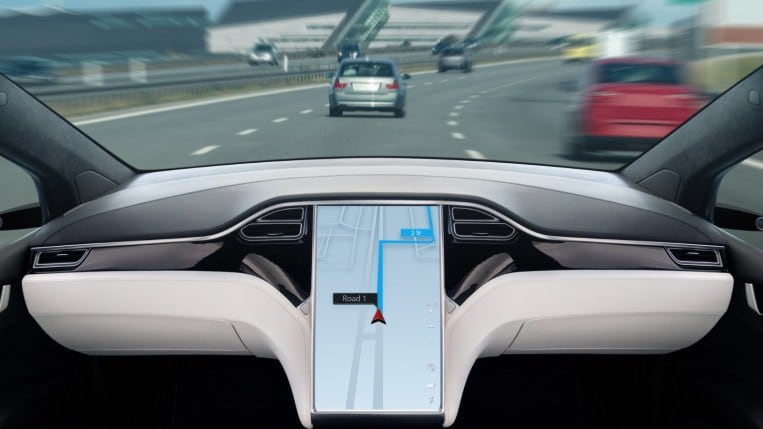
That dynamic will likely change considerably when self-driving cars enter the picture. To some extent, they’re already making an impact. You can buy a car today that has some measure of self-driving features. They’re still not fully autonomous, but we’ve taken the first critical steps. From here on it, it’s just a matter of refinement.
Even though it might be years before self-driving cars are common, they’re already making an impact and it’s not just in terms of sheer novelty. Very recently, a Tesla Model S, which has an autopilot feature, did something cars of old could never do.
It saved a drunk driver who passed out behind the wheel, which likely saved or prevented serious injuries to others around him. Here are the details, according to the site, Telsarati.
As explained by the Eastern Police District on its official Twitter account, a 24-year-old Tesla owner ended up passing out while driving his Model S. Fortunately for the driver, the vehicle’s Autopilot system was activated, which allowed the Model S to stay in its lane without causing trouble to other drivers.
Upon detecting that its driver was unresponsive, the vehicle eventually came to a stop and engaged its hazards. The man was later attended to by emergency services. No one was injured in the incident.
The police noted that the Tesla driver, who was found unconscious in the Model S, was evidently drunk, though he denied that he was driving. Video evidence showing the Tesla owner passed out in the driver’s seat have been shared online, however. The police stated that necessary tests have been taken, and that the Tesla owner’s driver’s license has been temporarily suspended. A case has also been filed against the driver.
Such an incident could have easily been a lot worse. It is very easy for drunk drivers to harm themselves, after all, but what’s even worse is that they could very easily harm other people just as easily. These scenarios would likely not be as prevalent if vehicles are capable of safely stopping on their own once their human drivers are incapacitated.
The bolded text represents the most relevant details. Without these features, this incident could’ve played out like so many other drunk driving tragedies. A drunk driver passing out behind the wheel would’ve, at the very least, led to the car going off-road and crashing, thus resulting in significant injury. At worst, the driver could’ve hit another car, thus compounding the tragedy.
However, thanks to these emerging systems, that didn’t happen. The safeguards in the car worked. The only real harm done involve a hangover and a DUI. Compared to the alternative, that’s far more preferable.
We should not understate the importance of this development. Think back to that 10,497 figure from 2016. Thanks to the autopilot system in that Tesla, the figure for 2021 will be at least one less. It doesn’t eliminate the tragedy of drunk driving all at once, but it’s a start and an important one, at that.
Driving is inherently dangerous, but a lot of that danger comes from the people behind the wheel and not the machines themselves. Anything operated by a human is prone to human error. An autonomous system, even if it isn’t a full-fledged artificial intelligence, can and will mitigate those errors.
That’s not to say those same autopilot systems aren’t prone to error. They certainly are, but remember that this technology is still very new. The first cell phones couldn’t send an email or reliably play streaming video. That took time, energy, and better hardware.
At this very moment, car companies and tech companies are putting in all that work. There is a lot of potential profit in refining this technology. However, I would point out that you can’t put a price on human life and, as it stands, thousands will continue to die every year because of traffic accidents, especially drunk driving. This one incident might not seem like much in the grand scheme of things, but it’s still one tragedy averted, one accident prevented, and at least one life saved. For anyone who knows the pain of losing a loved one to drunk driving, that’s worth celebrating.






 Jack Fisher's Official Publishing Blog