
He’s back! AI Jay Sherman is still at it. While “The Critic” may have been cancelled decades ago, AI is keeping his spirit and trademark snark alive. So today, I had him review another movie. This time, he reviews James Cameron’s Avatar. It’s one of the highest grossing movies of all time. Now, let’s see AI Jay tear it to shreds on TikTok. Enjoy!
AI Jay Sherman Reviews James Cameron’s “Avatar” On TikTok
Filed under AI Art, Artificial Intelligence, television
How Dirty, Filthy, Sickeningly Disgusting Public Restrooms Can Change The Course Of Your Life
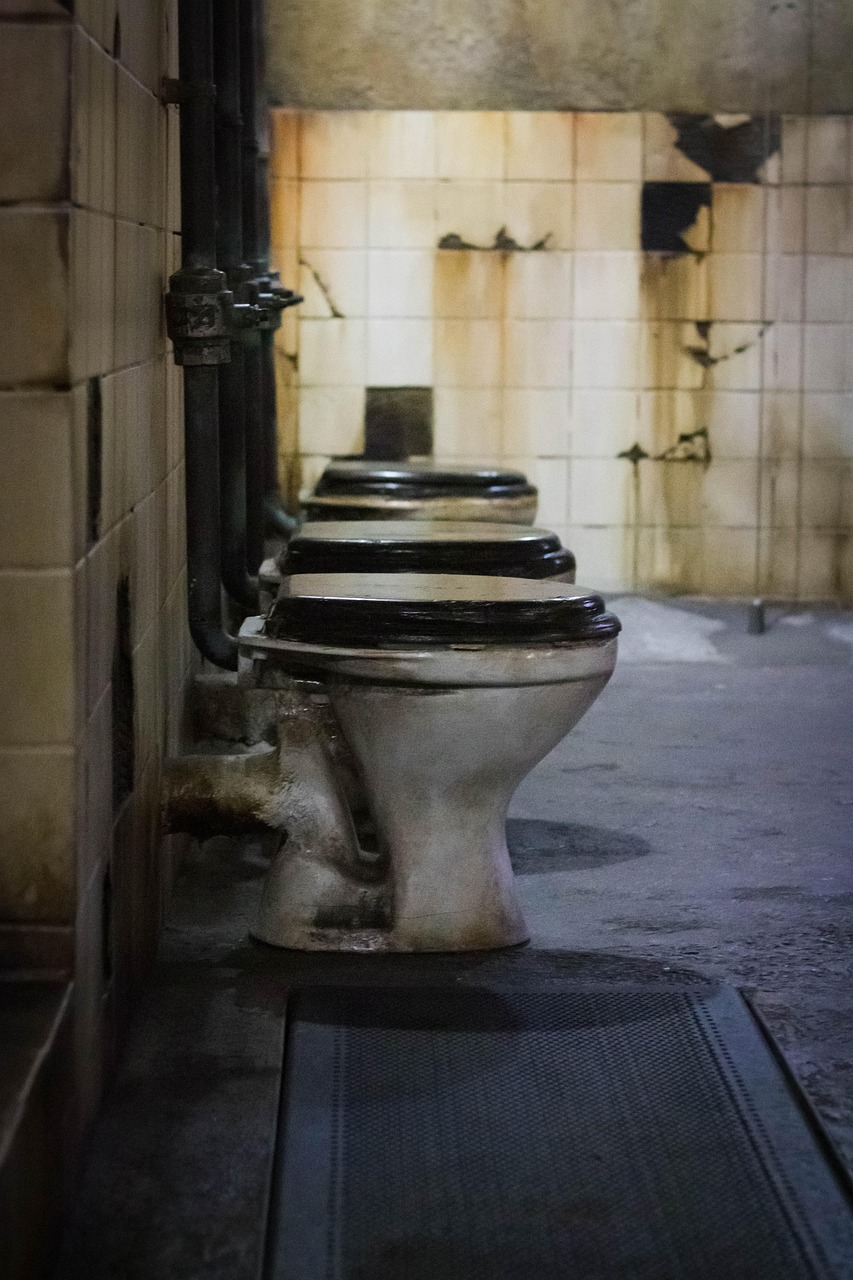
It’s an inescapable fact of life. At some point, your bladder and bowels will turn against you in the worst possible way at the worst possible time. You could be in the middle of an important meeting. You could be sitting side-by-side with the love of your life, the President of the United States, or the most famous celebrity in the world.
Then, it hits you.
Suddenly, you have to go the bathroom. Either your bladder is about to burst or you’re about to damage your underwear and pants beyond repair. It doesn’t matter how rich, well-connected, or powerful you are. Sometimes, your body will find a way to turn any one moment into something mortifying and/or stressful.
Without getting too graphic, I’ll spare everyone reading this the ugly details of what these situations entail. Since this happens to everyone at some point, I don’t think I have to. But I’m bringing it up because I recently found myself cleaning my bathroom. In doing so, I recalled an incident from many years ago that has impacted me in subtle, yet profound ways. And it has to do with the single most disgusting, dirty, and foul-smelling public restroom I ever had to use.
I understand the bar for awful public restrooms is very high. Depending on where you live in the world, a dirty public restroom might depend heavily on how much or how little actual fecal matter is smeared on the walls. In others, it might just depend on how backed up the toilet is.
I don’t doubt for a second that someone reading this can recall a public restroom experience that was many times worse than anything I ever experienced. But I still wish to share this story, if only to offer a hard lesson in what having to use disgusting public restrooms can to do your psyche.
Like many other formative experiences in my life, this one occurred while I was in college. Specifically, it occurred during my freshman year. That’s relevant because at the university I went to, there were numerous dorm facilities that were in various state of repair/disrepair. And, unfortunately for me, I ended up spending my first full year of college in an all-male dorm.
That fact alone should offer clues as to how dirty it was bound to be. Just picture, for a moment, the scenario beyond the context of college. Take a couple hundred teenage boys around the ages of 18 and 19. Put every one of them in a large, seven-story building. Have them be miles away from parents, relatives, and authority figures for the first time in their lives. Some of these young men have never even done their own laundry.
Things are going to get rowdy, dirty, smelly, and stupid.
There are any number of incidents I can recount from my experience living in that dorm. Looking back on it, I still can’t believe I managed to live there for nearly an entire year while maintaining a relative measure of sanity. But the worst part, by far, of living in that dorm had to do with the shared bathrooms.
Seriously, I cannot put into words how awful the shared bathrooms in an all-male college dorm were.
Yes, the dorm had a cleaning staff. But unless the people working on that staff had superpowers, I don’t see how they could’ve kept those bathrooms clean. And since that staff didn’t work on the weekends, things got really bad on Sundays.
It wasn’t unusual to walk into those bathrooms on a Sunday morning and see every stall clogged, overflowing, or in some state of general shittiness. It also wasn’t unusual to see traces of vomit, food, and other bodily fluids in the shower stalls, which I had to regularly use. I want to say you get used to it. But there are just some things the human brain is not equipped to process.
But on one particular Sunday morning during my freshman year, the true breadth of shittiness in public restrooms was taken to a whole new level. And to this day, my body and my gag reflex has never been so thoroughly strained.
This incident happened during the late spring. By then, I’d seen my share of disgusting crap in the men’s bathrooms. I had also gotten pretty good at managing myself so that, if I ever needed to take a shit, I would be somewhere else on campus where the bathrooms were considerably better. I learned early on that, so long as I limited how often I had to use the bathrooms in a male dorm, I could cope.
But on this morning, my stomach decided test my resolve. For reasons I still don’t understand, I woke up that morning feeling like bodybuilders were tapdancing on my lower intestines while wearing lead bricks as shoes. It hit me in a way where my roommate commented he could hear my stomach from across the room.
That’s when I knew I was in trouble.
Initially, I wondered if it was possible to get to another building with a decent bathroom. But my stomach quickly informed me that time was not on my side. I had to get to a toilet and I had to get to one immediately.
So, I entered the nearest bathroom in my dorm. It was right across the hall. It also happened to be empty, given the early morning hour. However, as soon as I stepped in, I was hit with a sight and a smell that is forever seared into my brain.
Someone, or more likely a group of fellow male students in a less-than-sober mindset, had found a way to utterly desecrate every single toilet in some way, shape, or form. One had a literal mountain of wet, piss-colored toilet paper spilling out of the toilet, onto the floor, and into the neighboring stall. Another had a massive puddle of liquid shit at the rim of the bowl, eager to flow over at the slightest provocation. And the third had what I can only describe as the coiled anaconda of all shits.
It was so awful I nearly threw up on the spot. Had my stomach not been a firestorm of fermenting sewage, I would’ve run to another bathroom. But I had to go. So, I picked a stall, wading through puddles of piss in the process, and did what I had to do.
Again, I’ll spare everyone the details. But trust me, these are NOT details you want to know. All I’ll say is that, when I was done, I had to take a very long shower in another bathroom. I also washed my hands at least 10 times over the course of that day. The memory of what I had experienced in that bathroom was just too raw.
That memory even lingered after I finished my freshman year and got to live in better dorms later on. In that same time, I didn’t just learn to appreciate the simple comfort of a non-filthy bathroom. I actually went out of my way to clean up after myself and even clean around certain areas if I could. It wasn’t much, but it was better than another shitty ordeal, literally and figuratively.
Even after I finished college and moved out of my parents’ house, I made a big deal about keeping the bathrooms clean. And rest assure, if any toilet ever showed signs of backing up or not working properly, I immediately looked into it. The more proactive you can be with a toilet, the better. You don’t have to be a plumber to know how to keep it working.
Now, I live alone in a place that I own. That means I am fully responsible for how clean and functional my bathroom is. I won’t say it’s always spotless. And I won’t say it’s the cleanest bathroom you’ll ever see. I can only be certain that it will always be pleasant to use and you can be confident that the toilet will work, as needed.
I honestly don’t know how long I’ll live in this crazy world. But I am certain that at some point, I’ll find myself in another situation where I’ll have to badly use a bathroom and I’ll have to go into a public bathroom. I just hope that, whenever or wherever it happens, I never have to use a bathroom like the one I used during my freshman year of college.
Filed under comedy, Jack Fisher's Insights, rants
Magneto Was Right (And Still Is) And Why That Matters
This is a video from my YouTube channel, Jack’s World.
It’s a recurring theme throughout contemporary X-Men comics.
Magneto was right.
For years, it was just a cynical observation. But lately, Magneto being right hits a bit harder. It’s no longer just a popular meme or a dramatic moment in X-Men 97. It offers powerful insights into the real world. And those insights are worth heeding.
Filed under comic book reviews, Jack's World, YouTube
AI Jay Sherman Reviews “The Minecraft Movie” On TikTok
Recently, while dealing with the drama surrounding my YouTube channel, I decided to explore some other creative endeavors. One idea that I’ve been contemplating recently has to do with TikTok. There are certain ideas I’ve had that just wouldn’t work on YouTube, either due to format or content. But I thought one idea might work well with Tiktok’s format.
It has to do with AI and one of my favorite shows of all time, “The Critic.” I’ve been experimenting a bit with AI on numerous endeavors. But I wasn’t sure if there was anything worth refining into an actual video. Then, I discovered some AI tools that allowed me to mimic the voice of Jay Sherman himself. And since we may never get more content from “The Critic,” I figured why not use AI to keep the spirit of Jay alive?
So, with the help of AI, I created my first TikTok of an AI version of Jay Sherman reviewing the Minecraft Movie. It’s a new and different kind of content. But let me know what you all think.
Is this something you’d be interested in seeing more of? Is there a movie you think AI Jay should review? I’m very interested to know everyone’s thoughts here.
Filed under AI Art, Artificial Intelligence, television
A Brief Explanation Of What Happened To My Channel And How I Got It Back
Now that my YouTube channel is back, I took down a previous post lamenting the loss of my channel. I’ve also created this video to explain what happened while also thanking those who helped me through this process.
My YouTube Channel Is BACK!
The past couple days have been very stressful and full of anxiety. But after lots of coordination with the support team at YouTube, I managed to get my channel back!
Needless to say, this is a HUGE relief. I was sincerely worried that all that hard work I did was gone forever. But now, it’s back! And I intend to continue making videos, just as I did before. To all those who send me their kind words of support, I sincerely thank you.
Filed under Jack's World, YouTube
The James Webb Telescope MIGHT Have Discovered Extraterrestrial Life (And What It Could Mean For Humanity)
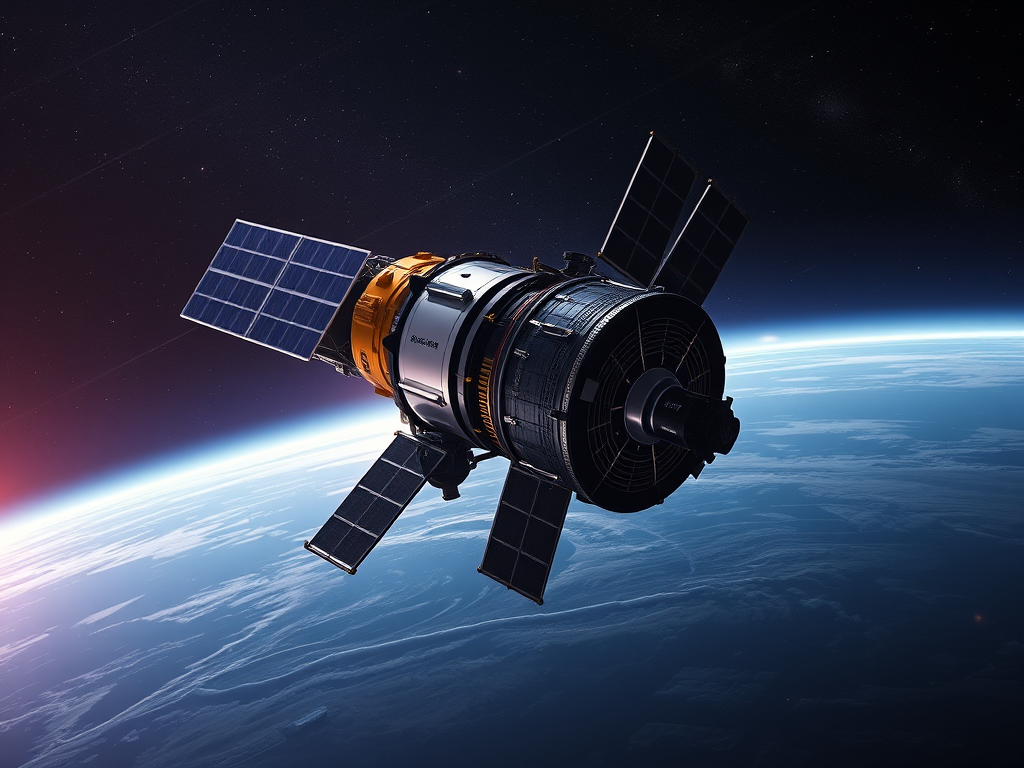
Even if you’re not an avid fan or regular consumer of science fiction, the prospect of discovering extraterrestrial life is intriguing. I believe that, on some level, we want to discover beyond any reasonable doubt that we’re not alone in the universe. Given the sheer size and breadth of the universe, the idea that we’re the only intelligent species just doesn’t sit well.
And it’s largely because of that same size and breadth that most scientists agree. The odds are very likely that there’s life in the universe beyond Earth. It’s not a total certainty. It’s largely derived from the law of averages. Since we started discovering extrasolar planets, the opportunities for life to emerge throughout the universe are vast. It’s just a matter of finding one other instance where the right circumstances were in place.
That effort has been frustrating and prone to plenty of cynicism. But thanks to better technology and tools, namely the James Webb Telescope, science finally has an effective means of studying extrasolar planets in greater detail. Given the vast distances, there’s an inherent challenge to gathering adequate data. But with each advancement and each discovery, we’re getting closer.
And in April 2025, the James Webb telescope discovered what might be the best evidence to date that life exists outside our planet. Granted, this evidence isn’t as cinematic as you’d get in a movie like “Contact.” But from a purely scientific standpoint, this is pretty damn compelling.
The planet in question is an explanet called K2-18b. It’s located approximately 124 light years from Earth, which is not that far in stellar terms. It’s also considerably bigger than Earth. In terms of mass, it’s over eight times larger and it orbits a red dwarf star, which are comparably smaller and cooler than our sun.
But it has been confirmed to be in the habitable zone of that star. It’s also suspected to be a hycean planet, which is basically an planet covered by oceans under a hydrogen atmosphere. Compared to any other planet in our solar system, this is truly an alien world.
And yet, the James Webb Telescope detected what appear to be chemical signatures for dimethyl sulphide and dimethyl disulphide, two chemicals only known to be produced by life. Now, that doesn’t mean that K2-18b is home to some advanced alien civilization. These chemicals are primarily produced by microbes. And at best, K2-18b could simply be an ocean world populated primarily by microbes.
Even if that ends up being the case, it’s still a remarkable discover. It’s still alien life that emerged entirely on another world. It would be definitive proof that life is not exclusive to Earth. And in terms of biological complexity, we are not alone.
Would this realization really shake humanity to its core?
Given the current state of the world, I think that’s expecting too much.
There’s no question that confirming that there’s life on another world would be an incredible discovery. It would definitely have some impact on how we see ourselves as a species. However, I think that impact would be very limited. Human beings barely understand the microbes that live in their gut or belly button. They probably wouldn’t give much thought to microbes on another planet.
It also wouldn’t confirm that there’s other intelligent life in the universe. It could very well be possible that microbial life is quite common in the universe. But intelligent life that’s on par or greater with humans is exceedingly rare or non-existant.
Personally, I don’t think that’s the case. I do believe there is intelligent extraterrestrial life in the universe. We just don’t have the tools, effort, or know-how to find it. Again, the universe is very big. We’ve barely searched our own galactic neighborhood, let alone the universe.
But discovering microbial life on another world might be a necessary step in that process. Simply confirming that life on other words is possible drastically increases the likelihood that intelligent life exists, as well. After all, Earth was once populated only by microbes. It took billions of years of evolution for humanity to evolve. And the universe has been around a lot longer than our solar system.
At the moment, this discovery hasn’t been confirmed. It may very well end up being wrong. But to date, this is the closest we’ve ever come to confirming life on other worlds. And even as our world feel like a chaotic mess, I think it provides a good and necessary perspective.
Filed under Aliens, Current Events, technology
Happy Memorial Day 2025!

Today is Memorial Day. For many, it’s the official start of summer. But for others, it’s a somber reminder of those who gave their lives in service to their country. If you or your friends and family have served in the military, you understand why that matters so much. Even if you don’t, take a moment today to cherish those who gave so much of themselves for their country.
Also, if you can, please consider donating to a charity that supports veterans.
Thank you and I wish everyone a safe and happy Memorial Day.
Filed under Current Events
Jack’s Comic Gems | All-New Wolverine: Enemy of the State II
This is a video from my YouTube channel, Jack’s World.
In this entry of Jack’s Comic Gems, I highlight All-New Wolverine: Enemy of the State II. This spiritual successor to the acclaimed Enemy of the State arc in a previous Wolverine series makes Laura Kinney a target among heroes, villains, and hated rivals alike. It pushes her in ways she’s never been pushed before. But it ends leaving little doubt that she deserves the title of Wolverine. Enjoy!
Filed under comic book reviews, Jack's World, YouTube


