Category Archives: X-men

Five Reasons Why “X-men: The Animated Series” Was More Progressive Than You Think

DNcLvqLVQAAI1iI

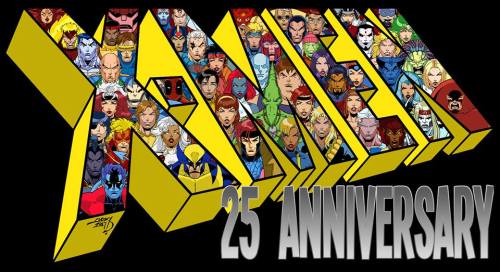
This past Halloween was extra sweet for a certain group of comic book fans, one that I just happen to be part of. Even if you’re not a comic book fan and were just a kid of the 90s, growing up on a steady diet of Saturday morning cartoons, this year marked a special milestone for one of the best shows of that era.

Yes, it involves superheroes. Yes, it involves X-men, which I often go out of my way to discuss. Yes, it involves this iconic theme music that has since become my ring tone.

That insanely catchy guitar rift that got stuck in the heads of millions of fans is from “X-men: The Animated Series.” On October 31st, 1992, this series debuted on Fox Kids and countless childhoods were forged from that day forward, including my own.

That was 25 years ago and while that thought makes me feel way older than I care to feel, it still brings back fond memories. One of my favorite parts of the day, as a kid, was rushing home from school, turning on the TV, and watching my favorite shows. “X-men: The Animated Series,” along with shows like “Spider-Man” and “Power Rangers,” were a big part of my carton diet.

I largely credit this show and “Spider-Man” for getting me into comic books, superheroes, and everything that came with it. I also credit those shows with giving me an early understanding of character development, romance, and storytelling, which would go onto help me write my sexy novels.

For that reason, and many others, “X-men: The Animated Series” has a special place in my heart. I imagine many X-men fans feel the same way because it was this show that helped the X-men really peak in the 90s. What the Avengers are today, the X-men were in the 90s. They were very much the alpha and omega of all things involving superheroes.

While this 25th anniversary gives me time to reflect fondly over how much this show enriched my childhood, my life as an adult has only further expanded my perspective. When I look back on “X-men: The Animated Series,” I’m somewhat amazed by how relevant it still is in terms of theme, drama, and story.

It’s easy to forget that this series came out at a time when most cartoons followed a simple, predictable formula, regardless of whether or not superheroes were involved. There was evil. The heroes found out about said evil. They fought it. Then, the credits roll. “X-men: The Animated Seriesdared to think bigger.

While the animation and voice acting might be somewhat dated, this show dared to speak up about social issues. It dared to explore ideas of hate, bigotry, and discrimination. At a time when parents were still fighting mortal crusades over rock music, this show tried to be relevant in a new way.

Now, as I look back on this series that lasted for five years and 76 glorious episodes, I realize just how progressive and insightful this show truly was for its time. As more and more forms of media, including comics, push for greater diversity, “X-men: The Animated Series” found a way to pull that off 25 years ahead of schedule.

In a sense, the X-men have always been about progressive themes like inclusion, diversity, and justice. Even though some of those words have become toxic today, they embodied the best of it, going back to its earliest days of drawing parallels with the Civil Rights movement. This show just captured it at a time when it a new form of progressive concepts were taking hold.

So, in honor of the 25th anniversary of this show,  I’d like to highlight five reasons why “X-men: The Animated Series” was even more progressive than you remember. Even if you’re not a fan of X-men or comics, it’s amazing to think that a show from 25 years ago achieved so much of what others are trying to accomplish today.


“Genuine bigotry and hatred was depicted in ordinary people.”

To X-men fans, it seems obvious. Bigotry and hatred are very much a part of the X-men’s DNA, going all the way back to their early days in the 60s. However, for a kids cartoon, this was akin to Miley Cyrus flashing her tits on an episode of “Hannah Montana.”

X-men: The Animated Series” did not water down the themes of blind hatred and bigotry espoused in the comics. If anything, they took it a step further by giving a voice, putting that blind hatred on display through characters like Graydon Creed.

This especially played out in the second season where hate groups like the Friends of Humanity formed. They’re the anti-mutant equivalent of the KKK. Their hate was so blind and deep that when one character, Jubilee, asked them why they hated her so much, Creed said simply, “You were born!”

That kind of hatred is harsh in real life, let alone a kids show. The fact that this show gave the X-men more than just monsters, tyrants, and aliens to fight showed an uncanny, if that’s not too fitting a term, willingness to scrutinize these painfully real issues.

As a kid, I barely understood it. As an adult, I’ve come to appreciate it even more. I like to think that exposing that kind of hate in a cartoon showed an entire generation of kids what true assholes look and sound like. Given the amount of assholes in this world, those lessons were invaluable. Plus, it was way more entertaining than “Sesame Street.”


“The characters were diverse and had vastly different personalities.”

Here’s a quick question that should trigger some unpleasant conversations on message boards, as if there are any others. Look at the cast of the Avengers movie. Aside from talking raccoons and androids, what do you notice? They’re mostly men, they’re mostly white, and they mostly have the same avenging personality.

Now, look at the X-men. You’ve got an uptight white guy, a burly Canadian, a sexy southern woman, an African goddess, a smooth-talking Cajun, a giddy teenage girl, and a guy in a wheelchair. Even by today’s absurd diversity standards, the X-men check a lot of boxes. They’ve been checking those boxes since long before diversity was even an annoying buzzword.

It’s not just that the cast of “X-men: The Animated Series” was diverse on the surface. It’s not just that they disagreed with each other, as the Avengers frequently do. They had such wildly different personalities that didn’t always mesh. Cyclops and Wolverine alone had all sorts of clashes and not just over wanting to sleep with the same redhead.

That kind of diversity of thought and personality is something modern cartoons, TV shows, and movies still struggle to achieve. “X-men: The Animated Series” managed to achieve that at a time when Hillary Clinton was still likable. It was a big accomplishment at the time and one that only gets more impressive as the years go by and people still fight about diversity in media.


“The show did feminism and strong female characters RIGHT.”

x-ladies

I’ve said it before and I’ll keep saying it in future posts. Talking about feminism is dangerous, divisive, and frustrating, especially in wake of recent scandals. Nobody seems to know how to even handle feminism or strong female characters who aren’t Wonder Woman. Long before the “Wonder Woman” movie raised the bar, though, “X-men: The Animated Series” made sure it set that bar pretty damn high.

Even by modern standards, “X-men: The Animated Series” found a way to do feminism right. Unlike other cartoons, the female characters weren’t part of the supporting cast or relegated to roles of a love interest. They actually participated on the same level as the male characters.

They didn’t have to create new female characters or force a female character into a male role. “X-men: The Animated Series” simply took characters like Storm, Rogue, Jubilee, and Jean Grey and maximized their strengths. They gave them personalities, power, and individual stories. They didn’t have to show up their male teammates. They could stand on their own and thrive as women.

In terms of feminism, “X-men: The Animated Series” was at omega-level standards long before it became a priority. At a time when we’re still struggling to make solid female characters, it’s remarkable and refreshing to see how well it was done.


“The show didn’t shy away from harsh, dramatic moments.”

People used to make a big deal about cartoon violence. The big worry was that kids would see a cartoon duck fighting with a cartoon rabbit and think that playing with double-barreled shotguns were toys. It was a very different, very strange time, to say the least.

X-men: The Animated Series” basically gave a big, adamantium finger to this debate, at least to the extent that they could get around the network censors. This show did not shy away from the harsh, dramatic moments that had played out in the comics. In fact, in the second episode of the series, one of the characters dies.

Keep in mind, this is a kids show where characters are not allowed to curse or show blood. The fact that this show killed a character in an early episode, and referenced death on more than one occasions, showed a remarkable willingness to portray real struggles with real stakes. Sure, it probably upset a few parents, but it sent a powerful message about the real world.

X-men: The Animated Series” dealt with real issues of bigotry, hatred, and intolerance. As such, it couldn’t water down the harshness and the pain it incurred. These are issues that people are still reluctant to talk about today and this show brought it up during the Clinton Administration. That shows both guts and foresight.


“The villains, heroes, and themes had layers of complexity.”

Watch any cartoon made before 1992 and chances are the characters you see will be pretty basic. You have your evil, mustache-twirling villains. You have your generic good guy/hero types. You have exaggerated violence and shameless toy promotions. There’s not a whole lot of depth there.

X-men: The Animated Series” once again dared to do more. It dared to let its characters grow and evolve over the course of five seasons. It’s an approach that worked so well that others, like the “Spider-Man” cartoon that debuted two years later, went onto adopt it. These characters had all sorts of layers and depth in the comics. The show chose not to simplify it for a young audience and embrace that complexity.

Sure, characters like Magneto, Sinister, and Apocalypse came off as generic bad guys at first, but they developed more and more depth as the series went on. There were even times when Magneto came off as genuinely sympathetic. For a kids show, these moments were pretty heavy and something you just wouldn’t get with the Ninja Turtles.

Today, everyone is trying to give their characters that Walter White style of complexity. Everyone is trying to create a series with a sense of progression. Well, “X-men: The Animated Series” were already doing that in the days of dial-up internet.


The fact this show succeeded to the extent that it did, while being as progressive as it was, even by modern standards, is nothing short of uncanny. After 25 years, the show still has a special place in the hearts of X-men fans. Sure, the animation and dialogue may be dated, but those progressive themes have never been more relevant.

10 Comments

Filed under Comic Books, Jack Fisher, Superheroes, X-men

A (Potential) Solution To The Worst Love Triangle Of All Time

There are some romantic sub-plots that cannot and will not work, no matter how well they’re written. You could resurrect Shakespeare, Tolken, and Faulkner, merge their brains, and still never salvage those plots. More often than not, most of those un-salvageable sub-plots involve love triangles and I’ve made it abundantly clear how much I despise love triangles.

In a sense, love triangles are a symptom of a much larger problem with romance. They’re basically a reverse cheat code in that they’re supposed to be an easy way to inject drama into a romance, but only ends up making things harder in the long run. While it’s not impossible for a love triangle to work, as fans of “Buffy the Vampire Slayer” might argue, it’s exceedingly rare.

That brings me back to what I’ve identified as the worst love triangle of all time, namely the one involving Cyclops, Jean Grey, and Wolverine of the X-men. I could talk for days as to why it’s so awful. However, I don’t want to re-hash those old arguments. I want this article to be more productive in that it offers solutions instead of whining.

In general, this is an aspect of comics I don’t enjoy talking about and avoid at every turn. I probably would’ve kept avoiding it and talked more about my sexy college experiences, but a few recent announcements by Marvel Comics has me and many X-men fans contemplating this god-awful love tingle once again.

It started a couple weeks ago when Marvel announced that Jean Grey, the one that isn’t a time traveler, is returning from the dead after 14 years. Needless to say, this sparked a firestorm of cheers and squees from X-men fans who have been longing for her return for years. I’m not going to lie. I did my share of squeeing.

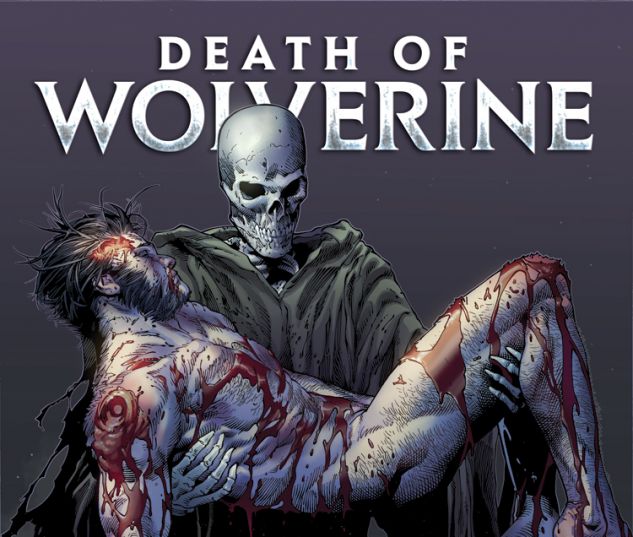
Then, less than a week later, Marvel dropped another bomb in the pages of Marvel Legacy #1, their latest blockbuster event comic meant to bump sales and soak the panties of collectors. Wolverine, who has been dead since 2014 and was subsequently replaced by multiple characters, is alive again.

That surprised nobody so there wasn’t as much squeeing. Wolverine has survived a nuclear explosion, getting his flesh blown off, and being run over by a steamroller. It was only ever a matter of when and not if he would return. However, him returning at the same time as Jean Grey is one of those coincidences that no self-respecting X-men fan believes to be a coincidence.

If there was any silver lining to Jean Grey being dead for so long, it was that it kept anyone from dragging that god-awful love triangle back into the forefront. With Jean dead, Wolverine could move on and pursue other relationships, like he did with Storm. Cyclops pursued a brief, but passionate relationship with Emma Frost. Both characters seemed to move on from that horrible affront to romance.

Now, with Jean Grey and Wolverine back in the picture and a time-traveling Cyclops still running around, these three are finally in the same universe again. That means there will be the temptation to revisit this malignant tumor of a love triangle. As someone who loves all three of those characters dearly, I am not looking forward to that.

It’s too early to say how the story will play out. Marvel hasn’t revealed anything about how Wolverine came back from the dead. There also isn’t much information on the particulars of Jean Grey’s resurrection. We only know the outcome in that they’re both alive again and that’s usually all anyone needs to re-visit that infuriating love triangle.

Given the circumstances of how it played out, which I’ve noted before, it’s hard to twist this love triangle in a way where anyone comes out looking good. No matter what happens, someone gets screwed over.

If Jean Grey chooses to be with Cyclops, then it screws Wolverine over by reducing him to an obsessive, whiny stalker instead of the ultimate loner.

If Jean Grey chooses to be with Wolverine, then it screws Cyclops over by reducing him to nothing more than an obstacle for Wolverine.

In both cases, Jean Grey comes off as either a prize to be won or a heartless bitch who plays with the heart of any man who dares to fall in love with her. In the end, nobody wins in a love triangle, especially one that was so horribly contrived to begin with.

All that said, I don’t deny that the love triangle is hard to ignore. While it’s not an integral part for each character, it is one of those unresolved issues that has never truly been laid to rest. It’s like a dangling plot hole that can never be totally ignored.

Even so, the love triangle is so toxic to all three characters involved. It only ever brings out the worst in them at every turn. So if it’s only a matter of time before the love triangle re-surfaces again in the X-men comics, then what’s the ultimate endgame? Is there a solution to this omega-level migraine of a plot?

I’m not a writer at Marvel, nor do I have a sliver of influence with them. However, I am a passionate X-men fan, as well as an unapologetic romantic who writes sexy love stories. Given that passion and experience, I have a solution that I doubt Marvel will ever take seriously, but one that essentially fixes the worst love triangle in the history of romance. The solution is as simple as it is sexy.

Make Cyclops/Jean Grey/Wolverine the first polyamorous relationship in comics.

I’ll give comic fans a moment to stop rolling their eyes and/or laughing. I’ll give the ardent proponents of the Cyclops/Jean and Wolverine/Jean relationship a moment to stop shaking their heads as well. This may be the only time both sets of fans are on the same page. I assure you, though, it’s no joke. I’m as serious as an attack by Thanos.

Just think about it from a purely pragmatic point of view. Jean Grey’s love for Cyclops is beyond dispute, being the oldest and most serious relationship in the history of X-men. Her attraction to Wolverine is also beyond dispute, which has made for more than a few sexy moments in the history of X-men.

On top of that, both Cyclops and Wolverine have a history of wanting to hook up with more than one woman. I’ve gone over the long list of romance/hook-ups that Wolverine has gone through. This is a guy who hooked up with Squirrel Girl, for crying out loud. That should be proof that this man cannot handle monogamy.

Cyclops, despite his reputation as a boy scout, also has a history with wanting to hook up with other women. Granted, he’s not even in the same time zone as Wolverine, but the sentiment is there. Unlike other heroes, such as Superman or Mr. Fantastic, he can’t seem to shake it off.

That makes him, Wolverine, and Jean ideal candidates for a polyamorous relationship. They exist in the real world. There is even some evidence that polyamory can be beneficial to certain couples because they require a great deal of communication and understanding, two key requirements to any successful relationship.

Given that Jean Grey is a powerful psychic and Cyclops has a history of attracting psychics, they’re better equipped than any other couple in the real world or the fictional world the create a functioning polyamorous relationship. When real psychics are involved, the obstacles associated with communication become an instant strength.

It works great for Wolverine too because it means he can still be Wolverine. He can still strike out on his own every now and then, stab some monsters, and hook up with a few crazy women. He wouldn’t be tied down by Jean Grey and unable to be what makes him awesome. He can still live, love, and fight like Wolverine.

It may very well be the only way that the nauseatingly overplayed melodrama that is the Cyclops/Jean Grey/Wolverine love triangle gets resolved. With a polyamorous relationship, all three characters get to share in the emotional fulfillment. They all get to feel loved and nobody gets left out in the cold. It may even bring them all closer together.

That might be impossible for some to imagine with Cyclops and Wolverine, two characters who have been at odds since the moment they met. However, they have shown throughout their history that they can get along. They can work together and bond over a shared goal, especially when that goal involves Jean Grey.

On paper, a polyamorous relationship between Cyclops, Jean Grey, and Wolverine would solve so many problems. Everyone involved could have their cake and eat it too. That might be the primary reason why Marvel would never do it, though. It makes too much sense.

I don’t think that a polyamorous relationship would be too taboo for Marvel. In recent years, Marvel has shown a willingness to explore non-traditional relationships. Back in 2012, they celebrated their first same-sex wedding in the pages of Astonishing X-men. They have a fairly lengthy list of LGBT characters as well. Even Daken, Wolverine’s son, has a history of eccentric sexual preferences.

The timing would even be right because polyamorous relationships are on the rise and monogamy is on the decline, especially among young people. While there will always be a place for strong, monogamous couples in comics, why not mix things up a relationship that everyone at Marvel seems eager to strain?

A polygamous relationship isn’t necessarily taboo these days, but it’s something nobody has really tried. It seems like the only way comics, TV, or movies can ever inject drama into a romance is to throw in a love triangle. On behalf of all hopeless romantics, I’d like to go on record as saying that tactic is old, not to mention detrimental.

Cyclops, Jean Grey, and Wolverine are in a perfect position to try something different, creating a new kind of romance that we haven’t seen in comics, TV, or anything that didn’t used to air late night on Cinemax. It would be challenging, but that’s exactly what would make it so appealing.

That may also be why Marvel would never try it. It’s so different and there’s no successful formula to follow. Sure, William Marston, the kink-loving creator of Wonder Woman, did it to great effect, but it would require all sorts of dynamics that take a great deal of effort. That effort might just be more than Marvel, or any comic company, is willing to put in at the moment.

Maybe a time will come when polyamorous relationships find their way into comics, just like same-sex relationships. It may not happen with Cyclops, Jean Grey, and Wolverine, but they are the ones that stand to benefit the most from it. Compared to another exceedingly toxic triangle, it would be a welcome change to the world of superhero romance.

9 Comments

Filed under Comic Books, Jack Fisher, Superheroes, Marriage and Relationships, X-men

Magneto: The Original Walter White?

It’s a common pattern in pop culture. Elvis and the Beatles didn’t invent rock music. They just made it mainstream. “The Godfather” didn’t invent the Italian Mafia. It just made it mainstream. The movie “Deep Throat” didn’t invent blowjobs. The human race figured that out centuries ago. The movie just finally got around to recognizing how amazing the concept would be.

These patterns often play out before our eyes without us really noticing. Nobody ever realizes they’re part of something greater, at least until they’re being played by Denzel Washington or Daniel Day Lewis in a movie. There’s always some strange revolution going on and I’m not talking about the kind that involves fad diets.

When I decided to break down the impact of Walter White on villains and antagonists in pop culture, I knew I was a bit late to the party. “Breaking Bad” has been off the air since 2013. In that time, the cultural impact of Walter White and how Bryan Cranston brought this character to life has spread. Many have already done far more thorough breakdowns of this character that are far more insightful than anything I could ever do.

At the same time, however, a part of me still looks at Walter White and sees the same pattern that has played out in music, TV, and even porn. Like Elvis, Walter White didn’t invent the complex antagonist/anti-hero. He just made it mainstream. However, I think there’s another character who accomplished this while Bryan Cranston was voicing bad Power Rangers villains.

Which character am I talking about? What kind of character could’ve possibly captured the complexities and depth that Walter White embodied without having his own show on AMC? This character actually pre-dates AMC, cable TV, Power Rangers, and even hippies. His name is Erik Lensherr, but he’s best known as the X-men villain, Magneto.

Yes, this is going to be another one of those posts. If you’ve been following this blog for any length of time, you know I jump at the chance to relate anything I can to comic books, especially X-men.

I’ve already used X-men to highlight what I feel are relevant issues. I’ve cited an X-men comic as a prime example of a true relationship of equals. I’ve cited X-men as teaching valuable lessons in the importance of foreplay. I’ve even singled out one X-man in particular, Storm, as a more viable female icon than Wonder Woman.

That said, it should come as no surprise that I make another connection when the unapologetic comic book fan in me sees the opportunity. For Magneto, the opportunity is definitely there. Based on his story, his personality, and his actions, he can claim that he was Walter White before there ever was a Walter White.

That claim isn’t hard to justify to anyone who learned about Magneto from the X-men movies, specifically the first X-men movie in which he was played by Gandalf himself, Sir Ian McKellen, and the pseudo-reboot entitled “X-men: First Class” in which Michael Fassbender gave the character an uncomfortable amount of sex appeal.

Both these movies make it a point to emphasize one of the most important, not to mention traumatic, aspects of Magneto’s character. He’s a holocaust survivor. He didn’t just live through one of the greatest atrocities in the history of mankind. He lost his entire family in it. He literally saw humanity at its worst. Can anyone honestly blame him for being a villain?

Unlike Walter White, it wasn’t desperation or circumstance that made Magneto want to give a big middle finger to the human race and get the ball rolling on their successors. He’s always been a little pissed off at the world for allowing such an atrocity. When you’re surrounded by the greatest evils of humanity, is it any wonder why you would found a group called the Brotherhood of “Evil” Mutants?

Even if he does have a good reason for being evil, this justification alone doesn’t put Magneto on the same level as Walter White. A major aspect of Walter White and the concept he embodies is the complexity of his character. If Magneto were just another Dr. Doom wannabe who just happens to have a better reason for hating the human race, then this concept wouldn’t apply.

However, Magneto does have depth. He does have complexity. His history is rich with stories that has him navigating a vast gray area of morality. One day, he’s a reformed man who helps the X-men fight off killer robots trying to wipe them out. On another, he’s creating a giant mutant monster to unleash upon the human race.

This isn’t just a bitter old man who gets moodier than most. His shifting allegiances, as well as his efforts to walk that fine line between villain and anti-hero, doesn’t happen sporadically. Magical spells aren’t used to just make him a hero, although that tactic has been used on other characters in comics.

Magneto’s story, much like Walter White, follows him making hard decisions in difficult situations. The consequences of these decisions lead him down many paths, some of which get pretty damn dark. Just read Cullen Bunn’s 2014 “Magneto” series for proof of that. That series alone ensures Magneto deserves to be on the same level as Walter White.

What makes Walter White such a compelling character is that his struggle and his hard decisions feel so real. He’s a man struggling in a difficult situation, but those situations only serve to bring out the worst in him.

Magneto may live in a world of mutants, superheroes, and characters who ride cosmic surfboards, but what he endures is painfully real. He lived through a real atrocity that has scars that we, as a species, are still struggling to confront. Whether the evil within him was always there or influenced by these struggles, it still felt painfully real.

The X-men, and the mutant struggle that Magneto has always been a part of, embodies the struggles of minorities. Even X-men director, Bryan Singer, has cited these struggles as an important part of the mythos. The struggles of minorities and the atrocities they suffer is painfully real.

In the case of Magneto, the horror of these real events helped shape his fictional path as a character. Walter White can’t claim he endured such atrocities. He endured injustice, but not on the same level as Magneto. These forces shaped their respective stories and personas.

At the end of the day, it still leaves us wondering whether these forces actually made them evil or just brought out the evil that was already there. While it may involve a little of both in the grand scheme of things, it’s still a big part of what makes these characters so compelling. At least with Magneto, he can say he knocked first.

8 Comments

Filed under Comic Books, Jack Fisher, Superheroes, X-men