Category Archives: writing

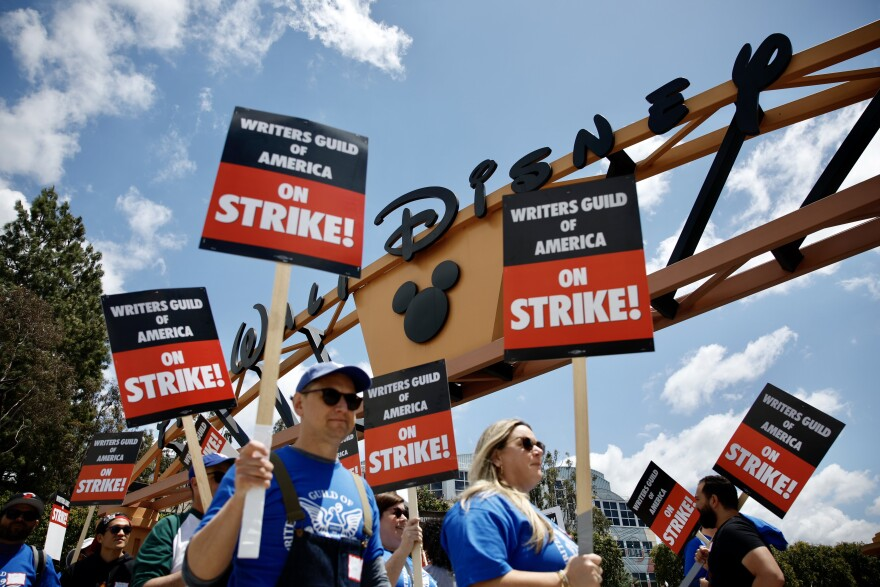
The End Of The WGA Writer’s Strike: Important Lessons And (Distressing) Insights

When an underdog succeeds, it’s worth celebrating. It’s a big reason why sports movies and superhero movies have so much appeal. Most audiences just love it when an underdog triumphs over daunting odds. And they love cheering with them when they ultimately succeed.

In that spirit, we should cheer the recent news surrounding the WGA strike that has been going on since mid-July 2023. According to the Associated Press, a tentative deal between the WGA and the major studios has been reached. While that doesn’t mean the strike is completely over, it marks a critical step in getting people back to work in an industry that was already reeling from the aftermath of the COVID-19 Pandemic.

AP: Writers’ union reaches tentative deal with Hollywood studios to end historic strike

As someone who loves movies, TV, and mindless entertainment as much as the next consumer, this is great news. This strike was bound to do more and more damage the longer it went on. We probably won’t know the full extent of that damage until a few years from now when we can look back at the impacts with the benefit of hindsight.

There’s also a personal element to this strike. I have multiple family members who work in the entertainment industry, mostly in the film and production side of things. They, more than most, felt the impact of this strike. Early on, a few even told me that this strike had the potential to last a long time. One even said they didn’t expect a resolution until late November. There was even a possibility it could continue well into 2024.

Thankfully, that no longer appears to be the case. This tentative deal, assuming it gets ratified, will provide some overdue benefits to the writers who play a big part in making the shows and movies we love so much. They deserve a deal that allows them to reap the fruits of their creative labor. You don’t have to look hard to find out just how much they were getting screwed over by a changing entertainment industry that studio executives and CEOs were exploiting to the utmost.

And therein lies an important lesson that’s worth highlighting, even as the strike comes to an end. This whole issue happened because the entertainment industry was changing. The old system that relied on residual income from broadcast TV and DVD sales just wasn’t going to cut it in an era of streaming media. The writers and actors behind some of these successful shows just weren’t getting the same share of the profits. And the studios were very much aware of this.

They could’ve adapted to ensure that those involved in the production could continue to be compensated fairly, even as consumers switched from traditional outlets to streaming.

They could’ve been open, honest, and transparent with the new economics of producing successful TV shows and movies in the post-COVID world.

They could’ve even explained why it was considerably difficult to pay generous residuals in a world of streaming media wherein profit margins were just too thin, if there even were profits to begin with.

But they didn’t. The executives, the CEOs, and those with the real power within these entertainment companies chose not to be proactive. Instead, they prioritized the price of their company stock and the investors who owned that stock. This is to be expected, as that tends to be the default reflex of publicly traded companies.

Call it callous in that it blatantly disregards the real work and toil of those producing the content.

Call it greed in the shallowest possible sense.

But at the moment, that’s simply how the incentives align in the entertainment industry, if not most industries in the global economy. There’s just too much money to be made by the rich and well-connected to do anything else. They are not going to do right by their workers unless they’re forced to, if not by law than by organized labor.

That may come off as cynical, but it’s also an important insight and one that every worker in every industry would be wise to remember. Because over the course of this strike, it quickly became clear how out of touch and callous these billionaire CEOs and executives were. They kept demanding that writers be reasonable with their requests. But at the same time, they were making hundreds of millions of dollars in salary and millions more in stock options.

These are not people capable of identifying with the life and struggles of working people.

These are people who might as well live on a different planet with respect to wealth, privlidge, and access.

Men Like David Zazlav and Bob Iger will never have to worry about paying a mortgage on time, falling behind on their bills, or ending up homeless because they cannot afford the outrageous rents in cities like Los Angeles and New York. So, how can we possibly expect them to empathize, let alone understand, the struggles of the writers and workers who help make their companies successful.

Most of these executives never set foot on a production stage, nor do they write or edit a single script. They just sit in offices, make demands/decisions, allocate money, and deal directly with investors whose primary focus is seeing a return on their investment.

And even if the company were to fail completely, these people would still end up with millions upon millions of dollars in their bank accounts. If they wanted to, they could never work a day for the rest of their lives. But those who actually work for them would be completely screwed.

It’s an unequal, unfair situation full of misaligned incentives. The executive and CEO class holds the power, the cards, and the money. They will not do the right things as a first recourse. They will only ever do what investors and their own self-interests incentive, by default. No matter how much money they have, they’ll keep trying to make more. And if that means screwing over their workers in any possible way, they’ll do it.

Remember that the next time labor issues come up. This doesn’t just apply to the entertainment industry, either. Any industry with a similar incentive structure will have the same issues. If there are rich, well-connected CEOs with shareholders to please, don’t expect them to prioritize workers beyond what they can legally and logistically get away with.

The only true counter to this uneven dynamic is that, despite all the power and money executives weird, they still need workers. They still need consumers. They still need to be credible in the eyes of the public to some extent. That kind of leverage is critical to maintain and appreciate.

Because the world will continue to change.

Every industry, from entertainment to making widgets, will continue to change with society and technology.

Those doing the work need to change with it because those with the money and power sure as hell won’t do right by anyone but themselves, unless they have to. And only those doing the work can make that happen.
1 Comment

Filed under AI Art, Artificial Intelligence, ChatGPT, Current Events, writing

Why Do We Root For Characters Like Bojack Horseman?

This is another video from my YouTube channel, Jack’s World. This video is about unlikable characters and why we root for them. There have been no shortage of such characters over the years. But few have really resonated as much as Bojack Horseman. There are so many things unlikable about this character and over the course of his show, he does many objectively awful things. And yet, he’s still someone I found myself rooting for. Why is that? Why do we feel this way about certain characters? I don’t claim to know the answer, but I make an effort in this video. Enjoy!

Leave a comment

Filed under Bojack Horseman, television, writing, YouTube

Superman Earth One Video: The Most Underrated Man Of Steel

This is another video from my YouTube channel, Jack’s World. This video is me highlighting and celebrating Superman: Earth One, a 2012 graphic novel from DC Comics that gave us a unique version of the Man of Steel. Superman has had many iterations over the years. Some are more memorable than others. But Superman: Earth One gave us something special. As a story and a take on this iconic character, it delivered a Superman that has only gotten better with age. And I break down why in this video. Enjoy!

Leave a comment

Filed under DC Comics, Jack's World, superhero comics, writing, YouTube

Why The Death Of Ms. Marvel Is Dumb (Amazing Spider-Man #26 Spoilers)

This is another video from my YouTube channel, Jack’s World. #msmarvel #spiderman #amazingspiderman #kamalakhan In this video, I react to the news that Ms. Marvel is set to die in Amazing Spider-Man #26 and why it’s an objectively dumb move for comic run that has been incredibly frustrating for fans.

Leave a comment

Filed under Jack's World, Marvel, Ms. Marvel, Spider-Man, superhero comics, writing, YouTube

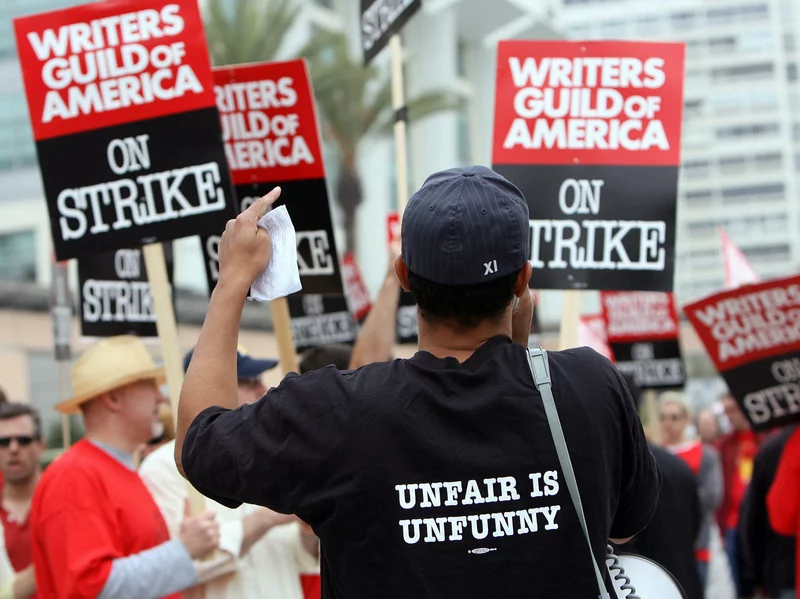
Why You Should Side With The Writers In The Latest WGA Writers Strike

Back in late 2007, there was a three-month strike between the major studios of Hollywood and the Writer’s Guild of America (WGA), the largest labor union representing professional writers working in the entertainment industry. That strike was one of the most disruptive forces to hit the industry in decades. Like many other labor strikes, much of the issue came down to money. MOst of it came down to how much writers were getting paid in residuals for things like DVD sales and other emerging distribution channels.

Even though the dispute was resolved, there were major effects on various shows and movies. If you want to know why there were so many reality TV shows that emerged in the late 2000s, this is a major factor. Shows that don’t employ elaborate stories or scripted content don’t have to pay a large writing staff. That means more profits for the studios and the executives.

As someone who tends to despise reality TV, I hated this trend.

And to those who watched those shows and continue to do so, just know that the situation we now find ourselves in with respect to entertainment is largely because of you.

Flash forward to today and the WGA has gone on strike again. Now, I’m sure most peoples’ primary concern is whether or not this will affect their favorite shows. As someone who loves binging non-reality TV shows, I admit that is a concern for me too. However, even if your favorite shows end up affected, do not cast the blame on the writers. That’s like blaming the miners who get trapped in a mine and not the corrupt executives who skimped on safety.

This latest strike promises to be different compared to what happened in 2007. A lot has changed in the entertainment industry since then, even before the impact of the COVID-19 pandemic. Now, residual revenue for DVD sales is less a concern because fewer consumers are buying DVDs. So much of everything has gone to streaming now and that’s seriously impacting writers’ ability to make a living from their craft.

On top of that, there’s the emergence of AI chatbots like ChatGPT that could potentially undermine writers even more by allowing studios to basically let AI fill in rather than paying another writer. And anyone who knows anything about how most industries operates, including entertainment, understands that if executives can increase profits by squeezing out workers, they’ll do it. And they usually won’t hesitate because the financial incentives are just too strong.

This, more than anything, is why we the consumers should side with the WGA. Even if it means your favorite shows get delayed, this is one labor struggle that goes beyond just pay disputes. Writers in entertainment weren’t making much beforehand. I’ve even heard a few jokes online among the comic publishing crowd that certain comic writers, especially those who independently publish, make more money than some of the writers on major shows and movies.

And it’s set to get worse and many studios are seeking to treat their writers like gig workers. Instead of employing a consistent, stable writing staff that knows each other and understands the product, studios think they can just hire a few freelancers, pay them less, and get a product that’ll still be watched by fans. And since these writers won’t have rights to residuals or copyrights, then the studio can keep more of the profits.

This should concern you, the consume. Because if the entertainment industry is screwing skilled writers out of money, then that will eventually affect the quality of every show and movie you see. If you think things are bland now with every major studios just milking established franchises to death, I promise it’ll get worse if they squeeze out talented writers.

Great writing is how underrated shows like “Arcane” can somehow find an audience.

Great writing is how shows like “Avatar: The Last Airbender” can become beloved franchises.

Great writing is how movies like “Puss in Boots: The Last Wish” can end up being way better than anyone thought it could be.

As someone who still aspires to be a good writer one day, I may have some bias when it comes to who I side with in an issue like this. But if you’re a consumer of entertainment that doesn’t suck, or just don’t want to go through another glut of reality TV again, it’s in your interest to side with the WGA.

They work hard to entertain us.

They work hard to enchant, inspire, and enlighten us.

That’s not something you can reduce to gig work. That deserves both our respect, as well as fair compensation for their labor.

1 Comment

Filed under Current Events, movies, television, writing

An AI-Generated Comic Was Denied Copyright Protection (And Why That’s A Big Deal)

Every now and then, a story slips under the radar of a much larger, but closely related story. The larger story makes more headlines and attracts more attention, but the smaller story might end up having a far more lasting impact.

That seems to be happening a lot with news involving artificial intelligence and the various AI tools that have emerged in recent years. I’ve already talked about plenty, giving my opinion on the rise of ChatGPT and showing off some AI-Generated artwork I made. There’s so much going on in this field that it’s hard to keep up with, let alone discuss.

But recently, one of those little stories caught my attention. It involves the same AI-Generated art I mentioned earlier and comic books, something for which I’ve shared my passion for in many forms. And it’s a story that I don’t think is getting enough attention.

It has to do with a comic called Zarya of the Dawn, a comic created by Kris Kashtanova. It’s not published by Marvel, DC, Dark Horse, Image, or any other mainstream comic publisher. You can actually download it right now for free. But what makes this comic different isn’t the story, writing, or style. It’s how it was made.

This comic was written by a person.

However, all the artwork inside was created with AI-generating art tools, most notably MidJourney.

That, in and of itself, is quite remarkable. The visuals within this book are certainly eye-catching. They might not rank on the same level as a Jim Lee or a Jack Kirby, but it’s a solid visual spectacle that brings to life a story.

For people like me, who cannot draw and don’t have the money to pay artists to depict the stories we want to tell, this is truly remarkable. I would go so far as to say it’s genuinely exciting. It shows just what’s possible with these tools. A writer with no drawing skills was able to produce this comic using only an AI art generating tool with text prompts. And the end result is stunning.

But this is where the story takes a turn. When Kashtanova attempted to copyright this comic, the US Copyright Office issued a surprising decision that might very well set a major precedent moving forward. Because the comic used AI to create the artwork, it could not be granted copyright protection. This was the exact statement, according to Ars Technica:

“We conclude that Ms. Kashtanova is the author of the Work’s text as well as the selection, coordination, and arrangement of the Work’s written and visual elements. That authorship is protected by copyright. However, as discussed below, the images in the Work that were generated by the Midjourney technology are not the product of human authorship.”

That bolded part is my doing because that’s the section with the biggest implication. This is the US Copyright Office stating outright that images and artwork created by AI can’t get copyright protection. That means that every piece of AI art you create for whatever reason can’t be owned by you in any legal sense. Because technically, you didn’t make it. The program made it for you.

Without getting too deep into the legal issues, I don’t think enough people realize the ramifications this might have for the future of the comics industry and for the art industry as a whole. On the comics side, there are actually two sides to consider.

On one, this technology will allow ordinary people with little to no art skills to produce comics with quality artwork. People who never once had the skills or means to make comics could suddenly start producing them on their own without a publisher or a skilled artist.

That means many great comics that wouldn’t have otherwise been made can be made. Great stories that once only existed with words could be brought to life through beautiful renderings.

But on the other side, the absence of copyright protection is an issue. Yes, these comics could bring to life amazing stories. However, the creators won’t be able to monetize their work, nor would they be able to stop others from using it for their own ends.

That means that, in theory, you or I could create a beautiful comic with this technology. It could find a massive audience and become a beloved story with countless fans. Then, a big company like Disney or Warner Brothers could come in, take the story and the depictions, and basically turn it into their own entertainment product. And since they have more resources and better lawyers, the creators likely wouldn’t get a penny of the profits.

This story also doesn’t account for how those same companies might use this technology to further undercut their workers and creators. Comic companies already have a not-so-great reputation for screwing over writers and artists who create iconic characters. Just look at what happened between Jack Kirby and Marvel for a hint of those issues.

If these same companies can use this same AI technology to produce more comics while not having to pay their artists or writers as much, they will do it. They’re a business. They’ll jump at any chance to pay less to get more. It’s cold, callous, and uncreative. But that’s the world we live in.

Add other tools like ChatGPT into the mix and it’s entirely possible that an AI could create an entire comic from scratch. And everything within it, from the art to the story to the characters, could not be copyrighted in any way. At a certain point, the AI might get so good that it would be hard to tell if there was ever a human creator to begin with.

These are all strange scenarios, equal parts exciting and distressing. We’re already seeing so much change as a result of these new tools, but I don’t think we’ve even seen a fraction of what’s possible. As AI technology improves, art generation and storytelling will change a great deal. The comics industry is more vulnerable than most, as Zarya of the Dawn just proved.

It’s hard to know what this will lead to. But whatever happens, it all started with this story and the precent it set.

Leave a comment

Filed under AI Art, Artificial Intelligence, ChatGPT, superhero comics, technology, writing

Hard Lessons In Redemption: Bojack Horseman Vs. Prince Zuko

The following is a video from my YouTube channel, Jack’s World. This video is an exploration in how characters succeed or fail to redeem themselves. There are many characters in various mediums who walk the path of redemption, but not all complete it.

Bojack Horseman is one character who tried to walk it, but failed.

Prince Zuko is another who walked that path, but he managed to succeed.

How they each went about their respective journeys is unique and it offers some powerful lessons worth highlighting. Enjoy!

Leave a comment

Filed under Bojack Horseman, Jack's World, television, writing, YouTube

Inside Job Season 2: The Heart, Vulnerability, And (Healthy Growth) Of Regan Ridley

The following is a video from my YouTube channel, Jack’s World. In this video, I break down the character evolution of Reagan Ridley in Season 2 of Inside Job. It’s a loose follow-up of the first video I did on her. But with this one, I discuss how her journey builds on the larger themes of the show. Enjoy!

Leave a comment

Filed under Jack's World, television, writing, YouTube

A Note/Warning To Aspiring Writers: Avoid Vanity Press Scams

For years now, I’ve been an aspiring writer. I’ve self-published multiple books, which I go out of my way to promote. I’ve also been published by a couple of small-time publishers, which I also go out of my way to promote.

I know it’s an uphill battle. I’m also aware that very few writers ever achieve mainstream success. For every George R. R. Martin, Stephen King, and Stephanie Meyer, there are thousands of writers toiling away, working on amazing manuscripts that’ll never see the light of day. Most of the time, writers on my level are content to get whatever exposure we can and whatever minor bit of money comes with it, which is usually very small.

It’s a sad fact of life for aspiring writers. Most will never get published by a mainstream publishing house and few will ever be able to make a comfortable living.

That’s not to discourage anyone from writing. Most people, like myself, genuinely enjoy writing novels, short stories, and anything else that comes to mind. It’s both a hobby and a passion. Even if we can’t ever turn it into a career, it’s something we love to do.

To those same people, as well as those who dream of that rare success so few achieve, I have an important message. It’s not meant to encourage or discourage you from pursuing that dream. You should totally keep working for it. That’s advice most aspiring writers don’t need.

This is different.

This is also important because it might cost you more than a manuscript you worked hard on.

And it boils down to this.

Do NOT fall for Vanity Press scams who claim they can help you sell your book. They’ll just take your money, your book, and whatever else they can get away with.

Now, I’m not just offering this advice on a whim. I promise there’s a good reason why I’m bringing this up in hopes that other aspiring writers will see it.

For the past couple years now, I’ve been getting a number of unsolicited calls from people claiming to work for real publishers. They’re not your typical robocall or phone scams. These are real flesh-and-blood people who usually don’t read from a script. They even leave voicemails that sounds like something a real human would leave.

But don’t be fooled by the human element. These people are working for the least scrupulous part of the publishing industry. They’re what’s called a Vanity Press scam. In short, it’s a type of grift that attempts to get an author to sign the rights over for a book they’ve written while also paying the vanity press for marking services.

On the surface, it sounds like a good deal. You give them your book and some money. They in turn market your book to a wider audience. It sounds like a pretty sweet deal.

There’s just one glaring problem.

They don’t really market your book. They just take your book, your money, and leave you with pretty much nothing. They rely on authors who don’t know much about the publishing industry and would prefer to have someone else market their book. It’s shady and exploitative as hell, but it sadly works way more often than it should.

I’ve been dealing with several of these scams for the past couple years now. They keep calling me, asking about one of my self-published books, usually “The Escort and the Gigolo” or “Skin Deep,” and claim they can help me market the book. They’ll even claim they came across the book and it met their criteria for a book with serious sales potential. All I have to do is give them money and publishing rights to realize it.

That’s a lie.

If a legitimate publisher really believes your book has major sales potential, they pay you in the form of an advance. To them, it’s an investment. But a vanity press scam is nothing of the sort. It’s just looking to get you to fork over money to do marketing that’ll never actually manifest. They may claim they have a robust marketing team. They’ll even claim they can get you into major bookstores. Some will go so far as to claim they can get your book noticed by Hollywood producers.

Again, that’s a lie.

It’s little more than excess flattery to convince you to give them your money. Don’t fall for it. They aren’t going to help you sell more books. You may even lose the rights to your own work if you sign one of their contracts. That might end up costing you more down the line and not just in terms of money.

Now, that’s not to say all vanity press publishing is a scam. There are legitimate vanity press publishing companies who essentially help writers self-publish their books in exchange for a fee. The key, though, is that you seek them out and not the other way around. Vanity Publishing is largely the domain of self-published authors who already have an audience or are unfamiliar with how to self-publish across multiple platforms.

There is a place for that kind of service in the publishing industry. But if someone from a publisher calls you and is asking for money in exchange for your book, chances are they’re not representing a real vanity press. They’re just scammers trying to get you to pay them money to make bold promises they have no intention of filling.

In the past two months, I’ve received voicemails from two “publishers.” A quick Google search is usually all it takes to find out that these people are not representing legitimate publishing companies. I usually don’t respond to them. But when I do, I make it a point to ask them if they’re going to charge me for marketing or promotional services. If they say yes or refuse to answer clearly, I hang up and you should too.

I hope this helps any other aspiring writers out there. I urge every one of you to keep writing and keep fighting to get your book out there. Just make sure to avoid vanity press scams. They don’t care about helping you succeed. They just want to take your money, your book, and all the work that went into it.

Leave a comment

Filed under Jack Fisher's Insights, writing

A New Writing Method I’m Trying (And Not Sure About)

I know it’s been a while since I’ve talked about my various writing projects. There is a reason for that. I won’t say it’s a good reason, but there is a reason. I still have a number of manuscripts that I hope to get published one day. I also keep reaching out to agents and publishers in hopes of publishing another novel.

To date, I’ve only gotten responses from scammers and grifters. Seriously, if anyone claims they can make your book a best seller for the low price of $1,200, delete that email or hang up on them. They’re lying.

While I am discouraged and have since stopped making sexy short stories, I’m still writing every day. I still have ideas I want to flesh out. I’m still trying to refine my craft. I treat every project as an opportunity to improve and I try to take it.

However, lately I’ve been finding it difficult to write at the same rate and efficiency as I did years ago. It used to be I could write a good 5,000 words with ease and still have time for class in college. Now, I’m lucky if I can get 2,000 words out. Again, there’s a reason for that.

Looking back on it, those 5,000 words I mentioned weren’t exactly quality work. In fact, it would take me almost as much time to edit or revise those words as it would to write them out. Quality beats quantity in writing 99 times out of 100. That’s a lesson I’ve learned the hard way and come to appreciate.

These days, the slow pace of my writing has less to do with how fast I can type and more to do with me wanting it to sound just right. The narration has to be good. The dialog has to be solid. It has to work on multiple levels and that’s really slowing me down. I’m doing less editing and revising on the back end, but it’s still frustrating at times.

As a result, I decided to take a step back recently and adjust my approach. In doing so, I realized something critical in my writing. The part that slows me down the most, to the point of stalling, is writing dialog. For most writers, that’s not surprising. Writing dialog is one of the hardest things to do in any novel, script, or play. Whenever I seek out writing tips, I tend to gravitate most towards those focusing on dialog.

Again, some of that has to do with quality over quantity. I try to give each character a voice. I try to make the conversation feel realistic, but memorable and witty. That is not easy to do and, if I’m being honest, I neglected that in the past. When I read over my old work, I see how little thought I put into the dialog. At times, most of the characters just sounded the same. They were just there to play a role.

I’m trying to avoid that. I’m trying to improve, as well. I also want to be efficient. I know that’s asking for a lot, but I think there’s a balance to be struck. Right now, I do not have that balance. So, after assessing what I’ve done and how to move forward, I’ve decided to try this new approach.

In the past, I simply went from start to finish with each chapter, going word for word between narration and dialog. It was simple and probably the way most people approach writing. Now, here’s what I want to do.

For each chapter of each story, I start with a script. I focus entirely on the dialog between the characters. There’s no prose or narration in between. I write out the conversations first. I add the details and structure later. In essence, this is what it looks like.

NARRATION

Character 1: Dialog

Character 2: Dialog

Character 1: Dialog

Character 3: Dialog

Character 1: Dialog

NARRATION

Character 1: Dialog

I’m going to try and use this on my next project. I don’t know how well it will work, but it’s something I’d like to try. I feel like the way I’m doing things now is just too inefficient. There’s always a better way to do something and I’m going to try this and see where it leads me.

In the meantime, has anyone else ever attempted something like this? Has anyone ever written out a chapter or book in a non-linear fashion? If so, what has been your experience? Did you find it helpful? Did it make your writing better and more efficient?

I’d love to know. Please share your experience in the comments. If you have other tips or approaches you’d like to share, please do so. I’d be happy to listen.

Leave a comment

Filed under Jack Fisher's Insights, writing