Tag Archives: the human brain

The (Hopeful) Features Of My Future Brain Implant

https://i.ytimg.com/vi/YGZujb9TDpU/maxresdefault.jpg

In talking so much about the possibilities and implications of brain implants, like the ones Elon Musk wants to build with his new company, Neuralink, I’ve strained my own brain trying to grasp the bigger picture. I don’t know if that counts as irony, but it feels oddly appropriate.

It’s an exciting topic to write about and discuss. The idea that we may one day think beyond the limits of our crude, error-prone caveman brains is so intriguing. So many of the problems we face today, both as individuals and as a society, can be attributed in some way to our collective brain workings. What will happen to us an those around us when those workings are tweaked?

It’s hard, if not impossible, for us to know for certain. I’m sure someone like Elon Musk knows more than an aspiring erotica/romance writer like me. I’m sure he sees the same societal conflicts we all do and understands that his company, Neuralink, will be the first step towards transcending them.

https://i0.wp.com/www.conspiracyschool.com/sites/default/files/styles/content_width/public/blogimages/transhumanism.jpg

Having contemplated the bigger picture and all the implications that come with it, I thought I’d take a step back and try a different mental exercise. Hopefully, it’s one in which other regular readers of this blog can participate. It involves a much simpler, less mind-bending thought experiment. If you can make a Christmas list, you can participate.

It involves a simple question. If you could create your own advanced neural implant to tweak/enhance your brain, what kinds of features would it have? Take yourself 30 years into the future. Put yourself in a Neuralink clinic. Someone has kindly paid for the best, most customization neural implant on the market. What would you want it to do?

There are so many aspects of our lives that our brain controls. Everything from our attitudes, our competence, our happiness, and even our capacity to love others begins in our brains. Every skill we have or want to have requires some aid from the brain. Any effort to tweak or enhance that is going to affect all of those features.

https://i0.wp.com/www.bioethics.com/wp-content/uploads/2014/03/transhumanism.jpg

To get things started, I’ll share my own personal wish list. It will likely be different than everyone else’s to some extent, but I’m sure there will be some similarities to. So here’s Jack Fisher’s top features for his future neural implant. I hope Elon Musk is taking notes.

  • The ability to remember, recall, and comprehend anything on demand, ensuring nothing is forgotten.

  • The ability to do advanced math in my head so I can calculate complex financial decisions on the spot and/or check the claims made by others.

  • The ability to read over vast quantities of text, be it a novel or a user agreement, and retain the information at greater speeds.

  • The ability to revise and edit large quantities of text quickly and efficiently.

  • The ability to process emotions faster and read the emotional queues of others with far greater efficiency.

  • The ability to focus on a given task and not be easily distracted.

  • The ability to learn or download new languages on demand to facilitate communication with others.

  • The ability to learn or download new mental or physical skills on demand.

  • The removal of any prejudicial inclinations or irrational assumptions when encountering a new person or situation.

  • The ability to minimize the need for sleep and improving the quality of sleep.

  • The improvement and enhancement of sexual function, including the ability to perform and sustain sexual arousal, as well as the ability to experience more intimate sensations.

  • The ability to communicate directly with the minds of others with a similar neural implant in order to share experiences, thoughts, and emotions.

  • The ability to search the internet for new information with only thoughts.

  • The ability to link my mind with a computer and turn my thoughts into text or images.

I know this is a long list of reasons, some of which are more feasible than others. I’m sure features like memory and math skills will be among the first major features of neural implants. I imagine features that improve sexual function will be next. If any technology can improve sex, then that’s going to have priority. That’s just an inescapable fact.

Other features like downloading knowledge and skills will probably be trickier. I imagine we won’t have that ability for decades. However, there are still plenty of smaller, more subtler abilities that would definitely enhance our everyday lives. Just being able to focus better without the aid of dangerous ADHD drugs is a pretty big deal.

https://jackfisherbooks.com/wp-content/uploads/2017/04/22f74-transhuman_001.png

That’s just my list though. What about everyone else? What would you want your advanced brain implant to do? How would you improve the functioning of your caveman brain? Please share your wish list in the comments. If you want to open up this discussion even more, let me know. I’ll be happy to expand it because it’s just that interesting/sexy.

1 Comment

Filed under Jack Fisher's Insights

Neuralink: How A Brain Enhancement Will Make Us Smarter (And More Romantic)

https://i0.wp.com/cdn-media-2.lifehack.org/wp-content/files/2012/07/shutterstock_74158666.jpg

It’s a sad/annoying fact of life. Most of us don’t have photographic memories. Unfortunately, most of our public schools and every major testing system they use works under the assumption that we are capable of retaining vast amounts of semi-trivial information and spitting it out on demand. Then, the people who run these schools are shocked when students complain.

Think back to the class you hated most in school. How much memorization did that class require? Unless you have a really good, semi-photographic memory, chances are you were expected to be half-machine to succeed. You had to spend no less than two hours of your day with flash cards, forcing your brain remember things it doesn’t want to remember. In the grand scheme of things, how productive was that time?

For me, the class I hated most was my Spanish class. I had one of those teachers that basically expected us to memorize a Spanish dictionary. Unless you actually grew up in Spain, it was about as pleasant as getting a rectal exam with boxing glove. Needless to say, I don’t speak a lick of Spanish anymore.

https://i0.wp.com/guardianlv.com/wp-content/uploads/2014/03/Forgetful-It-Could-Be-Genetic.jpg

Now I do have a fairly good memory. Ask me anything about a particular comic book character and chances are, I’ll tell you everything about that character, who they’ve hooked up with, and how many times they’ve been killed off and brought back to life. Ask me to translate a paragraph in Spanish on the spot and you’re bound to be disappointed.

This spotty memory that plagues high school students, adults, and people who just can’t keep track of their keys is an unavoidable part of modern life. It can even hinder our love lives. How many men have been denied some tender lovemaking because they forgot their lover’s anniversary, birthday, or favorite pizza topping? It’s downright tragic.

These limitations aren’t just the byproduct of stupidity. There’s a very good reason why we all don’t have photographic memories. There was no evolutionary need for them until very recently. Our bodies and brains evolved to prioritize survival, reproduction, social cohesion, and spacial awareness. The fact there are over 7 billion of us on this planet now shows that those priorities were not misplaced.

https://thebreakthrough.org/images/main_image/green_city.jpg

However, the world is getting more complicated. Society is becoming more complex than our caveman brains can make sense of. That’s why we have entire populations that are still woefully uneducated, which effectively guarantees that they will be left behind and impoverished.

It’s a sad situation because education is difficult when you’re dealing with caveman brains. It takes considerable resources to teach people and those resources are often finite, even in the era of the internet. Even resources like Khan Academy can only go so far.

So how do we fix this situation? A society that has a large population of impoverished, uneducated people is not a stable one, as the 2016 Presidential Election proved. Well, a solution is already in the works and it has even larger implications for our personal lives.

https://i0.wp.com/www.telegraph.co.uk/content/dam/men/2016/08/19/95575366_A_Donald_Trump_supporter_flexes_his_muscles_with_the_words_Build_The_Wall_written_on_them_a-large_trans_NvBQzQNjv4BqqVzuuqpFlyLIwiB6NTmJwe-AwJq9UWZxn9PUEcU-59k.jpg

Enter Neuralink again. Yes, I know I dedicated an entire article explaining why it’s the most important venture in the history of the human race. However, there’s no way I could explore the implications in just a single post. There are so many aspects about this venture with amazing possibilities that I need multiple posts to do it justice.

In case you’ve forgotten, which is entirely appropriate given the context of this post, Neuralink is a new company by tech mogul/Tony Stark wannabe, Elon Musk. The goal of the company is to create a line of neural implants that will go directly into peoples’ brains and fix or enhance their function. It’s a market that doesn’t exist yet, but one that is as untapped as a diamond mine on Mars.

Neural implants are not entirely new, but much like the electric car before Musk, they’re not well-developed. At the moment, most of the research is going into creating implants for people whose brain has suffered damage from an injury or stroke.

That’s an entirely noble use of technology, but let’s face it. We humans, especially billionaire businessmen like Musk, aren’t satisfied with just healing the sick. We also want to enhance the healthy. That’s where the potential of neural implants gets really exciting and even a little sexy.

https://i0.wp.com/simone-photography.com/wp-content/uploads/2015/06/Naughty_3_forweb.jpg

Think back to that class you hated so much in high school. Now imagine, if you can, that you just got the latest implant from Neuralink. The implant basically acts as an upgrade to your memory, taking it from caveman mode to one that’s actually useful in the 21st century.

That doesn’t just mean you now have a photographic memory. It also means that your brain can make connections and process concepts faster. It’s one thing to just spit out a Spanish translation of a passage from Shakespeare. To actually comprehend it and be able to analyze it faster is where the real benefits set in.

Suddenly, you don’t need expensive schooling or teachers with PHDs from Ivy League schools to effectively learn a concept. You can read a certain book or watch a few videos from Khan Academy and just like that, you know it. You can learn six grade levels worth of math in just under a year. Sure, you’ll probably be an annoying smart-ass, but you’ll have a wholly valid reason.

https://quotecatalog.imgix.net/posts/BWzHyBCI3Ah1.jpg

Economically speaking, it would be a diamond mine on top a gold mine on top an oil well. Even if the neural implant costs around $10,000, that’s still less than it cost to educate one American student for a single year. Just like that, education doesn’t just get cheaper. It becomes as easy and efficient as watching a few YouTube videos, something our current generation already is very good at.

With Neuralink, education becomes so much easier and so much more efficient because now it doesn’t have to circumvent our exceedingly flawed caveman brains that only want to survive, reproduce, and avoid hungry bears. Beyond the education, there’s also an even greater implications.

Just being able to memorize facts, equations, and Taylor Swift songs is all well and good, but there are other forms of intelligence that a neural implant could affect. Our brains are also the mechanism through which we process emotions. That’s a skill that schools struggle to teach even more than calculus. Emotional intelligence is a thing and it plays a huge role in how we get along as a society.

https://i0.wp.com/youmatter.suicidepreventionlifeline.org/wp-content/uploads/2015/07/bigstock-Woman-hiding-under-the-happy-m-110513.jpg

Think back to a time when someone had an emotional breakdown in a very public place. If you’ve been around teenagers in any capacity, chances are you’ve seen more than one. What you saw was a clunky human brain that struggled to process a vast array of emotions. With a neural implant, those kinds of breakdowns become less likely.

So what happens when you combine emotional intelligence with a robust education? That’s where the erotica/romance writer in me gets really excited because that’s a perfect foundation on which to build love. That’s not some coy way to add sex appeal to this exciting technology. That’s a real impact and one with plenty of inherent sex appeal.

According to research by Pew, couples who are both college educated are much more likely to have strong, lasting marriages. That should surprise no one. When you’re smart and educated, you’re better-able to forge a lasting, loving partnership with someone. Being uneducated means more chances for stupidity and stupidity tends to kill romance faster than a clogged toilet.

Now, imagine further enhancing that education and that ability to process emotions. Put it in the brains of two people seeking love, lust, and everything in between. How much depth and passion would emerge in such a romance? What kind of sex life would a couple like that have when they know both the breadth of their emotions and the intricate workings of each others’ anatomy?

https://i0.wp.com/cache.cosmopolitan.fr/data/fichiers/4m/couple-harmonie-large.jpg

Imagine a society that has these kinds of brains fueling this kind of romance. How much sexier would that society be? In that sense, Elon Musk will have ushered in a new era of love and passion, while probably making himself a few more billions. It’s a promising, romantic, inherently sexy future to contemplate.

I do hope I live long enough to see it manifest. I also hope to craft a few sexy novels along the way. Hopefully, Musk reads one of them and gets a few other sexy ideas. I say that any future that involves enhancing our ability to love one another and make love is one that’s worth pursuing.

18 Comments

Filed under Sexy Sunday Thoughts

How To Manage Your Excuse Bank (Within Reason)

https://i0.wp.com/www.caproasia.com/wp-content/uploads/2015/08/Professional-Banker-3.jpg

When I did my first post on reasons versus excuses, I challenged readers to take a closer look at their actions and decisions. Why did they end up doing what they did? Was there a reason for it? Was that reason actually an excuse? Did that reason or excuse end with you getting laid, fired, or slapped in the face?

Given how many actions and decisions unfold on a day-to-day basis in the massive doughnut shop that is life, it’s hard to make sense of them all. I’m sure those without OCD or a personality disorder was quickly overwhelmed by the sheer breadth of reasons and excuses they came up with for their behaviors. Don’t worry and put down the vodka. That’s entirely normal.

We’re all human. We’re all bound to make bad decisions or bad reasons and/or lousy excuses. That’s part of life. The key is learning from those bad decisions and improving the skills that help us better our loves, help those around us, and even get us laid from time to time. Since I’m an erotica/romance writer, that last one was worth adding.

It’s also worth offering whatever help I can to others in developing those skills. Again, I need to remind everyone that I’m an aspiring erotica/romance writer. I’m not a scientist, a therapist, a psychologist, or doctor. I may write about people in those occupations getting involved in sexy situations, but I’m not at all qualified to offer the kind of substantive advice, complete with technical charts and an hourly bill.

https://i0.wp.com/allennance.com/wp-content/uploads/2013/12/peanuts-blogging-advice-770x433.jpg

However, in dealing with plenty of colorful personalities throughout my life and writing various personalities in my novels, I do feel like I can at least offer some insight that can help people use my colorful ramblings in pragmatic ways. I can’t guarantee they’ll work, get you laid, or make you rich. This is just me trying to make my words both sexy and useful.

In discussing reasons versus excuses, I brought up the concept of excuse banking. It’s almost exactly what it sounds like. It’s the process of acting, believing, and learning in a way that effectively pockets an excuse to use to justify decisions later on. Since our brains are wired to decide first and then justify those decisions, excuse banking is very much a pragmatic manifestation of our collective psyche.

It’s not inherently good or bad. It can certainly get pretty darn bad, as I pointed out when I tied excessive excuse banking to political and religious extremism. Most people, though, don’t operate in extremes and if they do, it’s usually out of fear and survival, which are among the most valid reasons we can have for doing something. For the purposes of providing useful advice in excuse banking, I’d like to focus on the good.

In that spirit, I’d like to offer a quick rundown of tips and tricks for managing your excuse bank effectively. We’re all going to make excuses at some point. We’re all going to bank those excuses in some form or another. We might as well figure out how to do it in a way that improves our lives and gets us laid.


Tip #1: Maintain A Balance, But Avoid Hoarding

Like any useful bank account or credit card, it’s important to maintain a balance. You always want to have some reserves, just in case it’s an emergency and you need a valid excuse to explain why your pants are in the refrigerator. You don’t want to be stuck relying on reasons that may or may not apply. That’s just going to make you look stupid, incompetent, and decidedly unsexy.

Unlike a traditional bank account, though, you don’t want to let your excuse bank get too bloated. That’s because excuses aren’t hard assets. They’re intangible, malleable, and much easier to abuse. You may be able to use a dollar bill to snort a line of blow, but with an big enough excuse you can justify snorting blow off a stripper’s tits.

That’s why you should not hoard your excuses the same way I hoard comic books. As I noted in my post on extremism, having too many excuses that are too malleable creates all sorts of nasty temptations. Having those excuses is like having a loaded AK-47 in a traffic jam. Even if you can resist the temptation, the potential is still there and the danger of that potential can be pretty vast. Just ask any experienced traffic cop.


Tip #2: Invest With Other Peoples Whenever Possible

This part of excuse banking also highlights one of the key differences from other types of banking. In a sense, excuse banking is almost always a joint effort. It’s not enough to just have an excuse. You also need other people to believe them in order for them to be useful.

An excuse with a random stranger and an excuse with a close family member is not going to have the same value. At the same time, an excuse you bank on your own isn’t going to be as valuable as one you bank with other people. Human beings are very social creatures. When you forge close social bonds, be they with family or lovers, your excuses carry more weight and so do those of others.

In a sense, it’s a win-win investment. By banking excuses within a social group, you develop a sense of trust and understanding. That makes deposits and withdraws from your bank easier and less likely to blow up in your face. Just watch any Ben Stiller movie to see why that’s so important.


Tip #3: Know Which Investments Grow And Which Are Toxic
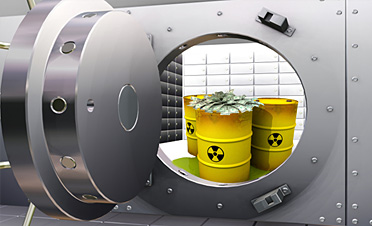
It’s true. Excuse banking sometimes deals in toxic assets. I’m not just talking about bad mortgages or too much stock in Enron either. When your excuse bank has toxic assets in it, you’re in big trouble.

A toxic asset in an excuse bank is often one we don’t realize is toxic. Sometimes, we even refuse to realize it. That’s what often happens with dictators, religious zealots, and child actors. Their excuse bank is so full of toxic assets that they don’t know how bad their excuses are and if someone tries to tell them, they don’t listen. That often leads to the kind of tragic self-destruction that becomes an A&E documentary.

That’s why it’s so important to identify these toxic assets before they poison you. Those assets will undermine your ability to work with others and gain their trust, two things everybody needs to survive in a functioning society. So how do you know if an asset is really toxic? Just follow these simple steps:

  • Step One: Ask yourself, “Would this excuse allow me to punch someone in the face and make them apologize for hurting my hand?”
  • Step Two: If you answered yes to the following question, then the excuse is toxic.

Tip #4: Understand An Investment’s Potential, But Don’t Ignore The Risks

Like any investment, there are risks and rewards that you have to weigh. Sometimes the risks are minimal. When you fake sick just a couple times and don’t announce to the world on FaceBook that you’re running a marathon, the risks are pretty minimal. Those risks escalate when you let them pile up, so much so that your girlfriend won’t believe you when you say you need to perform brain surgery on the President.

This is especially important for anyone in a position in power, be they the despot of a country or a manager at Walmart. Having power offers a lot of potential because it creates both excuses and reasons for people to do what you tell them. However, the risks are much greater, especially if you want to use that power competently.

It’s easy to lose yourself in power. Anyone who used cheat codes in old Mario games understands that. That’s what makes it so dangerous because it prompts us to ignore the risks. When we do that, we’re less likely to realize when our excuses become toxic. People don’t trust us and look for ways to get us out of the way. No matter how much power you have, you won’t be able to use it effectively if your excuses are toxic.


Tip #5: Avoid Banking Excuses As A Means To Improve Past Investments

This tip is directly tied to a little something called the sunk cost fallacy. Anyone who has ever had a gambling problem or knows someone who would bet their shirt at a blackjack table knows it well. It’s this annoying quirk in our psyche that compels us to keep throwing resources into a game we’ve already lost to justify past investments.

In a sense, it’s an excuse to justify stupid risks that didn’t pay off. It’s a way to alleviate the mental stress of knowing just how badly we’ve lost. In the context of excuse banking, it applies to more than just a bad run of luck at a casino.

Like trying to win back what you’ve lost, banking excuses to improve toxic assets rarely works out. When an excuse has become toxic, it usually stays that way. It’s like the boy who cried wolf. Even if the wolf does come once in a while, there isn’t much you can do to improve the utility of the excuse.

Excuses, like fresh fruit, can perish quickly. They can be finite and applicable only to specific circumstances. Once those circumstances pass, trying to cling to those excuses is like trying to make spoiled milk taste good. It just can’t be done.


Tip #6: Long Term Investments Usually Pay More Than Short Term Investments

This is where we kind of have to battle our inner caveman here. As I’ve covered before, caveman logic compels us to think primarily in the short-term. We prioritize the potential for avoiding tigers and mating with fertile partners. Those short-term investments worked well in the caveman days, but they work less well in more complex societies.

The key purpose of excuse banking is to ensure you can justify your decisions to others. If you can’t do that, then other people aren’t going to trust you, work with you, or want to have sex with you. Now there’s a time and place for short-term investments, but they’re usually very specific and rare.

Long-term excuse banking involves crafting excuses that build trust and understanding with others. Ideally, they have some amount of reason to support them, if only in part. Bank enough long-term excuses and you’ll find people who are eager to work with you, ready to trust you, and eager to take their clothes off with you.

That kind of investment usually takes a lot more time and effort, but the payoffs can be pretty damn awesome.


These are just a few tips to start out. If I come up with others or learn from someone else, I’ll share them in another post or list. If anyone else has investment advice in the world of excuse banking, please share it.

Excuses may be one of the most important investments we can make. It’s one of the few currencies that is valid in every country, culture, and society. Sure, we can’t use them to tip strippers, but they’ll help us in negotiating our lap dance.

3 Comments

Filed under Reasons and Excuses

Excuse Banking: What It Is, How It Effects Us, And Why It Matters

https://i0.wp.com/www.dailyentertain.com/wp-content/uploads/2014/12/banker-laughing.jpg

If you thought I was done talking about reasons and excuses, I’m sad to report that you’re very wrong. If you thought there’s no other way to make funny, sexy, or relevant, then I’m not so sad to report that I’m eager to prove that wrong as well. Trust me. This is a huge topic, one with many implications for writing novels and so much more.

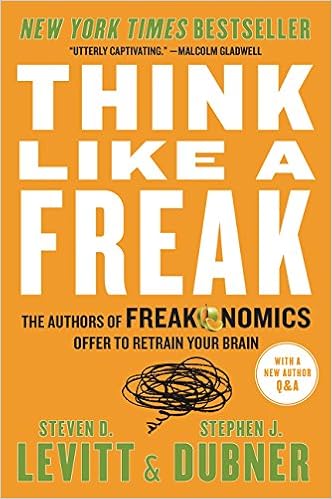
A big part of what inspired me to explore this topic is a new book I’m reading called “Think Like A Freak.” It’s a book by Stephen Levitt and Stephen Dubner, the two authors behind the best-selling “Freakanomics” books that I’ve enjoyed so much in the past.

There’s a lot to digest in this book and I’m still not done reading it yet, but the primary takeaway is fairly simple. It teaches you to step back from a situation, look at all the complex incentives and motivations surrounding it, and think in new, unorthodox ways to further your understanding. These posts on reasons and excuses are an exercise, of sorts, in understanding things from a new perspective.

I’ve already explored the basics of reasons and excuses. Now, I’d like to expand on those basics and create a new concept of sorts, one not unlike the idea of “caveman logic,” which I’ve cited so often on this blog. Please don’t mistake this for a real scientific concept. I’m as much a scientist as I am an astronaut ninja. This is just me, an aspiring erotica/romance writer, creating a term to encompass a larger concept.

With that said, ladies, gentlemen, and those of unspecified gender, I introduce to you the concept of “Excuse Banking.” It’s not in a dictionary. You won’t find it in any textbooks or erotica/romance stories yet, but it’s an idea that has affected us all to some extent.

Again, this is a term I’m inventing right now with no expertise and nothing but a blog to explore it. I understand that’s like a hobo walking into MIT and trying to build a star ship, but I want use this term to explore the more intimate aspect of reasons and excuses. As anyone who has read my books knows, I’m all for more intimacy.

First off, here’s a quick and dirty definition of what excuse banking is:

  • A form of rationalizing one’s actions by using one or more justifications that have been remembered, accepted, and understood as something of personal value;
  • A series of actions meant to mitigate or eliminate the emotional or mental stress of a decision or action that may occur in the future; and
  • The process of shaping ideas, beliefs, and morals in a manner that facilitates difficult ethical decisions.

In reading over these definitions, it should be easy to recall situations where excuse banking applies to you or someone you know on some level. Have you ever loaned someone money? Have you ever helped them with a chore? Have you ever done a favor and asked for nothing in return?

Well, in doing so, you’re effectively making deposits into the excuse bank that you can use as currency, so to speak. Sometimes those deposits gain interest over time. Sometimes they depreciate. In either case, we use this currency to either garner favors through reciprocity or mitigate stressful, demanding situations we may have at a later time.

Much like caveman logic, the idea of excuse banking reflects the understanding that our brains are wired a certain way. That wiring, unfortunately, is akin to an operating system that never gets upgraded. As far as our brain wiring is concerned, we’re still cavemen living in hunter/gatherer tribes in the African savanna.

That wiring, regardless of whether you believe it’s a product of nature or supernatural deities, is the guiding force behind everything from our social behavior to our sexual fantasies. For this particular topic, I’ll focus on the social behavior and save the sexual fantasies for my novels.

Like every other cognitive function, our social behavior does have a basis in neurobiology. That behavior helps guide what we do and why we do it. The behavior, and the wiring behind it, have two primary imperatives that take priority over pretty much everything else. Those priorities are, once again, survival and reproduction.

Nature may be blunt, imperfect, and messy at times, but you can never accuse it of misplacing priorities. When it comes to helping a species thrive, survival and reproduction have to be major priorities. Whether it involves surviving a bear attack or successfully making love to one hundred beautiful cavewomen, those priorities guide a significant part of our thoughts and actions.

It’s for that reason, as I stated in a previous post, that our process for making decisions is so different compared to what we believe. We like to think we’re rational creatures, assessing a situation logically like Spock or Dr. House, and then acting in accord with the utmost reason and morality. That’s the ideal and the basis of multiple superheroes, TV doctors, and scientists.

However, due to that pesky biological wiring that hasn’t been upgraded since the stone age, we do it ass-backwards. We first make a decision, often based on emotion and instinct, and then look for ways to justify it. It’s a good way to ensure we survive bear attacks long enough to get laid. It’s not a good way to promote rational decisions, much to the chagrin of Dr. House.

This is the domain in which excuse banking manifests. Regardless of whether or not we believe that this is how we make our decisions, excuse banking ensures we have a way to justify our actions and decisions, especially if they cause us physical or emotional distress.

We do this because there’s a 100-percent chance that at some point in our lives, we’re going to face a difficult decision. Maybe we have to decide whether to lie to a girl to get her attention. Maybe we have to decide whether or not we should trust the guy who claims to be a Nigerian prince wanting to help us collect an unclaimed lottery place. At some point, we will confront these decisions. It’s an inevitable fact of life.

Excuse banking is a way of hedging our bets, so to speak. It encompasses the actions, beliefs, and social connections we make prior to these decisions. We may have different reasons for seeking these connections, but they have the same secondary function. They help deposit excuses that we might be able to use in future situations.

The process of banking excuses is almost always secondary, in that sense. Nobody goes out of their way to do or believe something because they want an excuse to justify their actions. Nobody overtly think, “I’m going to work at this soup kitchen and provide medicine to sick orphans so I don’t feel as guilty when I strangle puppies with my bare hands.” Those that do are probably sociopaths or reality TV hosts.

Like real banking, sometimes the excuses we bank generate interest. This is especially true when actions involve forming a strong social network of people who support you, even when you screw up. They act as a safety net and over time, that net can become reinforced.

Also, like real banking, banked excuses require fees of sorts. You have to pay a price in order to bank a certain excuse. It can be the time and energy we put into crafting social networks. It can be the resources we expend to join a group, mold an identity, or sell our skills. Some fees are small. Some are much larger, but tend to be more flexible.

That’s where excuse banking starts to diverge from actual banking. Unlike hard currency, excuses can be malleable to a certain extent. You can turn past favors, past charity work, and all that money you gave to PETA into excuses you can use in multiple situations.

This is especially true of excuses built around beliefs. Since beliefs are intangible, unmeasurable, and unverifiable, they are extremely malleable. Take circumcision, a topic I’ve covered before, sometimes to an exceedingly personal degree. Absent a tangible medical condition, there’s no logical reason as to why we would cut off part of an infant’s penis.

However, if you inject a sincerely held belief that your particular religion has a tradition regarding circumcision, then that requires a hefty withdraw from the excuse bank. That excuse better be malleable and low cost as well. When it comes to beliefs, though, the cost is usually close to zero and it’s hard to beat that.

Now that’s not to disparage anyone’s sincerely held religious beliefs. I’m not saying that all religions exist as systematic forms of excuse banking. Human beings just aren’t that simple. If they were, then erotica/romance writers like me would have little to work with. Excuse banking is just one of those understated, unseen processes that emerges from our faulty brain wiring.

When put into a proper context, excuse banking can help make sense of an inherently irrational world populated by very crazy people, some of which have their own radio shows. At a time like this, when the concept of “alternative facts” is a thing, we need every tool we can get.

This is just one from an aspiring erotica/romance writer. I don’t know how useful it will be or if it’ll make anyone horny, but we can only hope.

29 Comments

Filed under Reasons and Excuses