Tag Archives: labor

Thoughts, Perspectives, And (Hard) Lessons On Hard Work

This is a video from my YouTube channel, Jack’s World.

In this video, I talk about hard work and how I’ve come to see it. I also offer what I hope is a balanced perspective on what it means to actually work hard in a world that seems increasingly unbalanced. I offer both these insights and perspectives free of charge, hoping it helps others as they navigate work and life moving forward. Enjoy!

Leave a comment

Filed under human nature, Jack's World, philosophy, psychology, YouTube

A (Frustrating) Note On Trends In Child Labor Laws

Throughout high school and college, I took multiple history classes. Those classes included world history, American history, and even a few courses in ancient history. I won’t say history was ever my best class, but I’ve always had a certain affinity for it. I often find it enlightening and profound to see how our world came to be and how we got to where we are now.

Over the course of those studies, I often found hope and solace in knowing that certain issues within some societies had been resolved for the most part. History is often messy with mishaps and setbacks, but there’s a general trend towards progress and I found that encouraging.

Now, having followed the news for these past few years, I’m not nearly as encouraged anymore. Because lately, it seems like there’s a growing trend towards undoing some of the progress we made, even if it means making vulnerable, desperate people suffer. It’s bad enough that countries like America have taken a step backwards with respect to abortion rights, but now the same country that I love is taking it even further.

This time, it has to do with child labor laws. And believe me, I wish I was joking. I wish this were an elaborate story from The Onion. But sadly, it’s all too real.

In multiple states, mostly in the mid-west and south, lawmakers have effectively rolled back decades-old child labor laws to make it easier for companies to hire workers as young as 14-years-old. And in some industries, namely those involving farm work, kids as young as 12-years-old can legally work.

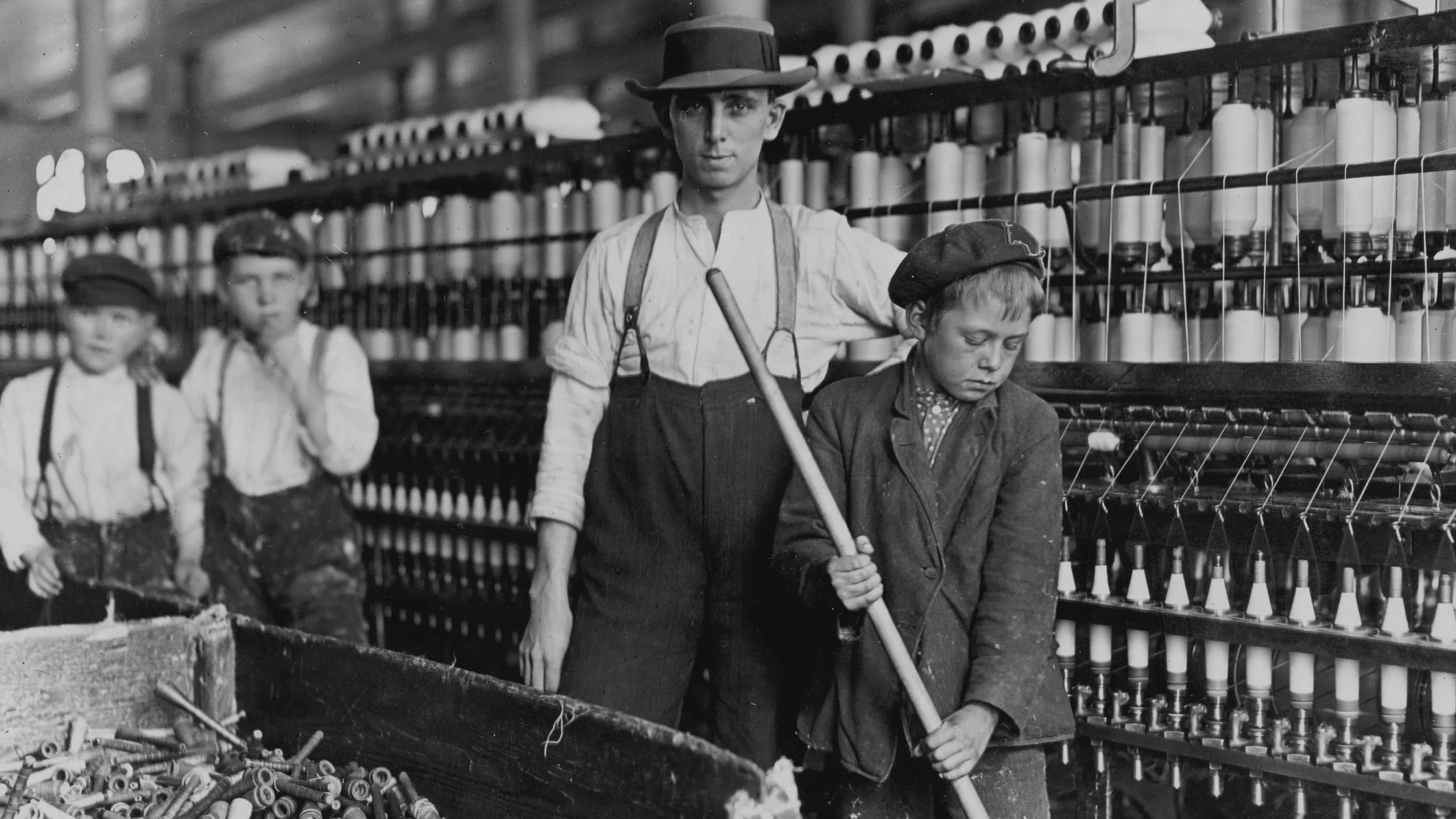
Now, if you have even a shred of compassion, empathy, and perspective, take a step back and think about this. Decades ago, we collectively decided that making children work in mines and factories was generally a bad thing. You don’t have to look far to find old, grainy photos of sad, broken children working in coal mines.

You don’t have to make bold assumptions about how these kids ended up having to work in such terrible conditions or why a company or business would employ them. They were desperate. They needed to do something to feed themselves or the rest of their families.

It wasn’t enough for kids to just help out around the house. They actually had to go out into dirty, dangerous mines or factories to earn what was likely piss-poor wages. And since they were kids, they weren’t as inclined to strike or organize. The only ones who benefitted from this were the employers, who were never going to pass up an opportunity to exploit cheap labor.

That’s why laws were necessary in the first place. History, as well as a basic understanding of power dynamics, has proven time and again that no organization gives up a profitable endeavor willingly. It took a serious movement of people who were appalled and disgusted by such practices to make these companies stop. And even when the laws were passed, some still tried to employ children illegally. Many still do, some of which include well-known American brands.

But now we’ve somehow found ourselves at a point where rolling back those laws is somehow viable? And those elected into public office are willingly going through with it?

Again, just take a moment to imagine this from the perspective of a kid. I remember being 12. I wasn’t even allowed to rent R-rated movies. And the most laborious task I could imagine involved doing yardwork with my parents over the course of a single afternoon. The idea of actually having to go to work while still going to school sounds like a goddamn nightmare.

Even when I was 15, it sounds downright soul-crushing. I was already navigating the rigors of high school. I was also going through the psychological and bodily horror that was puberty. The idea of having to work a job at the same time sounds downright cruel.

I understand that my childhood and circumstances are different than most. I imagine that kids from desperately poor families with limited opportunities might find such work unavoidable. But that’s exactly what makes these efforts by lawmakers so disturbing.

They’re essentially sending the message to employers, and society as a whole, that it’s perfectly fine to exploit desperate people and their children. It doesn’t matter if it means robbing a child of an opportunity to be a child and not get seriously hurt in a typical work environment. Their labor means more profits for the company and that’s all the justification we needed?

I’m no radical anti-capitalist, but even I call bullshit. If a company or business can only be profitable by exploiting the labor of children and desperate workers, then their business model sucks. And at the very least, our laws should not go out of their way to accommodate such models.

If all this weren’t bad enough (and it’s still very bad on so many levels), what makes it even worse is that those in favor of passing these laws are often conservative republicans. Remember, these are the same people who go all Helen Lovejoy and demand that we think of the children every time a drag queen dares to read them story. They’re also the same political wing who thinks a 10-year-old should be forced to give birth to a child that resulted from rape.

Again, I wish I was making this up. These policies, and the hypocrisy surrounding them, read like plots by supervillains. The only difference is that there are no costumed superheroes in this world who will stand to oppose them.

These despicable ghouls wearing human flesh have to know on some levels that what they’re doing will result in kids suffering, toiling, and being exploited by organizations whose only interest involves raising profits. They simply don’t care, mostly because they know their kids will likely never have to work jobs like that.

There’s a lot more I can say about the people pushing for and advocating these laws. But there’s only so much profanity and vulgarity I’m comfortable including in this rant. Maybe in a different time and under different circumstances, this wouldn’t bother me as much. I may not have kids of my own yet, but I have multiple nieces and nephews now. The idea of them growing up in a world where they could be employed and exploited at a young age makes me sick to my stomach.

Going back to my points about history, I’ll just remind everyone that we’ve been down this road before. We decided over 100 years ago that child labor is generally a bad thing for kids, families, and civilized society. We fought that battle for years and eventually won. Let’s not fight it again. Kids already have it hard enough. Let’s not make it worse for them.

Given the current state of the world, it’s literally the least we can do for them.

Leave a comment

Filed under Current Events, politics, rants

Happy Labor Day 2023!

Today is Labor Day.

For most people, that’s just a nice day off to cap off the summer. If you’re a kid, it’s usually an extra day without school, if it has started by now. It’s not the most colorful holiday. It certainly isn’t something people put up decorations for. But it’s still a holiday we should appreciate to some extent.

This is usually the last day you can lounge by the pool, enjoy the warm weather, and appreciate summer. It’s usually a great day to have a cookout, get together with family, and enjoy each other’s company before the fall sets in. That’s all well and good, but it’s worth noting that Labor Day exists for a reason.

I won’t go into the lengthy history of how this day came to exist. There are plenty of resources on the internet to reference for that information. But in recent years, I feel like there’s been a greater awareness of the struggles with labor. We see it more and more as labor strikes make the news. And more people have become sympathetic to the work of such efforts as news about obscene greed come to light.

These are all issues that we should be aware of. Like it or not, most of us aren’t born rich. Most of us will have to work for a living. I’ve had more than my share of jobs over the course of my life. Many of them were very unpleasant. Without the efforts of organized labor and efforts to temper greed, work as we know it would be much less pleasant.

There’s certainly a balance between managing the concerns of workers and those providing the work. I’m not smart enough to understand or discuss that balance. I’ll just say that Labor Day is a chance for us to appreciate why those efforts matter.

So please, if you get a chance, use today to commemorate and thank those who have improved life for generations of workers. And don’t forget ongoing efforts to keep improving the lives of those working now and the workers of the future.

Happy Labor Day!

Leave a comment

Filed under Current Events

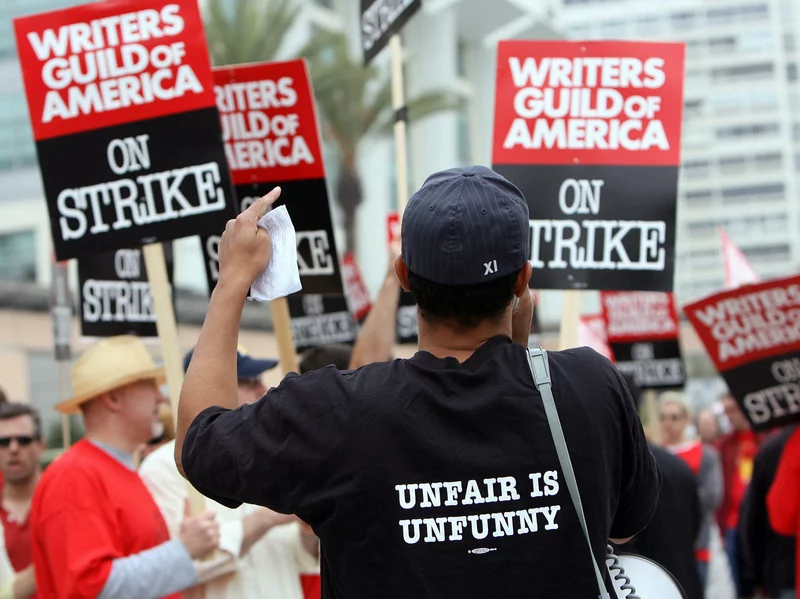
Why You Should Side With The Writers In The Latest WGA Writers Strike

Back in late 2007, there was a three-month strike between the major studios of Hollywood and the Writer’s Guild of America (WGA), the largest labor union representing professional writers working in the entertainment industry. That strike was one of the most disruptive forces to hit the industry in decades. Like many other labor strikes, much of the issue came down to money. MOst of it came down to how much writers were getting paid in residuals for things like DVD sales and other emerging distribution channels.

Even though the dispute was resolved, there were major effects on various shows and movies. If you want to know why there were so many reality TV shows that emerged in the late 2000s, this is a major factor. Shows that don’t employ elaborate stories or scripted content don’t have to pay a large writing staff. That means more profits for the studios and the executives.

As someone who tends to despise reality TV, I hated this trend.

And to those who watched those shows and continue to do so, just know that the situation we now find ourselves in with respect to entertainment is largely because of you.

Flash forward to today and the WGA has gone on strike again. Now, I’m sure most peoples’ primary concern is whether or not this will affect their favorite shows. As someone who loves binging non-reality TV shows, I admit that is a concern for me too. However, even if your favorite shows end up affected, do not cast the blame on the writers. That’s like blaming the miners who get trapped in a mine and not the corrupt executives who skimped on safety.

This latest strike promises to be different compared to what happened in 2007. A lot has changed in the entertainment industry since then, even before the impact of the COVID-19 pandemic. Now, residual revenue for DVD sales is less a concern because fewer consumers are buying DVDs. So much of everything has gone to streaming now and that’s seriously impacting writers’ ability to make a living from their craft.

On top of that, there’s the emergence of AI chatbots like ChatGPT that could potentially undermine writers even more by allowing studios to basically let AI fill in rather than paying another writer. And anyone who knows anything about how most industries operates, including entertainment, understands that if executives can increase profits by squeezing out workers, they’ll do it. And they usually won’t hesitate because the financial incentives are just too strong.

This, more than anything, is why we the consumers should side with the WGA. Even if it means your favorite shows get delayed, this is one labor struggle that goes beyond just pay disputes. Writers in entertainment weren’t making much beforehand. I’ve even heard a few jokes online among the comic publishing crowd that certain comic writers, especially those who independently publish, make more money than some of the writers on major shows and movies.

And it’s set to get worse and many studios are seeking to treat their writers like gig workers. Instead of employing a consistent, stable writing staff that knows each other and understands the product, studios think they can just hire a few freelancers, pay them less, and get a product that’ll still be watched by fans. And since these writers won’t have rights to residuals or copyrights, then the studio can keep more of the profits.

This should concern you, the consume. Because if the entertainment industry is screwing skilled writers out of money, then that will eventually affect the quality of every show and movie you see. If you think things are bland now with every major studios just milking established franchises to death, I promise it’ll get worse if they squeeze out talented writers.

Great writing is how underrated shows like “Arcane” can somehow find an audience.

Great writing is how shows like “Avatar: The Last Airbender” can become beloved franchises.

Great writing is how movies like “Puss in Boots: The Last Wish” can end up being way better than anyone thought it could be.

As someone who still aspires to be a good writer one day, I may have some bias when it comes to who I side with in an issue like this. But if you’re a consumer of entertainment that doesn’t suck, or just don’t want to go through another glut of reality TV again, it’s in your interest to side with the WGA.

They work hard to entertain us.

They work hard to enchant, inspire, and enlighten us.

That’s not something you can reduce to gig work. That deserves both our respect, as well as fair compensation for their labor.

1 Comment

Filed under Current Events, movies, television, writing

The First Automated McDonald’s Is Open (And Why That’s A Big Deal)

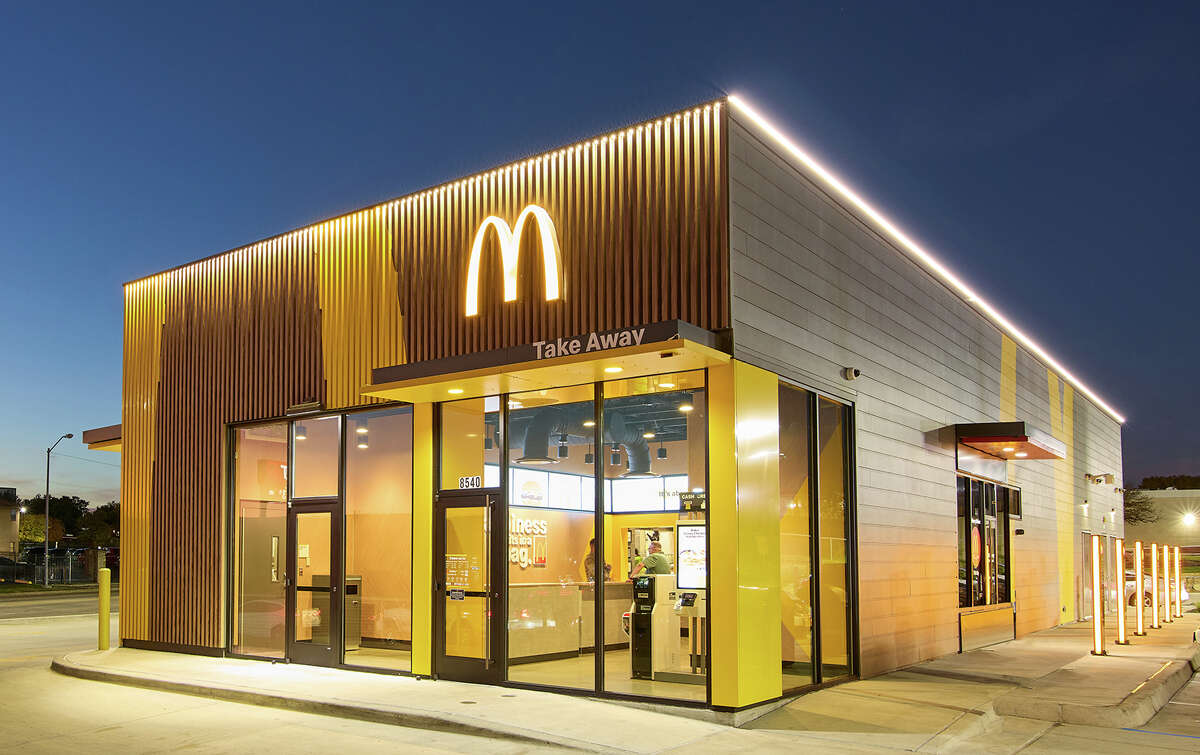
In late 2022, there was a major tech news story that made headlines for a hot minute, but was completely forgotten. In Fort Worth, Texas, the first ever automated McDonald’s restaurant opened.

From the outside, it looks like a typical McDonald’s. It has the same aesthetics and architecture that have become so iconic. But inside, there are none of the usual fast-food workers. There are just rows of kiosks and a conveyer belt. Once you place your order, it’s automatically prepared behind the scenes in the kitchen. Then, when it’s ready, it’s bagged and wheeled out to you.

When it’s working optimally, you never have to interact with another human being. Whether you consider that a good or bad thing is entirely up to you, but that’s the ideal. As for how it handles orders that aren’t properly bagged, food that isn’t properly cooked, or drinks that aren’t properly prepared, that’s not yet clear.

This isn’t intended to be the start of a massive effort to automate every McDonald’s restaurant. It’s largely a test to see just how much a standard fast food restaurant can be automated.

As someone who’s first paying job was in fast food, I have some mixed feelings about this.

On one hand, I welcome this kind of automation. I remember what it was like working at these restaurants. The pay was awful. The conditions sucked. And you had to regularly clean up messes that made you want to throw up.

On the other, this is an undeniable sign that automation is accelerating and the low-skilled jobs that many people rely on might become less and less available in the coming years. And for those who really need a job, even if it’s a lousy, low-paying job, that could be seriously detrimental to large swaths of people.

In terms of the bigger picture, I think this is a much larger story than people realize. Automation has been a popular talking point for years now. I’ve certainly touched on it. And I think the recent rise of artificial intelligent programs like ChatGPT have really raised the profile of automation, mostly because it revealed that it’s more than just factory jobs that are vulnerable to it.

It might even be because of ChatGPT that this story about McDonald’s flew under the radar. But I honestly think automation in the fast food and restaurant industry could be more disruptive in the short-term than products like ChatGPT.

In the coming years, we might look back at this automated McDonald’s as the first step towards a new trend in automation. People have talked about automating things like fast food for years. Then, the lingering effects of the COVID-19 pandemic and new trends in labor converged to create new incentives.

This is no longer just an idea that exists on paper or in the imaginations of CEO’s fantasizing about not having to pay minimum-wage workers anymore. This restaurant actually exists. People in the Fort Worth area can visit it right now.

Again, it’s not part of an ongoing effort to automate every McDonald’s. If you go to this restaurant, chances are you’ll deal with a system that’s still being refined. There’s probably still people there behind the scenes, monitoring and fixing whatever bugs emerge in the system. There’s a good chance those people are paid much more than minimum wage. There’s also a good chance that this particular McDonald’s isn’t going to be more profitable than those with human workers.

But those are just logistical issues that can be polished, refined, and streamlined. All it takes is time and experience. It’s not unlike the first assembly line or the first 3D-printer. It’s messy and clunky at first, but it steadily becomes more efficient with time and investment.

Eventually, it’ll get to a point where a functional McDonald’s won’t ever need a staff of low-skilled employees anymore. In principle, it would only need one person to be there to make sure the ingredients are re-stocked and the equipment doesn’t break. The company probably wouldn’t even need to pay the person that much. If they’re qualified to work as an unpaid intern in a standard IT department, they’re probably qualified to manage this system.

And if McDonald’s finds a way to make it work, you can expect the competition to catch up quickly. There would just be too much incentive to remove all the low-skilled wage labor as a means of increasing profits. It won’t happen overnight, but one company only needs to succeed once before others copy it.

Fittingly enough, that’s something McDonald’s did before. Their system of fast food was pioneered in the early 1950s and proved so successful that many other competitive, including Burger King and Taco Bell, embraced it. It’s very likely we’ll see something similar play out with automation.

But what does that mean for low-skilled labor, in general?

That’s a relevant question. There’s no way this kind of automation will stop at fast food restaurants. Add AI tools like ChatGPT into the mix and even mid-skill jobs could be at risk.

I don’t claim to know the answer, but I suspect we’re going to see some major upheavals in how we work in the coming years. That’s going to have consequences, good and bad. And I honestly worry that we’re not prepared for the bad consequences in the slightest.

Leave a comment

Filed under Artificial Intelligence, Current Events, technology

Happy Labor Day 2022!

Today is Labor Day.

For most people, it’s just a generic government holiday. Most treat it as the last chance to enjoy proper summer activities, like cookouts and going to he beach. For kids, it’s often a clear sign that summer break is over and it’s time to get back to school.

However, these past two years have changed a lot about how we see labor, holidays, and traditions in general. I don’t think I need to remind everyone how much change and upheaval we’ve had since 2020 with the COVID-19 pandemic. In fact, I’d rather not remind anyone of just how bad things got for so many people, especially the working class.

So, rather than dwell on that, let me just take a moment to ask that everyone remember what it means to work hard and toil for a living. Many of those reading this have probably worked a menial, arduous job for minimal pay and little benefits. Unless you’re born rich and well-connected, it’s practically unavoidable.

I certainly couldn’t avoid it. One of the first jobs I had was at a fast food restaurant. It was a tedious, laborious job that always left me sore, drained, and moody. I had to help impatient people get greasy, unhealthy food. I had to constantly empty out the trash, clean the toilets, and sweep disgusting crap off the floor.

But the worst part of all was just how slow time seemed to go every day I was at that job. I swear a minute felt like an hour and an hour felt like a day. It also paid minimum wage and the only benefits I enjoyed was a free meal every day.

It was as unpleasant a first job could be. However, it gave me an immense appreciation for those who work hard and toil at these jobs that a lot of us don’t give a second thought. To this date, I try to make it a point to be extra courteous and kind to those working jobs like that. I also try to tip generously whenever I can.

I encourage everyone to do the same because if nothing else, these past two years have shown just how vital these hard working people are to our society. We literally could not function without them. Whether they’re flipping burgers, delivering packages, or crunching numbers behind a computer screen, their hard work and toil deserves to be celebrated.

Labor Day might not offer much to those who still strain their bodies and souls every day, just to survive. But I hope it offers some perspective to those who truly appreciate the value of hard work.

So, in that spirit, I wish everyone from all walks of life a Happy Labor Day.

Leave a comment

Filed under Current Events

My (Non-Expert) Proposal For Automation And Greater Human Prosperity

62% say robots can be more productive than human workers —V1 study

I’m not an expert on much. I don’t consider myself exceptionally smart on matters that don’t involve superhero comics, NFL football stats, and quality romance stories. I make that disclaimer because I don’t want to give the impression that I know more than I know.

That kind of perspective is important, especially if you’re going to talk about complicated issues with not-so-clear solutions. I’ve attempted to talk about some of those issues on this site, some being much more complicated than others. I don’t claim to have shed new light on a subject or changed a few minds, but I like to think I still contributed something.

To that end, I’d like to make another contribution to a subject I’ve also touched on before. In the past, I’ve highlighted both emerging and potential issues associated with the development of artificial intelligence, including the sexy kind. I’ve also highlighted the issues we may face in a future where so much traditional work has been automated.

Now, in wake of a global pandemic that revealed just how much we can get done at home, I suspect that trend will accelerate. I also expect that trend to bring many problems, not the least of which involve people struggling to find the kind of good-paying blue collar jobs that have helped people rise out of poverty.

Turning back the clock or just trying to ban automation at a certain point is not a viable solution. There’s just no way to enforce that in the long term and it’ll only get more difficult once artificial intelligence gets to a point where it can match the capabilities of an ordinary human. At some point, we’ll have to adapt and that includes changing how we live, work, and play.

The living and playing part have their own set of unique challenges, but I think the work aspect is more pressing. When most people express concerns about automation and AI, they revolve largely around the economic impact and understandably so.

Historically, people have had to work in order to earn money or resources to survive. Whether you’re on a farm in the 10th century or in a city in the 20th, this dynamic has remained fairly constant.

Automation, especially once supplemented by artificial intelligence, will likely upend that dynamic completely. It’s entirely possible that, at some point this century, we’ll develop machines that can do practically all the work humans have had to do in order to survive.

That work includes, but isn’t limited to, farming our food, mining raw materials, producing our goods, maintaining our streets, protecting our homes, and even governing our society. Since machines never tire and are prone to fewer errors, what other jobs will there be? I don’t doubt there will be jobs, but what form will they take? More importantly, will they pay enough to large swaths of people?

I don’t claim to know the answer, but I suspect they won’t. The dynamics of labor markets just can’t function when the machines are capable of doing so much more work than large swaths of people. Even if those people don’t work, they’re still going to need money and resources. How will they go about getting it?

Answering this question has often led to discussions about a universal basic income, which has actually become a more viable policy position in recent years. I’ve even touched on it a bit as well and while I think it’s a great idea, I think there’s also room for some supplementary policies.

For that reason, I’d like to submit one of those policies that could be implemented with or without universal basic income. I call it the Individual Automation Matching Dividend, or IMAD short. This policy would work like this.

  • All adult citizens within the borders of the country will have a piece of identifying information, such as a social security number, voter ID number, or driver’s license number, turned into a special digital token.
  • That token will be ascribed to a machine/robot/android that is currently active and conducting work that had been done by humans at some point in the past, be it manual labor, service roles, or something of that sort.
  • The productivity and wages of work done by these machines will be indexed to a minimum annual salary of approximately $78,000 in 2021, which will be adjusted for inflation on a yearly basis.
  • Any work done by these machines that exceed the value of that salary will be diverted to a national welfare fund to provide extra support for those who were sick, disabled, or otherwise in need of resources beyond that of a healthy adult.
  • No citizen will be ascribed more machines than any other and any machine ascribed to them that is lost, damaged, or obsolete will be replaced in kind by the state.

I apologize if some of what I just described is confusing. I tried to write this out like a lawyer or someone proposing a new policy to a future government. For those who don’t care for legalize, here’s IMAD in a nutshell.

Once you become an adult, you get your own perfect worker robot. That robot may take many forms, but for the sake of simplicity, let’s just say it’s an android in the mold of those we saw in the “I, Robot” movie. They can work without rest, do everything a healthy adult can do, and have roughly equal to greater intelligence.

You’re given this robot by the government to basically act as your work avatar. So, instead of you going out to work every day to earn a living, this robot does it for you. The work that robot does will be compensated, but the money will go to you. Basically, you get paid for the work your android does. It’s more a dividend than a wage.

Remember, since the robot doesn’t age or get tired, it can work 24/7/365. In principle, you won’t even have to meet it. It just works all day and all night on whatever job requires labor, be it construction, assembly, shipping, farming, cooking, etc. You just get all the money, up to about $78,000 a year.

Now, why did I choose $78,000? I didn’t pick that out of thin air. That’s a figure ripped straight from a real-world case study from a company that started paying all employees a minimum of $70,000 a year back in 2015. The idea was that previous studies had shown that when people make more money beyond a certain point, their happiness doesn’t increase. This company just took that idea and ran with it.

The results, by and large, were overwhelmingly positive. With that kind of money, people could create more comfortable lives. They could buy homes, start families, plan for retirement, and make investments. It makes sense. When people have this kind of money to work with, they have the resources they need to create prosperous lives.

The idea behind IMAD is to mirror that by leveraging the added productivity afforded by automation. It’s not some large blanket package of money like a universal basic income. It starts with an individual, acknowledges the work that they have historically provided for a society, and supplements that with technology.

I’m not saying it’s a perfect proposal. I’m not even saying it’s smart. For one, it assumes that one human-like android is enough and that we can control the artificial intelligence necessary for them to operate on a large scale. That’s still an ongoing issue. I’m sure there are plenty more problems I haven’t thought of, but that’s exactly why I’m sharing it.

Surviving a future with intelligent machines is going to be challenging enough. However, we can’t just stop at survival. We want to prosper. We want to live, love, and build better futures for ourselves and our loved ones. Technology like automation and AI can help us get there, but only if we use it wisely. It’s a big if, but one that’s worth working towards.

Leave a comment

Filed under Artificial Intelligence, futurism, technology

Rethinking Jobs And Business: How Pandemics And Relief Benefits May Change Both

Help wanted? | Free | hometownsource.com

The world is always changing. That’s the only constant.

Sometimes, it changes more rapidly and chaotically than usual. That tends to happen a lot when major events transpire, such as a once-in-a-generation pandemic that infected millions and shut down entire countries. I hope I don’t have to belabor that to anyone with a news feed for the past year.

At the same time, these kinds of rapid upheavals can get us thinking harder about things we tend not to question. I’m not just talking about how much we take our health, our infrastructure, and our essential workers for granted. I’m referring to bigger concepts about how we approach life, society, and how we structure our lives.

One area that seems to be getting more scrutiny lately is how we approach jobs, work, and careers. I’ve certainly given it more thought, mostly in terms of the impacts of telework and how I used my stimulus check. I suspect many others have contemplated these topics in new ways in wake of recent events.

Now, as the pandemic nears its end, some of those concepts are already manifesting in the real world. One effect, in particular, has been especially jarring in America, mostly for reasons that other industrialized countries may find laughable. It has to do with people not wanting to work for a lousy, unlivable wage.

I know that shouldn’t be such a radical concept, but it is and as a proud American, I find it infuriating. There’s no getting around it. The ages for the average, non-CEO American have been stagnant for decades. It’s an issue that has been festering since long before the pandemic and even before I was born.

Before the pandemic swept in, there was an ongoing debate on whether the minimum wage should be increased to $15 nationally. I won’t get too heavily into the politics and talking points behind it, mostly because it ultimately descends into cycle of speculation and fallacies. I’ll just say that the pandemic has complicated that debate in unexpected ways.

During the height of the pandemic, the economy was basically shut down. Suddenly, millions were out of work and businesses had to shut down. Many still haven’t fully recovered. A big reason why many didn’t starve to death or end up on the streets was because of government relief packages, which included extended unemployment benefits.

While America’s relief package wasn’t nearly as generous as other countries, it was certainly better than nothing. I know plenty of people who genuinely needed that relief to stay afloat in terms of paying bills and feeding their families. It’s also not unreasonable to say that this was a critical measure in terms of preventing the pandemic from getting even worse.

However, this effort revealed something remarkable. According to a study done last year, the unemployment benefits that many workers received was actually better than their previous wages. It wasn’t an insignificant chunk of the work force, either. The benefits were greater for approximately 68 percent of American workers.

What does that say about the wages we’re paying our workers?

Moreover, what does that say about the system in general that workers can make more by not working than they would if they were?

Something about that doesn’t add up, literally and conceptually. I get that this was an unprecedented situation. At the same time, it reveal something about how we see work and workers. It’s something businesses are starting to realize too.

As the country and the world opens up, new job opportunities are arising. That’s good news for those who have been out of work. Unfortunately, those same businesses are having a hard time filling those positions.

The jobs are there.

The workers are there.

They just aren’t gravitating towards one another.

Here’s a brief rundown of the situation, courtesy of NPR. If you haven’t been working or are lucky enough to have kept your job during the pandemic, it should offer some insight and perspective.

NPR: Millions Are Out Of A Job. Yet Some Employers Wonder: Why Can’t I Find Workers?

At a time when millions of Americans are unemployed, businessman Bill Martin has a head-scratching problem: He’s got plenty of jobs but few people willing to take them.

“I keep hearing about all the unemployed people,” Martin says. “I certainly can’t find any of those folks.”

Martin helps run M.A. Industries, a plastics manufacturing company in Peachtree City, Ga. The company makes products used in the medical industry — specifically, in things like coronavirus tests and vaccine manufacturing and development.

But as he struggles to keep up with demand, Martin is finding it almost impossible to find new workers.

As someone who has worked his share of lousy, low-paying jobs, I can’t say I’m surprised by this. Don’t get me wrong. I still feel for the business owners who need workers to keep things going. I just can’t forget how arduous it was, working hard at a job that paid so little and left me so exhausted at the end of the day.

If the alternative is staying home and collecting unemployment, which ultimately pays more, then the choice is easy. That’s especially true for those who have kids or relatives they need to take care of. It’s not that they’re lazy, as some overpaid pundits love pointing out. It’s just that the nature of these jobs aren’t that appealing, especially when the pay is so low.

If anything, this situation has inspired us all to take a step back and look at how we approach work, jobs, careers, and business. When you think about it, it’s a little distressing that we build so much of our lives around work. It’s not just something we do out of obligation and responsibility. Many literally have to work in order to survive.

Is that right?

Is that just?

Is that healthy for society as a whole?

I say this as someone who has been lucky enough to have jobs that I’ve both loved and hated. I know what it’s like to work for a business that you hate. I also know what it’s like to have a job you find genuinely fulfilling. Not everyone is that lucky. In fact, I suspect the vast majority of the population, even in America, never experience that luck.

I get that there are economic reasons why some businesses can’t pay their employees high wages. I’ve worked in fast food restaurants. I know the profit margins aren’t exactly large. I also know that, even when I could make more than minimum wage, it was rarely enough to live on. That’s not even factoring the physical toll some of this work takes.

Despite that toll, there was still an undeniable stigma to those who didn’t work or those who simply avoided low paying jobs. In America, it’s a direct extension of that old protestant work ethic that equates moral worth with a willingness to do backbreaking labor for minimal pay. I’m not saying that work ethic is wrong, but I do think it needs to be re-evaluated.

The pandemic suddenly gave people an option on whether or not they wanted to do these kinds of low-paying jobs. Many understandably opt to just collect unemployment. They may not live luxuriously, but they will live. In some cases, they’re even better off.

It may be a sign of things to come. I already speculated on how the pandemic relief bills could be a precursor to a universal basic income. Now that people have experienced life in which their survival isn’t directly tied to having a low-paying job, I think it’ll be difficult to back.

I also think that’s a good thing. Regardless of how you feel about minimum wages, work ethic, or running a business, I think it’s generally a positive trend that we’re starting to decouple work with the right to survive. I think it’s a trend that has to happen, especially as automation does more and more of the low-skilled labor traditionally done by human workers.

It’s true. Some people are lazy and don’t like to work. Some people are just so driven and incapable of not working. Both still deserve to live without needed a job to keep them from starving to death or losing their home. As bad as this pandemic has been, I sincerely hopes it inspires us to rethink how we structure our society. There is a better way of doing things. We should always strive to do things better. Sometimes, that means rethinking everything we’ve come to believe about work, business, and life in general.

Leave a comment

Filed under Current Events, health, human nature, politics

The Future Of Telework: A Trend That Transcends Pandemics

In early 2020, which might as well be another lifetime, I speculated on the lasting impact of increased telework and distance learning due to the pandemic that uprooted our entire society. At the time, I didn’t know just how bad this pandemic would get. In my defense, my hopes were still intact. Now, they’re charred ashes, but that’s beside the point.

In essence, I speculated that once people got used to teleworking, they would not be eager to go back, even after the pandemic had passed. That wasn’t exactly a bold speculation. You don’t have to be a world class psychic to surmise that people will come to enjoy working in their underwear, not having to commute, and enjoying the general flexibility that telework affords.

I’ve been stuck in enough traffic jams to appreciate that kind of flexibility. I know I’m not the only one who might become too fond of telework.

Well, that all-too-obvious insight is starting to take hold in many sectors. It’s not just related to typical office work in cubicles. Everyone from the United States Military to big tech companies to law firms are embracing this new normal for the workplace. Even though it’s more out of necessity than innovation or good will, it’s still happening and there may be no going back.

The pandemic has already forced a mentality shift among the workforce. According to research done by Pew, telework was mostly seen as an optional benefit reserved for an affluent few. That’s not surprising. That kind of flexibility just felt more like a luxury, one that someone had to earn by establishing trust and credibility from an organization.

Now, it’s not just a necessity. It’s unavoidable. The world we’re living in now just cannot accommodate the same professional environment we once knew. I’ve worked in many professional environments before. I can attest that some of them are not built with pandemics in mind.

At one point, I worked at a company in which my desk was crammed into a closet-sized space with three other people. If even one of us caught a cold, we’d all be sick by the end of the week. It was that bad.

I doubt that’s an isolated case. In some of the jobs I’ve had, I have been able to work from home, but it’s only as a last resort. The only times I actually had to do it involved an emergency that occurred on a Saturday morning and one instance where the office was being renovated. In both cases, I still got plenty of work done. I just did it in my underwear.

In that sense, I get why many organizations reserve telework as a luxury rather than a norm. There’s this underlying sentiment that people will abuse it. If they can work from home, they just won’t get as much done. They’ll be too tempted to just grab a bag of chips, lie down on the couch, and watch game shows.

While I don’t doubt there are people who do that, this pandemic has revealed that most people aren’t assholes on that level. In some cases, it’s increasing productivity. Apparently, when workers are comfortable and afforded flexibility, they can get more done. That shouldn’t be too surprising, but it’s still remarkable in its own way.

This has born itself out in subsequent studies and surveys. For some industries, telework is probably more productive in the grand scheme of things and that shouldn’t be surprising. Anyone who has ever had a lousy commute knows why. If a good chunk of your day is spent waking up, putting on itchy clothes, and spending hours in traffic, you’re not going to be in a very productive mood.

That won’t be the case for certain industries. If you’re a doctor, a police officer, a fire fighter, or a trucker, you just can’t telework. The nature of the work doesn’t allow it. That’s still going to be the case, at least until we have robots capable of doing those tasks, which we are working on. However, there’s also sizable chunk of work that could probably be done remotely.

I think the impacts of this emerging truth will extend far beyond the pandemic. I’ve already seen it with people I know. They enjoy teleworking. They don’t want to stop, even after the pandemic becomes a bleak footnote in history. Some are willing to still go into the office some of the time, but they would prefer to telework. I suspect that’s going to become the new normal.

Last year has proven that people can, for the most part, be responsible with the flexibility afforded by telework. As long as they’re getting the work done, who cares if they do it in their underwear while Netflix plays in the background? Considering how costly commutes can be and how expensive office space can be, it might just make more fiscal sense in the long run.

Like it or not, businesses and various organizations tend to err on the side of reducing operating costs. It may mean more employees waste time at home, but if the difference is made up by better productivity, then it’s a net gain overall.

That shift could have impacts that go far beyond business operations. If people have to commute less, then that makes living out beyond urban and suburban settings more feasible. Given how expensive it is to live in those areas, this could spread people out even more, which is an objectively good thing if you’re looking to prevent future pandemics.

It might even help those in depressed rural areas in need of human capital. I can easily imagine some people preferring the quiet, less crowded environment afforded by a rural setting. If they can live in that environment while still getting their work done via internet, assuming they have a reliable connection, then that’s another big benefit that goes beyond the business itself.

This is likely to be a trend. That’s not a fanciful prediction. We’re already seeing it happen. The pandemic just forced it to accelerate. There will likely be other impacts. It may very well change how cities, suburbs, and rural areas are planned from here on out.

I don’t claim to know the specifics, but we’ll likely see it continue in the coming years. I, for one, welcome this change. If I can reduce the amount of time spent in traffic and increase the amount of time I spend in my underwear, then my overall well-being improves considerably.

2 Comments

Filed under Current Events, futurism, human nature, technology

Why EVERYONE Should Work A Lousy Service Job At Some Point In Their Lives

fast-food-job

Talk to any marginally successful adult, be they high-paid executive or a full-blown celebrity, and chances are they’ve worked at least one lousy job in their life. It’s also likely that said lousy job was a service job. Some may look at those days with a fond sense of humor. Some might still have nightmares about them to this day.

We all had to start somewhere in our professional lives. Some people who are my age may still be behind the curve, struggling to get ahead. To those people, I offer my sympathy and support. To those who worked their way up from the bottom, I have a feeling that what I’m about to say will resonate with you.

That’s because I have worked what most would classify as a menial, low-skill service job. In fact, that menial, low-skill service job happened to be my first job . It was not a fun or enjoyable job, to say the least. There were more bad days than good. However, it was the first time I earned my own money. It was the first time I felt like an adult, to some extent.

It used to be I would look back on that job and shudder. When the memories were still fresh in my mind, I could only focus on how miserable I felt working there. As I’ve gotten older, though, I look back on that job with a sense of pride because I feel it made me a better person in the long run.

It made me appreciate what it felt like to work at the very bottom of the totem pole. It also made me appreciate the people who worked those kinds of jobs for years on end, scraping away at roles that most of us take for granted. It also made me appreciate the people who had to work weekends, night shifts, or holidays. To this day, I go out of my way to thank those people because I’ve been in their position.

It’s because of that experience and the lessons I learned that I believe everyone should work a lousy service job at some point in their lives. Regardless of whether you were born into a rich family or grew up in a one-room shack with no functioning toilet, working a job like that doesn’t just establish someone in the real world where you work for your money. It really builds character, albeit not in everyone.
I know I sound less like an aspiring erotica/romance writer and more like everyone’s dad in saying that, but that doesn’t make it any less true. I certainly heard that from my family, but mine was one that practiced what they preached. Talk to any one of my relatives and you’ll find that all of them have worked a menial job like I did at one point.

I have siblings, parents, and relatives that have worked as low-paid waitresses, bartenders, cashiers, dish washers, and fry cooks. Think of any low-level job you’d see at a restaurant or a fast food place. Chances are, someone in my family has worked a job like that and it shows in the kind of people they become as adults.

I see that within my family and beyond. I see it not just in how they value their work. I see it in how they value the others who do work. When my family goes to a restaurant, we go out of our way to treat the waiter or chef nice if they do a good job. Chances are, if you do your job well with us, we’ll tip you nicely. That was a big deal in my family.

Now, as some of my family members have retired from their careers and settled into a less hectic lifestyle, I still see in them the values that working those jobs gave them. It taught them the value of work and the value of treating people with decency and respect. Look at the stories of how rich, entitled assholes with trust funds have treated people they consider beneath them. These values do matter.

For me, personally, there’s one particular memory that stands out among all others that helped solidify the importance of those values. To recount that memory, though, I have to warn some readers here that this is not a very pleasant memory. If you just ate or have a weak stomach, I would recommend not going any further.

If you’re still with me, then I commend you because this story may hit a little too close to home for some. It happened on one particularly dreary night at my job. This job, fittingly enough, happened to be at a fast food restaurant. Out of concern for legal ramifications, I won’t say which one it was. I’ll just say it’s a very popular chain.

On this dreary night, I was already in a bad mood. I was exhausted, restless, and still in high school. It was not a good set of circumstances. Then, around the early evening, this family came into the restaurant with a baby that couldn’t have been more than nine months old. He was a cute baby, but he was about to make my life feel even uglier.

After the family ordered their food, I was put on sweeping duty. That meant I had to be out there cleaning the tables and emptying the trash. For a job that was already pretty menial, this was as low as you could get. I didn’t think it could get any lower. That baby I mentioned proved me wrong.

Shortly after the family began eating, the baby threw up. No, I don’t mean a cute little spit-up that could be wiped away with a napkin. I’m saying this baby threw up his entire weight in baby vomit. I swear this kid broke the laws of physics with how much bile he spewed. I don’t want to get into too much detail, but I kind of have to in order to get the point across.

Having just cleaned that part of the floor, I was right there to see a big pile of chunky white globs that resembled partially-digested marshmallows. I wish I could tell you how it smelled. Just imagine what it would smell like if roadkill was dipped in expired milk. That should give you a faint idea.

With that disgusting imagery in mind, imagine how I must have felt being the one who had to clean that up. I had to get down on the floor, the baby and his family still sitting at their table, and mop up those chunks of baby vomit. I don’t care that I wore gloves. Touching it nearly made me throw up to.

In terms of low points in my life, that might have been the absolute lowest. I was a teenage kid on the floor of a fast food restaurant, making minimum wage and cleaning up baby vomit. When you’ve been that low in life, it leaves an impact. To this day, I see that moment as the one that motivated me to work to a point where cleaning baby vomit was not in my job description.

I imagine there are plenty of people out there who have similar horror stories about the kinds of jobs they worked. Some of them probably involve something as bad or worse than cleaning up baby vomit on the floor of a fast food restaurant. I would hope that such an experience was just as impactful on them as it was for me.

It’s only when you’re on the floor, cleaning up someone’s vomit for minimum wage that you really know what it’s like to be on the lowest rung of society’s hierarchy. From that state, looking up and seeing how far you have to climb may seem overwhelming. However, you now know just how low you can get and you know that’s not where you want to end up.

I wish I could say I quit after that night, but I didn’t. I ended up working that job until the end of my senior year of high school. I still remember the last day as one of the happiest days of my life to that point. From that point forward, I made it a point to gain experiences and skills that ensured I wouldn’t have to work a menial job like that again.

I’m happy to say I haven’t worked a job like that since, but I still go out of my way to appreciate those who do. Every time I go to a fast food restaurant or see someone working a long shift at a retail store, I feel compelled to thank them. They may not believe it now, but that kind of job will make them a better person in the long run.

That’s not to say you aren’t a good person if you’ve never worked a job like that before. If you haven’t known the feeling and stench of baby vomit, consider yourself lucky. My point is that working lousy jobs and enduring lousy shifts can help make you stronger in ways that you come to appreciate as you get older.

As much as I shudder at the memory/stench of that baby vomit, I’m glad I had that experience. It helped shape me into the kind of man I am today and I believe it reveals in others just how strong and/or resilient they can be. Given how much we rely on menial service jobs, I think we should all appreciate them and the people who work them.

6 Comments

Filed under Jack Fisher's Insights