Category Archives: psychology

An Important Message To The Winner Of The $1 Billion Powerball Jackpot (Or Any Lottery Winner)

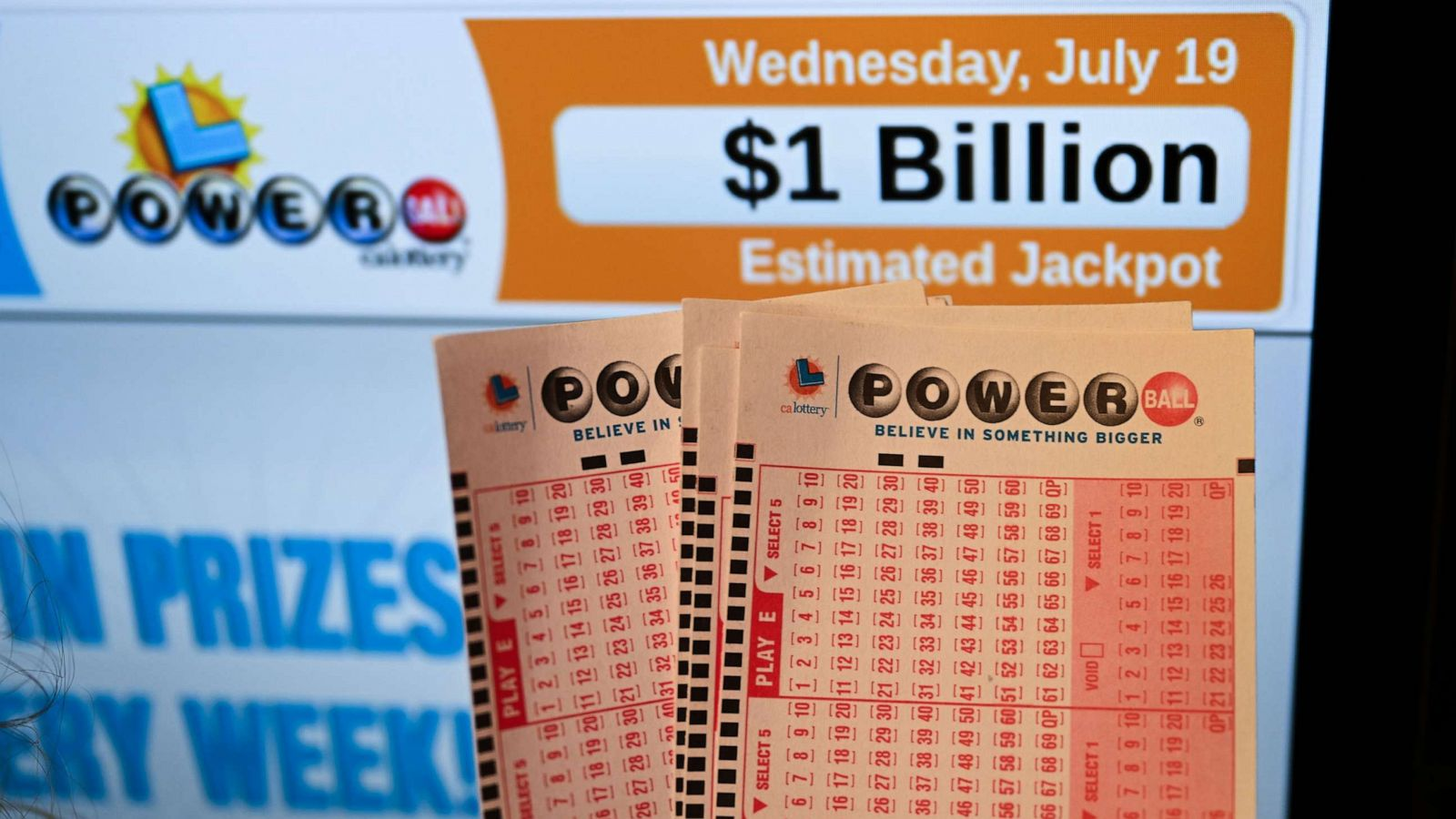
On Wednesday, July 20, 2023, a very lucky individual in California found out they won the $1 billion jackpot. It is one of the largest lottery jackpot wins in US history. And whoever is the purchaser of that ticket, their life is about to change immensely. I know a lot of people dream about winning the lottery and what they would do if it ever happened. But for this individual, it’s no longer a fantasy.

Now, setting aside for a moment the collective envy we all feel for lottery winners, I do want to convey an important message to this and all future lottery winners. Please note that this message isn’t from me. It comes courtesy of a famous post on Reddit that is frequently re-visited every time the lottery jackpot gets very bit.

What it says and what it reveals isn’t just important for lottery winners and non-winners alike. It adds a critical perspective that supersedes any fanciful dreams about wealth and money. Enjoy.


Congratulations! You just won millions of dollars in the lottery! That’s great.

Now you’re fucked.

No really.

You are.

You’re fucked.

If you just want to skip the biographical tales of woe of some of the math-tax protagonists, skip on down to the next comment. To see what to do in the event you win the lottery.

You see, it’s something of an open secret that winners of obnoxiously large jackpots tend to end up badly with alarming regularity. Not the $1 million dollar winners. But anyone in the nine-figure range is at high risk. Eight-figures? Pretty likely to be screwed. Seven-figures? Yep. Painful. Perhaps this is a consequence of the sample. The demographics of lottery players might be exactly the wrong people to win large sums of money. Or perhaps money is the root of all evil. Either way, you are going to have to be careful. Don’t believe me? Consider this:

Large jackpot winners face double digit multiples of probability versus the general population to be the victim of:

  1. Homicide (something like 20x more likely)
  2. Drug overdose
  3. Bankruptcy (how’s that for irony?)
  4. Kidnapping

And triple digit multiples of probability versus the general population rate to be:

  1. Convicted of drunk driving
  2. The victim of Homicide (at the hands of a family member) 120x more likely in this case, ain’t love grand?
  3. A defendant in a civil lawsuit
  4. A defendant in felony criminal proceedings

Believe it or not, your biggest enemy if you suddenly become possessed of large sums of money is… you. At least you will have the consolation of meeting your fate by your own hand. But if you can’t manage it on your own, don’t worry. There are any number of willing participants ready to help you start your vicious downward spiral for you. Mind you, many of these will be “friends,” “friendly neighbors,” or “family.” Often, they won’t even have evil intentions. But, as I’m sure you know, that makes little difference in the end. Most aren’t evil. Most aren’t malicious. Some are. None are good for you.

Jack Whittaker, a Johnny Cash attired, West Virginia native, is the poster boy for the dangers of a lump sum award. In 2002 Mr. Whittaker (55 years old at the time) won what was, also at the time, the largest single award jackpot in U.S. history. $315 million. At the time, he planned to live as if nothing had changed, or so he said. He was remarkably modest and decent before the jackpot, and his ship sure came in, right? Wrong.

Mr. Whittaker became the subject of a number of personal challenges, escalating into personal tragedies, complicated by a number of legal troubles.

Whittaker wasn’t a typical lottery winner either. His net worth at the time of his winnings was in excess of $15 million, owing to his ownership of a successful contracting firm in West Virginia. His claim to want to live “as if nothing had changed” actually seemed plausible. He should have been well equipped for wealth. He was already quite wealthy, after all. By all accounts he was somewhat modest, low profile, generous and good natured. He should have coasted off into the sunset. Yeah. Not exactly.

Whittaker took the all-cash option, $170 million, instead of the annuity option, and took possession of $114 million in cash after $56 million in taxes. After that, things went south.

Whittaker quickly became the subject of a number of financial stalkers, who would lurk at his regular breakfast hideout and accost him with suggestions for how to spend his money. They were unemployed. No, an interview tomorrow morning wasn’t good enough. They needed cash NOW. Perhaps they had a sure-fire business plan. Their daughter had cancer. A niece needed dialysis. Needless to say, Whittaker stopped going to his breakfast haunt. Eventually, they began ringing his doorbell. Sometimes in the early morning. Before long he was paying off-duty deputies to protect his family. He was accused of being heartless. Cold. Stingy.

Letters poured in. Children with cancer. Diabetes. MS. You name it. He hired three people to sort the mail. A detective to filter out the false claims and the con men (and women) was retained.

Brenda, the clerk who had sold Whittaker the ticket, was a victim of collateral damage. Whittaker had written her a check for $44,000 and bought her house, but she was by no means a millionaire. Rumors that the state routinely paid the clerk who had sold the ticket 10% of the jackpot winnings hounded her. She was followed home from work. Threatened. Assaulted.

Whittaker’s car was twice broken into, by trusted acquaintances who watched him leave large amounts of cash in it. $500,000 and $200,000 were stolen in two separate instances. The thieves spiked Whittaker’s drink with prescription drugs in the first instance. The second incident was the handiwork of his granddaughter’s friends, who had been probing the girl for details on Whittaker’s cash for weeks.

Even Whittaker’s good-faith generosity was questioned. When he offered $10,000 to improve the city’s water park so that it was more handicap accessible, locals complained that he spent more money at the strip club. (Amusingly this was true).

Whittaker invested quite a bit in his own businesses, tripled the number of people his businesses employed (making him one of the larger employers in the area) and eventually had given away $14 million to charity through a foundation he set up for the purpose. This is, of course, what you are “supposed” to do. Set up a foundation. Be careful about your charity giving. It made no difference in the end.

To top it all off, Whittaker had been accused of ruining a number of marriages. His money made other men look inferior, they said, wherever he went in the small West Virginia town he called home. Resentment grew quickly. And festered. Whittaker paid four settlements related to this sort of claim. Yes, you read that right. Four.

His family and their immediate circle were quickly the victims of odds-defying numbers of overdoses, emergency room visits and even fatalities. His granddaughter, the eighteen year old “Brandi” (who Whittaker had been giving a $2100.00 per week allowance) was found dead after having been missing for several weeks. Her death was, apparently, from a drug overdose, but Whittaker suspected foul play. Her body had been wrapped in a tarp and hidden behind a rusted-out van. Her seventeen-year-old boyfriend had expired three months earlier in Whittaker’s vacation house, also from an overdose. Some of his friends had robbed the house after his overdose, stepping over his body to make their escape and then returning for more before stepping over his body again to leave. His parents sued for wrongful death claiming that Whittaker’s loose purse strings contributed to their son’s death. Amazingly, juries are prone to award damages in cases such as these. Whittaker settled. Again.

Even before the deaths, the local and state police had taken a special interest in Whittaker after his new-found fame. He was arrested for minor and less minor offenses many times after his winnings, despite having had a nearly spotless record before the award. Whittaker’s high profile couldn’t have helped him much in this regard.

In 18 months Whittaker had been cited for over 250 violations ranging from broken tail lights on every one of his five new cars, to improper display of renewal stickers. A lawsuit charging various police organizations with harassment went nowhere and Whittaker was hit with court costs instead.

Whittaker’s wife filed for divorce, and in the process froze a number of his assets and the accounts of his operating companies. Caesars in Atlantic City sued him for $1.5 million to cover bounced checks, caused by the asset freeze.

Today Whittaker is badly in debt, and bankruptcy looms large in his future.

But, hey, that’s just one example, right?

Wrong.

Nearly one third of multi-million-dollar jackpot winners eventually declare bankruptcy. Some end up worse. To give you just a taste of the possibilities, consider the fates of:

  • Billie Bob Harrell, Jr.: $31 million. Texas, 1997. As of 1999: Committed suicide in the wake of incessant requests for money from friends and family. “Winning the lottery is the worst thing that ever happened to me.
  • William âBud❠Post: $16.2 million. Pennsylvania. 1988. In 1989: Brother hires a contract murderer to kill him and his sixth wife. Landlady sued for portion of the jackpot. Convicted of assault for firing a gun at a debt collector. Declared bankruptcy. Dead in 2006.
  • Evelyn Adams: $5.4 million (won TWICE 1985, 1986). As of 2001: Poor and living in a trailer gave away and gambled most of her fortune.
  • Suzanne Mullins: $4.2 million. Virginia. 1993. As of 2004: No assets left.
  • Shefik Tallmadge: $6.7 million. Arizona. 1988. As of 2005: Declared bankruptcy.
  • Thomas Strong: $3 million. Texas. 1993. As of 2006: Died in a shoot-out with police.
  • Victoria Zell: $11 million. 2001. Minnesota. As of 2006: Broke. Serving seven year sentence for vehicular manslaughter.
  • Karen Cohen: $1 million. Illinois. 1984. As of 2000: Filed for bankruptcy. As of 2006: Sentenced to 22 months for lying to federal bankruptcy court.
  • Jeffrey Dampier: $20 million. Illinois. 1996. As of 2006: Kidnapped and murdered by own sister-in-law.
  • Ed Gildein: $8.8 million. Texas. 1993. As of 2003: Dead. Wife saddled with his debts. As of 2005: Wife sued by her own daughter who claimed that she was taking money from a trust fund and squandering cash in Las Vegas.
  • Willie Hurt: $3.1 million. Michigan. 1989. As of 1991: Addicted to cocaine. Divorced. Broke. Indicted for murder.
  • Michael Klingebiel: $2 million. As of 1998 sued by own mother claiming he failed to share the jackpot with her.
  • Janite Lee: $18 million. 1993. Missouri. As of 2001: Filed for bankruptcy with $700 in assets.

So, what the hell DO you do if you are unlucky enough to win the lottery?

This is the absolutely most important thing you can do right away: NOTHING.

Yes. Nothing.

DO NOT DECLARE YOURSELF THE WINNER yet.

Do NOT tell anyone. The urge is going to be nearly irresistible. Resist it. Trust me.

1. IMMEDIATELY retain an attorney.

Get a partner from a larger, NATIONAL firm. Don’t let them pawn off junior partners or associates on you. They might try, all law firms might, but insist instead that your lead be a partner who has been with the firm for a while. Do NOT use your local attorney. Yes, I mean your long-standing family attorney who did your mother’s will. Do not use the guy who fought your dry-cleaner bill. Do not use the guy you have trusted your entire life because of his long and faithful service to your family. In fact, do not use any firm that has any connection to family or friends or community. TRUST me. This is bad. You want someone who has never heard of you, any of your friends, or any member of your family. Go to the closest big city and walk into one of the national firms asking for one of the “Trust and Estates” partners you have previously looked up on http://www.martindale.com from one of the largest 50 firms in the United States which has an office near you. You can look up attorneys by practice area and firm on Martindale.

2. Decide to take the lump sum.

Most lotteries pay a really pathetic rate for the annuity. It usually hovers around 4.5% annual return or less, depending. It doesn’t take much to do better than this, and if you have the money already in cash, rather than leaving it in the hands of the state, you can pull from the capital whenever you like. If you take the annuity you won’t have access to that cash. That could be good. It could be bad. It’s probably bad unless you have a very addictive personality. If you need an allowance managed by the state, it is because you didn’t listen to point #1 above.

Why not let the state just handle it for you and give you your allowance?

Many state lotteries pay you your “allowance” (the annuity option) by buying U.S. treasury instruments and running the interest payments through their bureaucracy before sending it to you along with a hunk of the principal every month. You will not be beating inflation by much, if at all. There is no reason you couldn’t do this yourself, if a low single-digit return is acceptable to you.

You aren’t going to get even remotely the amount of the actual jackpot. Take our old friend Mr. Whittaker. Using Whittaker is a good model both because of the reminder of his ignominious decline, and the fact that his winning ticket was one of the larger ones on record. If his situation looks less than stellar to you, you might have a better perspective on how “large” your winnings aren’t. Whittaker’s “jackpot” was $315 million. He selected the lump-sum cash up-front option, which knocked off $145 million (or 46% of the total) leaving him with $170 million. That was then subject to withholding for taxes of $56 million (33%) leaving him with $114 million.

In general, you should expect to get about half of the original jackpot if you elect a lump sum (maybe better, it depends). After that, you should expect to lose around 33% of your already pruned figure to state and federal taxes. (Your mileage may vary, particularly if you live in a state with aggressive taxation schemes).

3. Decide right now, how much you plan to give to family and friends.

This really shouldn’t be more than 20% or so. Figure it out right now. Pick your number. Tell your lawyer. That’s it. Don’t change it. 20% of $114 million is $22.8 million. That leaves you with $91.2 million. DO NOT CONSULT WITH FAMILY when deciding how much to give to family. You are going to get advice that is badly tainted by conflict of interest, and if other family members find out that Aunt Flo was consulted and they weren’t you will never hear the end of it. Neither will Aunt Flo. This might later form the basis for an allegation that Aunt Flo unduly influenced you and a lawsuit might magically appear on this basis. No, I’m not kidding. I know of one circumstance (related to a business windfall, not a lottery) where the plaintiffs WON this case.

Do NOT give anyone cash. Ever. Period. Just don’t. Do not buy them houses. Do not buy them cars. Tell your attorney that you want to provide for your family, and that you want to set up a series of trusts for them that will total 20% of your after-tax winnings. Tell him you want the trust empowered to fund higher education, some help (not a total) purchase of their first home, some provision for weddings and the like, whatever. Do NOT put yourself in the position of handing out cash. Once you do, if you stop, you will be accused of being a heartless bastard (or bitch). Trust me. It won’t go well.

It will be easy to lose perspective. It is now the duty of your friends, family, relatives, hangers-on and their inner circle to skew your perspective, and they take this job quite seriously. Setting up a trust, a managed fund for your family that is in the double-digit millions is AMAZINGLY generous. You need never have trouble sleeping because you didn’t lend Uncle Jerry $20,000 in small denomination unmarked bills to start his chain of deep-fried peanut butter pancake restaurants. (“Deep’n ‘nutter Restaurants”) Your attorney will have a number of good ideas how to parse this wealth out without turning your siblings/spouse/children/grandchildren/cousins/waitresses into the latest Paris Hilton.

4. You will be encouraged to hire an investment manager. Considerable pressure will be applied. Don’t.

Investment managers charge fees, usually a percentage of assets. Consider this: If they charge 1% (which is low, I doubt you could find this deal, actually) they have to beat the market by 1% every year just to break even with a general market index fund. It is not worth it, and you don’t need the extra return or the extra risk. Go for the index fund instead if you must invest in stocks. This is a hard rule to follow. They will come recommended by friends. They will come recommended by family. They will be your second cousin on your mother’s side. Investment managers will sound smart. They will have lots of cool acronyms. They will have nice PowerPoint presentations. They might (MIGHT) pay for your shrimp cocktail lunch at TGI Friday’s while reminding you how poor their side of the family is. They live for this stuff.

You should smile, thank them for their time, and then tell them you will get back to them next week. Don’t sign ANYTHING. Don’t write it on a cocktail napkin (lottery lawsuit cases have been won and lost over drunkenly scrawled cocktail napkin addition and subtraction figures with lots of zeros on them). Never call them back. Trust me. You will thank me later. This tactic, smiling, thanking people for their time, and promising to get back to people, is going to have to become familiar. You will have to learn to say no gently, without saying the word “no.” It sounds underhanded. Sneaky. It is. And its part of your new survival strategy. I mean the word “survival” quite literally.

Get all this figured out BEFORE you claim your winnings. They aren’t going anywhere. Just relax.

5. If you elect to be more global about your paranoia, use between 20.00% and 33.00% of what you have not decided to commit to a family fund IMMEDIATELY to purchase a combination of longer-term U.S. treasuries (5 or 10 year are a good idea) and perhaps even another G7 treasury instrument. This is your safety net. You will be protected… from yourself.

You are going to be really tempted to start being a big investor. You are going to be convinced that you can double your money in Vegas with your awesome Roulette system/by funding your friend’s amazing idea to sell Lemming dung/buying land for oil drilling/by shorting the North Pole Ice market (global warming, you know). This all sounds tempting because “Even if I lose it all I still have $XX million left! Anyone could live on that comfortably for the rest of their life.” Yeah, except for 33% of everyone who won the lottery.

You’re not going to double your money, so cool it. Let me say that again. You’re not going to double your money, so cool it. Right now, you’ll get around 3.5% on the 10-year U.S. treasury. With $18.2 million (20% of $91.2 mil after your absurdly generous family gift) invested in those you will pull down $638,400 per year. If everything else blows up, you still have that, and you will be in the top 1% of income in the United States. So how about you not fuck with it. Eh? And that’s income that is damn safe. If we get to the point where the United States defaults on those instruments, we are in far worse shape than worrying about money.

If you are really paranoid, you might consider picking another G7 or otherwise mainstream country other than the U.S. according to where you want to live if the United States dissolves into anarchy or Britney Spears is elected to the United States Senate. Put some fraction in something like Swiss Government Bonds at 3%. If the Swiss stop paying on their government debt, well, then you know money really means nothing anywhere on the globe anymore. I’d study small field sustainable agriculture if you think this is a possibility. You might have to start feeding yourself.

6. That leaves, say, 80% of $91.2 million or $72.9 million.

Here is where things start to get less clear. Personally, I think you should dump half of this, or $36.4 million, into a boring S&P 500 index fund. Find something with low fees. You are going to be constantly tempted to retain “sophisticated” advisers who charge “nominal fees.” Don’t. Period. Even if you lose every other dime, you have $638,400 per year you didn’t have before that will keep coming in until the United States falls into chaos. Fuck advisers and their fees. Instead, drop your $36.4 million in the market in a low fee vehicle. Unless we have an unprecedented downturn the likes of which the United States has never seen, should return around 7.00% or so over the next 10 years. You should expect to touch not even a dime of this money for 10 or 15 or even 20 years. In 20 years $36.4 million could easily become $115 million.

7. So you have put a safety net in place.

You have provided for your family beyond your wildest dreams. And you still have $36.4 million in “cash.” You know you will be getting $638,400 per year unless the capital building is burning, you don’t ever need to give anyone you care about cash, since they are provided for generously and responsibly (and can’t blow it in Vegas) and you have a HUGE nest egg that is growing at market rates. (Given the recent dip, you’ll be buying in at great prices for the market). What now? Whatever you want. Go ahead and burn through $36.4 million in hookers and blow if you want. You’ve got more security than 99% of the country. A lot of it is in trusts so even if you are sued your family will live well, and progress across generations. If your lawyer is worth his salt (I bet he is) then you will be insulated from most lawsuits anyhow. Buy a nice house or two, make sure they aren’t stupid investments though. Go ahead and be an angel investor and fund some startups, but REFUSE to do it for anyone you know. (Friends and money, oil and water – Michael Corleone) Play. Have fun. You earned it by putting together the shoe sizes of your whole family on one ticket and winning the jackpot.


Leave a comment

Filed under Current Events, psychology, real stories

How American Psycho Broke All The Rules (in A Good Way)

This is another video from my YouTube channel, Jack’s World. This video essay is an exploration of how American Psycho broke so many rules, as both a book and a movie, yet somehow succeeded.

Leave a comment

Filed under Jack's World, movies, psychology, YouTube

What Is An Appropriate Age For A Kid To Have A Smartphone?

When I was a kid, the most advanced device I could put in my pocket was a Gameboy. It didn’t do much other than play games. And while I did sometimes annoy my friends and family by playing it too much or taking it everywhere, having one really wasn’t too controversial. Once I was in middle school, I didn’t have too many restrictions, other than simply needing money for games and batteries.

Today, smartphones are much more powerful than a Gameboy by several orders a magnitude. It’s not just about what they can do. Even with a poor internet connection, a smartphone can give anyone of any age access to countless forms of information, media, and entertainment.

Some of it is good. A lot of it is bad.

Some of it is critical information for most people to know. A lot of it is misinformation or propaganda that can destroy someone’s life.

In the wrong hands of even a capable adult, a smartphone can ruin your life. Just ask anyone who has ever sent out an ill-advised tweet. Things only get more complicated when it comes to young children or teenagers using smart devices. And those complications are going to intensify in the coming years.

I know this and sense this because over the past several years, quite a few friends and family members have started having kids. At the moment, they’re all under the age of eight. They’re all growing up with loving, caring parents who genuinely want what’s best for them. They have all the support and encouragement they could need from their family and extended family. I try my best to be part of that support.

However, these kids have been born into a world that I never could’ve imagined as a child. They came into a world in which the internet is everywhere, smartphones are everywhere, and social media has a huge effect on everyone’s life, even if they’re not on it. The world is always changing, but this is a different kind of change.

And these kids definitely sense it too. A while back, I was hanging out with one of my nephews during a family gathering at my parents’ house. While we were hanging out in the living room, my mother brought out an old photo album. And my nephew, even with severely restricted exposure to screens and smart devices, kept trying to tap on the pictures to make them play. He basically thought they were like the photos on his dad’s iPhone, which played videos when you tapped on them.

It was funny to some extent, but it was also revealing. It shows that, even at a young age, these kids are picking up on what these devices can do. And as they get older, they’re certain to become a big part of their lives.

Their parents certainly understand that. Even before they were born, I heard them say outright that they’re going to work hard to restrict the use and exposure of smart devices to their children. That included phones and tablets, including those that didn’t connect to the internet. They’re serious about that effort. On more than one occasion, they’ve asked me to keep my phone in my pocket so that the kids don’t see it. I always try to respect that. I understand completely where they’re coming from.

That’s not to say they hide these devices from them completely. Their parents do allow their kids to play very specific kid-friendly games on their devices, but usually for a very limited amount of time and often as a reward for good behavior. They’ll also let them watch movies on a tablet if they’re good or if they’re on a long drive. The key is to find a healthy balance that doesn’t expose the kids to the objectively toxic parts of the internet and electronic media.

For now, I think what they’re parents are doing is working. However, at some point, they won’t be able to completely control their child’s access to technology, the internet, etc. I know this because when I was a kid, we found a way to access forbidden media, be it games like Mortal Kombat or shows like South Park. It doesn’t matter how strict a parent is. Kids will find a way. Even if they fail, they’re already aware that these devices exist and they’re aware of what they can do. The question is how do we, as parents and a society, manage it appropriately?

This is something I honestly don’t know how to assess. I am not a parent yet. I might be one day and even then, I might not know when and how to appropriately expose my children to smartphones and the internet. I don’t doubt they’ll be curious. I also don’t doubt these devices will be part of their lives. As they get older, they’ll want more access. At some point, they’ll even want a smart device of their own.

For parents of young kids, that’s a scary prospect. I’m not a parent yet and I find that scary, too. I’ve seen some of the uglier parts of the internet. I shudder to think of the impact they would have on any child. But scary or not, it raises a relevant question.

At what age do we let kids have their own smartphone?

I ask this question knowing that the answer will likely vary from child to child. There will always be some children who are more responsible than others. When I was in grade school, I knew a kid who couldn’t be trusted with paintbrushes because he kept trying to paint things on other kids’ faces. I even knew this one kid who couldn’t be trusted with markers because he would sniff or try to lick the tip.

Those are not the kinds of kids you can trust with a smartphone or any device connected to the internet, for that matter. But even well-behaved kids might be harmed by smartphones at a certain age and through no fault of their own. There are applications, games, and sites that are specifically designed to get everyone, kids included, addicted to their content. There are multiple studies that have noted detrimental effects to kids and young adults who use apps like TikTok, Instagram, and FaceBook.

At the same time, there are tangible benefits that can be gained from smartphones. There are also programs that can help kids learn other languages, improve critical thinking skills, and even develop forms of emotional intelligence. Depriving kids and even teenagers access to such functions could be just as detrimental.

It’s a tough balancing act. You can never completely eliminate the drawbacks and gain only the benefits, nor can you truly know how a child or teenager is going to use their smart device. Some will use it to better themselves. Some will be ruined or destroyed by it. There’s just no way to know for sure.

The best any parent can do is to just teach their child to be smart, responsible, understanding, and careful. That’s not easy. Very few things about parenting are. I’ve noticed that from just watching my siblings and friends. I’m sure I’ll learn it first-hand if I ever have kids of my own.

Like it or not, smartphones are a critical tool for kids, teenagers, and adults alike. Like any tool, there’s a right way and a wrong way to use it. And like any action or choice, there are risks and rewards to weight. We can never know for sure how they’ll help or hurt us. Parents can and should do whatever they can to help their kids get the most out of these tools, even if it means restricting their use.

To help hammer this point home, I’ll share one last anecdote. When I was in school, all cell phones were banned. At the time, they didn’t connect to the internet or have cameras. But the school had a clear policy that no student could posses them. Then, there was an incident near my neighborhood that involved an active shooter. It made the local news and, as a result, parents of students began frantically calling students on the cell phones they weren’t allowed to have.

Some students managed to hide their phones enough in order to answer. But those who didn’t ended up causing serious concern from their parents. I remember several basically leaving work in the middle of the day to get to the school in order to check on their kid. Nobody was hurt, but I can’t imagine how stressful that must have been.

As a result of this incident, the school changed its cell phone policy. That might have made sense in wake of that incident. And I know there are far issues to consider with modern smartphones. But I think it helps illustrate how crude, simplistic approaches to this issue can only go so far. We can’t ban these devices, nor can we uncreate them or the world they’ve fostered. It’s up to us to guide the next generation as best we can into an increasingly complicated world.

Leave a comment

Filed under psychology, technology

Why We REALLY Should End Daylight Savings

This past weekend marked the continuation of one of the most annoying biannual rituals in America. We once again changed our clocks to adjust for Daylight Savings Time. I understand it’s a practice that most of us have been doing all our lives. We’re so used to it that, for the most part, we see it as a temporary annoyance more than anything else.

But beyond the annoyance, this practice is one of those various things that have no practical use, yet we still continue to do. And the more we do it, the less sense it makes. I know because I’ve tried to explain why we do Daylight Savings Time to people from other countries. Their reactions are usually quite telling. I don’t deny that America has many strange practices and traditions, but Daylight Savings Time is definitely one of the strangest, at least in a contemporary sense.

Now, there was a time when Daylight Savings had a practical use. When it was passed by the United States in 1918, it was actually part of a larger trend among industrialized nations at the time. Canada and various countries in Europe had adopted similar practices for similar reasons. The idea was to adjust clocks so that criticizes had more waking hours in sunlight, which reduced energy consumption. This was also done to coincide sunlight with the standard working schedule that had emerged during that era, which was dominated largely by industrial labor.

Whether Daylight Savings achieved this goal or not, it made some sense at the time. In an era when work and scheduled were much more regimented, it made sense to align these schedules with daylight hours to the greatest extent possible, especially for regions at higher latitudes. However, there’s not much evidence that Daylight Savings time has a tangible benefit in that regard. In some instances, it may even be detrimental.

That alone should be cause enough to consider ending the practice. And people far smarter than me have already made plenty of valid arguments towards ending it. Here’s just one video that nicely lays it out.

Even if you don’t fully agree with all these points, there’s one other I’d like to offer and I think it’s the most important.

Getting rid of Daylight Savings Time would be a solid demonstration that we, as a society, can end practices that no longer make sense and no longer offer any tangible benefits. That, more than anything else, is a good reason to do it.

Beyond the fact that the practice is wildly unpopular, regardless of political leanings, plenty of other countries have decided to end it and have not had many ill effects. They saw that this practice just wasn’t incurring any benefits and maintaining it just made no sense. So, why keep doing it? Why continue a practice that only ever succeeds in annoying or inconveniencing people?

Doing it because it’s just something we’ve always done is not a valid reason. If anything, that’s quite possibly the worst excuse for continuing anything that has no tangible benefit. And in this case, there’s reason to believe it does more harm than good. Ending this practice might make things a little strange during the times of the year when the days are really short or really long, but that’s easier to adapt to because it’s less abrupt and jarring.

Let’s at least prove to ourselves that we can stop or change practices like this. We can end a dumb, outdated, annoying tradition that few care for. It’s not a serious or overly controversial issue. And if we can’t somehow figure out a way to stop, then we have much bigger problems than losing an hour of sleep every spring.

Leave a comment

Filed under Current Events, health, psychology, rants

Remembering And Learning From The Satanic Panic

This is another video from my YouTube channel, Jack’s World. This video is a brief video essay, as well as a reflection of sorts, on the Satanic Panic of the 1980s. It’s an issue that has suddenly become more relevant in recent years and for all the wrong reasons. But the circumstances (and absurdities) of what happened in the 1980s were unique. And they’re worth learning from, especially if those with agendas are intent on starting a whole new panic.

Leave a comment

Filed under Current Events, Jack's World, politics, psychology, YouTube

Why Alpha Males Are Bullshit (And Those Who Identify As Alphas Are Assholes)

I am a man.

I strive to be a good man.

I like to think I’ve done the best I can in that regard. I know I’m not perfect, but I still strive to improve. I also try my best not to judge others who don’t do as well or struggle to be the man they seek to be.

I say all of this as a precursor because I’m about to go on an angry rant, of sorts, on those who take advantage of insecure, vulnerable men. That rant will include profanity, tirades, and insults. So, if that doesn’t appeal to you, this is your warning. I’m just sharing that as a common courtesy.

Having gotten that out of the way, I’d like to make some important statements that hope finds its way to men and women alike.

Fuck every man who calls himself an alpha male.

Fuck every man who promotes the whole alpha male mentality.

Fuck every man who actually buys into the bullshit behind alpha males.

I understand that’s a bit terse, but I promise I mean every word. I only wish the English language had stronger forms of profanity to get my point across.

Because as a man who has written about men’s issues in the past, I have nothing but abject hatred and disdain for those peddling the objectively stupid notion of the alpha male. I would go so far as to argue it’s worse than the idea of “toxic masculinity,” another label I think is built on a foundation of bullshit.

But the notion of the alpha male isn’t just stupid and wrong. It’s dangerous.

It presents men with a rigid dichotomy that supposedly determines whether they’re a “real man” or just some loser weakling who can’t open a pickle jar. Either you’re some muscle-clad, sports-loving, macho douche-bag who builds his day around how many women he sleeps with or you’re some pathetic, scrawny weakling who deserves to get shoved into lockers in high school.

There’s nothing in between. You’re either one or the other. And unless you’re constantly striving for that alpha status, then you’re somehow a failure as a man.

Again, that’s all bullshit. I seriously cannot emphasize that enough. There is no such thing as an alpha male. That is not a thing in science, biology, or objective reality.

In fact, the whole concept behind “alpha males” is based on horribly flawed study about wolves in captivity that was later disproven. If you want to know the details, please see the following from Phys.org.

Wolf packs don’t actually have alpha males and alpha females, the idea is based on a misunderstanding

If you don’t care to read the whole thing, the long and the short of it is simple. The study that first coined the terms, alpha male and alpha female, was based on observations of social structures of wolves in captivity. However, that social structure does not manifest in the wild.

Instead, the structure is largely based on adult wolves looking after their pups. It’s not too different from how most social animals look after they’re young. We don’t call their parents alphas. That’s just a byproduct of having a particular social structure that relies on adults protecting, teaching, and guiding their young.

That’s exactly what happens in humans, too. We don’t call the parents of children alphas. They’re just parents. Their role is the same as the wolves observed in the wild. They raise their children as a family unit, looking after them and teaching them so that they can survive on their own.

At no point is there this alpha male of the pack who gets all the females and makes all the lesser males do his bidding. That’s not a social structure we find in nature. That’s a social structure we find only in cults, namely the dangerous ones.

That’s exactly what keeps the whole alpha male myth going. It feeds into the agenda of selfish, power-hungry narcissists who need some excuse for being the one who gets all the money, sleeps with all the women, and gets others to do his bidding with little to no compensation.

I won’t name names. But if you follow the news about people who throw around the whole “alpha” label, you know who I’m talking about.

Again, fuck those men and every asshole who buys into their bullshit.

Because that’s what this stupid concept propagates at the end of the day. It’s an enabling force for assholes seeking to exploit those who are vulnerable. Every cult leader in history does the same thing. Organized religion and toxic fandoms do it too. But the people who embrace the alpha male label are just uniquely insufferable.

So, the next time you hear someone throw that alpha male label around, remind them that it’s based on bullshit science and only exploited by wannabe cult leaders. And if they refuse to accept that, then don’t give them the courtesy of calling them alphas. Just call them insufferable assholes. Because that’s what they are and that’s what they’ve always been.

Leave a comment

Filed under Current Events, gender issues, human nature, men's issues, psychology, rants

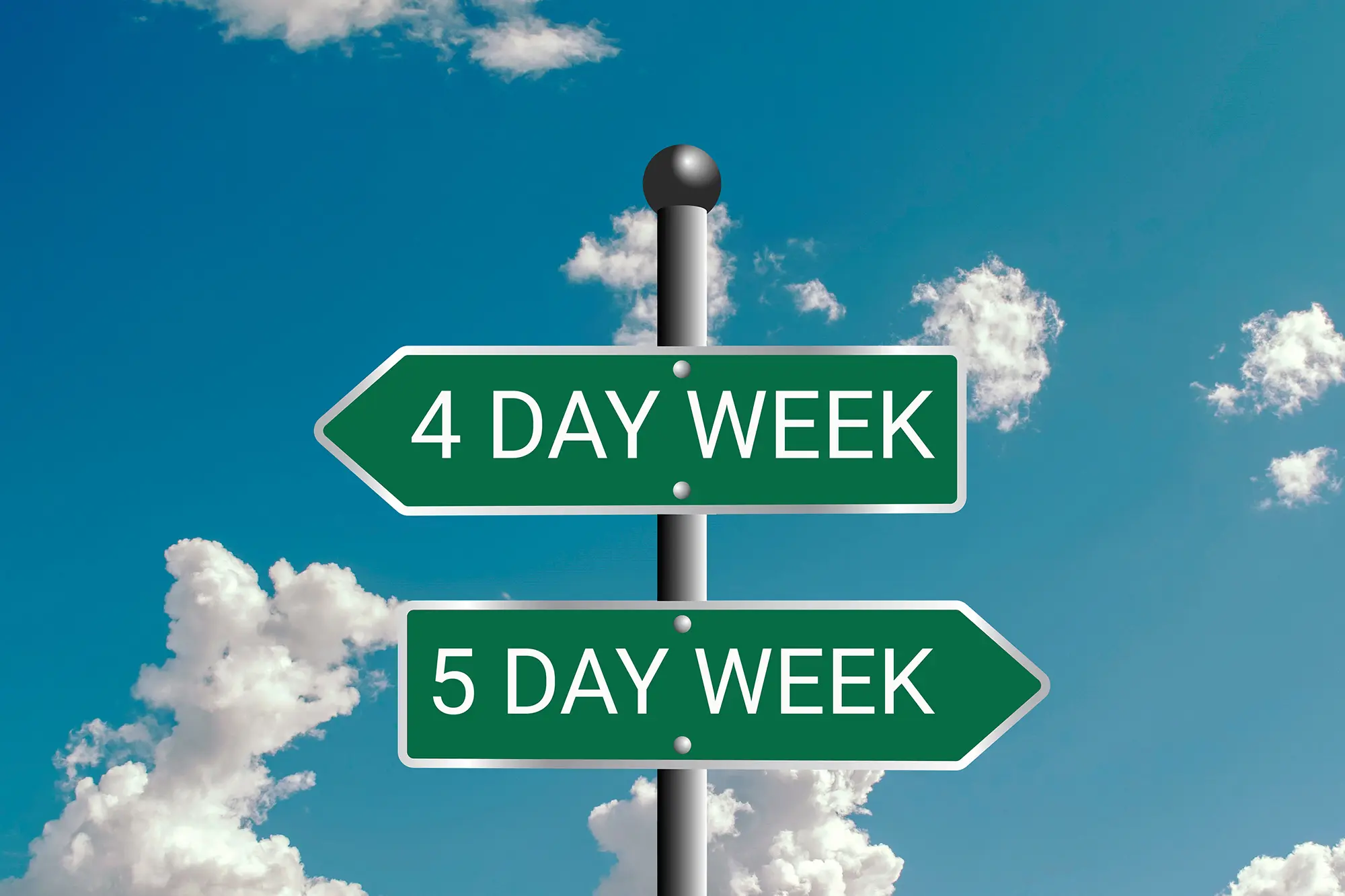
Why We Should Embrace A Four-Day Work Week

If you’ve ever worked a full-time job, chances are that job had set hours during certain days of the week. It may vary from job to job, but in most developed countries there’s this concept of a standard work week. And it goes like this.

You work five days a week, often Monday through Friday.

You work eight hours a day, usually around 9:00 a.m. to 5:00 p.m.

You typically don’t work major holiday or overtime. But if you do, you get paid overtime.

That’s seen as a “normal” work week these days. I put “normal” in quotes because what constitutes a normal workday has changed a great deal over the years. But I prefer not to focus on the history of the work week. I just want to ask a simple question about the work week as we currently accept it.

Is the five eight-hour workday schedule really the most effective approach to work?

It’s an honest question and one I think the COVID-19 pandemic has made more relevant. Beyond revealing how much work we can be done remotely and from the comfort of our homes, it also revealed that our concept of a normal work schedule is somewhat skewed. And it might be a good time to re-evaluate our understanding.

Some are already doing that. A number of companies in various parts of the world are starting to experiment with a four-day work week. It doesn’t always entail less work. In some cases, people opt to work four ten-hour days instead of five eight-hour days. The duration of the shifts don’t change. It’s just the structure.

And according to the conclusions of multiple studies, the results have been a massive success for everyone involved.

Overall productivity remained unchanged or actually improved.

Worker satisfaction increased, as did overall work/life balance.

The same amount of work got done, even when fewer hours overall were worked.

There were practically no real downsides. People got an extra day off, but were just as productive. They were also happier, overall. Even if you’re a ruthless business tycoon with no sympathy for others whatsoever, these results are encouraging. After all, happier and more fulfilled workers means less turnover and less conflicts overall. Unless your company runs on the tears and suffering of others, that’s generally good for business.

Even in the absence of these studies, I can personally attest to the appeal and the merits of a four-day work week. While I wasn’t lucky enough to have that schedule with any of the full-time jobs I worked, I do know it was a popular option in one particular company.

Since I don’t know if my former employer visits my site, I won’t say their name or their industry. I’ll just say that this company utilized a lot of shift-work. There were some typical nine-to-five shifts, but most varied considerably in order to ensure 24/7 coverage of our operations. I typically worked five days a week, usually 10:00 a.m. to 6:00 p.m.

However, there was an option for those with kids to work four ten-hour days. The day of the week they got off varied. My supervisor actually encouraged those who used this option to coordinate and decide amongst themselves which day of the week they would take off. Some preferred having Monday off. Some preferred having Friday off. One even preferred having Tuesdays off.

It was probably the most popular shift, but one that wasn’t widely adopted. It was always framed as a shift reserved for those with young children who needed an extra day to take care of doctor’s appointments, personal matters, and what not.

Personally, I would’ve definitely preferred working four ten-hour days. Even if it meant those four days were longer, I would’ve gladly worked that time in exchange for a longer weekend. It would’ve made a lot of things easier, especially when I was young and just out of college. Even today, it would make a lot of things easier. An extra day would give me more time to rest, run errands, work out, and work on my personal life.

I suspect many feel the same way. Just think about how excited/relieved you are every time you have a long weekend to look forward to. But honestly, is a three-day weekend really that long? It’s still less than half of the week. And can you honestly say you get less done on a shorter work week?

Now, I understand that not all work is the same. There are certain jobs for which a four-day work week just isn’t practical. By the same token, there are also types of work for which a five-day work week isn’t practical, either. We just still use that schedule because it’s considered standard and “normal.” We’re so used to it that we don’t even question it.

But we should. The results of the studies I mentioned imply that there are better ways to get just as much work done with less time in a manner that is just as productive, if not more so. So why not embrace that?

I suspect a part of it has to do with how the five-day, 40-hour work week is engrained in a lot of labor laws. That is not a trivial detail that we can just overlook. But laws can be changed. And in this case, there’s a better and more efficient option available.

In a world with so many diverse people and so many diverse forms of work, it makes sense to be flexible. If a shorter work week means equal or greater amounts of efficiency, then the only thing stopping us is outdated assumptions about what constitutes “full-time work.”

I sincerely hope that changes in the coming years, especially as people continue to realize the value of a good work/life balance. Just because we’ve been structuring our jobs a certain way for decades doesn’t mean we should keep doing it that way. If a four-day work week is better by every measure, then we’re only making our jobs more miserable by clinging to outdated practices.

Leave a comment

Filed under Current Events, health, politics, psychology

Thought Experiment: What Major Decisions Would You Trust An Artificial Intelligence To Make For You?

The following is a video from my YouTube channel, Jack’s World. This video is a thought experiment about artificial intelligence, the choices we make, and how much (or how little) we’ll delegate such choices in the future. Enjoy!

3 Comments

Filed under Artificial Intelligence, Jack's World, psychology, technology, YouTube

How Dental Surgery Changed My View Of Drugs (And The Drug War)

Drugs are bad. You shouldn’t do drugs.

That was the mantra I heard every other day in school as a kid. Others my age heard it too. There were entire assemblies about drugs at least twice a year. There were regular PSA’s after some of my favorite kids shows. Every health and PE class, it seemed, took time out of their schedule to talk about the dangers of drugs.

For the most part, I listened to these message and took them seriously to some extent. However, I could never truly buy in. I’ve mentioned before how certain anti-drug programs I went through in school sent mixed messages. These days, I’ve come to see those programs and most of those anti-drug efforts to be either a waste of time, misguided, or outright deceitful.

I’ll go so far as to say that the drug war is a complete and utter failure and should be ended right now.

I’m not trying to make a political statement. I’m just trying to put my attitude towards drugs and the drug war in context. A lot factors went into this current overview. However, there was one particular experience that really re-shaped how I saw this issue. It wasn’t something I experienced in school or some life-changing PSA. It was actually a result of dental surgery.

That, in and of itself, is saying a lot because, as I’ve noted before, I despise going to the dentist.

A big part of that aversion to going has to do with some of my less-than-stellar dental health over the years. I’m not just talking about having a cavity or two. Most people deal with that. I’ve actually had a number of major dental procedures over the years. I’ve had fillings in my molars, gum grafts for my lower lip, and a whitening procedure that made my teeth hurt for days on end.

In short, I haven’t had many pleasant experiences at the dentist. In fact, most of my major medical procedures thus far have been of the oral health variety.

However, it was when I had my wisdom teeth removed that really changed my outlook on drugs. It also happened to be the most significant medical procedure I had done at that point. It marked the first procedure that required general anesthesia and recovery process. Naturally, I was nervous, but it had to be done.

For a lot of people, getting wisdom teeth removed is entirely necessary. I was among those who had to get it done as early as possible. The longer I waited, the more it would damage my teeth, my mouth, and my overall well-being. Those were my dentist’s exact words.

The experience, itself, was fairly standard. Even if I was nervous, I knew it had to be done. My mother even took time off work to take me because she knew I would be out of it for a while. However, I don’t think she knew just how much the drugs used in the procedure would effect me.

Again, this was my first major surgery and my first encounter with the powerful drugs used in said surgery. I had little experience and no tolerance, whatsoever. Naturally, I was going to react. I just didn’t know how colorful my reaction would be.

It went like this.

I sat down in a dental chair, the nurse put something over my nose, and then told me she was delivering some nitrous oxide.

I distinctly remember her putting this tiny rubber mask over my nose. I don’t remember anything three seconds after that.

The next thing I knew, it was over. I woke up, my mouth was full of gauze, and the dentist said we were done. He might have said something more, but I honestly don’t remember because I was laughing so had.

This is when I learned why nitrous oxide was also known as laughing gas. I definitely got the laughing part down.

However, I wasn’t juts laughing. I was light-headed, loopy, and just giggling like the happiest guy in the world. I don’t remember a whole lot about what I did or said, but I felt so good, despite my mouth being bloodied and sore. I’m also pretty sure I told the nurse I loved her and I might have even proposed to her. I don’t know. I’m genuinely worried that I made that nurse uncomfortable.

Also, remember that my mother is there. She has never seen me this doped up before. She had hard time not laughing. If she’s reading this right now, she might start laughing at the memory because I really was that out of it. I was so drugged up that my mother actually got my dad on the phone so he could hear me. I don’t remember what I said, but I’m pretty sure he laughed too.

Eventually, the effects did wear off. When they did, my mouth hurt. It het a lot. It was at that point when drugs stopped being funny and I realized something important.

Sometimes, you really do need drugs in order to get through something.

For me, it was serious dental surgery.

For others, it might be something else and it doesn’t always have to with medical procedures.

On top of that, these drugs work. Seriously, I do not know how I could’ve possibly endured getting my wisdom teeth removed without anesthesia. I’m pretty sure I wouldn’t have laughed nearly as much or flirted with the nurse.

Beyond the actual procedure, I was also prescribed some prescription strength pain killers to help with the pain afterwards. I won’t say what type of pills the were. I’ll just confirm that they were a form of opioids. Yes, they were those kinds of opioids.

I’ll also confirm that those pills worked. They were very effective at making my jaw hurt less as I recovered from the procedure. Sometimes, they worked a little too well. That was why I was generally very reluctant to take them. However, they did get the job done. Were it not for those pills, my recovery from that surgery would’ve been a lot more painful.

That’s really what it all came back to, pain and comfort. These drugs were necessary for me. They also made me feel really good while I was enduring something very distressing. That put a very different context around drugs, the drug war, and why people do drugs. Suddenly, all those anti-drug messages I got from school seemed woefully shallow.

Yes, drugs can be very dangerous and harmful. The number of people who die from overdoses is proof enough of that. However, people don’t just take drugs to overdose from them. There’s generally another reason behind it and that reason doesn’t always revolve around getting high.

While that does happen, it’s not nearly as damaging as many of those anti-drug messages claim. My experience with dental surgery gave me a taste of how pleasant it could be. I wouldn’t blame anyone at all for wanting to pursue that feeling, even if doing so came with serious risks.

More than anything else, my dental surgery experience complicated the whole issue of drugs, drug abuse, and why we wage war on drugs. The feelings I experienced, especially with the benefit of hindsight, convinced me that waging a war on drugs just isn’t winnable. These drugs work too well and people generally like to feel good. Like it or not, that’s exactly what these drugs do.

As time goes on, I’m also convinced that the drug war and the overly simplistic “drugs are bad” message is a gross oversimplification, as well as a misguided crusade. Why people do drugs varies, but let’s not avoid the truth. These drugs have potent effects and so long as people desire these effects, there will be those who seek drugs and abuse them.

To those who have only a limited understanding of drugs and drug abuse, I hope this experience helps change your perspective a bit.

Also, to that nurse who was there after I had my dental surgery, I sincerely apologize if I said anything inappropriate. It turns out nitrous oxide just has that effect on me.

Leave a comment

Filed under health, human nature, politics, psychology, real stories

Why I Don’t Feel Bad For Enjoying Alex Jones’ (Growing) Misfortune

In general, it’s not good, healthy, or ethical to take pleasure in someone else’s misfortune. Even if you despise someone for what they do, what they say, or what they believe, it’s usually not good for someone mentally or emotionally to take excess joy in someone else’s suffering. I won’t say it’s entirely wrong to feel a slight twinge of happiness when someone you don’t like endures loss or misfortune. It’s just one of those things you should not overdo.

I certainly don’t deny that I’ve had those feelings in the past. There have been a number of occasions in which I felt genuinely happy to hear that someone hurt themselves or in some way faced meaningful consequences for some egregious misdeed. I’m not proud of it. I generally try not to feel that way when it happens and when it does, I try to remind myself that this isn’t good for me as a person.

All that being said, I will gladly make an exception for someone like Alex Jones.

Now, if you’ve never heard of Alex Jones, consider yourself very lucky. Hell, I envy anyone who has lived much of their life having never seen or heard of this unhinged, eccentric blowhard. I won’t provide a detailed breakdown of why he’s a relevant figure, how he came to become a mini-celebrity of sorts, or recount his lengthy history of gross misdeeds.

I don’t even want to link to the man’s Wikipedia page. I flat out refuse to burden anyone with excess knowledge of who this man is.

All you really need to know about Alex Jones is that he is the most extreme of extreme right-wing media grifters. He is also one of the loudest/most obnoxious proponents of the most insane and extreme conspiracy theories to ever be conjured by unthinking minds. This isn’t just a guy who believes there’s a shadowy cabal of elites who secretly control and guide the course of world events. This is a guy who thinks aliens, shape-shifting lizards, and Jewish bankers conspire to turn frogs gay.

Seriously, I wish I were making that last one up, but that’s disturbingly real. It became a meme for a while and is supposed to be funny. But make no mistake, there’s nothing funny about the extremism that Alex Jones promotes or the suffering it causes.

You need look no further than the suffering he’s caused the families of the children who died tragically at the Sandy Hook shooting. It’s bad enough that these parents suffered the loss of their child, a pain no parent should ever have to endure. But because of Alex Jones and the people who take him seriously, those grieving parents were subjected to endless harassment by those who claimed they were crisis actors and that their child never even existed.

Seriously, that’s what Jones actively promoted. He believed the whole Sandy Hook shooting (and most other mass shootings, for that matter) was a plot orchestrated by the government to enact stricter gun control laws so that the general populous could be disarmed. It’s as crazy, callous, and downright ghastly.

Just take a moment to appreciate what these parents have been through. First, they had to bury their own child. Then, some asshole on the internet claims they’re just actors pretending to be sad and they’re actually plotting with shape-shifting lizard people in the government. And because there are too many sadistic assholes with internet connections, they start harassing you and your family, claiming the child you loved and had to bury never existed.

There’s being a dick, there’s being cruel, and then there’s that. I honestly don’t have a word for just how awful that is on so many levels. Nobody should have to endure that, let alone the parents of grieving children.

That’s why when the parents of the Sandy Hook victims sued Alex Jones for defamation, I eagerly cheered them on. I never expect Jones or anyone like him to go to jail or anything. They’re too good at hiring competent lawyers and pushing the limits of free speech to ever suffer a fate that deserving. At the very least, I hoped they would hit Jones in his wallet in a way that really hurt.

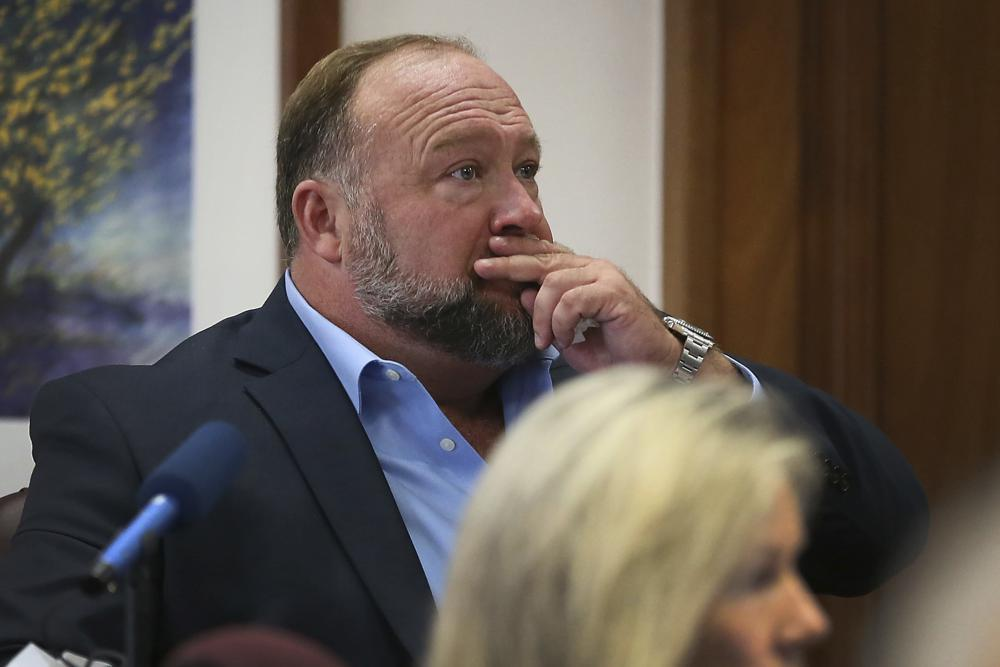
A part of me even hoped that this lawsuit would render Jones penniless, homeless, and no longer able to maintain his bullshit conspiracy show. I know that was hoping for too much. However, it seems as though his egregious behavior is finally catching up to him. Thanks to his own ineptitude, and a huge mistake by his own lawyer, Alex Jones has lost this defamation case.

AP News: Alex Jones ordered to pay Sandy Hook parents more than $4M

It’s no longer a matter of if Jones will have to pay the parents of the Sandy Hook victims money for his bullshit. It’s just a matter of how much he’ll have to pay. That $4 million is just for compensatory damages. The amount for punitive damages is potentially much higher. Given the amount of suffering this man has caused to parents grieving the deaths of their children, I honestly don’t know if there’s an amount high enough for him to pay.

I don’t care that Jones claims his company is bankrupt, which is bullshit. Even if he were, he deserves to pay a high price for what he’s done.

This isn’t about free speech, as he loves to claim.

It’s not about silencing him, as he also loves to claim while playing the victim.

This is about what he has done and the consequences of those deeds. Because of the crap he spewed on his show, the parents of these dead children have suffered horrendous abuse. On top of that, Alex Jones knew about this. The trial presented ample evidence that he knew and he did not do anything to stop it, let alone rectify it.

Like it or not, he is responsible for the continued suffering of these people.

He should pay a price.

He’s gone many years saying egregiously wrong things, spreading misinformation and conspiracy theories. In the process, real people have suffered real harm that they never would’ve endured, had it not been for Jones.

Yes, he still has a right to say what he said. He can’t be punished for that.

But that sacred right of free speech is not a shield from consequences.

For too long, he has evaded any semblance of consequence for what he’s said and done on his joke of a show. On top of that, he uses that same show to peddle bullshit supplements and products like the worst kind of snake oil salesman. As a result, he’s made millions from his viewers and his used his platform to elevate the voices of some truly despicable people who have done too much to foster hate, mistrust, and ignorance.

Now, Jones is finally poised to suffer real, tangible loss for his misdeeds. And since his misdeeds go beyond even harassing the parents of slain children, it sets a precedent for others to follow. Personally, I hope more follow the lead of the Sandy Hook parents. I hope more opt to sue Jones for every last penny he has and then some.

It’s bound to hurt him financially, as well as personally. But whatever he suffers, I don’t feel a shred of sympathy for him. I’ll even let myself take some enjoyment in his failure to evade repercussions. Because sadly, it’s exceedingly rare for assholes with money to face any real consequences for their actions. I don’t expect this trail with Alex Jones to change that on a large scale, but a little karmic justice goes a long way these days.

It’s still not clear how much the results of this trial will hurt Jones in the long run. Whatever it does, it’s still far less than he deserves. And in case there’s still any lingering ambiguity about how I feel on this issue or this arrogant blow-hard, allow me to end this with one simple message.

Fuck you, Alex Jones!

Fuck off, you lying, selfish, ignorant, grifting, loud-mouthed, snake-oil selling, pitiful excuse for a slob of a man!

Leave a comment

Filed under Current Events, extremism, human nature, outrage culture, political correctness, politics, psychology, rants