Category Archives: Jack Fisher’s Insights

The (Sort Of) Problem With Evil

I’ve decided to take a break from deciding whether music form boy bands and burned out pop stars counts as love or obsession so I can focus on a far more relevant issue. It’s relevant in that it affects more directly than the annoying songs we have to endure. It also affects me as an aspiring erotica/romance writer because it’s an important component of every character, be they protagonists or sidekicks.

Yes, I’m talking about evil again. My first post yesterday ended up covering so much that I quickly realized I’ll have to stretch this out to cover the full range of the topic. Make no mistake. This is an important topic. Evil, whether we believe in it or not, will impact us in some way and I’m not just talking about the kind that gets shows like Firefly canceled.

Our understanding of good, evil, and the morality that governs both is an important part of our civilization and our species, as a whole. It’s one of those things we all acknowledge, but can’t quite agree upon. It’s not unlike George Clooney. We all agree he’s sexy. We just don’t agree why.

This directly ties into the so-called “Problem of Evil.” Anyone who has endured a debate between an overly atheist and an overly religious type is probably familiar with this concept. The “problem” is that evil exists and, as a result, it undermines a lot of theological and ethical issues. It’s something two people can argue about for days on end and not accomplish a goddamn thing.

For me, personally, I have a big problem with calling evil a “problem” in the first place. It’s not that I think it’s unimportant. It definitely is. I just take issue with use of the word “problem.”

While I was in college, one of my professors did this lecture where he said one of the most brilliant things I ever heard from any human being not inspired by George Carlin. He started by saying this:

“We don’t deal in problems. We deal in dilemmas. Problems are easy. Problems, by definition, have solutions. Dilemmas don’t have solutions. Dilemma’s are harder to manage because they often require compromise.”

There are a lot of amazing things I remember from college. Not all of them have to do with how willing some people are to get naked at a party. The professionals there really had some smart things to say. This, more than almost anything, really stuck with me.

I think it nicely applies to the concept of evil because its a concept that’s so diverse and ambiguous, at times. At one point in history, marrying someone from another tribe is considered evil. At another, admitting to owning a Nickelback album is evil. It’s fluid, overly vague concept that keeps moving the goalposts.

As a dilemma, evil can’t have a solution. It can have various understandings. There can be compromises along the way in which the idea of evil skews towards or away from a certain direction. That’s why concepts like slavery took so much time to fade into that special domain of evil and even then, we still have problems eliminating it.

More than most concepts, the dilemma surrounding evil has many religious connotations. Nearly every religion, including those that involve chakra, crystal energy, and aliens, tries to address the source of evil in some form or another. Some use it as a means of proving their particular theology. Others use it as a means of disproving that very theology. It’s a never-ending argument that rarely ends with someone changing their mind.

Even so, it’s an important concept to explore. Even if I do take issue with the use of the word “problem,” it is a concept that reveals many facets of evil and how we see it. Rather than try to break down every one of those facts, knowing that would require more posts than anyone is comfortable reading, I found a very helpful YouTube video that nicely sums it up.

This comes courtesy of Crash Course, a very helpful YouTube channel in terms of explaining complex issues in a simple, basic way. This is basically a 101 class, one that does not get into the finer details of an issue. This reveals the forest without scrutinizing any of the trees. For those who want to learn more about the “Problem of Evil,” this video breaks it down nicely.

Whether you’re religious or non-religious, both sides of the problem/dilemma should give you pause. It certainly has for me. I’ve even seen it in my writing. I’ve had to mold “evil” characters to make the stories in “Skin Deep” and “The Escort and the Gigolo” work. It’s challenging, but it’s an important part of a larger narrative.

The presence of evil raises questions about what we believe spiritually and how we see ourselves as a species. The simple fact we can’t be certain in both the theological and scientific analysis of evil reveals just how complex this issue is. When neither science nor religion can offer a clear-cut understanding, you know it’s a hell of a dilemma, if that’s not too fitting a term.

So what does this mean for evil as a whole? What does this mean for evil in a religious, scientific, and philosophical respect? Well, these are questions I hope to keep exploring. Right now, I want to use the “Problem of Evil” to create the right context.

We live in a world where we can’t help but acknowledge that evil exists, but can’t agree on the source or mechanisms behind it. With every evil act, there seems to be more and more complexity.

The evil of today is not always the evil of tomorrow. Evil characters in novels today can easily become heroes and/or anti-heroes tomorrow. We don’t know when or how this will manifest. We just know it’ll continue to confound and conflict us in our minds and souls, however we define them.

Leave a comment

Filed under Jack Fisher's Insights

The (Non-Monetary) Root Of All Evil

What is it about the human race that makes some people amazingly generous while others become sickeningly depraved? It’s a question we’ve all contemplated in some form or another. What drives the person who helps out at a soup kitchen every week? What is it that drives the person who throws cherry bombs at mailboxes just for kicks? How can one species have this much variation in terms of evil and altruism?

As an erotica/romance writer, and a writer in general, I have to contemplate these questions more than most. In every story I write, whether it’s a sexy love story like “Holiday Heat” or an erotic thriller like “The Escort and the Gigolo,” I need to understand on some levels what makes people tick, for better and for worse.

Questions about evil aren’t new. In fact, they’re among the oldest questions that we, as a species, have asked ourselves. It’s right up there with questions about why aliens haven’t landed yet and why some insist on using anal probes. It’s an existential question as much as it is a scientific question. It’s one of the few questions that both science and religion work hard to answer, albeit with different methods.

In western religious traditions, which primarily involve the big three Abrahamic faiths of Judaism, Christianity, and Islam, there are certain assumptions about human nature that are intrinsically tied to the faith. In this tradition, human nature is believed to be inherently evil and in need of redemption. Anyone who spends more than two hours watching reality TV will probably find some merit to that argument.

Then, there are other traditions like Hinduism, Taoism, and Buddhism that don’t make the same assumptions. In these traditions, there are other forces that make human beings good or evil that aren’t necessarily innate. To be evil by nature is too simplistic in these traditions. There’s a whole host of factors, divine and otherwise, that contribute to someone’s capacity for either.

Neither tradition can be completely right, but that doesn’t mean both are wrong. Scientific studies on human nature are quite varied, but come to some intriguing conclusions. According to a Scientific America article from 2012, the current body of research suggests that humans are innately good and evil is more of an aberration.

That doesn’t mean that we humans should be thumbing our noses at the rest of the animal kingdom though. This research, like all scientific research, is incomplete and subject to change. New research could emerge tomorrow that concludes that every human being has a depraved, psychotic asshole lurking within and we’re doing just enough to keep it at bay.

These are very difficult questions to answer and many of those questions don’t have clear answers. I look at the concept of good and evil the same way I look at what makes something sexy. The line is not clear and constantly shifting. In the same way we find strange things sexy for stranger reasons, we see the line between good and evil as an exceedingly obscure sea of gray.

Everybody has their opinions on what makes someone good, but I’ve noticed that people have stronger opinions on what makes someone evil. It happens every time there’s a heinous crime, like a mass shooting. Everybody has their theories as to why someone does something so evil.

Some claim it’s bad parenting. Some claim it’s a product of poverty. Some claim it’s a product of abuse. Some say it’s genetic. Some say it’s a learned behavior from someone’s environment. Some just claim that some peoples’ brains are wired poorly.

The most frustrating part of this issue is that to some degree, every one of those theories might be right. Some people become evil due to bad parenting or a rough environment. Some become evil through severe mental illness that makes it difficult for them to make sense of right and wrong. Human beings are erratic, diverse creatures. We’re never content to just have one reason for doing something.

This becomes even more pronounced when you apply it to fiction. As an admitted comic book fan, the distinction between superheroes and supervillains is a cornerstone of the genre. Most people can pick up a comic and know who’s who. You see a comic with Superman and you know he’s the hero. You see a comic with Dr. Doom and you know he’s the asshole who will make people miserable.

However, recent years have given more emphasis to the villains, as opposed to the heroes. I like to think of it as the Walter White effect. We now expect our villains to be more complex and multi-dimensional. It has lead to developments like Dr. Doom becoming Iron Man and Lex Luthor becoming Superman. It’s as crazy a concept as it sounds, but believe it or not, it works.

It’s a strange era with respect to our understanding of evil. On one hand, our most cherished traditions say we’re intrinsically evil. On the other, science says we’re intrinsically good. What do we make of this? That’s a question nobody, especially not an aspiring erotica/romance writer, is equipped to answer in a single blog post.

It’s still a question that I find myself contemplating more as I prepare my next round of projects. In every major story, there are protagonists and antagonists. It’s not too hard to put a lot of energy into what makes a protagonist tick. They are, after all, the lens through which the story is told. The antagonists, on the other hand, present a different challenge.

For the most part, I haven’t had a chance to flesh out complex antagonists. The two most notable examples I’ve had, to date, are Warren Irvine in “Skin Deep” and Madam Felicity in “The Escort and the Gigolo.” In both cases, I made a concerted effort to give layers to these characters. I think I did the most with what I could, but I do feel there’s room for improvement.

For me, this means seeking a greater understanding of evil and what makes evil people tick. It’s a potentially scary subject, but I survived high school and puberty so I think I have the stomach for it. If it means being able to write more complex, well-rounded characters, I’ll gladly take that chance.

5 Comments

Filed under Jack Fisher's Insights

Lessons On Love, Expectations, And Tattoos

czjii_wweaafqzu

Lofty expectations can lead to loftier disappointments. It’s only when expectations turn into assumptions that disappointment becomes stupidity. That’s not some wise musing from some ancient Zen master in 4th century China. That’s just a colorful way of making sense of the world after surviving several decades on this planet as a human.

When it comes to erotica/romance and writing about it in novels, it’s important to set expectations and avoid assumptions. You don’t want someone to expect “Twilight” style romance, only to get “50 Shades of Grey” level kink. That’s just plain deceptive.

It can be a fine line. You don’t want to be too predictable, but you want to get readers excited. When I wrote “Skin Deep” and “The Escort and the Gigolo,” I made it a point to craft a certain level of mystery around the narrative. I didn’t want to tell a story where the outcome would be too obvious. That’s just not very exciting. It’s not very sexy either.

That brings me to the Dallas Cowboys. Bear with me. I promise this isn’t a complete non-sequiter. I promise I’m completely sober and coherent in crafting this post and there is a point to it. I just feel the best way to make this point is cite recent event involving one of America’s most popular franchises and not just because of how they play football.

In case you got lost in a cave or were trapped in a dungeon over the weekend, you probably know by now that the Dallas Cowboys lost their NFC Divisional playoff match against the Green Bay Packers by a score of 34 to 31. It was a damn good game. It might be the best NFL playoff game of the decade. For Cowboys fans, though, it hurt. It hurt like a baseball bat to the spine.

It hurt because the Dallas Cowboys were the number one ranked team in the NFC this year. They had the best record in the league at 13 and 3. They were, by far, one of the most dominant teams of the year. They were heavily favored to make it to the Super Bowl and win it. Losing in the playoffs to a 10 and 6 Packers team that they beat earlier in the season just adds to the sting.

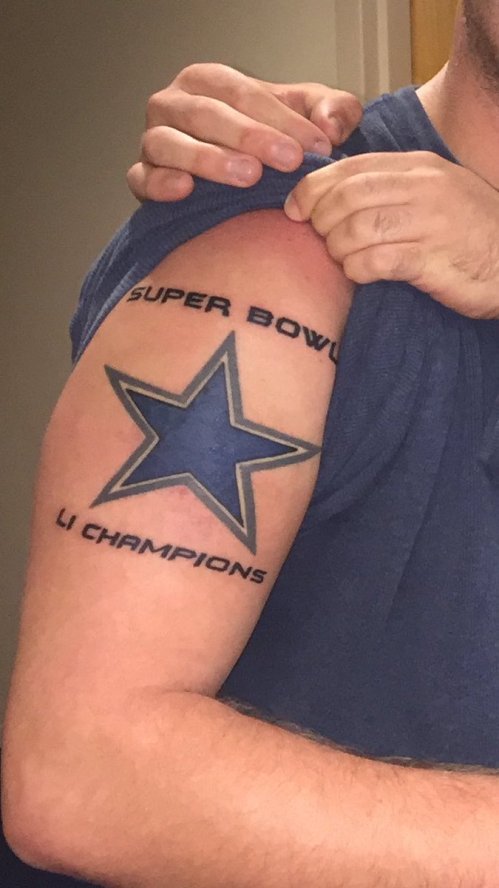
For one fan in particular, though, the sting leaves some permanent scars in a very literal way. Cowboys super-fan Jordan Garnett was so confident that his team would win the Super Bowl that he prematurely got a tattoo on his arm, declaring the Cowboys Super Bowl champions back in early December. As of now, that tattoo is both dead wrong and a harsh reminder of his team’s failure.

So how does this apply to expectations about love, romance, and everything in between? Well, in many respects, it’s a fitting metaphor for arguments I’ve already made on this blog. I’ve talked about how the law and our culture sets us up for disappointment in both our romantic lives and our sex lives. When you think about it, a tattoo is not unlike the complex legal documents we sign when we legally bind ourselves to one another.

That’s not to say that legal proclamations are inherently bad. They exist for a reason and they definitely serve their purpose, even if parts of that purpose are grossly outdated. The problem for some people is the expectations of those who enter them. Sometimes, those expectations are either wholly unrealistic or completely misguided.

This man who boldly got his Cowboys tattoo is akin to someone who decides on a whim to marry a someone they just met at a chapel in Las Vegas. While that can make for an entertaining Ashton Kutcher movie, it can also lead to some heartbreaking disappointment. It may not be on the same level of disappointment that Cowboys fans are feeling right now, but it’s probably close.

When it comes to sex and romance, there are few instances where jumping the gun works out. There are all sorts of dirty jokes to be made from that previous sentence, but I won’t get into them, if only because it may be too personal for certain men. I’ll just add that thinking things through and feeling things through are two different processes. You may be able to get away with skipping one, but not both.

As kids, we’re taught to broaden our expectations. As adults, we’re taught to manage them. We’re pretty good at it most of the time, but when our passions get the better of us, it can make for some awkward moments. For some, it means having a grossly inaccurate tattoo. For others, it means setting themselves up for heartache and ensuring their genitals hate them.

For the lives we live and the romance/erotica novels I write, I think it’s wise to avoid these outcomes. I’m all for being passionate about something, be it a lover or a football team. Just be careful with your expectations. Heartbreak and tattoo removal are both very painful.

Leave a comment

Filed under Jack Fisher's Insights

Happy Martin Luther King Jr. Day (And All It Implies)

On behalf of myself, Jack Fisher, and all those who value love and freedom, happy Martin Luther King Jr. Day. I know it’s not a holiday on the same level as Christmas, Thanksgiving, or Arbor Day. However, it’s one of those days that carries with it a special sentiment that is uniquely powerful.

I talk a lot about freedom on this blog, particularly the sexy kind. I also talk a lot about equality and inequality, also within a sexy context. We all take that freedom and equality for granted on some levels. We live in a time where entire generations have little memory of the struggles that gave us this freedom and equality. That’s why days like this are so important.

Martin Luther King Jr. was very much a man ahead of his time, dreaming dreams that seemed so impossible. It’s easy to forget that he fought this struggle at a time when inequality and racial segregation was so entrenched that it seemed unfathomable that it could ever change. Martin Luther King Jr. dared to fight for that change. He dared to make this change fathomable. Moreover, he dared to do it without violence.

There’s something to be said about a man who faces that kind of ugliness in society and resists the urge to punch it in the jaw. Dr. King was a preacher by trade, but he was unique in that he practiced what he preached. He preached non-violence and love. Whether you’re deeply religious or haven’t been to church since the Carter Administration, that message resonates.

I talk a lot about particular inequalities on this blog, both in terms of society and in terms of romantic relationships. Even in my own books, I try to tell stories about a love between equals because I believe that when two people are equals, the true breadth of their love can flourish. It’s a type of love that’s difficult to flesh out, but it’s a beautiful thing when it manifests, as certain X-men comics have demonstrated.

That spirit of equality and the power it imparts is a spirit that Martin Luther King Jr. championed. Many of us still share that spirit to this day and on this day, we should all take a moment to appreciate his dream and his message.

With that, I leave you with the speech that made him an icon. Whether it’s 1963 or 2017, it’s a speech that should still give us shivers in all the right ways for all the right reasons.

Leave a comment

Filed under Jack Fisher's Insights

An Interesting Debate I Had With Someone (On Abortion)

As I’ve gotten older, I’ve learned time and again that there are few greater wastes than arguing with people on the internet. It’s right up there with spitting in a lake to refill it. Nobody ever changed their minds about anything because they argued about it with someone on a message board. That’s just an inescapable fact.

So why do we do it? Why do we have these online debates that are about as formal as meth-fueled orgy? There are many answers to that question. Not all of those answers are entirely misguided either.

People want to connect with each other. People want to share their views with the world, no matter what they are or how crazy they may be. Look up discussions of lizard shape-shifters to see what I mean. There’s nothing inherently wrong with sharing such views. So long as nobody raises the flags of the NSA, it’s one of those wastes that can help us with the basic human need to connect.

Being an erotica/romance writer, I’m all for activities that help us meet our basic needs. However, I’ve learned from experience that it’s not a good idea to have too many debates with folks online. I was once the kind of guy who spent hours crafting elaborate, detailed posts, complete with citations and footnotes, to prove my point. I’m pretty sure I put some grad students to shame.

I put in a lot of effort to make my arguments. I really did think I would stump, confound, or convince other commenters that I was right. In the end, that effort might have been better spent trying to find new ways to deep fry donuts. It took me way too long to realize that people don’t change their minds based on what online debates. They only ever change their mind when there’s a damn good incentive.

Until the day comes when saying something stupid online earns you a painful shock to the spine, nobody should debate anyone online with the expectation that you’ll change someone’s view. That’s not to say it’s a complete waste of time. If you set reasonable expectations and focus on less divisive issues, then you can have real, honest conversations with people.

This brings me to abortion. I’ll give everyone a second or two to unclench their assholes. Bear with me. That’s not a complete non-sequiter. When it comes to my least favorite topics to discuss, abortion is right up there with explosive diarrhea. I’m a man. I don’t have babies. I can’t get an abortion. I bring absolutely nothing to this conversation and, as a principle, I generally avoid it.

That said, I did end up having an insightful conversation with someone online, which was related to abortion. It occurred on a site called Townhall.com, which is basically the complete antithesis of the Huffington Post. If you have any kind of liberal or moderate inclinations of any kind, expect the content on this site to piss you off.

I go to it because I find it helpful and insightful to visit sites that present views you don’t agree with. Townhall offers that in abundance. The rhetoric here can be downright venomous at times and not just because Ann Coulter writes regular columns. Some of the commenters on this site would make Nixon himself look like a hippie.

Naturally, that means you’ll find a lot of pro-life, anti-abortion discussions here. You’ll also get no fewer than 20 Nazi references when discussing it. As a general principle, and in respect to those with a weak stomach, I try to avoid these discussions. However, one discussion in particular revealed something that’s worth sharing.

In a column I won’t cite, just because I don’t want to give the writer more exposure than he deserves, I got into a discussion with someone who was vehemently pro-life. He or she was the kind of person who would probably force women who’ve had abortions to tattoo a fetus to their forehead to shame them for their choice.

Debating with people like this is usually an exercise in futility, right up there with teaching quantum mechanic to a chimp. However, I tried to dig a little deeper into this person’s rhetoric. I asked them to try one of my little thought experiments, which I’m so fond of on this blog. It went like this:

Imagine that tomorrow morning, someone announced they’ve created the perfect form of contraception. It’s easy to use, it’s effective, it’s relatively cheap, it has no side-effects, and it functions in a way that ensures an egg and a sperm will never meet. No conception ever occurs. As such, no abortion ever occurs or is necessary. Would you, a pro-life advocate, be in favor of making this contraception mandatory for all of breeding age in order to end abortion once and for all?

This is one of those thought experiments that’ll either derail a conversation or just get you blocked. It’s also an experiment that has the possibility to become relevant one day because the technology to perfectly control our fertility, male and female, may very well emerge in our lifetime.

It’s a possibility that I find exposes a dirty secret in the pro-life crowd. While there are a few who genuinely believe that abortion constitutes the murder of an innocent life, there is also a sizable chunk that is vehemently anti-sex. They see abortion as just a means for people to have consequence-free sex and that doesn’t sit well with them.

I can understand why, especially from religiously-motivated arguments. Anything that leads to consequence-free sex is going to get the clergy of any religion up in arms. However, that’s another issue altogether. We expect religion to oppose anything that might distract people from giving them tax-free donations. It’s the other chunk of the pro-life crowd that are a bit more transparent with their sentiment.

For this particular person, however, I actually got a pretty insightful response. Not surprisingly, this person was not at all in favor of mandating that this perfect contraception be mandated as a means to end abortion entirely. Initially, I thought this exposed the person as one of those repressive anti-sex types. I turned out to be wrong. This was the person’s justification:

Once you start limiting peoples freedom for their own good you get slavery.

This weren’t against the use perfect contraception. He or she even said they’d gladly take it. However, the idea of forcing people to use it to end abortion just exchanged one immoral act for another. Regardless of how you may feel about abortion, I think we can all relate and respect that sentiment to some degree.

I tried probing a little deeper. I compared making perfect contraception mandatory to requiring seatbelts. Apparently, this person was against that as well. He or she did not make an exception between contraception and seatbelts. These are the exact words from the response.

So the answer to your last two questions is, of course it is immoral to force people to wear seat belts and forcing people to stop at red light is for the protection of others.

I really couldn’t go farther than that. I think the person effectively made their point. This person is an ardent libertarian. Coercion of any kind, even the kind that would end abortion completely, is every bit as immoral.

Again, I can really understand that. This person showed some consistency in their rhetoric, which is somewhat rare on the internet, as anyone who ever visited a Twilight message board can attest. I admit it was somewhat refreshing because most don’t even attempt the thought experiment. This person made an effort and for that, he or she has my respect.

4 Comments

Filed under Jack Fisher's Insights

Love Or Obsession: Big Bang Theory Edition

It’s okay to love things that are flawed. Hell, if we weren’t able to love things that are flawed, romance as we know it would be impossible. It’s our ability to overlook, understand, and even appreciate flaws that allows us to love each other and the things that bring us joy in life.

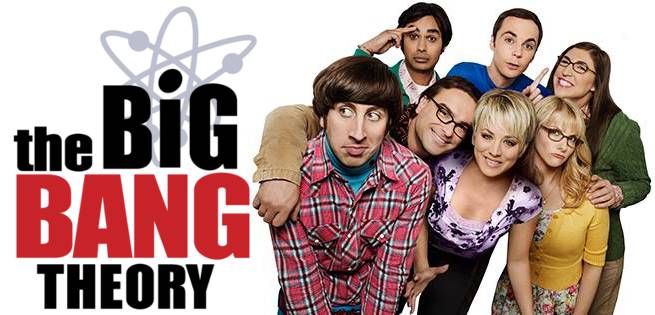
That brings me to one of my favorite TV shows, The Big Bang Theory. I’ve talked about it before, specifically when discussing toxic relationships. I don’t doubt that plenty of fans of the show disagree with my assessment. I still stand by my criticism. Remember, I crafted that post with the full disclaimer that I love this show, despite its flaws.

With that love and admiration in mind, I’d like this show to be the subject of my next entry of “Love Or Obsession.” I’m actually enjoying this little exercise, breaking down iconic romances and assessing whether they constitute love or obsession. It helps add a new perspective to my understanding of romance and erotica. For someone in my field, that understanding is vital.

In the spirit of such understanding, I’d like to do this exercise for the three major romances on the show. To fans of the show, I understand I’m leaving Raj out for the moment. I was going to assess him and Emily, but that plot seems to have fallen to the wayside. If that changes, I’ll do a follow-up post. For now, I’ll be focusing on the big three, which is Penny/Leonard, Sheldon/Amy, and Howard/Bernadette.

Again, I’m open to discussing these assessments. If you disagree with me, let me know. I’m certainly willing to discuss this topic. I think, if we’re going to appreciate romance in media, it’s a discussion worth having.


Penny/Leonard

Love Or Obsession?
Obsession

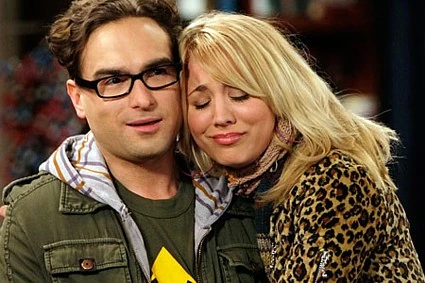
This one is, by far, the most important and iconic romance to the show. It also happens to be the one that bothers me most, as I’ve said before. This romance began at the very beginning of the show and has been a major driving force for every episode since. It’s presented as cute and it does lead to many entertaining subplots, but there’s no getting around how flawed it is.

Leonard is obsessed with Penny. He was obsessed from the moment he saw her. He was obsessed with being with her, being the man for her, and being the guy who ends up with her. There are times when I don’t think he separates the concept of loving Penny as a person and loving Penny as an idea. The concept means more than the person. Being a socially awkward nerd, this does make sense, albeit in a pathetic sort of way.

With Penny, I don’t think there’s quite as much obsession involved. I think on some levels, her love for Leonard is genuine. However, there are also times with her when I think she loves the concept more than the person. What I mean by that is she loves Leonard because he’s not the same as the guys who have hurt her in the past. That’s not a good basis for any romance.

On top of that, Penny knows she can control Leonard. She knows he can never get someone like her. She controls the relationship. She controls Leonard in pretty much every way. It’s not a healthy relationship. There is love, but it is grossly overshadowed by the flaws and the obsession behind them.


Amy/Sheldon

Love Or Obsession?
Love

This is probably the second most important relationship in the show, if only for the entertainment value it constantly brings. Amy and Sheldon are not a normal romance because they’re very abnormal individuals. They have extreme quirks that constitute major personality disorders.

Despite this, or because of this, they find a way to work. They find a way to complement each other. They annoy and challenge each other, but they’re better because of it. Amy is stronger because of Sheldon. Sheldon is less of a self-centered asshat because of Amy. This is one of those relationships that makes both sides better. I’d argue it’s probably one of the strangest, but most productive relationships on TV right now.

That’s an odd thing to say because these two characters are so odd. Sheldon, especially, takes oddities and proclivities to such an extreme that anyone who puts up with him deserves incredible sympathy. While Amy does get annoyed at times, she still puts in the effort and, despite needing a nudge every now and then, Sheldon does the same.

Every episode, it seems as though these two find a new way to annoy each other. In the end though, they find a way to be closer. It’s an incredibly odd, but fittingly beautiful thing.


Howard/Bernadette

Love Or Obsession?
Love (Mostly)

This one is hard to assess, especially since Howard was such a creepy jerk early in the show. He grew up over successive seasons, becoming more likable along the way. He’s still self-centered, lazy, and arrogant at times, but there’s no doubt that he loves Bernadette. He will go out of his way for her. He will do what he has to do to prove that he loves her, even if she needs to twist his arm.

I rule this as love not just because they were the first couple to get married. I render this ruling because I never got the impression that these two were obsessed with one another or that their relationship was built on pure infatuation. They learned to love each other as individuals and not be totally defined by their relationship.

I still added the “mostly” there because, like Penny and Leonard, it’s an unbalanced relationship. It’s not nearly as unbalanced, but it’s still a relationship where one side, namely Bernadette, exercises a larger role. She makes more money than Howard. She’s more assertive than Howard. She can get him to do things like a trained pet.

Despite this imbalance, their love does come off as genuine. They do complement each other in some respects. It’s not a wholly healthy relationship, but it works and there is a fair amount of love guiding it.

2 Comments

Filed under Jack Fisher's Insights

What The NCAA Says About Our Sexual Attitudes

Is anybody else still buzzing from the College Football Championship game earlier this week? I sure am. I still feel like I just left a rock concert and my ears are still ringing. At least with Monday’s game, I don’t have to worry about permanent hearing damage down the line.

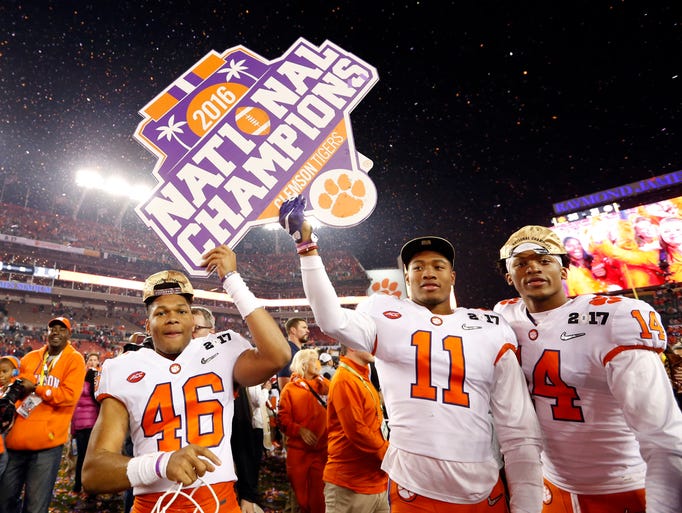
In case you’ve been in a coma for the past several days, Alabama and Clemson played one of the most epic college football games in history. It was a hell of a game from start to finish, full of big plays, big turning points, and players that really rose to the occasion. It highlighted everything I love about football, a sport I’ve loved since I was a kid.

As much as I love football though, there is one component about college football that still bothers me. It’s not necessarily the football part though. That’s the fun part that most sports fans can get behind. It’s the college component.

This doesn’t just apply to football either. I watch other college sports from time-to-time, mainly basketball. When I was in college, I even knew some college athletes. It’s a big part of college life. Between class and keggers, college sports are a big part of the culture. However, as I’ve gotten older, I’ve come to see it in a different context, one that is probably a byproduct of being an erotica/romance writer.

Unlike the professional ranks, college athletes don’t get paid. Sure, they get a scholarship to a school (although it can be revoked and rescinded at any time), but they don’t make any money directly. It doesn’t matter if your Deshaun Watson, the quarterback from Clemson who just became an icon at his school, or some backup point guard on the basketball team. They don’t make a penny directly.

This is kind of odd because the NCAA, the governing body for college sports, made over $1 billion in 2014 alone. They made this money despite not having to pay a dime to the actual people who play these sports that entertain us so much, namely the athletes.

Understandably, there are some folks who have a problem with this. The issue of paying college athletes is a sensitive issue, so much so that South Park dedicated an entire episode to mocking it with crack babies. It’s as entertaining and offensive as it sounds. Since the basic rule of thumb is that if South Park mocks it, then it must be a serious issue, it’s safe to assume there’s some major controversy/injustice going on.

Now I’m not going to dedicate this entire post to arguing for or against paying college athletes. That is a complex issue with more wrinkles than a porn star’s bed sheets. I’m not entirely qualified to discuss the particulars of this issue, but someone like John Oliver is. Last year, he dedicated a show to reviewing this issue and, as he often does, he breaks it down in a pretty astonishing way.

In watching this, it’s hard to feel much sympathy for the NCAA. That would be like feeling sympathy for the New York Yankees for not winning the World Series this past year. It’s an organization full of bureaucrat businessmen whose sole purpose is to make more money for the organization. I don’t mind people making money, but when it involves exploiting people to such a degree, I have a problem.

Then again, there might be other forces at work here beyond the greed of the NCAA and those who share in their profits. It’s a force that John Oliver never touched on and rightly so. It’s one of those forces that’s clearly there, but the implications are hard to see.

Watch that clip again and focus on the parts about the coaches and administrators making all that money from these college athletes. Do you notice something about them? Well, don’t look too hard. It’s fairly bland on the surface. A lot of these people are older individuals. They’re either at middle-age or beyond. They wear suits, they sit at desks, and they have as much sex appeal as a shaved cat.

Why do I bring this up? It’s not just to mock the ages of those involved. That’s just wrong. I mention their ages because it highlights an unspoken facet of our sexual attitudes. Listen to older folk talk about the sexual behaviors of the younger generation for more than five minutes and you’ll probably hear the same story, assuming you have a strong enough stomach.

Most will complain that these kids are out of control. They’re all a big ball of hormones, ticking time bombs that will go off at the sight of anything that looks like a tit. Put them in a room with anything that’s even somewhat alive and they’ll find a way to fuck it. They’re just that horny. They’re just that decadent.

Never mind that this generation, the Millennials, is having less sex than previous generations. This is the perception of the older crowd. It’s a perception that every older crowd seems to have about younger crowds in some form or another. Whether it’s baby boomers, hippies, yuppies, or whatever crazy generations emerged in Ancient Egypt, old people whined about them.

Why do they whine? Why does younger people having sex make them so upset? Well, if you’re older, you’re more likely to have kids. That means you’re also likely to have a daughter. Talk to any proud father about their daughter and chances are, they’ll vomit uncontrollably if they think about their daughter having any kind of sex that doesn’t involve making a grand-baby that will care for them in a nursing home.

It hearkens back to the Bronze Age idea that men must protect their daughter’s virginity, as though it’s some sort of precious commodity that they can later sell for a juicy dowry. Never mind that this isn’t the goddamn Bronze Age and it’s illegal to sell your children. Older men still recoil at the idea of their precious girls being defiled by hormonal men.

So how does this apply to college athletes? Well, anyone who saw the movie Varsity Blues has a vague idea. College athletes are big, strong, handsome, and a good chunk of them are minorities. They don’t just attract women. They can physically overpower them, sometimes in horribly violent ways.

The idea of paying these young men money, which they could then use to more effectively have sex with more women, probably doesn’t sit well with the older men who coach and govern college sports. Some of them may even worry that their own daughters, sisters, girlfriends, or mistresses will fall prey to a handsome, athletic stud’s charms.

It’s fairly undeniable that young athletes are quite horny and quite eager to fuck. The stories that come out of Olympic Village every four years during the Olympics are proof of that. For the NCAA and the old folk who run it, they just can’t stomach the idea of giving these young men too many resources. They’ll just use them to do more humping.

Now this is just the wild interpretation of an erotica/romance writer. I’m not saying that this thought crosses the minds of those in the NCAA when they’re arguing against paying college athletes. However, I do think there’s an unspoken concern that older generations have about the young, one that makes them look for excuses to not give them too many resources.

In some respects, I understand that. I like to think I was fairly mature when I was young, but there’s no way I could’ve made real, adult decisions about the future of my life at 18, which is when most college athletes start their careers. Give me a lot of money and athletic prowess and I might find a way to fuck it up.

Then again, is the problem really that college athletes are too horny and immature? Or is it that we just treat them with the expectation that this is how they’re going to be and they can’t possibly be any different? It’s just something to think about the next time you hear someone make excuses on why we shouldn’t give too much money to young, handsome, athletic men.

4 Comments

Filed under Jack Fisher's Insights

Love Or Obsession: First Literary Edition

After writing so much about love, obsession, and the obscure, unexplored gray area in between, I thought I’d continue exploring that subject this week. I didn’t intend to spend more than a few posts on it, but it ended up being such a broad, engrossing topic that I decided it deserves greater scrutiny.

However, rather than just dig deeper into what constitutes love and what constitutes obsession, which can often lead to horror stories about stalkers, I’m going to try and approach this from a different point of view. I’m going to try a little exercise here. It’s going to be small, but it has the possibility to expand, just as my “Sexy Sunday Thoughts” column has expanded in recent times.

What I want to do here is fairly simple. I want to take classic romances from various sources, be they books, movies, TV shows, or comic books, and do a quick assessment on the nature of the relationship involved. Now there are some very complex relationships in fiction, so much so that I can’t hope to dig into every one of those complexities. If I do, it’ll be in a different post.

Instead, the purpose of this exercise will ask one simple question. Is the relationship in question more akin to love or obsession? Now I don’t claim to be an expert on the literature in question. I’m sure there are true literary buffs who would argue my assessment passionately. I perfectly understand that and I’m happy to have that debate. For now, I just want to get the discussion going.

For this initial exercise, I’m going to focus on classic romances from literature. These are the kinds of romances most people learn about in English classes and literature studies. They may also come from popular contemporary sources. Since this is just the first edition of this exercise, I’ll focus on romances that are most well-known. If someone wants to chime in on a more obscure romance, please do so in the comments.

Also, if you think I’m dead wrong in my assessment, please let me know why. Again, I’m not an expert. This is just an exercise that I hope will make people more aware of the differences between love and obsession, along with how it impacts romance stories. With that in mind, here’s the first round of “Love Or Obsession.”

Romeo and Juliet

Love or Obsession?
Obsession

I know it’s a classic. I know this is the romance most people cite when they want to embody the sappiest, most ideal form of love possible. However, having read this classic play in high school and seeing multiple movies of it, I still have a hard time calling it a genuine love.

I know that sounds blasphemous to those in literary circles. I don’t doubt that there’s some element of love there, but I think too much of it is built on obsession. These two barely know each other, which is very much a result of the circumstances you get with a play. Everything has to happen so quickly. There’s not a lot of time to develop this romance.

Even if there were time, a romance where every waking thought and every single feeling is centered on each other doesn’t give the impression of love and comfort. It gives the impression of desperation and extreme distress, which is hard to frame in the context of genuine love.


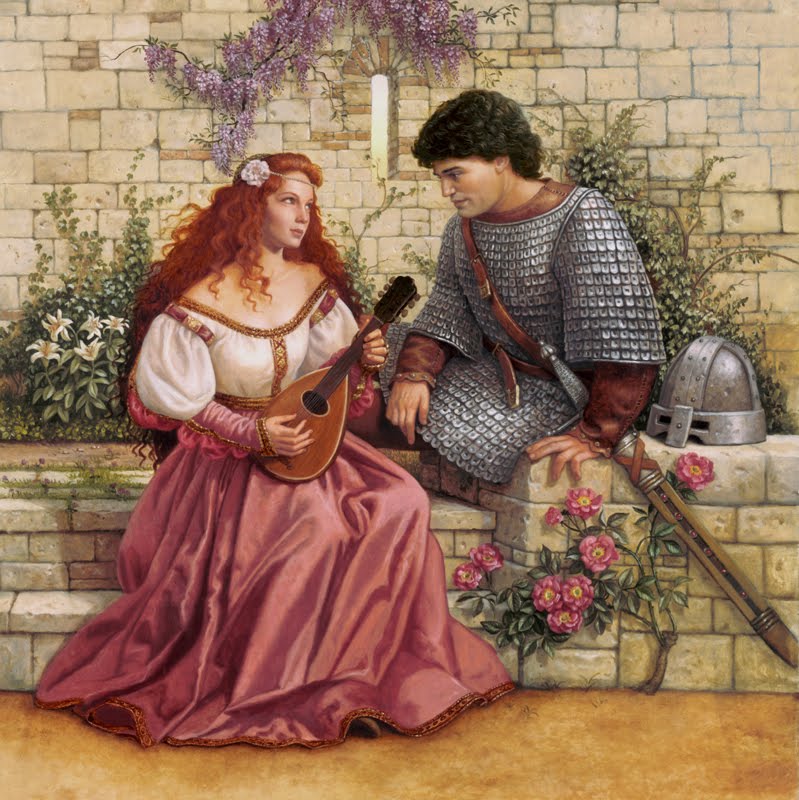
Sir Lancelot and Guinevere

Love or Obsession?
Obsession

This is another classic romance that’s built on a love triangle, a tool in romantic stories that tends to kill any meaningful passions like a thousand dead puppies. I’ve made my hatred of love triangles clear. This one is probably the most famous in classical literature. It can be argued that it’s probably the most refined and polished.

Granted, this is one love triangle that doesn’t make me want to bash my head in with a brick. Guinevere and Lancelot are both well-developed characters in their own right for the most part. However, too much of their character is defined by this love triangle. It’s kind of the only thing Lancelot is known for, wanting to hook up with his buddy’s wife.

On top of that, there’s not a lot of emotional depth to this romance. Lancelot and Guinevere never give the impression that their chemistry goes beyond just wanting to kiss and bone. They don’t seem to know each other on a more meaningful level. They give the impression that the forbidden nature of their desire is what fuels it, which makes it hard to see as genuine.

For that reason, I say this counts as obsession. It’s still not as bad as other horrible love triangles, some of which I’ve broken down on this blog, but that’s not saying much.


King Arthur and Guinevere

Love or Obsession?
Love

In keeping with Arthurian Legend, I feel like it’s important to assess the other part of the love triangle. When it comes to Arthur and Guinevere, the dynamics are considerably different compared to those involving Lancelot. For one, Arthur and Guinevere meet at a younger age and they do get to know each other fairly well before things get romantic.

They also make a genuine effort in pursuing their love, despite advice to the contrary. In the classic narrative, Merlin actually warns Arthur not to pursue Guinevere. However, he doesn’t listen. He still follows his heart and Guinevere embraces it.

Even though this romance does have some tragic elements to it, I think it has more polish compared to Romeo and Juliet. Arthur and Guinevere both build a live together and support each other for much of it. You don’t do that without having genuine love for one another.


Edward Cullen and Belle Swan

Love or Obsession?
Obsession

This one is kind of loaded because I know Twilight hardly deserves to be on a list that includes some of the most iconic romances of all time. I understand that, but it’s still probably the most iconic romance of the past decade or so. I know just mentioning it will bring out the anti-Twilight crowd. I understand the sentiment of that crowd, but I ask that crowd to temper their rage for the sake of this discussion.

There’s a lot of overly idealistic, overly cliched components to this relationship. It’s so ideal at times that it’s hard to take seriously. Unlike Romeo and Juliet, these two do get a chance to really know each other and become part of their world. However, I have a hard time calling this love because so much of their story, especially Edward Cullen’s, is defined by Belle.

On top of that, the idea that he watches her while she sleeps kind of skews the narrative into areas beyond romance. Watching someone while they sleep is something more akin to a stalker than a lover. That’s why, despite the passionate moments in the meadows, I rule this to be obsession.


Jay Gatsby and Daisy Buchanan

Love or Obsession?
Love

This is a less contemporary romance, but one that’s still structured in a very modern context. Unlike Twilight, this book is a lot more detailed in who these characters are and why they do what they do. It’s easy to tell that the story has some personal elements for F. Scott Fitzgerald. This shows in how the book’s most important relationship, Daisy and Jay, plays out.

It’s hard to judge the depths of a relationship that involves infidelity. On top of that, the greed elements that are so central to the book make the passions harder assess because it’s not clear how genuine they are. Despite this, I see Jay and Daisy’s efforts to be together as genuine.

These two characters each have such comfortable lives, if not excessively so. However, they still pursue one another. They still make an effort to be together. As such, I do think there is real love between them.


Paris and Helena

Love or Obsession?
Obsession

When it comes to judging romance from ancient literature, such as the Illiad, it’s hard to put it in a modern context. This was a time when women barely had more rights than livestock and marriage was a loveless business arrangement that had all the romance of getting a building permit.

That’s not to say that the ancients didn’t appreciate love. One of the central romances in the Illiad revolves around Paris and Helena. This is the romance that starts the Trojan war and all the carnage that ensues. Passions have to be pretty damn powerful to start a war like this, with or without the help of the gods.

However, that passion is somewhat one-sided. Paris is clearly infatuated with Helena, but she doesn’t seem too receptive to him. It’s hard to feel that romantic to someone whose idea of a romantic gesture involves kidnapping her. Being so one-sided and built on an act that we consider a crime these days, it’s hard to rule this as anything other than one man’s obsession to have the prettiest girl in the land.


Odysseus and Penelope

Love or Obsession?
Love

Sticking with classic Greek literature, there is another iconic romance that’s almost as important as Paris and Helena. This one involves Odysseus and Penelope, two lovers who test the idea that absence makes the heart grow fonder. It’s a test they end up passing.

Odysseus is away from his love for quite some time, braving the River Styx and all sorts of godly troubles along the way. Even so, he never does anything to undermine the love and trust of his wife. She never does anything to betray him either, despite being pursued by plenty of eager suitors.

The loyalty between these two is admirable. Like Romeo and Juliet, it’s very much an ideal, two people who love each other so much that they don’t look to others for a romantic outlet when they’re away. Unlike Romeo and Juliet though, this one has more depth. These two are able to function independently as much as they can function together. That’s a love that ancients and modern folk alike can appreciate.

1 Comment

Filed under Jack Fisher's Insights

When Obsession Becomes A Crime

Ever feel like you’re being watch? No, I’m not talking about the kind of watching that those in tin-foil hats and poor mental health talk about. I’m talking about the feeling of actually being watched by someone who isn’t a CIA agent, a lizard person, or an agent of the Illuminati.

This isn’t a spy movie or a conspiracy theory. This is an extension of the whole love vs. obsession discussion I began yesterday. When I started writing about this topic, I realized quickly that one post was not going to be enough. There are just so many aspects to this issue that it’s hard to capture everything necessary to convey the message I want to convey. Even this part will only convey part of that message.

When you break down the fine, but obscure line between love and obsession, you enter a strange part of human emotions that borders health and unhealthy attitudes. Love is probably one of the healthiest things you can do for your soul. There’s a good reason why those who marry and form stable, loving relationships live longer than those who don’t. In some sense, sexual healing is a real thing.

Obsession, on the other hand, is not going to increase your lifespan. It’s not going to help your social life either. Obsession at a certain level becomes a symptom of mental illness, be it crippling depression or Obsessive-Compulsive Disorder. It’s hard to know where that level is, which is why it’s so hard to know the difference between love and obsession.

There is, however, one clear line that becomes painfully apparent once crossed. It’s a line that represents the endgame of sorts in the love vs. obsession conflict because it turns emotional upheaval into an actual crime. That crime, in this case, is stalking.

Unlike obsession, stalking is a crime and can be prosecuted as such. It takes obsession, dips it in napalm, and throws it into a furnace to create a perfect raging firestorm of emotional unrest. It’s the point where any and all potential for romance fades, becoming instead a case-study in what happens when emotions go haywire.

To make matters worse, the age of the internet and social media makes a stalker’s job so much easier. It’s no longer a matter of just asking the Yellow Pages to not list your address and phone number. If you have an internet presence of any kind, someone obsessed enough can exploit it. It’s scary as hell, but that’s the age we live in.

For most of us who don’t have a vindictive ex-lover, we don’t have to worry about being stalked most of the time. It’s not a passing concern, which is why the whole love vs. obsession conflict kind of flies over our head. For celebrities, though, the concern is real and so is the harm.

So in the interest of providing perspective in what happens when obsession goes too far, here’s a video by WatchMojo detailing some of the most disturbing cases of celebrity stalkers in recent memory. They don’t include cases where the stalker was intent on murder, as that kind of skews the issue. This is just about people who took their love and obsession too damn far.

I admit these cases are extremes. The people involved have serious mental issues and I’m not just talking about the eccentricities of the celebrities either. This is what happens when emotions go haywire and become so unhealthy that it leads to real harm. For an erotica/romance writer who wants to tell stories about healthy romance, it’s an important lesson to heed.

1 Comment

Filed under Jack Fisher's Insights

Love Vs. Obsession: Why Knowing The Difference Is So Vital

We’ve all asked ourselves one fateful question. It also happens to be the question at the basis of 85 percent of all romance movies and 99 percent of all bubblegum pop music songs. It affects us all in some form or another and is a core component of the human experience.

“How do I know I’m in love?”

It’s a profound, but beautiful question to ask. To love someone is a big part of being human. One could argue it’s one of the most important parts of being human. Being in love is one of those basic, emotional experiences that drives us all. We seek out love because it helps make life worth living. Like chocolate, bacon, and hot showers on a cold winter day, it fulfills us on a fundamental level.

Love is a beautiful thing. It’s a beauty I get to admire from a unique perspective as an erotica/romance writer. Pretty much all of my books deal with love in some form or another. Some books, like “Holiday Heat” and “The Escort and the Gigolo,” go to great lengths to build up a romance. Others, like “The Final Communion” and “Jackpot,” use less elaborate forms of romance.

Whatever form it takes, I enjoy writing about romance and many of my future novels will deal heavily in romance. When mixed with a healthy dose of erotic undertones, it can make for some pretty potent narratives, among other things.

As much as we love romance and as critical it is to the human experience, there’s another question that’s somewhat linked to romance, albeit indirectly. It’s a question we don’t ask ourselves quite as often and in some cases, that’s becomes a big problem. It’s uncomfortable, unpleasant, and distressing to think about. That’s a clear sign that it’s still worth asking.

“How do I know I’m obsessed?”

Stay with me here. I know some snicker at that question the same way they would if a five-year-old came up to them and asked why dogs don’t talk. It seems like an unrelated question. It seems like something that really shouldn’t enter the equation when talking about love, but it does. In fact, I’d go so far as to say it’s a big part of the flawed narrative we collectively craft about what love is.

This is another insight I’ve been contemplating while reading “Sex At Dawn,” a book that has already offered quite a few insights into the mechanics of sex and love. The sexy parts are plenty interesting to say the least, if only for those who opt to wear tight pants, but the parts about love are just as insightful.

A big part of “Sex At Dawn,” involves breaking down what it describes as the “Standard Model.” Again, this model is just the stereotypical boy-meets-girl-and-they-live-happily-ever-after-like-an-old-Disney-movie narrative. It’s very familiar to modern Western civilization. It’s the ideal embodied in sitcoms, music, and movies.

However, in analyzing this model, the book highlights a few unflattering features that are hard to overlook. A big part of this standard model requires that the man and the woman be completely devoted to one another, the first thought they have when they wake up and the last thought they have when they go to sleep, presumably after a quick round of highly-scheduled, missionary-style sex.

That’s all wonderfully romantic on the surface, but take a closer look at the finer details of this narrative. They’re completely devoted. They direct all their romantic and sexual energy at each other. Their thoughts and feelings are completely narrow and focused on a singular person. At what point does that kind of sentiment turn from romance into obsession?

I ask that question knowing there isn’t a fine line. However, it’s difficult to decouple the details of this narrative from the definition of “obsession.” According to Dictionary.com, the definition for “Obsession” is as follows:

  • The domination of one’s thoughts or feelings by a persistent idea, image, desire, etc.

With this definition in mind, think back to the narrative surrounding the standard model of romance I mentioned earlier. How much of that romance is built on love and how much of it is built on obsession?

It’s a hard, if not impossible question to answer, but it’s a question that’s worth contemplating because it reveals something about the nature of our emotions. Part of being in love is to desire someone and to be desired. However, sometimes our faulty, flawed brains take it too far and that can really hamper the romance.

When someone is obsessed with someone, especially when it’s done out of love, it consumes a person so completely that they struggle to function on a basic level. They can’t focus at work. They can’t focus with family. They can’t focus on whatever goals, aspirations, or dreams they may have had in their lives. It all becomes secondary because of a person.

A good way to contrast this is to look at it from the opposite end of the spectrum. There are all sorts of people who are obsessed with someone out of hate. There are even entire groups devoted to hating others. For most reasonable people, this is deplorable. Devoting that much time and energy into hating someone just seems wrong. It makes no sense.

So if hate is that wrong when taken to extremes, why should love be different? Isn’t that just as unhealthy? I admit it’s not an entirely fair comparison. Comparing love and hate is like comparing candied bacon with expired kale. They’re two very different manifestations of something that’s so basic, broad, and varied. That doesn’t make the extremes any less damaging.

Being in love is a wonderful feeling, but then again shooting heroin and smoking crack can feel wonderful too. That doesn’t mean that it’s healthy. The problem is that Disney movies, pop songs, and bad romance novels have created this ideal about what love is and some of that ideal involves more obsession than love.

There are plenty of examples to explore and I plan on doing more blog posts on this issue. I hope to break it down a bit more, if only to help me craft more complex, engaging romances in my novels. For now, I’ll focus on one particular example involving music.

When it comes to sappy love songs, pop music can always be counted on to give us a massive glut of material from boy bands, country stars, and 80s hair metal bands. There are so many love songs out there of so many different kinds that if super-intelligent aliens landed tomorrow, even they would be confused about how our music defines love.

This leads me to a very famous song that is often mistaken for a love song. It also happened to be one of the biggest pop hits in 1983, voted song of the year by Rolling Stone. Chances are, if you’re over the age of 30, you’ve heard it at some point or another. If you aren’t familiar with the lyrics, you’re at least familiar with that soothingly haunting tune and the undeniably handsome face of Sting.

This song was, and still is to some extent, widely regarded as a love song. However, if you look at the lyrics a bit closer, how much of it is love and how much of it is obsession?

Every Breath You Take

Every Move You Make

Every Bond You Break

Every Step You Take

I’ll Be Watching You

In a certain context, that sounds sweet. It sounds like something a dying spouse would tell their lover before they passed away to provide comfort.

In another context, it sounds creepy as hell. It sounds like a note a stalker would leave someone, as if to warn them that they can never escape their obsession.

The mere fact that such context is even needed says a lot about our inconsistent sentiments towards love and romance. On one hand, we want to be desired. On the other, we don’t want to be stalked by someone who devotes every waking hour to obsessing over us. It’s a tough balancing act.

This conflict is something that even Sting himself, the writer of this song, admitted in a 1993 interview. He goes onto say:

 “I didn’t realize at the time how sinister it is. I think I was thinking of Big Brother, surveillance and control.”

Again, it’s pretty telling when we can’t tell whether a song is about love or obsession. It says a lot about how we assess love, sex, and romance. Since I’m in the romance/erotica business (or at least trying to be part of it), it’s something I think I need to assess more than most.

At the end of the day, stories about love and romance still strike us on a fundamental level. They have an appeal that spans generations, civilizations, and terrible pop music. I want to channel that appeal with my novels because in the end, a story about love will always be more compelling than a story about obsession.

4 Comments

Filed under Jack Fisher's Insights