Tag Archives: Pop Culture

Busting Myths About Circumcision

Brace yourself. I’m going to do one more post about circumcision. I promise this will be the last time I bring up this topic, at least for a while. As I said in my little personal side-note on the subject, I don’t enjoy talking about this. No man does. That’s why it’s taboo. However, like all taboos, it’s something worth confronting.

We already know there are all sorts of crazy myths and taboos about sex. It’s such an uncomfortable, awkward, complex topic that too many people insist on making more complex than it needs to be. I’ve already done a post about busting the most popular myths about sex. Now, I intend to do the same with circumcision.

Unlike some of the other sexual myths, circumcision is one of those taboos that disproportionally affects Americans more than most other western countries. According to the World Health Organization, only about a third of the global male population over the age of 15 is circumcised whereas the prevalence in America is around 79 percent. Even if you suck at math, you know that’s not a trivial difference.

While it’s true that circumcision has cultural roots that go back centuries, the reasons for those traditions aren’t the same here in the USA. In Bronze Age times, circumcision was primarily a religious rite and a cultural practice. Their reasons may have been practical on some levels. This is an era where rubbing goat shit on your face probably counted as makeup so there may have been some hygienic benefits.

It actually goes beyond that. Back in these times, tribes of people did all sorts of things to identify themselves as part of a certain tribe. It’s easy enough for someone to just join a group by drinking a shot glass full of wasabi, but for someone to snip off part of their dick? That takes dedication. That shows that someone isn’t just a member of a tribe. They’re committed.

Fast forward to the 19th and 20th century and we don’t need those kinds of tribal practices anymore. We have Facebook accounts, Twitter feeds, and social security numbers to identify ourselves and our groups. There’s no need to mutilate part of your dick. However, we still do it, thanks in no small part to the efforts of anti-masturbation crusaders like John Harvey Kellogg. Even after Mr. Kellogg’s bullshit fears about masturbation were debunked, we still do it.

People still give reasons for it. They even claim to back these reasons up with science. That doesn’t necessarily mean it’s good science. So as a public service, I’d like to list some of these myths and why they’re bullshit. This is a list compiled by the fine folks of the India Times. Feel free to reject, accept, or verify them as you see fit.

Common Male Circumcision Myths Debunked

Myth #1: Circumcision is an effective way to prevent HIV

Fact: The World Health Organization (WHO) and the Joint United Nations Programme on HIV/AIDS (UNAIDS) states that “Male circumcision should be recognised as an additional, important strategy for prevention of heterosexually acquired HIV in men…(but) should never replace known methods of HIV prevention.” However, this does not provide any kind of protective benefit to the female partner involved and instead puts her at risk of contracting HIV.

Myth #2: Circumcision prevents penile cancer

Fact: No clear evidence has been concluded to state that circumcision completely prevents penile cancer. However, it is worth noting that the penile cancer rate is much lower among circumcised men than uncircumcised men.

Myth #3: Infants do not feel pain during circumcision

Fact: Many doctors do not believe in the use of anesthetic during circumcision. But circumcision is quite painful for the infant just like in any other older child or adult. Even the analgesic used during this procedure only decrease the pain and does not eliminate it completely. The baby will feel discomfort for about seven to ten days.

Myth #4: Circumcision is a perfectly harmless procedure

Fact: Circumcision is painful and can cause infections, hemorrhage, scarring, urinary problems, etc.

Myth #5: Circumcision can completely prevent urinary tract infections (UTIs)

Fact: There was one study conducted back in 1985 that stated that circumcised babies were immune to UTI. However, further studies conducted since then found no such backing that circumcision completely prevented the risk of urinary tract infections.

Still not convinced? Well, as I’ve said before, I know this is a touchy subject. It’s difficult to talk about. As with most things though, it can be made easier through the use of crude humor. So if you’re not interested in reading articles about circumcision, here’s a funny little video from the folks at College Humor that should explain/debunk circumcision just as well. If you have a weak stomach, but a good sense of humor, then you should be okay.

5 Comments

Filed under Jack Fisher's Insights

A Personal Story About Circumcision (Seriously)

I know circumcision isn’t a very sexy topic for a blog that’s supposed to be promoting sexy products in the form of erotic fiction. It’s right up there with moles, puking, and diarrhea in terms of its ability to kill a mood. However, as unsexy as it may be, it is something that affects our sex life.

According to the CDC, around 79 percent of males are circumcised in the United States. If circumcision were a movie, it would have a fresh rating on Rotten Tomatoes. Something that prevalent and popular is sure to become entrenched to some extent. It becomes one of those traditions we just don’t question.

It’s not unlike what happens when a certain song or band becomes popular. It attains a loyal following of supporters that dare not question it, no matter what. Just look to Justin Bieber fans for proof of this.

I admit I didn’t really give circumcision much thought. It happened when I was an infant. Nobody remembers much about what happened to them as an infant. In that respect, it’s the perfect time to perform circumcision. What sober-minded adult would agree to let a doctor mutilate his genitals?

I’m sure there are a few. There are men who pierce their genitals, after all. Just google a Prince Albert, but make sure you have a strong stomach. Even with these outliers, it’s hard to imagine 79 percent of all men would consent to something like this. So why should we give circumcision a pass?

This brings me to my personal story. It happened very recently during a conversation with my mother. I won’t divulge the context or situation of the conversation. I have a feeling there are members of my family who would kill me in my sleep if I did. I’ll just say that we were talking about babies and infant care. It’s a topic that’s relevant for certain members of my family. That’s all I can say without looking over my shoulder for the rest of my life.

During this conversation, my mom told me the story about my circumcision. Apparently, I was not circumcised shortly after birth, which is when most babies have the procedure. I had mine a few days after. I don’t remember what went into the decision-making process behind this.

As far as I know, I think the logic was that my father was circumcised. So logically, I should be circumcised as well. It’s a tradition, I guess. Tradition is sometimes the only logic behind certain decisions. Then again, we’re not talking about a Christmas dinner here. We’re talking about a baby’s junk.

Whatever the reason, I had to get my circumcision several days after my birth. My mom then described the visit to the doctor’s office. It starts out simply enough. She says I was a healthy baby. Then, the big moment comes. The doctor breaks out his tools and prepares to cut into my baby parts. This is where it gets somewhat telling.

Before he does what he does, he asks my mother to leave the room. This may be something that’ll be uncomfortable, which ranks right up there with the warnings on imported fireworks as the most obvious statements in the world, and it may make me cry. My mom, trusting her doctor, does what he requests.

However, she says at the time, I give her this look that seems pretty telling. I know I couldn’t talk at the time, but I think I may have been trying to say, “Why are you letting this man cut up my penis, mommy?”

What I try to say doesn’t matter much in the end. I still get circumcised. I don’t imagine it’s all that comfortable. I think it’s pretty fair to assume I cried and there’s no shame in crying over getting your junk cut. Even the most manly of men have to admit that. After that though, my mom never speaks of it again and I never ask about it.

Now let make this clear. I love my mom. I love my dad. I have two of the best parents any guy can ask for. However, my parents are still prone to the influences of tradition and peer pressure. I don’t blame them in the slightest for deciding to circumcise me and my brother.

It’s just one of those inescapable truths. Sometimes society really does function like an 80s high school drama where people eat paste and snort ketchup on a dare. They probably understood that if I didn’t get circumcised, I’d look different than 79 percent of the male population of this country. In a world where people get bullied for awful reasons, it’s not unwise for parents to limit those reasons as much as possible.

So in light of tradition and peer pressure, it seems circumcision isn’t going away anytime soon. However, if tradition and peer pressure really are the primary reasons why we do this, I think it’s worth talking about. This is why I wanted to share this personal story. I know it’s not as entertaining as me admitting that I sleep naked, but this is something that affects me. It’s something that affects the lives of many men. Since it affects our sex lives, it’s going to affect women by default.

So let’s put it out there and ask a few uncomfortable questions. Sure, it’s going to make for some uncomfortable answers. It may even reveal that some of our cherished traditions may be bullshit, but in the same way open communication is important for our sex lives, it’s just as important for our overall health. When the conversation involves cutting up our genitals, I think that’s an conversation worth having.

14 Comments

Filed under Jack Fisher's Insights

Profiles in Prudishness: John Harvey Kellogg

History is full of crazy, if not deranged, periods of sexual repression. It comes and goes like seasons, but like hurricanes in Florida or blizzards in New York, some seasons are more severe than others. Every nation, society, and culture has their own unique sexual climate so-to-speak. America, contrary to everyone on Fox News, is no exception.

I’ve discussed current trends in sexual repression on this blog before, from the myths of porn addiction to the toxic proclivities that hinder intimacy in modern society. While it may seem bad now, it’s child’s play compared to what our society has experienced in the past.

To give you just a faint idea of how extreme sexual repression got at one point in American, I’d like to do a quick profile of one of this country’s Grand Poobah of prudes, John Harvey Kellogg. If his name sounds familiar, it should. It’s the same Kellogg behind the breakfast cereal brands that most of us eat or have eaten at some point in our lives. By the time you learn about the man behind the meal, you may never look at cereal the same way again.

So who was John Harvey Kellogg? Well, before his name became synonymous with breakfast food, he was a respected doctor and an active participant in the Seventh-Day Adventist Church.However, as is often the case with the devoutly religious, he took his religion more seriously than most and this is what led him down the road to repression.

By and large, his views didn’t differ much from most other ardent Seventh-Day Adventists of the time. This is a religious sect that is repressive in more than just sexuality. It recommends a strict vegetarian diet, abstinence from alcohol and tobacco, and regular exercise. Kellogg was said to have adhered to this regiment, but he just had to take it several steps further.

Rather than go into the complex theological and psychological underpinnings of Kellogg’s personal views, I’ll just come out and say it as simply as I can. John Harvey Kellogg was obsessed with masturbation. I’m not talking the kind of obsession that leads to 10-hour masturbation contests. I’m talking about the kind of obsession that drove one man to make it his life’s mission to stop men and boys from masturbating.

It sounds like a bad joke from a Sunday morning sermon at a Mormon Church, but it’s true. John Harvey Kellogg really obsessed over masturbation. He wasn’t alone either. During the late 19th and early 20th century, America found itself in a good old fashioned moral panic over masturbation.

Was it logical? No. Did it have any science behind it? Of course not. Moral panics don’t work that way. They don’t have to. It just has to involve a large number of people being totally convinced that all the ills in the world are caused by one thing and one thing only, as though the human condition is ever that simple.

Let’s face it though. We’re human. We like easy answers. Back then, for reasons that religion and bad science helped fuel, masturbation was that easy answer. As such, John Harvey Kellogg took it upon himself to rid the world of this horrific vice.

So how did he plan on accomplishing this? Well, this is where his famous breakfast cereal comes into play. True to some of the other tenants of his church, he sough to use diet as a means of curbing the desire pleasure one’s self. He believed corn flakes would temper dangerous passions and limit the dangerous desires that lead to masturbation. Absolutely none of this is made up.

Remember this the next time you eat cereal with the Kellogg brand. While times have changed, its founder really wanted you to not masturbate. He thought diet and nutrition would accomplish that. The fact that dildos, lube, erotic fiction, and internet porn are still major industries shows just how badly he failed. However, Kellogg didn’t stop at diet. Remember, this guy was really obsessed with masturbation.

When diet and nutrition just weren’t enough, Kellogg favored an even greater extreme. In his seminal (pun totally intended) work, Plain Facts for Old and Young, he also recommended using circumcision as a means to discourage masturbation. Want to know why circumcision is so common among men in America? Well, you have Mr. Kellogg to thank for that.

Before he and his kind came along, circumcision was primarily a Jewish rite. It was rarely performed for medical reasons and was fairly uncommon. However, that changed once masturbation became public enemy number one. The idea was that the presence of the foreskin made masturbation too easy and they can’t have that. If someone is going to self-indulge, they need to make it challenging.

Once again, Cracked.com does an admirable job describing how these fears shaped the modern world that emerged in the 20th century. They also quote one of Mr. Kellogg’s recommendations for using circumcision. If you’re a man and you have a weak stomach, you might want to close this page.

5 Insane Ways Fear of Masturbation Shaped the Modern World

“The operation should be performed by a surgeon without administering an anesthetic, as the brief pain attending the operation will have a salutary effect upon the mind, especially if it be connected with the idea of punishment, as it may well be in some cases. The soreness which continues for several weeks interrupts the practice, and if it had not previously become too firmly fixed, it may be forgotten and not resumed.”

Still with me? Are you done cringing? Good, because as a man, it is pretty distressing. The idea of a young boy or a baby going through this procedure should make anyone feel queasy. It’s one thing to just preach and lecture others on the evils of enjoying one’s self on one’s own terms. It’s quite another when it involves involuntary mutilation.

This is how far sexual repression can go. People like John Harvey Kellogg can become so obsessed with this one act of sexual expression that they are willing to actually torture and mutilate others to stop it. We still see that happening today with female circumcision, an equally horrifying process that I’ll save for another blog post. However, even today’s ardent prudes would cringe at what Kellogg recommended.

The anti-masturbation crusade of the late 19th century still affects America to this day and not just because of the lack of foreskins on many men. At the time, masturbation was part of a moral panic that believed this one particular vice would destroy society. It set a pattern for future panics.

We had panics over alcohol, which resulted in Prohibition and the crime it inspired. We had panics over marijuana, which are still being fought today. Now, thanks to the likes of Pamela Anderson, we may be on the cusp of a new moral panic over porn.

In every case, there’s no inherent logic to the moral panic. In the same way that the anti-porn crusaders of today shroud their panic under the guise of public health, John Harvey Kellogg did the same with his pro-corn flakes, pro-mutilation policies for curbing masturbation. It’s all for “public health” or “the welfare of children.”

Now it’s easy to ridicule men like Kellogg for their obscenely extreme views on sex, vice, and overall fun. However, I think that ridicule needs to be tempered to some degree because men like him, as well as women like Pamela Anderson, are very likely sincere in their beliefs to some degree. They’ve really convinced themselves that these vices are a problem.

Again, there’s no logic to this conviction, but they don’t care. They just need to grasp at whatever evidence, be it anecdotal or completely made up, will affirm this conviction. John Harvey Kellogg had a valid excuse to some extent because he lived during a time when our understanding of biology, physiology, and sexuality was still limited. However, in the age of the internet and Wikipedia, the anti-sex crusaders of today have no excuses.

8 Comments

Filed under Jack Fisher's Insights

Happy Labor Day!

On behalf of myself and all those who dedicate their creative energies to entertaining and titillating the masses, Happy Labor Day! Let this be a day when we put down the tools of our toil, sit back, and take a deep breath. We work so hard nearly every other day of the year. What’s the point of all that work if we don’t take a step back to appreciate it?

Working hard is a noble quality. Working too hard can undermine the reason why work has value. That’s why it’s important to balance life out between work and play. Our ancestors couldn’t have survived if they didn’t have at least a few moments of peace to enjoy in between hunting lions and gathering food. We stress ourselves too much and appreciate too little. Let’s make it point to cherish this day for all the work we do and all the fruits it bears.

For me, personally, I intend to make all my Labor Day activities clothing optional. Take any relaxing activity you can think of. I dare you to find one that isn’t enhanced by being naked. Can you think of a better way to celebrate a holiday? I think not.

Leave a comment

Filed under Jack Fisher's Insights

Busting Sex Myths From Cracked.com

It’s Sunday. It’s a holiday weekend. Everybody is either recovering from a hangover or making arrangements to recover from a pending hangover. I don’t want to distract too many people from such noble endeavors. It’s a holiday. We should be having fun and enjoying ourselves.

So for the sake of brevity, I’ll only do a brief follow-up from my post yesterday about Pamela Anderson’s outrageous hypocrisy at condemning the porn industry that made her rich and famous. Ms. Anderson’s hypocrisy is a byproduct of a frustratingly stubborn myth about porn and addiction. It’s just one myth in many associated with sex. When something is so taboo and varied, it tends to develop all sorts of crazy myths. With sex, some of those myths can become downright disturbing.

I’d need multiple blogs, a staff of at least 50 people, and grant money from several major universities to document all the myths about sex and sexuality. We’ve all heard something crazy about sex, what it is, how to do it, and what it does to us. From using lemon juice as a douche to eating certain foods to make your semen taste better, these myths exist and propagate with disturbing efficiency.

Thankfully, the fine folks at Cracked.com do a nice job of busting myths, including those pertaining to sex. Back in 2015, they did an article on 27 sex myths that too many people still believe. The only thing truly shocking about this article is that they only managed to list 27.

Cracked.com: 27 Sex Myths Too Many People Still Believe

So why am I citing a link from 2015? Well, one of those myths is relevant to what I wrote about yesterday. It involves the concept of porn addiction that Pamela Anderson whined about.

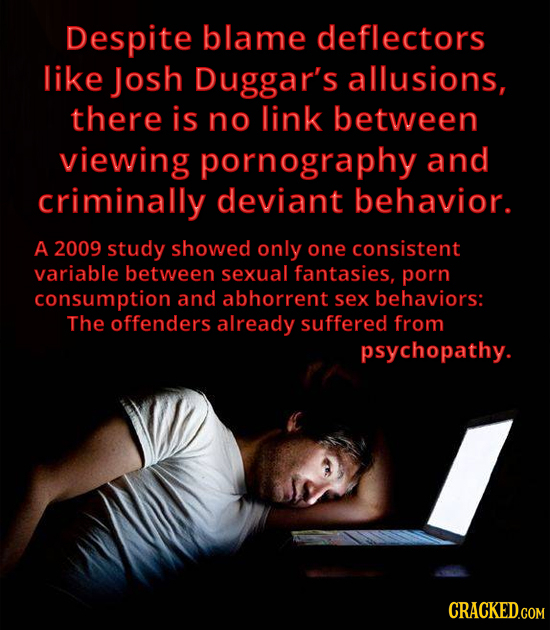
This actually makes her hypocrisy even worse because she’s focusing on the porn and not the underlying mental health issues behind it. She’s basically working under the assumption that the tail is wagging the dog here. As a noted animal-lover and PETA supporter, she should know better. Also, this study was done in 2009. She has no excuses.

There are all sorts of crazy myths that complicate and confuse our sex lives. Again, the main reason these myths emerge is because sex is so taboo and we refuse to talk about it. When we don’t talk about something, we don’t learn enough about it. When we don’t learn enough about something, we tend to make shit up to fill in the blanks. That sort of thing already gave us crazy conspiracy theories, fad diets, and organized religion. Let’s not let it ruin sex more than it already has.

4 Comments

Filed under Jack Fisher's Insights

Porn and the Hypocrisy of Pamela Anderson

Let’s face it. We’ll forgive celebrities for damn near anything, so long as they keep entertaining us. It’s a flaw in society. It’s a flaw in us, as a species. Our caveman brains will bend over backwards and even beyond that in order to rationalize our love/obsession/fixation with celebrities. We don’t care if the President himself is getting blowjobs while in office. We just want them to keep entertaining us.

However, there is one sin that even our flawed society has a hard time overlooking. It’s a sin so egregious that our brains will simply not allow us to ignore it. It is the alpha and omega of dick moves. It’s so disgusting and distressing that no amount of entertainment value can make up for it. So what is this horrendous sin? It comes down to one foul word:

Hypocrisy

We’ll forgive Olympians for cheating. We’ll forgive athletes for animal cruelty. Until very recently, we even forgave spousal abuse to some extent. We just can’t handle hypocrisy. It’s one thing to just lie to our faces. We all deal with lies. We all lie to ourselves and others to some extent. We can understand that to some degree. It’s only when someone elevates themselves with that infuriating holier-than-thou  spirit, only to be guilty of it themselves, that we get truly outraged.

This week, famed Playboy star, Pamela Anderson, joined the infamous ranks of celebrities who either are revealed as hypocrites or willingly embrace it. In this case, Ms. Anderson did the latter. She penned an opinion piece in the Walls Street Journal denouncing the porn industry that made her rich, famous, and relevant. She took a page out of the playbook of every anti-sex crusader, calling porn a “public health crisis” and decrying the effects it has on its users.

Now, it’s one thing when some sexually repressed, overly uptight, puritanical moral crusader denounces porn. We expect that from those people are are happy to ignore them. There’s no law against being uptight or puritanical about sex, nor should there be. They’ve always existed in society and will continue to exist to some degree. We can tolerate that.

What Pamela Anderson does here is far more egregious because she’s denouncing the very thing that made her successful. If she were to pay back all the money she ever made from posing naked, acting sexy, or just giving men something to jerk off to, then she’d give her words some weight. As far as we know, Ms. Anderson is still living a luxurious, celebrity-style life and isn’t planning to give it up anytime soon.

It’s asinine, dishonest, and just plain ridiculous. It’s not a moral stand. It’s a joke. That’s what hypocrisy does. It takes an issue and removes any critical, substantive context from the conversation. It gets reduced to a case study in what an asshole someone is for having the audacity to claim moral superiority over others, despite not living up to those morals.

Now I admit that, as a teenage boy, I fantasized about Pamela Anderson. A lot of men did. She’s a beautiful woman and she used that beauty to get ahead. There’s nothing wrong with that. Hell, that’s the the entire premise of my book, Skin Deep. I doubt Ms. Anderson would ever read my book, but I think it would be pretty revealing for her because it confronts the impact of beauty and how we use it to our advantage.

It’s not so much a flaw in our society as it is a byproduct of our biology. We’re inclined to be attracted to things and people we find beautiful. It denotes health, vigor, energy. To condemn us for this attraction is to condemn the very mechanisms that keep us alive.

Those same mechanisms are what drive us to these irrational rationalizations about everything from sex to religion to politics to tastes in movies. If I had a chance to talk to Ms. Anderson (and avoid looking at her tits long enough), I’d try to talk to her about why she feels this way about the porn industry now. I don’t claim to be psychic, but human biology does often utilize certain patterns.

As I’ve explained before in previous posts, and will likely continue to do so again in future posts, our brains are not wired to be rational or logical. They are wired for two primary functions: survival and reproduction. If there’s a force that hinders both, then our brains will work as hard as possible to avoid or overcome it, even if it means resorting to hypocrisy.

Being such a social, empathetic species, mental distress caused by guilt is a powerful hindrance. Guilt can impact our ability to survive in that the distress makes us incapable of fighting off a lion or a bear. It’s also not an attractive quality to the opposite sex. Nobody really finds excessive guilt sexy, either in our species or any other. So guilt causes a lot of distress.

To avoid this distress, we’ll lie to ourselves. We’ll forge thoughts, memories, and beliefs in our minds that are completely detached from reality, but they’ll make us feel less guilty and distressed so we’ll accept them. That way, our brains can function again. We can function again.

I suspect that, as an aging woman with children and multiple failed marriages, Ms. Anderson does feel guilty to some degree. She may not admit it. Admitting guilt is right up there with getting open heart surgery from a hammer in terms of unpleasant experiences. By denouncing the industry that made her rich and calling it a “public health issue,” she eases her own distress. Her brain can function a bit better now. It’s selfish on some levels, but understandable on others because we’re just not wired to accept such a distressing state. We’ll do or think anything to escape it.

Now to those who read her article, take comfort in the knowledge that it contains little in terms of actual research into sexual addiction. This is still a topic that is poorly understood. However, given the ubiquitous nature of porn, we do know enough about it to conclude that Ms. Anderson’s assertions are bullshit.

According to the American Psychological Association, pornography does not meet the same criteria for addiction that would put it on the same level as cigarettes or alcohol. It can be damaging to some individuals, but you can say that about many addictions from biting your nails to getting tattoos. While we’re all wired for survival and reproduction, there are many variations of that wiring and sometimes that wiring means porn will be unhealthy for some people. By and large, though, it’s not harmful to most.

There’s still more research to be done and for Ms. Anderson, it still won’t be enough. Like creationists, vegetarians, or Bigfoot enthusiasts, there’s no amount of scientific evidence that will change their mind. Their brains just aren’t wired to accept it. Even so, that doesn’t make this level of hypocrisy any less egregious. She can say what she wants, but she can’t expect the words of a hypocrite to carry much weight on this or any other issue.

14 Comments

Filed under Jack Fisher's Insights

How To Craft A Love Triangle That DOESN’T Suck

I’ve spent most of this week complaining about how much I despise love triangles and why they’re the worst invention since the concept of sparkling vampires. I’ve explained why they suck and singled out one that sucks the most. Well, now I’m done complaining.

My parents raised me to understand that complaints that aren’t followed up with solutions is nothing more than glorified bitching and moaning. I will not permit bitching and moaning on this blog. Instead, I’m going talk about solutions instead of problems. It’s a step 95 percent of complaints on the internet never bother to make. I’m taking that step here.

As much as I hate love triangles, I know they’re not going away. So long as people keep telling love stories, with or without vampires, love triangles are going to manifest in some form or another. Enews even did an article a while back ranking the “hottest” love triangles on TV. I contest their characterization of these love triangles, but I don’t deny their appeal.

It’s inevitable that plenty of these love triangles will be god-awful for the same reasons I described in previous posts. With that in mind, let me just say that this post isn’t about those. I’m directing this post to those yet-to-be-told stories that have some sliver of hope of being decent.

So how do we go about it? How do we utilize love triangles in a way that doesn’t destroy the story? It requires a little more work and effort on the part of the writer. Those who make porn parodies and fan fiction may not be inclined to do that extra work, but it’s definitely worth doing. There are enough bad love triangles as it stands. Do we really need another reminder?

The primary problem with love triangles, as a concept, is that it narrows the characters. It reduces them to serving singular, shallow roles that limits their development. If a character’s sole purpose is to serve as a source of tension for a particular romance, then that character has as much depth and appeal as a speed-bump. Since we want to inspire love and not road rage, it’s important to have a focused approach.

With this in mind, here are Jack Fisher’s four key tips for making a good love triangle.

1. Make sure the emotions between all parties involved are balanced.

Let’s face it. Lopsided victories are boring. Would a Rocky movie be entertaining if Rocky Balboa got his ass kicked in every fight? Even if you’re going to have a Biff Tanner somewhere in this story, make sure there’s some meaningful depth to the emotions involved here.

This applies to romances involving two men and one woman, two women and one man, or multiple men and multiple women of various sexual orientations. It’s vital, regardless of which body parts are involved. The emotions with everyone involved should be sincere. The people in the love triangle can’t just be attracted to one another. They have to have real, genuine passion for one another. If it’s not genuine, then it’s just creepy and misguided. Look at Wolverine in the X-men movies for proof of how bad this can get.

2. As a plot, a love triangle must be a secondary plot at most.

This isn’t as easy as it seems. I’ve noticed this in reading other romance stories and trying to craft my own. Whenever a love triangle enters the picture, it often comes to dominate the underlying plot of the story, so much so that it derails whatever major plot came before it.

I’ve seen this happen in fan fiction, comic books, animes, and erotic thrillers. The tension within a love triangle tends to consume the story, becoming one big distraction that keeps the audience from getting too engaged. That’s why a love triangle must always be, except in the rarest of cases, be a secondary plot.

This is challenging, but it is possible. Books like The Hunger Games and TV shows like True Blood (at least the first few seasons) are able to do this in a meaningful way. If done right, it can make stars out of Jennifer Lawrence and Anna Paquin superstars.

3. Don’t force the emotions. Let them manifest naturally.

This is actually easier than it sounds, but it can be tedious. I know this because I found myself taking a lot of extra steps when writing my book, Holiday Heat. That entire story is structured around a pseudo-love triangle of sorts, but no vampires are involved and there’s nobody resembling Biff Tanner. As such, I needed to add a few extra steps to develop the characters so that their emotions made sense.

This is critical because if a romance feels forced, then you’ll make the same mistake that Chris Claremont and the X-men movies made with Wolverine, essentially forcing emotions into a character for all the wrong reasons. If any character is going to have any genuine passion for another, it can’t just be for the hell of it.

4. The end result of a love triangle must be satisfying to all sides

This may sound hypocritical coming from an erotica writer, but try to make sure nobody gets screwed over too badly. This is what happened to X-men. This is what happened to Twilight. This is what happens with almost every bad love triangle. One character gets horribly screwed over and unless that character is a Biff Tanner type, it’s not going to be satisfying to the audience.

Most human beings who don’t have personality disorders tend to have an innate sense of justice. When we see injustice play out in the fictional world, it tends to upset us, just as it does when it occurs in the real world. So if there’s a character in a love triangle who doesn’t win the heart of his or her lover and gets unceremoniously cast off, then that’s not going to be satisfying. That’s going to be the literary equivalent of a dick move.

Again, this requires a bit of extra work. It means crafting a more complex plot wherein all parties involved achieve some kind of satisfying resolution to the emotional upheavals. It doesn’t always have to mean finding another love or forcing some other character to fill the void. Sometimes, it requires some extra layers to a plot, but it’s worth the effort if we, the audience, feel that everyone ends up satisfied on some level. It’s kind of sexy when you think about it.

So there you have it. Those our my four tips for making love triangles that don’t suck. I hope to employ them to some degree as I write more romance and erotica. I hope others can make use of them as well. This world has enough terrible love triangles. Let’s not create more. After Twilight, I think our civilization has had enough.

2 Comments

Filed under Jack Fisher's Insights

Cyclops, Jean Grey, and Wolverine in the X-men: The Worst Love Triangle of All Time

I’m not a successful writer yet. I’m not certain that I’m an overly skilled writer either. However, as someone who has been writing almost every day since he was 15-years-old, I like to think I know something about this topic. As such, I’m of the opinion that any overly bizarre or frustratingly inane plot can work if written well. With enough skill, a writer can make a story about snake handler hooking up with an alien compelling.

Then, there are certain plots that are so poorly structured, so inherently weak, and so intrinsically flawed that the combined efforts of Shakespeare, Tolken, and Faulkner can’t save it. For me, that plot is that of the love triangle. I even dedicated an entire post about why I think it’s one of the most overused, poorly written plot devices in all of romance.

I avoided getting into specifics in that post because I wanted to focus on the bigger picture as to why love triangles as a concept suck in general. For this post, I’m going to reach deep into the steaming pile of shit that countless stories featuring bad love triangles have excreted over the years and discuss the worst of the worst.

So which love triangle is the worst among the vast mountain of shit that occupies such a prominent position in popular culture? In this case, the worst comes from the world of X-men and involves the characters Cyclops, Jean Grey, and Wolverine.

For the sake of this blog, it’s very convenient that the absolute bottom of the pit that is terrible love triangles takes place in the world of superhero comics. This is, after all, a topic that’s near and dear to my heart. I’ve made my love of superhero comics known on this blog before. I will likely cite superhero comics again in future posts as I discuss similar issues. In this case, however, it really is an issue of pragmatism because I really could not find a worse example of a bad love triangle than this one.

What makes it so mind-numbingly terrible? Well, to answer that, here’s a quick rundown of the structure of this worst-of-the-worst brand of romantic drama. Cyclops and Jean Grey are founding members of the X-men. They were among the original X-men that were first introduced in 1963 by the ultimate creative dynamic duo, Stan Lee and Jack Kirby. They’re also, by far, one of the most iconic couples in the history of X-men, if not all of superhero comics.

Wolverine didn’t enter the picture until later. He doesn’t join the X-men until 1975, which is a while after he makes his first appearance as a supporting character in The Incredible Hulk. As the X-men’s resident bad boy, he’s basically the opposite of Cyclops. He’s brutish, crude, ill-mannered, quick-tempered, and bad-ass to an insane degree. So naturally, he pulls in a lot of ass. There’s actually a chart documenting Wolverine’s many romantic entanglements and it’s even more confusing/impressive than it looks.

So the very idea of Jean Grey falling in love with him while being in love with Cyclops is akin to a man being in love with both a nun and a crack whore. However, that discrepancy alone isn’t what makes this love triangle so horrendously bad. It’s all the circumstances surrounding it that make it the poster child for everything that sucks about love triangles.

First and foremost, the entire reason why Jean Grey developed an attraction to Wolverine in the first place is ridiculously contrived. X-men writer, Chris Claremont (also known as the most prolific X-men writer ever), indicated in numerous interviews that the attraction between them was extremely shallow.

“He sees Jean, Jean sees him, hormones kick in, the rational brain checks into the Happy Hour hotel, and everyone else runs for cover.”

There’s nothing wrong with basic attraction. That’s the sort of thing men feel whenever they see an attractive stripper or the sort of thing women feel when they see Channing Tatum without his shirt on. It’s a good setup for a one night stand. It’s not a good foundation for a meaningful romance, which is the only thing that makes a love triangle functional to some degree.

That never happens in X-men and for a very bad reason. Due to editorial decisions within the X-men comics that are too convoluted for a single blog post, Claremont soured on Cyclops as a character and openly despised his relationship with Jean Grey, despite having done more than any other X-men writer to solidify their status as the premier romance of the X-men. So what does he do? He tries everything he can to break them up and had editors not thwarted him in 1991, he would’ve succeeded.

That’s the entire reason that this love triangle exists. A writer grew to despise a certain character and decided to punish them by making his girlfriend fall for someone who is the exact opposite of him. Think about that long and hard for more than 15 seconds. Seriously, think about it as rationally as any human mind can manage on topics involving fictional characters.

Are you done? Then, I hope you can now see just how flawed that reasoning is. The writer hates one character and uses that as the sole justification for an entirely separate relationship between two characters who have next to nothing in common. That’s akin to loving soccer just because you hate American football. It’s a bad reason to love a sport and a worse reason for a love triangle.

In my post about why love triangles suck, I pointed out that they tend to devalue characters. It turns them into prizes to be won. It tends to override other meaningful traits a character may have. For Wolverine, it turns him from this bad-ass loner into an obsessive, petty asshat. That’s the trait of an insecure teenager, not a bad-ass loner.

The effect is just as bad on Jean Grey, who effectively becomes the ultimate prize of sorts for Cyclops and Wolverine. This is pretty insulting to her character because Jean Grey does so much to set herself apart as a strong female character from an era where the concept hadn’t been refined yet. She is the center of the Dark Phoenix Saga, also known as the greatest X-men story ever written. Reducing her to a prize for two men undermines a character with so much more to offer.

The comics do a terrible job setting up this love triangle, which the writer himself admits was created for petty reasons. However, it’s the way it plays out in the X-men movies that make this love triangle truly the worst of the worst.

How can the movies actually make this worse? Well, somehow they found a way. To this day, I have a hard time believing that the writers at Fox didn’t actively try to make this love triangle worse than it already was. What they came up with still confounds me, both as a writer and an X-men fan.

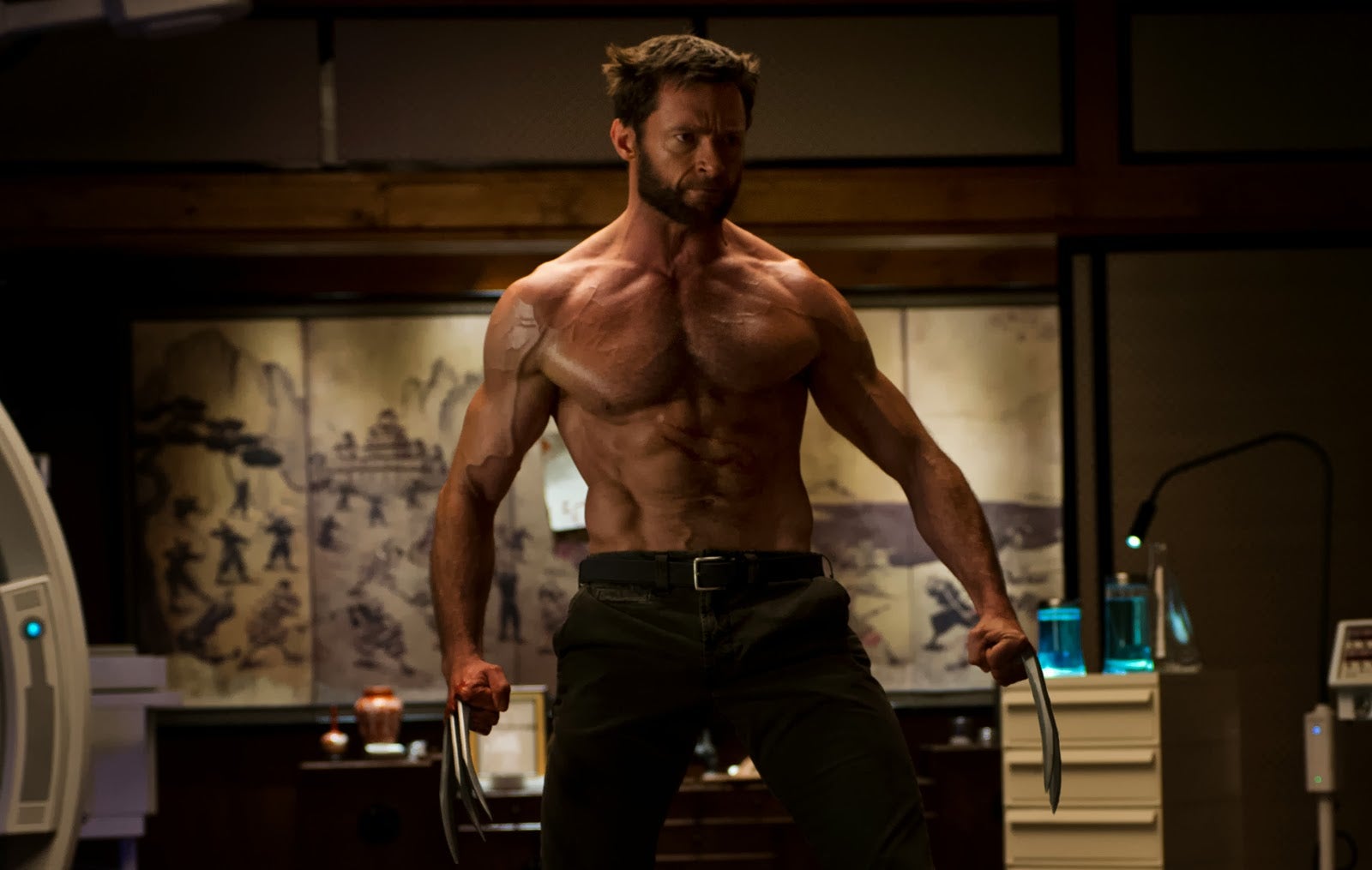
Anyone who has seen any of the X-men movies knows that most of them are structured around Wolverine. That’s entirely fair. He’s the most popular X-men character of all time and he’s played by Hugh Jackman. In case you’ve forgotten, Hugh Jackman looks like this.

I’m not gay, but even I think he’s sexy. Naturally, he’s going to have a love interest. A man this sexy has to have one. The problem is, the writers of this movie don’t realize how terrible the love triangle is with him, Cyclops, and Jean Grey in the comics. That, or they see it and think they have a way to make it worse.

First and foremost, they gave no reason for Jean Grey and Wolverine to be attracted to one another. Hell, he tries to stab her when he first wakes up at the Xavier Institute in the first X-men movie. That alone should ensure her panties stay dry around him for the entire trilogy. Instead, the chemistry between them is outright forced.

It has to be because these two never really have a meaningful conversation. They never really get to know each other. They’re just physically attracted to one another and the only reason they don’t bone is because Jean Grey is engaged to Cyclops. As a result, Cyclops is reduced to the role of being an obstacle to Wolverine. That’s pretty much his only role in the first three X-men movies, being a hindrance to Wolverine getting into Jean Grey’s panties.

There isn’t even an effort to balance things out. Cyclops is portrayed as someone who’s not nearly as badass as Wolverine, but he’s still respectable and likable to an excessive degree. He helps save Wolverine the first time they meet. He offers to shake his hand, which Wolverine flat out refuses. He never gets overly upset with Jean about her being attracted to another man. He’s bland, but likable.

If anything, Wolverine does everything he can to make himself the asshole you don’t want Jean to end up with. He steals Cyclops’ motorcycle. He steals Cyclops’ car. When he dies in the third X-men movie, he doesn’t give a second thought to making out with his girlfriend. He does this after he tells Cyclops earlier that she chose him at the end of the previous movie. He couldn’t come off as more of an asshole without pissing on Cyclops’ grave and stealing Jean Grey’s panties.

As bad as this is, it actually gets worse. At least in the comics, Wolverine actually knows Jean Grey as a person to some extent. He’s worked with her. He’s been on the same team as her. He’s lived under the same roof as her. Chances are he knows how she takes her coffee, what she watches on TV, and what her favorite brand of cereal is. In the movies, he knows none of this.

I’ve seen all these movies and based on the sequence of events and the time that passes between them, it’s clear that Wolverine didn’t know Jean Grey for more than a few days at most. He leaves at the end of the first movie. Jean Grey dies shortly after he returns in the second movie. There’s never any indication that they remained in contact. There’s no hint of tortured love letters, long phone calls, or dick pics being exchanged. They literally have no time to get to know one another.

That’s what makes the events of the third X-men movie all the more infuriating. Towards the end of the movie, Wolverine professes his love for Jean Grey before he kills her, at her request. Never mind the fact that this is the exact opposite of what happens in the comics. He proclaims her to be the love of his life despite the fact he doesn’t even know her. He doesn’t know her hopes, her dreams, or even her middle name. So how are we, the audience, supposed to believe that this love is genuine?

It ruins Jean Grey, as a character. It makes her nothing more than a prop for Wolverine. She’s not just the prize he pursues. She’s the only reason he has any emotional development. The fact that he barely knows her makes his affection for her all the more shallow. On top of that, it reduces Wolverine to this mopey pretty-boy instead of the bad-ass loner he’s supposed to be. He’s supposed to be Wolverine and not this guy.

The combined efforts of the movies and the comics ensure that the Cyclops/Jean Grey/Wolverine love triangle is the alpha and omega of terrible love triangles. It’s a horrendous plot that still plagues the characters to this day.

The biggest tragedy is that the Cyclops/Jean relationship has been shown to function well as a meaningful romance. Just this past month, there was an entire issue dedicated to showing how these two are a romance of equals who can make each other better, just like a good romance is supposed to. Good love stories don’t need a love triangle to develop, grow, and thrive. They just need some actual effort and a basic understanding of what makes a relationship work.

As an aspiring writer who hopes to encourage other aspiring writers, I would only cite the Cyclops/Jean Grey/Wolverine love triangle as a case study in what not to do. There are few ways in which a love triangle can actually work in a romance story. None of those ways are used in this case. In fact, some of those ways are turned upside down, inside out, and gutted.

Quality romance and quality characters, be they superheroes or ordinary people, deserve better. In the same way it’s almost impossible to make a quality meal with bad ingredients, it’s almost impossible to craft a quality love story around a love triangle. The convoluted, misguided clusterfuck that is Cyclops/Jean Grey/Wolverine is just a tragic testament to how bad it can get.

33 Comments

Filed under Jack Fisher's Insights

Love Triangles and Why 95 Percent of them Suck

He loves her. She loves somebody else. That somebody else doesn’t love her back. Somebody’s heart gets broken. Somebody kisses somebody in some exceedingly overdue moment. We’re then left with an ending that satisfies some, outrages others, and confounds many.

I just described the most basic formula for a love triangle, also known as one of the oldest, most predictable tactics in all romantic narratives. It’s right up there with the classic will-they-or-won’t-they narrative that Ross and Rachel drew out for way too long over multiple seasons of Friends. As an aspiring writer who specializes in romance and erotica, I can’t ignore its presence so let’s talk about it.

First off, let me acknowledge that love triangles have their place in popular culture. I understand that they’re part of a tried and true formula in romance that goes back to a time when our ancestors were washing their hand in cow piss and calling it hygienic. They tap into a powerful set of emotions in all of us. Unless you’re born rich or have the body of Ryan Gosling, you know what it feels like to see someone you love choose someone else. That said, they can tap into more annoying emotions and that’s what I’m going to focus on.

As anyone who hasn’t slept through English class knows, love triangles have been part of some of the most iconic stories in history. The most famous is probably the one that plays out in the legends of King Arthur. That affair involved King Arthur, his wife Guenivere, and the perpetually friend-zoned Sir Lancelot. That love triangle is a small, but important component of that whole mythos and it did not take away from it in any way.

Flash forward 800 years, throw in reality TV and vampires, and the whole concept of the love triangle has been overdone, over-used, and twisted to a point where it’s more of an annoyance than a plot device. At its worst, it derails the larger story that’s supposed to be unfolding. We all know the kinds of stories I’m talking about here. Do I really need to remind anybody of this?

I’ll try to limit my references to vampires in this post, but they symbolize just how bad love triangles can get. From a writer’s perspective (and I am trying to be a writer, mind you), it often narrows the narrative considerably. It immediately ascribes roles to certain characters that limits their development. When a character’s sole purpose is defined by who they want to bone and who is standing in their way, that effectively overrides every other trait of that character.

It plays out in way too many ways in every kind of media. Characters like Spike in Buffy the Vampire Slayer dedicated 90 percent of their energy towards winning someone else’s heart. The same thing plays out in books like The Hunger Games, movies like Tron, and even video games like Final Fantasy. Think of any form of media, new or old. At some point in the past or at some point in the future, a love triangle will infect it and its characters.

This doesn’t even begin to touch on the extent to which love triangles permeate comic books. As some of you already know, I love comic books and I’ve crafted entire posts about them. If there’s one non-vampire medium that abuses love triangles more than most, it’s definitely comic books. I’d love to get into specifics, but rather than risk derailing this entire post into a personalized rant from a message board, I’ll save that for another discussion.

Why do these stories persist? Well, as I said earlier, they do tap into some very basic emotions that are fairly universal across cultures. With this appeal in mind, maybe we should ask another question. Why do these stories about love triangles have to be so god-awful?

The biggest problem, in my opinion, stems from another problem that seems to be ingrained in our culture to some extent. When we tell love stories, we have this ideal in mind. One person finds their absolute soul mate. That soul mate is 100 percent in love with them and returns 100 percent of their affections. That’s all well and good in terms of romance. I certainly have a soft spot for those kinds of fluffy romances. I think those of us without personality disorders all have some affinity for those kinds of stories.

It’s that same affinity, though, that makes love triangles so untenable. A love triangle is often used as an obstacle. It’s a wedge designed to prevent two lovers from coming together. It can make for a good story, but it also comes at the expense of another character along the way.

Sometimes that works because the character in question is a total asshole. There’s no effort to make Biff Tanner in Back to the Future on equal footing with George McFly. He’s supposed to be an asshole. The problem comes when we want that character to develop dimensions other than being an asshole and that can be a problem.

The way a love triangle works essentially makes it so there’s always one character that gets screwed over and not in a good way. Someone is going to have their heart broken. Someone is going to come off as the loser and the bad guy. In some cases, as we see in Back to the Future, it works out in a way that’s satisfying. In others, especially in vampire-themed stories, it turns the character in to a sacrificial lamb of sorts. It means they never get a chance to stand on their own and show that they have worth.

I find that kind of approach troubling because it throws away opportunities to create quality characters. It also ensures that the character that loses is going to be flat, boring, and dull. If it’s a male character, he’s some sort of bad boy, Dirty Harry wannabe who just needs the right nudge to being a full-blown asshole. If it’s a female character, she’s some sort of Mean Girls uber-bitch who generates as much sympathy as a hungry shark.

That makes the outcome of the love triangle fairly predictable. Before it even has a chance to get sexy, we already have a pretty good idea of how it’s going to play out. The nice guy/nice girl is going to win. That’s all well and good in that it plays into our innate sense of justice, but it doesn’t make for very good stories.

It’s for this reason that I’ve generally tried to avoid using love triangles in my books. The closest I ever came was “Skin Deep” and even in that, I made a concerted effort to give each side sufficient depth. I’ll let those who take the time to read the book to decide whether I did a good enough job, but I think love triangles in general need to be either retired or overhauled.

How do we go about that? Well, I have a few ideas. I’m not going to share them just yet because I want to turn them into books first. I believe this is an idea that can sell if done right. If I can’t sell it, then I hope others figure out a way as well. A bad love triangle is the easiest way to turn quality characters into trophies/obstacles. It turns women into prizes to be won, men into powerless tools of their passions, and everyone else into overly emotional vampires. I think we can do better.

15 Comments

Filed under Jack Fisher's Insights, Uncategorized

An Honest Question: How Open Should We Be About Sex?

How much is too much? Isn’t that an existential question that can apply to so many issues? How much government is too much? How much sugar is too much? How much violence is too much in a PG-13 movie? We ask this question about so many things. Naturally, it comes up a lot during issues about sex.

That’s to be expected. Human beings are sexual creatures. We’re programmed to do two things: survive and reproduce. Thanks to the advent of AK-47, fighter gets, and everything associated with Chuck Norris, we got the survival part down. We used to fear tigers, snakes, and wolves. Now they’re either endangered or they’re our pets. We won the survival game.

With reproduction, however, it’s a different story. Sure, as a species, we’re pretty good at sex. There are over 7 billion humans on this planet. Clearly, we’re doing something right. The problem is that our attitudes about sex are more eccentric than Andy Dick on a double dose of LSD.

We need to reproduce. It’s part of our biology. At the same time, however, we’ve created all these weird cultural attitudes that make us anxious and uncomfortable about sex. It manifests in religion, media, and cultural practices. I’ve talked about it before on this blog, but now I’d like to open the discussion up a bit.

Just how open should we be about sex? It’s an important question to ask. I know I’m asking it from an odd angle because I live in America. This is a country founded by Puritans. As the late Robin Williams once said, these are, “people so uptight, the English kicked them out.” So even though we call ourselves a free country, we have exceedingly prude attitudes towards sex. In fact, it wasn’t until 1965 that the last few obscenity laws that prohibited the distribution of materials on birth control were struck down.

It’s fairly clear that, as a society, we need to be more open to talking about sex. It can’t just be with our kids either. That thought alone is enough to make parents want to vomit violently. Even consenting, mature adults have problems talking about it.

In many cases, there are all these unspoken rules about sex. We’re not supposed to talk about our ex-lovers. We’re not supposed to talk about the really good sex we’ve had with partners who aren’t our spouses. We’re not supposed to talk about the sex we had when we were young. So what the hell are we supposed to talk about?

Again, this is an honest question. I talk a lot about sexual issues on this blog. Some, like various types of orgasms, are just fun little tidbits about our biology. Others are a bit more serious, relating to religion and sociopolitical issues like feminism. So what are the limits? What can and can’t we talk about?

I’ve confessed to sleeping naked. That’s pretty tame by internet standards. Seeing as how I write erotic stories, I feel it’s pretty important to know where that line is how far I should take it. So I’ll open this question up for others to discuss. How much is too much? How open is too open? We humans know a lot about being sexually repressed. How much do we know about being sexually open?

As we contemplate this topic, here’s another video discussing this topic from the fine folks at ThinkTank on this subject. I sincerely hope this generates some meaningful, yet sexy discussions.

https://youtu.be/e4UZrslqxFU

1 Comment

Filed under Jack Fisher's Insights