Tag Archives: love

Virtual Reality: The Future/End of Intimacy?

There was a time when the idea of having a hand-held device that allowed you to communicate directly with others, translate multiple languages, and access a near-limitless database of free porn seemed absurd. In fact, it seemed so futuristic that these fanciful devices often showed up in sci-fi shows like Star Trek. How many people who watched that show really thought that such a device was even possible?

That time really wasn’t that long ago. I’m still old enough to remember pagers and flip phones. That alone makes me feel way older than I want to, but it illustrates an important point. What seems like crazy science fiction today can become a reality in the future. It can even happen within our lifetime.

There are people who grew up watching Star Trek who now have smartphones. I can only imagine how amazed they must feel whenever they send an email, translate a conversation, or watch free porn. It’s an amazing and beautiful thing, right?

There’s another futuristic, seemingly impossible gadget that, for the moment, is still relegated to the world of Star Trek. It’s a gadget that also relates to my ongoing discussion about hugs and the importance of human contact.

It’s a gadget that has the potential to disrupt society in ways that pales in comparison to smartphones. In fact, it could be so disruptive that some speculate that it could be mankind’s last invention. Which invention could be this disruptive? Ladies, gentlemen, and those of unspecified gender, I give you the holodeck.

Without getting into the sci-fi jargon that will probably get me beat up by angry Trekkies and physicists, I’ll stick to the basics here. A holodeck is basically the ultimate extreme in virtual reality. It creates simulations so life-like that they’re indistinguishable from reality. If our feeble brains, which are still working under the assumption that we’re cavemen living on the African savanna, interprets it as reality, how can we possibly tell the difference?

Our brains are already easily fooled. It’s not just funny brain teasers that make us question our own internal wiring. As I’ve pointed out on this blog many times before, our brains aren’t wired to make sense of reality. They’re wired to help us survive and reproduce. That’s part of why we have such wonderful evolutionary manifestations like orgasms. In that context, it stands no chance against a holodeck.

It may seem like such an advancement is a long ways off, but I imagine early Stark Trek fans thought the same about smartphones. This invention is already in its nascent stage. At the moment, we call it virtual reality and it’s just starting to develop a consumer base.

Thanks to continued advances in computing power and a growing market for more immersive experiences, VR is becoming more mainstream and affordable by the average consumer. Like personal computers and smartphones before it, VR is creating a new market for new experiences. Those experiences, by the way, will probably involve virtual porn.

New markets mean new profits. History shows time and again if there’s a profit to be made, it’s going to happen. It’s the reason the War on Drugs is doomed to fail. It’s the reason the wars on porn, smoking, and everything fun that religion and government despises is doomed to fail. It’s also the reason why VR will become more and more indistinguishable from reality as time goes on. The recent success of Pokémon Go is proof enough of that.

So that begs the question: what happens to us when we reach the point where we have a functioning holodeck? What does that mean for the human race? What will it mean for our basic desires for intimacy?

Well, let’s all channel our inner horny teenager for a moment and state the obvious. Just as we saw with VHS and home video technology, VR and holodecks will likely be used for porn. This isn’t speculation. This is a certainty. Someone is working on this right now as we speak. You can count on it.

Do a quick thought experiment and picture how you’d use a holodeck. If I’m really horny, I could create an entire army of beautiful women that look like a mix of Kate Upton, Halle Berry, Scarlett Johanson, and even Starfire from DC Comics if I want. In case you’ve forgotten, Starfire looks like this.

See where I’m going with this? On top of that, with the right programming, I can make these simulations do whatever perverse shit I can think of. If I want them to cover their bodies in oil, pour chocolate on my dick, and take turns licking it up, I can do that.

I’m sure that’s not the kinkiest thing I could do. I’m sure there are others out there with far kinkier proclivities. A woman using such a device could create a football team of Channing Tatums and Brad Pitts, each programmed to cover her body in honey and lick it off.

I’ll stop speculating right now because I think I’m revealing too much about my own perverse fantasies. Also, they’re making me very hungry. Maybe writing this on an empty stomach was a bad idea, but it’s too late now.

It doesn’t matter how perverse your tastes are. They can even be outright illegal. So what if someone uses a holodeck to have sex with a baby elephant? It’s a simulation. It’s technically not hurting anyone or anything real. Even so, the mere fact that someone will probably use a holodeck to do something like this is kind of a mood-killer.

Again, our brains aren’t wired to be rational and make sense of reality. It’s wired for survival and reproduction. So if a holodeck simulation is that realistic, our brains literally aren’t equipped to tell the difference.

Imagine the kind of confusion this would cause. Hell, this would be 10 steps beyond confusion. This is a dissociation with reality on par with The Matrix. When a simulation becomes that real and malleable, would we even want to escape? It’s either face a cold, harsh reality or spend more time wrestling naked with Starfire and Halle Berry. That’s not a balanced decision, to say the least.

Whether you’re an anti-social sociopath or a hugger like me, a holodeck can literally give you everything you need to fulfill all the physical and emotional needs you want. I can go from having a three-way with a couple of supermodels to hugging every member of my family, even those who have passed away, on a whim. The caveman wiring of my brain will tell me I’m doing exactly what I need to survive and reproduce. Why would it want me to stop?

The cynical side of me says that I’ll join the billions of other humans on this planet who will go extinct with a big, content smile on my face. However, the less jaded side of me, which also happens to be the side that helps me craft sexy romance stories, thinks there are other possibilities.

If history is any guide, and it often is, human beings can and do adapted to these major disruptions. The 20th century gave us a number of examples, but one in particular stands out. It involves the impact of contraception and, to a similar extent, antibiotics.
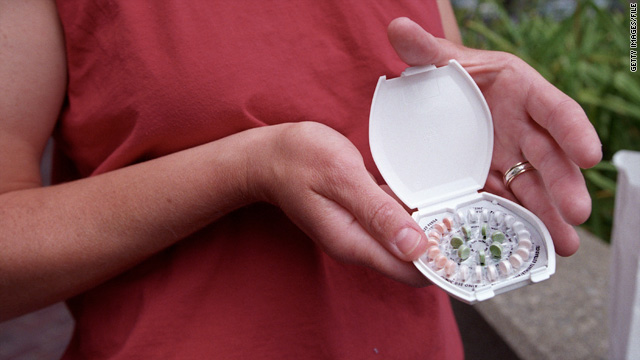
It’s easy to forget in a era where contraception is so ordinary that only right-wing religious nut-jobs like Rick Santorum speak against it. Women today have all sorts of methods for controlling their fertility, deciding when and in what circumstances they’ll bear children.

This is a huge shift compared to the bulk of human history where contraception was limited to pulling out, make-shift condoms, and the medical treatments on par with smearing chicken entrails on tumors. Then, after centuries of uncertainty and superstition, we created something that worked. It worked so well that it disrupted a great many these assumptions we once had about society.

Think, for a moment, how jarring that must have been. Suddenly, women don’t have to lament whether or not they’ll get pregnant after one night of reckless indulgence. Suddenly, society has some measure of control over a basic human function. It was exciting and scary. Hell, the Catholic Church is still scared to death of contraception, which is saying a lot from the folks that gave us 2,000 years of hellfire and brimstone.

Despite what religious institutions and bad reality TV shows would prefer, contraception is not going away. It impacted society immensely, but you know what? Society adapted. The human race hasn’t gone extinct. Civilization hasn’t collapsed. The fact that people can now hump without as many consequences as before didn’t destroy humanity. It just freed us up to focus on other things.

By and large, this shift has been positive. As society has adapted, violence throughout the industrialized world has declined sharply. Opportunities for women have risen as well and not just because they can have sex with fewer consequences. This disruption that upended centuries of limits did so much good. So how much good can advancements in VR and holodecks achieve?

It’s impossible to say, but it’s a question worth asking. What do people do when they have a means of meeting their physical, emotional, and sexual needs with relative ease? We’ve never lived in a society like that before. Remember, though, until recently, we had never lived in a society where women had control over their fertility. We had no idea what to expect, but we adapted. We improved as a civilization and there’s still room for improvement.

I don’t want to be too much of an optimist. With every advancement comes challenges and pitfalls we can’t possibly foresee. At some point, somebody will use VR or holodecks to do something that’ll make us throw up. However, like those who use ski-masks poorly, we must take the good with the bad.

In the end, I believe the good will outweigh the bad. I think when human society has a means of meeting all their physical, emotional, and sexual needs, the sheer breadth of human potential will be realized.

What form might this potential make? How would such a society function? How would it adapt? These are all important questions to ask, but they’re impossible to answer right now. That said, they could make for an interesting premise of a book. Think about it, a story involving a holodeck told by an erotica/romance writer who writes stories about strippers and sex cults? That could be interesting, among other things.

1 Comment

Filed under Jack Fisher's Insights

Being A Hugger In This Day And Age

I’d like to get personal again. I’ve already confessed to sleeping naked. I’ve also made clear that I see foreplay as the highest of virtues. Now, I’d like to highlight another important trait of mine, one I actually mentioned in my post on foreplay. This trait isn’t as lurid or sexy as others, but it’s one of those traits that has the potential to be in the right context. So what is it? Well, here it is:

I, Jack Fisher, am a hugger.

Yes, I understand that it’s one of the least macho things you can do these days. It’s right up there with wearing makeup and crying over soap operas. It’s a taboo and a bad one at that. I don’t know when it happened. I don’t know why it happened. For reasons that defy logic, understanding, and basic human nature, it actually became cool to be a callous, detached, unemotional douche-bag at some point. I usually try to research the complex cultural reasons behind such a movement. This time, however, I found next to nothing.

The only educated guess I can make, which is pushing it because I’m not that educated, is that society’s collective fears and scorn over men sexually assaulting women went a tad overboard. It’s a perfectly legitimate concern, wanting to discourage sexual assault and sexual harassment in general. It’s a terrible crime so I can’t blame society for overdoing it, but there’s a fine line between fighting crime and turning people into callous douche-bags.

From a purely evolutionary standpoint, there’s no reason why hugs and intimate contact should be discouraged. According to Dr. Fahad  Basheer at Collective Evolution, there are at least 11 medical benefits to hugs. These benefits include, but aren’t limited to, relieving pain, elevating mood, alleviating depression, improving immune function, and reducing stress. If hugging were a pharmaceutical drug, it would be hailed as wonder drugs and probably banned by the DEA.

These health benefits, much like the health benefits of orgasms, strongly indicate that we’re hard-wired for hugs. Nature wants us to hug each other. It doesn’t matter if it’s a lover, a family member, or a stranger. Our biology, being so basic and crude, doesn’t care where the hug comes from. It still benefits us.

The benefits aren’t even restricted to humans. Nature is rarely that specific. Animals do it to and they seem to gain similar benefits.

My parents and siblings seemed to understand that. I come from a family that is big on hugging. It’s not necessarily a cultural thing. It’s just how we are. However, I notice when I go out into the modern world, I’m terrified of making too much intimate contact with others. I don’t think that’s healthy.

I don’t exactly know where this fear comes from, but I have a pretty strong feeling it started during my time in the daily prison sentence that was public school. I don’t know if anyone knows this, but public schools have a big problem with students touching each other in any way. How big a problem? Well, in 2013, a student in Georgia got suspended for a year for hugging his teacher.

That’s right. A school punished a kid for hugging someone. Let that sink in for a moment. Hugging is not like sex. It doesn’t cause pregnancy. It doesn’t cause disease. It doesn’t cause emotional distress of any kind. It has so many natural benefits that transcend species, yet we punish kids for doing it. Then, we wonder why they grow up to have emotional problems and personality disorders.

Now the school I went to never did something this extreme, but I do remember from a young age hearing all sorts of lectures about harassment and inappropriate touching, as they called it. I may have been a dumb-ass kid, but even I knew what they were getting at. They wanted to discourage kids from getting too sexual when they were too young and immature.

That’s all well and good, but it’s worth repeating that I was a dumb-ass kid in a whole building full of them. How are we supposed to know what constitutes inappropriate touching? A hug for some people might as well be slap on the ass with a wooden spoon for someone else. We never learned much about context and communication. Most of the time, we just got a thorough run-down of all the terrible punishments we can expect if we ever got caught inappropriately touching someone.

Being kids who still had some respect for authority figures, we naturally focus on the punishments. We don’t want to get in trouble. We don’t want to explain to our parents why we got suspended or sent to detention. Naturally, we’re going to play it safe and just avoid it all together.

As kids, fear of punishment tends to make us overcompensate. It’s just human nature. Again, it’s caveman logic. We’re not going to just stand a few feet away from a shady area where a lion might be hiding. We’re going to make sure we’re a long ways away from that danger.

It doesn’t just affect us as kids in school either. After spending our entire childhood terrified of making too much intimate contact with other human beings, we carry that terror into the adult world, both in college campuses and in the workplace.

We currently live in an era where harassment doesn’t even need to occur. There only needs to be an accusation that a man assaulted a woman and that’s it. No trial. No jury. No indisputable evidence of any kind. Just the accusation is enough to assure guilt in the eyes of the public. This leads to legal clusterfucks like the Duke Lacrosse ordeal and the false UVA rape case.

So as a man, it’s dangerous for me to hug someone. It could cost me my reputation, my freedom, and a boatload of time and legal fees. It only takes one woman to misinterpret a hug, accuse me of assault, and my life is over.

This actually played out very recently. Earlier this year, I went on a date with a girl to see the movie, X-men: Apocalypse, which should come as no surprise to anyone. I really liked this girl. I thought she was cute. I thought we had a good connection. However, I didn’t know how she would react to a hug so I was fucking terrified of getting too intimate too fast. That may have worked against me because we never went on a second date.

As a self-professed hugger, how the hell am I to function in a world like this? How am I supposed to find love, affection, and intimacy with others outside my immediate family? This modern world sends so many conflicting messages. We’re more connected than ever thanks to technology, but a single hug can get us sued for sexual assault if we hug the wrong person.

I don’t like this trend. I don’t think it’s good for huggers like me or people in general. We’ve become too callous and isolated. We’re scared to death from a young age, albeit indirectly, into avoiding contact with one another. It goes against our own nature. It goes against our own humanity. I may never live to see the day where hugging a perfect stranger won’t get you sued, but I’d like to aspire to such a future, both through my love of hugs and through my books.

15 Comments

Filed under Jack Fisher's Insights

Happy Labor Day!

On behalf of myself and all those who dedicate their creative energies to entertaining and titillating the masses, Happy Labor Day! Let this be a day when we put down the tools of our toil, sit back, and take a deep breath. We work so hard nearly every other day of the year. What’s the point of all that work if we don’t take a step back to appreciate it?

Working hard is a noble quality. Working too hard can undermine the reason why work has value. That’s why it’s important to balance life out between work and play. Our ancestors couldn’t have survived if they didn’t have at least a few moments of peace to enjoy in between hunting lions and gathering food. We stress ourselves too much and appreciate too little. Let’s make it point to cherish this day for all the work we do and all the fruits it bears.

For me, personally, I intend to make all my Labor Day activities clothing optional. Take any relaxing activity you can think of. I dare you to find one that isn’t enhanced by being naked. Can you think of a better way to celebrate a holiday? I think not.

Leave a comment

Filed under Jack Fisher's Insights

Love Triangles and Why 95 Percent of them Suck

He loves her. She loves somebody else. That somebody else doesn’t love her back. Somebody’s heart gets broken. Somebody kisses somebody in some exceedingly overdue moment. We’re then left with an ending that satisfies some, outrages others, and confounds many.

I just described the most basic formula for a love triangle, also known as one of the oldest, most predictable tactics in all romantic narratives. It’s right up there with the classic will-they-or-won’t-they narrative that Ross and Rachel drew out for way too long over multiple seasons of Friends. As an aspiring writer who specializes in romance and erotica, I can’t ignore its presence so let’s talk about it.

First off, let me acknowledge that love triangles have their place in popular culture. I understand that they’re part of a tried and true formula in romance that goes back to a time when our ancestors were washing their hand in cow piss and calling it hygienic. They tap into a powerful set of emotions in all of us. Unless you’re born rich or have the body of Ryan Gosling, you know what it feels like to see someone you love choose someone else. That said, they can tap into more annoying emotions and that’s what I’m going to focus on.

As anyone who hasn’t slept through English class knows, love triangles have been part of some of the most iconic stories in history. The most famous is probably the one that plays out in the legends of King Arthur. That affair involved King Arthur, his wife Guenivere, and the perpetually friend-zoned Sir Lancelot. That love triangle is a small, but important component of that whole mythos and it did not take away from it in any way.

Flash forward 800 years, throw in reality TV and vampires, and the whole concept of the love triangle has been overdone, over-used, and twisted to a point where it’s more of an annoyance than a plot device. At its worst, it derails the larger story that’s supposed to be unfolding. We all know the kinds of stories I’m talking about here. Do I really need to remind anybody of this?

I’ll try to limit my references to vampires in this post, but they symbolize just how bad love triangles can get. From a writer’s perspective (and I am trying to be a writer, mind you), it often narrows the narrative considerably. It immediately ascribes roles to certain characters that limits their development. When a character’s sole purpose is defined by who they want to bone and who is standing in their way, that effectively overrides every other trait of that character.

It plays out in way too many ways in every kind of media. Characters like Spike in Buffy the Vampire Slayer dedicated 90 percent of their energy towards winning someone else’s heart. The same thing plays out in books like The Hunger Games, movies like Tron, and even video games like Final Fantasy. Think of any form of media, new or old. At some point in the past or at some point in the future, a love triangle will infect it and its characters.

This doesn’t even begin to touch on the extent to which love triangles permeate comic books. As some of you already know, I love comic books and I’ve crafted entire posts about them. If there’s one non-vampire medium that abuses love triangles more than most, it’s definitely comic books. I’d love to get into specifics, but rather than risk derailing this entire post into a personalized rant from a message board, I’ll save that for another discussion.

Why do these stories persist? Well, as I said earlier, they do tap into some very basic emotions that are fairly universal across cultures. With this appeal in mind, maybe we should ask another question. Why do these stories about love triangles have to be so god-awful?

The biggest problem, in my opinion, stems from another problem that seems to be ingrained in our culture to some extent. When we tell love stories, we have this ideal in mind. One person finds their absolute soul mate. That soul mate is 100 percent in love with them and returns 100 percent of their affections. That’s all well and good in terms of romance. I certainly have a soft spot for those kinds of fluffy romances. I think those of us without personality disorders all have some affinity for those kinds of stories.

It’s that same affinity, though, that makes love triangles so untenable. A love triangle is often used as an obstacle. It’s a wedge designed to prevent two lovers from coming together. It can make for a good story, but it also comes at the expense of another character along the way.

Sometimes that works because the character in question is a total asshole. There’s no effort to make Biff Tanner in Back to the Future on equal footing with George McFly. He’s supposed to be an asshole. The problem comes when we want that character to develop dimensions other than being an asshole and that can be a problem.

The way a love triangle works essentially makes it so there’s always one character that gets screwed over and not in a good way. Someone is going to have their heart broken. Someone is going to come off as the loser and the bad guy. In some cases, as we see in Back to the Future, it works out in a way that’s satisfying. In others, especially in vampire-themed stories, it turns the character in to a sacrificial lamb of sorts. It means they never get a chance to stand on their own and show that they have worth.

I find that kind of approach troubling because it throws away opportunities to create quality characters. It also ensures that the character that loses is going to be flat, boring, and dull. If it’s a male character, he’s some sort of bad boy, Dirty Harry wannabe who just needs the right nudge to being a full-blown asshole. If it’s a female character, she’s some sort of Mean Girls uber-bitch who generates as much sympathy as a hungry shark.

That makes the outcome of the love triangle fairly predictable. Before it even has a chance to get sexy, we already have a pretty good idea of how it’s going to play out. The nice guy/nice girl is going to win. That’s all well and good in that it plays into our innate sense of justice, but it doesn’t make for very good stories.

It’s for this reason that I’ve generally tried to avoid using love triangles in my books. The closest I ever came was “Skin Deep” and even in that, I made a concerted effort to give each side sufficient depth. I’ll let those who take the time to read the book to decide whether I did a good enough job, but I think love triangles in general need to be either retired or overhauled.

How do we go about that? Well, I have a few ideas. I’m not going to share them just yet because I want to turn them into books first. I believe this is an idea that can sell if done right. If I can’t sell it, then I hope others figure out a way as well. A bad love triangle is the easiest way to turn quality characters into trophies/obstacles. It turns women into prizes to be won, men into powerless tools of their passions, and everyone else into overly emotional vampires. I think we can do better.

15 Comments

Filed under Jack Fisher's Insights, Uncategorized

An Honest Question: How Open Should We Be About Sex?

How much is too much? Isn’t that an existential question that can apply to so many issues? How much government is too much? How much sugar is too much? How much violence is too much in a PG-13 movie? We ask this question about so many things. Naturally, it comes up a lot during issues about sex.

That’s to be expected. Human beings are sexual creatures. We’re programmed to do two things: survive and reproduce. Thanks to the advent of AK-47, fighter gets, and everything associated with Chuck Norris, we got the survival part down. We used to fear tigers, snakes, and wolves. Now they’re either endangered or they’re our pets. We won the survival game.

With reproduction, however, it’s a different story. Sure, as a species, we’re pretty good at sex. There are over 7 billion humans on this planet. Clearly, we’re doing something right. The problem is that our attitudes about sex are more eccentric than Andy Dick on a double dose of LSD.

We need to reproduce. It’s part of our biology. At the same time, however, we’ve created all these weird cultural attitudes that make us anxious and uncomfortable about sex. It manifests in religion, media, and cultural practices. I’ve talked about it before on this blog, but now I’d like to open the discussion up a bit.

Just how open should we be about sex? It’s an important question to ask. I know I’m asking it from an odd angle because I live in America. This is a country founded by Puritans. As the late Robin Williams once said, these are, “people so uptight, the English kicked them out.” So even though we call ourselves a free country, we have exceedingly prude attitudes towards sex. In fact, it wasn’t until 1965 that the last few obscenity laws that prohibited the distribution of materials on birth control were struck down.

It’s fairly clear that, as a society, we need to be more open to talking about sex. It can’t just be with our kids either. That thought alone is enough to make parents want to vomit violently. Even consenting, mature adults have problems talking about it.

In many cases, there are all these unspoken rules about sex. We’re not supposed to talk about our ex-lovers. We’re not supposed to talk about the really good sex we’ve had with partners who aren’t our spouses. We’re not supposed to talk about the sex we had when we were young. So what the hell are we supposed to talk about?

Again, this is an honest question. I talk a lot about sexual issues on this blog. Some, like various types of orgasms, are just fun little tidbits about our biology. Others are a bit more serious, relating to religion and sociopolitical issues like feminism. So what are the limits? What can and can’t we talk about?

I’ve confessed to sleeping naked. That’s pretty tame by internet standards. Seeing as how I write erotic stories, I feel it’s pretty important to know where that line is how far I should take it. So I’ll open this question up for others to discuss. How much is too much? How open is too open? We humans know a lot about being sexually repressed. How much do we know about being sexually open?

As we contemplate this topic, here’s another video discussing this topic from the fine folks at ThinkTank on this subject. I sincerely hope this generates some meaningful, yet sexy discussions.

1 Comment

Filed under Jack Fisher's Insights

How Our Culture Is Ruining Our Sex Lives And Driving Men And Women Apart

We don’t agree on much in this twisted culture of ours, but we have reached a consensus on a couple issues. One, jealousy is toxic to every relationship, real or potential. Two, rejection is the worst feeling short of injecting molten steel into our veins. Third, there’s nothing that ketchup can’t make taste better.

Other than the last one, we don’t really question the end results of these assumptions, but we don’t question the circumstances either. I’d like to give those circumstances some additional scrutiny because I think it reveals a lot about just how unbalanced our culture is towards sex, love, and intimacy.

Earlier this week, I wrote about how jealousy may or may not be an entirely natural feeling. I pointed out that our feelings of jealousy towards those who reject our sexual or romantic interests create this unhealthy mentality that we own someone or are owed by them. In the 21st century, we really shouldn’t need to remind ourselves why owning someone else in any capacity is a bad thing.

The problem is that certain elements of our culture were built on foundations of owning land, passing it down through bloodlines, and protecting it against those who would steal it. While there’s nothing inherently wrong with protecting your property, we as a society just take it one step too far when we see our lovers and prospective partners as property. We don’t understand that our brains didn’t evolve to be so rational and understanding. Our brains evolved to keep us alive and because of that, the wiring gets a little faulty at times.

Irrational wiring in our brains inevitably leads to irrational understandings of our world. Irrational understandings, in turn, leads to irrational behavior. It’s the same force behind every misguided social movement and stock market crash in history. Some are just harder to sniff out or overcome than others. So how has this undermined our ability to love, make love, and share intimacy with one another?

Well, in order to illustrate that, let me lay out a common scenario. For the sake of simplicity, I’ll use a man and a woman, but the same circumstances can apply to same-sex partners as well. So keep that in mind.

Man: Hey there, ma’am. You look really nice today.

Woman: Thanks! You look really nice too.

Man: I appreciate that. Since we both find each other attractive, would you like to have sex?

Woman: What? You pig! You’re disgusting!

I know this scenario is a bit simplistic, but it’s supposed to be for illustrative purposes. Read over this dialog for a moment. How does the man sound? Does he sound polite or generous when he asks the woman for sex? Or does he sound like every crude jock from every 80s teen movie ever made?

I ask because our culture creates in us certain expectations of how certain social interactions play out. This is just one. A man is expected to be interested in only sex. A woman is expected to reject him. Subsequently, the man who dares to ask a woman for sex is shamed. In a follow-up scenario, we may get moments like this among other men and women.

Woman: You see that guy? He asked me for sex! What a pig.

Man: That’s just wrong. What kind of man does that?

Woman: I hate him. I hope every woman rejects him. Those that don’t are horrible!

Take a moment to think about the less obvious implications of this interaction. A man who simply wants sex and asks politely for it is shamed, shunned, and castigated by everyone. He’s seen as a pig, a misogynist, and a creep.

Here’s a crazy question though. Is it possible that he’s just looking for the most basic forms of intimacy and wants to share it with someone? Perish the thought! Our culture doesn’t allow that. If he really wanted that woman, he would have jumped all the elaborate hoops this culture has set up for men to get sex. If, after all that, she still rejects him, then that’s too bad.

Is this overly simplified breakdown of these events fair? No, it isn’t. Our culture doesn’t let men simply walk up to a woman and ask for sex. We make him go through all these elaborate rituals and even if he succeeds, there’s still no guarantee that he’ll get what he wants. For men, it often means that those who aren’t adept at those rituals (and most men aren’t) will end up isolated, distant, and sexually frustrated. As history and current affairs have shown, this tends to be unhealthy for society.

Now, in the interest of gender fairness, let me paint another scenario that shows what our culture does to women who are interested in sex. In our culture, we have all these irrational expectations about female sexuality. The diverse varieties of lesbian porn alone are a testament to just how irrational these expectations are. As a result of these expectations, we create situations like this.

Woman: Hello. You’re really handsome.

Man: Why thank you. You look really nice yourself.

Woman: Thanks! Would you like to have sex?

Man: Wow! Already? Um…is there something wrong with you?

See the difference? Well, there are gender differences. There are double standards. No, they’re not fair or rational. That’s just the nature of gender dynamics in our culture. Despite these differences, the same irrational expectations manifest in this interaction.

When you read the woman’s words, what do you imagine? Does she sound sweet, caring, and affectionate? Or does she sound sloppy, ugly, or disheveled? Our culture demands that something be wrong with this woman. How can any normal woman simply ask someone for sex? She can’t just be looking for that toe-curling joy we feel when we have sex and the intimacy it inspires. That would just be wrong. That last sentence was sarcasm by the way.

Just as we had with the first scenario, there’s often a follow-up scenario surrounding these interactions. They play out among those who see this interaction and interpret it in the context of our cultural expectations. This is how it manifests.

Woman: Did you see that? That girl just walked up to that man and politely asked for sex!

Man: Wow. She must be a real slut. We need to shame her for offering more sex than she’s allowed to give.

Read over that overly simplistic logic again. Is that fair? Is that moral? Is that even natural in the context of a species that’s so social and passionate? No, it isn’t. That’s why the wiring of our brains needs to be warped a certain way. Culture, often with help from religion and government, does this fairly effectively.

As a result, our society creates this horrible imbalance among those seeking intimacy with one another. Men want sex from women, but shame them when they offer it too eagerly. Women want sex from men, but shame them when they ask for it too eagerly. It creates all these mixed messages that our brains struggle to process. Remember, our brains aren’t wired for rationality. They’re wired for survival.

At birth, our brains are already wired for sex and intimacy. Our brains drive us to seek sexual and intimate gratification the same way it drives us to seek food and water. Denying it these needs creates distress. Excessive distress in any system, be it a brain or cell phone, causes problems. We may bemoan these problems, but on some levels, we have nobody to blame but ourselves.

17 Comments

Filed under Jack Fisher's Insights

There Are 5 Different Kinds of Orgasms. Wait What?!

I did have an idea for another post today. I’m not done talking about jealousy and rejection. I still intend to discuss a few more issues surrounding those topics over the next few days. However, I came across another video that I just had to share.

It’s a video about orgasms. Do I have your attention now? I hope so. I’ve written about the intricacies of orgasms before. Their joys and benefits are pretty much beyond dispute. I certainly enjoy exploring those benefits in my books and I have every intention of continuing that exploration in a way that I hope is both entertaining an sexy.

So imagine my surprise when I saw a video from Think Tank claiming there are five different types of orgasms. This surprised and intrigued me. Orgasms are one of those things that doesn’t really need variety. They tend to be great no matter what form they take. However, it turns out there may be more variety than we thought. I’m not sure what this means for erotica writers like me, but it definitely opens the door to new concepts.

14 Comments

Filed under Jack Fisher's Insights, Uncategorized

Jealousy vs. Rejection

This post is a follow-up to both yesterday’s post on jealousy and another earlier post where I asked the readers for ideas. That request for other topics of discussion wasn’t rhetorical. I really do want to hear what readers want to talk about on this blog. It’s a good way for me to gauge the audience and adapt my work accordingly. Knowing the audience is among the first steps to becoming successful in any media, be it erotic fiction or clown porn.

One reader in particular, InsidousTemptation, read my post about jealousy and how natural/unnatural it may be and brought up an equally relevant topic. I’d like to talk about that topic because it’s closely related to jealousy. In fact, it’s the uglier side of jealousy, as if jealousy itself weren’t ugly enough. That’s right. I’m talking about rejection.

For this concept, there’s far less context to consider. Rejection feels awful in pretty much every form. Other than being rejected by a crippling disease, it’s one of those few things that every society and every culture can agree is universally bad. I’ve certainly dealt with it before. Recently, I announced that my manuscript for “The Big Game” had been rejected by a publisher. For this post though, I want talk about a more specific rejection.

Have you ever loved someone and learned they don’t feel the same way? Have you ever put time and effort into showing sexual or romantic interest in someone, only to be shot down? It doesn’t matter if it’s thoughtful, callous, or cruel. It still sucks. It feels like a gut punch, a slap in the face, and a pin to the heart all at once. It can even be worse in some cases. Just ask this guy who had his marriage proposal rejected in a very public way.

As an awkward teenager, I certainly had my share of rejections. I was not charismatic. I was not attractive. I was not confident. I had very little to offer the opposite sex. For me, every girl I showed interest in felt like a looming gut punch because they all had boyfriends. Every girl I liked was either dating someone, not interested in dating anyone, or didn’t know I existed. Being a teenager was hard enough. Adding rejection to it was like breaking a few extra bones along the way.

So what makes rejection so much worse than jealousy? What does it have to do with the concepts I discussed yesterday? Well, the difference isn’t only in degree. The difference involves sentiment and style. Jealousy mostly involves thoughts and feelings. Rejection is more active. Rejection is a tangible behavior with tangible effects that are fairly universal for the most part. It’s hard for rejection to be misconstrued or mixed. With jealousy, it is possible to feel and think things for the wrong reasons.

That said, there’s a case to be made that our culture and our approaches to romance and sexuality don’t just evoke unnatural sentiments of jealousy. They make rejection even worse. Why do I say this? Well, let’s go back to that primal mindset I call “caveman logic.”

I said in my article about jealousy that from a caveman’s perspective, jealousy makes no sense. We evolved to be a social, communal species that can work together, love together, and share intimacy together. Being jealous or upset about the romantic and erotic affections of others may make sense in some situations, but is overly arbitrary in most. It wasn’t until society developed concepts of property ownership and passing down assets through family lines that jealousy really took hold.

So how does this make rejection worse? Well, the fuel to the fire comes with turning sexuality and romance into a commodity of sorts. Keep in mind that for most eras in human civilization, marriages were arranged. They were loveless business arrangements whose sole purpose was to ensure that land and assets remained within a family. That’s why so many epic love stories involve forbidden romance because most individuals didn’t get a choice in their partner.

This callous commodification treats love and intimacy as something to be bought and sold. That’s bad enough, but popular culture in the 20th century somehow found a way to make it worse. How did it do this? Well, the media we love and consume sold entire generations on all these false promises. Think about every romantic movie. The hero is a nice, honorable, upstanding guy or girl (but mostly a guy). They fight and they struggle to win the love of a stereotypical beautiful partner and they succeed by being themselves.

Spoiler alert. That doesn’t happen in real life. There’s one scene in one movie that accurately encapsulates real modern life. It comes courtesy of Alec Baldwin and its this:

Is it harsh? Yes. Is it cold? Definitely. Is it accurate? Sadly, it is. This speech reveals something sad, but relevant. We, as a free and modern society, care about results and what others can do for us. If we’re not “closing,” then why should we be accepted? We aren’t entitled to all the love, sex, and satisfaction we want. We have to earn it.

This is why rejection feels so awful within our culture. When someone rejects us, we feel like we’re being denied something we’re owed. We want sex. We want love. We want it from this specific person. How dare they reject us! Say that out loud to a mirror and see if it sounds right. It shouldn’t.

So what’s the solution? I don’t like to just complain about things on this blog. I do like to leave some slivers of hope in the mix. In this case, I do hold out some hope that changes in technology will help us overcome a culture that makes rejection worse.

We’re entering a world where we can interact and inform one another more effectively than ever. Social media, online dating, and smartphones give us an ability to find others who share our passions. It gives us a chance to circumvent the worst rejection in some cases.

That said, technology can only do so much. For us to really minimize the pain of rejection, certain parts of our culture and our sexual practices need to be reassessed. What parts am I talking about? Well, that’s a discussion for another post.

Thanks again to InsidiousTemptation for suggesting this topic. I appreciate it. If anyone else has ideas on topics of discussion, feel free to let me know in the comments.

5 Comments

Filed under Jack Fisher's Insights

Is Jealousy Natural? An Honest Question

Is it really so natural to be jealous of someone when they love or lust over someone other than you? To anyone who has ever been jilted or cheated on, this may be an outrageous question to ask. How can anyone not feel outrage when the person they love has feelings for someone else? It’s the basis for at least 85 percent of all love stories and around half of every episode of Jerry Springer.

Jealousy seems like one of those emotions that’s so natural. We’ve come to see it on the same level as fear, hunger, or horniness. Few really question these assumptions beyond a certain context. Today, I’d like take a sledge-hammer to that context and dare to probe deeper. If that sounds overly lurid, I apologize, but I’m being genuinely serious here.

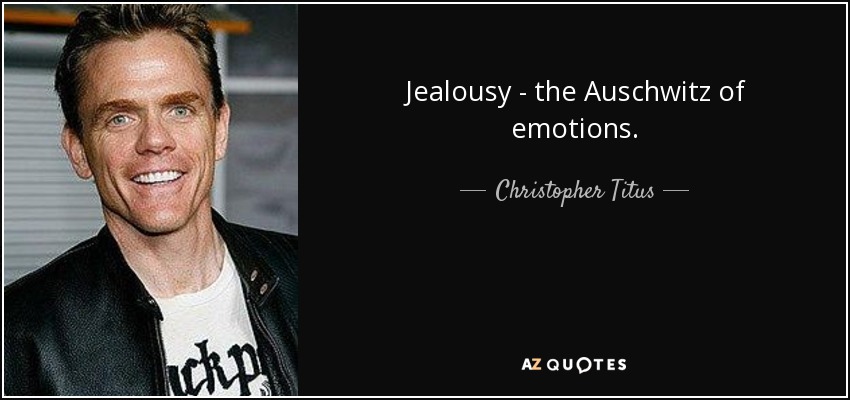
If ever there was an emotion that brings out the worst in people, jealousy seems tailor-made for it. One of my favorite comedians, Christopher Titus, once described it like this:

Is it somewhat extreme? Yes. However, I think there’s a sizable portion of the population that agrees with this sentiment. Jealousy can make people do horrible things. Sometimes, just seeing someone with someone else is enough to make us upset to the point of doing horrible things we wouldn’t otherwise do. Jealous and jilted lovers have committed serious crimes, including outright murder.

It’s those irrational extremes, however, that should beg the question. Is this feeling really a basic product of the human condition? How much of it is in our genes and how much of it is in our heads? It’s something we need to think about it, if only to assess the horrific behaviors it inspires in people.

Now I admit I didn’t really think about this question until recently. I admit I’ve felt pretty jealous at numerous points in my life and it’s not a pleasant feeling. I went through a period as a teenager where I got downright fatalistic whenever I heard a girl I liked had a boyfriend. Some of that can be chalked up to teenage hormones and serious personal issues. Others, however, are a bit more complex.

The first time I really thought about this issue came while reading Darrel Ray’s book, “Sex and God.” It’s a book I’ve recommended on this blog before and while it does primarily discuss the effects of religion on sex, it also frames jealousy in a very different context that makes it seem less a natural emotion and more a byproduct of sorts.

It goes back to the whole “caveman logic” I’ve used in discussing other topics on this blog, such as nudity. Biologically speaking, we’re still the same cavemen and cavewomen who roamed the African savanna 50,000 years ago, hunting and gathering for food. Then, something happened that changed our way of life and in evolutionary terms, it happened fairly recently. That something is agriculture.

That’s not to say this is a bad thing. The Agricultural Revolution is a big reason why civilization, as we know it, developed in the first place. However, it did come with a specific byproduct. It introduced the concept of land ownership and passing down property through bloodlines. It’s a concept that is not strictly Western. It occurs in almost every society in every part of the world that relies on agriculture to some extent. The culture develops its customs around owning and managing land. So naturally, some of those customs extend to owning and managing people.

Using caveman logic, the concept of owning land is entirely arbitrary. Unlike a tool or physical good that we create, we can’t hold it or lock it in a safe. However, we still treat it as something we need to protect from theft. We treat it as something that we associate with our own name. This is where the idea of passing possessions down to children enters the picture. It’s one thing to just give a child a tool or heirloom you made. It’s quite another to leave them ownership of a farm or property.

This is why marital fidelity, virginity, and knowing that your kid is really your kid became so important. Before the days of Maury Povich and blood tests, the only way to truly know that your kid is yours is for your bride to be a virgin on her wedding night and to have never cheated on you. It’s not so much about nature as much as it is about economics. There’s an economic and legal incentive to treat sexuality, child-rearing, and sexual relations as a commodity. As a result, we guard it like we do other commodities.

From that perspective, it’s easy to see how jealousy emerges. It’s like seeing someone with a nicer car or more food than you. It makes you envious and jealous. It stirs up all sorts of negative emotions that don’t always manifest in healthy ways. We think it’s natural, but take a second to consider the implications of this feeling.

To be jealous of another person’s feelings over someone else implies that you own that person to some extent. It implies you own their emotions, their sentiments, and their sexuality. For most people in the modern era, the idea of owning another human being in any capacity is abhorrent, yet we don’t bat an eye when we think we own someone’s emotions.

In the context of caveman logic, it doesn’t hold up. As small communities of hunter/gatherers, the idea of owning another person’s emotions wasn’t very pragmatic to say the least. Two people and whatever children they have aren’t enough to fend for themselves against a pack of sabretooth tigers. They need to band together as a community and a by-product of this, as we see in other primates, is that sexual monogamy isn’t the norm. It can and does happen, but it isn’t the ideal. It’s just a variation.

Now it’s one thing to make a promise of sexual fidelity to someone and break it. It’s quite another to just assume that someone else’s emotions must be managed a certain way. That undermines the very concept of what it means to be a sovereign human being. However, our culture is still structured around this idea that one person owns the love and lust of another and this is somehow an ideal.

It’s for this reason that I now see the concept of jealousy as somewhat flawed. When I think about my own romantic inclinations, I don’t want to own another human being. I don’t want to be owned either. I want the love and lust I share with another to be freely exchanged for all the right reasons. There’s room for romance. There’s room for lust. There’s room for commitment as well. Jealousy feels like a perversion of this sentiment and something that needs to be re-evaluated.

So once again, I’d like to open this up a little. What do you, the readers, think about our current concept of jealousy? What is your experience with it? Do you think it’s natural? Do you think there’s room to change our perceptions?

This idea has given me plenty of think about for future books. There is one new idea I’m developing, hopefully for a short, sweet, and sexy story I can write after I’m done with my next project. I think there are too many stories out there that focus on love triangles and scorned lovers. I think the marketplace is ready for something new and I hope to provide it.

12 Comments

Filed under Jack Fisher's Insights, Uncategorized

Sex, Robots, and the Future

Do you find robots sexy? That’s not a joke. That’s a serious question and one that we may need to answer sooner than you think. We’ve all heard people raise concerns about the robot apocalypse. When most people think of it, they tend to think of world described in “The Matrix” or “The Terminator.” While these make for good Hollywood action movies, there is one part of this so-called apocalypse that isn’t touched on very often. That’s to be expected though because this part can’t fit into a PG-13 movie.

It’s going to happen. It’s actually already starting to happen, as Men’s Health reported earlier this year when a man professed his love to a life-like sex doll. We are going to have sex with robots. We are going to develop intimate relationship with robots. As they become more advanced and more capable of interacting with us, our human emotions will come into play. Along with those emotions will come desires. So how will they manifest? How will our society function in a world where men and women can have romantic sexual relationships with robots?

Now the concept of sexy robots is not at all new. The first “Austin Powers” movie gives us our most basic and crude concept.

These kinds or robots, as colorful and comical as they may be, are currently beyond our technical capabilities. So far, you can’t purchase a real sex robot today. However, you can purchase a very lifelike duplicate through RealDolls.com, a company that has been in business for years. While you can have sex with these dolls, they don’t interact. They can’t talk or exert themselves with any meaningful intelligence, emotional or otherwise.

That will eventually change because our technology is progressing rapidly. We already have robots who can beat people in chess and Jeopardy. We also have robots that can interact with some level of personality, such as Apple’s Siri and Microsoft’s Cortana. How much longer until we have a robot that’s advanced enough to be a real person? We don’t know yet, but we are starting to give the idea serious consideration. Last year, the movie “Ex Macina” built an entire story around it and it ended up being a lot more mature (not to mention darker) than “Austin Powers.”

Like “The Terminator” though, this story is limited in vision and scope. It focuses heavily on creating conflict more than exploring the implications. Those implications will show up before the conflict and some are giving it serious thought.

The New American posted an article last year about how some are already advocating for human/robot marriage. Marriage has already undergone significant changes with the recent advances in same-sex marriage. Will marriage with robots undergo a similar process in the coming decades? It’s hard to say, but there’s no question that we are becoming more and more linked with our technology. Is it just a matter of time before we start developing emotional, romantic, sexual relationships with robots?

On the surface, it has some distressing implications. A robot has no rights. A robot cannot sue for spousal abuse. A robot can be turned off, reprogrammed, and shut down. A robot can also be made to look like anything someone wants. What if someone wanted a robot that looked like a child or a specific actor/actress? What are the legal implications of that?

It’s hard to imagine how a human/robot relationship will function now, but then again same-sex marriage was in a similar position 20 years ago. Who’s to say that 20 years in the future won’t follow a similar path?

I tend to be more optimistic when it comes to the robot “apocalypse.” I believe that once robots become intelligent enough for us to have relationships with, be they sexual or otherwise, it’s going to change us as individuals every bit as much as we’ll change them. If a robot is smarter than us, then they will know how to accommodate us. They’ll know how to provide every emotional need we may have. Will that be healthy? Could having all your emotional needs being met by a robot be good for us?

Some may claim that robot relationships will lead to the extinction of the human race. Actually, it may do the opposite. If we can make a robot capable of having sex, then we can make a robot capable of giving birth as well. Artificial wombs are a real concept that’s in development. We may very well get to the point where we don’t need sex to reproduce anymore. If a society wants to grow its population, it can do so without putting women through the rigors of childbirth.

How will that society function? How will a relationship between a human and a robot function? It’s an intriguing question. It’s one I’m contemplating for a possible book. Nothing is set for now. I have other projects I’m still working on. In the meantime, I’ll let this video from the Huffington Post continue the discussion.

https://s.embed.live.huffingtonpost.com/HPLEmbedPlayer/?segmentId=560c199399ec6d3aff0001fb&autoPlay=false

9 Comments

Filed under Jack Fisher's Insights, Uncategorized