Tag Archives: feminism

Being A Hugger In This Day And Age

I’d like to get personal again. I’ve already confessed to sleeping naked. I’ve also made clear that I see foreplay as the highest of virtues. Now, I’d like to highlight another important trait of mine, one I actually mentioned in my post on foreplay. This trait isn’t as lurid or sexy as others, but it’s one of those traits that has the potential to be in the right context. So what is it? Well, here it is:

I, Jack Fisher, am a hugger.

Yes, I understand that it’s one of the least macho things you can do these days. It’s right up there with wearing makeup and crying over soap operas. It’s a taboo and a bad one at that. I don’t know when it happened. I don’t know why it happened. For reasons that defy logic, understanding, and basic human nature, it actually became cool to be a callous, detached, unemotional douche-bag at some point. I usually try to research the complex cultural reasons behind such a movement. This time, however, I found next to nothing.

The only educated guess I can make, which is pushing it because I’m not that educated, is that society’s collective fears and scorn over men sexually assaulting women went a tad overboard. It’s a perfectly legitimate concern, wanting to discourage sexual assault and sexual harassment in general. It’s a terrible crime so I can’t blame society for overdoing it, but there’s a fine line between fighting crime and turning people into callous douche-bags.

From a purely evolutionary standpoint, there’s no reason why hugs and intimate contact should be discouraged. According to Dr. Fahad  Basheer at Collective Evolution, there are at least 11 medical benefits to hugs. These benefits include, but aren’t limited to, relieving pain, elevating mood, alleviating depression, improving immune function, and reducing stress. If hugging were a pharmaceutical drug, it would be hailed as wonder drugs and probably banned by the DEA.

These health benefits, much like the health benefits of orgasms, strongly indicate that we’re hard-wired for hugs. Nature wants us to hug each other. It doesn’t matter if it’s a lover, a family member, or a stranger. Our biology, being so basic and crude, doesn’t care where the hug comes from. It still benefits us.

The benefits aren’t even restricted to humans. Nature is rarely that specific. Animals do it to and they seem to gain similar benefits.

My parents and siblings seemed to understand that. I come from a family that is big on hugging. It’s not necessarily a cultural thing. It’s just how we are. However, I notice when I go out into the modern world, I’m terrified of making too much intimate contact with others. I don’t think that’s healthy.

I don’t exactly know where this fear comes from, but I have a pretty strong feeling it started during my time in the daily prison sentence that was public school. I don’t know if anyone knows this, but public schools have a big problem with students touching each other in any way. How big a problem? Well, in 2013, a student in Georgia got suspended for a year for hugging his teacher.

That’s right. A school punished a kid for hugging someone. Let that sink in for a moment. Hugging is not like sex. It doesn’t cause pregnancy. It doesn’t cause disease. It doesn’t cause emotional distress of any kind. It has so many natural benefits that transcend species, yet we punish kids for doing it. Then, we wonder why they grow up to have emotional problems and personality disorders.

Now the school I went to never did something this extreme, but I do remember from a young age hearing all sorts of lectures about harassment and inappropriate touching, as they called it. I may have been a dumb-ass kid, but even I knew what they were getting at. They wanted to discourage kids from getting too sexual when they were too young and immature.

That’s all well and good, but it’s worth repeating that I was a dumb-ass kid in a whole building full of them. How are we supposed to know what constitutes inappropriate touching? A hug for some people might as well be slap on the ass with a wooden spoon for someone else. We never learned much about context and communication. Most of the time, we just got a thorough run-down of all the terrible punishments we can expect if we ever got caught inappropriately touching someone.

Being kids who still had some respect for authority figures, we naturally focus on the punishments. We don’t want to get in trouble. We don’t want to explain to our parents why we got suspended or sent to detention. Naturally, we’re going to play it safe and just avoid it all together.

As kids, fear of punishment tends to make us overcompensate. It’s just human nature. Again, it’s caveman logic. We’re not going to just stand a few feet away from a shady area where a lion might be hiding. We’re going to make sure we’re a long ways away from that danger.

It doesn’t just affect us as kids in school either. After spending our entire childhood terrified of making too much intimate contact with other human beings, we carry that terror into the adult world, both in college campuses and in the workplace.

We currently live in an era where harassment doesn’t even need to occur. There only needs to be an accusation that a man assaulted a woman and that’s it. No trial. No jury. No indisputable evidence of any kind. Just the accusation is enough to assure guilt in the eyes of the public. This leads to legal clusterfucks like the Duke Lacrosse ordeal and the false UVA rape case.

So as a man, it’s dangerous for me to hug someone. It could cost me my reputation, my freedom, and a boatload of time and legal fees. It only takes one woman to misinterpret a hug, accuse me of assault, and my life is over.

This actually played out very recently. Earlier this year, I went on a date with a girl to see the movie, X-men: Apocalypse, which should come as no surprise to anyone. I really liked this girl. I thought she was cute. I thought we had a good connection. However, I didn’t know how she would react to a hug so I was fucking terrified of getting too intimate too fast. That may have worked against me because we never went on a second date.

As a self-professed hugger, how the hell am I to function in a world like this? How am I supposed to find love, affection, and intimacy with others outside my immediate family? This modern world sends so many conflicting messages. We’re more connected than ever thanks to technology, but a single hug can get us sued for sexual assault if we hug the wrong person.

I don’t like this trend. I don’t think it’s good for huggers like me or people in general. We’ve become too callous and isolated. We’re scared to death from a young age, albeit indirectly, into avoiding contact with one another. It goes against our own nature. It goes against our own humanity. I may never live to see the day where hugging a perfect stranger won’t get you sued, but I’d like to aspire to such a future, both through my love of hugs and through my books.

15 Comments

Filed under Jack Fisher's Insights

Inside The Mind Of A Misogynistic Man

This is probably going to be the most ambitious, contentious, and volatile post I’ve written to date on this blog. If any post is going to incur hate mail and outrage, it’s going to be this. I’m bracing myself for whatever backlash I’ll incur because I know I’m going to offend someone here. I apologize in advance, but offensive things can contain harsh truths.

To date, I’ve tried to keep things fun, enlightening, and non-controversial. Granted, you’re bound to be a little controversial when you say orgasms have health benefits, religion is undermining our sex lives, and being naked is good for your health. This time, however, I’m going to touch on something that is already controversial. It’s gotten people fired. It’s generated death threats online and in real life. It’s been the butt of jokes and a talking point for presidential candidates.

That’s right. I’m going to be talking about feminism. Yes, I mean that kind of feminism. It’s the kind that deals with sexual assault, patriarchy, male privileged, and rape culture. It’s the kind that generates hashtags rather than aids poor girls in third-world countries working in sweatshops. If you’re a regular reader of this blog and don’t care for this issue, this is your chance to close this tab and wait for my next post. I promise I’ll get back to the fun, sexy, entertaining topics soon enough, but this is something I think needs to be said.

Still with me? Okay, then let’s do this. Let’s talk about this strange new brand of feminism that is sweeping the internet, undermining the video game industry, and getting people fired in some cases. If you’re not in your safe space now, you probably should be.

Now let me make one thing clear. I do not like talking about this. I’m a man. I can’t win these arguments because the deck is stacked against me. In my experience, discussions about women’s issues are best handled by women. It’s a crazy concept, I know. As a man, I can only bring so much to the table because I only know the perspective of a man. So how the hell am I supposed to understand the complex, sociopolitical struggles of contemporary women?

Well, being a man does give me some level of insight. I’ve noticed that discussions about this brand of feminism says a lot about how women think and feel about issues such as male privileged, patriarchy, and rape culture. The thoughts and feelings of men are a lot less scrutinized.

As a result, there are a lot of assumptions about what men think and how they justify their male tendencies. The way some feminists talk, they give the impression that men conspire in Illuminati-like meetings to conjure ways to subjugate women. First off, let me say that this does not happen. If a lot of men are going to meet in secret, it’s to tailgate at a football game or watch a My Little Pony marathon. So to all you feminists out there, you can stop worrying about that.

This still begs a very important, very relevant question. Why do men get so upset about feminism? Why do men get so hostile over women who criticize their masculine traits? Why do men cling to these unequal power structures between genders? Well, I can’t speak for all men, but since I am a man, I can provide some insight.

So here’s what I’m going to do. Again, if this is something that makes you want to punch your computer screen and start a hashtag, here’s your chance to leave. I really don’t want to offend anybody who is going to get that upset, but I’m willing to take that chance to say what I feel needs to be said.

What I’m going to do is tap into the mind of the misogynistic, patriarchal male that so many feminists despise and offer an explanation as to why men feel the way they do. Please note that this is just a thought exercise. These do not reflect my personal views. I strongly believe in equality, understanding, and empathy between all people, regardless of gender.

For the rest of this post, however, I’m going to take on the mentality of a pure, undiluted misogynist. Once you read this text, I hope feminists and non-feminists alike have a greater appreciation for why men feel the way they do. So here goes. Here is a letter from a misogynistic man to the feminists of this world.

Dear Ladies,

There’s no easy way to put this so grab your tissues, get a box of chocolate, and sit down. What I’m about to say is going to piss you off and that’s good because it pisses me off too, way more than you’ll ever know. So here it is. Here is the cold, callous, testosterone-laden truth. We HATE you.

I’m sorry, but it’s true. On some deep, primal level, we can’t help but HATE you. I’m not talking about the hate you have for bullies or poor wi-fi connections. I’m talking about a hate that is so deep, so unspoken, and so reserved that we couldn’t express it fully if we tried. It’s a hate that consumes every man, be they gay, straight, white, black, old, young, and everything in between. We don’t like this hate, but we can’t escape it.

Why is this hate so strong you ask? Well, that’s hard to explain. This isn’t the kind of hatred that we show. In fact, most men go through their whole lives never showing it. They just know it’s there. It plays out in all sorts of ways, but for the sake of clarity, here’ s a quick scenario that should give you some idea.

Remember that beautiful, sexy, popular girl that every guy wanted and every woman wanted to be? Remember that stereotypical cheerleader type that was in every bad teen movie ever made? If you do, you probably remember how we men loved to say mean, dirty things about her. We talk about all the nasty, pornographic shit we’d do to her. Then, we’d call her names like whore, slut, and bitch. We’d shame and scold her the first chance we got. Why would we do that? Why would we do that to anyone we barely know?

The simple truth is that these girls are not having sex with US. I’m not talking about US, as in men in general. I’m talking about US, specifically. It’s inherently selfish, which is why we tend to do it in groups, but it’s true. We resent pretty girls who don’t have sex with US and only US. We see it as either some other man taking something that’s ours or some girl denying us something we want.

Imagine yourself in a cafeteria. There’s all this food, but there’s only some that you really like. You find this food. You go up to the counter. You ask for it as politely as possible, but the cashier just flat out says no. You’re not getting this food. You’ll NEVER get to eat this food. Only a very select few that the cashier chooses by entirely arbitrary standards will get this food. You’d be pissed, wouldn’t you? Well, that’s how men see it when you women refuse to have sex with us.

I know. Comparing sex to food is a poor analogy, unless you’re into a specific kind of fetish porn. We don’t like it either, but this is what evolution does to us. It wires our brains a certain way. That wiring still assumes we’re cavemen roaming the savanna, hunting elephants and escaping hungry tigers. It gives us two primary drives: survival and reproduction. It’s not rational, but it’s how we survive as a species.

The problem is that when you tie survival and reproduction together as such strong imperatives, some wires are going to get crossed. We’re going to equate the act of acquiring food to acquiring sex to a ridiculously illogical degree. We kind of have to because logic doesn’t fill your stomach or propagate a species. If we had another choice, we’d take it, but this is what we’re stuck with.

It’s because of this hate we feel when you deny us sex that we feel the urge to control you. Think of a man fighting off a tiger that doesn’t want to become dinner. We fight with every bit of primal rage we can to survive and secure our next meal. As a result, we try to do the same to you.

Take a look at history. Look at how so many societies went to absurd lengths to control female sexuality, manage gender roles, and structure the dynamics of sex. There’s a reason why most of it is overtly patriarchal and no, it isn’t because of some shady conspiracy. It isn’t even done out of the inherent hate we feel towards women. It’s all about economics.

I’m sorry. I know that’s not a very satisfying explanation. That’s like the IT guy telling you that your computer is slow because pigs in Wyoming are farting too much. It’s true though. Economics, including those involving sex, drive a lot of this patriarchy shit you complain about. I’m sorry, but we kind of owe our entire civilization to that shit.

After we stopped hunting and gathering, we formed farms. We needed to protect those farms so we formed tribes and kingdoms. We also needed a lot of people to work on those farms so we needed to do a lot of boning to produce a lot of kids. That means subjugating women on a farm and doing everything we can to make them focus on producing those kids, knowing some of them will probably die in childbirth.

On top of that, we had to account for a good portion of those kids dying before their second birthday so we needed to control the lives of the women pumping them out. I know it sucks, but there’s no way around it. We can’t make these kids on our own. If we could, we’d have no reason to hate or subjugate you. We still need you though. Our survival depends on it. Remember, our brains are wired for survival, not reason.

While we’re on the subject of those kids, there’s something else to consider. We kind of need to make sure that they’re ours. We need that because again, we need to protect all this land and property. We need to make sure it stays within the family. That means we can’t have you women fucking around with other men. That means we need you to be virgins on your wedding night. We also need you to fuck us and only us to make sure that the kids you make are our kids.

Because there’s a lot of money and wealth at stake, we come up with all sorts of crazy ways to make sure you fuck only us. We create these crazy religions, myths, and cultural practices that say you should not have sex, you should not enjoy it too much, and you should focus on making babies for the tribe. Some of these excuses are pretty fucked up, but remember there’s a lot of money and wealth at stake. We’ll justify them any way we can if it helps us survive and reproduce.

So we create this whole system around men working the fields while women pump out the babies that grow up into more workers or baby-makers. Along the way, other men in other tribes do the same. They aren’t always good at it for reasons that aren’t always their fault so they form armies to invade their neighbors. That means we need to have an army too. That means even more boning to make more babies so they can become soldiers. You see the pattern here?

This is where we get into the whole rape culture/sexual assault thing. I know this is a big sticking point for women. I know you get so outraged when you see stories about blaming victims and men claiming that women are tempting them. Well, if you’re with me so far on the economics at work here, you should be able to figure out why this is a thing in the first place.

Keep in mind, we didn’t stop living as agrarian tribes until very recently. For most of our civilized history, we needed a steady supply of men to farm the fields and fight the wars. So when a man rapes or assaults a woman, we tend to make more excuses than we care to admit.

We need that man producing food and fighting wars. The woman he rapes may be hurt or traumatized, but she’s not going to protect the tribe or make the food. She’s going to produce babies and is likely to die in the process. So overall, the man will do more for the tribe so we’ll come up with any excuse we can to avoid punishing him too much. On top of that, the woman may have a disease or be carrying a child that isn’t her husband’s so that’s kind of a big problem. It’s just easier and more economical to blame her.

I get that we’re not living in a Game of Thrones society anymore. I get that we don’t need women pumping out babies to work on farms and fight wars as much as we used to. The problem is, our biological wiring is still the same. On top of that, there are still economic incentives to control women and in case you haven’t realized it yet, we’ll come up with any excuse to justify the economics of a situation, no matter how fucked up it might be.

We can’t escape the economics any more than we can escape our biological wiring. That’s why we hate you. That’s why we continue to hate you, shame you, and scold you for trying to achieve some level of equality or authority over us. The way we see it, you already have too much power over us as it is.

Think back to that pretty popular girl I mentioned earlier. Did she just fuck anyone who politely asked? Of course not! The men who wanted to have sex with her had to jump through all sorts of crazy hoops. They had to be rich, play sports, or be charming on some level to win her attention and access to her sex.

At the end of the day, she couldn’t pick everyone. There were bound to be more rejections than acceptances. That means all these men worked so hard and got nothing in return. We thought we did the work. We thought we earned the privilege of having sex with a beautiful girl, but she chose otherwise and that pisses us off.

On top of that, we can’t be honest about our masculine inclinations. We can’t be overt about them. The culture we live in now basically shames every masculine trait. To be a man is to be a bully or a tyrant. To be a woman is to be a princess and a saint. Men cause and fight all the wars. Men are the victims and perpetrators of most crime. We are disposable, dirty, pathetic excuses for flesh in the eyes of this culture and you expect us to NOT be resentful on some levels?

We men spend so much of our lives trying to secure and impress you, the beautiful women our biological programming wants us to have sex with. We can’t control the sheer intensity of this desire. We hate that it consumes us so completely. Some of that hatred is projected onto you as well. We can’t escape it and neither can you.

That’s why we hate you. That’s why we can’t help but hate you. That’s why we do what we do. If you don’t understand it, or don’t even TRY to understand it, you’ll just make it worse.

Sincerely,
Men

Full Disclaimer: What I just wrote was a thought experiment and nothing more. It does not represent the sentiments or values of me, Jack Fisher. This is just something I wrote to explore a sensitive topic. I apologize for any offense I may have incurred on readers, but I hope it offers some perspective on these issues.

21 Comments

Filed under Jack Fisher's Insights, Uncategorized

How Our Culture Is Ruining Our Sex Lives And Driving Men And Women Apart

We don’t agree on much in this twisted culture of ours, but we have reached a consensus on a couple issues. One, jealousy is toxic to every relationship, real or potential. Two, rejection is the worst feeling short of injecting molten steel into our veins. Third, there’s nothing that ketchup can’t make taste better.

Other than the last one, we don’t really question the end results of these assumptions, but we don’t question the circumstances either. I’d like to give those circumstances some additional scrutiny because I think it reveals a lot about just how unbalanced our culture is towards sex, love, and intimacy.

Earlier this week, I wrote about how jealousy may or may not be an entirely natural feeling. I pointed out that our feelings of jealousy towards those who reject our sexual or romantic interests create this unhealthy mentality that we own someone or are owed by them. In the 21st century, we really shouldn’t need to remind ourselves why owning someone else in any capacity is a bad thing.

The problem is that certain elements of our culture were built on foundations of owning land, passing it down through bloodlines, and protecting it against those who would steal it. While there’s nothing inherently wrong with protecting your property, we as a society just take it one step too far when we see our lovers and prospective partners as property. We don’t understand that our brains didn’t evolve to be so rational and understanding. Our brains evolved to keep us alive and because of that, the wiring gets a little faulty at times.

Irrational wiring in our brains inevitably leads to irrational understandings of our world. Irrational understandings, in turn, leads to irrational behavior. It’s the same force behind every misguided social movement and stock market crash in history. Some are just harder to sniff out or overcome than others. So how has this undermined our ability to love, make love, and share intimacy with one another?

Well, in order to illustrate that, let me lay out a common scenario. For the sake of simplicity, I’ll use a man and a woman, but the same circumstances can apply to same-sex partners as well. So keep that in mind.

Man: Hey there, ma’am. You look really nice today.

Woman: Thanks! You look really nice too.

Man: I appreciate that. Since we both find each other attractive, would you like to have sex?

Woman: What? You pig! You’re disgusting!

I know this scenario is a bit simplistic, but it’s supposed to be for illustrative purposes. Read over this dialog for a moment. How does the man sound? Does he sound polite or generous when he asks the woman for sex? Or does he sound like every crude jock from every 80s teen movie ever made?

I ask because our culture creates in us certain expectations of how certain social interactions play out. This is just one. A man is expected to be interested in only sex. A woman is expected to reject him. Subsequently, the man who dares to ask a woman for sex is shamed. In a follow-up scenario, we may get moments like this among other men and women.

Woman: You see that guy? He asked me for sex! What a pig.

Man: That’s just wrong. What kind of man does that?

Woman: I hate him. I hope every woman rejects him. Those that don’t are horrible!

Take a moment to think about the less obvious implications of this interaction. A man who simply wants sex and asks politely for it is shamed, shunned, and castigated by everyone. He’s seen as a pig, a misogynist, and a creep.

Here’s a crazy question though. Is it possible that he’s just looking for the most basic forms of intimacy and wants to share it with someone? Perish the thought! Our culture doesn’t allow that. If he really wanted that woman, he would have jumped all the elaborate hoops this culture has set up for men to get sex. If, after all that, she still rejects him, then that’s too bad.

Is this overly simplified breakdown of these events fair? No, it isn’t. Our culture doesn’t let men simply walk up to a woman and ask for sex. We make him go through all these elaborate rituals and even if he succeeds, there’s still no guarantee that he’ll get what he wants. For men, it often means that those who aren’t adept at those rituals (and most men aren’t) will end up isolated, distant, and sexually frustrated. As history and current affairs have shown, this tends to be unhealthy for society.

Now, in the interest of gender fairness, let me paint another scenario that shows what our culture does to women who are interested in sex. In our culture, we have all these irrational expectations about female sexuality. The diverse varieties of lesbian porn alone are a testament to just how irrational these expectations are. As a result of these expectations, we create situations like this.

Woman: Hello. You’re really handsome.

Man: Why thank you. You look really nice yourself.

Woman: Thanks! Would you like to have sex?

Man: Wow! Already? Um…is there something wrong with you?

See the difference? Well, there are gender differences. There are double standards. No, they’re not fair or rational. That’s just the nature of gender dynamics in our culture. Despite these differences, the same irrational expectations manifest in this interaction.

When you read the woman’s words, what do you imagine? Does she sound sweet, caring, and affectionate? Or does she sound sloppy, ugly, or disheveled? Our culture demands that something be wrong with this woman. How can any normal woman simply ask someone for sex? She can’t just be looking for that toe-curling joy we feel when we have sex and the intimacy it inspires. That would just be wrong. That last sentence was sarcasm by the way.

Just as we had with the first scenario, there’s often a follow-up scenario surrounding these interactions. They play out among those who see this interaction and interpret it in the context of our cultural expectations. This is how it manifests.

Woman: Did you see that? That girl just walked up to that man and politely asked for sex!

Man: Wow. She must be a real slut. We need to shame her for offering more sex than she’s allowed to give.

Read over that overly simplistic logic again. Is that fair? Is that moral? Is that even natural in the context of a species that’s so social and passionate? No, it isn’t. That’s why the wiring of our brains needs to be warped a certain way. Culture, often with help from religion and government, does this fairly effectively.

As a result, our society creates this horrible imbalance among those seeking intimacy with one another. Men want sex from women, but shame them when they offer it too eagerly. Women want sex from men, but shame them when they ask for it too eagerly. It creates all these mixed messages that our brains struggle to process. Remember, our brains aren’t wired for rationality. They’re wired for survival.

At birth, our brains are already wired for sex and intimacy. Our brains drive us to seek sexual and intimate gratification the same way it drives us to seek food and water. Denying it these needs creates distress. Excessive distress in any system, be it a brain or cell phone, causes problems. We may bemoan these problems, but on some levels, we have nobody to blame but ourselves.

17 Comments

Filed under Jack Fisher's Insights

Is Jealousy Natural? An Honest Question

Is it really so natural to be jealous of someone when they love or lust over someone other than you? To anyone who has ever been jilted or cheated on, this may be an outrageous question to ask. How can anyone not feel outrage when the person they love has feelings for someone else? It’s the basis for at least 85 percent of all love stories and around half of every episode of Jerry Springer.

Jealousy seems like one of those emotions that’s so natural. We’ve come to see it on the same level as fear, hunger, or horniness. Few really question these assumptions beyond a certain context. Today, I’d like take a sledge-hammer to that context and dare to probe deeper. If that sounds overly lurid, I apologize, but I’m being genuinely serious here.

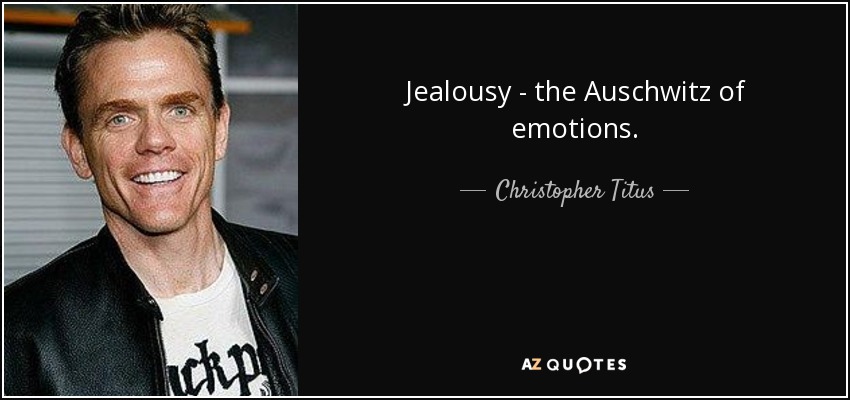
If ever there was an emotion that brings out the worst in people, jealousy seems tailor-made for it. One of my favorite comedians, Christopher Titus, once described it like this:

Is it somewhat extreme? Yes. However, I think there’s a sizable portion of the population that agrees with this sentiment. Jealousy can make people do horrible things. Sometimes, just seeing someone with someone else is enough to make us upset to the point of doing horrible things we wouldn’t otherwise do. Jealous and jilted lovers have committed serious crimes, including outright murder.

It’s those irrational extremes, however, that should beg the question. Is this feeling really a basic product of the human condition? How much of it is in our genes and how much of it is in our heads? It’s something we need to think about it, if only to assess the horrific behaviors it inspires in people.

Now I admit I didn’t really think about this question until recently. I admit I’ve felt pretty jealous at numerous points in my life and it’s not a pleasant feeling. I went through a period as a teenager where I got downright fatalistic whenever I heard a girl I liked had a boyfriend. Some of that can be chalked up to teenage hormones and serious personal issues. Others, however, are a bit more complex.

The first time I really thought about this issue came while reading Darrel Ray’s book, “Sex and God.” It’s a book I’ve recommended on this blog before and while it does primarily discuss the effects of religion on sex, it also frames jealousy in a very different context that makes it seem less a natural emotion and more a byproduct of sorts.

It goes back to the whole “caveman logic” I’ve used in discussing other topics on this blog, such as nudity. Biologically speaking, we’re still the same cavemen and cavewomen who roamed the African savanna 50,000 years ago, hunting and gathering for food. Then, something happened that changed our way of life and in evolutionary terms, it happened fairly recently. That something is agriculture.

That’s not to say this is a bad thing. The Agricultural Revolution is a big reason why civilization, as we know it, developed in the first place. However, it did come with a specific byproduct. It introduced the concept of land ownership and passing down property through bloodlines. It’s a concept that is not strictly Western. It occurs in almost every society in every part of the world that relies on agriculture to some extent. The culture develops its customs around owning and managing land. So naturally, some of those customs extend to owning and managing people.

Using caveman logic, the concept of owning land is entirely arbitrary. Unlike a tool or physical good that we create, we can’t hold it or lock it in a safe. However, we still treat it as something we need to protect from theft. We treat it as something that we associate with our own name. This is where the idea of passing possessions down to children enters the picture. It’s one thing to just give a child a tool or heirloom you made. It’s quite another to leave them ownership of a farm or property.

This is why marital fidelity, virginity, and knowing that your kid is really your kid became so important. Before the days of Maury Povich and blood tests, the only way to truly know that your kid is yours is for your bride to be a virgin on her wedding night and to have never cheated on you. It’s not so much about nature as much as it is about economics. There’s an economic and legal incentive to treat sexuality, child-rearing, and sexual relations as a commodity. As a result, we guard it like we do other commodities.

From that perspective, it’s easy to see how jealousy emerges. It’s like seeing someone with a nicer car or more food than you. It makes you envious and jealous. It stirs up all sorts of negative emotions that don’t always manifest in healthy ways. We think it’s natural, but take a second to consider the implications of this feeling.

To be jealous of another person’s feelings over someone else implies that you own that person to some extent. It implies you own their emotions, their sentiments, and their sexuality. For most people in the modern era, the idea of owning another human being in any capacity is abhorrent, yet we don’t bat an eye when we think we own someone’s emotions.

In the context of caveman logic, it doesn’t hold up. As small communities of hunter/gatherers, the idea of owning another person’s emotions wasn’t very pragmatic to say the least. Two people and whatever children they have aren’t enough to fend for themselves against a pack of sabretooth tigers. They need to band together as a community and a by-product of this, as we see in other primates, is that sexual monogamy isn’t the norm. It can and does happen, but it isn’t the ideal. It’s just a variation.

Now it’s one thing to make a promise of sexual fidelity to someone and break it. It’s quite another to just assume that someone else’s emotions must be managed a certain way. That undermines the very concept of what it means to be a sovereign human being. However, our culture is still structured around this idea that one person owns the love and lust of another and this is somehow an ideal.

It’s for this reason that I now see the concept of jealousy as somewhat flawed. When I think about my own romantic inclinations, I don’t want to own another human being. I don’t want to be owned either. I want the love and lust I share with another to be freely exchanged for all the right reasons. There’s room for romance. There’s room for lust. There’s room for commitment as well. Jealousy feels like a perversion of this sentiment and something that needs to be re-evaluated.

So once again, I’d like to open this up a little. What do you, the readers, think about our current concept of jealousy? What is your experience with it? Do you think it’s natural? Do you think there’s room to change our perceptions?

This idea has given me plenty of think about for future books. There is one new idea I’m developing, hopefully for a short, sweet, and sexy story I can write after I’m done with my next project. I think there are too many stories out there that focus on love triangles and scorned lovers. I think the marketplace is ready for something new and I hope to provide it.

12 Comments

Filed under Jack Fisher's Insights, Uncategorized

Sex, Robots, and the Future

Do you find robots sexy? That’s not a joke. That’s a serious question and one that we may need to answer sooner than you think. We’ve all heard people raise concerns about the robot apocalypse. When most people think of it, they tend to think of world described in “The Matrix” or “The Terminator.” While these make for good Hollywood action movies, there is one part of this so-called apocalypse that isn’t touched on very often. That’s to be expected though because this part can’t fit into a PG-13 movie.

It’s going to happen. It’s actually already starting to happen, as Men’s Health reported earlier this year when a man professed his love to a life-like sex doll. We are going to have sex with robots. We are going to develop intimate relationship with robots. As they become more advanced and more capable of interacting with us, our human emotions will come into play. Along with those emotions will come desires. So how will they manifest? How will our society function in a world where men and women can have romantic sexual relationships with robots?

Now the concept of sexy robots is not at all new. The first “Austin Powers” movie gives us our most basic and crude concept.

These kinds or robots, as colorful and comical as they may be, are currently beyond our technical capabilities. So far, you can’t purchase a real sex robot today. However, you can purchase a very lifelike duplicate through RealDolls.com, a company that has been in business for years. While you can have sex with these dolls, they don’t interact. They can’t talk or exert themselves with any meaningful intelligence, emotional or otherwise.

That will eventually change because our technology is progressing rapidly. We already have robots who can beat people in chess and Jeopardy. We also have robots that can interact with some level of personality, such as Apple’s Siri and Microsoft’s Cortana. How much longer until we have a robot that’s advanced enough to be a real person? We don’t know yet, but we are starting to give the idea serious consideration. Last year, the movie “Ex Macina” built an entire story around it and it ended up being a lot more mature (not to mention darker) than “Austin Powers.”

Like “The Terminator” though, this story is limited in vision and scope. It focuses heavily on creating conflict more than exploring the implications. Those implications will show up before the conflict and some are giving it serious thought.

The New American posted an article last year about how some are already advocating for human/robot marriage. Marriage has already undergone significant changes with the recent advances in same-sex marriage. Will marriage with robots undergo a similar process in the coming decades? It’s hard to say, but there’s no question that we are becoming more and more linked with our technology. Is it just a matter of time before we start developing emotional, romantic, sexual relationships with robots?

On the surface, it has some distressing implications. A robot has no rights. A robot cannot sue for spousal abuse. A robot can be turned off, reprogrammed, and shut down. A robot can also be made to look like anything someone wants. What if someone wanted a robot that looked like a child or a specific actor/actress? What are the legal implications of that?

It’s hard to imagine how a human/robot relationship will function now, but then again same-sex marriage was in a similar position 20 years ago. Who’s to say that 20 years in the future won’t follow a similar path?

I tend to be more optimistic when it comes to the robot “apocalypse.” I believe that once robots become intelligent enough for us to have relationships with, be they sexual or otherwise, it’s going to change us as individuals every bit as much as we’ll change them. If a robot is smarter than us, then they will know how to accommodate us. They’ll know how to provide every emotional need we may have. Will that be healthy? Could having all your emotional needs being met by a robot be good for us?

Some may claim that robot relationships will lead to the extinction of the human race. Actually, it may do the opposite. If we can make a robot capable of having sex, then we can make a robot capable of giving birth as well. Artificial wombs are a real concept that’s in development. We may very well get to the point where we don’t need sex to reproduce anymore. If a society wants to grow its population, it can do so without putting women through the rigors of childbirth.

How will that society function? How will a relationship between a human and a robot function? It’s an intriguing question. It’s one I’m contemplating for a possible book. Nothing is set for now. I have other projects I’m still working on. In the meantime, I’ll let this video from the Huffington Post continue the discussion.

https://s.embed.live.huffingtonpost.com/HPLEmbedPlayer/?segmentId=560c199399ec6d3aff0001fb&autoPlay=false

9 Comments

Filed under Jack Fisher's Insights, Uncategorized

The Antidote to the Alpha Male/Beta Male Conflict (Involves Deadpool Again)

Yesterday, I talked about the bane of beta males and alpha males. Together, they are an overplayed, overdone, and over-emphasized stain on popular culture. Between sitcoms like “The Big Bang Theory,” underdog movies like “The Karate Kid,” and pretty much the premise of every teen movie made since 1980s, we’ve had our fill of alpha males and beta males.

We get it. Alpha males represent everything we hate about masculinity (even if they have more sex and embody all the traits we want in our leaders and CEOs). Beta males represent every lovable underdog who deserves to get the girl in the end (even if that gives every man and women false expectations and inevitable disappointment). It’s been done. We know how that story ends. So let’s tell a new story. To tell that story though, I have to revisit our old friend Deadpool.

I’ve written about him before. It seems appropriate to write about him again because the Deadpool movie just cleaned up nicely at the Teen Choice Awards. He breaks the mold of so many traditional stereotypes. He’s not an alpha male. He’s not a beta male. Granted, his crazier than a sack of crack-addicted ferrets, but the success of his movie may very well show that there’s a place for a new type of male in popular culture.

In the same way the recent Ghostbusters movie offered something different for female characters, Deadpool tweaks the concept of a well-rounded male character and, in some cases, shoots it in the ass. He’s confident, competent, and more than a little arrogant, which is kind of like an alpha male. He’s also affectionate, sensitive, and emotional, which is kind of like a beta male. In many respects, he’s a balanced male character that both men and women alike can respect

Again, it’s worth pointing out that Deadpool, as an established comic book character, is one of the craziest motherfuckers in comics. So what’s it say about the status of male characters when he’s the one who embodies the traits of a balanced male character?

Perhaps it’s fitting. Our tastes in male characters is kind of crazy when you think about it. We’re conditioned to despise alpha male characters, but we constantly elect them to positions of power and admire them when they’re athletes. It’s downright schizophrenic when you think about it and Deadpool actually has voices in his head. There’s just something wonderfully poetic about that.

Crazy or not, the shocking success of Deadpool, which made $782 million on a $58 million budget, will likely prompt a re-examining of our crazy sentiments in male characters. History shows that when there’s money to be made, those who profit from popular culture are going to exploit the hell out of it.

There may already be signs. Since the Deadpool movie, another movie came out that utilized a character who doesn’t fit into the alpha male/beta male dynamic. That movie didn’t do nearly as well as Deadpool, but it did offer a unique entertainment experience that helped make it successful in its own right. I’m talking about the movie, “Central Intelligence.”

A little Hart and a big Johnson? It sounds like the kind of humor that came right out of the Deadpool movie, but it works beautifully here. The trailer, however, only hints at the new Deadpool-like twist on male characters. Specifically, the character of Bob, played by the Rock, embodies many similar traits as Deadpool does in his movie, albeit with only 5 percent of the crazy.

Bob is a big, tough, muscle-bound badass who works for the CIA. In most movies, he’d be the kind of alpha male we’d end up rooting against. Instead, he’s not just a good guy who is a unique foil for Kevin Hart’s loud-mouthed, overwhelmed, and overly-frustrated character. He’s oddly well-rounded, showing that he can be tough, sensitive, understanding, and badass. He’s not defined by jealousy or loss or any other shallow excuse most alpha males use for being assholes. He’s a character who is lovable by both men and women alike.

In the end, isn’t that the best manifestation of masculinity? A male character that men and women alike can love? There does seem to be a market for this. Rotten Tomatoes gave “Central Intelligence” a 68 percent score, which is certified fresh. It also made $200 million on a $50 million budget. That’s not a bad return for a non-superhero movie. Could this be a sign of things to come?

If so, it’s a trend I hope will benefit my own male characters. I’ve tried to be balanced with them in my work to date. I intend to keep trying with my next project. I hope that effort shows in “The Big Game,” if it gets picked up by a publisher. I’m still waiting for a response, but if it’s taking this long, I hope that means they’re being more thorough. Time will tell, but I like to think that the future is bright for male characters.

1 Comment

Filed under Jack Fisher's Insights, Uncategorized

The Rise (and Necessary Fall) of the Beta Male

Over the course of the past couple decades, which are the primary decades in which I’ve lived my adult life, I’ve noticed a trend in popular culture. I think others have noticed it as well. I see it in novels, TV shows, cartoons, comics, and movies. It doesn’t matter if the themes are erotic or romantic. It shows up everywhere. More specifically, they show up everywhere. Who are they? I’m talking about beta males.

Let’s face it. Whether we admit it or not, we all know the traits of an alpha male. We know because those traits show up in pretty much every story that needs a villain. They’re aggressive, tough, angry, mean, self-centered, self-absorbed, and self-centered. They are bullies, plain and simple. Look at Biff Tanner from the “Back to the Future” movies. He’s basically the template of the alpha male.

Why is this an issue? It’s simple. We hate the alpha male. More often than not, he is the least likable character in a story. Never mind that these are traits associated only with men and never women. They are the enemies. They are the villains. They are the ones we’re supposed to root against, even if they’re the ones we turn to for protection and strength in the real world.

Enter the beta male, the lovable underdog who is everything the alpha male is not. He’s sweet, he’s sensitive, he’s caring, and above all, he’s emphatic. In other words, he’s basically a stereotypical woman.

In many respects, he’s an affront to both men and women. He is the antithesis of masculinity and symbolic of all the weaker traits we associate with women. It’s almost as if popular culture can’t stand the idea of men being tough without being assholes. It demeans both genders when you think about it.

So how did we get here? Well, that’s hard to say and probably something that requires multiple blog posts. I suspect it comes from our innate desire to root for the underdog or the unspoken acknowledgment that most men don’t possess the traits of an alpha male, which in turn makes us jealous. I can look into that later. For now, I’m talking about the beta male and why he matters.

There’s no dictionary definition for a beta male. We define him basically as what an alpha male is not. That’s not a good definition, defining something solely by what it isn’t. Urban Dictionary isn’t exactly a definitive site, but it does offer some interesting takes.

An unremarkable, careful man who avoids risk and confrontation. Beta males lack the physical presence, charisma and confidence of the Alpha male.

That’s a short and simple definition. Then, there are those favored by radical feminist and extremely liberal types.

A man who is content with nontraditional gender roles; i.e., he is not threatened by intelligent and/or powerful women, and he does not have to be in control of every situation to maintain his sense of self. (Frequently, he does manifest a quiet kind of confidence and control over his surroundings, but it’s not important to him that this is noticed by others.)

A beta male is often introverted, intelligent, and introspective. Though he may have been branded a “nerd” growing up, the adult beta is frequently a thoughtful, capable, and fascinating individual whom many women find appealing.

Then, there’s the opposite side of that coin.

To be a bitch like male.

In many respects, the beta male embodies the agenda of whatever someone or some line of thinking wants. If feminists want the beta male to be their ideal template for men, then that’s what he’ll be. If liberals want the beta male to be the superior, enlightened, understanding men who embody their ideals, that’s what he’ll be. The beta male is basically the universal tool for those looking to play into stereotypes for their protagonists.

There are already plenty of them. There’s Ross from “Friends.” There’s George from “Seinfeld.” There’s Peter Parker from “Spider-Man.” There’s the entire cast of “The Big Bang Theory.” There are even movies built entirely around this concept, my personal favorite being “She’s Out of My League.”

In every case, the story is the same. The weaker beta male is the underdog who never gets a break. Then, through some magical thinking and obscene luck, they win the day against the odds. It can be a good story and it makes for a nice fantasy, but that is what it is at the end of the day: a fantasy.

In real life, we don’t want beta males running everything. We don’t want beta males being our police officers, our fire fighters, or our star athletes. We want alpha males for those jobs.

When we look for a spouse or a lover, we tend not to favor those who we constantly have to coddle and protect. We want someone who will at least be our equal. We want someone who makes us stronger or at least can stand by our side on the same playing field.

So in a sense, our sentiment towards the beta male is downright schizophrenic. We love them in movie, but we discount them in real life. In real life, we see alpha males still dominating in terms of success. They get more attention, more sex, and more opportunity. Can this kind of discrepancy last? I say it can’t.

Reality, being the frustrating force that it is, tends to chip away at false fantasies in the long run. The cult of the beta male cannot last. There are only so many times we can watch Peter Parker get dumped or Ross from “Friends” get rejected. At some point, it stops being entertaining and we seek something else.

I say this as someone who has, to an extent, used beta male characteristics in my own stories. My book, “Skin Deep,” gives the main protagonist, Ben Prescott, a few beta male traits. It also gives his main rival, Zachery Crenshaw, a number of stereotypical alpha male traits. In this story, I stop short of making them too flat. I do make a conscious effort to balance them out. I like to think I succeed more than a typical episode of “The Big Bang Theory.” However, it’s a skill I’m still trying to refine.

In my other stories, I try to avoid too many beta males. I’ve actually noticed that erotic fiction in general tends to avoid beta males. Even in BDSM stories, they favor alpha male traits for both men and women alike. The success of “50 Shades of Grey” is a sign that there is a market for these kinds of characters. I hope to contribute to that market with future books, as well as my current books.

So for those who are as sick of beta males as me, check out my books or look back on the beta males in previous stories. Yes, that’s a shameless promotion of my own work. Yes, it’s entirely self-serving. However, it’s not something you’d expect of a beta male, would you? I rest my case.

8 Comments

Filed under gender issues, Jack Fisher's Insights, sex in media, sex in society, Uncategorized

The (Unspoken) Benefits of Sexual Promiscuity

A while back, I wrote an post about the lesser-known benefits of BDSM. It’s true. There is actual real-world evidence that BDSM is good for your health. It’s one of those things people automatically assume is deviant and unhealthy. While it’s easy to see why people would think that, the real world tends to never be quite that easy.

So I thought it might be interesting to look at another assumption that most people in the western world have about sexual mores: the impact of sexual promiscuity. Like BDSM, a good chunk of the population has a certain set of assumptions about those who are sexually promiscuous. I could spend 10 blog posts describing them.

Someone is promiscuous? They must have issues at home. They must have horrible self-esteem. They must have been abused or something.

On top of that, there’s an egregious double standard with respect to sexual promiscuity. With men, they’re expected to be promiscuous to some extent. People look at a young man and assume, “That man wants to fuck every girl in his zip code.” It’s not necessarily an accurate assumption. The intensity of the male sex drive is often vastly overestimated, but society tends to structure itself around this assumption because it’s men who seem to commit most of the sexual crimes. It’s true that men do tend to commit more crimes in general, be they sexual or otherwise, but the rate for women is not zero. According to the FBI, women do commit their share of crimes.

That doesn’t stop the blind assumption that women who have a lot of sex must be “damaged” or something. How can anyone want to do something that feels so good and is such a vital part of life and not be damaged? That last sentence was sarcasm by the way. Society has progressed in recent years to see sexually active women differently. Comedian, Amy Shumer, even made a successful movie around it.

Even with this progress, however, there’s still this perception that sexual promiscuity is a bad thing. There’s a good reason for that. There’s even some history behind it. For most of human history, particularly in western land-owning cultures, promiscuity made it difficult to know for sure that your children were yours. If they weren’t, then passing down land and wealth became exceedingly difficult.

Then, there’s the disease factor. For most of human history, we didn’t have effective treatments for various STDs. That made promiscuity legitimately dangerous for many parts of the world, especially those living in cities and slums. However, modern technology has done a lot to change that. Most of the terrible diseases of the past have been wiped out or are easily treated by modern medicine. Some are still incurable, but the progress of modern medicine is still progressing. There will come a day when even those diseases are cured. So our understanding of sexual promiscuity needs to change.

So what is the psychology behind sexual promiscuity? Well, it’s a fairly new field of study to say the least. Research is still developing so the picture isn’t clear, nor should anyone expect it to be. Sexuality and human biology are complex, despite what some in the media would have us believe. What works for some people is not going to work for everyone. Human beings are just too diverse.

That said, Psychology Today did an in depth analysis on the research surrounding sexual promiscuity last year. It’s aptly titled, “What are the Psychological Effects of Casual Sex?” It’s an interesting idea that will definitely undermine some of the things we were taught in sex ed class as teenagers, but it has major implications. One of the most defining quotes of this article is this one:

If casual sexual activity doesn’t violate your moral code, your sense of integrity, or the commitments you have made to yourself and/or others, then it’s probably not going to be a problem for you in terms of your psychological well-being.

This seems to imply that the effects of sexual promiscuity have a lot to do with our assumptions about it. It’s sort of a classic self-fulfilling prophecy. If you think it’ll be harmful, then it’ll be harmful. If you think it’ll be good for you, then it’ll be good for you. Religion, culture, and upbringing all play a role and we’re just starting to understand it. As that understanding evolves, it will likely effect the way we tell stories about sexuality, which will in turn affect my stories. So I’ll definitely be keeping an eye on this topic.

Also, as they did with BDSM, the fine folks at ThinkTank did a video about the possible benefits of casual sex. I value their insight so I’ll let them make their case as well.

10 Comments

Filed under Jack Fisher's Insights, Uncategorized

A Relationship of Equals: An Unexpected Example From An X-men Comic

375131-_sx1280_ql80_ttd_

This past week, I’ve been writing my thoughts about strong female characters and evolving trends in our concept of romance. I think these are thoughts worth sharing because popular culture is always evolving. Our tastes in stories, characters, and romance changes from person to person, from generation to generation, and from culture to culture. I’ve already seen plenty of changes in my lifetime. I expect to see plenty more, especially as I work on my own love stories.

One of the points I made in my article about doomed romances involves the flaws in dynamics of such romances. When one person, be it male or female, is unequal in terms of sacrifice and input, then that’s typically an obstacle that’s difficult to overcome. When a relationship is between equals, then the romance between them makes both characters stronger. That’s the kind of romance I’m hoping to create with one of my future books. As such, it’s important to take note of promising examples. Low and behold, I found one yesterday.

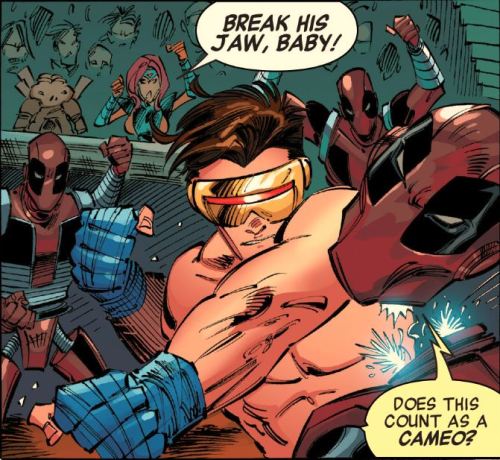
As I’ve already stated before on this blog, I’m a huge comic book fans. Some of my early exposure to love stories came from famous comic book romances. Among those romances are Cyclops and Jean Grey, two of the most prominent members of the X-men. I always had a soft spot for them. Their love story is among one of the most epic (and convoluted) in the history of comics, stretching all the way back to 1963 and involving multiple deaths along the way (long story).

Like many romances that began in different eras, it didn’t always make both sides equal. However, I would argue that the relationship of Cyclops and Jean Grey was far more equal than those of classic superhero romances like Superman and Lois Lane or Spider-Man and Mary Jane. Unlike those romances, Cyclops and Jean Grey are both superheroes on the same team. They both have superpowers and a superhero identity. On paper, they should be equals. In practice, however, it often led to tiresome tropes. A lot of them centered around Jean Grey fainting and needing to be rescued a lot. Case and point, here’s a clip from the famous X-men animated cartoon in the 90s.

Make no mistake. That happened A LOT. Jean Grey seemed to faint way too often in this cartoon. Things got slightly better for her in the X-men movies, but until her role in this years X-men: Apocalypse, she was largely relegated to being a prize for Cyclops and Wolverine to fight over. It’s a major reason why this romance isn’t quite as celebrated as other major comic book romances and I say it’s a valid reason.

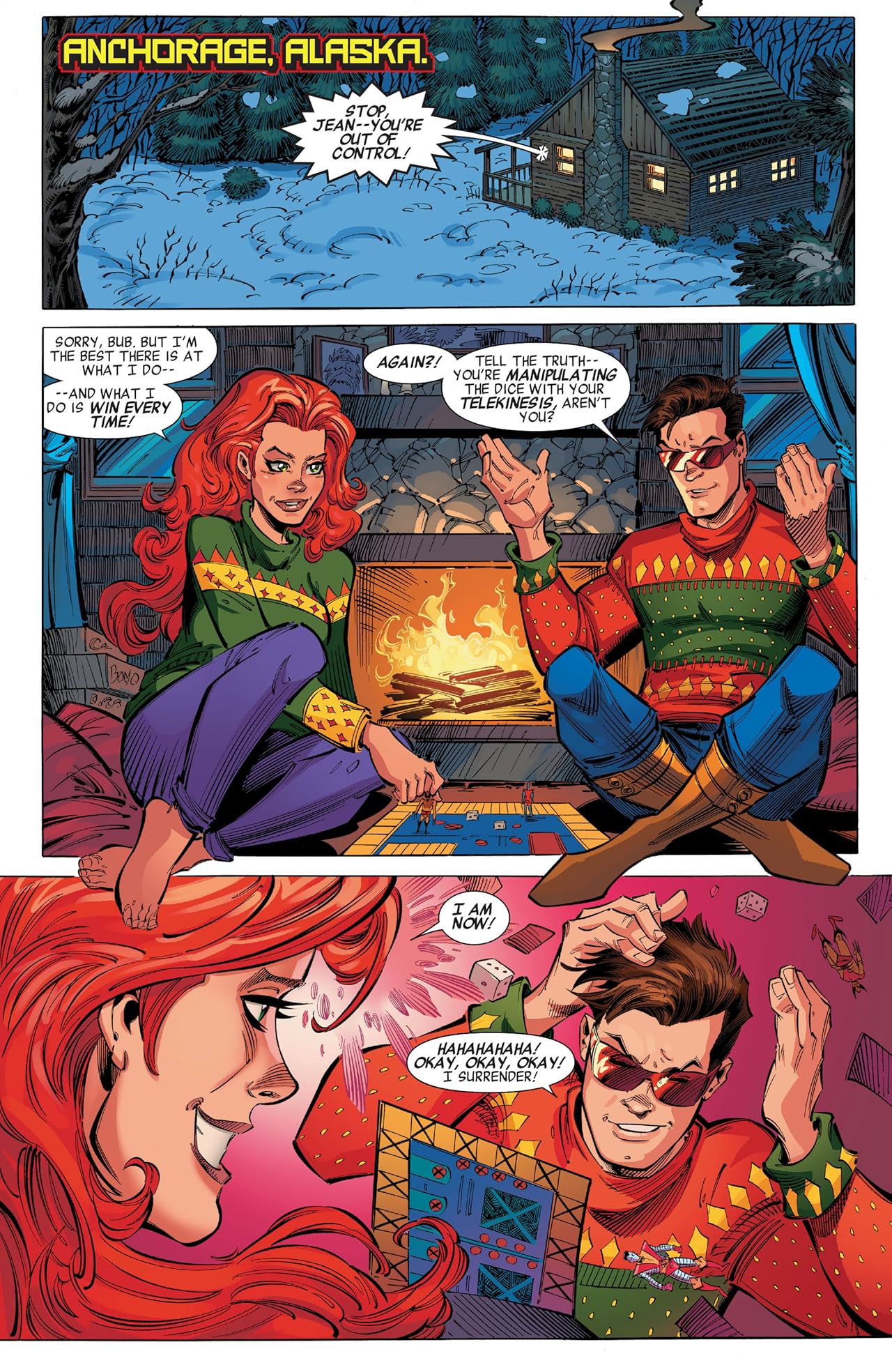
So imagine my surprise when I picked up my comics yesterday and came across X-men 92 #5. In this issue, we catch up with Cyclops and Jean Grey, who are now retired from the X-men and trying to build a life as two normal, healthy lovers. Despite terrible tastes in sweaters, their efforts yield mixed results as superheroes rarely stay retired.

However, it’s not that Cyclops and Jean Grey end up having to don their superhero costumes again that strikes me about this issue. It’s how utterly refined their relationship dynamics are here. Remember that clip I linked to earlier with Jean Grey fainting? That doesn’t happen here. Not once. Anyone who watched all 76 episodes of the X-men cartoon in the 90s can probably appreciate how big a deal that is.

Instead, the comic does something special with these two, something that I actually don’t see very often in comics these days. It shows Cyclops and Jean Grey as two lovers, being superheroes on an equal playing field. At no point do they end up having to save one another. At no point do they undermine or frustrate one another. Every step of the way, they support and complement each other.

That’s not to say there aren’t some disagreements. Cyclops is initially mistrustful of some of the allies they come across, which is perfectly in line with his character, but Jean Grey vouches for them and he trusts in her. He trusts her as anyone should trust their lover and it pays off. He supports her. She supports him. It’s a beautiful thing that shows a relationship actually functioning.

This is something that pop culture overlooks and for good reason. The narrative of how two people fall in love or how two people fall out of love is often more dramatic. However, it’s a story that gets told and retold too often and in too many different forms these days. Rarely do we get a story that shows two lovers actually functioning together on an equal playing field. That’s what makes X-men 92 #5 so astonishing. It uses the romance to complement the story rather than drive it.

This is an important insight and one that I definitely want to take note of for my own work. As I said before, I do have a few projects in mind that rely on relationships between equals. I want to use strong male and female characters who don’t have to rely too much on overplayed tropes because I want my work to stand out. I can’t do that if I tell the same kind of story that people have read a million times before in various forms. So comics like this are vital tools for writers like me.

For others seeking different kinds of love stories, I strongly recommend X-men 92 #5. It offers a different take on an under-appreciated, and often underrated, relationship between two iconic characters. I hope we see more stories like this in comics, as well as movies, books, and TV shows. I think the time is right for this kind of romance to take hold.

49 Comments

Filed under Jack Fisher's Insights, Uncategorized

Strong Female Characters and the (Strange) Assumptions About Them

I’m of the opinion that we make more progress than we think, but not nearly as much as we should. There’s no doubt about it. Novels, TV shows, cartoons, comics and video games have come a long way with respect to female characters.

We’re all familiar with the time-tested tropes. For a long time, a female character could basically be cut and pasted from any James Bond movie. Either she’s a devious, femme-fatale or a pretty love interest meant to supplement the story of the male protagonist. If she’s promiscuous in any way, she’s probably going to die. If she’s innocent and pure, she’ll probably live and be the hero or the prize for the hero. While there’s a place for these kinds of stories, the times are changing.

In recent years, there is a renewed interest in strong female characters who don’t fit into these same tropes. I’ve mentioned a few, like Vanessa in the Deadpool movie. Other more prominent characters include Black Widow in “The Avengers,” Furiosa from “Mad Max: Fury Road,” and Katniss Everdeen from “The Hunger Games.” These are all characters that take center stage, neither supplementing male protagonists nor becoming too similar to male protagonists. It’s a beautiful thing and an overdue change.

However, is our understanding of what makes up a strong female character really that refined? I’m of the opinion that pop culture in general is still stumbling around in the dark like a drunk monkey, trying to figure it out. It’s kind of important for me to acknowledge because I’m a writer. I’m trying to create strong female characters in my books. I admit it’s a work-in-progress, but how much progress have we actually made?

Once again, the fine folks at Cracked.com use a little dirty humor to point out some of the flaws in our current understanding in strong female characters. I don’t agree entirely with their assessment of certain aspects of pop culture, but some of their points are worth making and they’re points I need to consider for my own work. They focus specifically on movies, but I think it can apply to any medium right now.

6 Bizarre Assumptions Movies Make About Strong Women

So maybe we’re not as progressive as we think we are. The one quote in the article that stands out the most is this one:

It seems to come back to this idea that this is all a zero-sum game, that anyone asking for more female characters really hates males and wants to see them mocked and emasculated. “Oh, you say you want more strong female characters? How about if we just showed them shooting a dude right in the penis? Would that do it?”

This, I think, is the key to understanding the core of a strong female character. Their strength doesn’t come from overpowering men or being better than men. It comes from being able to operate on a level playing field with men. It’s not about one gender dominating the other. It’s about equality. There’s a time and place for dominant and submissive personalities. The success of “50 Shades of Grey” is proof of that. Those times and places, however, should be the exceptions rather than the norms.

It’s a challenge. That’s for sure. Everything worth doing is a challenge. It’s one I want to take on. I believe I did to some extent with “The Big Game.” Yes, it is a story that utilizes some BDSM elements. However, I do it in a way that allows both male and female characters to operate equally. It’s my next book that will present a far greater challenge.

This next book, which is still without a title, is structured around what I hope to be a strong female character. I don’t want that character to fall into some of the same traps that Cracked.com so eloquently laid out. I want her to be tough and strong without having to dominate over every male character. I won’t claim I’ll succeed in full, but I’d like to make a concerted effort. If I can find a publisher willing to take a chance as well, I’d like to see that effort pan out.

8 Comments

Filed under Jack Fisher's Insights, Uncategorized