Tag Archives: economy

Thoughts, Perspectives, And (Hard) Lessons On Hard Work

This is a video from my YouTube channel, Jack’s World.

In this video, I talk about hard work and how I’ve come to see it. I also offer what I hope is a balanced perspective on what it means to actually work hard in a world that seems increasingly unbalanced. I offer both these insights and perspectives free of charge, hoping it helps others as they navigate work and life moving forward. Enjoy!

Leave a comment

Filed under human nature, Jack's World, philosophy, psychology, YouTube

Why AI SHOULD Replace Most CEOs

This is a video from my YouTube channel, Jack’s World.

In this video, I make the case that, of all the jobs artificial intelligence could replace, CEO should be at the top of that list. In recent years, CEOs in general have generated headlines for all the wrong reasons. With the ongoing advancements in AI, this is one job for which we should be actively trying to remove human flaws.

Leave a comment

Filed under Artificial Intelligence, Jack's World, television, YouTube

Jack’s (Non-Expert) Proposal For A Universal Basic Income Alternative

This is another video from my YouTube channel, Jack’s World. This video is another exploration on the impact of advanced artificial intelligence. Specifically, it highlights the possibility of how to structure society in an era when automation fueled by AI changes the nature of the economy. There have been many proposals on how best to build society around this economy. A universal basic income is often a popular proposal. While I am largely a proponent of such a policy, I think there’s room for something bolder. This video is my proposal for something that takes UBI a step further. Enjoy!

Leave a comment

Filed under Artificial Intelligence, ChatGPT, futurism, Jack's World, YouTube

The First Automated McDonald’s Is Open (And Why That’s A Big Deal)

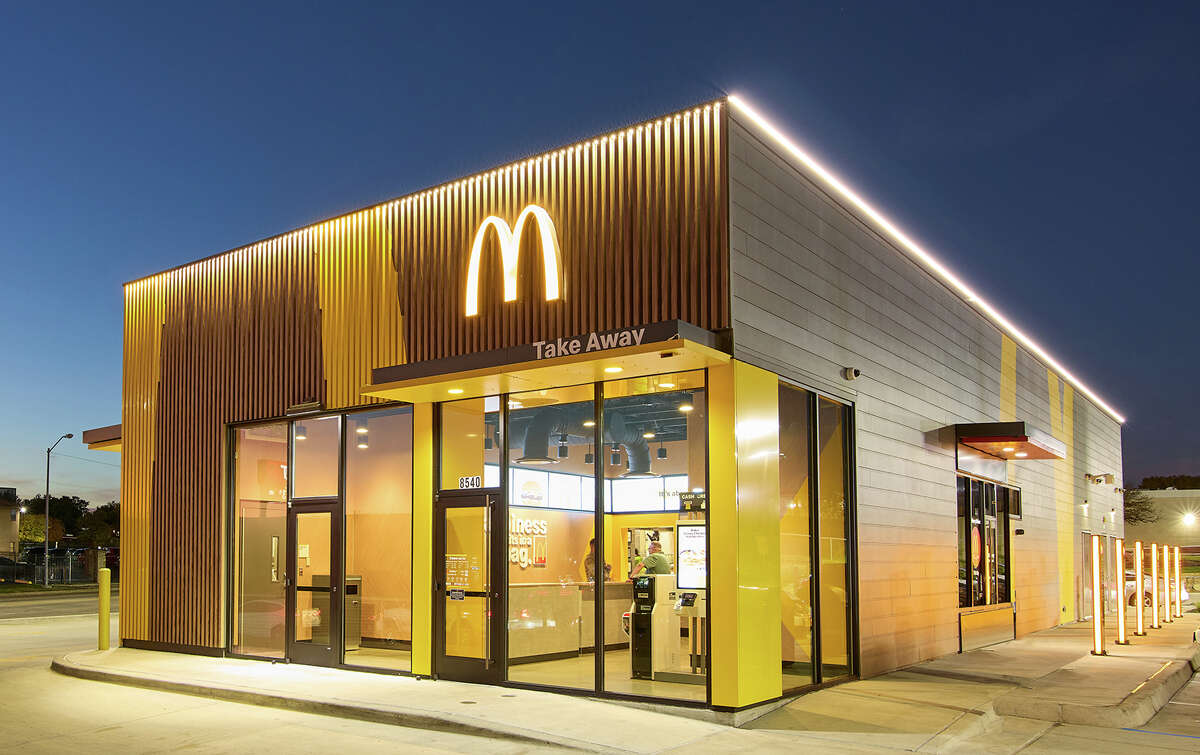
In late 2022, there was a major tech news story that made headlines for a hot minute, but was completely forgotten. In Fort Worth, Texas, the first ever automated McDonald’s restaurant opened.

From the outside, it looks like a typical McDonald’s. It has the same aesthetics and architecture that have become so iconic. But inside, there are none of the usual fast-food workers. There are just rows of kiosks and a conveyer belt. Once you place your order, it’s automatically prepared behind the scenes in the kitchen. Then, when it’s ready, it’s bagged and wheeled out to you.

When it’s working optimally, you never have to interact with another human being. Whether you consider that a good or bad thing is entirely up to you, but that’s the ideal. As for how it handles orders that aren’t properly bagged, food that isn’t properly cooked, or drinks that aren’t properly prepared, that’s not yet clear.

This isn’t intended to be the start of a massive effort to automate every McDonald’s restaurant. It’s largely a test to see just how much a standard fast food restaurant can be automated.

As someone who’s first paying job was in fast food, I have some mixed feelings about this.

On one hand, I welcome this kind of automation. I remember what it was like working at these restaurants. The pay was awful. The conditions sucked. And you had to regularly clean up messes that made you want to throw up.

On the other, this is an undeniable sign that automation is accelerating and the low-skilled jobs that many people rely on might become less and less available in the coming years. And for those who really need a job, even if it’s a lousy, low-paying job, that could be seriously detrimental to large swaths of people.

In terms of the bigger picture, I think this is a much larger story than people realize. Automation has been a popular talking point for years now. I’ve certainly touched on it. And I think the recent rise of artificial intelligent programs like ChatGPT have really raised the profile of automation, mostly because it revealed that it’s more than just factory jobs that are vulnerable to it.

It might even be because of ChatGPT that this story about McDonald’s flew under the radar. But I honestly think automation in the fast food and restaurant industry could be more disruptive in the short-term than products like ChatGPT.

In the coming years, we might look back at this automated McDonald’s as the first step towards a new trend in automation. People have talked about automating things like fast food for years. Then, the lingering effects of the COVID-19 pandemic and new trends in labor converged to create new incentives.

This is no longer just an idea that exists on paper or in the imaginations of CEO’s fantasizing about not having to pay minimum-wage workers anymore. This restaurant actually exists. People in the Fort Worth area can visit it right now.

Again, it’s not part of an ongoing effort to automate every McDonald’s. If you go to this restaurant, chances are you’ll deal with a system that’s still being refined. There’s probably still people there behind the scenes, monitoring and fixing whatever bugs emerge in the system. There’s a good chance those people are paid much more than minimum wage. There’s also a good chance that this particular McDonald’s isn’t going to be more profitable than those with human workers.

But those are just logistical issues that can be polished, refined, and streamlined. All it takes is time and experience. It’s not unlike the first assembly line or the first 3D-printer. It’s messy and clunky at first, but it steadily becomes more efficient with time and investment.

Eventually, it’ll get to a point where a functional McDonald’s won’t ever need a staff of low-skilled employees anymore. In principle, it would only need one person to be there to make sure the ingredients are re-stocked and the equipment doesn’t break. The company probably wouldn’t even need to pay the person that much. If they’re qualified to work as an unpaid intern in a standard IT department, they’re probably qualified to manage this system.

And if McDonald’s finds a way to make it work, you can expect the competition to catch up quickly. There would just be too much incentive to remove all the low-skilled wage labor as a means of increasing profits. It won’t happen overnight, but one company only needs to succeed once before others copy it.

Fittingly enough, that’s something McDonald’s did before. Their system of fast food was pioneered in the early 1950s and proved so successful that many other competitive, including Burger King and Taco Bell, embraced it. It’s very likely we’ll see something similar play out with automation.

But what does that mean for low-skilled labor, in general?

That’s a relevant question. There’s no way this kind of automation will stop at fast food restaurants. Add AI tools like ChatGPT into the mix and even mid-skill jobs could be at risk.

I don’t claim to know the answer, but I suspect we’re going to see some major upheavals in how we work in the coming years. That’s going to have consequences, good and bad. And I honestly worry that we’re not prepared for the bad consequences in the slightest.

Leave a comment

Filed under Artificial Intelligence, Current Events, technology

Rethinking Jobs And Business: How Pandemics And Relief Benefits May Change Both

Help wanted? | Free | hometownsource.com

The world is always changing. That’s the only constant.

Sometimes, it changes more rapidly and chaotically than usual. That tends to happen a lot when major events transpire, such as a once-in-a-generation pandemic that infected millions and shut down entire countries. I hope I don’t have to belabor that to anyone with a news feed for the past year.

At the same time, these kinds of rapid upheavals can get us thinking harder about things we tend not to question. I’m not just talking about how much we take our health, our infrastructure, and our essential workers for granted. I’m referring to bigger concepts about how we approach life, society, and how we structure our lives.

One area that seems to be getting more scrutiny lately is how we approach jobs, work, and careers. I’ve certainly given it more thought, mostly in terms of the impacts of telework and how I used my stimulus check. I suspect many others have contemplated these topics in new ways in wake of recent events.

Now, as the pandemic nears its end, some of those concepts are already manifesting in the real world. One effect, in particular, has been especially jarring in America, mostly for reasons that other industrialized countries may find laughable. It has to do with people not wanting to work for a lousy, unlivable wage.

I know that shouldn’t be such a radical concept, but it is and as a proud American, I find it infuriating. There’s no getting around it. The ages for the average, non-CEO American have been stagnant for decades. It’s an issue that has been festering since long before the pandemic and even before I was born.

Before the pandemic swept in, there was an ongoing debate on whether the minimum wage should be increased to $15 nationally. I won’t get too heavily into the politics and talking points behind it, mostly because it ultimately descends into cycle of speculation and fallacies. I’ll just say that the pandemic has complicated that debate in unexpected ways.

During the height of the pandemic, the economy was basically shut down. Suddenly, millions were out of work and businesses had to shut down. Many still haven’t fully recovered. A big reason why many didn’t starve to death or end up on the streets was because of government relief packages, which included extended unemployment benefits.

While America’s relief package wasn’t nearly as generous as other countries, it was certainly better than nothing. I know plenty of people who genuinely needed that relief to stay afloat in terms of paying bills and feeding their families. It’s also not unreasonable to say that this was a critical measure in terms of preventing the pandemic from getting even worse.

However, this effort revealed something remarkable. According to a study done last year, the unemployment benefits that many workers received was actually better than their previous wages. It wasn’t an insignificant chunk of the work force, either. The benefits were greater for approximately 68 percent of American workers.

What does that say about the wages we’re paying our workers?

Moreover, what does that say about the system in general that workers can make more by not working than they would if they were?

Something about that doesn’t add up, literally and conceptually. I get that this was an unprecedented situation. At the same time, it reveal something about how we see work and workers. It’s something businesses are starting to realize too.

As the country and the world opens up, new job opportunities are arising. That’s good news for those who have been out of work. Unfortunately, those same businesses are having a hard time filling those positions.

The jobs are there.

The workers are there.

They just aren’t gravitating towards one another.

Here’s a brief rundown of the situation, courtesy of NPR. If you haven’t been working or are lucky enough to have kept your job during the pandemic, it should offer some insight and perspective.

NPR: Millions Are Out Of A Job. Yet Some Employers Wonder: Why Can’t I Find Workers?

At a time when millions of Americans are unemployed, businessman Bill Martin has a head-scratching problem: He’s got plenty of jobs but few people willing to take them.

“I keep hearing about all the unemployed people,” Martin says. “I certainly can’t find any of those folks.”

Martin helps run M.A. Industries, a plastics manufacturing company in Peachtree City, Ga. The company makes products used in the medical industry — specifically, in things like coronavirus tests and vaccine manufacturing and development.

But as he struggles to keep up with demand, Martin is finding it almost impossible to find new workers.

As someone who has worked his share of lousy, low-paying jobs, I can’t say I’m surprised by this. Don’t get me wrong. I still feel for the business owners who need workers to keep things going. I just can’t forget how arduous it was, working hard at a job that paid so little and left me so exhausted at the end of the day.

If the alternative is staying home and collecting unemployment, which ultimately pays more, then the choice is easy. That’s especially true for those who have kids or relatives they need to take care of. It’s not that they’re lazy, as some overpaid pundits love pointing out. It’s just that the nature of these jobs aren’t that appealing, especially when the pay is so low.

If anything, this situation has inspired us all to take a step back and look at how we approach work, jobs, careers, and business. When you think about it, it’s a little distressing that we build so much of our lives around work. It’s not just something we do out of obligation and responsibility. Many literally have to work in order to survive.

Is that right?

Is that just?

Is that healthy for society as a whole?

I say this as someone who has been lucky enough to have jobs that I’ve both loved and hated. I know what it’s like to work for a business that you hate. I also know what it’s like to have a job you find genuinely fulfilling. Not everyone is that lucky. In fact, I suspect the vast majority of the population, even in America, never experience that luck.

I get that there are economic reasons why some businesses can’t pay their employees high wages. I’ve worked in fast food restaurants. I know the profit margins aren’t exactly large. I also know that, even when I could make more than minimum wage, it was rarely enough to live on. That’s not even factoring the physical toll some of this work takes.

Despite that toll, there was still an undeniable stigma to those who didn’t work or those who simply avoided low paying jobs. In America, it’s a direct extension of that old protestant work ethic that equates moral worth with a willingness to do backbreaking labor for minimal pay. I’m not saying that work ethic is wrong, but I do think it needs to be re-evaluated.

The pandemic suddenly gave people an option on whether or not they wanted to do these kinds of low-paying jobs. Many understandably opt to just collect unemployment. They may not live luxuriously, but they will live. In some cases, they’re even better off.

It may be a sign of things to come. I already speculated on how the pandemic relief bills could be a precursor to a universal basic income. Now that people have experienced life in which their survival isn’t directly tied to having a low-paying job, I think it’ll be difficult to back.

I also think that’s a good thing. Regardless of how you feel about minimum wages, work ethic, or running a business, I think it’s generally a positive trend that we’re starting to decouple work with the right to survive. I think it’s a trend that has to happen, especially as automation does more and more of the low-skilled labor traditionally done by human workers.

It’s true. Some people are lazy and don’t like to work. Some people are just so driven and incapable of not working. Both still deserve to live without needed a job to keep them from starving to death or losing their home. As bad as this pandemic has been, I sincerely hopes it inspires us to rethink how we structure our society. There is a better way of doing things. We should always strive to do things better. Sometimes, that means rethinking everything we’ve come to believe about work, business, and life in general.

Leave a comment

Filed under Current Events, health, human nature, politics

Would You Shop At A Store Run Entirely By Robots?

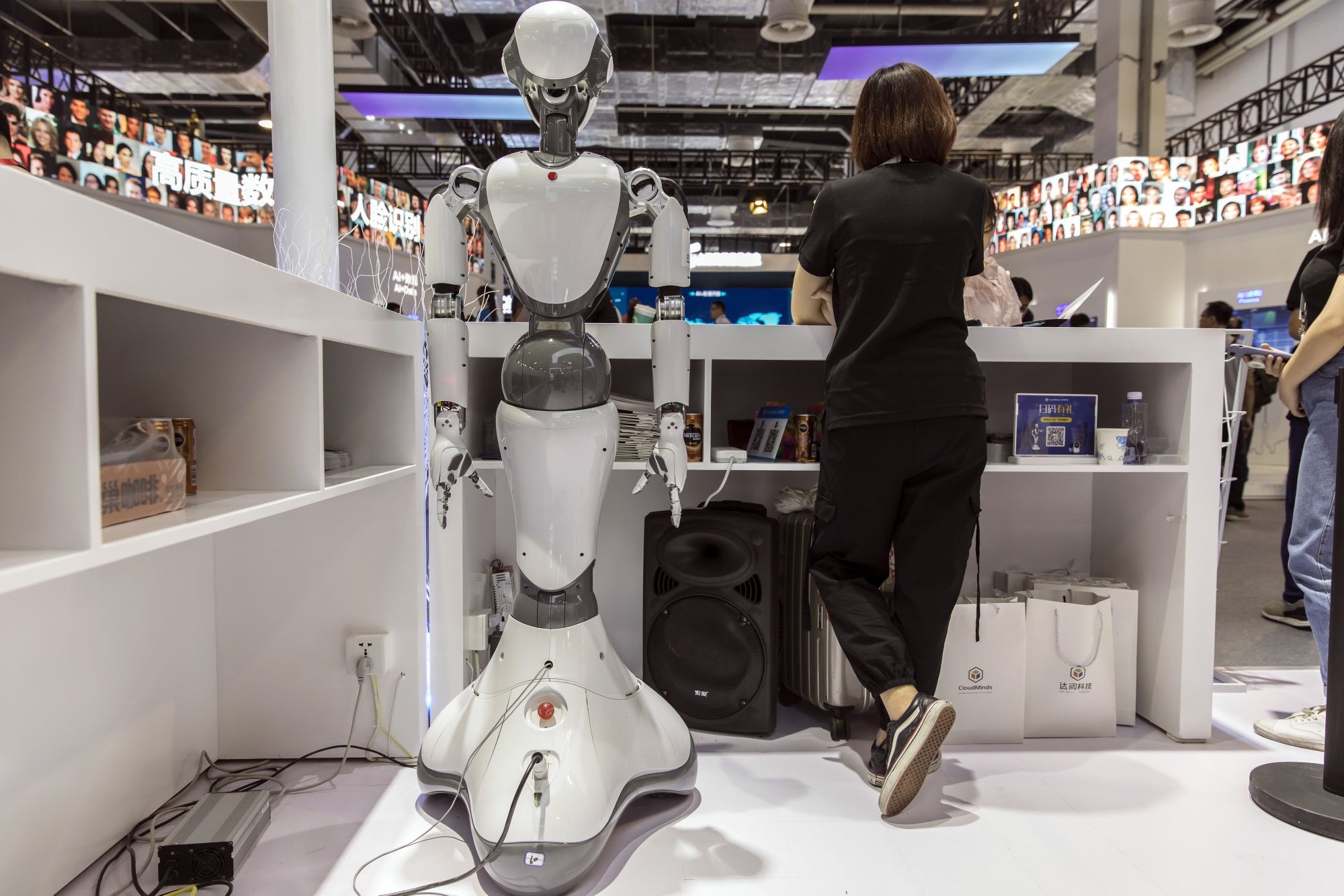
Will Smart Machines Kill Jobs or Create Better Ones? - The Washington Post

Recall the last time you went to the store. It doesn’t matter if it was your corner grocery store or some big box department store. All that matters is you went there to do some basic shopping, as we all end up having to do at some point. With that in mind, try and remember how many store clerks you saw.

Maybe some were working at cash registers.

Maybe some were stocking shelves.

Maybe some were sweeping floors or cleaning up messes.

The chances are you saw at least several. I remember seeing at least three the last time I went to a grocery store. That’s fairly typical. I know I used to see more before the days of self check-out lines, but I always saw people working at these stores, diligently doing the things necessary to keep it running.

For most of us, that’s a mundane sight. For every store we go to, we expect there to be human beings working there to keep it going. It’s part of the infrastructure that keeps these stores stocked. On top of that, seeing other human beings contributing gives us a sense of comfort in that this place is being run by real people with real faces.

Now, try and imagine a store that has no people working at it. You walk in the door and you never see another human being carrying out the various operations we expect of a functioning store. All that is now done by machines and robots. They’re the ones who stock the shelves, handle your money, and clean the messes.

Does that change the experience?

Does that make you more or less inclined to shop at that store?

These are relevant questions because, as I’ve noted before, robots and artificial intelligence are advancing rapidly. Automation is an ongoing trend that promises to have major economic ramifications. Some of those ramifications are already here. It’s one of the reason coal mining jobs will never be as prevalent as they once were.

Other ramifications haven’t arrived yet, but they will eventually come. The technology is there. The incentives are there. It’s just a matter of investing, refinement, and scale. Eventually, it will reach retail work, a sector that employs nearly 10 million people. That will have a major economic impact for large swaths of people.

Unlike other forms of automation, though, it’ll be a lot more visible.

Most of us never set foot in a factory where cars are made, much of which is done by robots. Most will never set foot in an Amazon or Walmart warehouse, which already use robots at a significant scale. The impact of just how much work is done by robots these days is not visible to most ordinary people.

That will not be the case with stores and retail work. Like I said, we all have to get out and shop every now and then. Even though online retail has become more prevalent, people still go to traditional brick and mortar stores. Even as online retail improves, that’s not likely to change.

However, how much will that experience change once robots start doing the jobs that humans have done for centuries?

How will that change the experience?

Will you, as a consumer, shop at a store that had no humans working there most of the time?

If you think this isn’t that far off, think again. Below is a video from an AI channel on YouTube that shows a robot using a bar code scanner for the first time. The process is a bit cumbersome, but the robot is able to handle it. It is able to receive instructions. Given the nature of how robots improve and refine their programming, it’s not unreasonable to assume that future robots will be able to carry out retail tasks more efficiently than any human worker.

It may not happen all at once. You probably won’t just walk into a store one day and notice that everyone was replaced by a robot. Like self check-out, it’ll likely happen gradually. Once it gets to a certain point, though, it’ll become mainstream very quickly. The incentives are just too strong.

You don’t need to be an economist to see those incentives. Robots don’t need to be paid. They don’t slack off on the job. They don’t get sick or tired. In theory, they could keep a store open 24/7 without ever paying overtime. For big box retailers like Walmart, the potential profits are just too large to ignore.

It won’t stop at stores, either. Restaurants will likely undergo a similar process. There are already working robots that can cook meals from scratch. Once they get refined and scaled, then it’s also likely you’ll one day eat at a restaurant entirely run by robots.

Would you be willing to eat at such a place?

Your answer will probably be similar to the one I asked earlier about whether you’d shop at a store run entirely by robots. Personally, I don’t think I’m ready to shop at a place that had no humans working in it, if only because robots sometimes break down. However, within my lifetime, it may get to a point where stores and restaurants run by humans become the exception rather than the norm.

Are we ready for that future?

I don’t know, but it’ll come whether we’re ready for it or not.

1 Comment

Filed under futurism, robots, technology

Why Amazon Accepting Bitcoin Would Be A Game Changer (And Why They Might NOT Do It)

Jeff Bezos Directs Amazon to Accept Bitcoin and Other Popular  Cryptocurrencies: Report – Bitcoin News

In all the years I’ve been browsing the internet, I’ve never seen something so divisive or so disruptive as cryptocurrencies. Yes, that includes both video games and internet porn. Crypto’s impact has been that profound. That impact is likely to continue in unexpected ways for years to come.

However, there is still plenty of uncertainty and confusion surrounding cryptocurrencies. I recently had dinner with my parents and my mother asked me to explain it to her. I tried. I’m pretty sure I failed. I tried to simply frame it as digital money, but that didn’t even come close to explaining what cryptocurrency is, how it works, and why it has become such a huge industry.

There are far smarter people than me who can explain what cryptocurrencies are and how they work. This video here does a decent job of explaining it to beginners who aren’t particularly tech savvy.

While I’ve been following the rise, fall, revival, and growth of cryptocurrencies for years, I didn’t actually buy any until very recently. I even wrote about my experience, which ended up being somewhat mundane. It was no different than using an ATM.

That’s somewhat illustrative of where cryptocurrencies are right now. Buying currencies like Bitcoin has never been easier. You can download any number of wallets for free on your phone. If you don’t want to link your bank account to it, then finding an ATM like I did is very easy.

If you have any spare change lying around, you can turn it into Bitcoin. That’s where we’re at now with cryptocurrencies.

The harder part at the moment is actually spending Bitcoins. While you can find numerous online merchants who take Bitcoins, you can’t exactly use them to pay your bills, buy your groceries, or just purchase something on a whim. That’s one of the biggest barriers to cryptocurrencies in general. Using it is more cumbersome than regular cash. That’s why most see Bitcoin as an investment asset rather than a usable currency.

That could change very soon, however. The reason for that change could come from the largest retail entity on this planet, Amazon. If ever there was a company that could completely change the way we see and use cryptocurrencies, it’s this one. It may ultimately make Jeff Bezos even richer than he already is, but let’s table that concern for a moment.

This isn’t just me speculating. There was a recent rumor among the business world that Amazon was looking to start accepting Bitcoins as a payment method. While Amazon ultimately shot down that rumor, they did not say they would never accept Bitcoins.

In fact, I would go so far as to say it’s only a matter of time before Amazon starts accepting cryptocurrencies in some capacity. There’s just too much money to be made from doing so and Amazon, like all big businesses, is always looking to grow. This would be one way of doing that and it’s impossible to overstate the larger impact that would have.

For one, it would send shockwaves through all currency markets, crypto and otherwise, more so than a million tweets by Elon Musk. Suddenly, this asset isn’t just an investment vehicle anymore. It’s a form of money with an actual use.

Amazon is already the biggest retailer in the world. It’s also becoming one of the largest grocery chains. It still has some competition, mostly through companies like Walmart. None of them accept Bitcoin yet, but you can be reasonably certain that as soon as one of them takes that leap, the others will follow.

Beyond just being a novel payment method, Amazon accepting Bitcoins could have a far broader change. One of the main driving forces behind the development of cryptocurrencies is that this is money that has no boarders. It doesn’t matter where you are in this world. You could be in America, China, or the middle of Africa. So long as you have an internet connection, you can access this currency.

For companies like Amazon, that means accessing a customer base that has been traditionally inaccessible. There are over a billion people in this world who have no bank accounts. In some parts of the world, their currency just isn’t usable for companies like Amazon. Converting them to other currencies is already a hassle. Bitcoin could change that.

By accepting Bitcoin, Amazon and other retailers like it have the potential to the entire world in ways that weren’t possible until recently. If they’re going to keep growing, they need those customers and, like it or not, these people need Amazon. Opening more people up to an accessible market can only help get goods to people who need them.

All that being said, I can also understand why Amazon and other large retailers might resist accepting cryptocurrencies. Beyond them just being too loosely regulated, their volatile nature could be a problem for large retailers.

I can attest to that volatility personally. When I bought my first Bitcoins, the price was around $35,000. Then, it shot up to over $60,000 for a while. A few months later, it crashed to the point where it was worth less than my initial investment. It eventually recovered, but that’s a lot of instability for a currency.

That’s something I’m sure Amazon is aware of. By taking Bitcoins as payments, they’re also accepting its wild volatility. All those Bitcoins that paid for all those goods could be worth a thousand dollars one day and worth a fraction of that the next. Even if Bitcoin represents only a small portion of payment, that’s sure to create some anxiety among investors.

Given the current state of the economy and the world, as a whole, I understand why Amazon would hold off on diving into cryptocurrencies. For a large, publicly traded company, anything that makes the stock price or the overall value of its assets less certain might just be too much to handle for now.

It may not happen this year. It may not even happen next year. However, I’m not among those who think all cryptocurrencies are a scam, a scheme, or a fad. These aren’t Pokémon cards or Beanie Babies. This is a valuable tool for the digital world that has the potential to open up exchange with everyone, regardless of where they live.

That tool still needs refinements. Bitcoin certainly has its flaws. That’s beyond dispute. Amazon is aware of those flaws, as well. As they are refined, currencies like Bitcoin will gain more acceptance. Amazon and other big retailers will be part of that process. When that day finally comes, expect a whole new world to emerge. I don’t claim to know what kind of world that’ll be, but I’m excited to see how it unfolds.

Leave a comment

Filed under Bitcoin, Current Events, futurism, technology

How Watching Zack Snyder’s “Justice League” (May Have) Changed How I Watch Movies

Throughout the pandemic-fueled horrors of 2020, I speculated on multiple occasions how movie theaters may never fully recover. I don’t doubt for a second the movie industry, as a whole, will adapt to changing markets and trends. However, the movie-going experience, as we know it, was suddenly in doubt.

I know I’m not alone in this sentiment. Many people far smarter than me have expressed concerns and made equally dire predictions. How things ultimately play out remains to be seen. The 2021 summer movie season will be a major test for theaters, as a whole.

However, there are already signs that the industry has changed forever. It started with “Trolls World Tour” last spring, which ditched theaters together and debuted online exclusively, turning a healthy profit in the process. Then, Warner Brothers escalated things even further by saying all their 2021 movies will release simultaneously within theaters and on HBO Max.

On top of that, Disney is also trying their hand in simultaneous release. They announced that they’ll be releasing the long-delayed “Black Widow” both in theaters and on Disney-plus. While you’ll have to pay extra to see it on Disney-plus, the result is the same. Movie theaters are suddenly less relevant in the movie-viewing experience.

It’s hard to overstate just how big a deal this is for the industry.

It’s also hard to overstate just how big an impact the pandemic has had on the movie industry, as we know it.

It may very well be the case that “Avengers Endgame” was the last true blockbuster. We may never see a movie gross that kind of money ever again. That, alone has many implications.

However, I don’t want to focus too much on those just yet. Instead, I want to talk about my own movie-going habits and how they have changed recently. Like so many others, I was very excited to watch Zack Snyder’s “Justice League” on HBO Max. I built my entire Saturday night around watching it.

There’s a lot I can say about this movie. If you want a full review, you can check the YouTube video I made for it right here.

Beyond my excitement and reaction to that movie, I felt an impact beyond the general experience of seeing a movie that so many had fought to get released. This really didn’t come off as just me settling in on a Saturday night and binging a movie from a random streaming service, which I’ve done plenty of times before.

My experience with “Justice League” was different.

I feel like it may affect other movie-going experiences in the future.

To explain why, I also need to explain what I did to prepare to watch that movie. I didn’t treat it like watching any other movie on HBO Max or any other streaming service. Instead, I went out of my way to recreate the movie theater experience.

I closed the blinds to my windows.

I dimmed the lights in my living room.

I even ordered a pizza and got a six pack of beer. That’s not typically what I get when I go to a movie in the theaters, but since this was a four-hour movie and I wasn’t bound by theater rules, I wanted to make the most of it.

After all, this movie wasn’t ever coming out in theaters. If I wanted that experience, I had to recreate it myself. It was not exactly a perfect duplicate. I don’t live in a fancy house that I could turn into a make-shift movie theater. I haven’t sold enough novels yet.

Despite those limited resources, the experience I created for “Justice League” was both effective and personal. It allowed me to basically consume a new blockbuster movie in my own unique way. While I didn’t expect that effort to have too great an impact, I can say not that it definitely changed the experience.

This wasn’t just me re-watching a favorite movie of mine.

This wasn’t me watching a movie that I saw in theaters.

This was me creating my own experience for a new release.

When all was said and done, I found myself planning to do it again. I may ultimately do it with all HBO Max movies that come out this year. That doesn’t mean I won’t see some in theaters, but watching Zack Snyder’s “Justice League” showed me what a more personal movie-watching experience could be.

It also left me somewhat conflicted on how I’ll see “Black Widow” when it comes out. Before I saw “Justice League,” I had every intention of watching it in the theaters, like I’ve done with every Marvel movie since “Iron Man.” Now, I’m not so sure.

Do I go to a movie theater, buy my favorite refreshments, and watch it like I used to watch all new movies?

Do I try to recreate what I did with “Justice League” and consume movies that way?

I’m honestly torn. I still enjoy going to theaters. I don’t exactly have a big screen TV that comes close to matching the screens at a movie theater. I also don’t have a 3-D TV that can take advantage of that feature. However, I can’t sneak a six-pack of beer into a theater or pause the movie when I need to take a bathroom break.

There are positives and negatives for both. I’ll certainly attempt to refine my movie-seeing experience at home with future HBO releases. In doing so, that may ultimately make watching a movie from home more preferable to watching it in a theater. As a result, me going to a movie theater might become a rarity.

It may be the case that Zack Snyder’s “Justice League” was a one-time thing that I’ll never recreate. If not, then I’m very curious to see if others had a similar experience. I’m also curious to see how this will play out as the world emerges from this pandemic and the movie industry seeks to rebuild. If you had a similar experience Zack Snyder’s “Justice League,” or something similar, please share it in the comments. I have a feeling the way people consume movies and media is bound to change considerably in the coming years and not just because of the pandemic.

3 Comments

Filed under DC Comics, movies, real stories, superhero movies, television

A Note To Investors/Enthusiasts Of Dogecoin

We live in a strange time. I know you could say that about almost any point in history, but let’s face it. The past year has been more eventful than most. The past few months have been even more eventful if you’re an investor or follow economic news. We recently learned that a multi-billion dollar hedge fund is no match for a bunch of shit-posters on Reddit.

I’m not gonna lie. That story still puts a smile on my face. Last year sucked, but when a bunch of shit-posters on Reddit tank a predatory hedge fund, the world is an objectively better place.

As much fun as that is, there are some other stories related to investing that are worth noting. On top of the craziness caused by r/WallStreetBets, it has been just as chaotic for investors of cryptocurrencies. When the financial world is in chaos, cryptocurrencies that thumb their nose at old economic institutions tend to thrive.

Now, full disclosure, I do own Bitcoins. That’s the only cryptocurrency I own and I don’t own much. I’m not a bold investor. I buy index funds and ETFs. I would not fit in on r/WallStreetBets, nor would I be a good evangelist for Bitcoin.

For that same reason, I’d like to send a special note to those currently caught up in the Dogecoin craze. If you don’t know what Dogecoin is, then that’s understandable. It is a cryptocurrency like Bitcoin, but it’s unique in a few very particular ways.

Most notably, Dogecoin is often treated as a joke. That’s because it started off as one.

That’s not my opinion. That’s literally part of its origin. Its creators, Billy Markus and Jackson Palmer, were legitimately surprised when people started using it. I guess they didn’t get the joke.

That doesn’t mean Dogecoin has absolutely nothing going for it. It is a functioning cryptocurrency that uses some of the same technology as Bitcoin. Its most notable difference is that, unlike Bitcoin, there’s no limit to how many Dogecoins can be mined. Whereas Bitcoin can only ever have 21 million, Dogecoins can be mined indefinitely.

It may seem like a small difference, but that difference matters if you understand the basics of scarcity in economics. Most people understand it on some levels. If you can make an infinite amount of something, then it’s not going to have much value. If something is incredibly finite and difficult to obtain, like gold or Bitcoins, it’s going to have more value.

It’s that concept that I’d like to convey to those cheering on Dogecoin. Thanks to the recent upheavals from r/WallStreetBets, Dogecoin has been surging more than most currencies and even people like Elon Musk are cheering it on.

That’s not unusual. Sometimes, certain assets get propped up for a brief period. That has happened a lot with cryptocurrencies over the past decade. However, with Dogecoin, it’s a lot more style than substance.

Whereas Bitcoin gains value as it becomes more accepted in various sectors of the economy, Dogecoin gains value because people are just cheering it on. One has long-term sustainability. The other ends as soon as people get bored or find something else to cheer on.

Today, it’s Dogecoin.

Tomorrow, it could be JackCoin, a cryptocurrency made exclusively for people named Jack.

Is that the dumbest idea in the history of finance? I don’t know, but entire economies have gone bust for dumb things before.

Again, I’m not an investment expert. I’m not giving investment advice to anyone. However, to those thinking about getting in on the Dogecoin craze, I offer one important message.

You can win with style over substance in a lot of things, but not when it comes to money. At some point, a product has to demonstrate its value. You can only prop it up for so long before basic economic forces take over. It’s not fair and it’s not rational, but that’s how economics work.

Dogecoin will find that out at some point. Investors may have to find out the hard way.

Leave a comment

Filed under Bitcoin, Current Events, rants

Why I Believe In Climate Change, But Doubt Environmentalists

103_shutterstock_88550854-740px

There aren’t a lot of hot button issues that genuinely affect everyone. The environment is one of those issues. We all live in it. We’re all impacted by it. Whenever it changes significantly, we all feel it. That’s why, regardless of your politics or personal leanings, we should take environmental issues seriously.

Given that preface, I’d like to make my own sentiments clear. The environment, like other sensitive topics I’ve discussed, is prone to all sorts of secondary agendas. Some who claim to take environmental issues seriously often do so because it serves their interest in other, often indirect ways. In the interest of transparency, this is where I stand on the environment.

I do believe that climate change is real, human activity is contributing to it, and we should pursue policies to improve the environment and promote cleaner industry.

However, I don’t entirely trust the rhetoric, sincerity, and positions of those who identify as environmentalists.

I know that sounds like someone trying to have their cake and eat it too, but there is a context here. It’s one that I’ve developed over a number of years, some of which I’ve been on the side hardcore environmentalists. As I’ve gotten older, however, I see more and more complications with this issue and not just in terms of the absurd conspiracy theories it attracts.

While I know this will put me at odds certain parts of the political spectrum, I generally accept that the existing science surrounding climate change. The Earth is getting warmer and human activity is a major cause. There have been real, tangible impacts attributed to climate change and I believe those links are real.

The point where I often deviate from environmentalists is when issues of feasible solutions emerge. I’m happy to support efforts that raise awareness and educates the public on the existential dangers of climate change. However, just sounding the alarm is only half the battle. The other half involves doing something about it and this is where environmentalists have a problem.

It’s not that they outright avoid talking about solutions, which sets them apart from other agenda-driven politics. Some of their solutions do have merit and some are even making headway into the economy. However, there’s an over-arching theme of those solutions that leads me to question just how much the environment actually matters to certain environmentalists.

Talk to any self-identified environmentalist and, usually after they’re done talking about melted ice caps and dying polar bears, they’ll single out greedy corporations as the enemy. They tend to lump oil companies, coal producers, and any corporation that doesn’t sound eco-friendly as part of some international consortium of billionaires intent on maintaining their pollution-loving ways for the sake of profit.

Now, I don’t like defending big corporations, especially when their track record in protecting the environment has plenty of room for improvement. At the same time, I have a hard time believing that the solution to such an enormous problem involves battling big, industrial polluters as though it were an episode of “Captain Planet.”

As much as I love cheesy cartoons in the 1990s, the problems of the real world are far more complicated. Environmentalists, like many other vocal politically-driven groups, try to simplify the issue. Through their protests and the rhetoric surrounding it, they give the impression that to save the world, they need only defeat the evil polluters.

This is where I don’t just question the veracity of environmentalists. I genuinely doubt that the environment is their primary concern. If it were, then protesting polluters would only be a small part of their efforts. If they’re serious about making the world cleaner and more efficient, they would dedicate more time and energy into improving clean energy technology, which itself is prone to corporate greed.

This disconnect is most apparent whenever the topic of nuclear power comes up. Unlike other green energy technologies, nuclear energy is a mature technology that has been providing energy for decades. Compared to other forms of energy, it has very low emissions, but provides abundant energy, regardless of whether the sun is shining or the wind is blowing.

Despite those benefits, the same environmentalists who favor shutting down coal power plants won’t support the construction or further refinement of nuclear power planets. They’ll even outright oppose it and for reasons every bit as irrational as those championed by climate change deniers.

While there are legitimate disadvantages to utilizing nuclear power, I rarely hear environmentalists promote efforts to mitigate those issues. They won’t champion the development of advanced nuclear power, including versions that produce far less waste and are less prone to meltdowns. Many won’t even concede it as an option.

This is akin to anti-abortion advocates who support making abortion illegal in all cases, but also oppose contraception, despite the fact it significantly reduces abortions. It also parallels other environmentalists who protest the usage of genetically modified foods, but overlook the distressing fact that billions would starve without this technology.

It’s not just a case of the perfect being the enemy of the good. It’s environmentalists favoring a particular narrative over actual solutions to the problems they protest. As I’ve noted before, people like to believe that they’re the heroes of their own story. When they take a particular position, they see themselves as the underdogs in an epic struggle against good and evil.

While that makes for great superhero comics and Tolkien novels, it rarely aligns with reality. Environmentalists think they’re protesting a greedy corporation run by an army of Lex Luthors who enjoy bathing in the tears of starving orphans, but the truth is more complicated and more mundane.

A key part of that truth that environmentalists tend to overlook is the fact that, no matter how greedy or evil a corporation may be, they have a vested interest in the world remaining intact. Corporations, be they greedy or virtuous, are driven to make profits. They can’t make profits, nor enjoy the fruits of their wealth, in a world where the planet is a toxic wasteland.

That’s why even oil companies, the boogeyman of many environmentalists, are actively researching more environmentally friendly products. It’s also why oil-rich countries like Saudi Arabia, which has harmed the environment in ways beyond pollution, is also investing in a post-oil economy.

It’s very likely that the advances in green energy that will improve the environment won’t come from some dedicated environmentalist who protests outside of coal plants. Chances are it will be some greedy, profit-seeking business person trying to make money in a world where the demand for energy is rapidly increasing.

Beyond just generating energy, those same greedy billionaires have just as much incentive to create clean, lush landscapes that attract other billionaires and customers. In general, people don’t like being in polluted communities. Aside from the illness and misery it generates, it also means there are fewer people buying goods and producing for the economy. Even the most devious billionaire is hurt by that.

The incentives for improving the environment are already there. That’s not to say there aren’t some who are truly malicious in how they treat the environment, but in terms of an investment that helps greedy people get richer, it’s one of the worst investments anyone can make and not just because of the bad PR it generates.

Environmentalists will gladly single out those exceedingly malicious corporations, but ignore the bigger picture. They, ironically, don’t see the forest from the trees when it comes to action that genuinely improves the environment. They cling to that epic war raging in their minds of them battling evil corporations that are out to destroy the planet, as though that would somehow benefit any business.

I get the appeal of wanting to feel like a hero in an epic struggle. My love of superhero comics should be proof enough of that. However, when that same struggle both ignores and undermines real solutions that could alleviate a serious issue, then it’s hard to take environmentalist rhetoric seriously.

There’s having genuine concern for the environment and then there’s just being against greedy corporations. Those who are unable to discern between the two can call themselves a lot of things, but they certainly aren’t helping the environment.

2 Comments

Filed under Environment, human nature, outrage culture, political correctness, technology