
This is a video from my YouTube channel, Jack’s World.
This video is a CreepyPasta story I wrote and narrated myself about a curse that was placed on an affluent neighborhood one fateful Halloween. Enjoy!
He’s doing it again! AI Jay Sherman is back and critical as ever. The “The Critic” was cancelled in the mid-90s, but the power of AI keeps his critical spirit alive. Today, I have Jay review “Last Action Hero,” a goofy action movie satire that went onto become a cult classic. But does it still stink after all these years? Let’s leave that to Jay. Enjoy!
Filed under AI Art, Artificial Intelligence, television
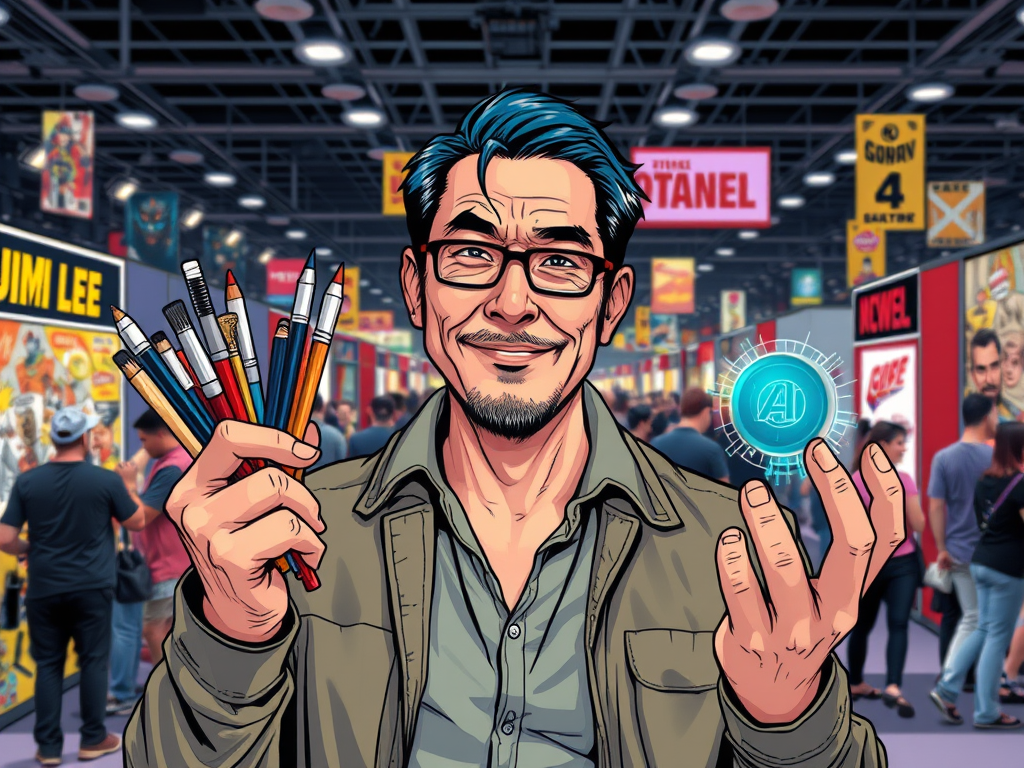
If you’re at all invested in comic books, then you probably know the name Jim Lee. Other than names like Jack Kirby, Stan Lee, and Frank Miller, he is one of the most recognized names in the entire industry. He’s not just President of DC Comics. His artwork and style have defined multiple generations of comics for Marvel and DC alike. So, when he says something, his words carry a lot of weight.
But when he stated outright at New York Comic Con 2025 that DC Comics will never support generative AI, I just can’t believe that in its totality. That’s not because I think Mr. Lee is being dishonest. I suspect he means every word he says with 100 percent sincerity. But like so many statements regarding technological trends, it’s likely his statement will not age well.
There’s no question that generative AI is not viewed favorably in many fields. And in an artistically driven industry like comics, that animosity is understandable. There have already been documented controversies about AI art generators creating images with copyrighted material. There are also major legal implications with AI art. At the moment, it cannot be copyrighted like traditional art. And for any industry that relies heavily in intellectual property, such as comics, that’s a big issue.
But with respect to the comic book industry, it’s far more vulnerable to the impact of generative AI than nearly any other industry. Capable AI art generators have only been publicly available for three years, as of this writing. In that time, the capabilities of these tools has improved considerably.
Yes, this progress has come with plenty of controversy. Many of these improvements came largely from AI models using copyrighted work without permission. But it’s too late to undo this progress. And there’s no turning the clock back with technology like this.
Even if the United States and Europe passed strict laws yesterday about what generative AI can do with respect to copyrighted works, it’s impossible to enforce it in the long run. There are also too many countries in the world who don’t care for foreign copyright laws and are happy to provide black market alternatives.
For Jim Lee and DC Comics, it’s easy to make this promise now. Current AI art generators are still not capable of matching the quality of skilled artists. And even with continuing progress, these programs won’t match and exceed that quality in the near future.
But that won’t always be the case. At some point in the future, generative AI will be capable of producing artwork at a quality that’s equal to or greater than someone like Jim Lee. On top of that, it will be able to produce that artwork at greater volumes and at a fraction of the cost. And that’s the primary reason why I think Mr. Lee’s commitment will eventually falter.
As accomplished and sincere as he is, Jim Lee won’t be President of DC Comics forever. DC Comics is also just a subsidiary of a larger media corporation, namely Warner Bros. If at some point Warner decides that Mr. Lee’s stance on generative AI is detrimental to their profits, there’s nothing preventing them from changing that policy.
And I believe that will happen eventually. It may not happen for many years. It may not happen until Jim Lee is retired and out of the comic book industry completely. But it will happen as soon as generative AI is good enough and cheap enough to provide DC Comics with content. There’s even a chance that DC or some other publisher will adopt this practice beforehand and without informing consumers.
That would be grossly dishonest and deeply scandalous. But if AI is at a point where even the most discerning comic book fans can’t tell the difference between AI and human artists, then Warner and other companies like Disney have every incentive to embrace it. Integrity makes for great headlines and good PR, but it rarely wins out over greater profits and lower costs.
As a lifelong comic book fan, I have mixed feelings about this. I don’t doubt that generative AI will continue to be controversial. The current sentiment among most fans is that generative AI is slop. Any company that uses it will likely be scolded, shamed, and boycotted. But like those who resisted getting a smartphone years ago, the technology will improve regardless of how we feel about it.
Nobody knows where the comics industry will be in five years. Nobody knows what the state of AI will be in that same timeframe. For now, Jim Lee’s stance on generative AI is understandable and laudable. But it won’t last. It can’t last if AI continues to improve. And when it happens, the world of comics will never be the same.
Filed under AI Art, DC Comics, superhero comics
This is a video from my YouTube channel, Jack’s World.
Since the invention of nuclear weapons, the possibility of nuclear war has been a looming threat. Geopolitics has evolved, as has the source of tension and danger. But there’s no question that these weapons are devastating. And should they ever be used, the world will change.
But what would we do, as individuals, if we knew as a nuclear attack was immanent? We got a brief taste of that in 2018 with the false missile alert in Hawaii. Now, I’d like to offer my own take on this question on what I would do if such an attack was immanent. Enjoy!
Filed under Current Events, Jack Fisher's Insights, Jack's World, YouTube
This is a video from my YouTube channel, Jack’s World.
In this video, I share some of the photos and clips I took from my trip to New York Comic Con 2025. Enjoy!
Filed under Jack's World, New York Comic Con, YouTube
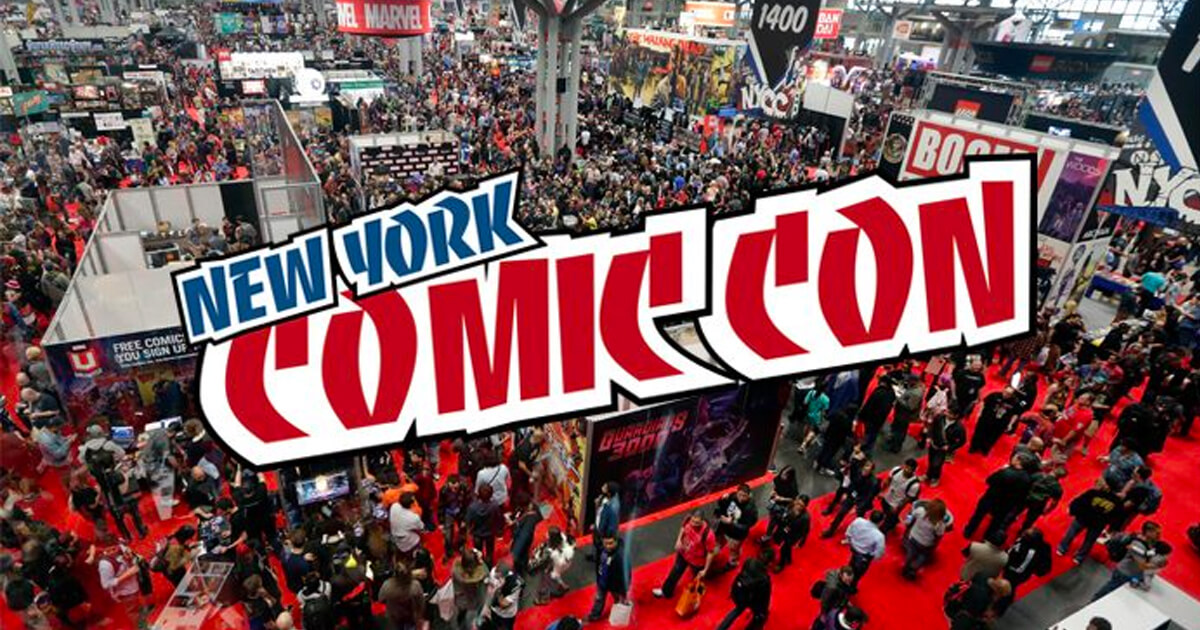
It’s that time of year again.
It is truly the most wonderful time of year if you love comics, cartoons, and all things awesome, like I do.
The New York Comic Con is once again upon us! And I couldn’t be more excited!
I know I make a big deal about it every year and for good reason. Because it is a big deal!
It’s a special event for guys like me. I love comics. I love superheroes. I love the spectacle, the costumes, and meeting some of my favorite creatives. I’ve even met some celebrities. The memories I’ve made at New York Comic Con are among my favorite.
This year, there’s so much I want to do and see. I actually tried to buy VIP passes this year, but I couldn’t. They sold out fast. But I’m not discouraged. I still intend to make the most of my trip. I also plan to dress up. So, if you go and you see me there, I look forward to plenty of selfies.
My bags are packed. My costume is ready. I am so ready!
New York City, here I come!
Filed under New York Comic Con, Uncategorized
This is a video from my YouTube channel, Jack’s World.
Kang the Conqueror was supposed to be the next big threat for the Marvel Cinematic Universe. He was poised to usher in the events that would culminate in Avengers: Secret Wars.
However, that did not happen. Marvel Studios changed their plans and with the firing of Jonathan Majors, Kang’s role in the future of the MCU is uncertain. But his story need not end.
In this video, I make the case that Kang can be salvaged. With the right approach, he can still be a major threat in a future phase of the MCU. Enjoy!
He’s doing it again! AI Jay Sherman is back and critical as ever. The “The Critic” was cancelled in the mid-90s, but the power of AI keeps his critical spirit alive. So today, I have Jay review the 1982 sci-fi classic, “Tron.” With yet another sequel set to come out next week, it feels appropriate to go back to the source and have Jay tear it to shreds, as only he can. Enjoy!
Filed under AI Art, Artificial Intelligence, television
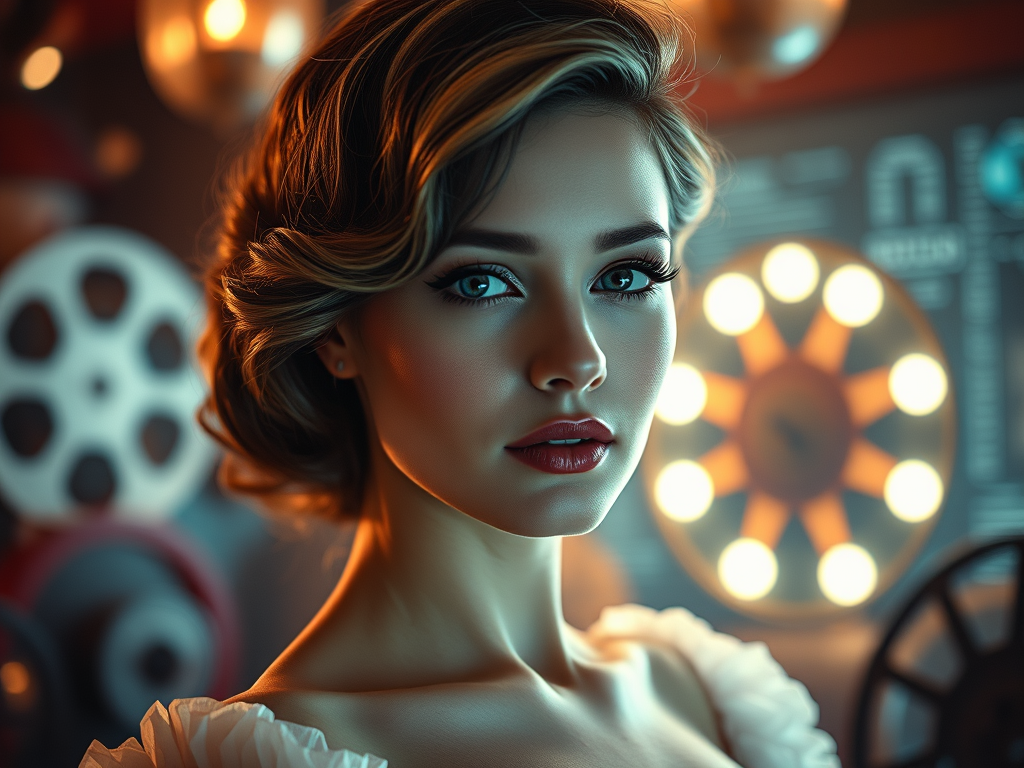
Have you heard of Tilly Norwood? She’s a beautiful young actress who is just starting to make her presence felt in Hollywood. She hasn’t been in much, but she’s already negotiating with talent agents to get bigger roles.
There’s just one major issue. Tilly Norwood isn’t a real person. She’s an entirely AI-generated persona.
Naturally, that doesn’t sit well with real life actors and unions. There is already a concerted effort to prevent Tilly Norwood from being cast in anything beyond your typical AI slop content. I completely understand this sentiment. I don’t blame anyone who works in Hollywood for being concerned about this. However, having covered the rise in AI for years, I’m comfortable making this prediction.
Tilly Norwood will eventually be cast in major movies and TV shows.
Other AI actors like her will be cast, as well.
Traditional actors and actresses will hate it. A sizable chunk of the audience will hate it as well. But this is going to happen. It was always going to happen the moment generative AI reached a certain level of refinement. A big reason for that involves money, as tends to be the case in Hollywood and most other industries. But there’s another reason that’s worth highlighting.
Dollar for dollar, movies and TV shows are getting more expensive to produce. This isn’t just due to inflation, unions, and the “personalities” that tend to comes with Hollywood. The logistics involved with making media has become bloated and inefficient. We’re no longer in an era in which media can only go through certain channels, be it TV and movie theaters. Thanks to streaming media, as well as online content like YouTube and Tiktok, the competition for eyeballs has never been greater.
Unless you’re a big budget blockbuster with a massive distribution network, such as Disney or Warner Bros., it’s harder to make content that turns a profit. The scale, resources, and personnel required to produce a movie or show is such that it’s limiting. Add to that the general enshitification of streaming media and the current model for producing content just isn’t sustainable.
Generative AI, as much as it is derided, offers a significant cost advantage. On top of that, an AI actor or actress is less likely to get accused of harassment, arrested for public intoxication, or go on some anti-sematic rant during a routine traffic stop. And for certain Hollywood agents, you can’t put a price on that kind of assurance.
But the question remains. Will audiences accept AI actors? Will the content they produce actually be worth watching?
A lot of people will probably refuse to watch anything with Tilly Norwood or anything like her out of principle. But what happens when AI gets to a point where it’s hard to tell if a person is AI generated? There are already AI tools like SORA and Veo3 that make extremely realistic videos of people who look and sound real. This is one element of AI that is not in the distant future. It’s here and it’s evolving fast.
It’s not yet clear what kind of career Tilly Norwood will have. She may never show up in anything mainstream. But like it or not, she marks the first step in a new trend with AI. We don’t know where it will lead. Hollywood is already undergoing significant change. Technology like this is only going to accelerate that change in ways we can’t imagine.
Filed under Artificial Intelligence, movies, technology, television


 Jack Fisher's Official Publishing Blog