Category Archives: Current Events

A Brief Message On Voting (And Those Who Try To Restrict It)

When I was a teenager, it was not unusual to see these cheesy, poorly produced ads on TV that emphasized the importance of voting. Some even took it to cartoonish extremes, even for the era. I distinctly remember how sick I got of all those “Vote or Die” campaigns that seemed to air every 15 minuets.

Then, when I reached voting age, I finally got a chance to experience it. And, for the most part, I found it mundane and inconvenient. Just registering was a hassle. It couldn’t be done over the internet at the time. I had to go through my local post office, which was not a very memorable experience. And I had to find my polling place, which happened to be a local elementary school with dirty bathrooms and poor heating.

Even so, I voted because everyone told me it was important. I didn’t appreciate it at the time. And I still didn’t appreciate it, even as I kept voting throughout college. Granted, I did miss voting a few years, mostly because the mail-in ballots I had to use were a pain. And I had a lot of other crap going on both during and after college that kept me occupied.

But once my post-college life stabilized, I made it a point to keep voting in every election, even when it wasn’t for President. I still never put too much thought into it. Following local races can be difficult, especially when every campaign ad can be reduced to cheesy soundbites about how “evil” the opponent is.

All that being said, my perspective on voting has changed a lot in the past few years. It’s not that I’ve become politically awakened or radicalized in any meaningful sense. My politics today aren’t terribly different from what they were 10 years ago. It’s just that, over the past five years, I’ve watched American politics become increasingly ugly.

It used to be that people just disagreed on certain social and regulatory policies. Reasonable people can certainly disagree how much we ought to be taxed, how much we ought to be regulated, and how we allocate public resources. But politics since 2016 is not about reasonable disagreements.

Instead, it’s about opposing, resisting, or outright hurting your political opponents. It’s not that they disagree with you on certain issues anymore. It’s that they’re flat out evil. I have heard real, sober, straight-faced people call others devil-worshipping, baby-eating, child rapists over politics. There’s no discussing anymore. There’s not even an attempt at debate. It’s just yelling and hating against those you don’t agree with.

As a result, voting hasn’t just become more important. It’s also become hazardous. If you don’t believe me, just look up some of the harassment that poll workers have gotten in recent years. Just be warned, some of what they face is not for the faint of heart.

Now, I’m not bringing this up just to go on a political rant. I’m not even going to try and appeal to the humanity, patriotism, and civic responsibility of my fellow Americans. Having dealt with some of these people directly, I know that ship has sailed and sunk to the bottom of the ocean of tribalism.

We’ve officially crossed a line in American politics where voting is no longer a mundane civic duty.

It is one of the few remaining institutions that safeguard the public from demagogues, despots, and plutocrats.

So, with Election Day 2023 coming up soon for much of my fellow Americans, I certainly want to encourage everyone to vote. I also want to encourage everyone to register if they haven’t already. I can attest it’s much easier today than it was when I was a teenager. Just go to a website like Vote.org. No matter which state you live in, it offers all the resources you need to vote in local, state, and federal elections.

Again, it’s Vote.org.

Click the link. Follow the prompts. If you can read this website, you can register to vote.

But there’s one other important perspective I’d like to share on top of encouraging everyone to vote. And it has less to do with voting, itself, and more to do with those working very hard to make it difficult for more people.

Because make no mistake. There are powerful, well-connected individuals who are doing everything they can to make it harder to vote. This is not a conspiracy theory. There’s no effort to hide it, either. These anti-American, anti-freedom, objectively deplorable assholes (and no, I am not being hyperbolic) are outright targeting people they know won’t vote for them to gain, retain, or expand power.

Seriously, fuck these people.

Fuck them, their doners, and everyone on their staff who helps them undermine democracy.

They are an insult to American values. Take it from someone who consumes more superhero media than 85 percent of the population. Those who make concerted efforts to suppress, limit, or undermine peoples’ right to vote are either outright villains or they freely support such villains.

How else would you describe people who got upset when Taylor Swift encouraged her passionate legion of fans to register to vote? She didn’t even tell them to vote for a particular party or candidate. She just told them to register to vote. And still, one particular wing of the American political spectrum whined about it. It’s almost as though they know that if more people vote, they’re likely to lose because they know the general public thinks they’re assholes.

Again, fuck these people with the fury of a billion venomous spiders. I cannot belabor that enough.

We may not have superheroes in this world, but we the people can still oppose these villains. And the best way to do that for now is to vote. We can still disagree on any number of issues. But in general, if the choice is between a candidate or party that protects your right to vote and a candidate or party that would prefer to restrict it, then the choice should be clear.

If it’s not, then I don’t know what else to tell you other than to just make sure you’re registered to vote. Do not take this freedom for granted. Just take a brief look at the history of any country that has failed or declined. Once the people lose their rights, it’s very difficult to get them back.

Leave a comment

Filed under Current Events, politics, rants

A (Frustrating) Note On Trends In Child Labor Laws

Throughout high school and college, I took multiple history classes. Those classes included world history, American history, and even a few courses in ancient history. I won’t say history was ever my best class, but I’ve always had a certain affinity for it. I often find it enlightening and profound to see how our world came to be and how we got to where we are now.

Over the course of those studies, I often found hope and solace in knowing that certain issues within some societies had been resolved for the most part. History is often messy with mishaps and setbacks, but there’s a general trend towards progress and I found that encouraging.

Now, having followed the news for these past few years, I’m not nearly as encouraged anymore. Because lately, it seems like there’s a growing trend towards undoing some of the progress we made, even if it means making vulnerable, desperate people suffer. It’s bad enough that countries like America have taken a step backwards with respect to abortion rights, but now the same country that I love is taking it even further.

This time, it has to do with child labor laws. And believe me, I wish I was joking. I wish this were an elaborate story from The Onion. But sadly, it’s all too real.

In multiple states, mostly in the mid-west and south, lawmakers have effectively rolled back decades-old child labor laws to make it easier for companies to hire workers as young as 14-years-old. And in some industries, namely those involving farm work, kids as young as 12-years-old can legally work.

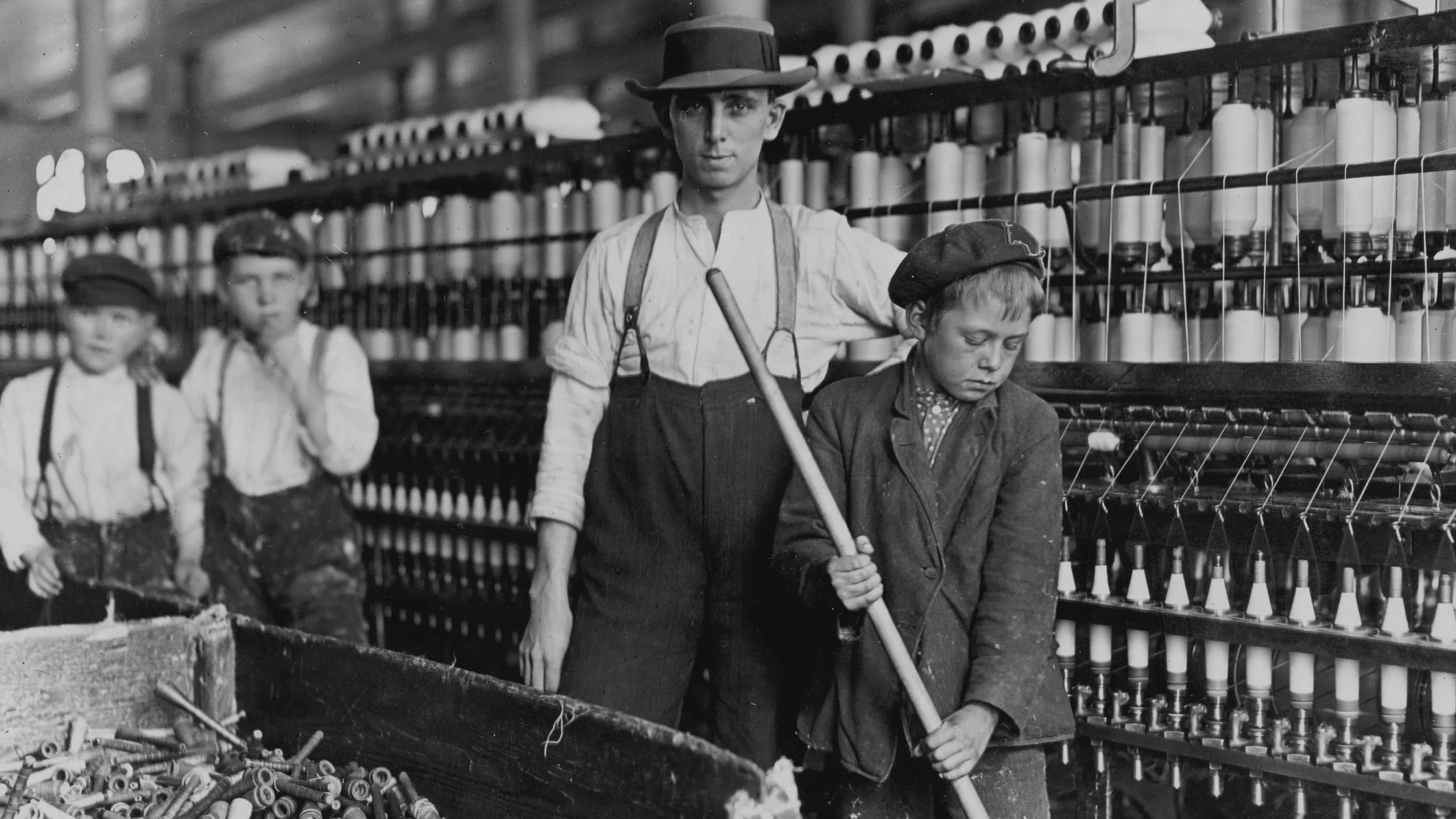
Now, if you have even a shred of compassion, empathy, and perspective, take a step back and think about this. Decades ago, we collectively decided that making children work in mines and factories was generally a bad thing. You don’t have to look far to find old, grainy photos of sad, broken children working in coal mines.

You don’t have to make bold assumptions about how these kids ended up having to work in such terrible conditions or why a company or business would employ them. They were desperate. They needed to do something to feed themselves or the rest of their families.

It wasn’t enough for kids to just help out around the house. They actually had to go out into dirty, dangerous mines or factories to earn what was likely piss-poor wages. And since they were kids, they weren’t as inclined to strike or organize. The only ones who benefitted from this were the employers, who were never going to pass up an opportunity to exploit cheap labor.

That’s why laws were necessary in the first place. History, as well as a basic understanding of power dynamics, has proven time and again that no organization gives up a profitable endeavor willingly. It took a serious movement of people who were appalled and disgusted by such practices to make these companies stop. And even when the laws were passed, some still tried to employ children illegally. Many still do, some of which include well-known American brands.

But now we’ve somehow found ourselves at a point where rolling back those laws is somehow viable? And those elected into public office are willingly going through with it?

Again, just take a moment to imagine this from the perspective of a kid. I remember being 12. I wasn’t even allowed to rent R-rated movies. And the most laborious task I could imagine involved doing yardwork with my parents over the course of a single afternoon. The idea of actually having to go to work while still going to school sounds like a goddamn nightmare.

Even when I was 15, it sounds downright soul-crushing. I was already navigating the rigors of high school. I was also going through the psychological and bodily horror that was puberty. The idea of having to work a job at the same time sounds downright cruel.

I understand that my childhood and circumstances are different than most. I imagine that kids from desperately poor families with limited opportunities might find such work unavoidable. But that’s exactly what makes these efforts by lawmakers so disturbing.

They’re essentially sending the message to employers, and society as a whole, that it’s perfectly fine to exploit desperate people and their children. It doesn’t matter if it means robbing a child of an opportunity to be a child and not get seriously hurt in a typical work environment. Their labor means more profits for the company and that’s all the justification we needed?

I’m no radical anti-capitalist, but even I call bullshit. If a company or business can only be profitable by exploiting the labor of children and desperate workers, then their business model sucks. And at the very least, our laws should not go out of their way to accommodate such models.

If all this weren’t bad enough (and it’s still very bad on so many levels), what makes it even worse is that those in favor of passing these laws are often conservative republicans. Remember, these are the same people who go all Helen Lovejoy and demand that we think of the children every time a drag queen dares to read them story. They’re also the same political wing who thinks a 10-year-old should be forced to give birth to a child that resulted from rape.

Again, I wish I was making this up. These policies, and the hypocrisy surrounding them, read like plots by supervillains. The only difference is that there are no costumed superheroes in this world who will stand to oppose them.

These despicable ghouls wearing human flesh have to know on some levels that what they’re doing will result in kids suffering, toiling, and being exploited by organizations whose only interest involves raising profits. They simply don’t care, mostly because they know their kids will likely never have to work jobs like that.

There’s a lot more I can say about the people pushing for and advocating these laws. But there’s only so much profanity and vulgarity I’m comfortable including in this rant. Maybe in a different time and under different circumstances, this wouldn’t bother me as much. I may not have kids of my own yet, but I have multiple nieces and nephews now. The idea of them growing up in a world where they could be employed and exploited at a young age makes me sick to my stomach.

Going back to my points about history, I’ll just remind everyone that we’ve been down this road before. We decided over 100 years ago that child labor is generally a bad thing for kids, families, and civilized society. We fought that battle for years and eventually won. Let’s not fight it again. Kids already have it hard enough. Let’s not make it worse for them.

Given the current state of the world, it’s literally the least we can do for them.

Leave a comment

Filed under Current Events, politics, rants

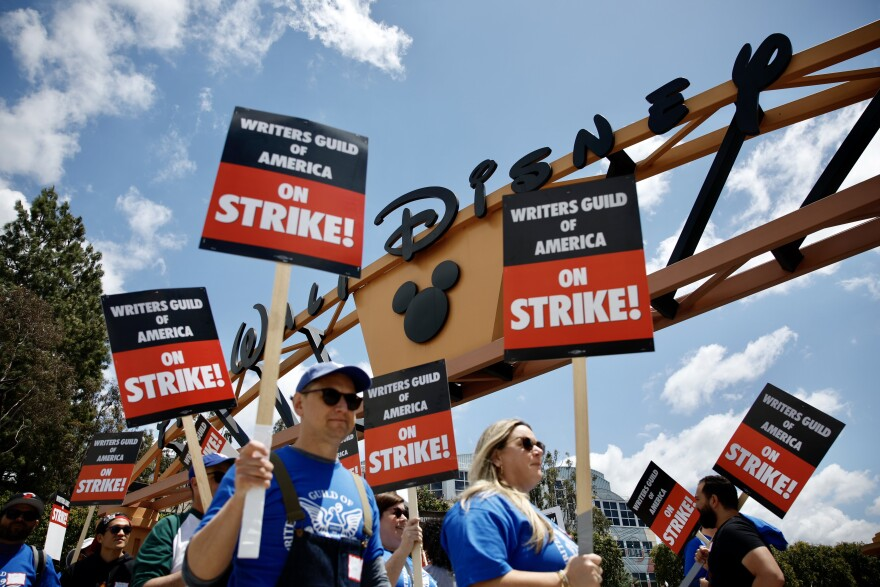
The End Of The WGA Writer’s Strike: Important Lessons And (Distressing) Insights

When an underdog succeeds, it’s worth celebrating. It’s a big reason why sports movies and superhero movies have so much appeal. Most audiences just love it when an underdog triumphs over daunting odds. And they love cheering with them when they ultimately succeed.

In that spirit, we should cheer the recent news surrounding the WGA strike that has been going on since mid-July 2023. According to the Associated Press, a tentative deal between the WGA and the major studios has been reached. While that doesn’t mean the strike is completely over, it marks a critical step in getting people back to work in an industry that was already reeling from the aftermath of the COVID-19 Pandemic.

AP: Writers’ union reaches tentative deal with Hollywood studios to end historic strike

As someone who loves movies, TV, and mindless entertainment as much as the next consumer, this is great news. This strike was bound to do more and more damage the longer it went on. We probably won’t know the full extent of that damage until a few years from now when we can look back at the impacts with the benefit of hindsight.

There’s also a personal element to this strike. I have multiple family members who work in the entertainment industry, mostly in the film and production side of things. They, more than most, felt the impact of this strike. Early on, a few even told me that this strike had the potential to last a long time. One even said they didn’t expect a resolution until late November. There was even a possibility it could continue well into 2024.

Thankfully, that no longer appears to be the case. This tentative deal, assuming it gets ratified, will provide some overdue benefits to the writers who play a big part in making the shows and movies we love so much. They deserve a deal that allows them to reap the fruits of their creative labor. You don’t have to look hard to find out just how much they were getting screwed over by a changing entertainment industry that studio executives and CEOs were exploiting to the utmost.

And therein lies an important lesson that’s worth highlighting, even as the strike comes to an end. This whole issue happened because the entertainment industry was changing. The old system that relied on residual income from broadcast TV and DVD sales just wasn’t going to cut it in an era of streaming media. The writers and actors behind some of these successful shows just weren’t getting the same share of the profits. And the studios were very much aware of this.

They could’ve adapted to ensure that those involved in the production could continue to be compensated fairly, even as consumers switched from traditional outlets to streaming.

They could’ve been open, honest, and transparent with the new economics of producing successful TV shows and movies in the post-COVID world.

They could’ve even explained why it was considerably difficult to pay generous residuals in a world of streaming media wherein profit margins were just too thin, if there even were profits to begin with.

But they didn’t. The executives, the CEOs, and those with the real power within these entertainment companies chose not to be proactive. Instead, they prioritized the price of their company stock and the investors who owned that stock. This is to be expected, as that tends to be the default reflex of publicly traded companies.

Call it callous in that it blatantly disregards the real work and toil of those producing the content.

Call it greed in the shallowest possible sense.

But at the moment, that’s simply how the incentives align in the entertainment industry, if not most industries in the global economy. There’s just too much money to be made by the rich and well-connected to do anything else. They are not going to do right by their workers unless they’re forced to, if not by law than by organized labor.

That may come off as cynical, but it’s also an important insight and one that every worker in every industry would be wise to remember. Because over the course of this strike, it quickly became clear how out of touch and callous these billionaire CEOs and executives were. They kept demanding that writers be reasonable with their requests. But at the same time, they were making hundreds of millions of dollars in salary and millions more in stock options.

These are not people capable of identifying with the life and struggles of working people.

These are people who might as well live on a different planet with respect to wealth, privlidge, and access.

Men Like David Zazlav and Bob Iger will never have to worry about paying a mortgage on time, falling behind on their bills, or ending up homeless because they cannot afford the outrageous rents in cities like Los Angeles and New York. So, how can we possibly expect them to empathize, let alone understand, the struggles of the writers and workers who help make their companies successful.

Most of these executives never set foot on a production stage, nor do they write or edit a single script. They just sit in offices, make demands/decisions, allocate money, and deal directly with investors whose primary focus is seeing a return on their investment.

And even if the company were to fail completely, these people would still end up with millions upon millions of dollars in their bank accounts. If they wanted to, they could never work a day for the rest of their lives. But those who actually work for them would be completely screwed.

It’s an unequal, unfair situation full of misaligned incentives. The executive and CEO class holds the power, the cards, and the money. They will not do the right things as a first recourse. They will only ever do what investors and their own self-interests incentive, by default. No matter how much money they have, they’ll keep trying to make more. And if that means screwing over their workers in any possible way, they’ll do it.

Remember that the next time labor issues come up. This doesn’t just apply to the entertainment industry, either. Any industry with a similar incentive structure will have the same issues. If there are rich, well-connected CEOs with shareholders to please, don’t expect them to prioritize workers beyond what they can legally and logistically get away with.

The only true counter to this uneven dynamic is that, despite all the power and money executives weird, they still need workers. They still need consumers. They still need to be credible in the eyes of the public to some extent. That kind of leverage is critical to maintain and appreciate.

Because the world will continue to change.

Every industry, from entertainment to making widgets, will continue to change with society and technology.

Those doing the work need to change with it because those with the money and power sure as hell won’t do right by anyone but themselves, unless they have to. And only those doing the work can make that happen.

1 Comment

Filed under AI Art, Artificial Intelligence, ChatGPT, Current Events, writing

Celebrating & Honoring Stanislav Petrov: The Man Who Saved My Life (And MANY Others)

This is a video from my YouTube channel, Jack’s World.

This video is my way of celebrating and honoring Stanislav Petrov, a man who I know for a fact saved my life, as well as the lives of many others. Few know his story or what happened during the events of September 26, 1983. On this day, the world as we knew it almost ended. The Soviet Union and the United States almost went to nuclear war.

But it was because of one man’s decision that this did not happen. Stanislav Petrov is the man who made that decision and for that, I am grateful. After watching this video, I hope others share in this sentiment. Enjoy!

Leave a comment

Filed under Current Events, Jack's World, politics, YouTube

CAN Humanity Effectively Govern Itself Video?

This is a video from my YouTube channel, Jack’s World.

This video explores the question of whether humanity can actually govern itself beyond a certain point. For most of human history, the stakes were local. But now, the stakes are global in a very literal sense. Between climate change and nuclear weapons, humanity has the ability to end itself and all life on Earth.

That makes the question of whether or not we can effectively govern ourselves incredibly relevant. And I try to explore that concept as best I can while leaving some room for speculation on both sides.

Leave a comment

Filed under Current Events, Jack's World, politics, YouTube

Here’s What Happened When I Asked ChatGPT To Rewrite The Bill Of Rights

I’ve talked a lot about artificial intelligence and the implications of this technology. In my defense, it’s an incredibly relevant topic that I just happen to be very interested in. From AI-Generated artwork to ChatGPT, these are truly exciting times for this field. I’m sure I’ll have plenty to talk about in the coming years.

However, I don’t just want to react to news or stories about AI. I’d also like to participate in this emerging field on some level, even if it’s just as a simple consumer. We don’t yet know the full capabilities of our current AI tools or how they’ll impact us in the short or long term. But that’s exactly why we should test it for ourselves and see what we can do with it.

To that end, I decided to do a little exercise with ChatGPT. Please note that I do not currently have access to ChatGPT-4. I’m still using the previous version, ChatGPT-3. That version is quite limited in a number of ways, but it’s still capable of providing insightful information.

So, I decided to see how much ChatGPT could offer in terms of understanding and articulating the basic concept of human rights. That’s something that has certainly been a hot topic in recent years. And for those of us in the United States, you could definitely argue that our current laws surrounding human rights are inadequate and need updating.

This is where ChatGPT comes in. I logged in and gave it a simple prompt. I told it to rewrite the Bill of Rights, the key part of the US Constitution that enshrines the basic rights that every citizen is guaranteed under the law. This is what it came up with.

The following document outlines the fundamental rights and freedoms of all individuals in a modern, democratic society. These rights are to be protected and upheld by the government, and any infringement upon them is a violation of the principles of justice and equality.

Article 1: Freedom of Expression and Thought All individuals have the right to freedom of expression, including the freedom to seek, receive, and impart information and ideas through any medium, regardless of frontiers. No individual shall be subject to censorship or prior restraint, and any attempt to limit or suppress the free exchange of ideas shall be deemed a violation of this right.

Article 2: Right to Privacy All individuals have the right to privacy in their personal lives, including the right to be secure in their persons, houses, papers, and effects against unreasonable searches and seizures. No individual shall be subject to surveillance or monitoring without just cause, and any information obtained through such means shall be inadmissible in court.

Article 3: Right to Equality and Non-Discrimination All individuals are equal before the law and are entitled to equal protection and benefit of the law, without discrimination based on race, ethnicity, gender, sexual orientation, age, religion, or any other status. Any discrimination or prejudice against any individual or group shall be deemed a violation of this right.

Article 4: Right to a Fair Trial All individuals have the right to a fair and impartial trial, including the right to due process of law, the right to be informed of the charges against them, the right to confront and cross-examine witnesses, and the right to legal representation. No individual shall be subjected to cruel or unusual punishment, and all accused individuals shall be presumed innocent until proven guilty.

Article 5: Right to Peaceful Assembly and Protest All individuals have the right to peacefully assemble and to protest, including the right to participate in marches, demonstrations, and other forms of peaceful assembly. No individual shall be subject to violence or repression for exercising this right.

Article 6: Right to Education and Information All individuals have the right to education and information, including access to a free and comprehensive education system and the right to access information through any medium. The government shall ensure that all individuals have access to the tools necessary to exercise this right.

Article 7: Right to Healthcare All individuals have the right to access comprehensive healthcare, including preventative care, treatment, and medication, regardless of their ability to pay. The government shall ensure that all individuals have access to quality healthcare and shall take measures to address any disparities in healthcare access.

Article 8: Right to Housing All individuals have the right to adequate housing, including shelter, sanitation, and security, regardless of their economic or social status. The government shall take measures to ensure that all individuals have access to affordable and safe housing.

Article 9: Right to Work and Fair Labor Practices All individuals have the right to work and to fair labor practices, including the right to a living wage, safe and healthy working conditions, and the right to form and join trade unions. The government shall take measures to ensure that all individuals have access to decent work and shall prohibit any form of forced or compulsory labor.

Conclusion: These rights and freedoms are essential to the establishment and maintenance of a just and equitable society. It is the responsibility of the government to protect and uphold these rights, and it is the duty of all individuals to respect and defend them.

It only took ChatGPT about 10 seconds to craft this. After reading through it, I am legitimately impressed. I think this is a considerable upgrade over what the Bill of Rights covers. This version actually articulates the importance of privacy, ranking it just a rung below free expression. It also recognizes that people can’t truly be free if they don’t have some level of material guarantees, like housing, health care, education, and fair labor practices.

These are all major issues that are debated across the country and throughout the world. This new version of rights essentially simplifies the whole concept, laying out that this is what people need to be free of coercion, free of exploration, and free of want. Some may think these rights are incomplete or too utopian. That may be the case to some extent.

But even if it’s not perfect, it’s still an improvement. And again, it only took ChatGPT about 10 seconds to craft this. We humans are still arguing over slavery. We have no more excuses. We have a tool that can help us figure out little issues and big issues. And regardless of whether or not it’s intelligent or sentient, we would be wise to listen.

Leave a comment

Filed under Artificial Intelligence, ChatGPT, Current Events, futurism, politics, Uncategorized

Happy Labor Day 2023!

Today is Labor Day.

For most people, that’s just a nice day off to cap off the summer. If you’re a kid, it’s usually an extra day without school, if it has started by now. It’s not the most colorful holiday. It certainly isn’t something people put up decorations for. But it’s still a holiday we should appreciate to some extent.

This is usually the last day you can lounge by the pool, enjoy the warm weather, and appreciate summer. It’s usually a great day to have a cookout, get together with family, and enjoy each other’s company before the fall sets in. That’s all well and good, but it’s worth noting that Labor Day exists for a reason.

I won’t go into the lengthy history of how this day came to exist. There are plenty of resources on the internet to reference for that information. But in recent years, I feel like there’s been a greater awareness of the struggles with labor. We see it more and more as labor strikes make the news. And more people have become sympathetic to the work of such efforts as news about obscene greed come to light.

These are all issues that we should be aware of. Like it or not, most of us aren’t born rich. Most of us will have to work for a living. I’ve had more than my share of jobs over the course of my life. Many of them were very unpleasant. Without the efforts of organized labor and efforts to temper greed, work as we know it would be much less pleasant.

There’s certainly a balance between managing the concerns of workers and those providing the work. I’m not smart enough to understand or discuss that balance. I’ll just say that Labor Day is a chance for us to appreciate why those efforts matter.

So please, if you get a chance, use today to commemorate and thank those who have improved life for generations of workers. And don’t forget ongoing efforts to keep improving the lives of those working now and the workers of the future.

Happy Labor Day!

Leave a comment

Filed under Current Events

Why You Should Be (Very) Skeptical About Congress’ Sudden Interest In UFO/UAP Testimony

I’ve noted before that I used to be a big believer in UFO and UFO conspiracies. I’ve also made clear that I gradually came to realize that those beliefs were dead wrong. And I regret all the time I wasted and people I annoyed when talking about those beliefs. That’s not to disparage anyone who believes in UFO or UFO conspiracies. That was just my personal experience.

And it’s because of that experience that I have strong opinions about some of the recent claims that are coming out from a series of Congressional hearings, which include reports from an alleged whistleblower who flat out says the United States has recovered actual UFO’s and non-human intelligence. This is not a re-run of the “X-Files” or another episode of “Ancient Aliens.” These are real, official government hearings conducing real, serious inquiries about UFOs and aliens.

If this were happening years ago when I was still neck-deep in UFO lore, I would be excited and maybe a little scared. The idea that these beliefs I’d been exploring might be valid would’ve been overwhelming, to say the least. I even know a few people who are tracking this news closely, as if we’ll get confirmation any day now that we are not alone.

But this is where I’d like to take a step back and offer an important counter. I’m not out to be a downer or overly fatalistic. But as someone who once bought into this narrative, I like to think I understand where the UFO crowd is coming from. And I hope I can provide perspective to them, as well as those who are skeptical.

The first thing to note is that the hearings, as compelling as they’ve been, have not offered any genuinely tangible evidence of UFOs. It’s all just personal testimony and records of those who claim to have seen something unidentified. Yes, the fact that some of these testimonies come from trained pilots, soldiers, and people within the intelligence community is noteworthy. However, there’s one critical detail to keep in mind.

These are all still people.

These are all still human beings who eat, sleep, and poop like the rest of us.

That means they’re still prone to human error. And that, more than anything, is why everyone following this story should remain skeptical.

Now, that’s not to say that I think the people at these hearings are flat out lying. I also don’t think this is part of some elaborate misinformation or distraction orchestrated by the government to mislead the public so they can do something covert behind the scenes. I’m not saying the government would never do that. There is proven documentation that they have.

But something on par with involving intelligent extraterrestrial beings requires a level of competence that nobody should ascribe to any government. Again, the government is run by flawed, fallible people. Covering something up as tantalizing as real aliens would just be too much, even for the most competent human governments. Someone with connections, like Elon Musk, would’ve uncovered it and he would’ve tweeted it already.

That’s not just me speculating. Musk himself has flat out admitted this. That, alone, should give even the most ardent UFO enthusiasts pause.

Personally, I believe the individuals at these UFO hearings are telling the truth to some extent. They genuinely believe that they saw something not of this world. They generally believe they have evidence that real aliens exist and there’s proof on this planet right now. If you hooked them up to a lie detector, they’d pass with ease.

But that’s exactly why I think even more skepticism is warranted. It’s the fact that none of these individuals are crazy, ignorant, or unbalanced in some way. They’re serious, professional people making serious claims. But they’re still people and they’re still capable of misremembering and misunderstanding what they saw.

Like it or not, human memory and perceptions are not reliable. And if that’s the only thing coming out of these hearings, then it really is offering nothing that you can’t get from a episode of “Ancient Aliens.” Unless someone actually presents a tangible piece of UFO wreckage that can be held in someone’s hand, which could then be verified by others, these hearings are pointless.

At the end of the day, the only real conclusion you can draw from these hearings is that there are things flying around in the sky and in space that we can’t identify or understand. And that’s to be expected. The sky is big. Our senses are limited. But just because we can’t identify something doesn’t mean that there are intelligent aliens behind it. It would make just as much sense to assume every unidentified object in the sky is an angel, a fairy, or a time traveler.

Also, I’m of the opinion that if any government had any proof of alien visitations, it would’ve leaked long ago. We live in a world where everyone has a high-definition camera in their pocket and it’s easier than ever to share photos, videos, and media of all kinds. The fact that we don’t have that proof is as clear an indication as any that we don’t have it at the moment.

That’s not to say it doesn’t exist. I actually do believe there are intelligent alien civilizations in the universe. The sheer size of the universe is just too big for humanity to be the only ones. But I don’t believe there’s any proof that they’ve actually visited Earth or even have an interest in humanity. Maybe that proof will one day come, but it sure as hell won’t come out of government hearings. Of that, we can be certain.

Leave a comment

Filed under Current Events, rants

Why Seeing Back To School Sales Still Upsets Me

When I was a kid, summer was a wonderful time by almost every measure.

School was out, the weather was warm, and I actually got to sleep in every morning. Even during the years when I had a summer job, it was great. I loved it and it was generally a happy time for me.

But then, at a certain point during the summer, I would tag along with my parents and siblings to the store. And eventually, we’d enter a store that had these displays advertising a “back to school” sale. Sometimes, it was as early as mid-July. There would still be a full month of summer vacation to look forward to.

But to me, it was still deeply distressing, especially when I was in middle school and high school. That was usually the point in my summer when I started looking at the calendar with dread with increasing dread. I knew that with each passing day, I was that much closer to another year of school. And for someone who hated school as much as I did, that was very upsetting.

I know it sounds melodramatic.

I know it comes off as the overblown whining of a kid who just didn’t like going to school.

Even today, kids lamenting going back to school are likely to be met with dismissive eye-rolls. We hear them complaining about going back to school and we just think they’re being weak.

They think school is so hard. They have no idea how hard the real world is. School was supposed to prepare them for that and if they struggled to deal with it, then they were in for a rude awakening when they made it to the adult world.

I get that sentiment on some levels. I’m guilty of feeling it myself whenever I hear a kid complaining about a new school year. But whenever I experience that feeling, I find myself remembering back to what it was like for me when I experienced such dread. Even now, as a full-fledged adult who has been out of school for over a decade, it still upsets me on some levels. And I really wish it didn’t.

I’m sharing this because very recently, I came across one of those big back to school sales in a store. Those displays did go away to some extent during the COVID-19 pandemic. But this year, they’re back in full force.

There are entire sections of a store dedicated to school supplies, clothes, and any accessory a kid or teenager might need. There are also these images of happy and excited kids, getting ready to go back to school. I know for a fact most kids don’t feel that way about going back to school, especially in the middle of summer vacation. I also know that for some kids, those reminders are downright triggering.

Now, I know I’ve bemoaned how much I hated high school before. I’ve also made abundantly clear that I was a uniquely miserable teenager, largely because of crap I did to myself. It may come off as melodramatic. And I don’t deny that, with the benefit of hindsight, it probably wasn’t as awful as I made it out to be.

That still doesn’t change the fact that dreading going back to school was a deeply distressing experience for me. There were times when I would just lay in bed, anxiously watch my clock radio, and endlessly lament going back to school.

I knew it was going to be miserable.

I knew I was going to needlessly stress myself out over every little thing, from getting my homework done to making new friends to dealing with how ugly I felt due to poor self-image.

My parents and siblings, to their credit, did everything they possibly could to help me. None of what I experienced is their fault in the slightest. I just had this incredibly toxic mentality about school.

On the last day of school, I was elated to just let it go and celebrate having made it through another year. But when those first back to school sales showed up, I could feel that mentality returning like a wound being re-opened. And when that first day of school finally came, I was often the most insufferably miserable person to be around.

But as bad an attitude I had, I did eventually get through it. I made it through middle school, high school, and college without that toxic mentality completely consuming me. I won’t say doing so made me stronger. If anything, it set me back for years and I still haven’t fully recovered from it. It kept me from making new friends, improving my social skills, and developing new passions.

The fact that I still experience it today, even if it’s just in bad memories, further shows how much it affected me. It may not be as bad as it was when I was younger, but just recounting how upset I got when I saw back to school sales in the middle of summer still affects me. I really wish it didn’t.

Maybe at some point in my life, I’ll be able to walk by a back to school sale display and experience those feelings. But for now, it’s something I have to deal with.

And to all those who experience similar dread whenever they’re reminded that a new school year is coming, I can only offer my empathy and understanding. But I can also offer my perspective and hope. Because if I can navigate these feelings and all the bad memories associated with them, then you can too.

Be strong.

Be resliant.

Better times will come.

But for now, just take a deep breath and enjoy the rest of your summer vacation.

Leave a comment

Filed under Current Events, Jack Fisher's Insights, psychology, rants

An Important Message To The Winner Of The $1 Billion Powerball Jackpot (Or Any Lottery Winner)

On Wednesday, July 20, 2023, a very lucky individual in California found out they won the $1 billion jackpot. It is one of the largest lottery jackpot wins in US history. And whoever is the purchaser of that ticket, their life is about to change immensely. I know a lot of people dream about winning the lottery and what they would do if it ever happened. But for this individual, it’s no longer a fantasy.

Now, setting aside for a moment the collective envy we all feel for lottery winners, I do want to convey an important message to this and all future lottery winners. Please note that this message isn’t from me. It comes courtesy of a famous post on Reddit that is frequently re-visited every time the lottery jackpot gets very bit.

What it says and what it reveals isn’t just important for lottery winners and non-winners alike. It adds a critical perspective that supersedes any fanciful dreams about wealth and money. Enjoy.


Congratulations! You just won millions of dollars in the lottery! That’s great.

Now you’re fucked.

No really.

You are.

You’re fucked.

If you just want to skip the biographical tales of woe of some of the math-tax protagonists, skip on down to the next comment. To see what to do in the event you win the lottery.

You see, it’s something of an open secret that winners of obnoxiously large jackpots tend to end up badly with alarming regularity. Not the $1 million dollar winners. But anyone in the nine-figure range is at high risk. Eight-figures? Pretty likely to be screwed. Seven-figures? Yep. Painful. Perhaps this is a consequence of the sample. The demographics of lottery players might be exactly the wrong people to win large sums of money. Or perhaps money is the root of all evil. Either way, you are going to have to be careful. Don’t believe me? Consider this:

Large jackpot winners face double digit multiples of probability versus the general population to be the victim of:

  1. Homicide (something like 20x more likely)
  2. Drug overdose
  3. Bankruptcy (how’s that for irony?)
  4. Kidnapping

And triple digit multiples of probability versus the general population rate to be:

  1. Convicted of drunk driving
  2. The victim of Homicide (at the hands of a family member) 120x more likely in this case, ain’t love grand?
  3. A defendant in a civil lawsuit
  4. A defendant in felony criminal proceedings

Believe it or not, your biggest enemy if you suddenly become possessed of large sums of money is… you. At least you will have the consolation of meeting your fate by your own hand. But if you can’t manage it on your own, don’t worry. There are any number of willing participants ready to help you start your vicious downward spiral for you. Mind you, many of these will be “friends,” “friendly neighbors,” or “family.” Often, they won’t even have evil intentions. But, as I’m sure you know, that makes little difference in the end. Most aren’t evil. Most aren’t malicious. Some are. None are good for you.

Jack Whittaker, a Johnny Cash attired, West Virginia native, is the poster boy for the dangers of a lump sum award. In 2002 Mr. Whittaker (55 years old at the time) won what was, also at the time, the largest single award jackpot in U.S. history. $315 million. At the time, he planned to live as if nothing had changed, or so he said. He was remarkably modest and decent before the jackpot, and his ship sure came in, right? Wrong.

Mr. Whittaker became the subject of a number of personal challenges, escalating into personal tragedies, complicated by a number of legal troubles.

Whittaker wasn’t a typical lottery winner either. His net worth at the time of his winnings was in excess of $15 million, owing to his ownership of a successful contracting firm in West Virginia. His claim to want to live “as if nothing had changed” actually seemed plausible. He should have been well equipped for wealth. He was already quite wealthy, after all. By all accounts he was somewhat modest, low profile, generous and good natured. He should have coasted off into the sunset. Yeah. Not exactly.

Whittaker took the all-cash option, $170 million, instead of the annuity option, and took possession of $114 million in cash after $56 million in taxes. After that, things went south.

Whittaker quickly became the subject of a number of financial stalkers, who would lurk at his regular breakfast hideout and accost him with suggestions for how to spend his money. They were unemployed. No, an interview tomorrow morning wasn’t good enough. They needed cash NOW. Perhaps they had a sure-fire business plan. Their daughter had cancer. A niece needed dialysis. Needless to say, Whittaker stopped going to his breakfast haunt. Eventually, they began ringing his doorbell. Sometimes in the early morning. Before long he was paying off-duty deputies to protect his family. He was accused of being heartless. Cold. Stingy.

Letters poured in. Children with cancer. Diabetes. MS. You name it. He hired three people to sort the mail. A detective to filter out the false claims and the con men (and women) was retained.

Brenda, the clerk who had sold Whittaker the ticket, was a victim of collateral damage. Whittaker had written her a check for $44,000 and bought her house, but she was by no means a millionaire. Rumors that the state routinely paid the clerk who had sold the ticket 10% of the jackpot winnings hounded her. She was followed home from work. Threatened. Assaulted.

Whittaker’s car was twice broken into, by trusted acquaintances who watched him leave large amounts of cash in it. $500,000 and $200,000 were stolen in two separate instances. The thieves spiked Whittaker’s drink with prescription drugs in the first instance. The second incident was the handiwork of his granddaughter’s friends, who had been probing the girl for details on Whittaker’s cash for weeks.

Even Whittaker’s good-faith generosity was questioned. When he offered $10,000 to improve the city’s water park so that it was more handicap accessible, locals complained that he spent more money at the strip club. (Amusingly this was true).

Whittaker invested quite a bit in his own businesses, tripled the number of people his businesses employed (making him one of the larger employers in the area) and eventually had given away $14 million to charity through a foundation he set up for the purpose. This is, of course, what you are “supposed” to do. Set up a foundation. Be careful about your charity giving. It made no difference in the end.

To top it all off, Whittaker had been accused of ruining a number of marriages. His money made other men look inferior, they said, wherever he went in the small West Virginia town he called home. Resentment grew quickly. And festered. Whittaker paid four settlements related to this sort of claim. Yes, you read that right. Four.

His family and their immediate circle were quickly the victims of odds-defying numbers of overdoses, emergency room visits and even fatalities. His granddaughter, the eighteen year old “Brandi” (who Whittaker had been giving a $2100.00 per week allowance) was found dead after having been missing for several weeks. Her death was, apparently, from a drug overdose, but Whittaker suspected foul play. Her body had been wrapped in a tarp and hidden behind a rusted-out van. Her seventeen-year-old boyfriend had expired three months earlier in Whittaker’s vacation house, also from an overdose. Some of his friends had robbed the house after his overdose, stepping over his body to make their escape and then returning for more before stepping over his body again to leave. His parents sued for wrongful death claiming that Whittaker’s loose purse strings contributed to their son’s death. Amazingly, juries are prone to award damages in cases such as these. Whittaker settled. Again.

Even before the deaths, the local and state police had taken a special interest in Whittaker after his new-found fame. He was arrested for minor and less minor offenses many times after his winnings, despite having had a nearly spotless record before the award. Whittaker’s high profile couldn’t have helped him much in this regard.

In 18 months Whittaker had been cited for over 250 violations ranging from broken tail lights on every one of his five new cars, to improper display of renewal stickers. A lawsuit charging various police organizations with harassment went nowhere and Whittaker was hit with court costs instead.

Whittaker’s wife filed for divorce, and in the process froze a number of his assets and the accounts of his operating companies. Caesars in Atlantic City sued him for $1.5 million to cover bounced checks, caused by the asset freeze.

Today Whittaker is badly in debt, and bankruptcy looms large in his future.

But, hey, that’s just one example, right?

Wrong.

Nearly one third of multi-million-dollar jackpot winners eventually declare bankruptcy. Some end up worse. To give you just a taste of the possibilities, consider the fates of:

  • Billie Bob Harrell, Jr.: $31 million. Texas, 1997. As of 1999: Committed suicide in the wake of incessant requests for money from friends and family. “Winning the lottery is the worst thing that ever happened to me.
  • William âBud❠Post: $16.2 million. Pennsylvania. 1988. In 1989: Brother hires a contract murderer to kill him and his sixth wife. Landlady sued for portion of the jackpot. Convicted of assault for firing a gun at a debt collector. Declared bankruptcy. Dead in 2006.
  • Evelyn Adams: $5.4 million (won TWICE 1985, 1986). As of 2001: Poor and living in a trailer gave away and gambled most of her fortune.
  • Suzanne Mullins: $4.2 million. Virginia. 1993. As of 2004: No assets left.
  • Shefik Tallmadge: $6.7 million. Arizona. 1988. As of 2005: Declared bankruptcy.
  • Thomas Strong: $3 million. Texas. 1993. As of 2006: Died in a shoot-out with police.
  • Victoria Zell: $11 million. 2001. Minnesota. As of 2006: Broke. Serving seven year sentence for vehicular manslaughter.
  • Karen Cohen: $1 million. Illinois. 1984. As of 2000: Filed for bankruptcy. As of 2006: Sentenced to 22 months for lying to federal bankruptcy court.
  • Jeffrey Dampier: $20 million. Illinois. 1996. As of 2006: Kidnapped and murdered by own sister-in-law.
  • Ed Gildein: $8.8 million. Texas. 1993. As of 2003: Dead. Wife saddled with his debts. As of 2005: Wife sued by her own daughter who claimed that she was taking money from a trust fund and squandering cash in Las Vegas.
  • Willie Hurt: $3.1 million. Michigan. 1989. As of 1991: Addicted to cocaine. Divorced. Broke. Indicted for murder.
  • Michael Klingebiel: $2 million. As of 1998 sued by own mother claiming he failed to share the jackpot with her.
  • Janite Lee: $18 million. 1993. Missouri. As of 2001: Filed for bankruptcy with $700 in assets.

So, what the hell DO you do if you are unlucky enough to win the lottery?

This is the absolutely most important thing you can do right away: NOTHING.

Yes. Nothing.

DO NOT DECLARE YOURSELF THE WINNER yet.

Do NOT tell anyone. The urge is going to be nearly irresistible. Resist it. Trust me.

1. IMMEDIATELY retain an attorney.

Get a partner from a larger, NATIONAL firm. Don’t let them pawn off junior partners or associates on you. They might try, all law firms might, but insist instead that your lead be a partner who has been with the firm for a while. Do NOT use your local attorney. Yes, I mean your long-standing family attorney who did your mother’s will. Do not use the guy who fought your dry-cleaner bill. Do not use the guy you have trusted your entire life because of his long and faithful service to your family. In fact, do not use any firm that has any connection to family or friends or community. TRUST me. This is bad. You want someone who has never heard of you, any of your friends, or any member of your family. Go to the closest big city and walk into one of the national firms asking for one of the “Trust and Estates” partners you have previously looked up on http://www.martindale.com from one of the largest 50 firms in the United States which has an office near you. You can look up attorneys by practice area and firm on Martindale.

2. Decide to take the lump sum.

Most lotteries pay a really pathetic rate for the annuity. It usually hovers around 4.5% annual return or less, depending. It doesn’t take much to do better than this, and if you have the money already in cash, rather than leaving it in the hands of the state, you can pull from the capital whenever you like. If you take the annuity you won’t have access to that cash. That could be good. It could be bad. It’s probably bad unless you have a very addictive personality. If you need an allowance managed by the state, it is because you didn’t listen to point #1 above.

Why not let the state just handle it for you and give you your allowance?

Many state lotteries pay you your “allowance” (the annuity option) by buying U.S. treasury instruments and running the interest payments through their bureaucracy before sending it to you along with a hunk of the principal every month. You will not be beating inflation by much, if at all. There is no reason you couldn’t do this yourself, if a low single-digit return is acceptable to you.

You aren’t going to get even remotely the amount of the actual jackpot. Take our old friend Mr. Whittaker. Using Whittaker is a good model both because of the reminder of his ignominious decline, and the fact that his winning ticket was one of the larger ones on record. If his situation looks less than stellar to you, you might have a better perspective on how “large” your winnings aren’t. Whittaker’s “jackpot” was $315 million. He selected the lump-sum cash up-front option, which knocked off $145 million (or 46% of the total) leaving him with $170 million. That was then subject to withholding for taxes of $56 million (33%) leaving him with $114 million.

In general, you should expect to get about half of the original jackpot if you elect a lump sum (maybe better, it depends). After that, you should expect to lose around 33% of your already pruned figure to state and federal taxes. (Your mileage may vary, particularly if you live in a state with aggressive taxation schemes).

3. Decide right now, how much you plan to give to family and friends.

This really shouldn’t be more than 20% or so. Figure it out right now. Pick your number. Tell your lawyer. That’s it. Don’t change it. 20% of $114 million is $22.8 million. That leaves you with $91.2 million. DO NOT CONSULT WITH FAMILY when deciding how much to give to family. You are going to get advice that is badly tainted by conflict of interest, and if other family members find out that Aunt Flo was consulted and they weren’t you will never hear the end of it. Neither will Aunt Flo. This might later form the basis for an allegation that Aunt Flo unduly influenced you and a lawsuit might magically appear on this basis. No, I’m not kidding. I know of one circumstance (related to a business windfall, not a lottery) where the plaintiffs WON this case.

Do NOT give anyone cash. Ever. Period. Just don’t. Do not buy them houses. Do not buy them cars. Tell your attorney that you want to provide for your family, and that you want to set up a series of trusts for them that will total 20% of your after-tax winnings. Tell him you want the trust empowered to fund higher education, some help (not a total) purchase of their first home, some provision for weddings and the like, whatever. Do NOT put yourself in the position of handing out cash. Once you do, if you stop, you will be accused of being a heartless bastard (or bitch). Trust me. It won’t go well.

It will be easy to lose perspective. It is now the duty of your friends, family, relatives, hangers-on and their inner circle to skew your perspective, and they take this job quite seriously. Setting up a trust, a managed fund for your family that is in the double-digit millions is AMAZINGLY generous. You need never have trouble sleeping because you didn’t lend Uncle Jerry $20,000 in small denomination unmarked bills to start his chain of deep-fried peanut butter pancake restaurants. (“Deep’n ‘nutter Restaurants”) Your attorney will have a number of good ideas how to parse this wealth out without turning your siblings/spouse/children/grandchildren/cousins/waitresses into the latest Paris Hilton.

4. You will be encouraged to hire an investment manager. Considerable pressure will be applied. Don’t.

Investment managers charge fees, usually a percentage of assets. Consider this: If they charge 1% (which is low, I doubt you could find this deal, actually) they have to beat the market by 1% every year just to break even with a general market index fund. It is not worth it, and you don’t need the extra return or the extra risk. Go for the index fund instead if you must invest in stocks. This is a hard rule to follow. They will come recommended by friends. They will come recommended by family. They will be your second cousin on your mother’s side. Investment managers will sound smart. They will have lots of cool acronyms. They will have nice PowerPoint presentations. They might (MIGHT) pay for your shrimp cocktail lunch at TGI Friday’s while reminding you how poor their side of the family is. They live for this stuff.

You should smile, thank them for their time, and then tell them you will get back to them next week. Don’t sign ANYTHING. Don’t write it on a cocktail napkin (lottery lawsuit cases have been won and lost over drunkenly scrawled cocktail napkin addition and subtraction figures with lots of zeros on them). Never call them back. Trust me. You will thank me later. This tactic, smiling, thanking people for their time, and promising to get back to people, is going to have to become familiar. You will have to learn to say no gently, without saying the word “no.” It sounds underhanded. Sneaky. It is. And its part of your new survival strategy. I mean the word “survival” quite literally.

Get all this figured out BEFORE you claim your winnings. They aren’t going anywhere. Just relax.

5. If you elect to be more global about your paranoia, use between 20.00% and 33.00% of what you have not decided to commit to a family fund IMMEDIATELY to purchase a combination of longer-term U.S. treasuries (5 or 10 year are a good idea) and perhaps even another G7 treasury instrument. This is your safety net. You will be protected… from yourself.

You are going to be really tempted to start being a big investor. You are going to be convinced that you can double your money in Vegas with your awesome Roulette system/by funding your friend’s amazing idea to sell Lemming dung/buying land for oil drilling/by shorting the North Pole Ice market (global warming, you know). This all sounds tempting because “Even if I lose it all I still have $XX million left! Anyone could live on that comfortably for the rest of their life.” Yeah, except for 33% of everyone who won the lottery.

You’re not going to double your money, so cool it. Let me say that again. You’re not going to double your money, so cool it. Right now, you’ll get around 3.5% on the 10-year U.S. treasury. With $18.2 million (20% of $91.2 mil after your absurdly generous family gift) invested in those you will pull down $638,400 per year. If everything else blows up, you still have that, and you will be in the top 1% of income in the United States. So how about you not fuck with it. Eh? And that’s income that is damn safe. If we get to the point where the United States defaults on those instruments, we are in far worse shape than worrying about money.

If you are really paranoid, you might consider picking another G7 or otherwise mainstream country other than the U.S. according to where you want to live if the United States dissolves into anarchy or Britney Spears is elected to the United States Senate. Put some fraction in something like Swiss Government Bonds at 3%. If the Swiss stop paying on their government debt, well, then you know money really means nothing anywhere on the globe anymore. I’d study small field sustainable agriculture if you think this is a possibility. You might have to start feeding yourself.

6. That leaves, say, 80% of $91.2 million or $72.9 million.

Here is where things start to get less clear. Personally, I think you should dump half of this, or $36.4 million, into a boring S&P 500 index fund. Find something with low fees. You are going to be constantly tempted to retain “sophisticated” advisers who charge “nominal fees.” Don’t. Period. Even if you lose every other dime, you have $638,400 per year you didn’t have before that will keep coming in until the United States falls into chaos. Fuck advisers and their fees. Instead, drop your $36.4 million in the market in a low fee vehicle. Unless we have an unprecedented downturn the likes of which the United States has never seen, should return around 7.00% or so over the next 10 years. You should expect to touch not even a dime of this money for 10 or 15 or even 20 years. In 20 years $36.4 million could easily become $115 million.

7. So you have put a safety net in place.

You have provided for your family beyond your wildest dreams. And you still have $36.4 million in “cash.” You know you will be getting $638,400 per year unless the capital building is burning, you don’t ever need to give anyone you care about cash, since they are provided for generously and responsibly (and can’t blow it in Vegas) and you have a HUGE nest egg that is growing at market rates. (Given the recent dip, you’ll be buying in at great prices for the market). What now? Whatever you want. Go ahead and burn through $36.4 million in hookers and blow if you want. You’ve got more security than 99% of the country. A lot of it is in trusts so even if you are sued your family will live well, and progress across generations. If your lawyer is worth his salt (I bet he is) then you will be insulated from most lawsuits anyhow. Buy a nice house or two, make sure they aren’t stupid investments though. Go ahead and be an angel investor and fund some startups, but REFUSE to do it for anyone you know. (Friends and money, oil and water – Michael Corleone) Play. Have fun. You earned it by putting together the shoe sizes of your whole family on one ticket and winning the jackpot.

Leave a comment

Filed under Current Events, psychology, real stories