Tag Archives: workers

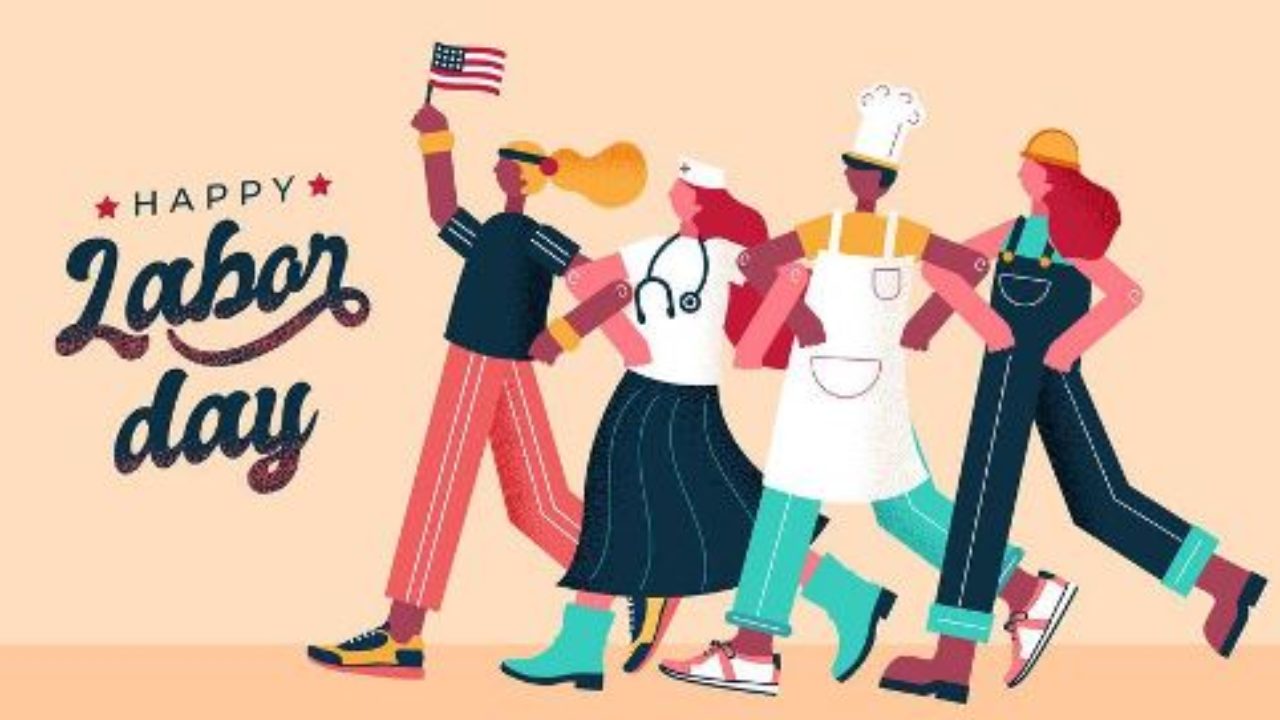
Happy Labor Day 2025!

Today is Labor Day.

It might not be the most popular holiday. Most don’t know much about it, beyond the fact it often comes with a day off. But this day does have a meaningful history that goes back over a century. And it’s an important history.

You might think that working for a living is hard today. But don’t let the present blind you to the rigors of the past. Things used to be much worse for workers. The shifts were longer. The pay was worse. And there were few benefits to speak of. The fruits of your labor depended entirely on the generosity of your boss, which was inconsistent at best.

The modern labor movement changed that. Many of the protections that we take for granted were fought for on many fronts, from picket lines to the halls of government. That movement didn’t achieve all its goals. In some cases, things have regressed. But that just makes a day like this even more important.

Most people who aren’t born rich and beautiful have to work for a living. It’s unavoidable. It’s often arduous and stressful. But it’s worth doing. And it’s worth fighting to have that work acknowledged and compensated fairly.

Whether you spend this day sleeping in or actually having to work, take a moment to appreciate where we are as workers. We’ve come a long way. We’ve made plenty of progress. We’ve also failed and become complacent in some areas. But like it or not, the world economy needs us. It cannot function without us. We hold more collective power than we realize. So today, let’s celebrate that while not losing sight of what this day truly means.

Happy Labor Day!

Leave a comment

Filed under Current Events, Uncategorized

A (Frustrating) Note On Trends In Child Labor Laws

Throughout high school and college, I took multiple history classes. Those classes included world history, American history, and even a few courses in ancient history. I won’t say history was ever my best class, but I’ve always had a certain affinity for it. I often find it enlightening and profound to see how our world came to be and how we got to where we are now.

Over the course of those studies, I often found hope and solace in knowing that certain issues within some societies had been resolved for the most part. History is often messy with mishaps and setbacks, but there’s a general trend towards progress and I found that encouraging.

Now, having followed the news for these past few years, I’m not nearly as encouraged anymore. Because lately, it seems like there’s a growing trend towards undoing some of the progress we made, even if it means making vulnerable, desperate people suffer. It’s bad enough that countries like America have taken a step backwards with respect to abortion rights, but now the same country that I love is taking it even further.

This time, it has to do with child labor laws. And believe me, I wish I was joking. I wish this were an elaborate story from The Onion. But sadly, it’s all too real.

In multiple states, mostly in the mid-west and south, lawmakers have effectively rolled back decades-old child labor laws to make it easier for companies to hire workers as young as 14-years-old. And in some industries, namely those involving farm work, kids as young as 12-years-old can legally work.

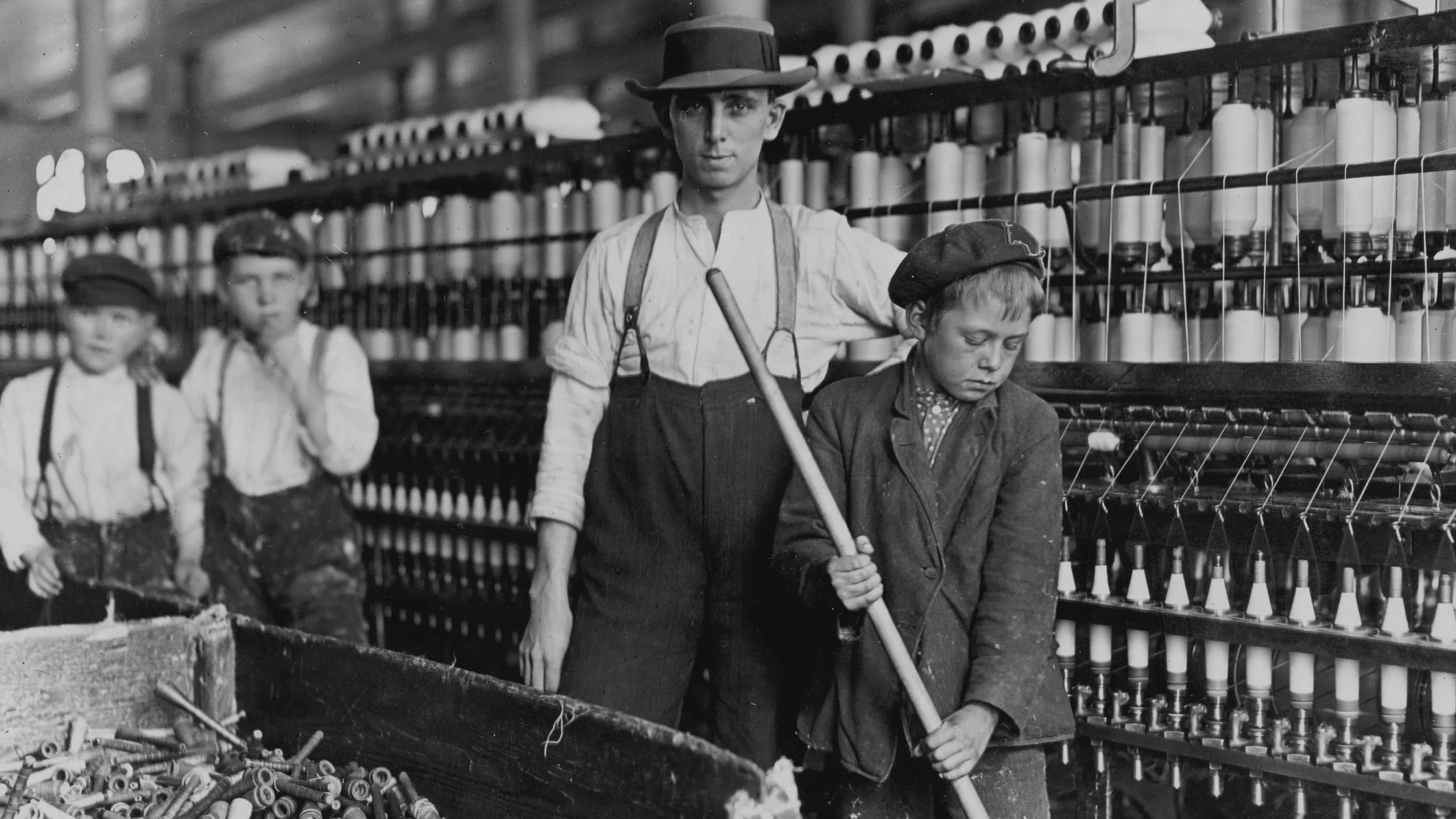
Now, if you have even a shred of compassion, empathy, and perspective, take a step back and think about this. Decades ago, we collectively decided that making children work in mines and factories was generally a bad thing. You don’t have to look far to find old, grainy photos of sad, broken children working in coal mines.

You don’t have to make bold assumptions about how these kids ended up having to work in such terrible conditions or why a company or business would employ them. They were desperate. They needed to do something to feed themselves or the rest of their families.

It wasn’t enough for kids to just help out around the house. They actually had to go out into dirty, dangerous mines or factories to earn what was likely piss-poor wages. And since they were kids, they weren’t as inclined to strike or organize. The only ones who benefitted from this were the employers, who were never going to pass up an opportunity to exploit cheap labor.

That’s why laws were necessary in the first place. History, as well as a basic understanding of power dynamics, has proven time and again that no organization gives up a profitable endeavor willingly. It took a serious movement of people who were appalled and disgusted by such practices to make these companies stop. And even when the laws were passed, some still tried to employ children illegally. Many still do, some of which include well-known American brands.

But now we’ve somehow found ourselves at a point where rolling back those laws is somehow viable? And those elected into public office are willingly going through with it?

Again, just take a moment to imagine this from the perspective of a kid. I remember being 12. I wasn’t even allowed to rent R-rated movies. And the most laborious task I could imagine involved doing yardwork with my parents over the course of a single afternoon. The idea of actually having to go to work while still going to school sounds like a goddamn nightmare.

Even when I was 15, it sounds downright soul-crushing. I was already navigating the rigors of high school. I was also going through the psychological and bodily horror that was puberty. The idea of having to work a job at the same time sounds downright cruel.

I understand that my childhood and circumstances are different than most. I imagine that kids from desperately poor families with limited opportunities might find such work unavoidable. But that’s exactly what makes these efforts by lawmakers so disturbing.

They’re essentially sending the message to employers, and society as a whole, that it’s perfectly fine to exploit desperate people and their children. It doesn’t matter if it means robbing a child of an opportunity to be a child and not get seriously hurt in a typical work environment. Their labor means more profits for the company and that’s all the justification we needed?

I’m no radical anti-capitalist, but even I call bullshit. If a company or business can only be profitable by exploiting the labor of children and desperate workers, then their business model sucks. And at the very least, our laws should not go out of their way to accommodate such models.

If all this weren’t bad enough (and it’s still very bad on so many levels), what makes it even worse is that those in favor of passing these laws are often conservative republicans. Remember, these are the same people who go all Helen Lovejoy and demand that we think of the children every time a drag queen dares to read them story. They’re also the same political wing who thinks a 10-year-old should be forced to give birth to a child that resulted from rape.

Again, I wish I was making this up. These policies, and the hypocrisy surrounding them, read like plots by supervillains. The only difference is that there are no costumed superheroes in this world who will stand to oppose them.

These despicable ghouls wearing human flesh have to know on some levels that what they’re doing will result in kids suffering, toiling, and being exploited by organizations whose only interest involves raising profits. They simply don’t care, mostly because they know their kids will likely never have to work jobs like that.

There’s a lot more I can say about the people pushing for and advocating these laws. But there’s only so much profanity and vulgarity I’m comfortable including in this rant. Maybe in a different time and under different circumstances, this wouldn’t bother me as much. I may not have kids of my own yet, but I have multiple nieces and nephews now. The idea of them growing up in a world where they could be employed and exploited at a young age makes me sick to my stomach.

Going back to my points about history, I’ll just remind everyone that we’ve been down this road before. We decided over 100 years ago that child labor is generally a bad thing for kids, families, and civilized society. We fought that battle for years and eventually won. Let’s not fight it again. Kids already have it hard enough. Let’s not make it worse for them.

Given the current state of the world, it’s literally the least we can do for them.

Leave a comment

Filed under Current Events, politics, rants

The End Of The WGA Writer’s Strike: Important Lessons And (Distressing) Insights

When an underdog succeeds, it’s worth celebrating. It’s a big reason why sports movies and superhero movies have so much appeal. Most audiences just love it when an underdog triumphs over daunting odds. And they love cheering with them when they ultimately succeed.

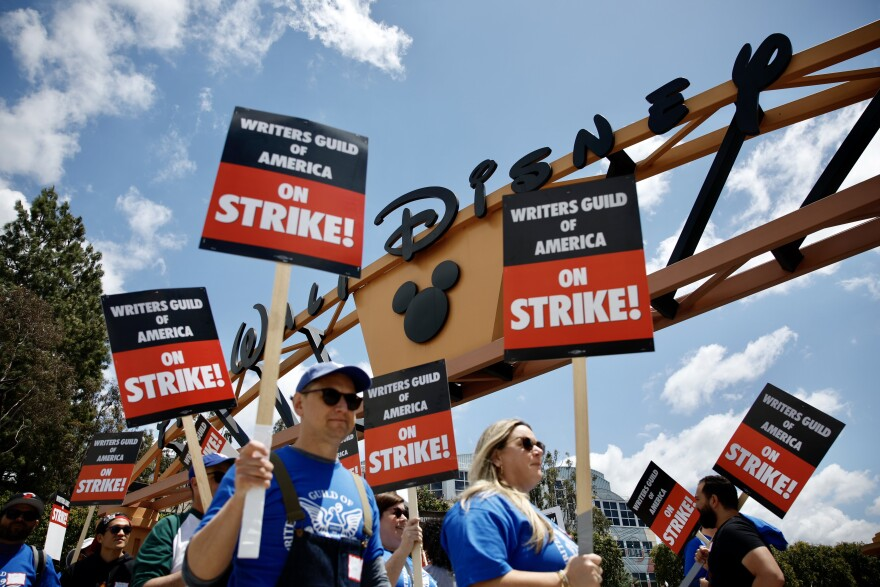
In that spirit, we should cheer the recent news surrounding the WGA strike that has been going on since mid-July 2023. According to the Associated Press, a tentative deal between the WGA and the major studios has been reached. While that doesn’t mean the strike is completely over, it marks a critical step in getting people back to work in an industry that was already reeling from the aftermath of the COVID-19 Pandemic.

AP: Writers’ union reaches tentative deal with Hollywood studios to end historic strike

As someone who loves movies, TV, and mindless entertainment as much as the next consumer, this is great news. This strike was bound to do more and more damage the longer it went on. We probably won’t know the full extent of that damage until a few years from now when we can look back at the impacts with the benefit of hindsight.

There’s also a personal element to this strike. I have multiple family members who work in the entertainment industry, mostly in the film and production side of things. They, more than most, felt the impact of this strike. Early on, a few even told me that this strike had the potential to last a long time. One even said they didn’t expect a resolution until late November. There was even a possibility it could continue well into 2024.

Thankfully, that no longer appears to be the case. This tentative deal, assuming it gets ratified, will provide some overdue benefits to the writers who play a big part in making the shows and movies we love so much. They deserve a deal that allows them to reap the fruits of their creative labor. You don’t have to look hard to find out just how much they were getting screwed over by a changing entertainment industry that studio executives and CEOs were exploiting to the utmost.

And therein lies an important lesson that’s worth highlighting, even as the strike comes to an end. This whole issue happened because the entertainment industry was changing. The old system that relied on residual income from broadcast TV and DVD sales just wasn’t going to cut it in an era of streaming media. The writers and actors behind some of these successful shows just weren’t getting the same share of the profits. And the studios were very much aware of this.

They could’ve adapted to ensure that those involved in the production could continue to be compensated fairly, even as consumers switched from traditional outlets to streaming.

They could’ve been open, honest, and transparent with the new economics of producing successful TV shows and movies in the post-COVID world.

They could’ve even explained why it was considerably difficult to pay generous residuals in a world of streaming media wherein profit margins were just too thin, if there even were profits to begin with.

But they didn’t. The executives, the CEOs, and those with the real power within these entertainment companies chose not to be proactive. Instead, they prioritized the price of their company stock and the investors who owned that stock. This is to be expected, as that tends to be the default reflex of publicly traded companies.

Call it callous in that it blatantly disregards the real work and toil of those producing the content.

Call it greed in the shallowest possible sense.

But at the moment, that’s simply how the incentives align in the entertainment industry, if not most industries in the global economy. There’s just too much money to be made by the rich and well-connected to do anything else. They are not going to do right by their workers unless they’re forced to, if not by law than by organized labor.

That may come off as cynical, but it’s also an important insight and one that every worker in every industry would be wise to remember. Because over the course of this strike, it quickly became clear how out of touch and callous these billionaire CEOs and executives were. They kept demanding that writers be reasonable with their requests. But at the same time, they were making hundreds of millions of dollars in salary and millions more in stock options.

These are not people capable of identifying with the life and struggles of working people.

These are people who might as well live on a different planet with respect to wealth, privlidge, and access.

Men Like David Zazlav and Bob Iger will never have to worry about paying a mortgage on time, falling behind on their bills, or ending up homeless because they cannot afford the outrageous rents in cities like Los Angeles and New York. So, how can we possibly expect them to empathize, let alone understand, the struggles of the writers and workers who help make their companies successful.

Most of these executives never set foot on a production stage, nor do they write or edit a single script. They just sit in offices, make demands/decisions, allocate money, and deal directly with investors whose primary focus is seeing a return on their investment.

And even if the company were to fail completely, these people would still end up with millions upon millions of dollars in their bank accounts. If they wanted to, they could never work a day for the rest of their lives. But those who actually work for them would be completely screwed.

It’s an unequal, unfair situation full of misaligned incentives. The executive and CEO class holds the power, the cards, and the money. They will not do the right things as a first recourse. They will only ever do what investors and their own self-interests incentive, by default. No matter how much money they have, they’ll keep trying to make more. And if that means screwing over their workers in any possible way, they’ll do it.

Remember that the next time labor issues come up. This doesn’t just apply to the entertainment industry, either. Any industry with a similar incentive structure will have the same issues. If there are rich, well-connected CEOs with shareholders to please, don’t expect them to prioritize workers beyond what they can legally and logistically get away with.

The only true counter to this uneven dynamic is that, despite all the power and money executives weird, they still need workers. They still need consumers. They still need to be credible in the eyes of the public to some extent. That kind of leverage is critical to maintain and appreciate.

Because the world will continue to change.

Every industry, from entertainment to making widgets, will continue to change with society and technology.

Those doing the work need to change with it because those with the money and power sure as hell won’t do right by anyone but themselves, unless they have to. And only those doing the work can make that happen.

1 Comment

Filed under AI Art, Artificial Intelligence, ChatGPT, Current Events, writing

Happy Labor Day 2023!

Today is Labor Day.

For most people, that’s just a nice day off to cap off the summer. If you’re a kid, it’s usually an extra day without school, if it has started by now. It’s not the most colorful holiday. It certainly isn’t something people put up decorations for. But it’s still a holiday we should appreciate to some extent.

This is usually the last day you can lounge by the pool, enjoy the warm weather, and appreciate summer. It’s usually a great day to have a cookout, get together with family, and enjoy each other’s company before the fall sets in. That’s all well and good, but it’s worth noting that Labor Day exists for a reason.

I won’t go into the lengthy history of how this day came to exist. There are plenty of resources on the internet to reference for that information. But in recent years, I feel like there’s been a greater awareness of the struggles with labor. We see it more and more as labor strikes make the news. And more people have become sympathetic to the work of such efforts as news about obscene greed come to light.

These are all issues that we should be aware of. Like it or not, most of us aren’t born rich. Most of us will have to work for a living. I’ve had more than my share of jobs over the course of my life. Many of them were very unpleasant. Without the efforts of organized labor and efforts to temper greed, work as we know it would be much less pleasant.

There’s certainly a balance between managing the concerns of workers and those providing the work. I’m not smart enough to understand or discuss that balance. I’ll just say that Labor Day is a chance for us to appreciate why those efforts matter.

So please, if you get a chance, use today to commemorate and thank those who have improved life for generations of workers. And don’t forget ongoing efforts to keep improving the lives of those working now and the workers of the future.

Happy Labor Day!

Leave a comment

Filed under Current Events

My (Non-Expert) Proposal For Automation And Greater Human Prosperity

62% say robots can be more productive than human workers —V1 study

I’m not an expert on much. I don’t consider myself exceptionally smart on matters that don’t involve superhero comics, NFL football stats, and quality romance stories. I make that disclaimer because I don’t want to give the impression that I know more than I know.

That kind of perspective is important, especially if you’re going to talk about complicated issues with not-so-clear solutions. I’ve attempted to talk about some of those issues on this site, some being much more complicated than others. I don’t claim to have shed new light on a subject or changed a few minds, but I like to think I still contributed something.

To that end, I’d like to make another contribution to a subject I’ve also touched on before. In the past, I’ve highlighted both emerging and potential issues associated with the development of artificial intelligence, including the sexy kind. I’ve also highlighted the issues we may face in a future where so much traditional work has been automated.

Now, in wake of a global pandemic that revealed just how much we can get done at home, I suspect that trend will accelerate. I also expect that trend to bring many problems, not the least of which involve people struggling to find the kind of good-paying blue collar jobs that have helped people rise out of poverty.

Turning back the clock or just trying to ban automation at a certain point is not a viable solution. There’s just no way to enforce that in the long term and it’ll only get more difficult once artificial intelligence gets to a point where it can match the capabilities of an ordinary human. At some point, we’ll have to adapt and that includes changing how we live, work, and play.

The living and playing part have their own set of unique challenges, but I think the work aspect is more pressing. When most people express concerns about automation and AI, they revolve largely around the economic impact and understandably so.

Historically, people have had to work in order to earn money or resources to survive. Whether you’re on a farm in the 10th century or in a city in the 20th, this dynamic has remained fairly constant.

Automation, especially once supplemented by artificial intelligence, will likely upend that dynamic completely. It’s entirely possible that, at some point this century, we’ll develop machines that can do practically all the work humans have had to do in order to survive.

That work includes, but isn’t limited to, farming our food, mining raw materials, producing our goods, maintaining our streets, protecting our homes, and even governing our society. Since machines never tire and are prone to fewer errors, what other jobs will there be? I don’t doubt there will be jobs, but what form will they take? More importantly, will they pay enough to large swaths of people?

I don’t claim to know the answer, but I suspect they won’t. The dynamics of labor markets just can’t function when the machines are capable of doing so much more work than large swaths of people. Even if those people don’t work, they’re still going to need money and resources. How will they go about getting it?

Answering this question has often led to discussions about a universal basic income, which has actually become a more viable policy position in recent years. I’ve even touched on it a bit as well and while I think it’s a great idea, I think there’s also room for some supplementary policies.

For that reason, I’d like to submit one of those policies that could be implemented with or without universal basic income. I call it the Individual Automation Matching Dividend, or IMAD short. This policy would work like this.

  • All adult citizens within the borders of the country will have a piece of identifying information, such as a social security number, voter ID number, or driver’s license number, turned into a special digital token.
  • That token will be ascribed to a machine/robot/android that is currently active and conducting work that had been done by humans at some point in the past, be it manual labor, service roles, or something of that sort.
  • The productivity and wages of work done by these machines will be indexed to a minimum annual salary of approximately $78,000 in 2021, which will be adjusted for inflation on a yearly basis.
  • Any work done by these machines that exceed the value of that salary will be diverted to a national welfare fund to provide extra support for those who were sick, disabled, or otherwise in need of resources beyond that of a healthy adult.
  • No citizen will be ascribed more machines than any other and any machine ascribed to them that is lost, damaged, or obsolete will be replaced in kind by the state.

I apologize if some of what I just described is confusing. I tried to write this out like a lawyer or someone proposing a new policy to a future government. For those who don’t care for legalize, here’s IMAD in a nutshell.

Once you become an adult, you get your own perfect worker robot. That robot may take many forms, but for the sake of simplicity, let’s just say it’s an android in the mold of those we saw in the “I, Robot” movie. They can work without rest, do everything a healthy adult can do, and have roughly equal to greater intelligence.

You’re given this robot by the government to basically act as your work avatar. So, instead of you going out to work every day to earn a living, this robot does it for you. The work that robot does will be compensated, but the money will go to you. Basically, you get paid for the work your android does. It’s more a dividend than a wage.

Remember, since the robot doesn’t age or get tired, it can work 24/7/365. In principle, you won’t even have to meet it. It just works all day and all night on whatever job requires labor, be it construction, assembly, shipping, farming, cooking, etc. You just get all the money, up to about $78,000 a year.

Now, why did I choose $78,000? I didn’t pick that out of thin air. That’s a figure ripped straight from a real-world case study from a company that started paying all employees a minimum of $70,000 a year back in 2015. The idea was that previous studies had shown that when people make more money beyond a certain point, their happiness doesn’t increase. This company just took that idea and ran with it.

The results, by and large, were overwhelmingly positive. With that kind of money, people could create more comfortable lives. They could buy homes, start families, plan for retirement, and make investments. It makes sense. When people have this kind of money to work with, they have the resources they need to create prosperous lives.

The idea behind IMAD is to mirror that by leveraging the added productivity afforded by automation. It’s not some large blanket package of money like a universal basic income. It starts with an individual, acknowledges the work that they have historically provided for a society, and supplements that with technology.

I’m not saying it’s a perfect proposal. I’m not even saying it’s smart. For one, it assumes that one human-like android is enough and that we can control the artificial intelligence necessary for them to operate on a large scale. That’s still an ongoing issue. I’m sure there are plenty more problems I haven’t thought of, but that’s exactly why I’m sharing it.

Surviving a future with intelligent machines is going to be challenging enough. However, we can’t just stop at survival. We want to prosper. We want to live, love, and build better futures for ourselves and our loved ones. Technology like automation and AI can help us get there, but only if we use it wisely. It’s a big if, but one that’s worth working towards.

Leave a comment

Filed under Artificial Intelligence, futurism, technology

Rethinking Jobs And Business: How Pandemics And Relief Benefits May Change Both

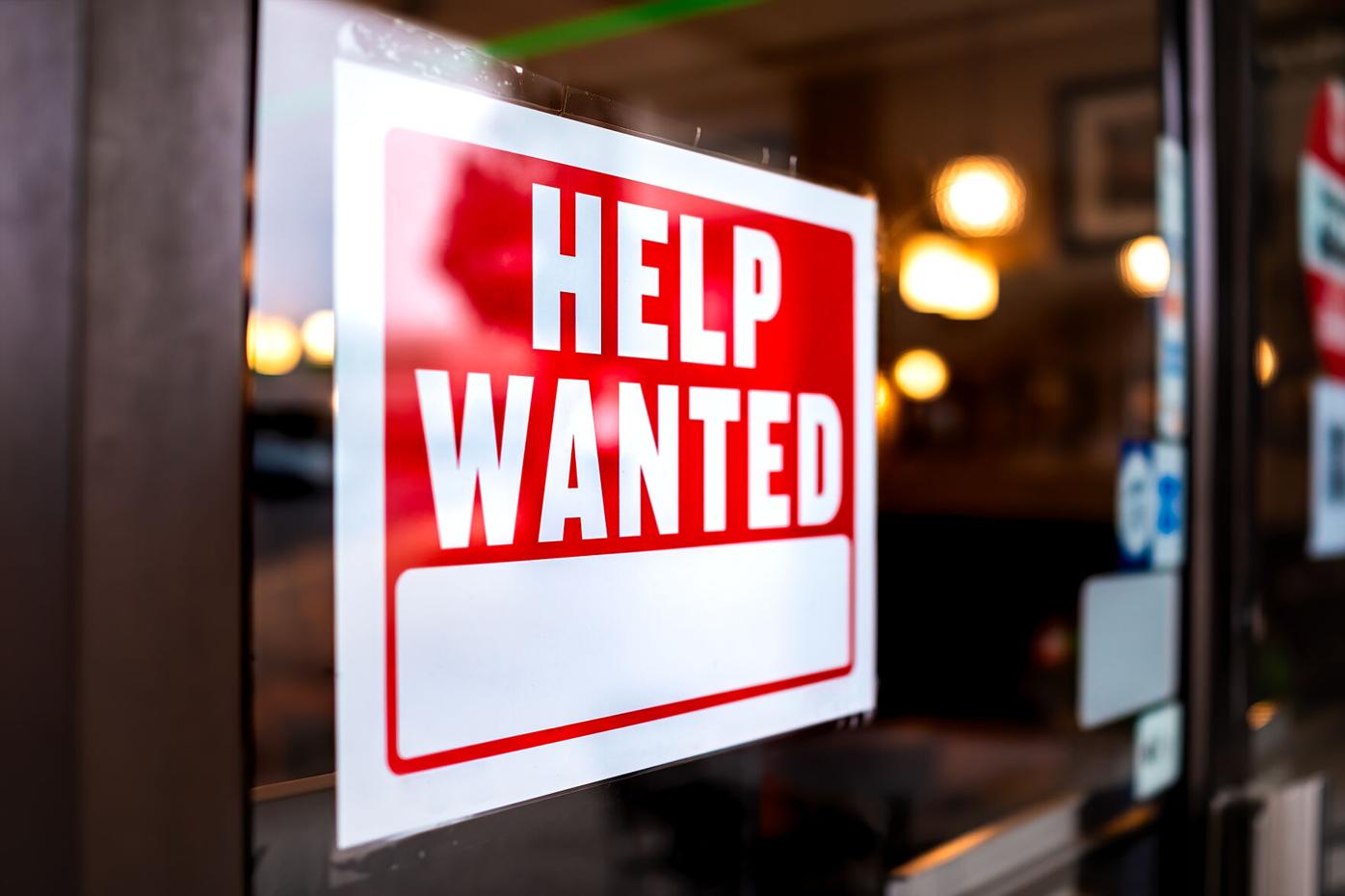
Help wanted? | Free | hometownsource.com

The world is always changing. That’s the only constant.

Sometimes, it changes more rapidly and chaotically than usual. That tends to happen a lot when major events transpire, such as a once-in-a-generation pandemic that infected millions and shut down entire countries. I hope I don’t have to belabor that to anyone with a news feed for the past year.

At the same time, these kinds of rapid upheavals can get us thinking harder about things we tend not to question. I’m not just talking about how much we take our health, our infrastructure, and our essential workers for granted. I’m referring to bigger concepts about how we approach life, society, and how we structure our lives.

One area that seems to be getting more scrutiny lately is how we approach jobs, work, and careers. I’ve certainly given it more thought, mostly in terms of the impacts of telework and how I used my stimulus check. I suspect many others have contemplated these topics in new ways in wake of recent events.

Now, as the pandemic nears its end, some of those concepts are already manifesting in the real world. One effect, in particular, has been especially jarring in America, mostly for reasons that other industrialized countries may find laughable. It has to do with people not wanting to work for a lousy, unlivable wage.

I know that shouldn’t be such a radical concept, but it is and as a proud American, I find it infuriating. There’s no getting around it. The ages for the average, non-CEO American have been stagnant for decades. It’s an issue that has been festering since long before the pandemic and even before I was born.

Before the pandemic swept in, there was an ongoing debate on whether the minimum wage should be increased to $15 nationally. I won’t get too heavily into the politics and talking points behind it, mostly because it ultimately descends into cycle of speculation and fallacies. I’ll just say that the pandemic has complicated that debate in unexpected ways.

During the height of the pandemic, the economy was basically shut down. Suddenly, millions were out of work and businesses had to shut down. Many still haven’t fully recovered. A big reason why many didn’t starve to death or end up on the streets was because of government relief packages, which included extended unemployment benefits.

While America’s relief package wasn’t nearly as generous as other countries, it was certainly better than nothing. I know plenty of people who genuinely needed that relief to stay afloat in terms of paying bills and feeding their families. It’s also not unreasonable to say that this was a critical measure in terms of preventing the pandemic from getting even worse.

However, this effort revealed something remarkable. According to a study done last year, the unemployment benefits that many workers received was actually better than their previous wages. It wasn’t an insignificant chunk of the work force, either. The benefits were greater for approximately 68 percent of American workers.

What does that say about the wages we’re paying our workers?

Moreover, what does that say about the system in general that workers can make more by not working than they would if they were?

Something about that doesn’t add up, literally and conceptually. I get that this was an unprecedented situation. At the same time, it reveal something about how we see work and workers. It’s something businesses are starting to realize too.

As the country and the world opens up, new job opportunities are arising. That’s good news for those who have been out of work. Unfortunately, those same businesses are having a hard time filling those positions.

The jobs are there.

The workers are there.

They just aren’t gravitating towards one another.

Here’s a brief rundown of the situation, courtesy of NPR. If you haven’t been working or are lucky enough to have kept your job during the pandemic, it should offer some insight and perspective.

NPR: Millions Are Out Of A Job. Yet Some Employers Wonder: Why Can’t I Find Workers?

At a time when millions of Americans are unemployed, businessman Bill Martin has a head-scratching problem: He’s got plenty of jobs but few people willing to take them.

“I keep hearing about all the unemployed people,” Martin says. “I certainly can’t find any of those folks.”

Martin helps run M.A. Industries, a plastics manufacturing company in Peachtree City, Ga. The company makes products used in the medical industry — specifically, in things like coronavirus tests and vaccine manufacturing and development.

But as he struggles to keep up with demand, Martin is finding it almost impossible to find new workers.

As someone who has worked his share of lousy, low-paying jobs, I can’t say I’m surprised by this. Don’t get me wrong. I still feel for the business owners who need workers to keep things going. I just can’t forget how arduous it was, working hard at a job that paid so little and left me so exhausted at the end of the day.

If the alternative is staying home and collecting unemployment, which ultimately pays more, then the choice is easy. That’s especially true for those who have kids or relatives they need to take care of. It’s not that they’re lazy, as some overpaid pundits love pointing out. It’s just that the nature of these jobs aren’t that appealing, especially when the pay is so low.

If anything, this situation has inspired us all to take a step back and look at how we approach work, jobs, careers, and business. When you think about it, it’s a little distressing that we build so much of our lives around work. It’s not just something we do out of obligation and responsibility. Many literally have to work in order to survive.

Is that right?

Is that just?

Is that healthy for society as a whole?

I say this as someone who has been lucky enough to have jobs that I’ve both loved and hated. I know what it’s like to work for a business that you hate. I also know what it’s like to have a job you find genuinely fulfilling. Not everyone is that lucky. In fact, I suspect the vast majority of the population, even in America, never experience that luck.

I get that there are economic reasons why some businesses can’t pay their employees high wages. I’ve worked in fast food restaurants. I know the profit margins aren’t exactly large. I also know that, even when I could make more than minimum wage, it was rarely enough to live on. That’s not even factoring the physical toll some of this work takes.

Despite that toll, there was still an undeniable stigma to those who didn’t work or those who simply avoided low paying jobs. In America, it’s a direct extension of that old protestant work ethic that equates moral worth with a willingness to do backbreaking labor for minimal pay. I’m not saying that work ethic is wrong, but I do think it needs to be re-evaluated.

The pandemic suddenly gave people an option on whether or not they wanted to do these kinds of low-paying jobs. Many understandably opt to just collect unemployment. They may not live luxuriously, but they will live. In some cases, they’re even better off.

It may be a sign of things to come. I already speculated on how the pandemic relief bills could be a precursor to a universal basic income. Now that people have experienced life in which their survival isn’t directly tied to having a low-paying job, I think it’ll be difficult to back.

I also think that’s a good thing. Regardless of how you feel about minimum wages, work ethic, or running a business, I think it’s generally a positive trend that we’re starting to decouple work with the right to survive. I think it’s a trend that has to happen, especially as automation does more and more of the low-skilled labor traditionally done by human workers.

It’s true. Some people are lazy and don’t like to work. Some people are just so driven and incapable of not working. Both still deserve to live without needed a job to keep them from starving to death or losing their home. As bad as this pandemic has been, I sincerely hopes it inspires us to rethink how we structure our society. There is a better way of doing things. We should always strive to do things better. Sometimes, that means rethinking everything we’ve come to believe about work, business, and life in general.


Leave a comment

Filed under Current Events, health, human nature, politics

The Promise, Perils, And Potential Of Elon Musk’s New Tesla Worker Robots

Tesla Promised a Robot. Was It Just a Recruiting Pitch? | WIRED

We’ve all had jobs that are laborious, boring, and repetitive. In fact, for most of human history, those were pretty much the only jobs there were. If you didn’t spend 12 hours a day in a field or factory, doing the same thing again and again, you didn’t have what you needed to survive. Only royalty and the wealthy got to enjoy leisure of any kind.

These days, those types of jobs are still there. Even though we live in an age of increasing automation, there are still plenty of jobs that are hard, repetitive, and draining. Anyone who works in an Amazon warehouse can attest to this.

I have some personal experience with those jobs. I once worked a job at a fast-food restaurant that probably could’ve been done by a trained monkey. I hated it and wouldn’t want my children having to do that kind of work. The fact that many people still have to work these jobs to make endsmeat is tragic.

The prospect of eliminating these jobs with technology, robotics, and artificial intelligence has always been intriguing. I’ve written about it before, both the artificial intelligent aspect of it and the social implications. Unlike other ideas about the future or future technology, this is one trend that’s already happening. Automation is a real thing and it’s not stopping anytime soon.

However, Elon Musk is once again looking to make another massive leap and enrich himself even more in the process. In addition to working on electric cars, commercial space flight, brain/computer interfaces, and flamethrowers, he now wants to create a legion of humanoid robot workers.

Basically, he wants to create the robots in “I, Robot,” minus the part where they go haywire and try to kill everyone. I wish I could say that was a joke, but we already have killer drones, so I think that would be in poor taste.

Musk made an official announcement of this effort on behalf of Tesla. Below is an excerpt of the story, courtesy of The Verge.

The Verge: Elon Musk says Tesla is working on humanoid robots

Tesla CEO Elon Musk says his company is working on a humanoid robot and that it will build a prototype “sometime next year.” The humanoid robot will leverage Tesla’s experience with automated machines in its factories, as well as some of the hardware and software that powers the company’s Autopilot driver assistance software.

Musk, who has spoken repeatedly about his fears of runaway artificial intelligence, said the Tesla Bot is “intended to be friendly,” but that the company is designing the machine at a “mechanical level” so that “you can run away from it, and most likely overpower it.” It will be five feet, eight inches tall, weigh 125 pounds, and have a screen for a face. The code name for the bot inside the company is “Optimus,” he said.

The robots will be designed to handle “tasks that are unsafe, repetitive or boring,” the company’s website reads, but little else, at least at first. (There, the bot is simply called “Tesla Bot.”) “I think essentially in the future, physical work will be a choice, if you want to do it you can,” Musk said.

Musk revealed drawings of the robot near the tail end of his company’s “AI Day” event, where it showcased some of the artificial intelligence and supercomputer technologies that it’s working on with the goal of one day powering self-driving cars. The company also had a mannequin version on the stage, which wasn’t working.

Now, before I continue, I want to make a quick disclaimer. I am not about to gush over Elon Musk and anoint him the bringer of a new techno-utopia. He might be one of the world’s richest human beings, but even he has limitations. I know I’ve gushed over Elon Musk in the past, but I’ve since tempered some of my attitudes.

I’m aware that Musk has a reputation of overpromising and failing to deliver. The article even points that out. I’m also aware that Musk, like many billionaires, has done some shady things in the past. You really can’t get as rich and successful as him without being an asshole to some extent.

At the same time, you cannot overlook the man’s success. He didn’t invent the electric car any more than Steve Jobs invented the personal computer or the smartphone. He just took existing technology, combined it into a new product, and successfully marketed it in a way no other human being had done to that point. He was so good at it that he became even richer than he already was.

Like it or not, he succeeded. He thinks big and tries to deliver. Even when he fails, he gets people to push the envelope. He underestimated just how difficult it was to create a self-driving car. I have a feeling he’ll do the same with these robots.

However, I also think that he will do more than anyone to speed up the ongoing trends in automation. Like I said before, this is not some new, fanciful technology. Robots exist. They already work in factories, doing work that used to be done by humans. They aren’t humanoid, but that’s because they’re limited to just a single task.

These humanoid robots will offer something different. They’ll be able to perform a wider ranger of tasks. The robots that make cares can’t be reconfigured to make something else. These Tesla bots could at least begin that process. Even if it’s flawed and unsuccessful at first, that’s still progress. Pretty much all technological advances are like that in the beginning.

His timing here might actually be just right. In recent years, companies like Boston Dynamics have shown off just how capable robots have become. They’re no T-1000, but they’re getting to a point where they can walk, run, lift, and jump as well as an ordinary human. With some refinement, they’ll be able to do even more.

Just like he did with the electric car, Musk could create the first true fleet of robot workers. They wouldn’t be able to replace every human working a laborious job, but they would be able to take the place of some. At a time when there’s a growing labor shortage, there’s definitely going to be a market for that sort of thing.

Personally, I don’t think Musk is going to be able to deliver functional robot workers as quickly as he claims. However, I do think he’ll get the ball rolling for a new industry. He’ll demonstrate that this technology is possible and there’s a growing market for it. In the same way other companies have started making electric cars, they’ll also start making robot workers.

Even if he only succeeds in part, though, that does raise some major concerns. Stories about workers being exploited aren’t difficult to find and the COVID-19 pandemic only made those stories more relevant. I don’t doubt for a second that if companies could replace their workforce with robots and get the same production, they would do so in a heartbeat.

I suspect that some are already cheering Musk on behind the scenes. Those same people probably won’t give much thought to the larger implications of a robot workforce. The prospect of a large population of people who aren’t working, have no job prospects, and are unable to earn a proper living does not bode well for society.

While people like Musk have advocated for a universal basic income of sorts, the politics behind that are messy to say the least. Given how politics rarely seems to keep up with technology, it’s unreasonable to expect it to be ready for a robot workforce that does all the laborious jobs that people used to do. It’s definitely cause for concern. In that sense, perhaps it’s a good thing that what Musk seeks to do probably won’t work exceptionally well, at least at first. However, even if he fails, it’s only a matter of time and engineering before someone else succeeds. At that point, we won’t be able to avoid the larger implications.

1 Comment

Filed under futurism, psychology, technology

Profiles Of The American Worker: Bob Belcher And Hank Hill

The following is a video from my YouTube channel, Jack’s World. It’s a take on the American worker and all their American glory. I highlight the concepts and ideals surrounding these workers by citing two well-known animated representations in Hank Hill from “King of the Hill” and Bob Belcher from “Bob’s Burgers.” If you’re fans of these shows and appreciate the struggles of the American worker, I think you’ll appreciate this. Enjoy!

Leave a comment

Filed under Jack's World, noble masculinity, political correctness, politics, YouTube

Have A (Relatively) Happy Labor Day 2020!

To everyone out there who are lucky enough to get today off, Happy Labor Day!

To everyone else who is still working today, I sincerely thank you. Hopefully, you get a chance to make up for it. You deserve it. We all deserve a day off from the hard drudgery of work.

I know it’s somewhat bittersweet. This year had been a real drag for obvious reasons. This summer has been lost for many. Between travel restrictions, closed pools, and cancelled events, this summer has been one to forget.

Now, it’s just about over. As bittersweet as that is, we’re still forging ahead. We’re still dragging our way through 2020. Let’s make Labor Day this year a much-needed breather. Getting through this mess has been harder than most, but we’re making progress. We’ll get to the end eventually. Keep believing that.

For today, though, just take a step back and enjoy how far we’ve come. We all need it. We’ll also need our strength to make it the rest of the way through this year.

Leave a comment

Filed under Current Events