Tag Archives: war

What Would You Do If A Nuclear Attack Was Immanent?

This is a video from my YouTube channel, Jack’s World.

Since the invention of nuclear weapons, the possibility of nuclear war has been a looming threat. Geopolitics has evolved, as has the source of tension and danger. But there’s no question that these weapons are devastating. And should they ever be used, the world will change.

But what would we do, as individuals, if we knew as a nuclear attack was immanent? We got a brief taste of that in 2018 with the false missile alert in Hawaii. Now, I’d like to offer my own take on this question on what I would do if such an attack was immanent. Enjoy!

Leave a comment

Filed under Current Events, Jack Fisher's Insights, Jack's World, YouTube

CAN Humanity Effectively Govern Itself Video?

This is a video from my YouTube channel, Jack’s World.

This video explores the question of whether humanity can actually govern itself beyond a certain point. For most of human history, the stakes were local. But now, the stakes are global in a very literal sense. Between climate change and nuclear weapons, humanity has the ability to end itself and all life on Earth.

That makes the question of whether or not we can effectively govern ourselves incredibly relevant. And I try to explore that concept as best I can while leaving some room for speculation on both sides.

Leave a comment

Filed under Current Events, Jack's World, politics, YouTube

Happy Memorial Day 2023!

Today is Memorial Day.

Here in the United States of America, it’s often celebrated as the unofficial start of summer. The school year is ending for most kids. Pools, beaches, and theme parks are opening full-time. And most start planning ambitious vacations.

But the true heart of this day has always been about military veterans and honoring their service. As someone who has multiple relatives who served, as well as grandparents who fought in major wars, it’s certainly a day worth cherishing.

In recent years, the many issues veterans face has become more relevant. Beyond the immense physical and mental toll that comes with war, the sacrifice they make to serve is not to be taken lightly. Just look up the training that’s demanded of them. Look up what they have to endure before they ever venture near a war zone.

Whether they serve in the army, navy, marines, air force, or coast guard, the demands we put on them are high. And the debt we, as a country, incur for their service is far higher. And sadly, we don’t always honor those debts as well as we should.

There’s certainly a larger discussion to be had about how we treat and care for our veterans, especially those who have suffered serious injury from their service. But today, let’s take a moment to simply acknowledge and thank these remarkable individuals for what they do.

They chose to serve their country.

They chose to put their bodies, their minds, and their hearts on the line for others.

They committed themselves to a standard and an idea that embodies the best this country has to offer.

Let’s celebrate them. Let’s honor them.

If you can, please consider donating to a major military charity. Or volunteer to assist a veteran or organization.

They gave all of themselves to this country so that we could continue to survive and prosper. Let’s use today to return the favor.

Happy Memorial Day!

Leave a comment

Filed under Current Events

Avatar: The Last Airbender and The Dragon Prince | Two Amazing Shows With A Strong Anti-War Message

The following is a video from my YouTube channel, Jack’s World. This video is an exploration and appreciation of two remarkable shows with equally remarkably anti-war messages. The way war is depicted in the media is often mixed at best and unhealthy at worst.

But “The Dragon Prince” and “Avatar: The Last Airbender” dared to offer a different perspective. They don’t just explore the more damaging, less obvious aspects of war. They do so in a way that perfectly complements their respective stories. Enjoy!

Leave a comment

Filed under Jack's World, The Dragon Prince, YouTube

How To Survive An Authoritarian Regime: 6 Tips For Resisting (And Surviving)

The following is a video from my YouTube channel, Jack’s World. This video is based on an piece I wrote on this site back in 2017. It covers my tips and strategies for resisting an authoritarian government. It wasn’t a battle plan for soldiers as much as it was a guide for ordinary people. In a world where authoritarians are always seeking more power, I thought this was a relevant issue to explore. I tried to craft it in a manner that wouldn’t require combat training and could be done by anyone seeking to both resist and survive. Enjoy!

Leave a comment

Filed under history, human nature, Jack's World, politics, YouTube

New Zealand Pushes For International Bans On Fully Autonomous Weapons (And Why Other Countries Should Follow Suit)

What are drones? – Drone Wars UK

Whenever I discuss or follow issues surrounding artificial intelligence, it’s not long before the topic of killer robots come up. That’s to be expected and not just because most of us have seen “Terminator” one too many times. However, it’s no laughing matter.

At this stage in our technological development, killer robots and autonomous weapons aren’t restricted to science fiction. They already exist in many respects. We just call them drones or unmanned combat aerial vehicles. These are real things that operate in real war zones. They have killed people, including innocent civilians.

They may not look like your typical T-101, but make no mistake. They’re every bit as deadly. They don’t need to hide within the body of Arnold Schwarzenegger. They can just flies thousands of feet over your head and kill from a distance. That’s a scary thought for anyone in a war zone, but you can take some comfort in that these machines still have human operators.

That could eventually change. As I’ve noted before, artificial intelligence is advancing to a point where it can match or exceed the skill of an ordinary human in specialized tasks. Even if we’re decades away form an AI that has the same cognitive capacity as an ordinary human, we already have AI systems that specialize in particular tasks, like chess.

It wouldn’t be that great a stretch to develop an advanced artificial intelligence that could specialize in flying combat drones without any human input. In principle, an artificial intelligence wouldn’t be nearly as prone to human error or hesitation if their human pilots were taken out of the equation.

However, that also raises some serious ethical, as well as strategic questions. If humans are out of the loop in operating these autonomous weapons systems, then what happens to how we conduct warfare? What does this mean for both sides of an armed conflict?

Ideally, an advanced AI will be better at making decisions to limit civilian casualties. That is likely the ultimate goal in researching these systems. The problem is we’re still a long way from that goal, so much so that one government in the world is already trying to establish a precedent.

Fittingly, it’s a government from an area that is not in any war zone, nor is it near one. New Zealand, a country not known for frequent warmongering, recently pushed for a worldwide ban on autonomous weapons systems. It’s a bold and ambitious effort, but one I believe we should take seriously.

Stuff: Government to push for international ban of autonomous weapons, or killer robots

The Government will push for an international ban on fully autonomous weapons, or killer robots, that use artificial intelligence to target and kill people without any human decision-making.

New Zealand has for decades advocated for disarmament in international forums, after declaring the country a nuclear-free zone in the 1980s. Autonomous weapons are seen as a new frontier in the arms race between major military powers.

Disarmament Minister Phil Twyford on Tuesday said the Government had decided to take a “tough and uncompromising” stance on autonomous weapons, and seek a ban of fully autonomous weapons on the international stage.

Regardless of how you feel about New Zealand’s policies or intentions, this is one rare instance where politics might have to inject itself into science. Like it or not, the pace of artificial intelligence is accelerating. Few agree on how much time it’ll take to reach human level AI, but nobody denies that it’s an advancing field.

At some point in the very near future, we’ll have AI systems specifically tailored to fly combat drones with the same proficiency as a skilled Air Force pilot. That does not require human level AI. It just requires AI that can handle the various tasks associated with operating these systems.

When that time comes, it will be tempting to take flawed humans out of the loop. That means militaries with these autonomous weapons systems won’t have to be as hesitant when it comes to deploying these systems.

We can safely assume this because there’s a big difference between pushing a button that fires a gun and ordering another human being to fire that same gun. Even if that other human is trained and obedient, they’re still human. They can still make mistakes. They can still hesitate.

For once, that’s not a bad thing. Sometimes, we need humans to hesitate in the midst of war. Were it not for hesitation, the Cuban Missile Crisis could’ve ended very differently.

If waging war is too easy for those with access to these systems, then more war will follow. More war means more death, destruction, and violence. Too much of that and lasting peace becomes much more difficult. The whole of 20th century history is proof enough of that.

Like nuclear weapons, autonomous weapons systems are a Pandora’s Box that cannot be closed once opened. We’ve already opened it partially thanks to drone warfare. For that reason, I think New Zealand has the right idea in terms of mitigating the potential danger.

Even if autonomous weapons systems become so advanced that they operate better than any human, we still need at least one human behind the decision making process. We still need a flesh-and-blood person to pull the trigger rather than entrusting that recourse to a machine.

We, as a species, simply cannot and should not walk this path with our technology. It’s not just about limiting the use of dangerous weapons. Once we start teaching these advanced AI’s to kill, then we won’t be able to unteach them. If they eventually become too good at it, then that does not bode well for humanity as a whole, regardless of which side they’re on in any war.


Leave a comment

Filed under Current Events, technology

The Day Before Veterans Day: A Story And A Request

Tomorrow is Veterans Day. As I’ve done before in previous years, I go out of my way to acknowledge the sacrifice and service those who have served in the military. It’s one of the few issues that transcends ideology, politics, and debate. Those who have served deserve our utmost admiration and respect.

There’s a personal element for me, as well. I have many close family members who have served in the United States Military. I have grandparents who served in World War II. I have an uncle who served in Vietnam. They know what it means to serve their country in times of war and peace.

I know it is often used as a platitude by politicians and pundits, supporting the troops. That doesn’t make it any less deserving of such support. I certainly offer my thanks and my respect to our veterans, especially on days like Veterans Day. I also encourage others to do so and to support various veterans charities.

In the past, I’ve donated to the Wounded Warrior Project. I strongly encourage others to do the same, donating to this or other veteran-supporting charities. On top of that, I’d like to share a quick story that was told to me a few years back by one of my uncles.

Out of respect for his privacy, I won’t reveal my uncle’s name or which branch he served. I’ll just state that he has been very involved in supporting veterans since he got out of the service many years ago. He’s actively involved with churches and organizations. He’s the kind of man who will go above and beyond for a fellow veteran.

This particular story he shared took place at a local church. For years, a group of World War II veterans would meet there around a certain date. They’d catch up, drink, and laugh in all the ways you’d expect of old friends. It was a tradition they all cherished.

However, in recent years, that group’s numbers have been dwindling. Even though millions served in World War II, there are only an estimated 300,000 left alive. That may sound like a lot, but in a small group like this, they noticed when many of their friends began dying. It got to a point where the group was small, so much so that there was little to catch up on.

This is where my uncle comes in. At one particular gathering at a church, he met up with this old guy wearing the distinct World War II veteran attire most recognize. He was sitting alone and not in the best shape, health-wise. He didn’t look sad, but you could tell he was among the last of the friends he served with.

My uncle, being the wonderful man he is, sat down and talked to the man. They got along well. In doing so, my uncle found out that this old man was the last surviving member of his platoon. They’d been close for many years, but now he was the last one. Given his age, it wouldn’t be long before his entire platoon joined the many others who made the ultimate sacrifice.

It struck my uncle because he knew that, once this man passed, too many of his stories would pass with him. That just couldn’t stand. My uncle sat with that man and just listened to him reminisce. I don’t know how long they chatted, but my uncle made it a point to hear his story, knowing those who could tell them were dwindling fast.

It’s a special kind of way to honor a veteran. You can help them in many ways, but I like to think just listening to them and their story goes a long way. War and combat has consumed entire generations. They leave lasting marks, including many scars.

That’s why it’s important to remember and honor them. There are memories worth preserving, full of lessons worth learning. Times may change. Warfare often changes with it. The one constant is the strength it takes to fight, serve, and sacrifice.

I hope this story from my uncle gets that point across. I also hope it inspires others to help and honor our veterans in their own special way.

Thank you and to all those who are serving now or have served, I hope you feel the love and support you deserve on Veterans Day this year.

Leave a comment

Filed under Current Events, real stories, Uplifting Stories

An Uplifting Story About A Man Who Saved Thousands Of Jews From The Holocaust (In Defiance Of Orders)

If you watch the news or follow social media in any capacity, it’s easy to think that the world is going to Hell and we’re all just waiting for our turn to get burned. It’s not hard to find a terrible news story that seriously dents your faith in humanity. Sometimes, it’s not even headline news. There are plenty of stories of people just being assholes.

As I’ve noted before, these types of stories can skew your perspective. In the grand scheme of things, the world is getting better. You don’t have to look that hard for evidence of that, either. The problem is few people bother looking.

To help with that, I’d like to share a brief, but uplifting story from one of history’s darkest time periods. It occurred in the early years of World War II, just as some of the worst atrocities in human history were starting to unfold. In such a time, it’s easy to see the worst in people come out.

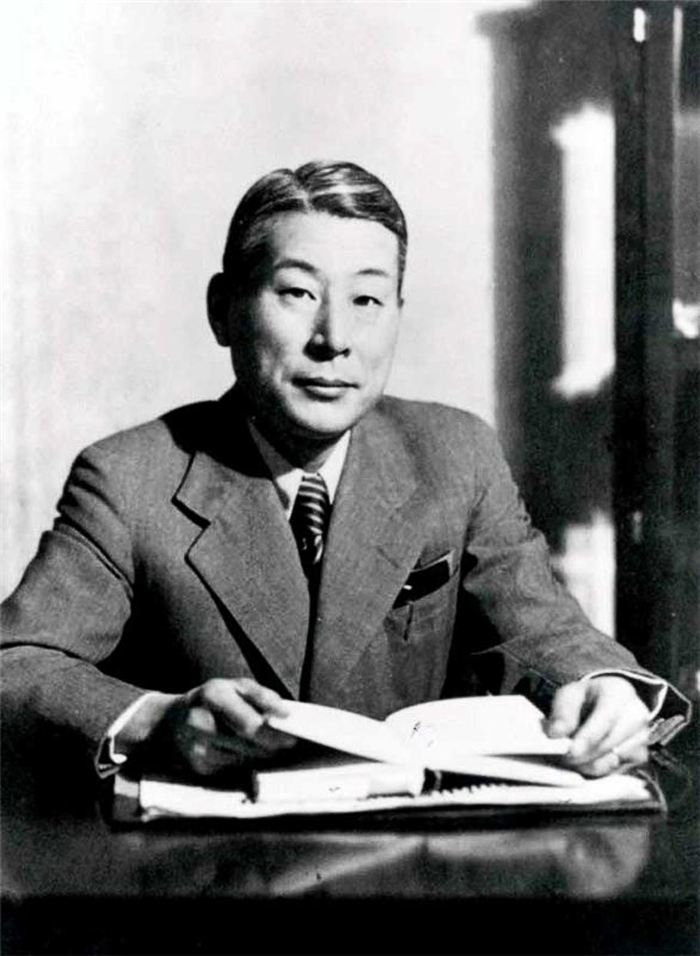
At the same time, it can also bring out the best in people. One of those people was a man named Chiune Sugihara. Chances are you haven’t heard of him and that’s a shame because what he did was incredible. At a time when thousands of Jews were fleeing Germany and seeking refuge, Chiune used his position as a vice-consul of the Japanese Consulate in Lithuania to issue visas to refugees.

On top of that, he did this in defiance of orders from the Japanese government. He broke rules and protocol to help thousands of desperate families escape Europe. He was even punished for it after the war. Even so, there are thousands of people alive today because of what he did.

His story is remarkable and one I encourage everyone to learn about. The Holocaust Museum has a nice summation of his actions, but there are so many more. Here is a small excerpt.

Following the German invasion of Poland on September 1, 1939 hundreds of thousands of Jews and other Polish citizens fled eastward ahead of the advancing German army; many refugees found at least temporary safety in Lithuania. Options for escape were limited and required diplomatic visas to cross international borders. One route was through Asia using a combination of permits issued by foreign envoys responding to the refugee crisis: a bogus visa for entrance to the Dutch Caribbean island of Curaçao and a visa for transit through Japan.

One such diplomat was Japanese Imperial Consul Chiune Sugihara, the first Japanese diplomat posted in Lithuania. In the absence of clear instructions from his government in Tokyo, Sugihara granted 10-day visas to Japan to hundreds of refugees who held Curaçao destination visas. After issuing some 1800 visas, Sugihara finally received a response to his cables alerting the Foreign Ministry in Tokyo of the situation in Lithuania. The Foreign Ministry reported that individuals with visas headed for the United States and Canada had arrived in Japan without money or final destination visas. In his response, Sugihara admitted to issuing visas to people who had not completed all arrangements for destination visas explaining that Japan was the only transit country available for going in the direction of the United States, and his visas were needed to leave the Soviet Union. By the time the Soviets ordered all diplomatic consulates closed, in late August 1940, Sugihara had saved thousands of Jews over the course of just a few weeks. Because of his efforts, Yad Vashem awarded him the title of “Righteous Among the Nations” in 1984.

The story of Chiune Sugihara may not completely restore your faith in humanity, but it should serve as a strong reminder. Even in our darkest hours, people can still do great things for the right reasons.

3 Comments

Filed under Uplifting Stories

Have A Happy (And Respectful) Veterans Day 2019

Today is a very special and solemn day in the United States. Today, we take a collective moment to honor and thank the brave men and women who serve in the United Stated Military. For many, it’s an act of patriotism and shared gratitude. For others, it’s personal.

I have multiple family members who have served in the military. A number of family members even saw combat in overseas conflicts. I’ve seen the toll of their sacrifice. I’ve heard their stories and their struggles. It’s a story worth telling and honoring, no matter what the political climate may be.

It doesn’t matter how divided we are. It doesn’t matter how angry we are with our current system. Today, we set that aside to honor those who have toiled, sacrificed, and suffered for the good of their country.

Last year, I tried to do my part by writing a sexy short story. You can read it here if you wish. This year, I’d like everyone to consider donating to a charity such as the Wounded Warrior Project. There are many veterans out there who need help and it can’t stop at a parade. Please, if you can, consider donating to this or other charities to help them.

Again, to anyone out there who has served or is serving, I sincerely thank you. Happy Veterans Day and may your work in the past and present bring a more peaceful future for everyone.

1 Comment

Filed under Uncategorized

Gender Politics, Military Conscription, And Why It Matters

Syria US

When it comes to gender politics, there are certain issues that come to mind and others that slip under the radar. These days, the most newsworthy issues involve things like diversity in popular media, discrimination in certain social spheres, attitudes within certain sub-cultures, and patterns of harassment.

I’ve explored some of these issues in the past, but only when I feel like there’s relevant discussion worth having. The problem with the issues that slip under the radar is that they rarely make headlines, which helps them persist. Even when a headline finally does come along, it’s difficult to discuss because most people aren’t aware of it and haven’t contemplated the implications.

A good example is military conscription. If you live in America, Canada, or Western Europe and are under the age of 40, chances are you haven’t given it a moment’s thought. Conscription, or the draft as it’s commonly known, is one of those institutions that just isn’t as relevant as it used to be. Considering how much war, in general, has declined in the past 50 years, that’s understandable.

However, it’s still relevant in the sense that it reflects old attitudes about society, war, and gender roles. These attitudes are rarely scrutinized, even among feminists, conservatives, liberals, and egalitarians. Now, thanks to recent developments in the courts, this might be a good time to discuss this often-overlooked issue.

If you’re an adult, able-bodied man, then this issue affects you. It has already affected me and almost every other man older than 18 years of age because that’s the age when we had to sign up for the Selective Service System. In doing so, we gave the government the information and discretion to draft us into military service, should the need arrive.

Make no mistake. This is not akin to getting a driver’s license or a social security card. By signing up for the Selective Service System, a sizable chunk of the male population is agreeing to go to war whenever their government decides to conscript them. It’s not a formality, nor is it done out of patriotism either.

Every man has had to learn what this emblem means.

It’s not just because doing so is necessary to access federal programs like student loans, job training, and Pell Grants. Failure to sign up for Selective Service is a felony, punishable by hefty fines and prison time. Logistically speaking, this is an issue in which consent truly doesn’t matter. Men have to do this. They are as subject to conscription as they are to paying taxes.

It’s one of the few issues in which the gender divide is clear cut. Men must permit the government to conscript them into military service. Women do not. While women are still free to join the military and enjoy its many benefits, they ultimately have a choice that men don’t. In the event of a war that requires conscription, they won’t be forced to join the fight.

Whether you’re a pacifist, egalitarian, or a radical feminist, this issue should matter because it has significant implications. It’s frequently cited as a case of male disposability and for good reason. The fact that only men must sign up for conscription implies that society is comfortable sending them to the front lines of a war. It affirms that we’re okay with men being brutalized, but not women, a double standard I’ve explored before.

While there are many historical reasons for this, ranging from ancient warrior cultures to evolutionary factors to the pragmatism of protecting the gender that bears the babies, those reasons don’t carry as much weight anymore. Most countries, including the United States, rely on a voluntary service system and several decades of civil rights movements have made gender discrimination illegal.

However, the Selective Service System managed to escape all these changes until very recently. In February 2019, a federal court issued a groundbreaking ruling that concluded the Military Selective Service Act was unconstitutional. This quote from the ruling nicely sums up the reasoning behind that ruling.

In short, while historical restrictions on women in the military may have justified past discrimination, men and women are now “similarly situated for purposes of a draft or registration for a draft.”

While it’s likely that this ruling will be contested, it does provide an opportunity for a more nuanced discussion. Most debates regarding gender tend to focus on areas where women and transgender individuals face discrimination and marginalization. These debates have certainly made their share of headlines, but military conscription is unique in its impact on men.

That might be part of the reason why conscription rarely arises in a gender debate, but with this ruling, the time is right to address it. There’s no denying the discrimination here. Men are being forced to do something at the behest of their government and women are not. This issue reflects a major disparity, but it’s also an opportunity.

Even though military conscription hasn’t been practiced in the United States for several decades, it has already played a significant role in shaping society. A big reason why the civil rights movement made so much progress in the 1950s and 1960s is because conscription required people of various races and backgrounds to work together. In many respects, the structure of the military was a huge equalizer.

This is nicely depicted in the opening scenes of “Full Metal Jacket.” Gunnery Sergeant Hartman made it abundantly clear to every recruit that there’s no discrimination in his unit. Your race, ethnicity, and background didn’t matter in the slightest. In a war, it can’t matter. It’s a powerful message that many soldiers brought back with them.

The face of true unity.

That sort of message has never been applied to gender in the United States. It’s not unprecedented, though. There are a number of countries that have mandatory military service for both men and women. Israel, one of America’s closest allies, is one of them. While they tend to serve different roles, the fact that they’re subject to the same obligations as men sends a powerful message.

It doesn’t just show in the status that women have in Israel have, especially when compared to other neighboring nations. It establishes equal expectations for women and men, alike. In a system where everyone is held to a similar standard when defending their country, it’s harder to justify discrimination.

That has significant implications for the United States in wake of the ruling. Either the Selective Service System must be thrown out entirely or women must be subject to the same requirements. As recently as 2016, Congress debated the idea of including women in the system, but it did not pass. The fact that it sparked few protests is revealing, in and of itself.

By not acting through legislation, the courts are forcing the issue. The Justice Department is already opposing the ruling by claiming that requiring women to register for the draft is “particularly problematic.” That’s somewhat ironic, given that similar rhetoric is used when feminists criticize video game characters for being too sexy.

Despite that rhetoric, it’s just as telling that there are few protests surrounding this statement. The same protesters who marched in Washington DC back in 2017 have been relatively silent in how the government views gender disparity with respect to military conscription. This isn’t a right. It’s a responsibility and one that can unify a society full of diverse people.

To some extent, it’s understandable why those same protesters don’t argue for the same standards with respect to military conscription. Unlike Israel, the United States and most western countries don’t have mandatory military service and the draft hasn’t been utilized in 40 years. For most people, it doesn’t directly affect them.

However, that might also make it the perfect issue for unifying people from both ends of gender issues. If feminists and men’s rights activists are serious about equality in terms of the law and societal standards, then military conscription is a clear-cut issue that they can both rally behind. Either you’re for equality or you’re not. At the very least, it would be helpful to know who’s not.

1 Comment

Filed under Current Events, extremism, gender issues, men's issues, outrage culture, political correctness, women's issues