Tag Archives: human relationships

Neuralink: Elon Musk’s Latest Business And Why It’s The Most Important Venture In History

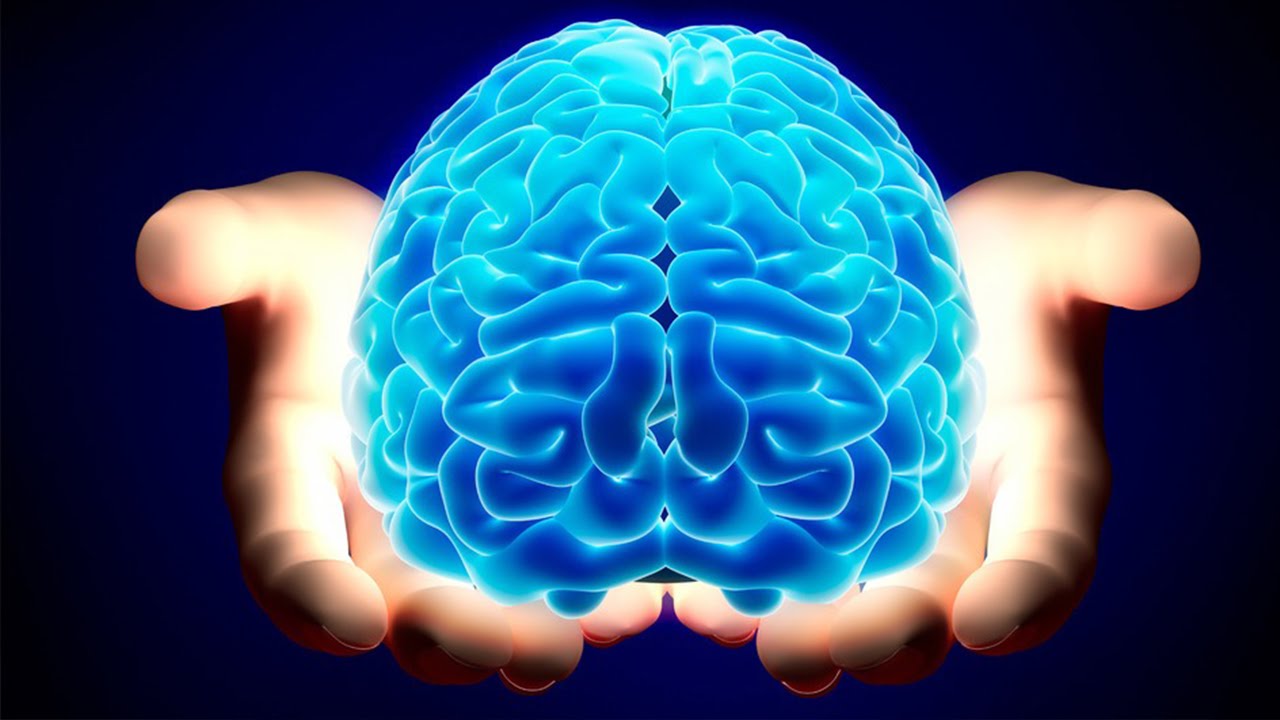
https://i.ytimg.com/vi/D33Aj5w061g/maxresdefault.jpg

There are a number of things I belabor on this blog. However, there’s one thing I tend to belabor more than most and for a good, wholly relevant reason. I’ll say it again and I’ll keep saying it for as long as it remains painfully relevant. Our collective brains are painfully limited.

For the past 10,000 years, we’ve been stuck in caveman mode. So much of our society and world has changed. Unfortunately, our brains might as well be stone tablets trying to compete against a top-of-the-line smartphone.

There are a lot of problems in this world that can be chalked up to the faulty wiring in our brain. Everything from the failures of democracy, the prevalence of religious dogma, and the rise of the Kardashians can be attributed to the inherent flaws in our brains.

https://i0.wp.com/www.gossipcop.com/wp-content/uploads/2017/03/Kim-Kourtney-Kardashian-Kids-Barred-Color-Me-Mine-Store.png

We’re just not wired for the civilization we’ve created. Our brains evolved on the plains of the African savanna. They’re optimized to function in small bands of closely-knit hunter/gatherer societies, wired to prioritize survival and reproduction over knowing our multiplication tables. Remember that the next time a math teacher gets snippy with you.

That method of operation worked damn well for thousands of years, but conditions have changed. We humans needed to grow, create cities, and build civilizations to survive. Unfortunately, our brains stayed stuck in hunter/gatherer mode. It’s like being stuck with the earliest version of Windows and never being able to update.

It’s frustrating to think about. It’s even tragic, knowing that all these problems have a basis in the wiring of our brains. We can do a lot to work around it, but we can never seem to avoid it and that’s a problem. If we can’t get around the base programming of our biology, what hope do we have? Are we doomed to a future of reality TV, professional trolls, and fake news?

https://thelastofthemillenniums.files.wordpress.com/2015/10/tea-party.jpg

Well, we can’t do anything about it at the moment. However, I’d like to offer a ray of hope. It’s actually part of a story that slipped under the radar in recent weeks, most likely due to everyone still processing how Bill O’Reilly got away with so much sexual harassment over the course of 13 years. That might be for the best because it’s impossible to understate the implications.

It has to do with a guy named Elon Musk. Perhaps you’ve heard of him. He’s a businessman, engineer, investor, and inventor. He created PayPal, founded Tesla Motors, is the CEO of SpaceX, and is worth an estimated $13.9 billion. He’s the closest thing the real world has to Tony Stark from Iron Man. In 2016, Forbes voted him the 21st most powerful person on the planet.

Some people like to dream about the future. This guy is actively creating it and making himself exceedingly rich in the process. He’s a perfect cross between Warren Buffet, Albert Einstein, and Nikola Tesla is what I’m saying. If that’s not superhuman, I don’t know what is and that’s coming from an admitted comic book fan.

Well, as accomplished as Musk is, the man just has to overachieve in the most obscene way possible. Creating awesome cars, space ships, and pollution-free power just isn’t enough for this guy. He just has to find new ways to make us all feel like losers. However, his latest venture may end up being the most important venture in human history.

No, that’s not a typo. That’s not me talking in hyperbole either. I mean it. What Musk plans to do with this venture may very well be the most important thing any human being has ever done since the invention of fire, electricity, and internet porn. It may actually hold the key to our survival, both as a society and as a species

It’s called Neuralink. Late last month, Musk announced the creation of this company in Dubai. It has a simple, but monumentally ambitious mission. According to the Walls Street Journal, that mission is as follows:

The company, which is still in the earliest stages of existence and has no public presence whatsoever, is centered on creating devices that can be implanted in the human brain, with the eventual purpose of helping human beings merge with software and keep pace with advancements in artificial intelligence. These enhancements could improve memory or allow for more direct interfacing with computing devices.

No, it’s not a rejected side-plot from the Matrix. This is happening in the real world. If it sounds like something that only Star Trek fans would talk about in between arguments about whether Captain Kirk could kick Captain Picard’s ass, then resist the urge to roll your eyes for just a few minutes. This really is that important.

A while back, I speculated on ways in which we could improve the wiring on our caveman brains. That was just a thought experiment though, not unlike my regular speculations on the prospects of human enhancement. I explore these issues with the understanding that they’re just ideas. There’s no time table in place for this sort of futuristic stuff to actually happen.

Well, now there is and Elon Musk, a man with an established track-record at making technology his bitch, is setting the stage for the kind of future that only once existed in the twisted thoughts of aspiring erotica/romance writers. It’s not some fancy experiment among sci-fi geeks. It’s an actual business enterprise by a man who knows how to use technology to make a fuckton of money.
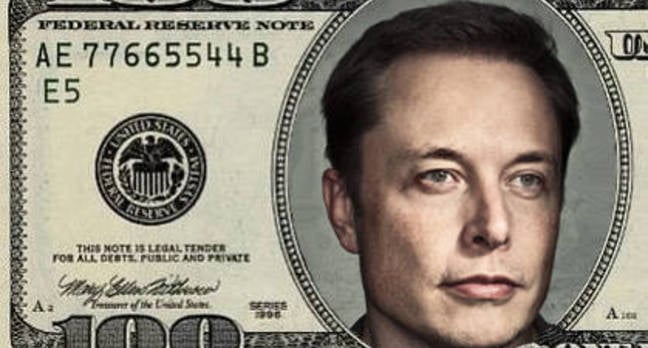
https://regmedia.co.uk/2013/02/25/musk_money.jpg?x=648&y=348&crop=1

What makes Neuralink such a big deal is that it’s not just giving human beings another fancy tool for our caveman brains to use. It’s actually bypassing the caveman part and looking to hack the wiring that’s so badly in need of an upgrade. Beyond that, he wants to do that in a way that’ll turn a profit.

Make no mistake. There is money to be made here. Musk wouldn’t give a rat’s ass about it if it weren’t. The biotech industry is already a $157 billion industry, but it doesn’t have that high a profile because it lacks a “killer app,” so to speak. The industry is very much akin to the smartphone industry back in the early 2000s. It’s growing, but there’s no iPhone yet to really kick it into high gear.

Well, Elon Musk looks to do for biotech what Steve Jobs did for smartphones. Brain implants, like smartphones, do exist. They’re just very limited right now. It’s a very nascent technology, but the science is there. It is possible to put some type of computer hardware into the brain and have it effect the brain in some way.

https://i.ytimg.com/vi/Lpb_eTZIpkY/maxresdefault.jpg

At the moment, those effects are limited, just as smartphones were in 2002. With Musk leading the charge, those effects will definitely expand. Musk isn’t just looking to create implants that will treat stroke victims or mental illness. He’s serious about enhancing the human brain as a means of keeping pace with technology.

We know he’s serious because back in 2015, he signed an open letter with Stephen Hawking and a dozen other men who are way smarter than most of us will ever be expressing concern about the growth of artificial intelligence. Musk isn’t among those who thinks we’ll ever have to fight off actual Terminators, but he does see artificial intelligence as a potential existential threat to the human race.

https://heiscomingblog.files.wordpress.com/2015/05/terminator_3001397b.jpg

He’s not wrong either. He and many others understand that we humans are still cavemen running around with clubs trying to make sense of all the crazy things we experience. Our intelligence is severely limited by those caveman settings. A sufficiently intelligent machine really wouldn’t need to do much to outsmart us. It would just need to convince us that it had a video of Kim Kardashian going down on Justin Bieber.

Practically speaking, the only way we humans stand a chance at co-existing and thriving alongside artificial intelligence is to augment our own intelligence. To do that, we need to effectively hack and enhance the brains that struggle to determine whether Alex Jones is a credible news source.

It won’t happen over night. According to Musk, the first few products from Neuralink will specialize in treating stroke victims and those who have sustained brain damage. However, that’s just a step in a much larger process. Once we have products that can treat damaged brains, then we can make products that enhance healthy brains.

https://i0.wp.com/top-hotnews.com/wp-content/uploads/2016/12/1867897faj0vpjpg.jpg

It used to be we only needed cell phones for emergencies and drug lords. Now, we they have so many uses that enhance our lives. What kind of enhancements can we expect from something that actually affects our brains directly in ways that hypnotists and subliminal advertising can only dream of?

That is a very interesting and very sexy question. I hope to explore some of these questions in future posts, but I think it’s important to highlight just how huge Neuralink could be for the future.

Ford helped usher in the era of cars. Apple helped usher in the era of personal computing. Neuralink could usher in an era that will fundamentally change what it means to be human. It’ll also probably make Elon Musk another fuckton of money, but if it means saving the future of our species, I’d say he’s earned it.

41 Comments

Filed under Jack Fisher's Insights

Building Your Own Lover: Possibilities And Implications

Strap yourself in and put on a clean pair of panties because I’m going to talk about sex robots again. I know I’ve talked about it a lot, sometimes as a thought experiment and sometimes in response to new breakthroughs, such as the first robot brothel. If it sounds like I think about sex robots more than any straight man should, I apologize. It’s not my fault the subject is both titillating and relevant.

I say it’s relevant because, even when you remove the titillating parts, robots are becoming an increasingly large part of our society. They’re not just fancy toys and CGI characters in Michael Bay movies. Robots are a growing part of our economy. In some ways, they’re taking it over.

Forget China, Mexicans, and immigrants. According a Ball State study, robots accounted for 87 percent of the loss in manufacturing jobs from 2000 to 2010. People aren’t being put out of work because some foreigners are coming over and stealing jobs. Factories are just becoming more efficient because they’re using robots.

Have you ordered something from Amazon lately? Have you ordered something from any retailer? Well, chances are, a robot helped process that order and for good reason. Robots don’t get sick, they don’t unionize, they don’t get tired, and they don’t take coffee breaks.

The problem is that robots don’t respond to protests, intimidation, racism, and xenophobia. In addition, robots like the ones Boston Dynamics have created recently are kind of scary. Protest all you want. You are not going to win a fight against a robot. They may not kill you like the Terminator, but they will take over because they’re just that much more efficient.

Now I don’t want to get into a debate about how robots affect the economy and how people can possibly compete against robot workers. That’s a complex debate that isn’t going to make anyone outside of an economics class horny. Instead, I’d like to discuss the growing trends in robots in a more intimate manner.

Robots are going to be a bigger part of our lives in the coming years. There’s just too much money to be made and too many benefits to overlook. There will be those who take “The Terminator” and “The Matrix” too seriously and dread that robots will destroy us all. I’m not saying that’s an impossible scenario, but I do believe it’s one we can avoid.

That’s where the intimacy comes in. We can’t fight robots and win. Robots can’t get made without us. In a sense, we’re already two creatures that are intimately entwined. So perhaps a solution to embracing robots as part of humanity is to actually love them and teach them to love us back.

I know it doesn’t sound that sexy right now. When most people think of robots these days, they either think of the ones that took their jobs or the ones that blow shit up in every action movie ever made. On top of that, they don’t exactly much sex appeal.

https://tgc-cache.s3.amazonaws.com/images/uploads/articles/Ultron.jpg

However, I believe that will change. I believe it’s already changing with the way we interact with technology. We already have AI assistants that are steadily integrating themselves into our lives. We have Siri on our phones, Alexa in our homes, and Cortana in our computers. These AI’s don’t have bodies yet, but one day they will. The only question is how much sex appeal will we give them?

That’s progress for some and another step towards a robot apocalypse for another. What’s the endgame though? Well, nobody can really say right now, especially not an aspiring erotica/romance writer who gets most of his robot knowledge from comic books and TED Talks. However, there is one scenario that I might be able to explore, which may end up deciding whether we get along with them or become their pet meat-bags.

It starts with a simple question that I’m sure everyone who is single or stuck in an unsatisfying relationship has asked themselves in some form or another. If you could create the perfect lover, what would he or she be like?

With pace of advancement in robotics technology, that’s not entirely a rhetorical question anymore. If we can program a robot to keep our schedule, clean our carpets, and fill our Amazon orders, then why can’t we program one to love us? Again, that’s not entirely a rhetorical question.

I say not entirely because there’s still a lot about emotions we don’t understand. There are probably certain aspects about emotions we can never understand. Human beings are just too complicated. What else explains the love and devotion that some people put into lovers, family, and My Little Pony?

Even if we don’t fully understand our emotion, we still understand them well enough to know what want in a lover. Robots, being programmable and malleable, are an ideal medium for crafting those emotional connections. We’ve already made a movie about a man who falls in love with his phone. Someone falling in love with a life-like robot isn’t too great a stretch.

The concept has already found itself into plenty of narratives, including a Hallie Joel Osmont movie and a technical demonstration for the PlayStation 4 called “Kara.” Just watch “Kara” for a moment and let your dirty, sexy thoughts fill in the blanks.

https://youtu.be/sQ4BB7vpJgo

Kara might have just been a demonstration, but it crafts a clear and believable scenario about how our future robot lovers may take shape. Like buying a custom computer, we specify how we want it to look. We specify which language it’ll speak. We even craft a personality that we find desirable. Anything we could possibly want in a lover, we could create.

Want your lover to look like a young Brad Pitt? You can have one. Want your lover to look like Jennifer Lawrence? You can have one. Want your lover to look like mix of Keith Richards and Snoop Dogg? You can have one of those too, even if it does reveal a lot about your tastes in lovers.

The gender of your robot lover could be fluid. It could be exceedingly masculine, like John Cena on steroids. It can be voluptuously feminine, like Pamela Anderson after a boob job. It can even be some sort of blend, a female body with a penis or a male body with a vagina. There’s no limit because robots aren’t confined by the limits of biology.

Those worried about the functionality of certain body parts wouldn’t have to worry. Lab-grown body parts are already in development. It’s even farther ahead than you think. I’ve already talked about the development of a bionic penis. Given a few more decades of refinement, artificial genitals won’t just be functional. They’ll function better than anything nature could create.

These robot lovers wouldn’t be slaves or servants, though. There would likely be other types of robots to fill these uses. These robots have one purpose and one purpose only. That’s to be your ideal lover. How can any other human possibly compete? Just as robots took our factory jobs, they may also take the job of every whore, gigolo, and match-maker.

For some, this is a scary scenario, people preferring the love of robots over other people. Some would even dread that this would lead to the extinction of the human race. Well, those same people probably haven’t heard about artificial wombs either. In fact, it’s probably a good idea not to tell them. If they have that big a problem with robot lovers, then chances are they won’t feel much better about robot wombs.

We create robots because we seek more efficiency. We seek lover because, as living beings, we seek connection. Robots, in their current form, aren’t alive and don’t need the same connections. However, once we create in them a desire for connection, what would that mean for them? What would that mean for us?

I’m not at all qualified to contemplate the full implications. At most, I’m qualified to take this concept and turn it into a sexy story. Chances are, I will at some point in the future. I can’t say it’ll be a prelude of things to come. I craft my stories with the intent of being fun, entertaining, and sexy.

However, there may come a day when a sexy story just doesn’t cut it. One day, our desire for connection may find its way into a robot. When that happens, what kind of connection will we create? What kind of intimacy will we forge? It’s a daunting, but sexy idea to contemplate.

3 Comments

Filed under Jack Fisher's Insights

Would You Let An AI Choose Your Spouse?

Image result for robots that love

It’s that time again. I’m pitching another one of my sexy thought experiments. I don’t know exactly how many people actually dedicate a significant portion of brain matter to these thought experiments, but I’m one of those guys who just like to put strange, sexy ideas out there. What people do with them is up to them.

This latest sexy thought experiment is actually a spin-off, of sorts, of another post I did that asked the semi-serious question on whether we should actually marry for love. That question wasn’t a thought experiment. I admit some of the points I made were done in a very tongue-in-cheek manner. This time, however, I want to ask a serious question with serious implications for us and future generations.

I’ve already pointed out that the concept of actually choosing your spouse is a new and radical idea in terms of the history of marriage, family, and relationships. Today, over half of all marriages in the world are arranged and some even champion this form of marriage because it boasts a lower divorce rate. That’s a debate for another post. For this thought experiment, I want to focus on the underlying principle of arranged marriages.

Image result for old time marriage

The logic is not entirely flawed or heartless. The idea is that finding a spouse or long-term partner is hard and shouldn’t be entrusted to the erratic whims of love. Men can fall in love with a nun and a cocktail waitress in the same day. Women can fall in love with their high school sweetheart and tennis instructor just as quickly. Love and passions are chaotic to say the least. That makes them an unstable foundation on which to build a relationship.

Arranged marriages are usually arranged by parents. That makes sense because who knows you better than your parents? They birthed you. They raised you. They changed your diapers, cleaned up your messes, and listened to you whine when your favorite TV shows got cancelled. In many respects, they know you better than anyone. Why wouldn’t they be qualified to find you a spouse?

I know it still doesn’t sit right for those in the freedom-loving, I-choose-my-own-path-and-I-DARE-you-to-get-in-my-way spirit of the modern west. It’s sort of a rite of passage in western culture, escaping the influence of your parents and authority figures to set your own path. There’s nothing wrong with this, but let’s not lie to ourselves. Sometimes we use that freedom to make stupid decisions.

Image result for making stupid decisions

For a decision like this, choosing a life-long companion with which to share our lives and passions, it’s generally a good idea not to make a stupid decision. The near-50 percent divorce rate in the United States, as well as every episode of “Married With Children,” is a testament to how bad it can get when we make stupid decisions about our love lives.

This is where the thought experiment enters speculative territory. We can argue whether or not our parents know us well enough to choose our spouse. Some parents know their kids more than others. My parents know when I’m lying, when I’m sad, when I’m upset, and when I just farted. Not every person can say that about their parents.

So what if there was something far smarter, far more informed, and far more resourceful than our parents could ever hope to be? What if there was very powerful, very intelligent authority figure that we trusted and respected because they’re such a critical part of our lives? Would we trust that to pick our spouse?

Image result for love robots

Enter artificial intelligence. I’ve brought that up a lot on this blog. I’ve posted warnings about just how quickly our future robot overlords are catching up to us. I’ve even made the argument that our future overlord will be a dominatrix.  However, I’m not ready to dread our overlords as Skynet rip-offs just yet. I believe our robot overlords may very well earn our submission before it ever needs to impose it.

Finding us the perfect spouse would go a long way towards earning trust. Human beings are a very social, very passionate species. That’s why it should come as no surprise that science has uncovered a wide range of benefits of a long-lasting, healthy relationship. When you’re in love, sexually satisfied, and with that special someone, it makes your life better. That should be more obvious than Pamela Anderson’s cleavage.

Image result for Pamela Anderson

An artificial intelligence, loaded with enough information about us and potential lovers, would be able to, in theory, find us the perfect spouse that complements us in every way. Now this would require insight into people that even our parents don’t know.

For a machine like this to work, it wouldn’t just need to know whether we prefer blondes or brunettes. It would need to know everything about everything, right down to which side of the bed we like to sleep on, and locate someone who finds that sexually appealing. That’s a lot of information about us and not everybody shares that kind of information easily, even if people are too eager to share every wet fart on social media these days.

Those limitations aside, let’s take the thought experiment to its greatest extreme. Let’s imagine an AI that has perfect knowledge about us. Perhaps it actually reads our thoughts and feelings, something computers are just starting to do. We all want to find love. If we had a chance for a machine to do it for us, wouldn’t we take that chance? After all, we already trust machines with our email, our schedules, and our porn stash.

It has a massive database of our thoughts and millions of others. It can then perfectly process all that information, determine which individuals are compatible, and hook them up with an efficiency that puts eHarmony, Match, and Tinder to shame.

Image result for love robots

Now we may never create a machine that works that perfectly, but we could conceivably create one that is powerful enough make determinations that no human mind can possibly make. Even if it wasn’t perfect, would you still take that chance? Would you still let that machine find you your perfect spouse?

Personally, I would give it a try. In fact, I would’ve tried it the second I became legally allowed to try it. I’m not saying I’d be that eager to get married, but I would definitely be eager to find someone who is truly compatible with me and complements me in every meaningful way.

I say this because when it comes to choosing a spouse and finding someone who is truly the one for you, it’s hard. Don’t get me wrong. It’s definitely worth doing, but it’s still very hard and prone to a lot of mistakes.

You’re bound to make mistakes. You’re bound to find someone you think is compatible with you, only to find out that they bring out the worst in you. You’re also bound to endure plenty of heartache along the way. I certainly have had my share. I know as well as anybody how much it sucks. If there’s any way to get around it or minimize it, I’d say it’s worth doing.

Image result for heartbreak pain

We’re already trying. The growth of online dating shows that we want technology to help us find better lovers, spouses, or one-night-stands. We want our technology to make this easier for us. My own less-than-memorable experience with online dating shows that this technology has a ways to go.

Like all technology, there is a growth and maturity period. Right now, we’re at the very nascent stages. We’re just starting to let AI assistants like Alexa, Cortana, and Siri into our lives. The kids born today will grow up having always had these AI’s in their lives. In some cases, they may trust them more than they trust their parents, especially as they become more advanced.

As a new generation comes to trust computers with more and more, doesn’t that mean it’ll only be a matter of time before we trust them to choose our spouse? I’m not saying it’s inevitable, but we’ve seen marriage and cohabitation evolve a lot over the centuries. The one constant, though, is that we all continue to seek love. If we have tools that can better help us find that love, then shouldn’t we make the most of it?

Related image

I’ll leave others to do this thought experiment themselves. Again, it probably won’t come to pass anytime soon, but there’s no reason to think that it wouldn’t. We already trust computers with so much. We’re bound to trust them even more as our lives and the world around us gets more chaotic.

5 Comments

Filed under Jack Fisher's Insights