Tag Archives: movie studios

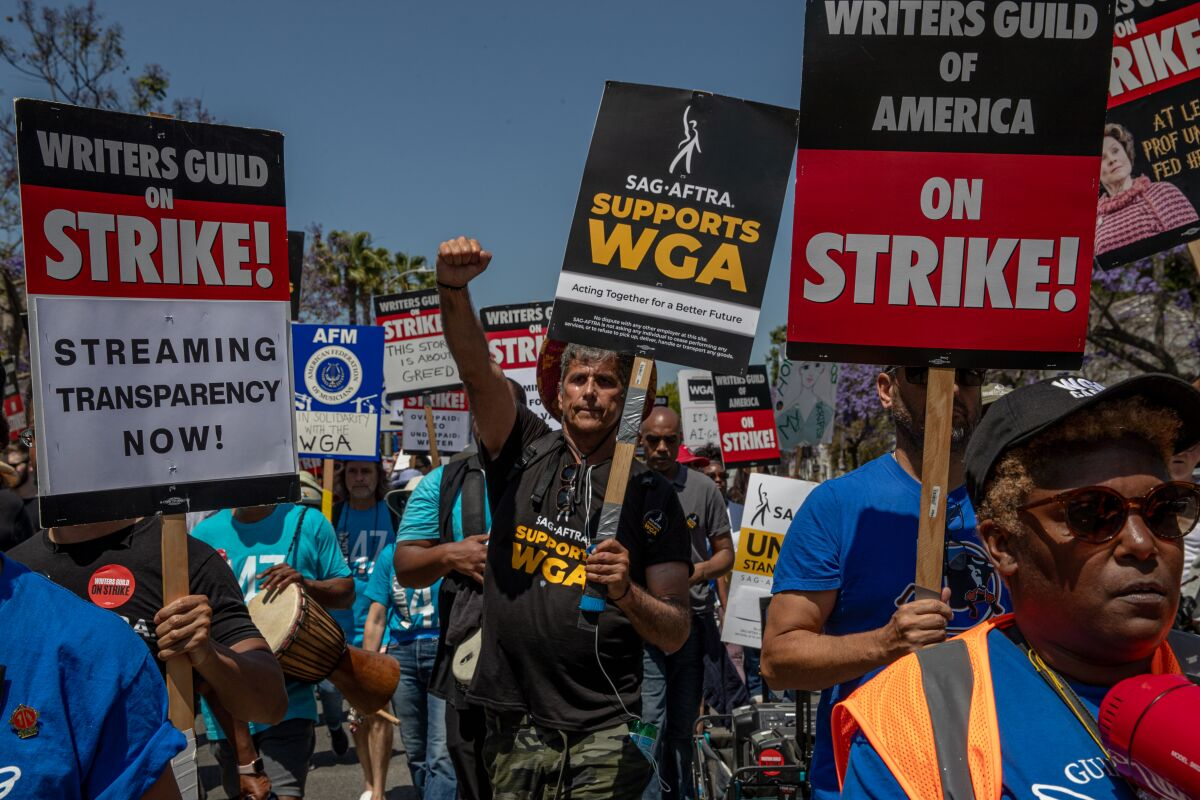
A Brief Message/Warning To The Writers And Actors On Strike

Firstly, let me go on record saying that I fully support the WGA and SAG’s strike. I’ve said before that we should support them as they fight the very powerful, very well-funded Hollywood studios who profit from all their hard work.

The fact that both the actors and writers stand united in this strike for the first time since 1960 is promising. As I write this, pretty much every major movie production has shut down. The studios could only do so much without their writers, but they literally can’t do anything without their actors. That likely means highly-anticipated movies will be delayed, but it also means the people actually making those movies might actually enjoy some of the profits.

That shouldn’t be such a radical concept, but that’s where we are right now. You need only look at many of the recent testimonies to attest how poorly compensated some people are compensated.

However, this brings me to the second reason I’m making this. Because I’d like to offer what I feel is an important message to both the writers and the actors on strike right now. It happens to involve artificial intelligence, something I’ve written about before and something that happens to be a major concern for this strike.

There’s a lengthy list of issues associated with AI and how it may impact the entertainment industry at large. I’m not qualified to go over all the particulars. So, here’s a video I found that should help break it down.

With that out of the way, the first part of that message goes to the actors. Their concerns about AI might not be as significant as the writers, but I strongly believe they’re not showing enough concern. And even if they don’t understand the true impact of AI, I hope they at least heed this critical message.

Do NOT under any circumstances sign away your likeness, voice, and persona to any studio without retaining some measure of control and an appropriate structure for long-term compensation.

Seriously, I don’t care how big a star you are or how well-off you might be. Do not give any studio, large or small, the right to use your voice and likeness at the moment. The current laws are not at all equipped to protect against the never-ending efforts by studios to exploit the hell out of any star, franchise, or intellectual property.

This is not a popular novel, character, or fairy tale for which copyright laws were intended to protect. This is your name, identity, voice, and brand. Giving any studio complete or even partial control over that right now is akin to giving every hacker on the Dark Web your tax returns and credit reports for free.

I don’t know when or if the law will ever catch up to this. Right now, your best bet is to make sure your next union contract addresses this issue and ensures at least some level of control. Because I promise the technology to fully render someone in a way that’s indistinguishable from reality is coming within our lifetime. You need only look at the current state of deep-fakes to appreciate why this is the time to act.

The second part of my warning is to the writers. They are definitely more aware of how AI technology could affect their livelihood. They’ve all seen how products like ChatGPT can write a movie script in seconds. That’s not to say it writes those scripts particularly well. Most reasonable people can still tell when a piece of writing is generated by AI. And no skilled writer or studio executive will mistake an AI written script for the real deal at the moment.

But therein lies the issue that I’d like to highlight. So, to the WGA writers striking right now, please heed my words when I offer this important message.

Plan for the long term with respect to AI. Because it will get better over time. And at some point, it’ll be better than you at almost every writing task.

This is not a dire prediction. I’m not trying to be overly fatalistic, either. When I say plan for the long-term, I don’t just mean get a binding contract that gets everyone back to work for another decade or two. I’m saying the writers striking right now need to think much furthe ahead.

Right now, AI products like ChatGPT are a long way from replacing skilled writers, but not as long as most people think. I’ve heard a number of writers and influencers scoff at AI, saying it’s nothing more than autocorrect on steroids. Some even call it a script blender, which just takes a bunch of data from other writers and scrambles it like a blender until it produces something that just seems original.

If that’s what you’re thinking, then I strongly encourage you to find a better source of information on emerging technology. Because writing off the ability of ChatGPT to write scripts is like writing off the first iPhone because it just looks like an iPod with a call feature. You’re not seeing the forest from the trees.

The current AI programs we have right now are limited, clunky, and crude. They’re very much akin to the early models of the iPhone in that they are in the early stages of refinement. You could definitely make the case that early versions of ChatGPT were basically fancier versions of autocorrect blended with your standard virtual assistant.

However, the latest version of ChatGPT is much more capable in terms of scale and ability. To simply call it a more advanced version of autocorrect is like calling a motorcycle a more advanced version of a kids’ tricycle. And it will continue to improve. That is the only certainty we have at this point with AI technology.

That’s not to say it’ll become sentient and go full-blown Skynet on the human race. In fact, AI doesn’t even need to achieve human-level intelligence to be just as capable as any writer or producer. It just needs to be refined, capable, and developed to a point where it can “think” about entertainment on a level that’s better than any human being ever has or ever will.

That kind of AI might not be feasible now. It might not even be feasible this decade. But make no mistake, it will likely happen in your lifetime. And the studio executives you’re up against now would love nothing more than to see this technology perfected so that the process of creating hit shows and movies is as automated as a modern assembly line.

It doesn’t matter to them if it means putting you, the actors, or the many crews on movie sets out of work. It just matters that it turns a profit in the short and long term.

That means that when negotiating with the studios, it’s not enough to just think 10 years ahead. It’s not even enough to think 20 or 30 years ahead. This may very well be your first and only chance to get something in writing that ensures writers will have some stake in the creative process moving forward. And if you fail to achieve that now, then rest assure the studios will screw you over the nanosecond an AI can write scripts as good as you.

Don’t let that happen.

Don’t let the studios screw you like that.

Get something in writing that ensures or at least complicates those efforts as technology continues to change entertainment.

But if I have one final message to the actors and writers alike, It’s this.

You cannot stop AI from affecting your industry.

We’re past the point of no return on this. The genie is out of the bottle. Like smartphones and electricity, the technology can’t be uninvented. You’re not going to convince the studios to just ignore AI moving forward. That’s like trying to convince horse-and-buggy manufacturers to ignore cars.

One way or another, you’ll have to find a way to co-exist with AI. I don’t claim to know how this will manifest in terms of a contract or some sort of legal protection. I just know that in the history of any industry, fighting new technology is a losing battle.

We’re still with you.

We still want you to succeed.

Just don’t assume that the AI you’re concerned about now is anywhere near as disruptive as it’s going to be.
Leave a comment

Filed under AI Art, Artificial Intelligence, Current Events, movies, technology, television

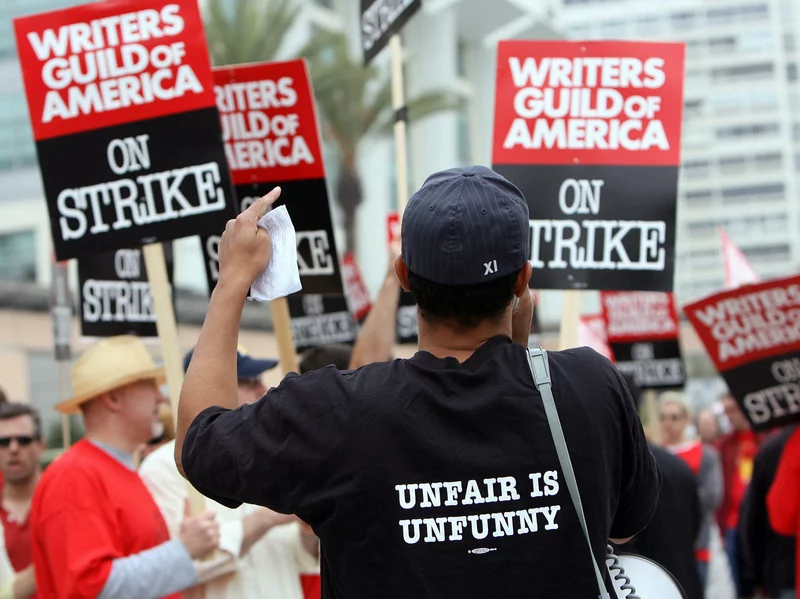
Why You Should Side With The Writers In The Latest WGA Writers Strike

Back in late 2007, there was a three-month strike between the major studios of Hollywood and the Writer’s Guild of America (WGA), the largest labor union representing professional writers working in the entertainment industry. That strike was one of the most disruptive forces to hit the industry in decades. Like many other labor strikes, much of the issue came down to money. MOst of it came down to how much writers were getting paid in residuals for things like DVD sales and other emerging distribution channels.

Even though the dispute was resolved, there were major effects on various shows and movies. If you want to know why there were so many reality TV shows that emerged in the late 2000s, this is a major factor. Shows that don’t employ elaborate stories or scripted content don’t have to pay a large writing staff. That means more profits for the studios and the executives.

As someone who tends to despise reality TV, I hated this trend.

And to those who watched those shows and continue to do so, just know that the situation we now find ourselves in with respect to entertainment is largely because of you.

Flash forward to today and the WGA has gone on strike again. Now, I’m sure most peoples’ primary concern is whether or not this will affect their favorite shows. As someone who loves binging non-reality TV shows, I admit that is a concern for me too. However, even if your favorite shows end up affected, do not cast the blame on the writers. That’s like blaming the miners who get trapped in a mine and not the corrupt executives who skimped on safety.

This latest strike promises to be different compared to what happened in 2007. A lot has changed in the entertainment industry since then, even before the impact of the COVID-19 pandemic. Now, residual revenue for DVD sales is less a concern because fewer consumers are buying DVDs. So much of everything has gone to streaming now and that’s seriously impacting writers’ ability to make a living from their craft.

On top of that, there’s the emergence of AI chatbots like ChatGPT that could potentially undermine writers even more by allowing studios to basically let AI fill in rather than paying another writer. And anyone who knows anything about how most industries operates, including entertainment, understands that if executives can increase profits by squeezing out workers, they’ll do it. And they usually won’t hesitate because the financial incentives are just too strong.

This, more than anything, is why we the consumers should side with the WGA. Even if it means your favorite shows get delayed, this is one labor struggle that goes beyond just pay disputes. Writers in entertainment weren’t making much beforehand. I’ve even heard a few jokes online among the comic publishing crowd that certain comic writers, especially those who independently publish, make more money than some of the writers on major shows and movies.

And it’s set to get worse and many studios are seeking to treat their writers like gig workers. Instead of employing a consistent, stable writing staff that knows each other and understands the product, studios think they can just hire a few freelancers, pay them less, and get a product that’ll still be watched by fans. And since these writers won’t have rights to residuals or copyrights, then the studio can keep more of the profits.

This should concern you, the consume. Because if the entertainment industry is screwing skilled writers out of money, then that will eventually affect the quality of every show and movie you see. If you think things are bland now with every major studios just milking established franchises to death, I promise it’ll get worse if they squeeze out talented writers.

Great writing is how underrated shows like “Arcane” can somehow find an audience.

Great writing is how shows like “Avatar: The Last Airbender” can become beloved franchises.

Great writing is how movies like “Puss in Boots: The Last Wish” can end up being way better than anyone thought it could be.

As someone who still aspires to be a good writer one day, I may have some bias when it comes to who I side with in an issue like this. But if you’re a consumer of entertainment that doesn’t suck, or just don’t want to go through another glut of reality TV again, it’s in your interest to side with the WGA.

They work hard to entertain us.

They work hard to enchant, inspire, and enlighten us.

That’s not something you can reduce to gig work. That deserves both our respect, as well as fair compensation for their labor.

1 Comment

Filed under Current Events, movies, television, writing

Day-And-Date Streaming Movie Releases: Did The Experiment Fail?

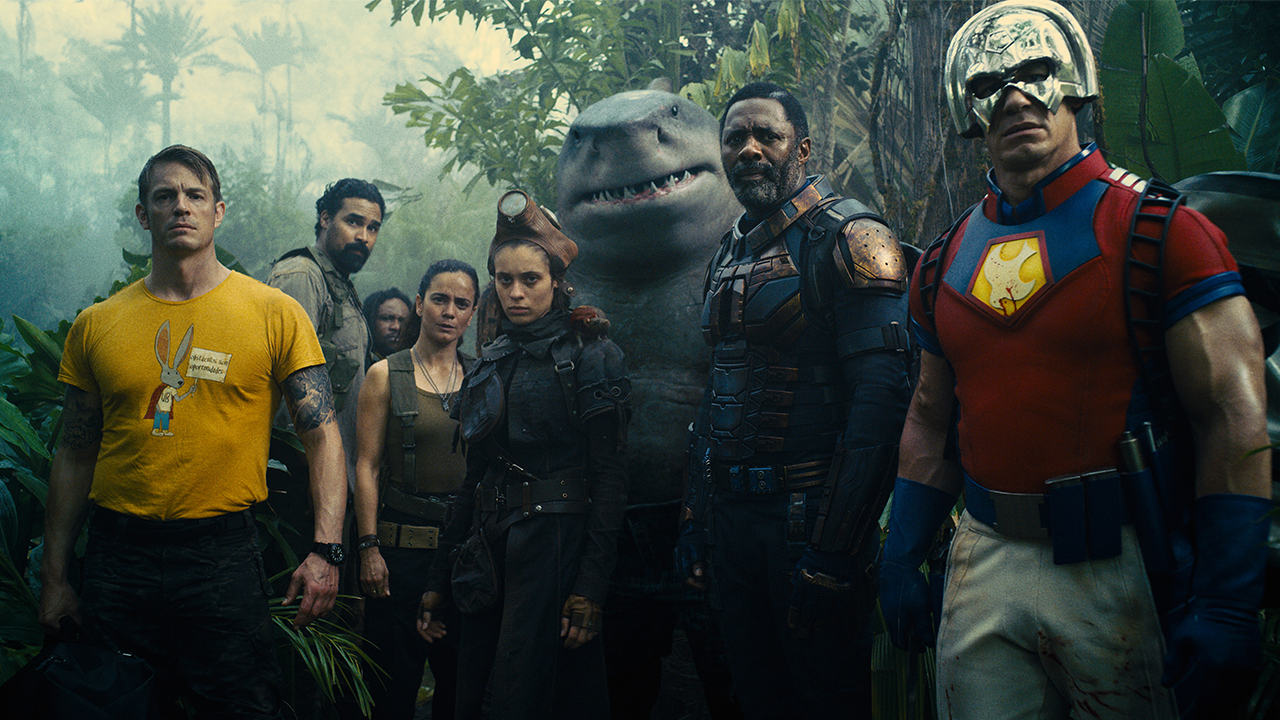
Movie Releases You Can Stream This Week: 'The Suicide Squad', 'Jungle  Cruise', and More | Entertainment Tonight

Last year, things literally could not have been worse for the movie industry. A once-in-a-generation pandemic had shut down the world. Every industry was affected, but few were hit harder than the movie industry. Suddenly, an industry that relies on people actually getting out of their houses and gathering in enclosed spaces was no longer viable. I personally wondered whether the industry would ever recover.

Then, as the world endured, the industry attempted to adapt. This led to Warner Brother’s landmark decision to release some of their biggest movies on their streaming platform, HBO Max, on the same date as their theatrical release. At the same time, Disney was releasing some of its biggest movies on Disney+, albeit for an extra fee.

I believed, for a time, that this could fundamentally change the industry for good, even after the pandemic was over. I even shared my experience in how this affected my own movie watching habits. I won’t deny that I’ve gotten a lot more out of my HBO Max service, knowing I can watch new movies the day they come out. I did it with both “Space Jam 2” and “The Suicide Squad.”

However, it now seems that this new experience that I’ve been enjoying is about to come to an end. According to The Hollywood Reporter, Warner Brothers is going back to a more traditional model, having its movies come out in theaters first for a 45-day window before going to a streaming service.

THR: Warner Bros., AMC Strike 45-Day Exclusive Theatrical Window Deal for 2022

In a new deal with mega-cinema chain AMC Theatres, Warner Bros. has agreed to return to an exclusive, 45-day theatrical window in 2022.

AMC CEO Adam Aron unveiled the pact Monday during an earnings call. “We’re especially pleased Warner Bros. has decided to move away from day-and-date,” Aron said. “We are in active dialogue with every major studio.”

WarnerMedia enraged cinema operators when deciding to open its 2021 slate simultaneously on HBO Max and in theaters. The company has since said that the move was in response to the ongoing pandemic, and not permanent. Insiders add that the AMC arrangement was agreed to in March.

For the most part, I’m not too surprised. It’s now abundantly clear that this release method has a significant impact on the box office returns of a movie. The recent release of “The Suicide Squadis proof enough of that, despite being loved by critics and fans alike. Having seen the movie and enjoyed it immensely, I feel like it definitely deserved a bigger box office than it got.

Given how much these movies cost to produce, it’s unreasonable to expect the studios and the actors involved to be comfortable with this arrangement. Pandemic or not, this is not the same success they’re used to. If movies released simultaneously on streaming make this little at the box office, then that’s just not sustainable. Something has to give.

At the same time, a part of me wonders whether this reversion to a more traditional movie-release schedule will lead to even more change. I get why movie theaters want to go back to the old model where a movie as bad as “Transformers: Dark of the Moon” could still make a billion dollars at the global box office. I just don’t know if we’ll ever see anything like that again.

It doesn’t help that the pandemic isn’t over. In fact, it may never truly be over if things keep going badly. That means things like packed movie theaters just might never come back entirely. We may very well never see another billion-dollar movie again.

In that sense, can we still say that WB’s streaming experiment failed? We don’t yet know how much or how little movies like “Space Jam 2” and “The Suicide Squad” impacted HBO Max subscriptions. We also don’t know how much or how little these types of movies affect the movie-making process or how those involved are compensated. The fact that Scarlett Johansson is suing Disney over releasing “Black Widow” on streaming hints the current system is very flawed.

Maybe there’s a sweet spot between day-and-date releases on streaming and theatrical runs. A part of me thinks that a 45-day release window is basically not too different from the old way of doing things. Personally, I think if studios like WB want to maximize both box office and streaming, they’d make that release window a lot more narrow. That would create a scarcity that could prompt more people to go to the movies.

Perhaps that window needs to be longer to allow bigger budget movies to turn a profit. Maybe a two-month window would accomplish that. I honestly don’t know. I think nobody knows at this point. The industry is just changing so much and chances are there will be more changes by the end of this year. Whether or not they’ll be good for the industry and those who work in it remains to be seen.

In the end, maybe this whole experiment will be just a first step in that change. It might not have worked as well as everyone would’ve liked, but few things ever do. It was something new and bold during a time of unprecedented upheaval. Plenty of good and bad can come out of that.

Also, I will miss turning my living room into my own personal movie theater. It was indeed nice while it lasted. However, for the good of the industry and the movies I love, I understand that the experiment was not a solution. Hopefully, more good comes out of this in the long run.

Leave a comment

Filed under Current Events, HBO Max, Marvel, Marvel Cinematic Universe, movies

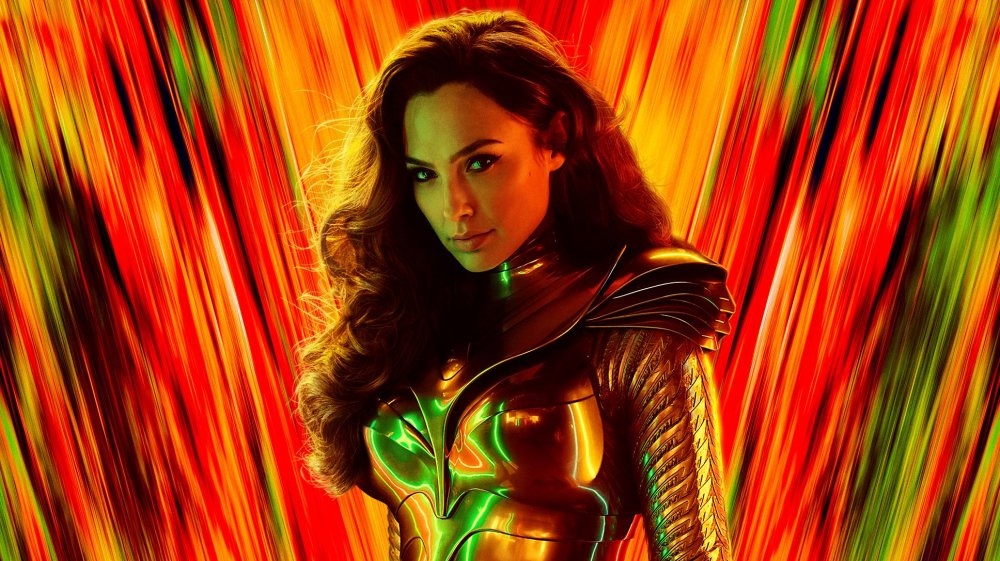
“Wonder Woman: 1984” To Be Released In Theaters AND HBO Max On Christmas: Why This Is A BIG Deal

More often than not, we don’t realize when a fateful decision is a big deal that has ramifications for years to come. Those kinds of moments are rare, but powerful. I doubt the first person to use a cell phone knew just how big a deal that breakthrough was when they made that first call.

Other decisions are more obvious. You know from the get-go that this is one of those choices that might not be surprising, but you get the sense it’ll be one of those moments that you can cite as a major turning point years from now.

This Christmas, we may just experience one of those moments because that’s the day “Wonder Woman 1984” is set to come out, both in theaters and on streaming. I don’t think it’s a stretch to claim this decision could change movies, entertainment, and media for years to come.

It finally became official. After being originally set for release in June 2020, Warner Brothers decided that, rather than simply wait for this once-in-a-century pandemic to end, they’re going to release “Wonder Woman 1984” in theaters and on HBO Max on the same day. This is what The Hollywood Reporter had to say.

THR: ‘Wonder Woman 1984’ Heading to HBO Max, Theaters Dec. 25

With a second wave of COVID-19 impacting many parts of the globe, Wonder Woman 1984 is changing course yet again.

The tentpole is all but giving up on a traditional theatrical release and will instead bow in whatever cinemas remain open Dec. 25 as well as stream on HBO Max in the U.S. for one month beginning on Christmas Day. In international markets where HBO Max is not available, the film starts rolling out Dec. 16.

“At some point you have to choose to share any love and joy you have to give, over everything else,” director Patty Jenkins said in a statement Wednesday. “We love our movie as we love our fans, so we truly hope that our film brings a little bit of joy and reprieve to all of you this holiday season.”

Jenkins urged audiences to watch the $200 million tentpole in theaters where it was safe to do so, and on HBO Max where it is not. In a note echoing Jenkins, star Gal Gadot added, “It wasn’t an easy decision and we never thought we’d have to hold on to the release for such a long time but COVID rocked all of our worlds.”

Growing the number of HBO Max customers is of huge import to TimeWarner, even if it means giving up on potential box office ticket sales that Wonder Woman 1984 would have earned had it been pushed to sometime in 2021. The hope is that a high-profile Christmas Day title such as the superhero sequel will lure new subscribers (HBO Max is pricier than most other streamers, at $15.99 a month).

That’s just the basics. “Wonder Woman 1984” is still coming out in theaters, as it was always meant to. However, with theaters on the brink of collapse in wake of the pandemic, Warner Brothers is opting to gamble on the future of streaming media. They’re dropping this big name blockbuster that cost $200 million to make on their signature streaming service, HBO Max.

Logistically speaking, it’s understandable. The news surrounding the pandemic has been bleak, even by 2020 standards. Even though a vaccine seems imminent, it might be too late to save the movie industry as we know it. The damage has been done. That industry must change. This may very well be the biggest change we’ve seen since in decades.

This is not some forgettable movie like “Trolls World Tourskipping theaters for streaming. That could’ve been written off as a calculated risk for a movie that was never going to make much at the box office to begin with. This is a tentpole blockbuster from a studio’s biggest franchise skipping over what many see as the most critical part of a movie’s life.

The first “Wonder Woman” movie made north of $800 million on a budget of $150 million during its theatrical run. That’s a lot of profit, but may be a profit that even a blockbuster movie just can’t make anymore in a post-pandemic world. Even after the pandemic ends, who’s to say that the theater industry will just go back to the way it used to be?

Now, it seems Warner Brothers are prepared to leveraging their future on their HBO Max streaming service. “Wonder Woman 1984” is, by far, their biggest chip and most valuable asset. It, more than any other movie they had in the can, was most likely to get their studios’ profits going again once the pandemic waned.

Instead, this movie that has so many excited and eager, myself include, is going to be Warner Brothers’ boldest gamble at turning HBO Max into a viable Netflix competitor. They’re not just looking to do for HBO Max what “The Mandaloriandid for Disney Plus. They want to go a step further and make streaming the new avenue for big title blockbusters.

It’s impossible to overstate how big a shift this is for the movie industry. Whereas “Trolls World Tour” on streaming was a sign, releasing “Wonder Woman 1984” on the same day it comes out in theaters is a monumental shift.

It’s essentially sacrificing potential profits at the box office for a new host of subscribers to HBO Max. Will that ultimately make more money in the long run? It’s possible.

After all, those who buy a movie ticket to see “Wonder Woman 1984” are only going to pay for that ticket. From that purchase, Warner Brothers will only see a fraction. If a bunch of people subscribe to HBO Max, they may ultimately pay much more to the studio through its monthly $16 fee.

Even if most just buy an HBO MAX subscription for a single month and cancel, it’s very likely that plenty will stay subscribed, keep paying, and keep coming back for more wonderful blockbusters. In the long run, “Wonder Woman 1984might make more money for its studio overlord than it ever would have in the theaters.

That’s still a big if. So much of a movies profits is still tied to its box office. Nobody quite knows how this new model of releasing a movie will work. Streaming a movie on the same day it comes out in theaters may help widen the audience, but without those profits, the idea of footing the bill for a $200 million movie might be less tenable.

Would that mean that big budget blockbusters like “Wonder Woman 1984” became less rare?

Would that mean that theaters as a whole would diminish both in numbers and in importance for the industry?

Would that mean that blockbusters will ultimately have to cater to a streaming audience instead of a casual movie-goer?

It’s hard to say. Nobody knows. I certainly don’t know. I doubt anyone knows, but most can already sense that this could be the start of a much larger trend. Releasing “Wonder Woman 1984” on streaming and in theaters could ultimately be the point of no return for the movie industry.

This could be the future of entertainment and movies. Theaters are no longer the center of all things film and there’s no going back. Whether other blockbusters follow suit remains to be seen. I have a feeling Disney will be watching how “Wonder Woman 1984” performs closely, given how it opted to delay “Black Widow” until May 2021.

If it proves profitable in the long run, I suspect that Disney will follow suit and so will every other studio. At that point, the movie industry will have permanently changed and we’ll be able to cite this announcement as the moment it began.

There’s only one certainty at this point. On Christmas this year, I’ll be curled up on my couch to watch “Wonder Woman 1984” through my current HBO MAX subscription. Whatever monumental changes this movie inspires in the industry, it’s still Wonder Woman. I still intend to partake in her wonder, no matter what form it takes.

Leave a comment

Filed under Current Events, movies, superhero comics, superhero movies, Wonder Woman