Category Archives: AI Art

SAG-AFTRA’s Deal For AI And Video Game Voice Actors: Why It Matters (And Why It’s Concerning)

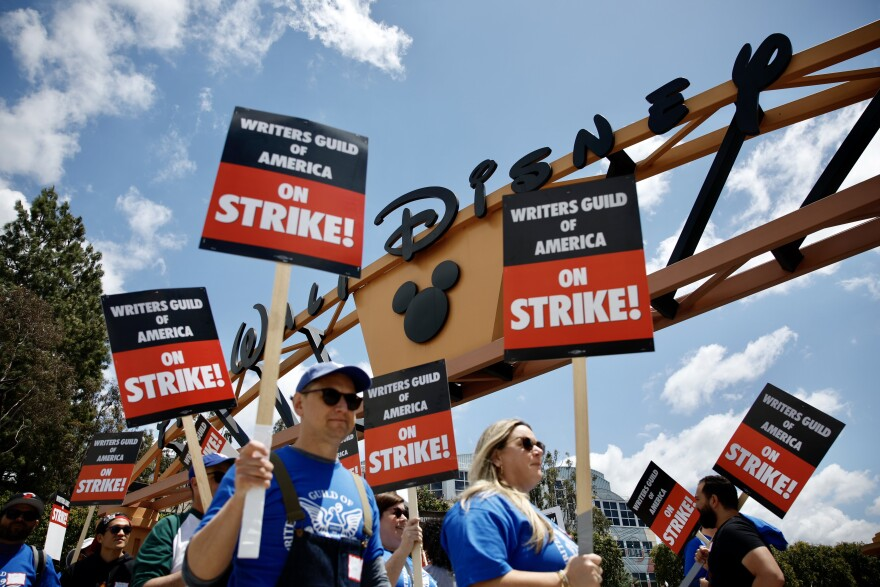
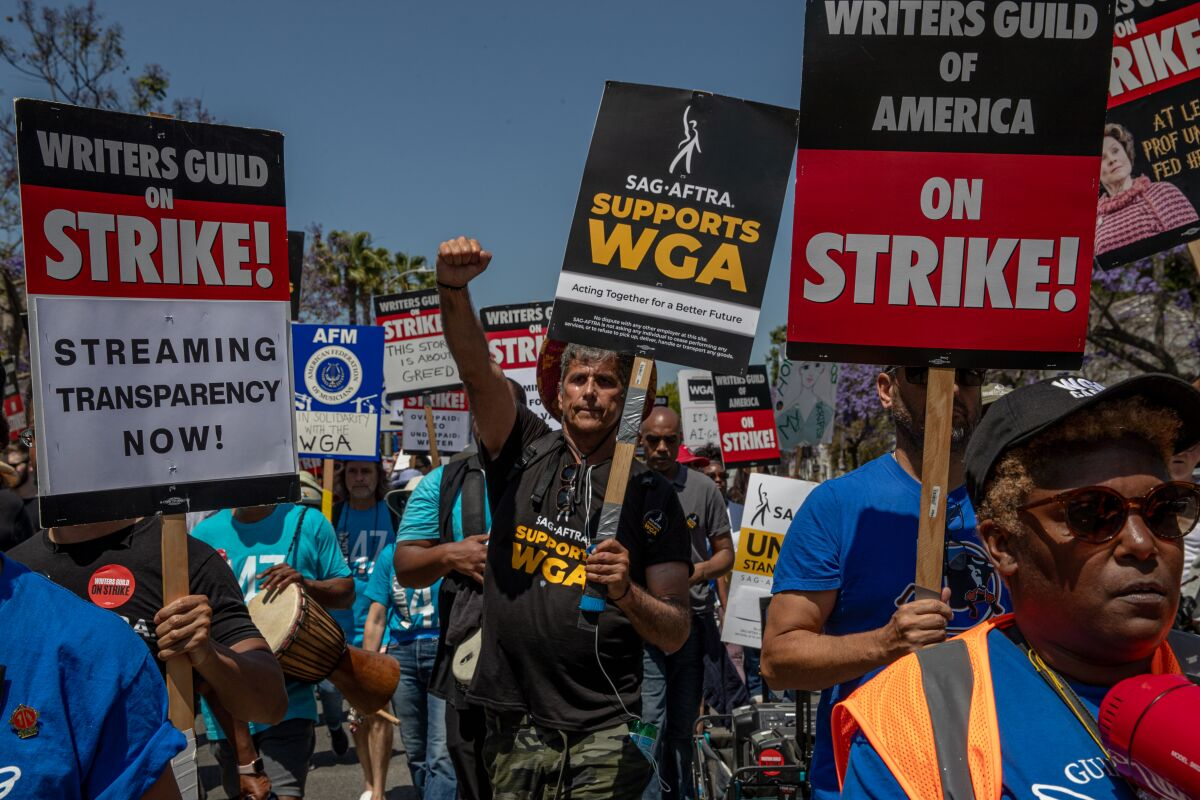
One of the biggest stories in 2023 was the SAG-AFTRA strike, which also coincided with the WGA strike. It was one of the most impactful and extensive labor disputes in recent history. Some would even argue it was the most important strike to ever occur in the entertainment industry. I’m certainly inclined to agree with that. That’s part of why I felt compelled to mention it.

The strike by both unions had many issues of concern, but one of the biggest had to do with artificial intelligence and emerging technology like generative AI. Both writers and actors alike were concerned that studios would start using AI to effectively replace them or use their past works to create derivatives without any compensation.

It was a very legitimate concern. I’m of the opinion it was the single most pressing issue for everyone involved in the entertainment industry. Artificial intelligence is no longer just the domain of sci-fi stories. Even the limitations of existing tools are capable of producing music, art, literature, and various other forms of content. Future tools promise to be even more effective.

Eventually, in the not-so-distant future, AI tools might get to a point where they can produce content at or near the quality of any human. They don’t even need to achieve human-level intelligence. They just need the right amount of refinement, investment, and engineering.

But even with this pressing issue, both the WGA and SAG-AFTRA largely won their dispute. They were able to get a contract that included provisions protecting them from future encroachments by AI. That is certainly an important, worthwhile consideration. It helps ensure that those working in the entertainment industry can continue to make a living.

However, less than a few months after the strike ended, there are already new encroachments. And they’re happening with the full support and sanction of SAG-AFTRA. According to multiple reports, the union reached a deal with a company called Replica Studios to allow actors to license their voices to be replicated by artificial intelligence for video games.

Naturally, this has caused some concern and consternation, especially among voice actors who do a great deal of work in gaming. On the surface, it seems like an about-face. This seems like a manifestation of what they were protesting against during the strike, letting studios use AI to replicate iconic voices or figures in certain productions.

However, I don’t think it would be accurate to say this is a complete reversal. For one, SAG-AFTRA makes it clear that the intention of the deal is to ensure that those whose voices are licensed and utilized by AI receive appropriate compensation. This way, studios can’t just use a bunch of recordings of a famous voice and stick them in a game without paying the appropriate people. That is perfectly reasonable.

At the same time, there’s no denying that this will undermine current and future voice actors working within the gaming industry. The process for voice acting in most modern games can be extensive and expensive. A high-profile game like Grand Theft Auto V cost over $250 million to develop, unadjusted for inflation, and that game involved a lot of voiceover work.

Developing video games has only become more expensive over time, much more so than movies, TV shows, or music. Some are already estimating that the development of Grand Theft Auto VI could exceed $2 billion when all is said and done. No matter how you feel about video games or their development, that is not sustainable.

In that context, it makes sense to allow the use of AI tools to help cut down on that cost, especially as games and computing power increases. And it will certainly benefit those who have iconic, established voices in the video game industry.

But for those who aren’t in the industry yet or just aren’t well-known, this could be the first step in rendering voice acting in video games an unviable career path. It could become to acting what switchboard operators were to telephones.

I don’t doubt for a second that those in SAG-AFTRA are aware of this. They have to know on some levels that AI technology will continue to advance. They can’t fight it. They can’t stop it. They can’t prevent it from becoming more and more capable with each passing year.

And unlike video or artwork, mimicking voices is a more mature technology. It’s something that doesn’t really need much refinement to replace the work of a human voice actor. If they didn’t make this deal, then it just would’ve been harder to work around with each passing year.

Even if this deal is ultimately beneficial to actors and voice actors, it should still be a concern. It sets an early precedent for how unions, studios, and actors are attempting to accommodate advances in AI with their profession. While this primarily impacts the gaming industry, it is bound to affect others eventually.

There will come a point where AI is capable of replicating the imagery, mannerisms, and presence of any living actor. There will also come a point where AI is capable of producing animated content that’s difficult to distinguish from the kind that’s traditionally produced. What happens to the industry and those who work within it at that point? Would this deal that SAG-AFTRA did for gaming work? Or will it only delay further disruptions?

I don’t claim to know the answer. But if you’re involved in the entertainment industry in any way, this warrants serious attention. The existing AI tools we have now are plenty disruptive. They’re only going to get better with time, investment, and better engineering. The incentives are strong and at this point, there’s no putting the AI genie back in the bottle.

This technology isn’t just going to affect our lives. It’s going to affect how we make a living. If we don’t find a way to coexist with it, then that will only cause greater problems down the line. And it will impact far more than video game development.

1 Comment

Filed under AI Art, Artificial Intelligence, technology, television, video games

Napster, Generative AI, And How The Internet’s Past May Define Its Future

This is a video from my YouTube channel, Jack’s World.

This video explores a major chapter in the history of the internet to help inform what may lay ahead for the future. And for those of a certain demographic, one of the most disruptive programs during the early days of the internet was Napster.

This famous/infamous program completely upended the music industry. It also triggered lawsuits and upheavals from which the industry has never recovered. How it all played out was complicated, but the end result set a precedent that has helped shape the course of the internet.

Now, with the rise of generative AI, a similar predicament is playing out. And we would all be wise to heed the lessons learned from Napster.

1 Comment

Filed under AI Art, Artificial Intelligence, ChatGPT, Jack's World, technology, YouTube

The End Of The WGA Writer’s Strike: Important Lessons And (Distressing) Insights

When an underdog succeeds, it’s worth celebrating. It’s a big reason why sports movies and superhero movies have so much appeal. Most audiences just love it when an underdog triumphs over daunting odds. And they love cheering with them when they ultimately succeed.

In that spirit, we should cheer the recent news surrounding the WGA strike that has been going on since mid-July 2023. According to the Associated Press, a tentative deal between the WGA and the major studios has been reached. While that doesn’t mean the strike is completely over, it marks a critical step in getting people back to work in an industry that was already reeling from the aftermath of the COVID-19 Pandemic.

AP: Writers’ union reaches tentative deal with Hollywood studios to end historic strike

As someone who loves movies, TV, and mindless entertainment as much as the next consumer, this is great news. This strike was bound to do more and more damage the longer it went on. We probably won’t know the full extent of that damage until a few years from now when we can look back at the impacts with the benefit of hindsight.

There’s also a personal element to this strike. I have multiple family members who work in the entertainment industry, mostly in the film and production side of things. They, more than most, felt the impact of this strike. Early on, a few even told me that this strike had the potential to last a long time. One even said they didn’t expect a resolution until late November. There was even a possibility it could continue well into 2024.

Thankfully, that no longer appears to be the case. This tentative deal, assuming it gets ratified, will provide some overdue benefits to the writers who play a big part in making the shows and movies we love so much. They deserve a deal that allows them to reap the fruits of their creative labor. You don’t have to look hard to find out just how much they were getting screwed over by a changing entertainment industry that studio executives and CEOs were exploiting to the utmost.

And therein lies an important lesson that’s worth highlighting, even as the strike comes to an end. This whole issue happened because the entertainment industry was changing. The old system that relied on residual income from broadcast TV and DVD sales just wasn’t going to cut it in an era of streaming media. The writers and actors behind some of these successful shows just weren’t getting the same share of the profits. And the studios were very much aware of this.

They could’ve adapted to ensure that those involved in the production could continue to be compensated fairly, even as consumers switched from traditional outlets to streaming.

They could’ve been open, honest, and transparent with the new economics of producing successful TV shows and movies in the post-COVID world.

They could’ve even explained why it was considerably difficult to pay generous residuals in a world of streaming media wherein profit margins were just too thin, if there even were profits to begin with.

But they didn’t. The executives, the CEOs, and those with the real power within these entertainment companies chose not to be proactive. Instead, they prioritized the price of their company stock and the investors who owned that stock. This is to be expected, as that tends to be the default reflex of publicly traded companies.

Call it callous in that it blatantly disregards the real work and toil of those producing the content.

Call it greed in the shallowest possible sense.

But at the moment, that’s simply how the incentives align in the entertainment industry, if not most industries in the global economy. There’s just too much money to be made by the rich and well-connected to do anything else. They are not going to do right by their workers unless they’re forced to, if not by law than by organized labor.

That may come off as cynical, but it’s also an important insight and one that every worker in every industry would be wise to remember. Because over the course of this strike, it quickly became clear how out of touch and callous these billionaire CEOs and executives were. They kept demanding that writers be reasonable with their requests. But at the same time, they were making hundreds of millions of dollars in salary and millions more in stock options.

These are not people capable of identifying with the life and struggles of working people.

These are people who might as well live on a different planet with respect to wealth, privlidge, and access.

Men Like David Zazlav and Bob Iger will never have to worry about paying a mortgage on time, falling behind on their bills, or ending up homeless because they cannot afford the outrageous rents in cities like Los Angeles and New York. So, how can we possibly expect them to empathize, let alone understand, the struggles of the writers and workers who help make their companies successful.

Most of these executives never set foot on a production stage, nor do they write or edit a single script. They just sit in offices, make demands/decisions, allocate money, and deal directly with investors whose primary focus is seeing a return on their investment.

And even if the company were to fail completely, these people would still end up with millions upon millions of dollars in their bank accounts. If they wanted to, they could never work a day for the rest of their lives. But those who actually work for them would be completely screwed.

It’s an unequal, unfair situation full of misaligned incentives. The executive and CEO class holds the power, the cards, and the money. They will not do the right things as a first recourse. They will only ever do what investors and their own self-interests incentive, by default. No matter how much money they have, they’ll keep trying to make more. And if that means screwing over their workers in any possible way, they’ll do it.

Remember that the next time labor issues come up. This doesn’t just apply to the entertainment industry, either. Any industry with a similar incentive structure will have the same issues. If there are rich, well-connected CEOs with shareholders to please, don’t expect them to prioritize workers beyond what they can legally and logistically get away with.

The only true counter to this uneven dynamic is that, despite all the power and money executives weird, they still need workers. They still need consumers. They still need to be credible in the eyes of the public to some extent. That kind of leverage is critical to maintain and appreciate.

Because the world will continue to change.

Every industry, from entertainment to making widgets, will continue to change with society and technology.

Those doing the work need to change with it because those with the money and power sure as hell won’t do right by anyone but themselves, unless they have to. And only those doing the work can make that happen.

1 Comment

Filed under AI Art, Artificial Intelligence, ChatGPT, Current Events, writing

A Brief Message/Warning To The Writers And Actors On Strike

Firstly, let me go on record saying that I fully support the WGA and SAG’s strike. I’ve said before that we should support them as they fight the very powerful, very well-funded Hollywood studios who profit from all their hard work.

The fact that both the actors and writers stand united in this strike for the first time since 1960 is promising. As I write this, pretty much every major movie production has shut down. The studios could only do so much without their writers, but they literally can’t do anything without their actors. That likely means highly-anticipated movies will be delayed, but it also means the people actually making those movies might actually enjoy some of the profits.

That shouldn’t be such a radical concept, but that’s where we are right now. You need only look at many of the recent testimonies to attest how poorly compensated some people are compensated.

However, this brings me to the second reason I’m making this. Because I’d like to offer what I feel is an important message to both the writers and the actors on strike right now. It happens to involve artificial intelligence, something I’ve written about before and something that happens to be a major concern for this strike.

There’s a lengthy list of issues associated with AI and how it may impact the entertainment industry at large. I’m not qualified to go over all the particulars. So, here’s a video I found that should help break it down.

With that out of the way, the first part of that message goes to the actors. Their concerns about AI might not be as significant as the writers, but I strongly believe they’re not showing enough concern. And even if they don’t understand the true impact of AI, I hope they at least heed this critical message.

Do NOT under any circumstances sign away your likeness, voice, and persona to any studio without retaining some measure of control and an appropriate structure for long-term compensation.

Seriously, I don’t care how big a star you are or how well-off you might be. Do not give any studio, large or small, the right to use your voice and likeness at the moment. The current laws are not at all equipped to protect against the never-ending efforts by studios to exploit the hell out of any star, franchise, or intellectual property.

This is not a popular novel, character, or fairy tale for which copyright laws were intended to protect. This is your name, identity, voice, and brand. Giving any studio complete or even partial control over that right now is akin to giving every hacker on the Dark Web your tax returns and credit reports for free.

I don’t know when or if the law will ever catch up to this. Right now, your best bet is to make sure your next union contract addresses this issue and ensures at least some level of control. Because I promise the technology to fully render someone in a way that’s indistinguishable from reality is coming within our lifetime. You need only look at the current state of deep-fakes to appreciate why this is the time to act.

The second part of my warning is to the writers. They are definitely more aware of how AI technology could affect their livelihood. They’ve all seen how products like ChatGPT can write a movie script in seconds. That’s not to say it writes those scripts particularly well. Most reasonable people can still tell when a piece of writing is generated by AI. And no skilled writer or studio executive will mistake an AI written script for the real deal at the moment.

But therein lies the issue that I’d like to highlight. So, to the WGA writers striking right now, please heed my words when I offer this important message.

Plan for the long term with respect to AI. Because it will get better over time. And at some point, it’ll be better than you at almost every writing task.

This is not a dire prediction. I’m not trying to be overly fatalistic, either. When I say plan for the long-term, I don’t just mean get a binding contract that gets everyone back to work for another decade or two. I’m saying the writers striking right now need to think much furthe ahead.

Right now, AI products like ChatGPT are a long way from replacing skilled writers, but not as long as most people think. I’ve heard a number of writers and influencers scoff at AI, saying it’s nothing more than autocorrect on steroids. Some even call it a script blender, which just takes a bunch of data from other writers and scrambles it like a blender until it produces something that just seems original.

If that’s what you’re thinking, then I strongly encourage you to find a better source of information on emerging technology. Because writing off the ability of ChatGPT to write scripts is like writing off the first iPhone because it just looks like an iPod with a call feature. You’re not seeing the forest from the trees.

The current AI programs we have right now are limited, clunky, and crude. They’re very much akin to the early models of the iPhone in that they are in the early stages of refinement. You could definitely make the case that early versions of ChatGPT were basically fancier versions of autocorrect blended with your standard virtual assistant.

However, the latest version of ChatGPT is much more capable in terms of scale and ability. To simply call it a more advanced version of autocorrect is like calling a motorcycle a more advanced version of a kids’ tricycle. And it will continue to improve. That is the only certainty we have at this point with AI technology.

That’s not to say it’ll become sentient and go full-blown Skynet on the human race. In fact, AI doesn’t even need to achieve human-level intelligence to be just as capable as any writer or producer. It just needs to be refined, capable, and developed to a point where it can “think” about entertainment on a level that’s better than any human being ever has or ever will.

That kind of AI might not be feasible now. It might not even be feasible this decade. But make no mistake, it will likely happen in your lifetime. And the studio executives you’re up against now would love nothing more than to see this technology perfected so that the process of creating hit shows and movies is as automated as a modern assembly line.

It doesn’t matter to them if it means putting you, the actors, or the many crews on movie sets out of work. It just matters that it turns a profit in the short and long term.

That means that when negotiating with the studios, it’s not enough to just think 10 years ahead. It’s not even enough to think 20 or 30 years ahead. This may very well be your first and only chance to get something in writing that ensures writers will have some stake in the creative process moving forward. And if you fail to achieve that now, then rest assure the studios will screw you over the nanosecond an AI can write scripts as good as you.

Don’t let that happen.

Don’t let the studios screw you like that.

Get something in writing that ensures or at least complicates those efforts as technology continues to change entertainment.

But if I have one final message to the actors and writers alike, It’s this.

You cannot stop AI from affecting your industry.

We’re past the point of no return on this. The genie is out of the bottle. Like smartphones and electricity, the technology can’t be uninvented. You’re not going to convince the studios to just ignore AI moving forward. That’s like trying to convince horse-and-buggy manufacturers to ignore cars.

One way or another, you’ll have to find a way to co-exist with AI. I don’t claim to know how this will manifest in terms of a contract or some sort of legal protection. I just know that in the history of any industry, fighting new technology is a losing battle.

We’re still with you.

We still want you to succeed.

Just don’t assume that the AI you’re concerned about now is anywhere near as disruptive as it’s going to be.

Leave a comment

Filed under AI Art, Artificial Intelligence, Current Events, movies, technology, television

An AI-Generated Comic Was Denied Copyright Protection (And Why That’s A Big Deal)

Every now and then, a story slips under the radar of a much larger, but closely related story. The larger story makes more headlines and attracts more attention, but the smaller story might end up having a far more lasting impact.

That seems to be happening a lot with news involving artificial intelligence and the various AI tools that have emerged in recent years. I’ve already talked about plenty, giving my opinion on the rise of ChatGPT and showing off some AI-Generated artwork I made. There’s so much going on in this field that it’s hard to keep up with, let alone discuss.

But recently, one of those little stories caught my attention. It involves the same AI-Generated art I mentioned earlier and comic books, something for which I’ve shared my passion for in many forms. And it’s a story that I don’t think is getting enough attention.

It has to do with a comic called Zarya of the Dawn, a comic created by Kris Kashtanova. It’s not published by Marvel, DC, Dark Horse, Image, or any other mainstream comic publisher. You can actually download it right now for free. But what makes this comic different isn’t the story, writing, or style. It’s how it was made.

This comic was written by a person.

However, all the artwork inside was created with AI-generating art tools, most notably MidJourney.

That, in and of itself, is quite remarkable. The visuals within this book are certainly eye-catching. They might not rank on the same level as a Jim Lee or a Jack Kirby, but it’s a solid visual spectacle that brings to life a story.

For people like me, who cannot draw and don’t have the money to pay artists to depict the stories we want to tell, this is truly remarkable. I would go so far as to say it’s genuinely exciting. It shows just what’s possible with these tools. A writer with no drawing skills was able to produce this comic using only an AI art generating tool with text prompts. And the end result is stunning.

But this is where the story takes a turn. When Kashtanova attempted to copyright this comic, the US Copyright Office issued a surprising decision that might very well set a major precedent moving forward. Because the comic used AI to create the artwork, it could not be granted copyright protection. This was the exact statement, according to Ars Technica:

“We conclude that Ms. Kashtanova is the author of the Work’s text as well as the selection, coordination, and arrangement of the Work’s written and visual elements. That authorship is protected by copyright. However, as discussed below, the images in the Work that were generated by the Midjourney technology are not the product of human authorship.”

That bolded part is my doing because that’s the section with the biggest implication. This is the US Copyright Office stating outright that images and artwork created by AI can’t get copyright protection. That means that every piece of AI art you create for whatever reason can’t be owned by you in any legal sense. Because technically, you didn’t make it. The program made it for you.

Without getting too deep into the legal issues, I don’t think enough people realize the ramifications this might have for the future of the comics industry and for the art industry as a whole. On the comics side, there are actually two sides to consider.

On one, this technology will allow ordinary people with little to no art skills to produce comics with quality artwork. People who never once had the skills or means to make comics could suddenly start producing them on their own without a publisher or a skilled artist.

That means many great comics that wouldn’t have otherwise been made can be made. Great stories that once only existed with words could be brought to life through beautiful renderings.

But on the other side, the absence of copyright protection is an issue. Yes, these comics could bring to life amazing stories. However, the creators won’t be able to monetize their work, nor would they be able to stop others from using it for their own ends.

That means that, in theory, you or I could create a beautiful comic with this technology. It could find a massive audience and become a beloved story with countless fans. Then, a big company like Disney or Warner Brothers could come in, take the story and the depictions, and basically turn it into their own entertainment product. And since they have more resources and better lawyers, the creators likely wouldn’t get a penny of the profits.

This story also doesn’t account for how those same companies might use this technology to further undercut their workers and creators. Comic companies already have a not-so-great reputation for screwing over writers and artists who create iconic characters. Just look at what happened between Jack Kirby and Marvel for a hint of those issues.

If these same companies can use this same AI technology to produce more comics while not having to pay their artists or writers as much, they will do it. They’re a business. They’ll jump at any chance to pay less to get more. It’s cold, callous, and uncreative. But that’s the world we live in.

Add other tools like ChatGPT into the mix and it’s entirely possible that an AI could create an entire comic from scratch. And everything within it, from the art to the story to the characters, could not be copyrighted in any way. At a certain point, the AI might get so good that it would be hard to tell if there was ever a human creator to begin with.

These are all strange scenarios, equal parts exciting and distressing. We’re already seeing so much change as a result of these new tools, but I don’t think we’ve even seen a fraction of what’s possible. As AI technology improves, art generation and storytelling will change a great deal. The comics industry is more vulnerable than most, as Zarya of the Dawn just proved.

It’s hard to know what this will lead to. But whatever happens, it all started with this story and the precent it set.

Leave a comment

Filed under AI Art, Artificial Intelligence, ChatGPT, superhero comics, technology, writing

Some Helpful (And Mostly Free) AI Tools That Might Help You

I talk about artificial intelligence a lot, both on this site and on my YouTube channel. It’s not just because Artificial Intelligence has the potential to be one of the most important technologies that mankind will ever create. It’s a topic of genuine fascination for me. I’ve always been a fan of the science fiction stories that can be told about AI. I also have a keen interest in how it may ultimately impact the real world.

However, as much fun as it is to speculate on the future of artificial intelligence, it’s a bit more productive to understand what it can do for you right now. I feel like AI has become a lot more mainstream with the rise of programs like ChatGPT. It’s very likely that other programs like it will emerge in the coming years and be very disruptive to multiple industries.

Granted, these AI systems are nowhere close to becoming sentient like Skynet or Hal 9000. We honestly don’t know when we’ll reach a point where an artificial intelligence will be as sentient and as intelligent as an average human. But for the time being, there are a growing number of tools powered by AI that are helping people within multiple fields. I’ve used quite a few of them. I’ve even shared some of the work I’ve done with them. And I can use these tools, then anyone can.

So, in the spirit of exploring this new world AI is creating, I’ve created a brief list of current AI tools that I hope others might find useful in whatever it is they do. Whether it’s writing, graphic design, web development, cooking, or personal interaction, there’s probably an AI tool to help you. While these tools might be limited in their use at the moment, it’s likely just the early versions of something that’ll become much more refined in the future.

And if you have other AI tools you find useful, please share them in the comments.


Copy.AI – An AI-Powered Copywriting Program

Piggy To – An AI-Powered Program That Creates Small, Shareable Websites

Riffusion – An AI-Powered Music Generator That Creates Music From Simple Text Prompts

Midjourney – The Most Popular AI-Artwork Generator

Yoodli AI – An Interactive AI That Helps Improve Your Communication Skills

GymGenie – An AI That Helps Develop A Workout Program

Article Fiesta – An AI Tool That Helps You Create Articles For Websites And Blogs

MeetGeek – An AI Tool That Helps Record, Transcribe, And Summarize Meetings

ChefGPT – An AI Tool That Helps Develop New Recepies

Avatar AI – An AI That Helps Develop Digital Avatars

Natural Reeder – An AI Text-To-Speech Tool That Creates Natural Language Narration Audio

Cowriter – An AI Tool That Helps Improve Your Writing

1 Comment

Filed under AI Art, Artificial Intelligence, ChatGPT, futurism, technology

My First Attempt At Creating AI Art With Stable Diffusion

I cannot draw worth a damn.

In fact, that’s an understatement. I would go so far as to say I’m so terrible at drawing that most 10-year-olds couple probably match or exceed my drawing skills.

Believe me, I’ve tried to draw things. My love of comic books inspired me early on to try. But I learned very quickly that this is just not a skill that I have, nor is it a skill I can ever be good at. No amount of classes can make me good at it. No amount of lessons, encouragement, or practice could ever make me halfway decent at it. I genuinely wish I had some drawing skills, but I don’t.

Now, I’m going out of my way to bemoan my terrible drawing skills for a reason. For much of my life, I’ve accepted that this just isn’t something I can do. Everybody has shortcomings. This just happens to be mine. And for the most part, I’ve been content to live my life knowing I’ll never draw anything worthwhile.

Then, AI-generated art started to emerge. And suddenly, there’s an alternative. It may just give people like me hope that they can one day create genuinely beautiful artwork without any tangible drawing skills.

I mentioned it recently, but I don’t think I adequately conveyed just how exciting this new technology is for someone like me. I’ve talked a lot about the potential of artificial intelligence, good and bad. But a lot of that was just me speculating on the potential. This is a real, usable product of artificial intelligence that anyone with an internet connection and basic language skills can use right now for free.

This isn’t some fanciful tech from a fictional future. This is real.

It might not be overly advanced in that it can perfectly turn out thoughts into an image. It’s still relatively crude in that it basically just takes images from the internet and uses them to mix, mash, and compile images based on prompts. But like all emerging technology, it has to start off crude. Over time, people and organizations implement refinements. The product gets better, more advanced, and more efficient.

Eventually, it becomes so capable that we marvel at how crude it used to be. Just show anyone under the age of 20 an old flip-phone for proof of that.

For me personally, AI-generated art is more than just a toy or a novelty. It’s a way for me, a man with no ability to draw anything, to turn ideas into an image. I can’t overstate how powerful that is for some people. And I really do look forward to seeing this technology grow in terms of capability and efficiency.

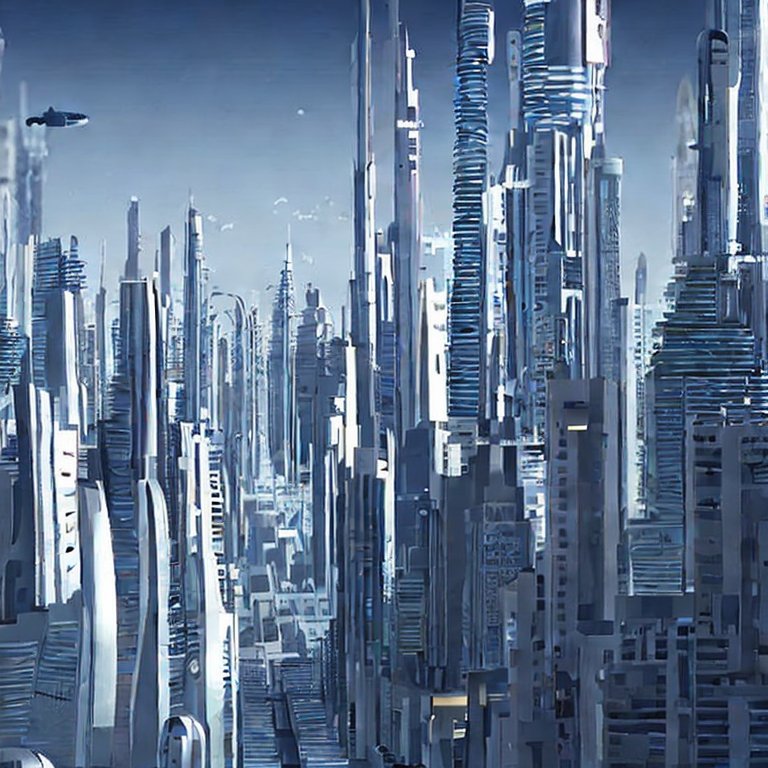
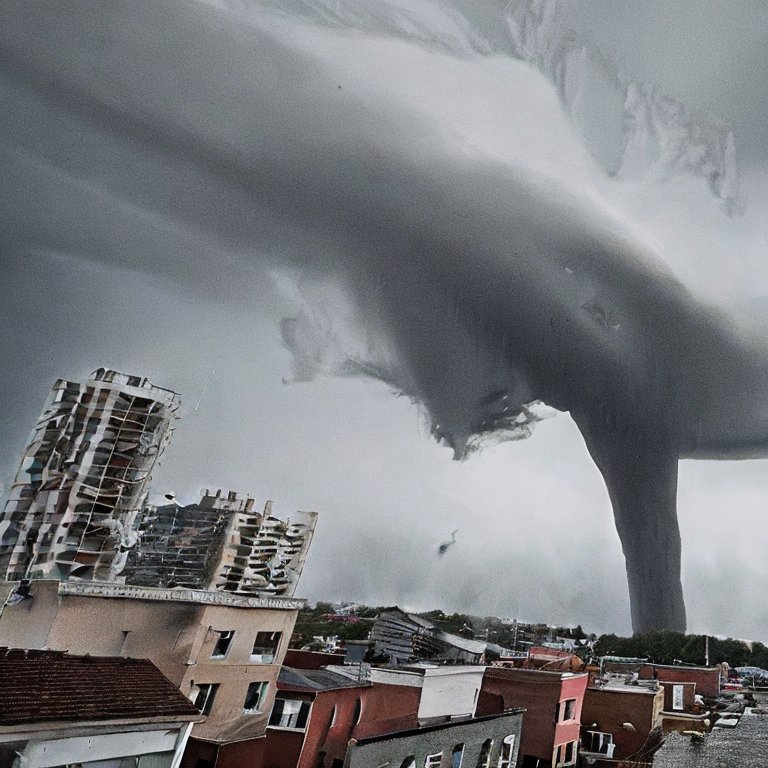
To demonstrate just how remarkable it is, I used an AI-generating art programs on the web called Stable Diffusion to create some art. This is something anyone can use right now for free. Granted, this is a beta version so the results aren’t going to look overly professional. But for something that’s free and easy to use, it’s still remarkable.

Below are just some of the images I created, along with the prompts I used.


A beautiful woman admiring a sunset.


A Christmas tree in the forest during a snowstorm.


A lush Amazon jungle with a river.


A futuristic city skyline.


A female android with blue eyes.


A shadowy figure in a forest.


A couple walking through a forest during a snowstorm.


A man running from a forest fire.


A woman standing at the summit of a mountain.


A tornado forming in a city.


Again, I cannot draw. I cannot paint or create images on a piece of paper or a computer screen. But thanks to Stable Diffusion, I was able to create these in just a few minutes. It cost me nothing and it was a genuinely profound experience, turning ideas into an image.

And keep in mind, this was just the free beta of the program. There are more advanced programs you can test out, but you do have to sign up and apply for their use. There are also some versions that you have to pay for. Once this technology gets especially refined, that might be something worth the money. Knowing I’ll never be able to physically draw, it’s definitely something I’ll consider.

For now, I’ll be keeping a close eye on this emerging technology. If I create more quality AI-Generated art, I’ll be sure to share it too.

And if you’re like me in that you don’t have good drawing skills, or any drawing skills for that matter, check out Stable Diffusion. Create some art that you never would’ve been able to otherwise create. It’s a great feeling and something that might help get you excited about the future of creativity.

6 Comments

Filed under AI Art, Artificial Intelligence, technology