Tag Archives: work

Thoughts, Perspectives, And (Hard) Lessons On Hard Work

This is a video from my YouTube channel, Jack’s World.

In this video, I talk about hard work and how I’ve come to see it. I also offer what I hope is a balanced perspective on what it means to actually work hard in a world that seems increasingly unbalanced. I offer both these insights and perspectives free of charge, hoping it helps others as they navigate work and life moving forward. Enjoy!

Leave a comment

Filed under human nature, Jack's World, philosophy, psychology, YouTube

Wondering If (Not When) I’ll Be Able To Retire

When I was a kid, my parents worked hard. Even at a young age, I could tell. My dad would wake up extra early, often before the sun rose, to prepare for work. My mother would do the same, often leaving just as my school bus arrived. They didn’t always work late, but they worked long enough days that required me to go to daycare or an afterschool program for many years. And even when I was old enough to be home alone after school, I was expected to help out and do a few chores before they got home.

It wasn’t until after high school that I came to appreciate how hard they worked to provide for their family. So, a few years back when they finally got a chance to retire, I gladly celebrated with them. They had more than earned the opportunity to stop working, enjoy their golden years, and dedicate their time to someone other than their employer.

Since then, I can’t deny they’ve made retirement look very enticing. My father, who once woke up at the crack of dawn every morning, now regularly sleeps in past 8:00 a.m. My mother, who spent decades working in an office and navigating rush-hour traffic, now spends her mornings in a bath robe drinking tea and reading the paper.

They don’t worry about what their clients, supervisors, colleagues, or customers will throw at them next.

They don’t worry about driving through rush-hour traffic, agonizing over deadlines, or dreading their next performance review.

Retired life is just life, as they see fit. And I’m glad they have a chance to enjoy it because not everyone gets that chance. And after a spike during the COVID-19 pandemic, fewer people are retiring. Their reasons for doing so vary, but each passing year seems to bring more challenges to retirement. There are even some influential voices who scoff at the very idea of retirement altogether.

In many ways, I consider myself lucky. Unlike many of my peers, I don’t have any student loan debt. I managed to pay that off by living at home during a good chunk of my 20s and basically dedicating over half my paychecks for my first job towards paying it down. That, alone, puts me in a very small percentile of people in my age range.

But even without my student loan debt, I’m not at all certain my current retirement plans will allow me to retire the same way my parents did. And even if I did, I’m not sure how long that plan would last for me when accounting for inflation, economic trends, and the never-ending political battle over social security.

If I were to retire at 67, which is the age in which Americans my age qualify for full social security benefits, I would probably be fine for a few years. The money I’ve saved, the lifestyle I enjoy, and the monthly costs in my general area would be manageable.

However, if there’s a major economic downturn, as there often in any given decade, or a significant bump in inflation, which happens regularly on a global scale, then my current retirement plan would not be sustainable after a number of years. I would either have to get more benefits from the government, spend more of my savings, or find another way to earn money.

None of those options are more than temporary solutions, nor are they as appealing as my parents’ retired life. At the moment, I don’t know and can’t know how viable my retirement plan is in the long run. I also have to assume that I’m not going to strike it rich at any point in the future. Short of winning the lottery, becoming a best-selling author, or seeing my YouTube channel explode in popularity, I just don’t think such wealth is in the cards for me.

I still have many productive years ahead of me. And I don’t doubt for a second the world will be a very different place by the time I’m nearing retirement age. For all I know, artificial intelligence will have completely reshaped the economy in ways I cannot begin to imagine.

Advances in biotechnology might ensure people like me don’t have to worry about the ravages of old age. Something like that is sure to further complicate any plans for retirement. I’m sure there are many wealthy, well-connected people who would love nothing more than to have workforce that stays young, healthy, and able to work for decades if not centuries on end. If that somehow becomes the norm by the time I reach retirement age, then something will have gone horribly wrong with the world and retirement would be the last thing on my mind.

But for now, I’m not going to work under the assumption that advanced AI or biotechnology will create a wholly utopian world where nobody has to work, no matter their age. And even if that technology does exist in some form, I’m not going to assume I’ll be in a position to take advantage of it before the rich and well-connected.

Again, I don’t know what the next 30 years has in store for the world. I don’t even know what things will be like 5 years from now. But I honestly would like to retire at some point. I would like to enjoy my golden years as much as my parents, not having to build a good chunk of my week around work. I’m currently planning and saving as best I can to give me that chance.

Will those plans ultimately pan out as I hope? Only time will tell.

I’m certainly hoping for the best and I’m working just as hard for it. But I’m also bracing for the worst. I just hope it doesn’t take the form of me working until my dying breath.

Leave a comment

Filed under Jack Fisher's Insights, politics

Why AI SHOULD Replace Most CEOs

This is a video from my YouTube channel, Jack’s World.

In this video, I make the case that, of all the jobs artificial intelligence could replace, CEO should be at the top of that list. In recent years, CEOs in general have generated headlines for all the wrong reasons. With the ongoing advancements in AI, this is one job for which we should be actively trying to remove human flaws.

Leave a comment

Filed under Artificial Intelligence, Jack's World, television, YouTube

Narcassists Are More Likely To Become CEO (And Why That’s Concerning)

A while back, a close relative of mine retired after a long, fruitful career that spanned nearly 40 years. They probably could’ve retired much sooner, but they were among the fortunate few who actually enjoyed their job for the most part. It had its ups, downs, and everything in between. But overall, it was a good career that most would be lucky to enjoy.

Over the course of that lengthy career, they worked under multiple CEOs. This was a fairly well-regarded organization, too. So, the CEOs were not part of some succession plan or a proud family business. This was the kind of company that followed a fairly traditional corporate structure and kept things impersonal as much as possible when it came to executive decisions.

However, in talking about how much the job had changed over the years and how much the industry had evolved in that time, this same person revealed something I found both striking, yet unsurprising.

Every single CEO they worked under qualified, by their definition, as a narcissist.

Now, for most people who have worked similar jobs, this probably isn’t surprising. There’s this prevailing sentiment that anyone who becomes CEO has to be a narcissist to some extent in order to get to that level. It even makes a perverse bit of sense. By their own nature, a narcissist seeks control, status, power, and aggrandizement. And the position of CEO offers all of that in spades.

But even if it makes sense for narcissists to become CEOs and we consider it normal, for the most part, that still warrants concern. There are times when our concept of normal has some major problems and we shouldn’t be afraid to confront it. This is definitely one of those situations.

For the relative who told me this, they had quite a few interesting stories to tell regarding the narcissism of CEOs. But they did make one important distinction. Even though these individuals were overtly narcissistic, they were not outright psychopaths. While most psychopaths are narcissistic, not every narcissist is a psychopath.

Narcissists can and do have some sense of moral responsibility.

Narcissist can and do experience empathy on some levels.

Narcissists can even be good CEOs, for the most part.

However, we shouldn’t let that override the legitimate concerns we should have when dealing with narcissists. There’s a reason why so many super-villains in pop culture tend to be inherently narcissistic.

Among the key traits of narcissists is a sense of arrogance, self-entitlement, vanity, and a greater capacity to exploit others for selfish means. These are traits we rarely want in people we deal with on a day-to-day basis. But in the role of CEO, they can give someone an advantage.

It means they won’t hesitate to make decisions that cause harm, distress, or ruin to others. It also means they’ll cross lines most people won’t in order to increase profits, further an organization, or undermine the competition. They can and will do things that’ll seriously hurt those working for them, yet still sleep comfortably in their fancy beds without a shred of guilt.

Maybe these sorts of tactics do help certain companies and organizations thrive. Many of the most successful companies in the world were founded or run effectively by narcissists who did things that, in hindsight, were deplorable by most measures. But we give them a pass because that made them and their company a great success.

It’s a not-so-hidden blind spot that we, the public, tend to overlook. And as I’ve gotten older and had my own experiences with narcissists, I feel like that sort of mentality is detrimental in the grand scheme of things.

One story that did stand out from my relative was how one particularly narcissistic CEO lamented how they might not have enough money to retire. Granted, this CEO was making well above six figures and he was complaining directly to someone who made a fraction of this. The idea that their bloated salary was not enough to retire on just seemed outrageous for someone just trying their best to pay their rent or mortgage on time.

It perfectly reflects how narcissists lack empathy and aren’t the least bit concerned with how people less fortunate or affluent get by. It would be one thing if this were just someone who had been born rich. But remember, this is a CEO. Unlike those rich from inheritance, their decisions impact entire organizations. Those organizations are full of hard-working people who may or may not be in a position to retire, no matter how hard they work.

That kind of disconnect between those making executive decisions and those actually doing the work isn’t just illogical. It’s damaging to the long-term health of any organization and society. Because if the CEOs of the organizations we rely on to keep our economy growing are too narcissistic, then what incentive do they have to do right by the society at large?

If the choices is between making the right choice for the most amount of people or more money and power for them personally, a narcissist won’t make the right choice.

If the choice is between sacrificing for the good of others or exploiting others for their own personal benefit, a narcissist will choose to benefit themselves 99 times out of 100.

Unlike most people with a more balanced perspective, narcissists need to be coaxed into doing the right thing. And even when they do, they’ll often do it begrudgingly. Those who are smart on top of being narcissists might be able to come to that conclusion if the long-term benefits are there. But for the most part, you can usually expect a narcissist to made decisions that benefit them over everyone else.

In addition to the anecdotes of my retired relatives, there’s real science to indicate that a disproportional number of CEOs are indeed narcissists. And those narcissists working within those titles will continue to do whatever they think they can get away with, so long as they continue to benefit. You really don’t have to look far to see how much harm decisions from narcissistic CEOs can incur.

Having to work for a narcissist CEO is always challenging, but it can be done. Most people who have worked a steady job can attest to that. But it’s still worth asking ourselves if this situation is tenable in the long run. Because if we continue rewarding narcissists with lucrative jobs like CEO, then we’re just creating a world that’ll enable more narcissists.


1 Comment

Filed under health, human nature, philosophy, psychology

Happy Labor Day 2023!

Today is Labor Day.

For most people, that’s just a nice day off to cap off the summer. If you’re a kid, it’s usually an extra day without school, if it has started by now. It’s not the most colorful holiday. It certainly isn’t something people put up decorations for. But it’s still a holiday we should appreciate to some extent.

This is usually the last day you can lounge by the pool, enjoy the warm weather, and appreciate summer. It’s usually a great day to have a cookout, get together with family, and enjoy each other’s company before the fall sets in. That’s all well and good, but it’s worth noting that Labor Day exists for a reason.

I won’t go into the lengthy history of how this day came to exist. There are plenty of resources on the internet to reference for that information. But in recent years, I feel like there’s been a greater awareness of the struggles with labor. We see it more and more as labor strikes make the news. And more people have become sympathetic to the work of such efforts as news about obscene greed come to light.

These are all issues that we should be aware of. Like it or not, most of us aren’t born rich. Most of us will have to work for a living. I’ve had more than my share of jobs over the course of my life. Many of them were very unpleasant. Without the efforts of organized labor and efforts to temper greed, work as we know it would be much less pleasant.

There’s certainly a balance between managing the concerns of workers and those providing the work. I’m not smart enough to understand or discuss that balance. I’ll just say that Labor Day is a chance for us to appreciate why those efforts matter.

So please, if you get a chance, use today to commemorate and thank those who have improved life for generations of workers. And don’t forget ongoing efforts to keep improving the lives of those working now and the workers of the future.

Happy Labor Day!

Leave a comment

Filed under Current Events

Why High School Exams Were Harder Than Most Jobs I’ve Had

As I’m writing this, a great many school-age kids in middle school and high school are anxious for summer to begin. For many school districts in the United State, the end of the school year is in sight. It no longer seems so far away and so out of reach. I imagine many are already counting down the days until that magical moment when the final bell rings and school is out for the summer.

I know that wait can be agonizing, at times.

I have not forgotten the elation I often felt on the last day of school

But before any students get to that wondrous moment, they have one last obstacle to face. It involves the last round of standardized tests and exam. It may vary from district to district, but this is usually the time of year when most students take the SATs, AP and IP exams, or a general final exam for each class. They are often among the most difficult and stressful tests of the entire year. I haven’t forgotten how hard they were, either. And while I’ve already made my opinions on standardized testing clear, I’d like to use this moment to share another insight.

Back in high school, I took a number of AP exams during this time of year. And towards my junior and senior year, I also took final exams that often required much more studying than your standard quiz. I took many similar exams in college, but most of those varied in that they didn’t rely entirely on scantron sheets and multiple-choice tests. To date, it was those major exams towards the end of high school that ended up being the hardest test I ever took.

I vividly remember staying up late at night during the days leading up to the test, often going over page after page of notes that weren’t always well-organized. I also remember reading over textbooks again and again, but still struggling to remember key points. It resulted in many restless nights. On the nights before tests, I often laid awake in my bed, going over notes and concepts that I knew I had to remember for the exam the next day.

It was not healthy. I can’t overstate how stressful this was for me.

Even though I ended up passing and even acing some of these exams, the work I had to put in just didn’t feel worth it. And in the grand scheme of things, I don’t feel like all that studying helped me actually learn the concept. Even if I passed or aced the exam, I genuinely can’t remember any helpful knowledge coming from it.

However, this harrowing experience did have one important impact. But I wouldn’t feel it until I graduated college and started working in the real world.

Looking back on all the jobs I’ve had since college, including the ones I found really terrible, I don’t think I’ve ever been as stressed or as anxious as I was when studying or taking those tests. That’s not to say all the jobs I’ve had were easy, by comparison. They certainly weren’t. I’ve had a number of jobs over the years in which I’ve come home feeling sore, drained, and miserable. But even on my busiest days at those jobs, I still didn’t feel nearly as stressed.

And I think that’s an important perspective to share because I imagine there are a lot of young people right now worrying about what the adult world has in store for them. Their only real experience with hard work and stress comes from school. They’re constantly told by teachers, counselors, and administrators that the work their doing now is critical. And it’s meant to prepare them for the much harder work they’ll face in college or the adult world.

If someone out there has been telling you that, I’ve got an important message for you.

Unless you plan on being a doctor or lawyer or a sweatshop laborer, that’s not accurate. That’s just administrators trying to get you to work harder so that you’ll get better grades, which consequently makes them look better. The truth is never that simplistic. And you often don’t find that out until much later in life and after some significant life experience.

But even if you don’t have that experience, you can still maintain a better perspective than I ever did when I was young. I made the mistake of treating every major exam like a defining moment in my life. I genuinely believed that if I didn’t ace every test, my life would fall apart and I would fail at everything moving forward. I also believed that each passing year would get harder and harder. Eventually, I’d have to spend every waking hour studying or working, never having time to enjoy my life. Again, it was not healthy. I did real harm to my mental health by thinking that.

I eventually had to learn that both college and the adult world don’t have to be this never-ending toil of joyless rigor. Once you have some agency and guidance, you can chart your own path. Yes, you’ll still have to work. And yes, you’ll still have to struggle at times. But it’s not nearly as arduous as these exams and the teachers who give them make them out to be. In time, they will be a small sliver of a much richer life.

To date, I don’t think I’ve ever worked as hard or been as stressed out as I was when taking my high school exams from this time of year. Every job I’ve had came with challenges. But rising to those challenges never felt so tedious and arduous. On top of that, I actually got paid for that effort. That definitely took some of the stress out of it. And even in the worst jobs I’ve had, there was a general structure and logic to it all. I knew what I had to do and why. Whereas with school, it was just a matter of doing what the teachers said and getting the grades they said you needed to get.

Time, life experiences, and the benefit of hindsight has helped me see those exams for what they were. As agonizing as they were, a part of me is grateful that they hardened me to the rigors of hard work and stressful nights. Compared to my last few years of high school, every job I’ve had has been less stressful and more manageable. That helped make navigating the adult world easier in the long run.

Even so, I wouldn’t wish that kind of stress on anyone. And I sincerely hope anyone reading this who’s still in school can gain some insight from what I’ve shared.

I know it’s still so overwhelming, having the end of the school year be so close, yet having to navigate final exams.

I know it seems like your entire life revolves around school and these tests, at the moment.

I only ask that you take a step back and appreciate that these challenges will help make you stronger in the long run. You need not fear what comes next. Because if you can survive high school even slightly better than I did, then I promise you’re already strong enough to build a brighter future for yourself in the years to come.

Leave a comment

Filed under Current Events, Jack Fisher's Insights, philosophy, rants, real stories

The First Automated McDonald’s Is Open (And Why That’s A Big Deal)

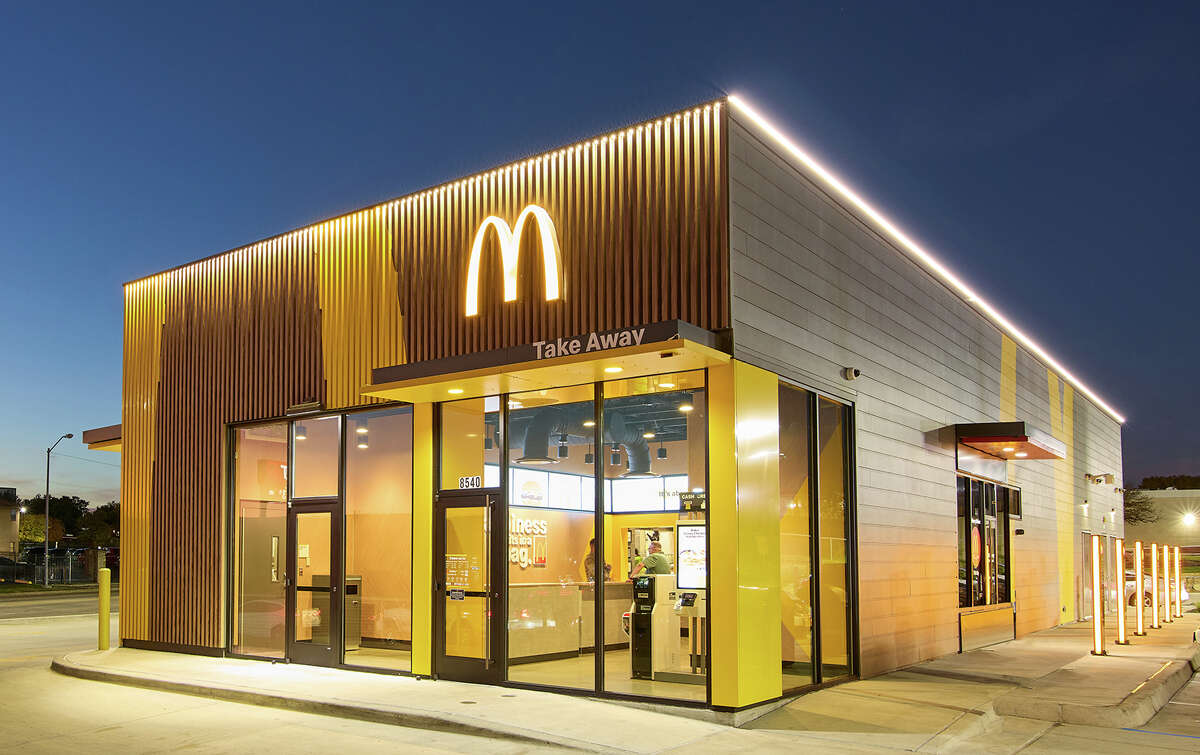
In late 2022, there was a major tech news story that made headlines for a hot minute, but was completely forgotten. In Fort Worth, Texas, the first ever automated McDonald’s restaurant opened.

From the outside, it looks like a typical McDonald’s. It has the same aesthetics and architecture that have become so iconic. But inside, there are none of the usual fast-food workers. There are just rows of kiosks and a conveyer belt. Once you place your order, it’s automatically prepared behind the scenes in the kitchen. Then, when it’s ready, it’s bagged and wheeled out to you.

When it’s working optimally, you never have to interact with another human being. Whether you consider that a good or bad thing is entirely up to you, but that’s the ideal. As for how it handles orders that aren’t properly bagged, food that isn’t properly cooked, or drinks that aren’t properly prepared, that’s not yet clear.

This isn’t intended to be the start of a massive effort to automate every McDonald’s restaurant. It’s largely a test to see just how much a standard fast food restaurant can be automated.

As someone who’s first paying job was in fast food, I have some mixed feelings about this.

On one hand, I welcome this kind of automation. I remember what it was like working at these restaurants. The pay was awful. The conditions sucked. And you had to regularly clean up messes that made you want to throw up.

On the other, this is an undeniable sign that automation is accelerating and the low-skilled jobs that many people rely on might become less and less available in the coming years. And for those who really need a job, even if it’s a lousy, low-paying job, that could be seriously detrimental to large swaths of people.

In terms of the bigger picture, I think this is a much larger story than people realize. Automation has been a popular talking point for years now. I’ve certainly touched on it. And I think the recent rise of artificial intelligent programs like ChatGPT have really raised the profile of automation, mostly because it revealed that it’s more than just factory jobs that are vulnerable to it.

It might even be because of ChatGPT that this story about McDonald’s flew under the radar. But I honestly think automation in the fast food and restaurant industry could be more disruptive in the short-term than products like ChatGPT.

In the coming years, we might look back at this automated McDonald’s as the first step towards a new trend in automation. People have talked about automating things like fast food for years. Then, the lingering effects of the COVID-19 pandemic and new trends in labor converged to create new incentives.

This is no longer just an idea that exists on paper or in the imaginations of CEO’s fantasizing about not having to pay minimum-wage workers anymore. This restaurant actually exists. People in the Fort Worth area can visit it right now.

Again, it’s not part of an ongoing effort to automate every McDonald’s. If you go to this restaurant, chances are you’ll deal with a system that’s still being refined. There’s probably still people there behind the scenes, monitoring and fixing whatever bugs emerge in the system. There’s a good chance those people are paid much more than minimum wage. There’s also a good chance that this particular McDonald’s isn’t going to be more profitable than those with human workers.

But those are just logistical issues that can be polished, refined, and streamlined. All it takes is time and experience. It’s not unlike the first assembly line or the first 3D-printer. It’s messy and clunky at first, but it steadily becomes more efficient with time and investment.

Eventually, it’ll get to a point where a functional McDonald’s won’t ever need a staff of low-skilled employees anymore. In principle, it would only need one person to be there to make sure the ingredients are re-stocked and the equipment doesn’t break. The company probably wouldn’t even need to pay the person that much. If they’re qualified to work as an unpaid intern in a standard IT department, they’re probably qualified to manage this system.

And if McDonald’s finds a way to make it work, you can expect the competition to catch up quickly. There would just be too much incentive to remove all the low-skilled wage labor as a means of increasing profits. It won’t happen overnight, but one company only needs to succeed once before others copy it.

Fittingly enough, that’s something McDonald’s did before. Their system of fast food was pioneered in the early 1950s and proved so successful that many other competitive, including Burger King and Taco Bell, embraced it. It’s very likely we’ll see something similar play out with automation.

But what does that mean for low-skilled labor, in general?

That’s a relevant question. There’s no way this kind of automation will stop at fast food restaurants. Add AI tools like ChatGPT into the mix and even mid-skill jobs could be at risk.

I don’t claim to know the answer, but I suspect we’re going to see some major upheavals in how we work in the coming years. That’s going to have consequences, good and bad. And I honestly worry that we’re not prepared for the bad consequences in the slightest.

Leave a comment

Filed under Artificial Intelligence, Current Events, technology

Why We Should Embrace A Four-Day Work Week

If you’ve ever worked a full-time job, chances are that job had set hours during certain days of the week. It may vary from job to job, but in most developed countries there’s this concept of a standard work week. And it goes like this.

You work five days a week, often Monday through Friday.

You work eight hours a day, usually around 9:00 a.m. to 5:00 p.m.

You typically don’t work major holiday or overtime. But if you do, you get paid overtime.

That’s seen as a “normal” work week these days. I put “normal” in quotes because what constitutes a normal workday has changed a great deal over the years. But I prefer not to focus on the history of the work week. I just want to ask a simple question about the work week as we currently accept it.

Is the five eight-hour workday schedule really the most effective approach to work?

It’s an honest question and one I think the COVID-19 pandemic has made more relevant. Beyond revealing how much work we can be done remotely and from the comfort of our homes, it also revealed that our concept of a normal work schedule is somewhat skewed. And it might be a good time to re-evaluate our understanding.

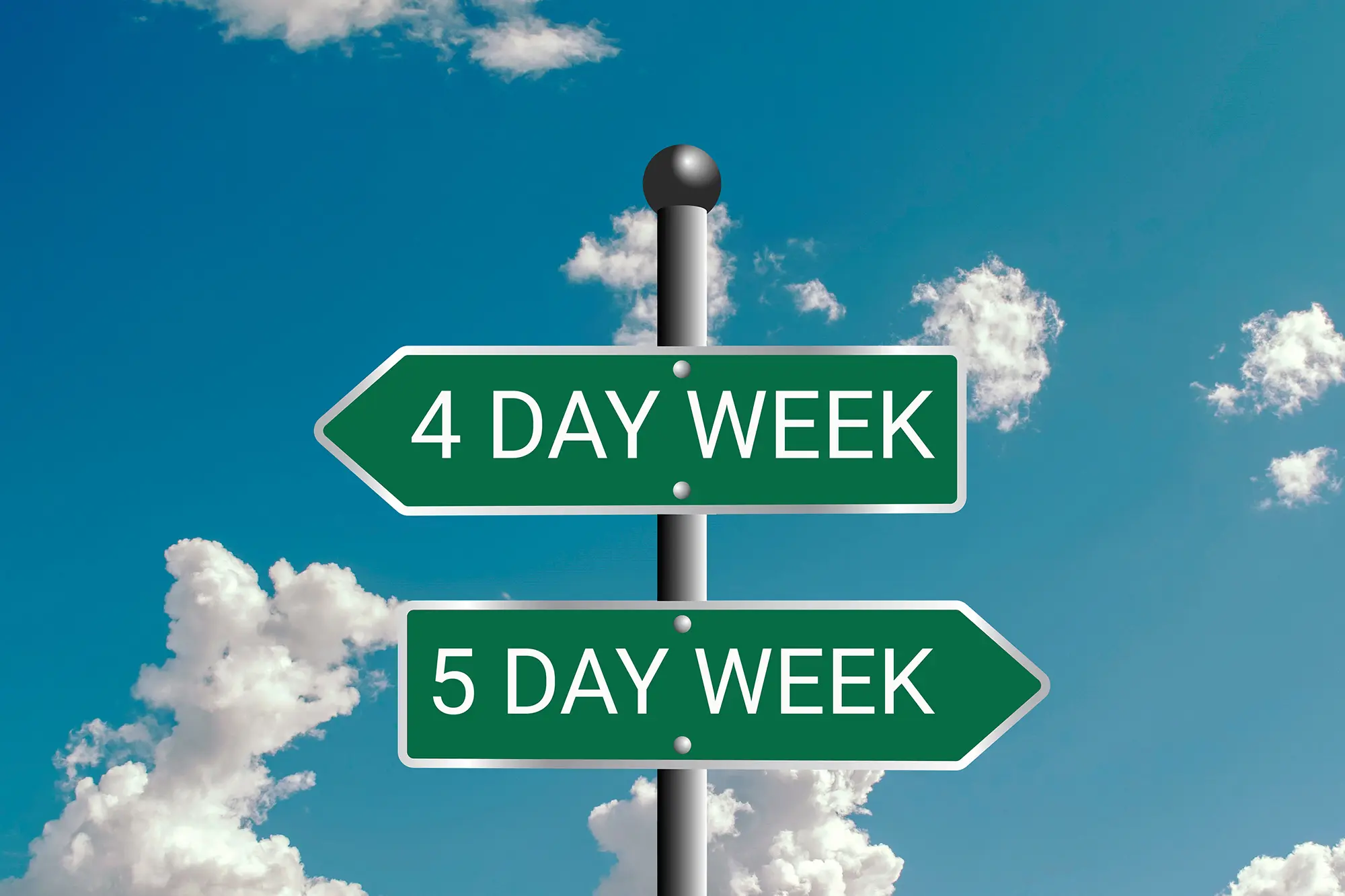
Some are already doing that. A number of companies in various parts of the world are starting to experiment with a four-day work week. It doesn’t always entail less work. In some cases, people opt to work four ten-hour days instead of five eight-hour days. The duration of the shifts don’t change. It’s just the structure.

And according to the conclusions of multiple studies, the results have been a massive success for everyone involved.

Overall productivity remained unchanged or actually improved.

Worker satisfaction increased, as did overall work/life balance.

The same amount of work got done, even when fewer hours overall were worked.

There were practically no real downsides. People got an extra day off, but were just as productive. They were also happier, overall. Even if you’re a ruthless business tycoon with no sympathy for others whatsoever, these results are encouraging. After all, happier and more fulfilled workers means less turnover and less conflicts overall. Unless your company runs on the tears and suffering of others, that’s generally good for business.

Even in the absence of these studies, I can personally attest to the appeal and the merits of a four-day work week. While I wasn’t lucky enough to have that schedule with any of the full-time jobs I worked, I do know it was a popular option in one particular company.

Since I don’t know if my former employer visits my site, I won’t say their name or their industry. I’ll just say that this company utilized a lot of shift-work. There were some typical nine-to-five shifts, but most varied considerably in order to ensure 24/7 coverage of our operations. I typically worked five days a week, usually 10:00 a.m. to 6:00 p.m.

However, there was an option for those with kids to work four ten-hour days. The day of the week they got off varied. My supervisor actually encouraged those who used this option to coordinate and decide amongst themselves which day of the week they would take off. Some preferred having Monday off. Some preferred having Friday off. One even preferred having Tuesdays off.

It was probably the most popular shift, but one that wasn’t widely adopted. It was always framed as a shift reserved for those with young children who needed an extra day to take care of doctor’s appointments, personal matters, and what not.

Personally, I would’ve definitely preferred working four ten-hour days. Even if it meant those four days were longer, I would’ve gladly worked that time in exchange for a longer weekend. It would’ve made a lot of things easier, especially when I was young and just out of college. Even today, it would make a lot of things easier. An extra day would give me more time to rest, run errands, work out, and work on my personal life.

I suspect many feel the same way. Just think about how excited/relieved you are every time you have a long weekend to look forward to. But honestly, is a three-day weekend really that long? It’s still less than half of the week. And can you honestly say you get less done on a shorter work week?

Now, I understand that not all work is the same. There are certain jobs for which a four-day work week just isn’t practical. By the same token, there are also types of work for which a five-day work week isn’t practical, either. We just still use that schedule because it’s considered standard and “normal.” We’re so used to it that we don’t even question it.

But we should. The results of the studies I mentioned imply that there are better ways to get just as much work done with less time in a manner that is just as productive, if not more so. So why not embrace that?

I suspect a part of it has to do with how the five-day, 40-hour work week is engrained in a lot of labor laws. That is not a trivial detail that we can just overlook. But laws can be changed. And in this case, there’s a better and more efficient option available.

In a world with so many diverse people and so many diverse forms of work, it makes sense to be flexible. If a shorter work week means equal or greater amounts of efficiency, then the only thing stopping us is outdated assumptions about what constitutes “full-time work.”

I sincerely hope that changes in the coming years, especially as people continue to realize the value of a good work/life balance. Just because we’ve been structuring our jobs a certain way for decades doesn’t mean we should keep doing it that way. If a four-day work week is better by every measure, then we’re only making our jobs more miserable by clinging to outdated practices.

Leave a comment

Filed under Current Events, health, politics, psychology

Happy Labor Day 2022!

Today is Labor Day.

For most people, it’s just a generic government holiday. Most treat it as the last chance to enjoy proper summer activities, like cookouts and going to he beach. For kids, it’s often a clear sign that summer break is over and it’s time to get back to school.

However, these past two years have changed a lot about how we see labor, holidays, and traditions in general. I don’t think I need to remind everyone how much change and upheaval we’ve had since 2020 with the COVID-19 pandemic. In fact, I’d rather not remind anyone of just how bad things got for so many people, especially the working class.

So, rather than dwell on that, let me just take a moment to ask that everyone remember what it means to work hard and toil for a living. Many of those reading this have probably worked a menial, arduous job for minimal pay and little benefits. Unless you’re born rich and well-connected, it’s practically unavoidable.

I certainly couldn’t avoid it. One of the first jobs I had was at a fast food restaurant. It was a tedious, laborious job that always left me sore, drained, and moody. I had to help impatient people get greasy, unhealthy food. I had to constantly empty out the trash, clean the toilets, and sweep disgusting crap off the floor.

But the worst part of all was just how slow time seemed to go every day I was at that job. I swear a minute felt like an hour and an hour felt like a day. It also paid minimum wage and the only benefits I enjoyed was a free meal every day.

It was as unpleasant a first job could be. However, it gave me an immense appreciation for those who work hard and toil at these jobs that a lot of us don’t give a second thought. To this date, I try to make it a point to be extra courteous and kind to those working jobs like that. I also try to tip generously whenever I can.

I encourage everyone to do the same because if nothing else, these past two years have shown just how vital these hard working people are to our society. We literally could not function without them. Whether they’re flipping burgers, delivering packages, or crunching numbers behind a computer screen, their hard work and toil deserves to be celebrated.

Labor Day might not offer much to those who still strain their bodies and souls every day, just to survive. But I hope it offers some perspective to those who truly appreciate the value of hard work.

So, in that spirit, I wish everyone from all walks of life a Happy Labor Day.

Leave a comment

Filed under Current Events

A Brief Message After One Of The Busiest Weeks Of My Adult Life

Every now and then, we have one of those weeks that really tests us. Whether you’re in high school or a working adult, you just find yourself navigating each day like it’s a marathon after another marathon. It’s exhausting, draining, stressful, and even frustrating most of the time.

Then, you make it to the end of the week and it feels so good.

That’s basically the week I just had. I feel like this past week has been one of the hardest of my adult life. I won’t get into all the details why, mostly because it would require a book’s worth of backstory, context, and plot. I’ll just say that I found myself juggling way more challenges than most over the span of just a few days. On more than one occasion, I honestly didn’t know if I would be able to manage it all.

But in the end, I did.

I didn’t just make it to the end of the week. I actually finished everything I wanted to finish and did it with a sense of pride, accomplishment, and confidence. That just made it all the more rewarding.

I’ve had long, arduous weeks before. Sometimes, I’ve had several in a row, but this week was different. It felt like a perfect storm of issues and challenges. All sorts of factors, none of which I could control, seemed to converge on just a handful of days. That doesn’t happen often, but when it does, it’s usually very stressful.

As I’ve gotten older, I’ve learned to manage that stress. I like to think I’m better at it now than I was when I was a younger. That still didn’t make it any less draining. When I got home yesterday, I basically fell onto my bed and just laid there for a while. I also enjoyed an extra glass of whiskey, which is typically my preferred method of unwinding on Friday nights. And I can confirm it tasted that much sweeter.

I know it’s a bit cliché to say that hard work can be very rewarding, especially for those doing jobs they hate or dealing with issues that frustrate them. However, there is something to be said about making it through a difficult week and succeeding in everything you set out to do. It really is uniquely satisfying. It shows just how strong you are and how far you’ve come.

I’ll likely face other weeks like that in the future. Everyone reading this now will probably face the same. Take heed from this message.

You will make it through.

You will overcome.

You will be stronger because of it.

Now, if you’ll excuse me, there’s another glass of whiskey waiting for me.

Leave a comment

Filed under Jack Fisher's Insights, real stories