This is a video from my YouTube channel, Jack’s World.
This video is part speculation and part thought experiment on the impact of artificial intelligence and the entertainment industry. Since the WGA/SAG strikes of 2023, the impact of AI on entertainment is impossible to ignore. While the technology is still in a very early stage, we’re already seeing it affect the course of multiple industries, but entertainment might be the most profound.
What could this mean for consumers?
What could it mean for the companies, studios, artists, and workers that produce our entertainment?
It’s difficult to determine at this early stage, but I make an effort to imagine what artificial intelligence could mean for the future of entertainment.
And this is one of the best times of the year to be an NFL fan. It’s the start of the NFL playoffs. The regular season is over. The best teams have set themselves apart. And now, it’s time to see who is ready to make a championship run to the Super Bowl.
As an NFL fan, these next few weeks are often among the best. But this year, we encountered an unexpected complication. One of the biggest matchups of Wild Card Weekend, the Kansas City Chiefs and the Miami Dolphins, was not available to watch on standard broadcast or basic cable. Instead, fans had to use the Peacock streaming service to watch it.
Now, let me go on record as saying I fucking hate this.
Seriously, fuck the NFL for making this kind of bullshit deal. This isn’t some random regular season game, nor is this a streaming service that most people have. This is the goddamn playoffs! These are all national games that, for over 50 years, have been available to watch on basic broadcast and cable. It seems so simple, putting a major sports event on TV in a form where most people can watch it.
But this time, the NFL decided to fuck all those loyal fans over by essentially locking a playoff game behind a goddamn paywall. And this is after they recently repackaged NFL Sunday Ticket with YouTube TV for nearly $500! I know the NFL is the biggest sports league in America by a very wide margin. I also know football is the most popular sport by an even wider margin. But this is just bullshit greed taken to a whole new level.
And, given how the NFL seems to not give a damn about fan outrage, I have a feeling this won’t be the last time. Peacock, which is owned by NBC Universal, paid the NFL a lot of money to stream that game exclusively. They don’t care if it pisses off fans. They just care if it gives them a small uptick in subscribers. And because fans have little power in wake of all that money, this is going to set a bullshit precedent that nobody outside executives likes.
Even though the outrage even drew ire from congressmen, I don’t know if that will change anything. I just know that, if this bullshit deal made both sides extra money, then they’re going to do it again and it won’t matter how pissed off fans are. That’s just the world we live in.
So, in wake of this level of hopelessness, I just want to say one more time fuck the NFL! Fuck NBC Universal! And fuck Peacock!
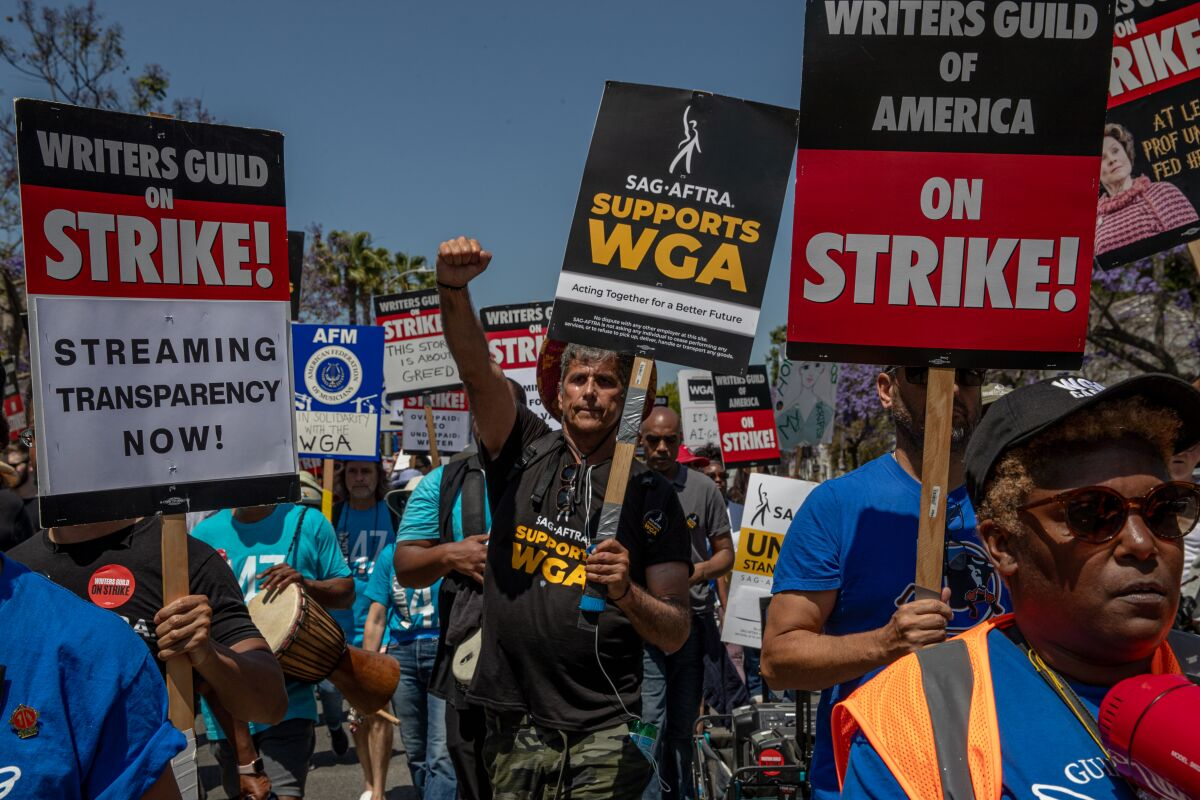
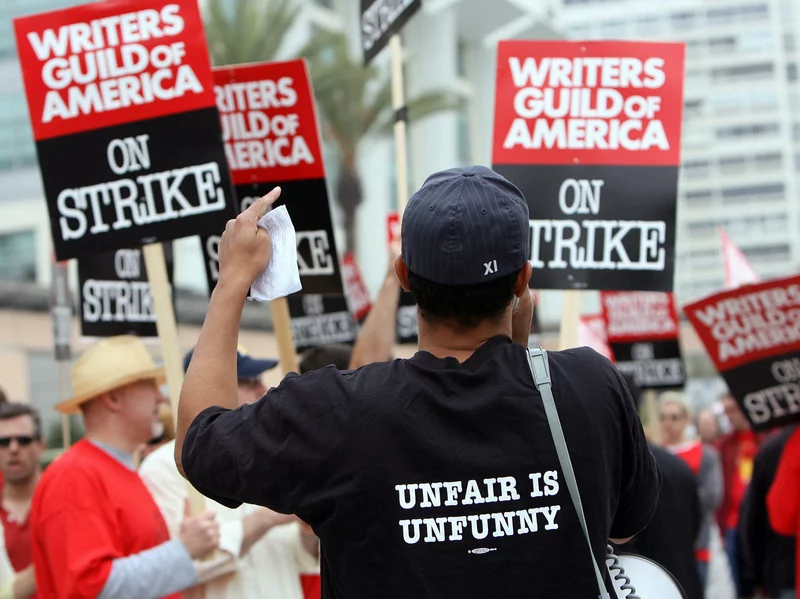
Firstly, let me go on record saying that I fully support the WGA and SAG’s strike. I’ve said before that we should support them as they fight the very powerful, very well-funded Hollywood studios who profit from all their hard work.
The fact that both the actors and writers stand united in this strike for the first time since 1960 is promising. As I write this, pretty much every major movie production has shut down. The studios could only do so much without their writers, but they literally can’t do anything without their actors. That likely means highly-anticipated movies will be delayed, but it also means the people actually making those movies might actually enjoy some of the profits.
There’s a lengthy list of issues associated with AI and how it may impact the entertainment industry at large. I’m not qualified to go over all the particulars. So, here’s a video I found that should help break it down.
With that out of the way, the first part of that message goes to the actors. Their concerns about AI might not be as significant as the writers, but I strongly believe they’re not showing enough concern. And even if they don’t understand the true impact of AI, I hope they at least heed this critical message.
Do NOT under any circumstances sign away your likeness, voice, and persona to any studio without retaining some measure of control and an appropriate structure for long-term compensation.
Seriously, I don’t care how big a star you are or how well-off you might be. Do not give any studio, large or small, the right to use your voice and likeness at the moment. The current laws are not at all equipped to protect against the never-ending efforts by studios to exploit the hell out of any star, franchise, or intellectual property.
This is not a popular novel, character, or fairy tale for which copyright laws were intended to protect. This is your name, identity, voice, and brand. Giving any studio complete or even partial control over that right now is akin to giving every hacker on the Dark Web your tax returns and credit reports for free.
I don’t know when or if the law will ever catch up to this. Right now, your best bet is to make sure your next union contract addresses this issue and ensures at least some level of control. Because I promise the technology to fully render someone in a way that’s indistinguishable from reality is coming within our lifetime. You need only look at the current state of deep-fakes to appreciate why this is the time to act.
The second part of my warning is to the writers. They are definitely more aware of how AI technology could affect their livelihood. They’ve all seen how products like ChatGPT can write a movie script in seconds. That’s not to say it writes those scripts particularly well. Most reasonable people can still tell when a piece of writing is generated by AI. And no skilled writer or studio executive will mistake an AI written script for the real deal at the moment.
But therein lies the issue that I’d like to highlight. So, to the WGA writers striking right now, please heed my words when I offer this important message.
Plan for the long term with respect to AI. Because it will get better over time. And at some point, it’ll be better than you at almost every writing task.
This is not a dire prediction. I’m not trying to be overly fatalistic, either. When I say plan for the long-term, I don’t just mean get a binding contract that gets everyone back to work for another decade or two. I’m saying the writers striking right now need to think much furthe ahead.
Right now, AI products like ChatGPT are a long way from replacing skilled writers, but not as long as most people think. I’ve heard a number of writers and influencers scoff at AI, saying it’s nothing more than autocorrect on steroids. Some even call it a script blender, which just takes a bunch of data from other writers and scrambles it like a blender until it produces something that just seems original.
If that’s what you’re thinking, then I strongly encourage you to find a better source of information on emerging technology. Because writing off the ability of ChatGPT to write scripts is like writing off the first iPhone because it just looks like an iPod with a call feature. You’re not seeing the forest from the trees.
The current AI programs we have right now are limited, clunky, and crude. They’re very much akin to the early models of the iPhone in that they are in the early stages of refinement. You could definitely make the case that early versions of ChatGPT were basically fancier versions of autocorrect blended with your standard virtual assistant.
However, the latest version of ChatGPT is much more capable in terms of scale and ability. To simply call it a more advanced version of autocorrect is like calling a motorcycle a more advanced version of a kids’ tricycle. And it will continue to improve. That is the only certainty we have at this point with AI technology.
That’s not to say it’ll become sentient and go full-blown Skynet on the human race. In fact, AI doesn’t even need to achieve human-level intelligence to be just as capable as any writer or producer. It just needs to be refined, capable, and developed to a point where it can “think” about entertainment on a level that’s better than any human being ever has or ever will.
That kind of AI might not be feasible now. It might not even be feasible this decade. But make no mistake, it will likely happen in your lifetime. And the studio executives you’re up against now would love nothing more than to see this technology perfected so that the process of creating hit shows and movies is as automated as a modern assembly line.
It doesn’t matter to them if it means putting you, the actors, or the many crews on movie sets out of work. It just matters that it turns a profit in the short and long term.
That means that when negotiating with the studios, it’s not enough to just think 10 years ahead. It’s not even enough to think 20 or 30 years ahead. This may very well be your first and only chance to get something in writing that ensures writers will have some stake in the creative process moving forward. And if you fail to achieve that now, then rest assure the studios will screw you over the nanosecond an AI can write scripts as good as you.
Don’t let that happen.
Don’t let the studios screw you like that.
Get something in writing that ensures or at least complicates those efforts as technology continues to change entertainment.
But if I have one final message to the actors and writers alike, It’s this.
You cannot stop AI from affecting your industry.
We’re past the point of no return on this. The genie is out of the bottle. Like smartphones and electricity, the technology can’t be uninvented. You’re not going to convince the studios to just ignore AI moving forward. That’s like trying to convince horse-and-buggy manufacturers to ignore cars.
One way or another, you’ll have to find a way to co-exist with AI. I don’t claim to know how this will manifest in terms of a contract or some sort of legal protection. I just know that in the history of any industry, fighting new technology is a losing battle.
We’re still with you.
We still want you to succeed.
Just don’t assume that the AI you’re concerned about now is anywhere near as disruptive as it’s going to be.
Back in late 2007, there was a three-month strike between the major studios of Hollywood and the Writer’s Guild of America (WGA), the largest labor union representing professional writers working in the entertainment industry. That strike was one of the most disruptive forces to hit the industry in decades. Like many other labor strikes, much of the issue came down to money. MOst of it came down to how much writers were getting paid in residuals for things like DVD sales and other emerging distribution channels.
Even though the dispute was resolved, there were major effects on various shows and movies. If you want to know why there were so many reality TV shows that emerged in the late 2000s, this is a major factor. Shows that don’t employ elaborate stories or scripted content don’t have to pay a large writing staff. That means more profits for the studios and the executives.
As someone who tends to despise reality TV, I hated this trend.
And to those who watched those shows and continue to do so, just know that the situation we now find ourselves in with respect to entertainment is largely because of you.
Flash forward to today and the WGA has gone on strike again. Now, I’m sure most peoples’ primary concern is whether or not this will affect their favorite shows. As someone who loves binging non-reality TV shows, I admit that is a concern for me too. However, even if your favorite shows end up affected, do not cast the blame on the writers. That’s like blaming the miners who get trapped in a mine and not the corrupt executives who skimped on safety.
This latest strike promises to be different compared to what happened in 2007. A lot has changed in the entertainment industry since then, even before the impact of the COVID-19 pandemic. Now, residual revenue for DVD sales is less a concern because fewer consumers are buying DVDs. So much of everything has gone to streaming now and that’s seriously impacting writers’ ability to make a living from their craft.
On top of that, there’s the emergence of AI chatbots like ChatGPT that could potentially undermine writers even more by allowing studios to basically let AI fill in rather than paying another writer. And anyone who knows anything about how most industries operates, including entertainment, understands that if executives can increase profits by squeezing out workers, they’ll do it. And they usually won’t hesitate because the financial incentives are just too strong.
This, more than anything, is why we the consumers should side with the WGA. Even if it means your favorite shows get delayed, this is one labor struggle that goes beyond just pay disputes. Writers in entertainment weren’t making much beforehand. I’ve even heard a few jokes online among the comic publishing crowd that certain comic writers, especially those who independently publish, make more money than some of the writers on major shows and movies.
And it’s set to get worse and many studios are seeking to treat their writers like gig workers. Instead of employing a consistent, stable writing staff that knows each other and understands the product, studios think they can just hire a few freelancers, pay them less, and get a product that’ll still be watched by fans. And since these writers won’t have rights to residuals or copyrights, then the studio can keep more of the profits.
This should concern you, the consume. Because if the entertainment industry is screwing skilled writers out of money, then that will eventually affect the quality of every show and movie you see. If you think things are bland now with every major studios just milking established franchises to death, I promise it’ll get worse if they squeeze out talented writers.
Great writing is how underrated shows like “Arcane” can somehow find an audience.
Great writing is how movies like “Puss in Boots: The Last Wish” can end up being way better than anyone thought it could be.
As someone who still aspires to be a good writer one day, I may have some bias when it comes to who I side with in an issue like this. But if you’re a consumer of entertainment that doesn’t suck, or just don’t want to go through another glut of reality TV again, it’s in your interest to side with the WGA.
They work hard to entertain us.
They work hard to enchant, inspire, and enlighten us.
That’s not something you can reduce to gig work. That deserves both our respect, as well as fair compensation for their labor.
This video is a video from my YouTube channel, Jack’s World. And in this video, I going over some of the terrible life lessons I picked up from watching sitcoms. Enjoy!
This is another video from my YouTube channel, Jack’s World. This video is my quick reaction to the season one finale of HBO’s The Last of Us. Like my other quick reacts, I didn’t script this or structure it like a video essay. As a result, I stutter and stammer a lot. I also make a few errors here and there. But I still try to get my point across.
Also, I do mention some heavy spoilers from both the show and the games. So do keep that in mind. Enjoy!
This video is my quick reaction to the series premier of HBO’s The Last of Us. Please note I didn’t script this like I usually do. So it’s a little messy and I do stutter quite a bit. But if you’d like to see more of these kinds of reaction videos, please let me know.
The following is a video from my YouTube channel, Jack’s World. This video is a little exploration into why certain TV shows, bands, and movies are subject to so much hatred. Sometimes, things get popular for reasons we don’t understand and they eventually become subject to ridicule, but for all the wrong reasons. I’ve seen it many times before in my life, but I’ve never seen it manifest so strongly with a show like The Big Bang Theory.
This topic is based off something I wrote on this site a few years ago. I thought it would make a better video. Enjoy!
When it comes to certain holidays, I tend to be more proactive than most people. Talk to anyone who knows me fairly well and they’ll attest that I’m the kind of guy who has his Christmas tree up the first week of November. It’s just part of who I am. For certain holidays, I like to draw out the festivities and the spirit in my own unique way.
One of those holidays happens to be Halloween. I’ve always been fond of Halloween and its various spooky themes. While I don’t decorate my home the same way I do with Christmas, I still try to get into the spirit. A big part of that spirit involves watching a bunch of horror movies and Halloween specials.
To that end, I’ve always had my share of favorites. A good slasher movie like “Friday The 13th” and the original “Halloween” is usually a good place to start. Plenty of shows also have great Halloween special, like the many Treehouse of Horror episodes from “The Simpsons” and “It’s The Great Pumpkin, Charlie Brown.”
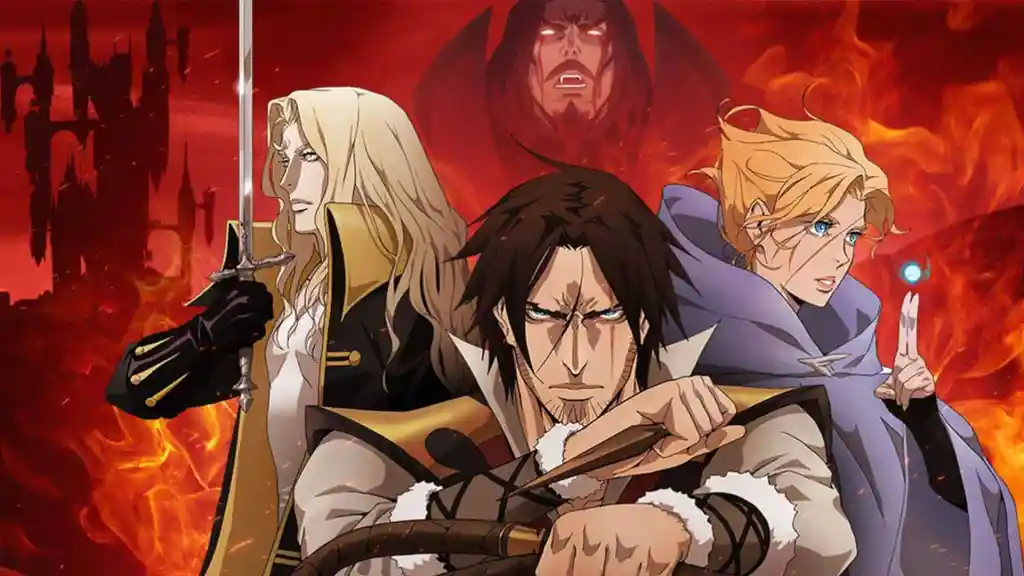
In more recent years, I’ve grown fond of some newer entries into my Halloween themed watch-list. Movies like “Happy Death Day” and “Hubie Halloween” have quickly become personal favorites of mine. But for Halloween this year, I’d like to offer another show that has steadily worked its way into my Halloween viewing list. It’s an animated series on Netflix called “Castlevania.”
Now, this is not a new show, relatively speaking. This show actually began airing in 2017 and when it began, it only had three episodes. Even though I watched those episodes and liked what I saw, it wasn’t even that clear that it would continue beyond that.
There was a good reason for that. This show was based off a video game by the same name. If you owned a Nintendo or Super Nintendo system back in the early to mid 1990s, you probably heard of “Castlevania” the game. And it was a damn good game, as well. It was often held in high regard for its gameplay and its monster hunting themes.
But since it emerged in the early era of gaming, it wasn’t particularly known for its story. I doubt it was ever at the top of anyone’s list in terms of video game franchises that deserved an adaptation. It certainly doesn’t help that video game adaptations have a rather nasty legacy of being terrible, regardless of whether they’re animated or live action.
Despite those limitations, Netflix dared to invest in “Castlevania.” It dared to give this franchise some full-scale world-building, taking iconic characters from the game and fleshing them out in a meaningful way. And the end result was truly remarkable.
This isn’t just a series that makes for good viewing during Halloween.
This is a legitimately well-written, well-developed show on every conceivable level.
Yes, it still has the armies of monsters, goblins, and demons that made the video game so iconic. But it also has a genuinely compelling story with genuinely well-rounded characters. Trevor Belmont, Sypha, Alucard, and even Vlad Dracula himself are given distinct, multi-layered character arcs that are all distinct. They all exist in a dark, flawed, and corrupt world set in Medieval Europe. It’s not a world driven by good or pure evil. Everything exists in varying shades of both. And everyone has agendas, goals, struggles, and burdens.
It’s also a show that really hits the ground running. It’s not a slow build towards the action. Within the first few minutes of the show, an innocent gets burned at the stake and Dracula goes on a grief-fueled rampage against the whole of humanity. It gets bloody, violent, and dark very quickly, all of which feel very appropriate for Halloween. But it also has moments of heart, introspection, and melodrama.
Seriously, there are moments within the brutal violence that are genuinely heartbreaking. But those moments only make the horror themes work even better.
The early seasons were good. That, I never denied. But once the later seasons came out and really completed the story, “Castlevania” became much more than a video game adaptation that didn’t suck. To me, it became a perfectly crafted horror story that maximized the appeal of vampires, magic, goblins, ghouls, and monsters.
Seriously, what more could you want from a Halloween story?
While “Castlevania” was never marketed as a Halloween story, it definitely checks most of the necessary boxes. So, if you’re looking for something new to add to your Halloween watch list this year, give Netflix’s “Castlevania” a watch. Even if it doesn’t get you into the Halloween spirit, it’s still a damn good show.
The following is a video from my YouTube channel, Jack’s World. This video is my general reaction and overall breakdown of the series finale to “Better Call Saul.” A lot transpired over the course of six seasons. In that time, we watched as James McGill transformed into Saul Goodman, as well as how his journey led him to crossing paths with the events of “Breaking Bad.”
Now, the story is just about over and there’s a lot to take in. Having been a fan of this show since the beginning, it was quite an experience and one I hope raises the bar for other shows like it. Enjoy!




 Jack Fisher's Official Publishing Blog