
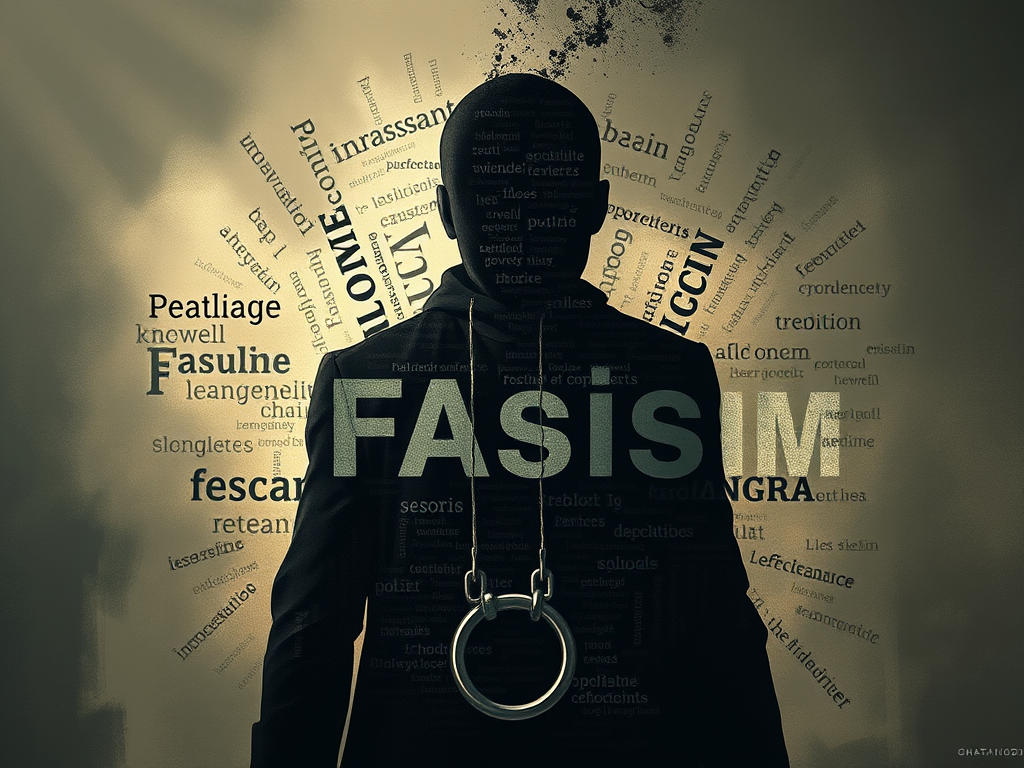
A lot of buzzwords and jargon get thrown around the internet these days. Engage in any form of debate or discussion with someone long enough and chances are things will get heated, ugly, and incomprehensible. And if said discussion or debate goes on long enough, then eventually Godwin’s Law will take hold.
Now, I don’t care to recount the futility or frustration that often comes with internet discourse. I’ve already wasted way too many hours debating with idiots, assholes, grifters, creationists, and anti-vaxxers. However, there are certain trends in which substance should take precedent over style. If not, then we’re not even talking about anything. We might as well be yelling obscenities at a rock in a dark basement.
In that spirit, I’d like to remind everyone who sees this post that words do have specific definitions. Concepts do have defined criteria. You can throw them around in any discussion or debate to help your argument. But if you don’t understand what they mean, then you’re not just failing in that effort. You’re actively diluting the very concept of language and contributing to the destruction of society.
I know that may sound hyperbolic, but I have to use that sort of language when it comes to definitions of words like fascism. I know that just by typing that word, I’m raising a lot of red flags and pushing a lot of proverbial buttons. There might be people at this very moment who see that word as a thought-terminating cliche, thereby giving them an excuse to completely ignore or discount anything I say after this sentence.
Please resist that urge. The well-being of the human race needs you to be slightly more self-aware.
Because fascism is a serious topic of discussion. This isn’t some buzzword meant to generate clickbait. Fascism is directly responsible for the deaths and suffering of millions of people. Yet people throw that label around nothing more than a blanket term for “politics/ideology I don’t like.”
Again, please stop doing that. Please resist the urge to do that. You’re spitting on the mass graves of millions of people by doing that.
But given the current political situation in many modern nations, fascism is a growing issue. I’ve even seen it here in my home country, the United States of America. There are people I know who actively support turning our government into a fascist system. They may not call it that, but it fits the criteria. They may not know/care about that criteria, but everyone else should.
Because fascism is a threat to you, your family, and everything you hold dear. You can’t beat it by “owning” fascists in an online debate. You can only beat by actively resisting it. But how do you know if what you’re dealing with is actually fascist and not some generic thought-terminating cliche?
Thankfully, people far smarter than us have actually thought about this and done the necessary work. The following criteria was submitted back in 1995 and to date, it’s one of the most comprehensive lists for defining fascism. There may be others, but this is the most straightforward. What follows is a simple excerpt from Wikipedia:
- “The cult of tradition“, characterized by cultural syncretism, even at the risk of internal contradiction. When all truth has already been revealed by tradition, no new learning can occur, only further interpretation and refinement.
- “The rejection of modernism“, which views the rationalistic development of Western culture since the Enlightenment as a descent into depravity. Eco distinguishes this from a rejection of superficial technological advancement, as many fascist regimes cite their industrial potency as proof of the vitality of their system.
- “The cult of action for action’s sake“, which dictates that action is of value in itself and should be taken without intellectual reflection. This, says Eco, is connected with anti-intellectualism and irrationalism, and often manifests in attacks on modern culture and science.
- “Disagreement is treason” – fascism devalues intellectual discourse and critical reasoning as barriers to action, as well as out of fear that such analysis will expose the contradictions embodied in a syncretistic faith.
- “Fear of difference“, which fascism seeks to exploit and exacerbate, often in the form of racism or an appeal against foreigners and immigrants.
- “Appeal to a frustrated middle class“, fearing economic pressure from the demands and aspirations of lower social groups.
- “Obsession with a plot” and the hyping-up of an enemy threat. This often combines an appeal to xenophobia with a fear of disloyalty and sabotage from marginalized groups living within the society (such as the German elite’s “fear” of the 1930s Jewish populace’s businesses and well-doings; see also antisemitism). Eco also cites Pat Robertson‘s book The New World Order as a prominent example of a plot obsession.
- Fascist societies rhetorically cast their enemies as “at the same time too strong and too weak“. On the one hand, fascists play up the power of certain disfavored elites to encourage in their followers a sense of grievance and humiliation. On the other hand, fascist leaders point to the decadence of those elites as proof of their ultimate feebleness in the face of an overwhelming popular will.
- “Pacifism is trafficking with the enemy” because “life is permanent warfare” – there must always be an enemy to fight. Both fascist Germany under Hitler and Italy under Mussolini worked first to organize and clean up their respective countries and then build the war machines that they later intended to and did use, despite Germany being under restrictions of the Versailles treaty to not build a military force. This principle leads to a fundamental contradiction within fascism: the incompatibility of ultimate triumph with perpetual war.
- “Contempt for the weak“, which is uncomfortably married to a chauvinistic popular elitism, in which every member of society is superior to outsiders by virtue of belonging to the in-group. Eco sees in these attitudes the root of a deep tension in the fundamentally hierarchical structure of fascist polities, as they encourage leaders to despise their underlings, up to the ultimate leader, who holds the whole country in contempt for having allowed him to overtake it by force.
- “Everybody is educated to become a hero“, which leads to the embrace of a cult of death. As Eco observes, “[t]he Ur-Fascist hero is impatient to die. In his impatience, he more frequently sends other people to death.”
- “Machismo“, which sublimates the difficult work of permanent war and heroism into the sexual sphere. Fascists thus hold “both disdain for women and intolerance and condemnation of nonstandard sexual habits, from chastity to homosexuality”.
- “Selective populism” – the people, conceived monolithically, have a common will, distinct from and superior to the viewpoint of any individual. As no mass of people can ever be truly unanimous, the leader holds himself out as the interpreter of the popular will (though truly he alone dictates it). Fascists use this concept to delegitimize democratic institutions they accuse of “no longer represent[ing] the voice of the people”.
- “Newspeak” – fascism employs and promotes an impoverished vocabulary to limit critical reasoning.
Having laid out these points, I urge everyone to take a step back and look at the current political situation in their surrounding area. Take a look at your own politics while you’re at it. Be brutally honest with yourself. Be mindful of what these ideas mean to people who aren’t you and are in a more vulnerable position.
How fascist are your ideals?
How fascist are your politics?
How fascist are your general perspectives on the world?
They may not fit every criterion. They may not even fit half. But how comfortable are you with them fitting more than one? And would you be willing to re-evaluate these principles?
Because one day, you might find yourself in a society where fascism is taking hold. It rarely happens all at once. It also cloaks itself in other labels, be they political slogans or social movements. But try and look beyond the terms. Look instead at the ideas and actions. If it meets a few too many criteria, then you have a choice to make.
If it’s not too late, then you can choose to oppose this distressing trend. Just remember that if you don’t make that choice, then eventually it will be made for you.






 Jack Fisher's Official Publishing Blog
An Important Hypothetical Question To Consider (Before Any Debate)
I’ve been using the internet for a good chunk of my life. I’m old enough to remember the days of slow dial-up, AOL chatrooms, and messy Geocities websites. And while I don’t miss those days, there are certain elements of my internet experience that have remained fairly constant.
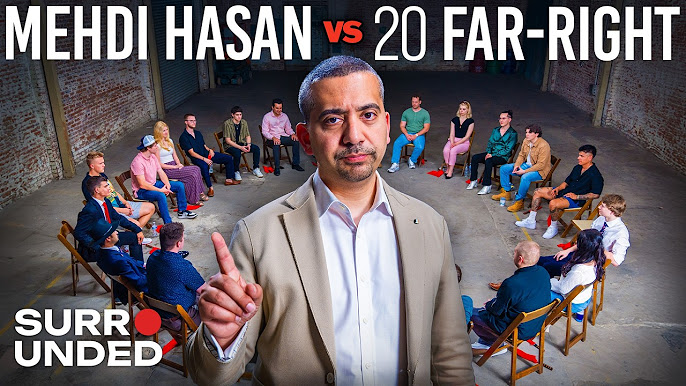
One of them has to do with debates. And if you’ve ever talked politics, comics, anime, or movies with anyone on any medium, you know how heated that can get.
Believe me, I know this as well as anyone. I still haven’t forgotten how heated some debates got on the old comic book message boards I used to frequent. Some want to say social media ruined discourse by making it too easy to engage in such debates. But I respectfully disagree.
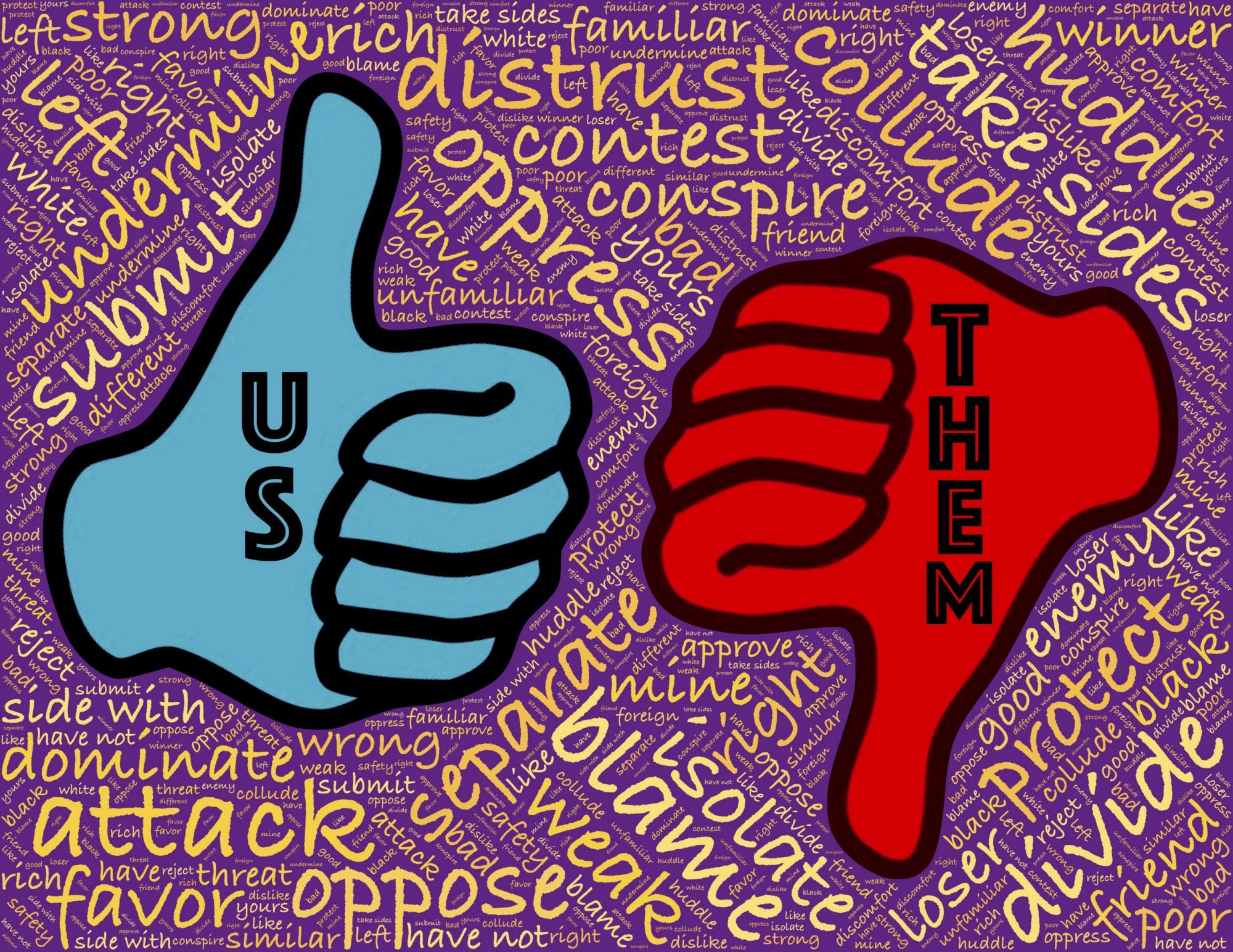
This sort of tension between people always existed. Human beings have always had their share of strongly held opinions that they were debate, discuss, and defend far past the point of reason. It doesn’t matter how smart, educated, or well-informed they are. The passion with which they hold their views has always been strong. The internet and social media simply made it more prominent.
I’m bringing this up for two reasons. For one, I see a lot of debates and arguments online, especially in comments sections and on social media. I freely admit that I engage in some of that discourse. It’s rarely productive. And I’ve yet to meet anyone who has been convinced to change their position on something based on a point someone made in a Facebook comment.
Second, I live in the United States of America and this year happens to be an election year. Debates about politics, issues, and policies are bound to get more heated. And that’ll only escalate the closer we get to Election Day on November 5, 2024. I fully expect to see plenty of discourse that will make me lose my faith in democracy, the future, and humanity in general.
For those reasons, and plenty others I don’t care to articulate, I want to present a simple hypothetical to anyone seeking to debate others in any capacity on any issue, be it political or otherwise. It’s not a thought experiment. It’s just a simple perspective that I hope provides greater context into the nature of discourse. It goes like this.
What I just described is situation that I hope adds context to the what, why, and how of debating others. Because if you approach this hypothetical in good faith, it puts you in a difficult position. Either you admit you seek vindication and are willing to fight for it or you actively avoid the implication that your position is wrong.
Call it confirmation bias.
Call it cognitive dissonance.
Call it an impossible scenario that will never play out because there are too many issues that cannot be completely verified beyond any and all doubts.
If you’re honest with yourself, you know how you’ll react in that scenario. And if you’re honest about how most people operate in heated discourse, you’ll know how your opponent would react in this scenario.
However you feel about what I just presented, I only ask that you keep it in mind as you engage in further discourse moving forward.
Leave a comment
Filed under philosophy, political correctness, politics, Thought Experiment
Tagged as bias, cognitive dissonance, comments section, conservative, debate, democracy, democrat, discourse, Donald Trump, Election Day, hate speech, human psychology, internet comments, liberal, news, political debate, political discourse, politics, psychology, republican, sociology, the internet, Trump