Tag Archives: Nuclear Power

Putting Recent News About A Nuclear Fusion Breakthrough In (Balanced) Perspective

As a general rule-of-thumb, you should never take news of a “scientific breakthrough” at face value. It’s not that the science is flawed or that the media reporting it are uninformed or misguided. It’s just incomplete. The rhetoric rarely matches the results, nor does it fully grasp the implications.

To some extent, that’s unavoidable. People who actually do science rarely use terms like “breakthrough” or “revolutionary.” Despite what popular media might depict, science doesn’t make giant leaps like that. It usually makes gradual steps full of small, but meaningful advances. It rarely makes for attention-grabbing headlines, but that’s how most scientific progress is made. It’s like building a house brick-by-brick. One brick alone is not a breakthrough. It’s the totality of the structure that garner’s the most vlaue.

When it comes to any news on nuclear fusion, it helps to be even more restrained. I’ve been following tech news for most of my life. During that time, I’ve seen plenty of articles and news releases from mainstream sources claiming some major breakthrough. Some give the impression that we’re just a few years away from using fusion to power starships to Mars. That’s a very flawed, very uniformed perspective.

In that same mold, I’ve also seen plenty of news articles saying nuclear fusion is an impossible dream that nobody will see in their lifetime. There’s a common refrain among these skeptics. They’ll often say something along the lines of “Nuclear fusion is 30 years away and always will be.” It’s a very cynical, very narrow-minded understanding of the issue. It also paints a flawed perspective of where we actually are in the science.

With those two perspectives in mind, how do we make sense of the latest news purporting a fusion breakthrough? In case you haven’t heard, the news came courtesy of Lawrence Livermore National Laboratory, which is not some fringe company or organization. This is something they’ve been working on for decades and this was a big moment for them, according to the Financial Times.

FT: Fusion energy breakthrough by US scientists boosts clean power hopes

US government scientists have made a breakthrough in the pursuit of limitless, zero-carbon power by achieving a net energy gain in a fusion reaction for the first time, according to three people with knowledge of preliminary results from a recent experiment.

Physicists have since the 1950s sought to harness the fusion reaction that powers the sun, but no group had been able to produce more energy from the reaction than it consumes — a milestone known as net energy gain or target gain, which would help prove the process could provide a reliable, abundant alternative to fossil fuels and conventional nuclear energy.

The federal Lawrence Livermore National Laboratory in California, which uses a process called inertial confinement fusion that involves bombarding a tiny pellet of hydrogen plasma with the world’s biggest laser, had achieved net energy gain in a fusion experiment in the past two weeks, the people said.

Although many scientists believe fusion power stations are still decades away, the technology’s potential is hard to ignore. Fusion reactions emit no carbon, produce no long-lived radioactive waste and a small cup of the hydrogen fuel could theoretically power a house for hundreds of years.

The US breakthrough comes as the world wrestles with high energy prices and the need to rapidly move away from burning fossil fuels to stop average global temperatures reaching dangerous levels.

Now, compared to other news about “breakthroughs” from mainstream media, this is fairly balanced in that it doesn’t make too many bold claims. It makes clear that commercial fusion power stations are still decades away. But that was never the point of this experiment, nor is it the purpose of the article.

The most important detail from this news is the results the scientists produced. For the first time, a nuclear fusion reactor achieved a net energy gain. That means the generator put out more energy than was put into it. Specifically, the experiment produced an excess of 1.37 megajoules of energy, which amounted to approximately 70 percent more than the energy that was put into the reactor.

That is major news.

That is an achievement worth celebrating.

Because to date, plenty of laboratories throughout the world had achieved fusion. That’s not some act of scientific magic on par with anti-gravity or perpetual motion. The issue with fusion has never been about the physics. It has always been an engineering and logistic challenge, more so than fission ever was.

Creating fusion only requires a few ingredients. You need lots of heat, some hydrogen, and a way to confine it all in a structure. The big challenge that has been taking so many years has been to do all this in a way that generates more power than what goes into it. That’s something no other reactor has achieved until this experiment.

Now, it has been done.

We now know it’s possible to create a nuclear fusion reaction that generates more energy than what goes into it.

This is akin to the first ever cell phone call, which occurred in 1973. And it wasn’t until 1983, a full decade later, that the first commercial cell phone went on the market. That first phone was not very good and nowhere near as efficient as the cheapest phone you can get today. But it did work and it did get the ball rolling on the market.

That’s not to say that fusion will follow a similar timeline, but that comparison helps give perspective to where we’re at right now. Just getting a new technology to work is one thing. Making it a commercial product on some level takes time because the technology requires greater refinement, investment, and engineering.

But that process can only start after someone proves that it is technically possible. Fusion did not have that until this news. On top of that, investment in nuclear fusion has never been very high, compared to other technologies. In fact, it has only been in the past couple of years that more public and private investment has flowed in to developing nuclear fusion. So, that old joke about fusion always being 30 years away was missing a key detail. Any technology is going to develop slowly if there isn’t sufficient investment.

Now that one lab has succeeded in showing that a net energy gain is possible with fusion, others can follow. Hopefully, it inspires even more investment. With those investments will come more refinements and efficiencies. If those efforts are sustained, fusion doesn’t just become possible. It becomes inevitable.

The past couple decades have seen one too many price spikes in oil and other fossil fuels. Recent geopolitical conflicts have only shown just how vital it is for us to get off fossil fuels as quickly as possible. And our energy demands are only going to keep going up in the coming years. Add on top of that all the environmental concerns surrounding fossil fuels and the urgency for nuclear fusion has never been greater.

We’re still not going to see fusion plants popping up tomorrow, next year, or the year after that. But with this news, we’ve taken a critical first step. And many of those reading this will likely live to see the day when fusion energy powers their homes. That’s something worth looking forward to.


Leave a comment

Filed under Current Events, technology

Recent Advances In Nuclear Fusion (And Why We Should Cheer Them On)

Nuclear fusion: Building a star on Earth is hard, which is why we need  better materials

There a great many technological advancements that are touted as “game changing” or “revolutionary,” but very few end up delivering on that promise. I still remember all the hype surrounding the Segway and the Virtual Boy.

Granted, these might have been just a byproduct of market hype, but there was a genuine belief that this technology would revolutionize the world. It just didn’t pan out.

I know I’ve discussed a number of technological advances that are very likely to deliver on that hype. I still believe that artificial intelligence, brain computer interfaces, and human enhancement will be true game changers for the future of humanity.

However, there’s one technology that I haven’t really touched on. Arguably, it’s the most needed technology in the world right now. It wouldn’t just revolutionize the world as we know it. It might literally save it.

That technology is nuclear fusion.

Now, there’s a reason I haven’t talked about it much, aside from it not being in any particular area of expertise for me. Nuclear fusion doesn’t exactly have a lot of sexy implications like AI or human enhancement. It also has a bit of a bad reputation among those who speculate about the future.

The running joke is that nuclear fusion is 30 years away and always will be.

If you’re not laughing, don’t worry. It’s not a very good joke and it’s not the least bit funny in the grand scheme of things. That’s because nuclear fusion, if we could get it to work on a large scale, would effectively solve the world’s energy problems. It would largely eliminate the need for oil, coal, natural gas, and most other forms of energy.

If it sounds too good to be true, then you’re starting to get the joke. However, this is no magical fantasy power source on par with Dilithium Crystals. Fusion power is very real. We feel it every day. It’s what powers the sun. It’s what powers all the stars we see in the night sky.

Most people who passed high school physics know what fusion is. Basically, you take a bunch of hydrogen atoms, the most abundant element in the universe, and fuse them together under tremendous pressure and heat. The end result is helium, the second most abundant energy in the universe, and a whole lot of energy.

Unlike nuclear fission, which splits larger atoms into smaller atoms, this form of power doesn’t rely on heavy radioactive elements. As such, it produces next to no waste or greenhouse emissions. It also allows us to use seawater as fuel, since all you need is hydrogen. As a power source, it is as close to perfect as you can get.

Naturally, countless engineers and scientists have spent years trying to make fusion a viable power source. For decades, it was promised to be the ultimate solution to our energy needs. However, no matter how many times someone said viable fusion was close, it never came to be. That’s where its reputation as always being 30 years away came from.

On top of that, fusion research has had a few famous frauds. The whole failure of cold fusion was not a good look for the industry. I suspect that affair convinced too many people that we would never have fusion.

Now, there are some legitimate engineering and scientific reasons for why fusion has been so difficult. Again, I’m not an expert and I’m not qualified to explain those reasons. I’ll just say that it often comes back to making a fusion reaction self-sustaining and containing the massive heat required to keep that reaction going.

These are not challenges that require us to break the laws of physics. These are mostly engineering challenges that require study, refinement, and new materials. In the same way you can’t expect blacksmith’s from the 17th century to make a modern car, you can’t expect our current engineers to make a fusion reactor without the necessary components.

Despite what jokes and skeptics may say, we have made real progress. Very recently, an experiment at Lawrence Livermore National Laboratory that utilized high energy lasers set a new energy record. That may not mean much to the average person and it certainly doesn’t mean that fusion has been perfected. It just means we’re getting closer to that magical break-even point.

That’s the point where the energy we get out of the fusion reaction is greater than what we put into it. To date, plenty of labs have created nuclear fusion reactions. They just take way more energy than they give off. Over the years, that difference has gotten smaller and smaller. Once it crosses that break-even point, then we have fusion and that will be a game-changer.

I cannot overstate just how much the world needs that kind of game-changer right now and I’m not just referring to the lingering damage of the COVID-19 pandemic. Every year, we get increasingly dire reports from the IPCC about the impacts of climate change. Despite what politicians and oil lobbyists say, we’re fueling these impacts with our reliance on fossil fuels.

Fusion, once refined and scaled, could do more than anything to reduce our emissions of greenhouse gases. It might not eliminate fossil fuels completely, but it will make them far less necessary for all the energy we need in the present and the future. I would even go so far as to say that nuclear fusion might be the only way to adequately power the future we’re trying to build.

That’s why it’s not helpful to make jokes about how fusion is always 30 years away.

Instead, this might be the best possible time to actively cheer on the people working on nuclear fusion. Only one of them needs to succeed at getting to the break-even point. Only one of them needs to succeed at making a viable fusion reactor. At that point, the world will start changing in a profound way.

It won’t happen all at once, but it will be one of the most welcome and overdue advancements in recent memory. I certainly hope that this advancement happens sooner rather than later. If nothing else, it’ll make the world feel less dire so that the other, sexier advances in technology can proceed.

2 Comments

Filed under futurism, technology

Why I Believe In Climate Change, But Doubt Environmentalists

103_shutterstock_88550854-740px

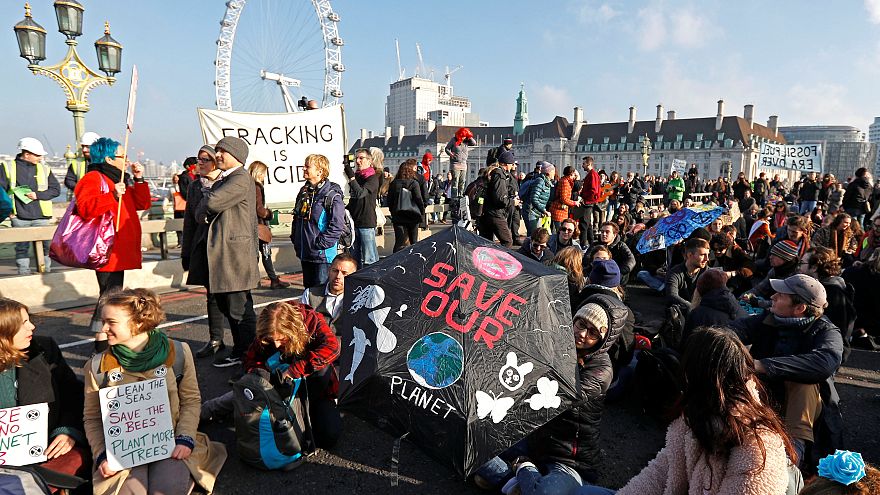
There aren’t a lot of hot button issues that genuinely affect everyone. The environment is one of those issues. We all live in it. We’re all impacted by it. Whenever it changes significantly, we all feel it. That’s why, regardless of your politics or personal leanings, we should take environmental issues seriously.

Given that preface, I’d like to make my own sentiments clear. The environment, like other sensitive topics I’ve discussed, is prone to all sorts of secondary agendas. Some who claim to take environmental issues seriously often do so because it serves their interest in other, often indirect ways. In the interest of transparency, this is where I stand on the environment.

I do believe that climate change is real, human activity is contributing to it, and we should pursue policies to improve the environment and promote cleaner industry.

However, I don’t entirely trust the rhetoric, sincerity, and positions of those who identify as environmentalists.

I know that sounds like someone trying to have their cake and eat it too, but there is a context here. It’s one that I’ve developed over a number of years, some of which I’ve been on the side hardcore environmentalists. As I’ve gotten older, however, I see more and more complications with this issue and not just in terms of the absurd conspiracy theories it attracts.

While I know this will put me at odds certain parts of the political spectrum, I generally accept that the existing science surrounding climate change. The Earth is getting warmer and human activity is a major cause. There have been real, tangible impacts attributed to climate change and I believe those links are real.

The point where I often deviate from environmentalists is when issues of feasible solutions emerge. I’m happy to support efforts that raise awareness and educates the public on the existential dangers of climate change. However, just sounding the alarm is only half the battle. The other half involves doing something about it and this is where environmentalists have a problem.

It’s not that they outright avoid talking about solutions, which sets them apart from other agenda-driven politics. Some of their solutions do have merit and some are even making headway into the economy. However, there’s an over-arching theme of those solutions that leads me to question just how much the environment actually matters to certain environmentalists.

Talk to any self-identified environmentalist and, usually after they’re done talking about melted ice caps and dying polar bears, they’ll single out greedy corporations as the enemy. They tend to lump oil companies, coal producers, and any corporation that doesn’t sound eco-friendly as part of some international consortium of billionaires intent on maintaining their pollution-loving ways for the sake of profit.

Now, I don’t like defending big corporations, especially when their track record in protecting the environment has plenty of room for improvement. At the same time, I have a hard time believing that the solution to such an enormous problem involves battling big, industrial polluters as though it were an episode of “Captain Planet.”

As much as I love cheesy cartoons in the 1990s, the problems of the real world are far more complicated. Environmentalists, like many other vocal politically-driven groups, try to simplify the issue. Through their protests and the rhetoric surrounding it, they give the impression that to save the world, they need only defeat the evil polluters.

This is where I don’t just question the veracity of environmentalists. I genuinely doubt that the environment is their primary concern. If it were, then protesting polluters would only be a small part of their efforts. If they’re serious about making the world cleaner and more efficient, they would dedicate more time and energy into improving clean energy technology, which itself is prone to corporate greed.

This disconnect is most apparent whenever the topic of nuclear power comes up. Unlike other green energy technologies, nuclear energy is a mature technology that has been providing energy for decades. Compared to other forms of energy, it has very low emissions, but provides abundant energy, regardless of whether the sun is shining or the wind is blowing.

Despite those benefits, the same environmentalists who favor shutting down coal power plants won’t support the construction or further refinement of nuclear power planets. They’ll even outright oppose it and for reasons every bit as irrational as those championed by climate change deniers.

While there are legitimate disadvantages to utilizing nuclear power, I rarely hear environmentalists promote efforts to mitigate those issues. They won’t champion the development of advanced nuclear power, including versions that produce far less waste and are less prone to meltdowns. Many won’t even concede it as an option.

This is akin to anti-abortion advocates who support making abortion illegal in all cases, but also oppose contraception, despite the fact it significantly reduces abortions. It also parallels other environmentalists who protest the usage of genetically modified foods, but overlook the distressing fact that billions would starve without this technology.

It’s not just a case of the perfect being the enemy of the good. It’s environmentalists favoring a particular narrative over actual solutions to the problems they protest. As I’ve noted before, people like to believe that they’re the heroes of their own story. When they take a particular position, they see themselves as the underdogs in an epic struggle against good and evil.

While that makes for great superhero comics and Tolkien novels, it rarely aligns with reality. Environmentalists think they’re protesting a greedy corporation run by an army of Lex Luthors who enjoy bathing in the tears of starving orphans, but the truth is more complicated and more mundane.

A key part of that truth that environmentalists tend to overlook is the fact that, no matter how greedy or evil a corporation may be, they have a vested interest in the world remaining intact. Corporations, be they greedy or virtuous, are driven to make profits. They can’t make profits, nor enjoy the fruits of their wealth, in a world where the planet is a toxic wasteland.

That’s why even oil companies, the boogeyman of many environmentalists, are actively researching more environmentally friendly products. It’s also why oil-rich countries like Saudi Arabia, which has harmed the environment in ways beyond pollution, is also investing in a post-oil economy.

It’s very likely that the advances in green energy that will improve the environment won’t come from some dedicated environmentalist who protests outside of coal plants. Chances are it will be some greedy, profit-seeking business person trying to make money in a world where the demand for energy is rapidly increasing.

Beyond just generating energy, those same greedy billionaires have just as much incentive to create clean, lush landscapes that attract other billionaires and customers. In general, people don’t like being in polluted communities. Aside from the illness and misery it generates, it also means there are fewer people buying goods and producing for the economy. Even the most devious billionaire is hurt by that.

The incentives for improving the environment are already there. That’s not to say there aren’t some who are truly malicious in how they treat the environment, but in terms of an investment that helps greedy people get richer, it’s one of the worst investments anyone can make and not just because of the bad PR it generates.

Environmentalists will gladly single out those exceedingly malicious corporations, but ignore the bigger picture. They, ironically, don’t see the forest from the trees when it comes to action that genuinely improves the environment. They cling to that epic war raging in their minds of them battling evil corporations that are out to destroy the planet, as though that would somehow benefit any business.

I get the appeal of wanting to feel like a hero in an epic struggle. My love of superhero comics should be proof enough of that. However, when that same struggle both ignores and undermines real solutions that could alleviate a serious issue, then it’s hard to take environmentalist rhetoric seriously.

There’s having genuine concern for the environment and then there’s just being against greedy corporations. Those who are unable to discern between the two can call themselves a lot of things, but they certainly aren’t helping the environment.

2 Comments

Filed under Environment, human nature, outrage culture, political correctness, technology

How Nuclear Weapons Have (Kind Of) Had A Positive Impact On Society

There are just some ideas in society that cannot and will never be justified. Concepts like sexual assault, spousal abuse, and the premature cancellation of “Firefly” usually come to mind. Some things are just so awful that the world would be objectively better if they didn’t exist.

Well, I’m going to put on some extra layers and change the locks on my doors this morning because I’m about to justify the existence of something that many rightfully dread and for entirely understandable reasons. I imagine my position will upset a certain crowd of people, especially the peace-loving hippie types that are fond of the sexier, more decadent stories I’ve written.

That’s because I’m going to spend this article justifying the existence of nuclear weapons. Given how I’ve covered just how close we came to nuclear annihilation about 35 years ago that may seem like a complete reversal. I promise there’s a logic to it, albeit a distressing kind.

First off, let me make clear that I find nuclear weapons abhorrent. The fact we have weapons that powerful and no killer aliens/superintelligent apes to justify them reflects the sad, chaotic state of affairs of our civilization. The idea that just one of the handful of nuclear armed countries can slaughter millions on the whim of an itchy trigger finger is nothing short of terrifying.

However, and this is where I’m sure I’ll lose the hippie crowd, they may also be responsible for our growing ability to avoid war and cooperate with one another. Please set the pitchforks down for a moment. Let me explain myself, at least as much as any aspiring erotica/romance writer can on such a sensitive topic.

Most of people alive today don’t remember a world without nuclear weapons. Sure, they’re terrifying in their destructive potential, but we’re kind of used to their presence. Most people today don’t give them a second, a third, or a tenth thought. The fact they’ve only ever been used twice in a conflict limits the impact of that terror.

Even if entire generations are numb to it, that doesn’t change the inherent horror or the destructive capabilities of these weapon. These weapons don’t just kill a few hundred or a few thousand people. They kill millions, and even billions, of people. At a time when any event that kills more than tens of thousand people is considered a global crisis, most people can’t even wrap their heads around such horror.

It’s because of that horror, though, that nuclear weapons incurred such a significant impact on the world. It’s not the kind of impact that we feel every day, but it’s one that has shaped the mindset of our society in the late 20th and 21st century. How it did that requires a little perspective that’s not easy for anyone under the age of 75 to understand.

Despite what cable news and conspiracy theories/performance artists may claim, the last 50 years have seen an unprecedented decline in war. That may evoke some heavy scoffs from those who hear terrible news out of Iraq and Afghanistan at least twice a day, but the data doesn’t lie.

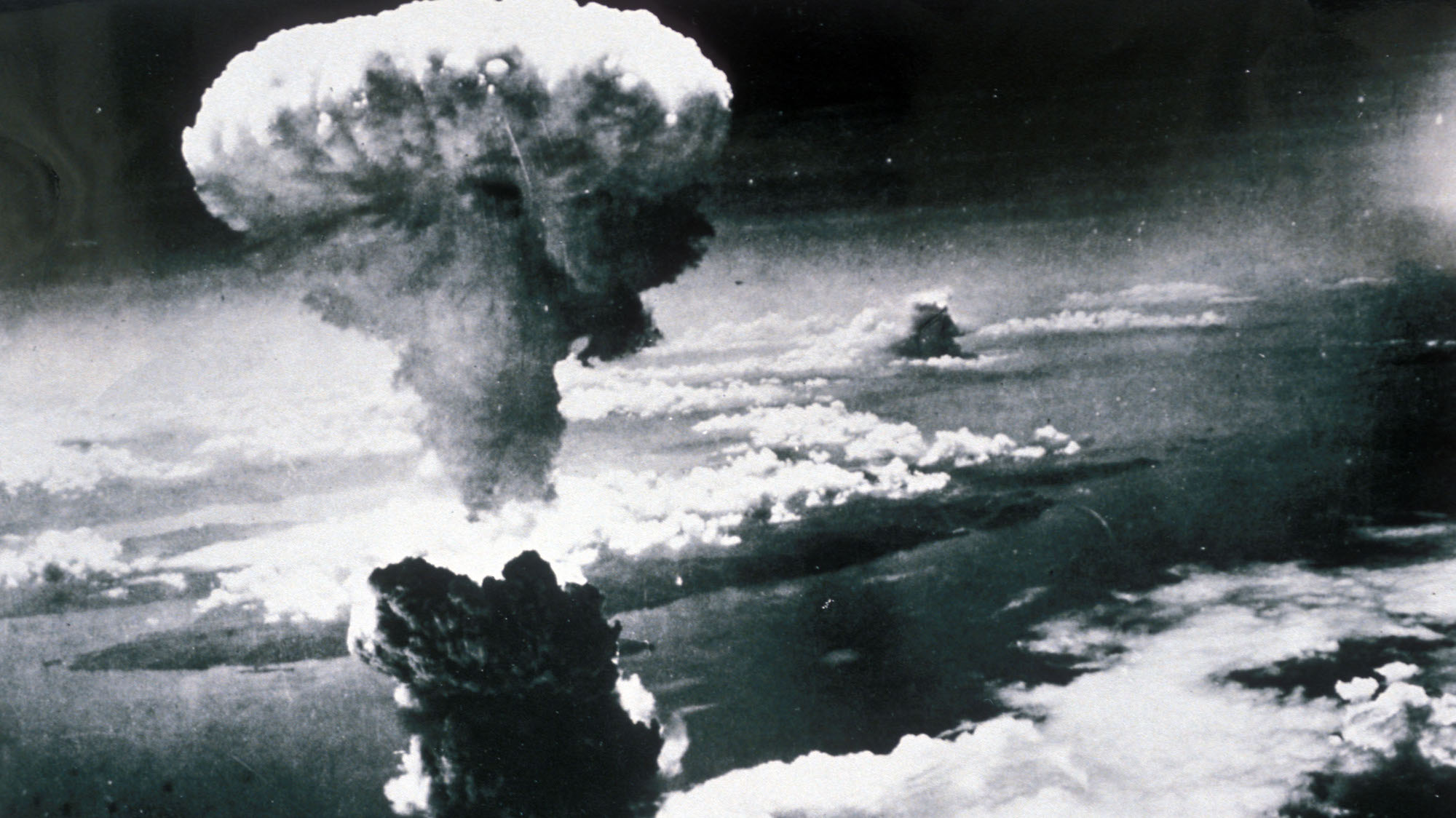
Since 1945, there hasn’t been a major world war involving major world powers. Sure, there have been smaller proxy wars like Vietnam, Iraq, and Korea. However, those wars never even came close to the staggering death toll of World War II. Fittingly enough, that was a war ended by nuclear weapons, but it’s really the events that played out in the decades after that war that showed the impact of those weapons.

Now, thanks to weapons that could wipe out entire continents, nations couldn’t wage war on the same level they had for centuries past. Before the 20th century, a nation going to war with another was seen as standard business practices. You couldn’t call yourself a powerful nation without going to war and sending thousands of young men off to die on a battlefield. Some even tried to paint that kind of thing as glorious.

With nuclear weapons, there’s nothing glorious about incinerating entire cities in the blink of an eye. There’s no room for heroism, gallantry, or warrior spirit. One second you’re a live, flesh-and-blood human. The next, you and everything around you is a pile of radioactive ash. That fundamentally changes the image of war.

Suddenly, nations have a very good reason to not go to war, especially with a country that has nuclear weapons. It’s not just their soldiers that will die. It’s every city, town, and village within their borders. Even the most brutal, sociopath-like ruler can’t overlook the high cost of such a war. Most rulers enjoy the perks that come with ruling. Going to war is the quickest way to lose it all.

That’s the biggest impact that nuclear weapons have had, as a whole. They’ve made large wars on the level of World War II impossible, if not downright suicidal for all those involved. Say what you will about the ineptitude of modern nation states, but in general, they want to survive.

Making war that untenable is an objective good, on some level. Granted, that good is only achieved through the sheer terror and destructive potential that nuclear weapons possess, but the result is still the same. Going to war is no longer a viable means for a nation to grow. Instead, nations grow through economics and instead of war stories, that gives us smartphones, cars, and exotic music like K-pop.

Regardless of how you feel about K-pop, it’s much less destructive than any war. It could be argued, and I would tend to agree, that the lack of a major war is a big reason why the 20th and 21st century has seen the hugest economic growth, as well as the greatest reduction in global poverty, in recorded history.

Beyond just making nations too reluctant/terrified of going to war, nuclear weapons have had another impact on how global powers function. In the past, major nations went to war for stupid, petty reasons all the time. Why be diplomatic about anything when war is so much sexier? That’s how the British Empire got to be one of the largest empires of all time.

Then, nuclear weapons come along and suddenly, nobody can afford to be that petty anymore. Now, fighting a stupid war that could escalate for stupid reasons runs the risk of seeing your glorious empire reduced to ash in the span of a day. Nuclear weapons are just that powerful.

Fear, being such a powerful motivator, makes nations more inclined to talk a problem out rather than sending in the army. It requires them to make more of an effort to talk to rival nations, make mutual deals with them, and not rely so much on bully tactics because one might have a larger army. When nuclear weapons are involved, the size of an army means less than the size of their shoes.

That’s why, despite a fair amount of bravado on the geopolitical stage, modern nations generally prefer diplomatic solutions over war. When the alternative is nuclear annihilation, even the most petty rulers will opt to negotiate. As chaotic as the world might be, the presence of nuclear weapons makes war untenable and diplomacy indispensable.

Whether out of sheer terror or begrudging pragmatics, the advent of nuclear weapons has changed the way that modern nations conduct themselves on the global stage. By nearly every measure, that method is an improvement over the bloody wars of the past.

Most people who aren’t kings, despots, or related to one can’t appreciate the benefits of a world where war is so untenable, due to the presence of real doomsday-level weapons. Perhaps that’s for the best. So much of our time as a civilization has been spent dreading when we’ll be conscripted to fight a bloody war for some ambitious king/tyrant/emperor. Not having to live our lives with that fear counts as an improvement.

Now, as beneficial as this on some levels, it doesn’t discount the true danger of nuclear weapons. Make no mistake. These things can and will destroy us all if we use them, even on accident. The stakes literally cannot be higher when such weapons are involved, but if they help us function better as a species and a society, then I think that gives at least some merit to their presence.

2 Comments

Filed under Current Events, Jack Fisher's Insights