Tag Archives: fiction

How To Craft A Love Triangle That DOESN’T Suck

I’ve spent most of this week complaining about how much I despise love triangles and why they’re the worst invention since the concept of sparkling vampires. I’ve explained why they suck and singled out one that sucks the most. Well, now I’m done complaining.

My parents raised me to understand that complaints that aren’t followed up with solutions is nothing more than glorified bitching and moaning. I will not permit bitching and moaning on this blog. Instead, I’m going talk about solutions instead of problems. It’s a step 95 percent of complaints on the internet never bother to make. I’m taking that step here.

As much as I hate love triangles, I know they’re not going away. So long as people keep telling love stories, with or without vampires, love triangles are going to manifest in some form or another. Enews even did an article a while back ranking the “hottest” love triangles on TV. I contest their characterization of these love triangles, but I don’t deny their appeal.

It’s inevitable that plenty of these love triangles will be god-awful for the same reasons I described in previous posts. With that in mind, let me just say that this post isn’t about those. I’m directing this post to those yet-to-be-told stories that have some sliver of hope of being decent.

So how do we go about it? How do we utilize love triangles in a way that doesn’t destroy the story? It requires a little more work and effort on the part of the writer. Those who make porn parodies and fan fiction may not be inclined to do that extra work, but it’s definitely worth doing. There are enough bad love triangles as it stands. Do we really need another reminder?
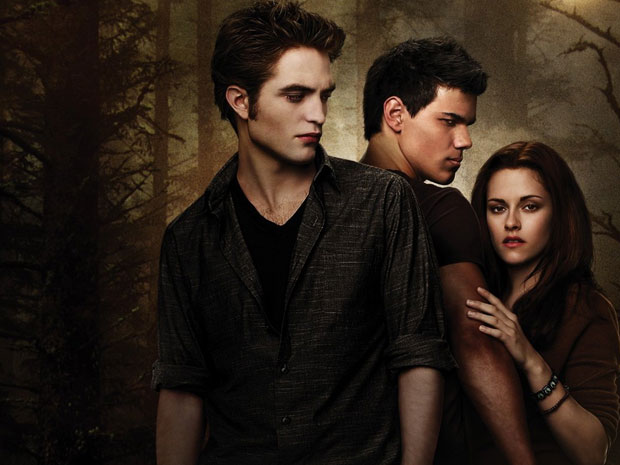
The primary problem with love triangles, as a concept, is that it narrows the characters. It reduces them to serving singular, shallow roles that limits their development. If a character’s sole purpose is to serve as a source of tension for a particular romance, then that character has as much depth and appeal as a speed-bump. Since we want to inspire love and not road rage, it’s important to have a focused approach.

With this in mind, here are Jack Fisher’s four key tips for making a good love triangle.

1. Make sure the emotions between all parties involved are balanced.

Let’s face it. Lopsided victories are boring. Would a Rocky movie be entertaining if Rocky Balboa got his ass kicked in every fight? Even if you’re going to have a Biff Tanner somewhere in this story, make sure there’s some meaningful depth to the emotions involved here.

This applies to romances involving two men and one woman, two women and one man, or multiple men and multiple women of various sexual orientations. It’s vital, regardless of which body parts are involved. The emotions with everyone involved should be sincere. The people in the love triangle can’t just be attracted to one another. They have to have real, genuine passion for one another. If it’s not genuine, then it’s just creepy and misguided. Look at Wolverine in the X-men movies for proof of how bad this can get.

2. As a plot, a love triangle must be a secondary plot at most.

This isn’t as easy as it seems. I’ve noticed this in reading other romance stories and trying to craft my own. Whenever a love triangle enters the picture, it often comes to dominate the underlying plot of the story, so much so that it derails whatever major plot came before it.

I’ve seen this happen in fan fiction, comic books, animes, and erotic thrillers. The tension within a love triangle tends to consume the story, becoming one big distraction that keeps the audience from getting too engaged. That’s why a love triangle must always be, except in the rarest of cases, be a secondary plot.

This is challenging, but it is possible. Books like The Hunger Games and TV shows like True Blood (at least the first few seasons) are able to do this in a meaningful way. If done right, it can make stars out of Jennifer Lawrence and Anna Paquin superstars.

3. Don’t force the emotions. Let them manifest naturally.

This is actually easier than it sounds, but it can be tedious. I know this because I found myself taking a lot of extra steps when writing my book, Holiday Heat. That entire story is structured around a pseudo-love triangle of sorts, but no vampires are involved and there’s nobody resembling Biff Tanner. As such, I needed to add a few extra steps to develop the characters so that their emotions made sense.

This is critical because if a romance feels forced, then you’ll make the same mistake that Chris Claremont and the X-men movies made with Wolverine, essentially forcing emotions into a character for all the wrong reasons. If any character is going to have any genuine passion for another, it can’t just be for the hell of it.

4. The end result of a love triangle must be satisfying to all sides

This may sound hypocritical coming from an erotica writer, but try to make sure nobody gets screwed over too badly. This is what happened to X-men. This is what happened to Twilight. This is what happens with almost every bad love triangle. One character gets horribly screwed over and unless that character is a Biff Tanner type, it’s not going to be satisfying to the audience.

Most human beings who don’t have personality disorders tend to have an innate sense of justice. When we see injustice play out in the fictional world, it tends to upset us, just as it does when it occurs in the real world. So if there’s a character in a love triangle who doesn’t win the heart of his or her lover and gets unceremoniously cast off, then that’s not going to be satisfying. That’s going to be the literary equivalent of a dick move.

Again, this requires a bit of extra work. It means crafting a more complex plot wherein all parties involved achieve some kind of satisfying resolution to the emotional upheavals. It doesn’t always have to mean finding another love or forcing some other character to fill the void. Sometimes, it requires some extra layers to a plot, but it’s worth the effort if we, the audience, feel that everyone ends up satisfied on some level. It’s kind of sexy when you think about it.

So there you have it. Those our my four tips for making love triangles that don’t suck. I hope to employ them to some degree as I write more romance and erotica. I hope others can make use of them as well. This world has enough terrible love triangles. Let’s not create more. After Twilight, I think our civilization has had enough.

2 Comments

Filed under Jack Fisher's Insights

Love Triangles and Why 95 Percent of them Suck

He loves her. She loves somebody else. That somebody else doesn’t love her back. Somebody’s heart gets broken. Somebody kisses somebody in some exceedingly overdue moment. We’re then left with an ending that satisfies some, outrages others, and confounds many.

I just described the most basic formula for a love triangle, also known as one of the oldest, most predictable tactics in all romantic narratives. It’s right up there with the classic will-they-or-won’t-they narrative that Ross and Rachel drew out for way too long over multiple seasons of Friends. As an aspiring writer who specializes in romance and erotica, I can’t ignore its presence so let’s talk about it.

First off, let me acknowledge that love triangles have their place in popular culture. I understand that they’re part of a tried and true formula in romance that goes back to a time when our ancestors were washing their hand in cow piss and calling it hygienic. They tap into a powerful set of emotions in all of us. Unless you’re born rich or have the body of Ryan Gosling, you know what it feels like to see someone you love choose someone else. That said, they can tap into more annoying emotions and that’s what I’m going to focus on.

As anyone who hasn’t slept through English class knows, love triangles have been part of some of the most iconic stories in history. The most famous is probably the one that plays out in the legends of King Arthur. That affair involved King Arthur, his wife Guenivere, and the perpetually friend-zoned Sir Lancelot. That love triangle is a small, but important component of that whole mythos and it did not take away from it in any way.

Flash forward 800 years, throw in reality TV and vampires, and the whole concept of the love triangle has been overdone, over-used, and twisted to a point where it’s more of an annoyance than a plot device. At its worst, it derails the larger story that’s supposed to be unfolding. We all know the kinds of stories I’m talking about here. Do I really need to remind anybody of this?

I’ll try to limit my references to vampires in this post, but they symbolize just how bad love triangles can get. From a writer’s perspective (and I am trying to be a writer, mind you), it often narrows the narrative considerably. It immediately ascribes roles to certain characters that limits their development. When a character’s sole purpose is defined by who they want to bone and who is standing in their way, that effectively overrides every other trait of that character.

It plays out in way too many ways in every kind of media. Characters like Spike in Buffy the Vampire Slayer dedicated 90 percent of their energy towards winning someone else’s heart. The same thing plays out in books like The Hunger Games, movies like Tron, and even video games like Final Fantasy. Think of any form of media, new or old. At some point in the past or at some point in the future, a love triangle will infect it and its characters.

This doesn’t even begin to touch on the extent to which love triangles permeate comic books. As some of you already know, I love comic books and I’ve crafted entire posts about them. If there’s one non-vampire medium that abuses love triangles more than most, it’s definitely comic books. I’d love to get into specifics, but rather than risk derailing this entire post into a personalized rant from a message board, I’ll save that for another discussion.

Why do these stories persist? Well, as I said earlier, they do tap into some very basic emotions that are fairly universal across cultures. With this appeal in mind, maybe we should ask another question. Why do these stories about love triangles have to be so god-awful?

The biggest problem, in my opinion, stems from another problem that seems to be ingrained in our culture to some extent. When we tell love stories, we have this ideal in mind. One person finds their absolute soul mate. That soul mate is 100 percent in love with them and returns 100 percent of their affections. That’s all well and good in terms of romance. I certainly have a soft spot for those kinds of fluffy romances. I think those of us without personality disorders all have some affinity for those kinds of stories.

It’s that same affinity, though, that makes love triangles so untenable. A love triangle is often used as an obstacle. It’s a wedge designed to prevent two lovers from coming together. It can make for a good story, but it also comes at the expense of another character along the way.

Sometimes that works because the character in question is a total asshole. There’s no effort to make Biff Tanner in Back to the Future on equal footing with George McFly. He’s supposed to be an asshole. The problem comes when we want that character to develop dimensions other than being an asshole and that can be a problem.

The way a love triangle works essentially makes it so there’s always one character that gets screwed over and not in a good way. Someone is going to have their heart broken. Someone is going to come off as the loser and the bad guy. In some cases, as we see in Back to the Future, it works out in a way that’s satisfying. In others, especially in vampire-themed stories, it turns the character in to a sacrificial lamb of sorts. It means they never get a chance to stand on their own and show that they have worth.

I find that kind of approach troubling because it throws away opportunities to create quality characters. It also ensures that the character that loses is going to be flat, boring, and dull. If it’s a male character, he’s some sort of bad boy, Dirty Harry wannabe who just needs the right nudge to being a full-blown asshole. If it’s a female character, she’s some sort of Mean Girls uber-bitch who generates as much sympathy as a hungry shark.

That makes the outcome of the love triangle fairly predictable. Before it even has a chance to get sexy, we already have a pretty good idea of how it’s going to play out. The nice guy/nice girl is going to win. That’s all well and good in that it plays into our innate sense of justice, but it doesn’t make for very good stories.

It’s for this reason that I’ve generally tried to avoid using love triangles in my books. The closest I ever came was “Skin Deep” and even in that, I made a concerted effort to give each side sufficient depth. I’ll let those who take the time to read the book to decide whether I did a good enough job, but I think love triangles in general need to be either retired or overhauled.

How do we go about that? Well, I have a few ideas. I’m not going to share them just yet because I want to turn them into books first. I believe this is an idea that can sell if done right. If I can’t sell it, then I hope others figure out a way as well. A bad love triangle is the easiest way to turn quality characters into trophies/obstacles. It turns women into prizes to be won, men into powerless tools of their passions, and everyone else into overly emotional vampires. I think we can do better.

15 Comments

Filed under Jack Fisher's Insights, Uncategorized

Other Topic Suggestions

Well, I’ve spent the past few days talking about nudity and its many joys and benefits. I intend to switch to a new topic for the coming week. I can’t promise it’ll be as fun or as sexy, but I want to continue generating new discussions on this blog, if only to explore concepts for future books.

I do have have one topic in particular I want to discuss for tomorrow. However, before I jump into that, I want to put this out there. I know this blog doesn’t have a large following. I also know I’m not a successful writer yet. Seven self-published books, few of which have any reviews or sales, doesn’t make me successful. In order to generate interest and readers, I need to create an audience. I want to do that with this blog in any way I can.

So with this in mind, I’d like to open things up for potential topics of discussion. For the handful of readers I do have and the others who have yet to stumble across this blog, what would you like me to discuss here? What topic do you think warrants greater scrutiny?

It doesn’t have to be solely about sex or erotic fiction. It can be about pop culture in general. It can be something about society or current affairs. It can be about philosophy or feminism. I’m willing to explore any topic. I only ask that it not involve too much politics or religion? Those are two issues that tend to get overly divisive and I don’t want to offend. I’d rather entertain, enlighten, or titillate. If I can do all three, then that’s even better.

So what’s it going to be? What do you want to see this blog discuss? I’ll let you, the lucky few followers of this blog, lead the way for once. If I’m going to be a successful writer in any capacity, I need to listen to my audience. Like a good lover, I need to heed the needs of those I’m trying to please.

Leave a comment

Filed under Jack Fisher's Insights

“The Big Game” Rejection Follow-Up

I know I said I’d get back to writing sexier, less depressing posts on this blog. I still intend to do that, hopefully today at some point. Just thought I’d follow up on my post yesterday about the rejection email I got for, “The Big Game.”

As I often do after I get a rejection letter, I send a response to the publisher thanking them for their consideration. It’s just professional courtesy. I also ask for an explanation as to why they determined that my story wasn’t viable. I almost never get a response back. If they do respond, it’s usually something along the line of, “We just feel it isn’t right for us at this time.”

That doesn’t tell me much and it doesn’t give me any chance at improving. I understand they probably get a lot of manuscripts every day, but the quality of the content can’t improve unless there’s feedback. If I’m not doing something right, I like to know what it is so I can fix it. I am that committed to becoming a published author.

So it came as somewhat of a surprise when the publisher sent a more detailed response. I won’t reveal the name of the publisher. Again, it’s out of professional courtesy because I don’t want to slander anybody for doing their job. This is just what they sent.

The fact that the book includes substantial amounts of both F/M and M/F content is probably going to make it somewhat difficult to find a publisher for it.  There are some authors who publish books with F/M themes, but in most cases they don’t sell nearly as well as books in which the core relationship is M/F.  I wish I could be more helpful, but there isn’t a publisher with which I’m familiar that would be a particularly good fit for this book.  That doesn’t mean one doesn’t exist, of course, and I just haven’t heard of it.

This is somewhat revealing to me because I didn’t know that a book had to stick to one kind of BDSM. It’s true that “The Big Game” explores multiple sides of BDSM plots. It’s not just about one character dominating another. Both characters get a chance to exercise dominance. I did this on purpose because I wanted to explore the full range of BDSM experiences from different perspectives. I felt that would make the story more comprehensive and appealing to a wider audience.

Perhaps I overestimated the extent to which BDSM novels occupy a certain niche in the market. Perhaps this particular publisher wasn’t looking for a larger, more encompassing story and wanted something more focused. I can understand that. “The Big Game” isn’t focused in the sense that it has one particular type of BDSM. It’s a different kind of story and I hoped, in a way that may have been misguided, that broadening the story would make it more appealing to publishers. I suppose I was wrong.

I’m not sure what this means for the long-term viability of “The Big Game.” I still believe that it can tap into a BDSM market that’s ripe for something new. There are so many novels out there that focus solely on one approach to BDSM in a story. There’s a place for those stories, but I think the growing trend in pop culture is towards more equal power dynamics.

I think the public is more eager to see two characters on an equal playing field, both romantically and sexually. There’s still a place for classic dominant/submission roles, but there’s also a place for new dynamics. I want “The Big Game” to be part of it. Unfortunately, it seems my chances exploring these dynamics with a publisher are a bit larger than I thought. I’ll still keep rolling the dice though. If nothing else, it’ll give me some better insight into writing BDSM stories in the future.

Leave a comment

Filed under Book Announcement, Uncategorized

The Antidote to the Alpha Male/Beta Male Conflict (Involves Deadpool Again)

Yesterday, I talked about the bane of beta males and alpha males. Together, they are an overplayed, overdone, and over-emphasized stain on popular culture. Between sitcoms like “The Big Bang Theory,” underdog movies like “The Karate Kid,” and pretty much the premise of every teen movie made since 1980s, we’ve had our fill of alpha males and beta males.

We get it. Alpha males represent everything we hate about masculinity (even if they have more sex and embody all the traits we want in our leaders and CEOs). Beta males represent every lovable underdog who deserves to get the girl in the end (even if that gives every man and women false expectations and inevitable disappointment). It’s been done. We know how that story ends. So let’s tell a new story. To tell that story though, I have to revisit our old friend Deadpool.

I’ve written about him before. It seems appropriate to write about him again because the Deadpool movie just cleaned up nicely at the Teen Choice Awards. He breaks the mold of so many traditional stereotypes. He’s not an alpha male. He’s not a beta male. Granted, his crazier than a sack of crack-addicted ferrets, but the success of his movie may very well show that there’s a place for a new type of male in popular culture.

In the same way the recent Ghostbusters movie offered something different for female characters, Deadpool tweaks the concept of a well-rounded male character and, in some cases, shoots it in the ass. He’s confident, competent, and more than a little arrogant, which is kind of like an alpha male. He’s also affectionate, sensitive, and emotional, which is kind of like a beta male. In many respects, he’s a balanced male character that both men and women alike can respect

Again, it’s worth pointing out that Deadpool, as an established comic book character, is one of the craziest motherfuckers in comics. So what’s it say about the status of male characters when he’s the one who embodies the traits of a balanced male character?

Perhaps it’s fitting. Our tastes in male characters is kind of crazy when you think about it. We’re conditioned to despise alpha male characters, but we constantly elect them to positions of power and admire them when they’re athletes. It’s downright schizophrenic when you think about it and Deadpool actually has voices in his head. There’s just something wonderfully poetic about that.

Crazy or not, the shocking success of Deadpool, which made $782 million on a $58 million budget, will likely prompt a re-examining of our crazy sentiments in male characters. History shows that when there’s money to be made, those who profit from popular culture are going to exploit the hell out of it.

There may already be signs. Since the Deadpool movie, another movie came out that utilized a character who doesn’t fit into the alpha male/beta male dynamic. That movie didn’t do nearly as well as Deadpool, but it did offer a unique entertainment experience that helped make it successful in its own right. I’m talking about the movie, “Central Intelligence.”

A little Hart and a big Johnson? It sounds like the kind of humor that came right out of the Deadpool movie, but it works beautifully here. The trailer, however, only hints at the new Deadpool-like twist on male characters. Specifically, the character of Bob, played by the Rock, embodies many similar traits as Deadpool does in his movie, albeit with only 5 percent of the crazy.

Bob is a big, tough, muscle-bound badass who works for the CIA. In most movies, he’d be the kind of alpha male we’d end up rooting against. Instead, he’s not just a good guy who is a unique foil for Kevin Hart’s loud-mouthed, overwhelmed, and overly-frustrated character. He’s oddly well-rounded, showing that he can be tough, sensitive, understanding, and badass. He’s not defined by jealousy or loss or any other shallow excuse most alpha males use for being assholes. He’s a character who is lovable by both men and women alike.

In the end, isn’t that the best manifestation of masculinity? A male character that men and women alike can love? There does seem to be a market for this. Rotten Tomatoes gave “Central Intelligence” a 68 percent score, which is certified fresh. It also made $200 million on a $50 million budget. That’s not a bad return for a non-superhero movie. Could this be a sign of things to come?

If so, it’s a trend I hope will benefit my own male characters. I’ve tried to be balanced with them in my work to date. I intend to keep trying with my next project. I hope that effort shows in “The Big Game,” if it gets picked up by a publisher. I’m still waiting for a response, but if it’s taking this long, I hope that means they’re being more thorough. Time will tell, but I like to think that the future is bright for male characters.

1 Comment

Filed under Jack Fisher's Insights, Uncategorized

The (Unspoken) Benefits of Sexual Promiscuity

A while back, I wrote an post about the lesser-known benefits of BDSM. It’s true. There is actual real-world evidence that BDSM is good for your health. It’s one of those things people automatically assume is deviant and unhealthy. While it’s easy to see why people would think that, the real world tends to never be quite that easy.

So I thought it might be interesting to look at another assumption that most people in the western world have about sexual mores: the impact of sexual promiscuity. Like BDSM, a good chunk of the population has a certain set of assumptions about those who are sexually promiscuous. I could spend 10 blog posts describing them.

Someone is promiscuous? They must have issues at home. They must have horrible self-esteem. They must have been abused or something.

On top of that, there’s an egregious double standard with respect to sexual promiscuity. With men, they’re expected to be promiscuous to some extent. People look at a young man and assume, “That man wants to fuck every girl in his zip code.” It’s not necessarily an accurate assumption. The intensity of the male sex drive is often vastly overestimated, but society tends to structure itself around this assumption because it’s men who seem to commit most of the sexual crimes. It’s true that men do tend to commit more crimes in general, be they sexual or otherwise, but the rate for women is not zero. According to the FBI, women do commit their share of crimes.

That doesn’t stop the blind assumption that women who have a lot of sex must be “damaged” or something. How can anyone want to do something that feels so good and is such a vital part of life and not be damaged? That last sentence was sarcasm by the way. Society has progressed in recent years to see sexually active women differently. Comedian, Amy Shumer, even made a successful movie around it.

Even with this progress, however, there’s still this perception that sexual promiscuity is a bad thing. There’s a good reason for that. There’s even some history behind it. For most of human history, particularly in western land-owning cultures, promiscuity made it difficult to know for sure that your children were yours. If they weren’t, then passing down land and wealth became exceedingly difficult.

Then, there’s the disease factor. For most of human history, we didn’t have effective treatments for various STDs. That made promiscuity legitimately dangerous for many parts of the world, especially those living in cities and slums. However, modern technology has done a lot to change that. Most of the terrible diseases of the past have been wiped out or are easily treated by modern medicine. Some are still incurable, but the progress of modern medicine is still progressing. There will come a day when even those diseases are cured. So our understanding of sexual promiscuity needs to change.

So what is the psychology behind sexual promiscuity? Well, it’s a fairly new field of study to say the least. Research is still developing so the picture isn’t clear, nor should anyone expect it to be. Sexuality and human biology are complex, despite what some in the media would have us believe. What works for some people is not going to work for everyone. Human beings are just too diverse.

That said, Psychology Today did an in depth analysis on the research surrounding sexual promiscuity last year. It’s aptly titled, “What are the Psychological Effects of Casual Sex?” It’s an interesting idea that will definitely undermine some of the things we were taught in sex ed class as teenagers, but it has major implications. One of the most defining quotes of this article is this one:

If casual sexual activity doesn’t violate your moral code, your sense of integrity, or the commitments you have made to yourself and/or others, then it’s probably not going to be a problem for you in terms of your psychological well-being.

This seems to imply that the effects of sexual promiscuity have a lot to do with our assumptions about it. It’s sort of a classic self-fulfilling prophecy. If you think it’ll be harmful, then it’ll be harmful. If you think it’ll be good for you, then it’ll be good for you. Religion, culture, and upbringing all play a role and we’re just starting to understand it. As that understanding evolves, it will likely effect the way we tell stories about sexuality, which will in turn affect my stories. So I’ll definitely be keeping an eye on this topic.

Also, as they did with BDSM, the fine folks at ThinkTank did a video about the possible benefits of casual sex. I value their insight so I’ll let them make their case as well.

10 Comments

Filed under Jack Fisher's Insights, Uncategorized

A Relationship of Unequals: Penny and Leonard of “The Big Bang Theory”

Earlier this week, I talked about the importance of romantic relationships between equals. It’s too common these days that strong female characters have to overpower male counterparts. That makes finding examples of a romance among equals, even if it’s as simple as an X-men comic, more important as our culture evolves. By that same token, it’s just as important to acknowledge relationships between apparent unequals. That brings me to one of my favorite shows on TV right now, “The Big Bang Theory.”

Now let me make this clear, just in case I didn’t make it clear enough already. I love this show. It’s one of my favorite shows on TV. It’s funny, it heartfelt, and it’s has lovable, compelling characters. That’s the most you can ask of any TV show these days. However, there’s one component of this show that bugs me and it has to do with the never-ending romance of Penny and Leonard.

I know that this is, by far, the most important romance of the show. From the show’s first episode, this romance has been the driving force behind many plots. It’s perfectly understandable. A cute girl moves in across the hall. A lonely, single guy is going to notice. There’s nothing wrong with that being the foundation of a relationship. There are many wonderful love stories, real and fictional alike, that begin this way. It’s what happens after the beginning that make Penny and Leonard an unstable relationship at best and a toxic one at worst.

We’ve all heard it before. Opposites attract. It’s a common theme in many romance stories and it definitely works in some respects. It’s cute and concise so of course it isn’t entirely reflective of reality. Even science doesn’t offer a clear-cut answer. According to Psychology Today, research involving relationships among opposites tend to have mixed outcomes. It can work. It can also fail. In the fictional world of TV and within the limits of a half-hour show, those failings often get overlooked with Penny and Leonard.

Let’s look at the basics first:

  • Penny is an outgoing, bubbly, impulsive, irresponsible young woman who caters to nearly every “blonde” stereotype imaginable
  • Leonard is a shy, repressed, awkward, neurotic, needy young man who caters to every “nerd” stereotype imaginable

There’s definitely some appeal to seeing these two come together. Love finds a way, right? Well, love is only part of the equation here. Love is an important element of a relationship, but making that relationship work requires a lot more.

As I’ve written about before, doomed romances tend to have a common theme. Chief among those themes are the inequalities among the characters. It’s one thing for a princess to fall in love with a smuggler. It’s quite another to make that relationship work, given the differences between these characters. When two people come from different worlds and have different interest, it can hinder communication between them. Any relationship expert with any degree of competence will agree. Poor communication is toxic to a relationship.

Communication between Penny and Leonard is rarely clear. It leads to many of the hijinks within the show. Early in Season 2, they send each other a lot of mixed messages by dating other people. Penny dates one of her stereotypical dumb jock types while Leonard dates another stereotypical nerd type. Having already gone on a date at this point in the show, there’s no excuse for ambiguity. They know where they stand.

Later in Season 3, it gets even more erratic. In Episode 19, “The Wheaton Recurrence,” Leonard tells Penny he loves her. Her response, “Thank you.” It leads to yet another break-up between them, which is a recurring theme. Yes, they eventually come back together. Yes, Penny eventually does admit she loves him, albeit several seasons down the line. Along the way, the inequalities become more and more striking.

These inequalities go beyond just being different personality types. Good relationships can overcome different personalities. It’s the inequalities that become toxic. What makes this relationship so unequal is that nearly every major decision, every point of progress, and every major turn is done by one person: Penny.

She decides if and when they go out on dates. She decides if and when they begin/resume a relationship. She decides if and when she and Leonard have sex. Leonard, being the quintessential beta male, never does anything to assert himself. He tries at times and often fails hilariously, most notably in Season 3, Episode 23, “The Lunar Excitation.” In that episode, he tries to do exactly what Penny did with him, get drunk and assert that they’re going to have sex. It works when Penny does it. It doesn’t work when Leonard does it.

Now I know there’s a double standard in that scenario. A man asserting sex with a woman is still taboo, but the comic ineptitude that Leonard demonstrates makes this taboo a moot point here. It further reinforces that Penny is the one with all the power in this relationship. She can end it, start it, and guide it as she sees fit. Leonard, being so meek, can never assert himself convincingly.

These sorts of inequalities don’t just create bad dynamics. It also makes jealousy a whole lot worse. In Season 6, Episode 8, “The 43 Peculiarity,” Penny and Leonard are together again. Then, Penny gets an attractive male lab partner while going to community college and this is enough to freak Leonard out. While it is funny at how he deals with it, this kind of jealousy hints at another troubling trait that is toxic to relationships.

Jealous, namely the unhealthy variety, can go beyond simple envy, which we all have whenever we see someone driving a nice car. The jealousy in this instance becomes possession. Leonard sees his relationship with Penny as a precious piece of property that he must guard from those who may steal it. He doesn’t trust Penny. He knows she has a promiscuous past. He lets it get to him.

Penny is just as guilty of this as well. In Season 6, Episode 3, “The Higgs Boson Observation,” Leonard connects with Sheldon’s new female assistant, Alex. Penny flat out admits this bothers her. Despite her having so much power in this relationship, she still gives the impression that she owns Leonard’s affection for her.

When jealousy becomes possessive, it’s usually a sign that a relationship is entering dangerous territory. Jealousy is supposed to remind us of how we feel about our partners, not that we own them. That’s the biggest flaw with Penny and Leonard. Their relationship is something they both think they own. They can’t discern the concept from the person.

What makes this even worse is how Penny’s power extends beyond this relationship. Throughout the show, her promiscuity is well-documented. It fits into the “blond” stereotype that Penny seems to embody at every turn. Again, there’s nothing wrong with that, but it does expose what I think is the most egregious inequality of this relationship.

If she wanted to, Penny could end the relationship and find someone else just like Leonard or someone the exact opposite of him. Due to her looks and her social skills, she can find another relationship fairly easily. Leonard, being so socially awkward and weak, cannot do this. While he certainly could find someone else, his poor social skills limit him in ways that don’t limit Penny.

Naturally, these flaws don’t derail the relationship on the show. TV always takes liberties with certain relationship dynamics. Authors do the same. I know I have, but I like to think the stereotypes I use in books like “Skin Deep” aren’t as egregious or excessive as we see in “The Big Bang Theory.”

I don’t doubt the appeal of Penny and Leonard’s relationship. It certainly helps make the show entertaining. However, when I take a step back and look at the dynamics of this relationship, I see in it a lot of flaws that reflect outdated themes. I hope to avoid these flaws and explore new themes in my books. At the very least, “The Big Bang Theory” can offer a guide on what to avoid.

19 Comments

Filed under Jack Fisher's Insights, Uncategorized

Strong Female Characters and the (Strange) Assumptions About Them

I’m of the opinion that we make more progress than we think, but not nearly as much as we should. There’s no doubt about it. Novels, TV shows, cartoons, comics and video games have come a long way with respect to female characters.

We’re all familiar with the time-tested tropes. For a long time, a female character could basically be cut and pasted from any James Bond movie. Either she’s a devious, femme-fatale or a pretty love interest meant to supplement the story of the male protagonist. If she’s promiscuous in any way, she’s probably going to die. If she’s innocent and pure, she’ll probably live and be the hero or the prize for the hero. While there’s a place for these kinds of stories, the times are changing.

In recent years, there is a renewed interest in strong female characters who don’t fit into these same tropes. I’ve mentioned a few, like Vanessa in the Deadpool movie. Other more prominent characters include Black Widow in “The Avengers,” Furiosa from “Mad Max: Fury Road,” and Katniss Everdeen from “The Hunger Games.” These are all characters that take center stage, neither supplementing male protagonists nor becoming too similar to male protagonists. It’s a beautiful thing and an overdue change.

However, is our understanding of what makes up a strong female character really that refined? I’m of the opinion that pop culture in general is still stumbling around in the dark like a drunk monkey, trying to figure it out. It’s kind of important for me to acknowledge because I’m a writer. I’m trying to create strong female characters in my books. I admit it’s a work-in-progress, but how much progress have we actually made?

Once again, the fine folks at Cracked.com use a little dirty humor to point out some of the flaws in our current understanding in strong female characters. I don’t agree entirely with their assessment of certain aspects of pop culture, but some of their points are worth making and they’re points I need to consider for my own work. They focus specifically on movies, but I think it can apply to any medium right now.

6 Bizarre Assumptions Movies Make About Strong Women

So maybe we’re not as progressive as we think we are. The one quote in the article that stands out the most is this one:

It seems to come back to this idea that this is all a zero-sum game, that anyone asking for more female characters really hates males and wants to see them mocked and emasculated. “Oh, you say you want more strong female characters? How about if we just showed them shooting a dude right in the penis? Would that do it?”

This, I think, is the key to understanding the core of a strong female character. Their strength doesn’t come from overpowering men or being better than men. It comes from being able to operate on a level playing field with men. It’s not about one gender dominating the other. It’s about equality. There’s a time and place for dominant and submissive personalities. The success of “50 Shades of Grey” is proof of that. Those times and places, however, should be the exceptions rather than the norms.

It’s a challenge. That’s for sure. Everything worth doing is a challenge. It’s one I want to take on. I believe I did to some extent with “The Big Game.” Yes, it is a story that utilizes some BDSM elements. However, I do it in a way that allows both male and female characters to operate equally. It’s my next book that will present a far greater challenge.

This next book, which is still without a title, is structured around what I hope to be a strong female character. I don’t want that character to fall into some of the same traps that Cracked.com so eloquently laid out. I want her to be tough and strong without having to dominate over every male character. I won’t claim I’ll succeed in full, but I’d like to make a concerted effort. If I can find a publisher willing to take a chance as well, I’d like to see that effort pan out.

8 Comments

Filed under Jack Fisher's Insights, Uncategorized

Video Game Romances – Beyond Princesses and Pac-Man

There are a lot of mediums to tell stories these days. Sure, there will always be a place for books, but media is a lot more complex. I’m not just talking about TV and movies either. I’m sure that with the success of Pokemon GO, someone is trying to use AR and smartphones to make a love story. However, there is one medium that has influenced me more than most and it’s not one people usually associate with love stories. Yes, I’m talking about video games.

First off, I’m not just talking about Mario rescuing Princess Peach. That’s romance at its most basic, overly Disney-like levels. In Mario’s defense, there weren’t many ways to tell meaningful stories in the 8-bit days. That changed as gaming technology improved. Now, video games can tell stories every bit as intricate as any big budget movie. The difference here is that the audience can control the direction of that romance. That makes people more engaged in the development of this romance, as opposed to watching it unfold on a movie screen or seeing it unfold in the pages of a book. Make no mistake. That can be pretty powerful.

Having played a lot of video games as a kid, I can vividly remember the first video game romance that really struck me. It’s this one:

That’s Tidus and Yuna from a video game called Final Fantasy X. It’s a game I didn’t play for the romance. I played it because at the time, I was really into RPG style games. I knew this game had a story. I even knew it had some romantic elements to it, as plenty of other games had. What I didn’t know was how deeply the romance in this game would strike me.

Without getting into the long, convoluted story, which would take no fewer than 15 blog posts to do justice, I’ll just say that by playing this game, you put yourself in a position to grow attached to each character. You’re the one that helps them grow and moves them along in their story. You have a say in terms of the pace and efficiency with which they move. So when two characters develop a strong romance, it does have an emotional impact.

For me, the biggest impact came at the end of the game. Without throwing too many spoilers into the mix, I’ll just say that it’s the first time I ever got genuinely emotional at the end of a game. I remember feeling a lump in my throat when I watched the final cutscene. I just sat there holding my controller, my mouth hung open in amazement. Did it really happen? Did I really get this attached to these characters? Short answer: yes, I did.

Playing Final Fantasy X didn’t just influence my taste in video games. It helped shape my tastes in romance for years to come. Other games built on what Final Fantasy X established, at least for me. Games like Mass Effect and Dragon Age actually allow players to choose which romantic partner they want to pursue. It doesn’t even have to be male/female. It can be a same-sex romance as well. It can even be between a human an an alien. That’s how much video games have progressed these days.

It’s a level of engagement that cannot be matched in a book, but it does offer an important lesson. It shows that when there’s an emotional and personal investment in a romance, it has a much stronger impact. The strength of any love story, be it a Shakespearean play or a game of Super Mario Brothers, is the impact it has.

That’s the biggest challenge I have with my stories, creating a romance that has that impact. I like to think books like “Skin Deep” create an engaging romance that gets people worked up, but I know there’s room for improvement. My upcoming book, “Embers of Eros,” is my most ambitious effort at such a romance. However, it’s still at the mercy of Crimson Frost Publishing, who continue to delay its release.

I will continue to make more effort at these romances in future books. For now, there’s plenty of other romance to explore, including games. So while I wait to tell my story, here’s a nice article from Complex.com about realistic video game romances.

The 25 Most Realistic Video Game Romances

5 Comments

Filed under Jack Fisher's Insights, Uncategorized

Anatomy of Doomed Romances

I’ve talked about the right and wrong ways to explore sexuality and BDSM on this blog. I’ve talked about the potential benefits and insights that alternative concepts of sexuality may bring. However, there’s another side of that coin that’s worth talking about and, given that my work involves both erotic and romantic elements, it’s something that needs to be touched on.

A lot of my books have heavy romantic elements. At their core, books like “Skin Deep,” “Child of Orcus,” and even the aptly titled “The Escort and the Gigolo” are love stories. A big part of the story involves two characters coming together in a meaningful way. For the most part, I try to make this journey compelling, as well as sexy. I try to avoid typical Disney cliches. We all know them when we see them. It’s a “love at first sight” or a “forbidden love they can’t have.” Those make for tantalizing possibilities, but do they really make for healthy relationships?

It’s an important question to ask because some of these stories fail to acknowledge the flaws in those relationships. Make no mistake. Those flaws are there. The concept of “love at first sight” is sweet and all, but it’s barely the first step to a meaningful relationship and not taking more steps can undermine both the story and the relationship as a whole.

This isn’t a new issue either. Doomed romances are a big part of literature, going back to the days of the ancients. There’s an undeniable appeal to them, albeit one that reflects a crass understanding of love and meaningful relationships. Paste Magazine even made a list a few years back that highlights some of the most notable. I don’t think their choices will surprise anybody.

8 Epically Doomed Relationships in Literature

That’s one kind of doomed relationship. Most won’t argue the premise. Then, there are the doom relationships explored by Cracked.com in an article that may surprise some. Being a humor website full of dirty jokes, they took a more crass look at certain iconic romances. As is often the case, a crass gaze reveals an unexpected insight.

5 Movie Romances That Won’t Last According To Science

Some of the romances on this list are sure to make a certain subset of fans tense, but sometimes science and reality can be just that harsh. We tend to forget that relationships founded on excessive sacrifice or two people from different words, such as Han Solo and Princess Leia or John Bender and Clair Sandish, have more obstacles to overcome than most. By and large, those obstacles can be pretty detrimental. They’re not impossible to overcome, but the stories rarely explore this. It’s almost always just about how they come together. Then, the credits roll and we’re all left to fill in the blanks.

I understand why that happens. Exploring the intricacies of how relationships blossom and flourish is rarely as interesting as the process of coming together. I’m guilty of that as well in some of my stories. My book, “The Final Communion,” is the best example of that. At the same time, the concept of doomed romances provides an important context to developing romance as a whole. It’s a context I hope to keep in mind as I explore new stories. “The Big Game” doesn’t have heavy romantic elements, but some of the other books I have in mind will. Whatever comes of them, I hope I can show that there is a place for more meaningful romance that won’t feel so doomed in the end.

2 Comments

Filed under Jack Fisher's Insights, Uncategorized