Tag Archives: cinema

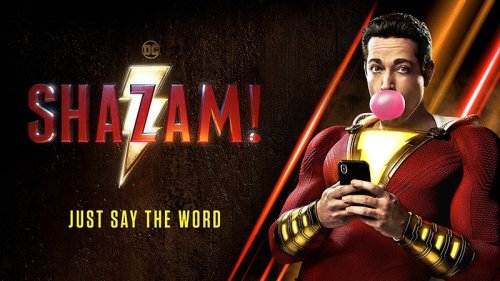
Shazam! Review: A Simple Formula For Maximum Fun

shazam

When a particular genre becomes over-saturated and overdone, it’s tempting to try and reinvent the concept in hopes of striking a new chord. It’s especially tempting when so many others have risen the bar to such an insane extent that success can only be measured in billions instead of millions.

It would’ve been easy for a movie like “Shazam” to give into such temptation. With the recent success of “Aquaman” and “Avengers Endgame” set to break all sorts of box office records, it seems like this movie has to do something extreme, just to stand out. How else would it succeed in such a crowded market in a golden age of superhero movies?

That was my greatest concern before I saw “Shazam.” As much as I loved the trailer, I was worried that this movie would try so hard to stand out that it would overlook the part of actually being a fun cinematic experience. That sort of oversight has been plaguing the DC Extended Universe since “Man of Steel.”

This picture sums up the issues nicely.

Well, having seen the movie, I’m happy to say that none of those concerns were founded. In fact, I’m elated to report that “Shazam” is another big win for DC Comics and superhero movies, as a whole. However, it didn’t win because it reinvented the genre or did something radically different. It won because it followed the basic formula for quality superhero movies and had fun along the way.

It helps that the core appeal of Shazam, as a character and superhero, is that it approaches heroics with a childlike playfulness. Billy Batson, the alter ego of the titular hero, is not some jaded adult like Batman. He’s not even a boy scout idealist like Superman. He’s just a kid and one who got dealt a bad hand, for that matter. Being both an orphan and a troublemaker, he sees the adult world through very different eyes.

That’s a novel perspective, to some extent. Every other superhero movie, even going back to the era of Richard Donner’s “Superman,” has framed the idea through an adult lens. It always starts out as something simple. An individual gets superpowers, they start carrying out simple acts of heroism, and those acts eventually get complicated, as often happens with adult issues.
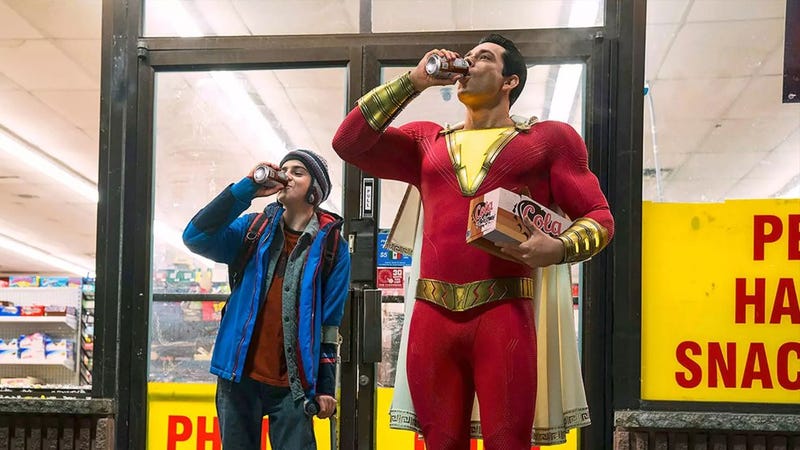
With a character like Billy, things never get that complicated. Again, he’s a kid. Even in his heroic form, he sees conflict with a childlike simplicity and “Shazam” captures that simplicity perfectly. The movie doesn’t deviate much from the details and themes of the source material. Concepts like the Rock of Eternity and the Seven Enemies of Man are present and accurately portrayed.

Such details may not matter to those unfamiliar with the comics, but such accuracy is largely a bonus. What really makes this movie work is how it follows Billy’s journey and not just the one he undergoes as a hero. His evolution when he’s not a magically-endowed superhero is arguably the most meaningful aspect of the story.

When we first meet Billy, it’s hard to discern whether he has the spirit of a hero. He’s no upstanding boy scout. In fact, he’s very much a troublemaker who’s willing to thumb his nose at police, break the rules when it benefits him, and run away from anyone who tries to help him. However, he never comes close to crossing that might send him down a darker path.

It’s that trait that sets him apart from his villainous counterpart, Dr. Sivana. While he’s no Thanos, he demonstrates that he’s a lot like Billy in a few key aspects. He’s given a chance to become a hero, but is unable to refuse the temptation that often comes with immense power. That failure haunts him and pushes him down a darker path.

For a time, it seems as though Billy could walk a similar path. When he first gets his powers, he reacts in ways that most would expect of a 14-year-old boy. He tries to buy beer. He tries to make money. He even ventures into a strip club. It’s hilarious and cute, but it also establishes the perfect tone for a movie that avoids complicating the standard superhero narrative.

Within that narrative, there’s a hero who makes choices and learns from his mistakes. There’s also a villain who makes choices and refuses to learn from them. When they eventually clash, it’s a flashy spectacle with simple, understandable stakes. It’s no Battle of Wakanda, but it doesn’t have to be.

The look of someone who DIDN’T get to work with Josh Brolin.

From the moment he first gets his powers to the final showdown with Dr. Sivana, Billy develops into his own hero, but never loses his childlike mentality. He’s not forced to grow up too fast, nor does he have to abandon the civilian life he’s trying to establish. Whereas being Bruce Wayne is often an inconvenience for Batman, being Billy Batson is necessary for Shazam.

This shows in the seamless characterization provided by Asher Angel, who plays young Billy, and Zachary Levi, who plays Shazam. At no point does either manifestation feel like a different character. They both wield the same childlike charisma as they navigate their superhero journey. The same lovability that made Levi so great in shows like “Chuck” help him and Angel bring out the best in Billy Batson.

When the movie begins, it’s not clear that Billy has what it takes to be a competent hero. Trying to determine his worth is like trying to determine if some random 14-year-old will one day play in the NFL. The odds are against them, but the potential is still there. By the time the credits roll, the message is clear. Billy has the spirit that Shazam was looking for and you can’t help but root for him.

At its core, “Shazam” checks all the right boxes for the classic hero’s journey. Billy Batson is perfectly poised to take that journey and not just because he’s one of many orphans who become superheroes. The movie doesn’t try to subvert these tried and true tropes. If anything, it embraces them and dares to have a little fun along the way.

It’s easy to share in that fun. The humor is exactly what you would expect of a movie that involves 14-year-olds getting superpowers. It’s serious when it needs to be, but never too serious. Given the grim and gritty settings of other DC Extended Universe movies, it’s a breath of fresh air that the superhero genre badly needed.

It’s not without its flaws. Some details of Billy’s life are underdeveloped and glossed over. There were also inconsistencies with Dr. Sivana as well, but none were egregious to the point where they derailed the movie. It simply stuck to a simple formula, mixed in a few twists along the way, and made the most of what it had to work with.

If I had to score “Shazam,” I would give it an 8 out of 10. It didn’t reinvent superhero movies or raise the bar. It was simply a fun, entertaining movie that gave a character with little star power a chance to shine. It even managed to accomplish all this without trying too hard to make him like Batman. For a DC Comics movie, that alone is a major accomplishment.

Leave a comment

Filed under Movie Reviews, movies, superhero comics, superhero movies

Apes, CGI, And The (Potentially Sexy) Future Of Hollywood

Trends in Hollywood are like fad diets. There’s always one emerging or fading at any given time. In the same way low-fat diets fade while low-carb diets emerge, the glut of “Die Hard” rip-offs fade while superhero movies emerge.

However, every now and then, a trend comes along that really shakes up the industry in ways that don’t fade. Some are more obvious than others. Movies with color, sound, and better picture quality are here to stay. Even the most douche-bag hipster in he world probably won’t claim that old crappy black-and-white movies are somehow superior to the style that lets us see the sweat on Megan Fox’s face.

Chief among those trends is the use of CGI, which is effectively Hollywood’s ultimate cheat code when facing a scene considered unfilmable. Sometimes, that’s necessary. How else are you going to film Dr. Manhattan’s junk in a movie like “Watchmen?”

There are countless movies that never would’ve been made if it weren’t for CGI. There’s no amount of costume design or camera tricks that could’ve brought “Transformers,” “Iron Man,” and “Guardians of the Galaxy” to life. Say what you will about movies that involve transforming trucks and talking raccoons. They still thrilled audiences and made Hollywood boatloads of money.

However, CGI is still treated like dings on a fancy car. It doesn’t prevent the car from being fancy, but it is seen as a taint of sorts. Look at any poorly-reviewed movie these days and chances are, critics and fans will bitch about the overuse of CGI. It doesn’t matter that it’s the kind of visual spectacle that was impossible before 1990. People still roll their eyes whenever they see it used too often.

There’s a valid reason for that, though. While it may make some of us feel old, the CGI we see in movies today has been around for decades. Going all the way back to the groundbreaking effects we saw in “Terminator 2: Judgment Day,” there has been an entire generation born into a world that has become numb to CGI.

It used to be that these kinds of special effects inspired the kind of awe and wonder usually reserved for fireworks, the Grand Canyon, and Pamela Anderson’s tits. That’s because they were so new and had to be used sparingly, due to the cost. Now, it’s such a common practice that many movies contain scenes that audiences don’t realize are CGI.

Common or not, CGI still has the capacity to evoke that same awe and wonder. “Titanic” and “Avatar” are the top-grossing movies of all time and for good reason. They are enchanting, visually stunning spectacles, complete with a compelling story that often involves some sexy moments. Yes, I’m counting the kinky, ponytail stuff of the Na’vi as one such moment.

Despite these massive successes, CGI still has a trashy reputation. Movies that use too much of it and aren’t directed by James Cameron are seen as cop-outs, of sorts. They couldn’t tell a great story that would get enough asses in movie theaters, so they resort to fancy visuals. It’s like trying to put chocolate sauce on chopped liver. There’s only so much anyone can do to hide the truth.

Then, the new round of “Planet of the Apes” movies came along. Even though they’re entering a world crowded by superhero movies and Pixar films, they found a way to leave a mark and it’s one that might have much larger implications.

Earlier this year, I listed all the reasons why quality erotica/romance movies are next to impossible. I also cited animation as a possible solution to these issues. While nobody in Hollywood seems eager to explore those sexy possibilities, the success of “Planet of the Apes” may be the precursor of sorts to a new era of CGI.

Before anyone starts thinking too much about kinky monkey sex, take a step back and look at what “Planet of the Apes” accomplished. It’s main character, Caesar, is entirely CGI. Actor, Andy Serkis, provided motion capture, but the character itself is a product of CGI and not the clunky ape costumes that made the old movies so cheesy.

This was a huge risk on the part of the studio, creating a character entirely through CGI. With the exception of Pixar, Hollywood has a poor track-record of making quality characters with nothing but CGI. Just go to any executive and say the name Jar Jar Binks. Then, watch their eyes glaze over in horror and shame.

In a sense, Caesar is the anti-Jar Jar. He’s entirely CGI, but he’s also a complex, multi-dimensional character over the course of multiple films. He has personality, depth, and heart. On top of that, he doesn’t look like a compilation of poorly-rendered clip art from a late 90s PC game. The studio actually made a concerted effort to make these CGI characters feel real, detailed, and human.

That effort has paid off with both audiences and critics alike. The latest entry in the franchise, “War for the Planet of the Apes,” has been a critical and commercial success by most measures. It further proved that the approach its predecessor made was not a fluke.

That’s all the excuse Hollywood ever needs to invest lavishly in a new trend. It did so with superhero movies, which led to the rise of the multi-billion dollar behemoth that is the Marvel Cinematic Universe. As successful as that has been, the trends in CGI may have even greater potential.

In a sense, you can look at the advances in CGI in the same way you look at the difference between the first PlayStation gaming system and the latest model of the PlayStation 4. It effectively documents just how far we’ve come, in terms of raw processing power.

That power is only going to keep increasing, thanks to exceedingly fast growth rate of computer technology. We’re not that far off from technology that can render characters so well that it’s impossible to tell whether they’re real or not.

Even before “War for the Planet of the Apes” came out, it took another major step, albeit an ominous one. In 2016’s “Star Wars: Rogue One,” the story required that Grand Moff Tarkin make an appearance. The problem was that the actor who originally played him, Peter Cushing, passed away two decades ago.

That didn’t turn out to be much of a problem. Thanks to CGI and a stand-in actor, the movie was able to bring Grand Moff Tarkin back to life. That would’ve been next to impossible to pull off six years ago. With modern CGI, it’s not just possible. It’s setting a precedent.

A composite of Peter Cushing playing Grand Moff Tarkin in Star Wars and a CGI imitation of his character.

It’s a precedent that already has some people worried. It’s one thing to get emotionally invested in an adorable character from a Pixar movie, as there are many. What happens, though, when CGI can create a human actor so realistic, so advanced, and so believable that most audiences can’t tell the difference?

The success of “Planet of the Apes” and “Star Wars: Rogue One” may be a tipping point, of sorts. It shows that audiences can accept CGI characters and will fork over obscene amounts of money to see them. That has huge implications for Hollywood, but even bigger implications for actors and actresses.

A CGI character that’s sufficiently realistic doesn’t need the same treatment as a skilled actor. A CGI character doesn’t age, get fat, or get caught sleeping with the babysitter while their wife is out of town. Given how some actors command salaries in the tens of millions, Hollywood has a lot of incentive to develop CGI characters.

For the time being, flesh and blood actors will still make up most Hollywood’s manpower. However, the next generation of audiences may not care much for that distinction. “Planet of the Apes” may have already laid the foundation. Once CGI characters become more functional and efficient, then all bets are off.

Suddenly, concepts and stories considered unfilmable are now viable. That includes movies that feature erotica/romance. Animation may act as a stop-gap, of sorts. At some point, though, someone is going to use advances in CGI to make erotica. It’s an unwritten law. If it can be used for sex, then it will be used for sex.

This may mean that both porn stars and actors won’t get as much work in the future. It also means that the many barriers for erotica/romance no longer apply. We could see a scenario where one of my overtly sexy novels, such as “The Final Communion” or “Skin Deep,” can be made into movies cheaply, efficiently, and with plenty of sex appeal.

513k9qqhpdl-_sx331_bo1204203200_

While I doubt I’ll live long enough to ever see one of my novels turn into a movie, I take comfort in the knowledge that the technology to make them possible is coming. The demand for media, as well as the cost of making it, is rising fast. CGI may very well be the only way to meet that demand.

There will still be a place for flesh and blood actors. Let’s face it, though. CGI characters will always have more potential sex appeal. It doesn’t matter how skilled an actress is. A CGI character can make her breasts bigger with the click of a mouse. There’s just no way they can compete.

85de4-qkflfko-nsnl

1 Comment

Filed under Jack Fisher's Insights, Sexy Future