Tag Archives: working

Thoughts, Perspectives, And (Hard) Lessons On Hard Work

This is a video from my YouTube channel, Jack’s World.

In this video, I talk about hard work and how I’ve come to see it. I also offer what I hope is a balanced perspective on what it means to actually work hard in a world that seems increasingly unbalanced. I offer both these insights and perspectives free of charge, hoping it helps others as they navigate work and life moving forward. Enjoy!

Leave a comment

Filed under human nature, Jack's World, philosophy, psychology, YouTube

A (Frustrating) Note On Trends In Child Labor Laws

Throughout high school and college, I took multiple history classes. Those classes included world history, American history, and even a few courses in ancient history. I won’t say history was ever my best class, but I’ve always had a certain affinity for it. I often find it enlightening and profound to see how our world came to be and how we got to where we are now.

Over the course of those studies, I often found hope and solace in knowing that certain issues within some societies had been resolved for the most part. History is often messy with mishaps and setbacks, but there’s a general trend towards progress and I found that encouraging.

Now, having followed the news for these past few years, I’m not nearly as encouraged anymore. Because lately, it seems like there’s a growing trend towards undoing some of the progress we made, even if it means making vulnerable, desperate people suffer. It’s bad enough that countries like America have taken a step backwards with respect to abortion rights, but now the same country that I love is taking it even further.

This time, it has to do with child labor laws. And believe me, I wish I was joking. I wish this were an elaborate story from The Onion. But sadly, it’s all too real.

In multiple states, mostly in the mid-west and south, lawmakers have effectively rolled back decades-old child labor laws to make it easier for companies to hire workers as young as 14-years-old. And in some industries, namely those involving farm work, kids as young as 12-years-old can legally work.

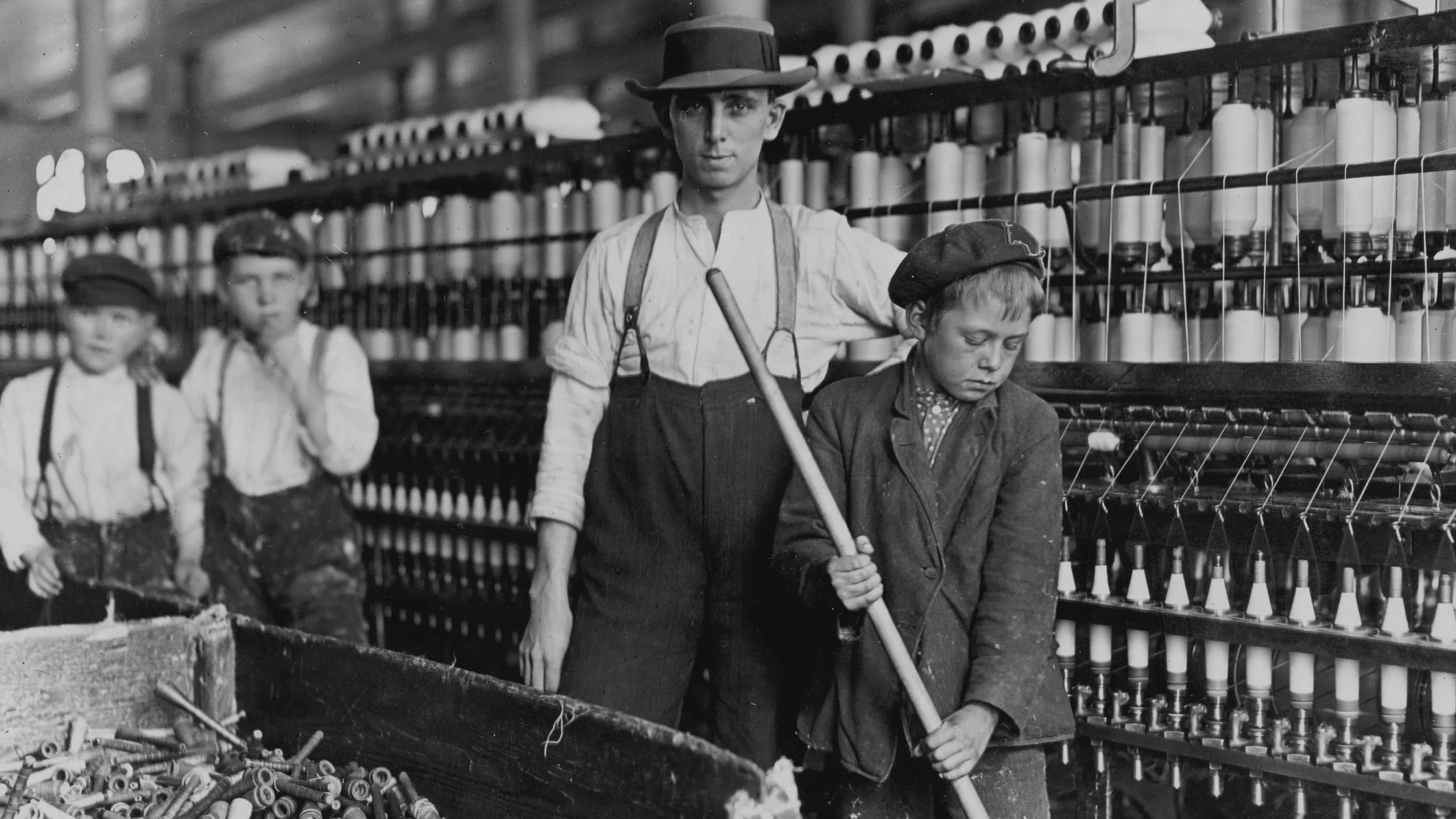
Now, if you have even a shred of compassion, empathy, and perspective, take a step back and think about this. Decades ago, we collectively decided that making children work in mines and factories was generally a bad thing. You don’t have to look far to find old, grainy photos of sad, broken children working in coal mines.

You don’t have to make bold assumptions about how these kids ended up having to work in such terrible conditions or why a company or business would employ them. They were desperate. They needed to do something to feed themselves or the rest of their families.

It wasn’t enough for kids to just help out around the house. They actually had to go out into dirty, dangerous mines or factories to earn what was likely piss-poor wages. And since they were kids, they weren’t as inclined to strike or organize. The only ones who benefitted from this were the employers, who were never going to pass up an opportunity to exploit cheap labor.

That’s why laws were necessary in the first place. History, as well as a basic understanding of power dynamics, has proven time and again that no organization gives up a profitable endeavor willingly. It took a serious movement of people who were appalled and disgusted by such practices to make these companies stop. And even when the laws were passed, some still tried to employ children illegally. Many still do, some of which include well-known American brands.

But now we’ve somehow found ourselves at a point where rolling back those laws is somehow viable? And those elected into public office are willingly going through with it?

Again, just take a moment to imagine this from the perspective of a kid. I remember being 12. I wasn’t even allowed to rent R-rated movies. And the most laborious task I could imagine involved doing yardwork with my parents over the course of a single afternoon. The idea of actually having to go to work while still going to school sounds like a goddamn nightmare.

Even when I was 15, it sounds downright soul-crushing. I was already navigating the rigors of high school. I was also going through the psychological and bodily horror that was puberty. The idea of having to work a job at the same time sounds downright cruel.

I understand that my childhood and circumstances are different than most. I imagine that kids from desperately poor families with limited opportunities might find such work unavoidable. But that’s exactly what makes these efforts by lawmakers so disturbing.

They’re essentially sending the message to employers, and society as a whole, that it’s perfectly fine to exploit desperate people and their children. It doesn’t matter if it means robbing a child of an opportunity to be a child and not get seriously hurt in a typical work environment. Their labor means more profits for the company and that’s all the justification we needed?

I’m no radical anti-capitalist, but even I call bullshit. If a company or business can only be profitable by exploiting the labor of children and desperate workers, then their business model sucks. And at the very least, our laws should not go out of their way to accommodate such models.

If all this weren’t bad enough (and it’s still very bad on so many levels), what makes it even worse is that those in favor of passing these laws are often conservative republicans. Remember, these are the same people who go all Helen Lovejoy and demand that we think of the children every time a drag queen dares to read them story. They’re also the same political wing who thinks a 10-year-old should be forced to give birth to a child that resulted from rape.

Again, I wish I was making this up. These policies, and the hypocrisy surrounding them, read like plots by supervillains. The only difference is that there are no costumed superheroes in this world who will stand to oppose them.

These despicable ghouls wearing human flesh have to know on some levels that what they’re doing will result in kids suffering, toiling, and being exploited by organizations whose only interest involves raising profits. They simply don’t care, mostly because they know their kids will likely never have to work jobs like that.

There’s a lot more I can say about the people pushing for and advocating these laws. But there’s only so much profanity and vulgarity I’m comfortable including in this rant. Maybe in a different time and under different circumstances, this wouldn’t bother me as much. I may not have kids of my own yet, but I have multiple nieces and nephews now. The idea of them growing up in a world where they could be employed and exploited at a young age makes me sick to my stomach.

Going back to my points about history, I’ll just remind everyone that we’ve been down this road before. We decided over 100 years ago that child labor is generally a bad thing for kids, families, and civilized society. We fought that battle for years and eventually won. Let’s not fight it again. Kids already have it hard enough. Let’s not make it worse for them.

Given the current state of the world, it’s literally the least we can do for them.

Leave a comment

Filed under Current Events, politics, rants

Happy Labor Day 2022!

Today is Labor Day.

For most people, it’s just a generic government holiday. Most treat it as the last chance to enjoy proper summer activities, like cookouts and going to he beach. For kids, it’s often a clear sign that summer break is over and it’s time to get back to school.

However, these past two years have changed a lot about how we see labor, holidays, and traditions in general. I don’t think I need to remind everyone how much change and upheaval we’ve had since 2020 with the COVID-19 pandemic. In fact, I’d rather not remind anyone of just how bad things got for so many people, especially the working class.

So, rather than dwell on that, let me just take a moment to ask that everyone remember what it means to work hard and toil for a living. Many of those reading this have probably worked a menial, arduous job for minimal pay and little benefits. Unless you’re born rich and well-connected, it’s practically unavoidable.

I certainly couldn’t avoid it. One of the first jobs I had was at a fast food restaurant. It was a tedious, laborious job that always left me sore, drained, and moody. I had to help impatient people get greasy, unhealthy food. I had to constantly empty out the trash, clean the toilets, and sweep disgusting crap off the floor.

But the worst part of all was just how slow time seemed to go every day I was at that job. I swear a minute felt like an hour and an hour felt like a day. It also paid minimum wage and the only benefits I enjoyed was a free meal every day.

It was as unpleasant a first job could be. However, it gave me an immense appreciation for those who work hard and toil at these jobs that a lot of us don’t give a second thought. To this date, I try to make it a point to be extra courteous and kind to those working jobs like that. I also try to tip generously whenever I can.

I encourage everyone to do the same because if nothing else, these past two years have shown just how vital these hard working people are to our society. We literally could not function without them. Whether they’re flipping burgers, delivering packages, or crunching numbers behind a computer screen, their hard work and toil deserves to be celebrated.

Labor Day might not offer much to those who still strain their bodies and souls every day, just to survive. But I hope it offers some perspective to those who truly appreciate the value of hard work.

So, in that spirit, I wish everyone from all walks of life a Happy Labor Day.

Leave a comment

Filed under Current Events

The Future Of Telework: A Trend That Transcends Pandemics

In early 2020, which might as well be another lifetime, I speculated on the lasting impact of increased telework and distance learning due to the pandemic that uprooted our entire society. At the time, I didn’t know just how bad this pandemic would get. In my defense, my hopes were still intact. Now, they’re charred ashes, but that’s beside the point.

In essence, I speculated that once people got used to teleworking, they would not be eager to go back, even after the pandemic had passed. That wasn’t exactly a bold speculation. You don’t have to be a world class psychic to surmise that people will come to enjoy working in their underwear, not having to commute, and enjoying the general flexibility that telework affords.

I’ve been stuck in enough traffic jams to appreciate that kind of flexibility. I know I’m not the only one who might become too fond of telework.

Well, that all-too-obvious insight is starting to take hold in many sectors. It’s not just related to typical office work in cubicles. Everyone from the United States Military to big tech companies to law firms are embracing this new normal for the workplace. Even though it’s more out of necessity than innovation or good will, it’s still happening and there may be no going back.

The pandemic has already forced a mentality shift among the workforce. According to research done by Pew, telework was mostly seen as an optional benefit reserved for an affluent few. That’s not surprising. That kind of flexibility just felt more like a luxury, one that someone had to earn by establishing trust and credibility from an organization.

Now, it’s not just a necessity. It’s unavoidable. The world we’re living in now just cannot accommodate the same professional environment we once knew. I’ve worked in many professional environments before. I can attest that some of them are not built with pandemics in mind.

At one point, I worked at a company in which my desk was crammed into a closet-sized space with three other people. If even one of us caught a cold, we’d all be sick by the end of the week. It was that bad.

I doubt that’s an isolated case. In some of the jobs I’ve had, I have been able to work from home, but it’s only as a last resort. The only times I actually had to do it involved an emergency that occurred on a Saturday morning and one instance where the office was being renovated. In both cases, I still got plenty of work done. I just did it in my underwear.

In that sense, I get why many organizations reserve telework as a luxury rather than a norm. There’s this underlying sentiment that people will abuse it. If they can work from home, they just won’t get as much done. They’ll be too tempted to just grab a bag of chips, lie down on the couch, and watch game shows.

While I don’t doubt there are people who do that, this pandemic has revealed that most people aren’t assholes on that level. In some cases, it’s increasing productivity. Apparently, when workers are comfortable and afforded flexibility, they can get more done. That shouldn’t be too surprising, but it’s still remarkable in its own way.

This has born itself out in subsequent studies and surveys. For some industries, telework is probably more productive in the grand scheme of things and that shouldn’t be surprising. Anyone who has ever had a lousy commute knows why. If a good chunk of your day is spent waking up, putting on itchy clothes, and spending hours in traffic, you’re not going to be in a very productive mood.

That won’t be the case for certain industries. If you’re a doctor, a police officer, a fire fighter, or a trucker, you just can’t telework. The nature of the work doesn’t allow it. That’s still going to be the case, at least until we have robots capable of doing those tasks, which we are working on. However, there’s also sizable chunk of work that could probably be done remotely.

I think the impacts of this emerging truth will extend far beyond the pandemic. I’ve already seen it with people I know. They enjoy teleworking. They don’t want to stop, even after the pandemic becomes a bleak footnote in history. Some are willing to still go into the office some of the time, but they would prefer to telework. I suspect that’s going to become the new normal.

Last year has proven that people can, for the most part, be responsible with the flexibility afforded by telework. As long as they’re getting the work done, who cares if they do it in their underwear while Netflix plays in the background? Considering how costly commutes can be and how expensive office space can be, it might just make more fiscal sense in the long run.

Like it or not, businesses and various organizations tend to err on the side of reducing operating costs. It may mean more employees waste time at home, but if the difference is made up by better productivity, then it’s a net gain overall.

That shift could have impacts that go far beyond business operations. If people have to commute less, then that makes living out beyond urban and suburban settings more feasible. Given how expensive it is to live in those areas, this could spread people out even more, which is an objectively good thing if you’re looking to prevent future pandemics.

It might even help those in depressed rural areas in need of human capital. I can easily imagine some people preferring the quiet, less crowded environment afforded by a rural setting. If they can live in that environment while still getting their work done via internet, assuming they have a reliable connection, then that’s another big benefit that goes beyond the business itself.

This is likely to be a trend. That’s not a fanciful prediction. We’re already seeing it happen. The pandemic just forced it to accelerate. There will likely be other impacts. It may very well change how cities, suburbs, and rural areas are planned from here on out.

I don’t claim to know the specifics, but we’ll likely see it continue in the coming years. I, for one, welcome this change. If I can reduce the amount of time spent in traffic and increase the amount of time I spend in my underwear, then my overall well-being improves considerably.

2 Comments

Filed under Current Events, futurism, human nature, technology

Mia Kalifa, The Porn Industry, And Why Her (Lack Of) Earnings Matter

mia-khalifa

Imagine that you’re young, low on money, and in need of a quick buck. You do a few side-gigs, like drive a taxi or do some yard work. You make some money up front. You’re grateful for it. You wish you didn’t have to do it, but you still did and you’re ready to move forward with your life.

Now, imagine that same work you did ended up making someone else a boatload of money that continues to flow in, even though you’ve long since finished your part. Maybe while mowing the lawn, you discovered a priceless artifact under a tree stump. Maybe while driving a taxi, your car became the site of an infamous crime. Anyone with a white 1993 Ford Bronco SUV can attest to that.

With those ideas in mind, let’s talk about Mia Kalifa. If you don’t know who that is, just ask any straight man with an internet connection and a suspiciously large supply of tissue boxes. You might not get an honest answer, but rest assured, she’s a known public figure and not just because she has over 15 million followers on Instagram.

One of the reasons why she has so many.

She’s worth talking about, but not because she’s a former porn star who still garners a great deal of popularity, despite having not worked in the industry for years. Recently, she made the news after revealing that, even though she was one of the most popular porn stars in the world for a time, she made a total of $12,000 for her entire career.

For someone who was that successful in an industry that’s already exceedingly crowded by an abundance of content, that just doesn’t seem to add up. Most working people make more than $12,000 in a year, even if they’re paid minimum wage. They even get to keep their clothes on. What’s going on here?

There is a context to that story. By her own admission, she was in the industry for about three months. She only got paid a flat rate of about $1,000 for each scene she did and, given how few she ended up doing, it’s still more than minimum wage. She basically made $12,000 for approximately two weeks of work. Ignoring, for the moment, that the work involved making porn, it’s not a terrible rate.

However, what stands out most about her story is that she continues to generate money for the companies that initially paid her. To this day, those scenes she shot still generate traffic for popular sites like PornHub and that traffic still makes its parent company, MindGeek, some additional profit.

Most people don’t know, or want to know for that matter, that the most popular porn sites and studios are owned by MindGeek. Think of any site your significant other won’t admit to visiting. Chances are, they own it. They’re basically the Amazon of porn. They’re so big that there really isn’t a close second.

It’s because they’re so big that Ms. Kalifa’s story isn’t unique. Most people who enter the porn industry, be they male or female, have to go through MindGeek in some form or another. They’re basically a monopoly and because of that, they can get away with shady practices, such as underpaying workers or short-changing them with fine print.

Listed above are sites few will admit to knowing.

Most porn performers, including Ms. Kalifa, only get paid a flat rate per scene. They basically function as independent contractors, which means they’re not salaried employees who get benefits. They’re basically Uber drivers, but with sex. Unlike Uber drivers, though, the top performers can actually make a lot more, but they’re the exception and not the norm. Most performers are in Ms. Kalifa’s situation.

It’s not a situation unique to porn. Other elements of the entertainment industry have used similar practices for years. The music industry has plenty of examples of successful artists who sell millions of albums, but still go bankrupt because most of that money went to the companies they worked for rather than the artists themselves.

It even happens in the comic book industry. Few individuals have created and drawn more iconic character than Jack Kirby, but because he was a work-for-hire, he didn’t technically own his creations. The companies he worked for, both Marvel and DC Comics, owned them. As a result of this, there were some lengthy legal battles with Kirby’s estate. Not surprisingly, the companies won.

Think of any industry that involves performing or creating some kind of art. There’s a good chance that there are cases where someone creates something that becomes successful, but the creators themselves don’t profit from it. Only the companies profit.

Again, there’s a context to that. In industries like music, the top one percent of performers earn over three-quarters of the revenue. Most creative endeavors fail to turn a profit. As someone trying hard to break into the publishing industry, I can attest to how common failure and rejection are. These industries, as shady as their practices might be, need to make a profit and that often requires enduring many losses.

That’s exactly why Mia Kalifa’s story matters. It doesn’t just shed light on the less glamorous aspects of the porn industry. It highlights how the actual people behind popular media don’t reap as much of the benefits as we think. For porn stars, current and former, that’s made even harder by the stigma and taboos surrounding the industry. Ms. Kalifa endured those unpleasant elements more than most.

It’s a system that’s only getting worse. There was a time when porn stars could make considerably more money and even earn some residual income from the booming DVD market. Thanks to the advent of streaming media and excessive piracy, that’s no longer the case. It’s why many porn stars are turning to escorting or licensing products.

Given the dirty nature of the business, few politicians or advocates will loudly proclaim they want to help the people in the porn industry. The last few years have been very difficult for anyone in the sex industry. Laws are making sex work more restrictive and more dangerous to everyone involved. Performers will end up with the stigma, but the companies will get most of the profits.

To some extent, what happened to Mia Kalifa’s career is a microcosm of what’s happening to entertainment in general. We’re currently in an era where big companies are acquiring as much intellectual property as possible. Companies, be they major movie studios or porn producers, have a vested interest in controlling the content at the cost of the performers.

Since so few entertainment products turn a profit, these companies have too much incentive to short-change performers and creators. There’s no law that requires companies to give performers a small percentage of future earnings. There’s no law that stops them from exploiting the content created by performers, even if those same performers don’t want to be associated with the work anymore.

Given the money and influence of these companies, that’s not likely to change anytime soon. However, Mia Kalifa did us all a service by making people aware of this very flawed system. The fact that she did this while fully clothed and being brutally honest in a world that lives in alternative facts might be her best performance to date.

1 Comment

Filed under Celebrities and Celebrity Culture, human nature, media issues, outrage culture, political correctness, prostitution, sex in media, sex in society, women's issues