Tag Archives: Fascism

Dr. Doom, Perfect Rulers, And Ultimate Peace

There aren’t a lot of official rules on this blog. I try not to micromanage the what, how, and why of the content I talk about, beyond my sexy novels. However, there is one rule that might as well be a law of physics . If a particular topic can apply to comic books, then I will apply it to comic books.

I’ve already done it so many times on this blog, from sex-positive superheroes to showing why Magneto is the original Walter White to using an X-men comic to explore concepts of a balanced romance. While I love writing and talking about erotica/romance, I’ll still use every opportunity to tie it into comics.

For the past few days, I’ve been talking about fascism and repressive government. It’s a somewhat relevant topic, even after the 4th of July, because everybody seems to be throwing that word around these days. Liberals think conservatives are fascist. Conservative think liberals are fascist. At this rate, even anarchists will call each other fascist and fail to see the irony.

The concept of fascism is pretty complex. It has a dictionary definition, but that definition tends to get obscured by anyone who thinks a different political opinion is a threat to their own. Major conflicts like World War II have conditioned us to associate all the evils of the world with fascism. If your ideology seems bad, greedy, or evil in any way, then it must be fascist.

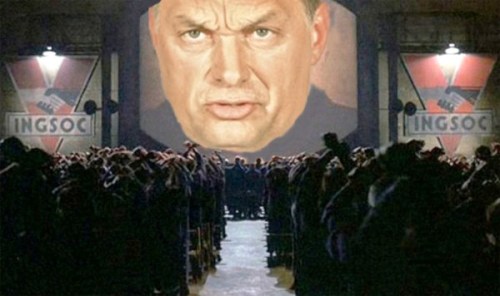
While that is a very childish approach to political rhetoric, relatively speaking, it also underscores the reason fascism and authoritarian governments exists in the first place. As George Orwell explored in “1984,” these kinds of systems emerge anywhere people seek security and peace in the midst of war and conflict.

We see it happen all the time throughout history. There are many occasions where a repressive regime has arisen out of bloody conflict. Some of those regimes are still around and frustratingly contentious. At their core, thought, the dynamics are the same.

In times of chaos, conflict, and scarcity, people seek power and influence. Once they have it, they seek to maintain it at all costs. They’ll try to control anything and everything, from the amount of bread everyone gets to how they conduct their sex lives. It manifests in many different ways, but the underlying principles are the same.

At the end of the day, the biggest problem with the systems surrounding fascism and repressive governments is that they still depend on flawed, petty humans with caveman brains. Sometimes, the rulers themselves are mentally unhinged. Sometimes, the people around them are petty, corrupt, or just plain incompetent. Often, it’s a potent mixture of the two.

In some sense, we can thank our own inherent flaws as humans as the ultimate weapon against a fascist, authoritarian state. George Orwell may have highlighted the darker elements of humanity, but he grossly overestimated peoples’ ability to manage others competently.

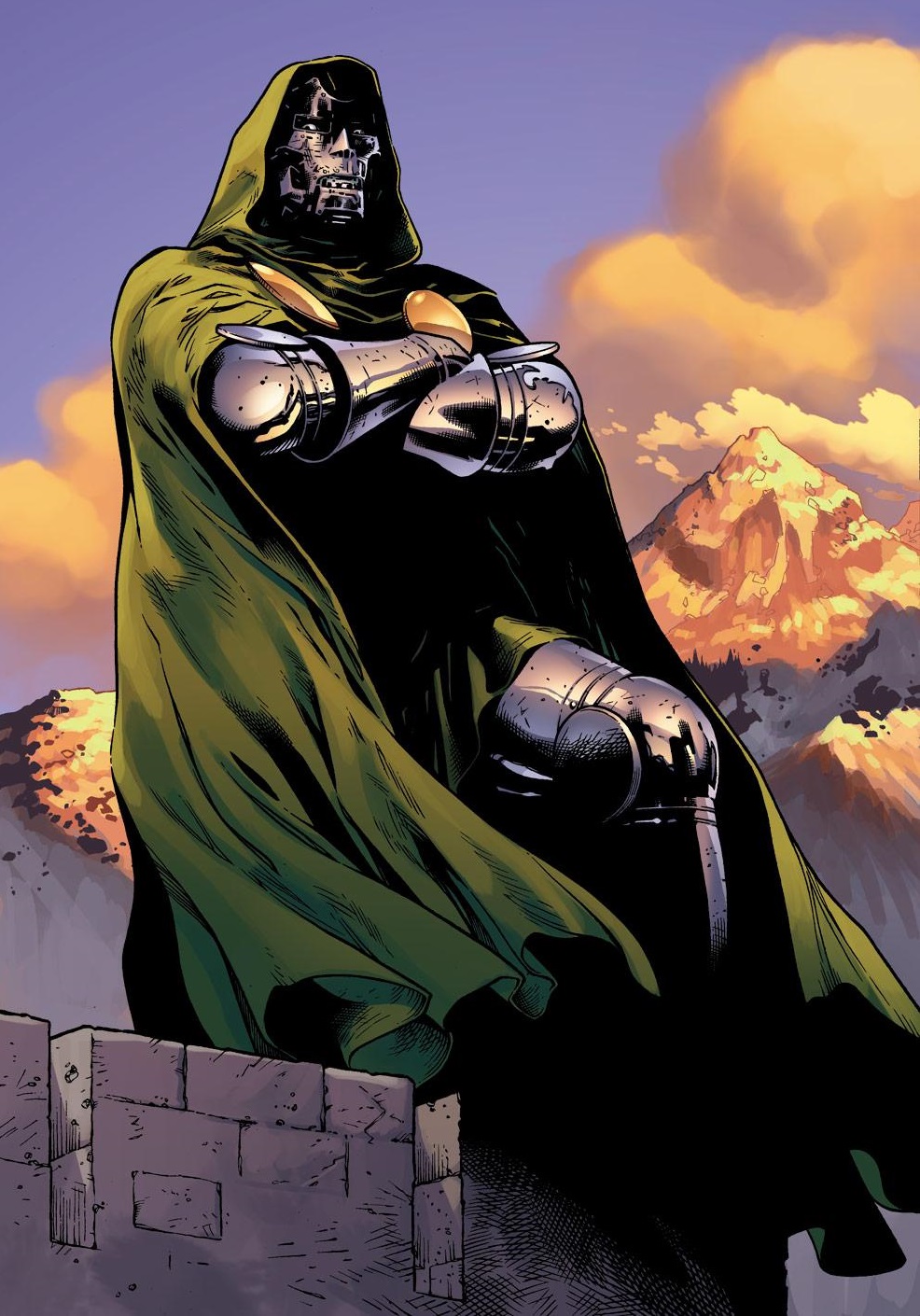
That leads me to Victor Von Doom, the alpha and omega of Marvel’s long list of iconic villains. In any list of the top villains of all time, Dr. Doom usually ranks near the top. A series of sub-par “Fantastic Four” movies have routinely failed to do justice to the breadth of Doom’s villainy. However, once you understand his roots, you understand why he is the ultimate counter to George Orwell’s dystopian fever dream.

There are too many details about Dr. Doom’s life and history to do him justice in one post. WatchMojo does a fairly good job of summarizing where he came from, but for the sake of this post and how he relates to my discussions on fascism, all you need to know is that Dr. Doom is the perfect ruler.

I don’t just mean that in the sense that he has the power, charisma, and resources to rule a country. I mean that, by almost every objective measure, Dr. Doom is the perfect ruler. Put him at the top of any government, be it a democracy or an authoritarian state, and he’ll make it work. Moreover, he’ll do it in a way that’s terrifyingly efficient.

That’s because Dr. Doom isn’t just some evil sadist who just wants to control people for the fun of it. He’s one of the smartest human beings to have ever lived. He didn’t just master science as a kid. He mastered science and magic. Even Lex Luthor can’t make that claim. He just mastered science. Compared to Dr. Doom, Lex is an underachiever.

Beyond just being smart and mastering things few can ever hope to master, Dr. Doom is extremely driven and makes no bones about it. He doesn’t just think he’s superior to every other human being on the planet. He knows it. If anyone dares question it, he won’t just prove them wrong. He’ll do so in the scariest, most intimidating way possible.

This isn’t just someone you respect. This is someone that scares the hell out of you, but for all the right reasons. As arrogant as he is, he doesn’t see himself as a villain either. Even Stan Lee, his co-creator, doesn’t see him that way. In an 2016 interview, he said this about Marvel’s greatest villain.

“Everybody has Doctor Doom misunderstood,” Lee said. “Everybody thinks he’s a criminal, but all he wants is to rule the world. Now, if you really think about it objectively, you could walk up to a policeman, and you could say, ‘Excuse me, officer, I want to tell you something: I want to rule the world.’ He can’t arrest you; it’s not a crime to want to rule the world. So […] it’s unfair that he’s considered a villain, because he just wants to rule the world. Then maybe he could do a better job of it. So I’m very interested in Doctor Doom, and I’d like to clear his name.”

Therein lies the greatest irony of Dr. Doom’s villainy. Sure, he wants to take over the world and he routinely clashes with Marvel’s most iconic heroes in the process. However, it’s why he does it that makes him stand out.

In one iconic story from 2010 fittingly called “Doomwar,” his true motivations for conquering the world come to light. In that story, Dr. Doom encounters a god-like being named Bast, also known as the Panther God. In that encounter, Bast reveals something critical about the future of the world.

As anyone who has ever followed Marvel comics for any number of years will tell you, there are a lot of alternative universes and timelines. Some are dystopian, even by George Orwell standards. Some are just different in a few minor details.

However, the Panther God saw all these universes and timelines and came to one inescapable conclusion. The only timeline in which humanity was free from suffering and want was a timeline in which Dr. Doom ruled the world. In a sense, that almost makes Doom a hero. Then again, he’s still the same guy who once sacrificed the woman he loved for more power.

Beyond those overtly villainous details, there’s a lot of merit behind that vision and not just because it came from the Panther God. Dr. Doom already knows how to run a country and a government. For much of his history, he’s run his fictional home country of Latveria and, by all accounts, he’s run it very well.

He ran it so well that, when he took over the country, every soldier and citizen that had been fighting for the previous ruler just stepped aside and let him take over. He didn’t force his people to love or respect him into submission. He proved himself. He did such a good job that nobody in Latveria besides the previous rulers wanted to stand in his way.

He didn’t just stop at taking over his home country either. Dr. Doom helped it prosper. In another iconic line of Marvel comics, Dr. Doom turned a country of bankrupt peasants into one of the top 10 economies on the planet within a couple years. That’s the kind of growth that even hardcore libertarians have to respect.

Doom does this because, and this is worth emphasizing, he’s extremely smart. He’s not just smart in that he can outwit gods and cosmic forces. He’s smart in that he knows how to manage a country, a people, and everything in between.

He does this largely through an army of loyal robotic minions, including specialized robots called Doombots. They’re not just ordinary killer robots either. These robots actually think, behave, and act as though they’re the real Dr. Doom. It’s kind of a running gag in the Marvel universe. Every time Doom is “defeated,” it’s often revealed that they just defeated a Doombot.
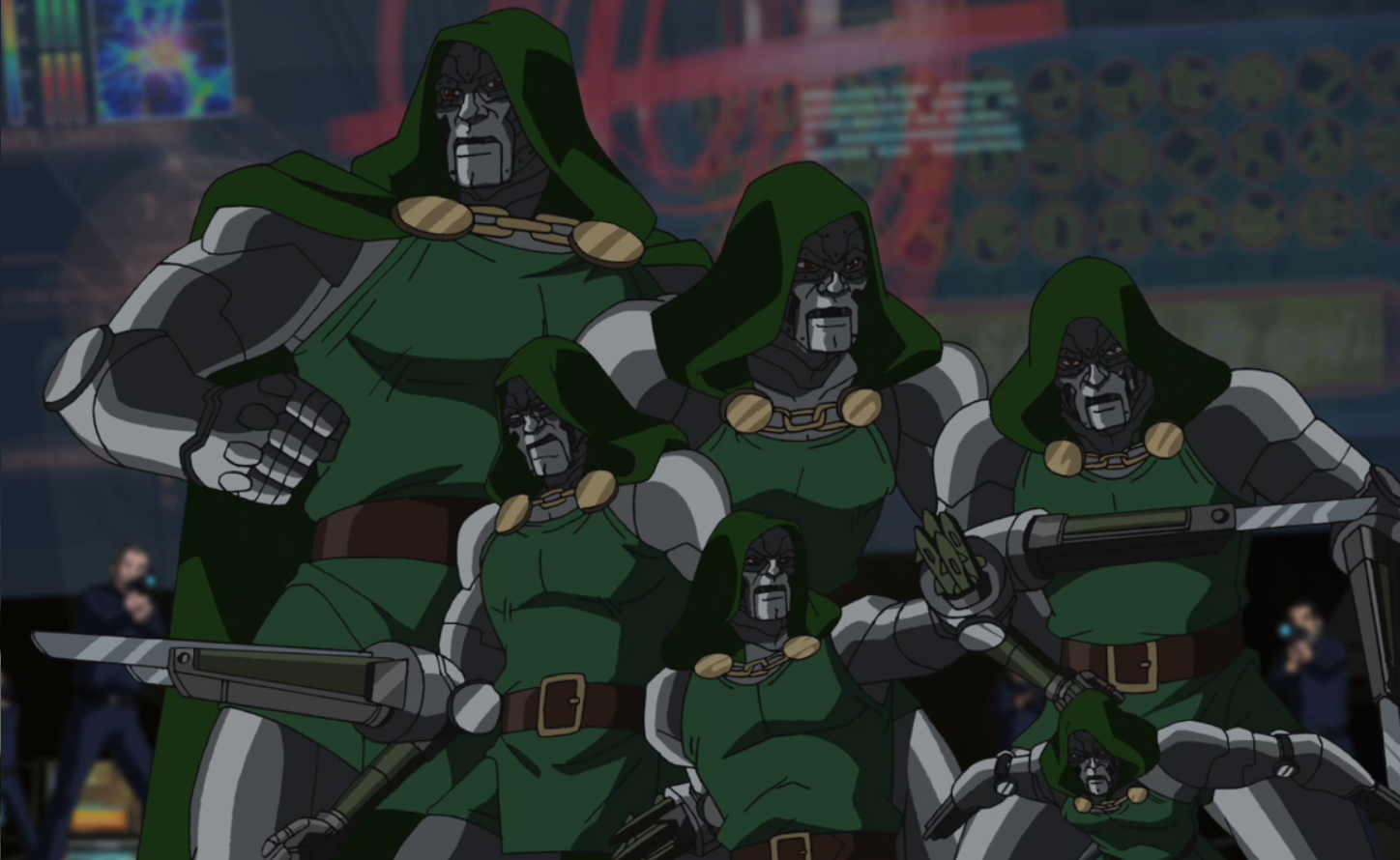
Beyond being a clever plot device, it also ensures that Dr. Doom’s government never has to worry about insubordination, betrayal, or corruption. His robots, gadgets, and ability to use mind control ensures he maintains perfect control of his government from top to bottom.

Unlike the ruling party in George Orwell’s “1984,” there’s no need for a massive professional class of bureaucrats that need to be constantly monitored. There’s no need to set up a kind of thought police to ensure nobody even thinks about undermining the party. For Dr. Doom, that would be redundant. No matter what any of his citizens think, he knows he’s smarter and more resourceful than any of them.

In addition, the party in “1984” didn’t care much for the welfare of the people. They only cared enough to ensure the stability of their rule. Dr. Doom, on the other hand, does express a genuine concern for the well-being of his people. He will go out of his way to make sure that his people are free from suffering and want. Sure, they’ll still fear Dr. Doom’s wrath, but that’s the only thing they fear.

That, more than anything, is what makes Dr. Doom the perfect ruler. He’s so smart, so capable, and so resourceful that no other human in his home country or any other country could come close to matching him. On top of that, Doom actually produces results. The things that are typically impossible for a government to do, such as providing prosperity for all its people, are easy for someone like Dr. Doom.

Thanks to Dr. Doom’s expertise, cunning, and willingness to cross any line, anyone under his rule will be safe and prosperous. They won’t have to fear anyone harming them because they’d have to go through Dr. Doom first, a man who one-shot the Incredible Hulk and battled a race of space gods. With him, a border wall is both unnecessary and redundant.

Under Doom’s rule, you are as safe as it’s possible to be without locking yourself in an adamantium cage. You’re also probably as free as you’ll ever be. While Dr. Doom is a despot, he’s never shown an inclination to micromanage his citizens’ lives. He doesn’t tell them who to love, how to love, and what to do with their free time. So long as they acknowledge his authority, they can do as they please.

He doesn’t get involved in his peoples’ sex lives. He doesn’t try to run the economy. Near as anyone can tell, he doesn’t even demand that certain words be censored from TV and movies. In that sense, Dr. Doom is less tyrannical than the FCC.

Sure, his citizens are still at Doom’s mercy. If, at any point, they become a threat to Doom, he’ll kill them without a second thought. However, Dr. Doom is not obsessively paranoid like the Stalins and Kim Jong Uns of the world. He’s too smart, too cunning, and has too many Doombots on his side to worry about such trivial things. He is, for all intents and purposes, a benevolent despot.

There is no real-world, or even fictional, equivalent to Dr. Doom. However, much like Superman, Dr. Doom presents an ideal of sorts. He is everything people want in a ruler. He is smart, charismatic, imposing, strong, capable, resourceful, logical, and fair. He has the means, vision, and drive to do everything that people want their government to do.

In that sense, it wouldn’t even matter whether a system is fascist or democratic. So long as there’s someone like Dr. Doom at the top, it’ll work. There are still many parts of his character that make him undeniably villainous. However, it’s hard to deny his ability as a ruler. To live under his authority is to live in perfect freedom and security.

Remember that the next time you get into a debate about fascism or democracy. In the end, the only truth path to perfect governance is through Dr. Doom. That’s enough to make both the Avengers and the Justice League cry.

All Hail Doom!

12 Comments

Filed under Comic Books, Jack Fisher, Superheroes, Jack Fisher's Insights

George Orwell, 1984, And The Perfect Totalitarian State

There were a lot of reasons I hated high school. I’ve listed more than a few of them on this blog. Somewhere on that list, but nowhere near the top, involved the books I had to read. To say they weren’t very sexy would be like saying a baseball bat to the head isn’t a very good massage.

However, every now and then, my English and social studies teachers managed to assign a book that didn’t make me want to make me stick my head in a deep fryer. One of my favorite non-sexy books of all time, which also happened to be a homework assignment, is George Orwell’s “1984.” It’s a book that always seems relevant and insightful, albeit for all the wrong reasons.

When I read Orwell’s depiction of the ultimate dystopian future, I see it as the ultimate thought experiment, of sorts. Orwell wrote this book in the 1940s, a time when there were actual, dystopian totalitarian regimes operating in the world. Sadly, one of them was a chief ally during World War II.

He had a lot to reference in his time, much more so than we have today. Other than North Korea, most people today aren’t as familiar with rigid, totalitarian governments. Since the fall of the Soviet Union, there’s an entire generation of people whose idea of a totalitarian regime is relegated to detention at a high school. They can’t even begin to fathom the kind of world that “1984” described.

That’s a good thing in some respects. In a sense, those governments are almost impossible these days. The rise of the internet, modern technology, and complex geopolitics makes it next to impossible for a regime to be as totalitarian as “1984.” North Korea comes close, but even that regime is wholly inept compared to Big Brother.

However, I believe there’s a unique value, of sorts, when it comes to understanding what makes a totalitarian regime work. I also think there’s value in knowing the tenets behind it, the ways in which it operates, and why it takes hold in the first place. Even in an age of people protesting the removal of the McRib from McDonald’s menu, we’re not immune from the threat of a totalitarian regime.

With that in mind, let’s dig a little deeper into Orwell’s extreme thought experiment that played out in “1984.” If you haven’t read the book or had even worse English teachers than I did, you might not be familiar with Big Brother, how it operates, what what it represents. You might have heard the term, but you might not be familiar with what it is.

For the sake of providing context, here’s a quick video from the Alternate History Hub channel on YouTube. It’s a channel that focuses primarily on alternate history scenarios, which I’ve touched on before, but it also provides remarkable insight onto other subjects. Given how many totalitarian regimes are involved in alternate history, it makes sense to explore the ultimate extreme, as it played out in “1984.”

It’s hard for most people in the industrialized world to imagine a system like this. The idea that facts, history, and the very thoughts we think are all controlled by this all-encompassing, all-powerful government seems insane. It’s hard to imagine living in a world like that. It almost seems impossible. In a sense, it is.

No government in history has ever come close to wielding the kind of power that Big Brother does in “1984.” Some have tried. There’s the first emperor of China, the sun king in France, and our old frenemy, Joseph Stalin. They only ever succeeded in part and often failed in the long run.

That’s because, as we’re seeing with the ongoing health care debate in America, human beings are impossibly chaotic creatures. We all have so many different needs and wants. We’re all petty about different things and apathetic towards others. No two people are completely wired the same. We all think different thoughts for different reasons, sometimes with downright kinky undertones.

It’s because of all that chaos/diversity within the human condition that no government can hope to achieve what Big Brother achieved in “1984.” It would require so much power, so much micromanaging, and so much information that it just wouldn’t be practical for any one human or party of humans.

Again, that won’t stop some from trying and that’s where Orwell’s thought experiment becomes relevant. In looking at the structure of Big Brother, we can observe the nuts and bolts of the perfect totalitarian regime. We can see what the ultimate fascist is seeking when they want to create an all-power, completely centralized government.

Impossible or not, the features of this government reveal some common themes that have a basis in the real world. Those are themes worth understanding because they help us know when someone is trying too hard to emulate Big Brother. Without getting too deep into the book, here are the key features of a perfect totalitarian regime.

  • There’s a single, unambiguous ruling party and no opposition of any kind

  • The ruling party makes up a small percentage of the population, never more than one or two percent

  • The members of the ruling party rarely, if ever, interact with the public directly

  • The public consists of two classes, a professional middle class that never makes up more than a quarter of the population and a working lower class that usually makes up over two-thirds of the population

  • The middle class is educated to some degree, but wholly controlled by the ruling party and is completely dependent on them for their livelihood

  • The lower class is uneducated, under-informed, and easily manipulated

  • All economic activity is controlled or guided by the party, ensuring the middle class has just enough to do their job and the lower class has just enough to propagate

  • The ideals for family structure and social structure are imposed by the party with any variations being deemed deviant

  • The lower classes are allowed to be more deviant and decadent in order to keep them content with their state

  • The middle class is held to a higher standard of conduct to ensure their loyalty and submission to the party

  • The flow of information, the accepted knowledge of the world, and the entire history of the state is dictated by the party and accepted by the masses

There are probably more features I could list, but these are the core elements of Big Brother and the society we see in “1984.” Now, some people will attempt to apply these features to whatever state, country, or office environment they’re in at the moment. Some might actually apply, but never to the same degree as Orwell depicted.

The biggest takeaway from these traits, as well as the themes in “1984,” is how a society structures itself in the face of such overwhelming control. At the top, there’s always a ruling class. That class has only one primary purpose, which is to preserve its power. From the Galactic Empire in “Star Wars” to the battle for the iron throne in “Game of Thrones,” preservation is always the top concern of a totalitarian regime.

Part of preserving that power means relying on a professional middle class, of sorts, to deal with the bureaucracy and administration of the state. It’s in this area where totalitarian regimes tend to be most vulnerable. History has shown that authoritarian states like Nazi Germany were anything but efficient, which in turn undermined the ruling party’s primary goal.

It seems like a paradox, but it’s more a matter of pragmatism. A state needs people to run these massive, complex machinations to maintain so much control. To not impose such control would mean granting people freedom and that’s dangerous to any ruling party that wants to preserve control.

This is why those in these middle class professions are subject to such greater scrutiny. A poor, unemployed man taking a piss on a street corner creates no controversy. However, if a highly educated professional did that, it would be a major scandal. We often see this in how major corporate scandals play out.

In a sense, the lower classes have more freedom in this system than the professional middle class. That’s because the ruling party doesn’t really care about them. They don’t have to because they’re not a threat.

Uneducated, lower class people are too stupid and gullible to really pose a threat. So long as they work and breed, the ruling party has no reason to micromanage them. They don’t care if they have orgies in the streets, drink paint thinner for breakfast, or wear horse masks to work. Their only purpose is to work and breed. If they do that, then the ruling party couldn’t care less.

In a sense, the ruling party will always be at odds with a certain segment of the population. In order to exercise control in an authoritarian regime, there needs to be a sizable number of loyal, competent underlings to carry out the functions of the state. Finding people who can act as such underlings with perfect loyalty is difficult, if not impossible.

It’s hard to say whether Orwell knew this on some level. Keep in mind, he was heavily influenced by what he saw around him, a massive world war and the rise of communist states. Perhaps he had studied how powerful, repressive governments had operated in the ancient past and saw parallels in the present. Perhaps he saw that as an inevitable recourse for humanity.

I choose to have a more optimistic, albeit cynical view of human affairs. I don’t believe a system like Big Brother could ever take hold in a world where people can’t even agree on pizza toppings, let alone a singular vision for human civilization. I also don’t believe any government is equipped to exercise the kind of control that Big Brother did in “1984.”

However, that still won’t stop some from trying and the very process of trying can be very dangerous. Seeking order within the chaos is a very human trait, but one that can easily get derailed by pettiness and corruption. That’s why Orwell’s lessons in “1984” are more relevant than ever and may always be relevant to some extent.

6 Comments

Filed under Jack Fisher's Insights

On Fascism (And Why It Fails)

Brace yourself and temper your outrage because I’m about to talk about fascism. No, I’m not talking about the kind of fascism that teenagers whine about whenever they have a strict teacher in high school. I’m not even talking about the kind of fascism that that certain people attribute to college professors, LGBT rights, Hollywood, the NRA, the Catholic Church, and Negan from “The Walking Dead.”

Today, I’m going to talk about actual, real-world fascism and how it functions. I’m also going to talk about why it tends to fail in the long run and why it’s become such an empty term. Now, I know that means putting a big target on my ass and daring the more vocal parts of the internet to take a shot. I like think my ass is harder and more durable than most so I’m prepared to take that chance.

I know people like to throw the word fascism around like middle fingers in mid-day traffic, but it does have a definition. That definition has been twisted and amended many times over the past half-century, so much so that the word evokes so many different connotations.

For the sake of this post, I’ll be using the definition from Merriam-Webster’s dictionary. It offers a fairly concise assessment of what it entails.

A political philosophy, movement, or regime (such as that of the Fascisti) that exalts nation and often race above the individual and that stands for a centralized autocratic government headed by a dictatorial leader, severe economic and social regimentation, and forcible suppression of opposition.

Under this definition, America and most developed countries are not fascist. No matter what some kale-eating hippie or Jerry Falwell wannabe theocrat may claim, the systems and laws in place are antithetical to fascism.

Western countries have codified laws and traditions that value individual rights, protect minorities, and restrain central government power. Now, that’s not to say it’s perfect in practice. There are plenty of examples, historical and contemporary, that of inequality and oppression by the government.

However, those examples are more a product of misguided groups of people and inherent systemic corruption. To call an entire system fascist because of those instances would be like calling an entire swimming pool dirty because a few people spit in it. With fascism, the entire pool is spit so there’s no need for cherry picking.

Thanks to the cruel mistress that is history, we have a few well-known examples of true fascism that even vegan hippies can agree on. By most objective measures, Fascist Italy and Nazi Germany are the alpha and omega of all things fascist. If fascism were music, these two would be Elvis and the Beatles.

These governments were repressive, authoritarian, corrupt, and powerful. They could do whatever it wanted to its citizens and act however it wanted on a national stage, not giving a damn about public support of any kind. There was no hesitation to lie, cheat, and mislead the people. In these governments, people are either pawns or cogs in a machine. The very notion of freedom might as well be as fanciful as a unicorn fart.

There’s no question that these fascist governments did a lot of damage and caused a lot of suffering. There’s also no question that their actions scared and traumatized an entire world. They revealed to a modern world that wars between despots and industrial powers was truly horrific. Most human beings tend to avoid such horrors. A massive world war was enough to make everyone hyper-vigilant of all things fascist.

It’s in this heightened mentality where I think it’s worth having some perspective about fascism. We hear pundits, politicians, and protesters throw that word around, as though it’s the rhetorical equivalent of an “avoid critical thinking” card. It’s an easy label to throw around, but it rarely sticks because actual fascism is actually pretty frail.

In a modern context, fascism is different from the kings and despots of the ancient world. In those times, corrupt and blood-thirsty kings could only get away with so much. A kingdom and a nation state, complete with modern infrastructure, are two very different things.

A king needs to only hold a kingdom together and fight off the occasional invader. A nation state has to deal with bureaucracy, social welfare, and legal issues. No matter how big a king’s castle is, there’s just no way to manage all that in a modern context. There needs to be some sort of system in place.

A fascist government tries to centralize that system and organize it in a simple, stable way that definitively benefits certain persons or groups. Nazis sought to benefit a favored race. Italian Fascist sought to benefit a favored class. The argument could be made that Stalinist Russia and the current regime in North Korea are fascist in nature. I would tend to agree with those claims.

The goal is almost always the same. A fascist government directly and overtly attempts to control and centralize power for a select group of elites. It’s for this very reason that fascism tends to fail in the long run or never succeed in the first place.

Now, don’t go cheering and waving American flags just yet. That’s not to say that fascism inevitably falls under the glowing light of freedom, democracy, and bald eagles. That’s a romantic idea that makes for great war movies and comic book characters. It’s not necessarily reflective of real-world machinations.

The biggest flaw in fascism is its attempt to control and manage an entire state. That’s not just difficult. It’s impossible for any ordinary human or groups of humans. Our caveman brains can barely control when we get horny. How can we expect to control an entire government, let alone one meant to benefit a specific group of people?

The short answer is we can’t. The long answer is that such centralization and power requires a lot of bullying, corruption, subversion, and back-stabbing. That’s why you have Nazi Storm Troopers and Stalinist purges. It isn’t just because powerful people get a thrill out of ordering rampant death. They need to scare, bully, and intimidate everybody into going along with their agenda and being completely loyal.

That’s a huge problem though because, as I’ve pointed out before, it’s impossible to know how truthful someone is. You can never know who is truly loyal and who is plotting against you. That’s why men like Joseph Stalin were obscenely paranoid, which guaranteed that allies and enemies alike would die by his hand. Without those allies, any system is inherently weaker.

On top of that problem, there’s also the issue of the terrified masses who live under a fascist thumb. Say what you will about whiny protesters complaining about weed, but at least they’re willing to tell the government what they don’t want to hear. In a fascist system, the impoverished masses will likely keep their mouth shut.

That may help a paranoid fascist get through the day, but it limits their ability to make it through the year. That’s because in a complex world, having incomplete facts tends to be a huge detriment. If nobody is willing to tell a fascist ruler that their rusty old trucks with canons are no match for drone strikes, then that’s going to be a problem.

That’s why, contrary to what the History Channel and video games may claim, fascist regimes like Nazi Germany were never close to winning the war. Between major blunders and micromanaging, there was never a scenario that didn’t involve time travel or aliens that would’ve allowed them to win.

That’s because a fascist regime can’t trust anyone, be it military generals or the public. At some point, the political ties break down and the system just can’t handle it. They can delay the collapse, but they usually can’t stop it. It’s remarkable that Nazi Germany lasted as long as it did, given all the assassination attempts.

It’s the dirty, but unavoidable secret of almost every fascist governments. They function only to live another day, rather than build a future. Some are better at it than others. Castro’s Cuba has managed to survive for over a half-century, albeit with significant support from other neighboring countries.

The same goes for North Korea. The only reason that country still exists is because China doesn’t want a failed state on its border. At this point, North Korea can only endure, but not build. As the old dynastic cycle in China often proved, a system concerned only with survival tends to collapse in the long run.

I say this not as a way to undermine the horrors that fascism has and could potentially unleash on this world. It is a real danger in a world that’s full of crazy dictators and obscene corruption. However, it’s a danger with an inherent weakness and an expiration date. It’s one instance where you can depend on caveman logic to win out in the end.

It may not inspire the kind of ravenous patriotism that Americans tend to enjoy. However, it does show that, despite protests the contrary, there’s a lot to appreciate about our current system. It’s not perfect, but it’s building towards a better, sexier future more so than any fascist government ever will.

2 Comments

Filed under Jack Fisher's Insights