Tag Archives: adult life

Why Time Seems To Go Faster As You Get Older

When I was a kid, the school year always seemed to go on forever. I know it was nine months out of the year and that was a sizable chunk of any given year. But looking back on it, I swear every day felt longer, every week felt like a month, and every month felt like a year. Even as I got older, time seemed to drag and at times, it was agonizing.

These days, the flow of time feels different and not just because of the events of the COVID-19 pandemic. Granted, that did mess up everyone’s sense of time. But even before that, I noticed how the days, months, and years seem to go by differently. And the older I get, the more I feel it. I’m also not the only one.

A lot of friends and relatives I talk to will say the same thing. They swear that 2023 just started a few weeks ago. They remember the ball dropping on New Years Eve. They remember making New Years resolutions, capping off the holidays, and making plans for the new year.

The next thing they know, Halloween is over and the holidays are just around the corner. You start to wonder where the hell the rest of the year went. You wonder why and how it went by so quickly. I’ve certainly wondered that from time to time. But since the end of the pandemic, I feel like my perspectives on how the years go by has struck a unique balance.

And I count that as an accomplishment because for a good chunk of my youth, that balance was lacking and not just because of how much I struggled in high school. College was eventful, but it felt like it ended too quickly for me because I was often anxious about what I would do when I got out. Even when I started working and exploring new creative outlets, I didn’t have much certainty with respect to how I would build a life for myself.

That took a while to figure out. I also made a few mistakes along the way, as most people do when they’re young and uncertain. But once I created a more stable life for myself, finding some decent jobs and moving into my own place, that’s when I really noticed my perceptions of time change.

Unlike being in school, my life was a lot less structured and regimented. There was less obsession over navigating classes, classmates, and assignments and more focus on just getting better at whatever job I happened to have. For someone like me, I tend to thrive more when things are streamlined and I know what I need to do over the course of a given day, week, or month. That allows me to plan accordingly and get things down to a system.

Once I found that, life in general just seemed to run smoother. It also helped that I wasn’t an awkward teenager trying to handle acne, puberty, and poor social skills anymore. Life experience and maturity helped me better navigate my life on a day-to-day basis.

Plus, making my own money, being able to spend it however I wanted, and living on my own schedule was a lot more fulfilling. I was no longer constantly checking the clock, agonizing over when my next assignment or obligation was.

Yes, I had that with my job, but that always felt less stressful than school because it was more limited. There was less emphasis on following strict schedules and getting grades. What mattered more was the end results and once I knew how to do that, there was less stress and anxiety.

Now, it was more a matter of how to enjoy my personal time when I wasn’t working. Having more of that, as well as enough money to make the most of it, really benefited me in terms of mental health. But it also made that time feel more fleeting and precious. When you’re doing your own thing and enjoying it every step of the way, it seems to end sooner. That’s often how I feel every time my trip to New York Comic Con ends.

I suspect that feeling will continue to evolve as I get older. There is some real science behind why time seems to move faster as you get older. Much of it has to do with how getting older makes each experience a smaller and smaller chunk of your lived experience. I think there is some merit to that and my older friends can often attest to it.

But beyond the science, I think this feeling is best summed up by a friend of mine who retired recently. He once told me that “The days are long, but the years feel short.” And I think that holds true, regardless of how old you are.

Every day is going to go by at its own pace, regardless of whether you’re working, going to school, or just enjoying a lazy Saturday afternoon. But as you make it through each day, they add up fast. Eventually, they’ll all feel like a blur as you make it through another year. At times, it feels like those days were wasted. But I would encourage others to avoid that feeling.

Because I believe that no day is truly wasted unless you go out of your way to do so. If you’re just lounging about, but enjoying it every step of the way, then that’s not a wasted day. But if you’re just lounging about and ignoring things you know you have to do, then that is a waste and it will impact the days that follow.

In the end, it’s a balancing act. If you find yourself in a situation that works for you, then it will feel like the years will start to fly by. But that’s not necessarily a bad thing. It means that you’re not in a situation agonizing over what the next day will bring or what you’ll have to do in the weeks to come.

Perception or not, the world will keep spinning and time will keep passing us by. But if you’ve built a good life for yourself and those around you, you’ll find that the days and years were well-spent, regardless of how brief they seemed.

Leave a comment

Filed under Jack Fisher's Insights, psychology, real stories

Why We Are All Jerry Smiths In A World Of Jerry Smiths

jerry_post

If you’re reading this, then chances are you’re not a famous scientist, celebrity, politician, intellectual, or cultural icon. If you are, I’m flattered and a little shocked that you’re reading a site built around sexy short stories, erotica romance novels, and multiple pieces on sex robots. Whatever your status, I hope you find this both informative and revealing. It’ll also help if you’re a fan of “Rick and Morty.”

I know I’ve used that show many times to make points about everything from love to nihilistic morality. It’s not my fault the show is so brilliant in how it presents complex issues in a way that’s entertaining, hilarious, and vulgar. Sometimes, we need certain concepts presented in such a way in order to make sense of them, especially if the implications are unpleasant.

While “Rick and Morty” explores many concepts through many colorful characters, some more memorable than others, there’s one particular character who embodies a particularly distressing concept. That character is Jerry Smith, Morty’s father and Rick’s son-in-law. You could argue Jerry represents a lot of things in this show, but I would argue that Jerry Smith, more than any other character, represents us.

Chances are you’ve done something like this today.

By us, I don’t mean the people who watch regularly “Rick and Morty.” I’m not even referring to those exceedingly passionate fans who went ballistic on McDonald’s employees for not having any Szechuan Sauce. When I say that Jerry Smith is us, I mean that this colorful character that we love to laugh at represents the hopes, dreams, flaws, and foils of the entire human race.

To understand this sentiment, it’s necessary to know who Jerry is and what role he plays in over-arching mythos of “Rick and Morty.” For the most part, he’s neither a protagonist nor an antagonist. He’s rarely a hindrance to the cosmic antics of Rick Sanchez and while he tries to be a capable father to Morty, his influence is limited, at best. For the most part, he’s an afterthought at best and an inconvenience at worst.

When the family has to ban together to fight off alien parasites, Jerry doesn’t do any fighting.

When the family first encounters the Council of Ricks, Jerry either cowers or is fodder for pranks.

Even when he does play a significant role in an episode, Jerry tends to make the problem worse with his actions or is the underlying catalyst for them.

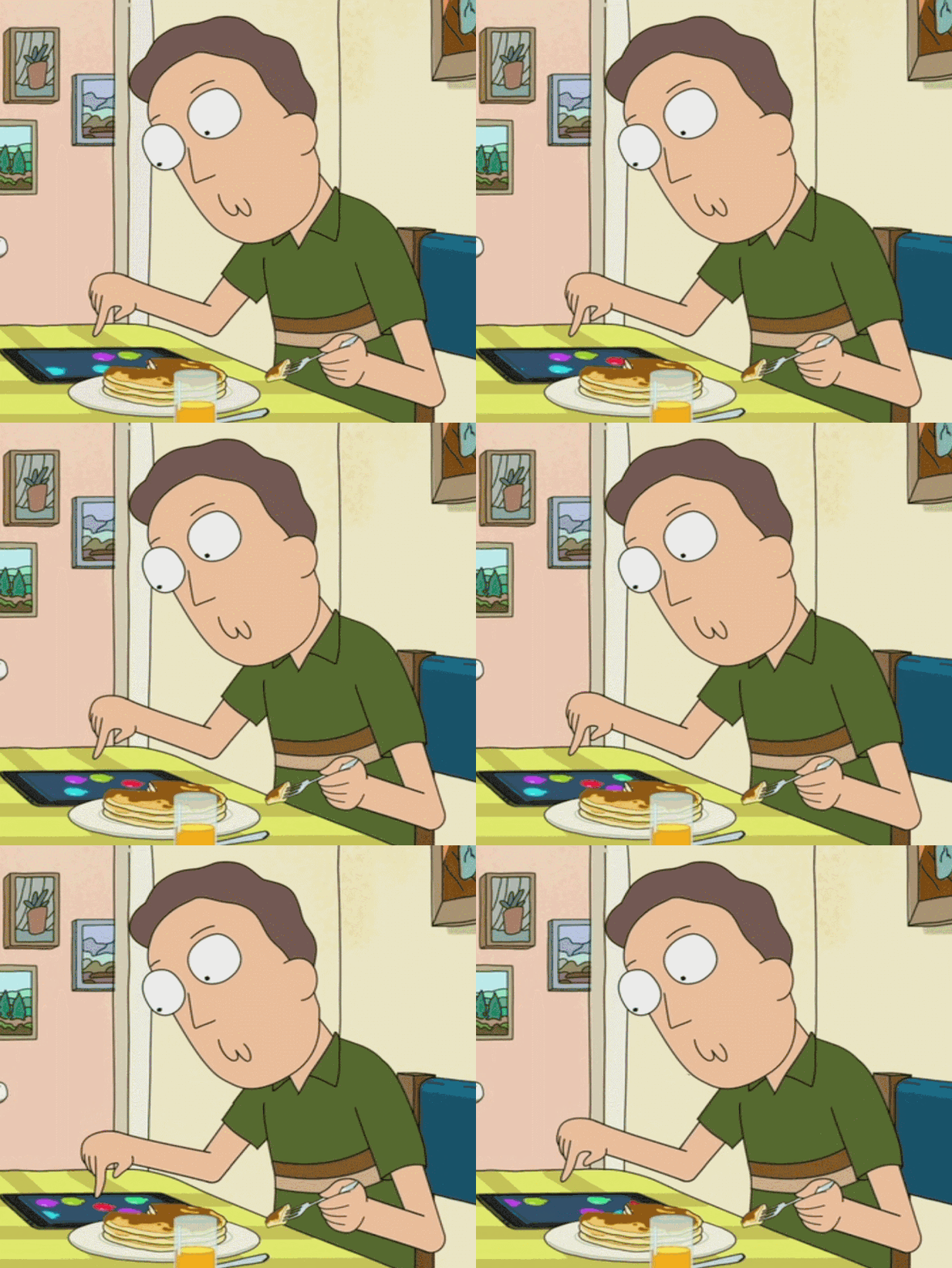
Chances are you’ve been this frustrated recently.

It wouldn’t be accurate to say he’s completely inept. By and large, he is a respectable person who tries to do his best with his current situation. Granted, nobody in his family makes that easy for him, but there’s no doubting his intentions. He wants to do what’s best for his family, but his capabilities are exceedingly limited.

That’s understandable, given who he deals with. Rick Sanchez is an alcoholic super-genius who can travel across universes, enter other peoples’ dreams, and build intelligent robots whose sole purpose is to pass butter. His wife is a skilled horse surgeon who can also hold her own against Rick-level threats. His two kids are young, but still capable of handling themselves in a post-apocalyptic wasteland.

Pretty much every character in “Rick and Morty” demonstrates that they can handle themselves in the crazy situations that Rick often puts them in. When aliens, parasites, or intelligent dogs enter the picture, they can confront the situation and even help resolve it. Jerry has never shown that ability. Every time he tries, he either fails or makes it worse.

Or just looks foolish.

The reasons for his failure aren’t entirely his fault. Jerry’s biggest shortcoming is that he’s an ordinary person in a family of extraordinary people. In any other circumstance, he would be able to relate, understand, and cooperate with others. In an environment where alien creatures are kept in his garage, this just isn’t possible.

In essence, Jerry Smith is as powerless and inept as almost anyone else would be in that situation. That even extends to a real world full of Jerry Smiths and exceedingly few Rick Sanchezes. Unless your name is Elon Musk, Bill Gates, Tim Cook, or Barack Obama, you’ll have more in common with Jerry than you will with anyone else in “Rick and Morty.”

In many respects, that’s a little distressing. It reflects a hard truth that most people aren’t able to effect meaningful change that ripples across the multiverse. For the most part, they’re at the mercy of the powerful forces around them and people like Rick Sanchez who are able to guide them to some extent.

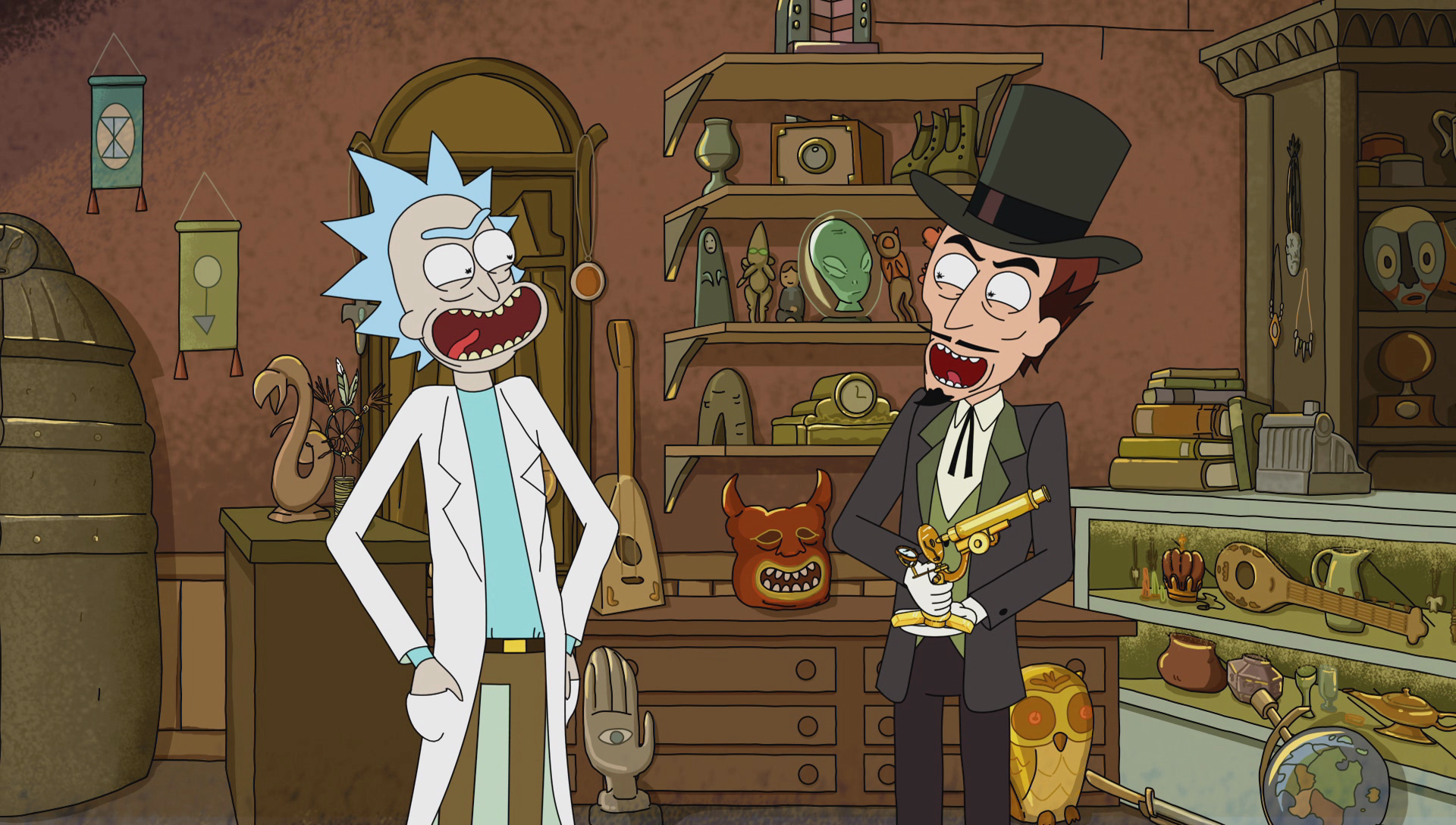
Drunk or sober, Rick will guide you.

Even when Rick Sanchez espouses his nihilistic rhetoric, it seems to hit Jerry and everyone else like him a lot harder. Even if nothing Rick does matters, he’s smart enough and skilled enough to pursue what he wants while minimizing the consequences. Jerry can’t do that. He can only ever react to the random meaningless chaos surrounding him.

Most everyone in the real world is in a similar position. When something crazy happens, be it a natural disaster or a controversial election, there’s little any of us can do about it. A select few, such as lawyers, judges, and other powerful politicians, may be in a position to effect some change. Everyone else is stuck watching, hoping, and living their meaningless lives along the way.

We can react to the meaningless chaos, but we rarely be proactive. If most people had that opportunity, they would likely mess it up in the same way Jerry messed up a simple Meeseeks Box. Even if your intelligence is above average, your credit score is good, and you have no criminal record, you’re still just one person. You can only do so much without a portal gun and a high-tech lab.

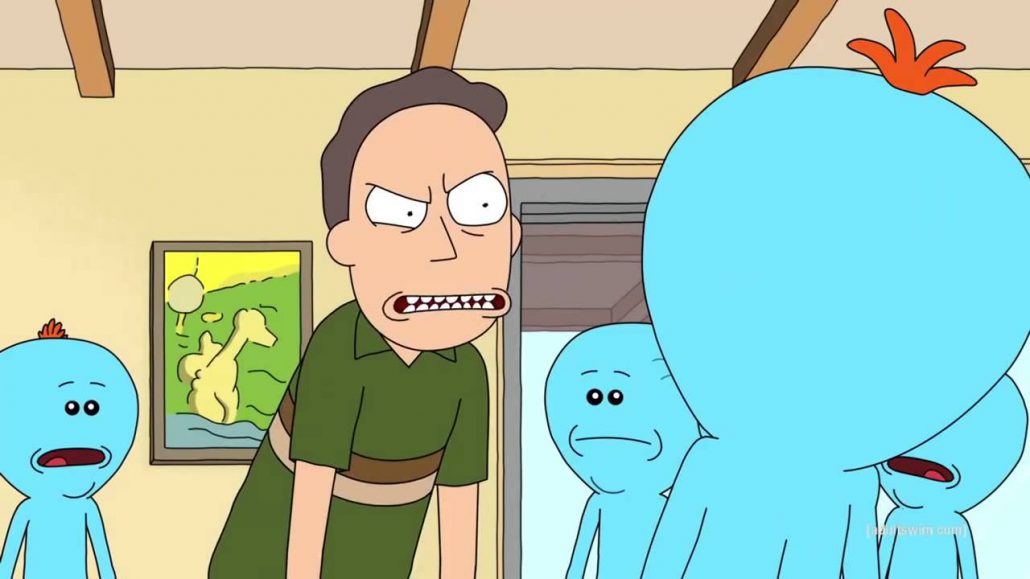
However, it gets even more depressing than that. Throughout three seasons of “Rick and Morty,” Jerry isn’t just shown to be inept whenever faced with a crazy situation. He’s also completely replaceable. This is best demonstrated in the episode, “Mortynight Run,” in which Rick takes Jerry to a special adult daycare center that’s specifically caters to keeping Jerrys from multiple universes safe.

It’s hilarious, but pragmatic for someone like Rick Sanchez because it gives him a place to keep Jerry from undermining his plans. It’s also disturbing how effective it is because as soon as Jerry arrives, he finds himself surrounded by other versions of himself. While upset and insulted, at first, he quickly finds himself enjoying the amenities that are tailor-made to pacify him.

By the end of the episode, it’s hard to tell what separates this Jerry Smith from all the other Jerry Smiths in the multiverse. In the end, even Rick and Morty don’t seem to care which one they take home. One Jerry is as good as any other. He’s basically an interchangeable part that fulfills as basic role and little else.

It’s a role in which many people in the real world find themselves. Modern society, especially after the industrial revolution, has reduced most ordinary people of Jerry Smith’s abilities to that of societal cogs. They’re not individuals as much as they are a mass of humanity that produces, consumes, and provides support for the select few who can achieve the kind of impact of a Rick Sanchez.

More than one episode of “Rick and Morty” has explored how society can dehumanize people and there are plenty of examples in the real world, as well. That dehumanization is just easier to inflict on someone like Jerry Smith. While Rick Sanchez may realize when he’s in a simulation, Jerry likely wouldn’t. In fact, he would be quite comfortable and content in such a simulation.

That’s the ultimate flaw in the character construct of Jerry Smith. By being so unremarkable, he is easy to outwit and even easier to placate. He’s basically a sheep that herders can keep docile just by making sure there’s fresh grass to eat. While Rick Sanchez isn’t always the herder, he and others like him knows how to guide the sheep whenever it benefits him.

Even the Devil is not immune.

Nobody will ever admit they’re just a sheep. People will tell themselves whatever they have to in order to believe that their lives have greater meaning than they actually do. Jerry does this more than once throughout the show. People in real life do so when they carry themselves as the heroic underdogs of their own movie. More often than not, it doesn’t amount to much, which even Morty points out at one point.

Like it or not, most people who aren’t rich, beautiful, or well-connected will always have more in common with Jerry Smith than with any other character in “Rick and Morty.” The number of Jerrys in the world will always vastly outnumber the Ricks. A huge chunk of society is structured around having a vast population of unremarkable, but easily placated Jerrys.

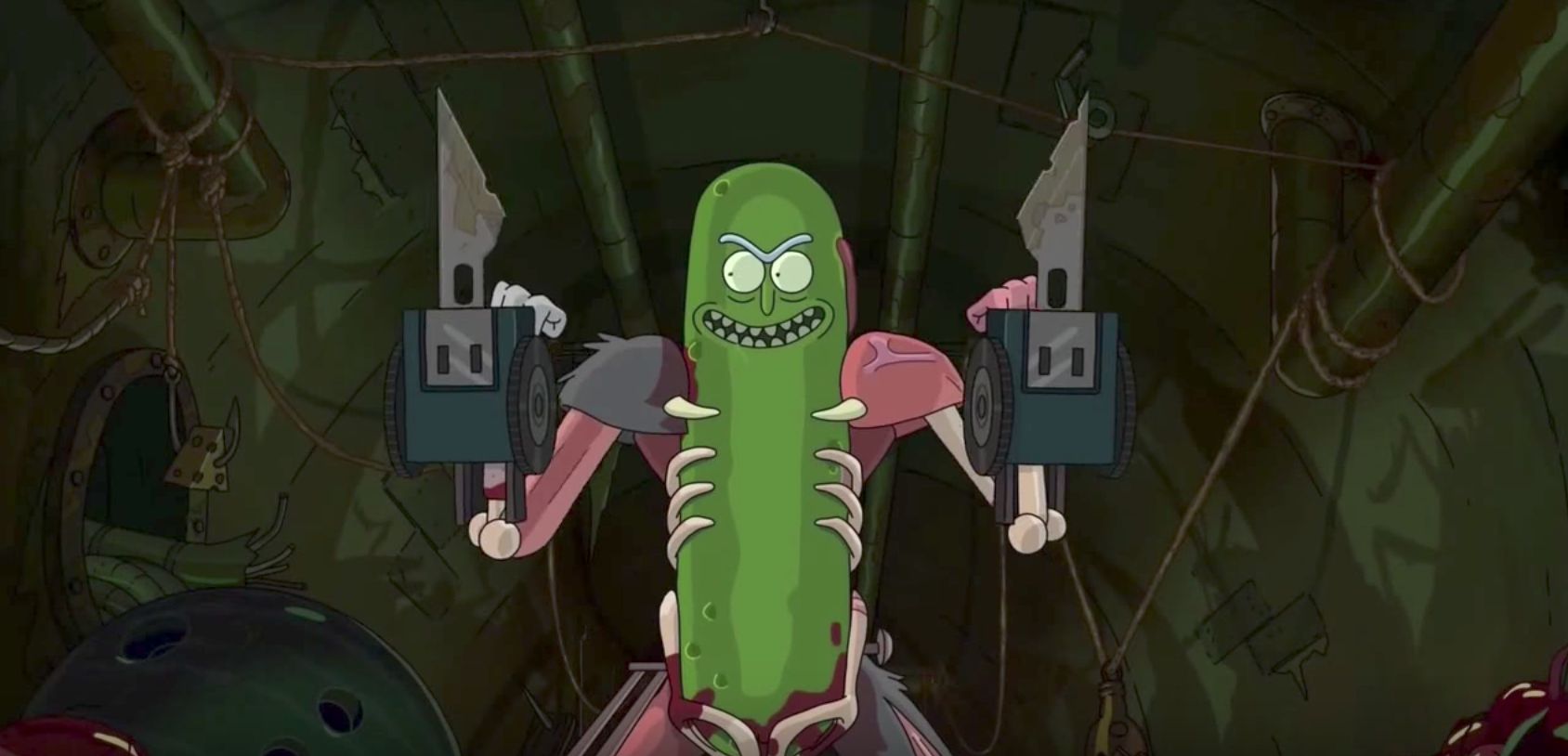
Whether we admit it or not, we are part of that system. We are the Jerrys who act as the cogs while the Ricks act as the operators. We don’t have the resources or genius of a Rick Sanchez so we can’t do much to subvert it. Even Rick can only do so much, even with his immense capabilities, which includes turning himself into a pickle.

It’s a bit depressing, but at the same time, there’s also a strange serenity that comes with the character of Jerry Smith. Even if he isn’t as capable as Rick or his family, he’s still someone who can find contentment and even peace in a chaotic world. Compared to Rick, whose famous catch-phrase masks his own inner pain, Jerry is probably happier overall, despite his meaningless lot in life.

Sometimes, ignorance is bliss, even if we’re oblivious to how ignorant we really are. In the long run, finding happiness will be easier for Jerry than it’ll ever be for Rick. For him, and the countless others who are just like him, the best recourse may be the same advice Rick often gives Morty.

Simply put, just don’t think about it.

2 Comments

Filed under human nature, philosophy, psychology, Rick and Morty, television