Tag Archives: Racism

The Uncomfortable (But Relevant) Truth About The OJ Simpson Trial

This is a video from my YouTube channel, Jack’s World.

In this video, I recount and discuss the famous/infamous trial of OJ Simpson. If you’re around my age, you remember how impactful this was. And to this day, we’re still grappling with the events surrounding this trial.

But now that OJ Simpson himself has passed away, the time is right to confront the many comfortable truths this trial revealed. Enjoy!

Leave a comment

Filed under Current Events, history, Jack's World, politics, real stories, YouTube

Why Hate And Bigotry Always Win Out (To A Point)

This is a video from my YouTube channel, Jack’s World.

This video is about hatred and bigotry. I’ve witnessed it manifest in many forms over the course of my life. It is a dark, disturbing insight into humanity’s collective psyche. But in that same experience, I came to a number of realizations about hatred and bigotry that I wish to share. Hopefully, it broadens everyone’s perspective on the matter.

Leave a comment

Filed under Current Events, human nature, Jack's World, psychology, rants, YouTube

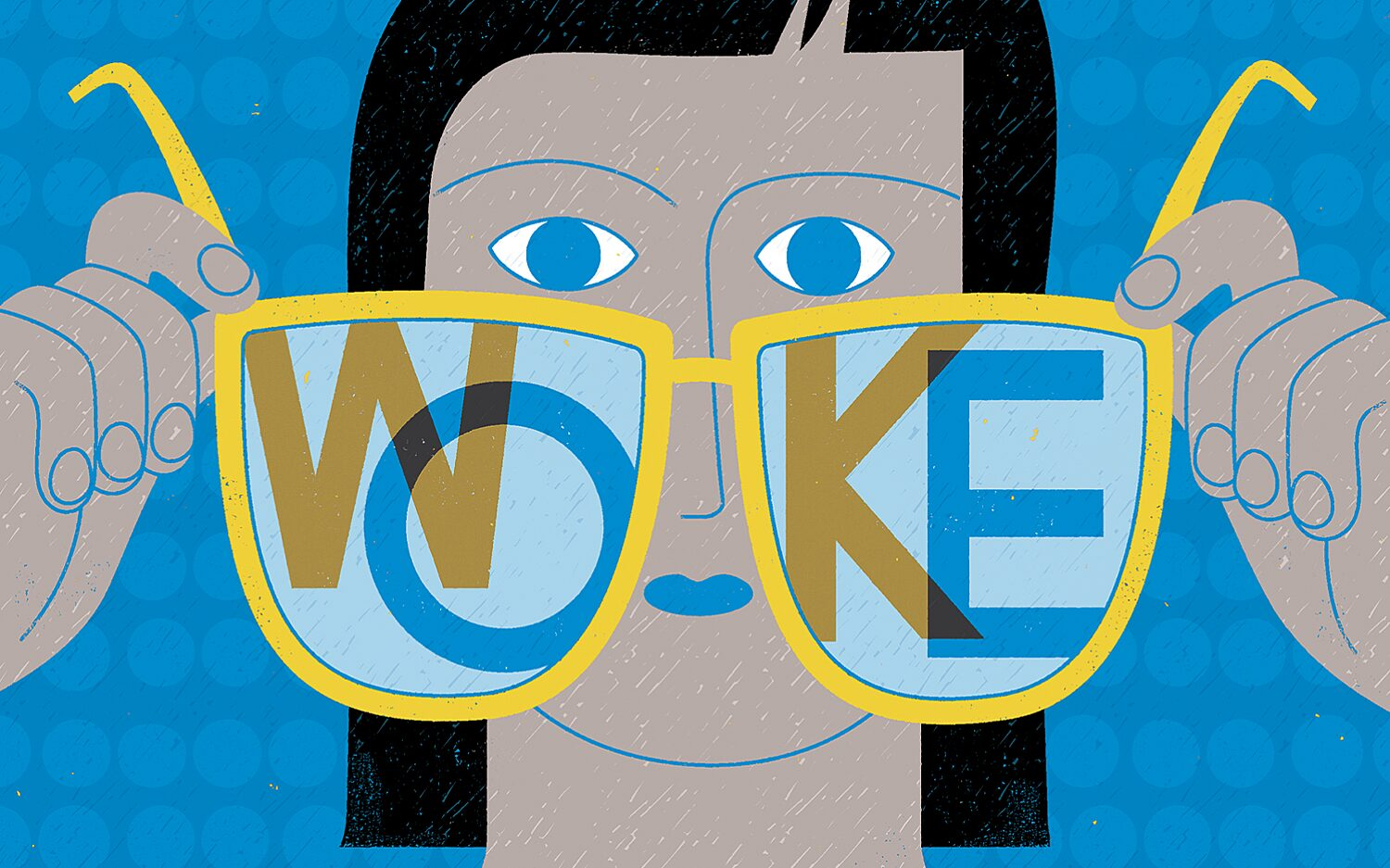
A Brief Note/Rant On The Definition Of “Woke”

As a general rule, I never argue semantics with people. I find those debates to be the least productive conversations in existence. Because when people just argue about the words they’re using, there’s no room for anything of substance. It just devolves into a shouting match between whose definitions are more valid.

This happens a lot in comments sections, political debates, and arguments that get completely derailed. But lately, I feel like it’s happening for even dumber reasons than usual.

One reason, in particular, that keeps coming up has to do with the definition of a very particular word. Now, brace yourself because the word I’m about to use is bound to invite all sorts of anger, vitriol, controversy, and disdain. It’s a word I’ve heard well-meaning people use as often as trolls and grifters. But it’s a word we can’t seem to escape, let alone define.

That word is “woke.”

I know. I just alienated 95 percent of the internet by typing it out. I understand that I just invited the most hateful/idiotic/misguided assholes to endlessly whine about how I’m some sort of agent of a secret cabal bent on destroying Western civilization.

To all those people, go fuck yourselves.

Seriously, fuck off to the end of the multiverse and stay there. You’ll be doing the human race a favor.

But I’m still going to talk about the word “woke” because it’s been thrown around more than empty condom wrappers at a brothel. It’s said at least 100 times a day on right-wing news outlets, usually as an insult or something meant to discredit a certain position. It’s often used by politicians, grifters, trolls, and many other objectively terrible human beings who seek only to harass, demean, and denigrate anyone who commits the high crime of disagreeing with them.

It’s also used by a lot of people who really don’t understand it. Some of those people are entirely well-meaning. I’ve heard my own parents use the word, often with a sense of exasperation and frustration. Now, I love my parents to no end. I even know they visit this website.

But seriously, they do not know what the word means and the way they’re using it is not that different from how asshole trolls use it. So, to that non-asshole contingent that includes parents, friends, and other well-meaning people, I’m here to clear up the definition of woke.

Since nobody will believe me if I cite a dictionary or some other source on the web, I’ll just keep it simple. Brace yourself again because I’m about to reveal the true meaning of woke and it might just make you uncomfortable.

Woke: To be aware of the political, economic, and social injustices within a system and to advocate efforts to rectify those injustices.

Seriously, that’s it. That’s what the word means. That’s what the concept has historically entailed, long before Fox News began using it to bemoan every single policy that dares help someone who isn’t a straight white male billionaire.

It’s just a way of denoting a real understanding about the injustices in the world. Those injustices cut across many walks of life, extending to race, religion, sexuality, gender, and so many other distinctions.

And those injustices are real. You can prove it. You need only look at census data and history books to find it.

Most decent human beings understand that such injustice is wrong. Most also understand that in a fair, just, and civilized society, we should work towards righting those injustices and preserving whatever mechanisms ensure such justice. That helps everyone at every level.

People against such an idea are usually people tend to not want to change things, mostly because the current situation benefits them in some way. Sometimes, they’re just people who want an excuse to not change anything they’re doing, either out of laziness, apathy, or spite. I’m sure there are other distinctions, but I won’t speculate on the particulars.

So, with this in mind, I ask this next question honestly and sincerely.

Are you going to change how you use the word “woke” and how you react to it?

And if not, why?

Seriously, why is it wrong or controversial to be aware of the various injustices in this world?

Why is it wrong to want to try and fix those injustices in some meaningful way?

I don’t deny that some people go about it the wrong way. There’s a time and a place to argue the gender and sexuality of video game characters, but this isn’t it. This is about real injustice in the real world.

And if you understand this concept and still think woke is a bad thing, then I don’t know what else to say other than think hard about what you’re protesting. And if that’s still too much for you, then just fuck off.

2 Comments

Filed under political correctness, politics, rants

Remember The Dream On Martin Luther King Jr. Day

Today is Martin Luther King Jr. Day. It’s a day some take for granted, seeing it just another day off. For others, it’s a solemn reminder of a Civil Rights icon who dared to dream of a more equal and just society. There’s a lot I could say about Dr. King, what he did, what he achieved, and what he stood for. There’s even more I could say about the regressive forces that opposed him, some of which are still very prominent and very dangerous today.

However, I’ll save those words for another time. For this special day commemorating a very special man, I’ll just encourage everyone to listen to his words once more and keep his dream alive.

Leave a comment

Filed under Current Events

Happy Juneteenth (And Why You Should Celebrate It)

Today is Juneteenth.

For a sizeable segment of the American population, it’s a day that carries a special, often personal meaning. That’s because it celebrates the formal end of legal, institutionalized slavery in the United States. For those whose ancestors endured the horrors of slavery and the slave trade, that meaning is impossible to put into words.

While this day has been celebrated in many forms since the end of the Civil War, it only became a federally recognized holiday in 2021. Now, many could argue it took way too long to formally recognized the importance of this day. I certainly understand and appreciate those sentiments. Regardless of how long it took, Juneteenth is here and we, as a country, are finally acknowledging its importance.

I know there are a lot of heated politics surrounding race, history, the Civil War, and minority issues in general. I’m certainly not qualified to discuss those politics, even though I’ve tried. For today, though, I think we should set the politics aside because what this day represents goes beyond politics.

We can’t beat around the bush.

We can’t ignore the facts of history.

For nearly a century after the United States gained its independence from Great Britain, slavery as an institution was both practiced and protected. In a country that espoused life, liberty, and the pursuit of happiness, that is not a trivial oversight.

Slavery, no matter how common it has been throughout human history, is a barbaric practice. It was barbaric in the 1800s and it’s barbaric today. Sadly, the forces of greed, racism, bigotry, outdated traditions, and cruelty keep that practice alive and well. Sometimes it’s sanctioned. Sometimes it’s illegal. Whatever form it takes, though, it’s still unjust.

There’s just no way to properly articulate an atrocity that was allowed to legally fester and propagate for decades in the Americas. The fact it took a bloody civil war to finally end should make clear just how potent those ugly forces can be.

In the end, though, we were able to end the Civil War on the right side of the issue. We, as a nation, were able to accept and declare that slavery was wrong and could no longer be tolerated. It isn’t just barbaric. It’s antithetical to the ideals behind the United States of America.

Yes, we don’t always measure up to those ideals.

Yes, we still haven’t fully mended the wounds left by centuries of the slave trade.

That’s exactly why we need a holiday like Juneteenth. It doesn’t just celebrate how we were able to take this critical step in righting an egregious wrong. It reminds us that we’re still striving towards those ideals. We’re still trying to be the kind of nation that breaks the shackles of bondage rather than tighten them.

Sometimes, we make mistakes.

Sometimes, we encounter setbacks.

Sometimes, we’ll even outright fail in our efforts to pursue those ideals.

Even so, we can never lose sight of them. We should never stop striving for them. That’s what it means to learn, grow, and evolve as a nation. I believe we can continue to do better and Juneteenth is a way of reminding ourselves that we can be better.

So, in that spirit and with those ideals in mind, I wish everyone a safe and happy Juneteenth.

Leave a comment

Filed under Current Events

Happy Martin Luther King Jr. Day

Today is Martin Luther King Jr. Day. It’s not just another national holiday. It’s an opportunity to remember just how far we’ve come as a nation reconciling with its unjust past and how much further we have to go in realizing one man’s dream. Regardless of your politics or attitude, take advantage of that opportunity today. The past cannot be changed, but the future can be molded.

In that spirit, please take a moment to re-listen to Dr. King’s legendary speech, if only to keep that dream alive.

Leave a comment

Filed under Current Events, politics

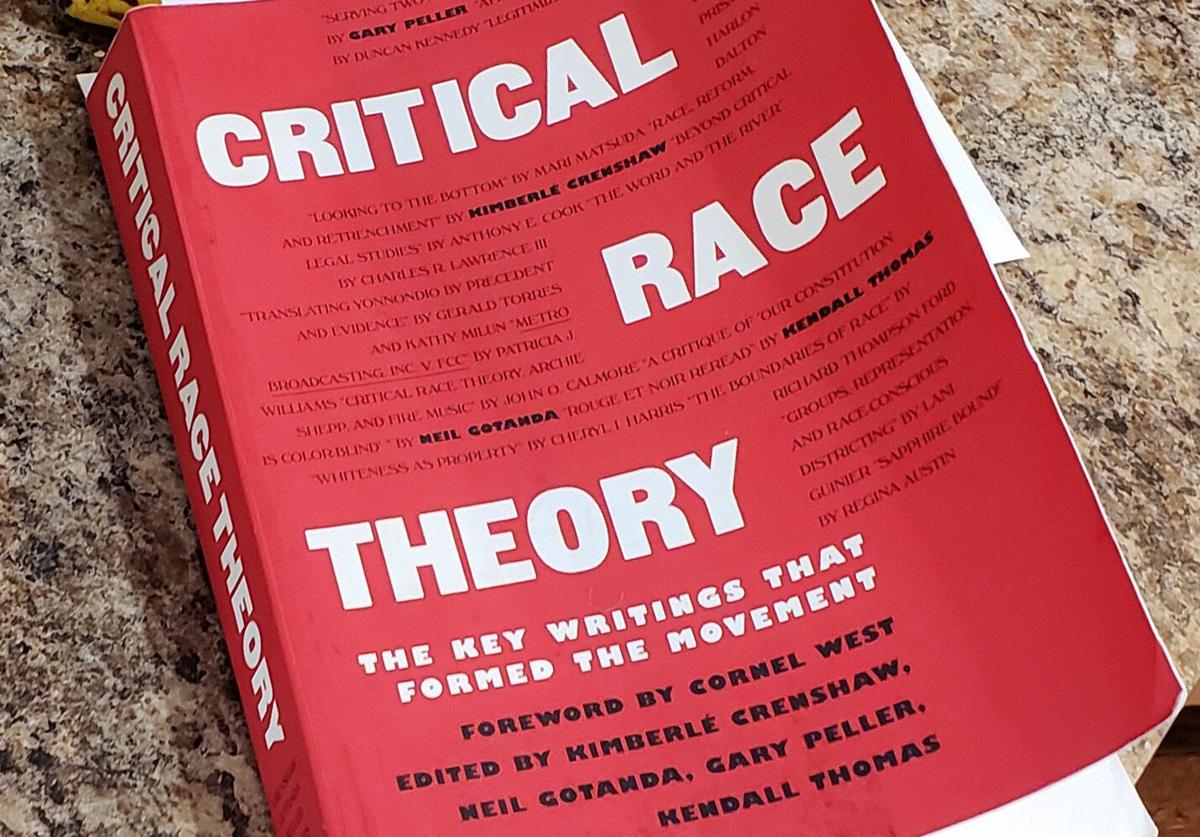
A (Sincere) Question To Critics Of Critical Race Theory

Sawicky: Critical Race Theory is not what its critics suggest it is |  Community Views | loudountimes.com

In general, I try not to wade into a hot button political topic until the rhetoric has become less heated. I think it’s rarely productive to throw your voice into the fray when everyone is still shouting their talking points at the top of their lungs. I know I’ve weighed in on political issues in the past, but I’ve tried to do so from a broader, bigger picture perspective.

Sometimes, though, it’s too hard to wait for everyone to stop shouting. In certain instances, the extent of that shouting is symptomatic of a larger mentality. It’s not just about the topic that’s relevant. It’s the general sentiment, passions, and feelings surrounding it.

Not too long ago, it was social justice and feminism.

Before that, it was same-sex marriage.

Before that, it was civil rights and sex discrimination.

Go back far enough and you’ll see similar discourse. When an issue is very relevant, it brings out both heated rhetoric and the prevailing attitudes of the time.

Today, I get the sense that Critical Race Theory has become that issue. Whenever people talk about it, their political tribalism rears its head and it’s neither subtle nor pretty. While I don’t doubt this issue will eventually pass to make way for the next one, it’s something worth touching on.

At its core, the particulars of Critical Race Theory aren’t that radical. If you look it up on Wikipedia, it doesn’t sounds wholly unreasonable. It’s simply a study to evaluate how social, culture, and legal traditions have impacted larger institutions and social systems.

As a social science, it’s hardly revolutionary. These are concepts that social scientists have been studying for decades. The main difference with Critical Race Theory is its emphasis on race, especially those pertaining to the African American community. After what happened with the murder of George Floyd in 2020, it only grew in relevance.

Now, I’ve stated before that we, as Americans, should not avoid the less flattering parts of our history. Acknowledging past mistakes doesn’t make you any less patriotic. It just offers a larger perspective towards certain American ideals.

However, that’s a point that those protesting Critical Race Theory don’t seem to harbor. Ever since the George Floyd protests erupted last year, this theory has been attacked and protested on multiple levels. In general, I try to sympathize and empathize with the passions of these people. They are my fellow Americans, after all. I believe they have a right to voice those passions.

At the same time, I cannot help but groan and cringe. I also genuinely wonder if they understand the full implication of what they’re arguing.

It’s true that Critical Race Theory has some distressing implications. Beyond acknowledging America’s racist past, it further complicates efforts to create a more just society. Addressing the transgressions of the past is not as simple as passing a few pieces of landmark legislation.

The system, as it functions now, is still very flawed. Fixing it may require greater effort, as well as a larger cost. Many people, who likely believe in themselves to not be racist, are bound to have a problem with that. They see it as an agenda, one that will label them and their children as a racist by default.

Whether or not that’s a reasonable concern is beside the point. I won’t claim to know what those protesting Critical Race Theory are truly thinking. I’m not psychic. However, in reviewing all this heated discourse, I’d like to offer a simple question to these people. It’s a sincere question and one I ask you consider seriously.

Why do you oppose teaching or discuss one particular idea over the other?

With that in mind, take a step back and look at this without Critical Race Theory being the main subject. Now, take a moment to appreciate what you’re asking of society, at large. You’re saying this idea that you think is wrong or flawed should not be discussed.

Even if you think it shouldn’t be discussed outside certain fields, you’re still making a statement. This is a dangerous idea and it shouldn’t be discussed, especially with children. Even in a country like America, which espouses the value of free speech, you’re arguing for an idea to be censored or suppressed.

Now, I don’t doubt there are some horrible ideas out there. Some are legitimate precursors to violence. That’s why organizations like the Ku Klux Klan are rightly vilified and prosecuted. Except, Critical Race Theory is nothing like that. So why, in that context, does it warrant so much outrage? Again, it’s a sincere question and I’d like to get a sincere answer. Please explain your reasoning in whatever way you see fit.

1 Comment

Filed under Current Events, history, human nature, outrage culture, political correctness, politics

A Brief Message For Juneteenth 2021

Metro Parks observes Juneteenth holiday - Metro Parks Tacoma

History is full of dark, distressing moments. It doesn’t matter who you are, where you live, or what your country’s history entails. Wars, famine, disease, atrocities, bigotry, and oppression are part of our collective narrative. We are flawed, imperfect beings trying to navigate an equally flawed, grossly imperfect world. It’s a challenge and, like any challenge, there are missteps and failures.

By every measure, slavery was a dark moment in that narrative. In America, it is a sad, painful stain on its history. It certainly wasn’t the first country to practice slavery, nor was it the twentieth. However, the very concept of owning another human being stands in stark contrast to the ideals of life, liberty, and the pursuit of happiness on which the country was founded.

It took 80 years after the American Revolution to officially end slavery, but doing so required a bloody civil war that killed over 600,000 Americans. Even after it ended, the struggle for justice didn’t stop. Conflict continued in the form of racism, segregation, and white supremacy. Parts of that conflict still continue to this day.

However, where we are now is far better than where we’ve been. No matter how many dark moments our history contains, they’re often contrasted by moments of triumph. The America of 1860 probably never thought slavery would end. The idea that we would have the level of social and legal equality we have today might have been unthinkable.

What once seemed impossible is now real. Things are far from perfect, especially with respect to race relations, but they stand in stark contrast to where we once were. As Dr. Martin Luther King Jr. once said, “We shall overcome because the arc of a moral universe is long, but it bends toward justice.”

That’s the spirit I encourage everyone to embrace today. On this day, on Juneteenth, now set to become an official federal holiday in America, let’s take a moment to appreciate just how far we’ve come. At the same time, we cannot forget how much farther we have to go. Even if that arc Dr. King mentions is long, the extent to which we bend it towards justice is our choice.

Moving forward, let us choose wisely.

Leave a comment

Filed under Current Events, politics

Why We Should Teach The Uglier Parts Of History (And Why Avoiding It Is Pointless)

Tulsa Race Massacre Sidelined Legacy of Black Wealth in Greenwood - WSJ

I am an American.

I am proud to be an American.

There’s no other country I’d want to be born in.

I say all while also acknowledging that America isn’t perfect. I’ve taken plenty of history classes, both in high school and in college. I’ve also sought out information about America’s past and the facts are clear. The United States of America does have some undeniably dark moments in its history. Some could be classified as outright atrocities.

It’s not wrong to state that those events happened and they were awful. In fact, I believe it’s critical for any country, nation, or community of any kind to admit their past failures and flaws. We cannot learn, grow, or improve as a society if we ignore those less favorable parts of our history. If we only ever know the good stuff, then we have no reason to improve and that only breeds complacency, arrogance, and stagnation. That’s something the world needs less of.

This brings me the controversy surrounding critical race theory. I know that just uttering that phrase in passing these days is sure to draw ire from certain crowds, some more so than others. In general, I try to avoid touching on topics like this when the outrage machine is still going full-throttle. Even when I do discuss something controversial, like abortion, I try to focus on the bigger picture.

Now, the specifics of critical race theory are too vast for me to get into. I’m certainly no expert, nor would I ever claim to be. I encourage people to investigate it themselves on Wikipedia. However, do not seek sources from the likes of PragerU, the Heritage Foundation, or any information source that claims to espouse the “truth” about Critical Race Theory.

They’re just right-wing propaganda pushers who are lying to you on behalf of their donors. They are not credible on this matter.

While I don’t see Critical Race Theory as being completely neutral either, it does have some relative themes. It gives greater scrutiny to how racism and past racist policies in America have had lasting effects on minority communities, even after the progress made during the civil rights movement.

That’s not an unreasonable approach to studying the past and present. After all, it’s undeniable that racism and its past effects still exist. If you deny that, then you’re just denying reality outright. Certain aspects of racism can’t be resolved by simply passing a law or enacting a certain policy. People and societies are just too complex.

Now, the way in which Critical Race Theory scrutinizes these issues isn’t perfect. In terms of analyzing and making sense of history, I think it doesn’t paint the clearest picture in terms of America’s racist past and how that past affects the present.

That said, I support it being taught or, at the very least, explored within a school. I think this is something we should teach kids and young people about in order to get them thinking about history, race, and the society in which they live. At the same time, I also think it exposes a critical element with respect to appreciating history and its many lessons.

The reason I’m bringing it up now is two-fold. Firstly, I think those protesting it are absurd and their reasons for criticizing critical race theory are equally absurd. Some are going so far as to try and ban it. Instead, they favor a more “patriotic” education for school age children. I put “patriotic” in quotes because there’s nothing patriotic about it. It’s just pure propaganda, plain and simple.

A true patriot doesn’t need propaganda to be proud of their country.

A true patriot loves their country, despite their flaws. Just like you do with someone you love, you don’t ignore those flaws and use them as motivation to be better.

The second reason I’m bringing it up has less to do with the political rhetoric surrounding Critical Race Theory. It’s being framed as though this is somehow redefining the story of America. It’s seen as somehow diminishing America’s greatness and ideals. Those who are blindly patriotic or excessively nationalistic are going to have a problem with that.

Now, blind and excessive nationalisms is a problem all its own. I won’t get into that, but I do feel that it highlights another important point about protesting new forms of study. In essence, those complaining about Critical Race Theory are working against their own agenda. They seem to forget that the internet still exists.

It doesn’t matter if efforts to ban Critical Race Theory succeed. It doesn’t matter if every American textbook removes all mentions of slavery, Jim Crow, Japanese internment camps, or atrocities committed against Native Americans. That information is still out there. It’s on the internet and it’s easy for anyone with an internet connection to find.

In fact, by outright banning or opposing certain studies of history, it may only raise greater interest in it. Like it or not, people are going to get curious. Tell kids and teenagers that they should never learn about Critical Race Theory is only going to make them more curious. So long as they still have an internet connection, they will find that information.

That’s exactly why I’m in favor of teaching history that explores, analyzes, and dares to extrapolate from the uglier parts of history. It can do more than educate. It can also help us come to terms with our flaws and inspire us to be better.

A good example of this is the recent relevance of the Tulsa Race Massacre. There’s no getting around it. This event was a horrendous moment in American history and one that reveals just how ugly racism got in this country. Growing up, I never learned about this event. Most people probably never would’ve learned about it, had it not re-entered the news amidst recent pushes for racial justice.

This moment in history was awful. There’s no getting around that. Even if you’re an American who wasn’t alive during this event, we should still acknowledge it. We should still learn from it. That’s how we’ll get better. The past has so many painful lessons and we’ll never learn those lessons if we try to gloss over them.

2 Comments

Filed under Current Events, history, outrage culture, political correctness, politics

Artificial Intelligence Is Struggling With Racism (And The Larger Implications)

There’s no doubt that artificial intelligence will fundamentally change the world. Its potential is so vast that some even say it will be mankind’s last invention. Once it gets to a certain point, it won’t just be better at everything humans do. It may very well supplant humanity as the dominant life form on this planet. There are no shortage of movies that depict how dire that could be.

That said, it’s bound to go through some growing pains. Not all of those pains will involve a Skynet-level malfunction, but they will warrant concern.

At the moment, our artificial intelligence is still limited. It’s not dumb, but it’s very limited. It can do certain tasks very well, like play chess or win Jeopardy. It can’t apply that intelligence at a broader macro level like a human.

That still makes them useful and they’re still advancing rapidly. Artificial intelligence programs are used frequently for tasks like moderating comments sections and tracking sales data. The problem with these programs is that, since the AI is not generally intelligent, humans have to fill in the gaps. Since humans are flawed and bias, those traits sometimes find their way into the AI.

That’s what happened recently with YouTube’s comment moderation algorithms. As an aspiring YouTuber, I know how imperfect those algorithms can be. The intentions are noble. These AI programs are supposed to curtail hate speech. The internet needs that right now. Anyone who has ever visited 4chan knows that.

However, sometimes the AI systems are so narrow that they don’t ese the forest from the trees. That’s what happened recently when those systems mistook discussions about chess for racist language. Tech Xplore did an article on it and while it’s somewhat humorous on the surface, it’s also quite revealing.

Tech Xplore: AI May Mistake Chess Discussions as Racist Talk

“The Queen’s Gambit,” the recent TV mini-series about a chess master, may have stirred increased interest in chess, but a word to the wise: social media talk about game-piece colors could lead to misunderstandings, at least for hate-speech detection software.

That’s what a pair of Carnegie Mellon University researchers suspect happened to Antonio Radic, or “agadmator,” a Croatian chess player who hosts a popular YouTube channel. Last June, his account was blocked for “harmful and dangerous” content.

YouTube never provided an explanation and reinstated the channel within 24 hours, said Ashiqur R. KhudaBukhsh a project scientist in CMU’s Language Technologies Institute (LTI). It’s nevertheless possible that “black vs. white” talk during Radi?’s interview with Grandmaster Hikaru Nakamura triggered software that automatically detects racist language, he suggested.

Now, should we be concerned? Is it worrying that an AI with the backing of Google couldn’t surmise that simple terms like “black vs. white” were referring to chess and not race relations?

The short answer is not really.

The longer answer is not really, but we should learn important lessons from this.

The AI systems that moderate YouTube comments are nowhere near the kinds of systems we’d see in an artificial general intelligence. It’s like comparing a steam engine to a modern rocket. That said, we had to learn how to make a damn good steam engine before we could learn to make a decent rocket.

With something like advanced artificial intelligence, the margin for error is very small. You could even argue there is no margin for error. That’s why so many worry that such an AI could be an existential threat to humanity. If its too flawed to understand the difference between chess and racist rhetoric, then we could be in serious trouble.

The problem, in this case, isn’t with the nature of the AI. It’s with us, its creators. Since we humans are so flawed, racism being one of our worst flaws, it’s understandable that this sort of thing would find its way into our programming. It already has in a number of fields.

Again, those types of systems are limited and narrow. There’s a lot of room for human flaws to enter the system.

With advanced AI, those flaws could end up being extremely damaging. If too many of them find their way into a more advanced AI, we wouldn’t end up with a helpful, usable system. We’d end up with something like Skynet or Ultron. At that point, we’d be in serious trouble and we wouldn’t be able to rely on John Conner or the Avengers to save us.

We still have time. This latest issue with YouTube’s algorithms is minor, in the grand scheme of things, and fairly easy to correct. Once we get around to creating more advanced systems, though, we need to be aware of these flaws. We need to remember that any advanced AI we create will reflect our best and worst qualities. Let’s make sure our best win out in the long run.

1 Comment

Filed under Artificial Intelligence, technology, YouTube