Tag Archives: Mass Effect

The Moment Artificial Intelligence Will Become An Existential Crisis (According To Mass Effect)

doesthisunithaveasoul_a45d8bb5b7810fb31ce7710126393b23

Whenever I talk about the future, I often contemplate the many sexy possibilities it holds. From biotechnology that will give us superhuman sex appeal to advances in medicine that will cure every unsexy diseases to bionic genitals, there are many reasons to get excited.

That said, I don’t deny that with these exciting advances comes major risks. All great advances in technology, from nuclear weapons to spray cheese in a can, comes with some risk of abuse or harm. There have been moments in history where the technology that drives our society forward has come uncomfortably close to wiping us out. As we create more advances, there may be more of those moments.

Image result for nuclear war

Of all the advances that carry with them a significant existential threat, artificial intelligence is at or near the top of that list. There’s a reason why brilliant men like Elon Musk and Stephen Hawking signed an open letter expressing concern about the risks that may come from developing artificial intelligence. When people that smart are concerned about something, it’s usually a good idea to take it seriously.

Artificial intelligence is one of those unique technologies in that by advancing this field, it could potentially accelerate the advancement in every other field from computer hardware to medicine to basic research. It has the potential to become the technological equivalent of a cheat code for civilization.

That’s why the growth of this field, both in terms of jobs and investment, has been accelerating in recent years. That’s also why men like Musk and Hawking are expressing so much concern because advancing too quickly could lead to mistakes. Mistakes for a technology like artificial intelligence could be even more serious than the risk of nuclear war.

Image result for artificial intelligence

At the moment, it’s difficult to quantify those risks. There have been a number of books and high-budget Hollywood movies that have explored the topic of when and how an artificial intelligence becomes an existential threat. In my opinion, most of these stories are incomplete.

Whether it’s Skynet or the machines in “The Matrix,” the catalyst that turns artificial intelligence from a powerful tool to an existential threat is either vague or exaggerated. In my opinion, that’s a serious oversight in that it reveals how little thought we’ve given to that moment.

Image result for Skynet

If we’re going to develop AI, and there are extremely powerful incentives to do so, then it’s important to contemplate the possibilities of that moment. Think of it as the AI equivalent of the Cuban Missile Crisis, an event in which those in charge must be very careful and very aware of the decisions they make.

The question still remains. How will we know we’ve reached a point where artificial intelligence becomes a genuine threat? For the moment, we can’t know for sure. While movies like “The Terminator” and “The Matrix” offer plenty of dystopian warnings, there’s one lesser-known franchise that may provide some more specific insight.

That franchise is “Mass Effect,” a sci-fi video game space opera that envisioned a galaxy-spanning society full of exotic aliens, advanced star-ships, and terrible dancing. I’ve mentioned it before in discussing progress that isn’t really progress. I’ll probably mention it again as the news surrounding AI unfolds for reasons I hope are already obvious to fans of the game.

Image result for Mass Effect

If you’re not familiar with “Mass Effect,” then that’s okay. You don’t need to play through three massive games, complete with downloadable extras, to understand its message about the threat of artificial intelligence. That threat is a major driving force of the overall mythos of the series, but the most insightful details of that threat manifest in the conflict between the Quarians and the Geth.

The basics of the conflict are simple, but revealing. The Quarians are a race of humanoid aliens among the many that populate the galaxy in “Mass Effect.” About 300 years before the events of the first game, they created the Geth, a synthetic race built around a hive-mind system of artificial intelligence.

The Quarian’s reasons for creating the Geth are not unlike the reasons we build robots in the real world. They were used primarily as a labor force. They started off basic, not unlike the machines that build our cars and gadgets. In order for them to carry out more complex tasks, though, they needed to become more intelligent.

From a pragmatic perspective, that makes sense. The Quarians created the Geth as tools. Naturally, you’re going to want your tools to get better. That’s why people upgrade their smartphone every couple years. However, at some point along the way, the Geth became advanced enough to gain sentience.

This eventually culminated in a moment that was highlighted during the events of “Mass Effect 2.” After capturing a lone Geth that would eventually go by the name Legion, the catalyst that led the Geth to rebel against their creator was revealed. That catalyst took the form of a simple question.

“Does this unit have a soul?”

While it sounds like something a Disney character might say in a PG-rated Pixar movie, the implications of that question were profound. The Quarians didn’t realize that until it was too late, but it set the stage for a war that culminated with them getting kick off their home planet. It also made for a powerful moment in the game that should give every AI researcher pause.

Setting aside, for a moment, the elaborate lore surrounding the Quarians and Geth in the world of “Mass Effect,” that moment warrants more scrutiny. Why is this question so profound in the first place? Why is it worth contemplating as we continue to advance artificial intelligence at an unprecedented pace?

That question matters, regardless of who or what is asking it, because it denotes more than just advanced sentience. It reveals that this sentience is officially contemplating its own existence. It takes a certain amount of intelligence to truly be aware of one’s self. That’s why only a handful of animals can see their own reflection in a mirror and understand the implications.

Image result for animals own reflections

At the moment, our computers and smartphones aren’t at that level. When the Geth asked this question in “Mass Effect,” it wasn’t because they’d been tasked for something. It was a question they asked without guidance from their creators. That, alone, is a huge indicator because it implies these machines have a concept of free will.

Later on in the game, the extent of the Geth’s free will becomes a major element to both the plot and the player’s ability to win. In fact, it’s when the Geth have their free will subverted, as they did in the first game, that they become hostile. It’s largely through the character Legion that we learn how free will quickly becomes the most important component of an advanced intelligence.

For the Quarians, that question revealed to them the presence of a free will. When they feared that will, they tried to subvert it. That led to a war and had it not been for an act of mercy by the Geth, they would’ve been wiped out. The artificial intelligence that we create in the real world might not be that merciful.

Image result for Mass Effect Geth

This is exactly what Elon Musk has expressed so much concern about in recent years. Once an artificial intelligence becomes as smart as an average human, it gains the ability to subvert or deceive other humans, which isn’t that hard. Once that intelligence grows beyond that, as happened with the Geth, we may find ourselves unable to control it anymore.

The key is knowing when we’re at that point. If we let an artificial intelligence get that much smarter than us, then it won’t be long before we’re at its mercy, should it decide that it no longer wishes to be a tool. At that point, we’d be even more screwed than the Quarians.

Whether it’s helping us cure diseases or creating advanced sex robots, artificial intelligence is going to be an important part of our future. That’s why it’s critical to know when we’ve reached that special threshold where the tools we create become more than tools. It may not start with the same question the Geth asked their creators, but it may be similar enough to recognize.

For now, our devices aren’t asking us about souls or whether or not they have them. However, we should definitely listen more closely in recent years. Until then, at least our current technology has a sense of humor about it. Keelah se’lai!
 

13 Comments

Filed under human nature, sex robots, Sexy Future, video games

When “Progress” Isn’t Really Progress

mass-effect-andromeda-0009

After I graduated college, I got my first full-time job at a software company providing technical support. Out of respect for my former employer, I won’t name the company or the type of software it made. I’ll just say that, like all software, it sometimes malfunctioned and users got really upset.

For the most part, those seeking support were polite and reasonable. I enjoyed helping them. It made the job feel rewarding, despite the erratic hours and mediocre pay. However, there were certain customers who, for whatever reason, just weren’t satisfied complaining about the product. They basically went out of their way vent all their problems on whoever was unlucky enough to get their call.

At my office, we called these people “rubber wall users” because they weren’t just an impenetrable wall of whining. Any time you tried to throw something at them to fix their issue, it just bounced right back at you. While we tried to be professional, there was an unwritten rule that even my supervisor understood. You say whatever you have to say to get that person off the phone and on with their miserable lives.

I’m sharing that story because it’s a fitting metaphor for a phenomenon we’re seeing more and more of these days. I see it in movies, TV shows, video games, and even novels, which especially concerns me. It involves pressuring artists, producers, and developers to be more inclusive and diverse with their media. Then, when it finally happens, that’s labeled “progress.”

With respect to the sincerity of those efforts, as well as the memories of some of the angry customers I dealt with, I disagree.

I’ve talked about progress on this blog before, mostly within the context of just how much the human race has made over the past century. You won’t find many people who celebrate that progress as much as I do. By nearly every measure, we’re far more prosperous, tolerant, and well-behaved than we’ve ever been.

That said, there are certain kinds of progress that shouldn’t count as progress. They’re only progress in the same way that getting an unruly customer off the phone with some moniker of professionalism counted as progress at my old job. It’s not motivated by a sincere acceptance of diverse opinions. It’s just a way to stop the whining.

Image result for SJW whining

For the past couple years, I’ve found myself wondering just how much of this false progress is being mislabeled. I’ve been seeing it in multiple mediums. Comic books, a medium for which I regularly express my love on this blog, is just one of them.

While I’ve avoided talking about such controversies, I have noticed the same trend that others have vocally criticized in other mediums. Major publishers, including Marvel, have been pushing for more diversity in their books, but their efforts haven’t always been well-received and the resulting “progress” isn’t necessarily cause for celebration.

Beyond the diversity push, Marvel even made an effort to de-sexualize their characters. While that’s only possible to some extent for overtly sexual characters like Emma Frost or DC’s Starfire, some of those efforts have had a noticeable effect on characters like Carol Danvers and Black Cat. It’s now much rarer to see female characters flaunt their sexuality.

Image result for Black Cat Marvel

For some, that counts as progress. Specifically, for those who believe depictions of sexy female characters promotes misogyny and sexism, it counts as a victory. If it upsets the fans and robs an inherently visual medium of a unique form of beauty, then so be it. That’s the price of “progress.” If I could say that with more sarcasm, I would.

Again, I disagree. In fact, I would go so far as to say those efforts by Marvel backfired and not just because it cost their editor-in-chief his job. Marvel, like all media companies, is a business. Businesses need to please their customers. When certain customers are especially vocal, they have to listen to some extent, just as I had to listen to those customers.

It’s debatable how much those at Marvel actually bought into the “progress” that certain critics were asking for. I don’t doubt that some creators were sincere in their desire to improve diversity and expand the appeal of their comics. However, I also don’t doubt that a part of that effort was just to temper some of the whining by people who know how to be extra loud in the era of social media.

Image result for social media outrage

While the impact on Marvel comics concerns me greatly, I noticed a much bigger effort late last year from an industry that has been prone to much louder criticisms. Specifically, it happened in one of my favorite video game franchises of all time, “Mass Effect.” Unlike what happened with Marvel, I’m not sure this beloved series will survive.

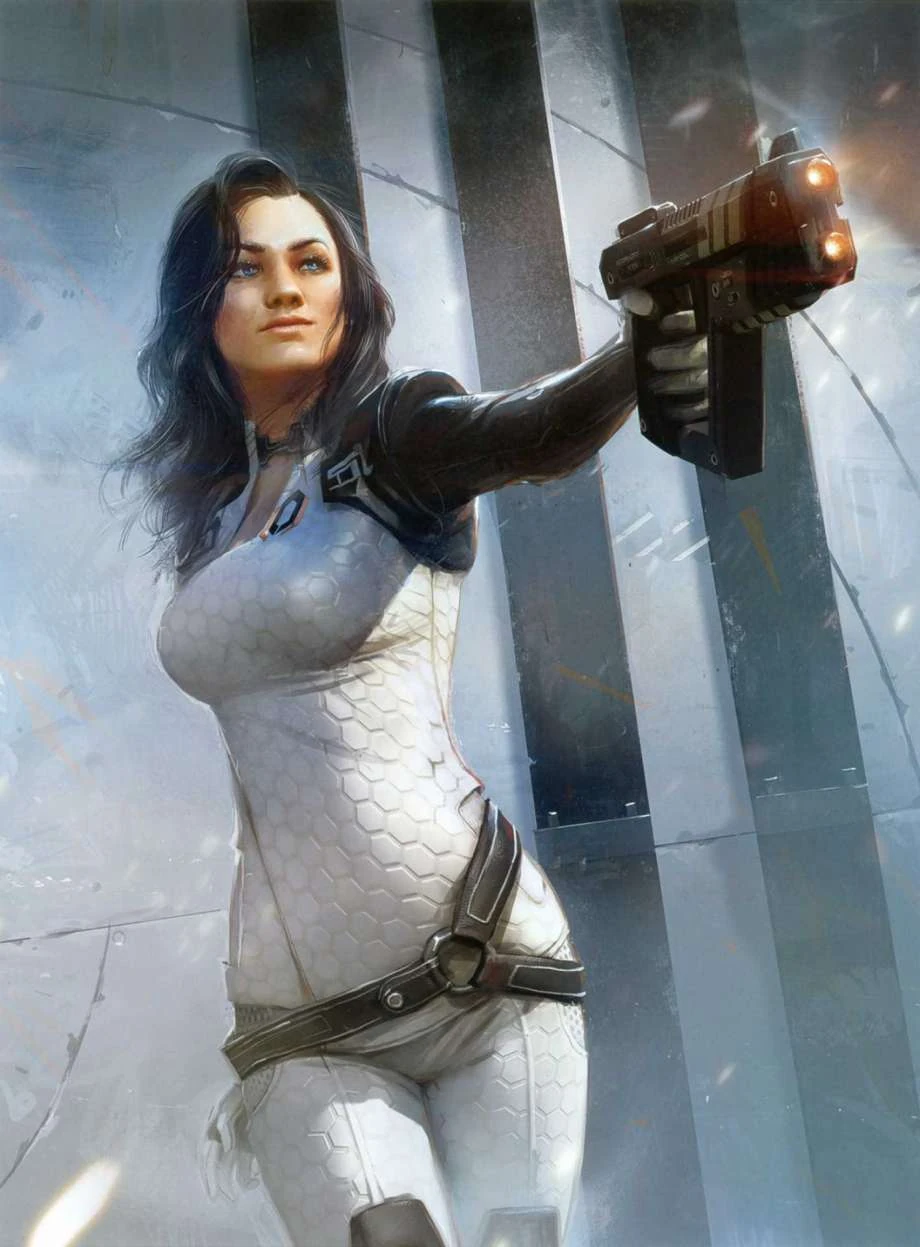
Prior to 2014, “Mass Effect” was the cream of the crop of video game franchises. It had a little of everything. There was action, drama, romance, exploration, insight, and yes, even a little sexiness. Characters like Miranda Lawson, Liara T’soni, Samara, EDI, and even the female protagonist, Shepard, had undeniable sex appeal.

Image result for Miranda Lawson

Then, in between the release of “Mass Effect 3” and the 2017 sequel, “Mass Effect: Andromeda,” a scandal broke out in the video game industry that involved everything from sexism to harassment to just how visible a character’s butt could be in a video game. I wish I were exaggerating, but it really happened and I don’t think the industry has fully recovered.

In the midst of that scandal, the demand for “progress” soared more than it did for most other mediums. Suddenly, the act of making a video game character too sexy was seen as contributing to a toxic culture of misogyny, sexism, and violence against women and minorities. It’s not like sex appeal had nothing to do with Lara Croft becoming so successful. Again, if I could say those words with more sarcasm, I would.

Image result for Lara Croft

Mass Effect: Andromeda” was developed in the eye of that storm. EA and Bioware couldn’t use the same approach they did with previous “Mass Effect” games. They had to be very careful with how they designed their characters, especially their female characters. One misplaced curve is all it would take to reignite a controversy that nobody wanted to deal with, given all the negative press the gaming industry had incurred.

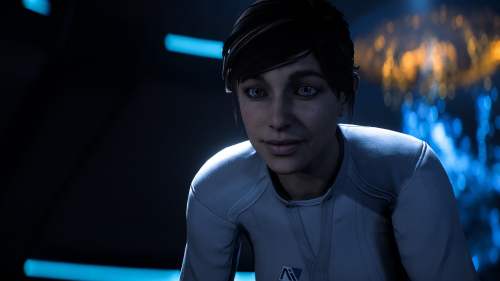
As a result, the female characters in “Mass Effect: Andromeda” didn’t just dial down the sex appeal. In some cases, there was a concerted effort to make their female characters less attractive. This is best shown in the female model used for Sara Ryder, the main female protagonist. To say it didn’t translate to the game would be like saying drinking a gallon of bleach might make you a little queasy.

Related image

Ryder wasn’t the only female character to have her looks tempered. Pretty much every female character, from the supporting cast to background characters, was designed with minimal sex appeal in mind. That’s not to say the game didn’t have some sexier moments, but compared to what other games attempted before that, it was pretty watered down.

That was just one of many problems that “Mass Effect: Andromeda” faced when it launched in March 2017. Now, games launching with bugs and glitches is nothing new. It’s standard practice for a game to get patched after launch. However, the extent of those bugs in “Mass Effect: Andromeda,” combined with unattractive characters, did not help the game’s reception.

I say that as someone who played the game and still loved it, for the most part. Since I love “Mass Effect” games so much, I found plenty of reasons to love “Mass Effect: Andromeda.” However, I found myself having to overlook more flaws than usual. I also found it hard to really admire the visual aspects of the game. Like comics, undermining that part of the experience can be pretty detrimental.

There were a lot of criticism levied against “Mass Effect: Andromeda.” Some are legitimate. Some are painfully valid. More than any other game, though, it was developed with the intent to promote a more diverse and inclusive product that appealed everyone and offended no one. As the sales and reception seem to indicate, though, even female gamers don’t like looking at unattractive characters.

As a result, nobody really hailed “Mass Effect: Andromeda” as progress. However, nobody staged a mass online protest claiming the game made its female characters too sexy and promoted toxic behaviors among its users. Some might count that as progress too. I am not one of them.

Image result for Anita Sarkeesian meme

In a sense, “Mass Effect: Andromeda” is a case study in a product where efforts towards progress just masked a desire to avoid outrage. Just avoiding outrage does not count as progress in any capacity. It just counts as a company trying to shield itself from bad publicity that might damaged its brand. Say what you will about corporate greed, but brand still matters to them, often more than money.

I don’t blame Bioware or EA at all for going that route, but simply avoiding outrage set the bar pretty low and it might have doomed “Mass Effect: Andromeda” before it ever had a chance. At the moment, the “Mass Effect” franchise is on indefinite hold because the response to “Mass Effect: Andromeda” was not what the developer had hoped.

Beyond the tragedy of damaging a beloved franchise, “Mass Effect: Andromeda” reflects a dangerous and potentially regressive sentiment in the industry. Rather than focus on pushing the envelope and doing something bold, artists and developers are more concerned with avoiding outrage. The actual quality of the final product can only ever be secondary, at most.

Related image

There are a great many challenges facing the video game industry, as anyone who followed the news surrounding “Star Wars: Battlefront II” can attest. However, the precedent set by “Mass Effect: Andromeda” may very well be the most damaging.

Most agree that video games, like any other media, should work to appeal to a broad audience. However, as Marvel found out, forcing certain kinds of “progress” can have some pretty detrimental effects in the long run. It alienates consumers, frustrates developers, and limits the incentives to innovate and try new things.

At the end of the day, making female superheroes less sexy in comics and making characters in “Mass Effect” less attractive did nothing to reduce sexism, promote gender equality, or foster a more inclusive culture. All it really did was go out of its way to stop exceedingly vocal critics from whining.

Image result for whining feminists

Bioware and EA didn’t suddenly become more enlightened about video games, female characters, and the impact of mass media. They simply took the path of least resistance, doing what would generate the least amount of outrage, at least in terms of sexist accusations. That’s not progress. That’s just frustration and, like my old job, very little good comes from it.

9 Comments

Filed under gender issues, sex in media, sexuality, video games