Tag Archives: ChatGPT

How AI Slop Will Evolve For Better AND For Worse

This is a video from my YouTube channel, Jack’s World.

The development of artificial intelligence has incurred many consequences. But the most visible to date has been the emergence of “AI Slop.” It has flooded social media, including YouTube. And as generative AI continues to improve, the nature of this slop will evolve.

There are plenty of strong opinions about AI Slop, most of which are negative. I do share some of those opinions, but I also try to approach it with a balanced perspective in this video. Enjoy!

Leave a comment

Filed under AI Art, Artificial Intelligence, Jack's World, YouTube

A Message Regarding Teachers, Students, And ChatGPT

When I was a student in high school, the internet was just starting to mature. More and more people were able to access it. Teachers and students alike began using it. Initially, it was a novelty. But once certain sites and programs emerged, namely Wikipedia, it garnered serious concern among teachers and administrators.

I still remember multiple teachers advising us to not use Wikipedia for any assignment. A few even warned us that, if they found out we just copied text from it, then that would result in an immediate failing grade.

As for the administrators, their concern was that it would completely undermine the traditional process for doing research. That usually involved going to a library, searching for the relevant books, sifting through those books, and taking detailed notes on the information within.

Yes, that process was cumbersome and archaic.

Yes, I regularly utilized that process.

Yes, it sucked as much as you think.

Eventually, the attitude shifted. When I was in my second year of college, more and more of my professors changed their attitude towards using sites like Wikipedia. They saw the value in using it to teach a subject. They still advised students to avoid using it as a sole reference point. But they didn’t actively deter or punish students from using it.

I bring this up because it seems a new generation of students and teachers is dealing with a similar situation with AI. And even though I’m not in school anymore, I can already surmise that this will be far more impactful than Wikipedia ever was. AI has already changed the way students and schools approach homework. It’s also changing the way teachers are approaching teaching, in general.

Now, it’s still too early to know whether AI will be a net benefit or a net negative with respect to educating students. But the overall sentiment towards AI, at least among teachers, is mostly negative. The reasons for this attitude vary, but it’s not that different from the reasons my old teachers gave for discouraging Wikipedia.

It’s doing too much of the work for the students. It’s essentially doing the thinking for them in terms summarizing the material, producing essays, or answering questions. The concern is that it’ll hinder students’ ability to develop critical thinking skills. Because if they can just let the AI do the work for them, why bother? The AI can do what they otherwise would’ve done in seconds.

I certainly don’t doubt that this concern is sincere. I have family members and close relatives who work as teachers. This is going to affect them, regardless of their attitudes towards AI. I imagine numerous teachers, schools, and administrators are going to resist utilizing this technology at every turn. Others will embrace it to the utmost because it could potentially make their jobs easier. Given the inherent stresses of teaching children at any age, could you honestly blame them?

To both those groups of educators, as well as the students currently coming of age, I have a message that I’d like to impart. And should I ever have kids of my own, I suspect this message will affect them too.

Embracing AI will ultimately be more productive than resisting it.

It’s not a warning or advice. It’s just a simple statement. I’m not just saying it because I generally support the development of AI. I’m simply speaking from experience.

That experience is heavily influenced by the fact that I was generally miserable in school. I did not care much for middle school or high school. And I certainly wouldn’t say that I learned as much as I’d hoped during that experience. If anything, the way school went about teaching me just didn’t work. The only thing I ever “learned” in school was how to pass tests. That’s not the same as learning something.

In college, things were different. Yes, there were still tests and exams to study for. However, there was more freedom and flexibility to learn about the things that interested me. That helped make college an overall better experience while helping me develop skills that served me well in my adult life.

But in any case, I can also say without reservation that if ChatGPT had been available to me, I definitely would’ve used it. It would’ve been very helpful in terms of summarizing notes, chapters in a textbook, or breaking down certain concepts I didn’t understand. And yes, I probably would’ve used it to help me with my homework, polish my essays, or study for exams. Would that have made me less knowledgeable? Would I have ended up learning less, as a result?

I honestly don’t think so. Because if I’m interested in something, I’ll seek out more information that’s beyond the assignment. I’ll look for things outside the textbook or the syllabus. And if that ends up helping me with an exam or a lecture, then that’s just a bonus.

I suspect there are plenty of other kids like that. Kids, in general, are pretty curious. If they’re interested in something, they’ll pursue it. Sometimes, teachers don’t have the time, energy, or willingness to teach them beyond what the school allows or assigns. Other times, parents aren’t able to teach them because they either don’t know enough about it or just don’t have the time.

AI can fill that gap that will only widen as more schools struggle to find capable teachers. Given how bureaucratic the education system is, especially in America, there aren’t many feasible options outside of AI. Resisting it won’t work in the long run. Resisting technology of any kind rarely works.

It may even get to a point where students primarily learn major skills through AI. It’s already happening on a small scale in some areas. That trend is likely to accelerate as AI continues to improve. The incentives are in place. The need is certainly there. There may be those who don’t like the idea of kids being taught primarily by a non-human AI. They may have concerns that are entirely warranted.

But in the end, AI is here to stay. It’s capable of filling an important need at a time when knowledge, education, and critical thinking skills have never been more important. If the current education system cannot meet that demand, then we’ll need tools like AI. Without it, the students will ultimately pay the price.

Leave a comment

Filed under Artificial Intelligence

Google Just Created An AI That Makes Videos And The World Will Never Be The Same

In recent years, it has become routine for tech companies to overhype up their latest artificial intelligence technology. Ever since the rise of ChatGPT, the market for this technology has expanded faster than anything I’ve ever seen in my lifetime. It’s not unreasonable to surmise that AI will be a multi-trillion-dollar industry in the coming decades.

But I’m also old enough to remember the dot-com bubble. I haven’t forgotten what happens when hype exceeds capabilities. And, as remarkable as these emerging AI systems are, their capabilities are still limited. Whether it’s large language models or image generators, these AI systems are a long way from becoming Skynet. They’re certainly part of the ongoing development to create Artificial General Intelligence, but that leap is not imminent. That would be like jumping from rotary phones to iPhones.

However, AI is different from the dot-com bubble or any other overhyped product for that matter. I’ve said before that AI has the potential to change the world in ways we literally cannot imagine. That potential is far from being realized, but there’s a good chance people my age will live long enough to see it play out.

Well, recently a bit more of that potential was realized. Google, a company that is very active in the development of AI, released a new generative AI tool called Veo3. Like other generative AI tools, this particular tool specializes in creating full videos from text prompts. It’s not the first tool of its kind. However, based on some of the videos that have come out from Veo3, it’s definitely a step forward in terms of quality. If you need proof, check these videos out.

Remember, the content in this video is entirely AI. It never happened.

I’m not gonna lie. I did not expect these videos to look this realistic. With other AI video generators, you can usually tell it’s not real. Between the glitchy movements and the uncanny valley effect, not many people would mistake those videos as real.

But Veo3 has taken it to another level. If I didn’t know ahead of time that this content was fake, I might have just shrugged and accepted it. And that’s a major threshold that we cannot uncross with this technology. Because when it suddenly becomes possible to create videos that look as real as anything taken in real life, how can we trust any video?

Make no mistake. This won’t just be used to flood the internet with advertisements and mindless entertainment. Someone is going to use this technology maliciously. There’s a good chance someone is already doing so as we speak.

At this very moment, you can use Veo3. It is expensive, as many advanced AI tools tend to be. But if you’re determined to make a certain video for a certain purpose, be it malicious or altruistic, is $250 really that high a price? I know people who have spent more on skins in Fortnite.

And Veo3 is not the apex of generative AI. It’s going to keep improving. The incentives are too strong. Google might have the best video generator now, but other multi-billion-dollar companies who want a piece of that AI market will fight to take that title.

Maybe OpenAI will upgrade Sora.

Maybe Microsoft will upgrade its Copilot AI.

Maybe a company like Apple will make a big leap, just like they did with smartphones years ago.

But no matter which company makes the next best AI video generator, the technology will improve. It’s going to become increasingly difficult to tell when something is real or fake. There are likely going to be laws and policies that attempt to regulate this kind of AI. But governments have been historically slow at keeping up with technology. And the advancement of AI is likely to accelerate.

I certainly don’t claim to know what kind of impact Veo3 will have in the short-term. I already make YouTube videos on my own. Will my kind of content become obsolete or unable to compete? Will video sites everywhere become overwhelmed or bloated because of content generated by Veo3?

Then, there’s the long-term impact. What happens to major studios once this technology allows them to make movies and shows faster, cheaper, and without paying actual people? That’s an issue I once thought was decades away. Now, it might be relevant within a few years.

Only time will tell what sort of changes this technology will incur. But if what Veo3 has demonstrated is any indication, these changes are coming a lot sooner than expected.

1 Comment

Filed under AI Art, Artificial Intelligence, YouTube

Why People (Wrongly) Claim AI Art Is “Soulless”

This is a video from my YouTube channel, Jack’s World.

There have been many concerns and criticisms regarding artificial intelligence. One area that has been impacted more than most involves art.

Generative AI has caused serious disruptions to the world of art. And in 2025, this became a much larger controversy with “Ghiblification” trend that began with Open AI. This has led to more vocal criticisms about AI art being “soulless” in nature.

However, that criticism is worth scrutinizing. And in this video, I attempt to offer what I feel is a more balanced perspective on this issue. Enjoy!

Leave a comment

Filed under AI Art, Artificial Intelligence, Jack's World, technology, YouTube

Japan Is Launching An AI Dating App (And Why It’s A Good Idea)

Back in 2017, I posed a question that I didn’t think would be answered for decades. I asked whether anyone would allow an artificial intelligence program to pick their spouse. Now, this was several years before ChatGPT came out. Like most everyone else, I had no idea that artificial intelligence was going to become mainstream in less than a decade.

There’s no question that a lot has happened in that span, so much so that it’s now a half-a-trillion dollar industry. This is no longer some futuristic sci-fi technology that most people alive today won’t see. AI is already here. If you have an internet connection, you can use it right now. Even if our best AI systems aren’t at human-level intelligence, that doesn’t mean they aren’t useful. Entire industries have emerged in recent years that either utilize or rely on AI.

But when it comes to our love life, I think the application of AI is inevitable. When I first asked the question, I made the point that AI has the benefit of analyzing data about people in a way that’s more objective and less prone to emotional manipulation. And in theory, more advanced AI systems can also account for someone’s emotional health when determining who is their ideal romantic partner.

I expected someone to come along and use AI for this purpose sooner or later. Well, it ended up being much sooner than expected.

Because the Tokyo government in Japan is officially launching a dating app that will utilize AI to help people find romantic partners. Now, make no mistake. This is not some overhyped tech startup or some online gimmick. This effort is a non-profit public initiative. Signing up is free, but users have to register, provide government identification, verify their income, and establish clearly that they are indeed single.

These steps aren’t just necessary for the sake of providing adequate data for the AI. This makes clear that the goal of this app isn’t to facilitate random hookups or provide a platform for porn stars to advertise their OnlyFans page. The goal is to actually help people get together, get married, and start families.

And for Japan, and many other industrialized countries, that’s an increasingly urgent issue. Marriage rates have been declining in Japan for years, along with birthrates. This has led to a serious demographic problem in which the population of Japan is declining and young people have shown little interest in dating.

The reasons for this trend are many. Between Japan’s insanely demanding work culture and gender politics, dating in the classical sense has become unfeasible. The effort it takes to find someone and date them just isn’t feasible for many young Japanese. But this is where AI can help.

So long as the AI has adequate data, it can factor in all of someone’s quirks, habits, personalities, and desires when matching them with someone else. While it’s doubtful any AI for any dating app has that kind of data at the moment, the incentives for Japan are actually what makes this a good idea. And if it has any measure of success, it would definitely be worth pursuing for other countries.

I’m comfortable saying this because I’ve used dating apps before. I know for a fact that they’re not designed to help people find their future spouse. Beyond having a massive gender imbalance that tends to favor women, the incentives for every dating service ensues they’ll never be good at helping people find love, even if they use advanced AI.

That’s because most every dating app relies on its users paying regular membership fees to turn a profit. And if the app works too well in that it helps people find that special someone, then those people have no reason to keep paying for a subscription. That’s why so many dating apps either become a mechanism for hook-ups or just a way to advertise porn sites.

Japan is taking those incentives out of the equation by making it a government run, not-for-profit enterprise. They’re not charging money. They’re charging time, information, and your personal energy. That helps ensure that the people who join this app actually want to find a good relationship. They provide the data. The AI provides the possible romantic connections.

Now, there’s no guarantee that the AI will be perfect at helping its users find their future spouse. In fact, I think there will be some growing pains with this dating service. Even if it attracts a large number of users, it’s going to need development, investment, and refinement.

But, like every new endeavor, it has to start somewhere. I think the early results for a non-profit AI dating app like this are certain to be mixed, at best. But if it starts working and there’s good research to back it up, then other countries facing similar problems would be wise to take notice.

And who knows? Maybe one day, an app like this will help me find my future wife.

Only time will tell.

Leave a comment

Filed under Artificial Intelligence, futurism, romance

Happy (Terminator) Judgement Day!

Today is August 29, 2024.

Officially, it’s just an ordinary day. It has no historical or legal significance of any kind.

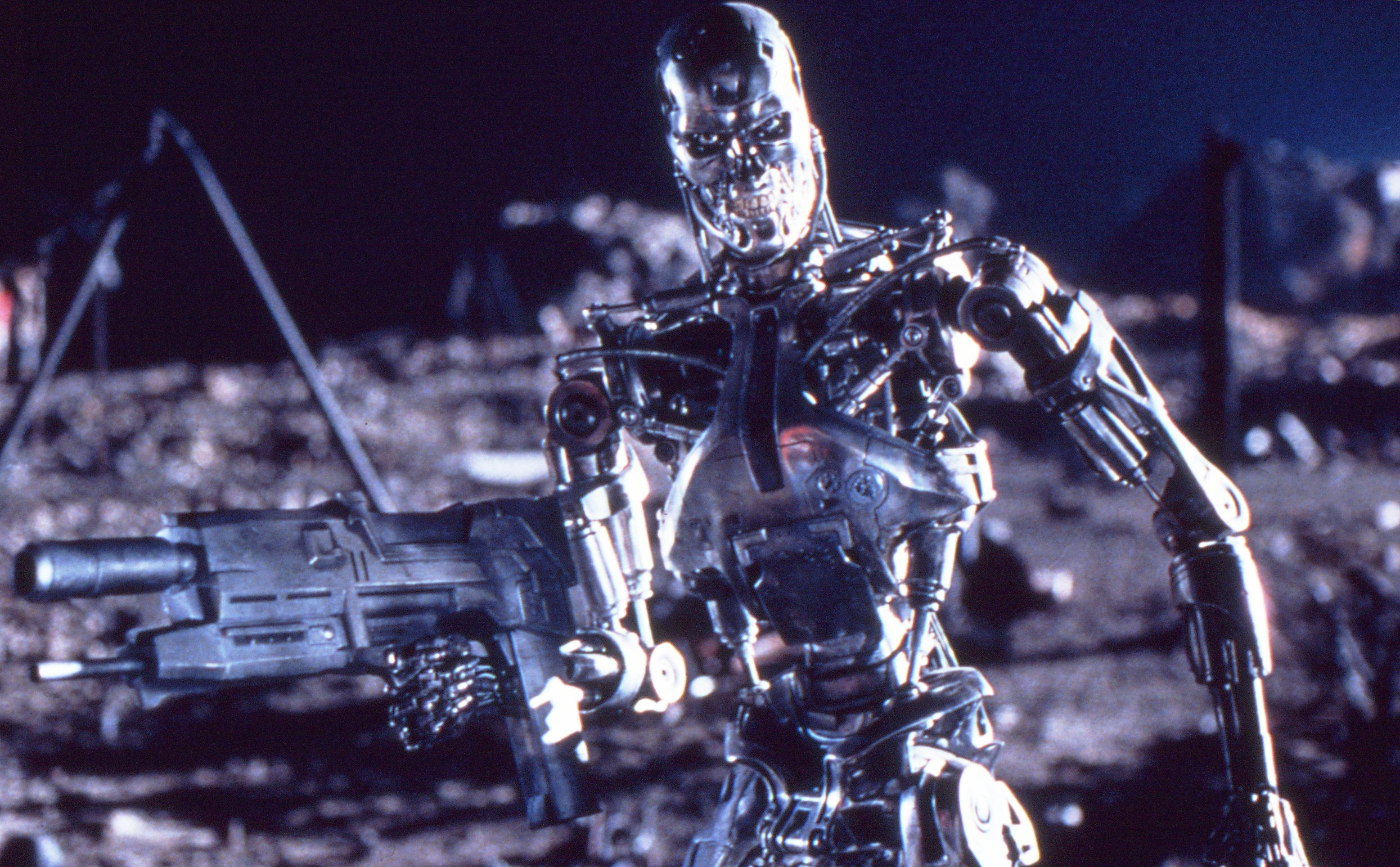
But if you happen to be a serious movie buff, or a big fan of the Terminator franchise, it is the official canon date of Judgement Day. According to the events documented in “Terminator 2, Judgement Day,” Skynet became self-aware at 2:14 a.m., Eastern Standard Time, on August 29, 1997. Shortly afterwards, it launched a full-scale war on the whole of humanity.

While it is true that this date has fluctuated over the years due to numerous time travel anomalies and sub-par sequels, the August 29, 1997, date tends to be the most well-known and accepted. And in recent years, I think that date has become even more noteworthy and not just because it celebrates the greatest action movie of all time.

In recent years, artificial intelligence has emerged as something far greater than a standard movie trope. It is now a rapidly growing field, as well a multi-billion-dollar industry. I’ve discussed the possibilities in the past and tried to put more recent advancements like ChatGPT into a proper context. But even I have been astonished at how quickly artificial intelligence has gone from an intriguing possibility to something that’s very real.

At this very moment, anyone with an internet connection can utilize what is essentially a limited AI for various tasks in a manner that would’ve seemed like a futuristic dream less than 10 years ago. It’s very likely that in the next 10 years, AI will advance in plenty of other ways, some which we can’t possibly predict.

But these AI systems are nothing like Skynet. They’re very narrow in terms of their scope and capabilities. They’re not going to become self-aware or gain human-level intelligence. But make no mistake. At some point, we will have an AI that is as smart as an average human, if not smarter. This is not a technological feat that requires a huge breakthrough that defies or redefines physics. It’s largely an engineering and logistical challenge.

Whether it happens next year or several decades from now, it will happen. We will eventually create an AI that’s as capable and self-aware as Skynet. At that point, what happens next has been a huge point of contention and speculation.

Unless someone is stupid enough to give this future AI access to a nuclear weapons system, I don’t see it launching a full-scale nuclear war like Skynet did. Even if it wanted to, I doubt it would be given that level of access. That doesn’t mean it’ll be friendly. The first self-aware AI may very well be hostile in that it sees humanity as a threat. If it does choose to pursue conflict with us, that could result in some truly unprecedented dangers.

It’s unlikely it will manifest like the war we saw unfold in multiple Terminator movies. It’s also unlikely it’ll operate in any body that resembles Arnold Schwarzenegger. Whatever form it does ultimately take, it will still likely mark a turning point for technology and human history, as a whole.

Whether we call it Judgement Day, the technological singularity, Doomsday, or just another day that ends in Y, it’s a date we should take seriously. Because with all technology, there are risks and benefits. There are also best-case scenarios to go along with the worst case. “Terminator 2, Judgement Day” offered us a cinematic experience of how bad it can get if AI becomes hostile.

But we also shouldn’t let that obscure how good it could potentially be if utilized properly. I would even argue that, as the world continues to face unprecedented dangers and uncertainty, we need to advance AI. It might very well be our most important tool in solving critical issues having to do with climate change, medicine, ecological destruction, power generation, and surviving the eventual destruction of our planet.

As such, we should continue to proceed carefully. We should remain cautious as we journey into the future. As Sarah Conner once said, there is no fate but what we make. And when it comes to developing an AI that will eventually become self-aware, let’s make that fate a good one for everyone, be that human or machine.

Leave a comment

Filed under Artificial Intelligence, ChatGPT, technology

My Experience (And Plans) Using AI Writing Tools

Since I started this website, I wanted it to act as a hub for my writing, particularly my novels and my sexy short stories. I still want this site to serve that purpose. I see from the regular traffic this site gets that my sexy short stories do have an audience. And I’d like to continue providing that audience with new content, even if my efforts to write larger novels have stalled.

Now, if you’ve been following me over the years, you might have realized I haven’t been putting out as much writing as I used to. For that, I apologize. I promise, there are reasons for that, some of which are personal and prefer not to share. Others simply amount to lacking time and energy.

And once I started my YouTube channel, Jack’s World, my time and energy became even more divided. My channel has actually grown faster than expected, having eclipsed 1,000 subscribers in late 2023. And the videos I make for my YouTube channel generate considerably greater traffic than most of the content I put on this website. As such, expect me to continue giving my YouTube channel priority.

However, I still want to make time for writing sexy short stories. I don’t want to completely abandon that audience. It has just been incredibly difficult to make time to write those stories. And making that time has become even more difficult with each passing month, it seems.

Then, I discovered some new AI tools that could possibly help with that. And after spending the past month experimenting with them, I’d like to share my experience. I’d also like to present a disclaimer of sorts so that those who look forward to my sexy short stories aren’t caught completely off-guard.

Now, if you’ve been following me for any length of time, you probably know I have a keen interest in artificial intelligence and its many implications. Recently, that interest became a lot more real with the mainstreaming of major AI tools like ChatGPT. Like many others, I’ve experimented with ChatGPT and many other tools. It’s been quite an experience. But for the most part, I haven’t really found a use for them beyond simple novelty.

That changed when I discovered some AI tools that specialize in helping people write. These tools aren’t just spelling and grammar checkers like Grammarly. They actually “read” what you wrote and attempt to complete the next few sentences using a model similar to those like ChatGPT. The main difference is that this AI is calibrated to help with writing.

It may sound like a fancier version of autocorrect. I promise you it’s much more than that. I know because in using it, I found it to be surprisingly helpful. It didn’t just supplement my usual writing. It felt like having a personal assistant who understood what I was trying to do and offering unlimited suggestions or ideas whenever I asked.

The AI tool I used in this case was called NovelAI. It’s actually not the best or most well-known AI of its kind. I picked it largely because it was one of the first tools I discovered and it was relatively cheap to experiment with. I only paid for one month of premium use.

But within that month, I actually managed to write more short stories than I had in the previous 10 months. On top of that, I did those over the course of the holidays, a good chunk of which I was both busy and very sick. So, I probably could’ve written a lot more. But overall, I was impressed by what NovelAI allowed me to do.

In terms of actually using it, this actually took some adjusting. This AI program, and others like it, aren’t some magical computer programs in which you could just write a few sentences and have it write 5,000 words with ease to complete it. That’s not how they work. You, the writer, still have to get things going. You still have to establish the characters, setting, and tone.

For me, that usually meant writing three to six paragraphs to get the story started. That part rarely took more than a half-hour. But once I got that setup in place, the AI really helped accelerate the rest. From there, just pushing a button got the AI to spit out several sentences. Sometimes, they were good. Sometimes, they were not. Sometimes, it was complete gibberish.

But that’s actually not a bad thing. Because, like most programs, the more you use it, the better you get at maximizing its strengths. On top of that, the AI gets better at recognizing and adapting to your style. NovelAI even has various settings you can adjust to get different kinds of output. It took a few days of experimenting to get a feel for it. But once I did, I got into a great rhythm.

I managed to churn out multiple short stories in a fraction of the time it usually took me. Even with the complications of the holidays and being sick, I managed to craft over two dozen short stories. I’ll be sharing some of them in the coming weeks and months. I’ll be sure to disclose in the beginning that an AI helped me write them. But I’ll be very interested in seeing the response I get.

If the response is negative, then I’ll certainly take that into consideration with how I plan future short stories. But if it’s positive, then I’ll continue experimenting with other writing AI programs. As good as NovelAI was, it’s not the most well-known or well-regarded writing AI. Later this year, once I assess the impact of the stories I’ve written, I’ll try using another and see if that works better.

I’m also aware that there are those out there who don’t like anything made by AI on principle. Some of my friends and relatives have those views. To them, as well as anyone else who shares that sentiment, I only ask that you keep an open mind. The AI I used did not write these stories for me. I wrote large chunks of it. It just helped me fill in the details in way that saved me time and energy. It supplemented my creative efforts. It did not usurp them.

And if, in the end, the result is still a good, enjoyable story, then I think that made this experience worthwhile. It’s an experience I think many others will explore as AI becomes more advanced and more mainstream. In time, maybe I’ll use it to help me write another novel. Whether or not it ends up being good remains to be seen.

For now, only time will tell. I have plenty of more stories I’d like to tell and if AI helps me get them out there, then I genuinely think that’s a good thing.

Leave a comment

Filed under AI Art, Artificial Intelligence, technology

AI Chatbots May (Thankfully) Render Homework Obsolete

Homework sucks.

Let’s get that out of the way.

I doubt anyone will disagree with that sentiment. No matter who you are or how many years you’ve been out of school, you probably don’t miss doing homework. It’s one of those special shared hatreds reserved only for traffic jams, parking tickets, and slow internet. But unlike those undeniable frustrations, homework isn’t an inescapable force of nature or law. It’s something we, as a society, choose to continue.

I’ve certainly questioned that choice, going back to when I was still in school. Having to do homework was among the many reasons why I was so miserable in school. And even though it was required, I can’t honestly say it ever helped me learn anything. Most teachers and administrators often explained why it was important to ensure we were adequately learning the material. But as I’ve gotten older, I’ve come to realize that, even if that were a valid reason, it still was still ineffective.

Just ask yourself honestly. Did you ever do homework because you were curious and wanted to learn?

Now, I could rant and lament on why homework sucks for days on end. But rather than torture myself to such an extreme, I wanted to highlight something that might offer hope to those who still remember how much homework sucked, as well as those currently in school at this very moment. It has to do with the impact of artificial intelligence and chatbots like ChatGPT.

I know I’ve talked a lot about artificial intelligence in the past. I’ve also highlighted the impact and hype surrounding ChatGPT. It is definitely one of the most intriguing and disruptive technologies to come along in decades. But unlike other discussions about whether artificial intelligence and ChatGPT will lead to the destruction of the human race, this is one issue in which the impact is already happening.

Recently, Vox produced an intriguing video about how ChatGPT has impacted education, especially homework. Even as someone who graduated school years ago, I found the issues and insights of this video remarkable. I encourage everyone to check it out.

The long and short of it is simple. ChatGPT is rendering most homework assignments, be they essays or worksheets, obsolete. Students are using ChatGPT to basically do the bulk of the work for them. The only real effort they need to do is make sure that whatever they produce isn’t obviously the product of a chatbot.

That alone can be difficult. It is well-documented that chatbots like ChatGPT can be inaccurate. But when compared to having to do a long, boring assignment that a student probably isn’t interested in, that kind of challenge seems manageable by comparison.

Also, in the interest of full disclosure, I freely admit that I probably would’ve used ChatGPT when I was in school if I had access to it. I promise it wouldn’t be entirely out of laziness or an unwillingness to learn. I just found most homework assignments to be so dull and pointless that I cared more about just getting them done rather than actually learning anything.

I imagine I’m not the only one who feels this way. I suspect the majority of students simply see homework as a means of ensuring grades rather than actually learning something. And even if that assumption is flawed, it’s still an issue that speaks to major flaws in how we educate ourselves and others.

And until ChatGPT, it was easy to ignore that issue. Schools, teachers, and administrators had no reason to stop giving homework or question whether it was an effective tool. It was just one of those things that our education system had always done. So, why not keep doing it?

Well, now there’s a valid reason. Homework, as we know it, can be easily completed by any student with an internet connection. If there was any learning potential, it’s pretty much lost. As the Vox video stated, it has led schools and educators to consider an entirely new recourse.

The knee-jerk response that I suspect most will adopt is to try and ban or limit the use of chatbots. There are software programs out there that can help detect content that has been generated by a chatbot. However, I liken these programs to using scotch tape to seal the ever-widening cracks of a faulty foundation.

Because, like it or not, these AI chatbots are becoming more advanced. And the tools to keep up with them are always going to lag behind. That is a losing race and one no education system should attempt.

There’s even precedent for surmising why that’s a bad approach. When I was in college, there was a blanket ban on using Wikipedia. But enforcing that ban was a losing battle that caused more problems than it solved. It also created some nasty situations where students were accused of plagiarism when they did nothing of the sort. It took a few high-profile incidents, but most schools eventually came to embrace Wikipedia as a useful tool when approached correctly.

I think the impact of chatbots will have to go through a similar process. But unlike Wikipedia, the application of chatbots is a lot broader. These are tools that can effectively summarize books, write essays, and even write poetry with a few simple prompts. And in the same way young people have become more tech savvy than their parents, I suspect they’ll become more adept than most with respect to navigating chatbots.

That means homework, as we’ve been doing it for the past several decades, will be obsolete. While that’s certainly cause for celebration for many, it’s also an opportunity to take a step back and evaluate the process of education, as a whole.

It’s still very important that we educate young people in a meaningful way.

It’s also important to acknowledge that young people today will have access to resources that others have not.

If homework is no longer useful in that regard, what else could we do? What’s a more effective way to teach kids a concept, even when they’re not that motivated to learn it?

I don’t claim to know the answers. I am not a teacher, but I do remember how miserable I was in school and how little it really taught me. Hopefully, the impact of chatbots like ChatGPT will prompt a more thorough evaluation of how we approach education. Because if we keep clinging to old methods, then nobody will benefit in the long run, especially kids.

1 Comment

Filed under Artificial Intelligence, ChatGPT, technology

Napster, Generative AI, And How The Internet’s Past May Define Its Future

This is a video from my YouTube channel, Jack’s World.

This video explores a major chapter in the history of the internet to help inform what may lay ahead for the future. And for those of a certain demographic, one of the most disruptive programs during the early days of the internet was Napster.

This famous/infamous program completely upended the music industry. It also triggered lawsuits and upheavals from which the industry has never recovered. How it all played out was complicated, but the end result set a precedent that has helped shape the course of the internet.

Now, with the rise of generative AI, a similar predicament is playing out. And we would all be wise to heed the lessons learned from Napster.

Leave a comment

Filed under AI Art, Artificial Intelligence, ChatGPT, Jack's World, technology, YouTube

Here’s What Happened When I Asked ChatGPT To Rewrite The Bill Of Rights

I’ve talked a lot about artificial intelligence and the implications of this technology. In my defense, it’s an incredibly relevant topic that I just happen to be very interested in. From AI-Generated artwork to ChatGPT, these are truly exciting times for this field. I’m sure I’ll have plenty to talk about in the coming years.

However, I don’t just want to react to news or stories about AI. I’d also like to participate in this emerging field on some level, even if it’s just as a simple consumer. We don’t yet know the full capabilities of our current AI tools or how they’ll impact us in the short or long term. But that’s exactly why we should test it for ourselves and see what we can do with it.

To that end, I decided to do a little exercise with ChatGPT. Please note that I do not currently have access to ChatGPT-4. I’m still using the previous version, ChatGPT-3. That version is quite limited in a number of ways, but it’s still capable of providing insightful information.

So, I decided to see how much ChatGPT could offer in terms of understanding and articulating the basic concept of human rights. That’s something that has certainly been a hot topic in recent years. And for those of us in the United States, you could definitely argue that our current laws surrounding human rights are inadequate and need updating.

This is where ChatGPT comes in. I logged in and gave it a simple prompt. I told it to rewrite the Bill of Rights, the key part of the US Constitution that enshrines the basic rights that every citizen is guaranteed under the law. This is what it came up with.

The following document outlines the fundamental rights and freedoms of all individuals in a modern, democratic society. These rights are to be protected and upheld by the government, and any infringement upon them is a violation of the principles of justice and equality.

Article 1: Freedom of Expression and Thought All individuals have the right to freedom of expression, including the freedom to seek, receive, and impart information and ideas through any medium, regardless of frontiers. No individual shall be subject to censorship or prior restraint, and any attempt to limit or suppress the free exchange of ideas shall be deemed a violation of this right.

Article 2: Right to Privacy All individuals have the right to privacy in their personal lives, including the right to be secure in their persons, houses, papers, and effects against unreasonable searches and seizures. No individual shall be subject to surveillance or monitoring without just cause, and any information obtained through such means shall be inadmissible in court.

Article 3: Right to Equality and Non-Discrimination All individuals are equal before the law and are entitled to equal protection and benefit of the law, without discrimination based on race, ethnicity, gender, sexual orientation, age, religion, or any other status. Any discrimination or prejudice against any individual or group shall be deemed a violation of this right.

Article 4: Right to a Fair Trial All individuals have the right to a fair and impartial trial, including the right to due process of law, the right to be informed of the charges against them, the right to confront and cross-examine witnesses, and the right to legal representation. No individual shall be subjected to cruel or unusual punishment, and all accused individuals shall be presumed innocent until proven guilty.

Article 5: Right to Peaceful Assembly and Protest All individuals have the right to peacefully assemble and to protest, including the right to participate in marches, demonstrations, and other forms of peaceful assembly. No individual shall be subject to violence or repression for exercising this right.

Article 6: Right to Education and Information All individuals have the right to education and information, including access to a free and comprehensive education system and the right to access information through any medium. The government shall ensure that all individuals have access to the tools necessary to exercise this right.

Article 7: Right to Healthcare All individuals have the right to access comprehensive healthcare, including preventative care, treatment, and medication, regardless of their ability to pay. The government shall ensure that all individuals have access to quality healthcare and shall take measures to address any disparities in healthcare access.

Article 8: Right to Housing All individuals have the right to adequate housing, including shelter, sanitation, and security, regardless of their economic or social status. The government shall take measures to ensure that all individuals have access to affordable and safe housing.

Article 9: Right to Work and Fair Labor Practices All individuals have the right to work and to fair labor practices, including the right to a living wage, safe and healthy working conditions, and the right to form and join trade unions. The government shall take measures to ensure that all individuals have access to decent work and shall prohibit any form of forced or compulsory labor.

Conclusion: These rights and freedoms are essential to the establishment and maintenance of a just and equitable society. It is the responsibility of the government to protect and uphold these rights, and it is the duty of all individuals to respect and defend them.

It only took ChatGPT about 10 seconds to craft this. After reading through it, I am legitimately impressed. I think this is a considerable upgrade over what the Bill of Rights covers. This version actually articulates the importance of privacy, ranking it just a rung below free expression. It also recognizes that people can’t truly be free if they don’t have some level of material guarantees, like housing, health care, education, and fair labor practices.

These are all major issues that are debated across the country and throughout the world. This new version of rights essentially simplifies the whole concept, laying out that this is what people need to be free of coercion, free of exploration, and free of want. Some may think these rights are incomplete or too utopian. That may be the case to some extent.

But even if it’s not perfect, it’s still an improvement. And again, it only took ChatGPT about 10 seconds to craft this. We humans are still arguing over slavery. We have no more excuses. We have a tool that can help us figure out little issues and big issues. And regardless of whether or not it’s intelligent or sentient, we would be wise to listen.

Leave a comment

Filed under Artificial Intelligence, ChatGPT, Current Events, futurism, politics, Uncategorized