Tag Archives: evil

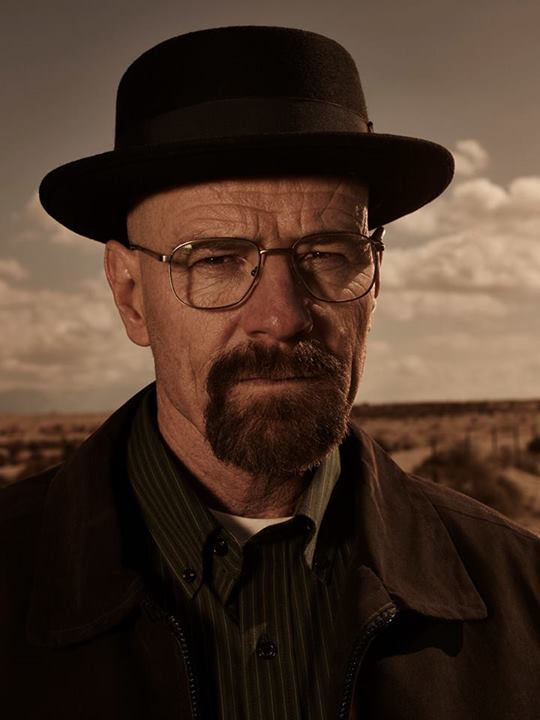
Villains, Antagonists, And The Walter White Effect

He’s the bad guy. He’s the obstacle. He’s the one that the hero must outwit. To put it more succinctly, he’s the one who knocks. Call him what you want. Say he’s a villain, an anti-hero, and an antagonist. We know who these characters are and we understand their role.

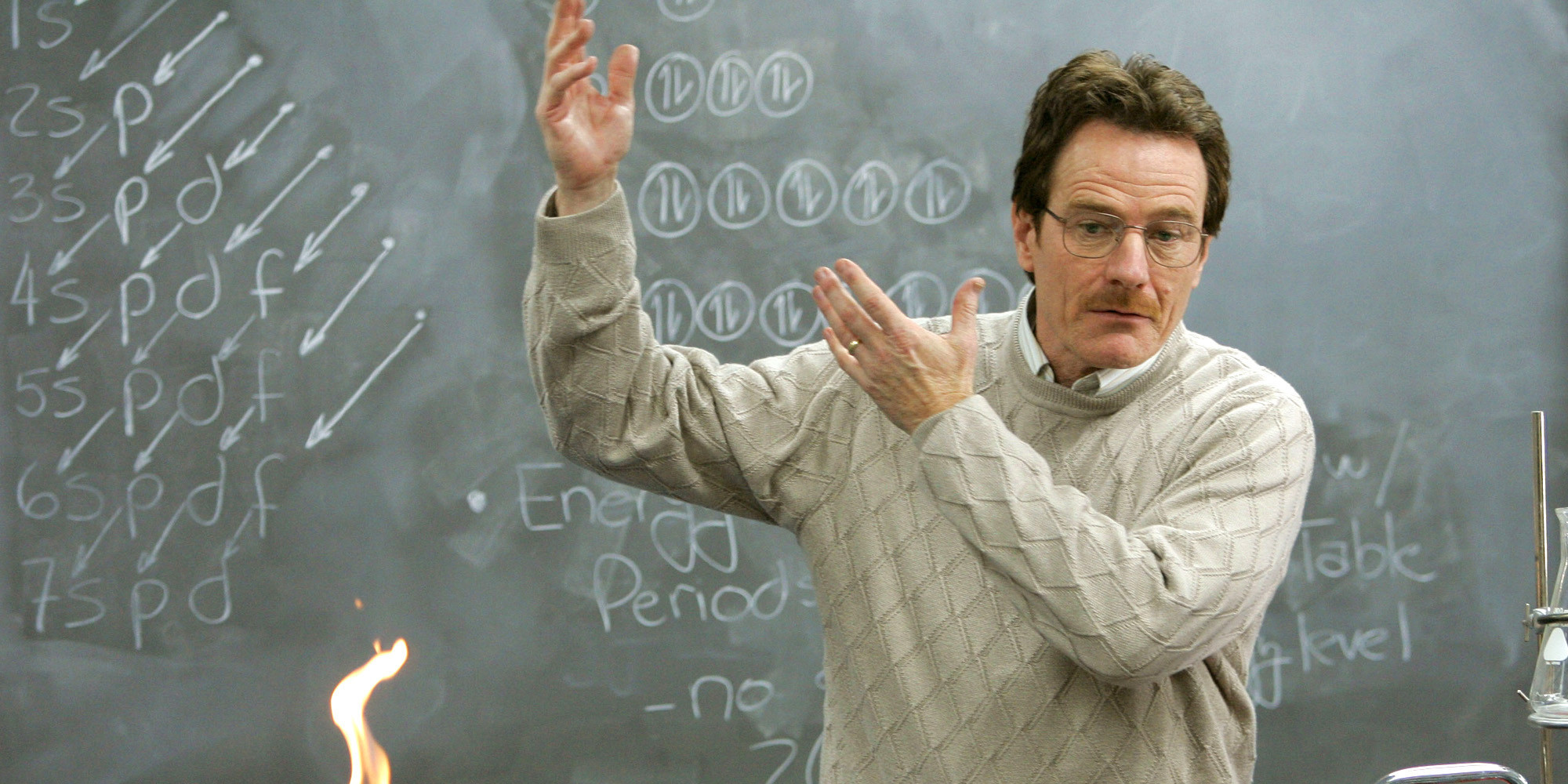
Then, Walter White came along and ran the concept over with his car. Villains, heroes, and antagonists have not been the same since.

Some may argue it has improved the way in which we tell stories. Some may argue that it has been a detriment, creating a race of sorts to abandon old ideals and make every character feel all too human. For fictional characters not bound by the crushing limits of the real world, this can be a race that no one should want to win. However, I believe the rise of Walter White and “Breaking Bad” has raised the bar for characters of all types.

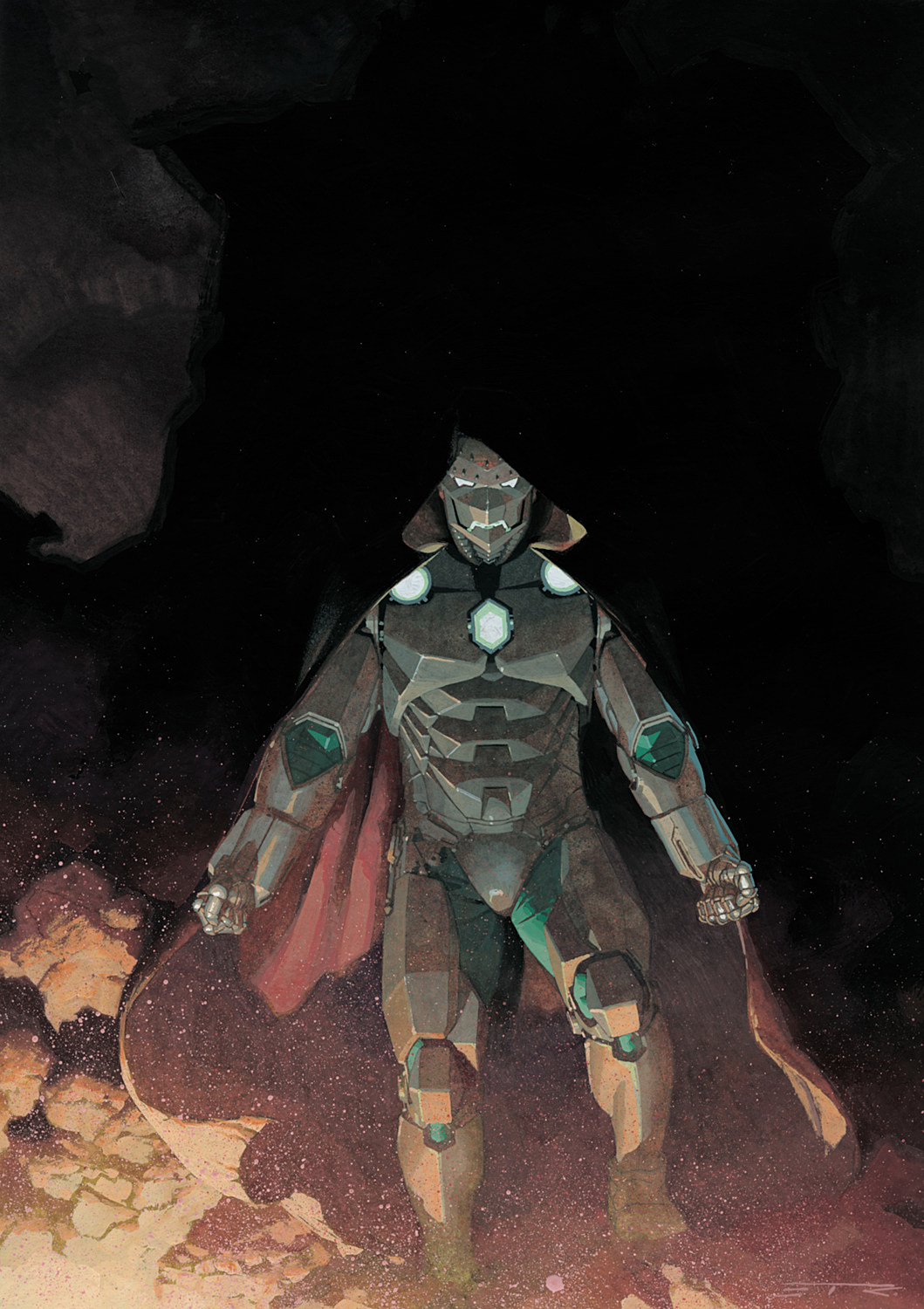
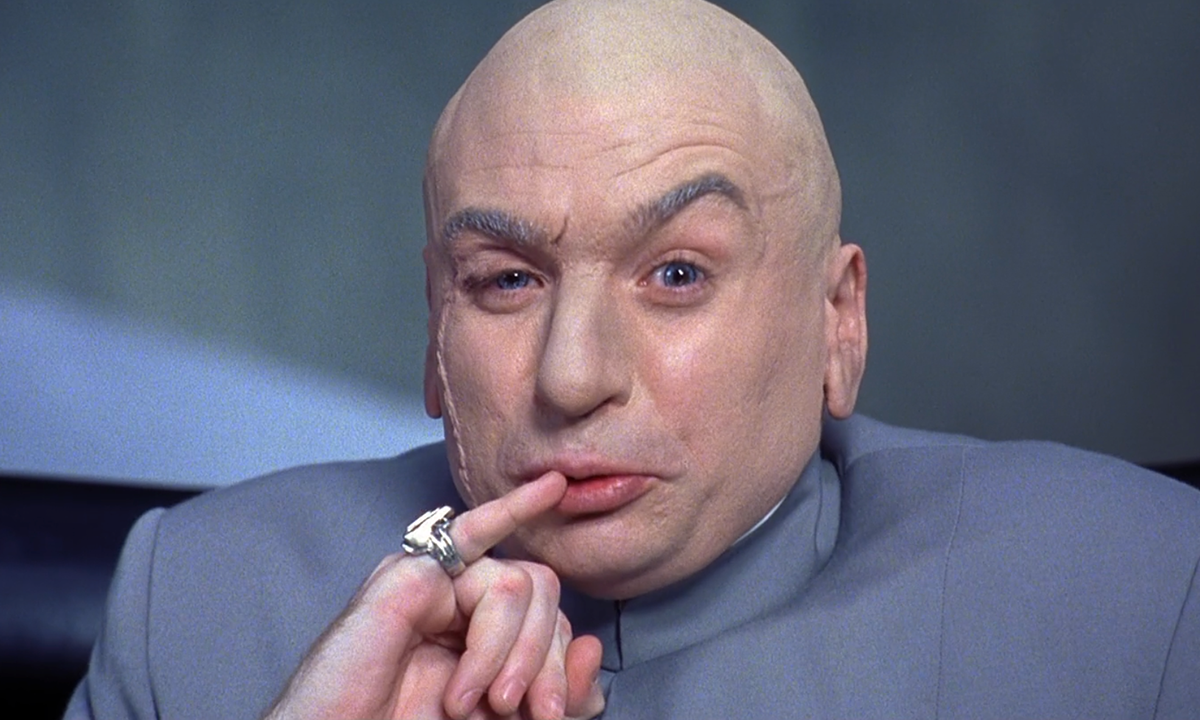
I call it the “Walter White Effect.” I know that’s not very original, but it sheds light on a concept that has been permeating pop culture since “Breaking Bad” became a phenomenon. We’ve seen it in movies, TV shows, comic books, and video games. What else explains Dr. Doom becoming the new Iron Man?

It’s just not enough for villains to be villainous anymore. It’s not enough for anti-heroes to have an edge anymore. Walter White has changed the way we think about protagonists, antagonists, heroes, anti-heroes, and everything in between. As an aspiring erotica/romance writer, I’ve already felt the effects of those changes and I even welcome them.

This is an issue that spins right out of my recent discussions on the nature of evil in humans. In discussing such a morbid topic, I tried to keep things basic while also trying not to make too many people want to spit in their own gene pool. For this discussion, however, I want to focus on just one of those trees in the vast forest of human evil.

In doing so, I know I’ll rile up those who don’t believe that Walter White deserves to be classified as “evil.” I understand that argument. To call Walter White “evil” the same way we call IRS agents evil is to cast too wide a net on a remarkably complex character. However, for the purposes of this discussion, I want to focus on the traits that highlight the “evil” qualities of Walter White and characters like him.

Those who have binge-watched “Breaking Bad” know Walt’s story well. He started off as this affable, sympathetic man who endured one too many bad breaks, if that’s not too fitting a term. He had a family who loved him, a baby on the way, and friends who supported him. On the surface, he had every reason to be a good person.

Then, the bad breaks added up. He was diagnosed with advanced-stage cancer and given only a couple years left to live. Being a grossly overqualified high school chemistry teacher, he was destined to leave his wife, son, and newborn baby with nothing. Something had to give. It led him down a dark path, one that eventually brought out the worst in him.

It’s a story that puts a major twist on the familiar “Hero’s Journey” that we know so well. In some respects, Walt started out as a hero, doing bad things for good reasons. He did what he did to provide for his family, not to snort crank off a strippers ass. However, that journey morphed into something very different, one that has set a new standard for heroes and villains alike.

Bit by bit, sin by sin, and excuse by excuse, Walter White descended into this evil mindset. He killed former partners. He also lied to others. He even abandoned his initial reason for becoming a criminal. It was no longer enough to just provide for his family. He was in the “empire business” as he put it.

These are not the thoughts, actions, and traits of a hero. This is no longer a character who deserves such sympathy. Walter White became a true villain. In the end, he basically admitted as such. He said outright, “I did it for me. I liked it. I was good at it.” It effectively completed his journey into being a villain.

In doing so, Walter White proved something that nobody thought to prove. He showed through “Breaking Bad” that a villain’s journey could be every bit as compelling as a hero’s journey. It’s not enough for a villain to just be an egocentric, mustache-twirling asshat who wants to take over the world. Villains need just as much depth as heroes.

This presents a new challenge for everyone from movie producers to aspiring erotica/romance writers. It’s hard enough writing a compelling protagonist. The success of Walter White as both a villain and a protagonist effectively raises the bar.

Villains are now the new heroes. Anti-heroes generate more interest. What else explains the success of characters like Deadpool? It’s not enough for Superman, Batman, and Captain America to save the day anymore. We need villains who have better reasons for being who they are.

This effect has already skewed the standards somewhat and not just in the sense that it helped make Deadpool one of the most profitable movies of 2016. Just look at the villains in “Captain America: Civil War” and “Batman v. Superman: Dawn of Justice.” Nobody is going to mistake Jesse Eisenberg’s Lex Luthor or Daniel Brühl’s as Helmut Zemo for Walter White anytime soon.

We can, however, forgive some of these shortcomings because the Walter White Effect is still very new. It’s still sinking in. People are just starting to try and emulate the success of Walter White and not just through “Breaking Bad” spinoffs.

It happened with westerns. It happened with sci-fi movies. When someone stumbles upon a winning formula, others try to recreate it with varying degrees of success. What else explains the glut of “Die Hard” ripoffs in the 90s?

Even if this does mean we’re in for multiple Walt wannabes over the next decade, I believe the lasting impact of the Walter White Effect will be a positive one. I think it’s better for all mediums, be they movies or erotica/romance novels, when both protagonists and antagonists alike are compelling.

The challenge, however, is making that journey into evil a compelling one. Walter White’s journey was long and difficult. There were times he could’ve stepped off that path, but didn’t. In the end, as others have pointed out, Walt always had this evil tendency within him. He just needed the right push in the wrong direction.

15 Comments

Filed under Jack Fisher's Insights

The 10 Most Evil Humans In History (According To WatchMojo)

So long as I’m discussing the topic of evil on this blog, it was only a matter of time before I started venturing into the extremes. It happens with any topic that holds your interest for more than a few minutes. It’s not enough to just see one cat video. You have to find the greatest, most adorable cat video possible.

It’s human nature, a common and all too fitting theme when it comes to discussions of good and evil. To really grasp a concept, we tend to look to the extremes of that concept. That makes sense because the extremes usually catch our attention. They make the more subtle aspects of the concept not subtle. Lady Gaga, Madonna, and Elton John are living proof of this.

What’s going to hold your attention more? A thorough, detailed assessment of all the intricacies of a topic or the equivalent of a monster truck driving down down the street that shoots flames out the tailpipe while playing Slayer music? Unless you’re Sheldon Cooper, the answer should be obvious.

With that in mind, I think it’s fitting that any discussions about evil involve extremes. Sadly, human beings give us plenty of real-world examples of these extremes. History is full of ruthless conquerors, sadistic dictators, and eccentric directors who damage beloved superhero franchises beyond repair. These characters are not works of fiction. They’re real people who commit real evil. That makes their acts all the more revealing.

So in the interest of revealing and/or repulsing our tender sensibilities, I found a video from our old friends at WatchMojo that highlights 10 of the worst human beings in history. Some are serial killers. Some are kings, dictators, and despots. Every one of them is undoubtedly evil by nearly every measure.

Some may not agree with this list. Some may think it left off a few too many kings, queens, and disgraced professional athletes. At the very least, of provides some context and insight into the sheer breadth of humanity’s capacity for evil.

Are you ashamed to be human yet? Do you wish you were born a lizard? If so, step back and take a deep breath. These are extremes. By definition, they’re not the norm. They’re the exact opposite of the norm. They take the norm, take out its knees with a baseball bat, and kick it into submission before robbing it on the spot. I’d be more excessive, but I’m starting to have one too many flashbacks to the third grade so I’ll stop.

It’s an important perspective to maintain, even as we contemplate the worst of the worst when it comes to evil. The same thing happens when we watch Fox News for too long. Seeing all these extremes, which are often meant to get attention rather than convey the truth, gives us a flawed perception about what it means to be human. It doesn’t help that these perceptions find their way into our most famous stories.

It’s no secret that Bram Stoker’s inspiration for “Dracula” came from a real-life person with a bloody evil streak named Vlad the Impaler. In many respects, the things Vlad did make him much more terrifying than Dracula can hope to be because Vlad actually lived. Vlad earned that nickname and didn’t give a damn how infamous it made him.

Not every evil person earns that kind of label, but their real-world deeds definitely leave a mark. It’s not always on the people they hurt. Sometimes, their very presence skews our perceptions of human nature. It’s because these extreme evils catch our attention so much that our caveman brains can’t help but render sobering, albeit inaccurate conclusions.

As an aspiring erotica/romance writer, I may end up contributing to that issue. While I haven’t created a character on the same level as Dracula, characters like Warren Irvine in “Skin Deep” and Madam Felicity in “The Escort and the Gigolo” are not the kind of people you want be friends with. They’re definitely not the kind of people you want as your enemies either. Again, they’re not Dracula.

That said, it is tempting sometimes to push the limits of your antagonists. There are a number of novels I have in mind that require a mean, pissed off, utterly deplorable person to make the story work. How far can I take that? I’m not sure, but the real people who do real evil in this world do set the bar pretty high.

1 Comment

Filed under Jack Fisher's Insights

The (Sort Of) Problem With Evil

I’ve decided to take a break from deciding whether music form boy bands and burned out pop stars counts as love or obsession so I can focus on a far more relevant issue. It’s relevant in that it affects more directly than the annoying songs we have to endure. It also affects me as an aspiring erotica/romance writer because it’s an important component of every character, be they protagonists or sidekicks.

Yes, I’m talking about evil again. My first post yesterday ended up covering so much that I quickly realized I’ll have to stretch this out to cover the full range of the topic. Make no mistake. This is an important topic. Evil, whether we believe in it or not, will impact us in some way and I’m not just talking about the kind that gets shows like Firefly canceled.

Our understanding of good, evil, and the morality that governs both is an important part of our civilization and our species, as a whole. It’s one of those things we all acknowledge, but can’t quite agree upon. It’s not unlike George Clooney. We all agree he’s sexy. We just don’t agree why.

This directly ties into the so-called “Problem of Evil.” Anyone who has endured a debate between an overly atheist and an overly religious type is probably familiar with this concept. The “problem” is that evil exists and, as a result, it undermines a lot of theological and ethical issues. It’s something two people can argue about for days on end and not accomplish a goddamn thing.

For me, personally, I have a big problem with calling evil a “problem” in the first place. It’s not that I think it’s unimportant. It definitely is. I just take issue with use of the word “problem.”

While I was in college, one of my professors did this lecture where he said one of the most brilliant things I ever heard from any human being not inspired by George Carlin. He started by saying this:

“We don’t deal in problems. We deal in dilemmas. Problems are easy. Problems, by definition, have solutions. Dilemmas don’t have solutions. Dilemma’s are harder to manage because they often require compromise.”

There are a lot of amazing things I remember from college. Not all of them have to do with how willing some people are to get naked at a party. The professionals there really had some smart things to say. This, more than almost anything, really stuck with me.

I think it nicely applies to the concept of evil because its a concept that’s so diverse and ambiguous, at times. At one point in history, marrying someone from another tribe is considered evil. At another, admitting to owning a Nickelback album is evil. It’s fluid, overly vague concept that keeps moving the goalposts.

As a dilemma, evil can’t have a solution. It can have various understandings. There can be compromises along the way in which the idea of evil skews towards or away from a certain direction. That’s why concepts like slavery took so much time to fade into that special domain of evil and even then, we still have problems eliminating it.

More than most concepts, the dilemma surrounding evil has many religious connotations. Nearly every religion, including those that involve chakra, crystal energy, and aliens, tries to address the source of evil in some form or another. Some use it as a means of proving their particular theology. Others use it as a means of disproving that very theology. It’s a never-ending argument that rarely ends with someone changing their mind.

Even so, it’s an important concept to explore. Even if I do take issue with the use of the word “problem,” it is a concept that reveals many facets of evil and how we see it. Rather than try to break down every one of those facts, knowing that would require more posts than anyone is comfortable reading, I found a very helpful YouTube video that nicely sums it up.

This comes courtesy of Crash Course, a very helpful YouTube channel in terms of explaining complex issues in a simple, basic way. This is basically a 101 class, one that does not get into the finer details of an issue. This reveals the forest without scrutinizing any of the trees. For those who want to learn more about the “Problem of Evil,” this video breaks it down nicely.

Whether you’re religious or non-religious, both sides of the problem/dilemma should give you pause. It certainly has for me. I’ve even seen it in my writing. I’ve had to mold “evil” characters to make the stories in “Skin Deep” and “The Escort and the Gigolo” work. It’s challenging, but it’s an important part of a larger narrative.

The presence of evil raises questions about what we believe spiritually and how we see ourselves as a species. The simple fact we can’t be certain in both the theological and scientific analysis of evil reveals just how complex this issue is. When neither science nor religion can offer a clear-cut understanding, you know it’s a hell of a dilemma, if that’s not too fitting a term.

So what does this mean for evil as a whole? What does this mean for evil in a religious, scientific, and philosophical respect? Well, these are questions I hope to keep exploring. Right now, I want to use the “Problem of Evil” to create the right context.

We live in a world where we can’t help but acknowledge that evil exists, but can’t agree on the source or mechanisms behind it. With every evil act, there seems to be more and more complexity.

The evil of today is not always the evil of tomorrow. Evil characters in novels today can easily become heroes and/or anti-heroes tomorrow. We don’t know when or how this will manifest. We just know it’ll continue to confound and conflict us in our minds and souls, however we define them.

Leave a comment

Filed under Jack Fisher's Insights

The (Non-Monetary) Root Of All Evil

What is it about the human race that makes some people amazingly generous while others become sickeningly depraved? It’s a question we’ve all contemplated in some form or another. What drives the person who helps out at a soup kitchen every week? What is it that drives the person who throws cherry bombs at mailboxes just for kicks? How can one species have this much variation in terms of evil and altruism?

As an erotica/romance writer, and a writer in general, I have to contemplate these questions more than most. In every story I write, whether it’s a sexy love story like “Holiday Heat” or an erotic thriller like “The Escort and the Gigolo,” I need to understand on some levels what makes people tick, for better and for worse.

Questions about evil aren’t new. In fact, they’re among the oldest questions that we, as a species, have asked ourselves. It’s right up there with questions about why aliens haven’t landed yet and why some insist on using anal probes. It’s an existential question as much as it is a scientific question. It’s one of the few questions that both science and religion work hard to answer, albeit with different methods.

In western religious traditions, which primarily involve the big three Abrahamic faiths of Judaism, Christianity, and Islam, there are certain assumptions about human nature that are intrinsically tied to the faith. In this tradition, human nature is believed to be inherently evil and in need of redemption. Anyone who spends more than two hours watching reality TV will probably find some merit to that argument.

Then, there are other traditions like Hinduism, Taoism, and Buddhism that don’t make the same assumptions. In these traditions, there are other forces that make human beings good or evil that aren’t necessarily innate. To be evil by nature is too simplistic in these traditions. There’s a whole host of factors, divine and otherwise, that contribute to someone’s capacity for either.

Neither tradition can be completely right, but that doesn’t mean both are wrong. Scientific studies on human nature are quite varied, but come to some intriguing conclusions. According to a Scientific America article from 2012, the current body of research suggests that humans are innately good and evil is more of an aberration.

That doesn’t mean that we humans should be thumbing our noses at the rest of the animal kingdom though. This research, like all scientific research, is incomplete and subject to change. New research could emerge tomorrow that concludes that every human being has a depraved, psychotic asshole lurking within and we’re doing just enough to keep it at bay.

These are very difficult questions to answer and many of those questions don’t have clear answers. I look at the concept of good and evil the same way I look at what makes something sexy. The line is not clear and constantly shifting. In the same way we find strange things sexy for stranger reasons, we see the line between good and evil as an exceedingly obscure sea of gray.

Everybody has their opinions on what makes someone good, but I’ve noticed that people have stronger opinions on what makes someone evil. It happens every time there’s a heinous crime, like a mass shooting. Everybody has their theories as to why someone does something so evil.

Some claim it’s bad parenting. Some claim it’s a product of poverty. Some claim it’s a product of abuse. Some say it’s genetic. Some say it’s a learned behavior from someone’s environment. Some just claim that some peoples’ brains are wired poorly.

The most frustrating part of this issue is that to some degree, every one of those theories might be right. Some people become evil due to bad parenting or a rough environment. Some become evil through severe mental illness that makes it difficult for them to make sense of right and wrong. Human beings are erratic, diverse creatures. We’re never content to just have one reason for doing something.

This becomes even more pronounced when you apply it to fiction. As an admitted comic book fan, the distinction between superheroes and supervillains is a cornerstone of the genre. Most people can pick up a comic and know who’s who. You see a comic with Superman and you know he’s the hero. You see a comic with Dr. Doom and you know he’s the asshole who will make people miserable.

However, recent years have given more emphasis to the villains, as opposed to the heroes. I like to think of it as the Walter White effect. We now expect our villains to be more complex and multi-dimensional. It has lead to developments like Dr. Doom becoming Iron Man and Lex Luthor becoming Superman. It’s as crazy a concept as it sounds, but believe it or not, it works.

It’s a strange era with respect to our understanding of evil. On one hand, our most cherished traditions say we’re intrinsically evil. On the other, science says we’re intrinsically good. What do we make of this? That’s a question nobody, especially not an aspiring erotica/romance writer, is equipped to answer in a single blog post.

It’s still a question that I find myself contemplating more as I prepare my next round of projects. In every major story, there are protagonists and antagonists. It’s not too hard to put a lot of energy into what makes a protagonist tick. They are, after all, the lens through which the story is told. The antagonists, on the other hand, present a different challenge.

For the most part, I haven’t had a chance to flesh out complex antagonists. The two most notable examples I’ve had, to date, are Warren Irvine in “Skin Deep” and Madam Felicity in “The Escort and the Gigolo.” In both cases, I made a concerted effort to give layers to these characters. I think I did the most with what I could, but I do feel there’s room for improvement.

For me, this means seeking a greater understanding of evil and what makes evil people tick. It’s a potentially scary subject, but I survived high school and puberty so I think I have the stomach for it. If it means being able to write more complex, well-rounded characters, I’ll gladly take that chance.

5 Comments

Filed under Jack Fisher's Insights