
This is a video from my YouTube channel, Jack’s World.
This video is CreepyPasta that I wrote and narrated myself about getting a government job for a very “special” department. Enjoy!

I love sports. I’ve loved sports since I was a kid. Some of my fondest memories involve watching baseball and football with my dad on a lazy afternoon. And I’ve gone out of my way on multiple occasions to belabor how much I love football.
Conversely, I’m not much of a gambler. Aside from buying an occasional lottery ticket and playing fantasy football, I don’t gamble. And when I do, I don’t consider it all that fun or thrilling. Given my frugal tendencies, I find gambling to be pretty stressful. Unless it’s money I don’t mind losing, I tend to avoid the experience.
So, as you might expect, I feel conflicted about how much gambling in sports has become so mainstream. It’s almost impossible to escape. Watch any game from any major sport and you’re likely to see some sort of ad related to gambling. We can groan and scoff at how ubiquitous they are. But let’s not ignore the bigger picture.
Gambling has always been part of sports. But until relatively recently, it operated mostly in the black market and alongside organized crime. You don’t have to go too far back to find major gambling scandals. It’s every bit as unavoidable as the ads we see today. Whenever high-stakes sports converges with large pools of money, there’s going to be gambling. It’s just a matter of how we, as a society, choose to manage it.
Now, I’m not going to go on a rant about the evils and dangers of gambling. Compared to other unsavory activities, it’s not fair to put it on the same level as drug addiction, human trafficking, or violent crime. But like any other vice, it can be very damaging to certain people.
If you have an addictive personality or are prone to taking unsafe risks, gambling can ruin you, your finances, and your relationships. Gambling on sports can further amplifies those risks because it draws out the experience. You don’t just pull a lever on a slot machine or scratch off a lottery ticket five seconds after you buy it. Once you place your bet, you now have a vested interest in a game. That interest lasts as long as the game plays out, be it a single baseball game or the entire NCAA tournament.
That’s akin to a steady drip of addictive drugs, rather than taking it all at once. And I strongly believe that’s a big reason why modern sports gambling has so much appeal. Unlike decades past, you don’t have to go to an illegal bookie or take a trip to Las Vegas to place a bet. You just need to take out your smartphone, load up one of numerous apps that’ll accept your bet, and wait for the results.
It’s easy.
It’s convenient.
It’s private.
And make no mistake. Every major sports league knows this. They’ve known for years that gambling is a lucrative, but dangerous business. They stayed away not because they opposed it on moral grounds. They did so because they understood that getting involved with gambling often meant getting involved with organized crime. That wasn’t just risky. It was potentially deadly.
And even if leagues thought they could handle them, there’s also the problem of players. Before leagues paid players millions of dollars, they understood that players would be tempted to fix games or manipulate outcomes in exchange for major payoffs. Beyond just undermining the integrity of the sport (which I doubt most leagues cared about in the first place), it made outcomes less about skill and more about who bribed who. And that just takes away from the spectacle that makes sports worth following.
Now, there’s no organized crime to worry about. Modern gambling companies are legitimate, multi-billion-dollar entities. Laws surrounding gambling have loosed over the years, so much so that the taboo surrounding gambling is almost non-existent. But that doesn’t make it less damaging to problem gamblers.
Being able to gamble on smartphones whenever and wherever they want just amplifies those problems. It’s also why a good chunk of gambling revenue comes from gambling addicts. But major sports leagues don’t care. They have no reason to care. They may make excuses, saying these people would find ways to gamble one way or another. At least the profits are going towards them and not mobsters.
But is that really better in the grand scheme of things? That’s an open question that I’m not prepared to answer.
I know it’s common to hear people claim that gambling is ruining sports. I understand that sentiment, but I also think it’s a gross oversimplification. It would be more accurate to say that it’s making sports, in general, a lot worse for the average fan.
You can already see it in the way major networks treat gambling as just another part of the game. Watch any broadcast that covers any sport and chances are they’ll sneak in some odds, be it potential starters for fantasy leagues or betting favorites for certain teams. It’s like an indirect signal that doesn’t necessarily encourage gambling. It just reminds people that it is an option. It’s also legal and easy, provided you utilize the official apps/sponsors.
And should you start placing bets on a game or season, then suddenly your experience changes a great deal. It’s now much harder to follow a game or team for pure enjoyment. Now, you watch anxiously, wondering if the bet you made is going to pay off. The thrill of seeing your team win is suddenly superseded by the thrill of winning money. And that’s a fundamentally different experience when it comes to sports.
I’m not saying it’s good or bad. I don’t deny that some people genuinely love gambling and it gives them exactly the thrill they’re seeking, even when mixed with sports. But a big part of what makes people passionate about a sport is how much they love the experience. It not unlike those sentimental moments I remember with me and my dad when I was a kid. That’s not something you can replace with in-game betting.
But if that’s someone’s only relationship to any sport, then are they really a fan? Or are they just a gambler looking for their next big win?
Filed under human nature, sports
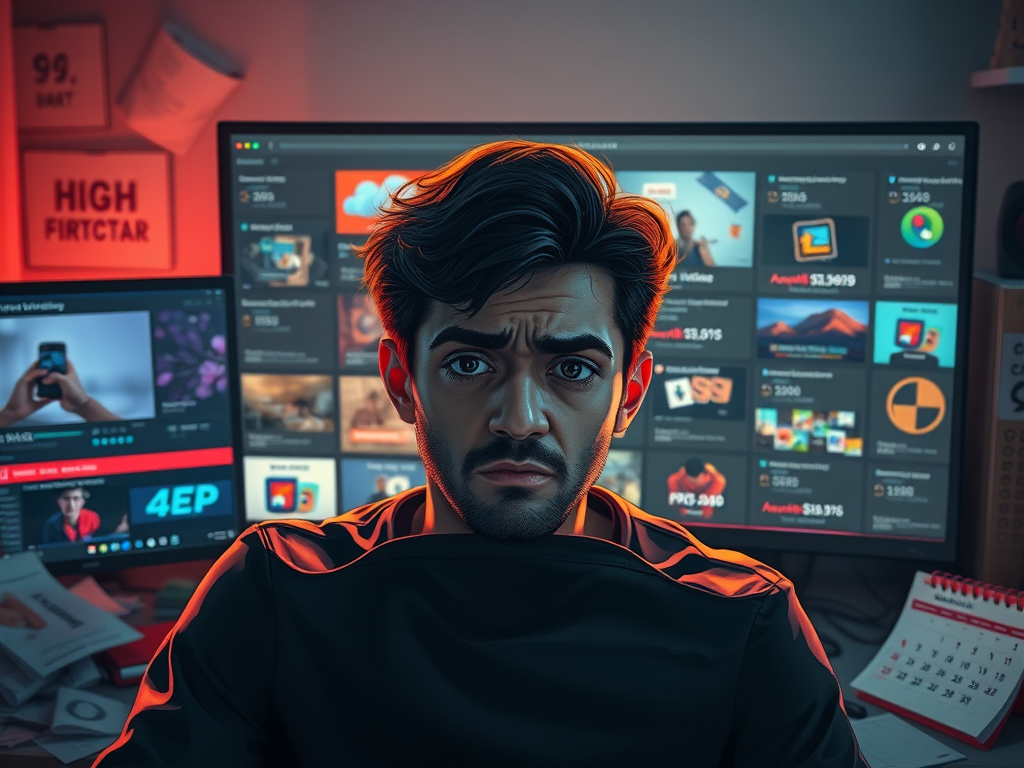
A while back, I looked into purchasing some new software that would help me make better videos for my YouTube channel, Jack’s World. I know that’s a common issue among aspiring content creators, finding the right software to help them make what they want to make at a certain quality. But over the course of this search, I came to two frustrating realizations.
First, there are an astonishing number of incredible and useful tools to make all kinds of content, be it videos, music, or images.
Second, every one of these tools require a regular subscription to use and the cost ads up a lot, especially if you want to utilize certain features.
Now, I’m very much aware of just how prevalent the subscription model has become for so many services. I concede that I have multiple subscriptions for streaming services, as well as a few web services that I prefer not to name. But I was not aware of just how much everything, from software tools to even features on certain cars, require a goddamn subscription.
I know I’m not the first person to complain about this. You don’t need to look hard to find consumers at all levels voicing their anger about how many subscription services are necessary these days, from broadband internet to streaming media that’s now more expensive than cable ever was. But none of that anger seems to be impacting anything.
Companies of all kinds are still looking for ways to turn a one-time purchase into a never-ending subscription. You can ascribe that to pure greed, annoying trends, or a dystopian manifestation of late-stage capitalism. It really doesn’t matter what’s driving it. It still sucks.
I quickly realized that I literally cannot upgrade my current video editing software without spending hundreds of dollars annually just to access that software. I can’t even walk into an electronics store, buy disk or access code, and download the software as a one-time purchase. I can only ever buy a limited subscription or a “free trial” version that is basically the most useless version of the software.
For someone like me, who doesn’t have the budget to pay hundreds of dollars every year for professional grade software, that’s not just frustrating. It’s infuriating. It’s effectively bars me from ever making content that’s polished beyond a certain point.
That’s not to say I’m completely devoid of options. There are open-source alternatives to certain software programs. I’ve even tried a few of them. But I’ve yet to find one that matches the functionality of the consumer-based versions I’ve used for years. Hopefully, that changes at some point. If I find an open-source software for editing videos that works just as well as what I’m using, I’ll jump at the chance to switch to it. But for now, I’m stuck with what I have.
In addition, I came across something else in my effort that’s worth sharing. In searching for a free or cheap alternative to video editing software, I also came across quite a few sites that basically pirate that software. Now, for reasons I hope are obvious, I’m not going to share the names of those sites or where I found them. But I imagine I’m not the only one who came across them while looking for better software.
And unless you’re really tech savvy and have some damn good anti-spyware software on your computer, I do not recommend using those sites to get pirated software. This is not like the days of Napster and Limewire. The kind of malware you’re likely to get from these sites is dangerous and not just in terms of flooding your computer with spam.
But those same sites, some of which had domains located outside the United States and Europe, probably provide a much easier method towards obtaining software or media of any kind. There’s no need for credit cards or creating accounts. And if you ever do need to pay for something, it’s often done in cryptocurrencies. But even with the risk that comes from that, the price is far lower than what most software companies are charging.
I found one particular well-known software that was 1/5th the price from the retail version. And they accepted crypto as payment.
Even if you’re not good at math or finance, you can still understand the concept of price gouging. And when it comes to software and media, it feels exceedingly egregious. It’s not like making these products requires rare Earth metals or some kind of expensive manufacturing process. They’re lines of computer code stored on computers, easily copied for pennies and distributed for pennies more. So, having to pay more than $100 a year just to access them feels like a bad deal.
And if that gap continues to grow, then you can assume piracy won’t just become more tempting to the average consumer. It’ll become preferable. If people feel like they’re getting gouged, then they’re not going to feel bad from stealing from a company, especially if they don’t even sell you something physical. I don’t doubt companies will fight this, as they’ve always fought piracy. But take it from someone who remembers the days of Napster. That’s a losing battle in the long run.
But that battle is still playing out. And in the meantime, I still find myself stuck with software that’s becoming increasingly outdated. I’ll still make the most of what I have. But I’m already at a point where I will go to any length to avoid another subscription to my monthly bill. And if the situation continues getting worse, then that’ll just be another middle finger to customers and a never-ending gift to piracy.
Filed under AI Art, Artificial Intelligence, rants, technology
This is a video from my YouTube channel, Jack’s World.
In an era where there’s a glut reboots and relaunches, there are some that are worth giving a chance more than others. And recently, Image Comics gave Witchblade, an influential series from the mid-1990s, a full revamp. This series has not been relevant in a long time.
But after checking out the first issue, I’m convinced. This is one reboot we should embrace.
Filed under comic book reviews, superhero comics, YouTube
This is another video from my YouTube channel, Jack’s World. This video is a thought experiment about enemies, justice, and punishment. Specifically, it asks how we would punish our worst enemies and what we are willing to do to those who have legitimately wronged us. I welcome further comments and discussion on this. Enjoy!
Filed under Jack's World, Thought Experiment, YouTube


 Jack Fisher's Official Publishing Blog