Tag Archives: technology

Fixing The Flawed Wiring Of The Human Brain

I talk a lot about the flaws, failures, and absurdities of the human species on this blog. It’s not by accident, I assure you. It’s not entirely by choice either. I’d love to be able to attribute shortcomings in the human condition to evil spirits, curses, and watered down beer. It’s just a matter of inescapable pragmatism that I constantly circle back to the flaws in our collective human brains.

These flaws extend to issues like unhealthy attitudes towards sexuality, religiously-motivated self-torture, and irrational understandings of gender differences. There’s no escaping it. We, as a species, are a buggy beta version at best and a 10-year-old, malware infested laptop running Windows Vista at worst. The fact we’ve been able to survive this long is a testament to our adaptability and/or dumb luck.

There are a lot of complexities and intricacies to these flaws in the human condition. I’ve touched on many to date on this blog and I intend to explore many more, both here and within my own books. Some may argue that these flaws are part of what make us human. That may be true to some extent, but I also believe that we’re way overdue for an upgrade.

The problem with these upgrades is that the flaws in the human condition are closely tied to the flaws of nature as a whole. Nature, by its own overly-pragmatic accord, is a blunt instrument that is stuck using painfully slow processes to fix and tweak its creations.

Natural selection, adaptation, genetic variation are all painfully slow. They’re akin to bunch of blind rats trying to direct traffic down a busy city street during rush hour. This means they can’t be precise, calculated, or measured. They basically have to build a house using nothing but a baseball bat and globs of wet cement. It is possible, but it’s not going to be very refined.

This clunky, crude process is a big reason why humans are at the mercy of the caveman logic that’s hardwired into our brains. Human civilization progresses quickly and chaotically, but our collective brains are still stuck on the same settings they were when we were hunting sabretooth tigers in the African savanna and shitting in gopher holes.

These are some pretty serious flaws, but the human species, like other species that manage to survive this long, can still adapt because of and/or in spite of these flaws. The human brain itself can do this to a significant degree thanks to brain plasticity, the wonderfully complex process that allows the brain to adapt and tweak its wiring in accord with new experiences.

While this plasticity is somewhat limited, it does provide a mechanism for tweaking our faulty wiring when it gets too faulty. This mechanism can be used to treat issues like addiction, depression, or learning disabilities like dyslexia. There’s a whole cottage industry of sorts, complete with accomplished experts and outright frauds, for rewiring the brain in this way.

About a year ago, Big Think did an article that focused on methods for rewiring the brain to improve performance in their careers. They cited a study where people who actively practiced a particular skill on a piano affected their brains in a similar way as people who just thought about practicing that same skill.

It once again reveals the crudeness of our biology. Our brains don’t always know the difference between action and thought. Both will help tweak the wiring to some degree. Crude or not, it does show the power of this mechanism. It’s easy to exploit if you understand and appreciate the clunky processes it uses.

We can use these new findings about the brain to help us become better performers at work, more successful in our business dealings, and more fulfilled professionally. By consistently training our thoughts, like those imaginary piano players, we can expand the number of branches and synaptic connections in our hippocampus, potentially leading to an increased ability to retain new information and adapt to new situations.

This alone should give some people hope that they can wire themselves to be more efficient in their jobs, their personal lives, and everything in between. Just understand that thoughts and actions can have a similar impact. Thoughts will inspire your actions and vice versa.

So when a parent tells their kid, “If you think it’s going to be awful, then it will be!” they’re not bullshitting them. They are actually telling the truth and they have scientific studies to back it up. That’ll be handy to have for when I have kids one day.

It’s even possible to push this process even further. In his book, “How To Fail At Everything And Still Win Big,” Scott Adams talks about using self-hypnosis to re-wire your thoughts into a more successful framework. He even provides actual instructions for those seeking to get in shape, eat a healthier diet, and deal with idiots at work. It’s a great book that I highly recommend. Given the amount of idiots in this world, this kind of advice is invaluable.

While having a faulty brain that can be hacked is nice to some degree, there are limits. Human beings are complex creatures who are at the mercy of equally complex and exceedingly clunky natural processes. Sure, we have Einstein, Mozart, and Shakespeare, but we also have Stalin, Dahlmer, and Bieber as well. The sheer range and breadth of that margin of error is a tad disconcerting.

This is the point where I close my eyes, ignore the doomsayers, and speculate on the progress mankind will make with its technology one day. We have a distinct advantage compared to the gorillas, elephants, and raccoons of this world. We can do more than just gather food from trees and trash cans. We can build shit. We can build some pretty amazing shit. Hell, we built this.

Our ability to build awesome shit gives me some hope that one day mankind will find a more comprehensive way to fixing the egregious flaws of our biology. It’s not enough to just train our minds and bodies to be better. We need to build shit that’ll make us better beyond anything that biology will allow.

Nature can create the grand canyon. We can make Mount Rushmore, the Hoover Dam, and spray cheese in a can. These are things that can’t happen naturally and, in some cases, are impossible even in ideal conditions. At a certain level of complexity, there needs to be an intelligence force armed with more than a blunt instrument to shape the world around it.

When it comes to the wiring of the human brain, the biggest promise at the moment is nanobots. These are little tiny robots that we can put in our bodies or in anything else and have them perform processes that are impossible to achieve with blunt natural forces.

These processes include going into our brains and physically rewiring the parts that are making us dumb, dispassionate, and depressed. Since these things would have a measure of intelligence, they could do more than just slap duct tape on the structure. They could break it down and rebuild it with shiny new fixtures, polished marble, un-rusted nails.

What does that mean for us? What does that mean for society? How will men and women function in a society where our brains are not at the mercy of the cavemen logic that has guided, for better and for worse, since our hunter/gatherer days?

It’s very difficult to say since I, like the rest of the human race, am limited by my caveman brain. However, it is an idea that I’ve toyed with to some extent in my books. One of my first novels, “Skin Deep,” explored the idea of using technology to reconfigure the human body, which vastly changed how certain characters interacted with one another.

I’ve been contemplating ways to explore this idea in other books. I find myself imaging a future where the brains of men and women are bereft of the flaws and limitations of our current condition. I don’t see us all being these mindless drones in such a future. I actually see us becoming more emotional, more connected, and more passionate than we would be otherwise.

Since this is the internet and pretty much any bit of technology will be applied to sex, I also find myself thinking about how this would affect intimacy. What would it be like for two people, be they gay or straight, to have sex when their brains have been enhanced to such a degree that they don’t have any biological limitations?

What sort of emotions would we feel? What sort of thoughts would we think? What sort of orgasms would we have? These are the kinds of kinky ideas that keep me up at night, among other things. They’re ideas worth contemplating because this future may manifest in some form or another down the line.

According to futurist, Ray Kurzweil, nanorobotic technology will advance to a point where it can re-wire our brains at some time in the 2030s. He claims:

We’re going to expand the brain’s neocortex and become more godlike.

That’s a pretty bold claim, but one that only seems bold from our limited, caveman brains. I’m sure a mouse looks at a hot pocket or a cup of Ramen noodles and struggles to comprehend that as well.

Unlike a rat, we can speculate and tell stories about the lives of those who live in a world where their brains are functioning beyond that of mere cavemen. Will these brains be absent of the flaws, taboos, and hindrances that hinder our ability to be intimate with one another? It’s amazing to contemplate and could make for a damn good, damn sexy story.
9 Comments

Filed under Jack Fisher's Insights

Virtual Reality: The Future/End of Intimacy?

There was a time when the idea of having a hand-held device that allowed you to communicate directly with others, translate multiple languages, and access a near-limitless database of free porn seemed absurd. In fact, it seemed so futuristic that these fanciful devices often showed up in sci-fi shows like Star Trek. How many people who watched that show really thought that such a device was even possible?

That time really wasn’t that long ago. I’m still old enough to remember pagers and flip phones. That alone makes me feel way older than I want to, but it illustrates an important point. What seems like crazy science fiction today can become a reality in the future. It can even happen within our lifetime.

There are people who grew up watching Star Trek who now have smartphones. I can only imagine how amazed they must feel whenever they send an email, translate a conversation, or watch free porn. It’s an amazing and beautiful thing, right?

There’s another futuristic, seemingly impossible gadget that, for the moment, is still relegated to the world of Star Trek. It’s a gadget that also relates to my ongoing discussion about hugs and the importance of human contact.

It’s a gadget that has the potential to disrupt society in ways that pales in comparison to smartphones. In fact, it could be so disruptive that some speculate that it could be mankind’s last invention. Which invention could be this disruptive? Ladies, gentlemen, and those of unspecified gender, I give you the holodeck.

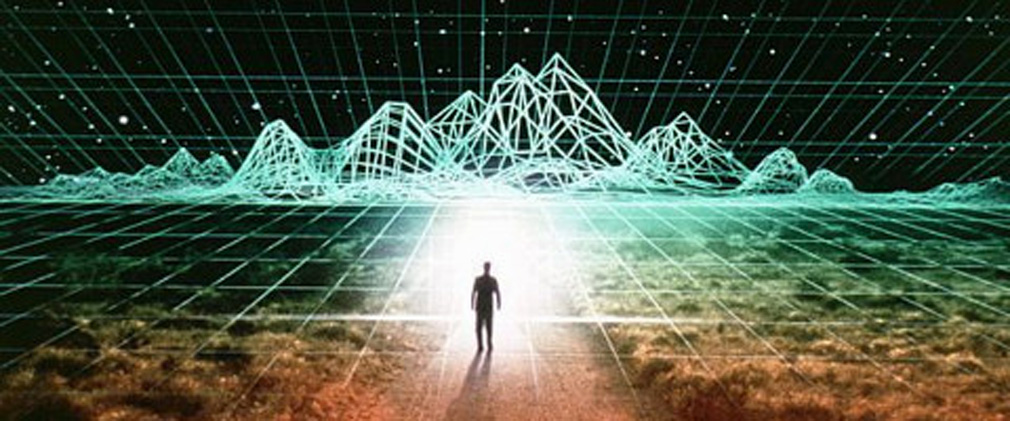
Without getting into the sci-fi jargon that will probably get me beat up by angry Trekkies and physicists, I’ll stick to the basics here. A holodeck is basically the ultimate extreme in virtual reality. It creates simulations so life-like that they’re indistinguishable from reality. If our feeble brains, which are still working under the assumption that we’re cavemen living on the African savanna, interprets it as reality, how can we possibly tell the difference?

Our brains are already easily fooled. It’s not just funny brain teasers that make us question our own internal wiring. As I’ve pointed out on this blog many times before, our brains aren’t wired to make sense of reality. They’re wired to help us survive and reproduce. That’s part of why we have such wonderful evolutionary manifestations like orgasms. In that context, it stands no chance against a holodeck.

It may seem like such an advancement is a long ways off, but I imagine early Stark Trek fans thought the same about smartphones. This invention is already in its nascent stage. At the moment, we call it virtual reality and it’s just starting to develop a consumer base.

Thanks to continued advances in computing power and a growing market for more immersive experiences, VR is becoming more mainstream and affordable by the average consumer. Like personal computers and smartphones before it, VR is creating a new market for new experiences. Those experiences, by the way, will probably involve virtual porn.

New markets mean new profits. History shows time and again if there’s a profit to be made, it’s going to happen. It’s the reason the War on Drugs is doomed to fail. It’s the reason the wars on porn, smoking, and everything fun that religion and government despises is doomed to fail. It’s also the reason why VR will become more and more indistinguishable from reality as time goes on. The recent success of Pokémon Go is proof enough of that.

So that begs the question: what happens to us when we reach the point where we have a functioning holodeck? What does that mean for the human race? What will it mean for our basic desires for intimacy?

Well, let’s all channel our inner horny teenager for a moment and state the obvious. Just as we saw with VHS and home video technology, VR and holodecks will likely be used for porn. This isn’t speculation. This is a certainty. Someone is working on this right now as we speak. You can count on it.

Do a quick thought experiment and picture how you’d use a holodeck. If I’m really horny, I could create an entire army of beautiful women that look like a mix of Kate Upton, Halle Berry, Scarlett Johanson, and even Starfire from DC Comics if I want. In case you’ve forgotten, Starfire looks like this.

See where I’m going with this? On top of that, with the right programming, I can make these simulations do whatever perverse shit I can think of. If I want them to cover their bodies in oil, pour chocolate on my dick, and take turns licking it up, I can do that.

I’m sure that’s not the kinkiest thing I could do. I’m sure there are others out there with far kinkier proclivities. A woman using such a device could create a football team of Channing Tatums and Brad Pitts, each programmed to cover her body in honey and lick it off.

I’ll stop speculating right now because I think I’m revealing too much about my own perverse fantasies. Also, they’re making me very hungry. Maybe writing this on an empty stomach was a bad idea, but it’s too late now.

It doesn’t matter how perverse your tastes are. They can even be outright illegal. So what if someone uses a holodeck to have sex with a baby elephant? It’s a simulation. It’s technically not hurting anyone or anything real. Even so, the mere fact that someone will probably use a holodeck to do something like this is kind of a mood-killer.

Again, our brains aren’t wired to be rational and make sense of reality. It’s wired for survival and reproduction. So if a holodeck simulation is that realistic, our brains literally aren’t equipped to tell the difference.

Imagine the kind of confusion this would cause. Hell, this would be 10 steps beyond confusion. This is a dissociation with reality on par with The Matrix. When a simulation becomes that real and malleable, would we even want to escape? It’s either face a cold, harsh reality or spend more time wrestling naked with Starfire and Halle Berry. That’s not a balanced decision, to say the least.

Whether you’re an anti-social sociopath or a hugger like me, a holodeck can literally give you everything you need to fulfill all the physical and emotional needs you want. I can go from having a three-way with a couple of supermodels to hugging every member of my family, even those who have passed away, on a whim. The caveman wiring of my brain will tell me I’m doing exactly what I need to survive and reproduce. Why would it want me to stop?

The cynical side of me says that I’ll join the billions of other humans on this planet who will go extinct with a big, content smile on my face. However, the less jaded side of me, which also happens to be the side that helps me craft sexy romance stories, thinks there are other possibilities.

If history is any guide, and it often is, human beings can and do adapted to these major disruptions. The 20th century gave us a number of examples, but one in particular stands out. It involves the impact of contraception and, to a similar extent, antibiotics.

It’s easy to forget in a era where contraception is so ordinary that only right-wing religious nut-jobs like Rick Santorum speak against it. Women today have all sorts of methods for controlling their fertility, deciding when and in what circumstances they’ll bear children.

This is a huge shift compared to the bulk of human history where contraception was limited to pulling out, make-shift condoms, and the medical treatments on par with smearing chicken entrails on tumors. Then, after centuries of uncertainty and superstition, we created something that worked. It worked so well that it disrupted a great many these assumptions we once had about society.

Think, for a moment, how jarring that must have been. Suddenly, women don’t have to lament whether or not they’ll get pregnant after one night of reckless indulgence. Suddenly, society has some measure of control over a basic human function. It was exciting and scary. Hell, the Catholic Church is still scared to death of contraception, which is saying a lot from the folks that gave us 2,000 years of hellfire and brimstone.

Despite what religious institutions and bad reality TV shows would prefer, contraception is not going away. It impacted society immensely, but you know what? Society adapted. The human race hasn’t gone extinct. Civilization hasn’t collapsed. The fact that people can now hump without as many consequences as before didn’t destroy humanity. It just freed us up to focus on other things.

By and large, this shift has been positive. As society has adapted, violence throughout the industrialized world has declined sharply. Opportunities for women have risen as well and not just because they can have sex with fewer consequences. This disruption that upended centuries of limits did so much good. So how much good can advancements in VR and holodecks achieve?

It’s impossible to say, but it’s a question worth asking. What do people do when they have a means of meeting their physical, emotional, and sexual needs with relative ease? We’ve never lived in a society like that before. Remember, though, until recently, we had never lived in a society where women had control over their fertility. We had no idea what to expect, but we adapted. We improved as a civilization and there’s still room for improvement.

I don’t want to be too much of an optimist. With every advancement comes challenges and pitfalls we can’t possibly foresee. At some point, somebody will use VR or holodecks to do something that’ll make us throw up. However, like those who use ski-masks poorly, we must take the good with the bad.

In the end, I believe the good will outweigh the bad. I think when human society has a means of meeting all their physical, emotional, and sexual needs, the sheer breadth of human potential will be realized.

What form might this potential make? How would such a society function? How would it adapt? These are all important questions to ask, but they’re impossible to answer right now. That said, they could make for an interesting premise of a book. Think about it, a story involving a holodeck told by an erotica/romance writer who writes stories about strippers and sex cults? That could be interesting, among other things.

1 Comment

Filed under Jack Fisher's Insights